I did not expect these yards to stick in my head this long, but they did. The best montana native plant landscaping has this quiet pull to it. It feels honest, weather-tested, and somehow softer than flashy gardens. These 13 spaces made me slow down and really think about what a yard can feel like when it belongs to the land.
I keep coming back to one thing. A lot of gardens try too hard. These do not. They feel rooted, almost like they were always meant to be there. That is probly why I like them so much. They use stone, gravel, native-style planting, layered shrubs, and simple paths in a way that feels calm and deeply real. I’m gonna walk through each one the way I saw it, and say what I think works, what I’d copy, and what makes these Montana native landscaping ideas feel so strong.
Table of Contents
Montana native plant landscaping ideas that feel natural, grounded, and beautiful
When I think about montana native plant landscaping, I think about more than just using hardy plants. I think about using the whole place better. The slope, the wind, the rock, the background view, the dry spells, the short blooming window, all of it. A good yard in Montana has to do more than look nice for one month. It has to hold itself together most of the year and still feel alive.
That is what these gardens get right. They use shapes and materials that fit the setting. They lean on gravel, natural stone, structural shrubs, grasses, and flower drifts that look believable. These are not fussy little beds trying to be something they are not. These are native plant landscaping ideas for Montana homes that feel steady and smart. And honestly, that kind of beauty lasts longer in my mind.
A mountain entry path with lavender and stone terraces feels deeply rooted
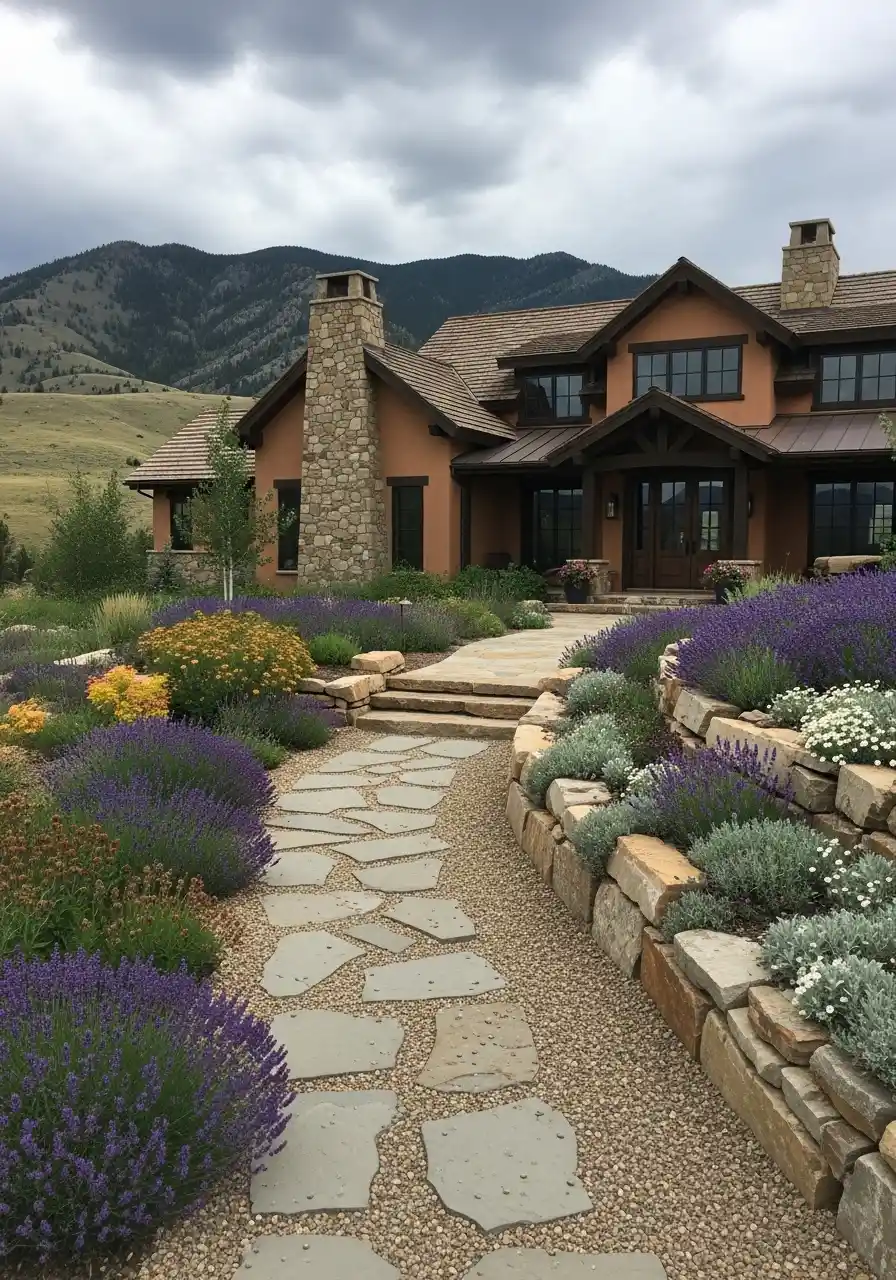
The first image feels like the house rose out of the hillside instead of being dropped on it. I really love that. The gravel path with large stone pavers winds gently up to the front steps, and both sides are held by low stone terraces. Then all that purple planting, mixed with soft silver foliage and white blooms, makes the whole entry feel peaceful even with the mountains looming behind it. It is dramatic, yes, but not loud.
What makes this such a strong example of montana native plant landscaping is the way the hardscape and planting are working together. The stone walls look sturdy enough for mountain weather, and the planting looks drought-aware without feeling sparse. I would absolutely copy this idea if I had a sloped lot with big scenery in the background. Do not fight the land. Work with it. That is what this yard is doing, and it feels confident because of it.
I also think the path width matters here. It is generous enough to feel welcoming, but not so wide that it becomes stiff or suburban. That matters more than people think. For Montana native front yard landscaping, this kind of path plus layered low shrubs and flower drifts is a really beautiful formula. It feels natural, but still polished enough for a nice home.
A steep hillside with stone steps can become the best part of the yard
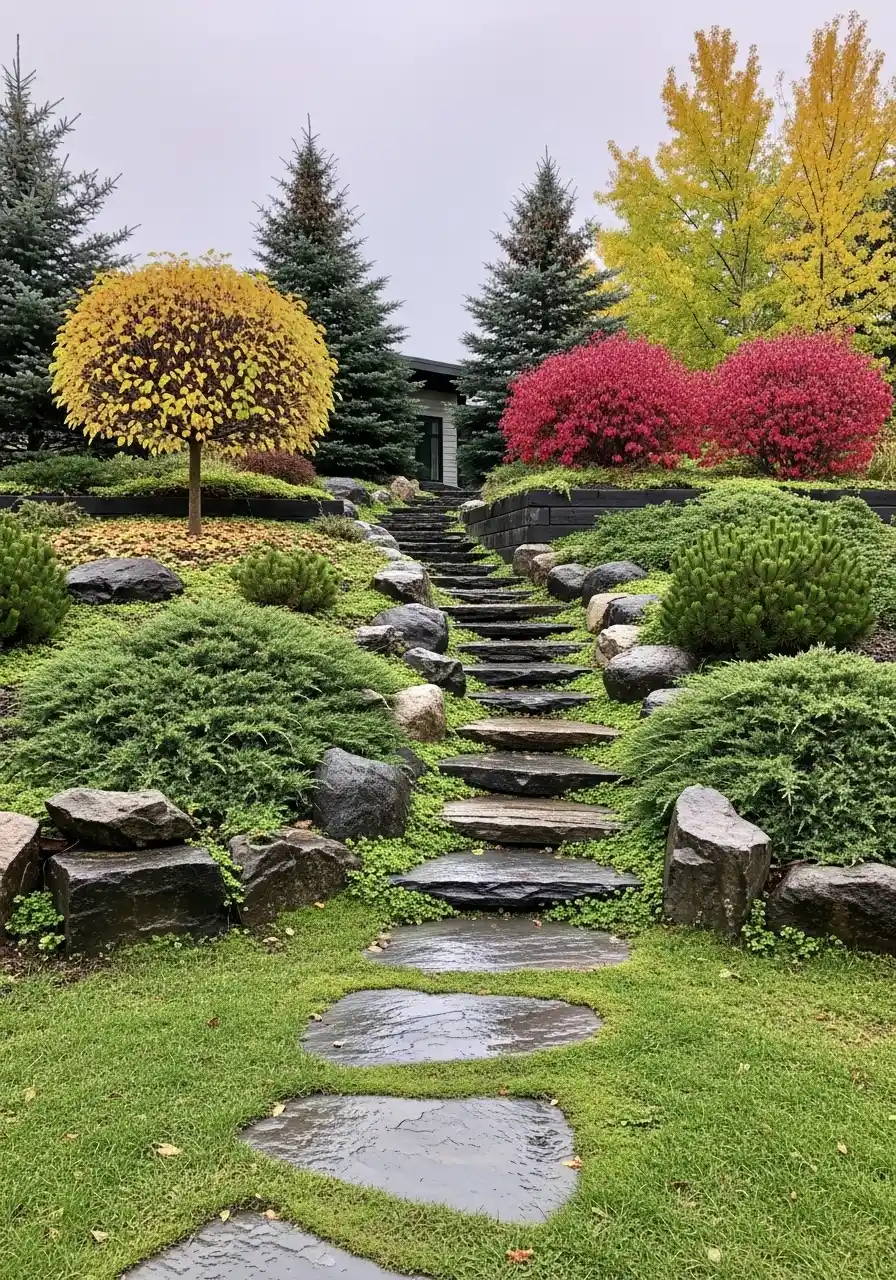
The second image is the kind of slope that would scare a lot of people, but here it becomes the whole point. Dark stone steps rise through groundcover, evergreens, boulders, and bright fall foliage in a way that feels bold and almost storybook-like. I love this one because it turns a hard problem into the most memorable feature. That is always smart design to me.
For Montana native landscaping ideas, slopes should not be treated like mistakes. They are opportunities for layering, views, and drama. The low, spreading plants soften the hillside and help hold the ground visually. The bigger rocks make the whole thing feel anchored. Then those brighter shrubs and golden trees at the top keep the eye moving upward. It feels balanced, not cluttered.
If I had to copy one thing from this yard, it would be the willingness to use contrast. Dark steps. Bright foliage. Soft green mats. Sharp evergreen forms. That mix makes it sing. This is one of the best native Montana garden ideas for a hilly property because it feels sturdy and beautiful at the same time, which is honestly the dream.
A modern house can still feel warm with native-style grasses and stone
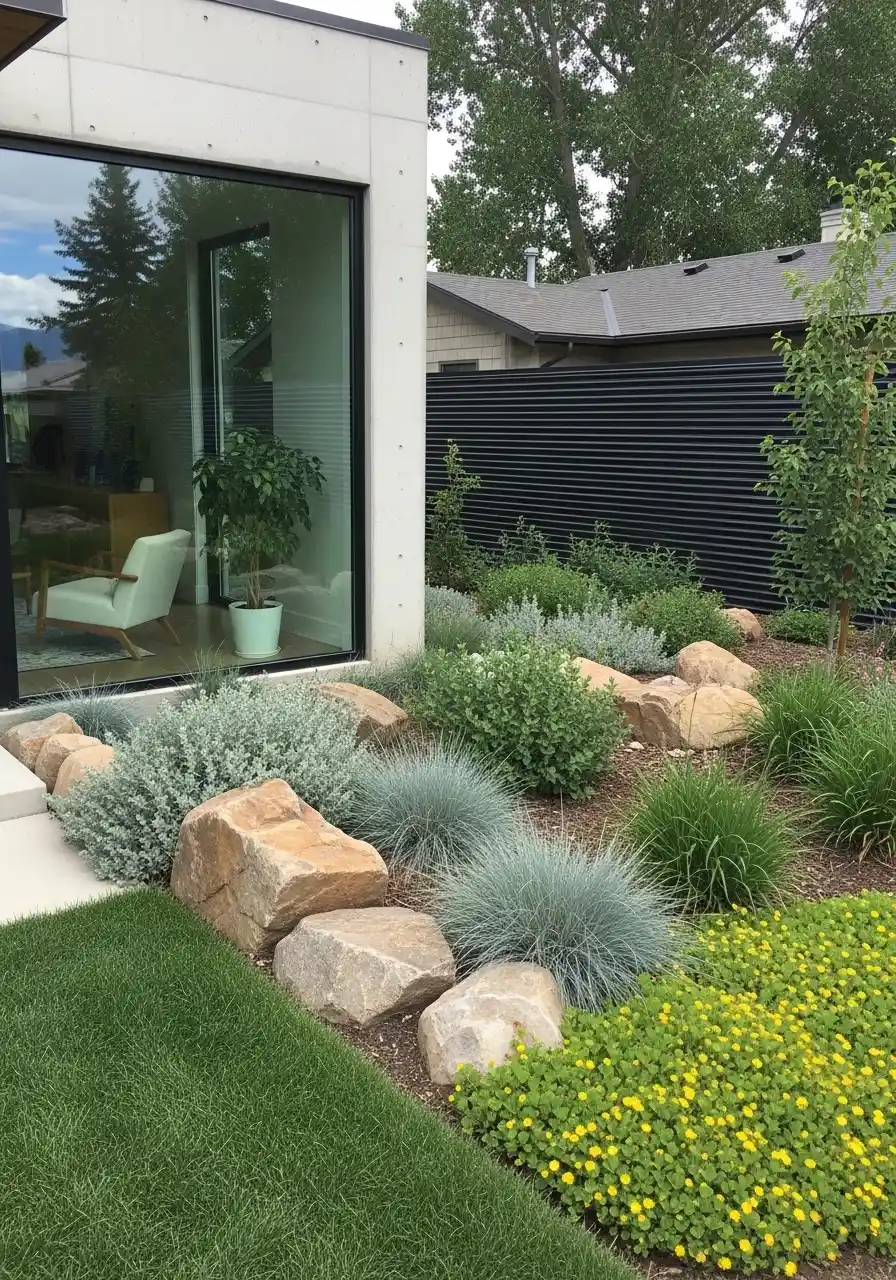
The third image proves that montana native plant landscaping is not only for rustic houses. This modern home has a clean concrete face and a dark horizontal fence, but the planting softens everything beautifully. Big warm-toned boulders, blue fescue-like grasses, soft silver shrubs, upright native-style grasses, and a spreading yellow groundcover create a yard that feels fresh but not sterile.
What I like most is the restraint. There is no unnecessary clutter. The plant palette is limited, and that makes every texture show up better. In Montana modern native landscaping, this is such a good move. Too many plant types would make the architecture look nervous. Here, the planting has a quiet confidence. It gives the house life without taking over the scene.
I would use this idea for anyone who wants a low-water, low-drama front bed that still feels expensive. The trick is keeping the colors mostly in the cool silver-green family, then letting a little yellow or warm stone do the brightening. For native plant landscape design in Montana, this is one of the cleanest examples in the whole set.
A narrow side garden can feel charming when the path is simple and the plants spill
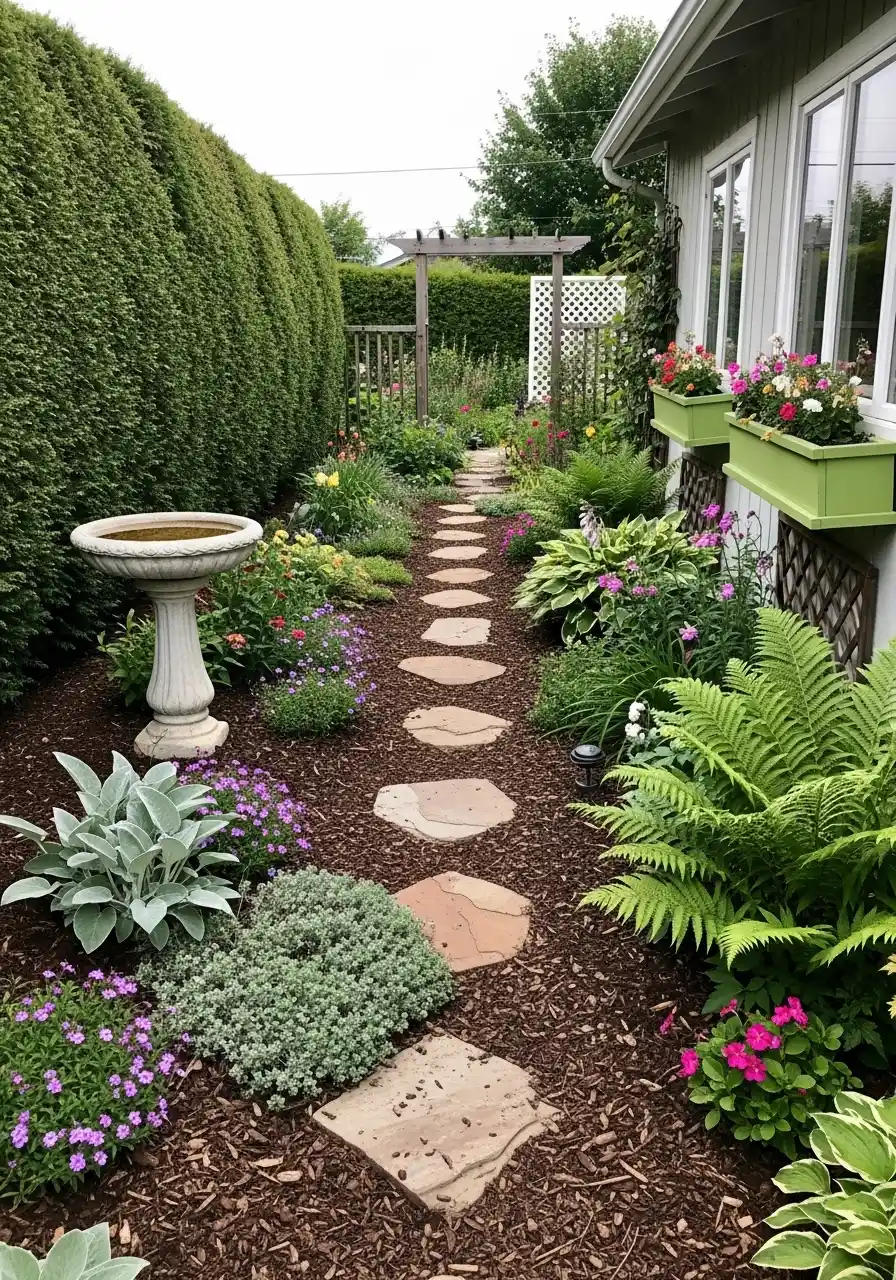
The fourth image feels very personal, almost like a secret side path only regular visitors get to enjoy. There is a stepping stone walk, a birdbath, window boxes, ferns, hostas, and a mix of cottage-like flowers all tucked between the house and a tall clipped hedge. I know this one is less rugged than some of the others, but it still fits the spirit of montana native plant landscaping because it uses layered hardy forms and shade-loving textures in a believable way.
The path is what makes it work. A narrow stepping stone route keeps the space from feeling crowded, and the plants are allowed to spill around it just a little. That softness matters. Too much rigid edging would ruin the charm. For Montana native shade garden ideas, I would borrow this rhythm fast. Broad leaves near the edge, finer textures behind them, then little flowers tucked in where they can surprise you.
This yard also reminds me that not every native-style garden has to look wild. It can feel intimate, tidy, and still deeply connected to place. It is sweet without being sugary. I think that balance is hard, and this one gets it right.
A soft meadow front walk can make a yellow door feel even brighter
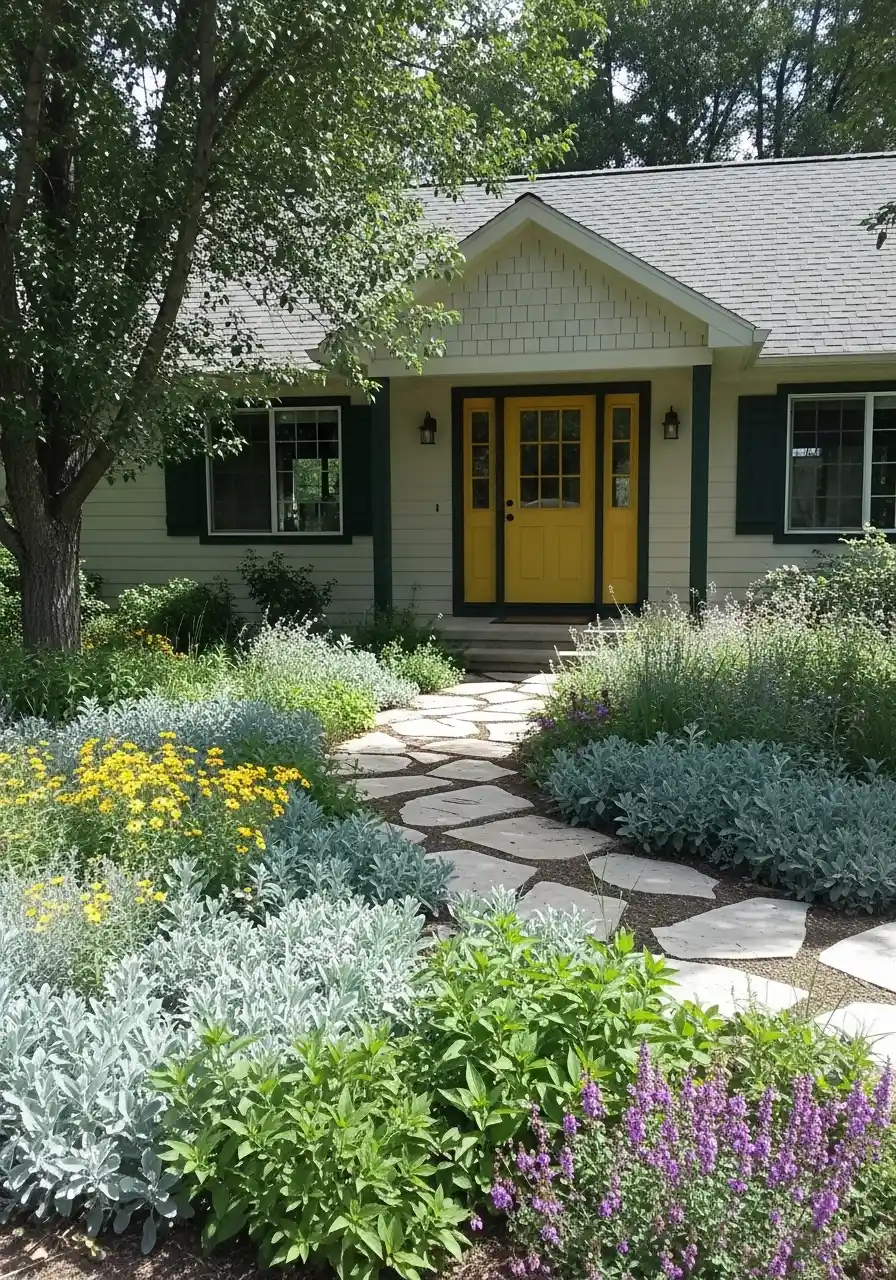
The fifth image has a warmth that got me right away. The yellow door is cheerful, but the planting is what makes it really shine. There are silver mounded plants, yellow flowers, purple flower spikes, and a loose stone path that meanders through the front bed instead of cutting through it harshly. It feels airy and inviting, and I like that it does not look overdone.
For montana native plant landscaping, this is a really good example of using a mostly cool palette with one warm pop. The silver and green foliage keeps everything calm, while the yellow door and yellow flowers add happiness without chaos. That is smart. I would suggest this kind of layout for cottages or smaller homes where the garden should feel welcoming, not imposing.
The path material helps a lot too. Those irregular stepping stones feel softer and more natural than a straight poured walk would. For Montana native front garden ideas, I think this image shows how much mood can come from simple decisions. Cool foliage, a soft path, and one brave color can go a long way. It feels light, friendly, and really easy to love.
A pergola garden path can turn a backyard into a destination
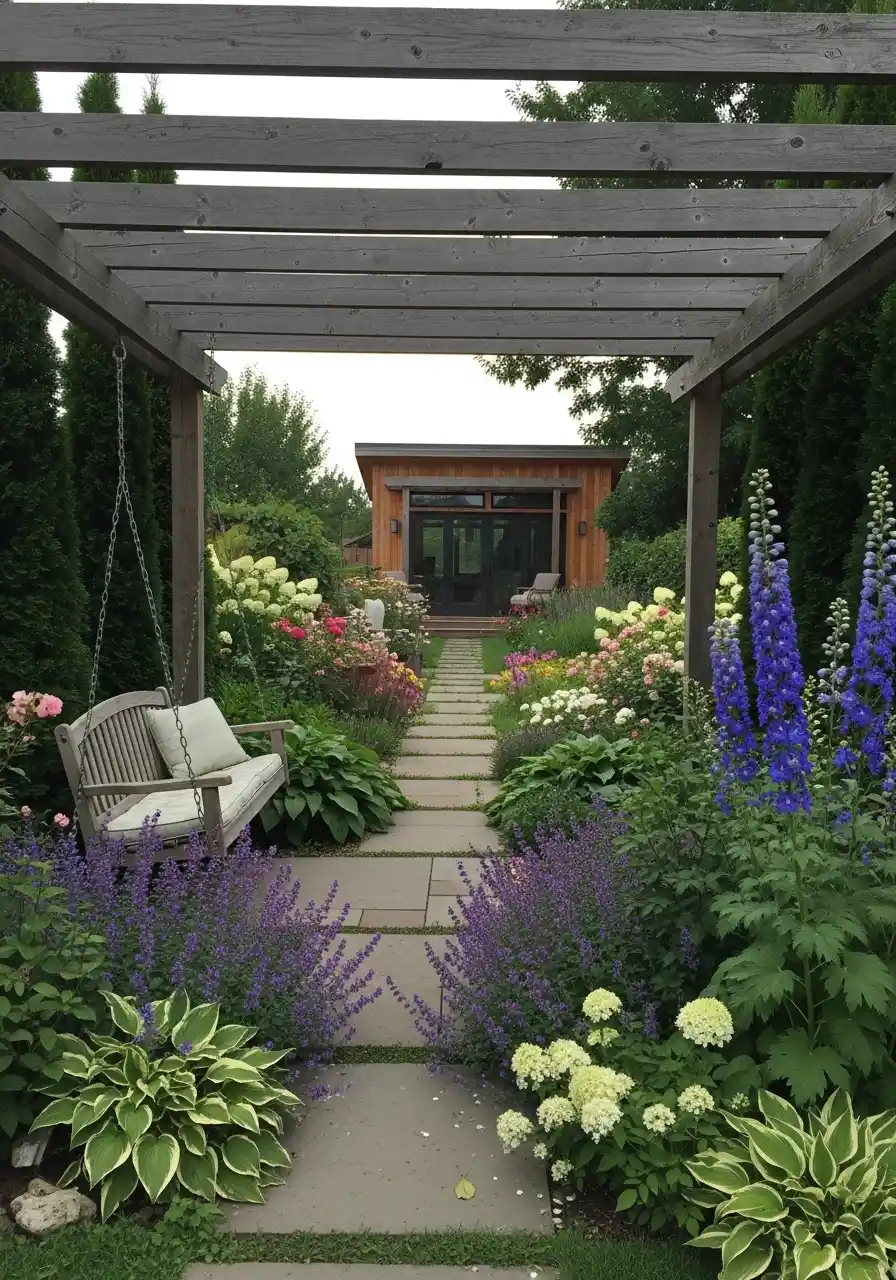
The sixth image feels almost magical to me. The pergola frames the path, the hanging bench adds movement and personality, and the planting on both sides is full without being chaotic. There are hostas, hydrangea-like blooms, purple flower spikes, and taller blue blooms leading your eye toward the little garden building in the distance. It makes the whole yard feel like a journey, not just a patch of land.
This is one of my favorite native plant landscaping ideas for Montana homes because it mixes structure with softness so well. The pergola gives the garden bones. The planting makes it emotional. I know that sounds dramatic, but it really does. The path invites you in, and the flowers reward you as you move through it. That is such good garden design.
I would use this kind of setup in a long side yard or a backyard axis where you want a strong focal point. For Montana native cottage garden landscaping, the lesson here is to frame the path, repeat colors, and keep taller plants in thoughtful groups instead of random clumps. It feels lush, but still believable.
A gravel path with silver foliage can make a modern side yard feel peaceful
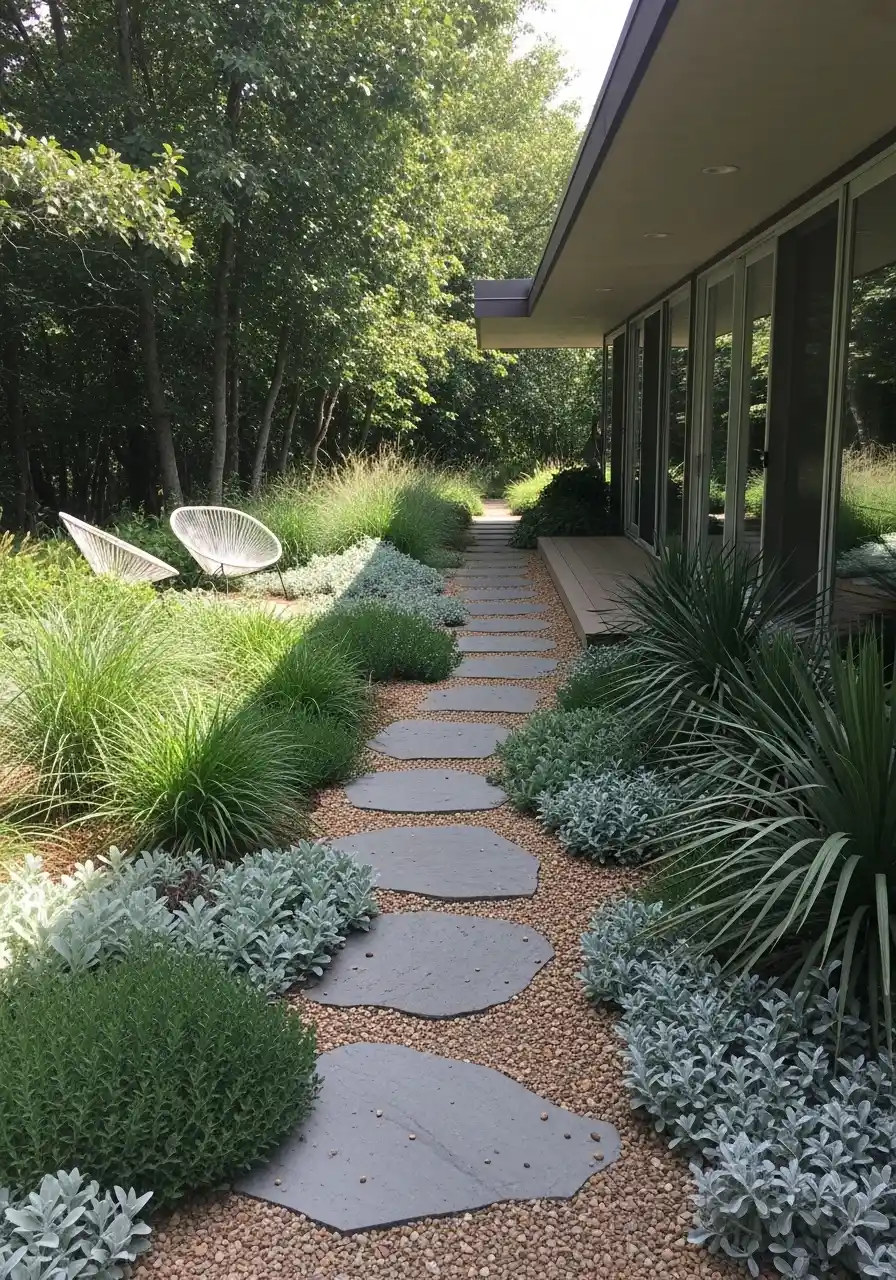
The seventh image is quieter again, and I really appreciate the change in mood. A line of dark stepping stones moves through tan gravel beside a modern house, with silver low plants, soft grasses, and airy greenery shaping the route. There are just a few chairs set off to the side, which makes the whole thing feel like a place to pause, not just pass through.
For montana native plant landscaping, this is a smart way to handle a narrow side yard where grass would be annoying and a full flower bed would be too much. Gravel works well in drier climates and makes the silver foliage stand out more clearly. I also love how the plants vary in height without becoming busy. That is the trick. Layering, not clutter.
If I were borrowing this idea, I would pay close attention to the color temperature. The cool silver plants, gray stone, and dark house trim all play nicely together. For Montana xeric landscape ideas with native plants, this is such a strong path formula. It feels cool, restful, and seriously clean.
A wildflower garden around a small cabin feels joyful and alive
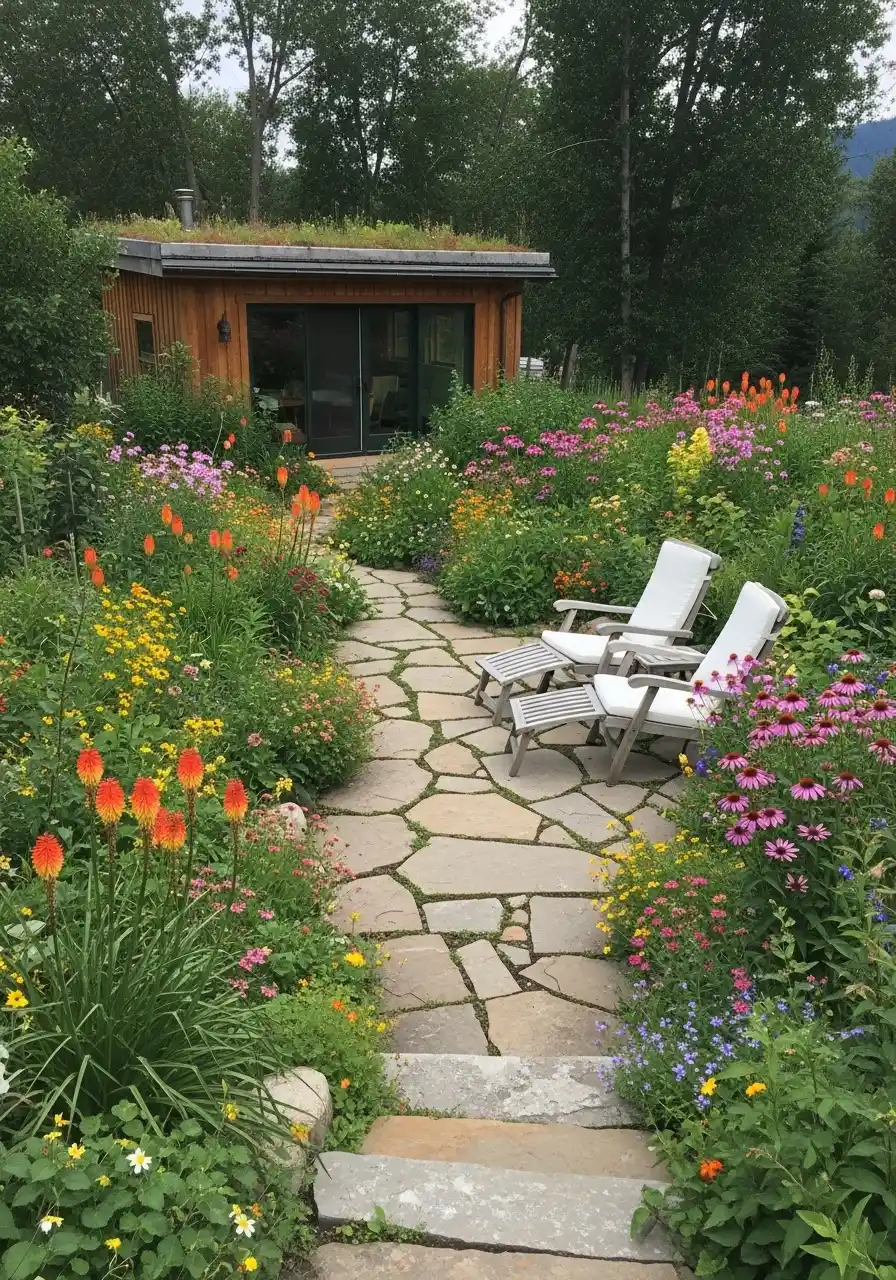
The eighth image is the loosest and most flower-filled one, and honestly I smiled when I saw it. The stone path leads through masses of colorful blooms toward a small wood-sided building, with chairs tucked into the flowers like somebody really planned to sit out there and enjoy it. That matters. A yard should feel used, not just displayed.
What I love here is the sense of abundance without complete disorder. Yes, it looks wild, but the path keeps it centered. That path is doing important work. For montana native wildflower landscaping, this kind of setup can be beautiful if the plant palette is hardy and the blooms are allowed to mingle naturally. It feels emotional, almost a little nostalgic, and I really enjoy that.
I would not try this style with fussy plants that need endless care. The whole charm comes from the relaxed, believable fullness. For Montana pollinator-friendly native landscaping, this is a wonderful model. It says beauty can be generous, a little unruly, and still deeply intentional.
A dry creek bed with grasses and black-eyed Susans can feel both practical and pretty
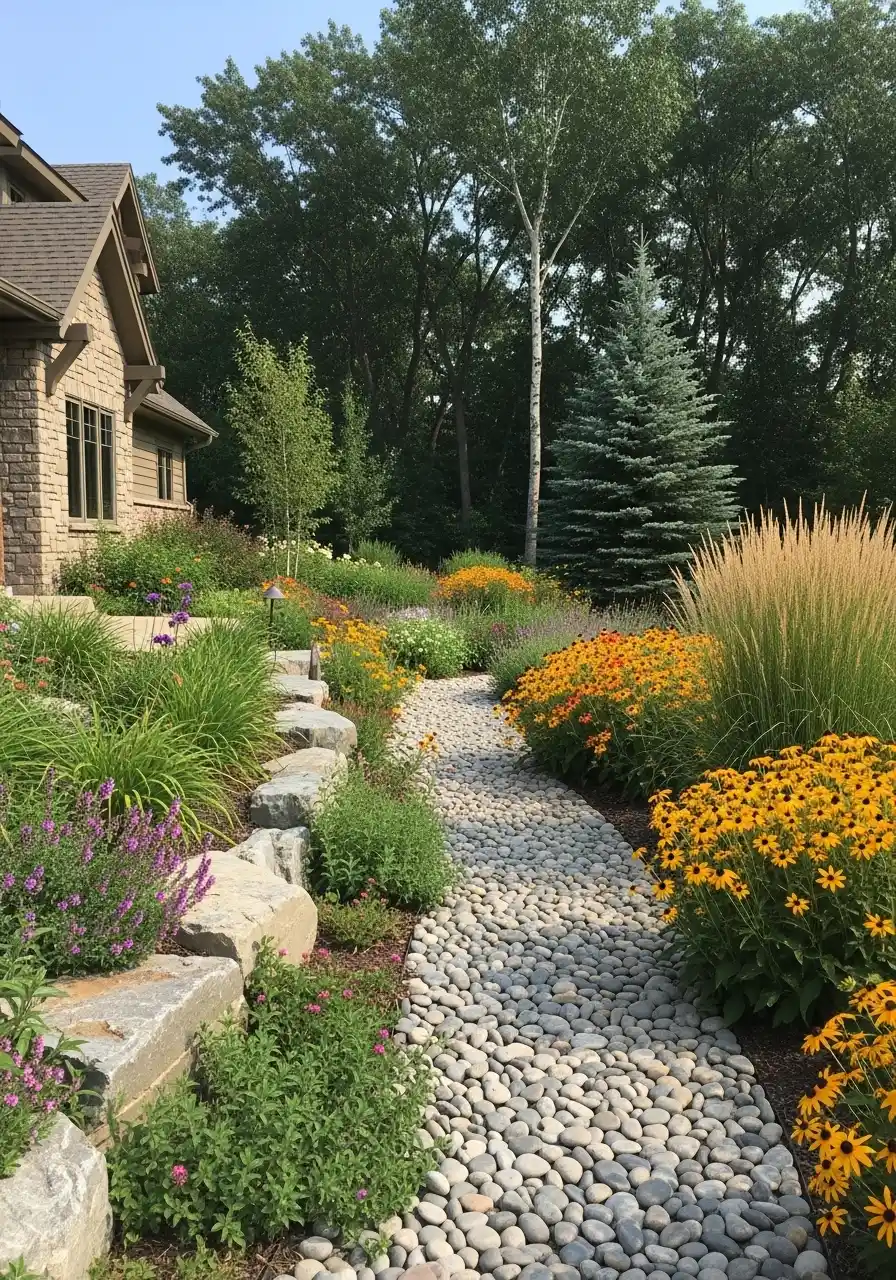
The ninth image is one of the most useful, I think. A river rock channel winds through the planting near the house, surrounded by black-eyed Susans, grasses, lavender-purple spikes, and stone edging. This is exactly the kind of montana native plant landscaping that solves a problem while still looking lovely. I always respect that.
Dry creek beds are smart in places with runoff or slope changes, but they can look awkward if they are not planted well. This one avoids that by using soft drifts of grasses and flowers to make the rock channel feel part of the garden. For Montana native landscape drainage ideas, this is such a good example. Practical does not have to mean ugly. It really doesnt.
I would copy the way the rocks narrow and curve, instead of forming one big stiff trench. Then I would repeat a few strong plants around it, just like this yard does. It feels natural, useful, and very rooted to the property.
A gravel walk with terraced flower beds can feel rich without feeling formal
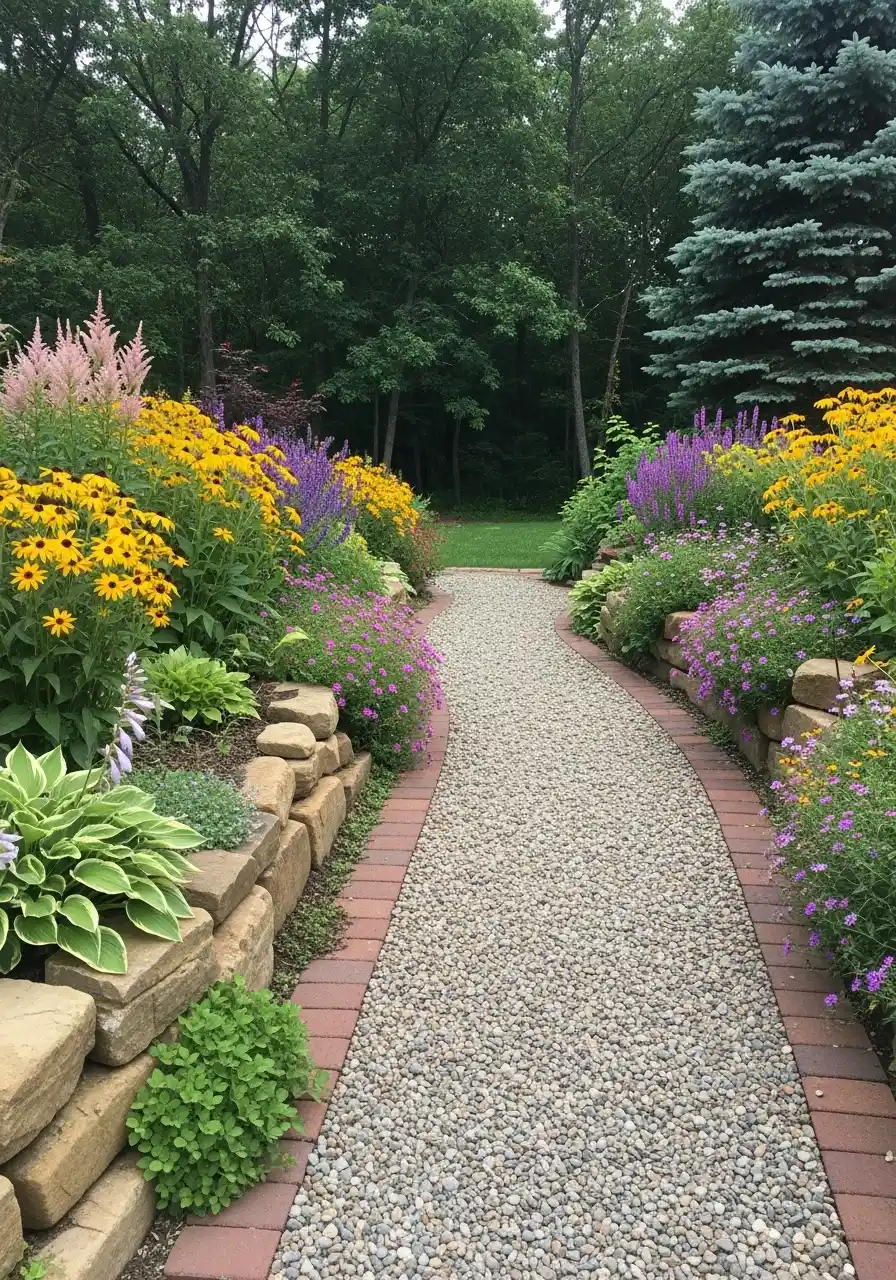
The tenth image is a gorgeous finish. A straight gravel path runs between low terraced stone beds filled with black-eyed Susans, purple flowers, hostas, and pink plumes. The planting is full and vibrant, but the path and brick edging keep it all from tipping into chaos. I think this is one of the strongest montana native plant landscaping examples because it feels abundant, but not fussy.
The stone retaining edges are doing a lot. They help organize the planting, give the flowers some lift, and make the path feel protected. For Montana native flower garden ideas, this is such a smart structure. You get richness and height without losing control. I also like how the background trees create a dark wall behind all that color. It makes every bloom pop harder.
If I had a long backyard walk and wanted it to feel special, I would absolutely borrow this idea. Gravel center, strong edging, and layered hardy flowers on both sides. It feels generous, peaceful, and honestly kind of unforgettable.
A soft modern path with grasses feels calm even without flowers
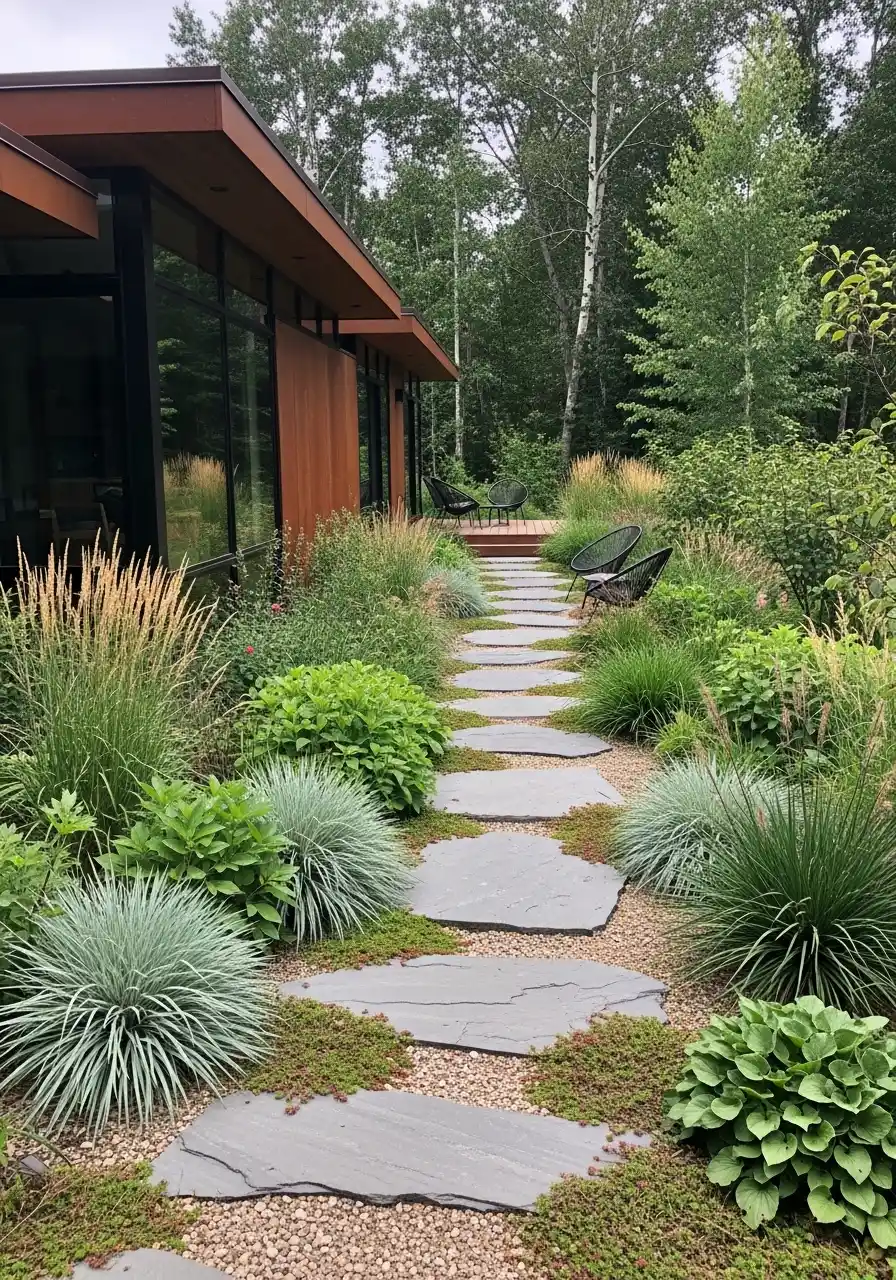
This next space kinda surprised me. It’s simple, like really simple, but it sticks with you. The stepping stone path runs through gravel and low green groundcover, with soft grasses and round shrubs tucked on both sides. The house is modern, clean lines, dark windows, wood siding, and the planting just softens everything without trying too hard.
For montana native plant landscaping, this is a really strong move. Not every yard needs a ton of flowers to feel alive. Texture can do the work. Those blue-gray grasses, the soft mounds, the slightly messy edges, it all feels relaxed but still intentional. I think that balance is harder than people think. Too neat feels fake. Too wild feels messy. This sits right in the middle.
If I was planning a low effort yard, I’d steal this idea fast. Gravel base, large stepping stones, and just repeat a few plant types. That’s it. For Montana native landscaping ideas, sometimes less is actually better, even if it feels weird at first.
A colorful layered path proves bold planting can still feel controlled
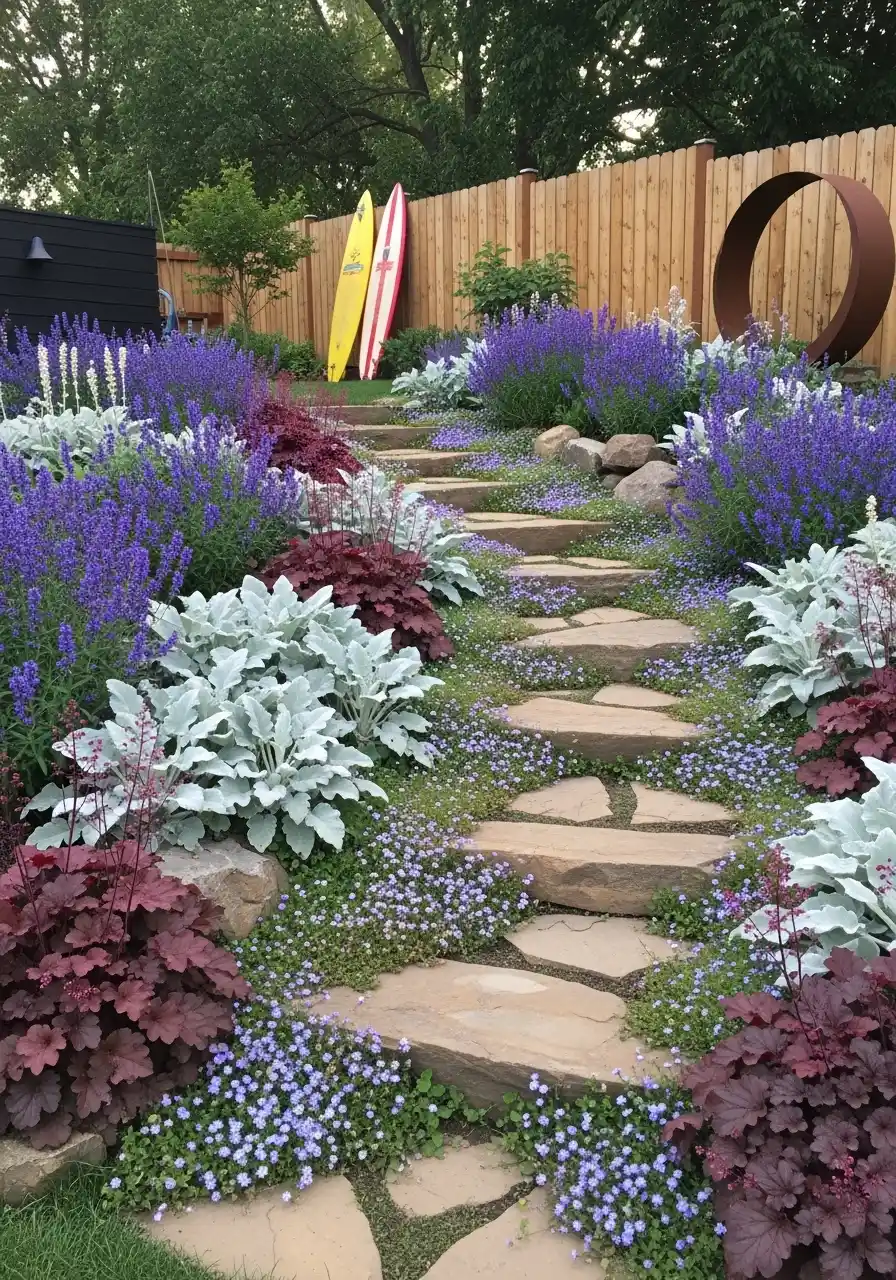
This one is way more colorful, and honestly I didn’t expect to like it this much. Purple spikes, silver leaves, deep burgundy plants, and tiny blue groundcover all wrapped around a winding stone path. It sounds like too much, but somehow it works. It feels full but not chaotic.
I think the reason it works for montana native plant landscaping is the layering. Nothing is just thrown in randomly. Taller plants sit back, mid-height plants fill the middle, and low groundcovers soften the edges. That structure keeps everything from turning into a mess. I’ve seen yards try this and fail, but this one gets it right.
If you want color in your yard, this is a good lesson. Keep repeating the same few plants instead of adding ten different ones. That keeps things calm. For Montana native garden design ideas, this is one of those examples where bold choices actually feel safe because they are organized.
A hillside patio with a view should never ignore the planting
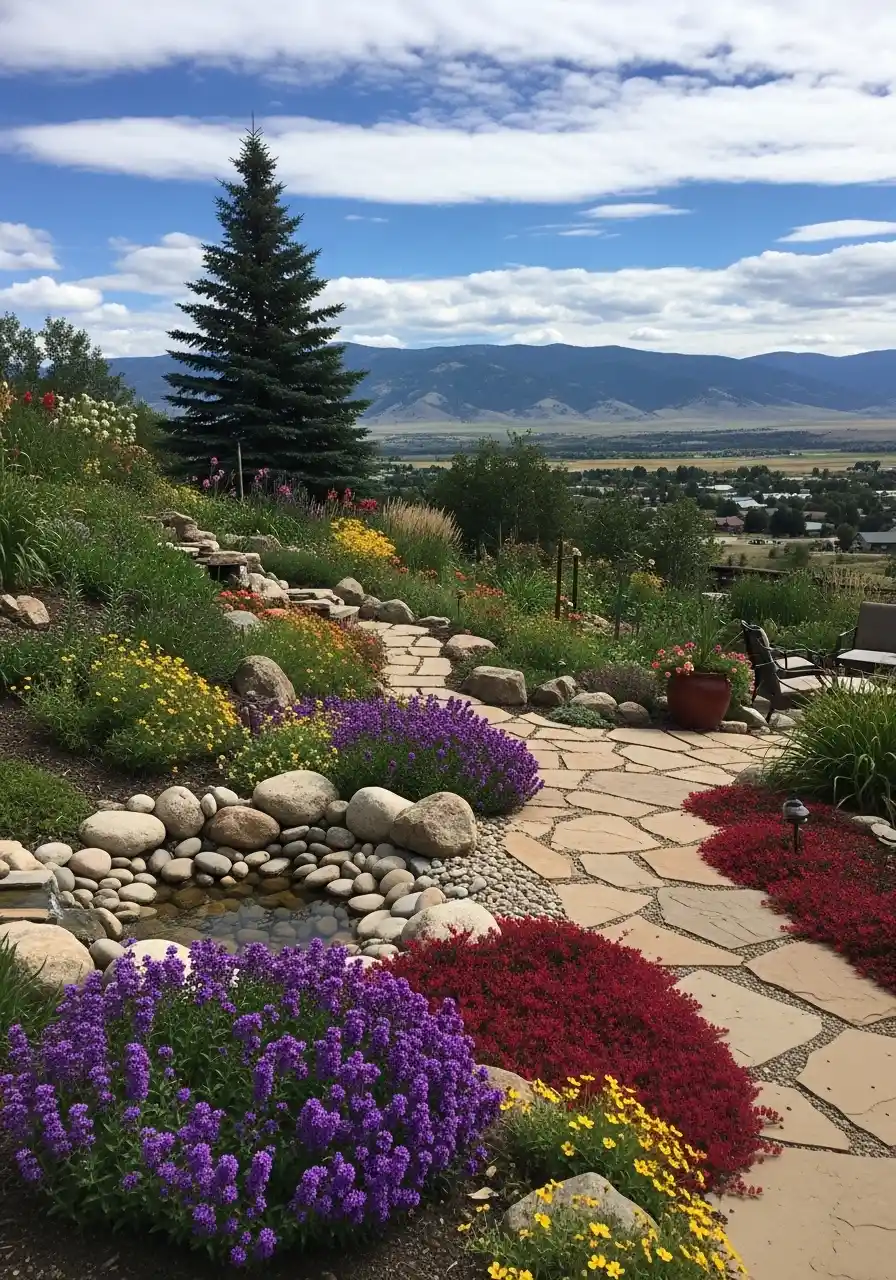
This space, wow, it’s the view that grabs you first. Big open sky, mountains, a valley stretching out. But then your eye drops down and you see the garden, and that’s when it gets really good. Stone patio, curved edges, bright flower patches, and a little water feature tucked into rocks. It feels like the yard is part of the landscape, not separate from it.
For montana native plant landscaping, this is such an important idea. If you have a view, your garden shouldn’t compete with it. It should frame it. The plants here are bright but low, so they don’t block the sightline. The stone matches the tones of the surrounding land. It all connects.
I think people mess this up a lot. They build something flashy and forget the bigger picture. For Montana hillside landscaping with native plants, I would always say keep it low, keep it natural, and let the view do half the work. This yard really proves that.
FAQ
What plants fit montana native plant landscaping best?
I think hardy grasses, drought-tolerant perennials, native-style shrubs, yarrow-like flowers, penstemon-type blooms, and tough groundcovers are a great start.
Is montana native plant landscaping only for rural homes?
No, not at all. It works for modern homes, suburban yards, side gardens, and mountain properties too.
How do I make a native Montana yard look intentional?
Use clear paths, repeated plant groupings, strong bed edges, and a limited palette of materials.
Are gravel paths a good idea in Montana gardens?
Yes, I think they make a lot of sense, specially in drier areas or more natural-style landscapes.
Can native-style gardens still have bright flowers?
Absolutely. They just look better when the flowers are planted in drifts instead of random little dots.
What is the easiest low-maintenance native Montana landscape?
A mix of grasses, shrubs, gravel, boulders, and a few reliable perennial flowers is probly the easiest.
Do I need mulch in native plant beds?
Usually yes, unless gravel or living groundcovers are doing that job for you.
What works best on a slope?
Stone steps, boulders, spreading groundcovers, and layered shrubs really help a lot.
Can I use native landscaping ideas for a modern house?
Yes, and they often look amazing with clean architecture because the planting softens the edges.
How do I make a small Montana garden feel bigger?
Use a path, repeat plant shapes, and create one focal point instead of many tiny ones.
Are dry creek beds worth adding?
I think so, specially if you need drainage help and want something that still looks natural.
What colors work best in Montana native gardens?
Silver, sage, blue-green, purple, yellow, and warm stone tones seem to work beautifully together.
Conclusion
After sitting with these 13 gardens, I keep thinking the best montana native plant landscaping is not about copying a wild meadow exactly. It is about learning from the place, then shaping it with a little care and a lot of respect. These yards all feel different, but they share that same honesty.
If I had to sum it up in one simple thought, it would be this. Let the land lead a little. Use stone where stone makes sense. Use hardy plants that look like they belong. Build paths that invite people in. And let beauty come from texture and rhythm, not just from forcing color everywhere. That is what made these Montana native landscaping ideas feel so good to me. They are not just nice to look at. They feel true.