Arkansas Native Plant Landscaping: Transforming Your Yard with Beautiful, Low-Maintenance Designs
If you’re in Arkansas and looking for ways to revamp your garden, you might want to consider arkansas native plant landscaping. Not only will it bring beauty to your yard, but it’s also environmentally friendly, low-maintenance, and cost-effective. Native plants are adapted to the local climate and soil, so they thrive naturally without needing constant care. So, if you’re like me and want a garden that’s both gorgeous and practical, keep reading! Here are 14 fantastic Arkansas native plant landscaping ideas that can turn your yard into a stunning sanctuary.
Table of Contents
Vibrant Flower Bed with Bold Color Combinations
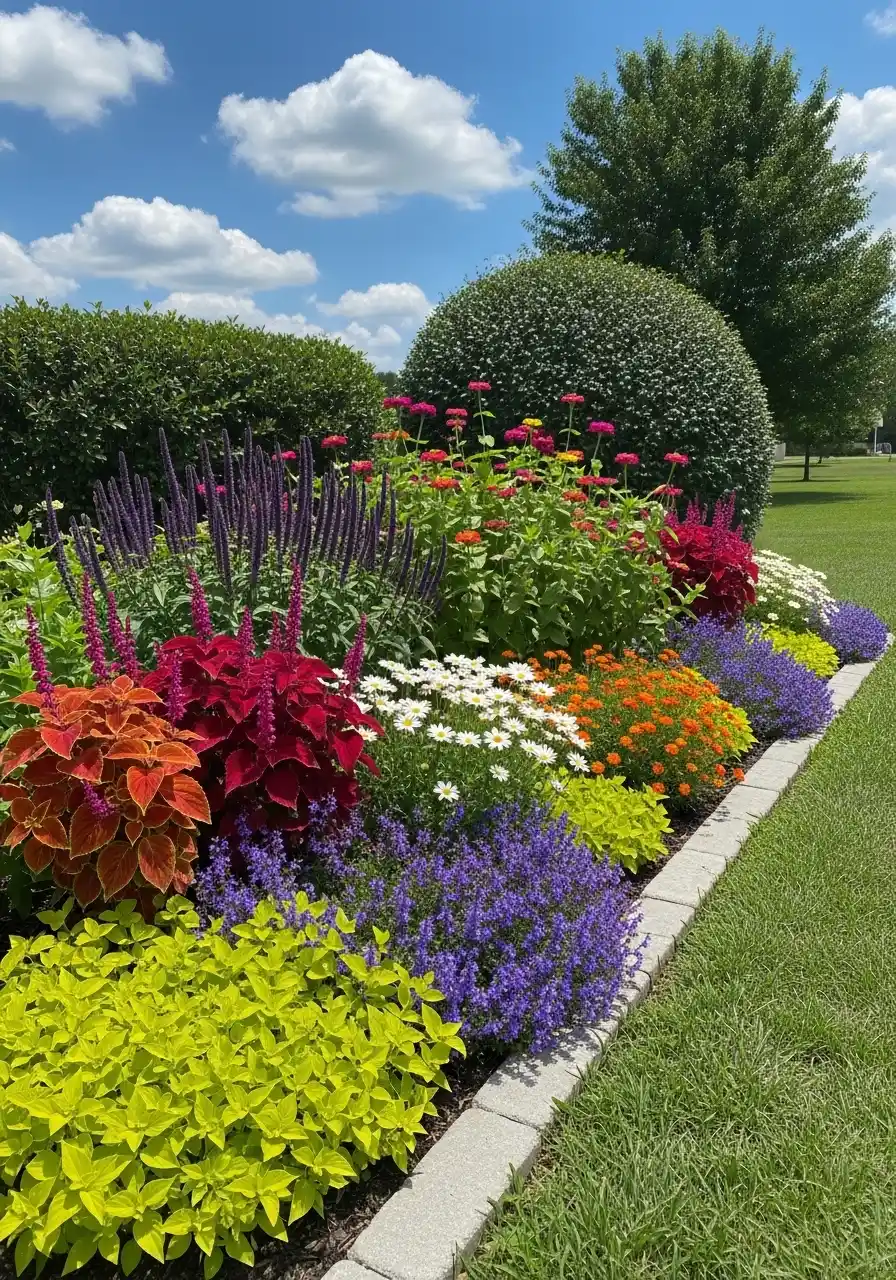
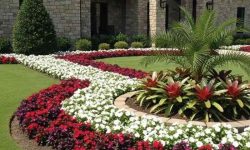
One of the most striking landscaping ideas involves creating a vibrant flower bed that combines bold colors in eye-catching patterns. Think of a mix of purple salvia, bright zinnias, and yellow marigolds, all placed harmoniously with some low-growing purple ground covers like Phlox or Creeping Jenny. The contrast between the purple, yellow, and red shades creates a dynamic landscape that draws attention.
What’s even better about this arrangement is that it’s extremely low-maintenance. The native plants, like the Purple Coneflower (Echinacea purpurea), will come back every year, saving you the hassle of replanting. Not to mention, their resilience to the hot, dry summers in Arkansas makes them the perfect candidate for a colorful, hardy garden. Adding some green shrubs in the back or even around the perimeter, like the Little Bluestem Grass, will provide structure and keep things neat. This flower bed makes an immediate statement while requiring minimal upkeep—just a little pruning to keep everything tidy.
Stone Pathways with Colorful Borders
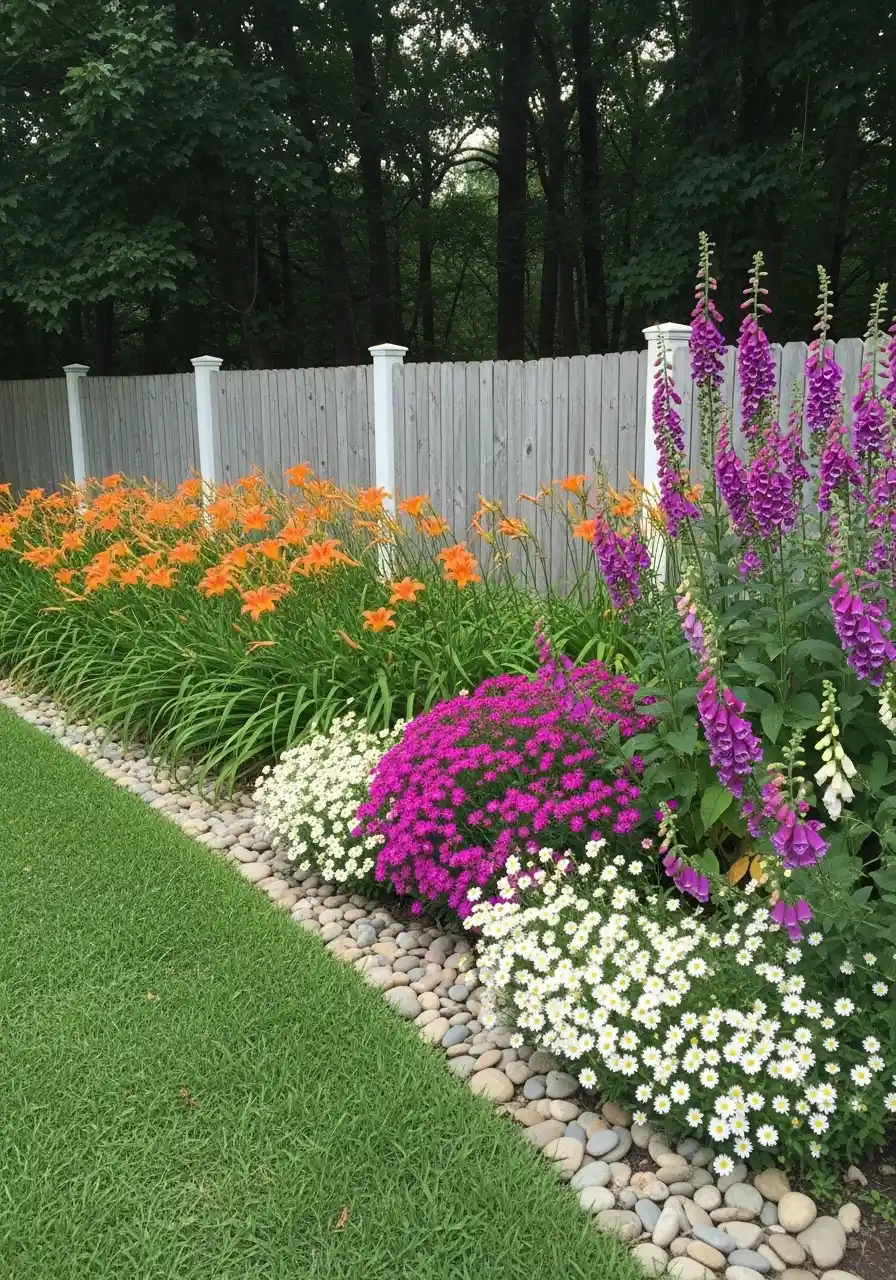
Creating stone pathways through your garden adds a lot of charm and invites you to explore your outdoor space. Imagine walking along a meandering path lined with colorful flowers like Black-eyed Susan (Rudbeckia hirta) and Bee Balm (Monarda), surrounded by shrubs and grasses. The vibrant yellows and purples pop against the natural stone, creating a serene and welcoming atmosphere. The stone pathways themselves add texture, breaking up the space and guiding the eye to new areas of interest.
For added visual appeal, consider planting some taller plants like Foxglove (Digitalis purpurea) or Goldenrod in the back. These will add height and dimension, creating a beautiful, layered effect. Plus, native plants like these are well-suited to Arkansas’s climate, meaning less work for you and more time to relax and enjoy the view.
Low-Maintenance Flower Border with a Natural Edge
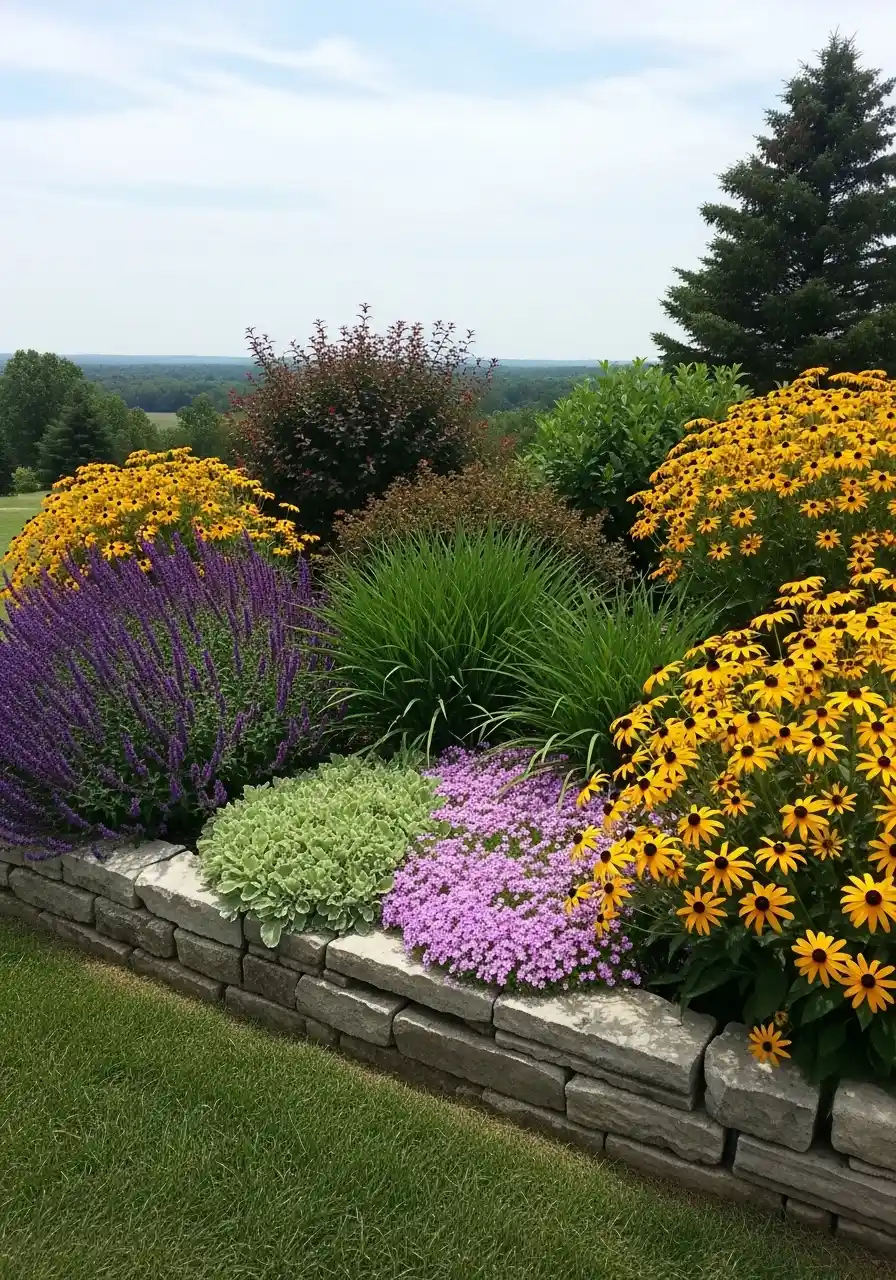
This landscaping idea is for those who love color but prefer simplicity. Create a natural border using low-maintenance flowers like Daylilies (Hemerocallis) and Black-eyed Susans, along with ornamental grasses like Blue Fescue. You can edge your flower bed with natural materials like stone or bricks, giving it a clean, yet organic, look. These plants require very little attention once they are established and thrive in the Arkansas climate. What I love most about this idea is the freedom it gives you—no need for constant pruning or replanting, and yet the garden remains lush and vibrant.
One of the easiest ways to achieve this is by using plants that naturally spread and fill in gaps, such as Creeping Jenny or Purple Fountain Grass. These will fill the space without requiring too much work on your part. Plus, they will attract local pollinators like bees and butterflies, turning your garden into a thriving, buzzing ecosystem.
Layered Flower Garden with a Touch of Drama
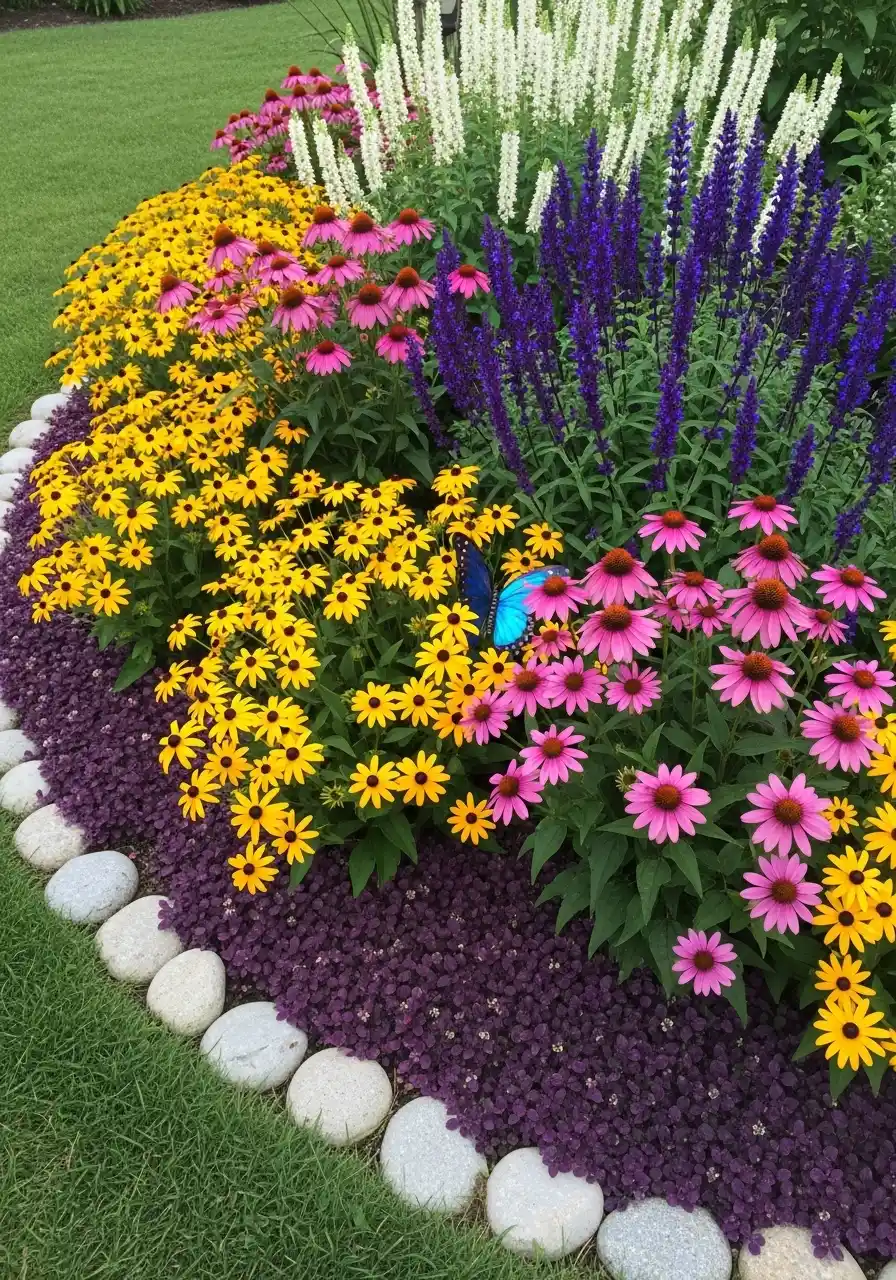
If you have a bit more space, why not go for a layered flower garden? This design uses varying heights and textures to create a garden that feels full and dramatic. At the front, plant low-growing flowers like Alyssum or Sweet Alyssum to create a colorful carpet. In the middle, put in medium-height plants like Purple Coneflower and Phlox. For the back, plant taller species like Liatris or Goldenrod, which will provide structure and vertical interest.
The beauty of this design is how each layer complements the one in front of it, creating a beautiful flow of color and shape. If you’re aiming for something a bit more structured, try adding low stone walls or small garden fences between the layers. These will act as a natural separator and give your garden a neat, organized look. Not only will the variety of colors and textures make your garden stand out, but you’ll also have plants in bloom throughout different seasons.
Rock Garden with Colorful Wild flowers
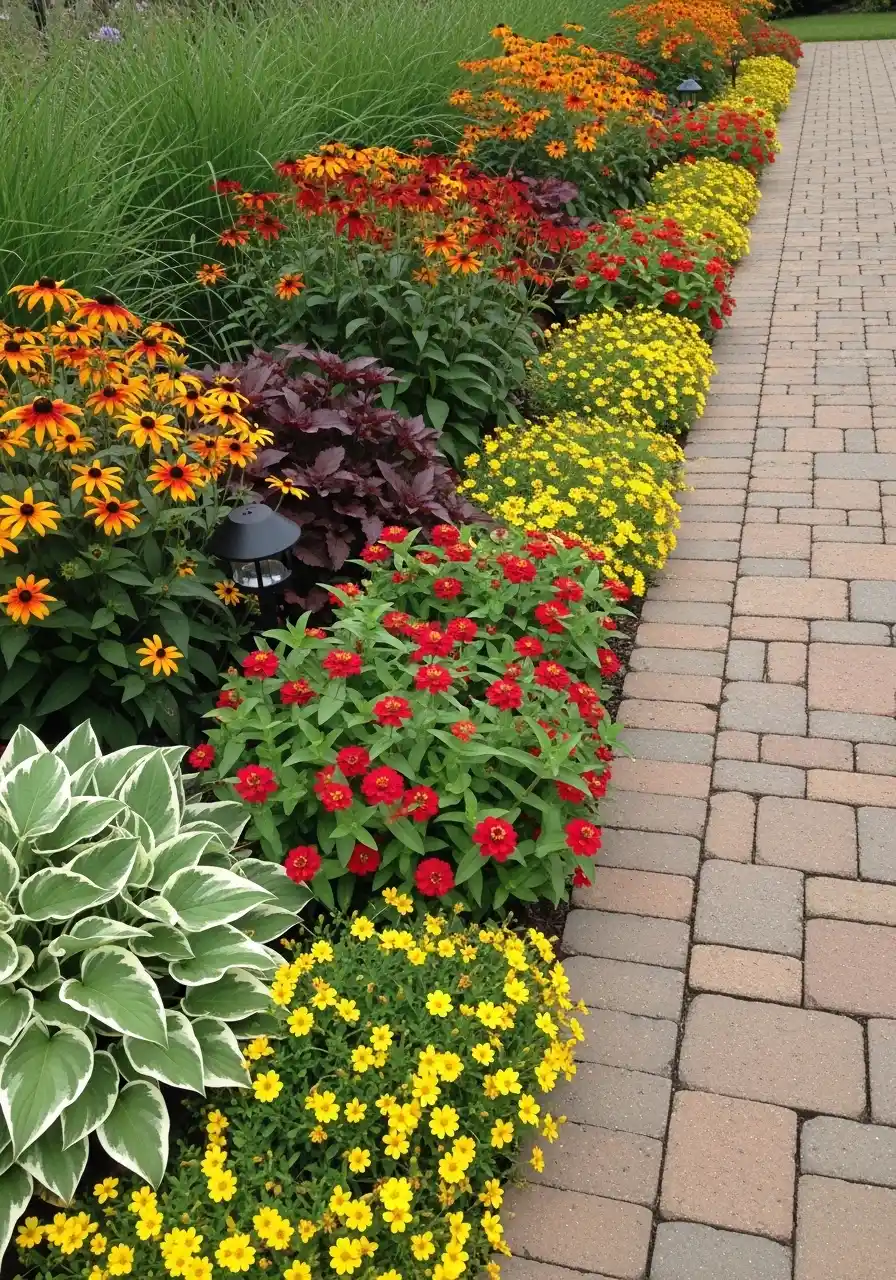
A rock garden filled with native wildflowers is a great way to bring a rustic, natural feel to your Arkansas landscape. Plant native species like Purple Coneflower and Black-eyed Susan, which grow beautifully in rocky soil, surrounded by larger stones or boulders. The wildflowers will spill out between the rocks, adding a touch of whimsy to your outdoor space. The rocks also help with drainage, keeping your plants happy during rainy spells and dry seasons alike.
What I find so special about rock gardens is the ability to incorporate more unique, bolder designs. The stones give the garden a rugged, natural look, while the wildflowers provide pops of color. You could also add a few small succulents or low-growing groundcovers like Creeping Thyme to break up the space and add even more texture. This type of garden is also incredibly easy to maintain once it’s established.
Secluded Garden Nook with Native Shrubs
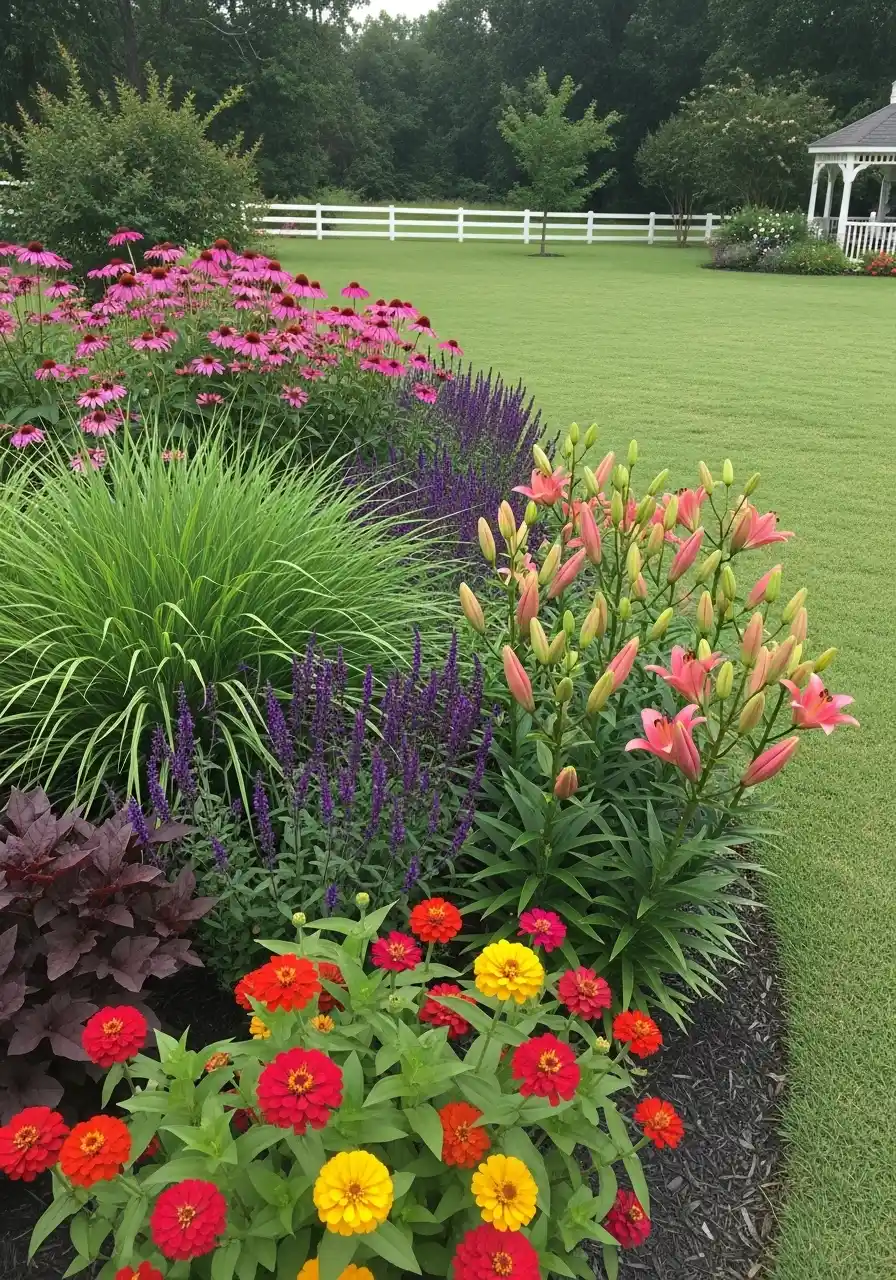
If you want a little piece of paradise in your backyard, a secluded garden nook could be the answer. Enclose the space with native shrubs like Spicebush or Buttonbush, and add a few tall trees like Red Maple to provide shade. Inside the nook, plant a mix of native flowers like Columbine and Wild Geranium, which thrive in the filtered light beneath the trees. This creates a cozy, private retreat where you can sit and unwind.
I think the most rewarding part of designing a nook like this is the tranquility it brings. It’s a space you can escape to, surrounded by nature and filled with the scents and sounds of native plants. It’s also a great way to use plants that might otherwise be overlooked, like wildflowers or shade-loving varieties. By incorporating these, you not only create a beautiful space but also help support local wildlife.
Evergreen Foundation Planting with Flowering Accents
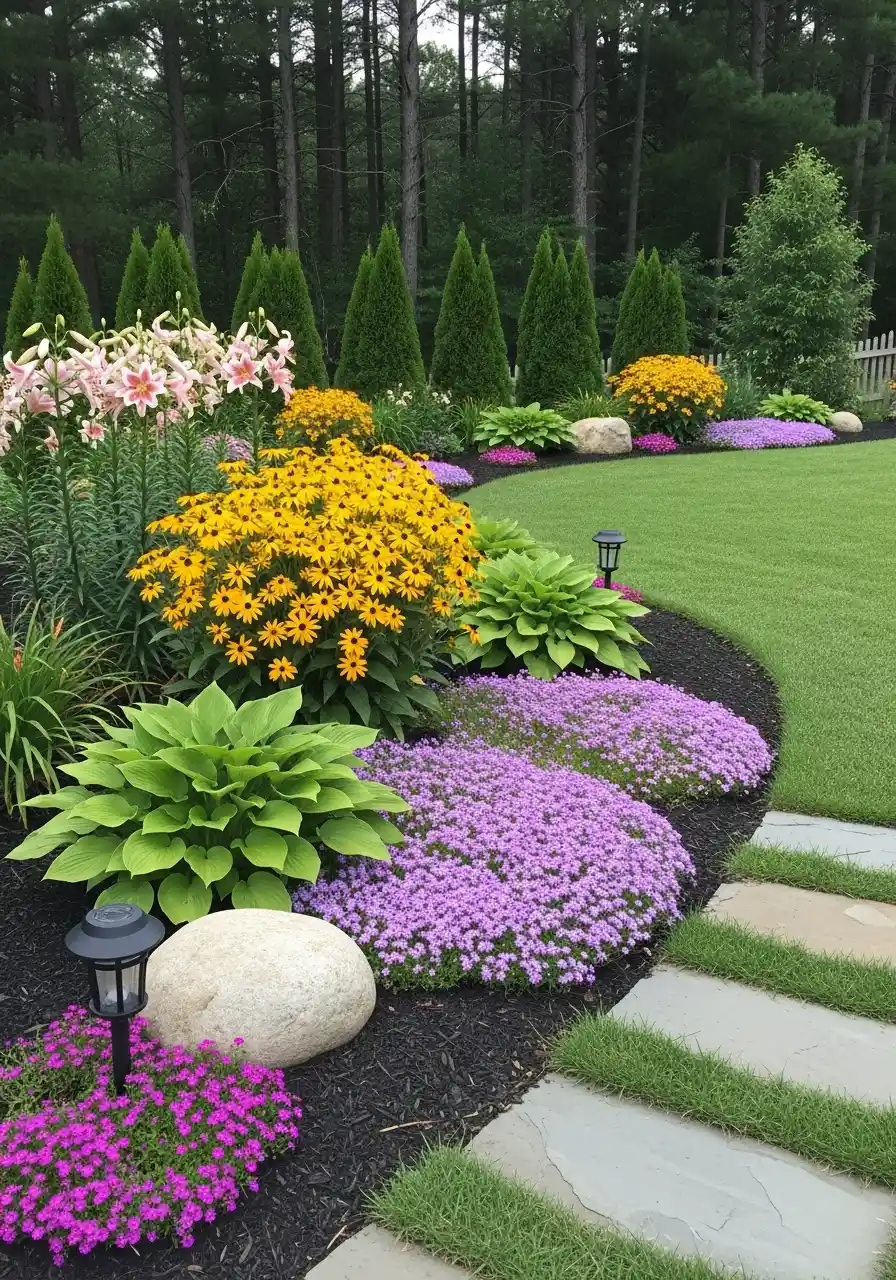
Creating a foundation planting with evergreens at the back and colorful flowering accents in the front can make your home look like it belongs in a magazine. Use Juniper and Boxwood to form a strong base, and then plant native perennials like Salvia and Coneflower in front to add color. This mix will create a sense of structure, making your yard look well-maintained without being too rigid. The evergreen plants provide year-round beauty, while the flowers offer seasonal bursts of color.
I love this design because it allows for a lot of versatility. Whether you want to change up the flower colors every season or keep things consistent, this layout can be easily adjusted. And because evergreens don’t require much maintenance, you can focus your efforts on the flowering plants, making this landscaping idea a perfect balance of form and function.
Wildflower Meadow for a Natural Look
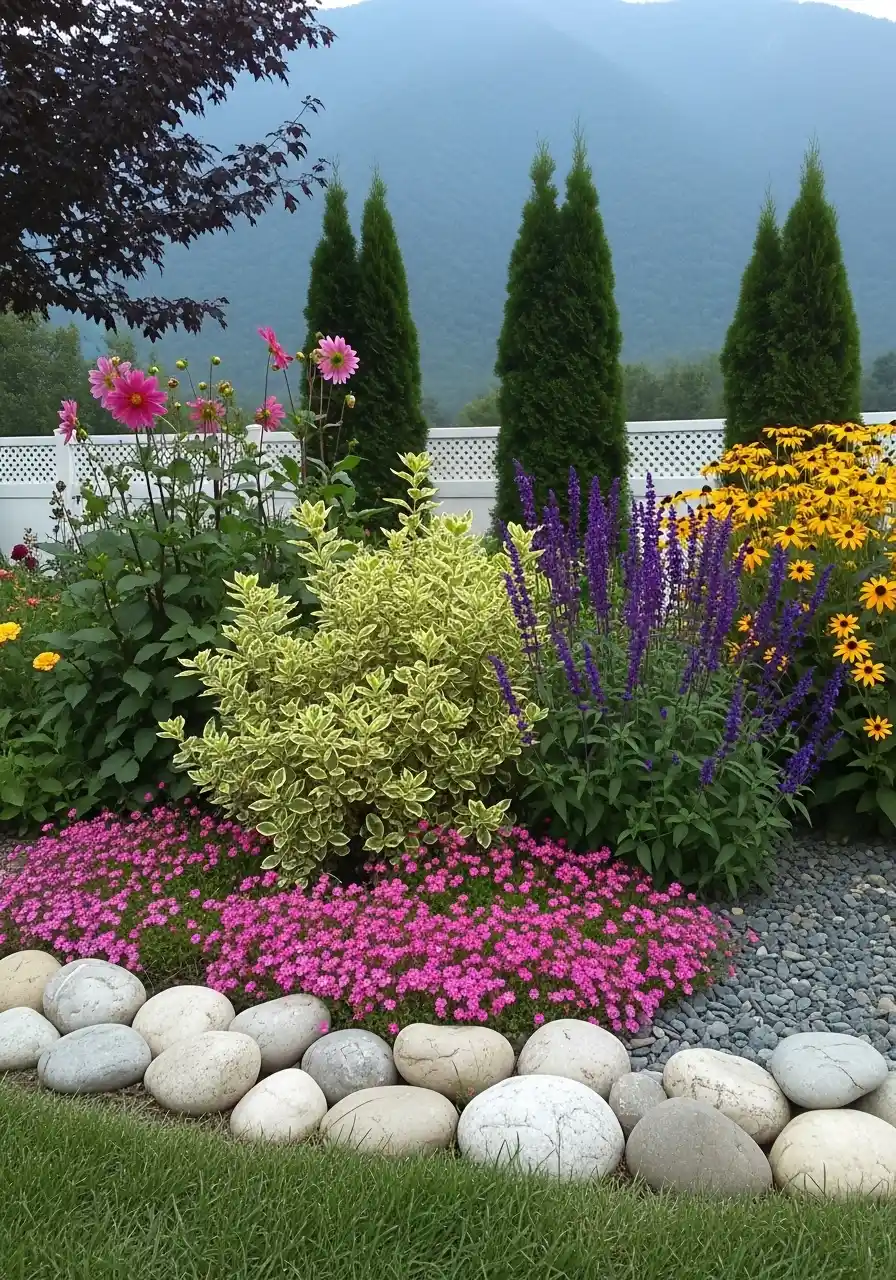
If you’re aiming for a more natural, low-maintenance garden, a wildflower meadow might be the way to go. Fill your space with native species like Black-eyed Susans, Purple Coneflower, and Blazing Star. These flowers thrive in Arkansas and can withstand the elements, so they’ll bloom year after year. A wildflower meadow is perfect for attracting birds, butterflies, and bees, which adds to the charm and beauty of your space.
What I love about this idea is that it feels so organic and relaxed. You don’t have to worry about perfectly manicured lawns or rigid plant designs. Instead, you get a beautiful, wild landscape that evolves with the seasons. Plus, it requires very little maintenance once it’s established. Just let the flowers grow, and they’ll reward you with a natural, colorful display.
Mixed Herb and Flower Garden for an Edible Landscape
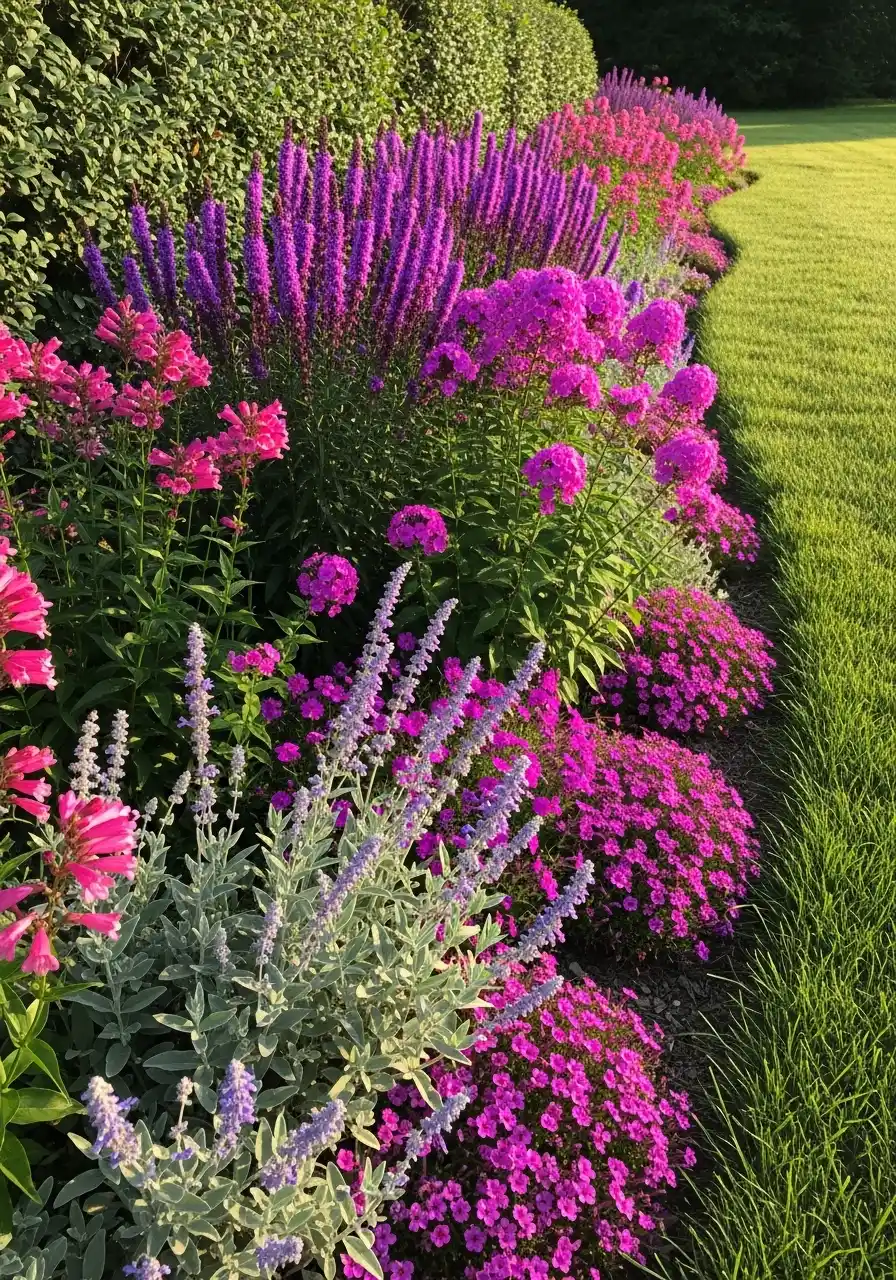
If you love the idea of an edible landscape, consider mixing native herbs and flowers. Plant herbs like Oregano and Mint along with colorful flowers like Daylilies and Wild Geraniums. This mix will not only beautify your yard but also provide you with fresh herbs to use in cooking. Herbs like these thrive in Arkansas, and they’ll benefit from the natural pollinators attracted by the flowers.
This idea is great because it combines aesthetics and functionality. You get the joy of growing beautiful plants while also having a practical use for them. Plus, the variety of textures and scents from both the herbs and the flowers will create a multi-sensory experience in your garden. If you’re someone who enjoys cooking with fresh ingredients, this is a win-win!
Vibrant Border Gardens with Perennial Flowers
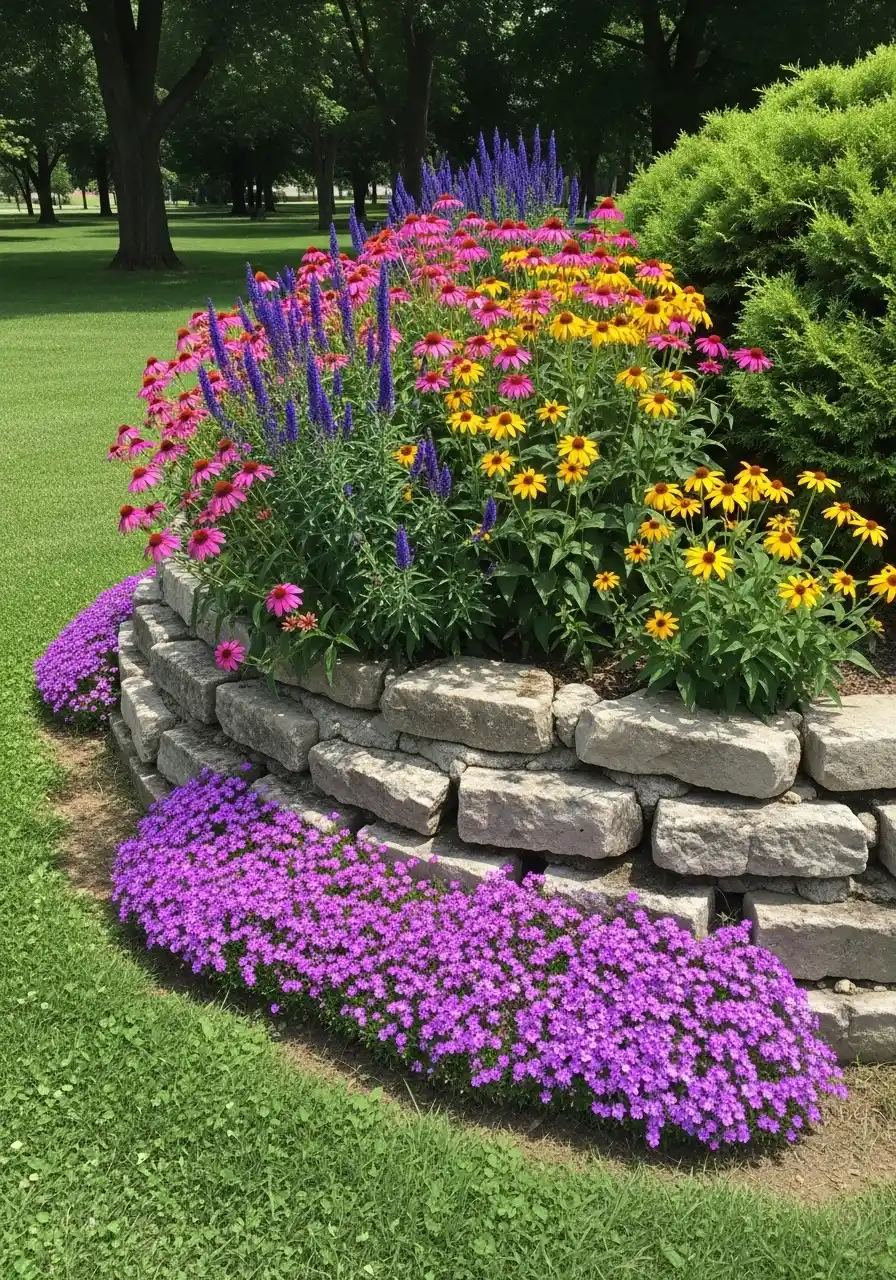
Lastly, consider planting vibrant border gardens along your fence or property line. Use native perennial flowers like Blazing Star, Purple Coneflower, and Bee Balm to fill the space with color and texture. The idea is to create a colorful, low-maintenance border that adds privacy, beauty, and charm to your yard. You can mix in a few shrubs for structure or leave the focus on the flowers for a softer, more natural look.
Border gardens are a fantastic way to define your space without the need for high fences or walls. The flowers will give your yard a welcoming, colorful appearance while still being functional. Plus, the perennials will come back year after year, saving you the hassle of replanting. It’s one of those landscaping ideas that just keeps giving.
Bold Color and Texture Along Walkways
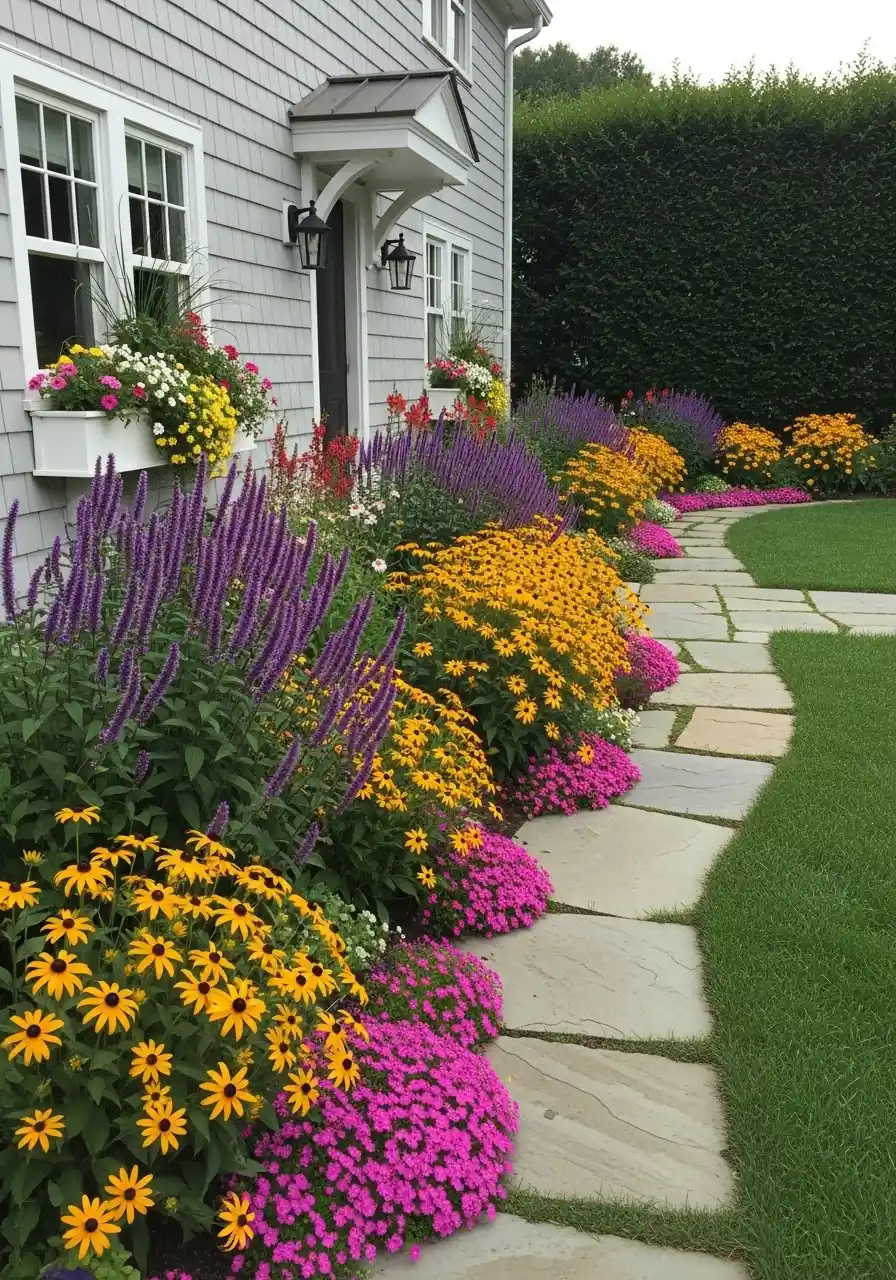
This first idea is something that will immediately catch the eye of anyone visiting your garden. Planting vibrant native flowers like Black-eyed Susans (Rudbeckia hirta) and Purple Coneflowers (Echinacea purpurea) along a stone pathway will add a natural, inviting touch to your yard. The contrast of purple, yellow, and pink flowers against the neutral tones of the stones creates a stunning visual effect.
Pairing these flowers with low-growing plants like Blue Fortune Agastache and Purple Sage adds texture and depth to the bed, making the entire area feel lush and full of life. The best part is that these plants are native to Arkansas, meaning they’re adapted to the local climate, making them both beautiful and practical. They thrive in a range of conditions, from full sun to partial shade, and attract pollinators like bees and butterflies.
For added beauty, you can intersperse some ornamental grasses, such as Little Bluestem, which will provide a soft, flowing element that contrasts beautifully with the more rigid structure of the stone path. This is a great landscaping option for anyone who wants to bring some energy and personality to their garden.
A Serene and Low-Maintenance Garden Bed
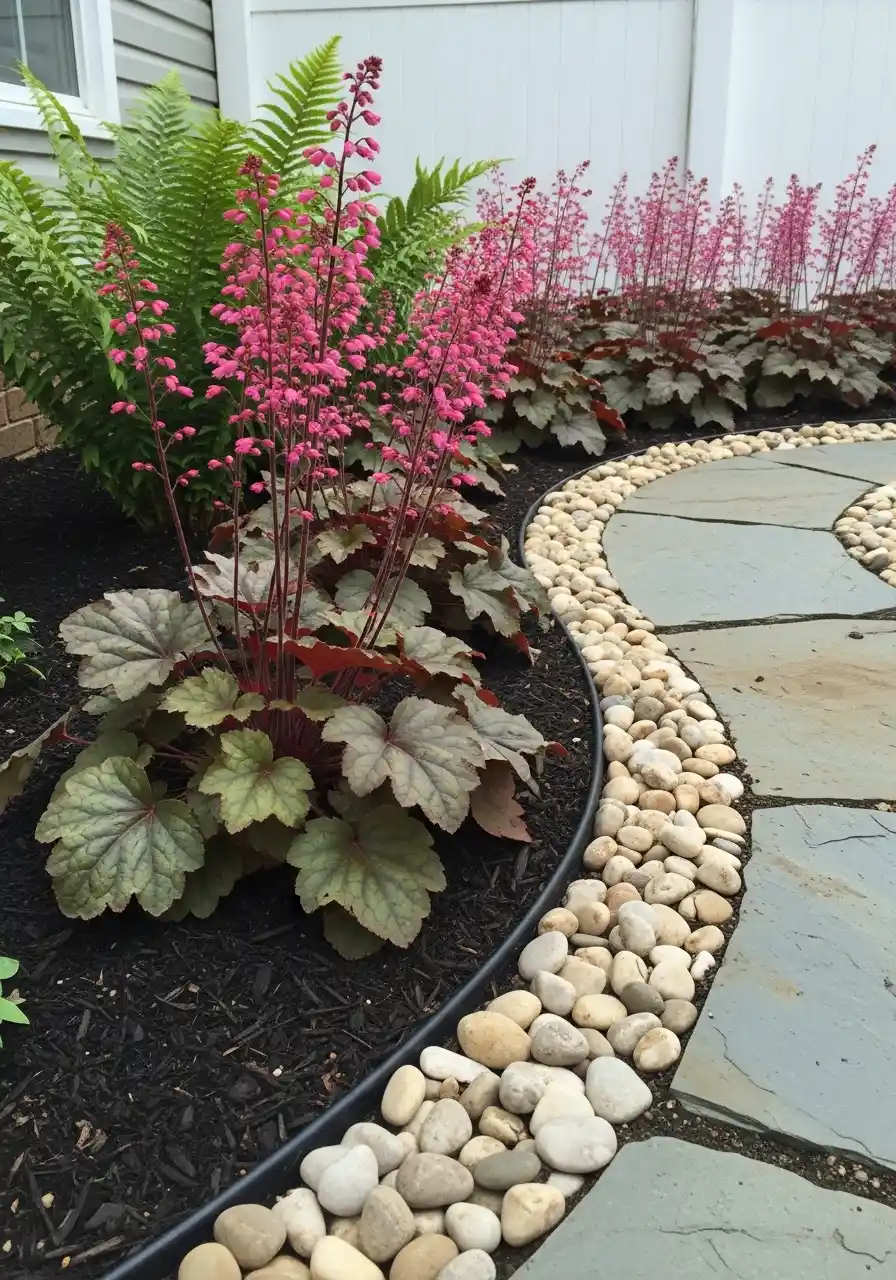
Incorporating Arkansas native plants like Heuchera (Coral Bells) in a tranquil garden bed can make a real statement. With their delicate, bell-shaped flowers and foliage in shades of green, purple, and red, they add a subtle but striking element to your yard. These plants look stunning when combined with soft, rounded stones like the ones seen in this design, which frame the plants beautifully and provide a harmonious, natural appearance.
The cool thing about Heuchera is that it thrives in partial shade, making it perfect for areas that don’t get full sunlight. It’s also drought-resistant, meaning it won’t demand too much water once established. Pairing these plants with Brunnera and Bleeding Heart adds a touch of whimsy, with their graceful flowers that hang like pendants in the breeze. Overall, this setup is perfect for a relaxed, easy-care garden.
If you’re looking for a landscaping option that looks effortless but still offers a lot of charm, this native plant arrangement is a winner. It’s a great choice for those with busy lives who still want to enjoy the beauty of a garden.
Vibrant Flowering Bushes in a Front Yard
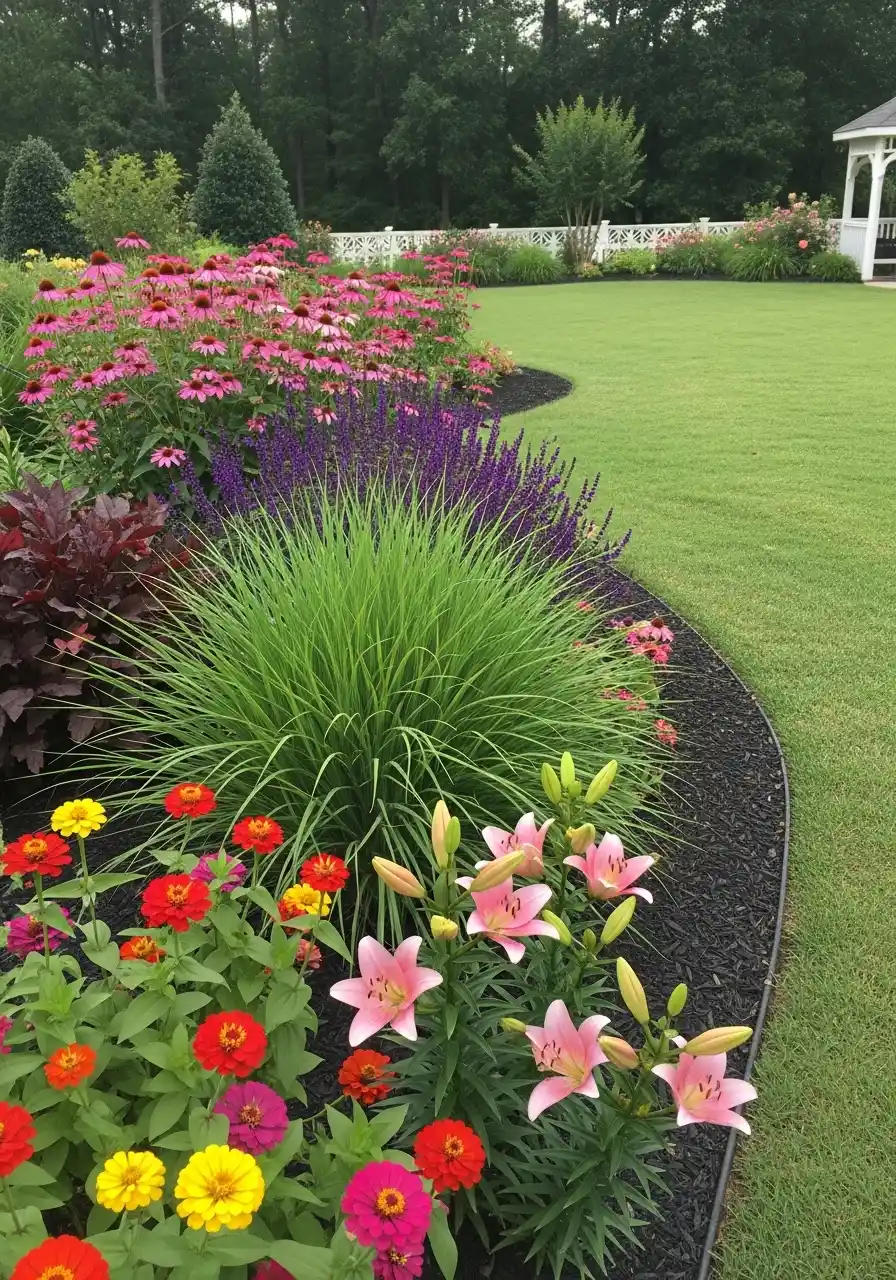
If you want a front yard that immediately grabs attention but doesn’t require constant upkeep, consider planting a mix of vibrant flowering shrubs and perennials. Arkansas native plants like Lantana (Lantana camara) and Daylilies (Hemerocallis) will provide a bright, bold pop of color, with their yellow, orange, and red blooms.
These plants are not only stunning but are perfect for front yard landscaping because they create a natural, welcoming atmosphere. The beauty of using native plants is that they tend to be more resistant to pests and disease, so you won’t have to spend as much time and money on maintaining them. A mixture of tall, upright plants like Blackberries and shorter plants like Salvia offers a layered, structured look that is visually appealing and dynamic.
Adding a small path or stepping stones through the flowerbed can also create a charming, walkable garden experience. This is an excellent way to draw attention to specific areas of your front yard, making your landscape feel fuller and more engaging.
Peaceful Garden Nook with a French
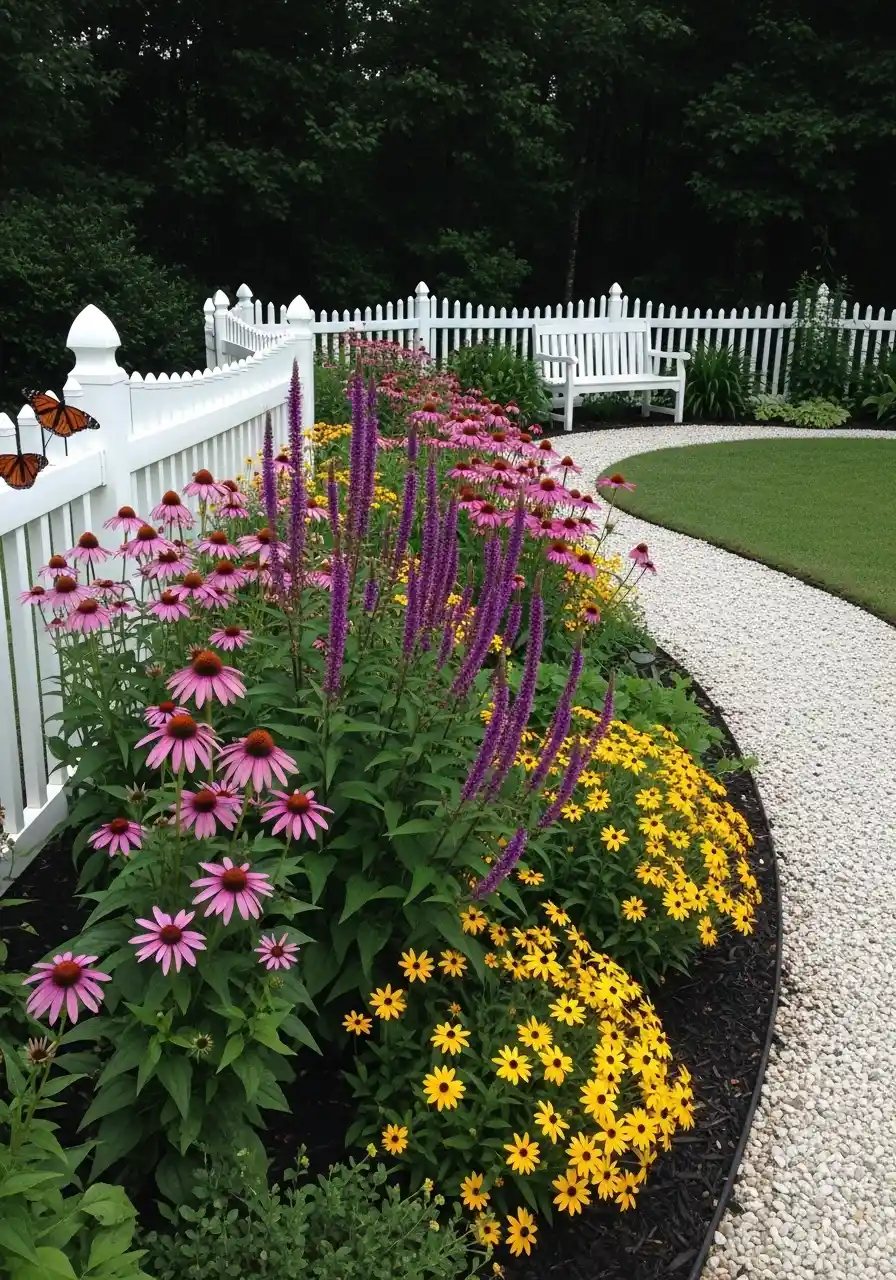
For those who love to relax in a tranquil garden setting, adding a bench surrounded by native plants can be the perfect solution. Arkansas native plants such as Purple Coneflowers and Astilbe will fill the area with color, while the soft foliage of Hostas and Ferns will create a peaceful, shaded area.
A well-placed bench can turn an ordinary corner of your yard into a quiet retreat where you can unwind and enjoy nature. The best part is that Arkansas native plants, once established, require very little water and maintenance, so you won’t have to constantly tend to the space.
To enhance the atmosphere, you can add some soft lighting or small ornamental rocks that glisten in the evening. These little touches will make your nook feel even more serene and welcoming.
Conclusion
Designing a landscape with arkansas native plant landscaping is not just an investment in beauty—it’s an investment in sustainability. From vibrant flower beds to wildflower meadows, native plants offer endless possibilities for creating a low-maintenance, eco-friendly garden. With a little creativity and planning, you can create an outdoor space that’s both functional and visually stunning, while also helping to preserve the local environment. So, go ahead and embrace the beauty of native Arkansas plants—they’ll reward you with years of beauty, pollinators, and a healthier garden.