Table of Contents
Texas zone 8 landscaping: a courtyard that feels like a secret garden
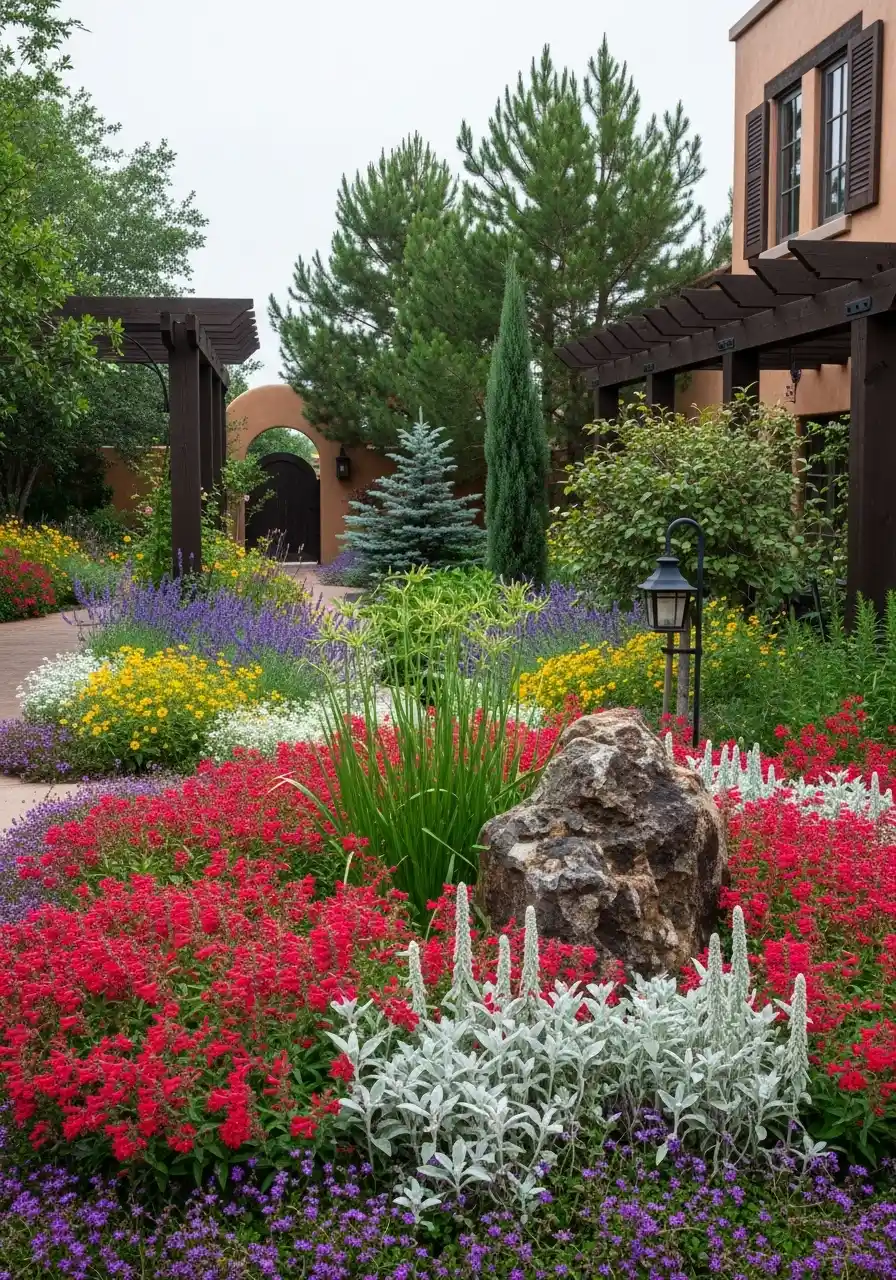
This first one is straight-up dreamy. The path curves through thick waves of flowers, with pergolas and warm stucco walls in the background. Red blooms spread like a carpet, purple flowers add that cool tone, and little pops of yellow and white keep it from getting too heavy. Plus there’s a rock placed like a centerpiece, which sounds silly, but it works.
If you want this vibe for texas zone 8 landscaping, think in layers and patches, not single plants. The way the colors are grouped is what makes it feel intentional. I’d do 3–4 main colors and repeat them, like purple, yellow, red, and white. Repeat is the secret sauce. If you plant one of everything, it looks like you lost control, and I have def done that.
Also, don’t skip path lighting. That small lantern in the bed makes the whole space feel welcoming at dusk. A courtyard design like this is not about the lawn, it’s about walking through it like you’re in your own little movie scene.
A stone-and-pebble walkway that handles heat without whining
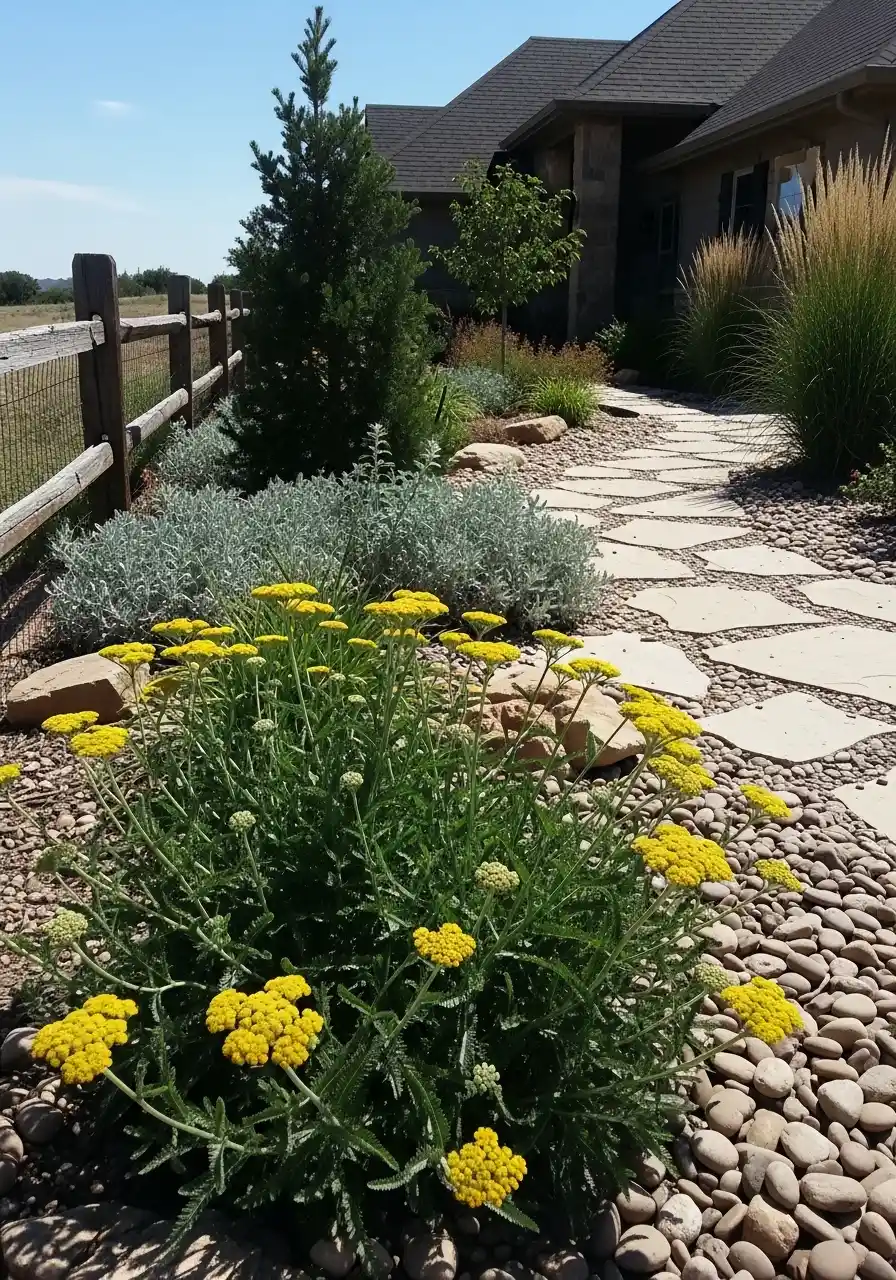
This second image is calmer, more “ranch house neat.” It’s a flagstone path with river rock around it, and soft gray-green shrubs along the edge. Then you get that bright yellow yarrow in the foreground, like a surprise burst. It’s hardy looking, like it can take Texas weather and not complain.
For Texas zone 8 landscape design, this is a smart idea because it balances hardscape and plants. The path does most of the work visually, so you don’t need a million flowers to make it pretty. River rock also drains well, which matters when Texas decides to dump rain all at once.
My opinion, yarrow is underrated. It looks delicate from far away, but it’s tough. Plant it in clumps, give it sun, and don’t baby it. The gray shrubs (think artemisia or similar) make a soft border that doesn’t need trimming every week.
A backyard wildflower patch that feels joyful and a little chaotic
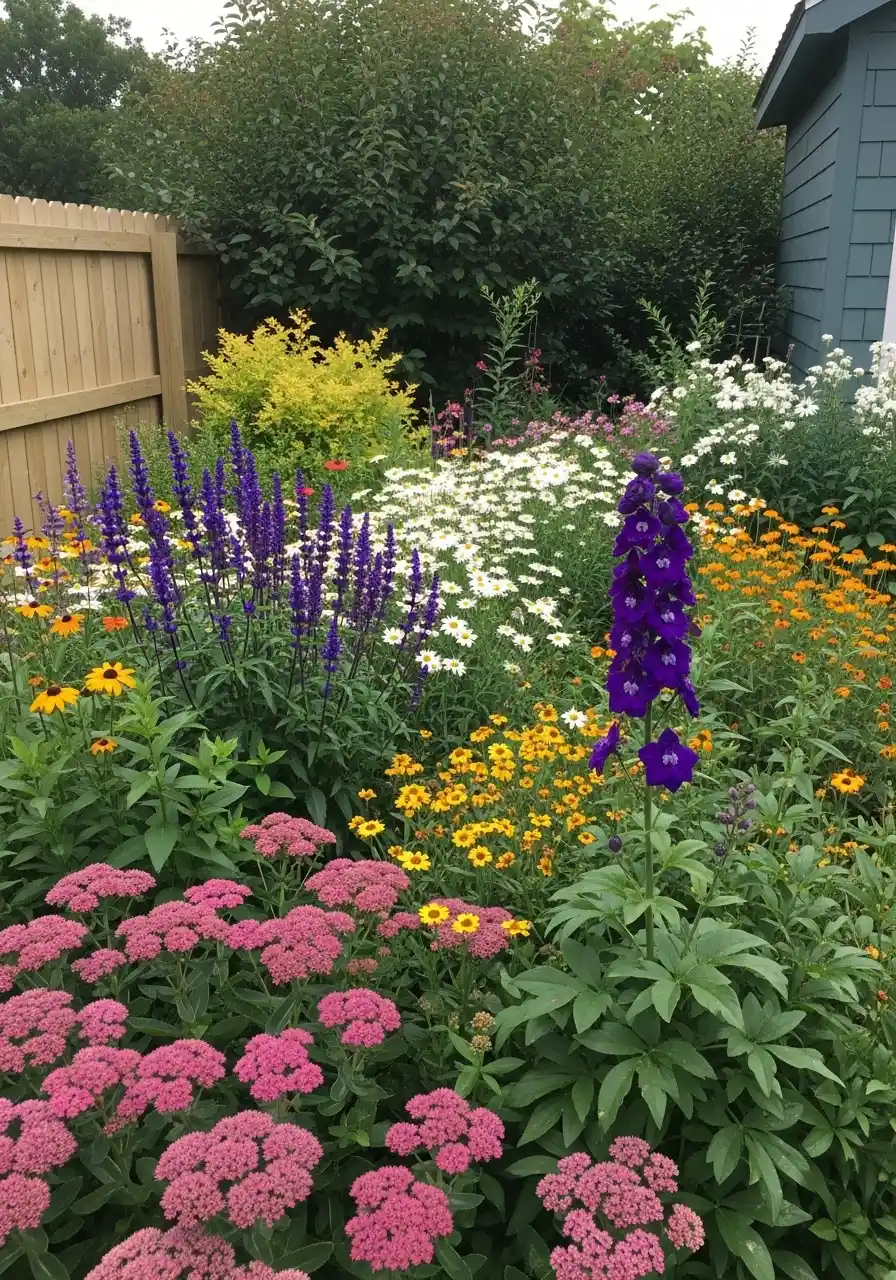
This one is pure happiness. Daisies, purple spikes, yellow blooms, and pink clusters all mixed together like a party. It’s the kind of bed that makes you stop and stare, and also makes you wonder if you could pull it off without it turning into a jungle.
For texas zone 8 landscaping ideas, this is the “pollinator buffet” style. The trick is choosing perennials that can handle the heat and come back strong. You’re not replanting every month. You’re building a bed that fills in over time, and it gets better each season.
Here’s my confession: I love this style, but I get nervous it’ll look messy. So I’d add one stabilizer. Like a clean edge, or a small path, or even a repeated plant line along the front. Give the chaos a frame. That’s what makes it feel planned, not accidental.
A curving gravel path with purple and yellow waves
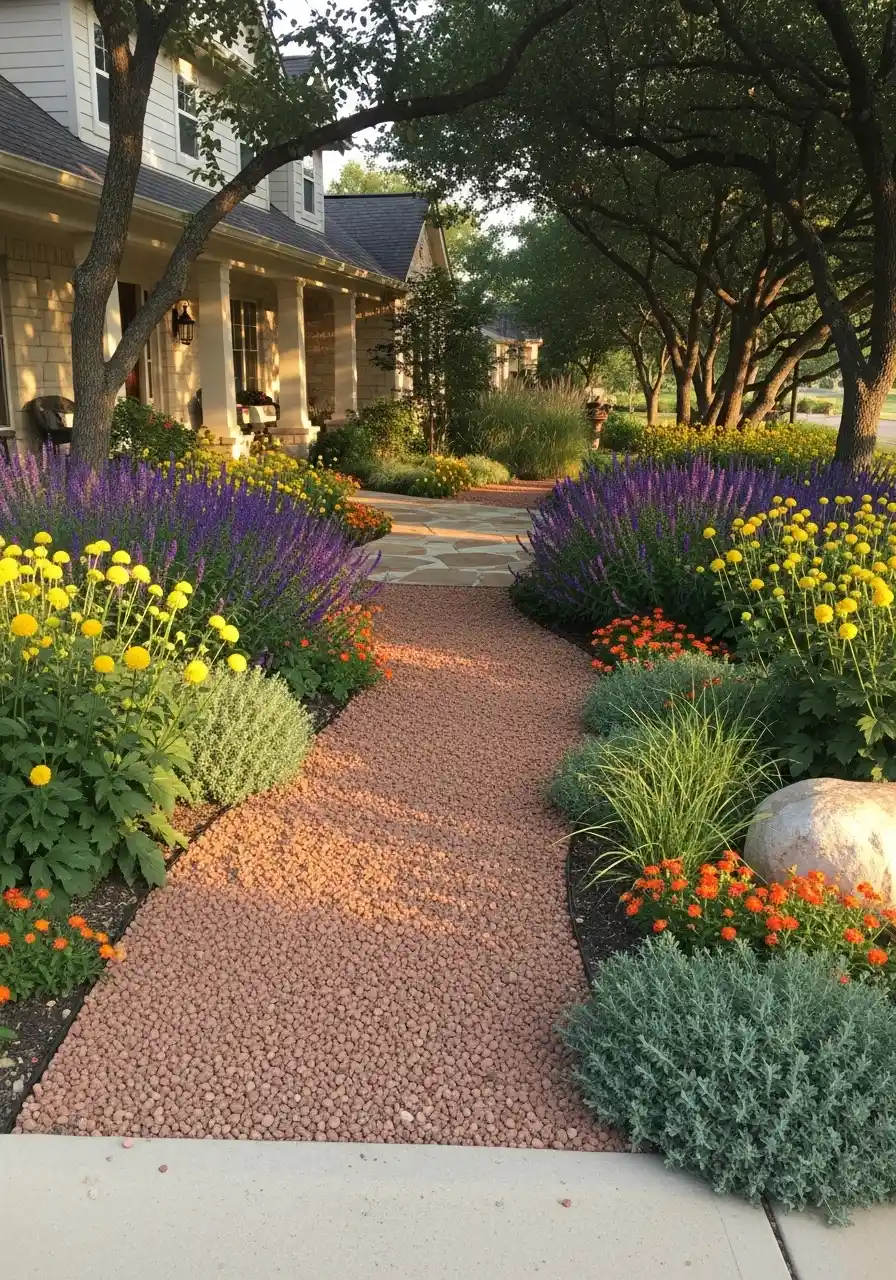
This one feels like a “welcome home” walkway. The path is warm-toned gravel, curved gently, and the planting on both sides is thick with purple salvia-looking spikes and round yellow blooms (they remind me of billy buttons). There’s also orange pops near the ground, plus silvery shrubs that look cool even in harsh sun.
In texas zone 8 landscaping, the biggest win here is texture. Spiky purple flowers, round yellow balls, soft silver mounds, and airy grasses. Your eye stays interested even if one thing isn’t blooming that week. That’s important because Texas weather will mess with bloom times, it just will.
Practical hack: keep the path slightly raised, and use edging so gravel doesn’t drift into your beds. Also, plant in drifts. Like, big swoops. If you plant little dots, it won’t have the same “flow” feeling, and that flow is what makes this design soothing.
A modern house softened by a huge pollinator border
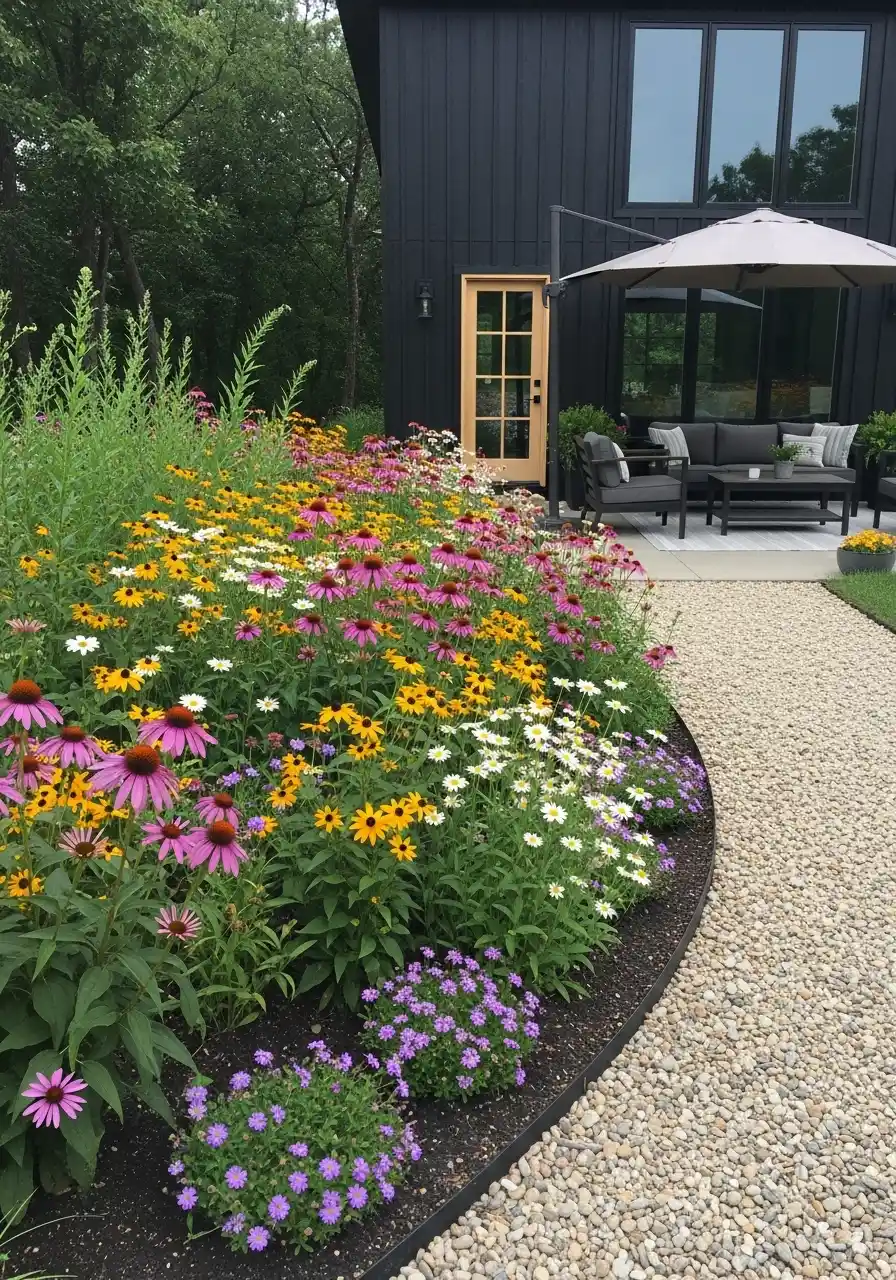
This one has a dark modern house, a patio, and then a big curved flower bed just exploding with coneflowers, black-eyed Susans, white daisies, and purple groundcover. The border edge is clean, and the gravel path is simple. It’s like the house is serious, but the garden is friendly.
For Texas zone 8 landscape yards, this is a great combo because it’s not fussy. These are classic tough perennials. And the bed is shaped like a wide curve, which makes it feel natural, not stiff. I personally love curved beds because they hide mistakes. Straight lines show every flaw, and I have plenty.
The lesson here is mass planting again. You pick a handful of strong bloomers, then plant enough of them to make impact. Also, keep the patio furniture simple, because the flowers are the star. Too much decor and it starts feeling crowded.
Bright color blocks with a tidy path down the middle
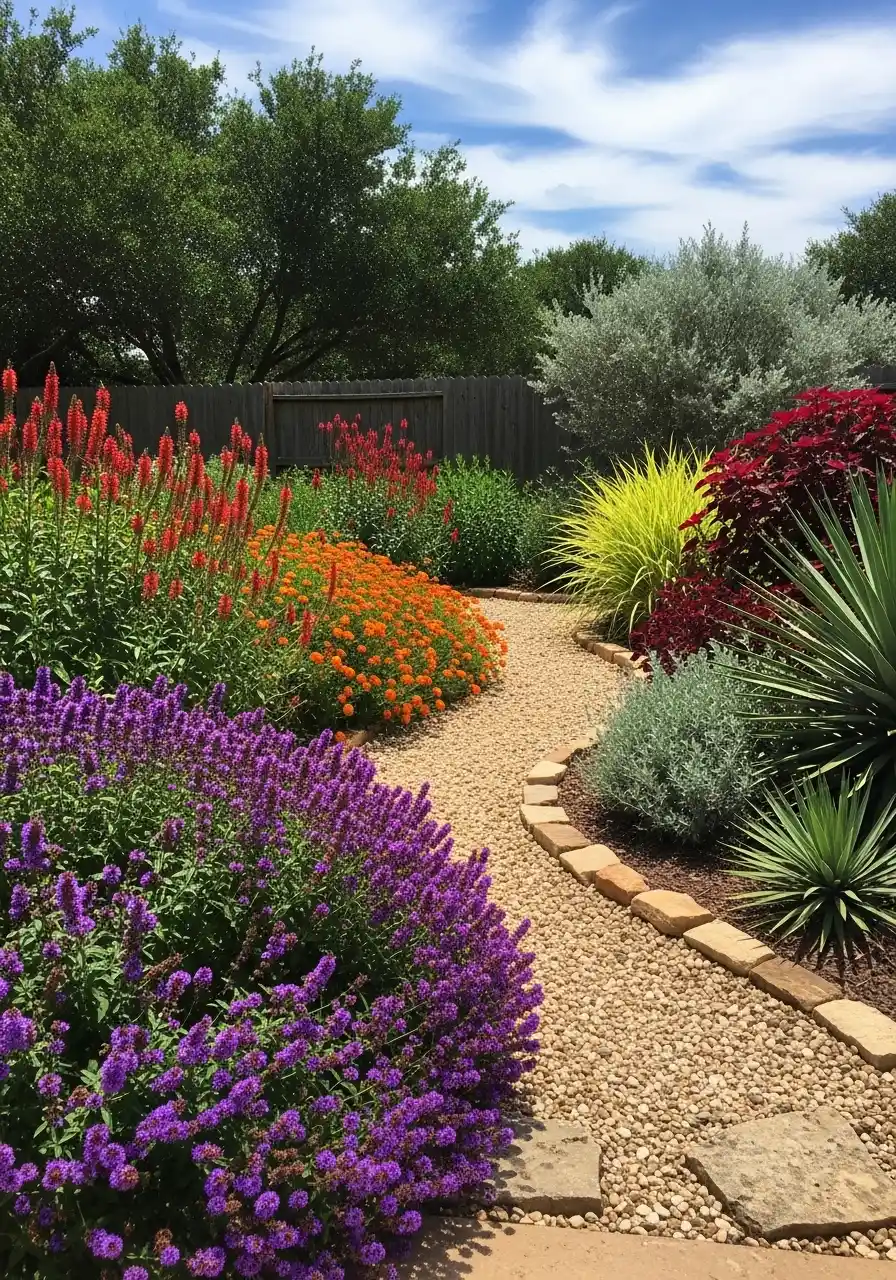
This image is bold. Purple flowers in a thick patch, orange blooms in a big mound, and red spiky flowers standing tall like little fireworks. Then there’s a gravel path cutting through, with stone edging that keeps everything neat.
For texas zone 8 landscaping ideas, this is how you get “wow” without needing rare plants. You just group colors into blocks. Purple block, orange block, red block. That’s it. It’s kind of like painting, but with flowers.
One tip I swear by: put the tallest plants slightly back from the path edge. That way they don’t flop onto the walkway. Also, stone edging like this helps with weed control because it gives you a clear boundary for mulch and gravel. Boundaries save your sanity.
A mulched bed with big grasses and yellow flowers that glow
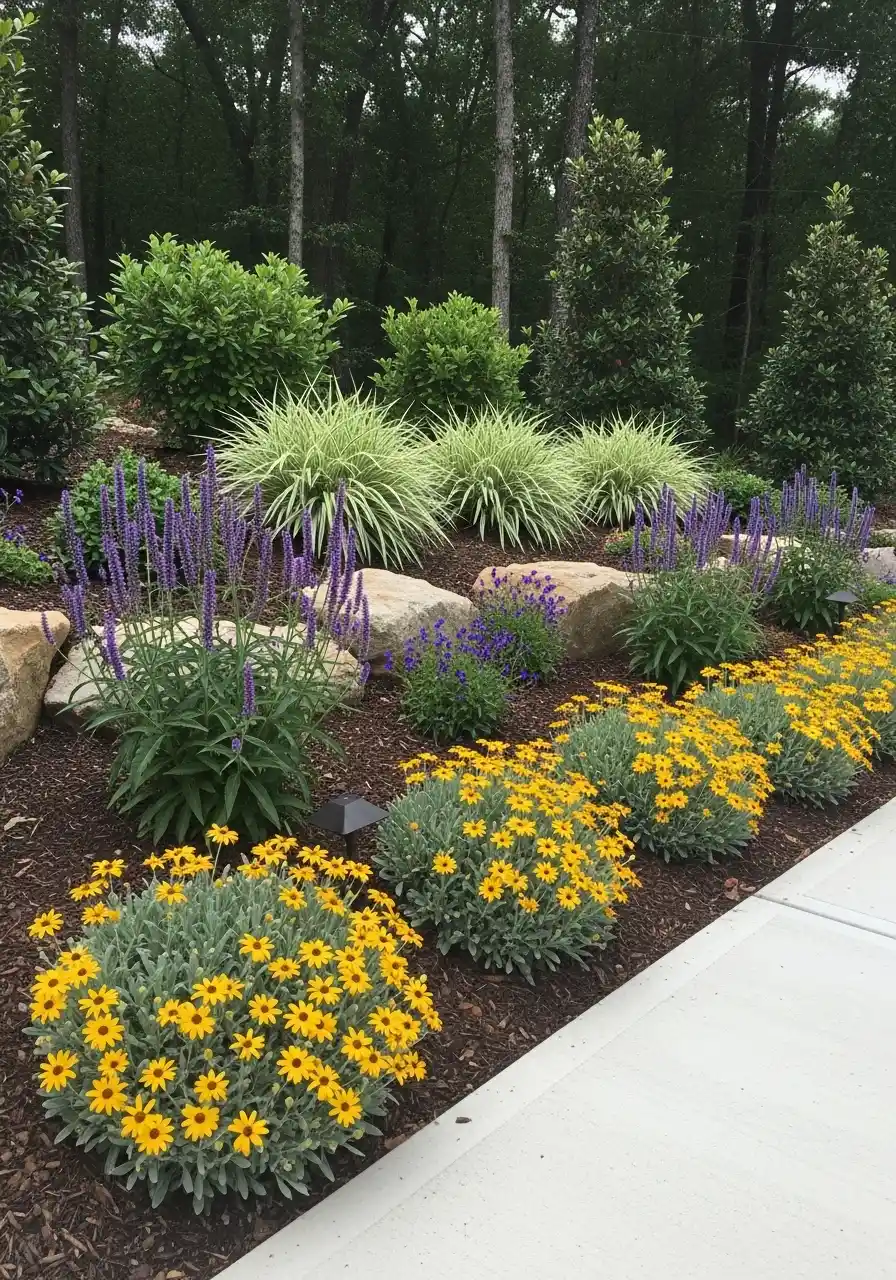
This one is calmer but still bright. Yellow daisy-like flowers up front, purple spires behind them, a few boulders for structure, and then big soft grasses in the back. It’s mulched, which makes it look finished and also helps the soil stay cooler.
In texas zone 8 landscaping, mulch is a legit survival tool. It keeps moisture in, reduces weeds, and protects roots when the heat spikes. The boulders help too. They add weight and shape, and they don’t need water, so that’s my favorite kind of “plant.”
I like this design because it feels balanced. Not too wild, not too formal. If you want it lower effort, stick to three main plant types and repeat. Yellow front, purple middle, grass back. That’s a clean formula.
A fence-line flower bed with tall whites, purples, and black-eyed Susans
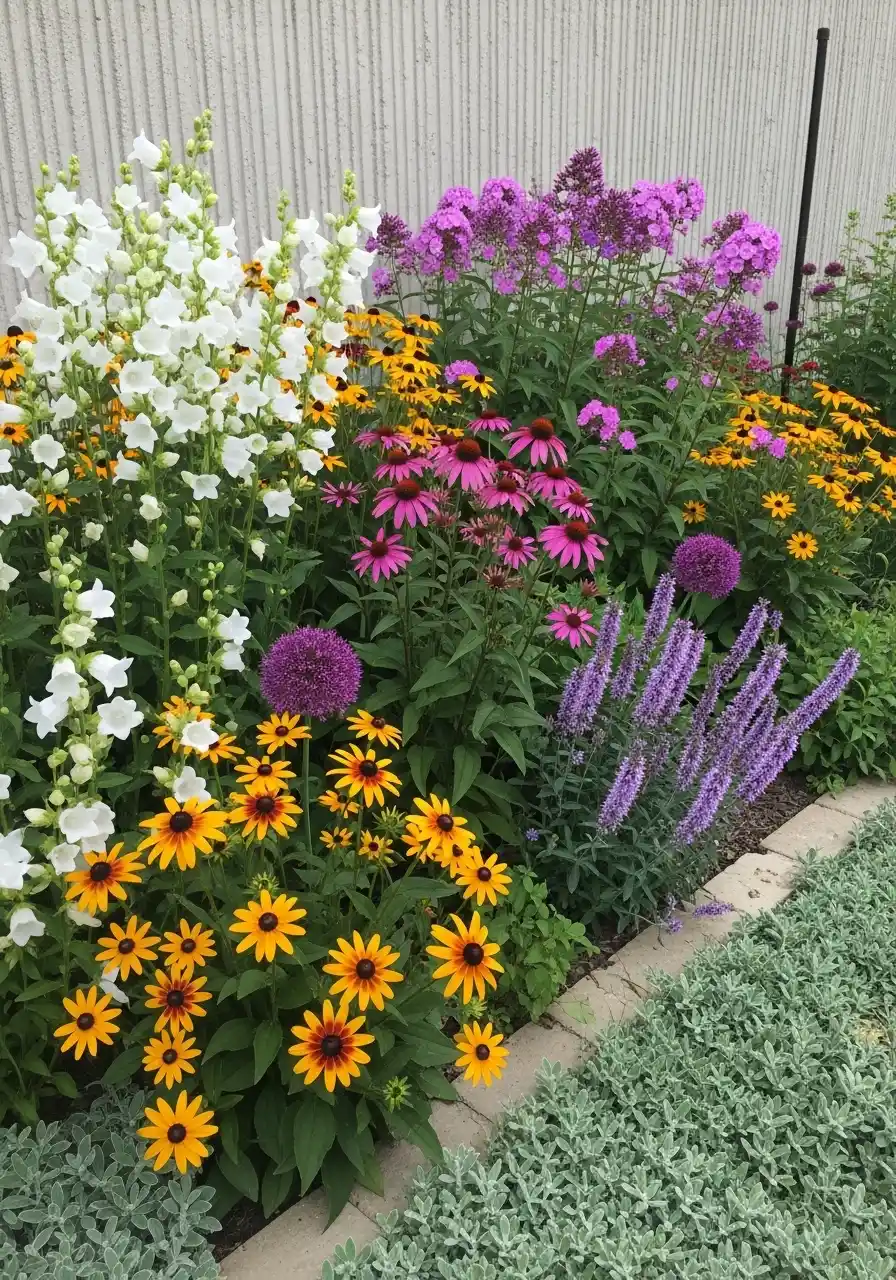
This bed is packed tight against a fence, and it’s bright in a cheerful way. Tall white flowers (they look like penstemon types), black-eyed Susans, purple spikes, and those round purple allium-like balls. It’s layered like a little wall of blooms.
For a Texas zone 8 landscape design, fence lines are perfect because you can build height without blocking sightlines. Put the tallest stuff at the back, then step down in height toward the edge. That’s what makes it look full, not flat.
My opinion: this is a “cut flower” style bed too. You could snip some blooms for a vase and it wouldn’t ruin the look. Also, if the fence is plain, colorful plants make it feel intentional. It’s like dressing up a boring background.
A layered stone-edged bed right against the house
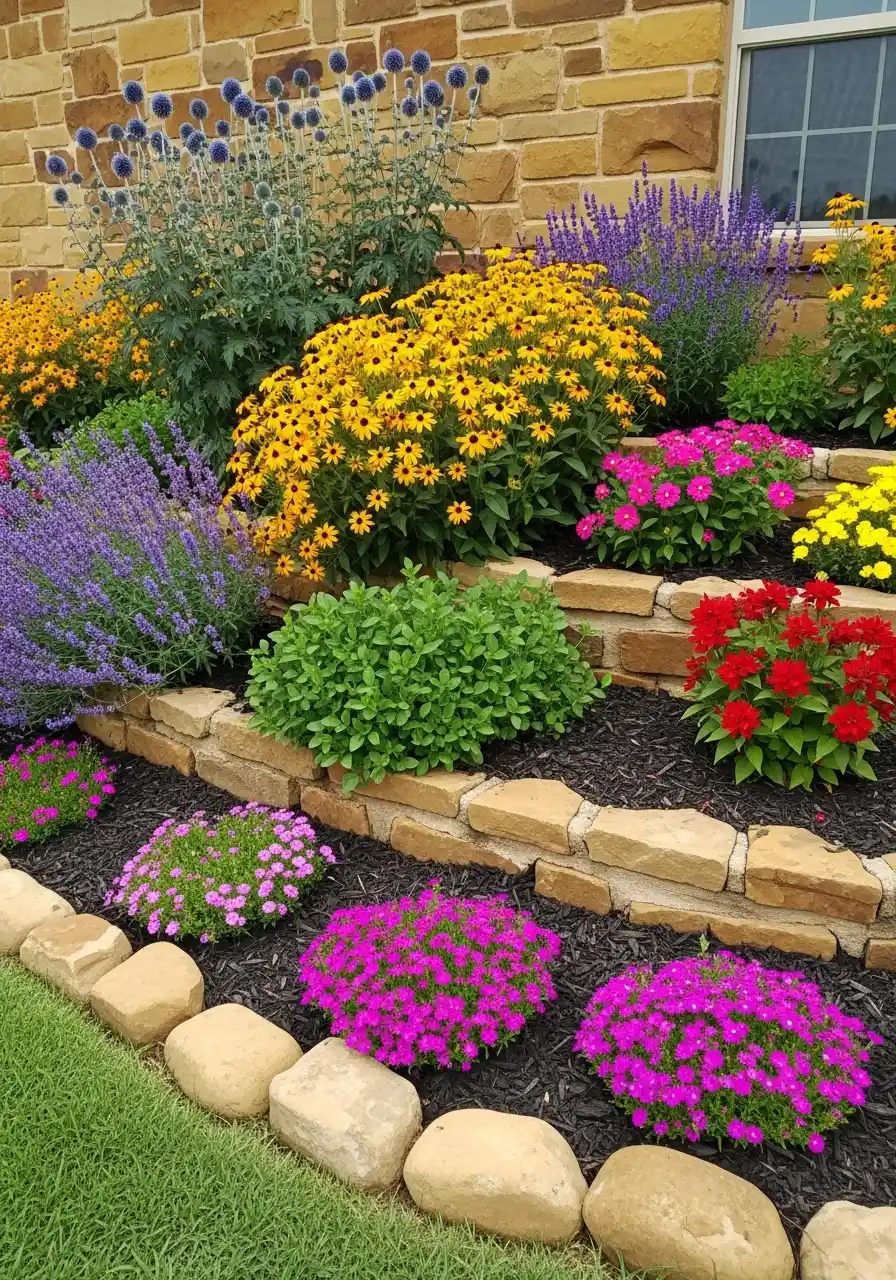
This one is the classic front bed style, but done really nicely. Stone edging creates tiers, mulch keeps it clean, and the plants are chosen for strong color and shape. Yellow flowers dominate, with purple spikes, pink mounds, and red accents. It’s bright, but still tidy.
For texas zone 8 landscaping, this works because the edging holds everything in place. Mulch stays in the bed, water stays where you want it, and the whole thing is easy to maintain. Stone edging also makes mowing easier. That’s not glamorous, but it matters.
Here’s a hack: when you plant a bed like this, don’t plant one of each. Plant in threes or fives. Small groups. That’s how it reads as “designed.” Also, leave little gaps for growth. Plants in Zone 8 can grow fast when they’re happy.
A colorful path garden that looks like a paint spill (in a good way)
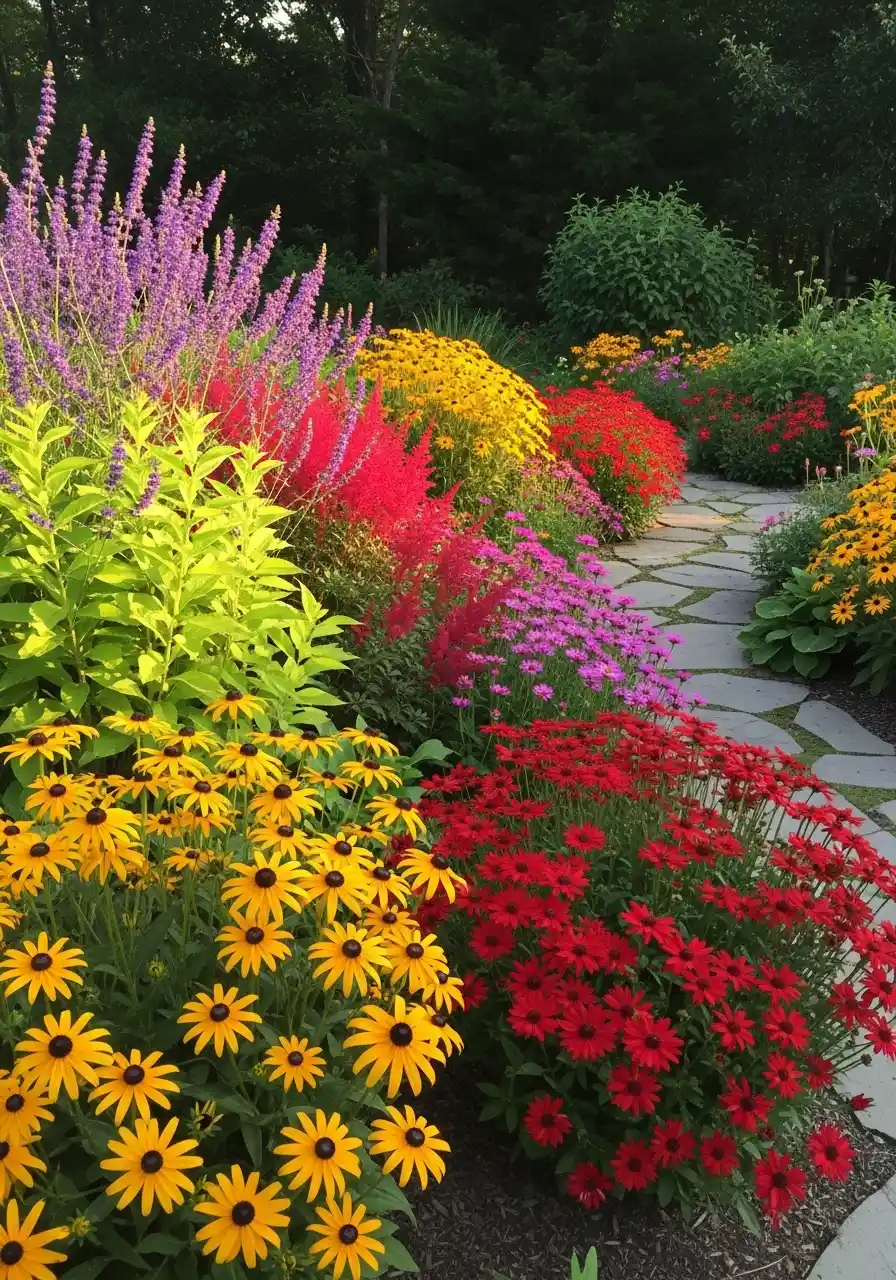
This one is loud and beautiful. Red flowers, yellow daisies, purple spikes, pink blooms, and bright green foliage all flowing along a stone path. It’s like someone turned the saturation up, and I’m not mad about it.
In texas zone 8 landscaping ideas, this is the “maximum color” style, and it works because the path is neutral. The stone path calms it down. Without that path, it could feel too busy. With it, the color feels guided, like it’s escorting you along.
My confession: I’d want this, but I’d also worry about keeping it from looking messy. The fix is pruning and deadheading, yes, but also choosing plants that stay neat naturally. Add some mounding shrubs or grasses in between the loud flowers. Give the eye a break.
Texas zone 8 landscaping with boulders and color waves
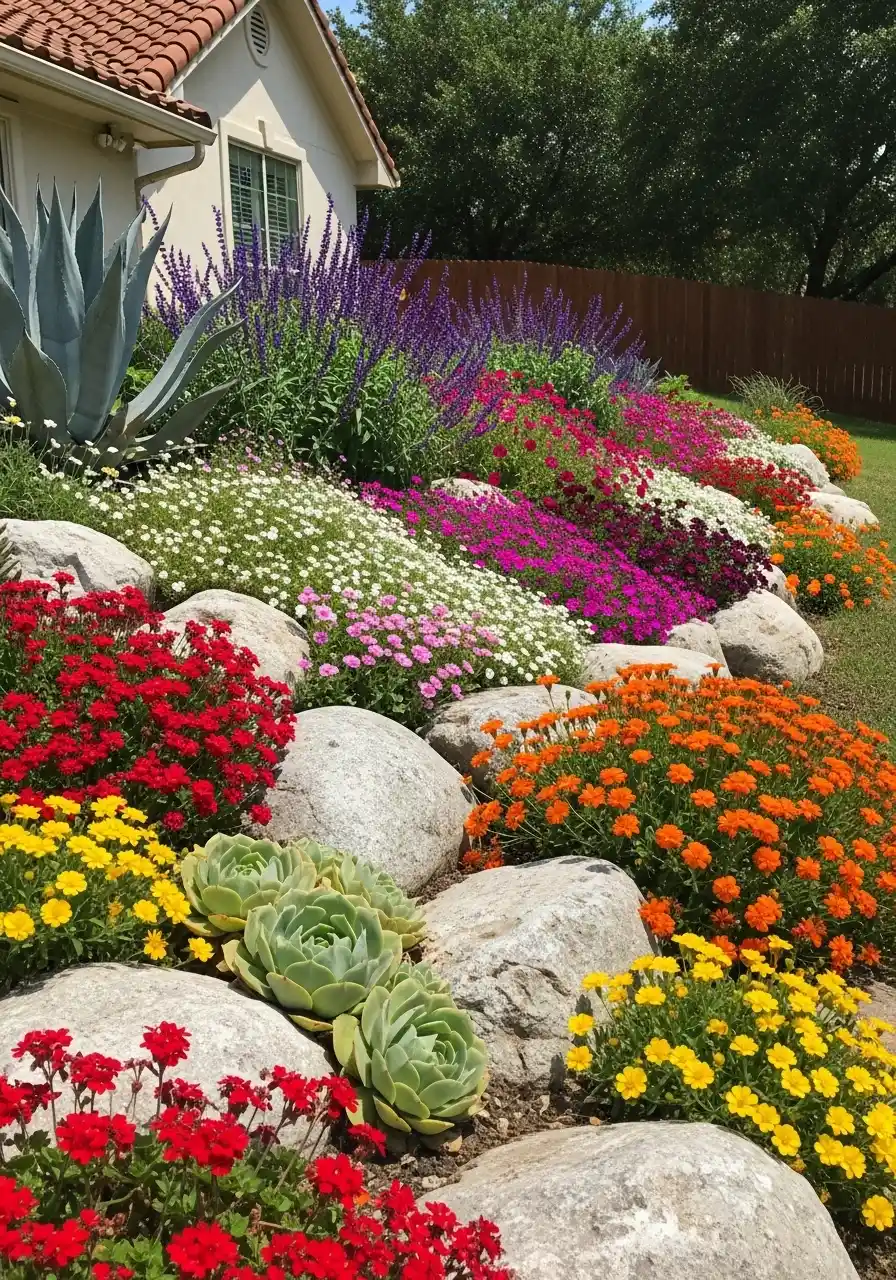
This design is loud in the best way. Big pale boulders, thick waves of flowers in red, yellow, pink, purple, and white, plus one giant agave sitting there like a boss. I love it because it feels playful, but the rocks keep it grounded. In texas zone 8 landscaping, boulders are like punctuation marks. They stop the bed from looking like a random salad.
If you try this, don’t scatter colors like confetti. Plant in drifts. Like one big patch of orange, then a patch of white, then a patch of hot pink. You’ll get that “color river” look. And keep your tallest stuff toward the back, shorter stuff in front, so the whole thing reads clean from the street.
My opinion, and I’ll stand by it: the agave makes the whole bed look more expensive. One spiky sculptural plant adds drama without extra work, which is kinda the dream for zone 8 Texas landscaping.
A tidy border bed for texas zone 8 landscaping that stays neat
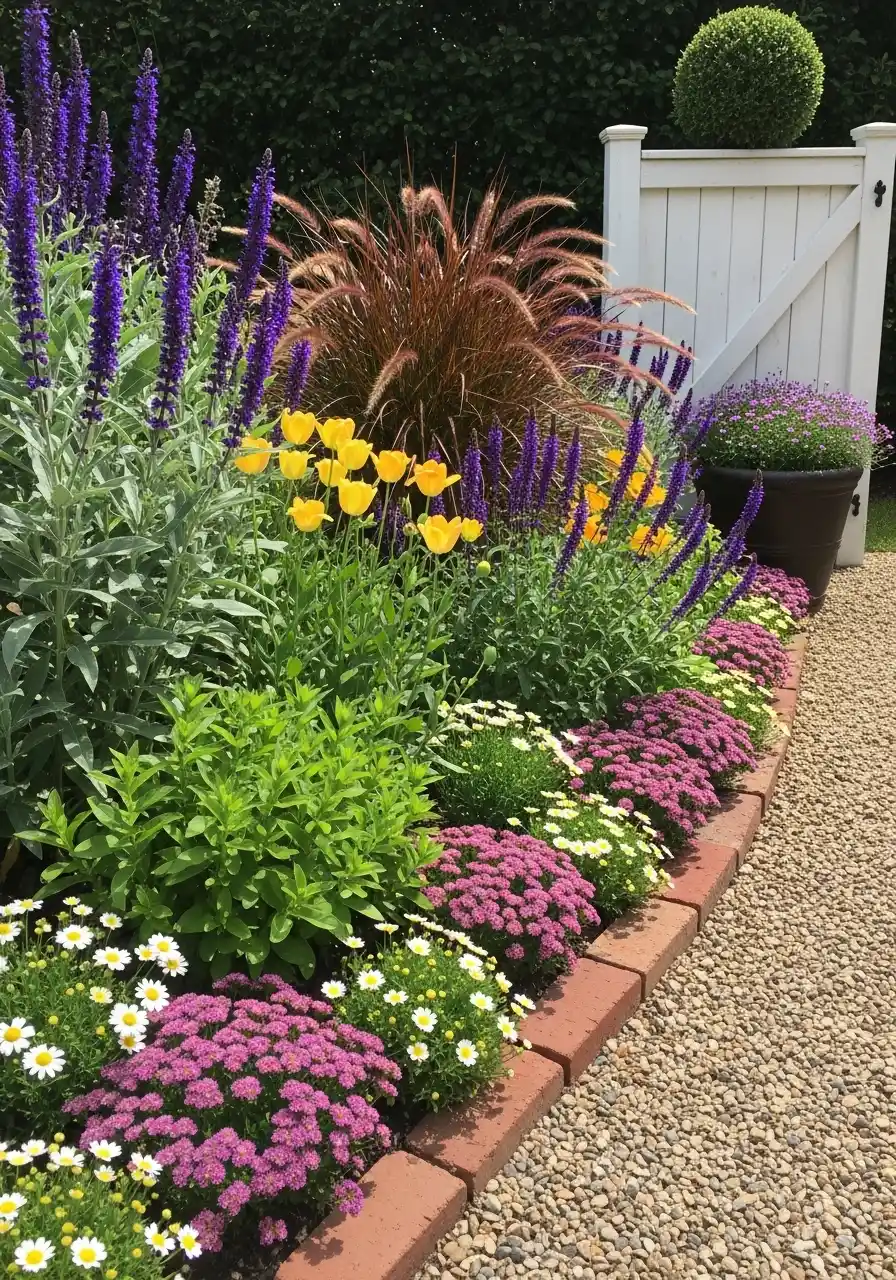
This scene is a clean edge bed along a gravel path, with bright purple salvia spikes, yellow blooms, and little mounds of pink flowers and white daisies. It’s got a nice rhythm, like repeated “bumps” of color. This is texas zone 8 landscaping for people who like order but still want fun.
The hack here is repetition. Repeat the same 3–5 plants, instead of grabbing 20 different things at the nursery because you got excited. I have 100% done that, and then later I’m like… why does this look weird. Repeating plants makes it feel calm, and it’s easier to care for because each plant wants similar water and sun.
Also, that brick edging matters. It creates a hard line between gravel and soil. In Texas zone 8 landscape design, edging is what keeps your bed from slowly crawling into your walkway over time.
Soft purple mounds and round shrubs for zone 8 Texas landscaping
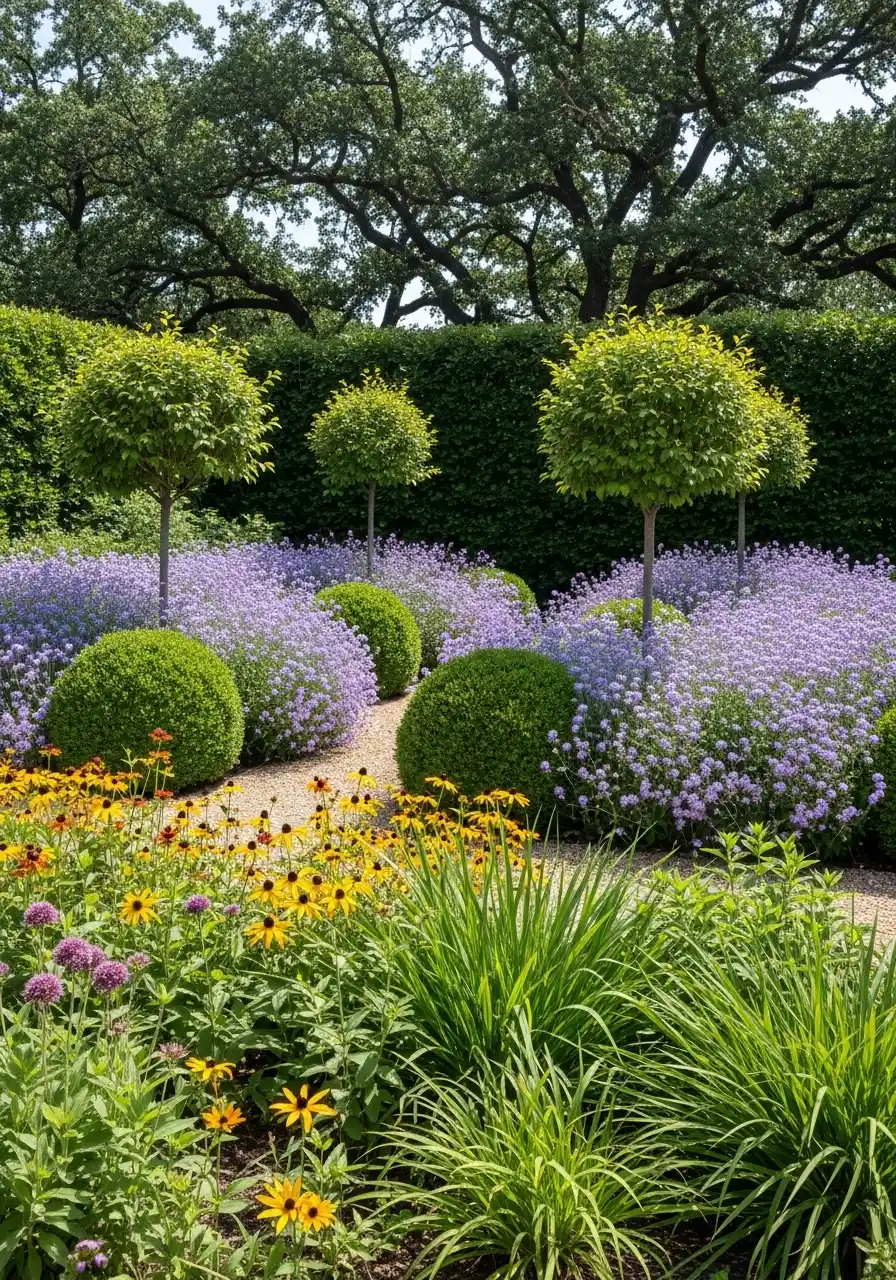
This idea is more quiet and dreamy. Big soft mounds of lavender-purple flowers, round green shrubs, and a simple gravel path winding through. It’s almost like a fancy garden that whispers instead of shouts. I think this style is perfect for texas zone 8 landscaping when you want something pretty but not overly busy.
The main trick is shape contrast. The shrubs are clipped into round balls, and the flowers are fluffy and loose. That contrast makes everything look intentional. If you don’t want to trim constantly, pick shrubs that naturally stay dense and round-ish, then do light shaping once in a while. Not every week, please don’t do that to yourself.
And don’t forget spacing. Give those purple plants room to puff up. In zone 8 landscaping Texas, crowding is what causes mildew and unhappy plants, especially when humidity decides to show up out of nowhere.
A front walkway packed with color for texas zone 8 landscaping curb appeal
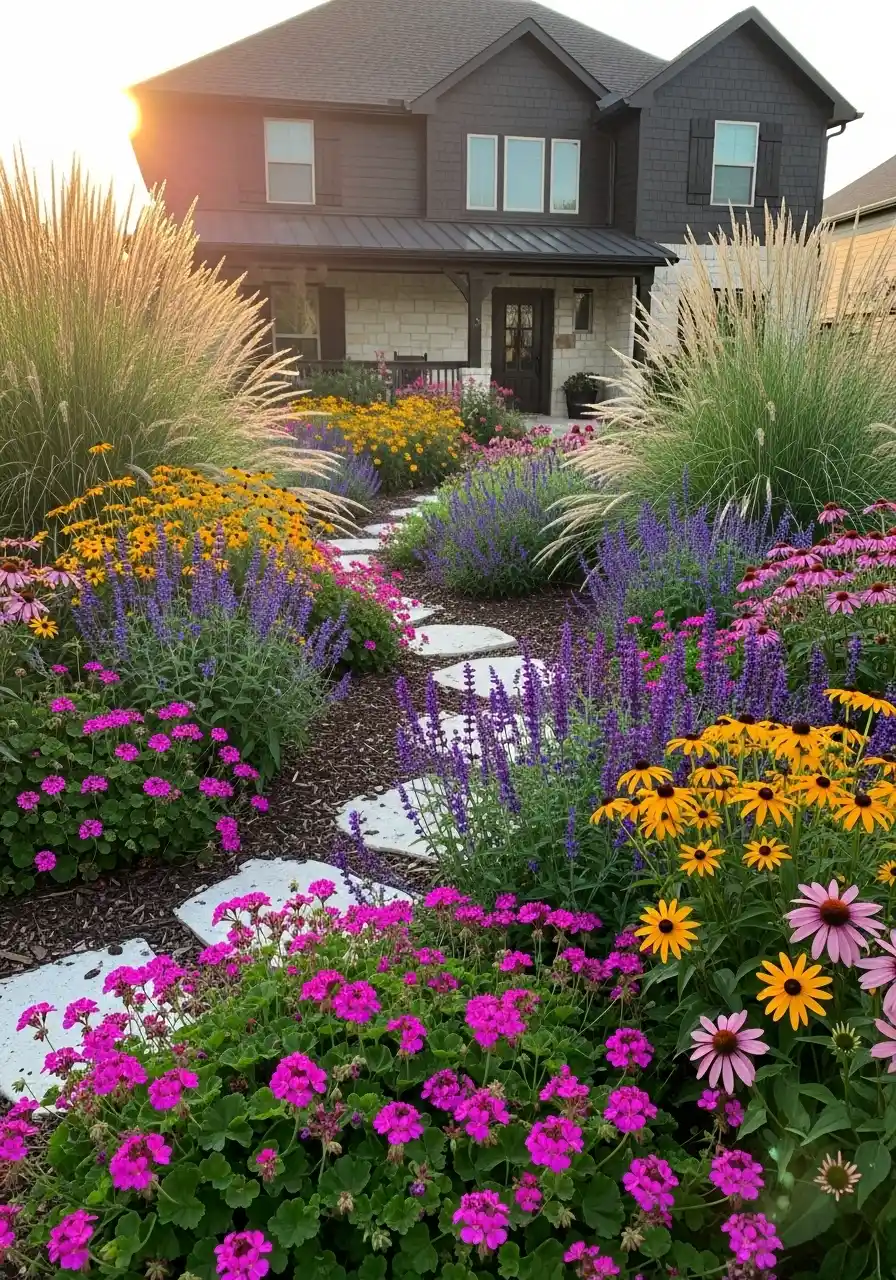
This one is basically curb appeal on steroids. A winding stepping path with tall ornamental grasses, purple spikes, yellow daisies, and pink flowers everywhere. It looks like a pollinator party. I love it, but I also think it takes a bit of discipline to keep it from going wild. Still, it’s a great example of texas zone 8 landscaping that feels warm and welcoming.
If you copy this, plant the biggest stuff first: grasses and the taller perennials. Then fill in with medium bloomers, then groundcovers. That order matters. Otherwise you end up stuffing big plants in later and crushing everything.
My personal confession: I used to hate ornamental grass because it looked “messy.” Now I get it. In Texas zone 8 garden landscaping, grasses add movement and make flowers look even brighter. Just cut them back once a year, and they behave.
Backyard borders that blend lawn and flowers in zone 8 Texas landscaping
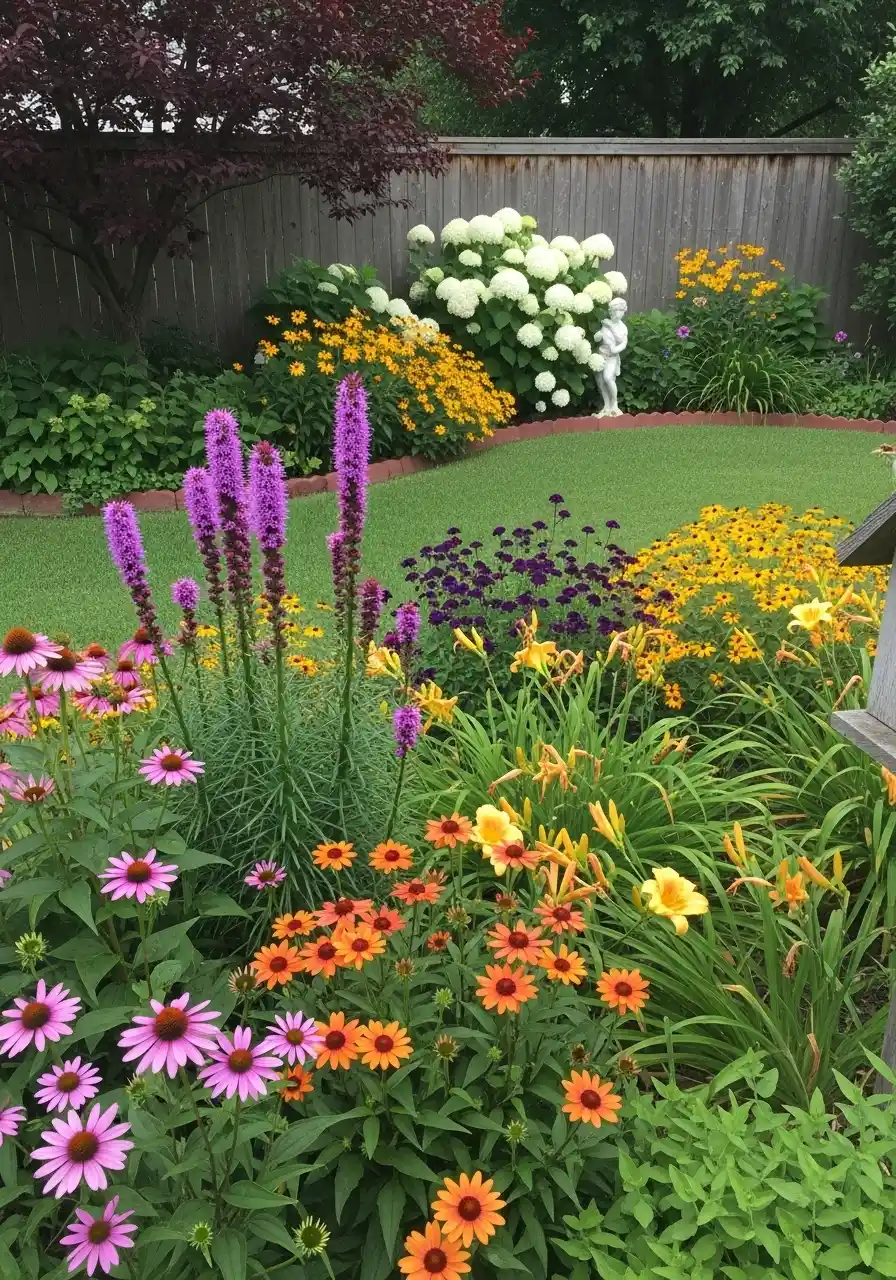
This image feels like a soft backyard hug. Lawn in the center, curved beds around it, and layers of flowers like coneflowers, daylilies, black-eyed Susans, and purple spikes. It’s colorful but still comfy, like a real family yard, not a showroom. texas zone 8 landscaping can totally be both pretty and practical.
The best trick here is curved bed lines. Curves make the space feel bigger and more natural. And they give you more planting edge, which is where the yard looks most “designed.” Use a simple edging line and keep it clean, because a clean edge makes everything else look 10 times better.
Also, group plants by water needs. Put the thirstier ones closer to irrigation, and tougher ones farther out. That’s a real-life hack for zone 8 Texas landscape success in hot spells.
A neighborhood front garden for texas zone 8 landscaping that feels friendly
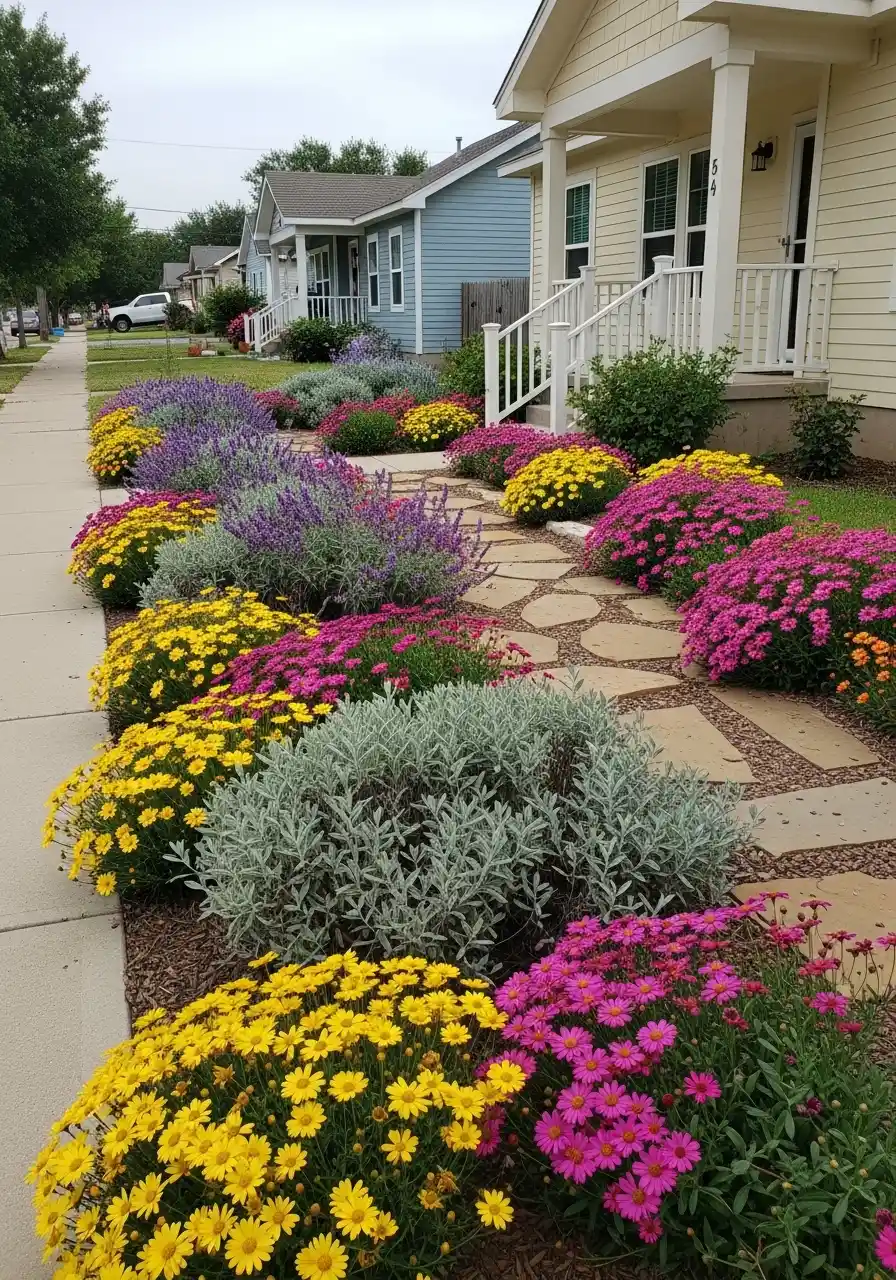
This last one is a long front yard bed by a sidewalk, filled with mounded flowers in yellow and magenta, plus silvery shrubs and purple spikes. It’s bright, but still tidy, and it makes the whole street look nicer. Honestly, this is the kind of texas zone 8 landscaping that makes you want to walk slower just to stare.
The secret is low, rounded shapes repeated again and again. Those mounds act like little cushions. Then the purple spiky plants pop up like exclamation points. It’s simple design logic, but it works every time.
If you want this look, pick a small color palette and stick to it. Yellow + purple + pink is a winning combo for Texas zone 8 landscape design, because it reads bold from far away, even when the plants aren’t perfect up close.