I didn’t think I cared this much about paths and flower borders until I started saving pics at 2 a.m. like a maniac. That’s what south texas landscaping ideas does to me. It makes me feel like maybe my yard could be a place I actually hang out in, not just a hot patch of “meh” behind the house.
Table of Contents
South texas landscaping : A clean border edge that makes everything look planned
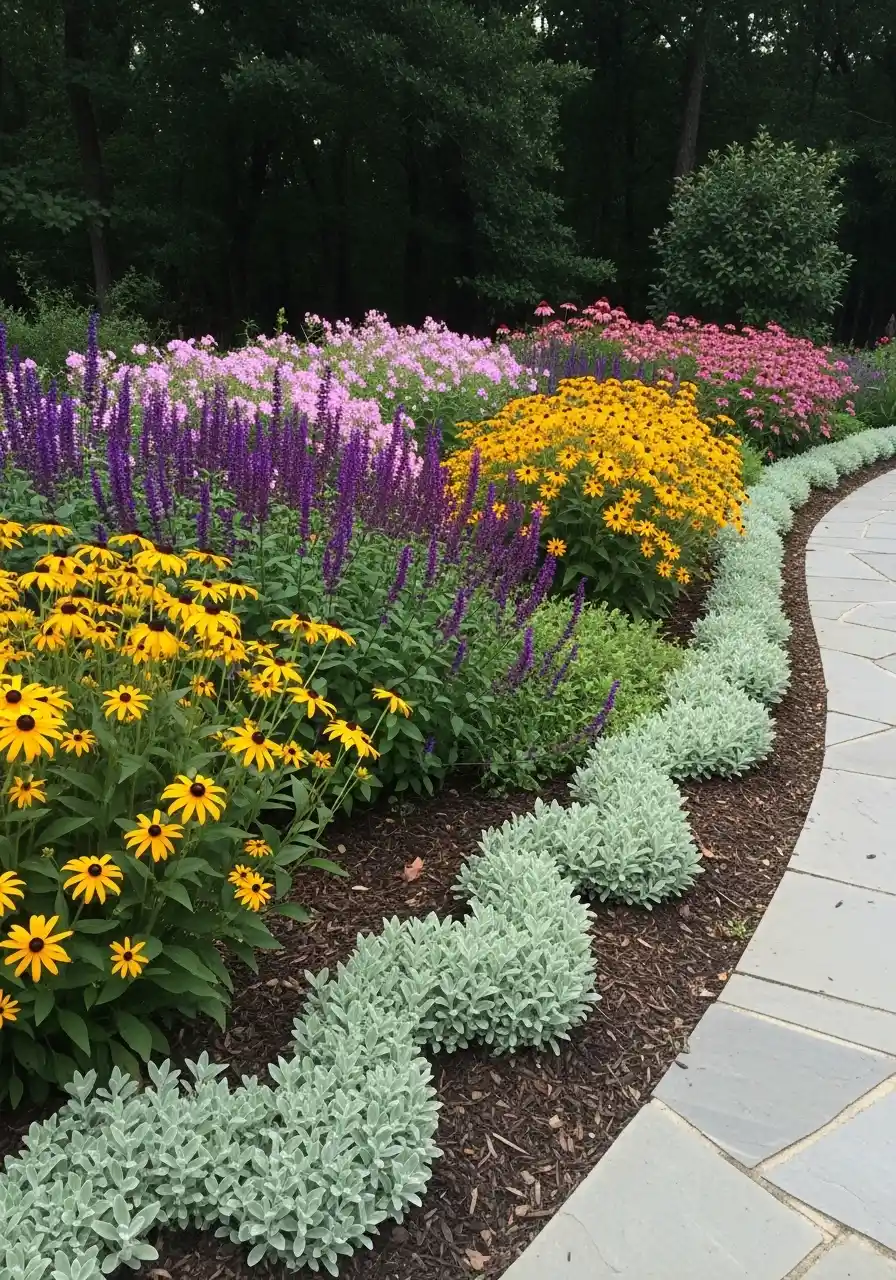
This first photo is basically a perfect “border lesson.” You’ve got a ribbon of silvery plants along the edge (it looks like lamb’s ear style), then a thick drift of yellow black-eyed Susans, then purple spikes, then pink blooms farther back. The border curves with the path and it feels soft, not stiff. I love that you can tell where to walk, and the plants don’t bully the walkway.
If I copied this for south texas landscaping , I’d start with the edge plant first. The silver edge is like eyeliner, it makes the whole bed look sharper. Then I’d plant the bigger colors in chunks, not in scattered dots. This design works because it repeats masses of color instead of mixing everything like salad.
My hack is mulching the bed deeply but not stupid deep. About 2–3 inches is enough. Too much mulch and it turns into a weird sponge. Also, keep the edge plants slightly raised so they don’t get buried. I’ve buried plants before and acted surprised when they died. Not my finest moment.
A gravel path with stepping stones that feels like a trail
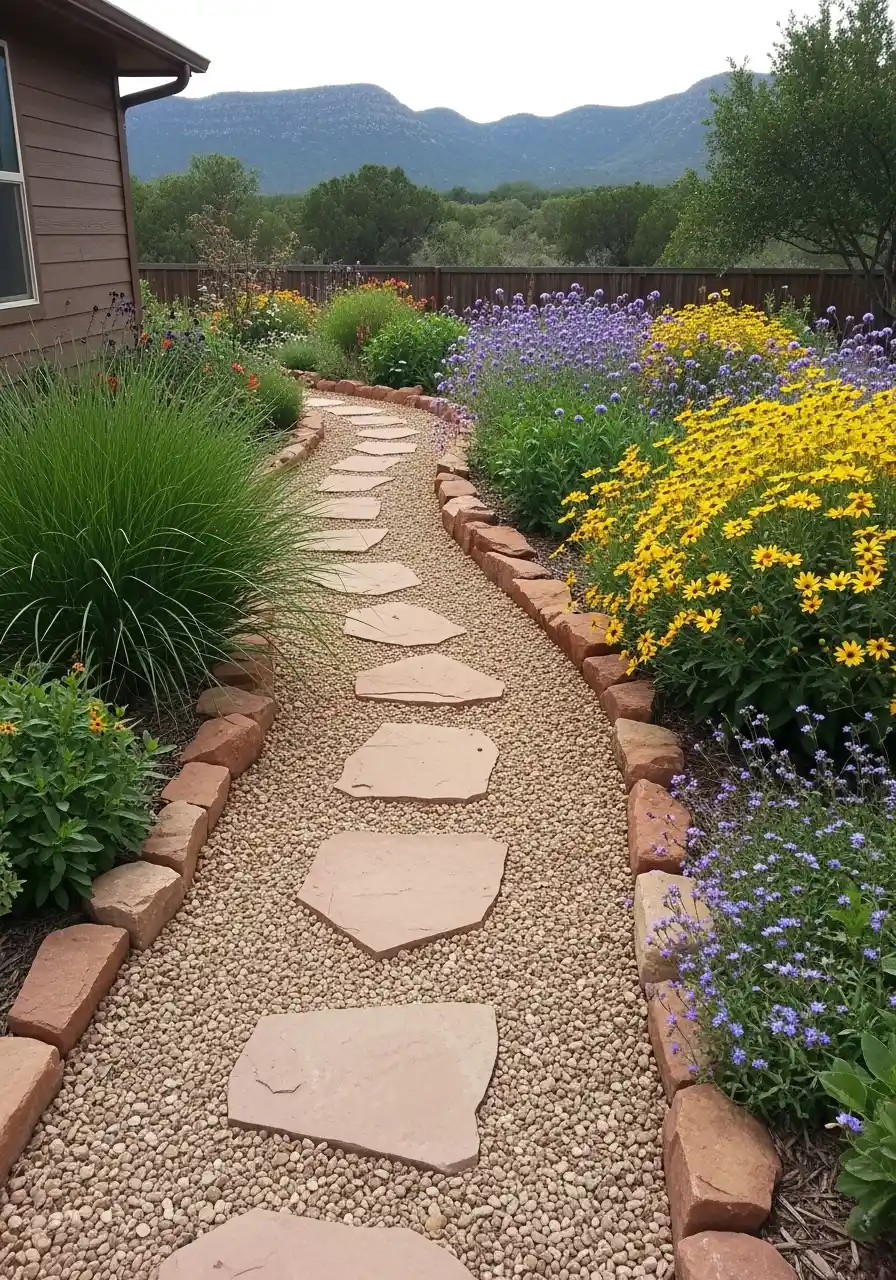
This image is what I call “gentle guiding.” The path is gravel, but the stepping stones make it comfortable and safe. The stone edging keeps the gravel from drifting. And the plants are planted close enough to feel cozy, but not so close that you’re brushing flowers every step. That’s the sweet spot.
For south texas landscaping, a gravel path is honestly a lifesaver because it drains fast in heavy rain and doesn’t crack like concrete. The trick is base prep. You need weed barrier in the path area, and you need a compacted base so it doesn’t sink. If you skip that, your stepping stones will wobble, and wobble makes everything feel cheap.
My hack: make the path wider than you think. Plants grow. They always grow into the path like they own it. I’d aim for at least 36 inches. And choose gravel that doesn’t track into your house like sand. Tiny pea gravel is cute but it travels.
South landscaping in Texas: Desert-modern pavers with color blocks
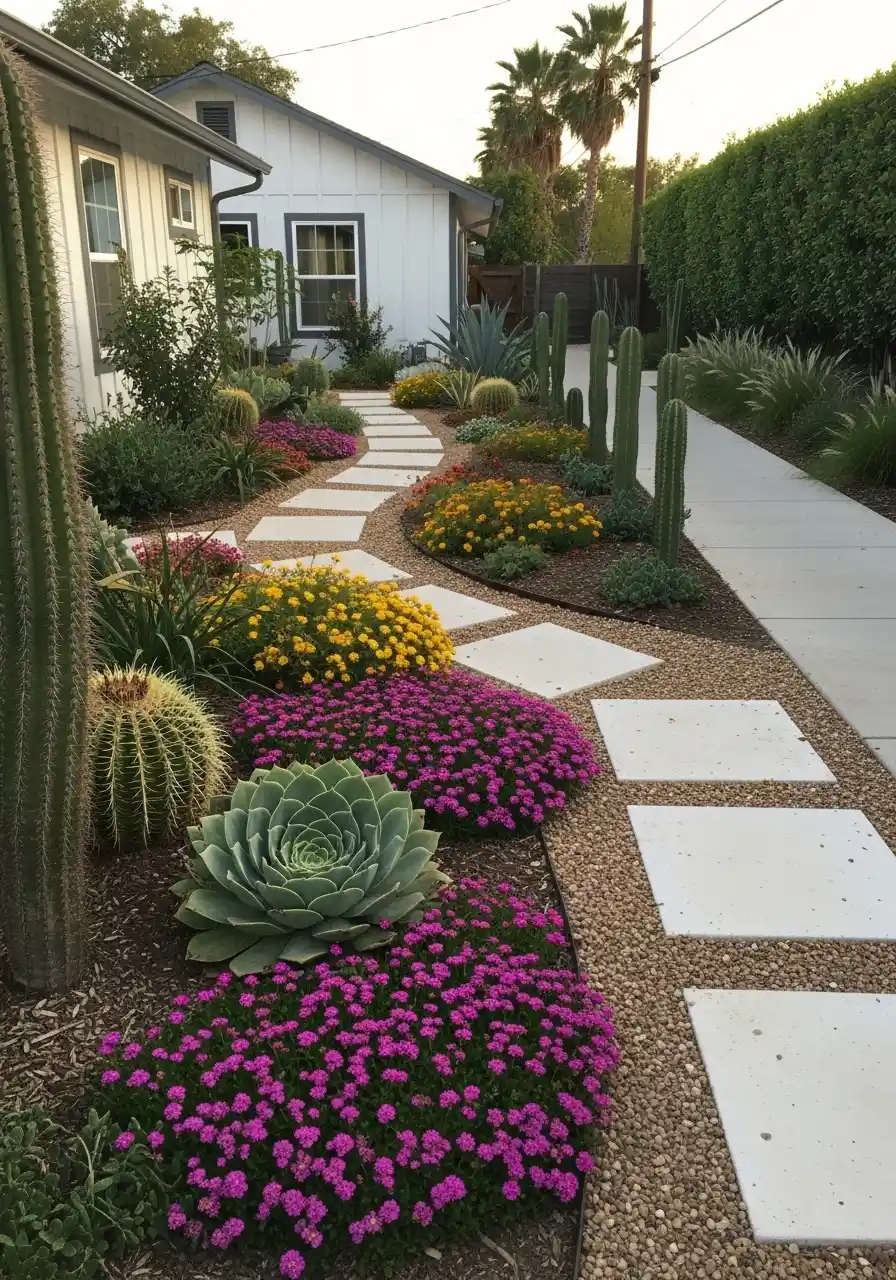
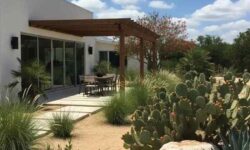
This photo is desert-modern and I’m kinda obsessed. The big white pavers feel crisp, and the planting beds are full of small, low color patches that look like confetti. The tall cactus line adds drama without needing a ton of water. It’s bold but still clean, like a modern yard that doesn’t want to babysit plants all day.
If you want this style for south texas landscaping , the best trick is “color islands.” Plant one color in a tight patch. Then repeat it somewhere else. It makes the yard feel designed, not random. Also, keep plants grouped by water needs. Cactus and agave together. Flowers that want a bit more water closer to drip lines.
My hack: use metal edging between gravel and beds. Without edging, your gravel drifts and your plants get buried slowly. Also, keep spiky plants away from where people cut corners. People always cut corners. Including me.
Texas south landscaping: A calm path with lavender mounds and big spiky accents
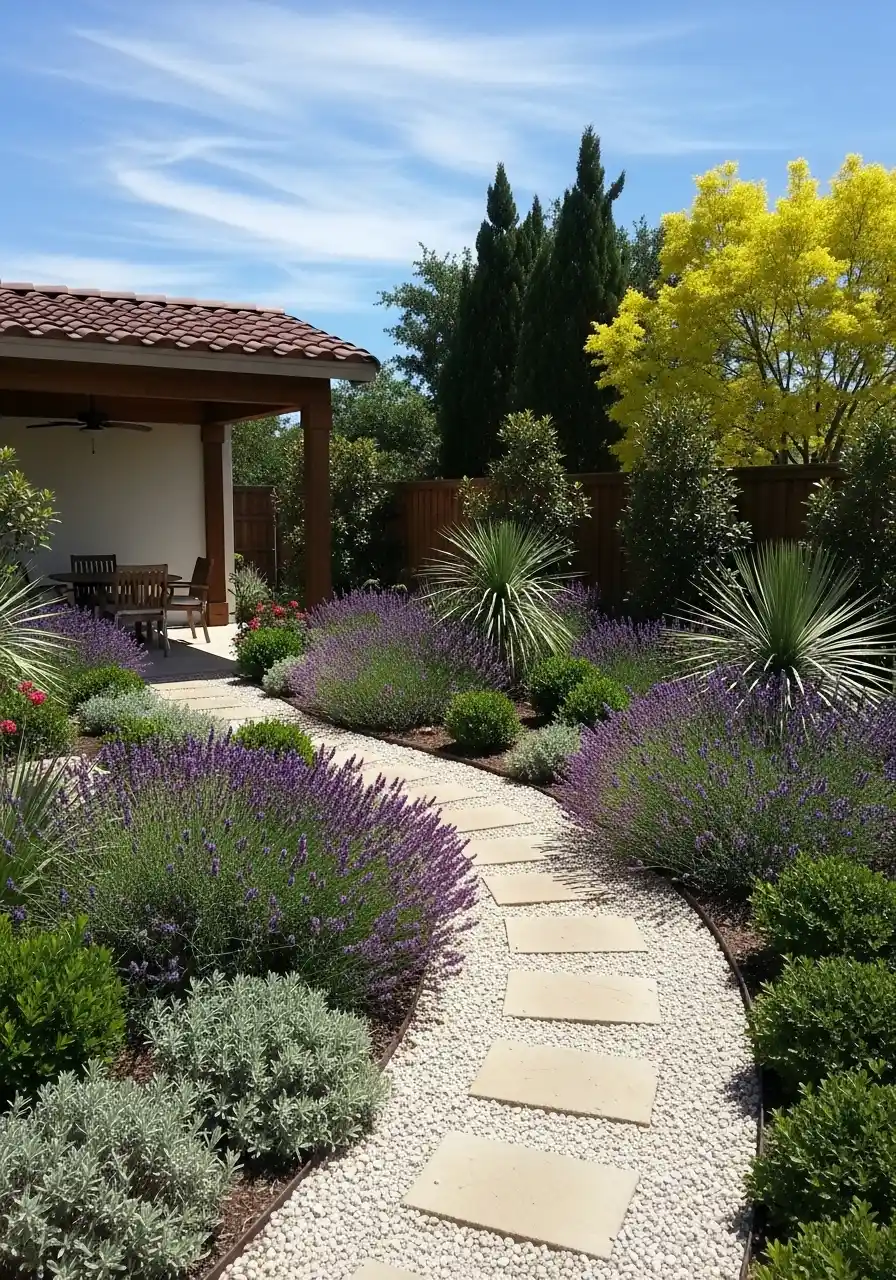
This image is peaceful. The path curves through lavender-like mounds, and the spiky plants (yucca or agave-ish) pop up like sculpture. It’s the kind of backyard that makes you walk slower. I like that it’s simple but still feels full. The plants do most of the work, not the hardscape.
For south texas landscaping , this style is great if you want low water and low fuss. The hack is repeating those lavender mounds so the eye has rhythm. One lavender plant looks lonely. Five lavender plants in a row looks intentional. And then the spiky plant acts as a focal point.
Also, keep the path material consistent. If you mix too many rocks and stones, it can look like you didn’t decide. A simple gravel path and a few stepping stones is enough. Don’t overcomplicate it, I always overcomplicate it and then regret it.
Texas south landscaping modern: Succulent rock garden with clean pavers
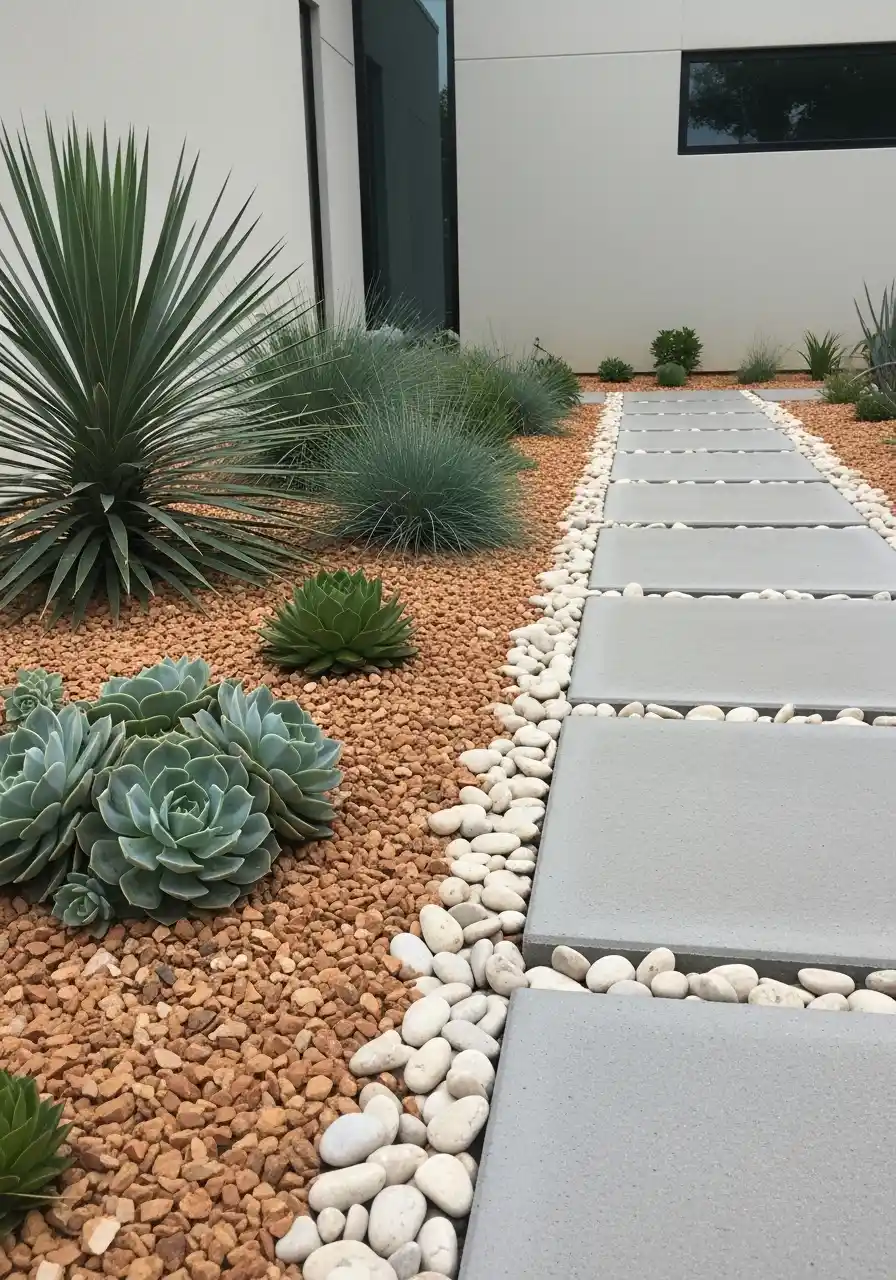
This photo is clean like a magazine cover. Gray pavers, white river rock edges, orange gravel, and succulents in cool colors. It’s very “minimal but alive.” I love that the plants are mostly sculptural, so they still look good even when nothing is blooming.
For south texas landscaping, succulent beds like this need drainage. That’s the whole game. If your soil is heavy clay, build up a mound or mix in grit. Don’t plant succulents in a low wet spot. They will rot and you’ll be mad at them even though it’s your fault.
My hack: keep the rock palette simple. One main gravel color, one accent stone color. Too many rock colors look busy fast. And keep pavers level. If one paver sinks, your whole “clean” vibe gets wrecked.
South landscaping Texas: A small south scene that feels like sunset
This photo feels like golden hour in plant form. Ornamental grass glowing, purple mounds, yellow flowers behind, and coneflowers in front. I like how it’s layered, and the fence makes it feel enclosed and cozy. This is the kind of backyard that makes you want to sit outside even if you didn’t plan to.
For south texas landscaping ideas, the trick here is layering. Tall grasses in the back, medium bloomers in the middle, and front flowers that stand out. You don’t need a million plants. You need the right heights. Also, mix in one plant that looks good even when not blooming, like a grass or a shrub.
My hack: add path lighting early. It makes the whole scene feel magical at night, and it helps you not trip. I trip enough already. No need to add landscaping injuries.
A border that mixes orange, yellow, and purple without chaos
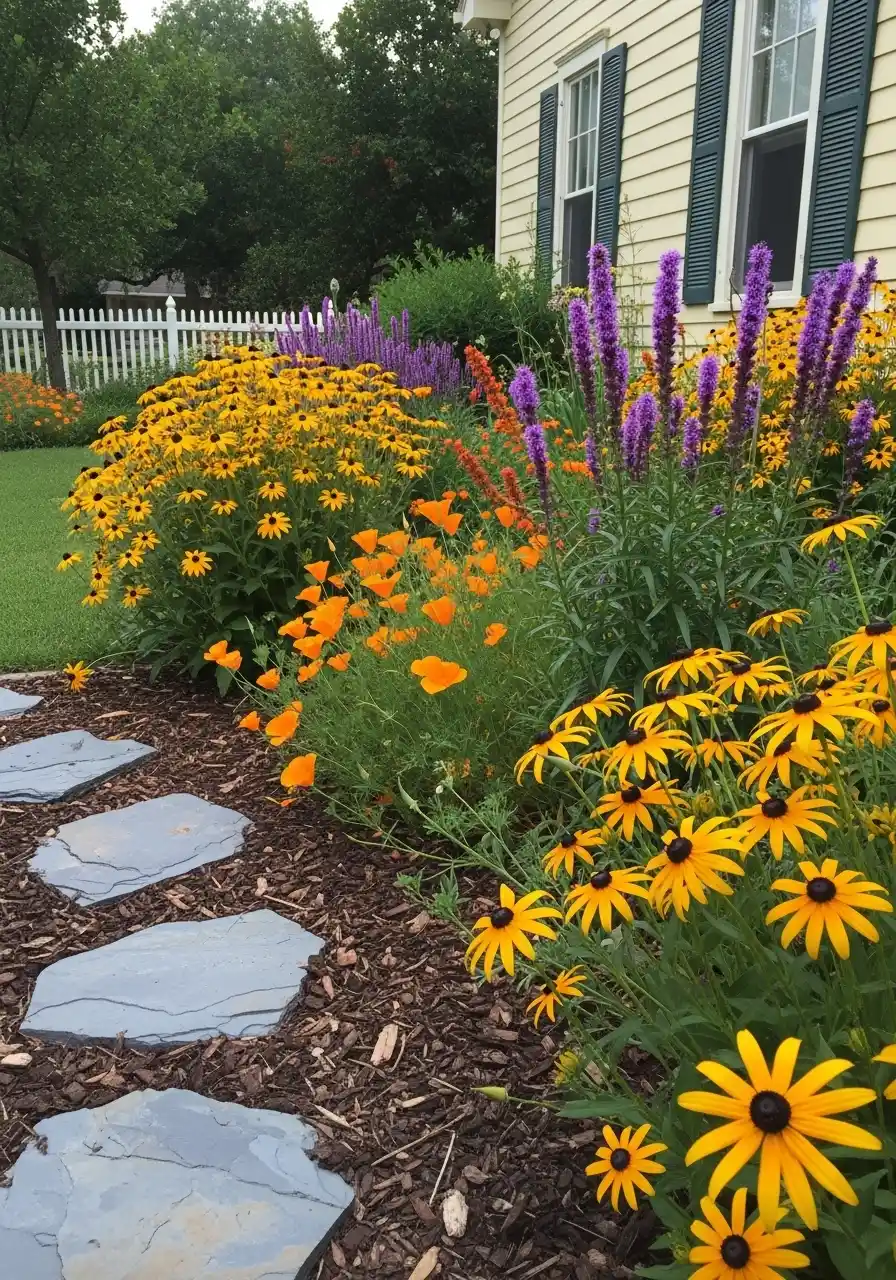
This image is full of energy. Yellow black-eyed Susans, orange poppies, purple spikes, and even more yellow in the back. It works because the colors are big blocks, not tiny scattered bits. The stepping stones through mulch make it feel like you can actually walk through and enjoy the bed, not just stare at it.
For south texas landscaping , bright colors can get messy if you don’t repeat them. Here, yellow repeats, purple repeats, orange repeats. That’s why it feels balanced. My tip is to pick 2 main colors and 1 accent. That’s it. More than that and it starts to feel like a circus.
Hack: mulch paths need maintenance. Mulch breaks down and disappears. Refresh it once or twice a year, especially where you walk. Or switch to gravel if you hate topping off mulch.
A gravel courtyard that feels modern and low stress
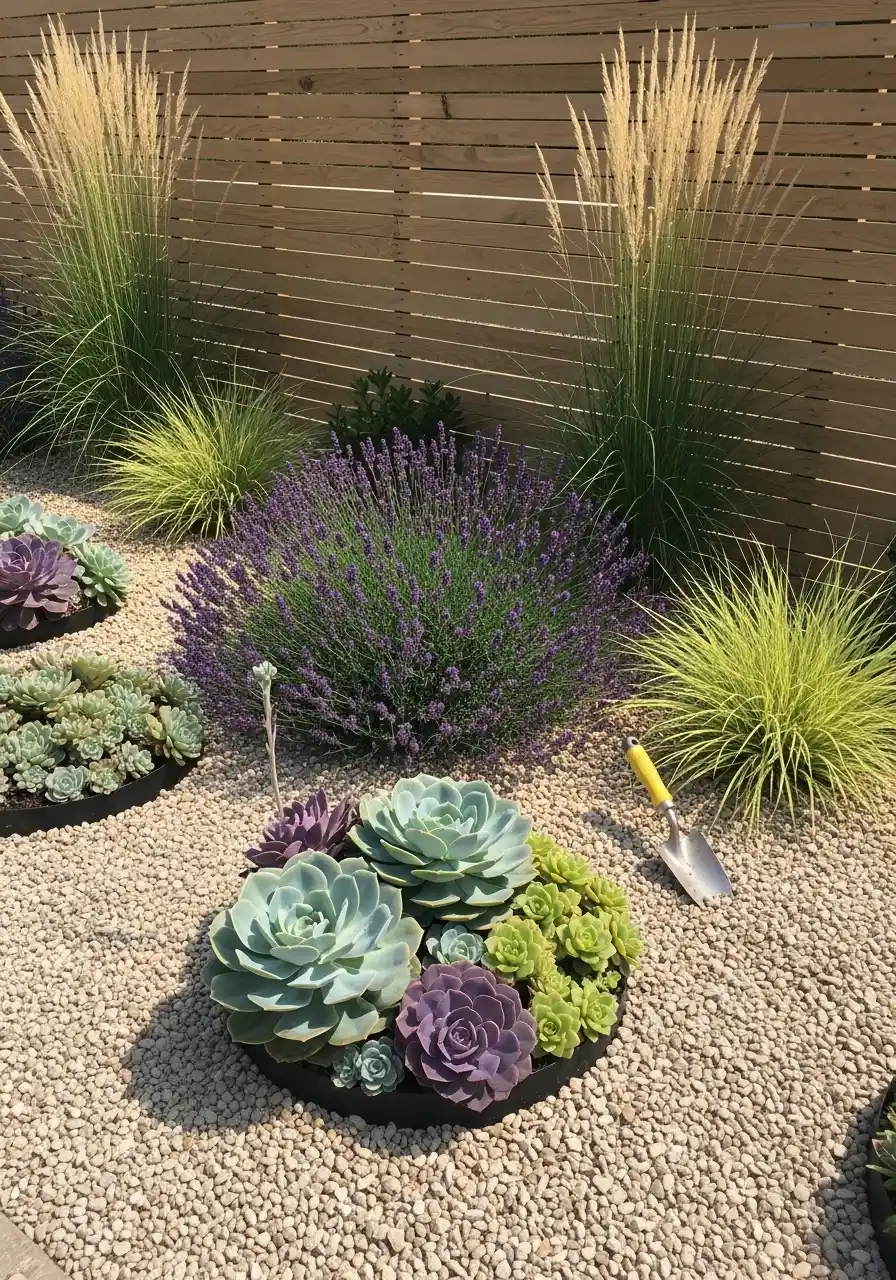
This photo is basically a tiny “zen” courtyard. Succulents in clusters, a big purple mound, and tall grasses against a wood fence. The gravel makes it low maintenance, and the plant grouping makes it feel intentional. Also, the little hand shovel sitting there is so real, like yes, somebody actually did this work.
For south texas landscaping , courtyards like this are perfect if you want less mowing and more calm. My tip is to keep plants in defined pockets, maybe with low edging, so they don’t disappear into gravel. And choose plants that can handle reflected heat from fences and walls.
Hack: gravel courtyards need a leaf plan. Leaves will collect. If you hate raking, pick plants that don’t drop a ton of leaves nearby. Or accept you’ll be blowing leaves off gravel forever. It’s not fun, but it’s real.
A simple side yard with round pavers and curved beds
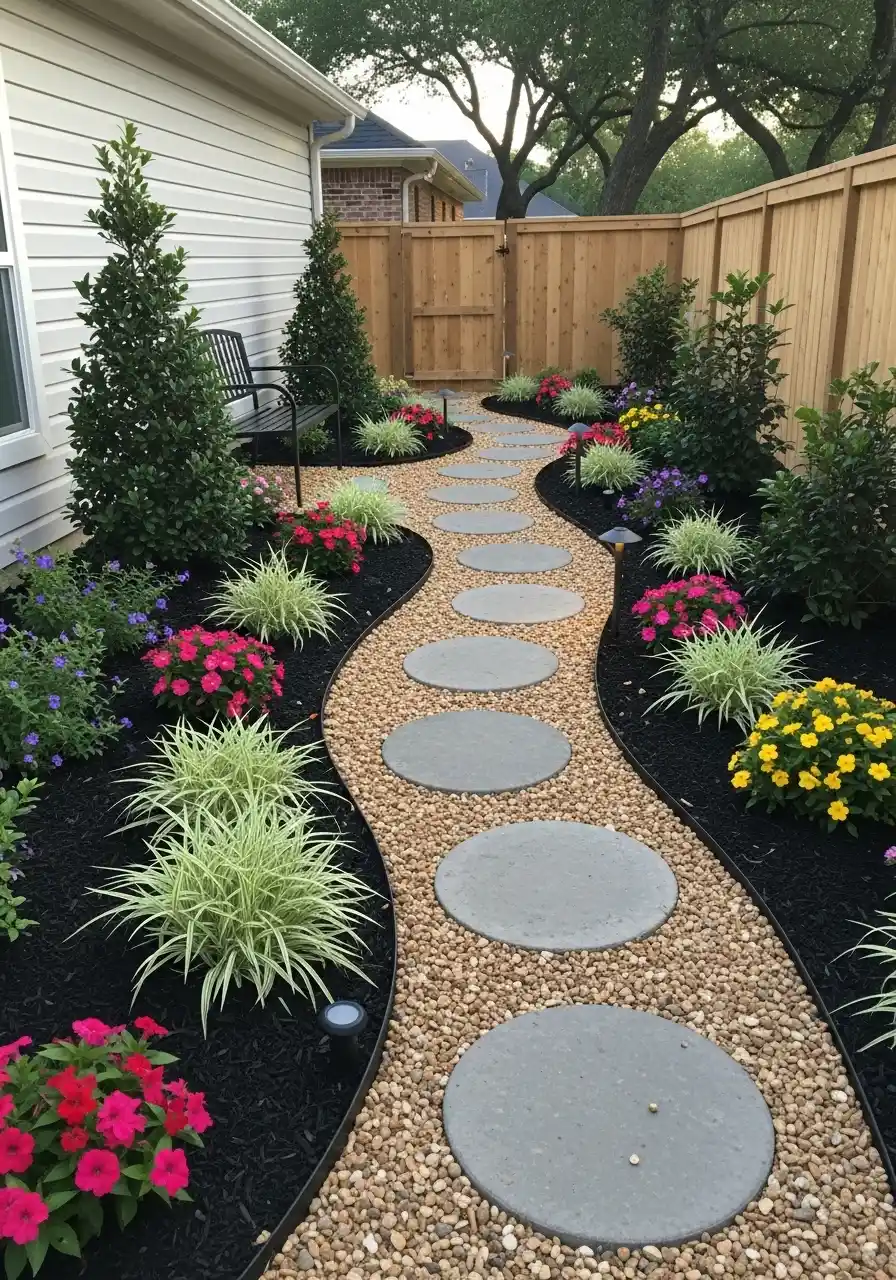
This photo is a side yard done right. Round stepping stones, curved black-mulch beds, and simple shrubs and flowers that look neat. It feels like an easy space to walk through. Side yards are often ignored, but this one looks like a secret little garden hallway.
For south texas landscaping , side yards need easy maintenance. Keep plant count low, choose hardy shrubs, and use a clear path. The hack here is repeating the round pavers evenly so it feels playful but still organized.
Also, don’t forget lighting. Side yards get dark. A few path lights make it safer and makes it feel cared for. Otherwise it becomes the spooky side path that nobody uses.
White rock path with agaves that looks like art
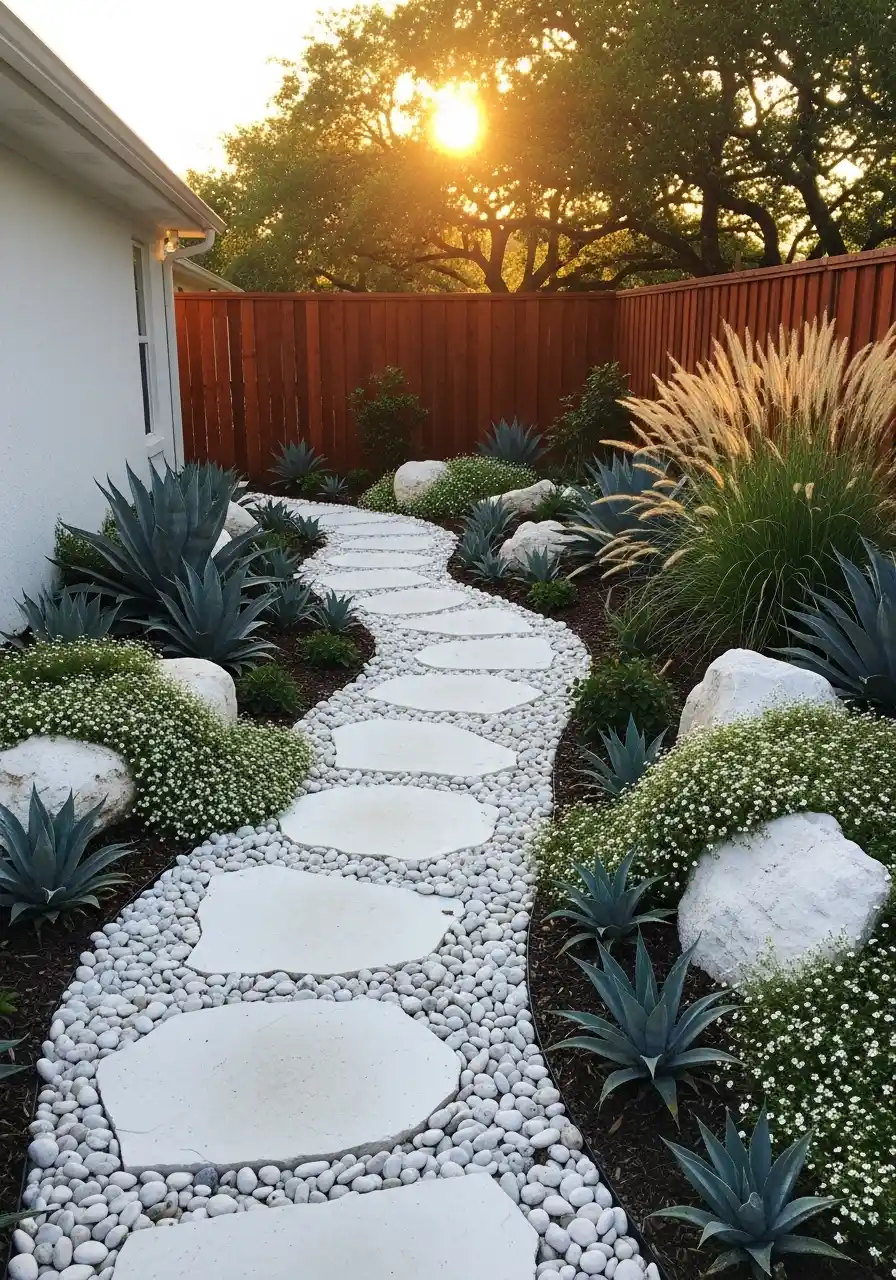
This image is desert-modern perfection. White rock path, big stepping stones, agaves spaced like sculpture, and boulders that anchor the scene. It looks clean but still natural because of the curve. It’s dramatic without being cluttered, and that’s hard to pull off.
For south texas landscaping , the secret is spacing. Give agaves room. If you pack them tight, the spines overlap and it turns into a danger zone. Also, keep the white rock only where you want the eye to go. White rock is like a spotlight.
Hack: use larger stones near the path edge to stop rock migration. Rock moves. Rain moves rock. Dogs move rock. People move rock. Give the rock a boundary so you don’t spend your life fixing it.
A curved path that makes flower beds look expensive
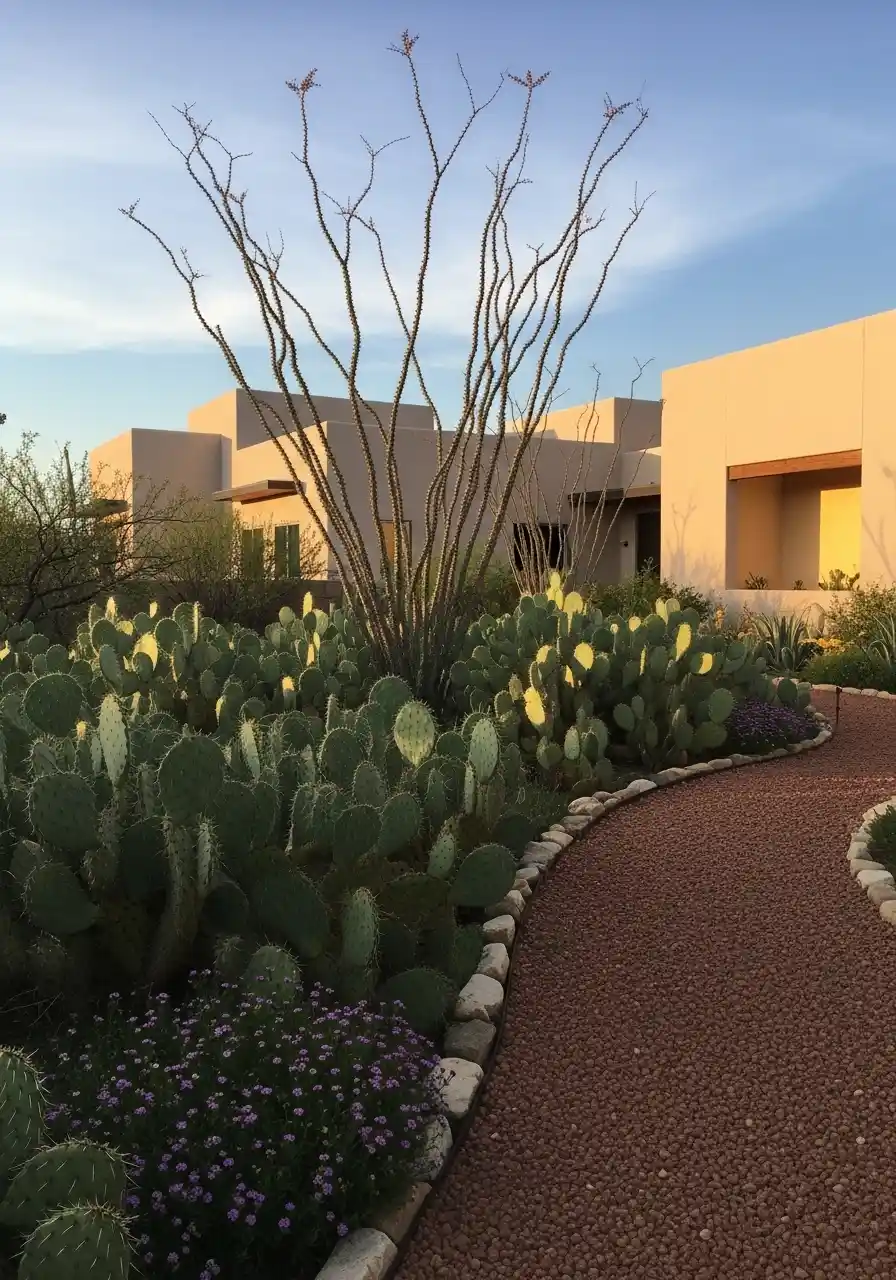
That photo is basically proof that curves fix everything. The bed sweeps along a stone path, and the plants are layered like a cake: silver edging in front, yellow blooms, tall purple spikes, then pink clouds in the back. It looks full but not messy, and that’s hard to pull off. The silver border is doing a lot of heavy lifting. It’s the clean line that keeps the color from feeling chaotic.
If I wanted this in my own south texas landscaping , I’d copy the formula exactly: one “edge” plant that repeats the whole way, one big main color (yellow), one tall vertical color (purple), and one softer background color (pink). That’s it. If you add more colors, it can start feeling like you lost control. Also, plant in groups. Groups of 5–9 look intentional. Single plants look like you ran out of money halfway through.
My hack: don’t plant right up against the path. Leave a small buffer so plants can grow without turning the walkway into a jungle. I’ve made the “oops, now I’m brushing flowers with my legs every time” mistake. It gets old fast.
A gravel walkway with stone edging that won’t fall apart
This image is one of my favorite layouts because it’s so realistic. It’s a gravel path with stepping stones, but the real winner is the edging. Those stone borders keep the gravel in place and keep the path shape crisp. Without edging, gravel slowly spreads like it’s trying to escape. And then you’re sweeping it every week, and you start hating your own yard.
For south texas landscaping , this is a smart path choice because it drains well and doesn’t crack like concrete. The key is the base. You need weed fabric, then a compacted base layer, then the gravel. If you skip the compacting, your stones sink and shift, and suddenly your nice path becomes a twisted ankle situation.
Hack: space the stepping stones to match a natural stride. About 18–24 inches center-to-center works for most people. If the spacing feels weird, you’ll notice it every time you walk it, and it’ll annoy you more than you think it should.
A paver path with bright color “islands”
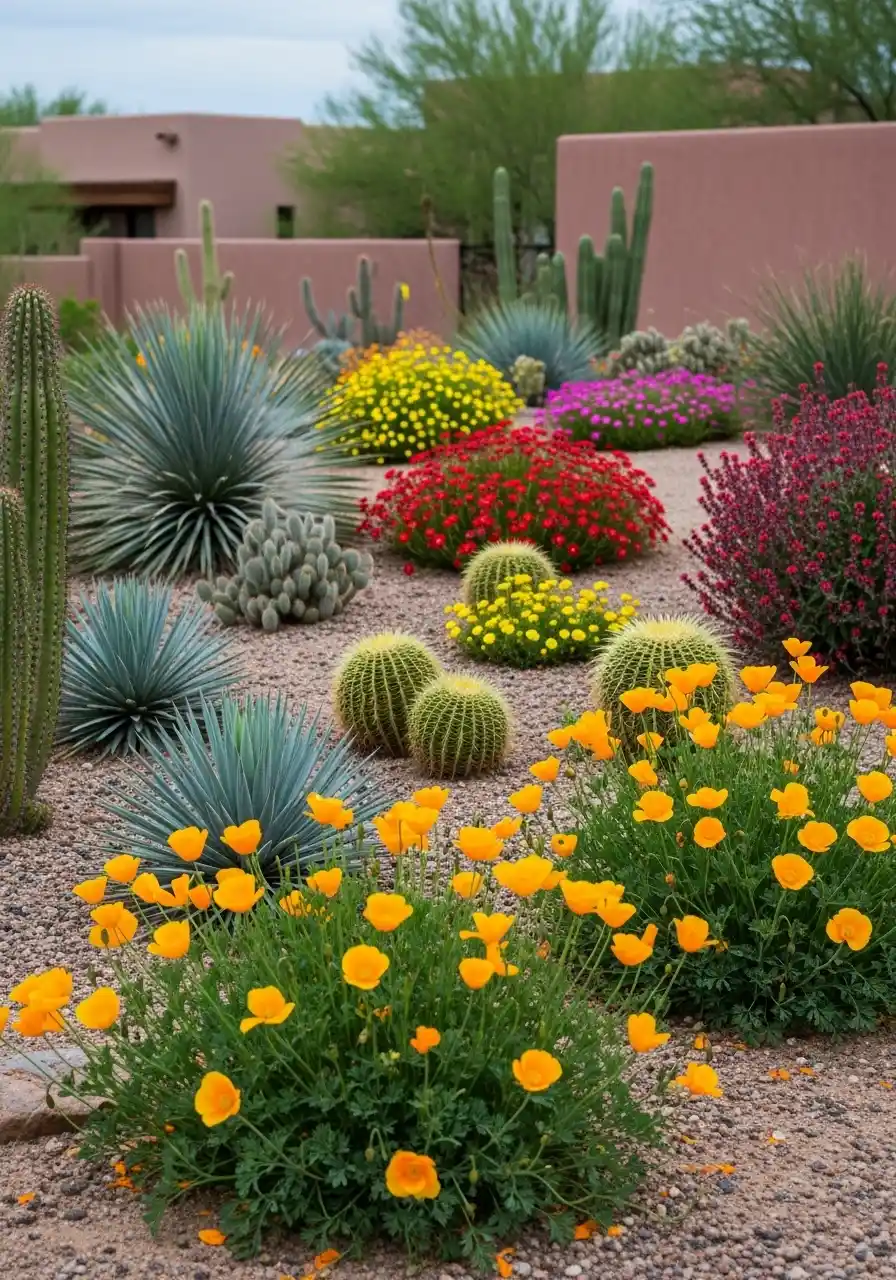
This photo is desert-modern and honestly kinda fun. The big square pavers are clean, the gravel is neat, and those bright groundcover patches look like little rugs of color. The cactus line adds height and drama, but the low flowering mounds keep it from feeling harsh. It’s bold without being messy, which is not easy.
For south texas landscaping , this style works best when you repeat shapes. Round flower mounds repeat. Tall cactus repeats. Big pavers repeat. That repetition is what makes it feel calm. If you mix too many shapes, it starts looking like a yard sale for plants. Also, keep spiky plants away from tight corners and narrow walkways. People always cut corners. And so do dogs. And kids.
My hack: use drip irrigation for the flower mounds and keep cactus mostly on their own zone. Flowers usually need more water than cactus. If you water everything the same, somebody is gonna suffer. Usually the cactus rots first and then you’re confused.
A courtyard circle that feels like a quiet outdoor room
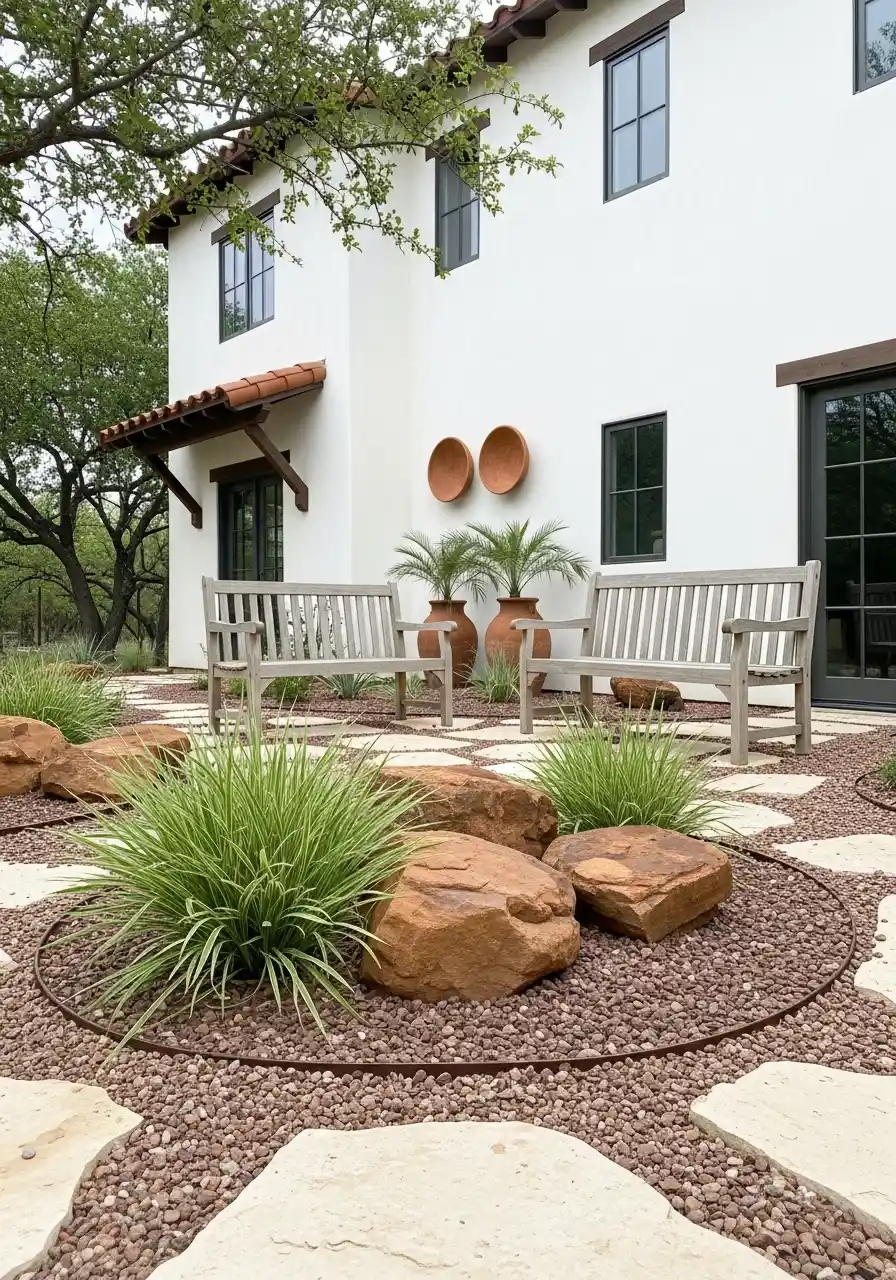
This last photo is more “hangout” energy. The benches, the big terracotta pots, the boulders, and the circular gravel pattern makes it feel like a designed space, not just a yard. I love the circular metal edging. It’s like you’re standing inside a pattern, and it makes the whole area feel intentional and calm.
If I was building this in my own south texas landscaping , I’d start with the sitting area first. Where do you want to sit, where do you want shade, and where do you want a view? Then place the boulders like anchors. Boulders make a yard feel grounded, like it belongs in the landscape instead of being plopped on top.
Hack: don’t put seating right up against the house wall if it gets blasted by afternoon sun. Place it where it gets morning light and afternoon shade, if you can. Also, add one or two hardy grasses near the seating zone. Grasses move in the wind and make the space feel alive, even when nothing is blooming.
Conclusion
These south texas landscaping all feel different, but they share the same secret: strong paths, repeated plant groups, and texture that holds up in heat. I like designs that still look good even when I’m busy, tired, or just not in the mood to baby plants. And yeah, I’m going to mess up a plant sometimes. But if the layout is solid, the backyard still feels like a place I actually want to be.