I didn’t plan to get emotionally attached to a walkway… but here we are. The way these yards feel calm, colorful, and kinda “Texas-tough” got in my head fast. central texas landscaping has this sneaky power. It can look wild and soft, but also tidy enough that your neighbors stop and stare (in a good way, hopefully).
Table of Contents
A front walk that feels like a welcome hug
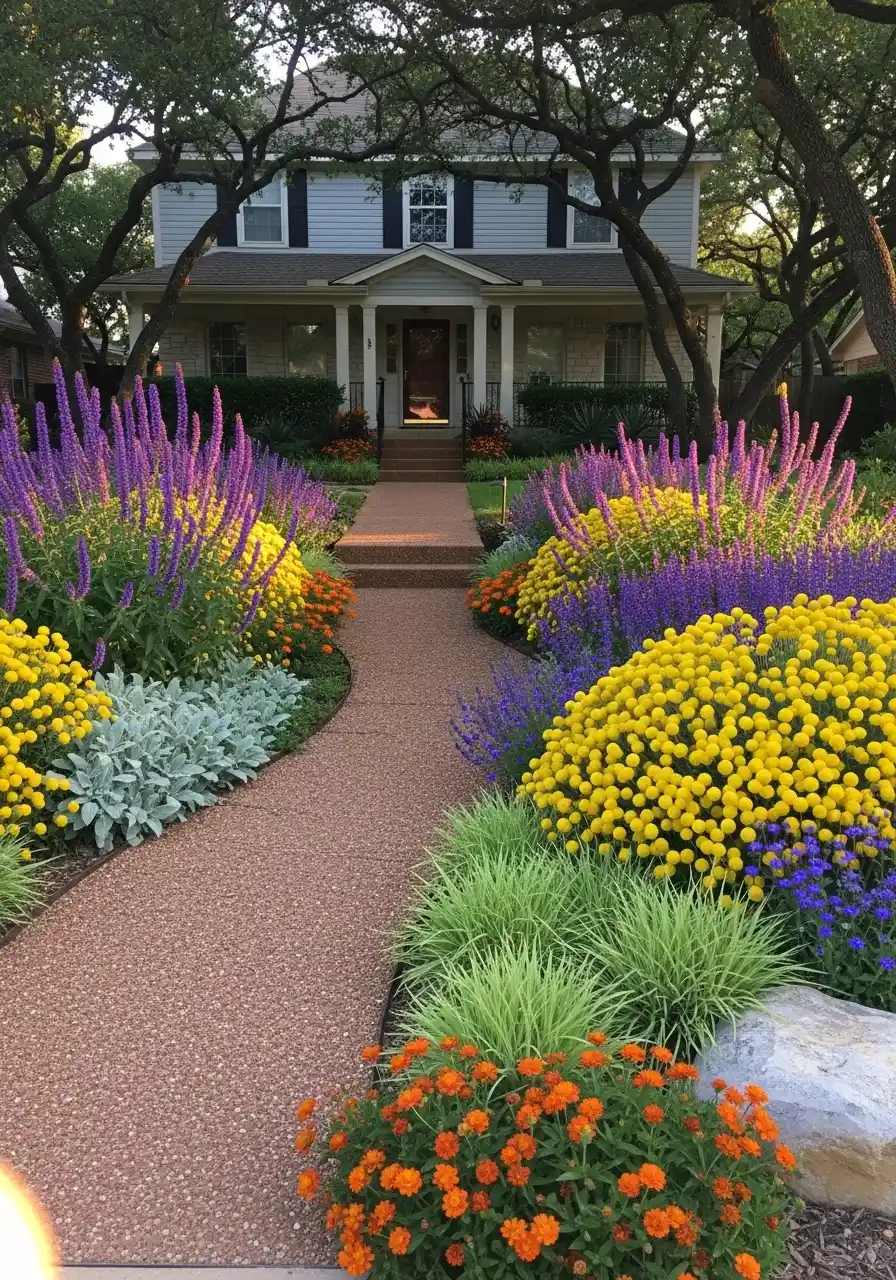
This first scene is pure drama, and I mean that in the best way. The path is centered, the beds are mirrored, and the plants are stacked like a perfect layered cake. Those tall purple spikes read like salvia to me, and the yellow mounds are giving “bright, happy, don’t-mess-with-me” energy. I love how it frames the house like a picture. It’s bold, but it’s not chaotic.
If I was copying this for central texas landscaping, I’d start with the shape first. Get the curve and bed edges right, then plant in chunky groups. The hack is repetition: purple, yellow, purple, yellow. It makes the yard feel planned even if you’re secretly guessing. Also, put the taller stuff farther back so it doesn’t swallow the path. I’ve done that wrong and it looked like my walkway was getting attacked by plants.
One honest note: this style takes discipline. You can’t toss random plants in later because you got excited at the nursery. I mean you can… but it’ll look messy. Ask me how I know.
Stepping stones and gravel that feel like a peaceful trail
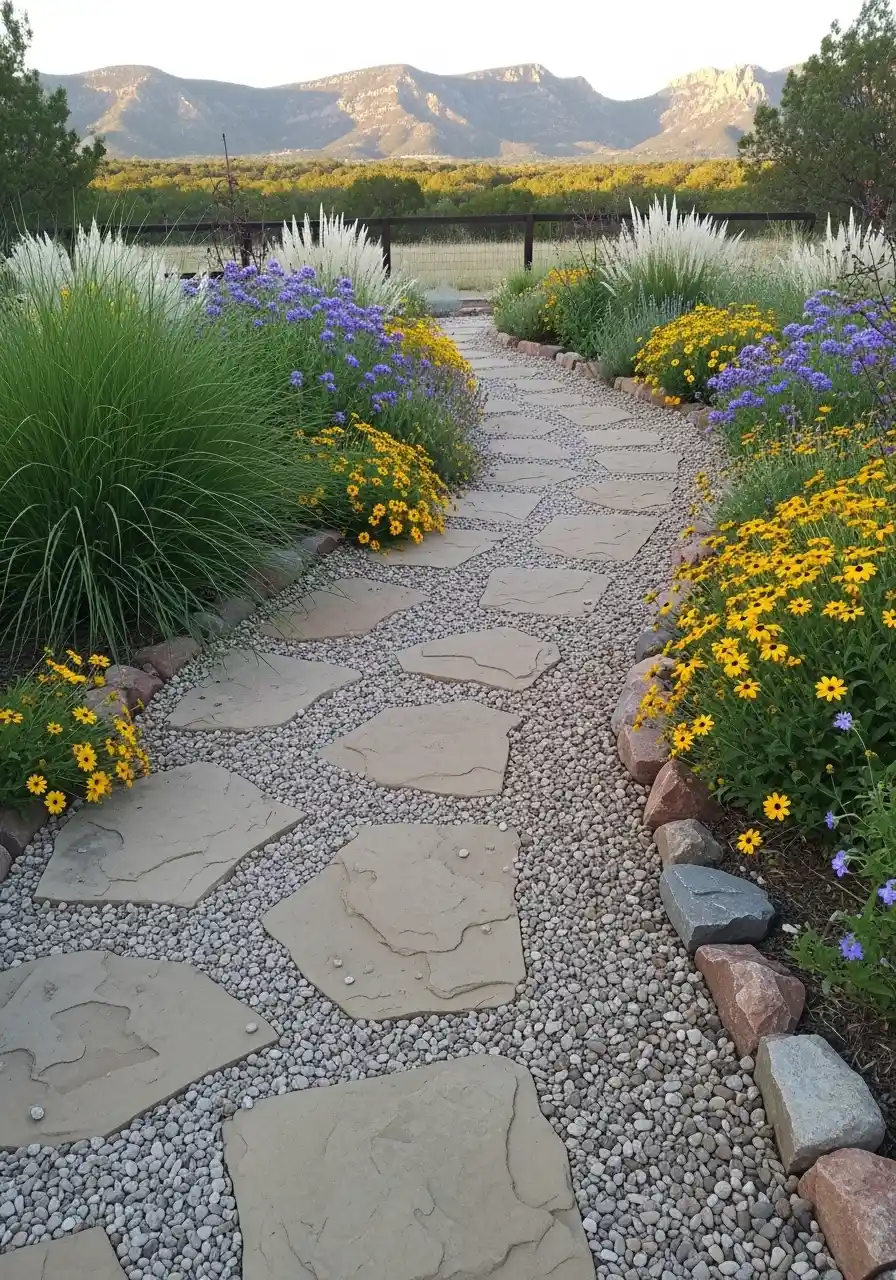
This path with irregular stone steps is just pretty. The little gravel joints look clean, and the stones feel natural, like they’ve been there a long time. The bright yellow flowers along the edges are cheerful, and the purple blooms soften everything. Then you get that big open view in the background, and suddenly the whole yard feels bigger than it is.
For landscaping in Central Texas, gravel paths are a smart move because they drain fast and don’t turn into mud soup when it rains hard. My tip is to choose one gravel size and stick to it. Mixed gravel can look accidental. Also, edge the path with rock so the gravel stays where it belongs. Without edging, you’ll be sweeping tiny stones forever, and it’s annoying.
Plant-wise, keep the edges low and “spill-y.” Think blackfoot daisy, native salvias, and small grasses. The goal is soft edges, not a hedge wall. This is Central TX landscaping that feels relaxed but still controlled.
Curved pea gravel and soft purple haze
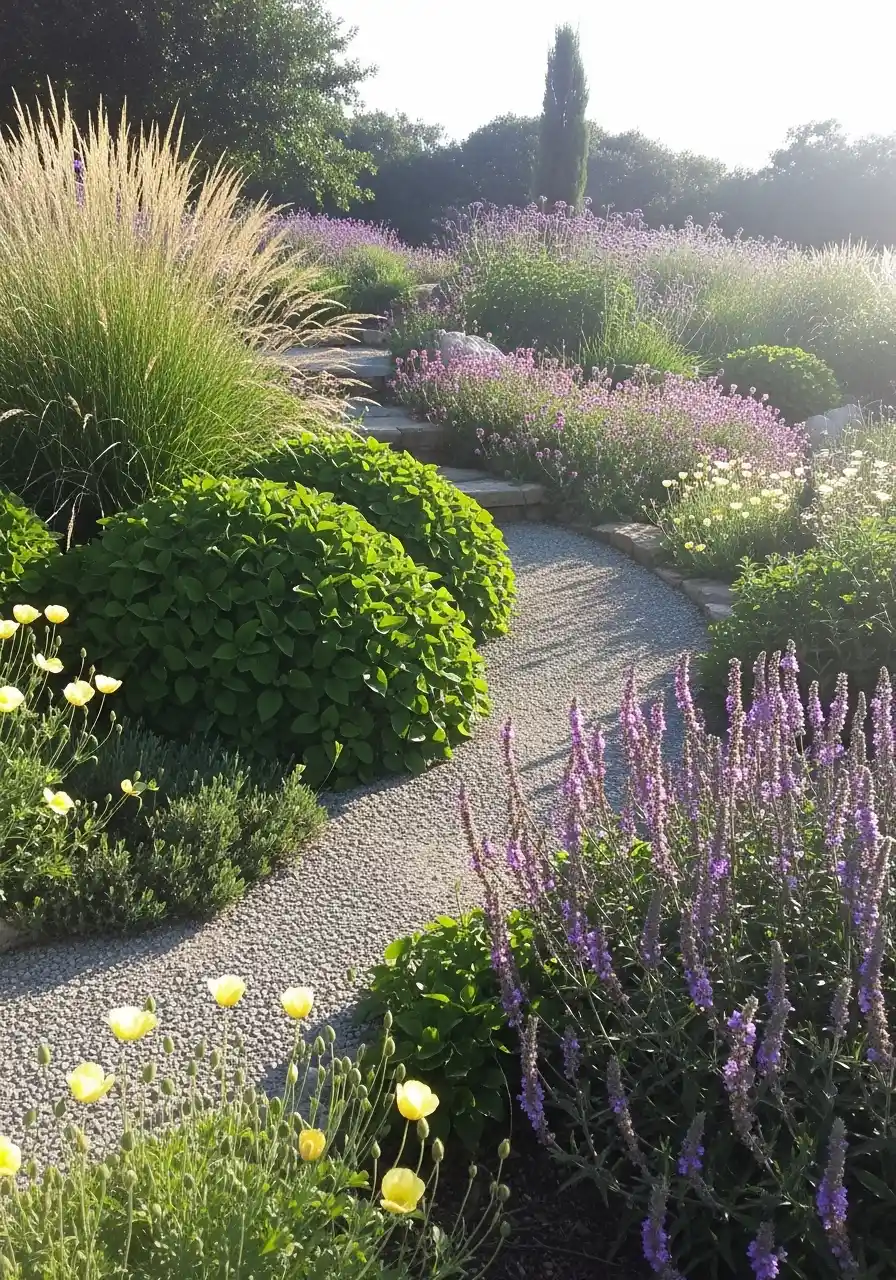
This curving path is gentle and kind of romantic, even though it’s just gravel and plants. The tall grasses lean into the walkway, and the purple flowers pop in the sunlight like little fireworks. I like how it feels like you’re being guided, not forced. Curves do that. Straight lines feel strict to me, and I’m already strict enough with myself.
If you want this in central texas landscaping, start by marking your curve with a hose on the ground. It sounds silly, but it helps your eye see it. Then widen it a bit more than you think you need. Paths always shrink once plants grow in. My personal rule: if two people can’t walk side by side, it’s too tight.
For plants, use grasses that can handle heat and look good when they move in wind. Little bluestem or gulf muhly are good picks. Add salvias for long bloom. And don’t forget a few bigger rocks to “anchor” the look. Otherwise it can feel floaty, like plants sitting on top of dirt.
Purple salvia and ornamental grasses near the driveway
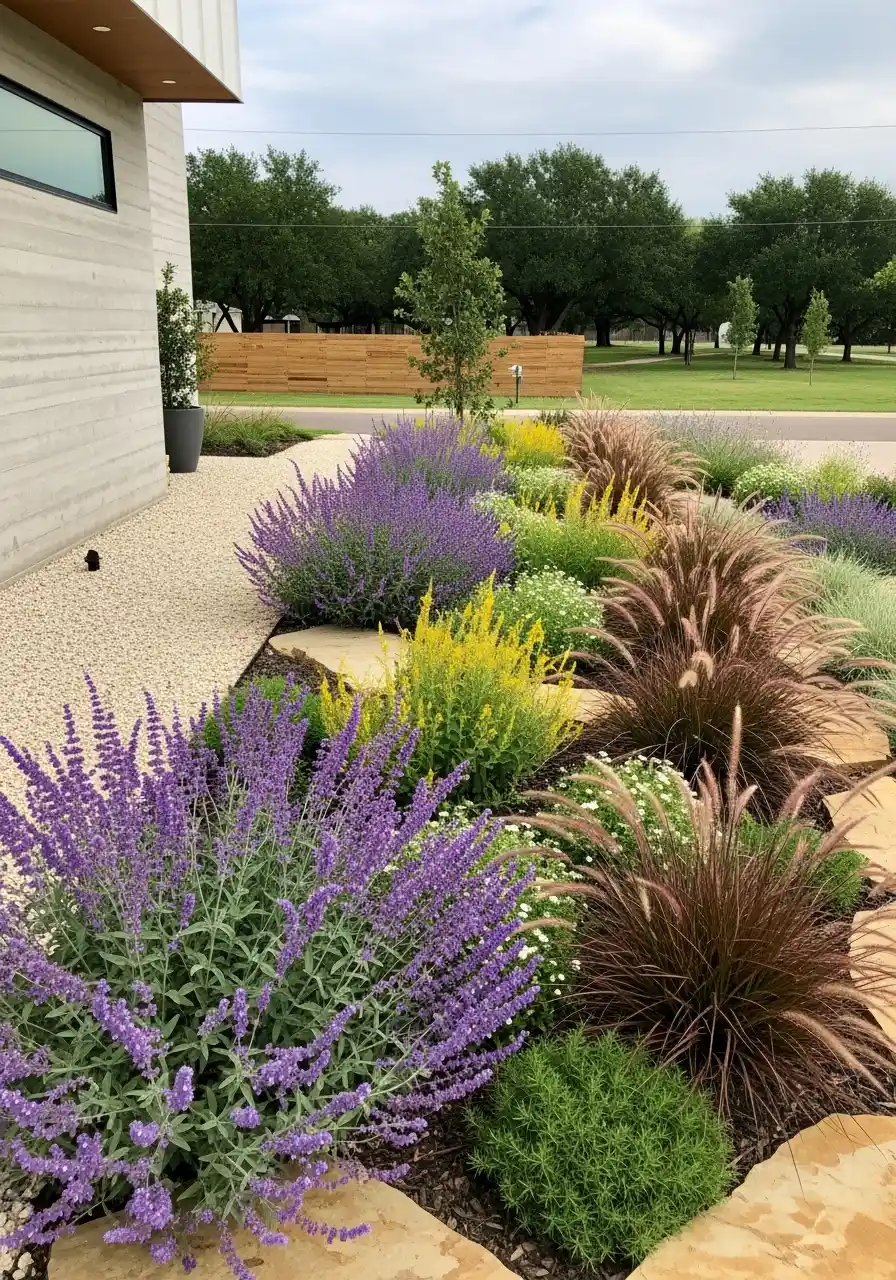
This one looks like a modern home’s best friend. The purple flowers are in big drifts, and the grasses bring that soft, feathery movement. I like the way the plants are grouped so the bed feels full, not spotty. It’s a look that says “pretty,” but also “I’m not watering this every day.”
In Central Texas landscape planning, the trick is choosing plants that don’t melt in summer. Salvias are usually reliable, and grasses handle the heat like champs. I’d also add a few silver-leaf plants for contrast, like a soft gray mound. The color combo of purple, yellow-green, and silver always feels expensive to me, even when it isn’t.
Small hack: use drip irrigation. You don’t need it forever, but it helps plants establish fast. And mulch matters. Not too thick, not too thin. If you pile it up against stems, plants can rot, and then you’ll feel personally betrayed by your own yard.
Cozy boulders, low white blooms, and sunset glow
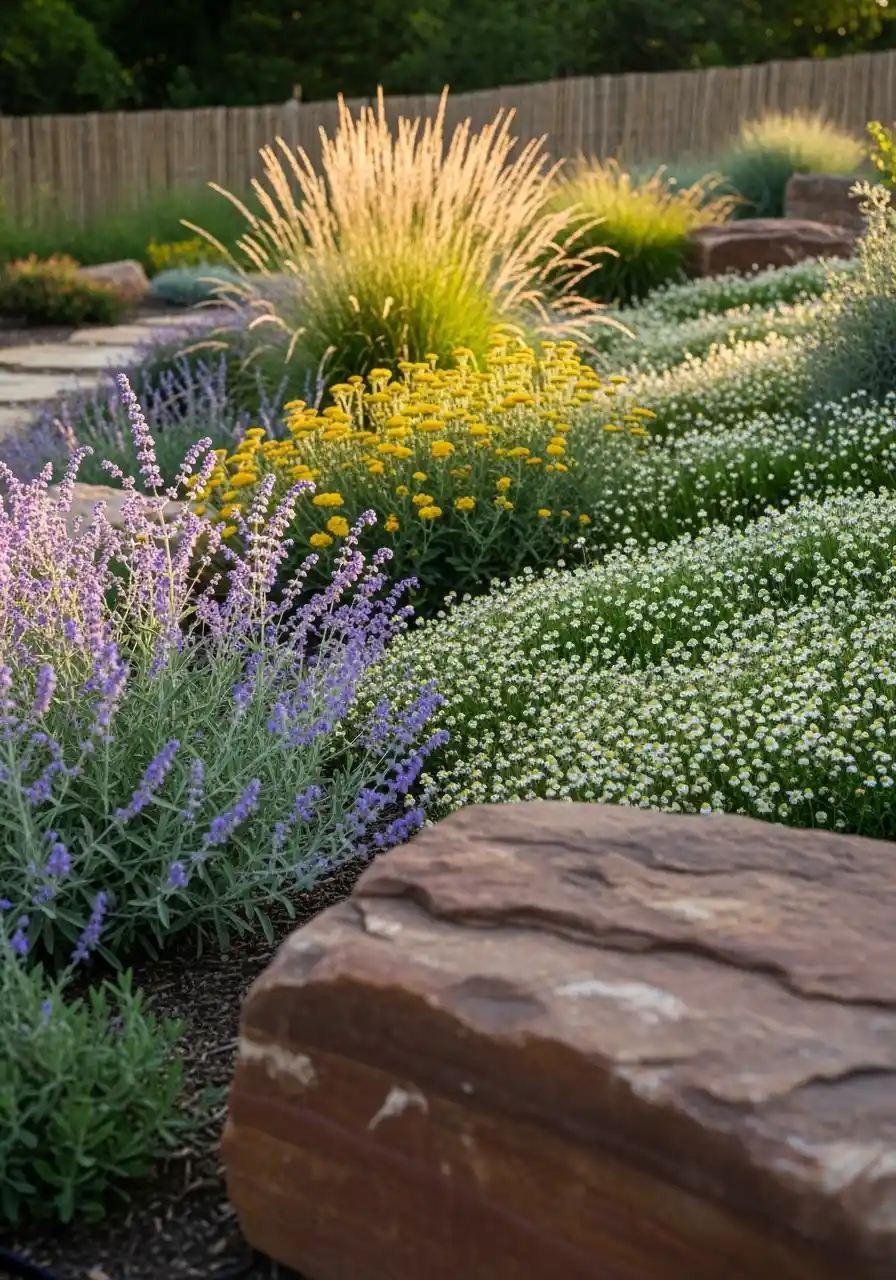
This close-up scene is all texture and mood. The boulder feels warm and solid. The white groundcover spreads like foam, and the yellow flowers sit in the middle like tiny buttons. The lavender-ish purple blooms add softness, and the grasses in the back catch light in a way that makes the whole bed look alive.
If you’re doing central texas landscaping, this is a great lesson: you don’t need huge plants to make a big impact. You need layers and contrast. Put a rock in the foreground. Add a low spreader plant. Then a medium “blooming mound.” Then tall grasses behind. It’s like building a little stage.
My tip is to plant the groundcover in larger patches than you think. Little patches look like sprinkles. Big patches look intentional. Also, keep rock sizes consistent. If you mix one tiny pebble rock with huge boulders, it can feel random. This style is soft, but it’s still designed.
Pink groundcover, iris pops, and stone terraces
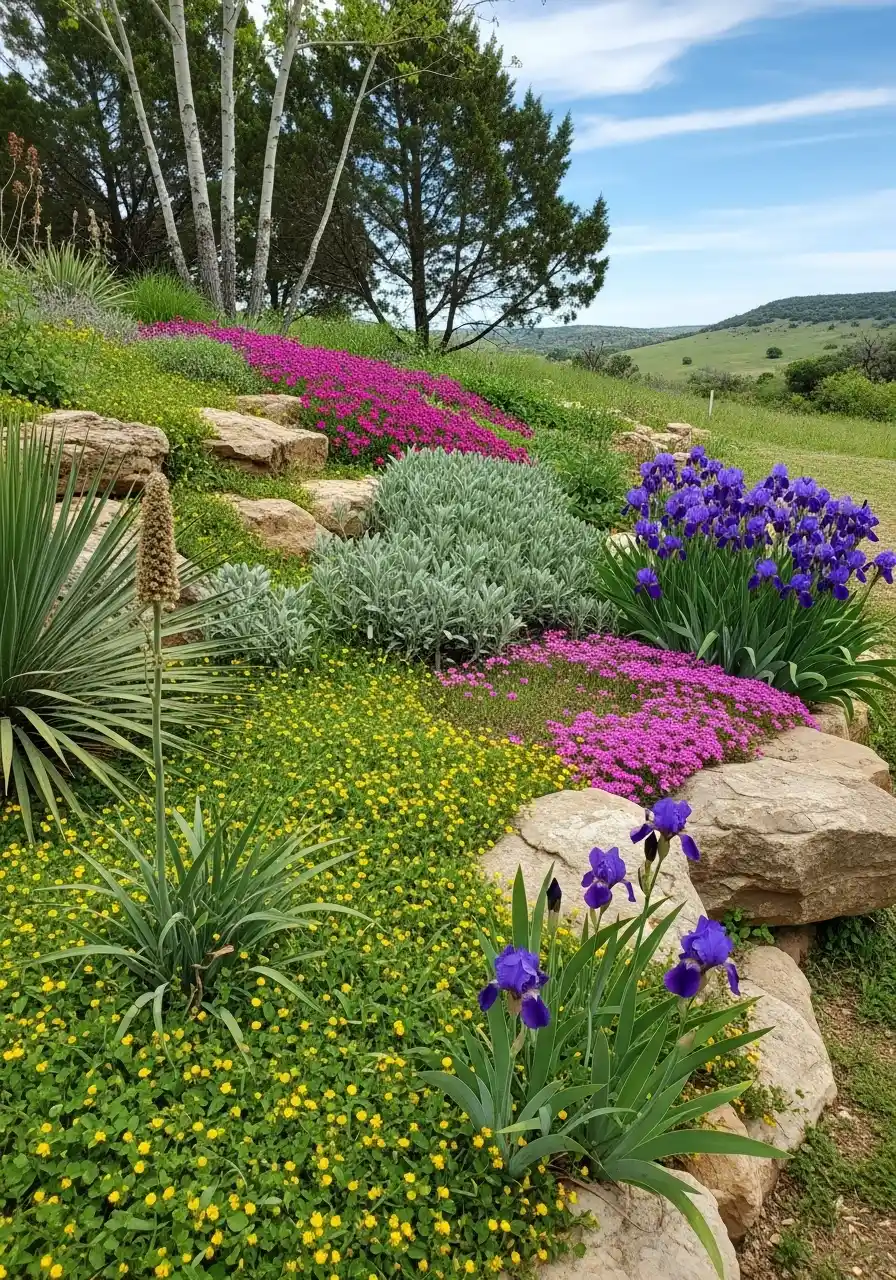
This hillside setup is honestly gorgeous, and also kind of brave. Slopes can be a pain. Water runs off, plants dry out, and you end up replanting stuff. But here, the rocks terrace the slope just enough to slow water down, and the plants cover the ground like a colorful blanket. Those purple iris blooms are like little surprises.
For Central Texas landscaping on a hill, groundcovers are your best friend. Pick tough spreaders that hold soil. Then add a few statement plants like irises or salvias for height. I like that this design doesn’t fight the slope. It uses it. That’s smart.
Hack I swear by: plant in a “fish scale” pattern. Overlap plants slightly like shingles, so soil doesn’t show as much. And put bigger rocks where water naturally wants to rush. They act like speed bumps. It’s not fancy, but it works.
Lavender rivers, agave structure, and rock mulch that stays clean
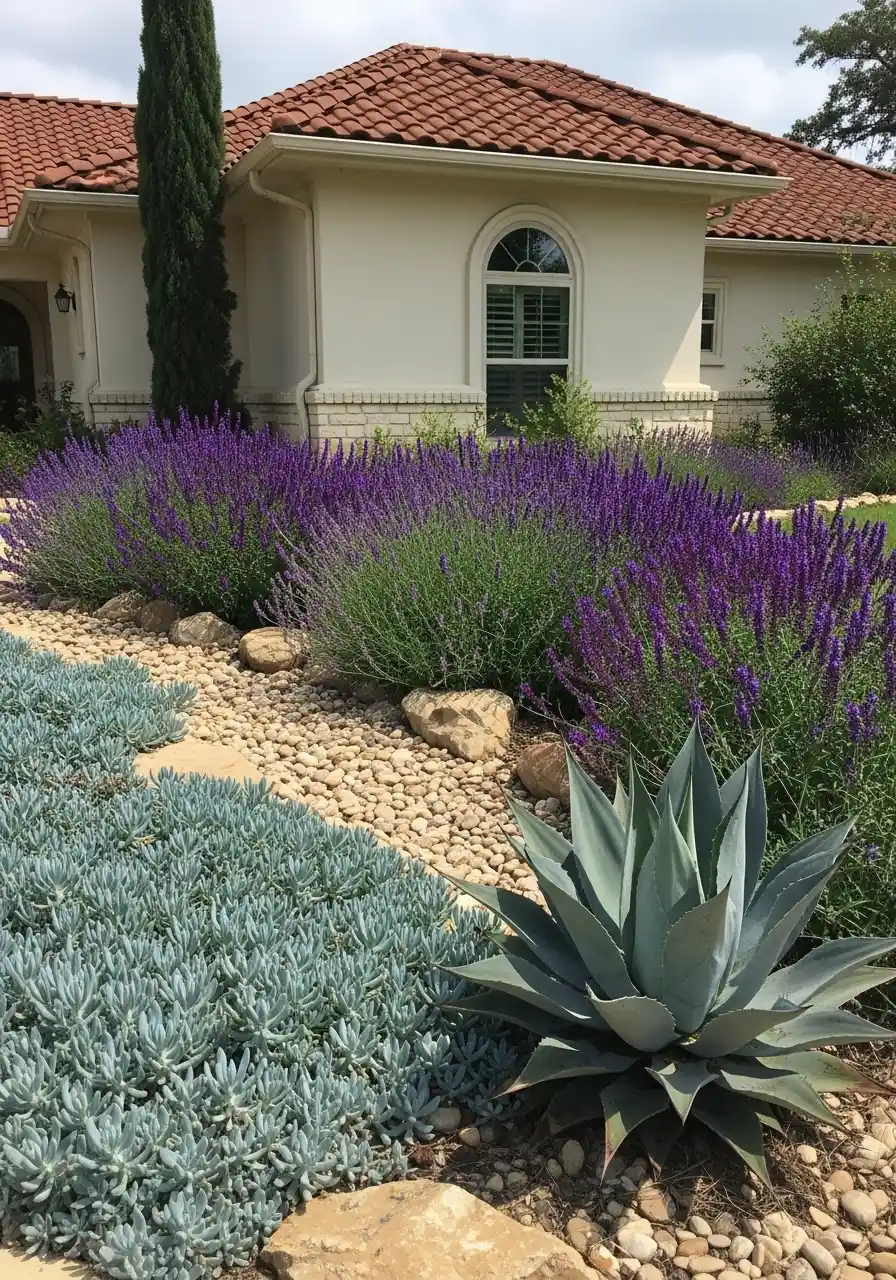
This one is a clean desert-meets-Mediterranean look. You’ve got a wide drift of purple (looks like salvia or lavender-type plants), pale blue succulent groundcover, and a bold agave up front like a sculpture. The rock mulch keeps everything tidy, and the few larger stones make it feel natural, not like a parking lot.
For central texas landscaping, succulents and agave can be amazing, but they need drainage. If your soil is heavy clay, mix in grit and create a slight mound. If you plant agave in a low wet spot, it can rot and you’ll be sad about it. I would be, anyway.
A trick here is color blocking. Don’t mix everything together. Do purple in one zone, silver-blue in another, then the agave as the focal point. It’s clean and calming. Also, keep agave away from walkways. Those tips are sharp. They look friendly, but they are not.
Wildflower borders that feel free, not messy
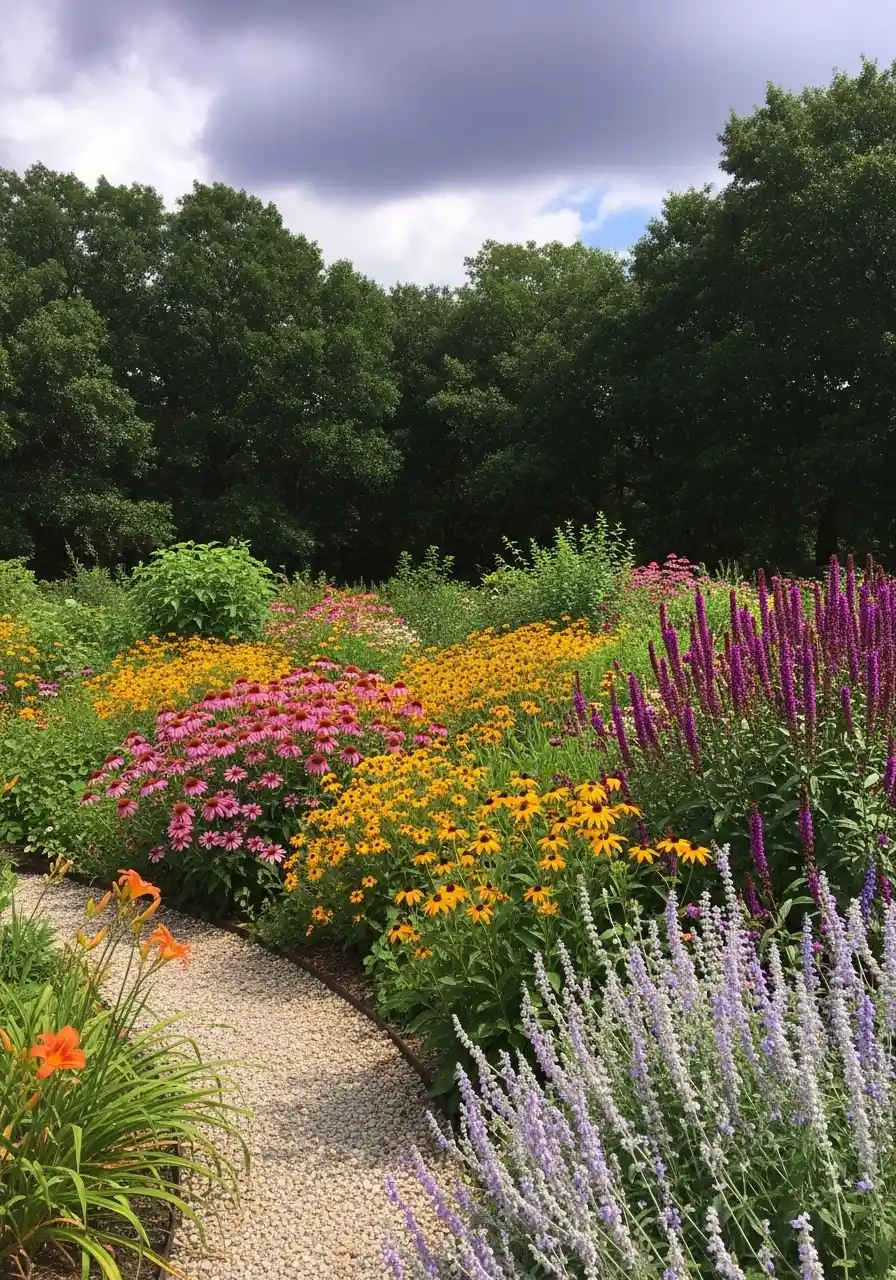
This big wildflower bed looks like a happy storm of color. Pink coneflower shapes, yellow black-eyed Susans, purple spikes, and even orange lilies in the corner. It feels natural, like it just happened, but it didn’t. Somebody planned this. I can tell because the colors repeat and the bed edge is controlled.
In central texas landscaping, a wildflower look works best when you still give it rules. Rule one: pick a main color palette, like purple-yellow-pink. Rule two: repeat your “backbone” plants. For example, use salvias and daisies as your base, then sprinkle accent flowers. If everything is an accent, nothing stands out.
My confession: I love this look, but I also get overwhelmed by it. So I’d keep a wider path and a cleaner edge, just so my brain can rest. Nature is pretty, but I also like knowing where to walk.
Curved walk, river rock, and white daisies that pop
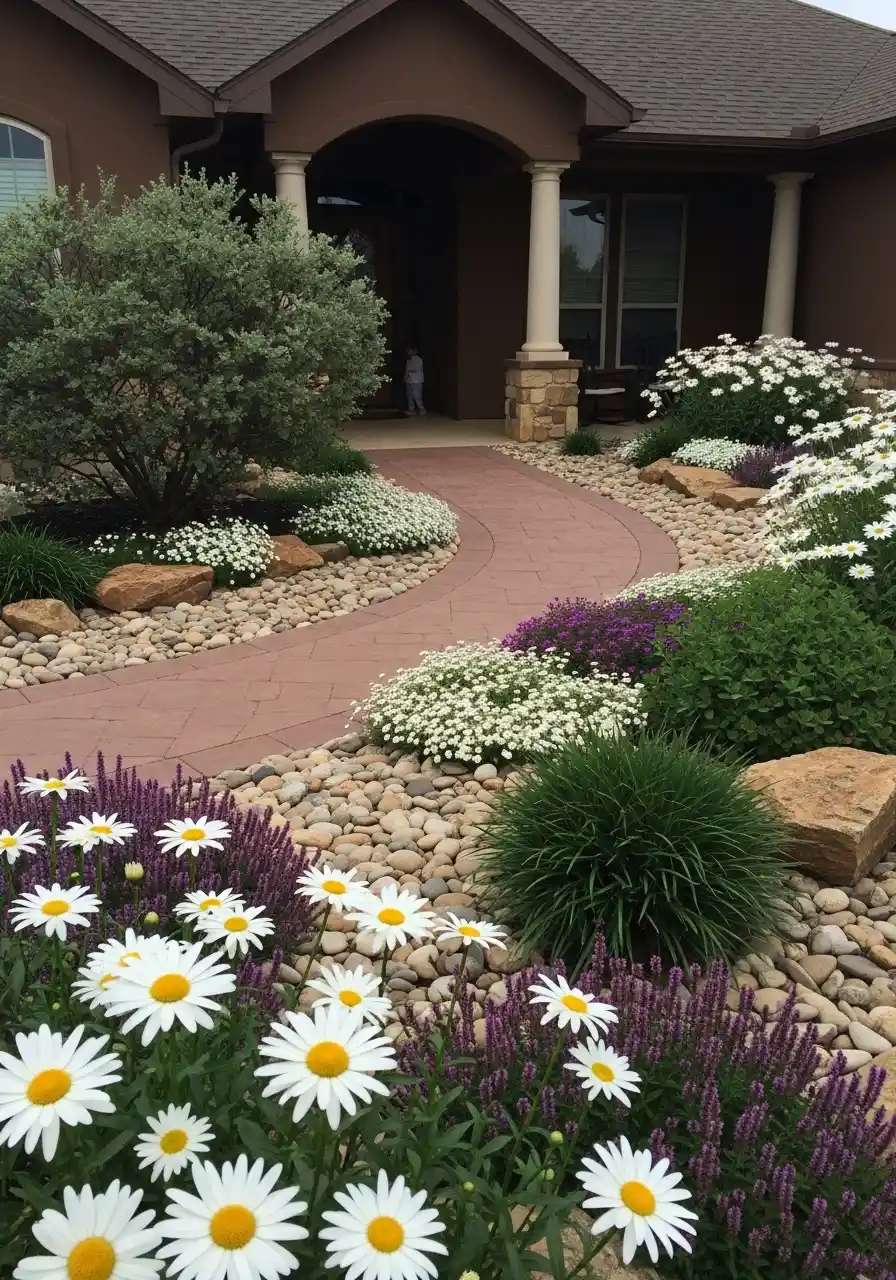
This front yard is soft and friendly. The river rock mulch makes the bed look clean. The curve of the path pulls you toward the entry without shouting. And the daisies are doing the most, in a good way. They brighten everything up, especially next to the darker shrubs and purple spikes.
For central texas landscaping, this is a great “middle” style. Not desert-only, not full cottage chaos. Just balanced. I’d use drought-tough plants that still feel lush, like salvias, dwarf yaupon, and hardy daisies. Keep the rock mulch consistent and add a few boulders to ground it. Without rocks, river pebble beds can look flat.
Hack: don’t place plants in a straight line along the path edge. Stagger them slightly. Straight lines can look stiff. Staggering makes it feel natural, even when it’s very planned.
Mass planting that feels like a living quilt
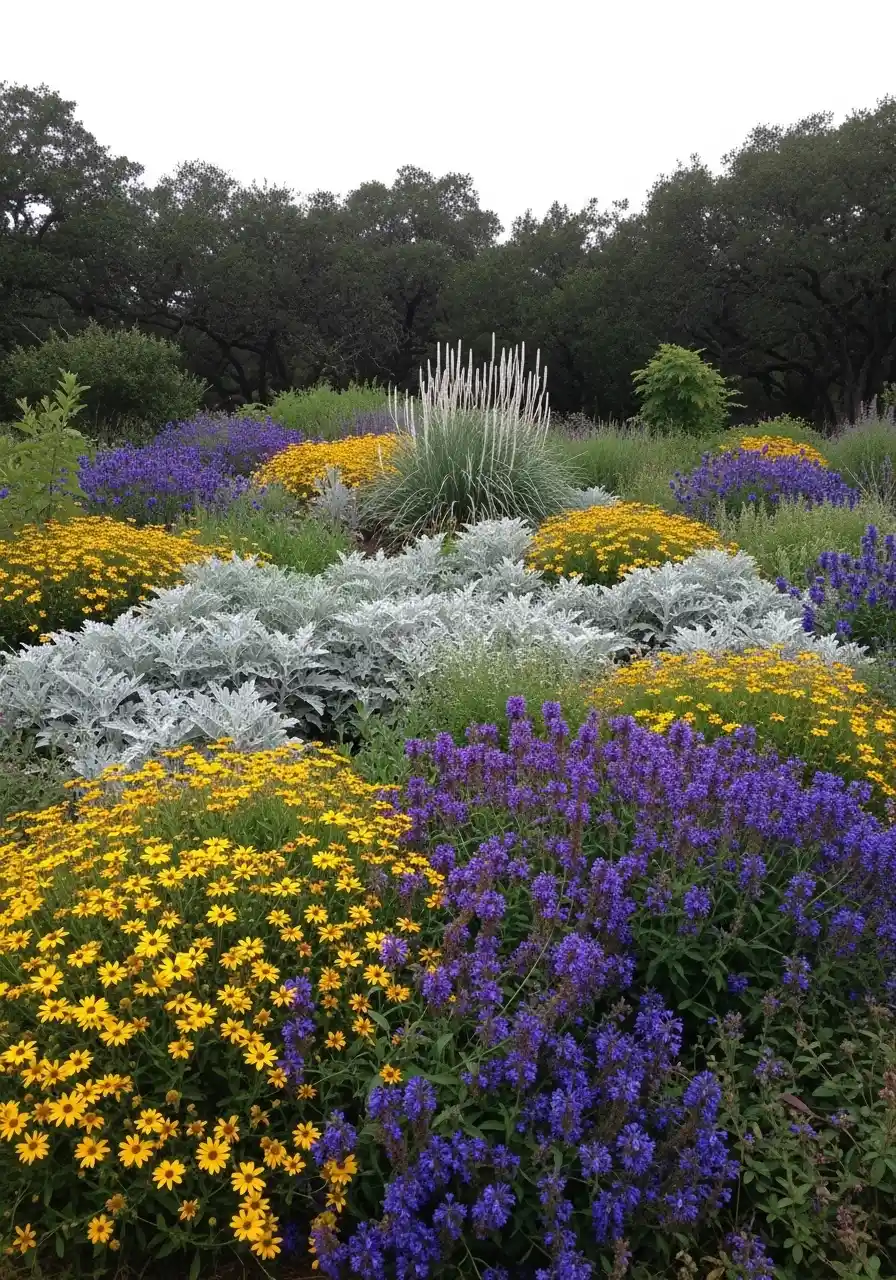
This image is mass planting done right. Purple, yellow, and silver are repeated in big drifts, and there’s a tall grass in the center like a crown. It looks full but not crowded. It also looks like it can handle heat, because the plants are the kind that don’t faint the second summer hits.
For Central Texas landscaping, mass planting is one of the easiest ways to look “pro.” One plant type, repeated in a big shape, is stronger than twenty different plants sprinkled around. I know it’s tempting to buy one of everything. I do it too. But the big drifts are what makes this feel calm.
A practical tip: leave room for plants to grow. If you plant too tight, airflow drops and mildew shows up. Also, plan for bloom seasons. Some plants shine in spring, others in late summer. Mixing them gives you longer color without constant replanting.
Central Texas landscaping with a soft gravel edge and “pretty but tough” flower mix
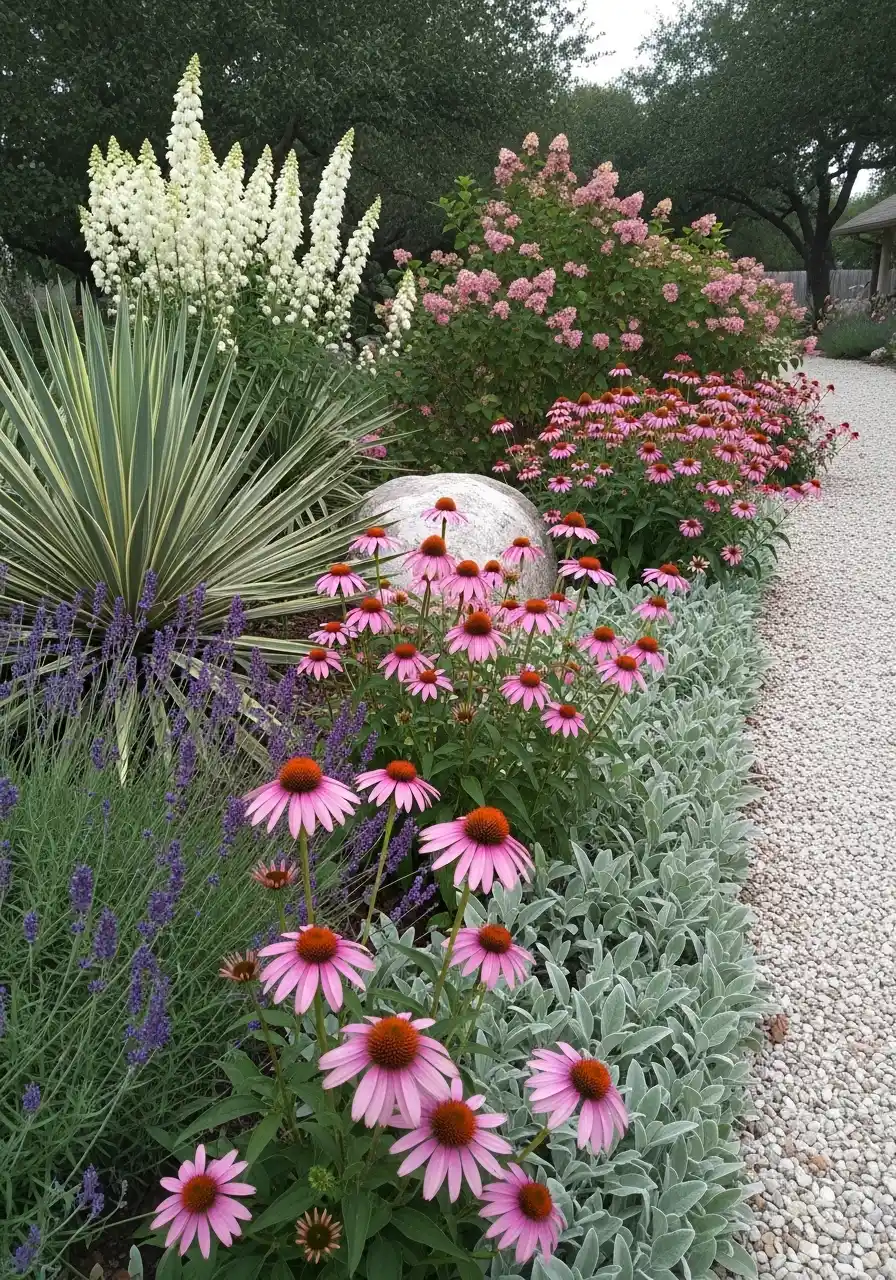
This border is the kind of planting that makes me stop walking. You’ve got pink coneflowers, purple spikes (salvia vibes), that fuzzy silver edging plant, and then a big spiky yucca-like plant that looks like it’s guarding the whole bed. And the gravel path beside it makes the whole thing feel clean, like the plants are allowed to be wild but the walkway stays polite.
If I was building this for central texas landscaping, I’d copy the exact layering. Front edge: silver foliage (like lamb’s ear style plants, or another tough silver groundcover). Middle: blooming perennials like coneflower and salvia. Back: one or two big statement plants like yucca or agave. The hack is to keep the edge plant continuous, like a ribbon. That “ribbon” makes everything look expensive even if it’s not.
One warning though: gravel next to soft plants can splash when it rains. So I’d leave a tiny strip of mulch inside the bed edge, just enough to catch splash. It’s a small thing, but it keeps your plants from getting beat up.
Central Texas landscaping xeriscape with boulders, cactus, and color patches
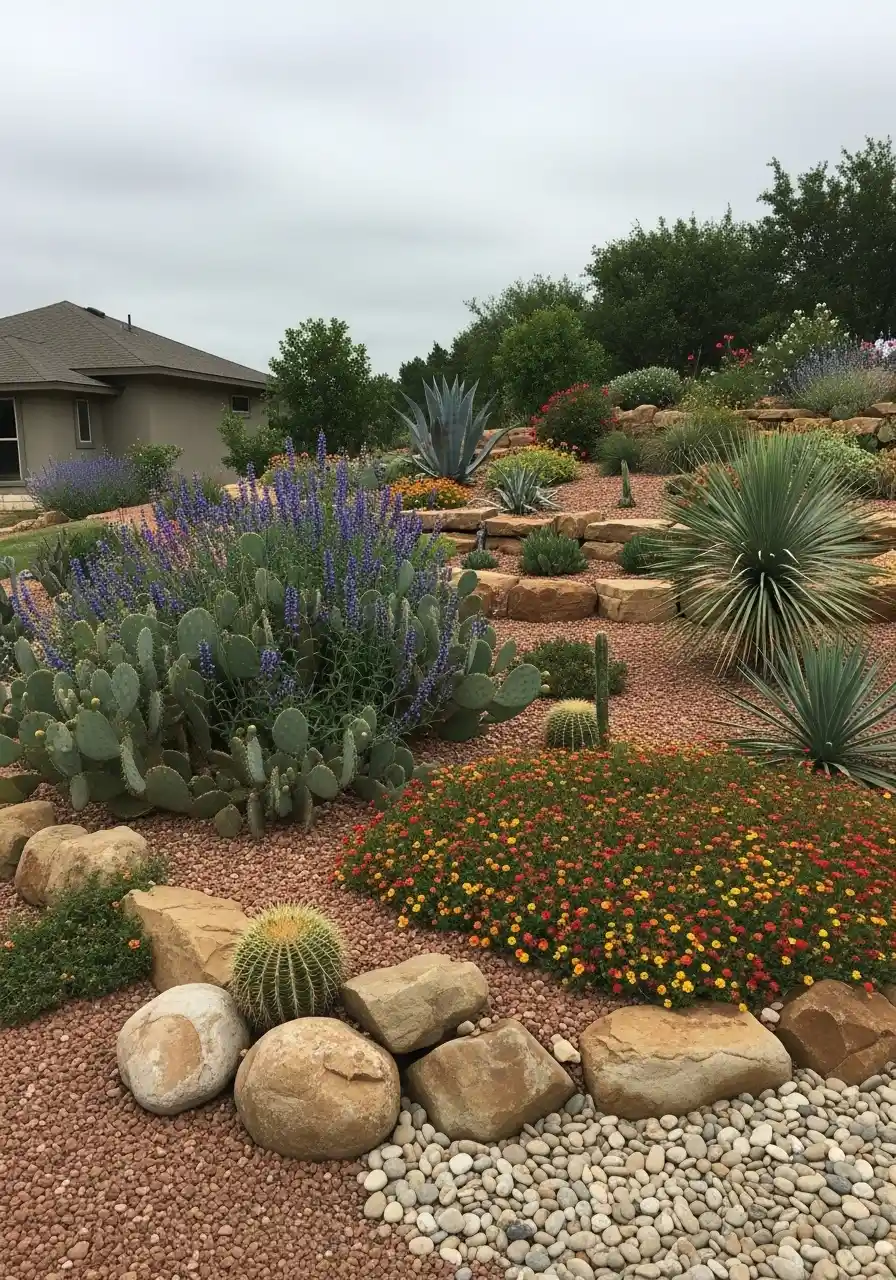
This image is classic Texas dry landscaping done right. I love that it’s not just cactus sitting in red rock like a boring desert postcard. It has color. That low flowering patch in the front feels like confetti, and the purple bloom spikes behind the prickly pear give it height. Plus the boulders look natural, not like somebody dropped rocks randomly from a truck.
For landscaping in Central Texas, this is a strong idea if you hate mowing and you want a yard that doesn’t panic in summer. My tip: keep plants grouped by water needs. Cactus and agave together. Flowers that want a bit more water grouped closer to a drip line. Don’t mix everything evenly or you’ll end up overwatering the cactus just to keep the flowers alive.
My personal hack is to use boulders as “path blockers” too. Like, put one where you don’t want people cutting through beds. It sounds controlling, and it is, but it works. People follow the path when the landscape quietly tells them to.
Central Texas landscaping with mass drifts of black-eyed Susans and coneflowers
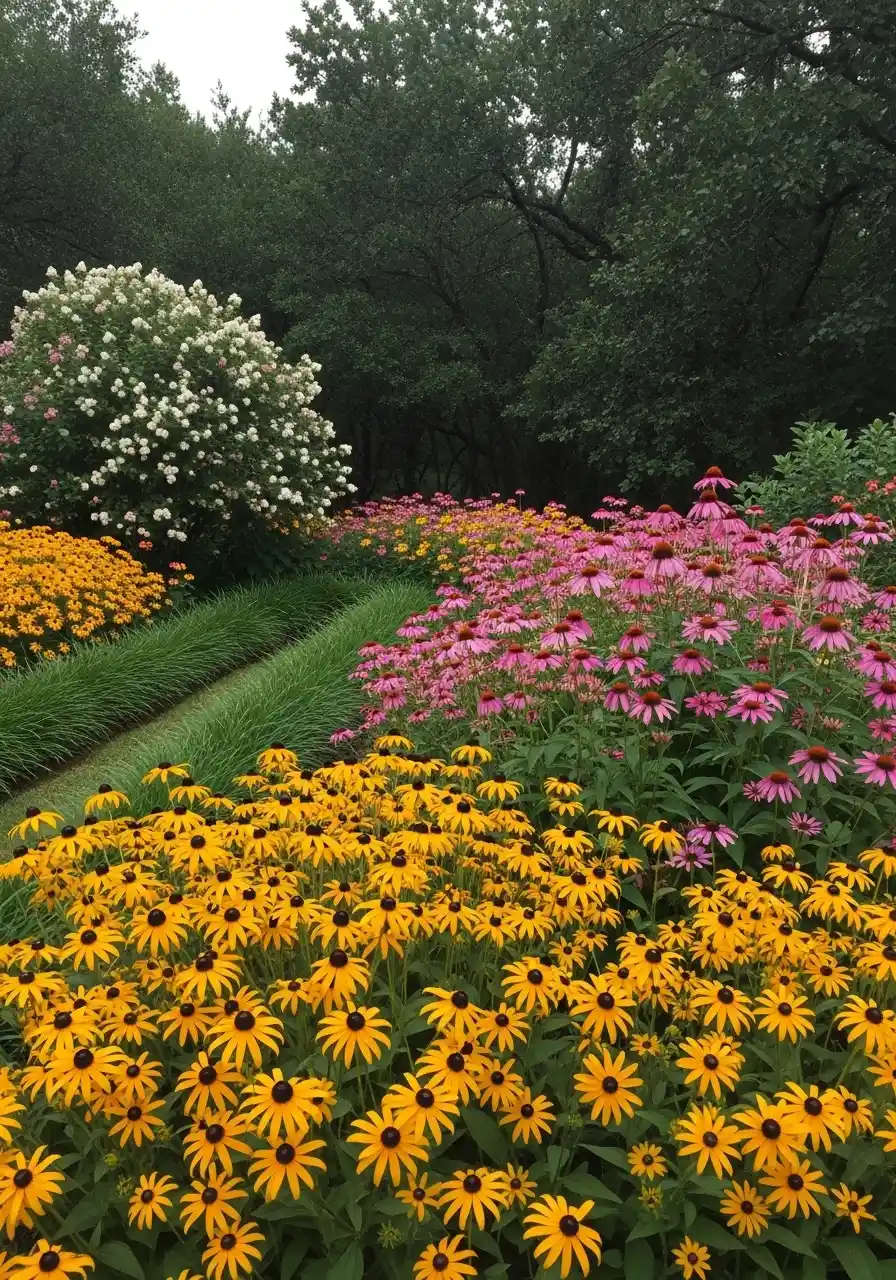
This image is pure “field of joy.” Big sweeps of yellow black-eyed Susans, then a whole drift of pink coneflowers, and the background trees make it feel like a natural meadow even though it’s planned. That contrast is the secret. The planting looks free, but the masses are clearly organized.
If you want this look in central texas landscaping, don’t plant one of everything. Plant A LOT of the same few things. Like 15–30 of one flower, minimum, if you have space. Then repeat it again somewhere else so your eye connects the dots. It sounds too simple, but it’s what makes it look “designer.”
Also, I’d keep the grass path or a mowed edge somewhere nearby, just to frame it. Wildflower beds look best when there’s something neat beside them. Without that, it can look like you just… forgot to weed.
warm wood siding + simple stepping stone path
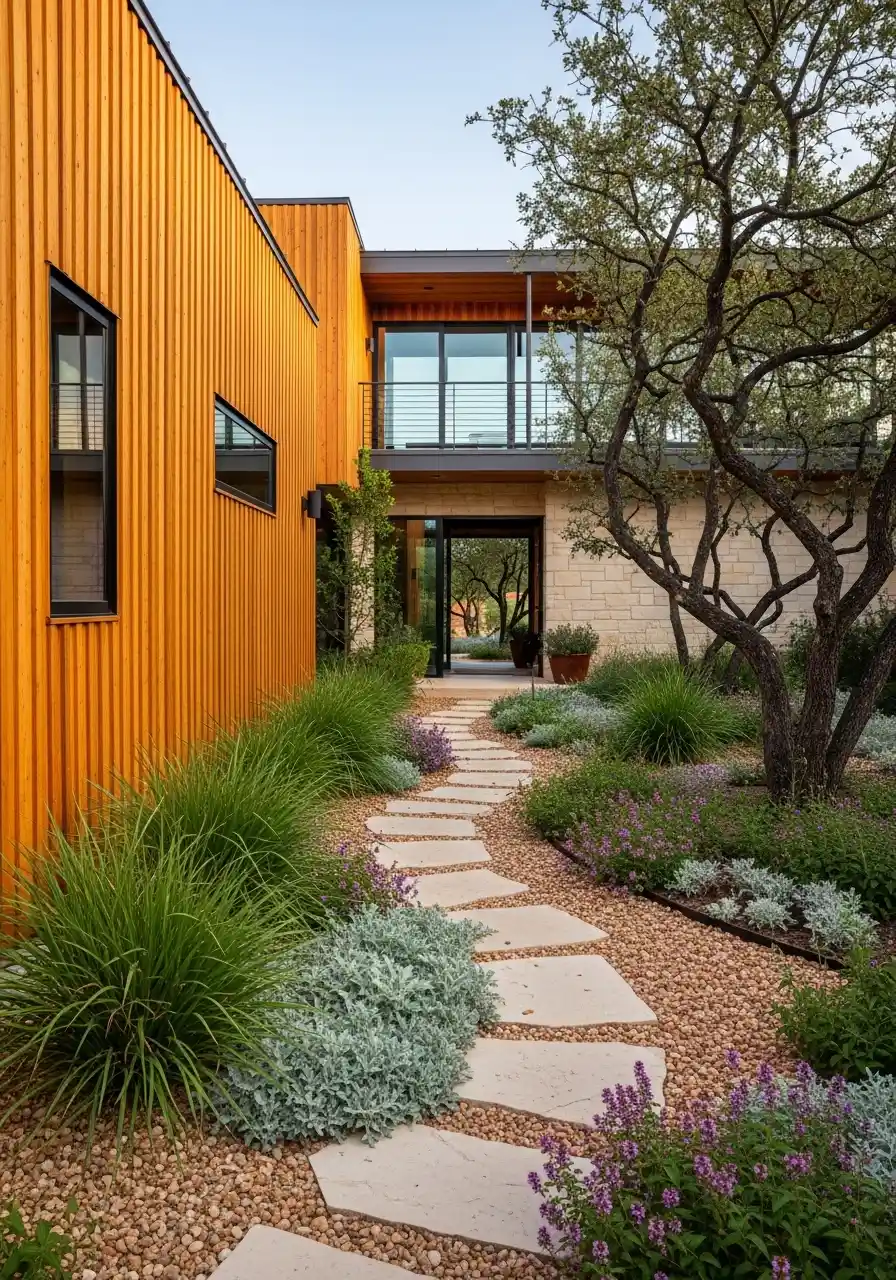
This modern house with the warm orange wood siding is really pretty, and the landscaping is calm so it doesn’t fight the architecture. The stepping stones lead you in, the gravel stays tidy, and the plants are mostly soft mounds and grasses with small purple pops. It feels minimal but still alive, not like a “dead” modern yard.
For central texas landscaping, this is a smart move because it handles heat and still looks clean year-round. My advice is to keep a limited palette: 2 grasses, 2 flowering plants, 1 silver foliage plant. Repeat them. And keep the path stones slightly irregular. Perfect spacing can look fake fast.
Hack I love: use a darker edging strip (metal) to separate gravel from planting zones. It makes the whole yard look sharper instantly. If you skip edging, the gravel will slowly creep into your planting beds and you’ll be pulling rocks out like it’s your new hobby.
Central Texas landscaping with a winding gravel path and bold purple “wow” moments
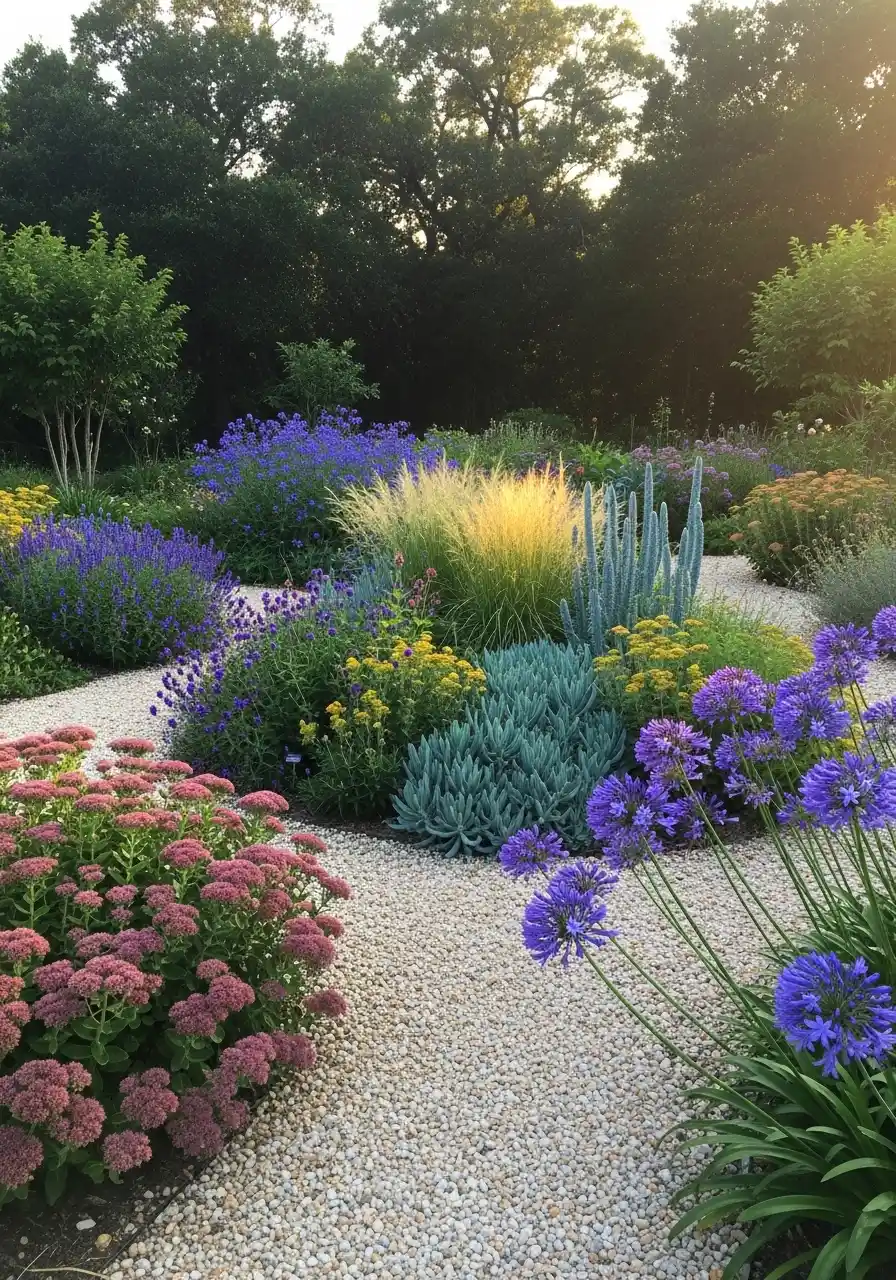
This garden is dreamy. The path winds through color, and the plants are layered like a painting. You’ve got purple globe flowers (allium-looking), blue-green succulents, golden blooms, and soft grasses catching the light. The gravel path is wide enough to walk easily, and the curves make you want to keep going.
If I was trying to do this in central texas landscaping, I’d plan the path first, then plant in “blocks” of color. Purple block here, blue-green block there, yellow block to punch it up. The trick is not mixing every color everywhere. Color blocks keep it calm. And I’d add one taller vertical plant in a few spots, like a spiky blue-green accent, so the garden doesn’t stay flat.
My confession: I’d probably overplant this the first time because I’m impatient. But leaving breathing room is what makes the shapes stand out. Space is not wasted. Space is the design.
Central Texas landscaping with big rounded beds that glow at sunset
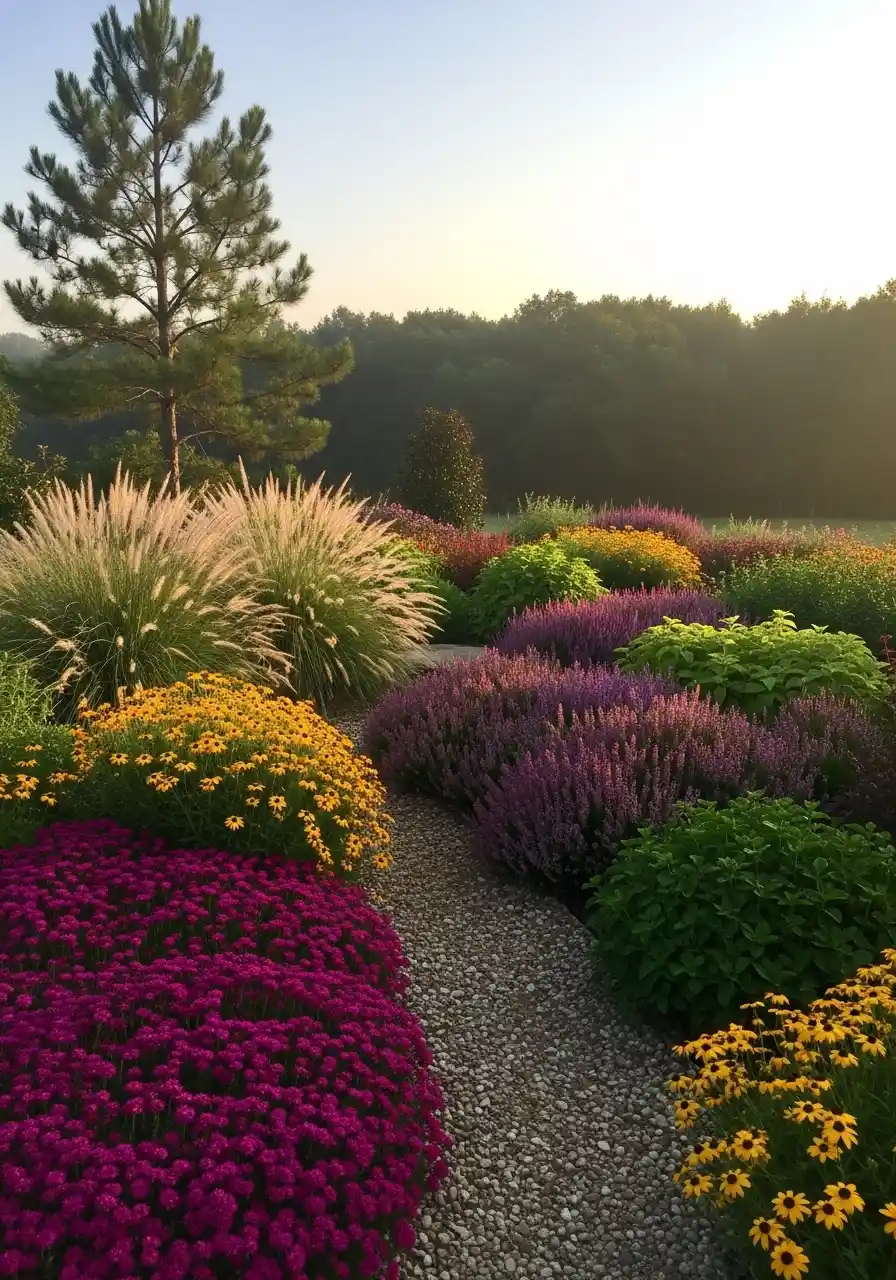
This last image feels like sunset itself. The beds are rounded and generous, and the colors are deep. Pink, yellow, purple, and those grasses catching light like fire. The gravel path curves through it all like a little river. It’s the kind of planting that looks soft and natural, but it’s actually very intentional.
For central texas landscaping, this style works best if you pick plants that can take the heat and still look full. Use drought-tough perennials, but still keep drip irrigation for the first year while everything roots in. Once established, you can water less and the garden still holds together.
Hack: keep your bed edges wide and smooth, not jagged. Smooth edges make rounded beds look calm. Also, repeat one “main” color. Here it feels like purple is the anchor. When you anchor the palette, the bright colors don’t look chaotic.