I swear I wasn’t even trying to “redo my whole yard”… then I saw these photos and my brain went quiet for a second. That’s how native texas plants landscaping hooks you. It looks relaxed and wild, but also somehow clean and planned. And honestly, I want that feeling at my own house, even if I mess up a little on the way.
Table of Contents
Native texas plants landscaping: the colorful front border that feels like a party
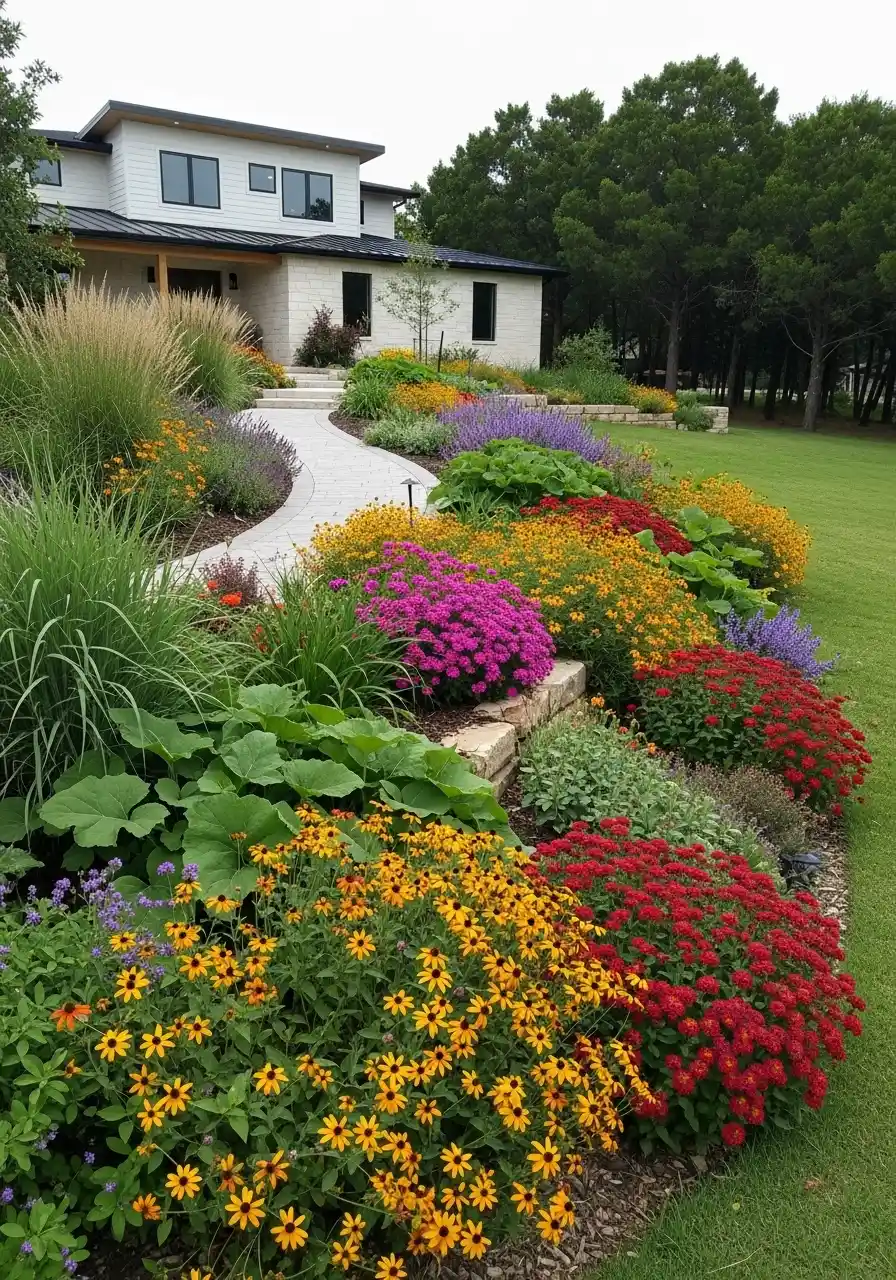
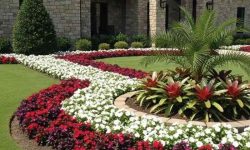
This first yard is loud in the best way. The curvy sidewalk, the thick flower drifts, and the way the colors repeat makes it feel like it was planted with confidence. I love how the taller grasses sit back like a soft wall, while the bright flowers (yellow, purple, red) push forward. It’s cheerful, but not messy. I wish my garden looked this “happy” without me stressing.
If you want this vibe with native Texas landscaping plants, build it in layers. Back row: tall natives like little bluestem or gulf muhly. Middle row: salvias (like mealy blue sage) and blanket flower. Front row: low, steady bloomers like blackfoot daisy. Hack that saves my sanity: plant in groups of 3–7 of the same plant. One single flower plant looks lost, like it got invited to the wrong party.
Modern farmhouse + dry creek rock lines that stay tidy
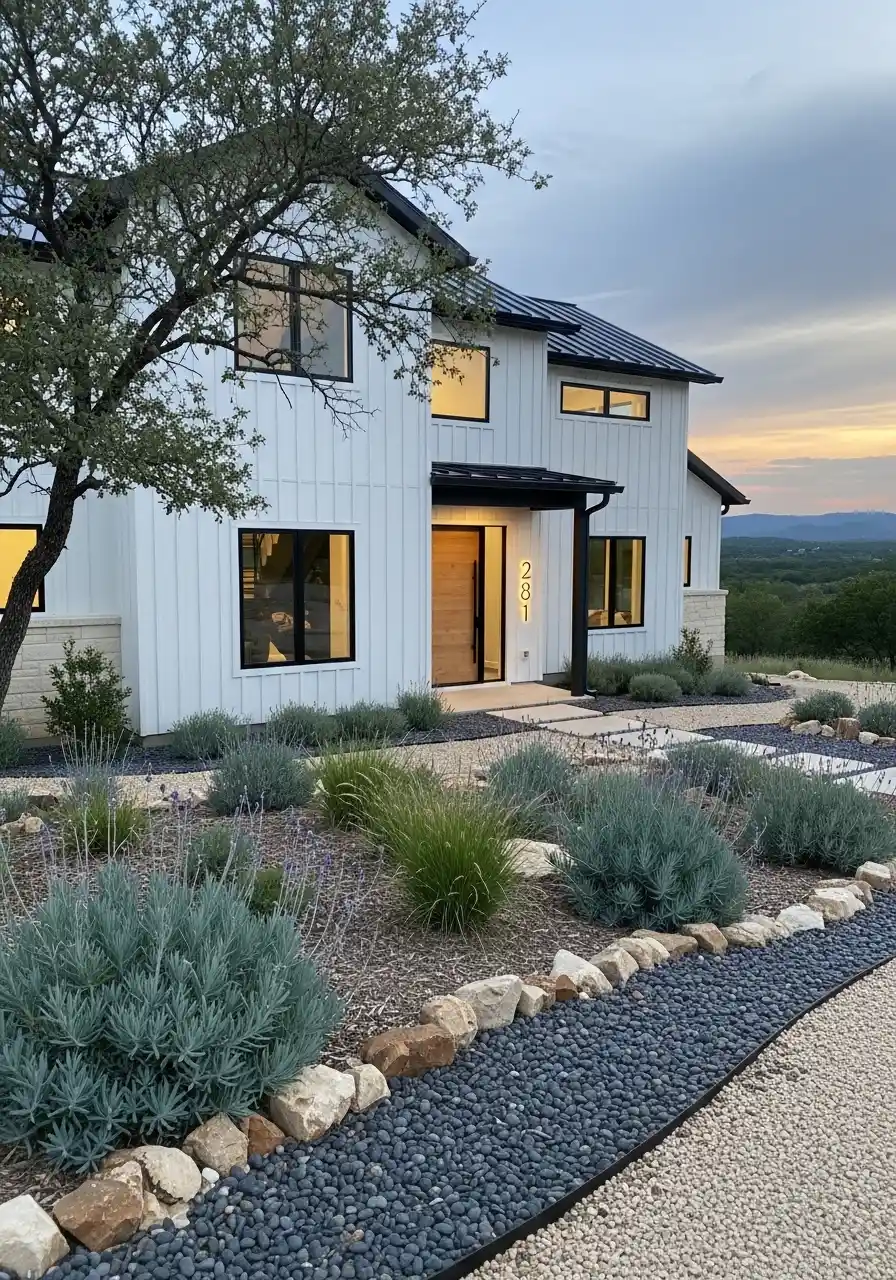
This one feels calm, like a deep breath. The house is crisp, and the landscape is mostly rock and tough plants, not fussy grass. Those dark rock bands look like a dry creek, and it’s such a smart trick because it breaks up all that gravel. In native plant landscaping in Texas, structure matters, because you’re not relying on nonstop flowers.
I’d copy the rock border idea and keep plants spaced so each one has its own spotlight. Use native-y picks like sotol (depending on your area), agave lechuguilla (West TX), prickly pear, and bunch grasses. Small hack: lay metal edging before rock goes down. If you skip edging, gravel will creep everywhere, and you’ll hate your life a little.
Simple paver squares + mulch beds for a clean front entry
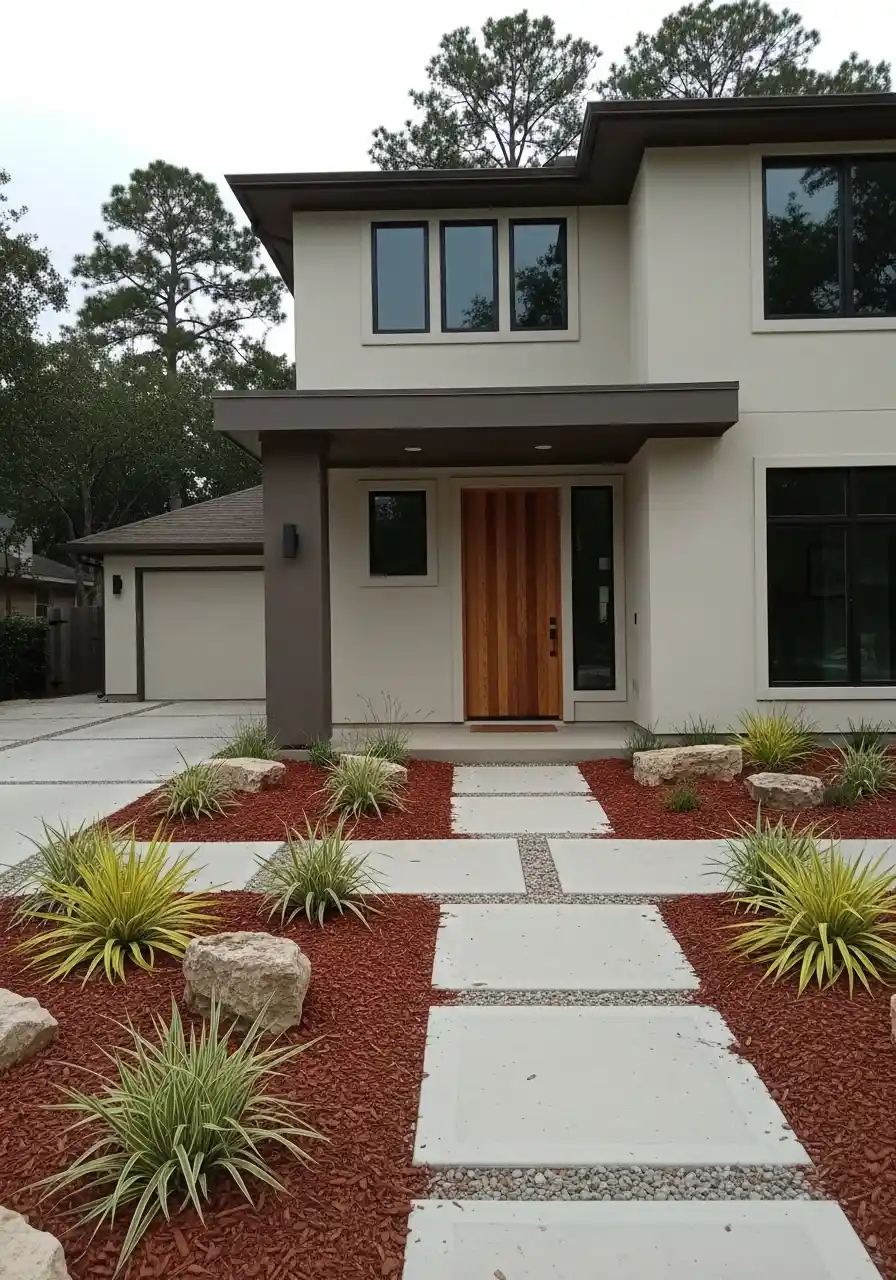
This yard is proof you don’t need a million plants to make it pretty. Big square pavers, small clumps of spiky plants, and boulders placed like punctuation marks. It’s modern and minimal, but still warm. For native texas plants landscaping, this layout works because the hardscape does most of the visual work.
My suggestion is to keep the planting super intentional. Pick 2–3 plant types and repeat them. For a native-friendly swap: use Texas sotol or bunch grasses instead of random ornamentals. Keep mulch at 2–3 inches, not a mountain. I used to pile mulch like I was frosting a cupcake, and it just invited bugs and rot.
Courtyard curve with black rock and round shrubs for “neat but alive”
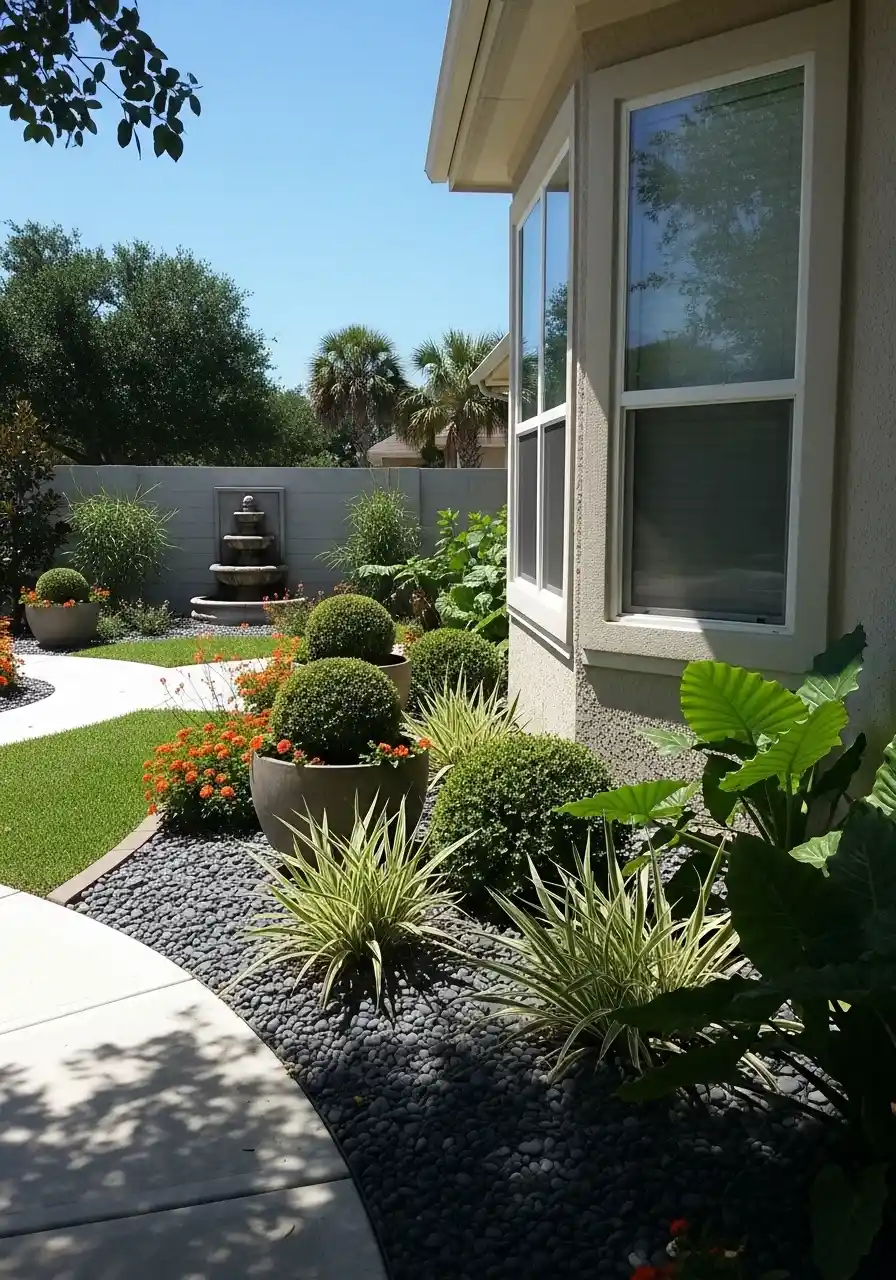
This one feels like a little resort corner, especially with that fountain in the background. The black rock is bold, and the round shrubs make it feel polished. But if you’re trying to stick closer to native Texas plant landscaping, I’d be picky about what shrubs you choose. Some round shrubs people use are not native, and they can get thirsty.
A good native-ish option is dwarf yaupon holly (yaupon is native, just choose a compact form). For flowers, tuck in native or near-native color like autumn sage and gregg’s mistflower. Hack: put your drip line before you place rock. Seriously. Trying to snake tubing through rock later is annoying and you’ll say bad words.
Bold cactus and agave color blocks that still feel welcoming
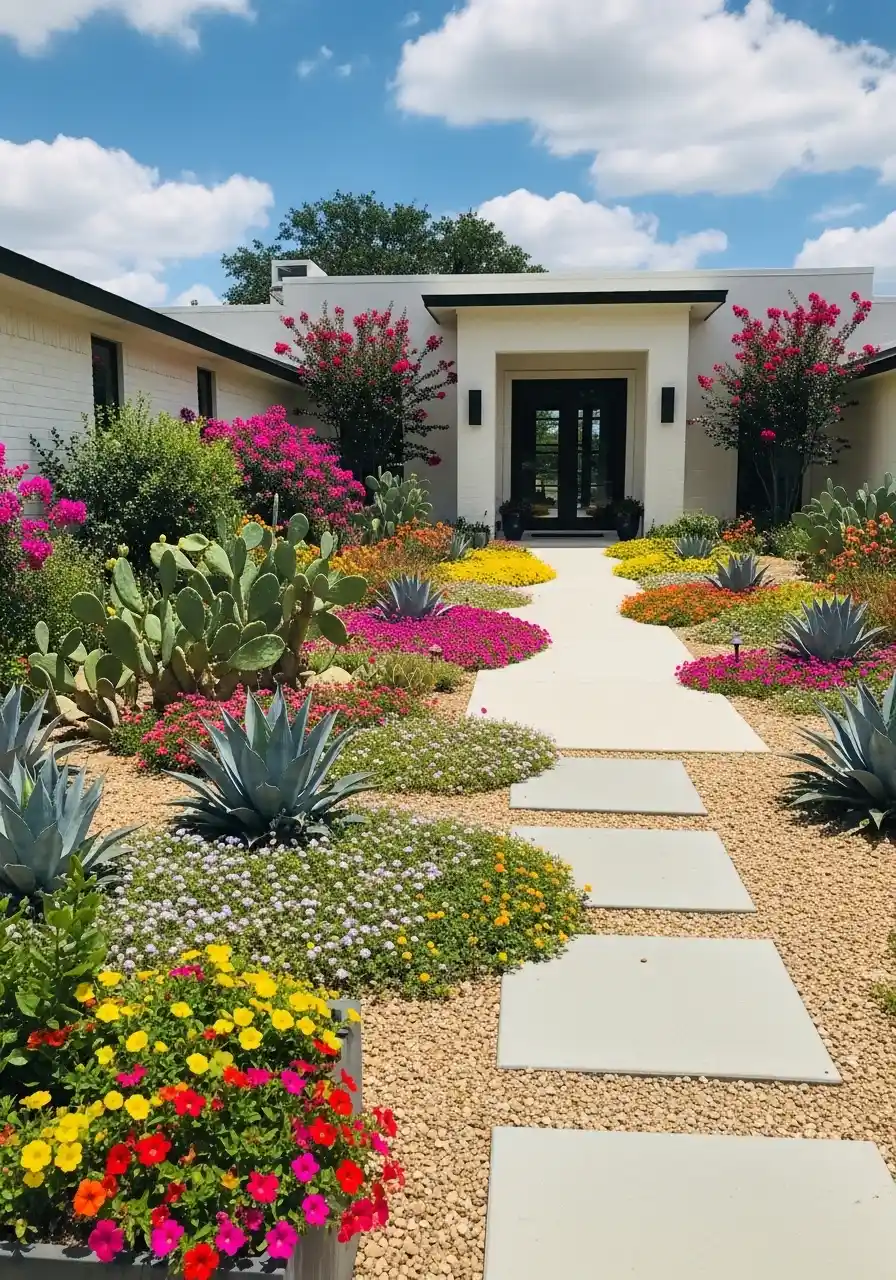
This photo is basically “wow” right when you walk up. The stepping pads lead you in, and the plants are in big patches of color like a quilt. That’s what makes it feel designed, not random. For native texas plants landscaping, I like this because it mixes tough structure plants (agave, prickly pear) with low flowering groundcovers.
If you want this, keep a simple rule: structure plants first, color second. Place agaves or yuccas at the corners and bends of the path. Then fill the spaces with low natives like blackfoot daisy, winecup (if it suits your area), and bluebonnet in season. Hack: use decomposed granite or small gravel around cactus. It drains faster and the plants stay happier.
Backyard desert patio with benches and big cactus drama
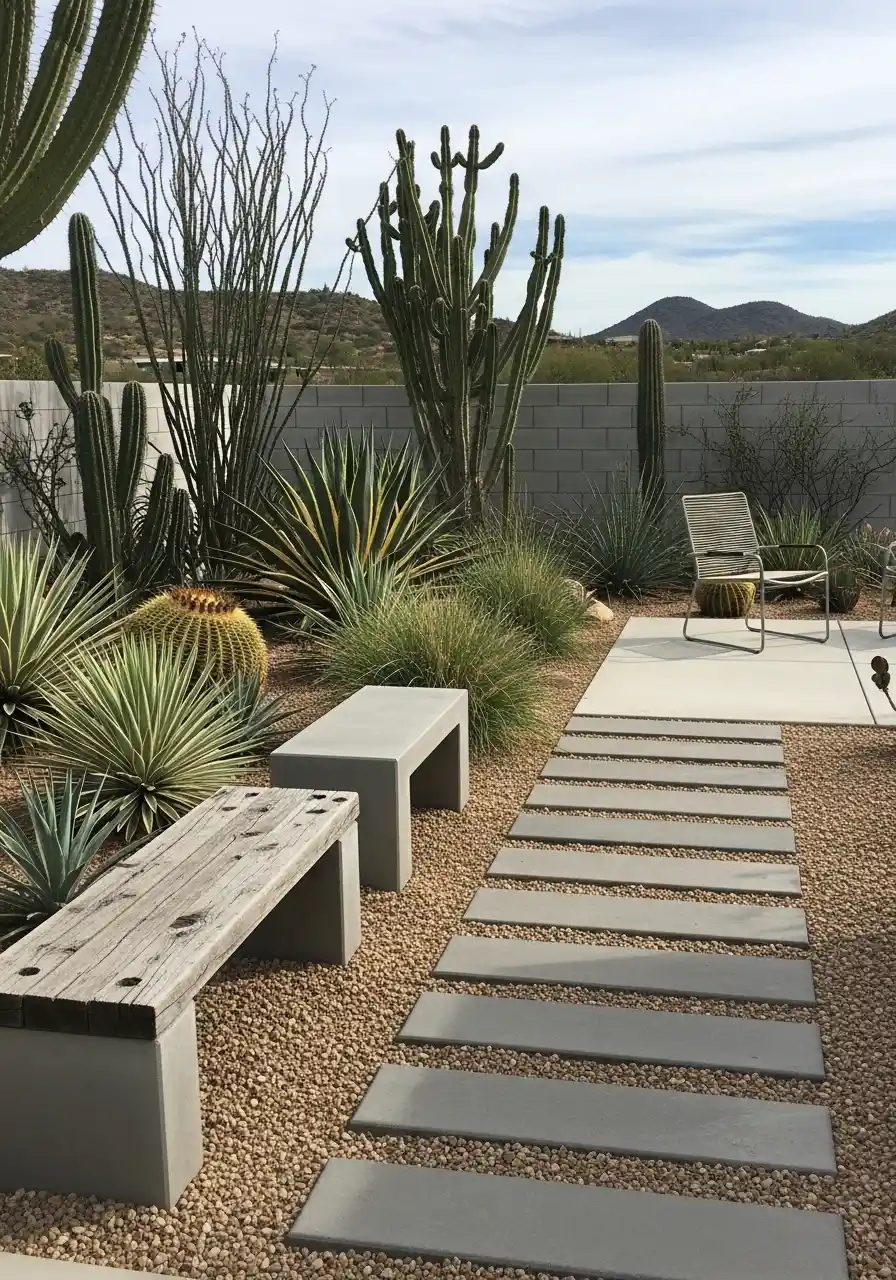
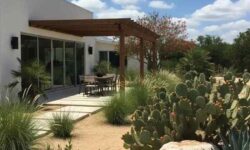
This scene feels like you could sit down and just stare at it for an hour. The gravel, the long stepping stones, the chunky cactus shapes… it’s all very “clean desert.” Even though some of these exact plants may not be Texas natives, the idea still fits native plant landscaping Texas if you choose regional plants for your spot.
The big trick here is negative space. Don’t fill every inch. Leave gravel open so the path feels calm. Pick a few strong plants: native prickly pear, maybe a yucca native to your region, and drought-tough grasses. Another hack: put seating on pavers, not straight on gravel. Gravel shifts, and your bench will wobble and drive you nuts.
Natural stepping-stone path through agaves and soft groundcover
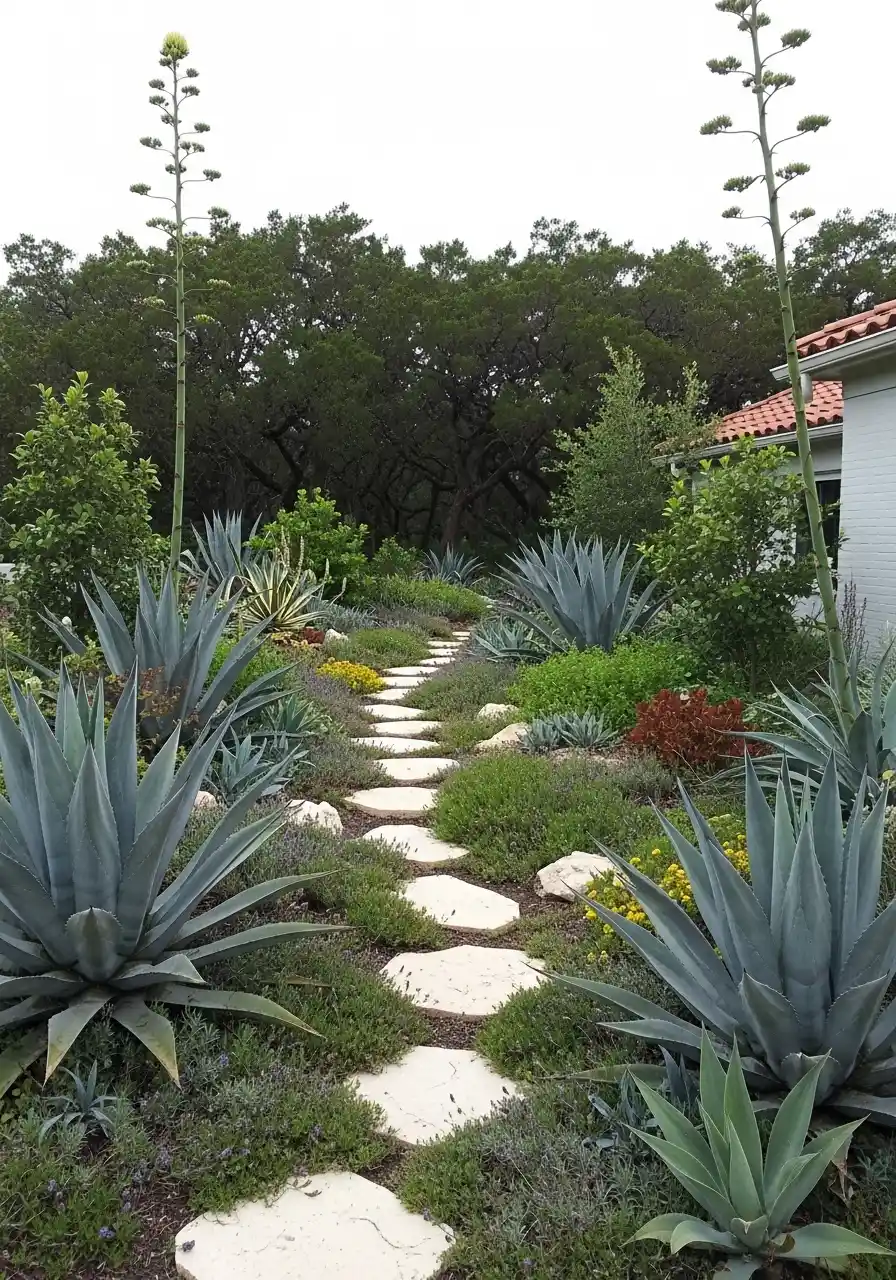
This is one of my favorites because it feels like a secret trail. The stones are irregular, and the plants feel like they grew there, even though it’s planned. That’s what native texas plants landscaping should feel like, kinda wild but still safe to walk through.
To copy this, keep the path narrow and let plants lean in a little. Use low natives or tough groundcovers between stones, but don’t expect it to be perfect. I always expect perfect, then I get mad. Better plan: add small gravel in the gaps where plants won’t take. For plants, use natives like frogfruit (great groundcover), salvias, and low grasses.
River rock “islands” with big stepping stones for a modern entry
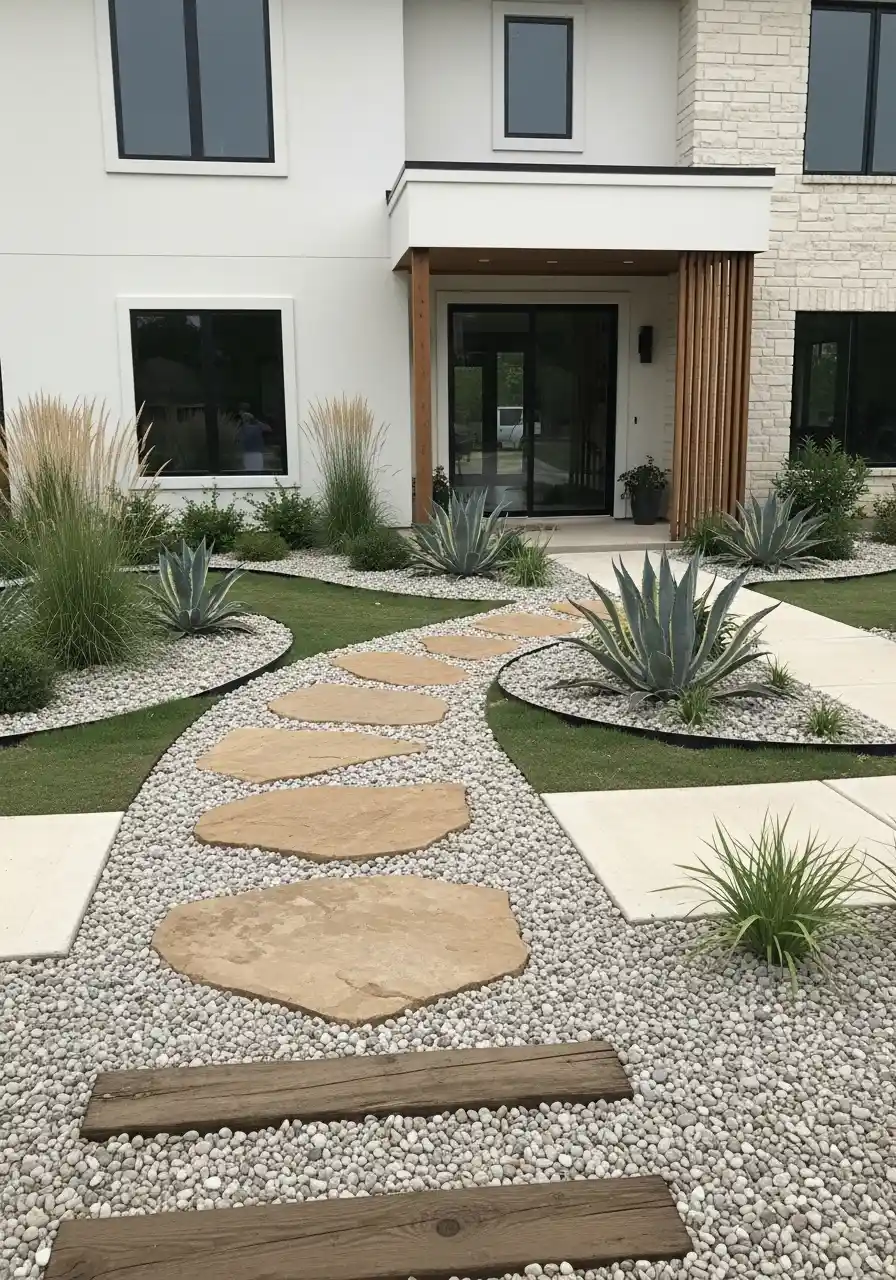
This one is all about texture. Smooth river rock beds, big stepping stones, and agaves sitting like sculptures. It’s neat, modern, and still feels warm because of the wood accents on the house. Landscaping with native Texas plants can look like this, not just wildflower meadows.
If you want the same look, keep your plant palette tight: agave or yucca (region-appropriate), gulf muhly, and a few silvery natives like Texas sage. Hack: place rocks in different sizes, not all one size. When rock is too uniform, it looks fake. Also, don’t place agaves too close to the path. Those points are not friendly, trust me.
Minimalist cactus courtyard with art and strong lines
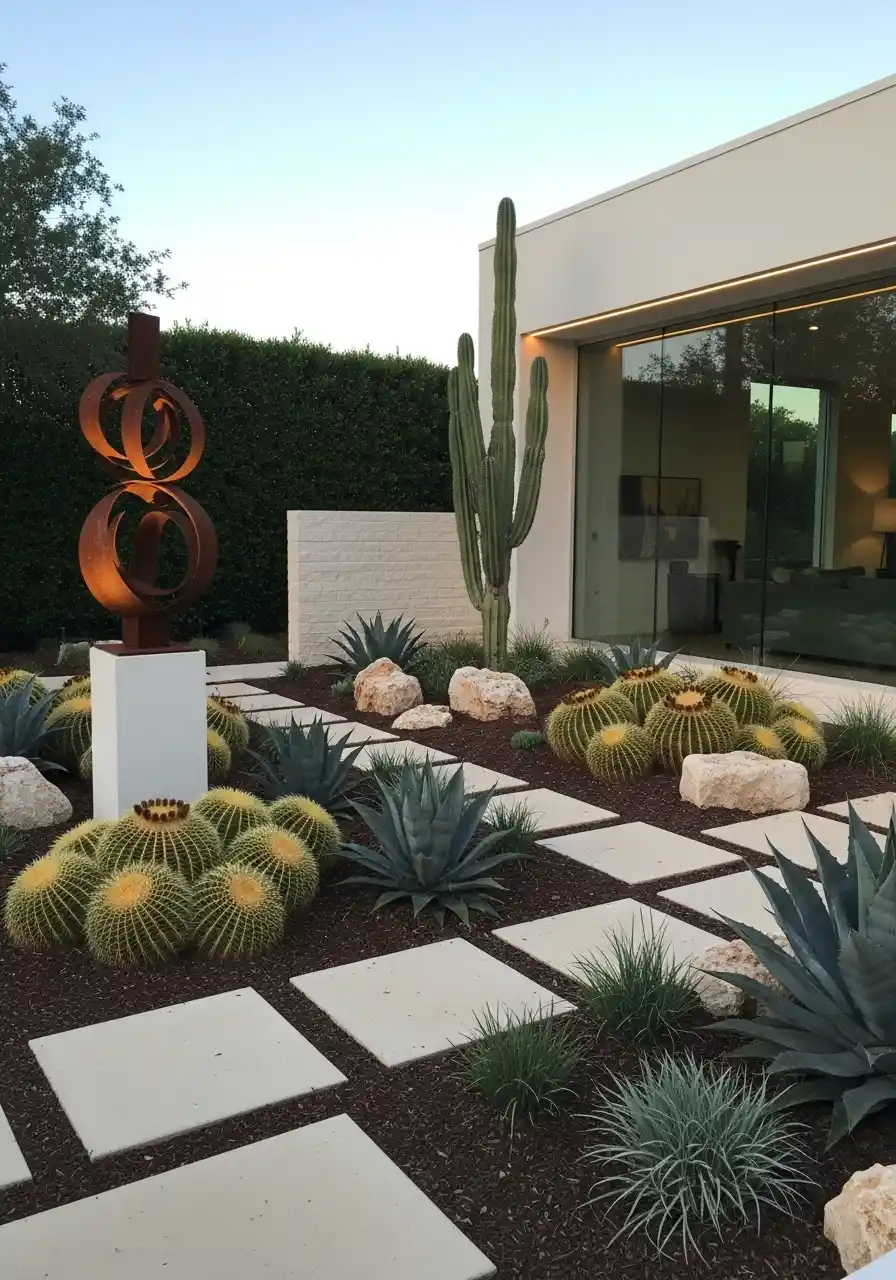
This yard has personality. The sculpture, the straight pavers, the golden barrel cacti… it feels like a modern gallery outside. Again, not every exact plant here is Texas-native, but the design idea works great for native texas plants landscaping if you swap plants thoughtfully.
Try a native-forward version: use prickly pear clusters, native bunch grasses, and maybe a native yucca species that fits your region. Keep the boulders chunky and spaced. Hack: use a darker mulch or decomposed granite to make plants pop. Light gravel is pretty, but it shows every leaf and twig, and I’m lazy sometimes.
Curved path with dark mulch, boulders, and soft blue mounds
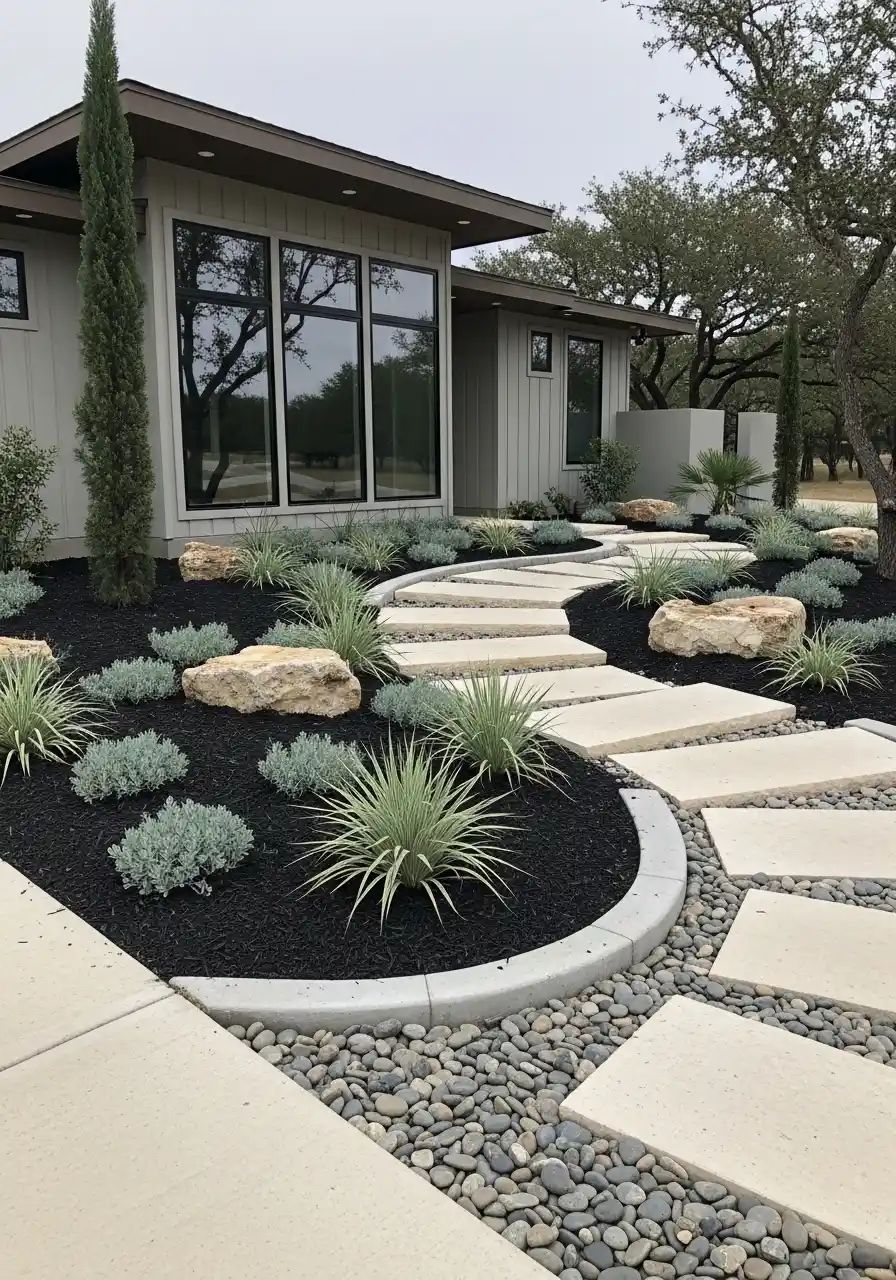
This one feels super balanced. The curve of the path is gentle, the boulders look natural, and the plants are mostly soft shapes in cool tones. It’s the kind of yard that makes a modern house feel less “sharp.” For native Texas landscaping plants, I’d lean into that soft look using natives with gray-green leaves.
Good picks: Texas sage, silver ponyfoot (depending on availability), mealy blue sage, and drought-friendly grasses. Hack: if you use dark mulch, keep it fresh around the front edge only. Mulch fades in sun, so I “touch up” the visible spots and ignore the back. It’s not perfect, but it works and I’m not ashamed.
Native Texas plants landscaping with a modern grid and one calm water bowl
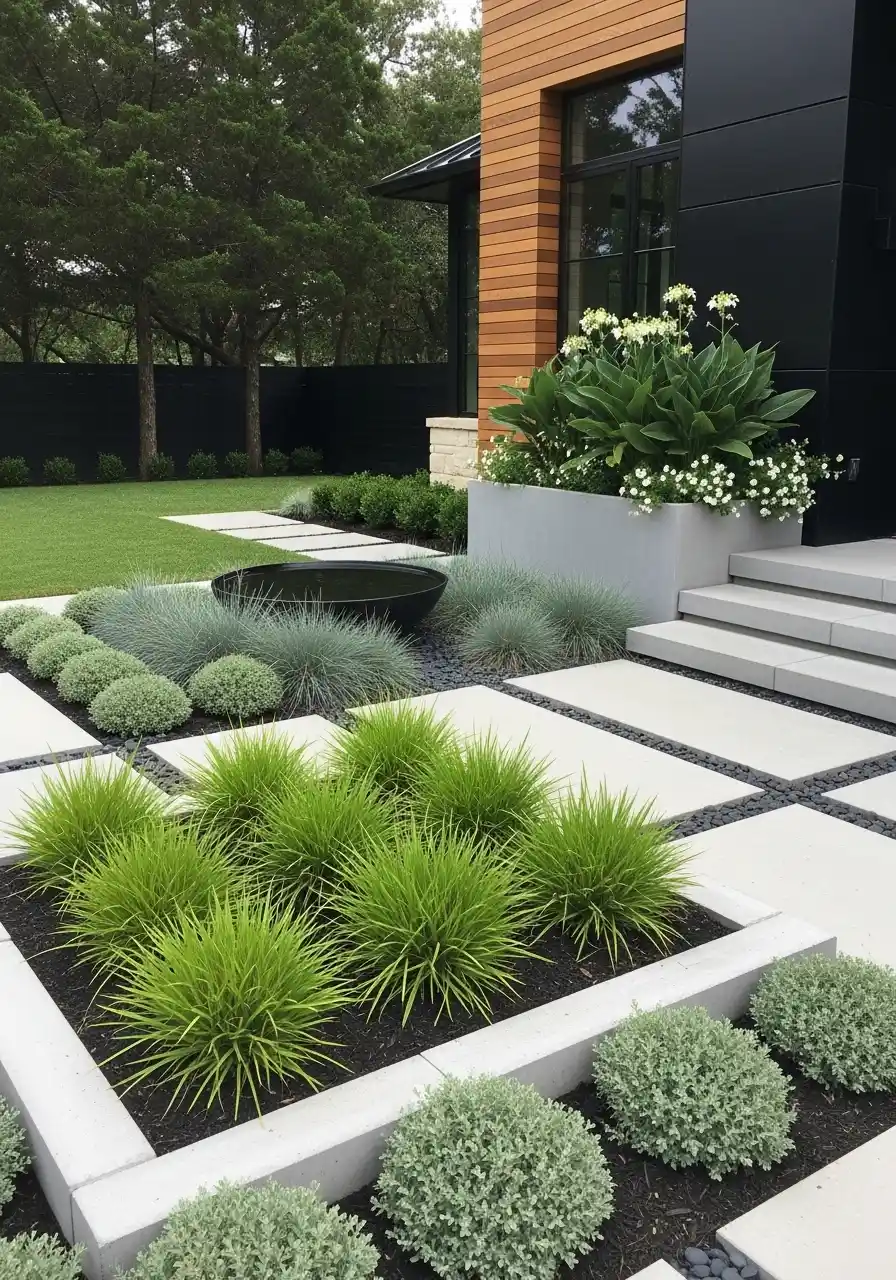
This new image feels like somebody finally said, “okay, stop adding stuff, just make it feel good.” The big concrete squares are so clean, and the dark rock lines between them make everything look sharper. Then you get those soft blue grasses and round shrubs, and it goes from strict to cozy. I’m weirdly obsessed with that shallow black water bowl too. It’s simple, but it makes the whole yard feel expensive, even if it wasn’t.
If I was building this for native Texas plants landscaping, I’d do a native-friendly swap for the round shrubs. Instead of something thirsty, I’d use dwarf yaupon holly (native) and keep it clipped into little meatball shapes. For the blue mounds, I’d pick something tough like blue grama or little bluestem in tighter clumps. The hack here is repetition. Same plant, same spacing, repeat it like you mean it.
Also, don’t skip the boring part: leveling. If those pavers aren’t level, your whole vibe turns into “crooked sidewalk energy.” I’ve tried to “eyeball it” before, and it was… not cute. Use a long level, compact your base, and set pavers on a proper bed. Your ankles will thank you later.
Native Texas plants landscaping with desert gravel and stepping pads that feel airy
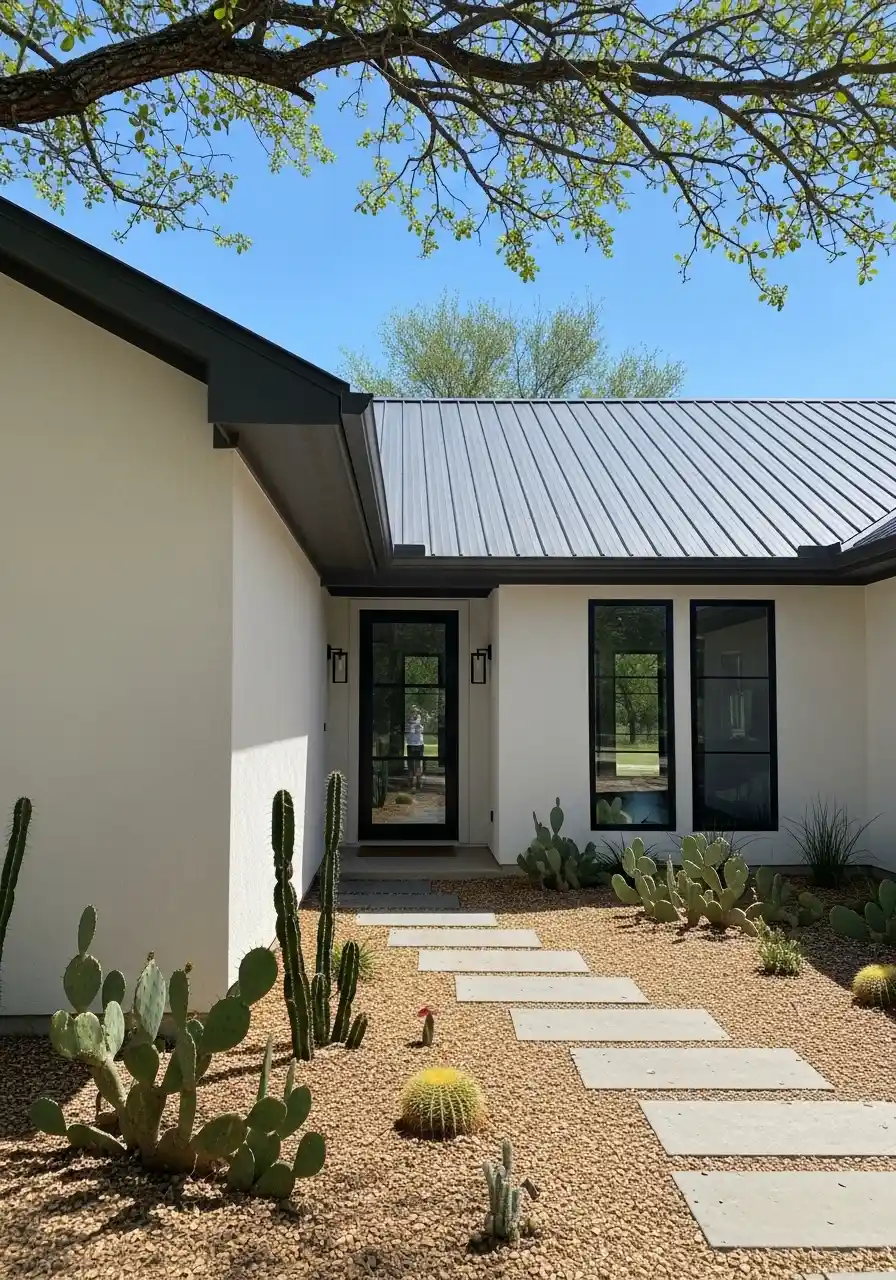
This image is that clean desert courtyard look, but not harsh. The house is bright white, the roof is dark, and the gravel makes everything feel warm and open. I love the stepping pads because they don’t fully connect, so the path feels light. And the prickly pear is doing a lot of work here, it makes the whole space feel very Texas.
For native Texas plants landscaping, prickly pear is honestly a cheat code. It’s tough, it’s sculptural, and it looks good even when you forget about it. I’d also add a few more native accents like a small clump of yucca (depending on your region), and maybe a low native groundcover like frogfruit in one corner where it can spread a bit. Just don’t put frogfruit everywhere unless you want it to own your yard. It’s friendly but it also has… opinions.
Big tip: choose the right gravel size. If it’s too small, it tracks into your house like sand at the beach. If it’s too big, it’s annoying to walk on. I like pea gravel or small crushed stone for this kind of setup. And put weed barrier only where you actually need it, not under every living thing. Fabric can turn into a mess later, I’m being serious.
Native Texas plants landscaping with a curving stone path and river rock “frame”
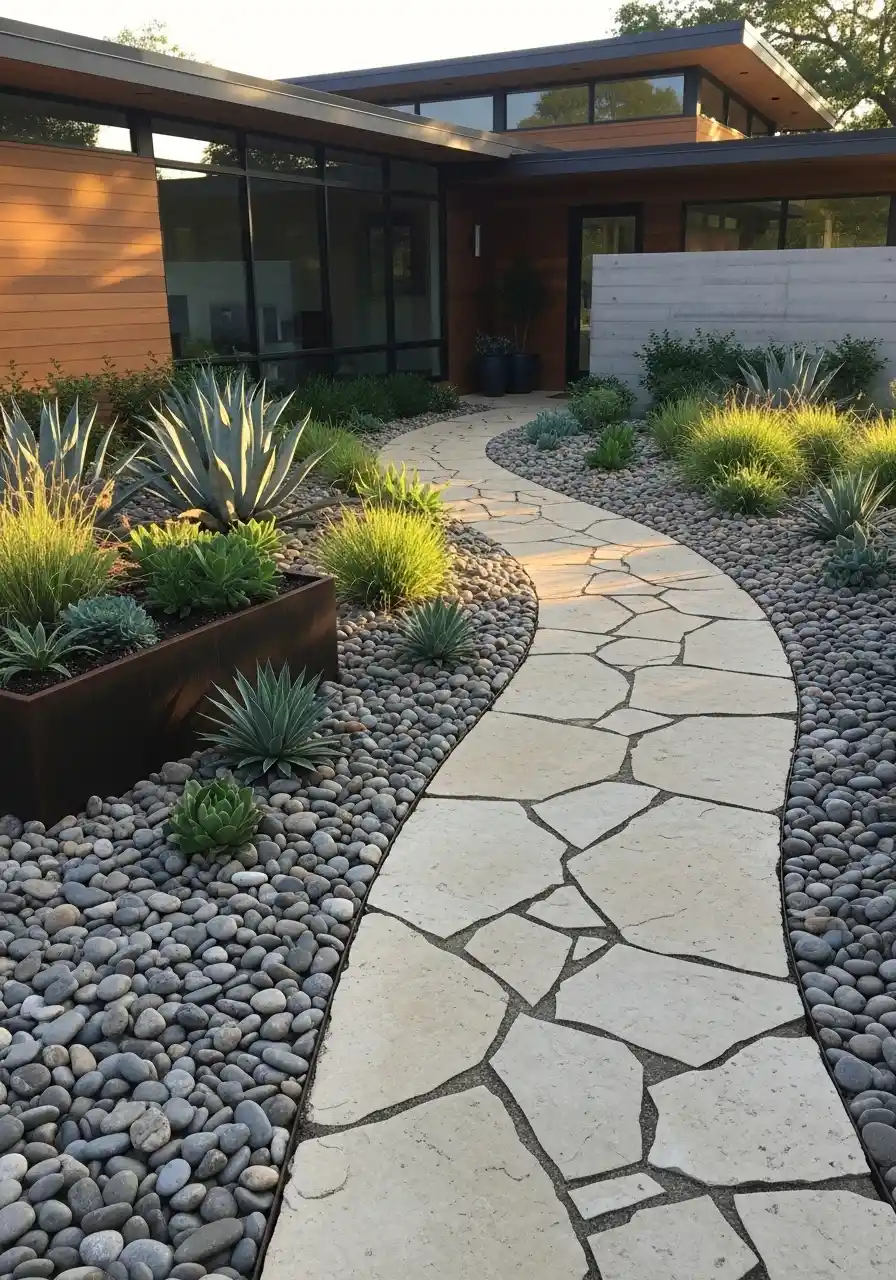
This image is smooth and modern, but it still feels natural because of that curving path. The river rock acts like a border that says “this is the garden, this is the walkway,” and it’s so neat without feeling stiff. The raised steel planter is also a really smart move because it adds height and gives your succulents a stage. I like that. Plants deserve a stage, okay.
To make this work for native Texas plants landscaping, I’d treat the succulents like the “structure plants,” then soften around them with native grasses. Little bluestem, sideoats grama, or gulf muhly can do that soft glow look, especially in the afternoon sun. For extra color without chaos, add native salvia in small groups, not all over. I learned the hard way that too many “fun plants” makes a yard look confused.
Hack: use edging to separate rock from path. Without edging, river rock slowly creeps into your walkway and then you’re kicking stones every time you walk. Also, don’t mix too many rock colors. Pick one main stone and one accent stone, that’s it. Otherwise it starts to look like a rock sample display at a store.
Native Texas plants landscaping that’s messy-pretty, like a cottage garden but Texas tough
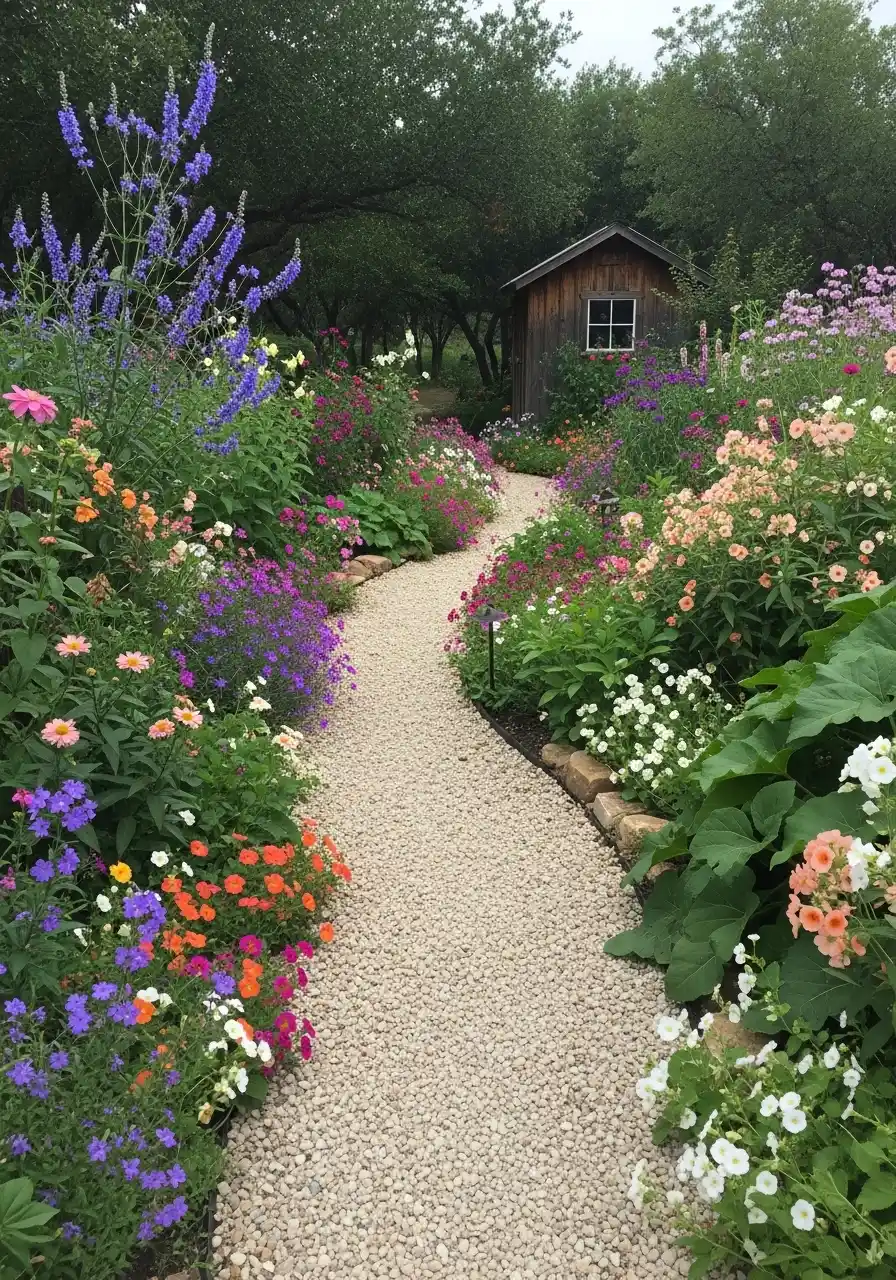
This last image is the total opposite mood, and I love it. It’s a curvy gravel path through overflowing flowers, with a little rustic shed at the end like a secret prize. This is the kind of garden that makes you stop walking and just stare. It feels romantic, a little chaotic, and honestly, it feels like somebody’s personality. I like gardens that have personality. Perfect gardens make me nervous, like I’m gonna ruin it just by breathing.
If you want this style with native Texas plants landscaping, the trick is choosing natives that bloom long and handle heat. Stuff like autumn sage, mealy blue sage, black-eyed Susan (or native coneflower varieties), Turk’s cap in part shade, and native daisies can get you that layered look. You’ll also want different heights: tall spires in the back, medium flowers in the middle, and low fillers at the front. Don’t plant everything the same height or it’ll look flat, like a carpet.
And here’s my honest confession: this style takes editing. You have to pull stuff out sometimes. I hate pulling plants out. I get attached like they’re pets. But if you let everything grow wherever, the path disappears and it turns into a jungle. My hack is to edge the path with stones or hidden metal edging, and keep the gravel refreshed once or twice a year. It’s not glamorous, but it keeps the magic.
Conclusion
If I’m being real, I used to think native texas plants landscaping meant boring plants and brown gravel. These photos prove the opposite. You can make it colorful, modern, soft, or dramatic. The biggest win is it feels like it belongs where it is. And yeah, you’ll still make a few mistakes. I always do. But with native Texas landscaping plants, the yard usually forgives you faster than you expect.