I keep thinking about zone 9 landscaping texas like it’s a secret code for “pretty yard, low drama.” Because the truth is, I’ve killed enough plants to know I don’t want a fussy garden anymore. These 30 images feel calm and bold at the same time, and they’re giving me ideas I can actually copy without crying.
Table of Contents
Zone 9 landscaping texas: Curved river-rock paths + purple haze
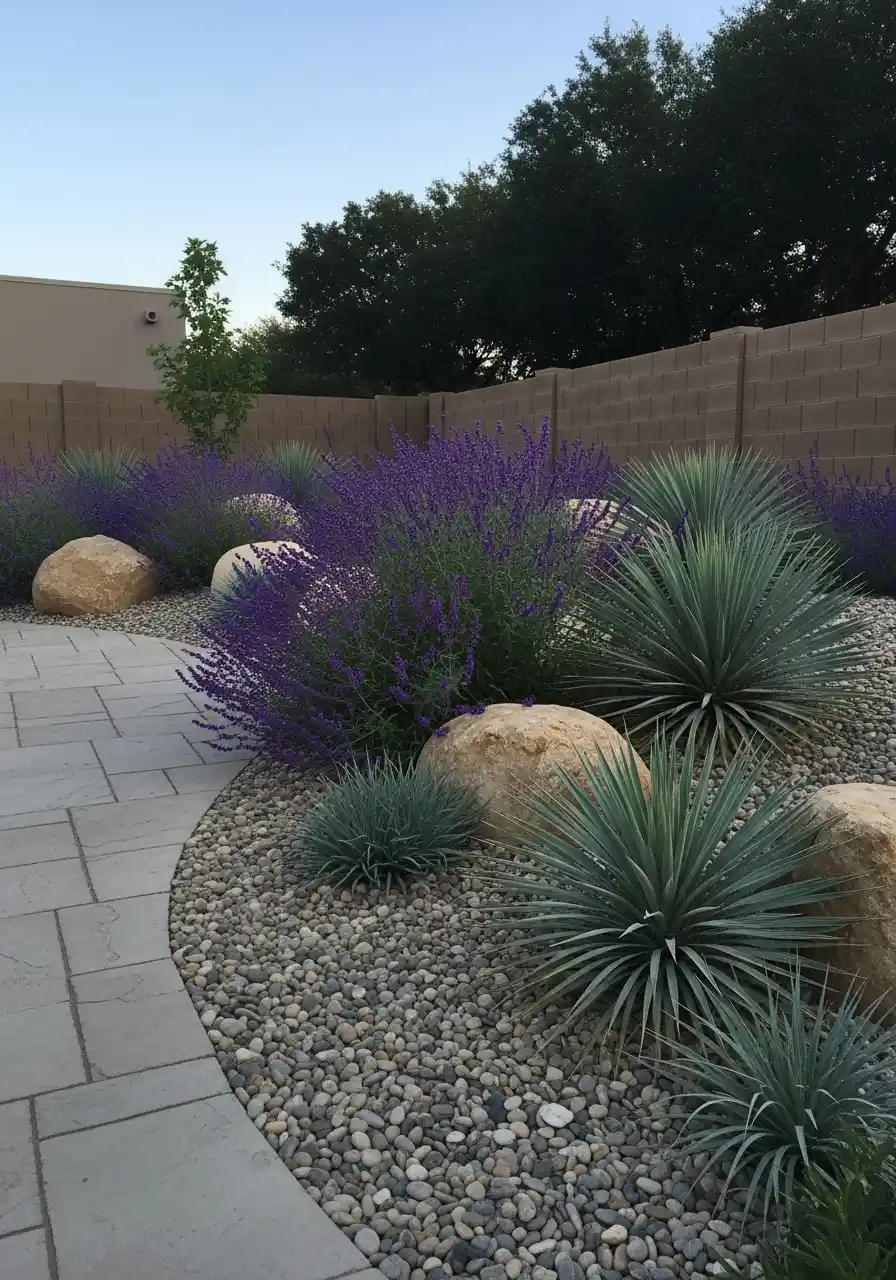
That first curved walkway is doing something sneaky. It pulls your eyes forward without shouting. The river rock looks like a clean riverbed, and the big boulders make it feel grounded, like it belongs there. The purple blooms (it looks like salvia) add softness, but still feel tough enough for Texas zone 9 landscaping.
If I tried this, I’d keep the path wide so it feels “walkable” not like stepping around a garden. My hack: lay edging first (steel or heavy plastic) so the rock stays put. Then I’d plant the spiky blue-green yucca in clumps, not single lonely plants. Single ones always look sad to me.
Stone steps beside lawn for a “soft edge” border
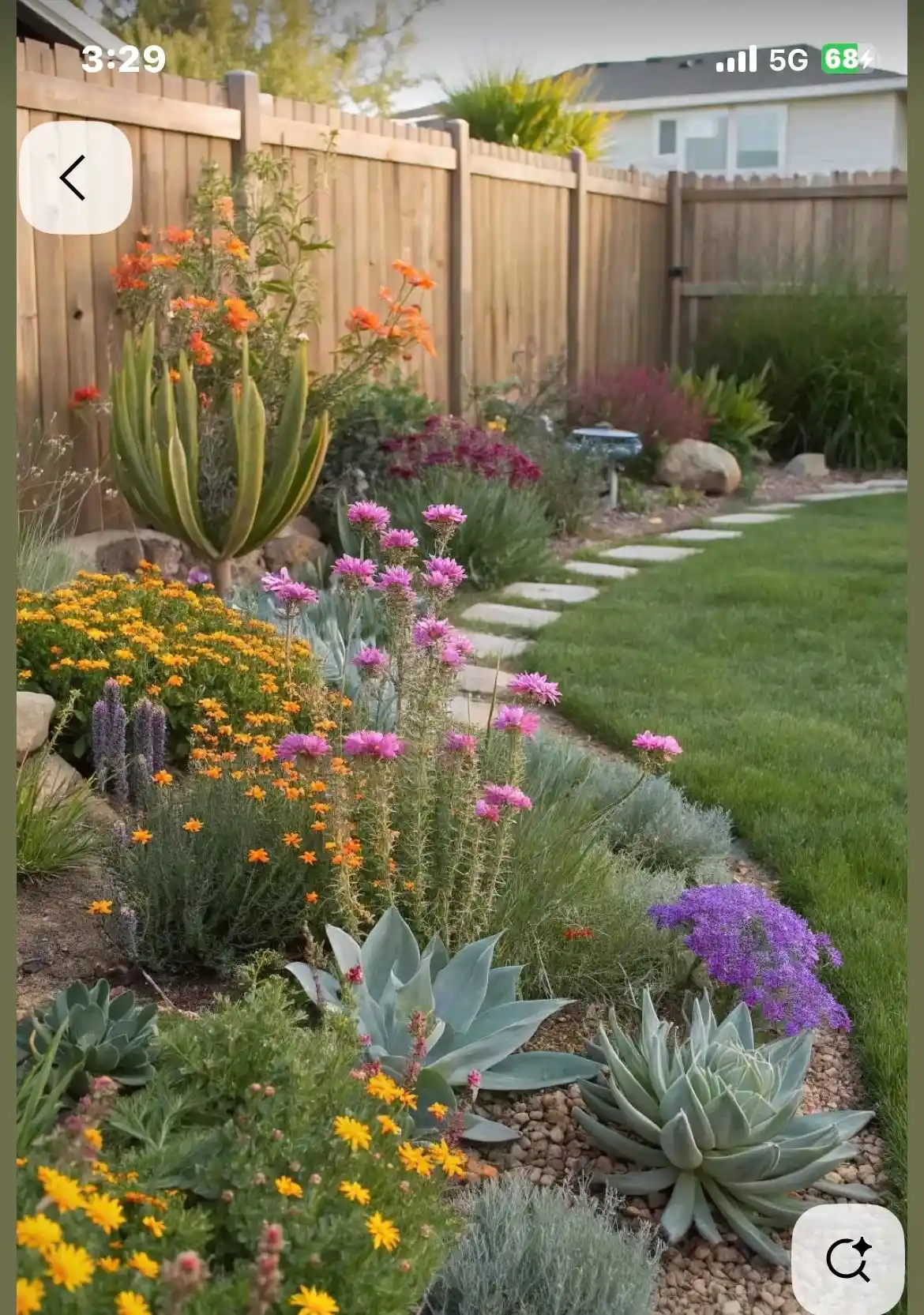
This one feels like somebody actually lives here, like kids run around and still the garden looks cute. The stepping stones line the lawn edge and give you a way to walk without crushing plants. That mix of flowers and succulents is loud in the best way, and it still fits zone 9 landscaping texas because most of these can handle heat.
I’d copy the “tall, medium, low” layering. Put the tall aloe-ish plant in back, then shrubs and flowers, then rosette succulents up front. The trick is spacing. I always crowd plants and then regret it. In zone 9 Texas landscaping, space is not wasted, it’s airflow and less fungus.
Repeat the purple mounds for instant “desert rhythm”
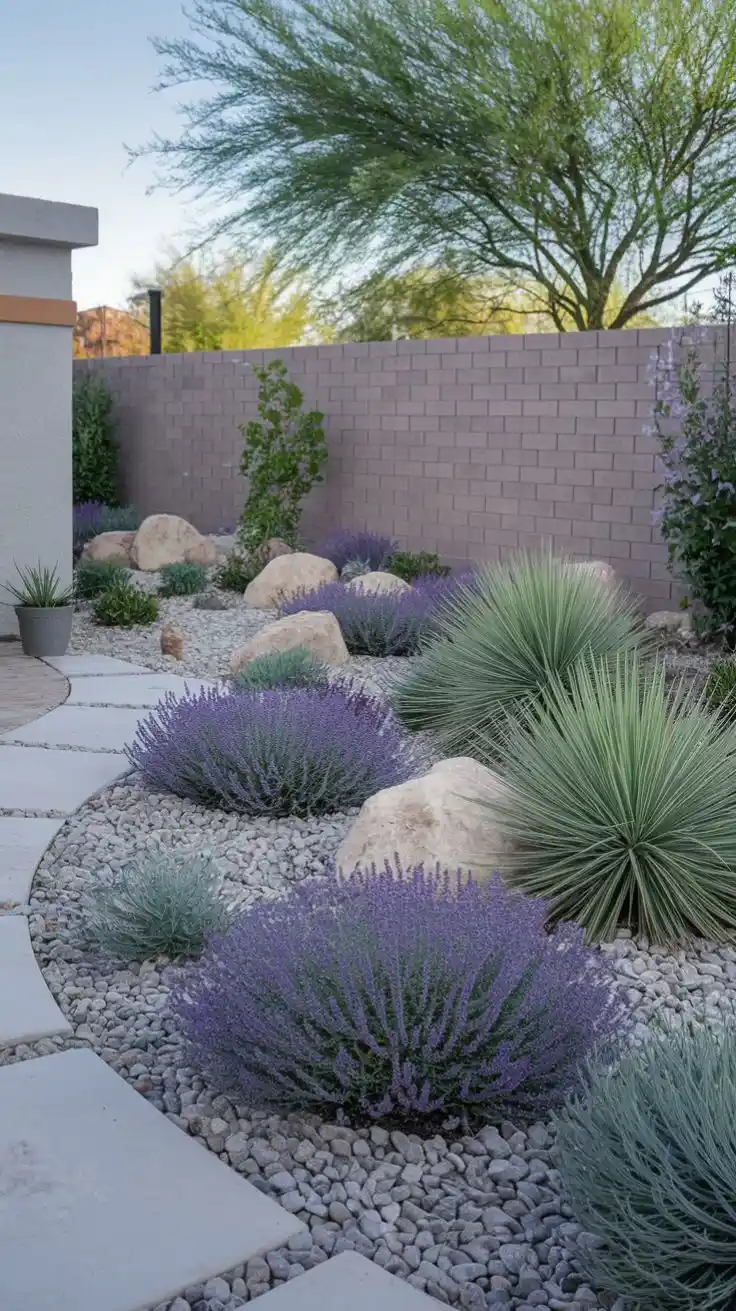
This design is basically the first idea, but more open, and I love it for that. Repeating those purple mounds makes the yard feel planned, not random. The boulders look placed on purpose, not tossed there. And the silver-blue yucca adds structure that stays nice even when flowers stop. That’s huge for landscaping in Texas zone 9.
If I did this, I’d use crushed stone or river rock as mulch, but I’d still put weed fabric only in the path areas, not under plants. I know people argue about that, but fabric under planting areas can turn into a mess later. My personal rule for zone 9 landscaping texas is simple: stop future-me from hating past-me.
Mediterranean stucco + bougainvillea drama that still works
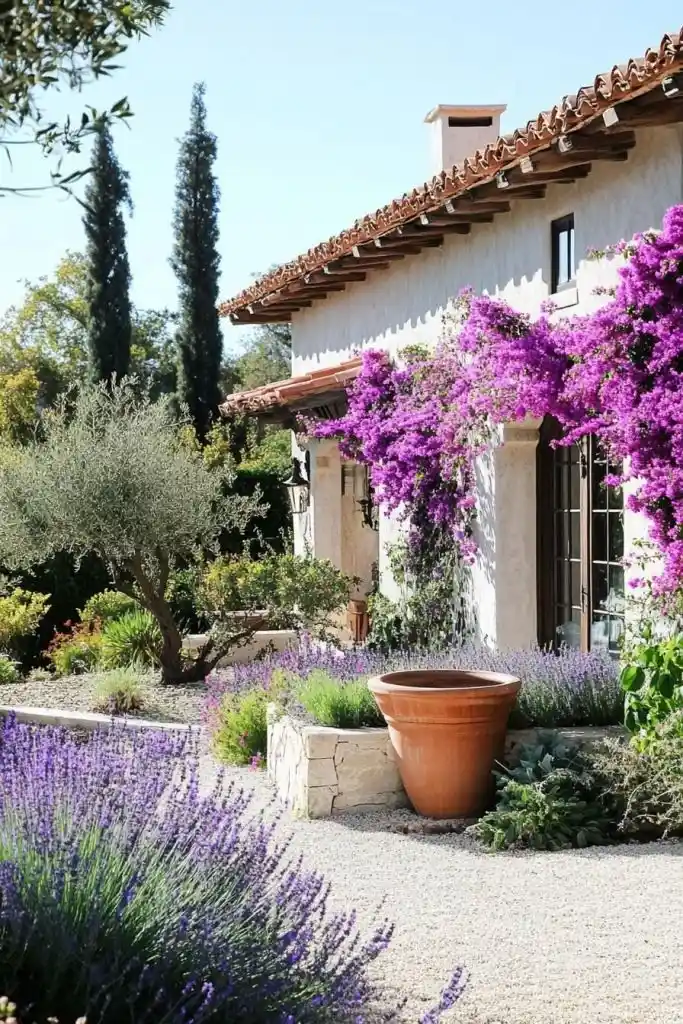
This one makes me feel like I’m on a vacation I didn’t pay for. The white stucco wall, the terracotta pot, the purple lavender, and that bougainvillea spilling over the roofline… it’s romantic and a little wild. It’s not just pretty, it’s a whole mood for Texas zone 9 landscaping.
To make this practical, I’d keep gravel under the lavender and along the walkway so the roots stay drier. Lavender hates soggy feet, and I learned that the hard way. Add one big clay pot as a focal point. Big, not tiny. Tiny pots vanish visually. This style of zone 9 Texas landscaping is about confident shapes.
Modern grid pavers with “tiny shrubs that behave”
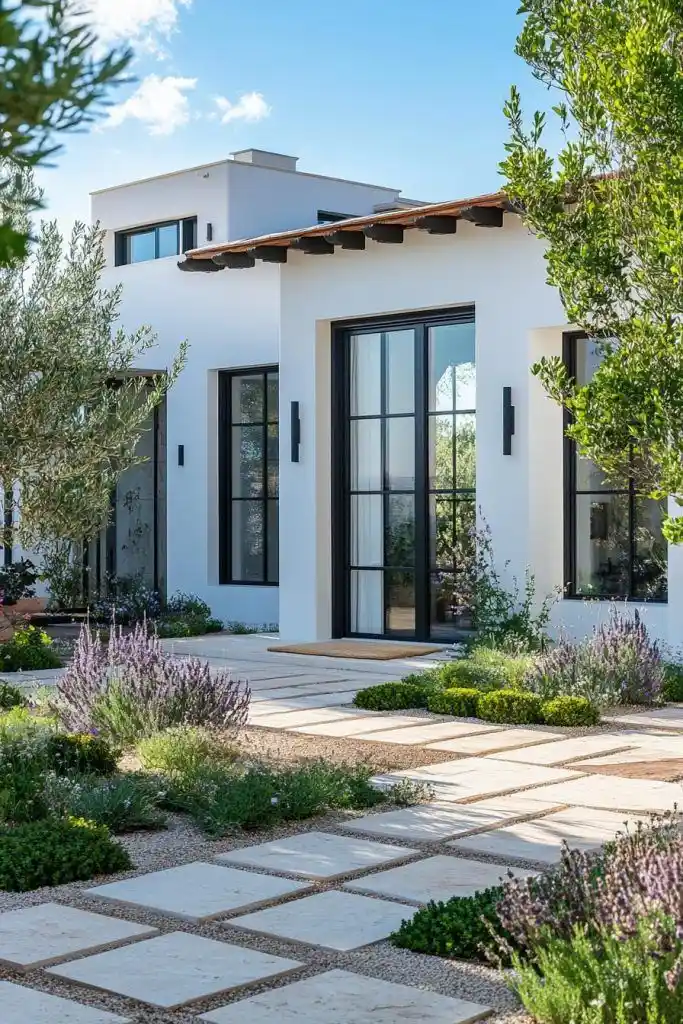
This modern house setup is clean, like it’s wearing a crisp white shirt. The square pavers with gravel joints look neat, and the low plants feel organized. I like this for people who want a yard that looks good even when you ignore it a bit. It screams “I have my life together,” which is funny because I do not.
For zone 9 landscaping texas, I’d use drought-friendly groundcovers between the pavers if you want green, or keep it gravel for lower water use. The trick is keeping joints consistent. Use spacers or a board guide when laying pavers so it doesn’t wobble visually. In Zone 9 landscaping in Texas, messy lines stand out fast.
Steel edging circles for a yard that feels like art
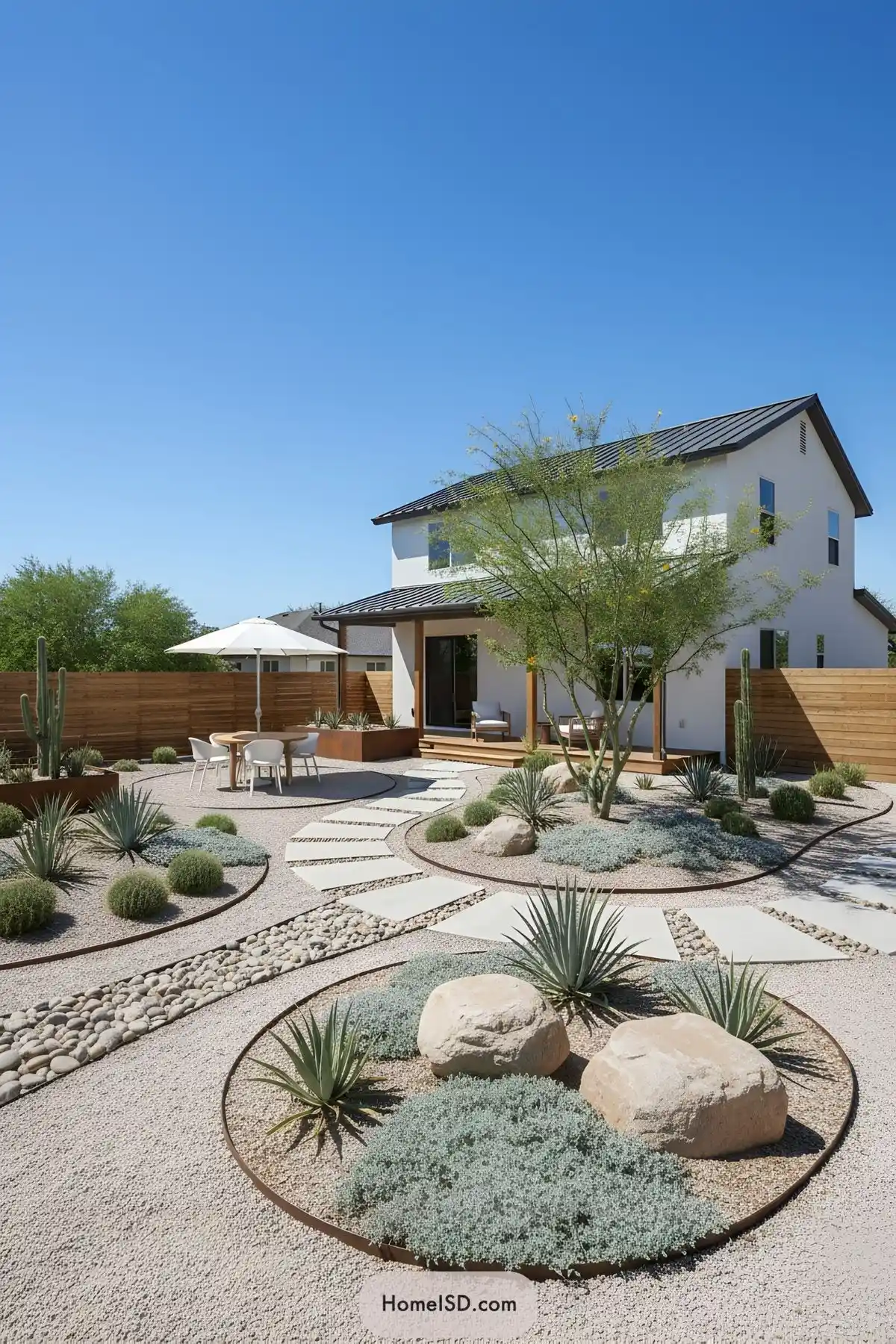
This big backyard with circular steel edging is like desert landscaping turned into geometry. The decomposed granite looks smooth and walkable, and the agaves and boulders are spaced like they’re breathing. I love that it feels modern but not cold. It’s perfect for zone 9 landscaping texas because it’s built around heat and low water.
My tip: keep the circles simple, like 2–3 big shapes, not a hundred loops. Too many curves can look busy. Also, set the steel edging deep enough so it doesn’t pop up later. I’ve seen edges lift and then everything spills. This style of Texas zone 9 landscaping is basically “less plants, better placement.”
One big window, one long planter, lots of calm
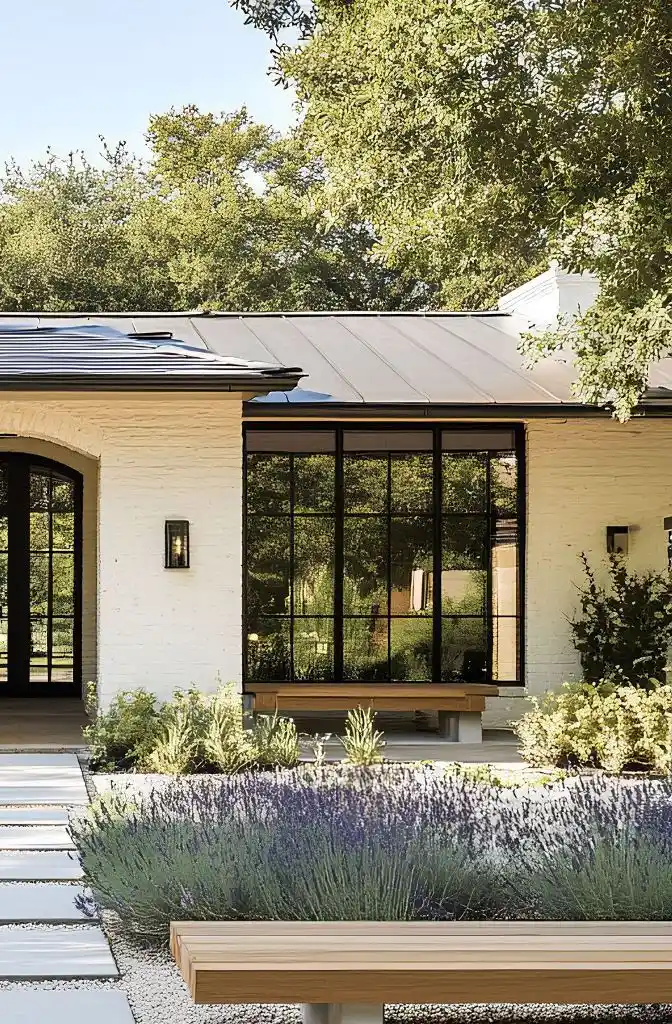
This front view with the huge black-framed window and that long raised planter is so quiet it’s almost fancy. The lavender-like planting in front is soft and calming, and the hardscape looks tidy. It’s a strong look for zone 9 landscaping texas because it handles sun and still looks fresh.
I’d build that raised bed with wood or stone, but I’d keep it low enough to sit on. That’s my favorite little hack. Beds that double as seating feel like a bonus. Use a simple drip line under the plants, especially in zone 9 Texas landscaping where summer heat can roast shallow roots fast.
Desert wall planting that looks “full” without watering a lot
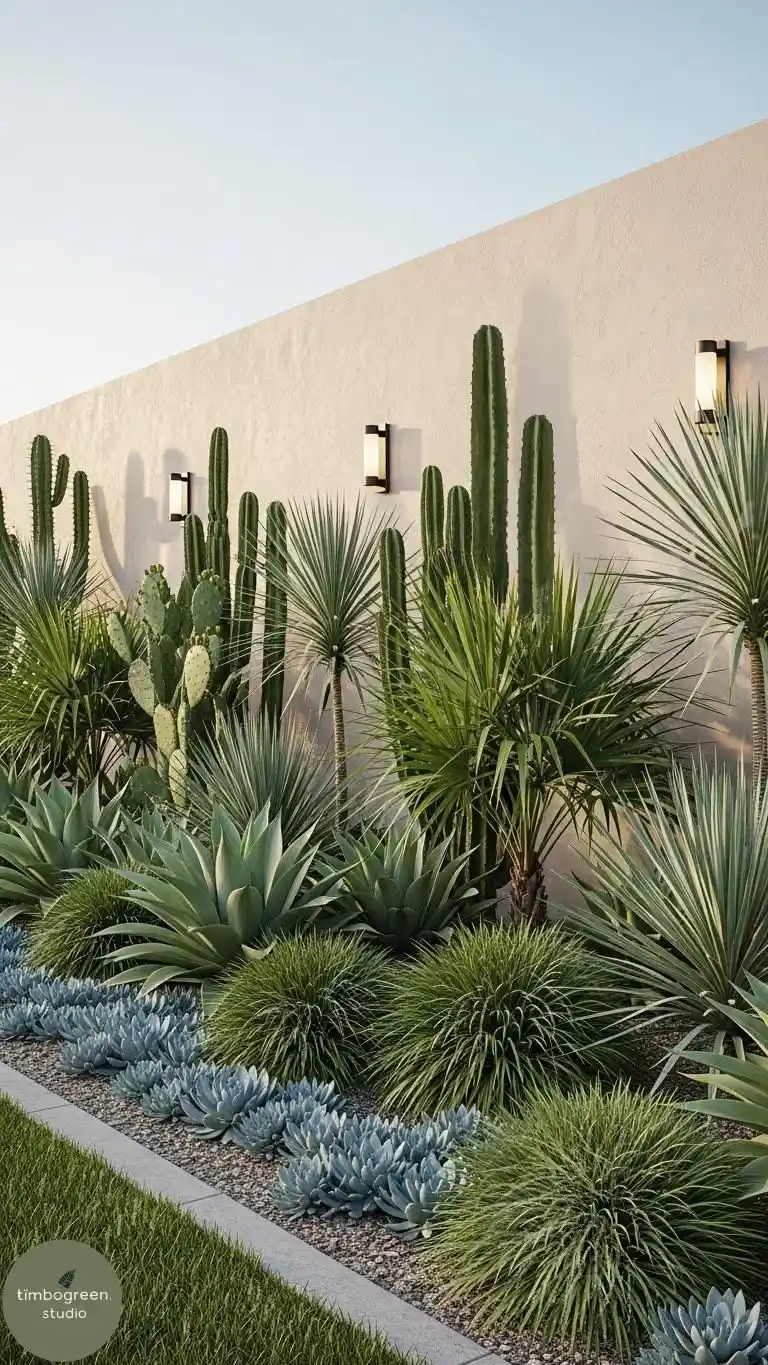
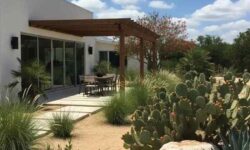
This wall planting is stacked like a sandwich: tall cacti, mid-height yucca or palms, chunky agaves, then a front row of low blue succulents and grasses. It’s dense, but not crowded. It looks lush while still being a smart move for landscaping in Texas zone 9.
If I copied it, I’d group plants in odd numbers. Three agaves together looks intentional. Two looks like a mistake. Also, mix textures on purpose: spiky next to round, matte next to glossy. That contrast is what makes Zone 9 landscaping in Texas feel designed instead of “stuff I bought at the store.”
Side yard glow-up with breeze blocks and big stepping pads
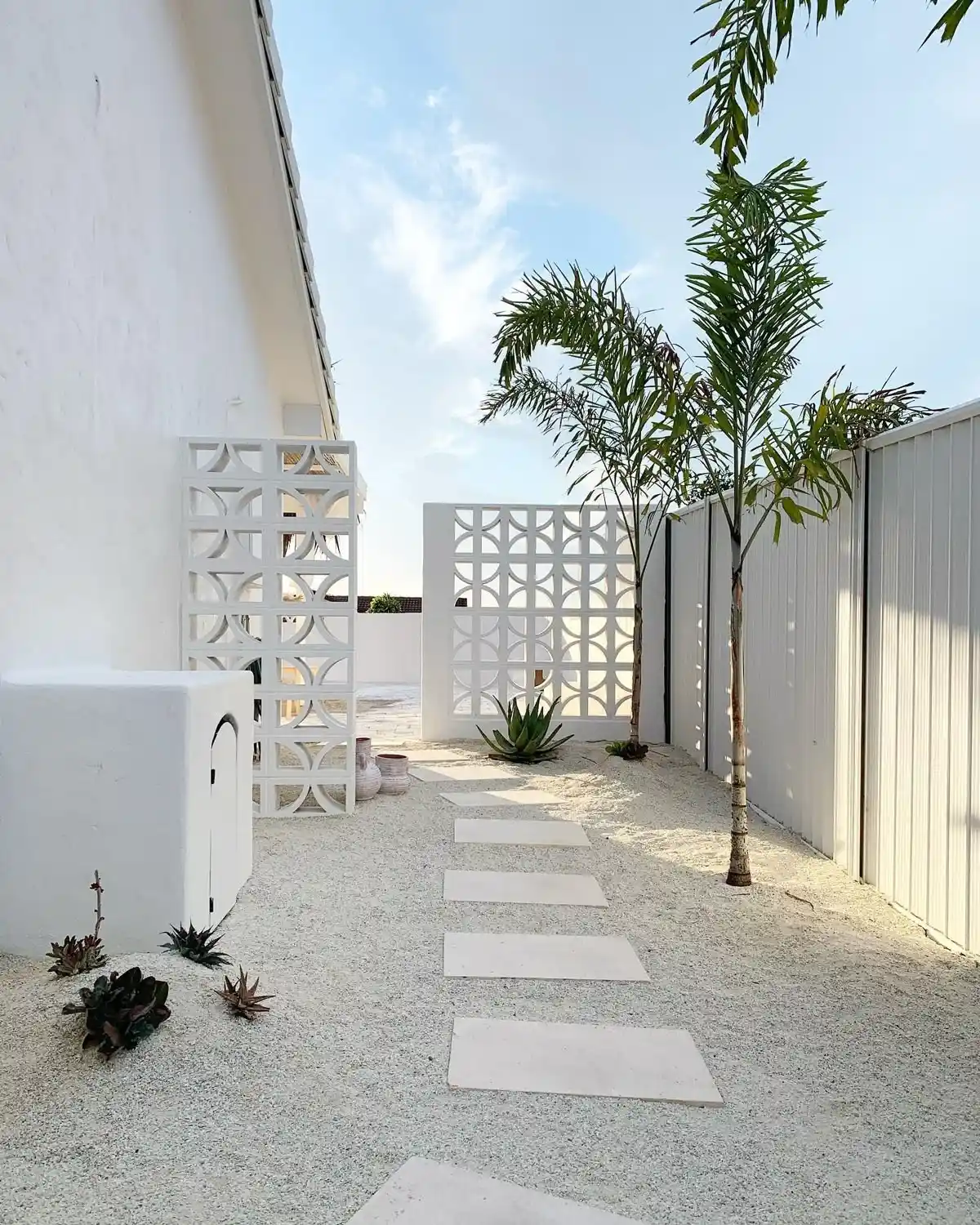
This side yard is minimal and honestly kind of genius. White gravel, big square stepping pads, and those decorative breeze block screens give privacy without making it dark. Then a few palms and an agave, and it’s done. It’s the kind of zone 9 landscaping texas idea that’s easy to keep clean.
My caution though: white gravel shows every leaf. If you hate sweeping, choose a warmer tan gravel. Also, keep stepping pads level. If one corner sticks up, you’ll trip and then you’ll hate the whole yard. In Texas zone 9 landscaping, simple spaces still need good prep work.
Entry walkway with boulders and shade that feels welcoming
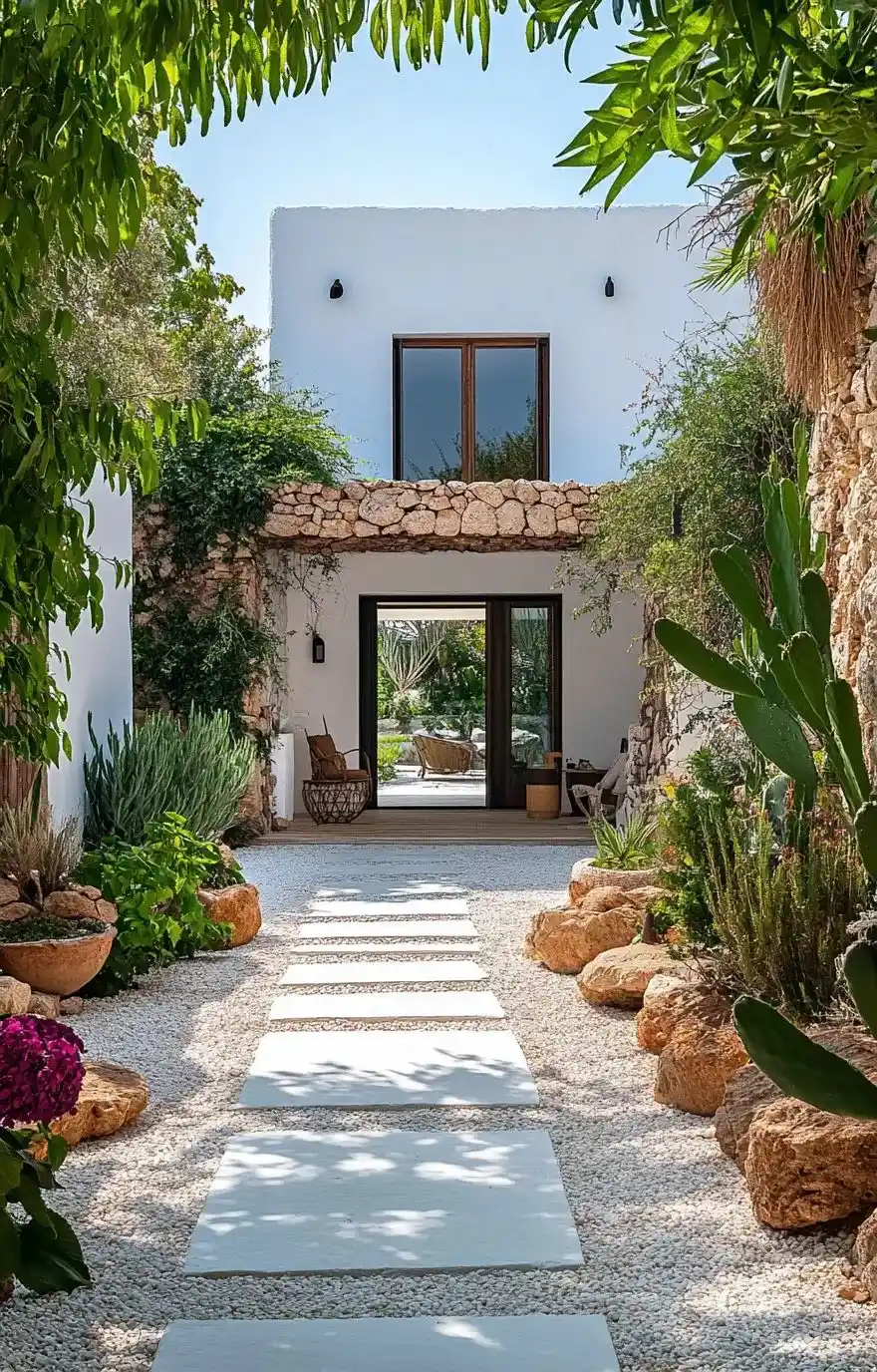
This last walkway feels like walking into a secret courtyard. Big rectangular pavers on gravel, boulders along the sides, and plants tucked into pockets. It has shade from trees, plus cactus and shrubs for structure. It’s a softer take on zone 9 landscaping texas, more “garden-y” without being needy.
If I built this, I’d add low path lighting so the stepping stones glow at night. Not bright, just cozy. And I’d keep the planting pockets mulched with gravel so the weeds chill out. For zone 9 Texas landscaping, shade + gravel + tough plants is a sweet combo.
Big Pavers With Gravel Grid Lines
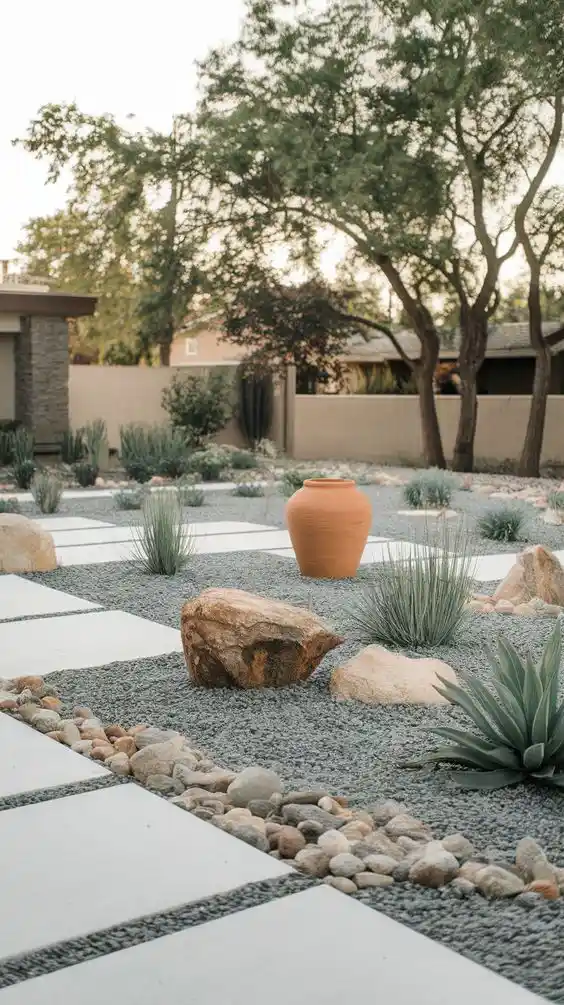
That look is so clean it almost feels quiet. The huge square pavers set into gravel make the yard look organized, like the ground is wearing a nice shirt. In zone 9 landscaping texas, I love this because gravel drains fast, so you don’t get muddy patches after storms. I’d keep the pavers a light color so they don’t burn your feet in July.
The trick is the spacing. Don’t cram them tight. Leave a couple inches and fill with small gravel, not chunky rock that rolls under shoes. I’d also copy the “one hero pot” thing. A big terracotta urn in the center gives your eyes a place to land, and honestly it makes the whole yard feel planned even if you kinda guessed the layout.
Olive Trees, Lavender, And That “Mediterranean” Feeling In Texas Zone 9 Landscaping
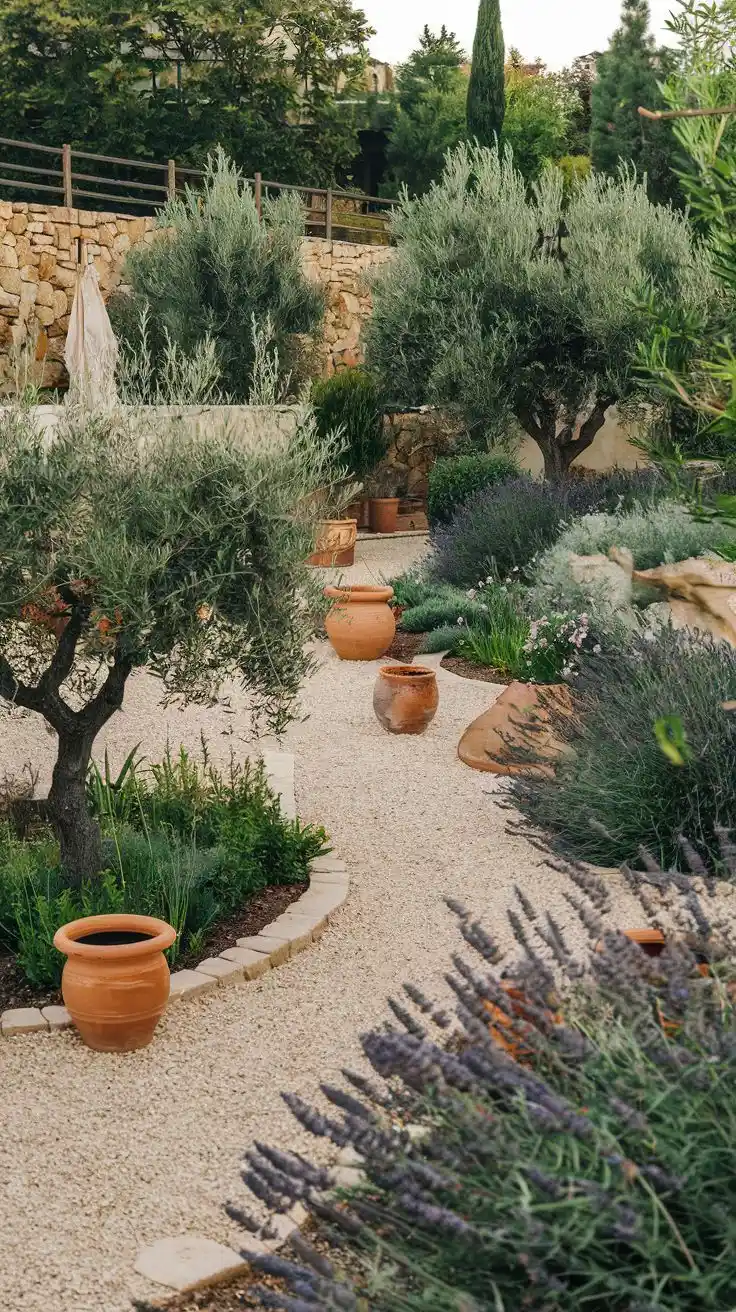
This one makes me want to whisper when I walk through it. Olive trees, lavender, and a soft gravel path feels like a vacation, but you can pull it off in Texas zone 9 landscaping if you pick the right spots. I like how the plants look silvery-green, it reads cooler in the heat.
If I copied this, I’d group lavender in fat drifts, not skinny little dots. Lavender looks sad when it’s lonely. Also, terracotta pots everywhere is not just “cute,” it’s a hack. Pots let you move plants if a freeze comes, and they break up the gravel with warm color. I would add one small bench too, because you’ll want to sit there and pretend you’re not checking for weeds.
Side Yard With A Slim Lawn Strip And Stepping Stones
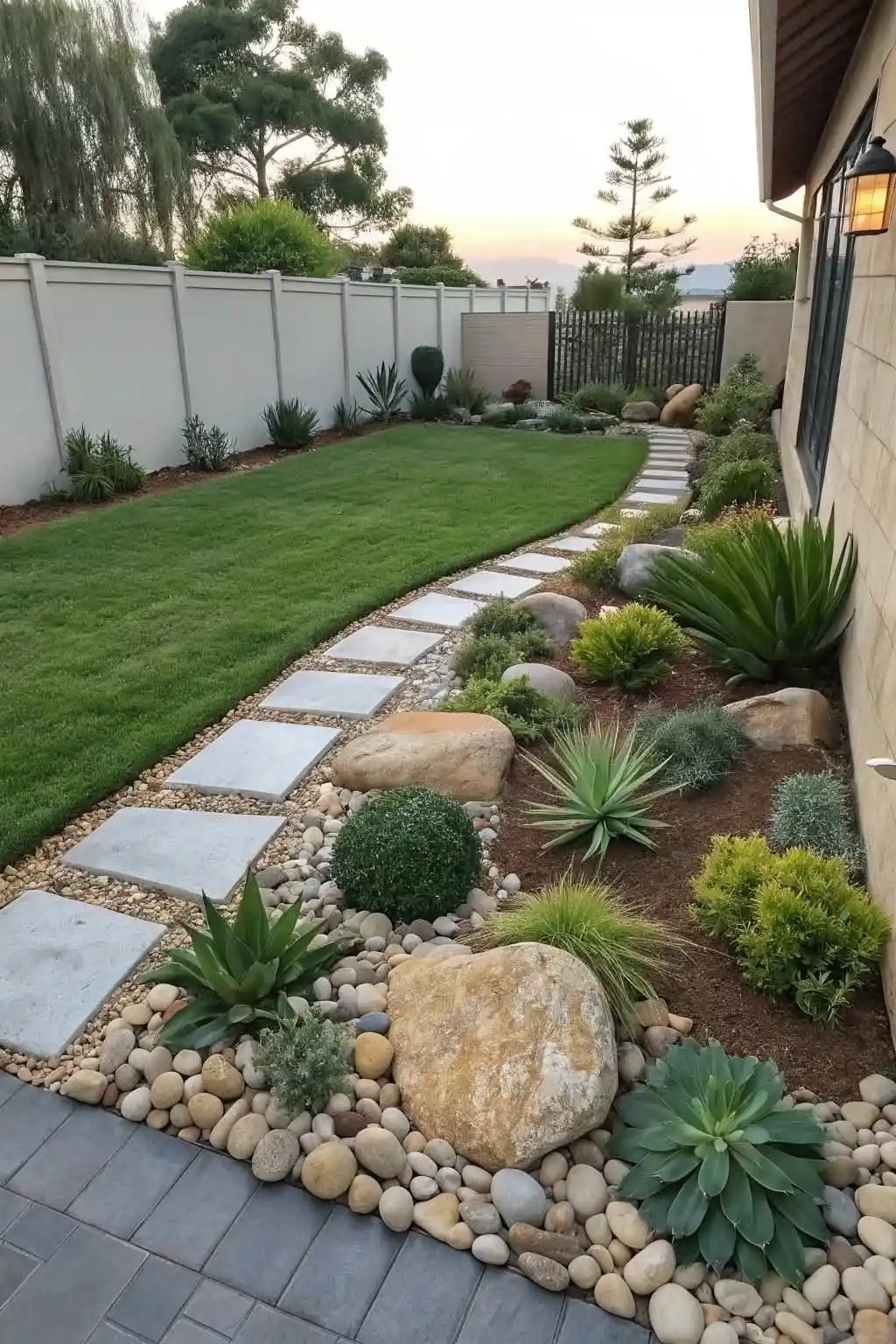
I used to think lawns were “bad” for dry yards. But then I saw this side-yard layout and I changed my mind a little. A narrow lawn strip can work in zone 9 texas landscaping because it’s not a huge water hog, it’s more like a soft rug. The stepping stones along the edge keep feet off the grass, so it stays nicer.
The border planting is where the magic is. Boulders, rounded river rock, and chunky succulents make the path feel natural, not like a boring hallway. My personal opinion: keep the lawn simple, don’t try fancy shapes. The real beauty is the contrast, green lawn next to desert textures. And please, put a drip line on the planting side. Hand watering a side yard is how people give up.
Cactus And Boulder Cluster For A Bold Zone 9 Xeriscape Texas Corner
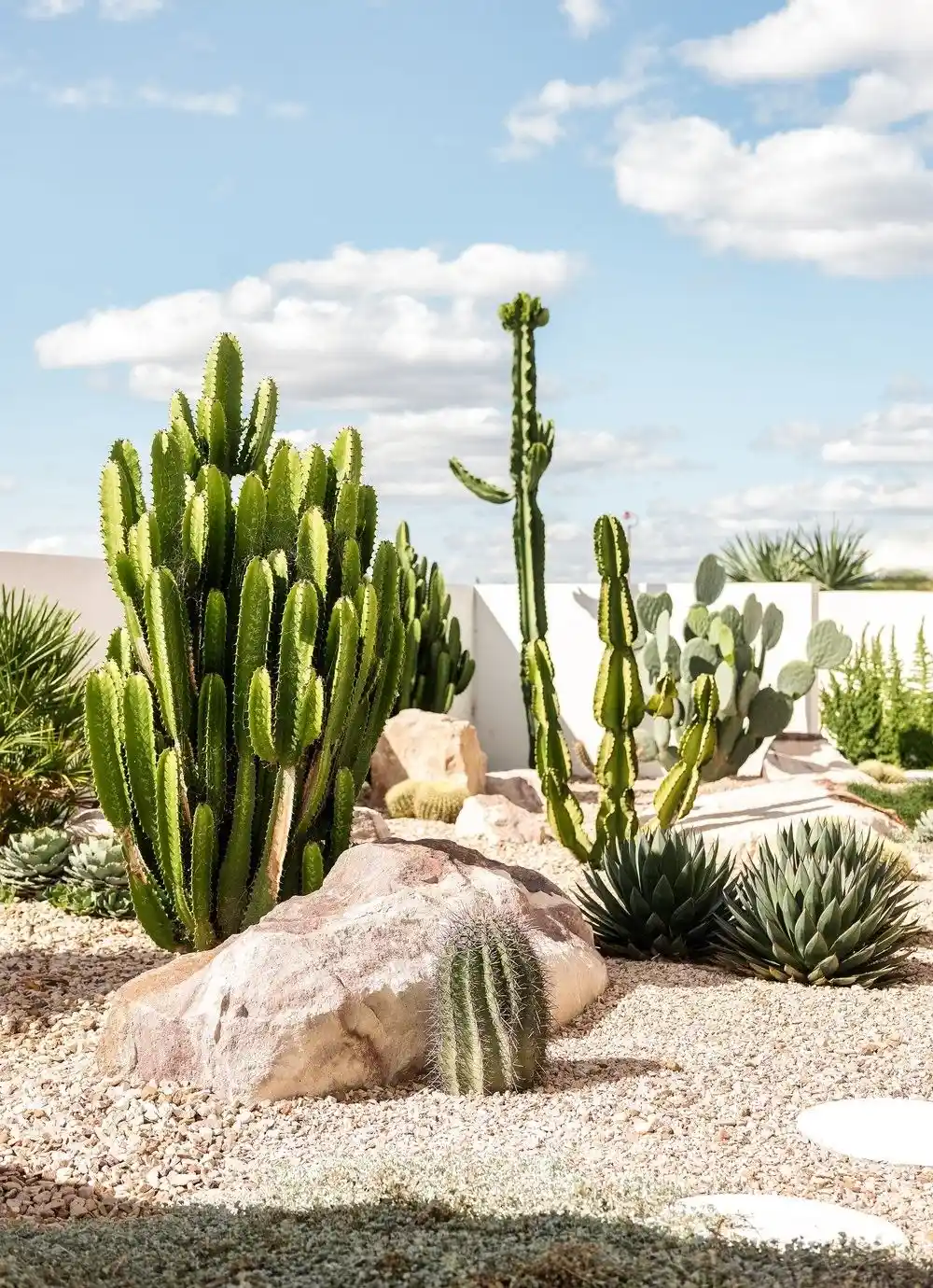
This cactus grouping is basically “don’t mess with me” energy, and I mean that in a good way. In zone 9 landscaping texas, a corner like this is a smart move because it’s low-fuss and it survives sun that feels rude. Tall column cactus plus smaller barrel shapes makes it look layered, not flat.
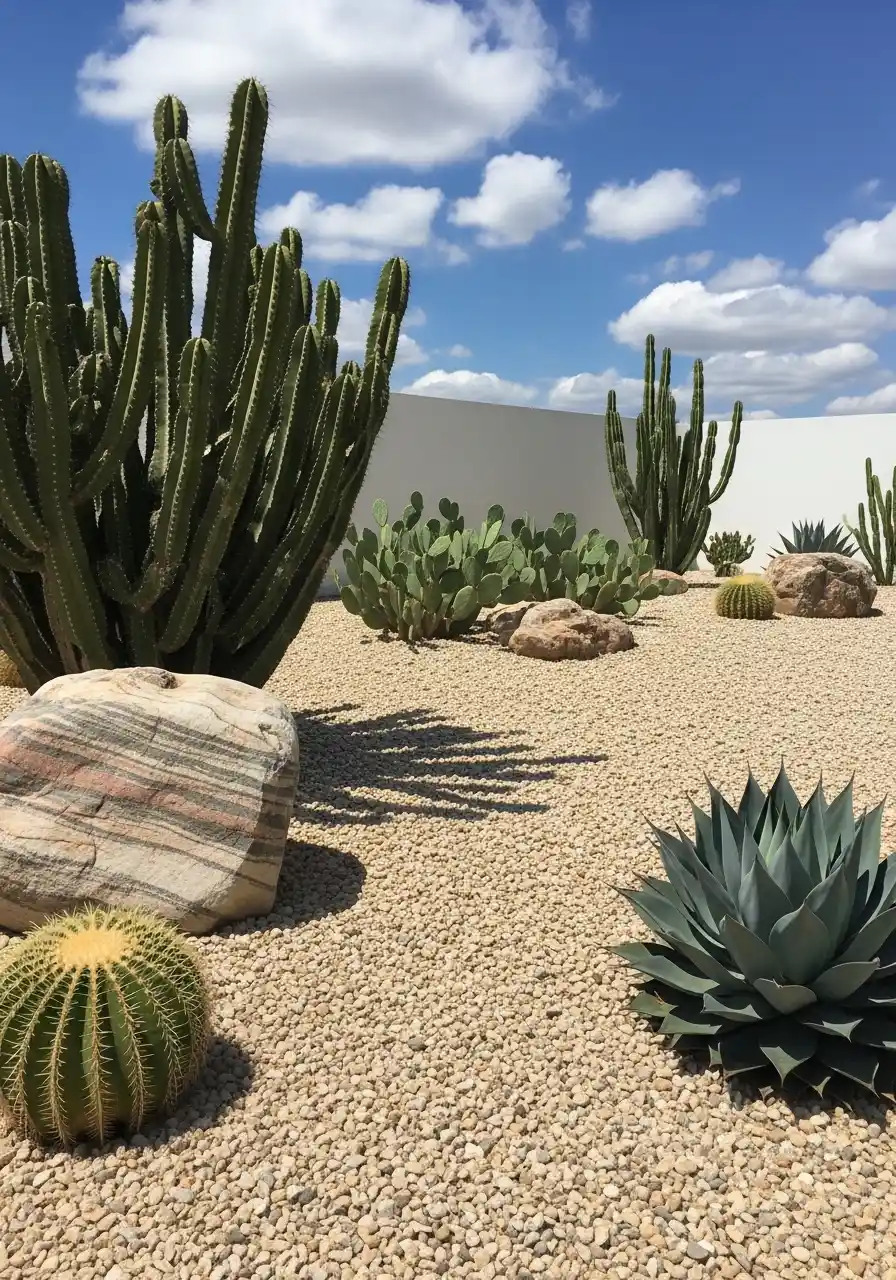
I’d copy the big boulder centerpiece too. It anchors everything. Without a rock, cactus gardens can look like a random plant sale. Use crushed stone or small gravel as the base, and keep it consistent. One mistake people make is mixing three rock colors. Pick one, maybe two, and stop. Also, leave breathing room. Cactus look better with space around them, like they’re posing.
Modern Walkway With Citrus Tree And Agaves
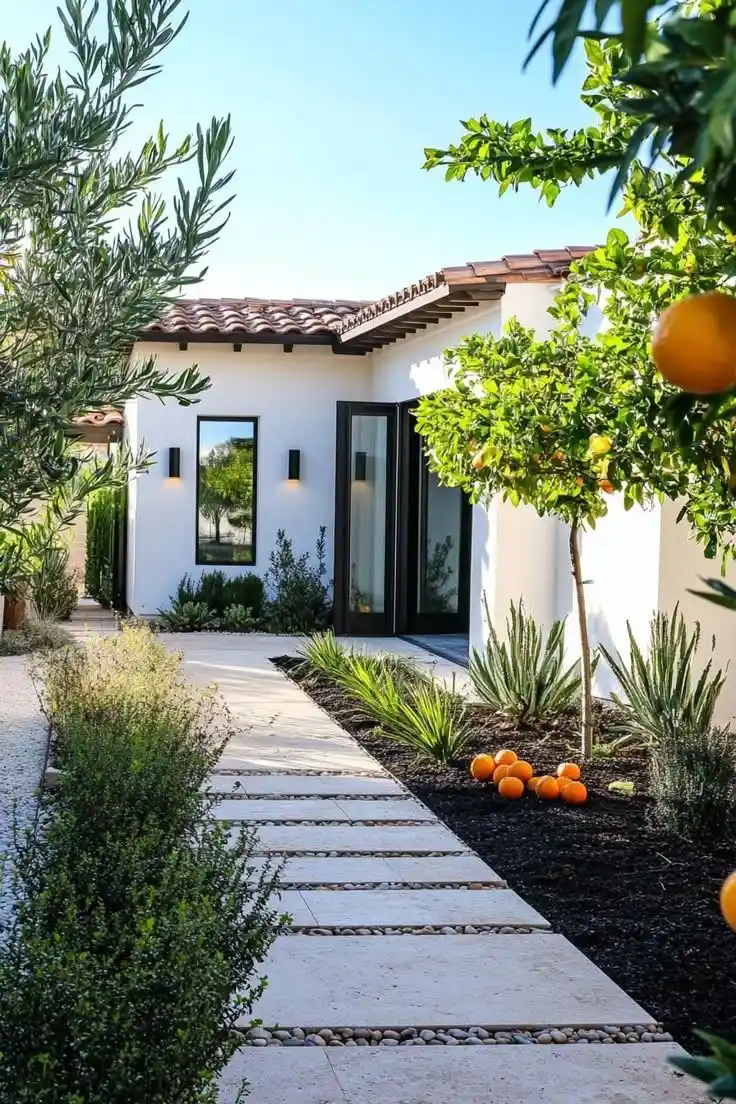
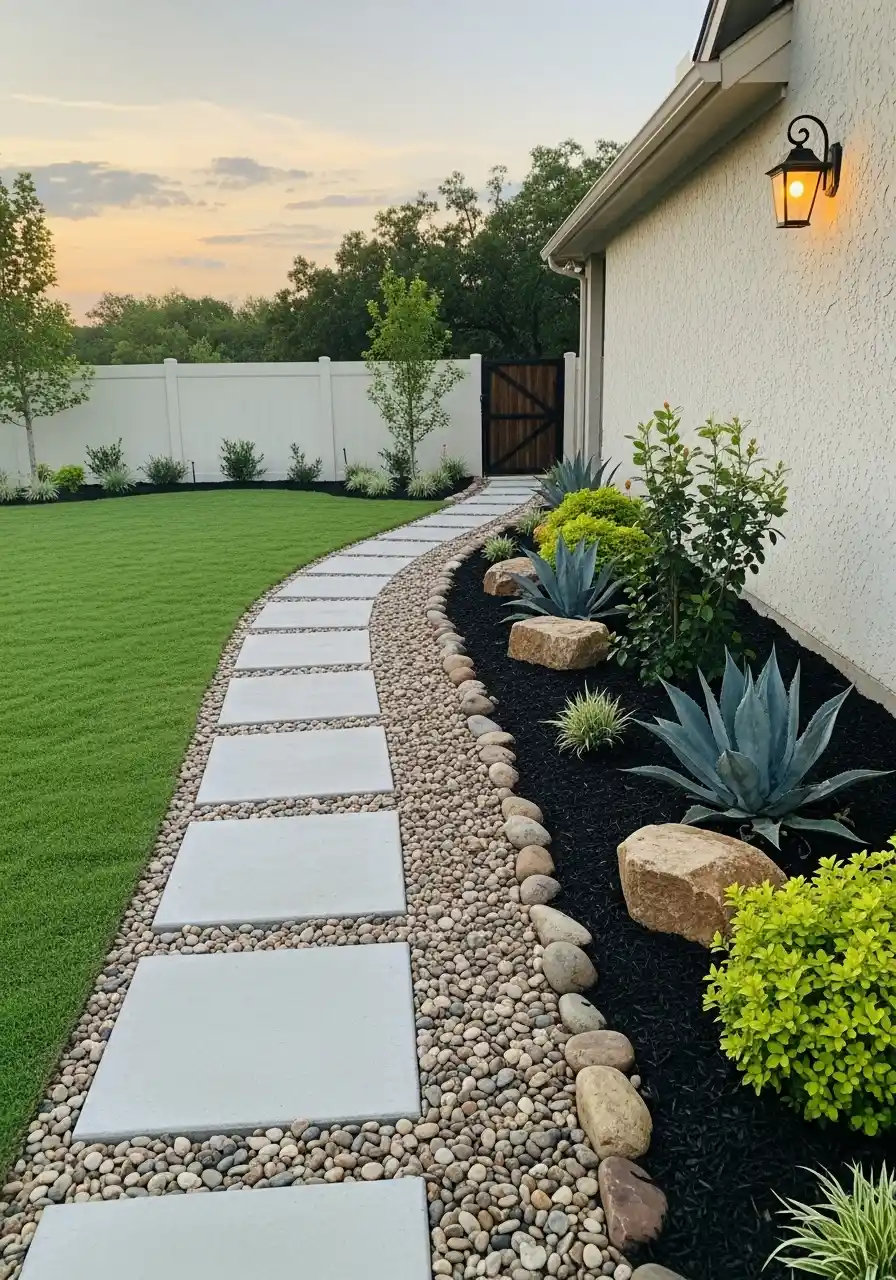
This design feels fresh and sharp. The white stepping stones, black mulch, and spiky agaves make a clean line to the house. For zone 9 landscaping texas, I really like citrus near an entry because it smells good and it feels welcoming, like “hey, you made it home.” Plus you get fruit, if squirrels don’t steal it first.
Here’s the practical part: citrus needs more water than agaves, so you can’t treat the bed like one zone. I’d run separate drip lines, one for the tree, one for the drought plants. And keep the tree slightly away from the walkway so dropped fruit doesn’t turn into squishy sidewalk surprises. I’d also keep the agaves spaced wide, because they grow bigger than you think, and they will poke you later.
Gravel Patio Seating With Lavender Borders
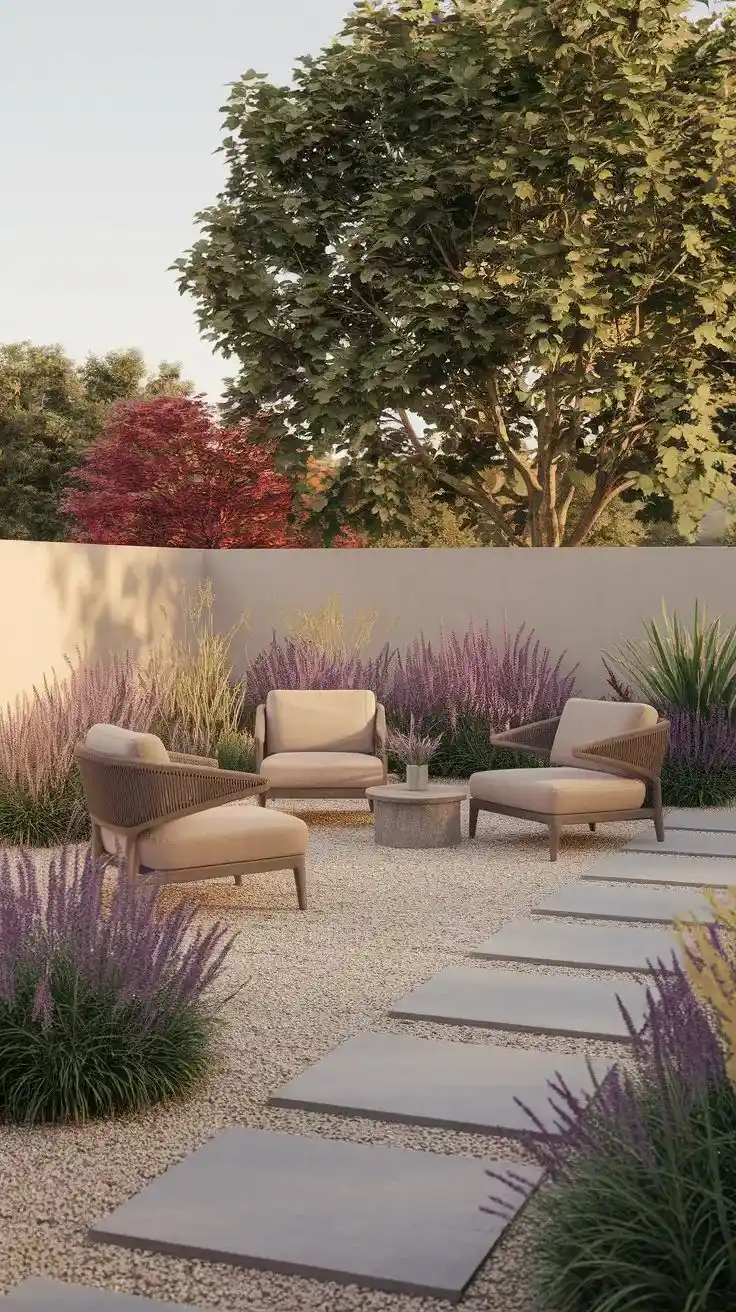
I’m gonna admit it, I used to hate gravel patios. I thought they were messy and cheap. But this setup changed my mind. The chairs look cozy, the gravel looks tidy, and the lavender makes it feel soft. In Texas zone 9 yard landscaping, gravel patios are a good hack because they drain fast and don’t crack like concrete.
What makes this work is the edging. The border keeps gravel from wandering into the walkway, and that’s huge. I’d use steel edging or stone, something solid. Then plant lavender (or rosemary) in thick lines so it frames the seating area. If you want it to feel extra peaceful, add one small fire bowl or a chunky side table. And yes, you will still get a few weeds, but a quick vinegar spray now and then helps.
Lavender Drift Beds With A Spanish-Style House Look
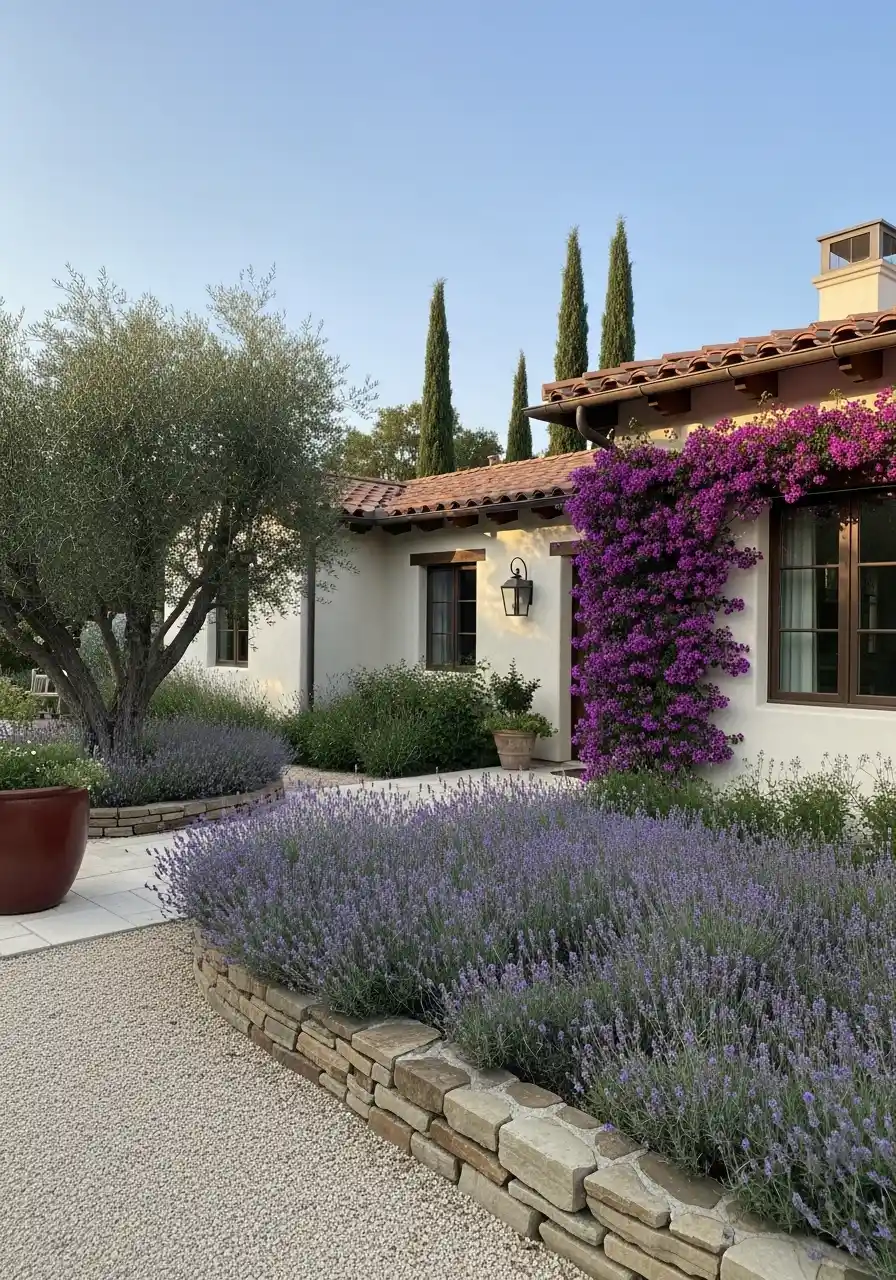
This one is straight-up romantic, but not in a cheesy way. The lavender is full and fluffy, and the stone border makes it feel finished. In zone 9 landscaping texas style homes, this kind of planting works especially well with stucco walls and warm roof tile colors. The purple against cream walls is just… perfect, I can’t lie.
The hack here is repeating shapes. The lavender is one big mass, not ten different little plants fighting each other. Then the tall skinny cypress in the background gives height, and the olive tree adds movement. I’d also steal the idea of one dramatic vine or flowering shrub on the wall, like bougainvillea. Just keep it trimmed, because bougainvillea will get wild if you blink.
Entry Path With Gravel, Hedges, And Spiky Plants
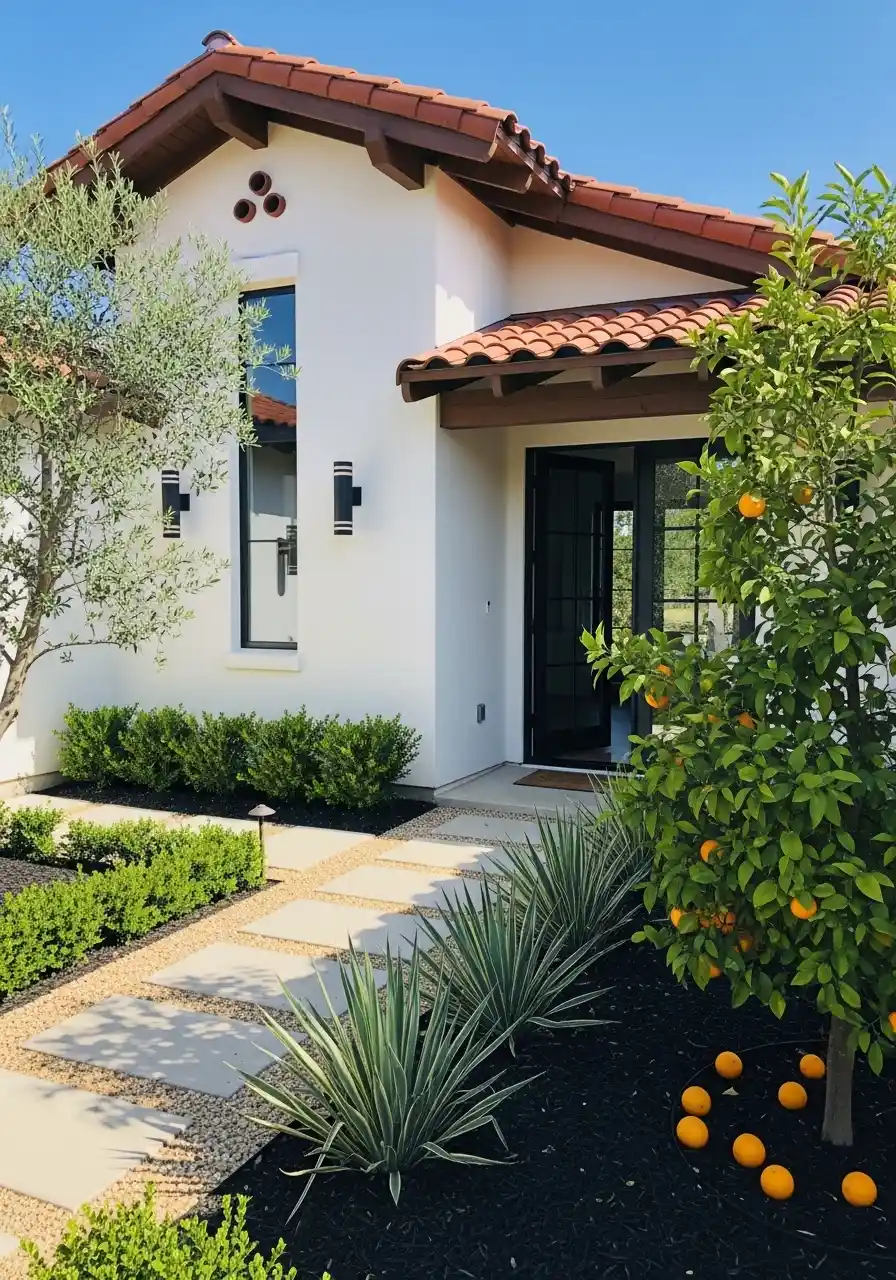
This entry layout feels “neat” but still natural. The stepping stones in gravel are simple, and the little hedges make the path feel guided. For zone 9 landscaping in Texas, I like using low hedges because they stay tidy and they handle sun if you water them right. It’s a structured look without feeling stiff.
What I’d do is keep the planting bed slightly raised or at least well-edged, so mulch doesn’t slide. The spiky plants (agaves or yuccas) should be placed like punctuation marks, not all over. One at the corner, one near the steps, that kind of rhythm. And if you add a citrus tree like in the photo, give it a little “donut” watering basin so water soaks deep instead of running off.
Dark Gravel With Big White Pavers And A Statement Urn
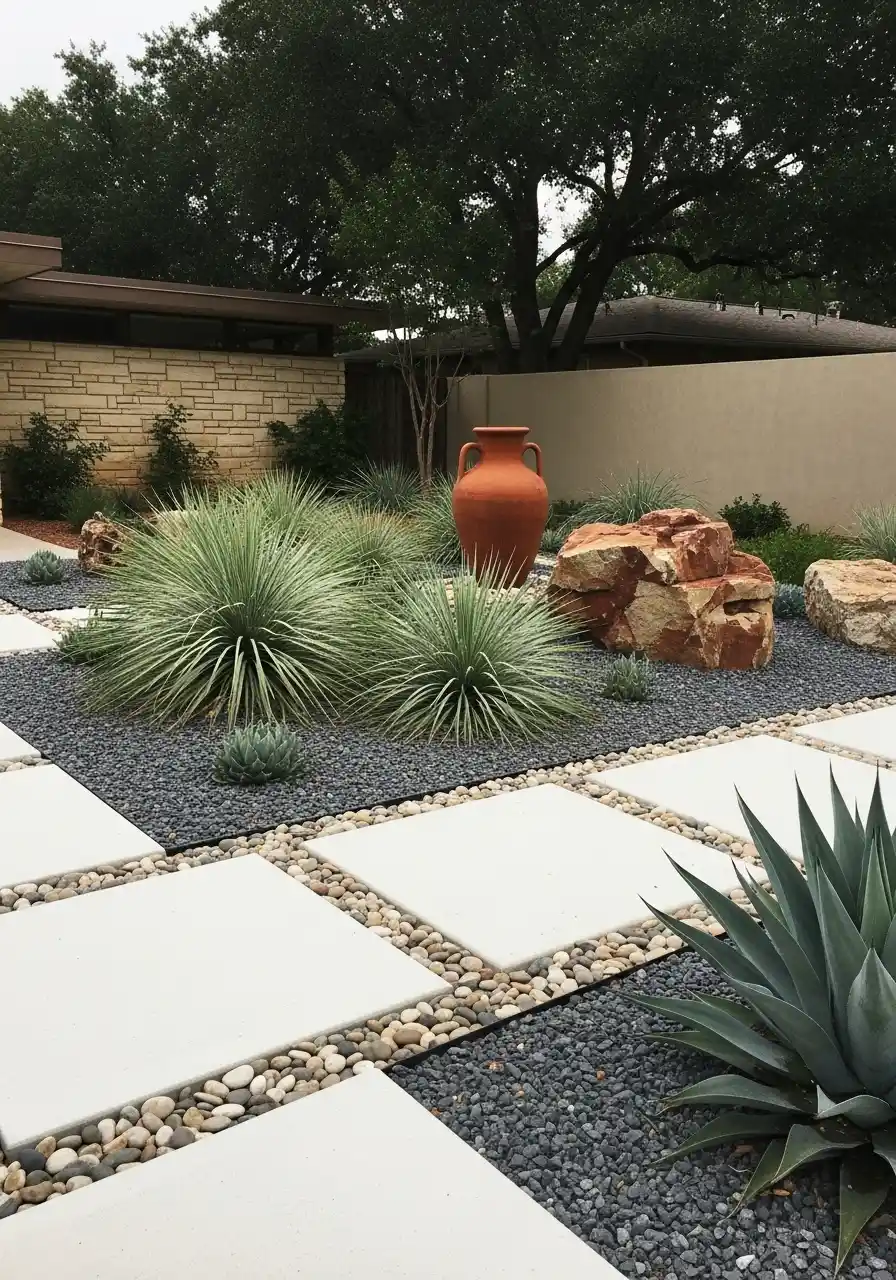
This yard feels modern, bold, and kinda artsy. The dark gravel makes the white pavers pop, and the terracotta urn is like the warm heart in the middle. In Texas zone 9 landscaping, dark gravel can get hot, so I wouldn’t use it everywhere, but as an accent it looks incredible.
The real win is mixing textures: smooth pavers, rough gravel, big boulders, and those round grass clumps. It keeps your eye moving. If you copy this, don’t forget maintenance stuff. Blow leaves off the gravel often so they don’t break down and turn into dirt. And put landscape fabric under gravel if you hate weeding, but use the good thick kind. The cheap stuff is basically tissue paper, trust me.
Wall-Focused Planting With Agaves, Yucca, And Blue-Toned Groundcover
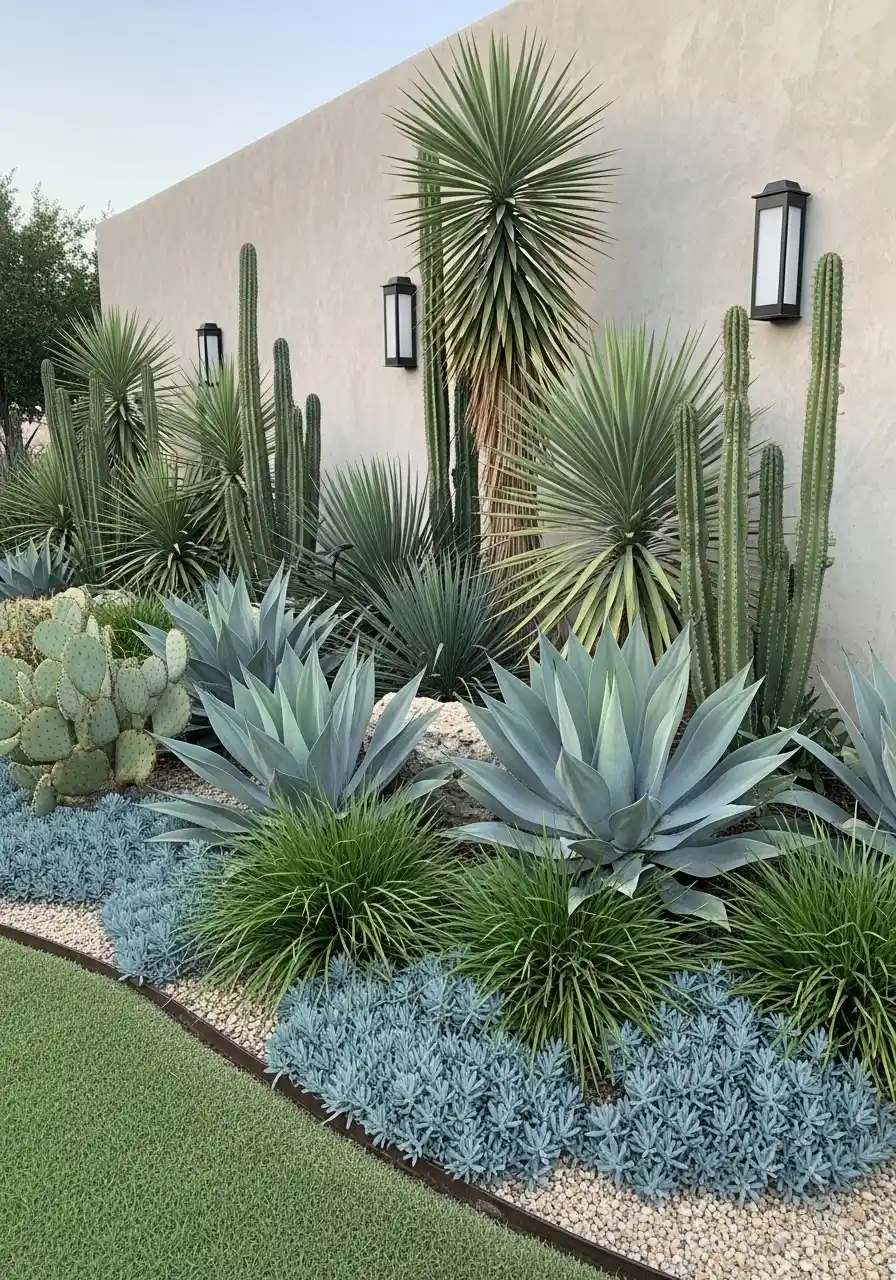
This one is a whole vibe. The tall yucca shapes and agave rosettes look sculptural, like living statues. Along a plain wall, this style is perfect for zone 9 landscaping texas because it turns a boring space into a feature. The blue-toned groundcover at the front makes everything look cooler and calmer.
My favorite part is the layering. Low groundcover, medium grasses, then chunky agaves, then tall cactus or yucca. It feels full without being crowded. If I did this at home, I’d keep the plants staggered, not in a straight line. Straight lines can look stiff fast. Also, leave enough space from the wall so air can move. Walls trap heat, and plants can cook if they’re pressed too close.
Curving stone paths that feel like a little adventure
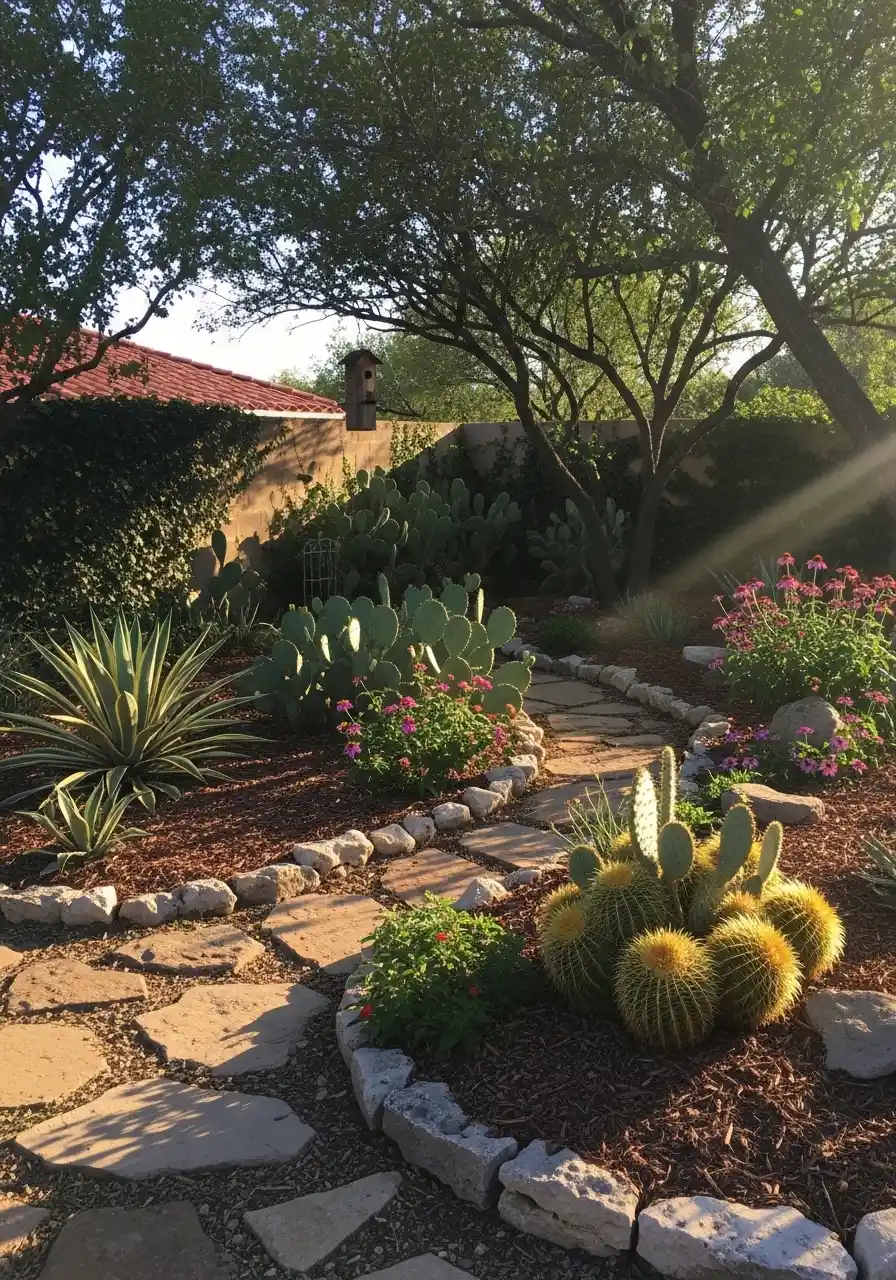
That winding stone walkway in the first yard is doing a lot of work, and it’s not even “fancy.” It makes the whole space feel bigger because your eyes follow the curve instead of stopping at one straight line. In Texas zone 9 landscaping, curves are kind of a cheat code. They slow you down and make the yard feel calm, like it’s asking you to walk through it, not just stare at it.
If you copy this, don’t stress about perfect stones. Slightly uneven spacing looks more natural. The hack is to set the stones first, walk it a few times, then adjust where your feet naturally land. After that, fill gaps with decomposed granite or small gravel so it drains fast and doesn’t turn into mud. I also like using bigger border rocks because they keep the path edges from “melting” into the beds over time.
Big agave statements that basically don’t care about summer
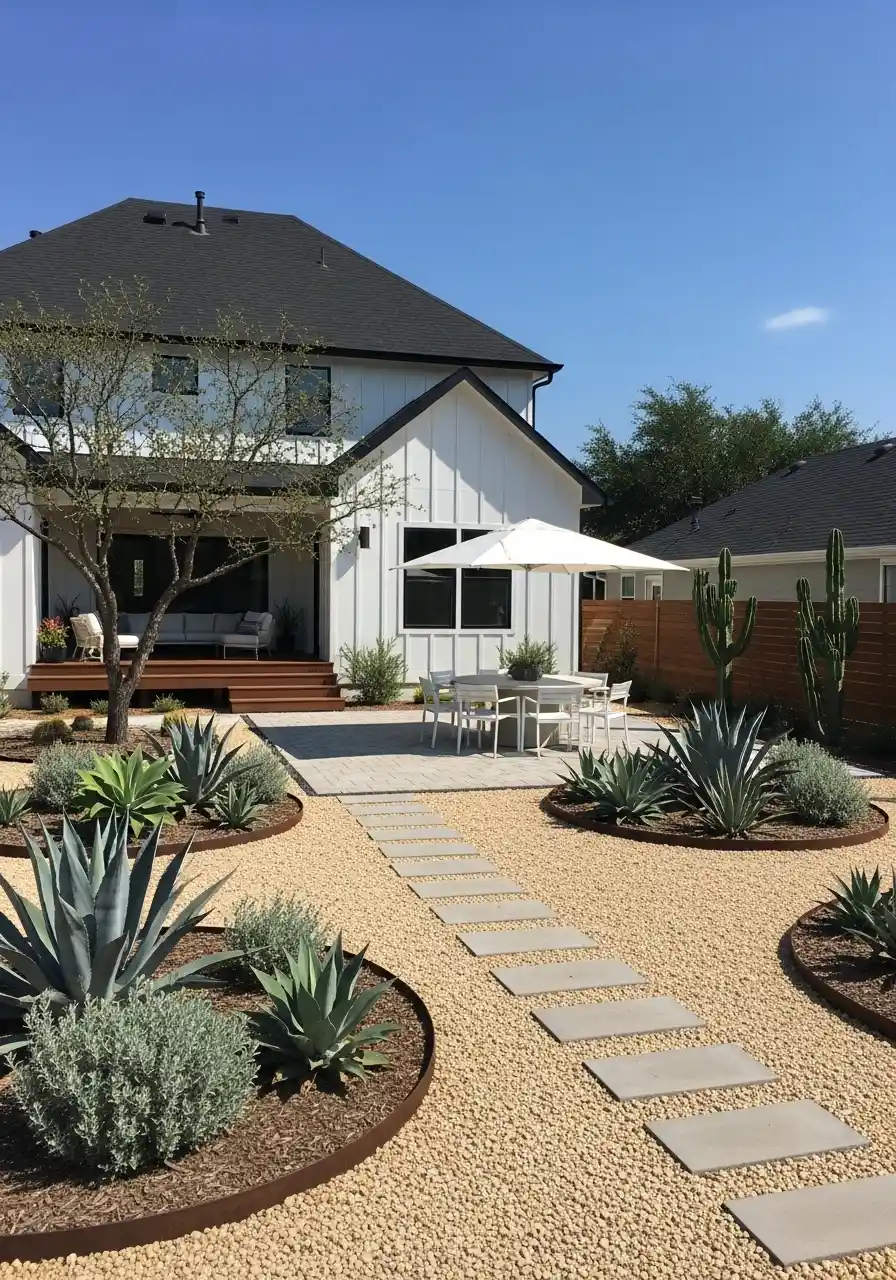
Those big spiky agaves are like the tough kids of zone 9 landscaping texas. They don’t beg for water every day, and they still look sharp and clean. I love how they anchor the planting beds in the photos, especially when the rest of the yard has softer stuff like grasses or low shrubs. Agave gives structure. It’s like putting a bold centerpiece on a table.
Real talk though, agave placement matters because you will walk into it once if it’s too close to a path. I’d keep big agaves at least 3 feet off walkways, more if it’s a monster variety. Mulch around it with gravel, not thick bark, because gravel dries faster and keeps the crown from staying damp. That’s a small zone 9 Texas landscaping trick that saves you from rot problems later.
Cactus clusters for shape, color, and that desert vibe
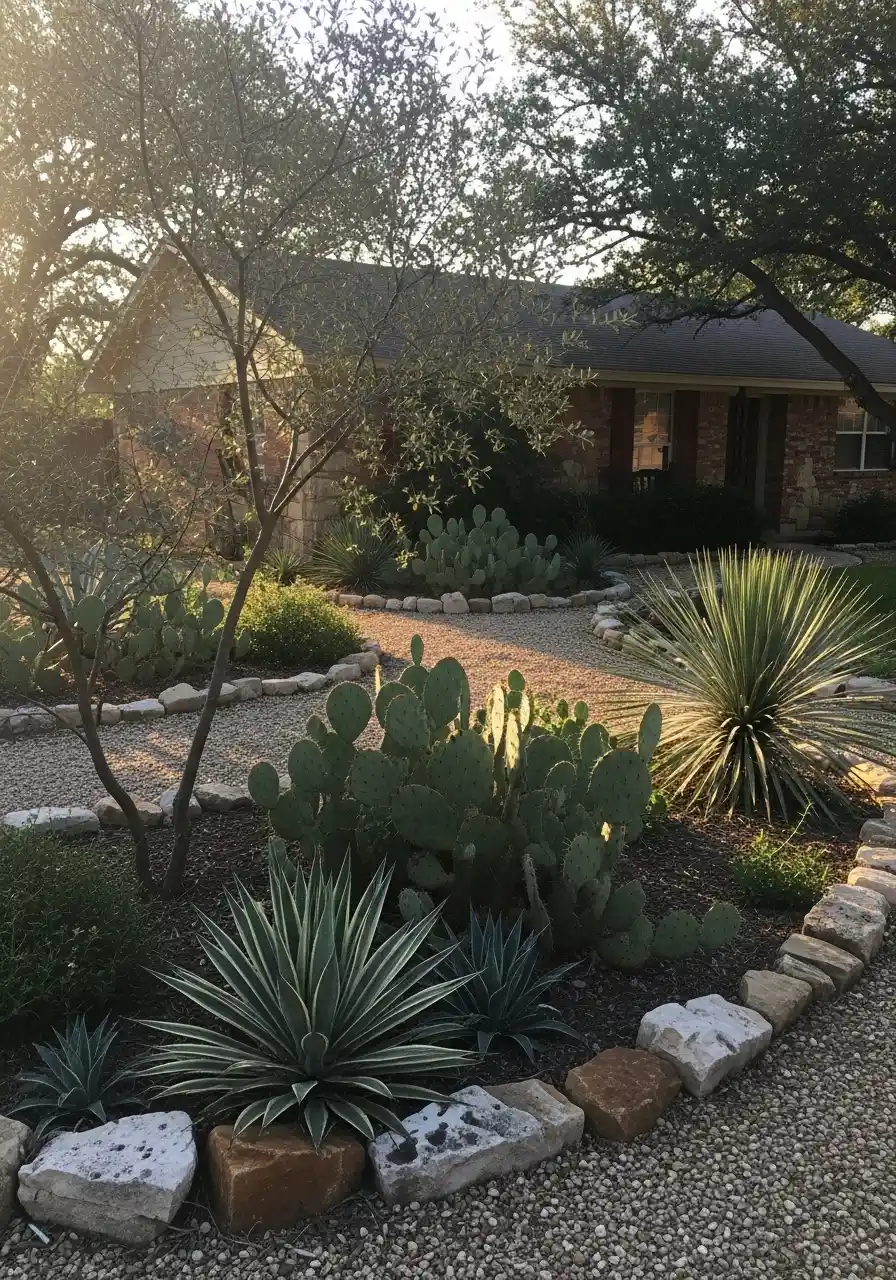
That golden barrel cactus grouping is such a mood. It’s bright, round, and kinda adorable even though it can absolutely hurt you. In landscaping zone 9 in Texas, cactus works best when you plant in odd-number clusters. Three or five barrels look more “designed” than two. And pairing round cactus with flat paddle cactus is nice because it mixes shapes without getting messy.
My opinion, cactus looks best when it’s not surrounded by random little plants that fight for attention. Give it breathing room with gravel, rock, or a simple border. Also, set your cactus a little higher than the surrounding grade so water runs away from the base. That’s boring advice, but it’s the difference between cactus that thrives and cactus that slowly gets weird and squishy.
Gravel courtyards that stay tidy with the right edges
The yards with clean gravel areas and steel edging look so neat, and I’m jealous because mine used to scatter everywhere. The big trick in zone 9 landscaping texas is containment. Steel edging (or heavy stone edging) keeps gravel in place, keeps mulch out, and makes mowing near beds less annoying.
If you want the “always clean” look, don’t pick super tiny gravel that migrates into shoes. Go slightly bigger, like pea gravel or decomposed granite depending on the vibe. Put a weed barrier under it, but don’t cheap out, because thin fabric rips and weeds laugh at it. Another little hack: rake gravel lightly every couple weeks, just 2 minutes, and it stays fresh-looking instead of getting that stomped-down, dusty vibe.
Modern pavers that guide you like stepping stones
Those big square pavers in the gravel, spaced evenly, are simple but they feel modern and intentional. In Texas Zone 9 landscaping, this style is awesome because it keeps you off the hot gravel and it drains fast after storms. Plus, it looks clean even when plants are still growing in.
Spacing matters. If you go too far apart, it feels awkward to walk. If they’re too close, it looks cramped. The lazy but effective method is to lay them out, then walk it naturally, then adjust. Also, set pavers on a compacted base so they don’t rock. If one starts wobbling, you will notice every time and it will drive you insane, trust me.
Shady trees over xeriscape beds so it’s not all “desert harsh”
One thing I really like in these photos is the mix of shade trees with drought-tolerant beds. Pure desert landscaping can feel a little too intense, like the yard is yelling at you. But when you add a canopy tree, it softens everything. For zone 9 landscaping texas, shade is basically a currency. It makes sitting outside possible and it protects your plants from getting scorched.
Here’s the catch: under big trees, you need plants that can handle dry shade. Don’t force sun-loving stuff to live under there, it’ll look sad. Use shade-tough shrubs, some hardy groundcovers, and keep irrigation focused. I also like leaving a clear mulched ring around the tree base, because crowding the trunk looks cluttered and can mess with the tree over time.
Patio seating zones that feel like an outdoor living room
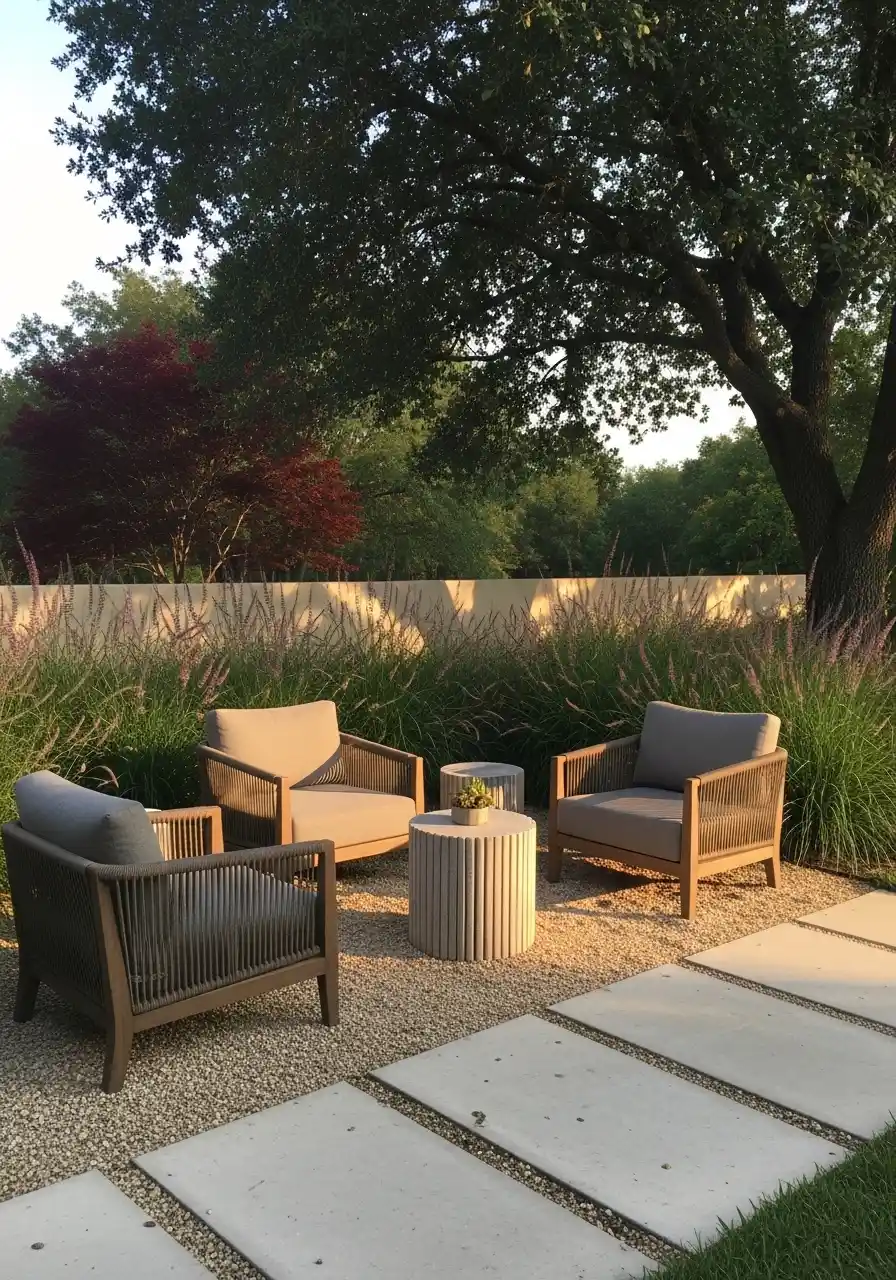
That seating setup with the chairs and the low table looks so inviting, like you could sit there and accidentally talk for two hours. In zone 9 landscaping texas, outdoor seating needs two things: shade and a surface that doesn’t turn into mud. Gravel plus pavers is a solid combo because it drains fast and looks casual but planned.
I’m picky about furniture placement. If the chairs are too far apart, it feels cold. Too close, you feel trapped. Keep it cozy, with a small table in reach so people don’t have to hold drinks the whole time. Add a few grasses behind seating for privacy. It makes the area feel tucked in without building a wall, and it moves in the breeze which is just… nice.
Clean border rocks that make beds look finished (even when plants are small)
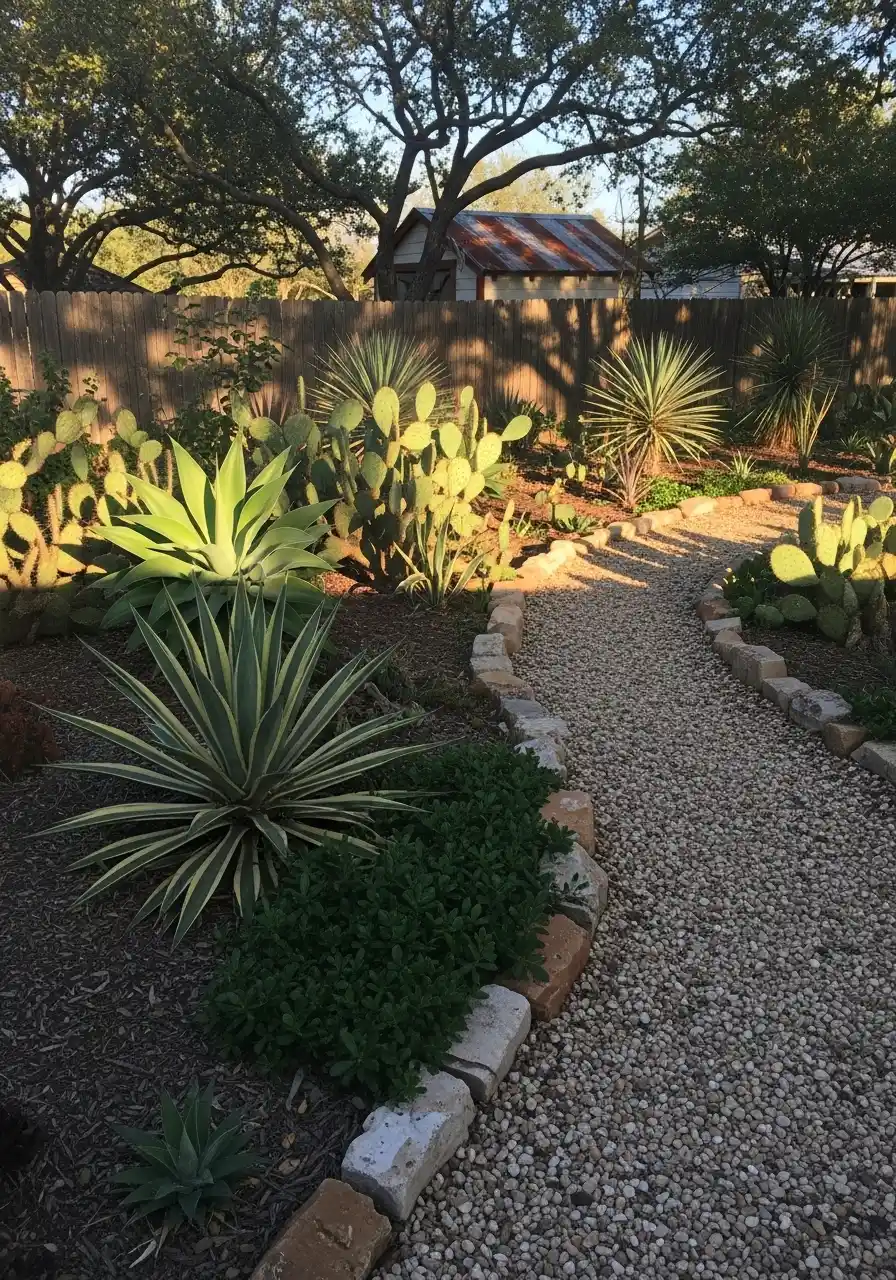
Rock borders show up in almost every image, and there’s a reason. They make the whole yard look “done.” In zone 9 Texas landscaping, borders are not just decoration, they’re control. They keep mulch in, they keep gravel in, and they stop beds from creeping into paths.
If you want this look, pick one rock style and stick with it. Mixing three different stones can look messy fast. Also, bury the bottom third of border rocks so they look grounded, not like they’re sitting on top. That’s one of those small details people don’t notice directly, but they feel it. And yeah, it’s annoying work at first, but later you’ll be glad.
Lavender-like borders and soft purple waves for contrast
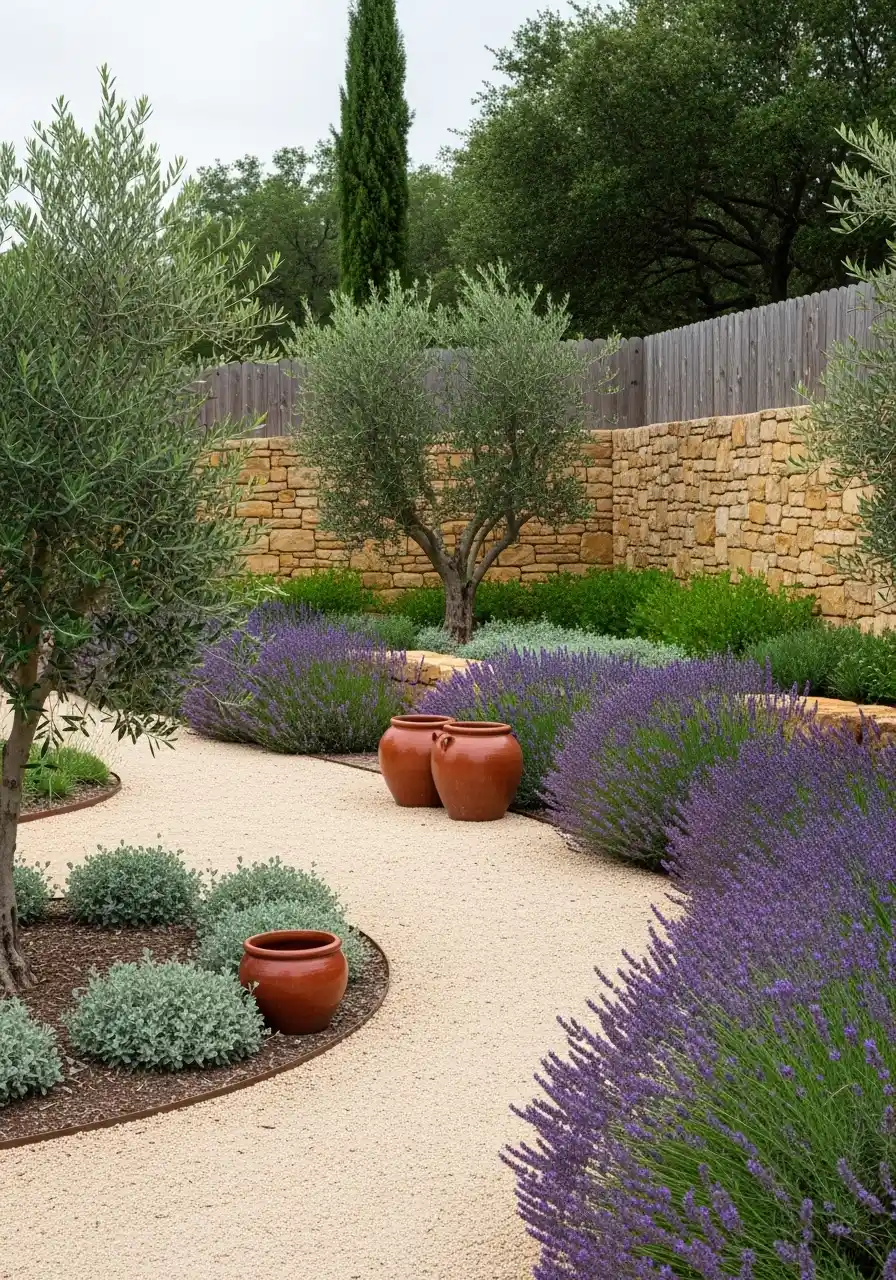
That scene with the purple border planting feels calm and kind of fancy without trying too hard. I love the way purple plays against stone and gravel. In Texas zone 9 landscaping, purple plants also help break up all the green-gray tones you get from agaves and shrubs.
My tip is to mass plants instead of dotting them everywhere. Big sweeps look way better than little singles. Keep the edge tight so it feels intentional, and prune lightly after blooming so it doesn’t get woody and scraggly. Also, don’t overcrowd. People always do that, including me, and then everything turns into a tangled mess by late summer.
Entry walkways that feel like a calm “welcome” instead of a boring sidewalk
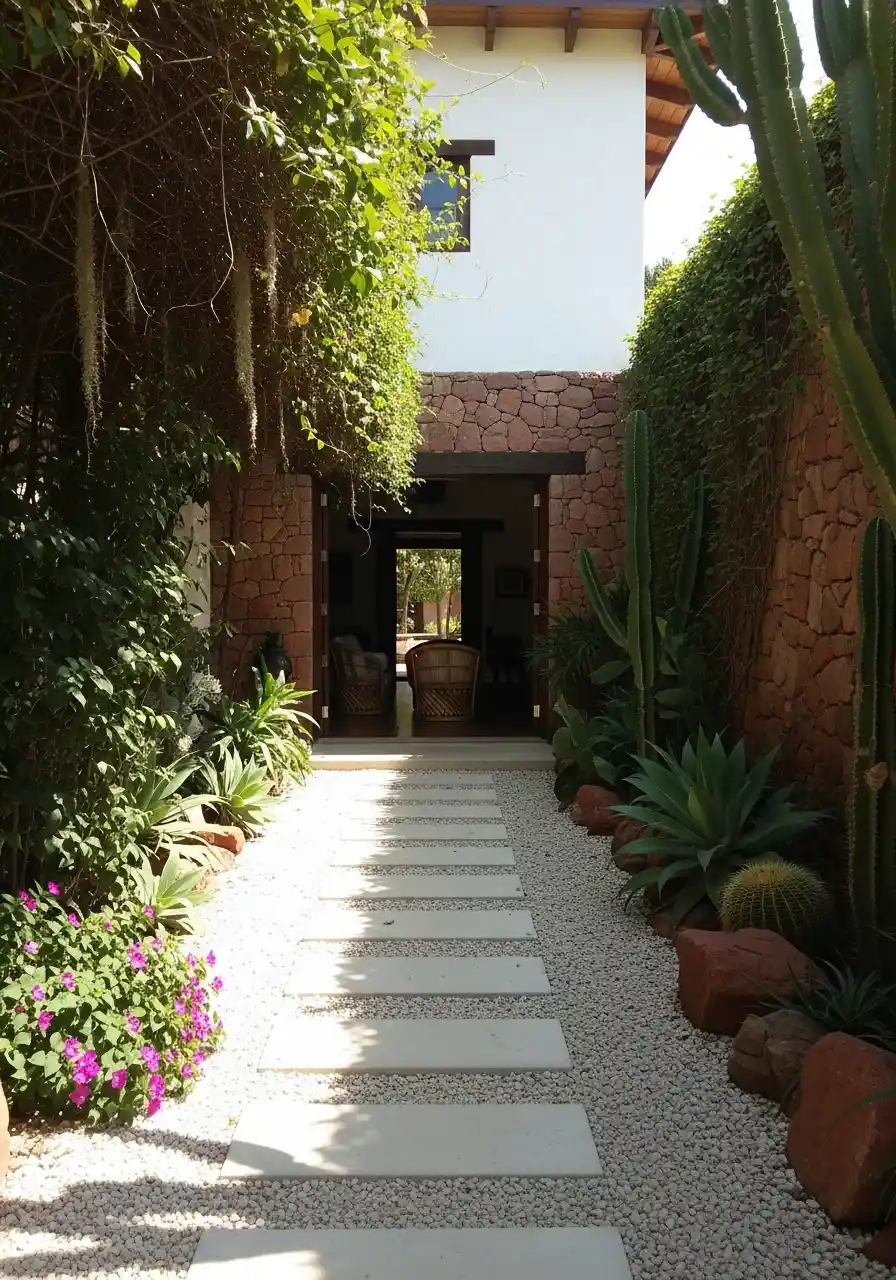
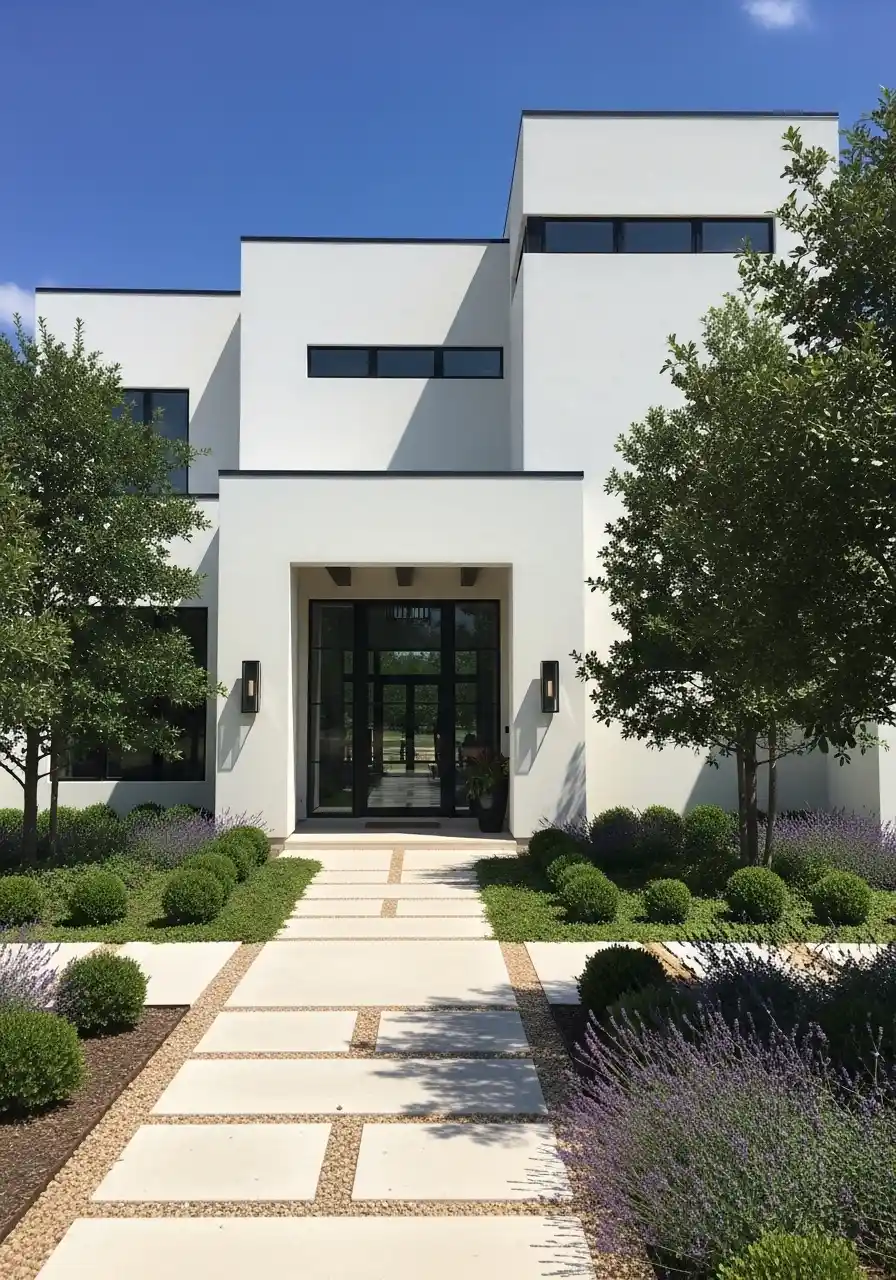
The clean front entry with modern lines and neat plantings looks expensive, even if it’s not. That’s the secret sauce of zone 9 landscaping texas when you keep it simple. Straight lines, repeated plants, and consistent ground cover make a home feel polished.
If you copy this idea, repeat the same shrub shapes instead of mixing 12 kinds. Use a few solid performers, then repeat them down the walk. Add gravel strips between pavers for drainage and that modern look. I also like low, rounded shrubs because they frame the walkway without blocking it. And if you add purple plants along the sides, it makes the white walls and clean lines pop even more.
FAQ: Zone 9 Landscaping Texas Questions I Keep Hearing
1) What does zone 9 mean in Texas landscaping?
It means mild winters, hot summers, and long growing season.
2) Is xeriscape good for zone 9 landscaping texas yards?
Yes, it saves water and still looks stylish.
3) Do agaves handle Texas zone 9 heat?
Most do, especially in full sun with good drainage.
4) Can I grow lavender in zone 9 Texas landscaping?
Yes, but it needs drainage and not too much water.
5) Are olive trees okay for zone 9 landscaping in Texas?
Often yes, protect young trees from hard freezes.
6) What gravel size works best for paths?
Small pea gravel or decomposed granite feels better underfoot.
7) How do I stop weeds in a zone 9 xeriscape Texas bed?
Edging, fabric, and regular cleanup helps a lot.
8) Can citrus trees work in zone 9 landscaping texas?
Yes, but cover them during cold snaps.
9) Should I mix lawn with drought plants?
Yes, a small lawn strip can be smart and pretty.
10) What’s the easiest “wow” feature for Texas zone 9 yard landscaping?
A big urn, boulders, and bold plant grouping.