I didn’t expect texas native plants landscaping to feel this satisfying, like the yard is finally working with me instead of against me. The first time I saw a front yard full of tough grasses, purple flowers, and silver shrubs, I got jealous in a quiet way. It looked calm, but also alive. Not fake-perfect, just… right.
Table of Contents
Texas native plants landscaping: Desert-meets-Hill-Country layers with agave and soft silver mounds
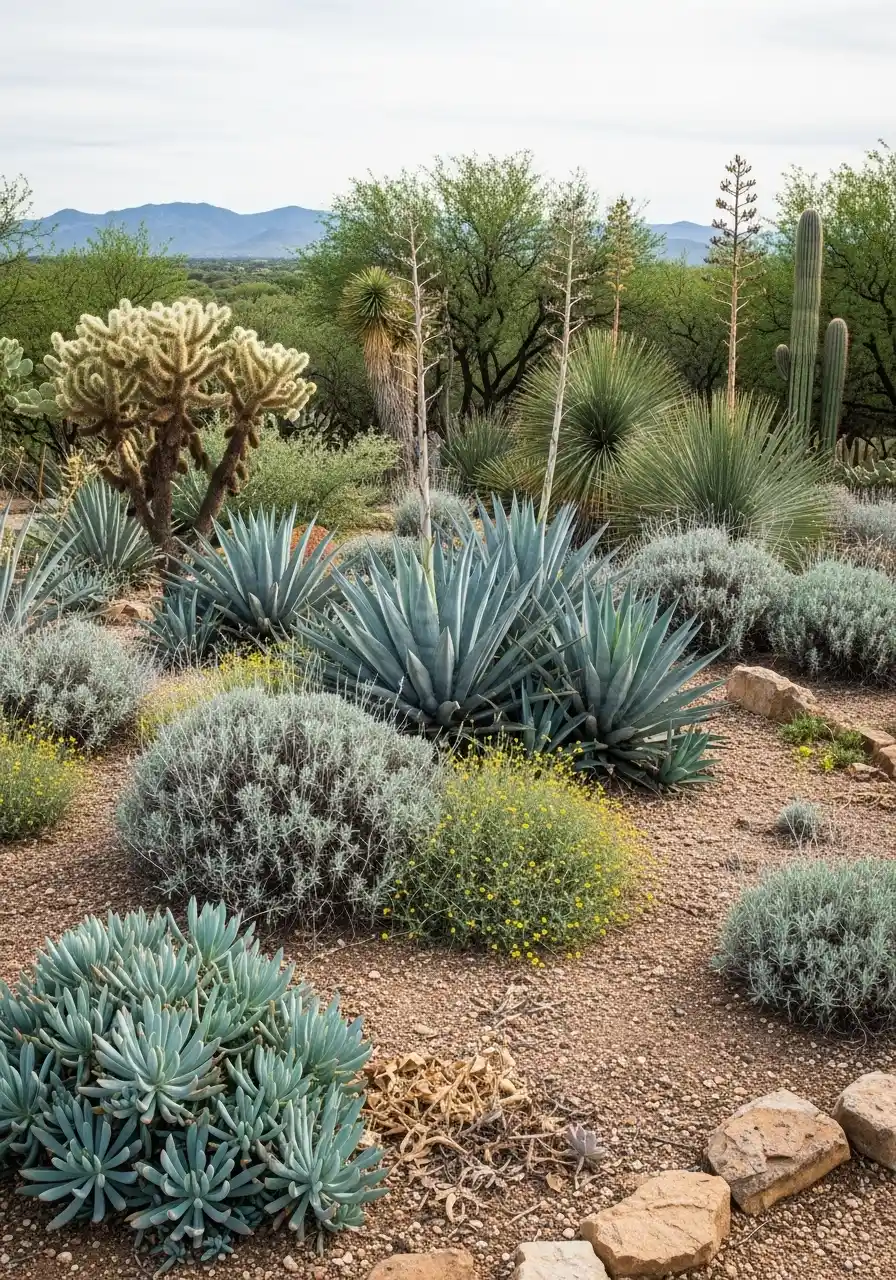
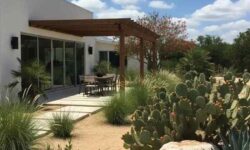
This first scene feels like Texas showing off, honestly. Big agaves, dusty silver shrubs, and those tough spiky shapes in the background make it feel wild but still planned. I love how the plants are grouped like little neighborhoods. Nothing is sprinkled randomly. The open space between plants matters as much as the plants themselves, and that’s something I had to learn the hard way.
If you want this Texas native plant landscaping vibe, start with 3 layers. Back layer: taller shapes like yucca, sotol, or native shrubs. Middle layer: big statement plants like agave or prickly pear. Front layer: low silver mounds and small flowering natives that fill gaps. The gravelly soil look is part of the charm too, so don’t try to hide it with thick mulch everywhere.
My tiny hack: place a few rocks like “stops” near the edge. Rocks make the planting feel grounded. Also, don’t overwater. These plants look best when they grow slow and sturdy, not floppy and soft.
Golden grass border with agave punches and tidy shrubs for a clean edge
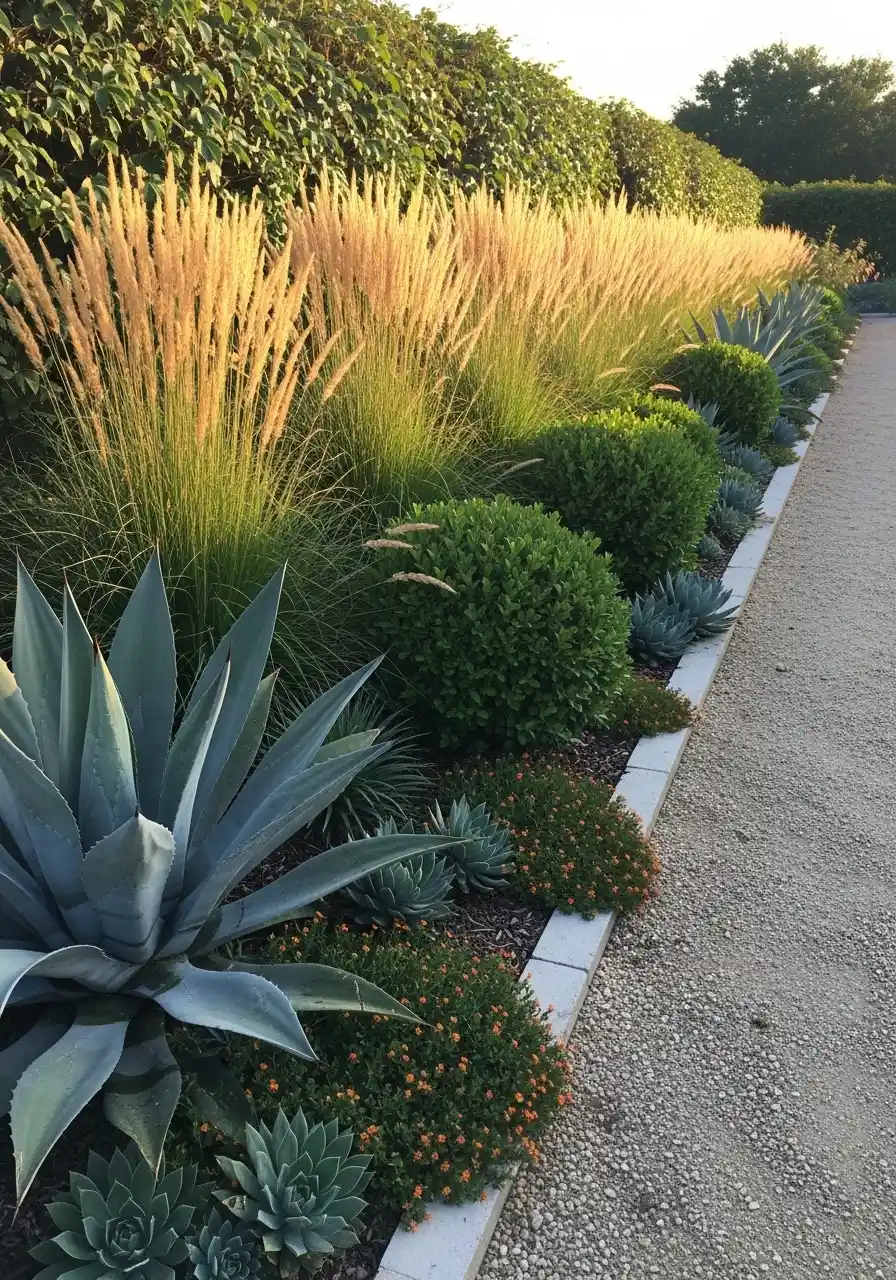
This image is basically a lesson in repetition. The tall golden grasses line the hedge like a glowing curtain. Then you’ve got rounded shrubs and blue-green agaves repeating along the border. It feels expensive because it’s simple. I’m kinda obsessed with that mix of soft and sharp.
For texas native plants landscaping ideas, think of the border like a recipe: tall grasses in the back, medium shrubs in the middle, and spiky accents in front. You can use native or Texas-adapted grasses like little bluestem, gulf muhly, or switchgrass. They move in the wind and make the yard feel less stiff. And they look amazing at sunset, like they’re lit from inside.
One trick: keep your edge crisp. That pale curb line is doing a lot. Use metal edging or stone edging so the bed looks clean, even if the plants get a little wild. Because yeah, plants will do what they want.
Wildflower ribbon bed with purple, yellow, red, and orange all blended together
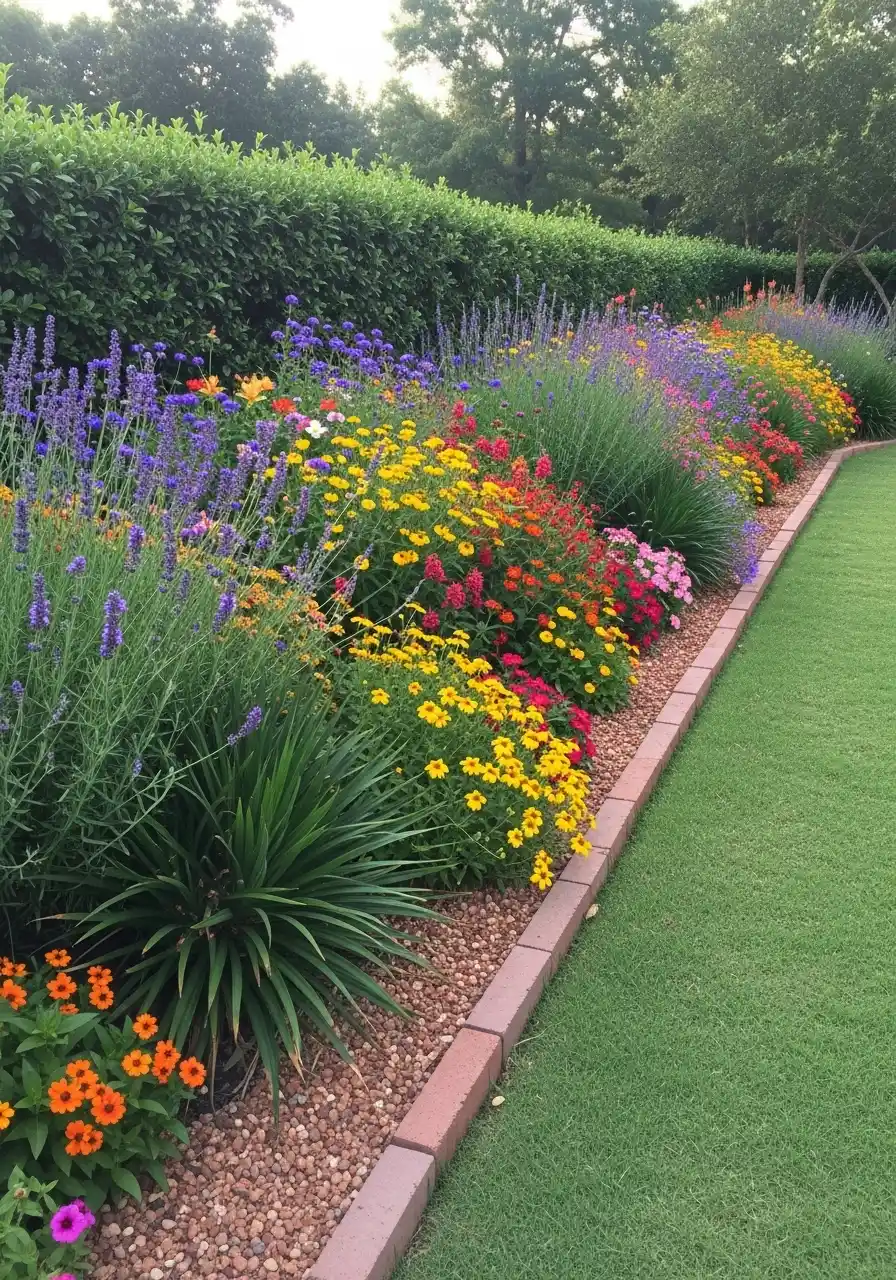
This one is loud in the best way. It’s a long bed packed with color, and it still looks controlled because the plants are layered. Purple spikes near the back, then yellow and orange blooms, then smaller color near the front. It feels like a parade, but the kind you wanna watch.
If you’re trying Texas native landscaping with plants for pollinators, this is a strong model. You can use natives like coneflower, black-eyed Susan, salvia, gaillardia, and coreopsis depending on your region. The main trick is to plant in drifts, not one-by-one. Plant five of the same thing together, then repeat it again farther down the bed. That repeating pattern keeps it from looking like a random seed packet explosion.
Confession: I used to fear “too much color.” But when you keep the shapes consistent, color can go big. Also, gravel mulch or small rock in the bed helps keep weeds down and makes the blooms pop even harder.
Lavender + succulents + round green mounds in a modern fenced garden
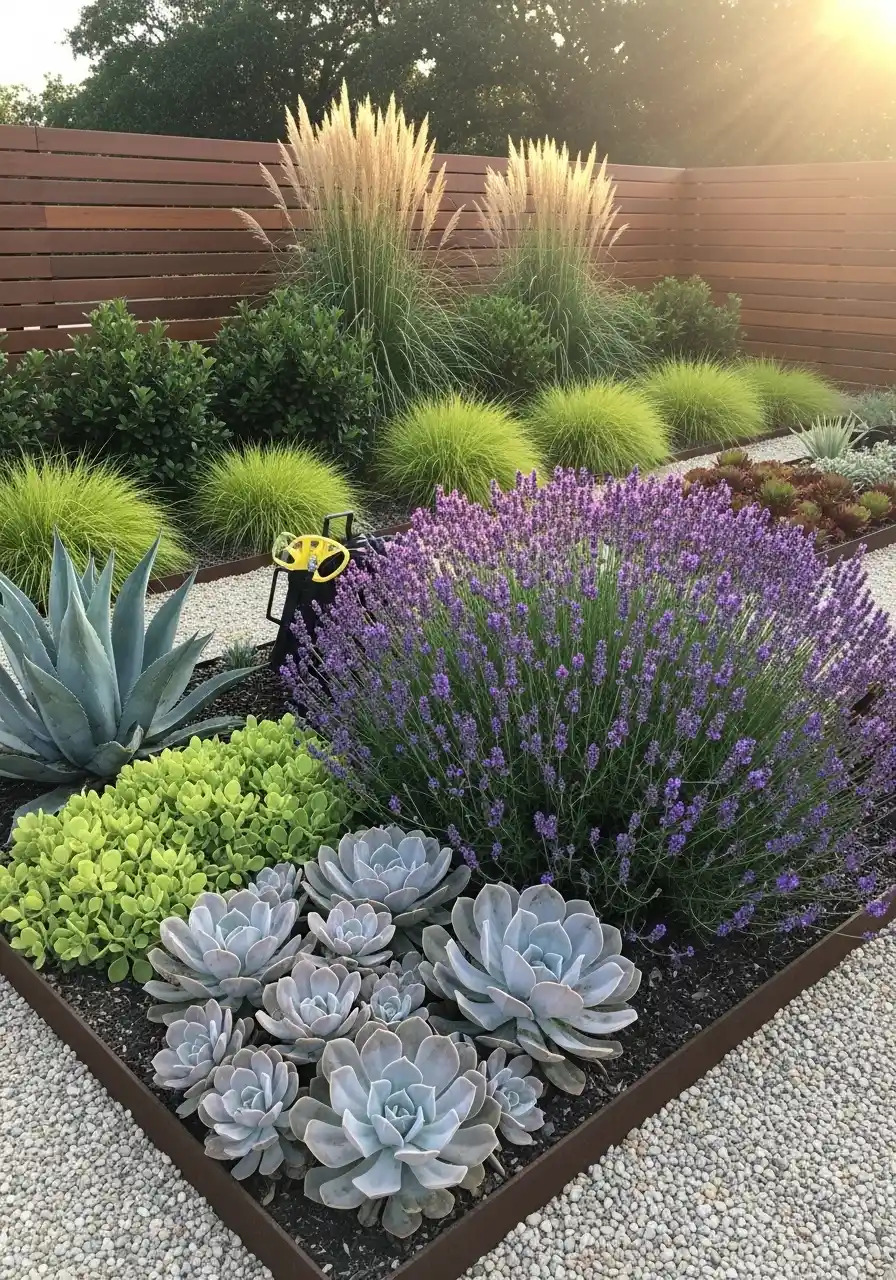
This image is super balanced. The purple lavender mass in the center feels soft and calming, and then the gray succulents and agave make it feel structured. The bright green mounds in the back are like little clouds. It’s neat, but not boring.
For texas native plants landscaping, you can borrow this layout even if you swap plants based on your zone. Texas native alternatives for the lavender look could be things like Texas sage (for that gray-green vibe), mealy blue sage, or other drought-loving purple bloomers. The key is mixing textures. Round mounds, spiky accents, and low rosettes. That combo always works, like it’s a cheat code.
A practical tip: don’t put your tallest plants in front. Keep tall stuff in the back against the fence, then step down in height as you come forward. It makes the bed look deeper. Also, add a little path light if you can. Lighting makes native beds feel intentional, not “left alone.”
Modern Texas entry with a stone wall, stepping slabs, and purple sweeps
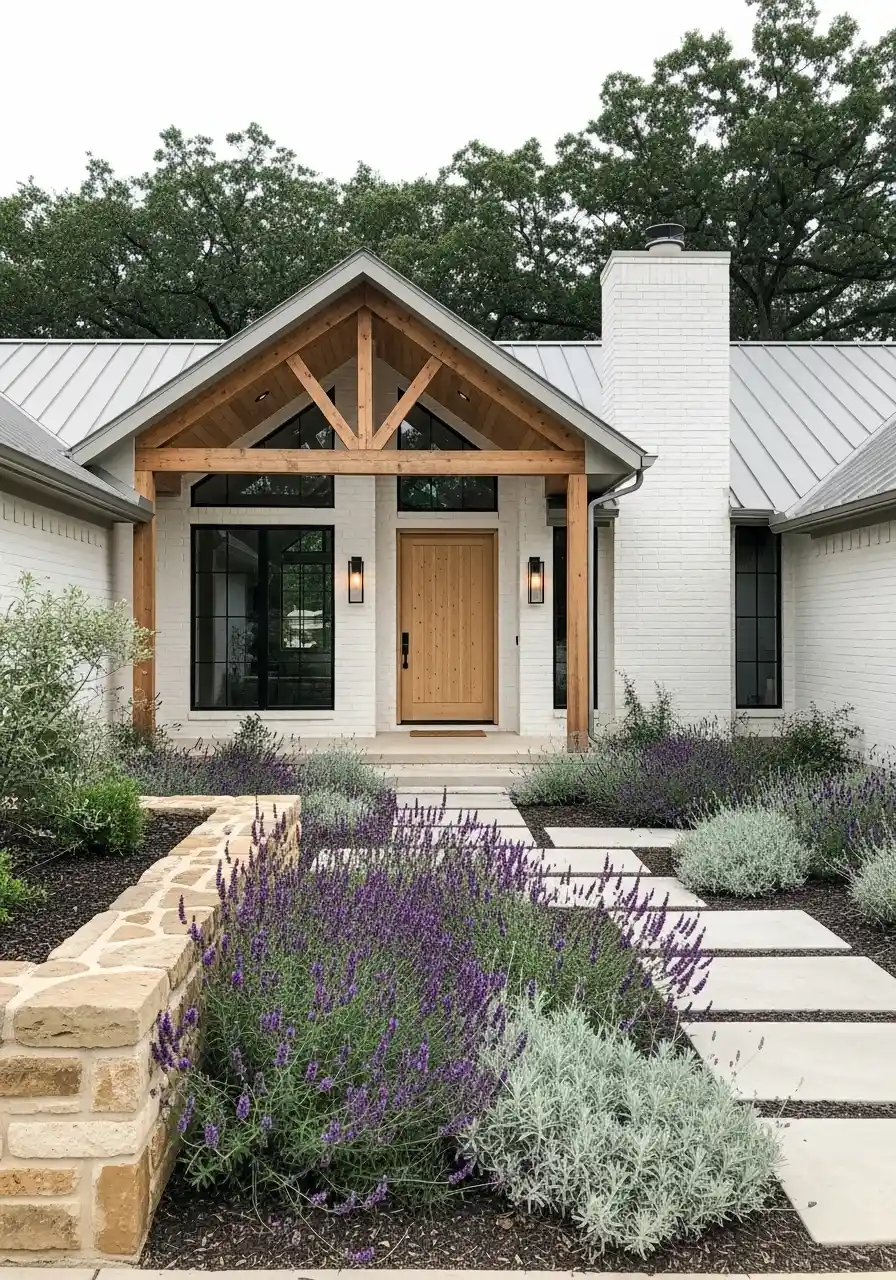
This photo feels like a welcome that’s calm and confident. The stepping slab path is clean and wide, and the purple plants spill over the bed like soft waves. The little stone wall adds structure, like a frame for the whole scene.
For Texas native plant landscaping ideas, the best part here is the “mass planting.” Big groups of one plant look designer. Purple works especially well because it reads as calm, not chaotic. You can use native-friendly options like salvia, skullcap, or other Texas-tough purple bloomers. Add silver plants like artemisia-style shrubs or other gray-leaf natives to cool it down visually.
My hack is spacing: plant closer than you think for a fast full look, but not so close they choke. I know that’s annoying advice, but it’s true. If you want quicker coverage, use smaller plants in larger numbers. It’s often cheaper too.
Cottage-style flagstone path with pots and flowering pockets
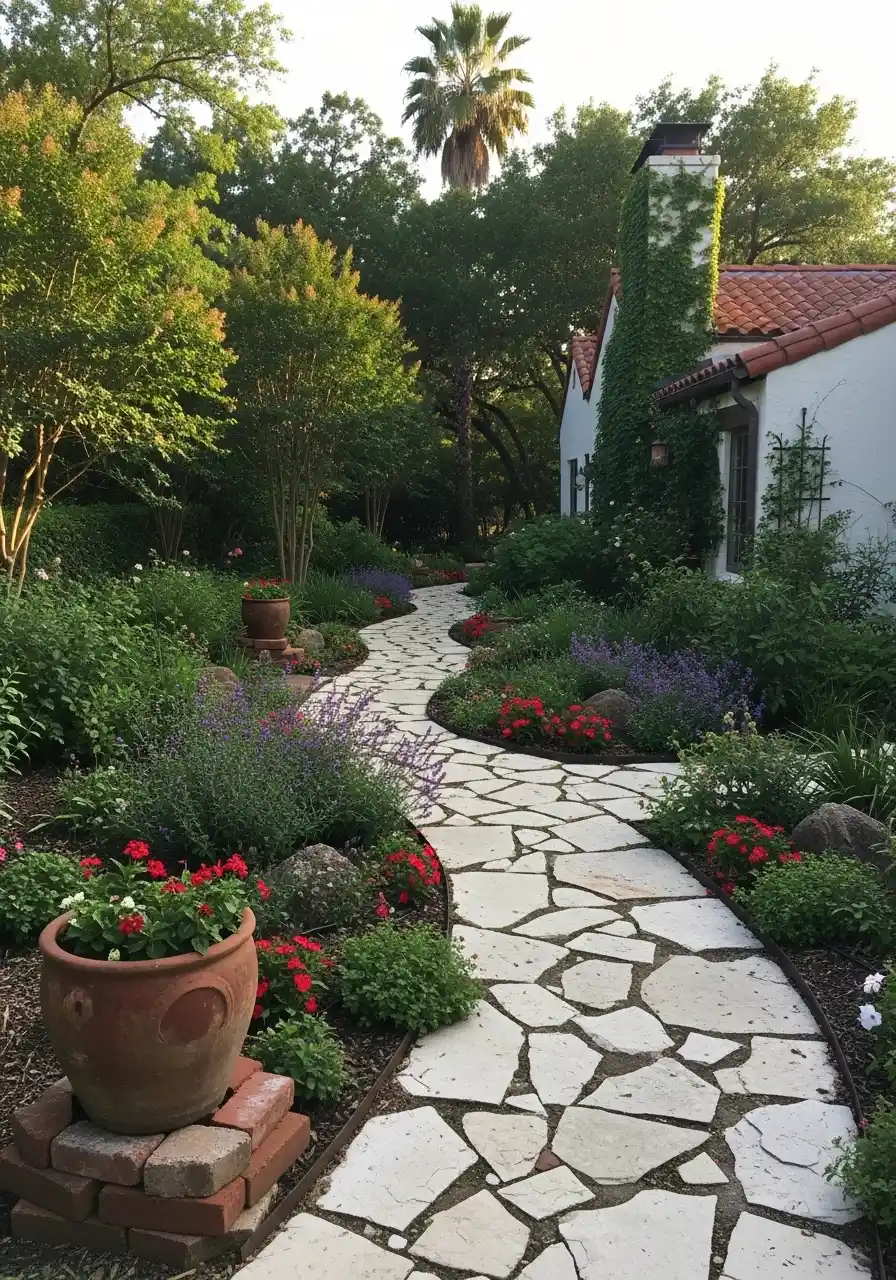
This yard feels like a storybook, but still Texas-real. The flagstone path curves gently, and the planting beds are full and soft with pops of red. The clay pot on bricks is such a simple detail, but it makes the space feel personal. Like somebody actually lives here and drinks coffee outside sometimes.
This is one of those texas native plants landscaping ideas that shows you can mix structure and softness. Keep the path clear, then fill the sides with flowering natives and tough groundcovers. Use shrubs for “bones” so it still looks good when flowers are between bloom cycles. A vine on the chimney adds height too, which makes the whole yard feel layered.
Tip: if you do pots, put them on something stable so they don’t sink into soil. And don’t scatter tiny pots everywhere. One big pot reads better from the street than five small ones.
Hill Country gravel path with lavender drifts, boulders, and prairie movement
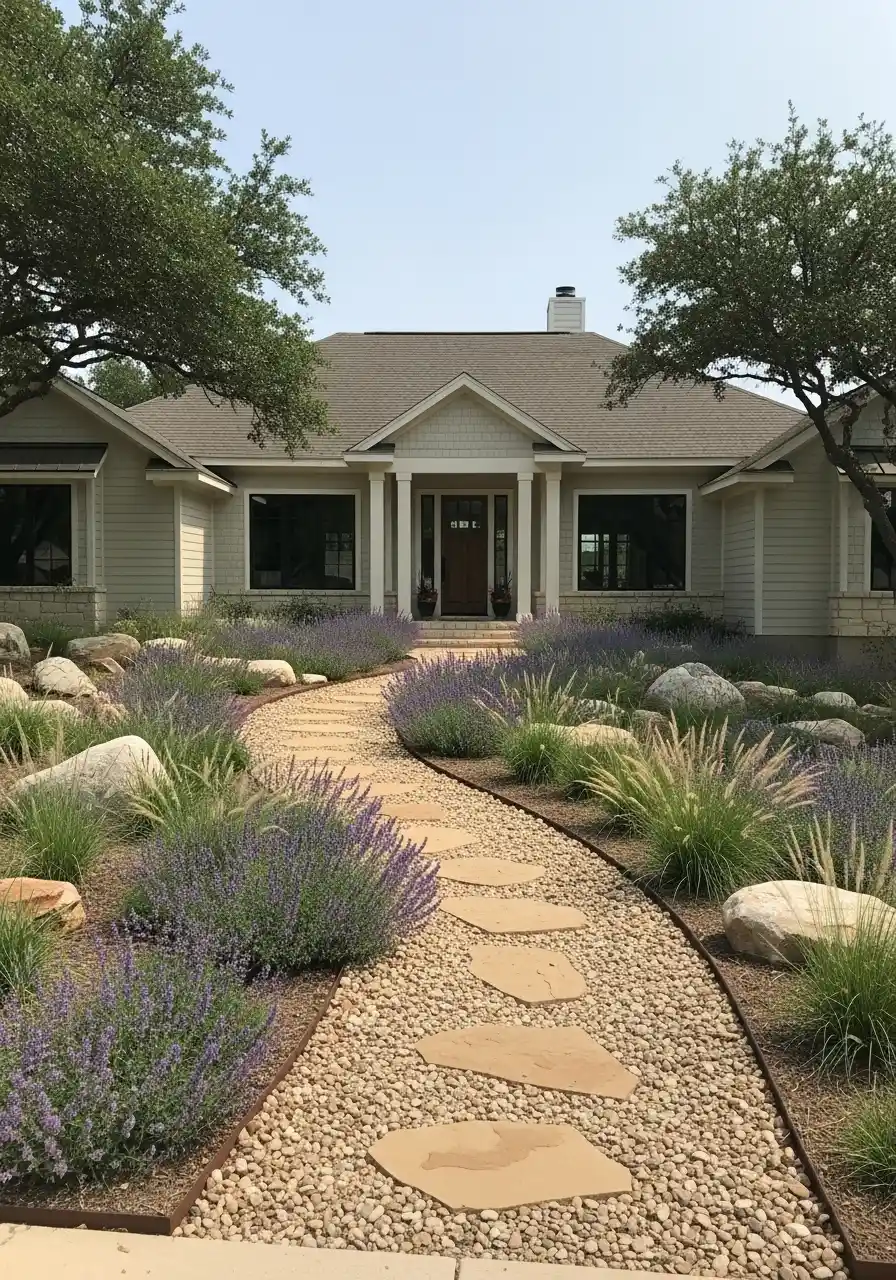
This image is peak Hill Country energy. A gravel path with stepping stones, big boulders, and purple drifts that feel like they belong. The plants are spaced so the soil can breathe. That’s a big deal in Texas heat. Crowded beds can trap moisture and then stuff gets weird, like fungus and mushy roots.
For Texas native landscaping plants, this layout is great because it handles storms and drought. The gravel path drains well. The boulders slow water runoff. And the plants are mostly tough perennials that don’t need babying. Add ornamental grasses to get movement and keep the yard from feeling flat.
Hack: half-bury your boulders. If they sit on top, it looks staged. Sink them a bit so they look natural. And keep the gravel consistent. Mixed gravel colors can look messy unless you’re super careful.
Purple salvia and blue fescue style edging with a cozy seating area
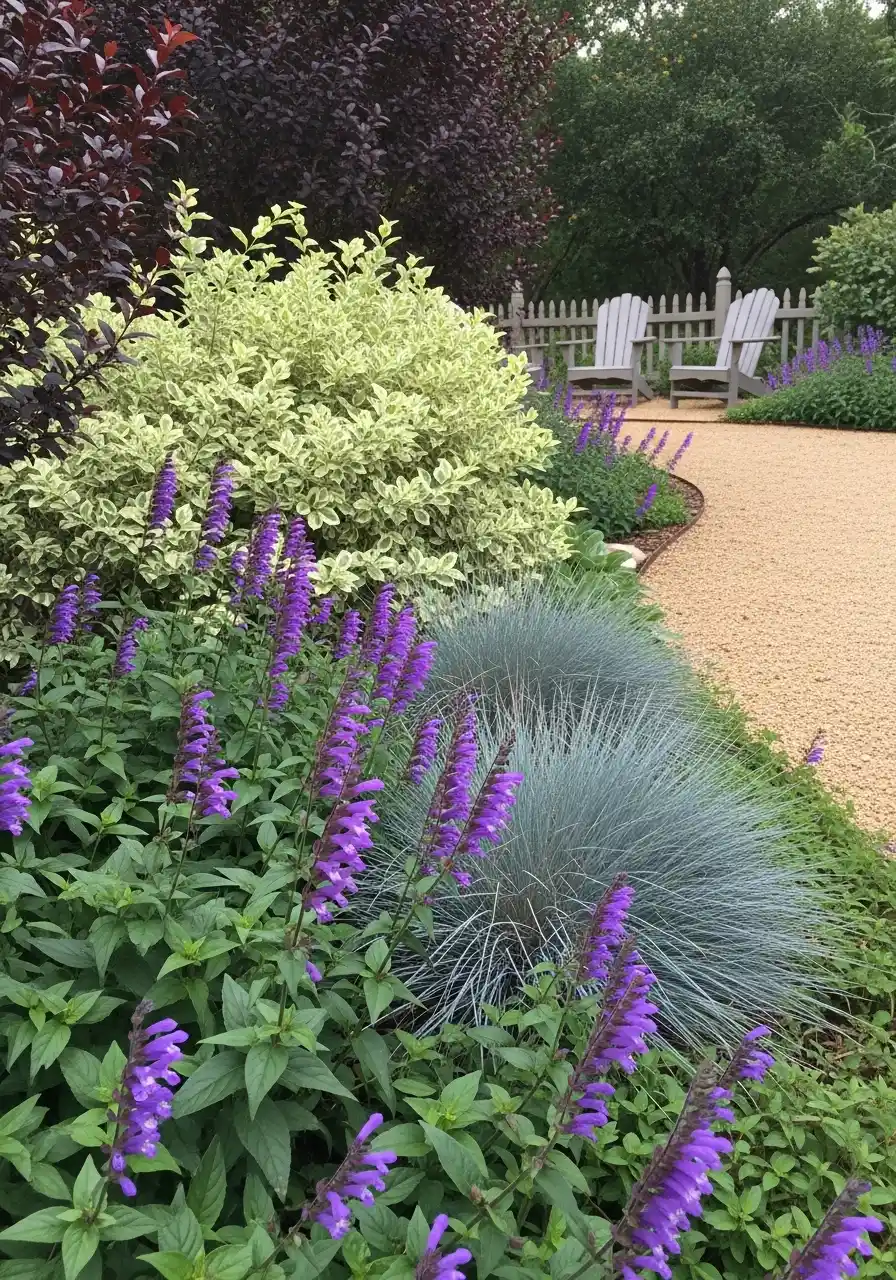
This one is pretty and relaxing. Purple flower spikes line the path, and those blue-gray grasses add this soft fuzzy texture. Then you see the chairs in the back and it’s like, okay yeah, this is where you sit and breathe for a minute.
For texas native plants landscaping, this shows how to use natives in a “garden” style, not just desert style. You can build a border bed like this using Texas natives or adapted plants that handle heat. Keep the path wide and simple, and then plant in layers along it. Use one dominant color for calm, like purple, then add green and silver for balance.
My trick: keep the seating area slightly hidden. If you can’t see it right away, it feels more special. And trim your edging plants a couple times a year so the path doesn’t get swallowed.
Desert-modern mounds with orange blooms and low purple groundcover
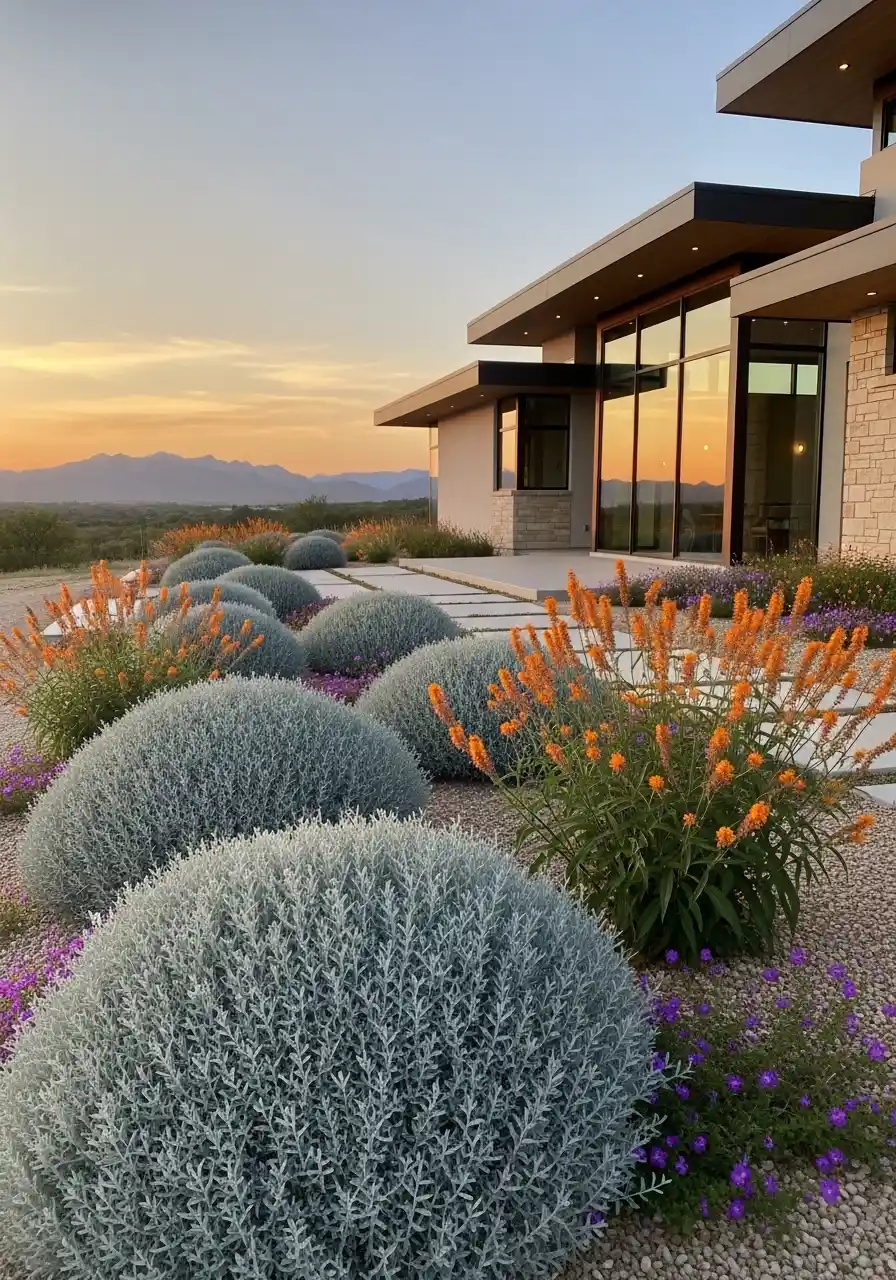
This image is dramatic in a clean way. Big silver mounds (like desert shrubs) line the space, orange flowers pop up like little torches, and there’s purple groundcover tucked underneath. It’s a strong color combo: silver + orange + purple. It just works.
For Texas native plant landscaping, you can create this feel by choosing one “mounding” plant type and repeating it. Repetition is the whole trick here. Then add one accent flower color for excitement. Orange blooms are so good in Texas light, they look warm and happy, not harsh.
Hack: keep your hardscape simple. Straight pavers and open gravel space lets the plants be the stars. And if you do groundcover, pick something that won’t go feral. Some groundcovers will spread like they own the place.
Curved walkway with boulders, purple shrubs, and spring yellow pops
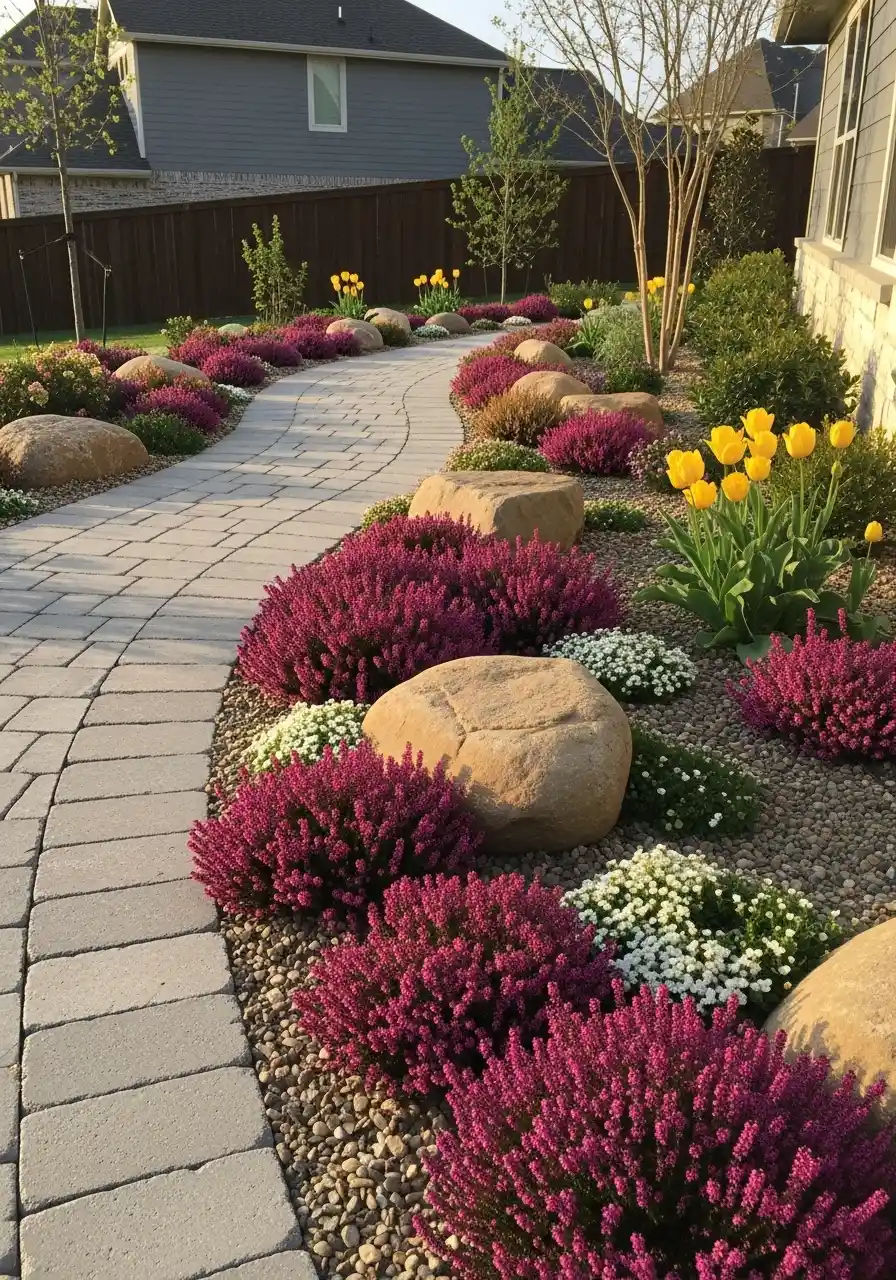
This one feels like a soft landing. The curved walkway pulls you forward, and the beds are filled with rounded purple shrubs and white groundcover. Then those bright yellow tulips pop like little surprises. It feels planned, but also kinda playful.
For texas native plants landscaping ideas, take the main structure here and swap in native-friendly blooms. Tulips aren’t Texas natives, but the idea of “seasonal pops” is solid. You can do seasonal color with natives too, or use bulbs carefully as accents. The main win is the combo of boulders + mounded plants + a clear path. That’s the recipe.
Tip: keep the plant palette limited. Two main plants, one accent flower, and a few boulders. If you add too many types, the clean look disappears fast. And edging, again, is everything. Crisp edges make even simple plants look expensive.
Desert color pockets with cactus, agave, and bright wildflower carpets
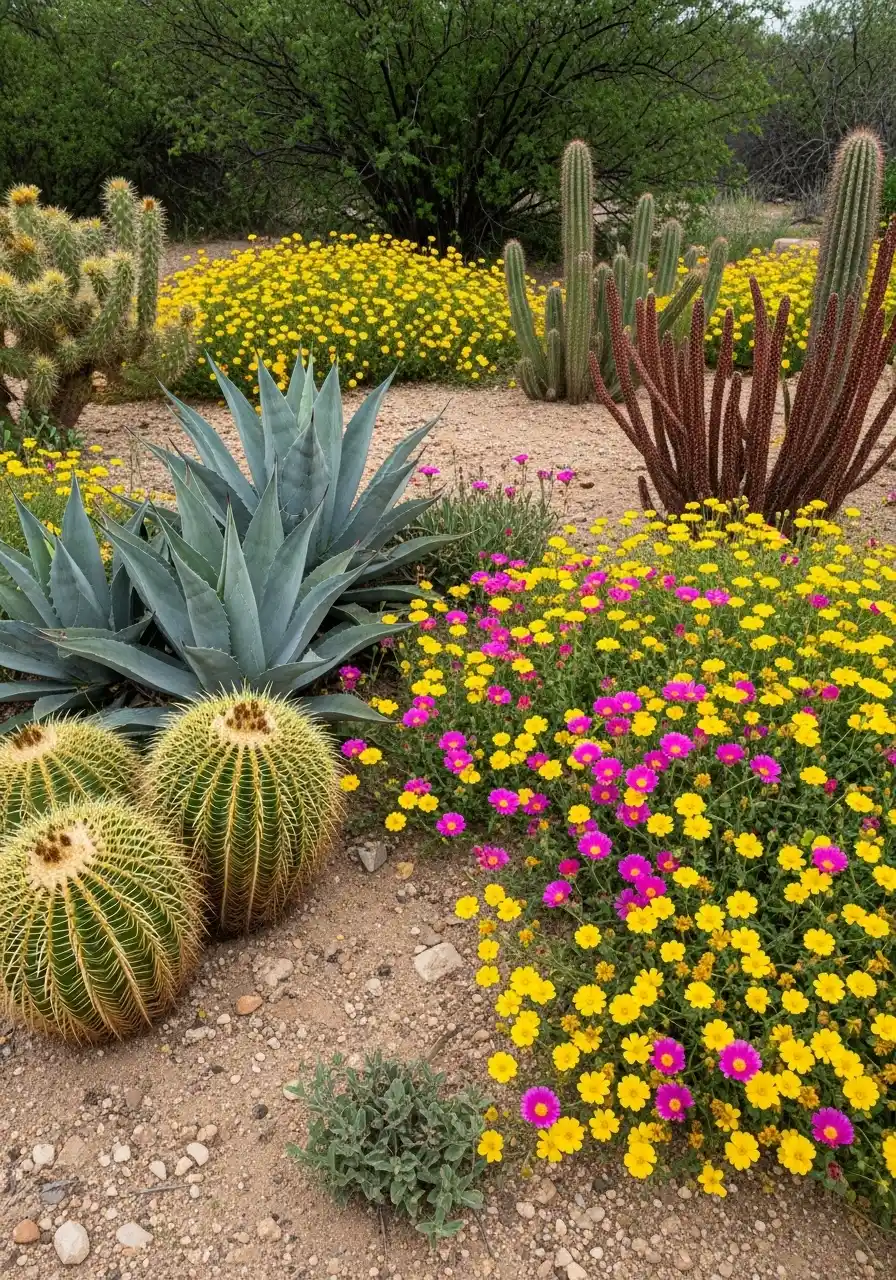
This image is loud in the most lovable way. The agave looks like a big blue starburst, and the barrel cacti sit there like grumpy little balloons. Then the wildflowers show up and basically steal the whole scene. Yellow everywhere, and those hot pink dots make it feel playful, like confetti somebody forgot to clean up. I’m not even mad, it’s gorgeous.
If you want texas native plants landscaping that feels colorful but still tough, copy the “pockets” idea. You don’t spread flowers evenly across the whole yard. You make bold drifts in a few places, then leave open gravel space between. The open space makes the flowers look even brighter. In Texas heat, that space also helps with airflow and keeps plants from staying wet too long after rain.
My hack here is safety plus beauty: keep the sharp stuff (barrel cactus, cholla-type cactus) away from the edges where people walk. Put them deeper into the bed so you don’t catch your leg on them. And if you’re using native wildflowers, don’t baby them with water. They actually look better when they’re a little toughened up.
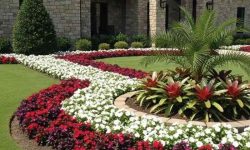
Texas native plants landscaping with a “rainbow border” that still feels organized
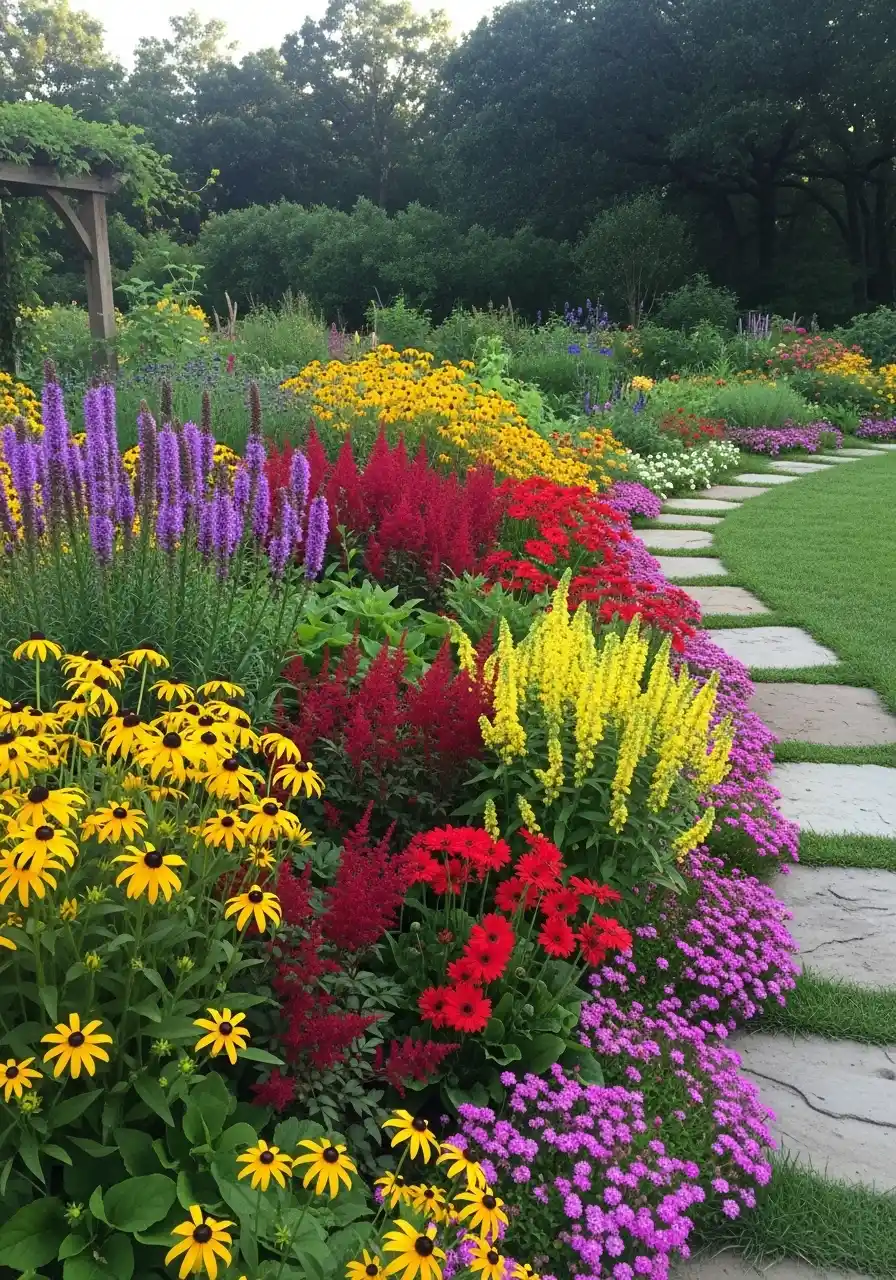
Okay, this one is the yard version of dopamine. Purple spikes, red patches, yellow blooms, and that neat row of stepping stones beside the lawn. It looks like a garden that knows exactly what it’s doing, like it had a plan and didn’t panic halfway through. I wish I always gardened like that, but yeah, I don’t.
For Texas native plant landscaping ideas, the main lesson is layering and edging. This border works because the plants are placed by height, and the edge is clean. Taller plants in the back, medium bloomers in the middle, low flowers spilling in front. Then the stepping stones give the eye a break. Without that path, the border might feel too busy, like it’s yelling at you.
If you want this look without losing your mind, pick 5–7 core plants and repeat them down the bed. Repeating is what makes it look “designed,” not random. Another little trick: keep one color as a thread through the whole bed, like purple. That one repeated color holds everything together when the other colors go wild.
Texas native plants landscaping: Gravel-and-slab path with soft silver plants and orange punch
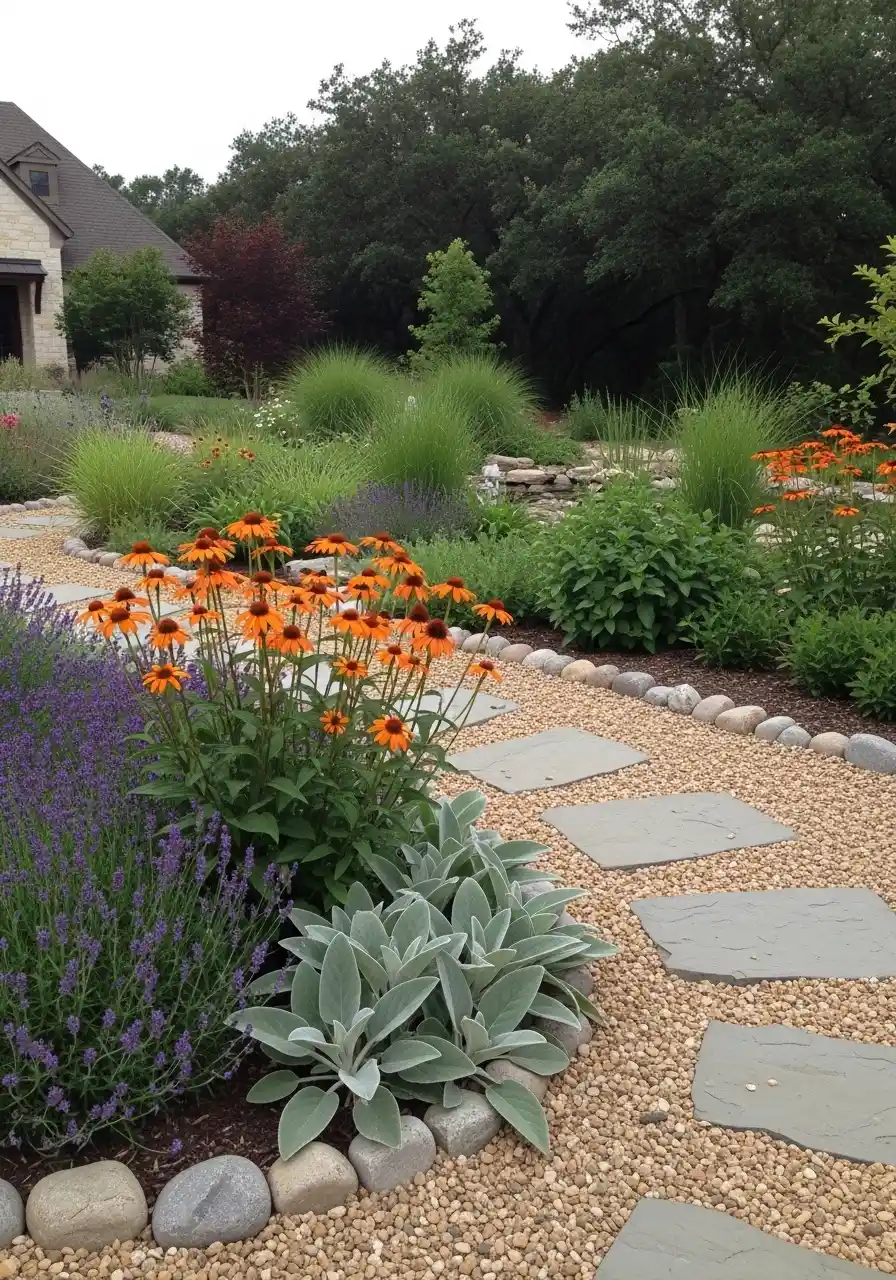
This one feels calmer, like a deep breath. The stepping slabs sit in gravel, and the bed edges are lined with smooth river stones. Then you’ve got soft silver plants (lamb’s ear vibe), purple spikes, and bright orange coneflowers popping up like little torches. It’s neat, but still warm. Not stiff.
If you’re building texas native plants landscaping in a front yard or side yard, this is such a smart layout because it’s practical. Gravel drains fast, slabs are easy to walk on, and the plants are grouped in a way that’s easy to maintain. You can weed one section at a time without feeling like the whole yard is attacking you.
My favorite hack here: use the river stones as a “soft wall.” They separate the planting bed from the gravel path without needing a tall border. And they look natural, especially in Texas landscapes. Just don’t scatter stones randomly. Line them up like a loose necklace. Also, plant the orange flowers in groups, not singles. Three to five clumps reads bold. One lonely clump looks accidental.
Conclusion
If I’m being honest, texas native plants landscaping feels like a relief. Less watering, less stress, and the yard still looks like it belongs in Texas, not like I’m forcing it to be something else. These images prove you can go wildflower-bright, desert-modern, or calm and tidy with grasses and purple drifts. Pick a style that fits your house, repeat plants on purpose, and keep edges clean. That’s the secret sauce, even when I mess it up sometimes.