I used to think a desert landscaping backyard had to be plain rocks and a sad cactus. Then I saw yards like these and my brain kind of short-circuited. How can something so dry feel so alive? It’s like the backyard is quiet, but also showing off a little.
The best part is these designs aren’t just “pretty pictures.” They’re basically cheat codes: less mowing, less watering, and way more style. I’m going to walk through the 18 ideas from your images like I’m standing there, squinting in the sun, noticing what works and what doesn’t.
Table of Contents
Desert landscaping backyard: White gravel stage with bold “statement” plants
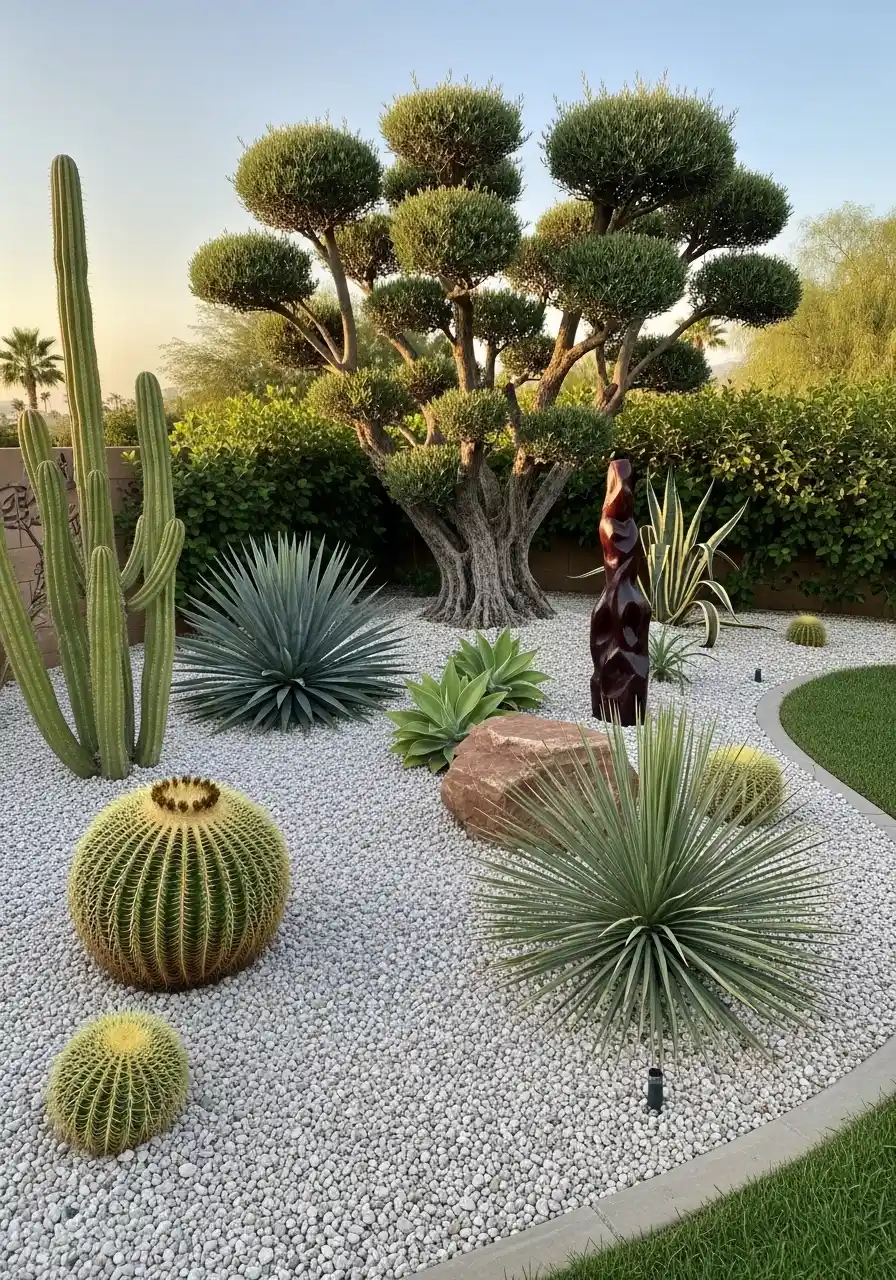
This setup feels like a clean gallery, but outside. The bright white gravel makes every plant pop, especially the barrel cacti and spiky agaves. I like how the tall column cactus stands off to the side like a guard. And that trimmed tree in the back? It gives the whole space a “desert sculpture garden” vibe, which sounds fancy, but it’s honestly just smart contrast.
If I copied this, I’d keep the plant count low on purpose. Too many plants here would ruin the calm. My little hack is to group plants in odd numbers (3 barrel cacti, 5 smaller accents) so it doesn’t look like I lined them up with a ruler. Also, edging matters. That curved border keeps the gravel from spilling into grass, and yeah, I’ve learned the hard way that gravel will travel everywhere if you don’t contain it.
Meandering path that makes the yard feel bigger than it is
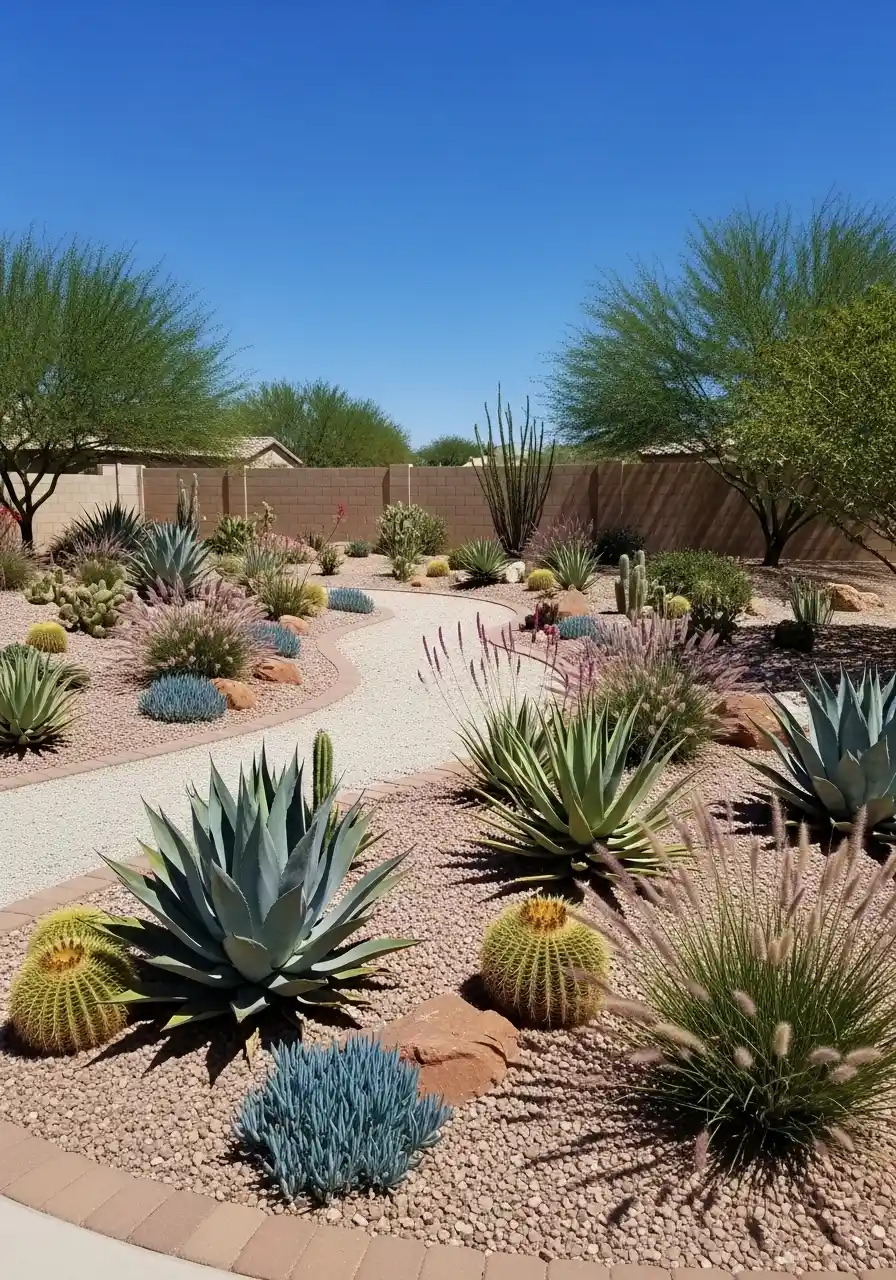
This one is a classic desert backyard landscaping trick: a curving path that pulls you forward. Straight paths feel like “get from A to B,” but curves feel like “wait what’s over there?” I love the way the plants are tucked into both sides like little scenes. Agaves, barrels, soft grasses, a few flowering pops, it’s balanced.
What I’d do is keep the path material simple, like decomposed granite or light gravel, and then use a darker gravel band to outline it. That little border is doing a lot of work. It makes the path look finished, and it keeps weeds from creeping in. And please, don’t plant everything the same distance apart. A desert landscape backyard looks more real when some plants bunch up and some have breathing room.
Spiral succulent bed that feels playful, not messy
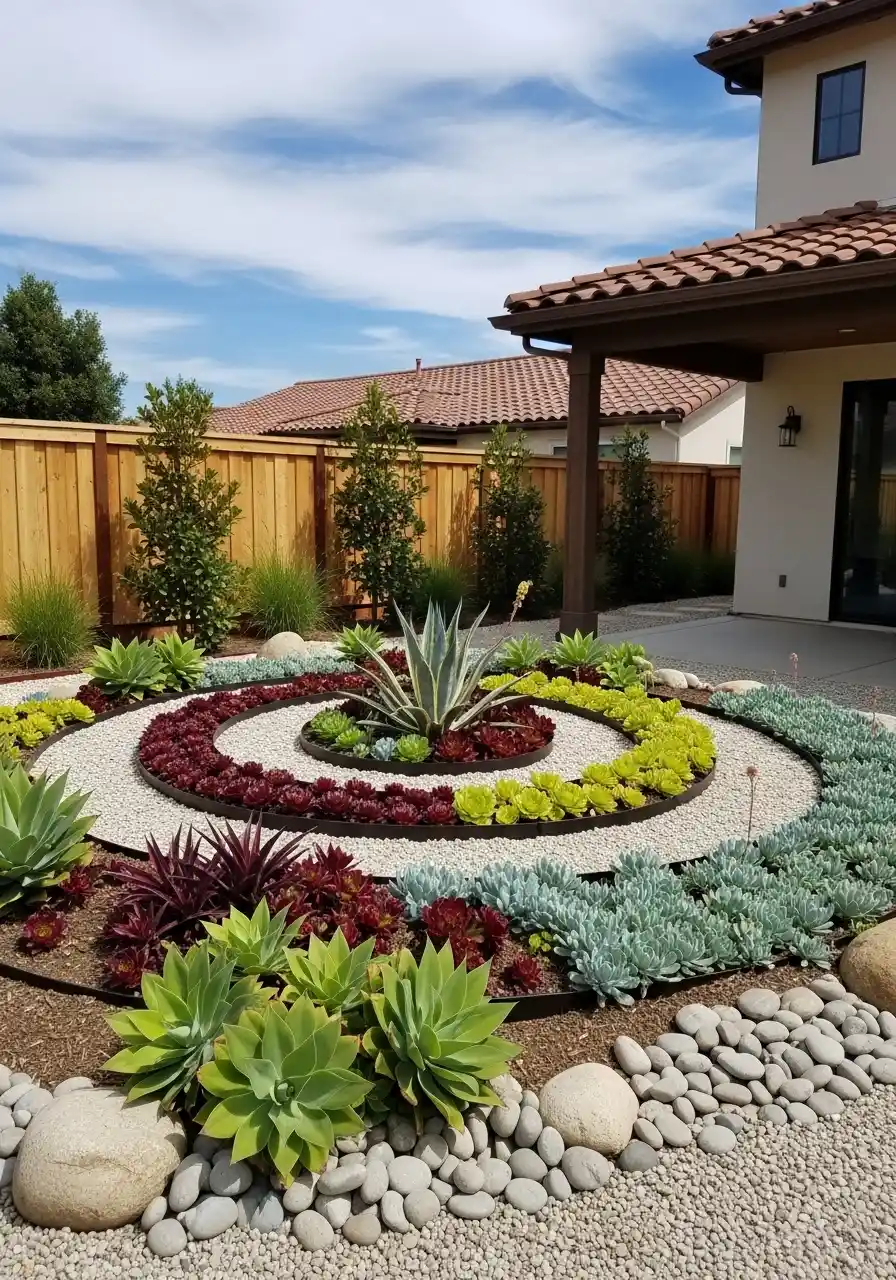
This spiral design is weird in the best way. It’s like a living art piece, but still easy to care for. The center agave is the anchor, and then the color bands of succulents make the swirl feel intentional. I’m not even a “pattern” person and I still love this because it’s not perfect-perfect. It has movement.
If I was building it, I’d use steel edging to hold that spiral shape. Without edging, the gravel and soil will blur together and the swirl won’t read right. My tip is to choose succulents that keep their color most of the year, not just in one season. A backyard desert landscaping layout like this needs year-round color to stay worth it. And don’t overwater succulents just because they look thirsty. They’re drama queens, they’ll survive.
Raised concrete planter with a cactus “tower” centerpiece
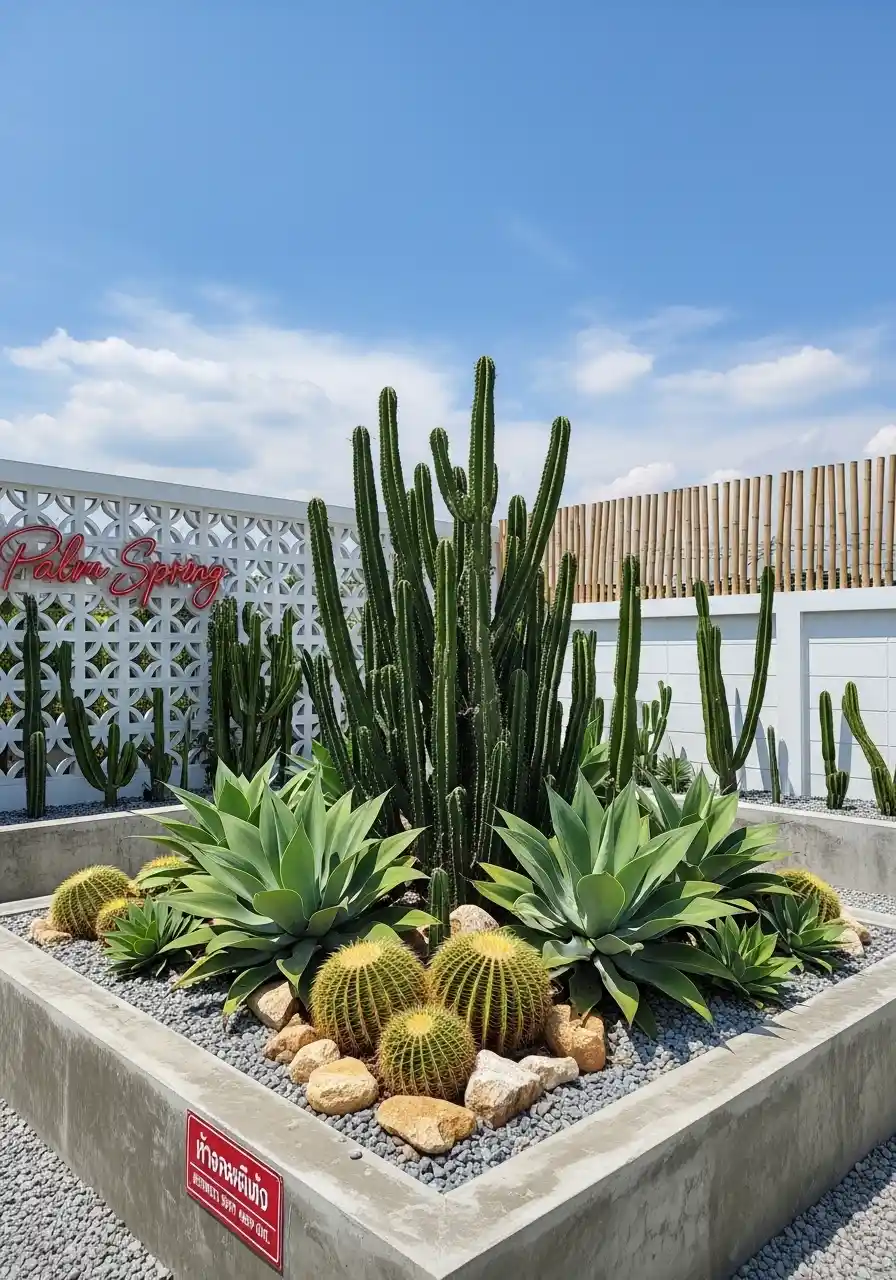
This is clean and modern, and honestly it feels like the plants are on a podium. The raised concrete bed gives structure, plus it helps with drainage. The tall cactus cluster in the middle is the whole show, and the agaves and barrels at the base make it look full without looking crowded.
My opinion: raised planters are great if you hate bending over, but they can look too boxy if you don’t soften them. The fix is simple, add rounded boulders at the corners or spill a little gravel around the outside. That breaks the hard edge. Also, if you’re doing desert landscaping for a backyard like this, don’t pick plants that grow fast and floppy. Choose plants that stay sculptural, or you’ll be trimming nonstop.
Big boulder + mixed cactus grouping for a natural “desert corner”
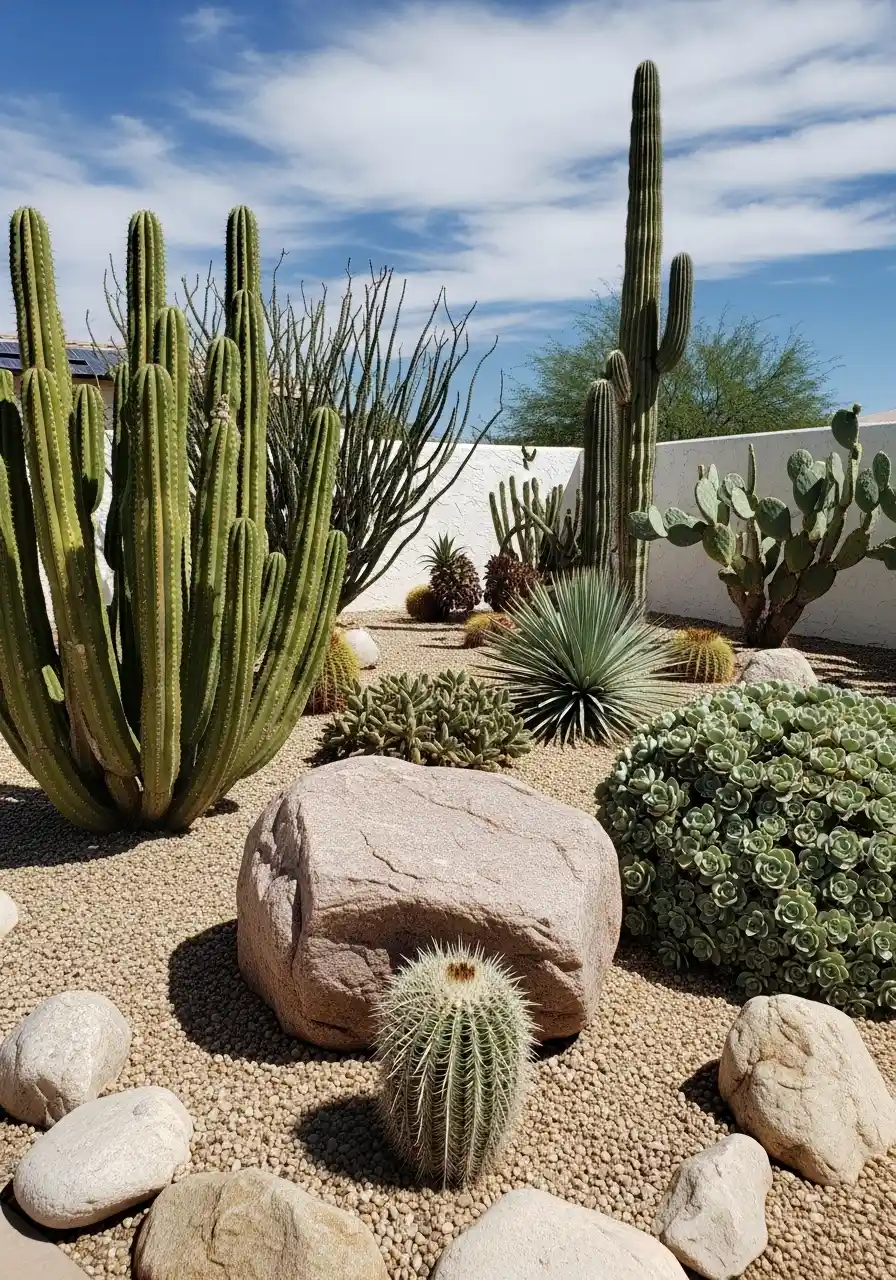
This design feels like a piece of the real desert got dropped into the yard. The big boulder is the heart of it, and everything else sort of orbits around it. I like the mix: tall columns, prickly pear, and softer mounding succulents. It’s rugged, but not chaotic.
Here’s my little hack: bury the boulder a bit. If a rock sits on top of the gravel like it was placed there yesterday, it looks fake. Sink it 15–25% into the ground and it instantly feels natural. For desert backyard landscaping, I also like to keep one “open” zone around the rock so the eye can rest. Too many plants jammed together makes it feel cluttered, like a storage room.
Courtyard fire pit zone with desert plants framing the hangout
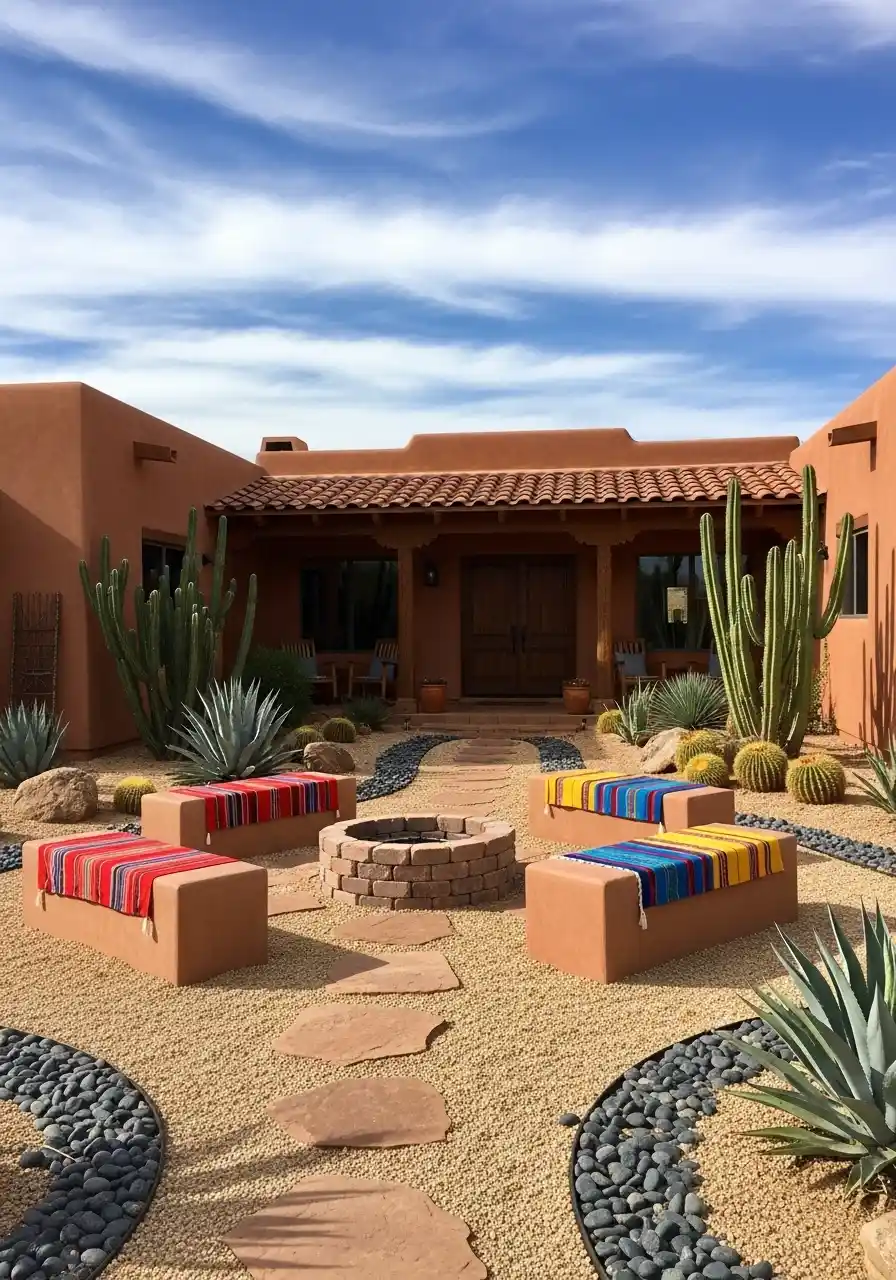
This one is pure mood. The fire pit is the center, and the desert plants sit around it like they’re guarding the party. Those colorful outdoor benches are such a vibe too. It feels like a warm Southwest desert landscaping yard where people actually hang out, not just stare at plants.
If I’m being real, the secret here is spacing. Keep spiky plants farther from where people walk or sit. I’ve brushed against agaves before and it’s not fun, it’s like getting slapped by a pointy ruler. Put soft plants closer to seating, and use cactus farther out. Also, use larger gravel around the fire area so it doesn’t blow around or stick in shoes. A desert-style backyard should feel comfortable, not like a battlefield.
Modern home front-to-back flow with repeating agaves and barrels
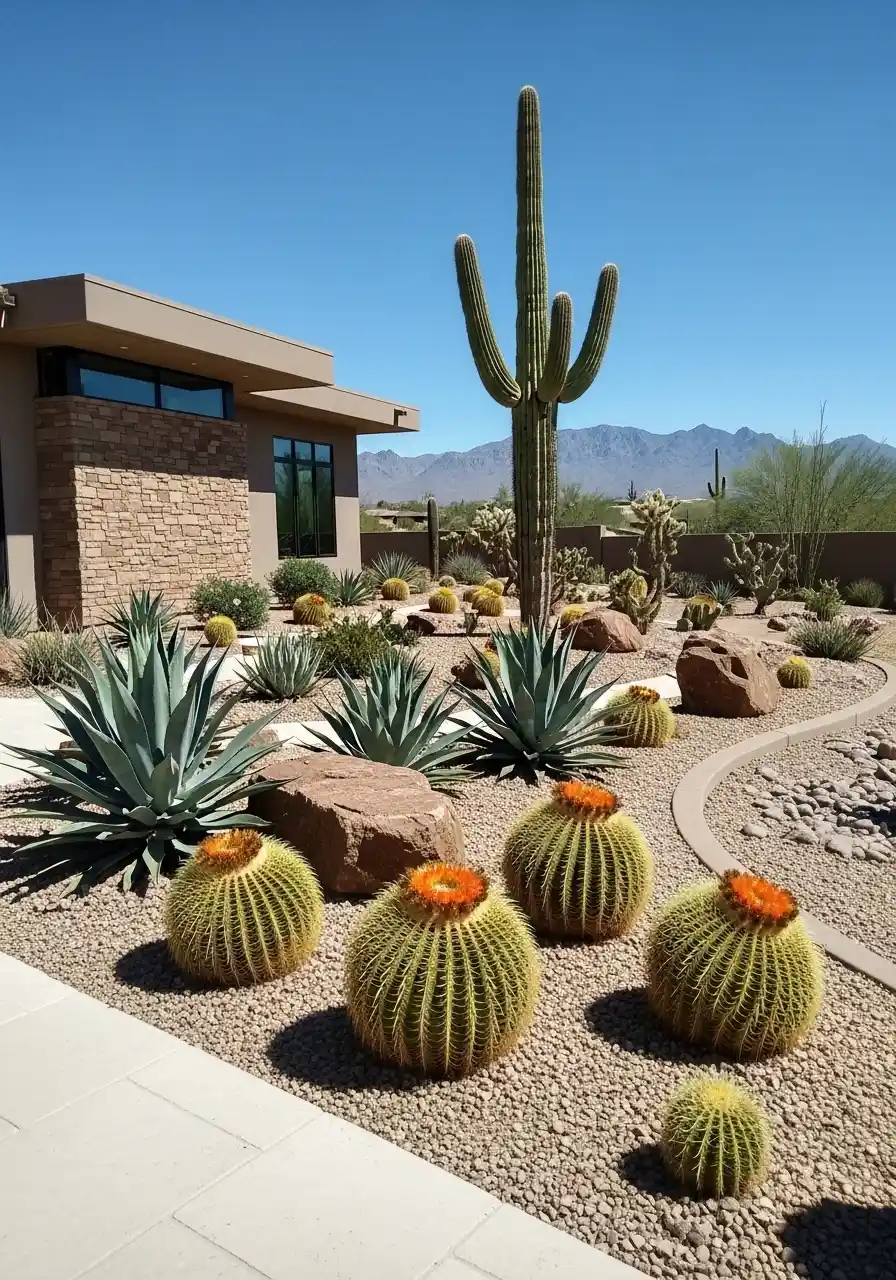
This design is super “modern desert landscape backyard.” The repeating agaves create rhythm, and the barrel cacti grouped in front feel like bold punctuation marks. That tall saguaro-style cactus in the back makes the whole yard feel taller, like it raises the ceiling of the outdoors.
I’m obsessed with repetition because it makes a yard look planned, even if you’re winging it a little. Pick 2–3 main plant types and repeat them, then add small accents. That’s it. Also, give barrel cacti space. They’re round and dramatic, so crowding them makes them look squished and sad. For backyard desert landscaping, I’d rather have fewer plants placed right than a million plants placed “kinda.”
Curved decomposed granite walkway with bold black gravel edging
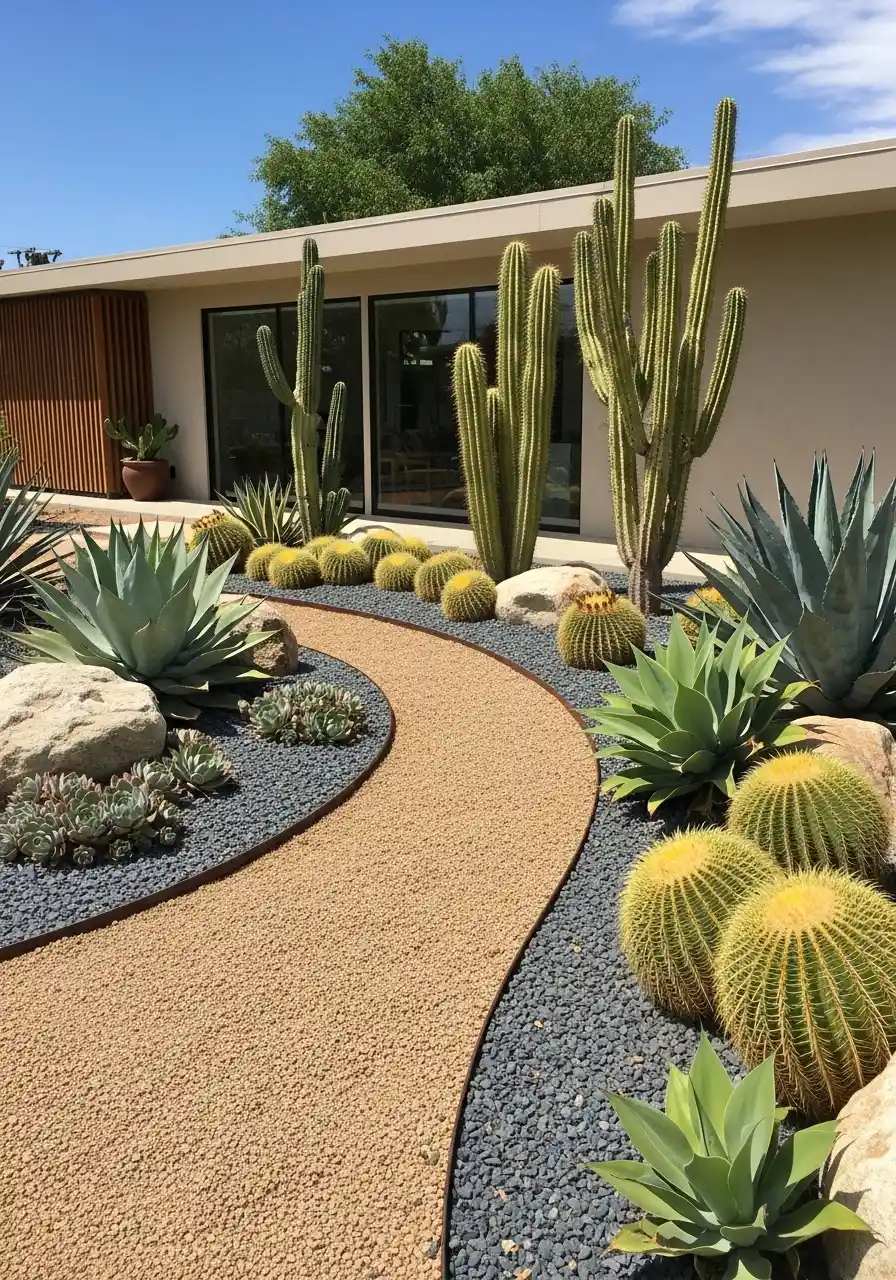
This layout is so crisp. The warm tan path feels soft and inviting, and the black gravel border makes it look like a designer did it. The plants are placed like little checkpoints along the curve: agaves, barrel cacti, tall columns, then repeat.
My practical tip: put down good weed barrier and pin it well. Curved paths shift over time if the base is sloppy. Also, don’t skimp on the edging. Metal edging is worth it because it holds curves clean. I know some people hate edging, but in a desert landscaping backyard, it’s what keeps your yard from turning into one big mixed pile of rocks.
Night lighting with stepping stones that feels magical (and safer)
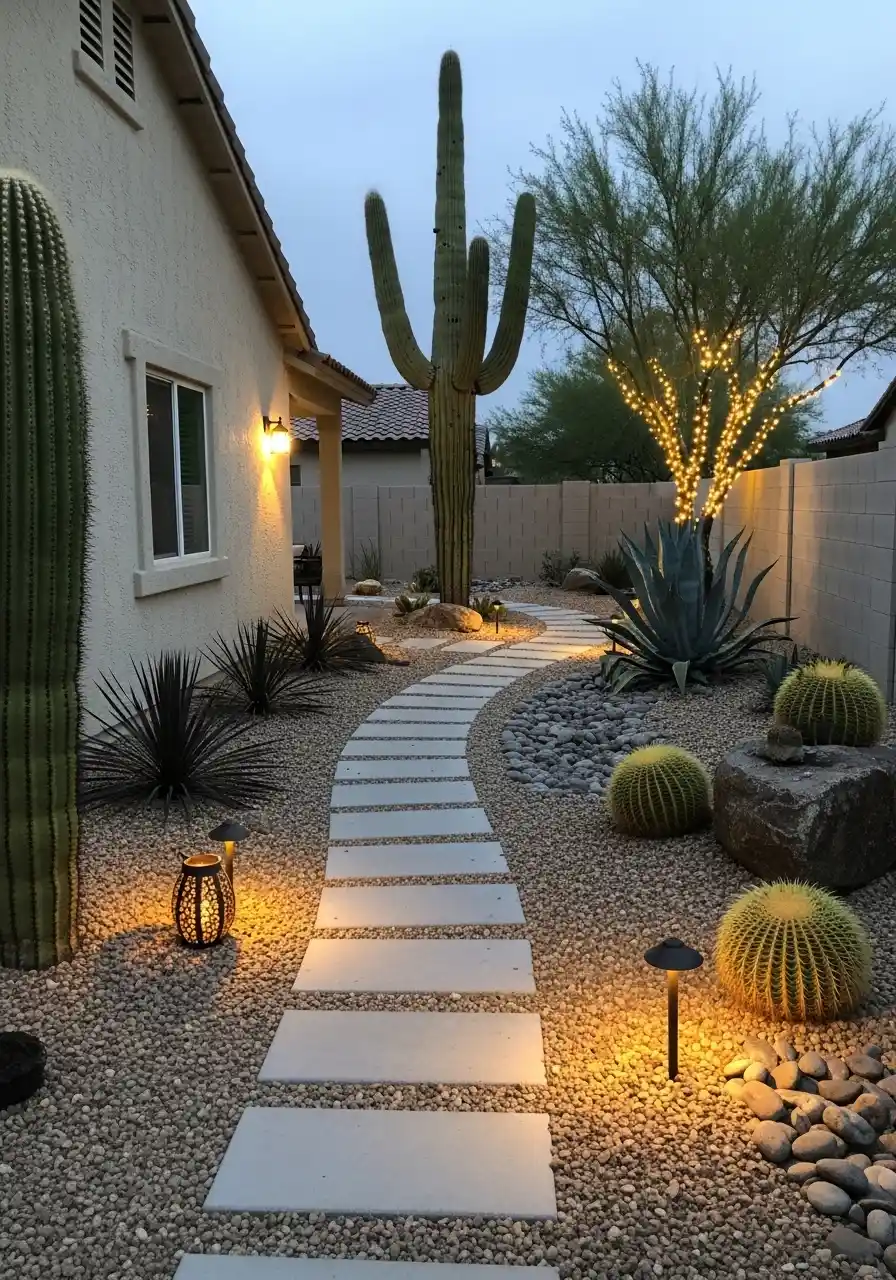
This one is my favorite for feelings. The stepping stones lead you through the yard, and the warm lights make the gravel glow. The lit-up tree in the back is like a little celebration, even on a boring Tuesday night. It’s cozy, and also practical because nobody wants to trip in the dark.
If you do this, don’t blast everything with bright light. Low and warm is the move. Aim lights across textures, like pointing at a boulder or grazing an agave from the side. That’s what gives shadows and depth. And put lights where feet go, not just where plants go. Desert backyard landscaping at night should feel welcoming, not like a haunted path.
Grid pavers with green strips for a “desert meets modern” look
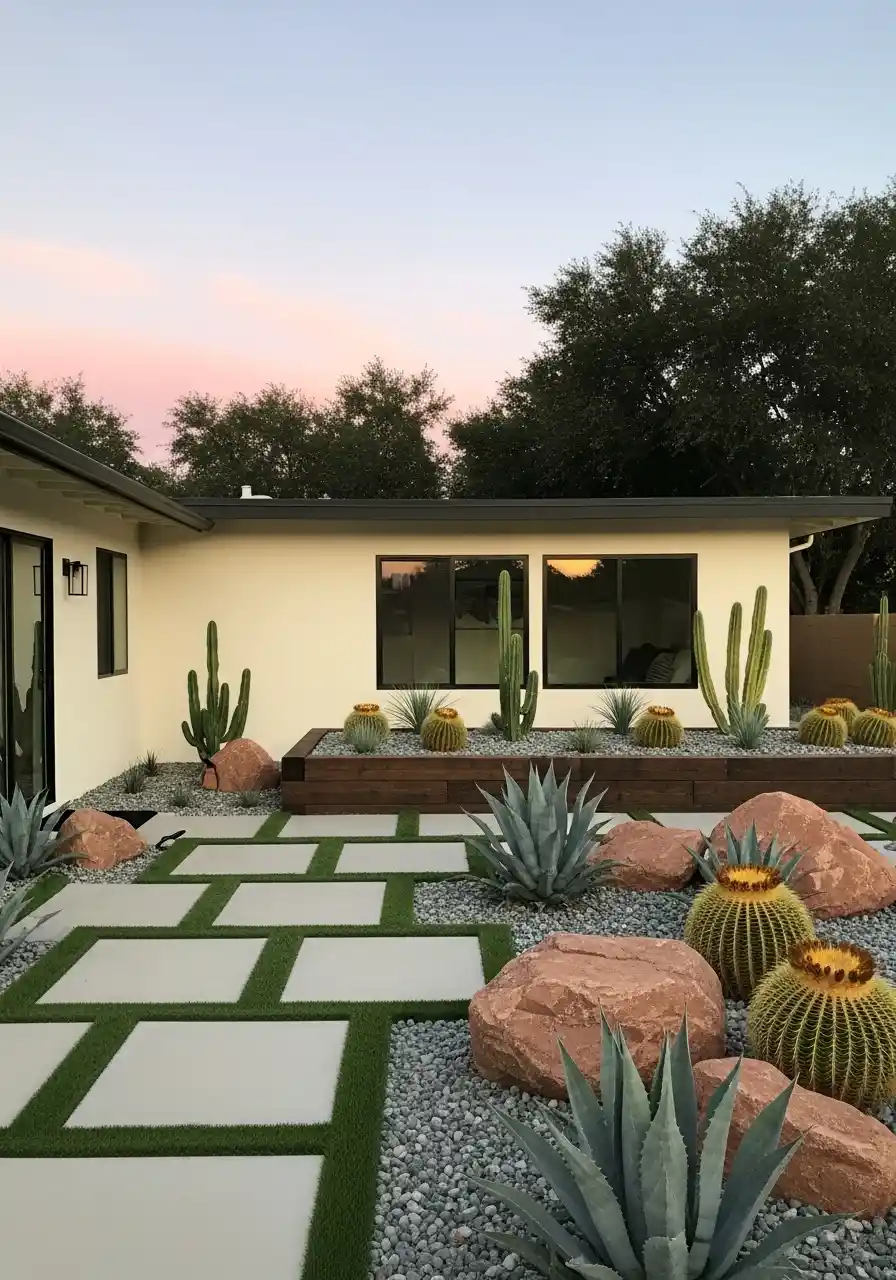
This design is such a smart compromise if you still want some green. The big square pavers with turf or groundcover between them makes the yard feel structured and clean. Then the gravel beds around it keep the desert vibe strong. It’s like modern desert landscaping backyard style, but with a little softness.
My honest warning: green strips mean maintenance. Even if it’s turf, you still have to keep it clean and edged. But visually, it’s worth it if you like that crisp look. My hack is to keep the green only in high-visibility zones, like near the patio, and use gravel everywhere else. That way your desert landscape backyard feels fresh, but you’re not signing up for extra work everywhere.
Desert landscaping backyard stepping-stone paths that feel tidy
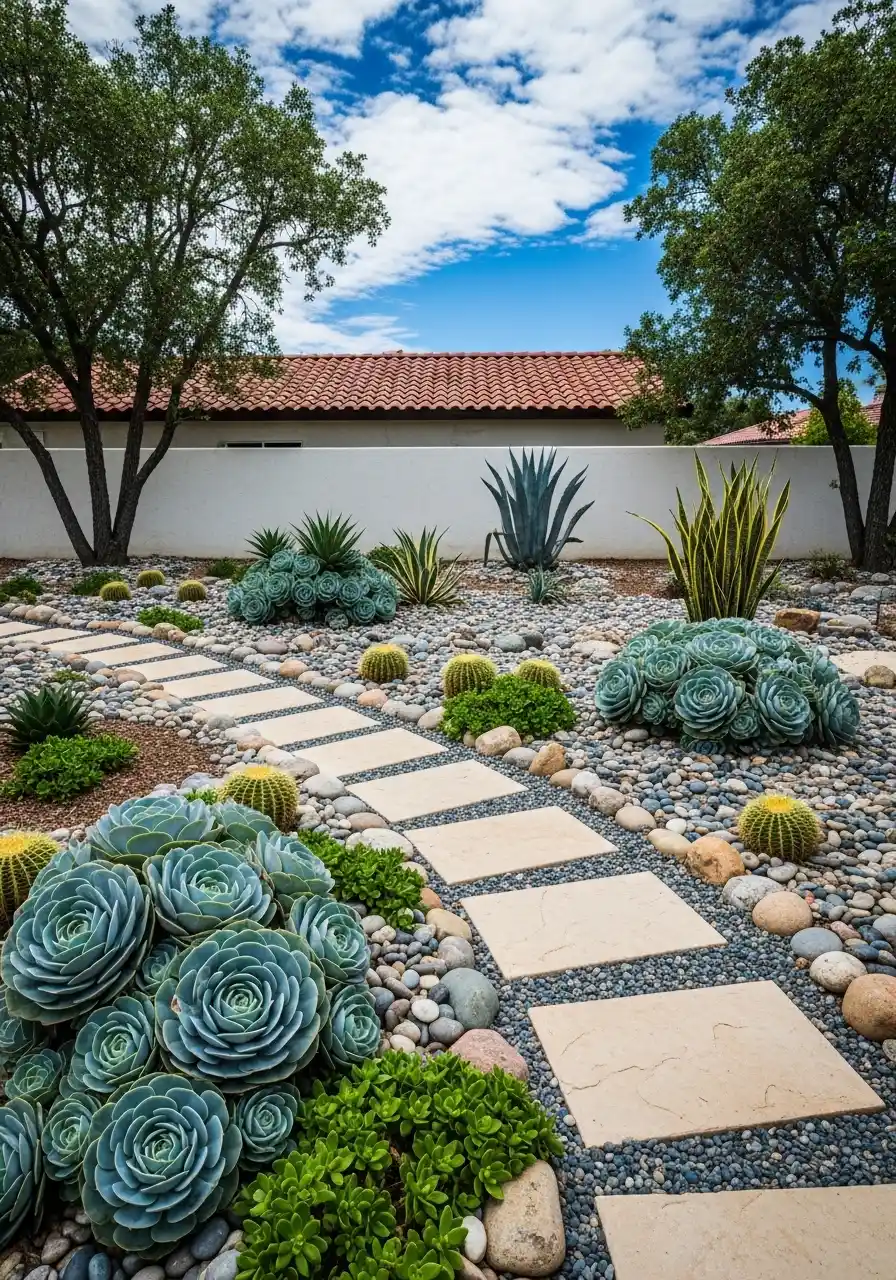
That next path with the big square stepping stones is the kind of thing that makes my brain relax. I like how the stones are spaced like a calm rhythm, and the little gravel gaps keep it from looking too perfect. This desert landscaping backyard idea works because it gives your eyes a direction to follow. You’re not just staring at random plants. You’re walking somewhere, even if it’s just to the patio.
The best trick here is mixing sizes of rock. Use larger river stones along the edges, then smaller gravel between the stepping stones. It keeps the path from sinking or wobbling later. I also love the big rosette succulents near the front. They look soft but strong, like green flowers made of armor. If you want a quick hack, repeat the same plant cluster on both sides of the path so it feels planned, not messy.
Big cactus “trail vibe” with agaves and barrel cactus
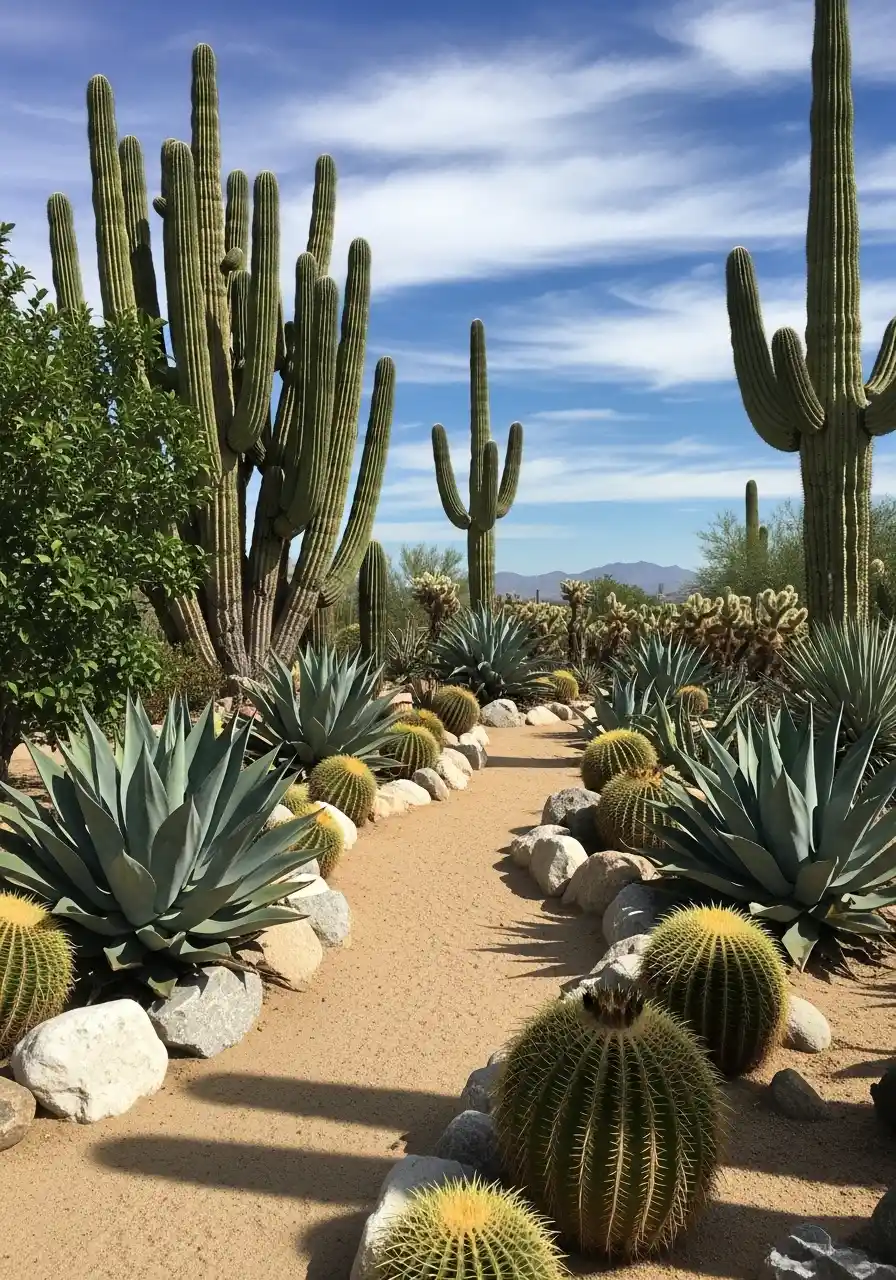
This setup feels like a real desert hike, and I mean that as a compliment. Tall cacti in the background, chunky agaves up front, and those round barrel cacti like little spiky balloons. It’s classic backyard desert landscaping, but it still looks friendly because the path is open and easy to walk.
If I did this, I’d be careful with spacing so you don’t end up brushing your leg on a cactus (that’s a nope). Put the bigger spiky plants a little farther from the path, and use rocks as a “quiet fence.” The rock border here is a simple hack: it keeps the gravel from drifting into the walkway, and it also makes everything look finished. This kind of desert landscaping also looks better with a few repeating shapes: round cactus, spiky agave, tall cactus, then repeat.
Night lighting that makes rocks look expensive
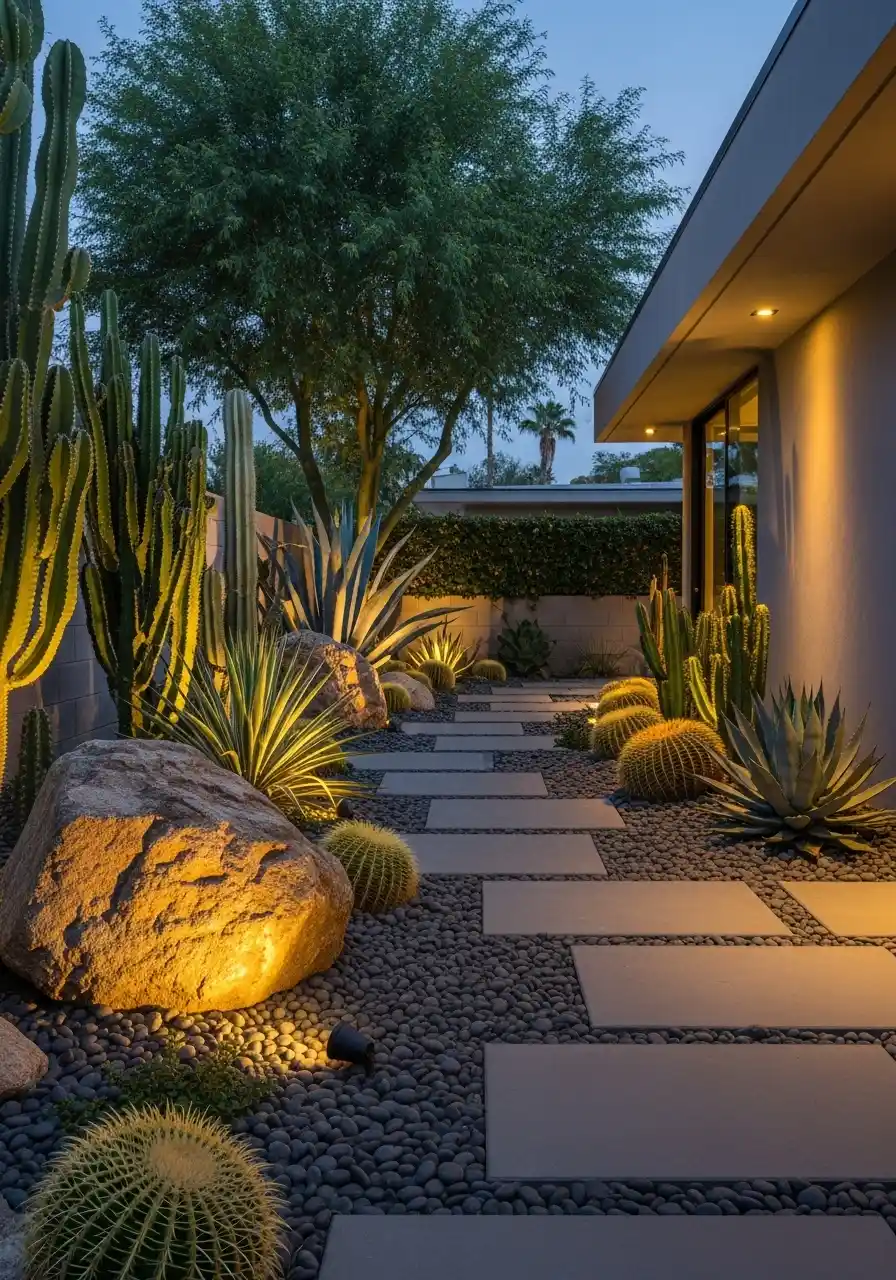
This one at dusk is honestly my favorite mood. The warm lights hitting the boulders and tall plants makes the whole yard feel like a fancy resort. It’s still desert landscaping backyard style, but it’s got drama. And I’ll admit it, I’m a sucker for that golden glow. It makes even plain gravel look rich.
Here’s the trick: don’t use super bright lights. Soft lighting looks better and doesn’t feel like a parking lot. Place small spotlights low to the ground and aim them at one “feature” at a time, like a boulder, a tall cactus, or a spiky agave. Also, keep the paver path wide enough that it feels safe at night. If you’re trying desert-style backyard landscaping, lighting is the easiest way to make it feel done, even if you’re still adding plants later.
Black gravel and big pottery for a bold, calm corner
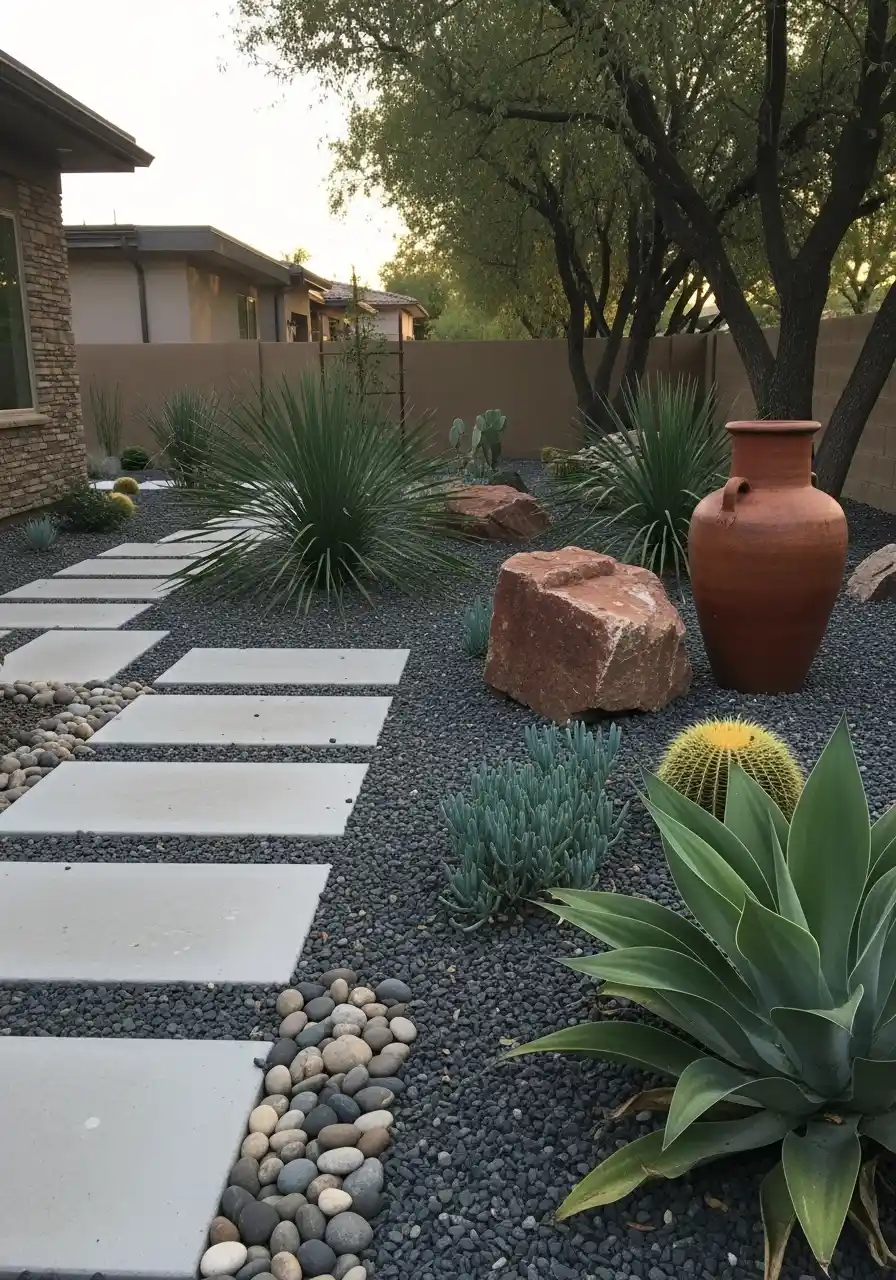
That dark gravel yard with the giant clay pot feels calm but also kinda brave. Like, it’s not trying to be green and grassy. It’s saying, “Yep, I’m a desert yard and I’m proud.” This is a strong desert backyard landscaping look because the colors are simple: dark ground, pale pavers, and a few plants that pop.
The hack here is contrast. Light stepping stones stand out way more on dark gravel, so the path becomes the design. Add one big statement item, like that pottery urn or a chunky boulder, and suddenly it feels like a real plan. I’d keep plants lower and spaced out, because too many plants can make dark gravel feel cluttered. This kind of xeriscape backyard setup is also nice if you hate weeding, because thick gravel makes weeds less annoying (not zero, but less).
Curved edging and open space for a modern backyard feel
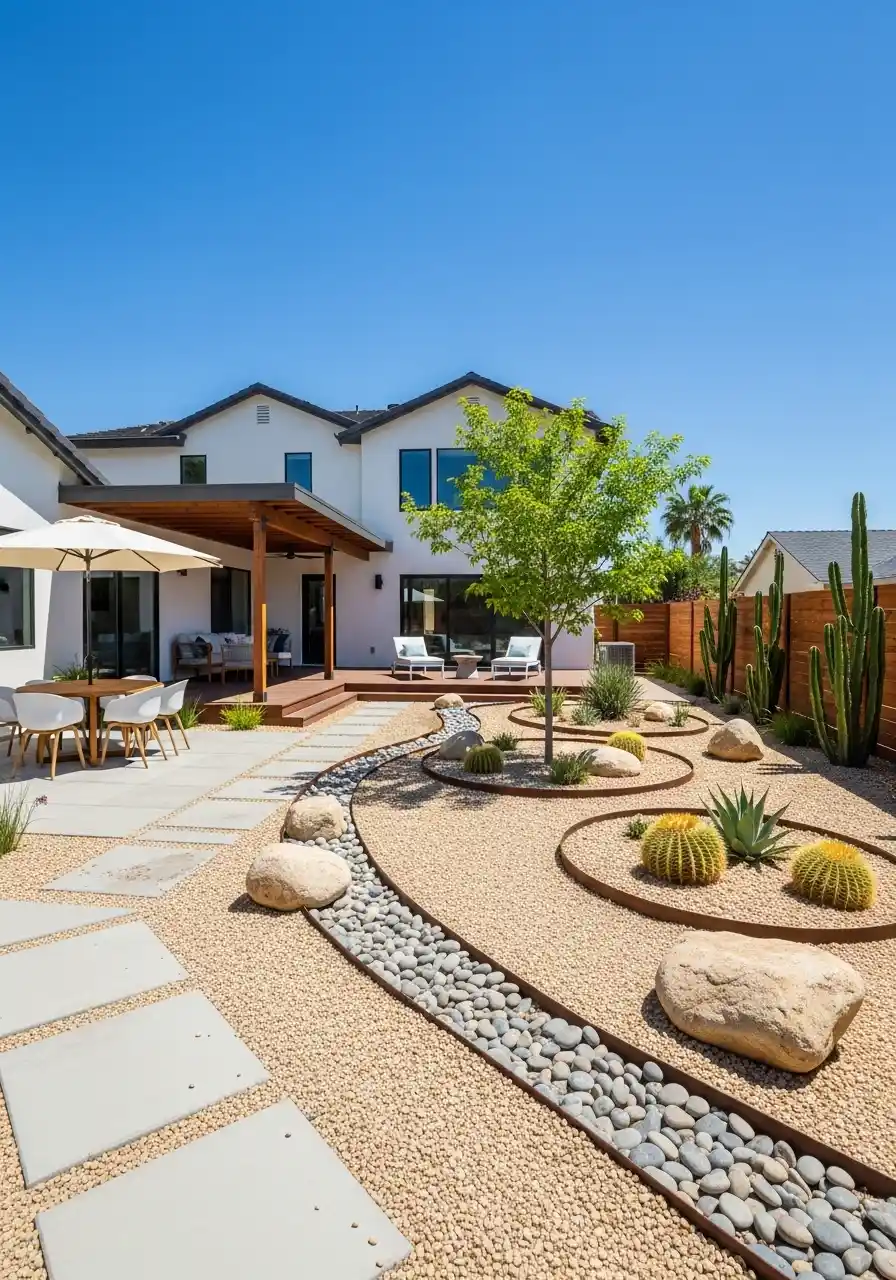
This modern yard with curvy metal edging is so clean-looking, it almost feels like a drawing. The curves make the space feel bigger, and the gravel areas look organized instead of random. This is a really smart desert landscaping backyard approach if you want a “new house” vibe, even if your house isn’t new.
The main tip is using edging to control your materials. Without edging, gravel and decomposed granite creep everywhere and it gets sloppy fast. With edging, you can make “rooms” in the yard: a pebble river, a gravel bed, a plant island. I also like the single tree in the middle area. It gives shade without needing a lawn. If you’re doing arid backyard landscaping, one good shade tree is like cheating, because it instantly makes the yard more usable.
Mixing rock colors and adding one surprise plant color
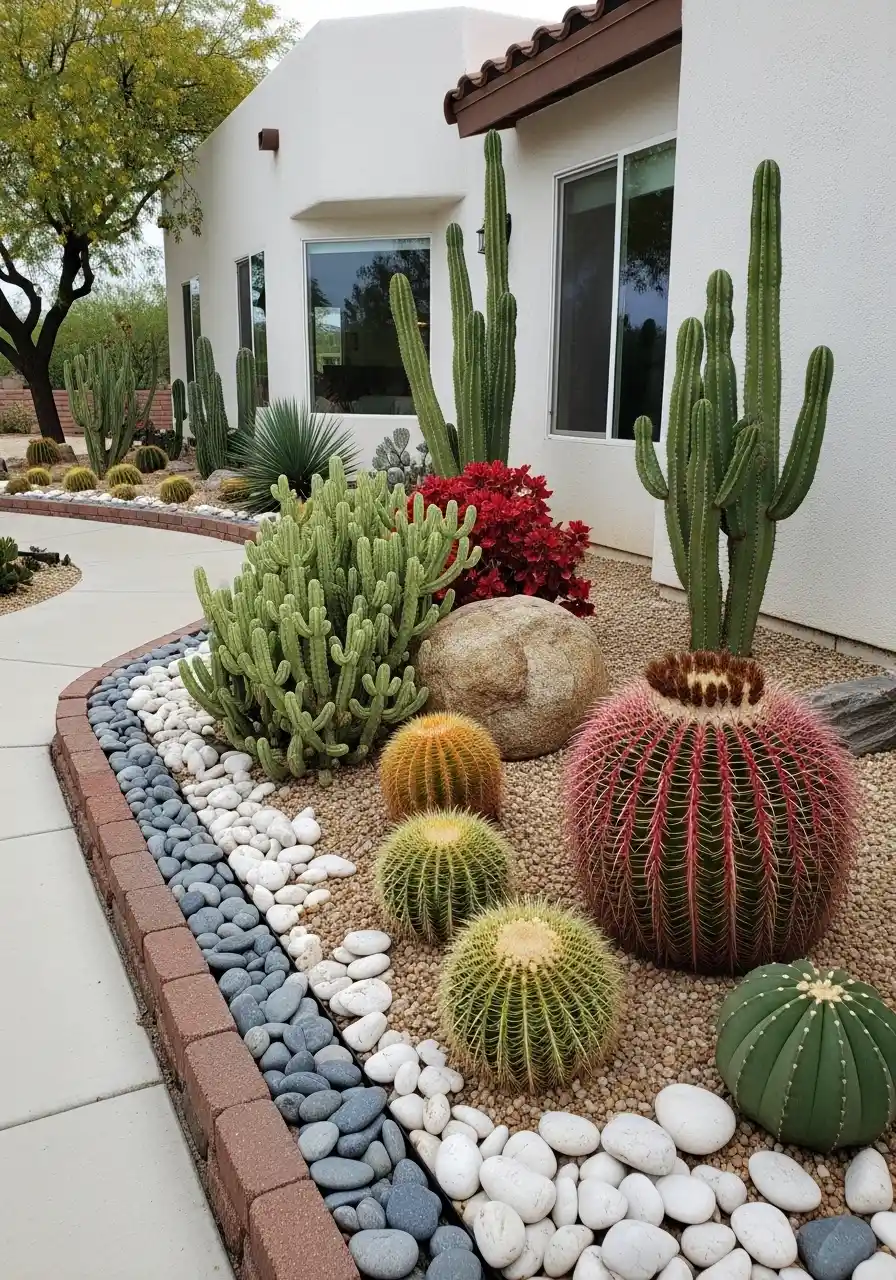
This design has that really colorful barrel cactus (the reddish one), and it totally steals the show. I love it because most desert landscaping designs are green and tan, so one bold color feels exciting. The rock mix is also smart: white stones, darker stones, tan gravel. It adds texture without needing a million plants.
My opinion is you should pick ONE “wow” plant and let it be the star. Everything else should support it. Put smaller barrel cacti nearby so it feels like a group, not a random accident. And keep the edge neat with brick or stone so it looks intentional. For desert landscaping backyard success, the ground cover matters a lot. If the rocks are messy, the whole yard looks messy, even if the plants are cool.
A little turf patch can be the “soft spot” in a desert yard
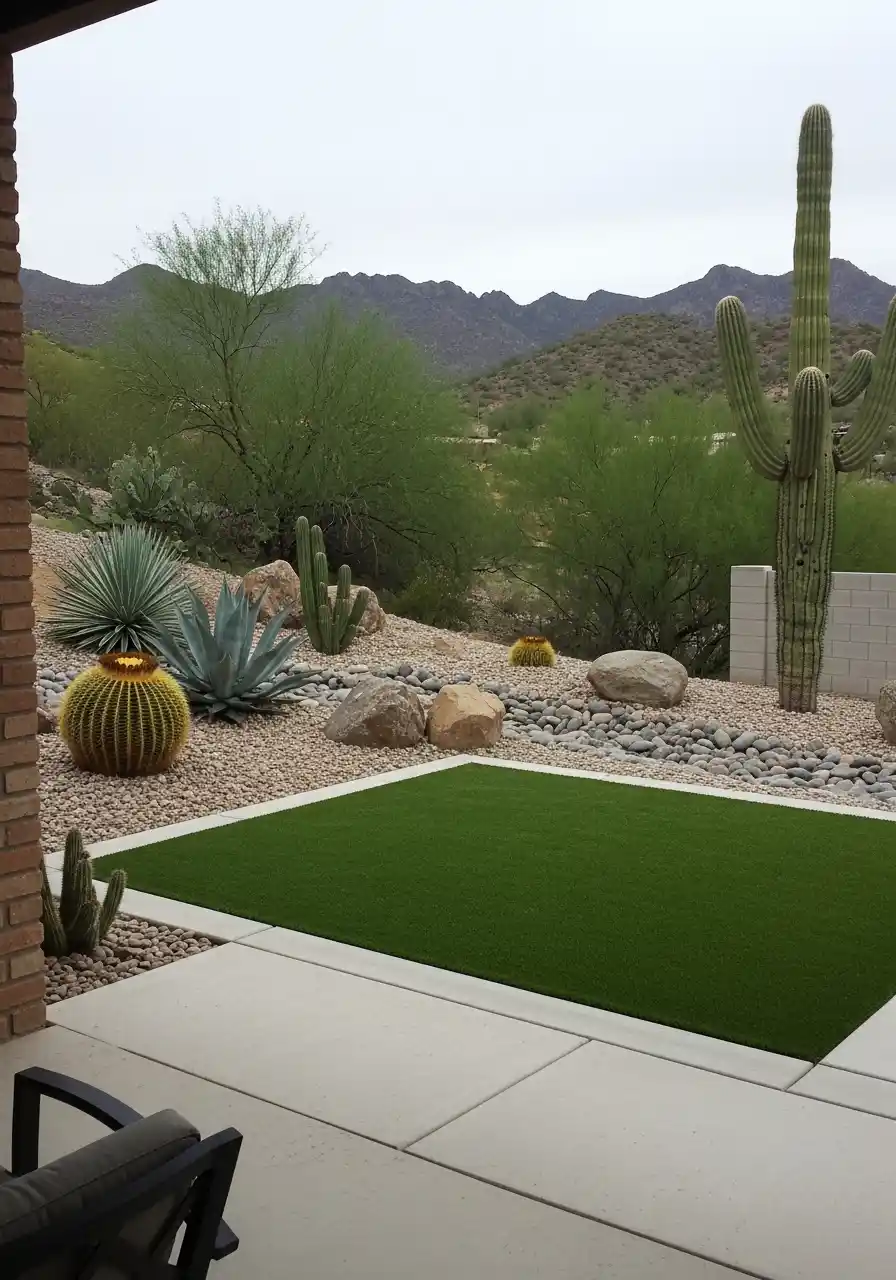
Okay, I used to think turf in a desert yard was kinda weird. But this one changed my mind. That clean green rectangle surrounded by gravel and rocks looks like a calm carpet. It’s like giving your feet a break. This is a practical desert landscaping backyard idea if you want a place for kids, pets, or just laying down without sitting on stones.
The trick is keeping turf shaped simple. A clean rectangle or square looks modern and tidy, and it’s easier to edge. Surround it with a border of larger rocks so it doesn’t look like a random green blob. Also, don’t overdo turf. A little bit is plenty, because the rest of the desert style landscaping backyard is what makes it low-water and easy. I’d rather have one soft zone than a whole fake lawn.
Framing mountain views with a winding stepping path
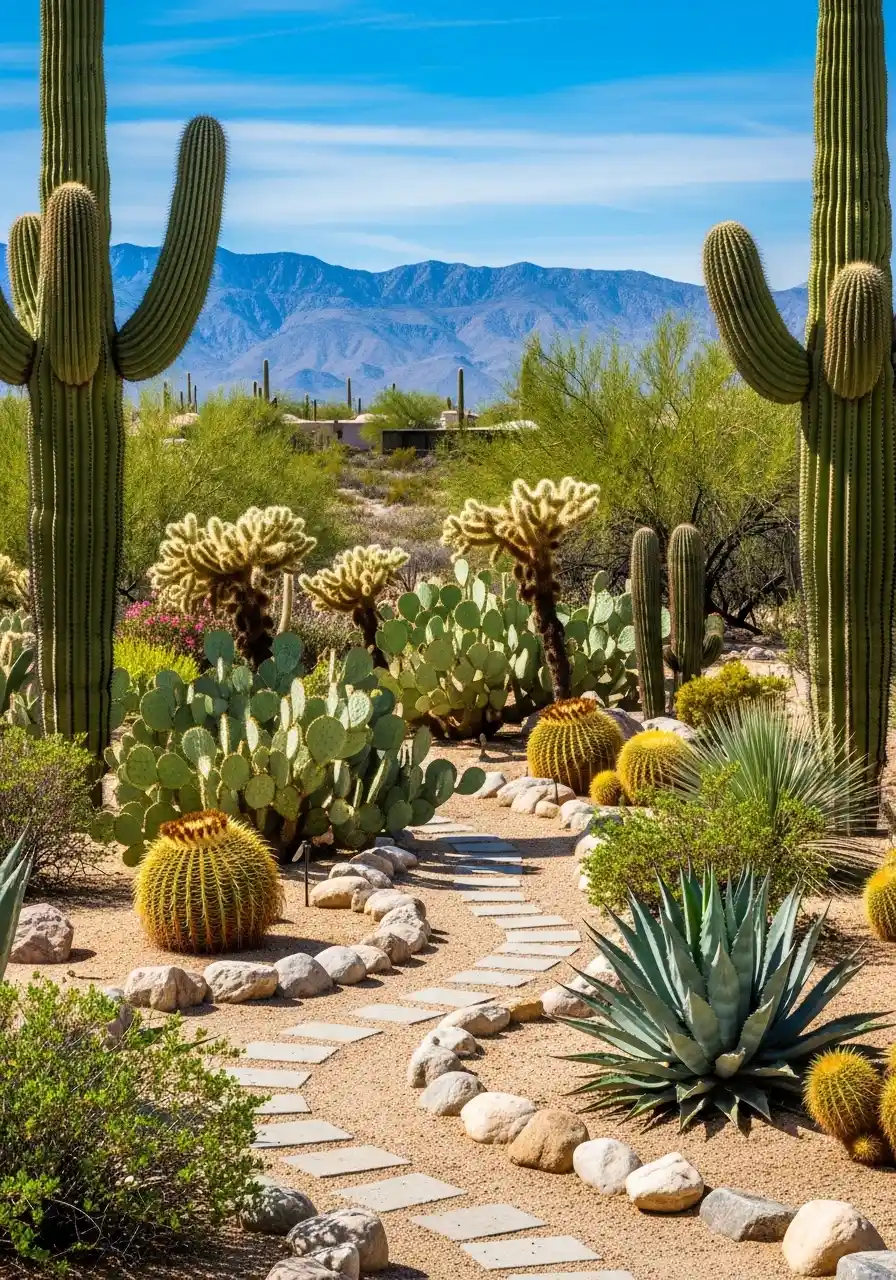
This last style feels like a postcard. Tall cacti framing the view, lower plants filling in the middle, and a winding stepping stone path pulling you forward. It’s a dreamy backyard desert landscaping layout because it uses the background scenery like part of the design. If you’ve got mountains, or even just a nice open sky, this is how you show it off.
A good hack is using taller plants like “walls” on the sides, and keeping the center lower so the view stays open. Put stepping stones closer together on curves so it’s easier to walk. And use a rock border to guide where the path goes, so people naturally follow it. This is the kind of desert landscaping backyard that feels like you’re in nature, but still safe and planned.
FAQ: desert landscaping backyard questions I get asked a lot
-
What plants work best for a desert landscaping backyard with full sun?
-
How do I plan backyard desert landscaping without making it look empty?
-
Is decomposed granite better than gravel for desert backyard landscaping paths?
-
How often should I water agaves in a desert-style backyard?
-
What’s the easiest way to stop weeds in desert landscaping for a backyard?
-
Do barrel cacti need shade in a desert landscape backyard?
-
How far apart should I space plants in desert backyard landscaping beds?
-
Are raised planters good for southwest desert landscaping designs?
-
What kind of lighting looks best in a desert landscaping backyard at night?
-
How do I keep gravel from spreading into walkways in backyard desert landscaping?
-
Can I mix succulents and cacti in a desert landscape backyard safely?
-
What edging works best for curves in desert backyard landscaping?
Conclusion
If I’m picking a “best” lesson from these 18 ideas, it’s this: a good desert landscaping backyard isn’t about stuffing in plants. It’s about contrast, spacing, and a few strong shapes that make you feel something. Pick a style you actually like, repeat key plants, and don’t forget the boring stuff like edging and a solid base. That boring stuff is what makes the pretty stuff stay pretty, even when life gets busy.