I used to think edging was just boring “yard stuff.” Then I put in a wood garden border one weekend and, yeah, it kinda messed with my head. Suddenly the garden looked finished, like it had a frame. And once you notice that, you start seeing a hundred ways to do it better… and a few ways to mess it up too.
Table of Contents
Wood garden border : a mixed-flower edge that looks planned (even if it’s not)
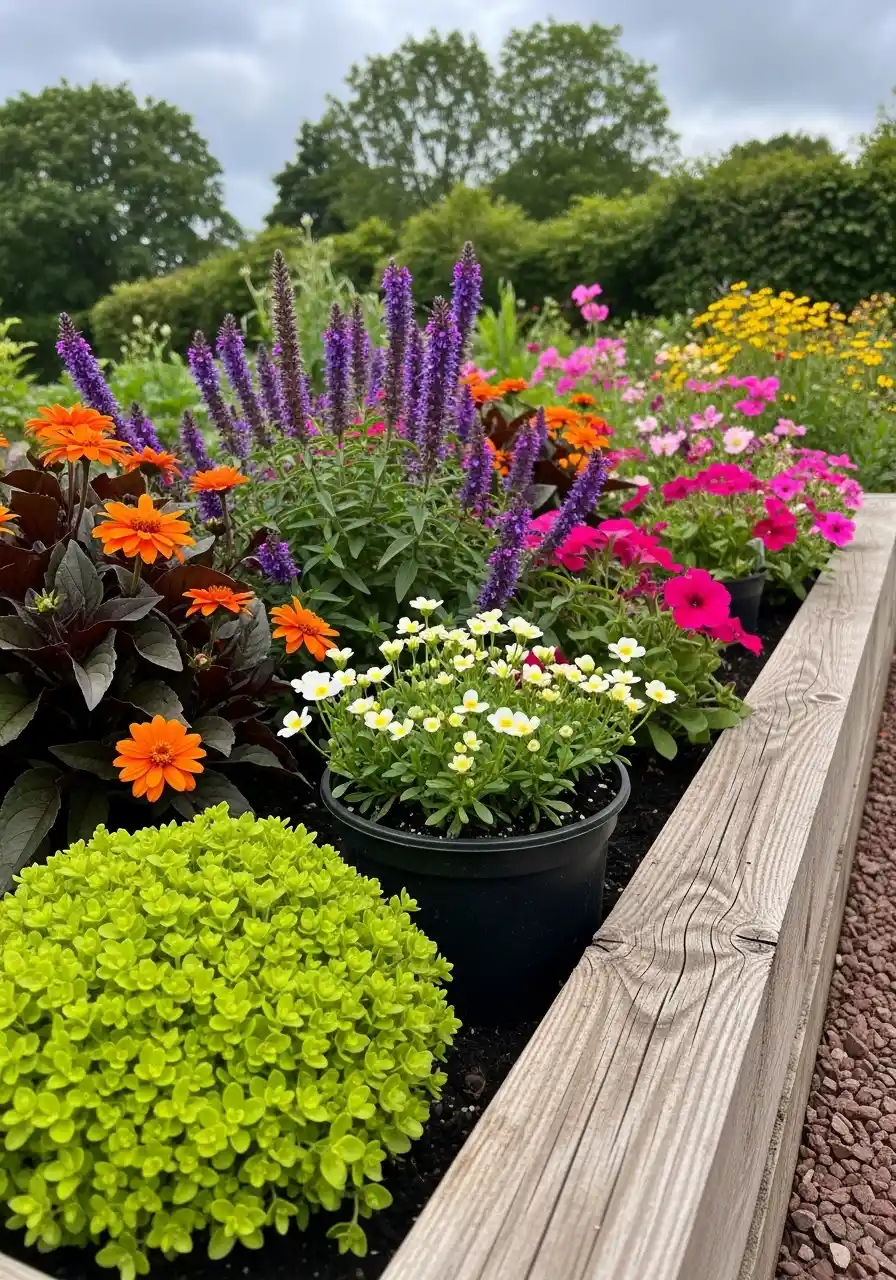
That tight little edge packed with bright flowers is honestly my weakness. A wood garden border works great here because the wood makes all those loud colors feel less chaotic. Purple spikes, orange pops, pinks, whites… it could look like a kid dumped a paint set. But the wooden border says, “Nope, I meant this.”
I’d plant the tallest stuff toward the back of the border (like those purple spiky blooms), then medium flowers in the middle, and low fillers near the front lip. The trick is leaving a tiny breathing gap between the plants and the edging so nothing droops over and looks messy by week two.
One hack I keep doing: I repeat one color three times. Like purple-purple-purple across the bed. It’s small, but it makes the whole border feel like a real design and not a random shopping cart moment.
Veggie beds that don’t look like a farm field
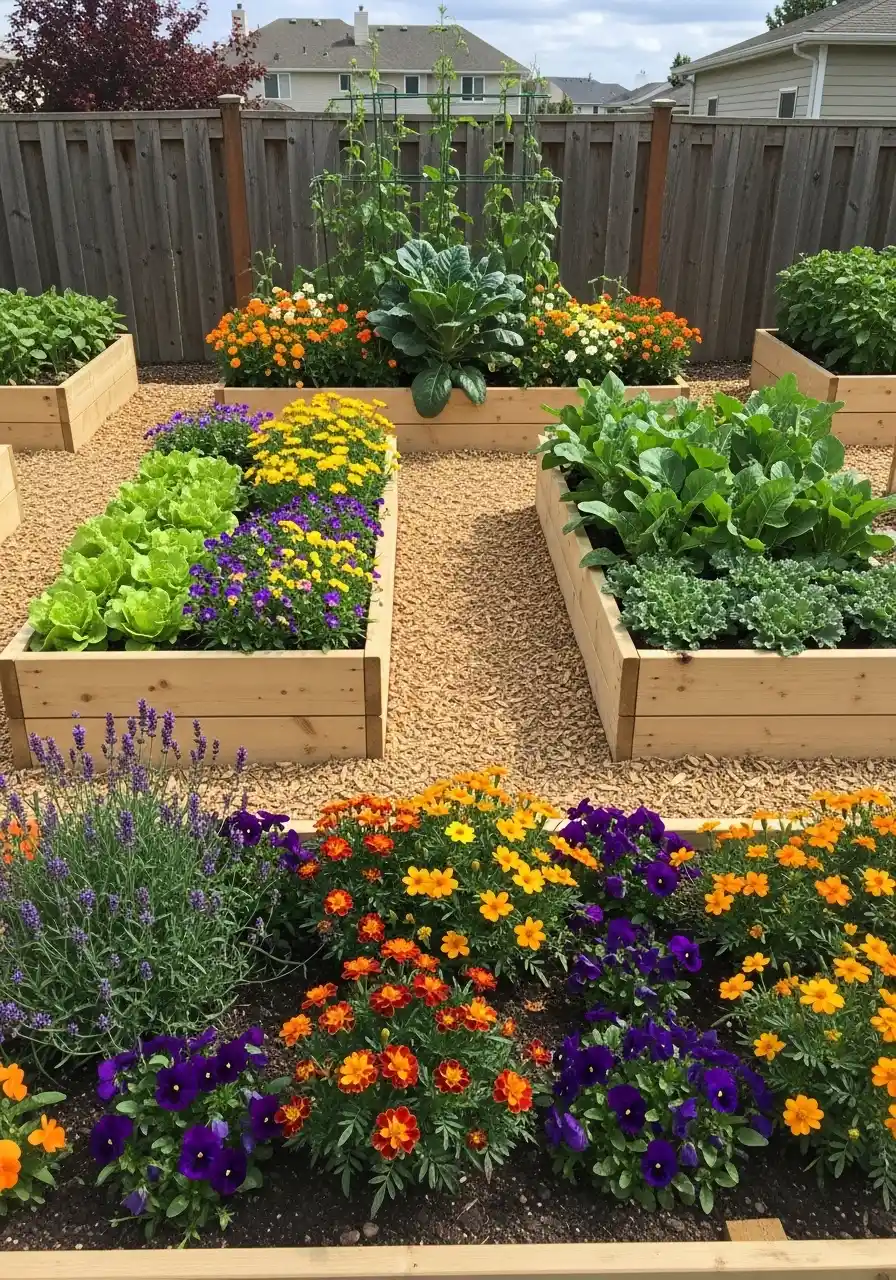
When I see raised beds full of greens and then a burst of flowers at the corners, I’m like… yes, thank you. A wood garden border (or wooden garden edging) makes veggie beds look neat, not “work zone.” Plus, the wood warms up the whole space. It feels friendlier than stone.
I like putting flowers on the ends of the bed because it’s the first thing your eyes land on. Marigolds and calendula are basically cheat codes here. They bring color, and they help distract from the fact that lettuces can look kinda sad sometimes.
Practical tip: keep the border height high enough that you can top-dress compost without it spilling out. And don’t forget a path material. Gravel or bark chips around the beds makes the timber garden edging look intentional instead of floating in the yard like a box.
Front entry flowers with a “welcome home” vibe
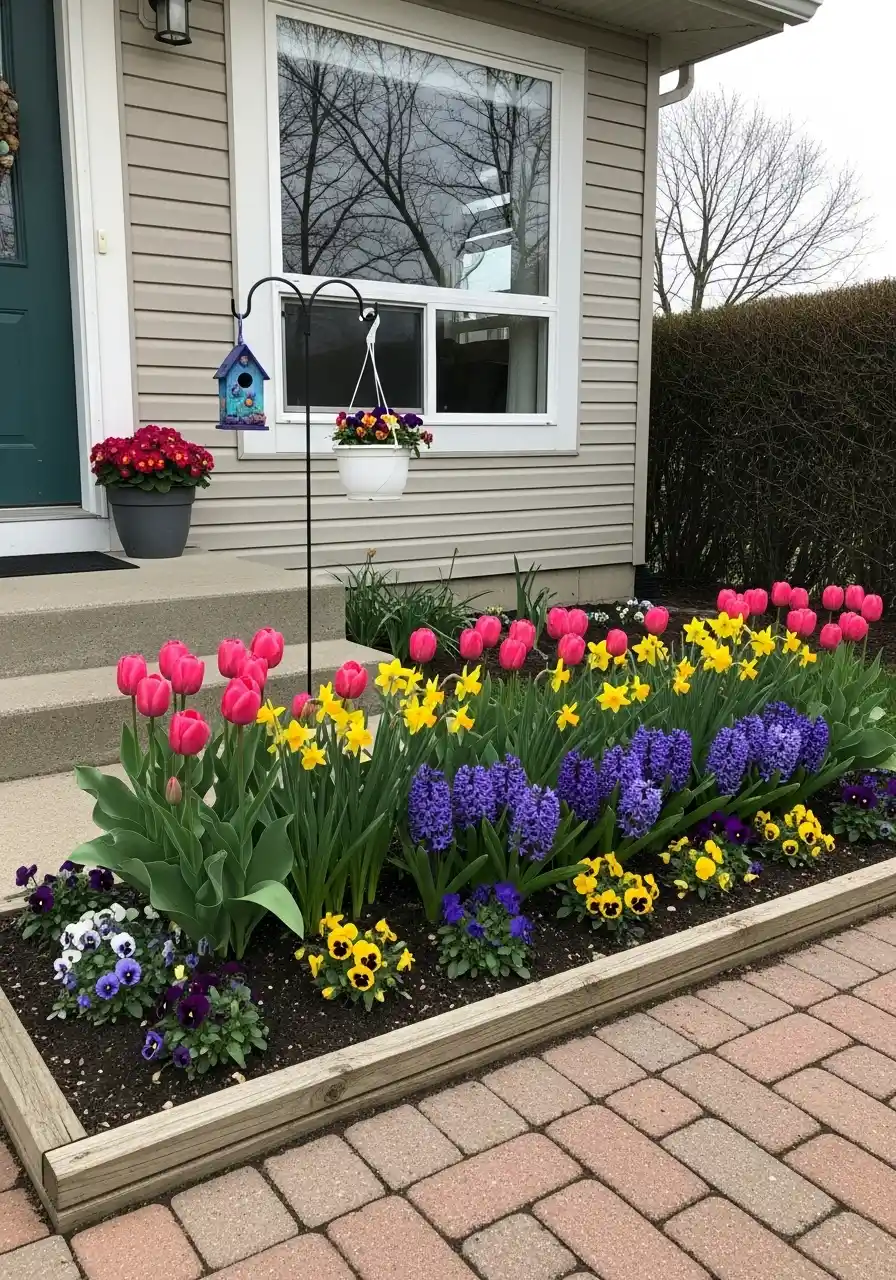
A front bed with tulips, daffodils, and little pansies feels like a friendly wave. The wood border edging keeps it from turning into a sloppy line of dirt against the walkway. I swear, this is the kind of border that makes the whole house feel more cared for, even if the inside is a mess (not saying mine is… but also yes).
I’d place bulbs in clumps, not single-file. Like 7 tulips here, 9 there. Clumps look richer. Then I tuck pansies near the edge so they’re doing the “cute” work while the bulbs take their time.
One thing I learned the hard way: don’t make the wood garden border too thin in front beds. People step on edges. Delivery guys step on edges. Your own brain will step on edges. Use thicker boards or sturdy timbers, and stake the corners so it doesn’t bow out after a rainy week.
Big raised wood planter bursting with “cottage” chaos
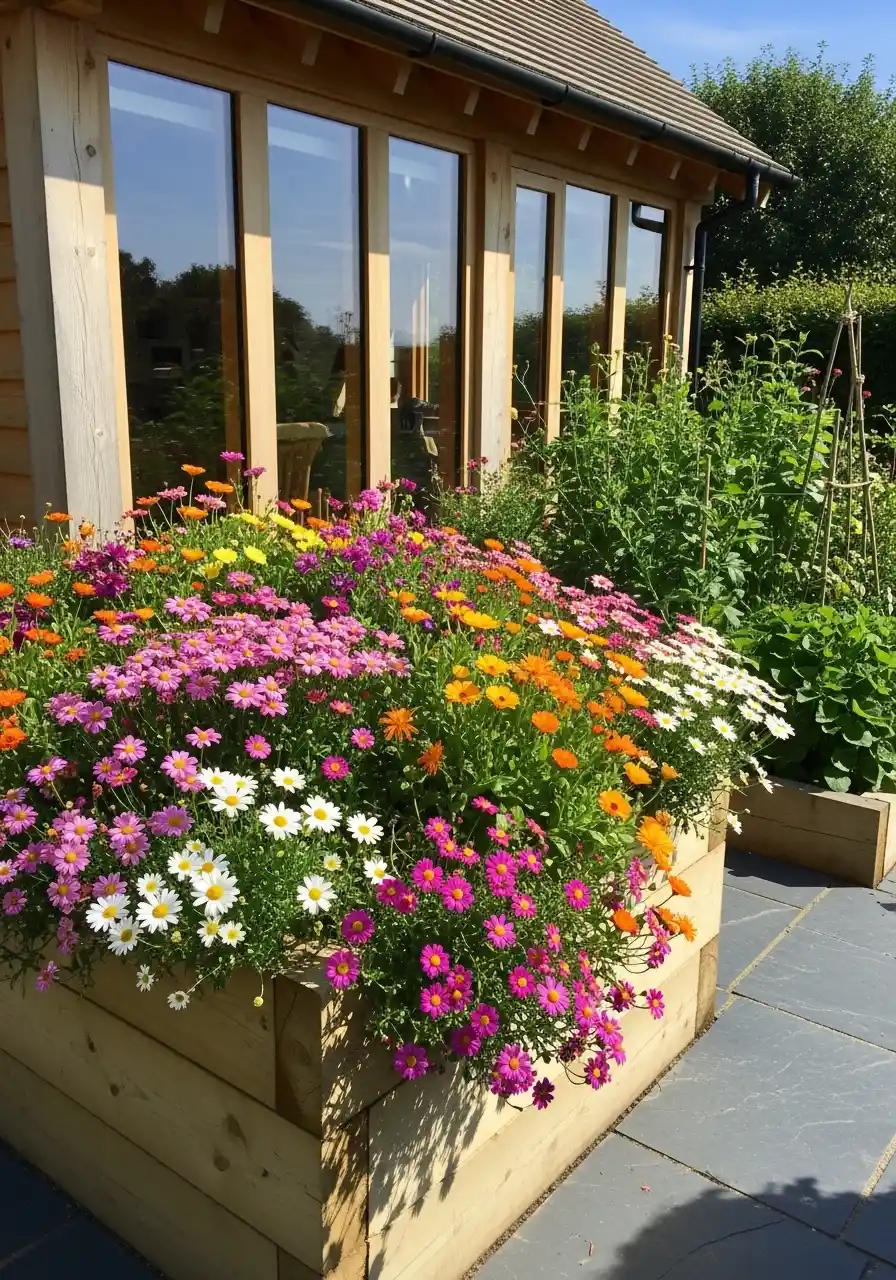
That overflowing raised bed full of daisies and bright blooms is basically a happy accident vibe, and I love it. The wood garden border matters even more when the planting is wild, because the border is what keeps it charming instead of just… messy.
I’d mix daisy-type flowers with a few taller stems so you get layers. It’s not just “flat color,” it’s movement. And I’d add at least one trailing plant so it softens the hard wood line a little.
Here’s my little rule: if the planting is loud, the border should be simple. Plain wood, clean corners, no fancy stuff. Let the flowers be the drama. Also, water tends to splash soil onto wood, so a thin strip of mulch right inside the border helps keep the timber border cleaner.
Long side-yard border with lavender and white for calm
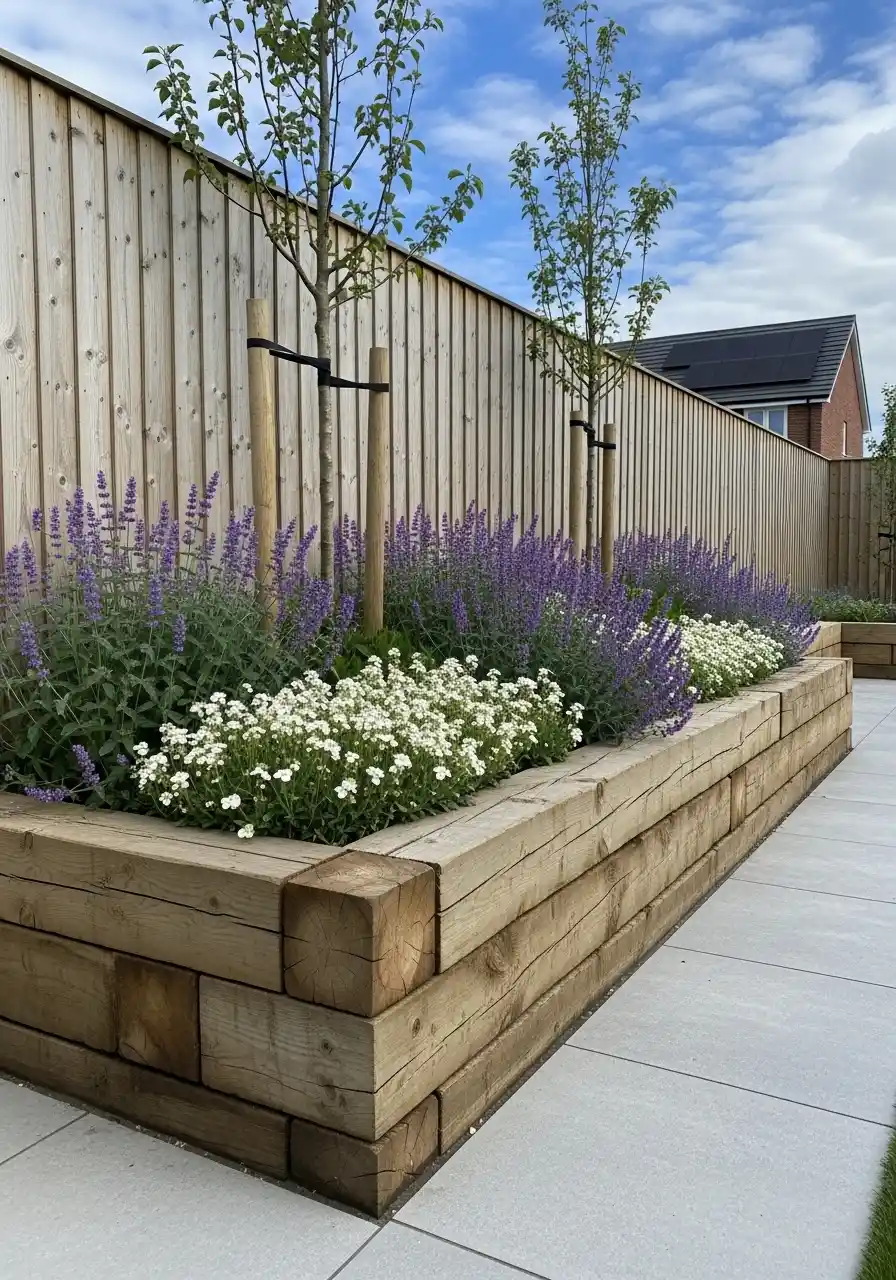
A long run of lavender-looking plants with white flowers in front is so peaceful it’s almost unfair. This is where a wood garden border really shines, because wood along a fence line feels natural, not harsh. It also helps you keep the planting in a straight lane so it doesn’t creep into the walkway.
I’d plant the purple stuff in a steady rhythm, same spacing, same row. Then the white flowers become the bright “trim.” If you want it extra clean, add a narrow gravel strip on the path side. That gravel line is like a haircut for the bed.
Hack: if your border is made from stacked timbers, stagger the joints like bricks. It looks stronger, and it usually is stronger. And if you live somewhere wet, leave tiny drainage gaps so water doesn’t get trapped and rot the wood.
Modern painted beds that still feel warm
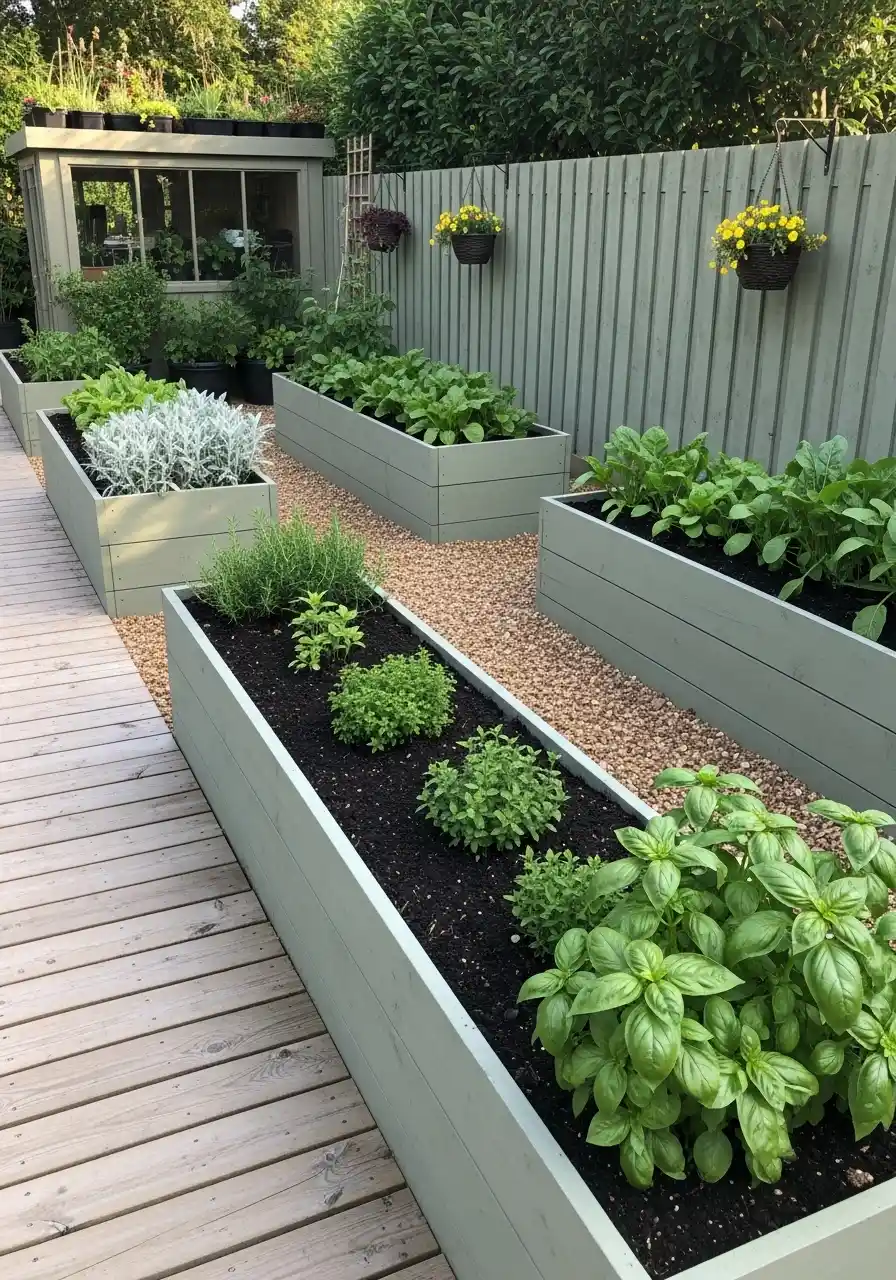
Painted raised beds can go super modern, but wood keeps it from feeling cold. Those clean lines with herbs and greens look so organized it makes me feel guilty, honestly. A painted wood garden border can match your fence or deck, and it makes the space look like one complete thing.
I’d group plants by use: cooking herbs together, salad greens together, bigger leafy stuff together. It’s easier to harvest without stomping around like you’re lost. And it looks tidy, which is half the point of this style.
Small tip that saves headaches: line the inside of the wood with a barrier (like heavy plastic or landscape fabric) if you’re painting. It slows down moisture damage. Also, use corner braces if the boards are long. Long boards love to bow out once the soil gets heavy and wet.
Flower “islands” in raised boxes (bold and kinda fancy)
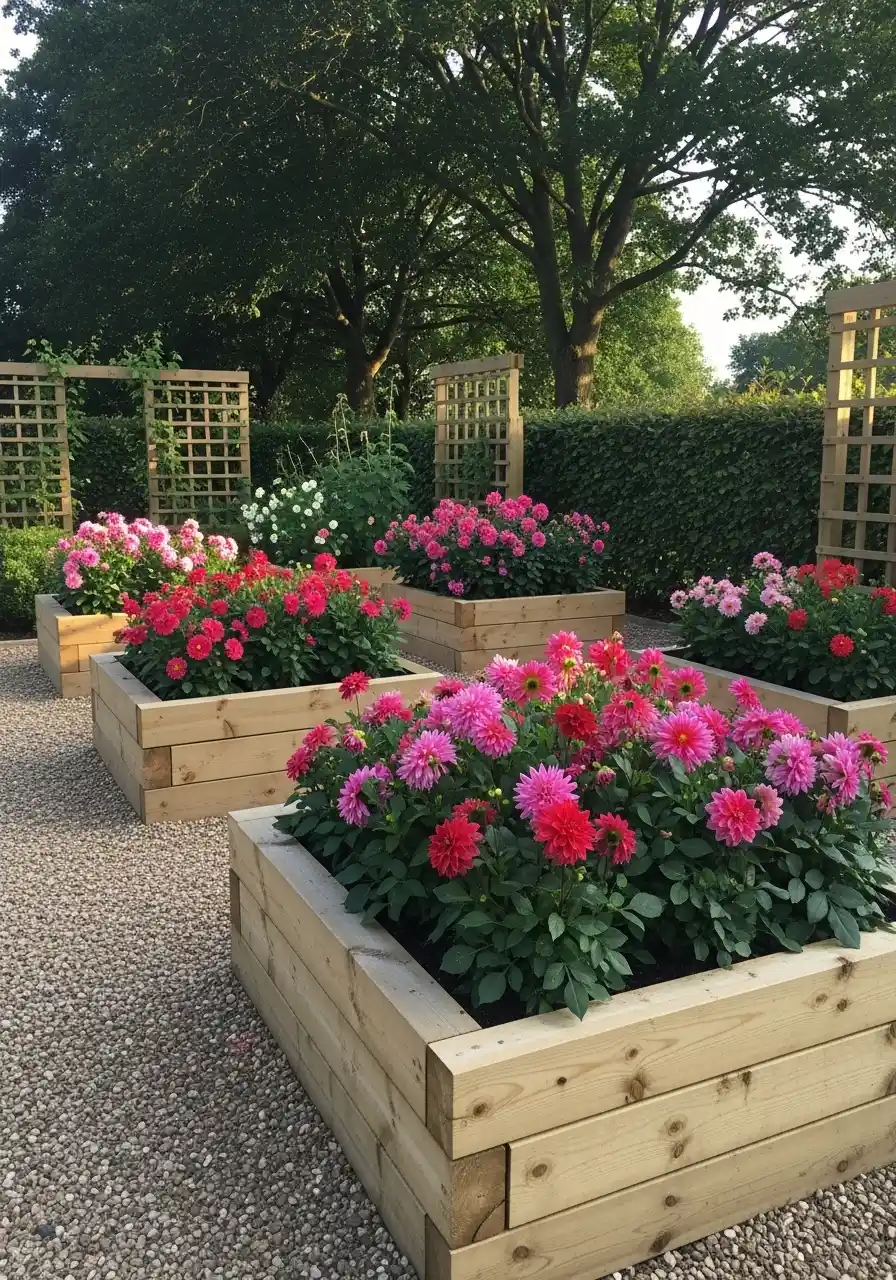
Those raised beds full of pink and red blooms feel like a little garden party. A wood garden border makes these flower boxes feel like separate rooms. It’s also easier to keep colors grouped, which is what makes this look so rich.
I like doing one bed as “hot colors” (reds, pinks, coral) and another bed as “cool colors” (purple, white, pale blue). It sounds extra, but it stops the whole yard from turning into rainbow soup.
For structure: plant taller flowers toward the center of each box and lower ones around the edge. If you want a fuller look faster, plant closer than the label says, but not too close or you’ll get mildew and sad stems later. And yeah, I’ve done that mistake. Twice.
Curved edge using log slices for a soft, storybook feel
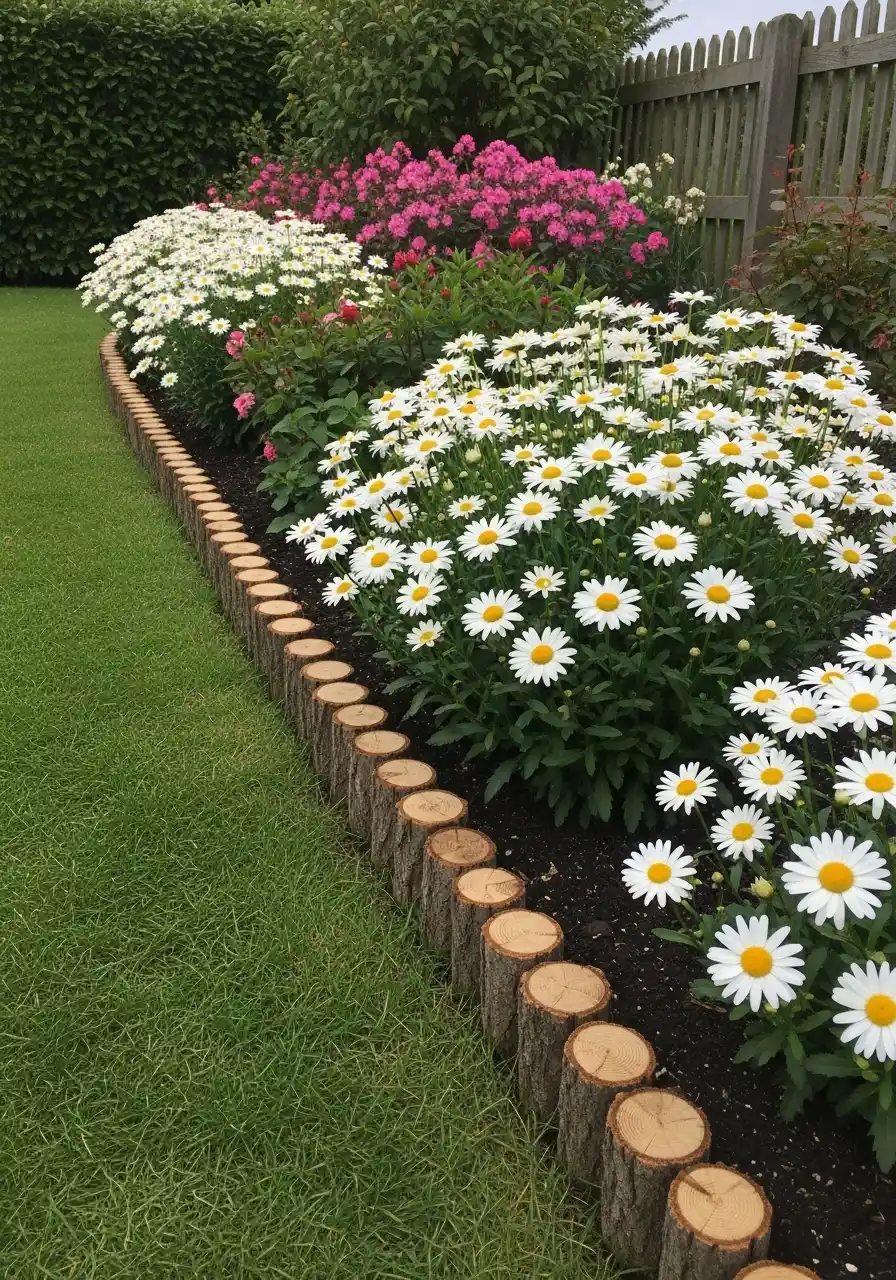
That rounded border made from little wood rounds is adorable. It’s like a tiny forest fence. This is a great “wooden garden border” idea if you want something playful without building a whole raised bed.
I’d use it to edge a curvy flower bed because straight lines and round log slices don’t match well. Curves make it feel natural. White daisies (or similar) look amazing with this because the logs give a warm, earthy base.
Practical note: if the rounds touch soil, they’ll rot faster. A trick is setting them into a shallow trench with gravel underneath. It drains better and helps them stay put. Also, vary the height slightly so it doesn’t look too perfect. Perfect can feel fake. Slightly uneven looks like a real human did it (which, yeah, I did).
Extra-long fence-line planter packed with color blocks
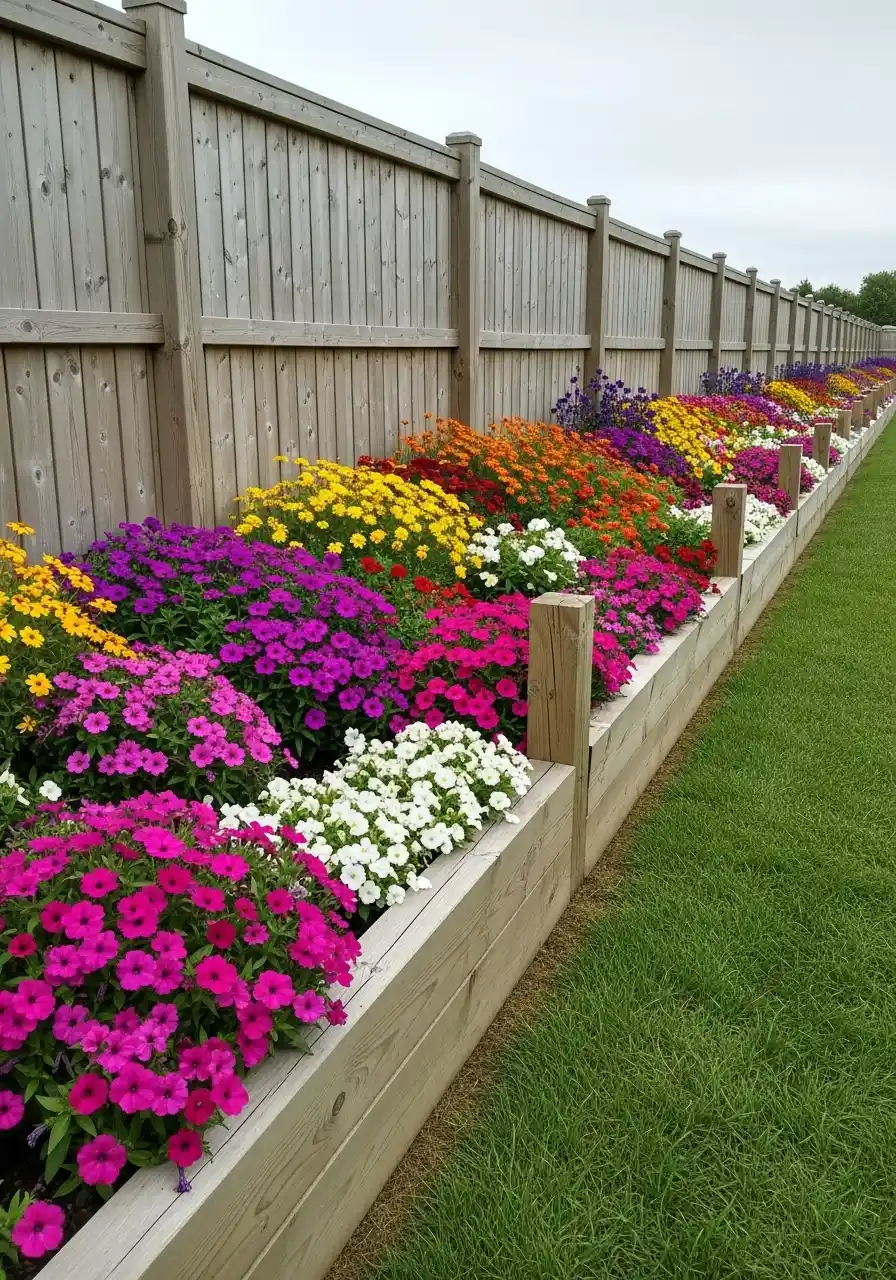
That long line of flowers along a fence is pure joy. But without a border, long beds can look like a messy stripe. A wood garden border gives it a clear start and stop, and it helps you do color “sections” like purple here, orange there, white there.
I’d plan it like a pattern: color block, color block, color block. Repeat at least one color every few sections so it feels connected. And keep the tallest flowers toward the fence so they don’t flop onto the lawn.
Big tip: use stronger posts at the corners and every so often along the long run. Long wood borders love to bow. If you stake it well, it stays crisp for years. Also, mulch deep. It saves watering and keeps weeds from embarrassing you when guests show up.
Terraced wooden levels for slopes and “garden theater”
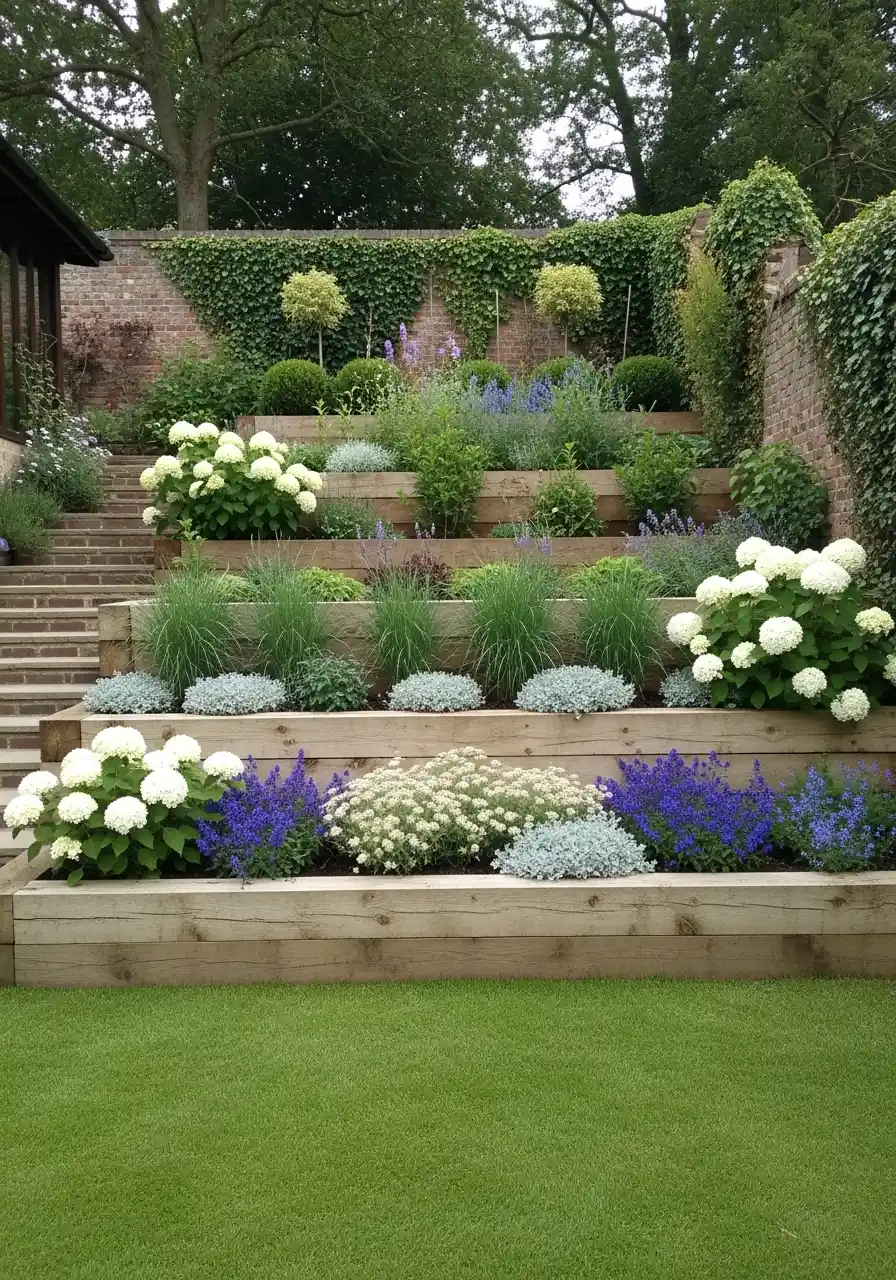
That tiered setup on a slope looks expensive, even when it’s not. A terraced wood garden border system is basically a cheat for tricky yards. Each level is a stage. The plants get their own spotlight, and you can mix textures like big hydrangea puffs with airy grasses and purple blooms.
I’d keep the lowest level softer and fuller (like groundcovers), then medium shrubs on the middle, and statement plants on top. Your eyes naturally travel upward, which feels kind of magical.
Safety and sanity tip: anchor the timbers properly. Rebar pins or long stakes matter here. Soil pressure is real. And add drainage behind each tier so water doesn’t push the wall out. I used to ignore drainage until I saw a wall bulge and I was like… oh. That’s what regret looks like.
A cottage-style raised bed that hugs the house
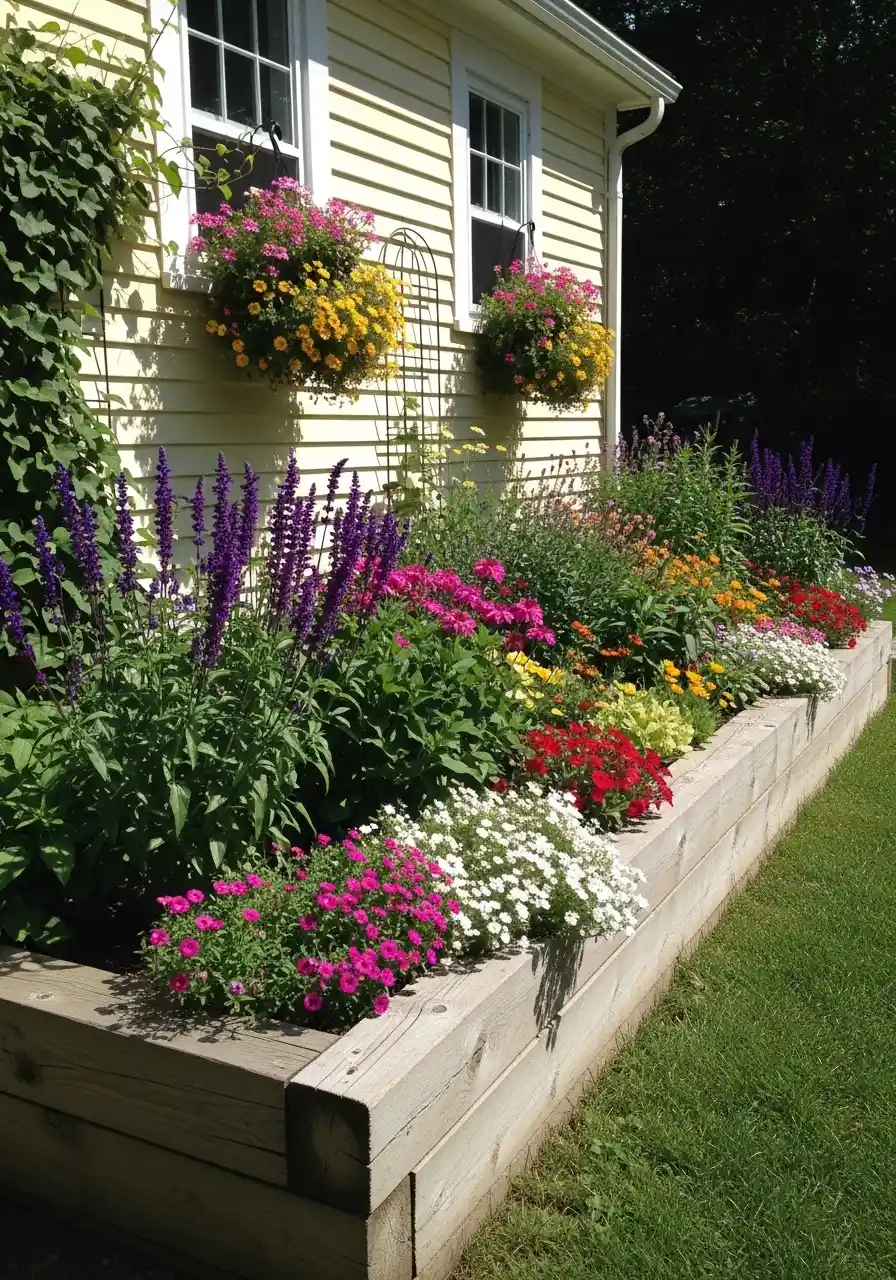
This one feels like walking up to a friendly house that smells like laundry soap and summer. The wood garden border is built like a low retaining wall, holding back a thick pile of flowers right under the windows. I love how the blooms spill forward, like they can’t help themselves. Hanging baskets up top make it feel extra full, almost like the house is wearing flowers.
If I was copying this, I’d pick boards that are thick enough to not bow out after one rainy week. I’d also leave a tiny gap or two for drainage, because wet soil pushes hard. The trick is planting tall flowers in the back (the purple spikes are perfect) and shorter stuff near the edge so the wood border edging shows and doesn’t vanish. And yes, I would totally overplant. It looks best when it’s a little wild.
Tiered planter boxes in a patio corner (small space, big payoff)
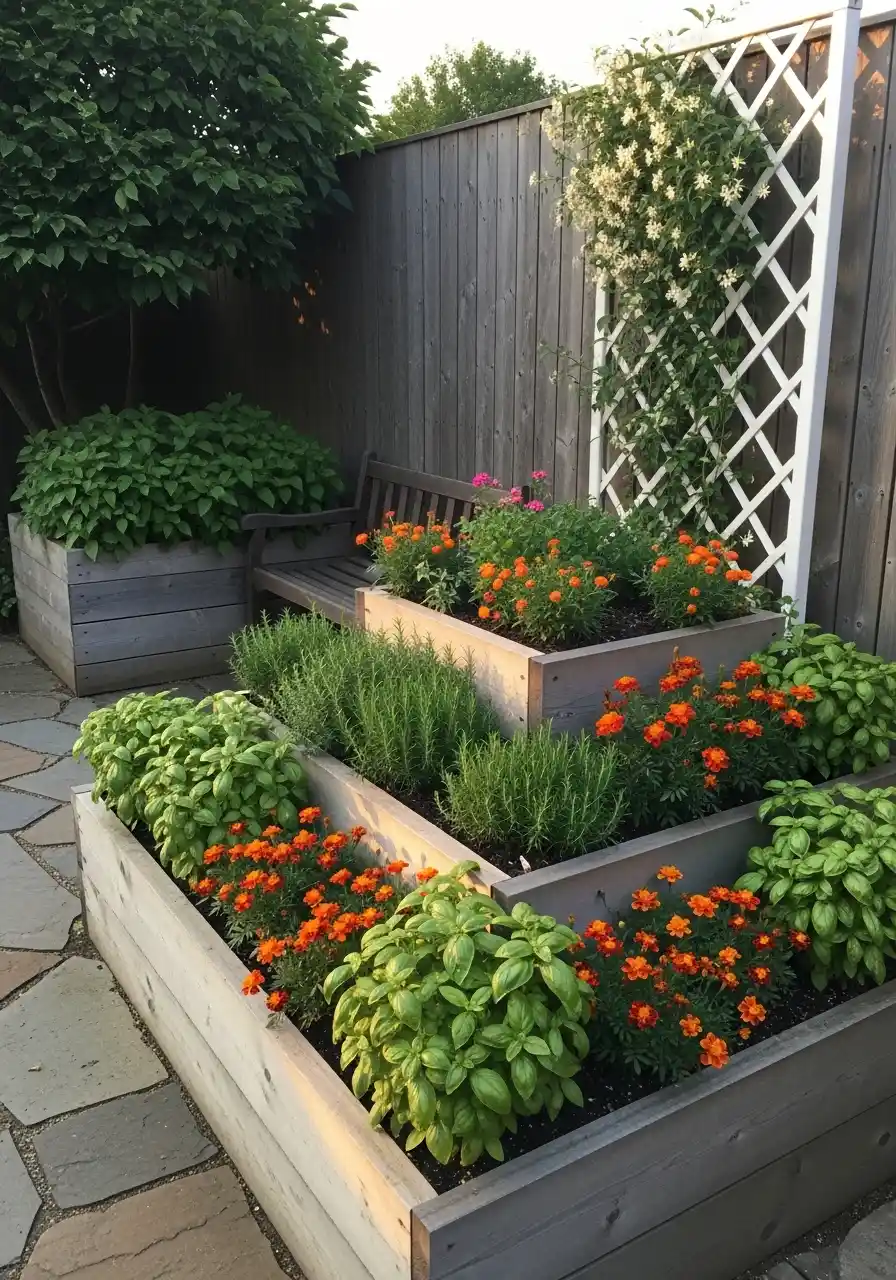
This setup is basically a cheat code for tight yards. It’s stacked beds, like steps, with herbs and bright orange flowers, and it turns a boring fence corner into something you actually wanna sit near. The wood garden border here isn’t just a border, it’s the whole structure, which makes it feel clean and organized even if the plants get messy.
I like how the tall trellis pulls your eyes upward. If you do this, anchor the boxes well so they don’t shift when you lean on them. I’d mix herbs (basil, rosemary, maybe thyme) with flowers like marigolds because it smells good and it keeps bugs a bit confused. One hack I swear by is lining the inside with landscape fabric, not plastic, because roots need air. This kind of wooden garden border works best when you keep the edges sharp and the plants soft.
Raised beds as “garden islands” with strong shapes in the background
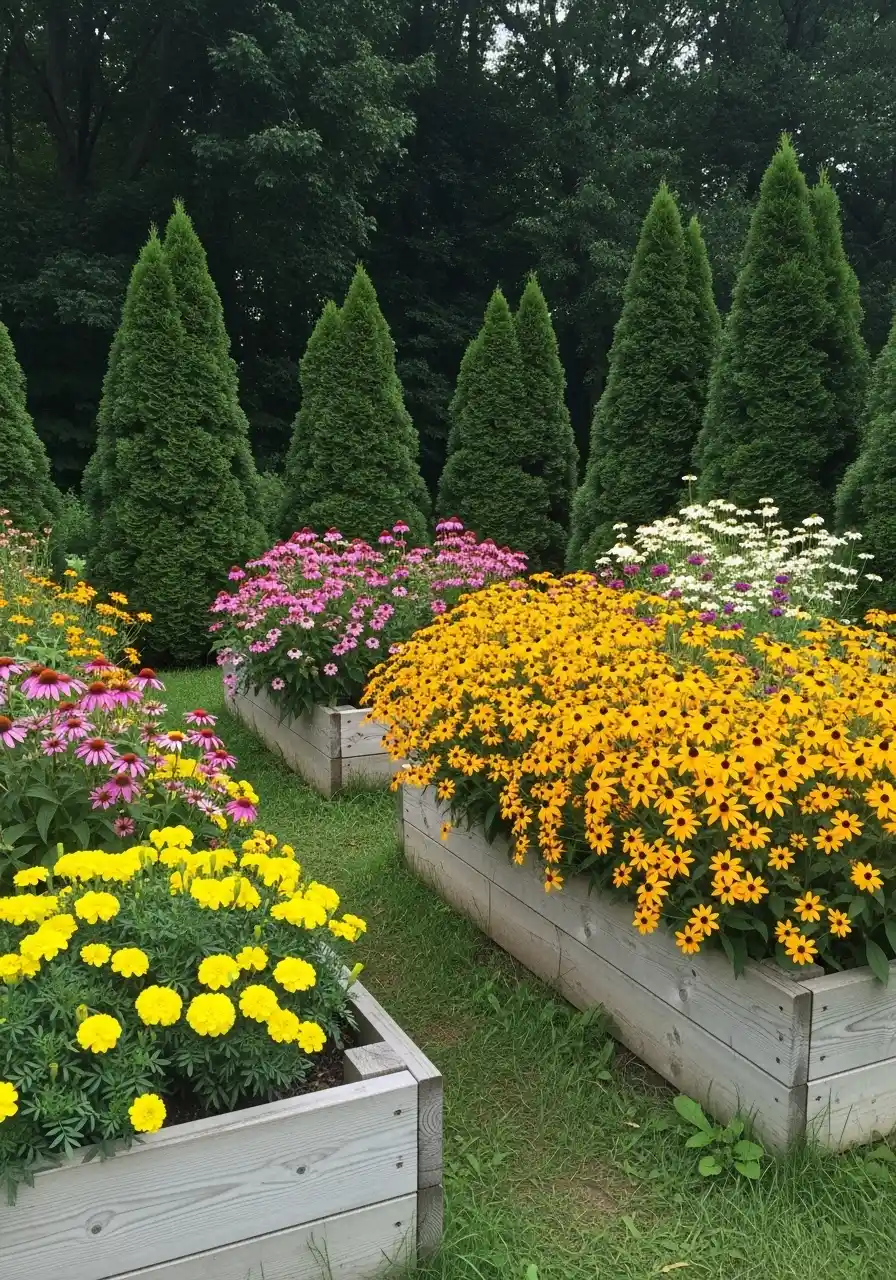
This idea feels almost fancy, like a backyard that knows what it’s doing. The cone-shaped evergreens in the back are doing a lot of heavy lifting, they make everything look planned. Then you’ve got raised beds stuffed with pink and yellow flowers, and the timber garden border keeps each bed looking crisp, like little flower cakes.
If I tried this, I’d copy the spacing. Give each bed breathing room so you can mow or walk around without stepping on your own flowers (I do that too much, it’s embarrassing). A good move is repeating colors in different beds so the whole yard feels connected. Also, use a level when building, because if your wood garden edging leans, your soil will slide, and then you’ll be annoyed for months. This style is bold but still friendly.
Fence-line drama with tall hollyhocks and a neat front edge
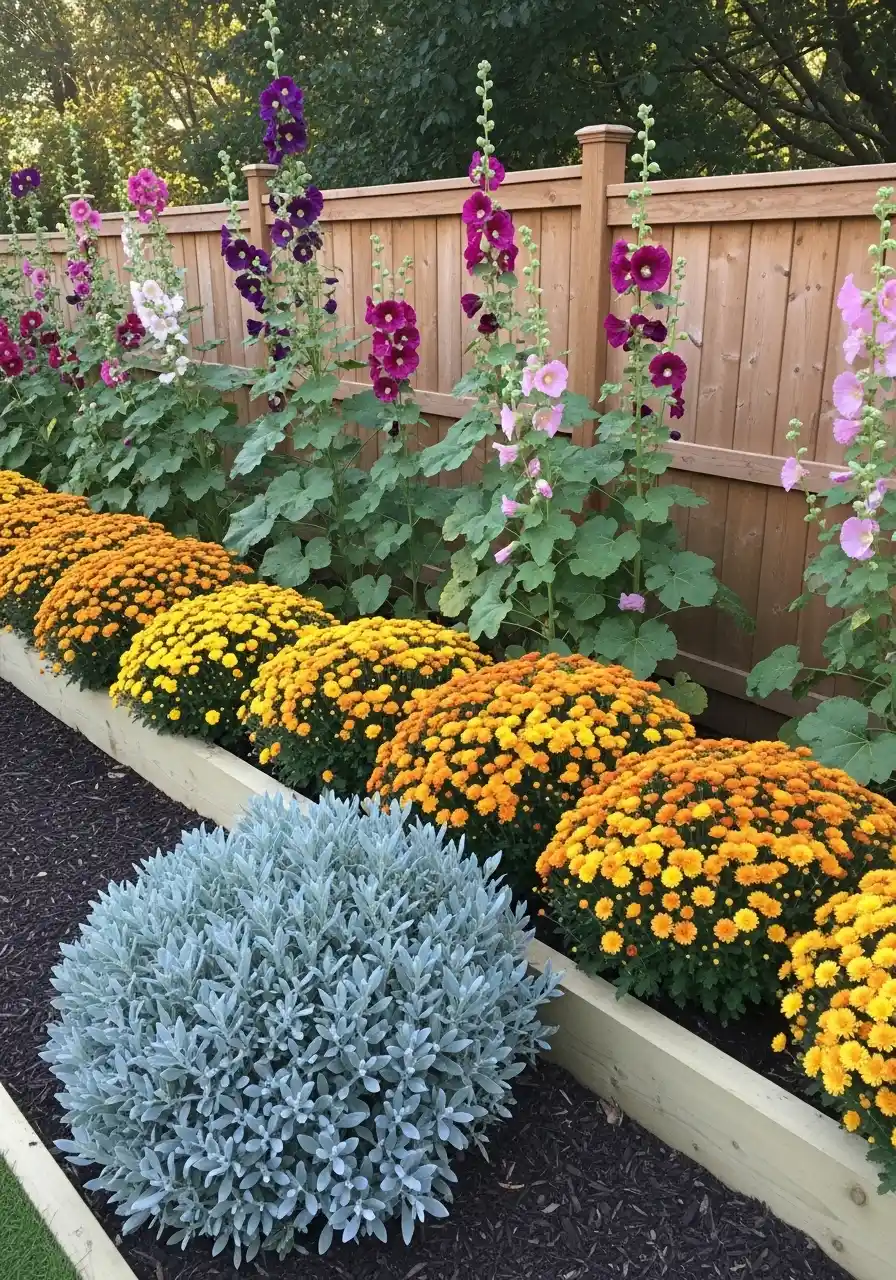
Okay, this one is a mood. Tall flowers standing against a fence look like a little garden parade. The wood garden border is low and simple, but it’s doing its job: it frames the bed and keeps the line clean so the tall plants don’t make it look chaotic.
Here’s what I’d do: put the tallest plants (like hollyhocks) right along the fence, then add round, fluffy flowers in front (those orange-yellow mounds are so cozy-looking), then something silver-blue in front as a soft “cool down.” It’s like layering clothes, kinda. My honest opinion is this looks best when you commit to repetition, like the same flower clumps spaced out. And don’t forget mulch, because a tidy wood border for garden beds looks weird if the soil is full of weeds.
Rustic log borders that feel like a forest decided to be helpful
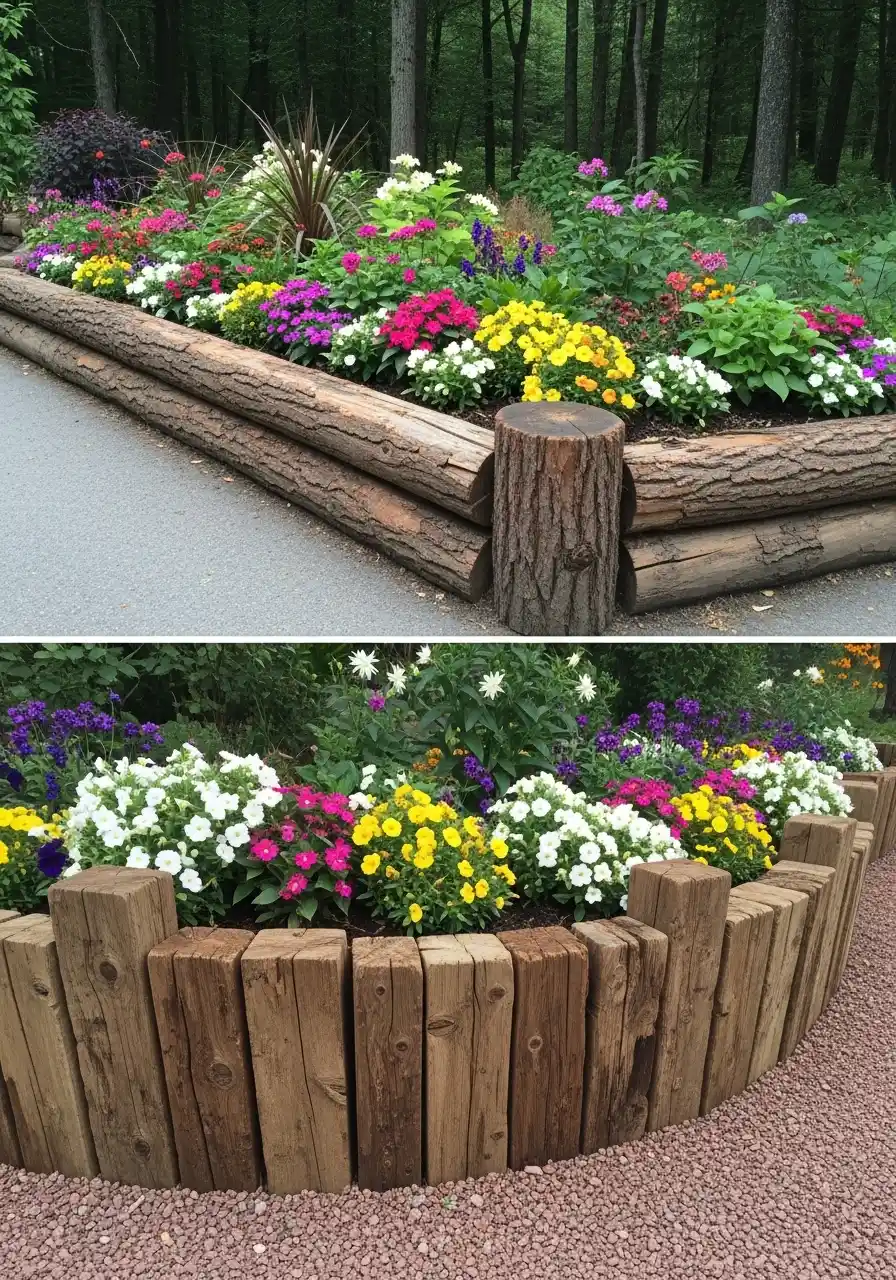
This image shows two versions, and both are kinda genius. One uses thick logs stacked low along the edge of a road, and the other uses upright log rounds like a mini fence. It feels natural and sturdy, like it belongs near trees and gravel. A rustic wood garden border like this makes bright flowers look even brighter.
If you try logs, use the heaviest ones you can handle, because light logs roll and shift. I’d sink them slightly into the ground so they don’t wander. For upright rounds, make sure the bottoms are treated or naturally rot-resistant, because ground contact is rough. A smart trick is adding a bed of gravel under the logs for drainage. This kind of wood garden border is forgiving too. If it’s not perfectly straight, it still looks right, like it was meant to be that way.
A front-step flower wave held back by a strong wood edge
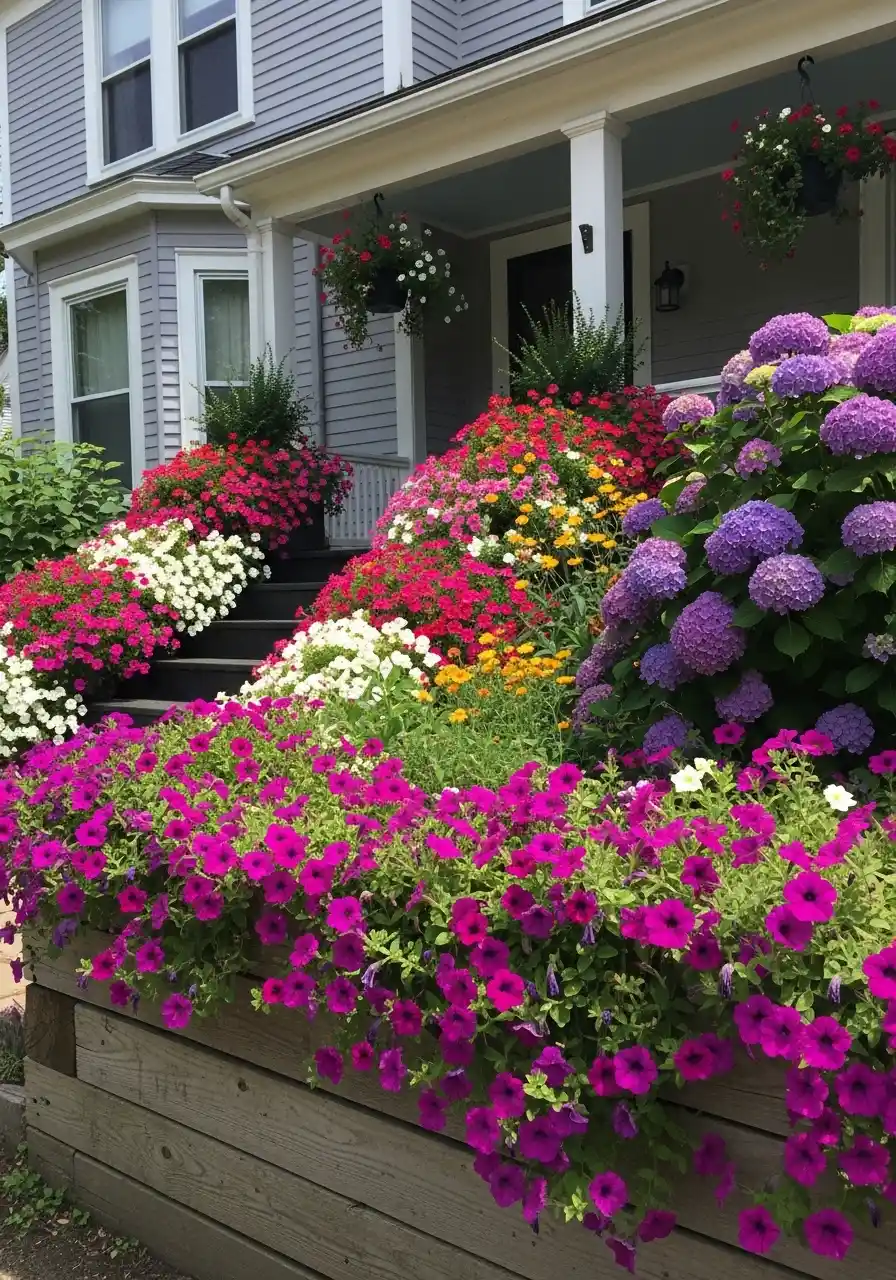
This one is basically a flower waterfall. The plants are thick, bright, and layered, and the wood garden border is doing the job of a dam. I love how it guides you up the steps, like the garden is pointing at the front door saying “go on, come in.”
To copy it, I’d build the border tall enough to hold deep soil, because big flowers like this want room. The secret is mixing textures: round hydrangeas, small filler blooms, and trailing flowers near the edge so the boards soften. Also, keep a tiny gap between the border and the house for airflow, because damp can be a jerk. I’ll admit it, this design makes me jealous. It’s the kind of wood garden edging that makes neighbors slow down when they walk by.
Angled raised beds with gravel paths for a country-garden feel
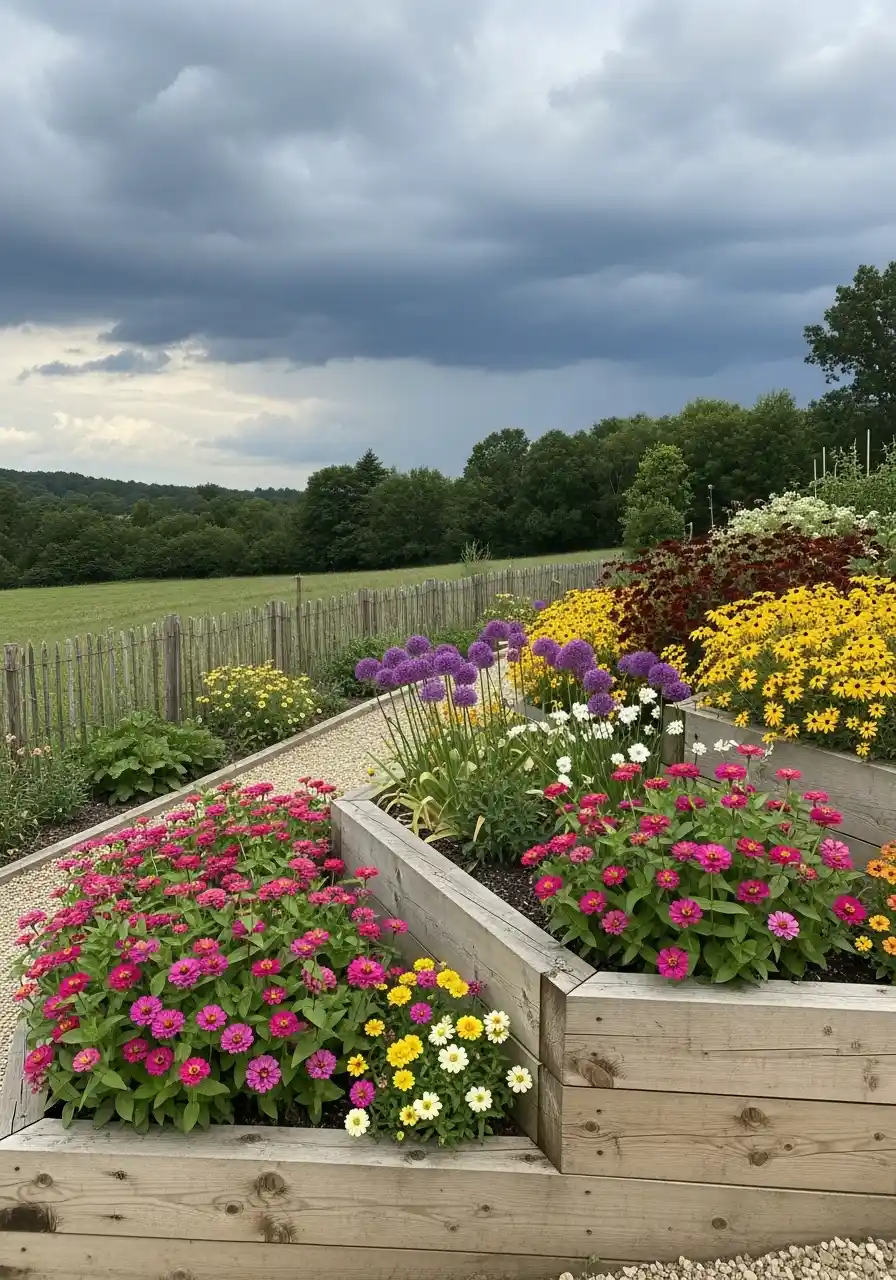
This scene feels wide and peaceful, even with stormy clouds. The beds are built with clean boards, and the angles make it feel modern but still warm. A wood garden border like this turns the space into sections, so you can plant big blocks of color without it looking random.
The gravel path is a big win because it stays neat and you don’t track mud everywhere. I’d put landscape fabric under the gravel so it doesn’t disappear into the dirt. The little purple globe flowers popping up are a perfect accent, and I’d totally steal that idea. Also, keep the bed corners reinforced, because angled corners can loosen over time. This is a smart wooden border garden look when you want a tidy garden but you still want tons of flowers.
A minimalist border with driftwood, gravel, and sculptural plants
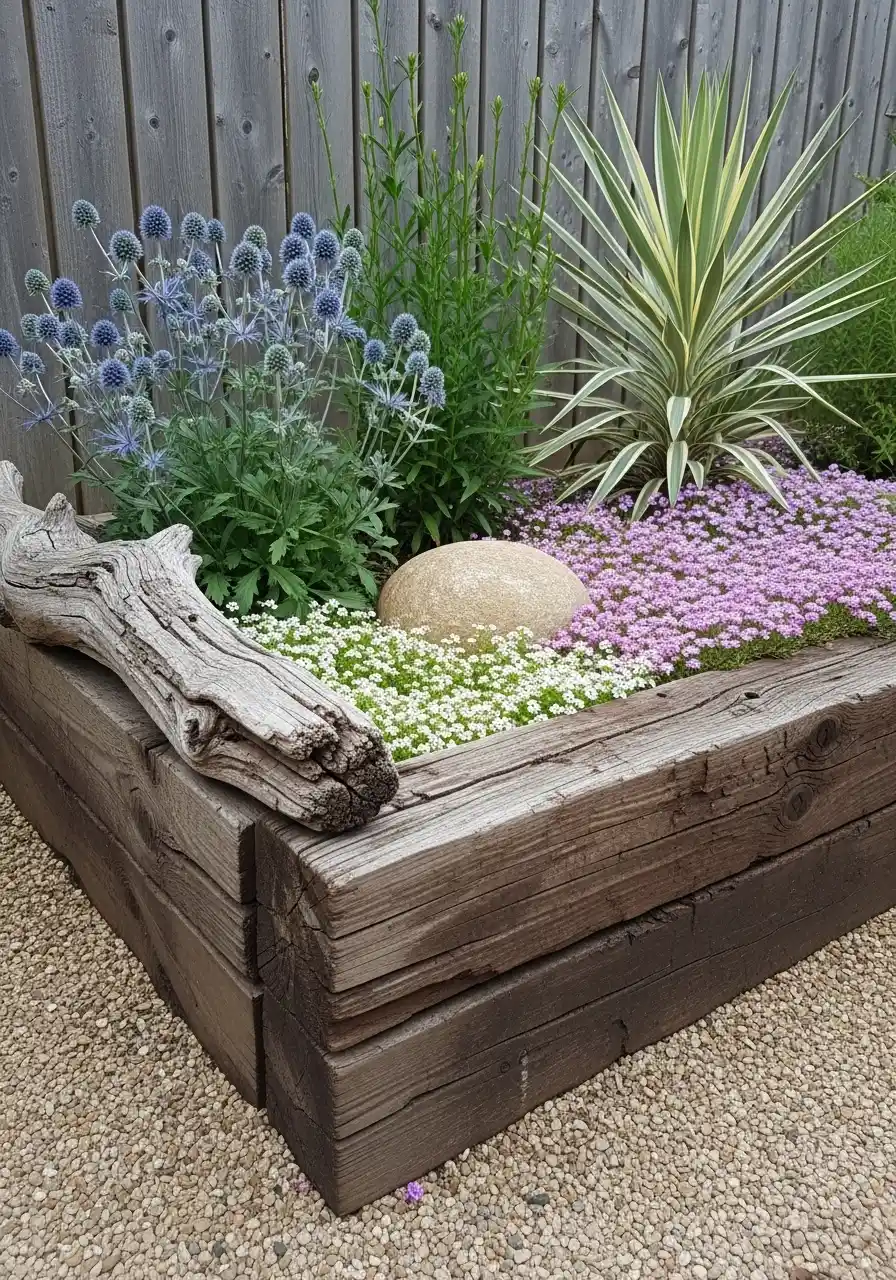
This one feels calm, like a quiet corner you sit near when your brain is too loud. The wood garden border is made from big, weathered timbers, and the driftwood on top makes it look collected, not store-bought. The plants are more about shapes: spiky leaves, round stones, and low purple groundcover.
If you want this style, don’t overcrowd it. Leave space for the gravel to show, because that emptiness is part of the look. I’d use a few “statement” plants, and repeat them so it feels intentional. Also, I’d pick one big rock and commit to it. A random tiny stone looks lost, but a bold one looks like design. This type of wood garden border edging is perfect if you like clean lines but still want it to feel natural.
A rainbow-painted wood border that makes a garden feel playful
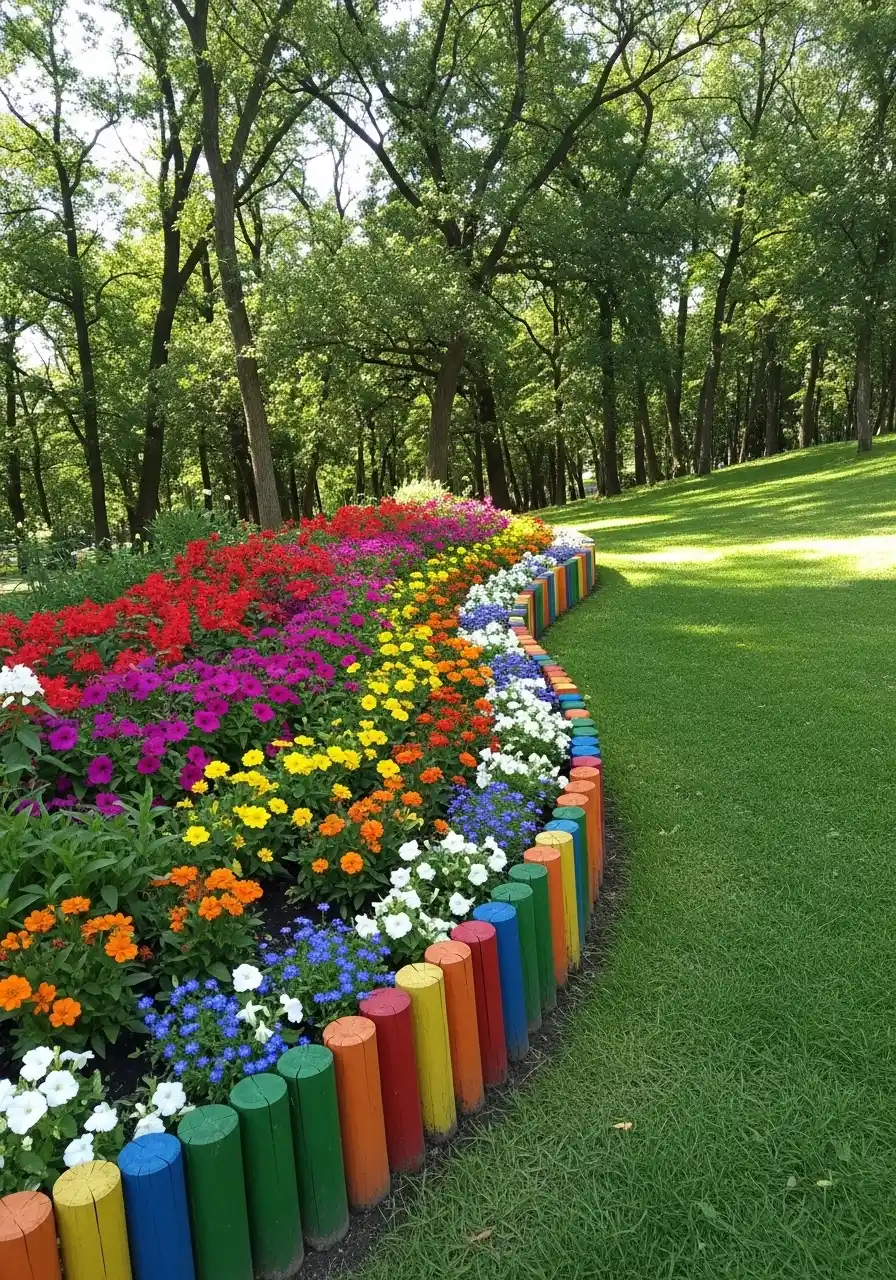
This is the happiest one, no contest. The border is made of painted wood posts in bright colors, lined up like crayons. And behind it is a massive sweep of flowers, like a living rainbow. A wood garden border like this doesn’t whisper, it shouts in a good way.
If you paint your border, use outdoor paint or stain, and seal it, or you’ll be repainting way too soon (ask me how I know… ugh). I’d also keep the flower colors a little organized, like group reds together, then purples, then yellows, so the border doesn’t fight the plants. The best hack is making the curve smooth, because curves feel soft and welcoming. This kind of painted wooden garden border is perfect for parks, big yards, or anyone who wants joy on purpose.
FAQ: wood garden border questions I keep hearing (and asking myself)
1) What’s the easiest wood garden border for beginners?
Simple straight boards with corner stakes. Keep it basic.
2) How long does a wooden garden border last?
Depends on wood type and moisture, but treated wood lasts much longer than untreated.
3) Is cedar good for wood border edging?
Yeah, cedar resists rot better than many woods.
4) Should I bury the wood garden border?
A little, yes. Burying an inch or two helps it stay steady.
5) How do I stop timber garden edging from bowing out?
Add stakes and braces, especially on long sides.
6) Can I paint wooden garden edging?
Yep, just protect the inside from constant moisture if you can.
7) What’s better: wood garden border or stone edging?
Wood feels warmer and is easier to DIY. Stone lasts longer but costs more.
8) How do I keep weeds out of my wood-edged beds?
Cardboard layer under mulch works shockingly well.
9) Does a wood garden border attract bugs?
It can, especially if it stays wet. Good drainage helps a lot.
10) Can I use log slices as a wood garden border?
Yes, but expect faster rot unless you improve drainage and keep them drier.
11) How wide should a border bed be?
If you can reach the center from one side, it’s wide enough. Usually 3 to 4 feet is comfy.
12) What’s the best path material next to wood edging?
Gravel, bark chips, or pavers. Gravel is the cleanest look.
Conclusion
If I’m being honest, a wood garden border is one of those small changes that makes everything else look better. Flowers pop more, veggies look cleaner, and the whole yard feels less random. I still mess up spacing sometimes, and I still buy “just one more plant” when I clearly don’t have space. But the wooden border keeps my chaos contained, and that’s kind of the best thing a garden can do.