If you’ve ever walked past a yard and felt weirdly jealous, like “why does their lawn look like it has better manners than mine,” it’s usually not the grass. It’s the shape. A wavy garden border makes the whole place feel softer, calmer, and kind of… expensive. I used to think curves were extra work. Now I think straight lines are the real trap.
Table of Contents
Wavy garden border: the bold ribbon path in front of a grand home
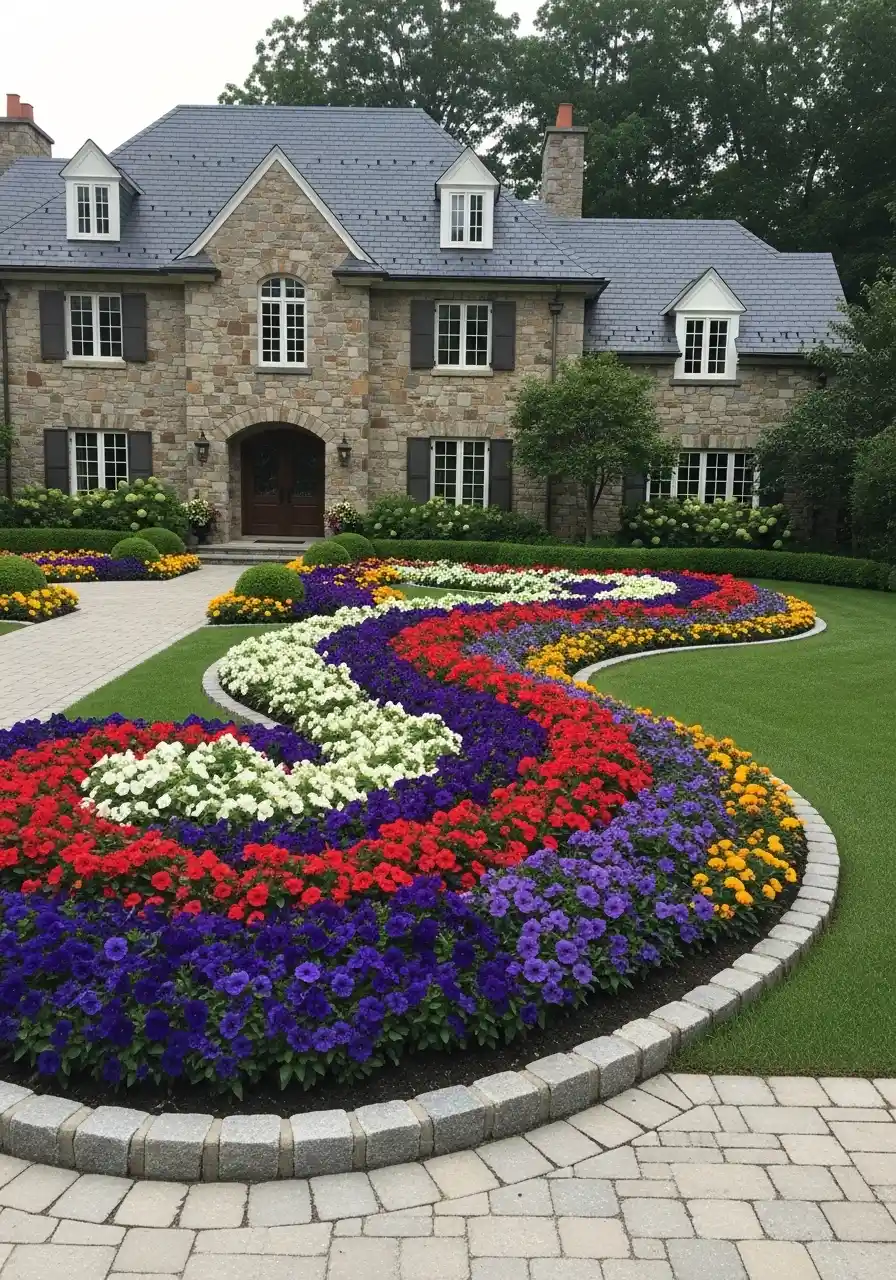
This style is loud in the best way. The border curves like a ribbon, and the flowers are planted in thick color bands. It’s not random planting. It’s a plan, and you can feel it from far away. I love how the stone edging holds that wave shape so clean.
If I copied this, I’d pick 3–5 colors max and repeat them like stripes. Red, white, blue, plus a little yellow on the edge works because it reads clear from the driveway. The trick is planting in long chunks, not little spots.
A hack: use a garden hose to sketch the wave first, then step back and judge it. If the curve looks “pinched,” smooth it wider. Waves need room to breathe or it starts looking like a bent noodle.
Corner curve bed with hydrangeas and a cozy fence backdrop
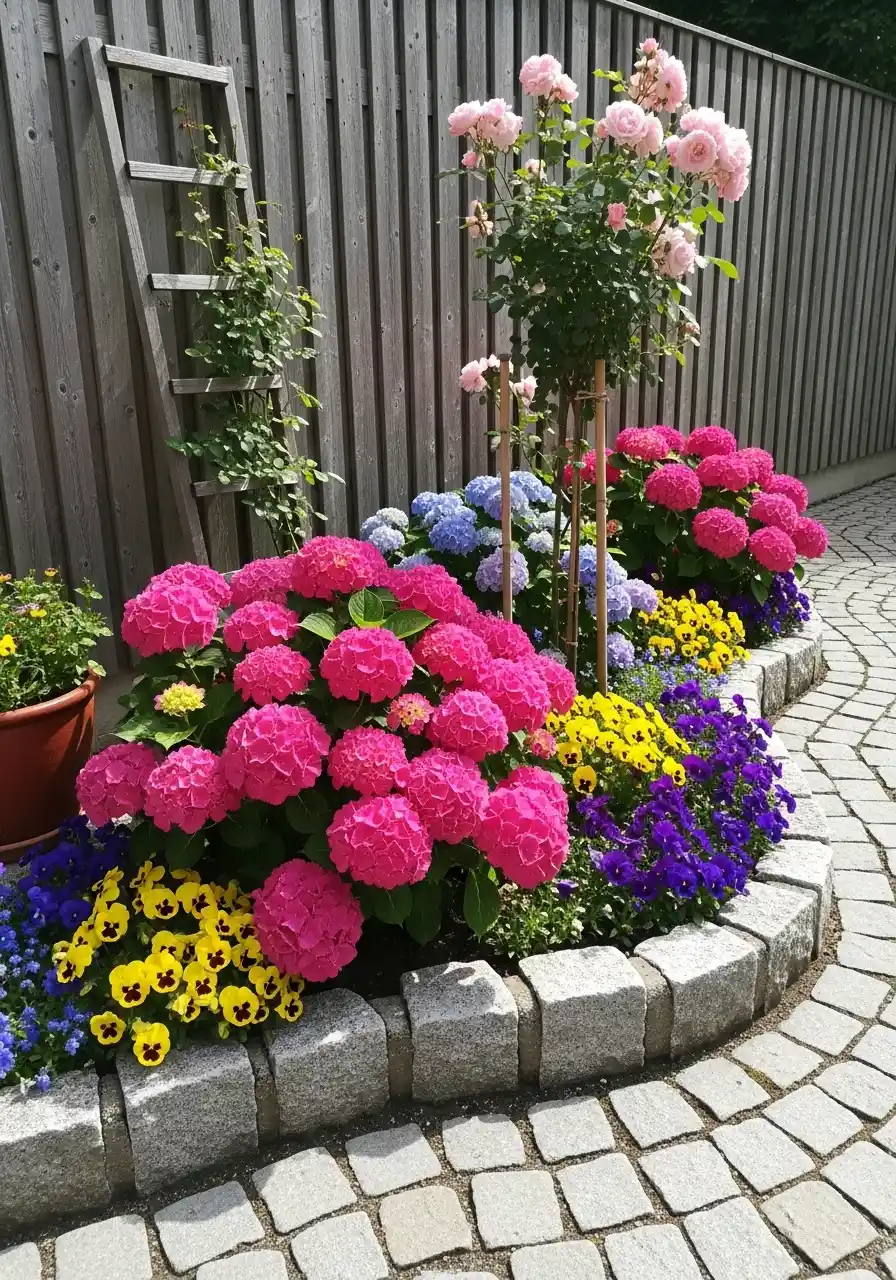
This one feels friendly, like a garden that actually wants you to sit near it. The curvy garden border is made with chunky stone blocks, and that border height gives it a tidy, lifted look. The hydrangeas make big soft balls of color, which is kinda perfect for a wave-shaped border.
I like the tall rose standards in the back because it adds height without blocking the view. Also, the color mix is brave: hot pink, cool blue, yellow, and purple. It works because the plants are grouped, not mixed like confetti.
If you’re doing this at home, give hydrangeas space. They get wide and they will bully smaller flowers. Put the smaller stuff right along the wavy edging so it frames the curve and hides bare mulch.
Long lawn curve with tulips for spring drama
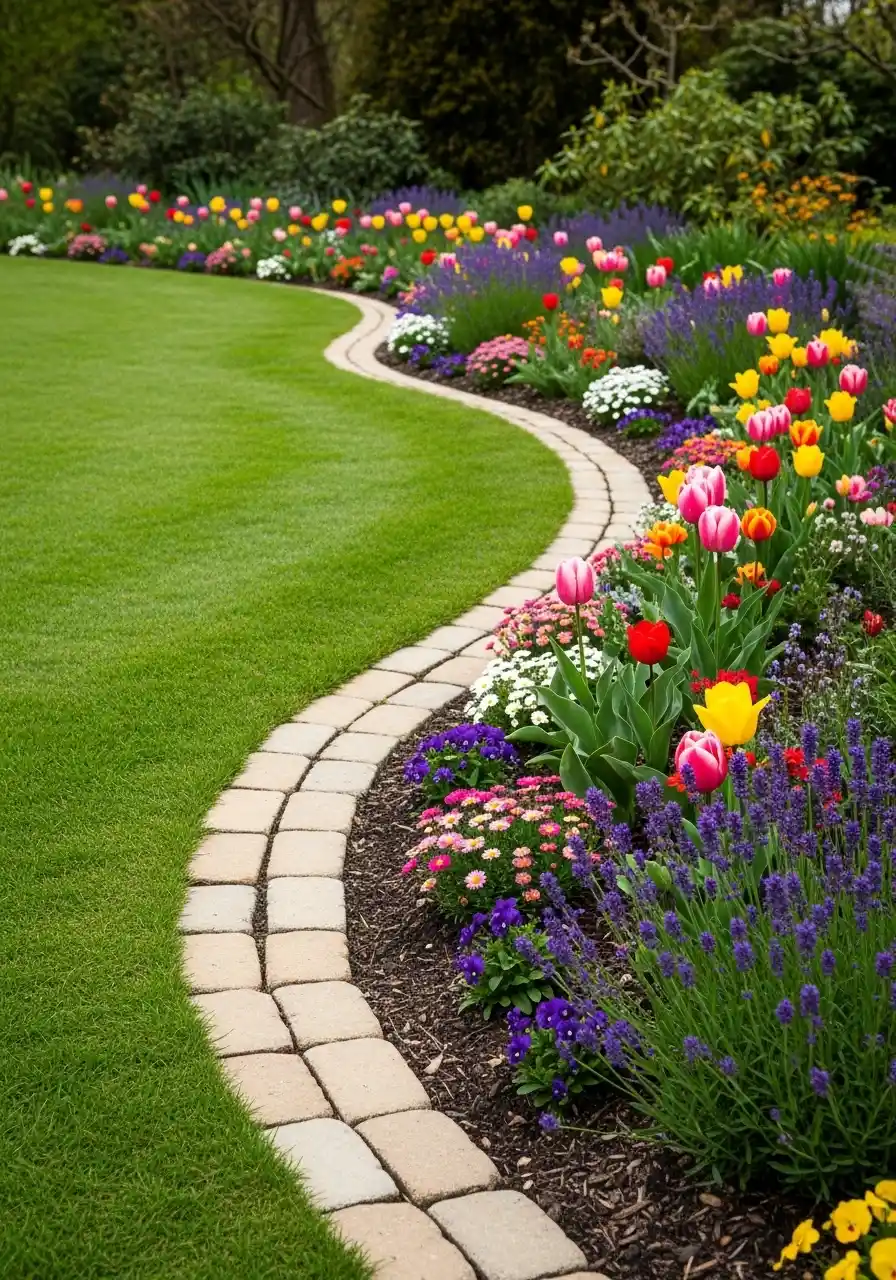
This is the “clean lawn, colorful edge” look. The wavy border garden line is super smooth, and the plants are layered like a crowd at a concert: short stuff in front, tulips popping up, then taller background plants farther back.
I’m obsessed with how the curve makes your eye travel. A straight bed ends fast, but a wavy landscape edging line keeps pulling you forward. It makes even a normal yard feel bigger, I swear.
Practical tip: tulips are a moment, not a season-long thing. Plant them, enjoy them, then have later-blooming stuff ready (like salvia, allium, or low mounds) so the bed doesn’t turn into sad green sticks afterward.
The “S-curve” river of color through open grass
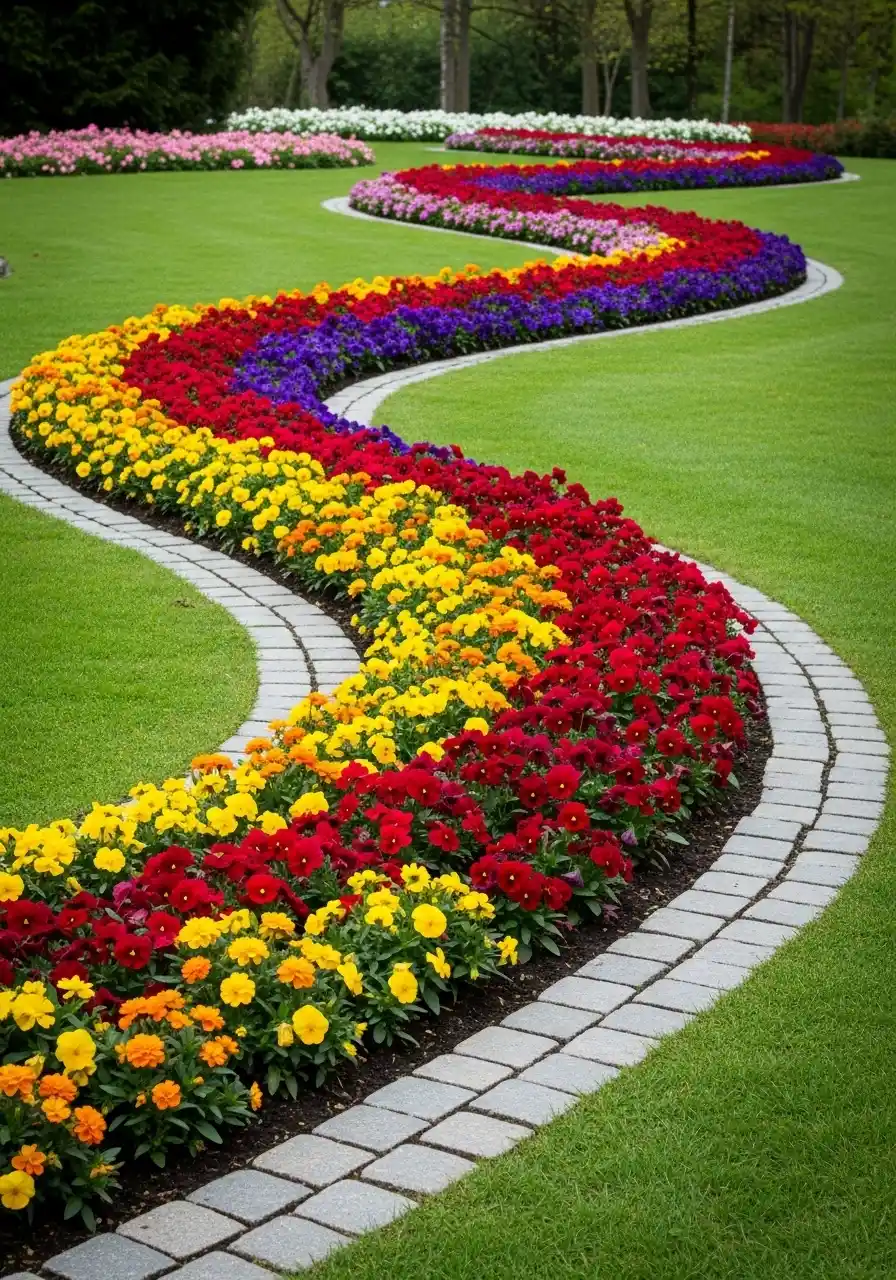
This one is pure garden theatre. It’s a serpentine garden border that snakes through the lawn like a stream, and the flower colors shift in bands. It feels playful but still controlled, because the edging line is consistent.
If you want this effect, keep the curve width the same most of the time. When the wave suddenly gets skinny, it looks accidental. The best waves feel rhythmic, like music.
A little cheat I use: I repeat the same flower type in different colors so the texture stays consistent. Like petunias in red, purple, and yellow. Same shape, different color. That’s what makes a wavy bed edge look polished without needing 40 plant types.
Foundation bed curve that makes a house look “finished”
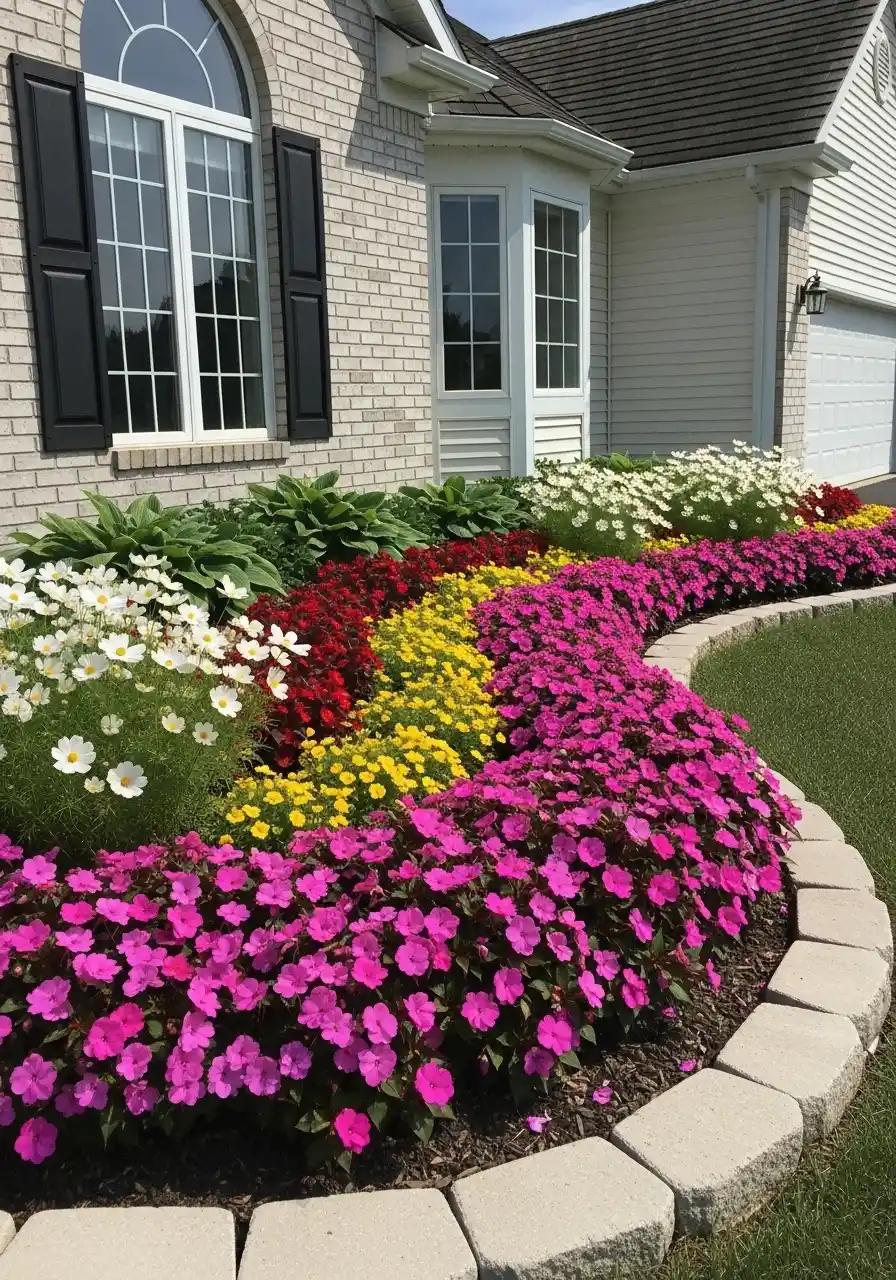
This is such a good front-yard fix. A curved border edging line around the house makes the foundation planting look intentional, not like you just threw flowers along the wall. The layered colors lead you along the house, and the curve softens all those straight windows.
I like how the flowers are packed but not messy. There’s space between groups, and the edging stones keep mulch in place. Also, the wide curve near the lawn gives mowing a clean edge, which matters more than people admit.
My advice: keep taller leafy plants (like hostas) behind the bright flowers. It hides the house base and gives depth. And don’t make the curve too tight near corners, tight curves are hard to edge cleanly.
Brick path + soft curves for a calm, romantic garden
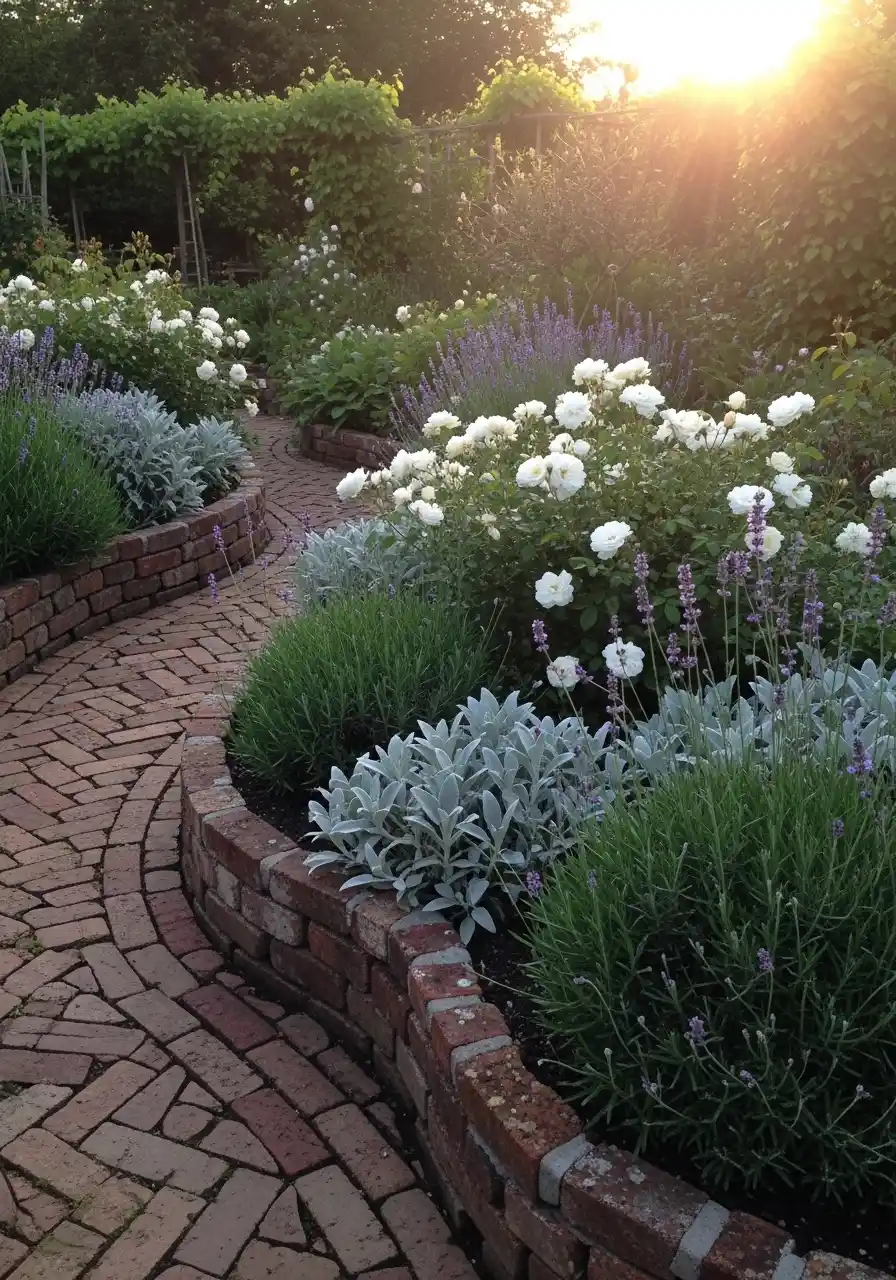
This one feels like an evening walk garden. The border is a low brick wall that curves and holds planting beds like little pockets. White roses, lavender-ish spikes, and silver plants make it feel calm, not loud.
A sinuous garden border like this is great when you want texture more than color. Silver leaves next to purple spikes is just… soothing. And brick adds warmth, even when the flowers are cool-toned.
If you copy this, don’t overplant tall stuff near the path. Keep the front low so you can see the curve. And add path lighting if you can, even cheap solar lights, because curved paths look magical at dusk. I know that sounds cheesy but it’s true.
Formal wave beds with repeating mounds and neat edges
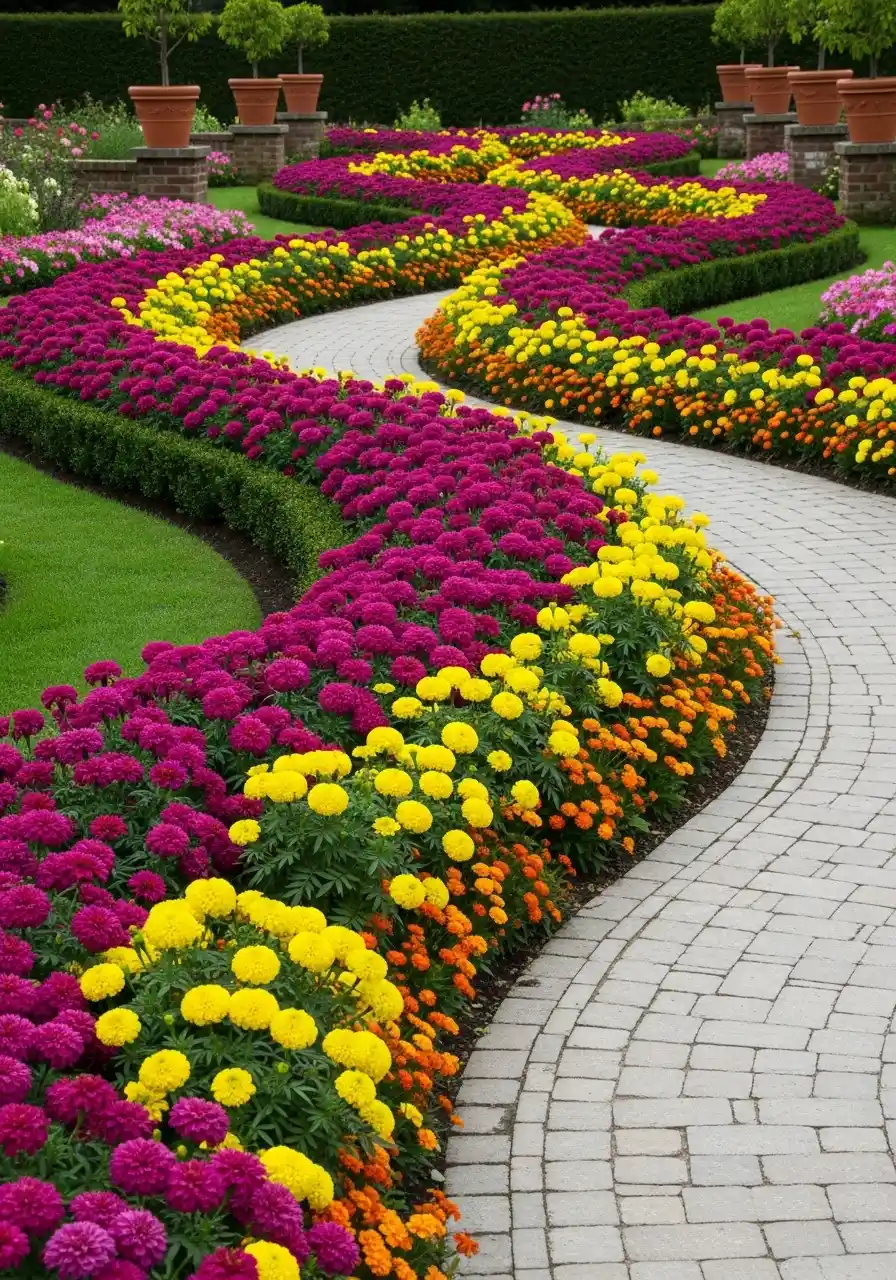
This one is more “organized adult garden.” The wavy garden border is wide and symmetrical-feeling, with repeated flowers planted like thick carpets. The curve is smooth and confident, and the walkway stays clean.
The main win here is repetition. Same plant, same spacing, same height. It’s calming, and it makes the curve stand out. When plants are too mixed, the wave gets lost.
For a home version, pick one tough flower that blooms long (like marigolds or petunias) and mass plant it. Then add a second color as a stripe. Keep mulch dark so the colors pop. This is a curvy flower border that looks high effort, but it’s mostly just repetition.
Hydrangea curve border with tiny lights for nighttime glow
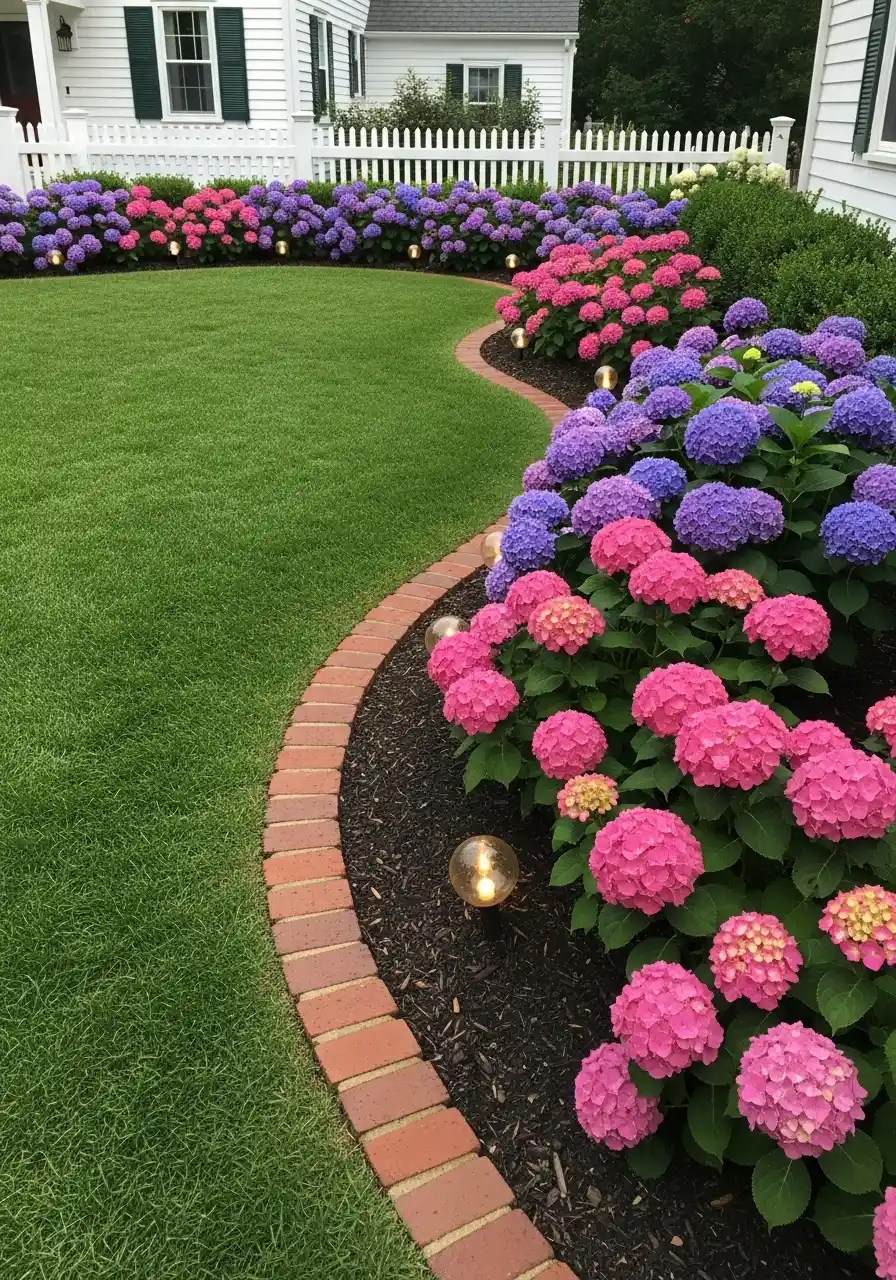
This is such a sweet idea: a curved garden border lined with hydrangeas, plus little lights tucked along the edge. It’s like the border is wearing jewelry. The brick edging is low, neat, and easy to follow when trimming.
Hydrangeas work amazing in curves because they’re naturally round. Round plants plus curvy edging feels harmonious, not sharp. The pink and purple mix also looks rich without being too loud.
Tip from my own mistakes: hydrangeas like consistent watering. If one dries out, it looks droopy fast. Add drip hose under the mulch if you can. Also keep the lights aimed slightly inward so they wash the flowers, not shine into your eyes.
Color-block wave bed that hugs a wide lawn
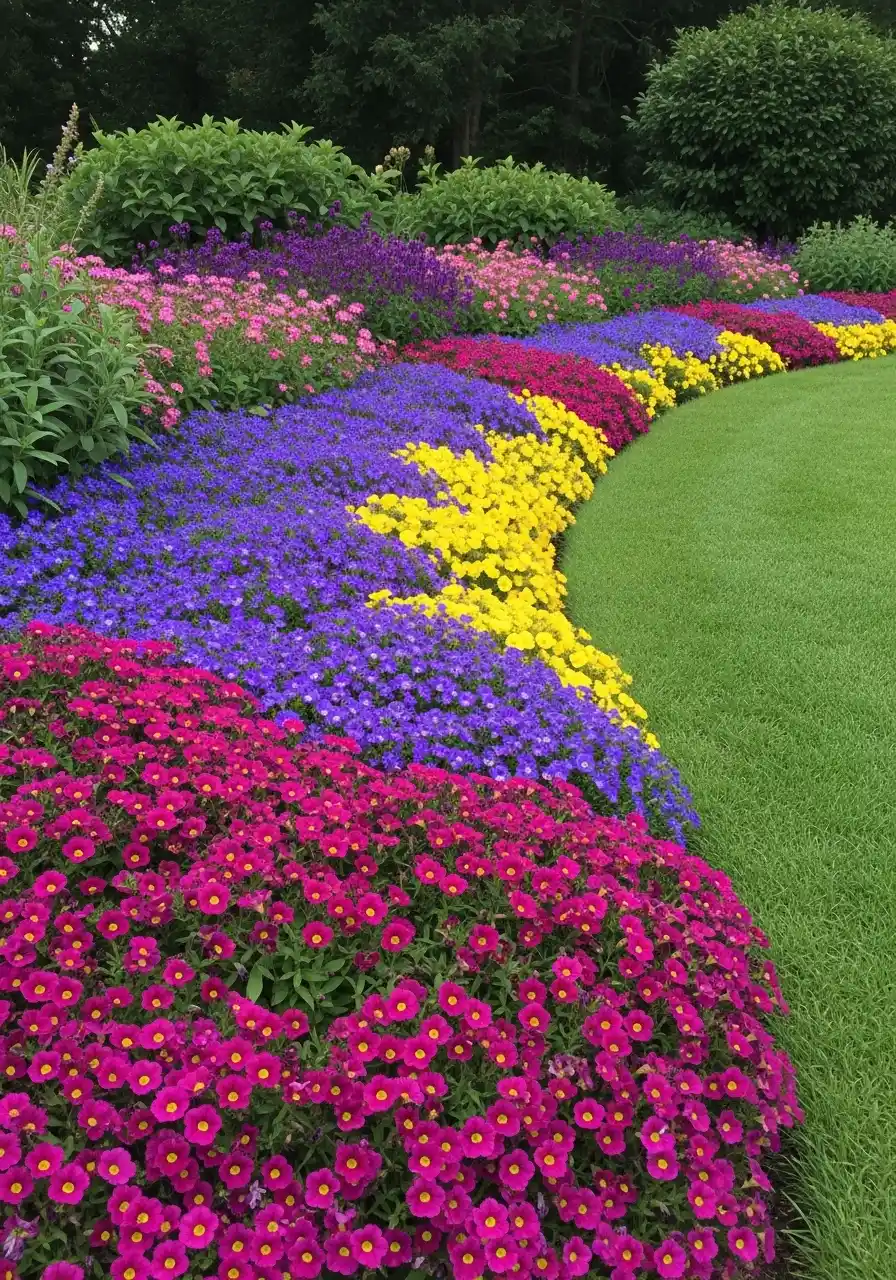
This one is basically a living painting. The wavy garden border sweeps along the grass, and the flowers are planted in giant blocks of color: red, blue, yellow, pink. It’s bold, but it works because the blocks are clean.
I like that the back row is taller and softer, with shrubs and taller plants, so the color carpet has a background. Without that, it can feel flat. The curve helps, but height helps too.
A helpful trick: use edging stones or metal edging to lock the curve, then mulch well. Weeds ruin color-block beds faster than anything. Also, keep the front edge extra crisp. A wavy lawn border only looks good if the line is sharp.
Fence-line waves with grasses behind for texture
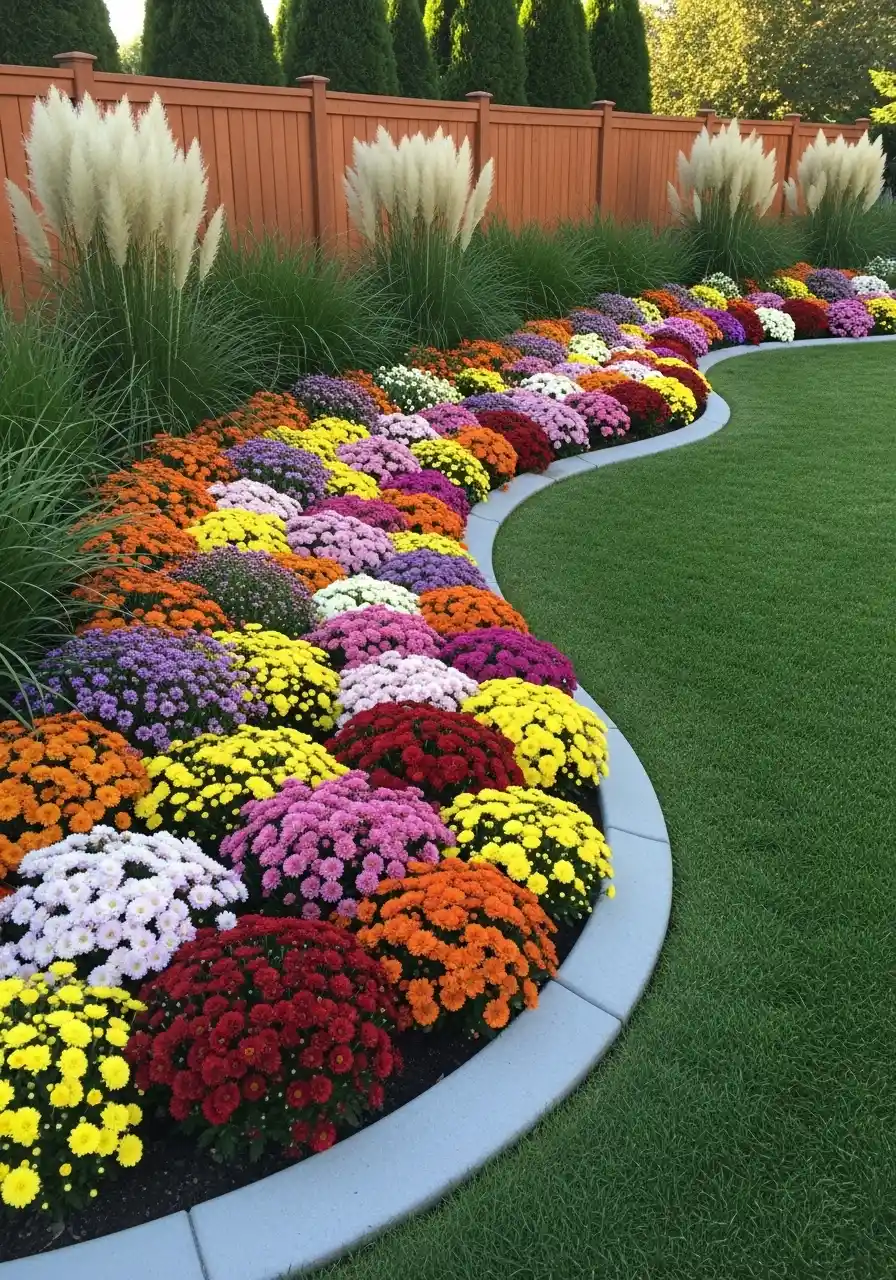
This one is my favorite “modern but colorful” combo. The border is curvy, the flowers are in tight mounds, and tall ornamental grasses sit behind like soft walls. The wavy landscape border keeps the flower mounds from feeling like random dots.
The grasses are doing quiet work here. They add height, movement, and a background so the flower colors don’t fight the fence. Plus, wind makes grasses look alive, which I love.
If you’re trying this, space the grasses evenly and keep the flower mounds consistent. Mounded plants are key for this style. Also, don’t mix too many shapes. Round flowers, round mounds, smooth curve. That’s the formula.
Painted pebble ribbon that looks like candy
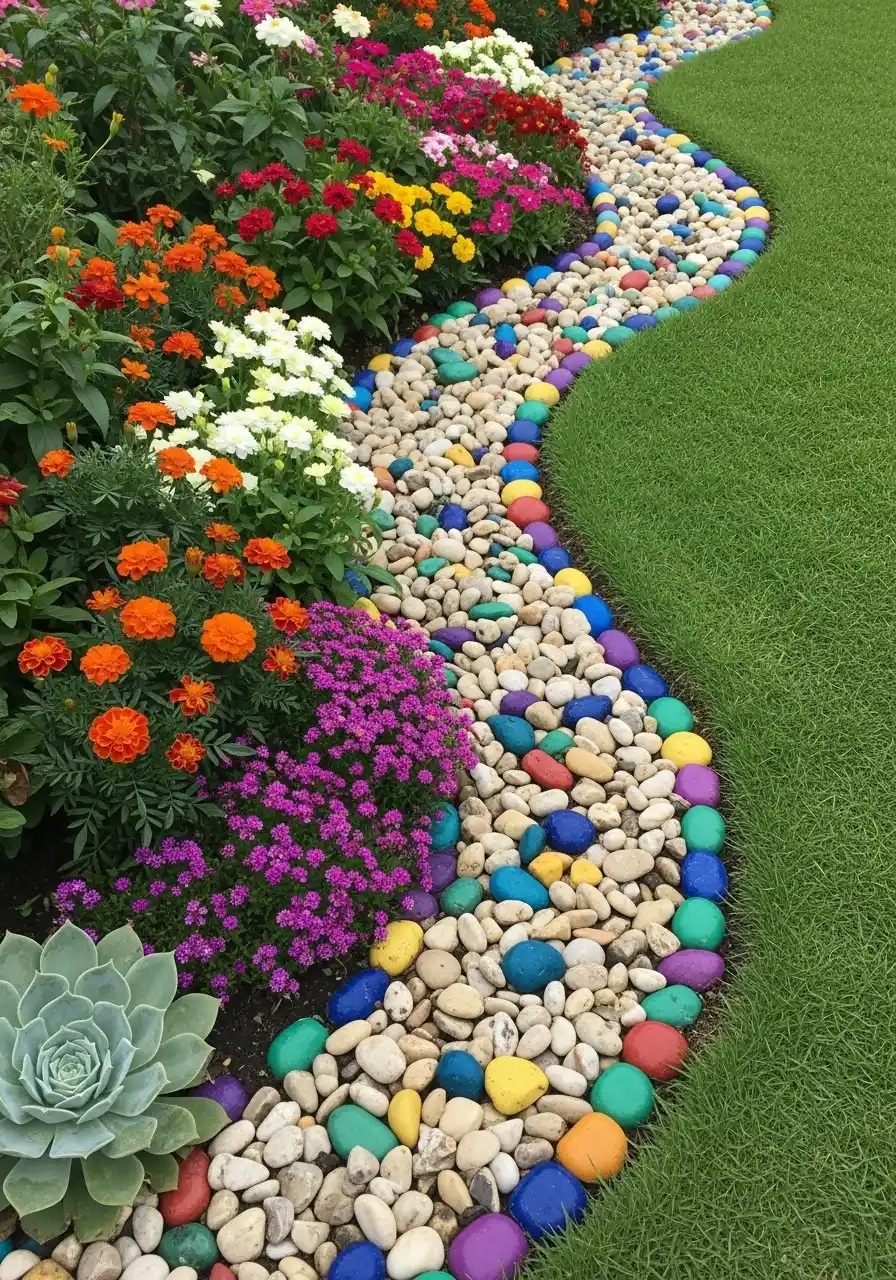
This wavy garden border with painted stones is loud in the best way. The edge is lined with bright rocks, then the inside is filled with pale pebbles, and it snakes along the flowers like a happy little river. I love it because it makes even normal marigolds look like they belong in a storybook.
If you want this, don’t skip prep. Dig a shallow trench first so the stones sit down in the soil and don’t roll away. I’d lay landscape fabric under the pebbles too, because weeds will 100% try to ruin your fun. Also, pick just a few paint colors and repeat them. When it’s too random, it starts feeling messy instead of playful.
My honest opinion: this wave-shaped garden edging is perfect for people who want joy. Like, big joy. But if you hate repainting, seal the rocks. Rain makes them look sad over time, and yes I learned that the hard way.
Lavender-and-white “cloud waves” in a wide lawn
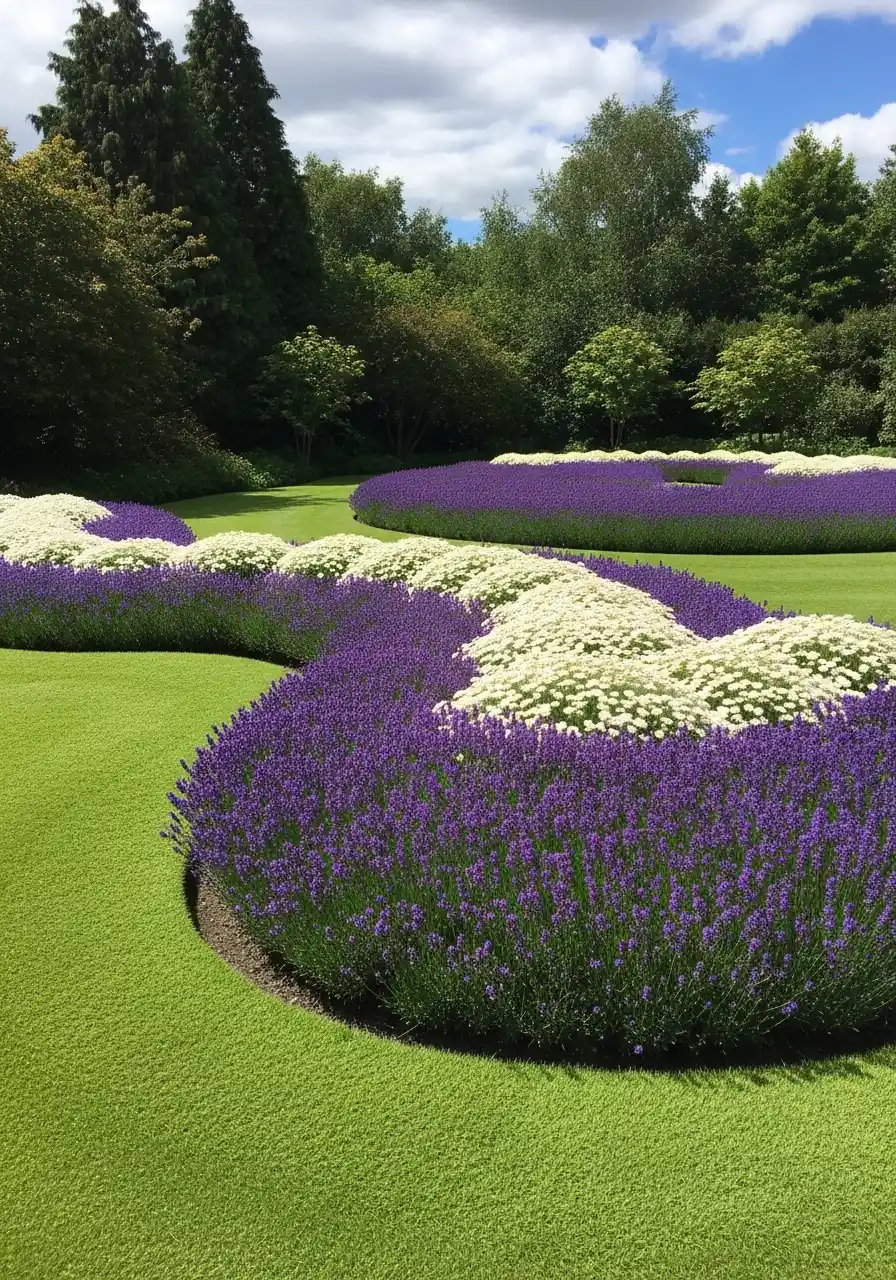
This one is so smooth it almost doesn’t look real. The curvy beds sweep through the lawn in these big loops of purple and white flowers. It’s a wavy garden border that feels calm, like the garden is breathing. I get a tiny bit jealous when I see it, because it looks expensive even if it isn’t.
To copy the vibe, you need clean curves. I’d use a garden hose to outline the shape, then step back and squint. If it looks like a weird noodle, fix it. Also, keep the plants low and consistent. Lavender or similar purple plants work great because they stay neat and smell amazing.
The trick is the negative space. That big green lawn is part of the design. If you cram extra plants everywhere, the flowing garden edge disappears. This serpentine garden border is basically a lesson in restraint, which I struggle with, not gonna lie.
White rock outline with black mulch for a crisp front yard
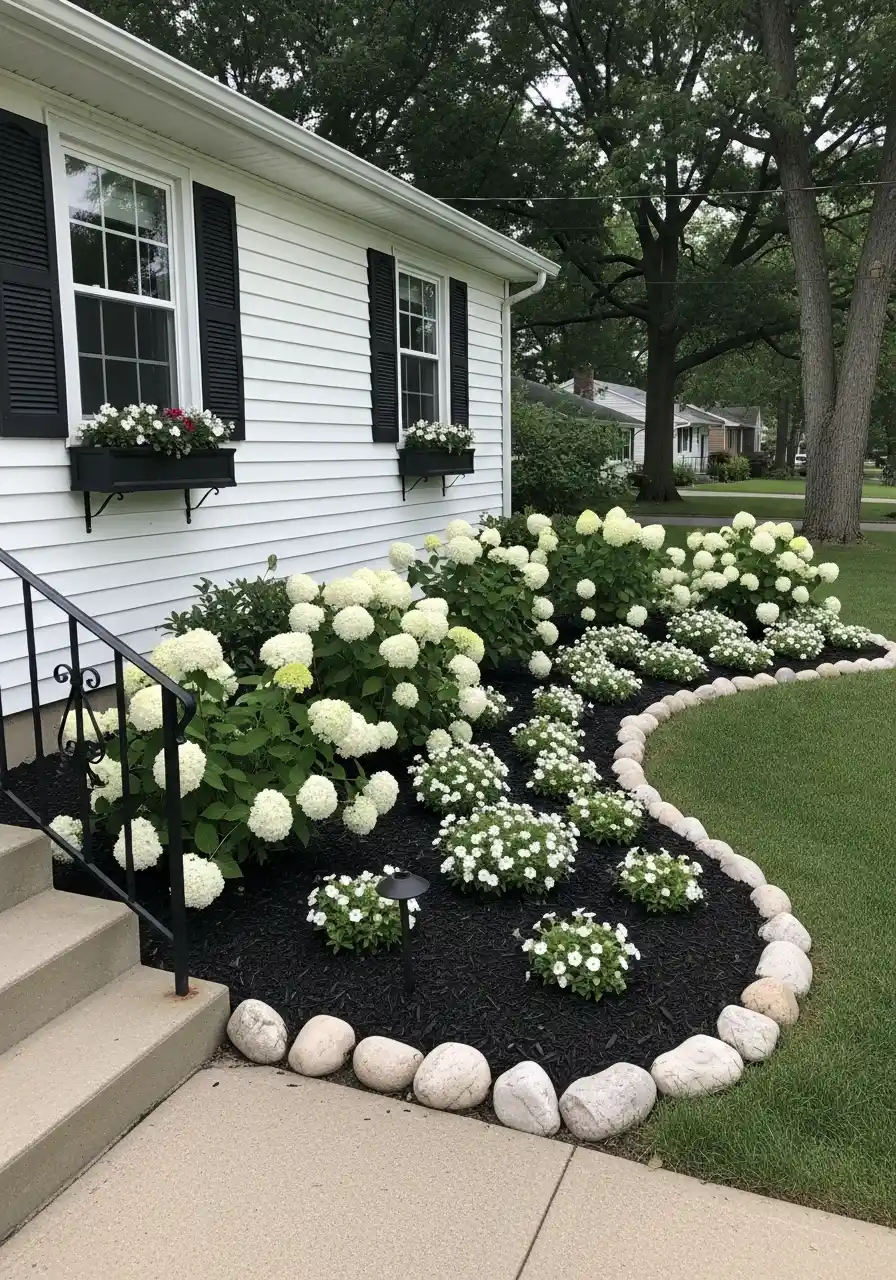
This design feels clean and sharp, like it belongs next to a house that always has clean windows. The wavy garden border is made from big white rocks that outline the bed, and the inside is dark mulch with white flowers and round hydrangeas. It’s simple, but it hits hard.
If you want something low-stress, this one is great. Big rocks don’t move much, and they don’t rot. I’d still set them slightly into the soil so the mower doesn’t clip them. A little border trench helps everything sit tight. Then add thick mulch so you don’t see dirt patches.
One confession: I used to think rock borders were boring. I was wrong. In a curvy garden border like this, rocks make the shape look super intentional. And the black mulch makes the flowers glow. It’s not loud, it’s classy.
Curved stone blocks framing a color-packed island bed
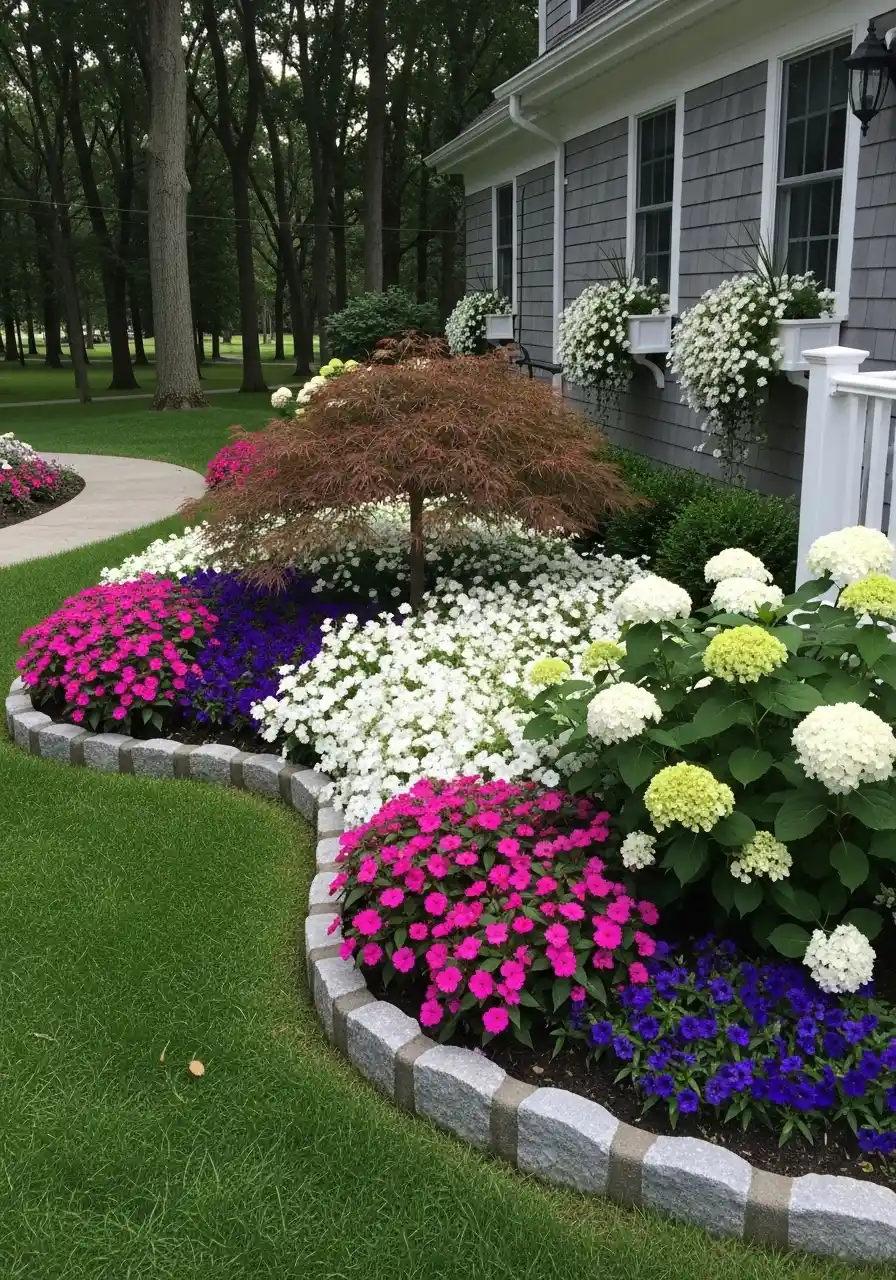
This is the kind of bed that makes you stop walking. It’s a raised-ish island (not too high), packed with bright pinks, whites, purples, and hydrangeas, all held in by a stacked stone edge. The border curves like a smooth C-shape, and the lawn around it looks like a carpet.
If you build this, start with the border first. Lay the blocks on compacted soil or a thin gravel base so they don’t sink uneven. That uneven look drives me nuts, even when I try to pretend I’m chill. Then keep the tallest plants toward the center or back so you don’t block the whole view.
This wave garden edging works because it mixes structure with chaos. The stone edge is strict, but the plants are fluffy and kind of wild. It’s like a good haircut with messy curls. Also, pick 2–3 main colors and repeat them so it doesn’t turn into a random rainbow.
Fence-line curve with white pavers and layered flowers
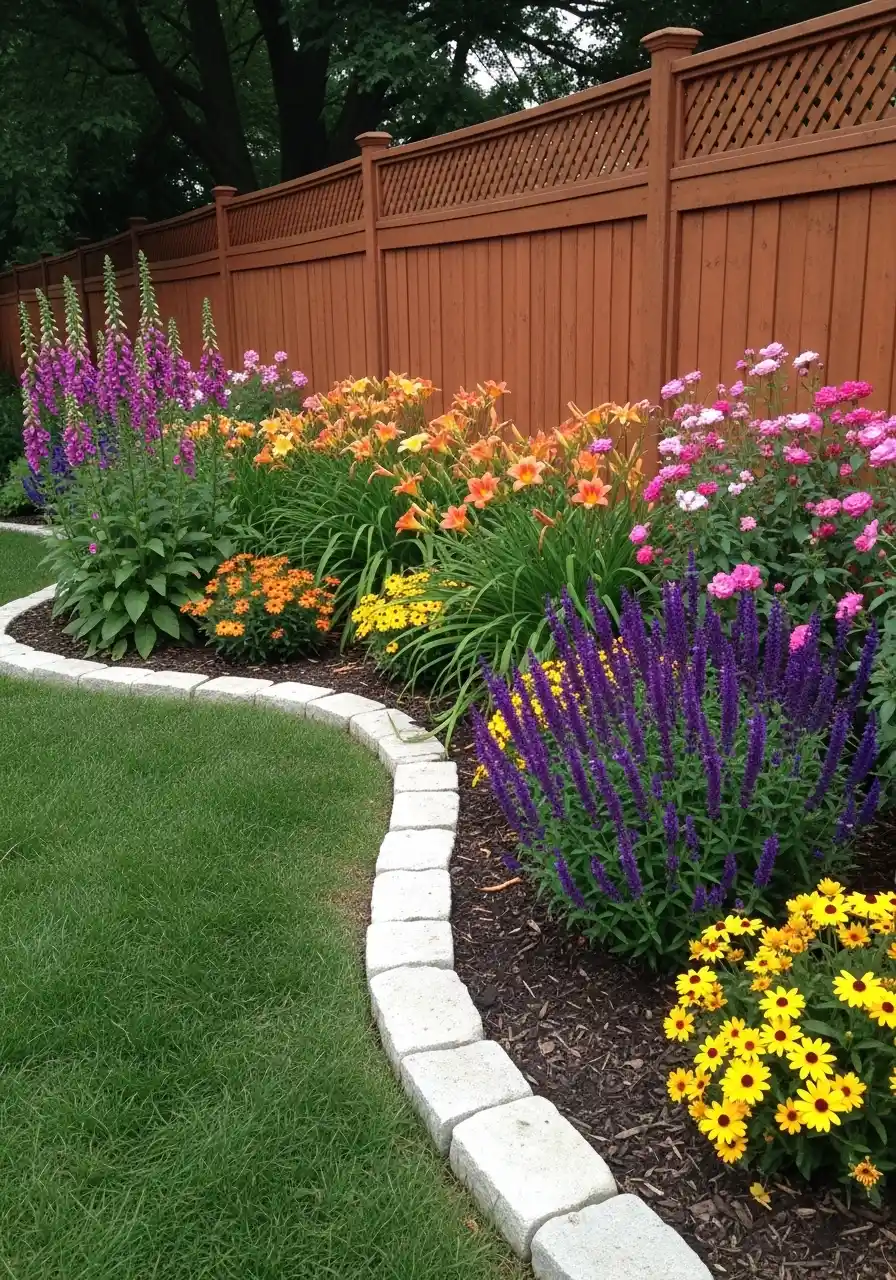
This one runs along a fence and it’s doing that “soft curve” thing perfectly. The white paver edge makes the line super clear, and behind it the flowers are layered like a stage. Purple spikes in the front, yellow daisies, orange lilies, pink flowers, the whole show.
If you’re copying this, don’t plant everything at once unless you like chaos. Place plants in pots first, step back, then shift them around until the heights look right. Tall stuff goes back, medium in the middle, and shorter in front. The curving garden border is the frame, so keep it visible.
A small hack: mulch the bed well and keep the edge clean. White pavers look amazing but they show dirt fast. I’d spray them off once in a while, or they start looking tired. Still, this flowing garden border is worth it because it makes a plain fence look fancy.
FAQ about wavy garden border designs
1) What makes a wavy garden border look “right”?
Smooth curves with enough width, not tight zigzags.
2) Can I make a wavy border without stone edging?
Yes, but crisp edging helps the curve stay clean.
3) How do I plan a wave-shaped border?
Lay a hose on the ground first and adjust from a distance.
4) What flowers work best for a curvy flower border?
Mounding flowers like petunias, marigolds, begonias, or mums.
5) How wide should a wavy bed edge be?
Wide enough to plant in layers, usually 3–6 feet depending on space.
6) Do curves make a yard feel bigger?
Usually yes, because your eye travels longer along the line.
7) How do I keep weeds out of a serpentine garden border?
Thick mulch and tight plant spacing, plus quick weeding early.
8) What’s the easiest edging for a wavy lawn border?
Flexible paver edging or small blocks that can turn easily.
9) How many colors should I use in a wavy border garden?
Three to five main colors is safer than ten.
10) Can I mix shrubs with color bands?
Yes, shrubs make a great background and add depth.
11) What’s a cheap way to add nighttime style?
Small solar lights along the curved border edging.
12) How often should I re-edge the curve?
At least once a season if you want it super crisp.
Conclusion
A wavy garden border isn’t just decoration, it’s a trick for making everything feel softer and more planned. The curve guides your eyes, hides awkward spaces, and makes even basic flowers feel like a design choice. I still mess up my curves sometimes (I get impatient, not proud of it), but when the line is smooth and the plants repeat nicely… it honestly feels like the yard is smiling back at you.