The funny thing is, I didn’t think a vegetable garden border mattered that much until I saw one that was too messy. The plants were fine, but the edges were chaos, and it made the whole garden feel stressful. Now I notice borders first, like a bad habit. And yep, I kinda love it.
I’m sharing the 28 layouts from your images because each one has a border idea that changes how the garden works, not just how it looks.
Table of Contents
Vegetable garden border with brick beds and a clean “green carpet” path
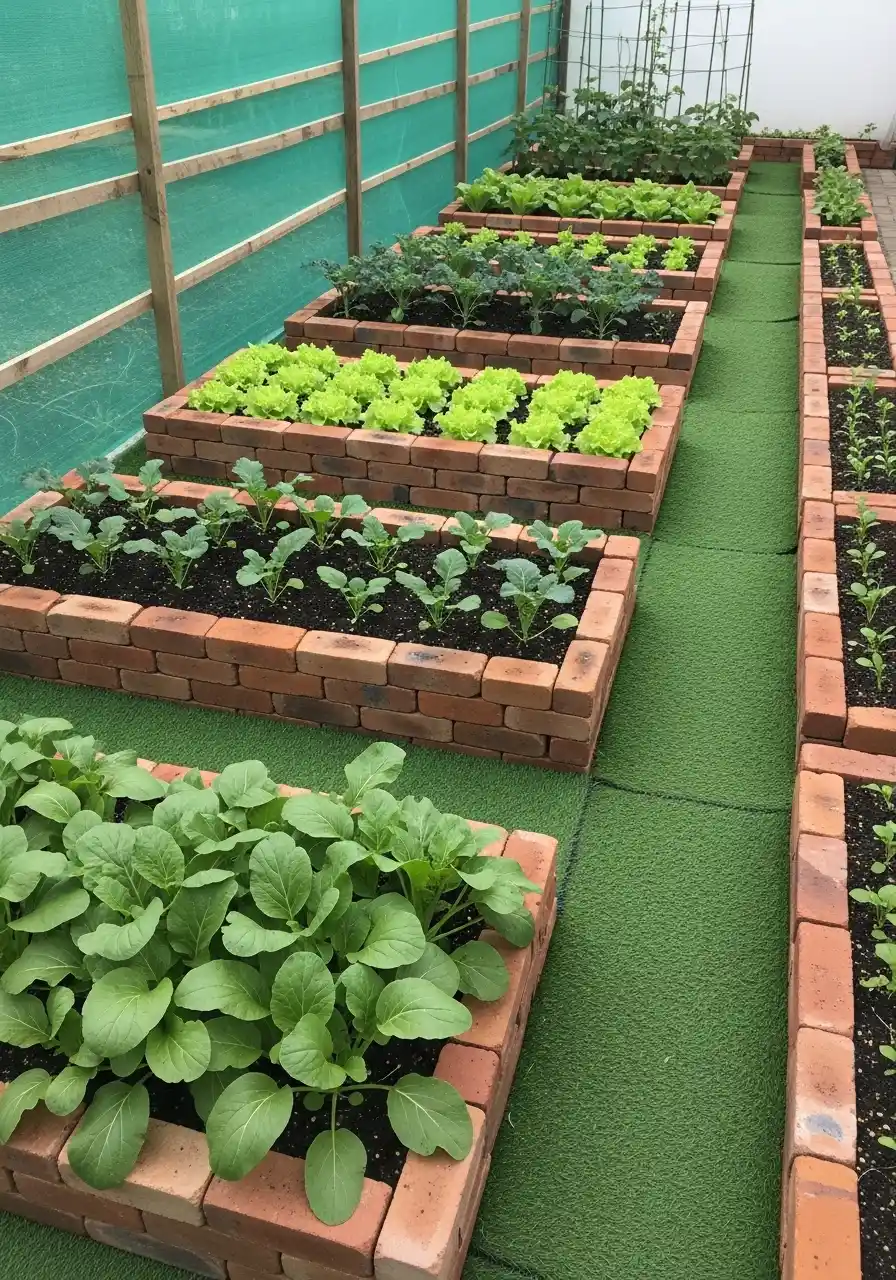
This first setup is all brick, straight lines, and that soft green walkway between beds. It feels almost like an outdoor room. I like it because the brick vegetable garden border keeps soil in place and makes every bed look “finished,” even when the plants are still tiny. Also, the path looks easy on the knees, and I’m not even old, I’m just tired sometimes.
If you want this style, stack bricks two to three rows high, then fill with rich soil. Keep beds narrow enough so you can reach the middle without stepping in. That’s the real trick. The turf-like walkway (or any firm ground cover) is a smart border partner because mud can ruin your mood fast. This is one of my favorite vegetable bed edging styles for small spaces because it stays neat.
Terraced stone beds on a slope, with borders that stop washouts
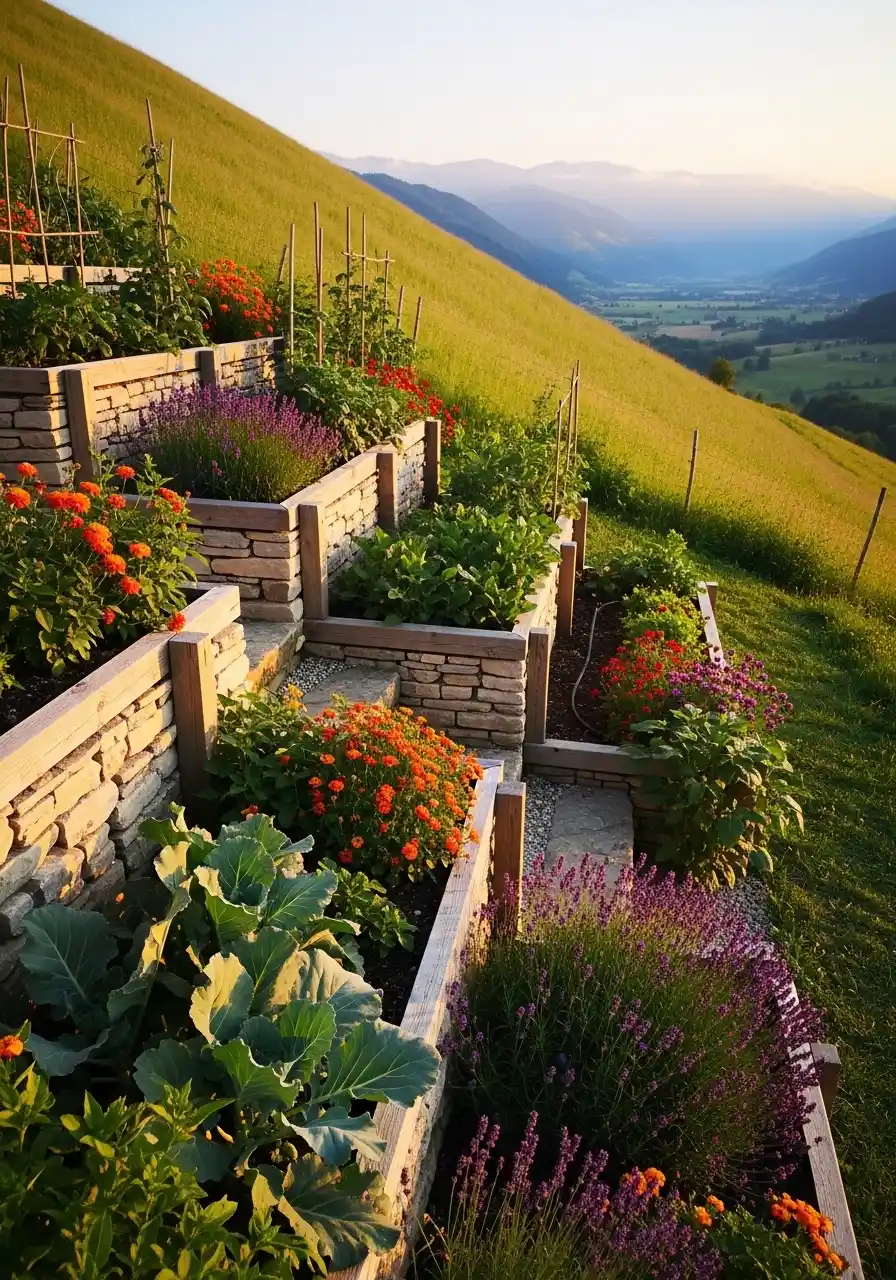
That hillside garden is honestly gorgeous, and it’s also practical. The stone-and-wood borders act like mini retaining walls. On a slope, rain wants to drag your soil downhill, and a strong border for a vegetable garden is like saying “nope, stay put.” The flowers mixed in are not just pretty either. They pull in pollinators and make the space feel alive.
To copy it, build raised beds in steps, not one long strip. Use sturdy corners and level each bed even if the hill isn’t level. I’d add drip lines too, because watering a slope by hand is annoying. This kind of raised vegetable garden border is worth it if you hate erosion, or if your garden turns into a sad muddy slide every storm.
White raised beds with gravel paths and bright flower borders
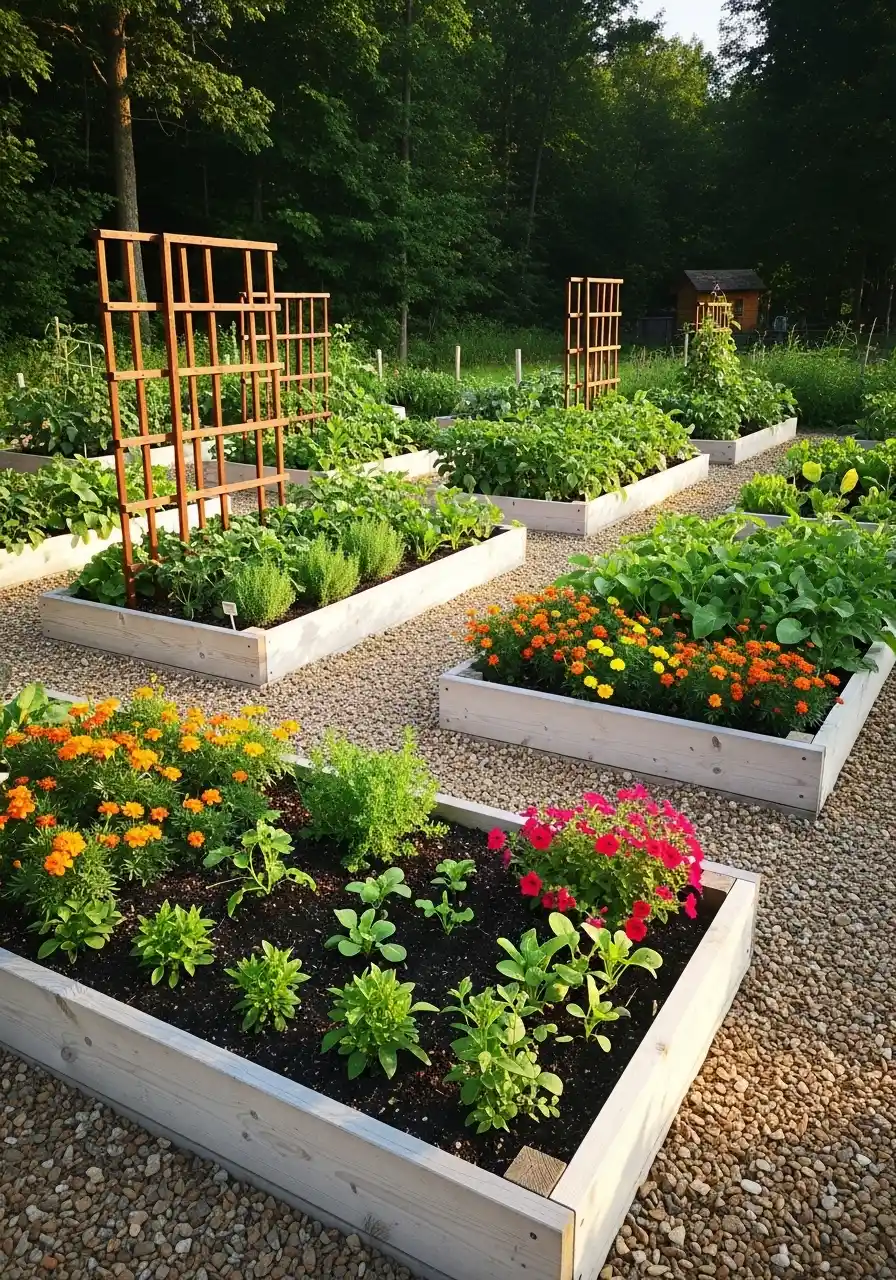
These white beds with gravel paths feel clean and cheerful, like the garden is smiling. The border idea here is not just the wood frame. It’s also the gravel “moat” around each bed. Gravel keeps shoes clean, reduces weeds, and makes the bed edges stand out. And the orange flowers (marigolds) give the whole veggie garden border a punch of color that makes the greens look even greener.
If you want this, pick one bed size and repeat it. Repeating shapes makes everything feel calmer. Lay landscape fabric under gravel if weeds are a big issue for you, but don’t overlap it sloppy or it’ll show. Tuck flowers at the corners or along the front edge so they act like living vegetable garden edging. It’s pretty, plus it helps with pests.
A circular, tiered border that turns tomatoes into the centerpiece
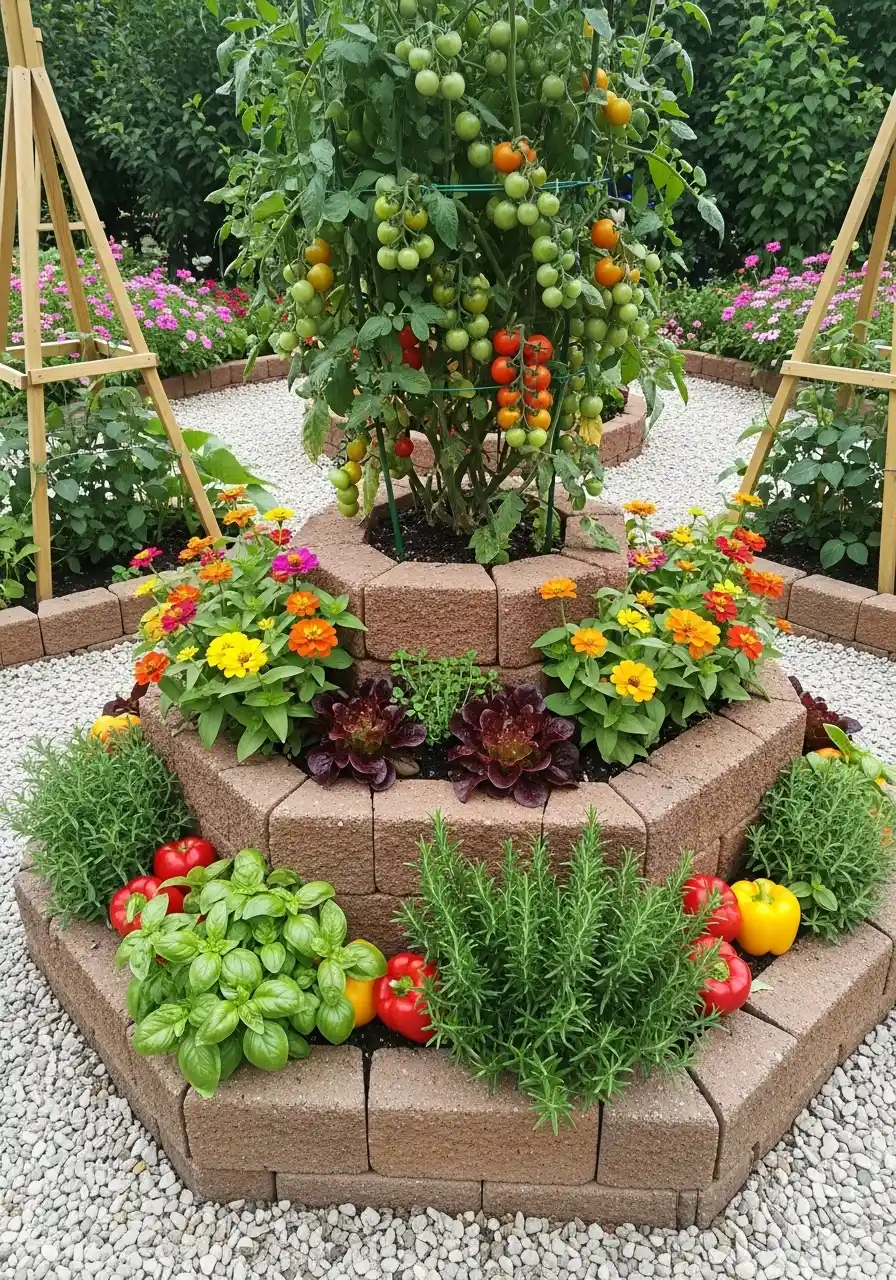
That round stacked planter is kind of genius. It’s like a stage for your tomato plant, with herbs and flowers hugging the lower rings. I love it because it makes one plant feel important, which sounds silly, but it makes me want to actually take care of it. The block border also holds heat, so tomatoes ripen a bit faster. That’s a real win.
To build this vegetable garden border design, start with a wide ring and stack smaller rings on top. Keep the center deep for tomatoes, and use the outer ring for basil, lettuce, or even nasturtiums. Add flowers for color and pollinators. This is one of those garden border ideas for vegetables that looks fancy, but it’s not hard if you take your time and keep the rings even.
Gray raised beds with stepping stones and a “soft” border backdrop
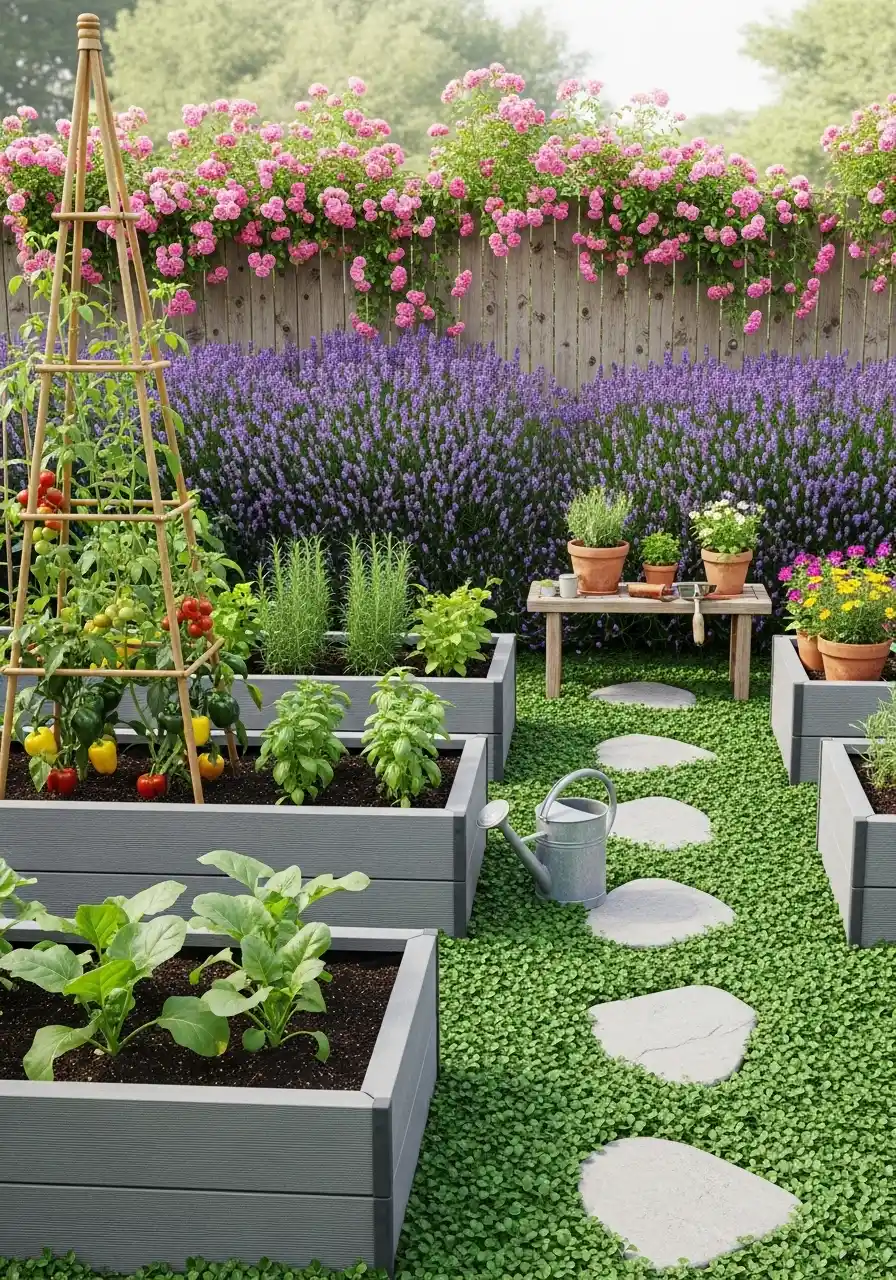
This one feels like a backyard you’d actually hang out in. The stepping stones through the green groundcover make it feel relaxed, not strict. Then there’s that big purple border in the back (lavender style) and pink blooms above the fence, which makes the whole space feel cozy. I like a vegetable garden border that feels friendly, not like a science project.
To get this vibe, use raised beds for the veggies, then give the garden a soft frame behind it. That back border can be lavender, rosemary, or even ornamental grasses. It’s like a living wall. Keep stepping stones big and spaced for real walking, not tiny tip-toe steps. This is a great edging for vegetable beds when you want the garden to feel like part of the yard, not separate.
Cinder block border bed that’s simple and kinda unstoppable
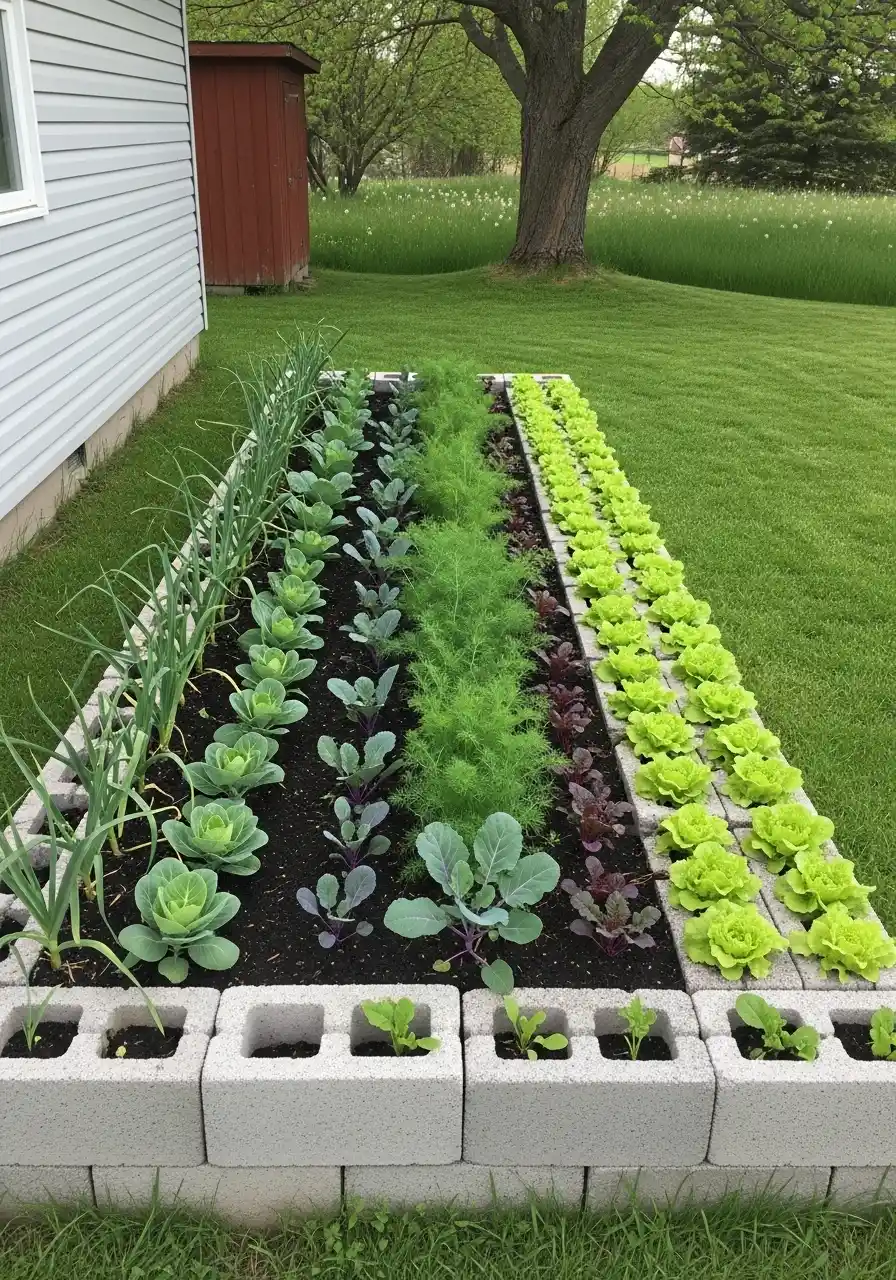
The cinder block bed along the side of a house is such a practical move. It’s straight, solid, and it tells you exactly where the garden begins and ends. The holes in the blocks are a sneaky bonus, you can plant little herbs or flowers right inside them. That’s basically free extra space. This is the kind of vegetable garden border that forgives beginner mistakes.
If you want this, level the ground first or the blocks will lean and annoy you forever. Fill the bed with good soil, then plant in rows like the photo shows. I like the row look because it’s easy to water and easy to replant. Use the block holes for basil, chives, or marigolds for a simple vegetable plot border that also helps with pests.
Big square beds with kale and marigolds, framed like a checkerboard
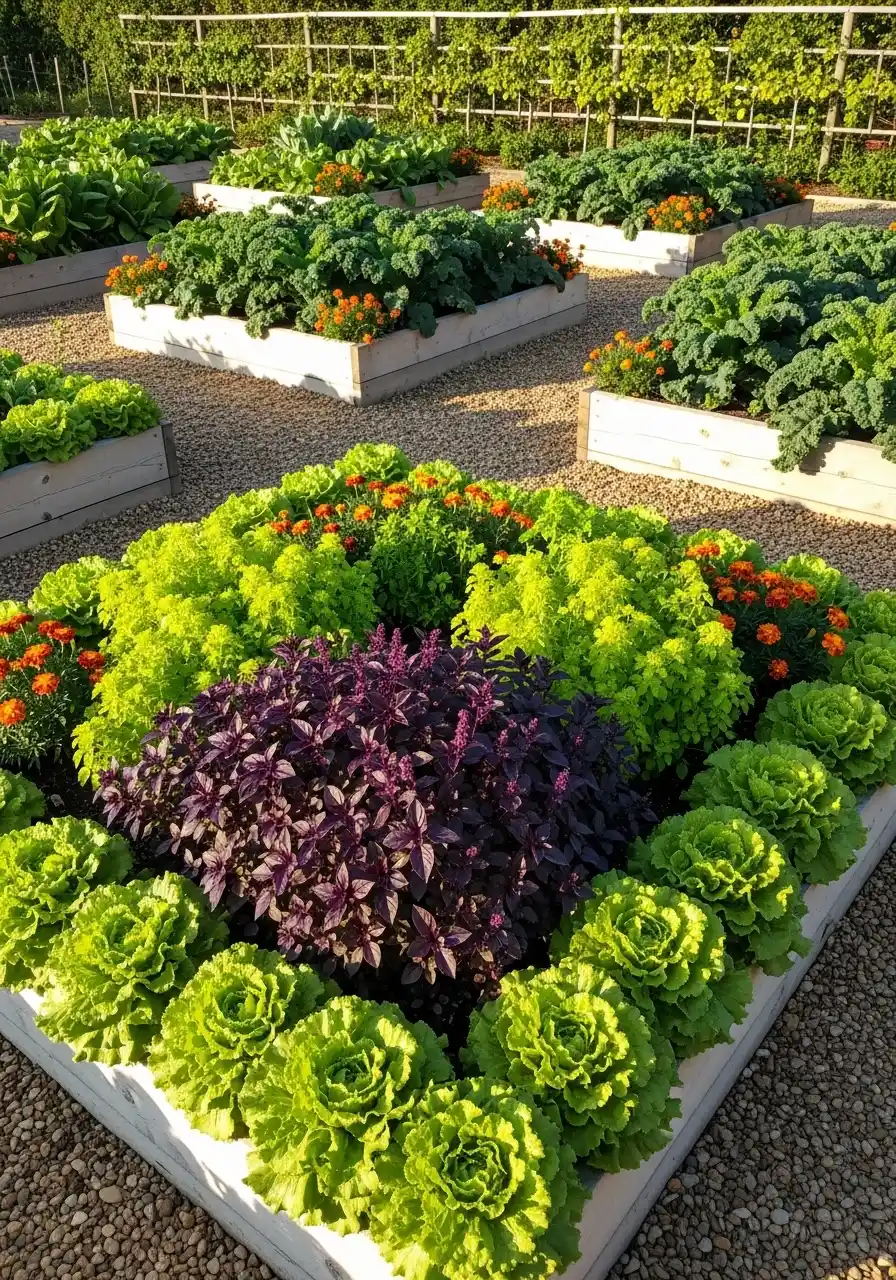
This garden is bold because it’s blocky and wide, with space between beds that feels intentional. The borders here are doing two jobs: keeping beds crisp and keeping walking lanes clear. I’m also noticing the flower clusters tucked into the beds. They make the vegetable garden border ideas feel less “farm” and more “pretty yard,” and I’m into that.
To copy it, make beds wide but keep paths wide too. That’s the trick people skip. If you can comfortably carry a bucket through the path, you’ll actually garden more. Plant heavy feeders like kale in the middle, and ring the edges with marigolds or calendula as living vegetable garden edging. It helps with bugs and looks like a little celebration.
A narrow side-yard border that still gives a big harvest feeling
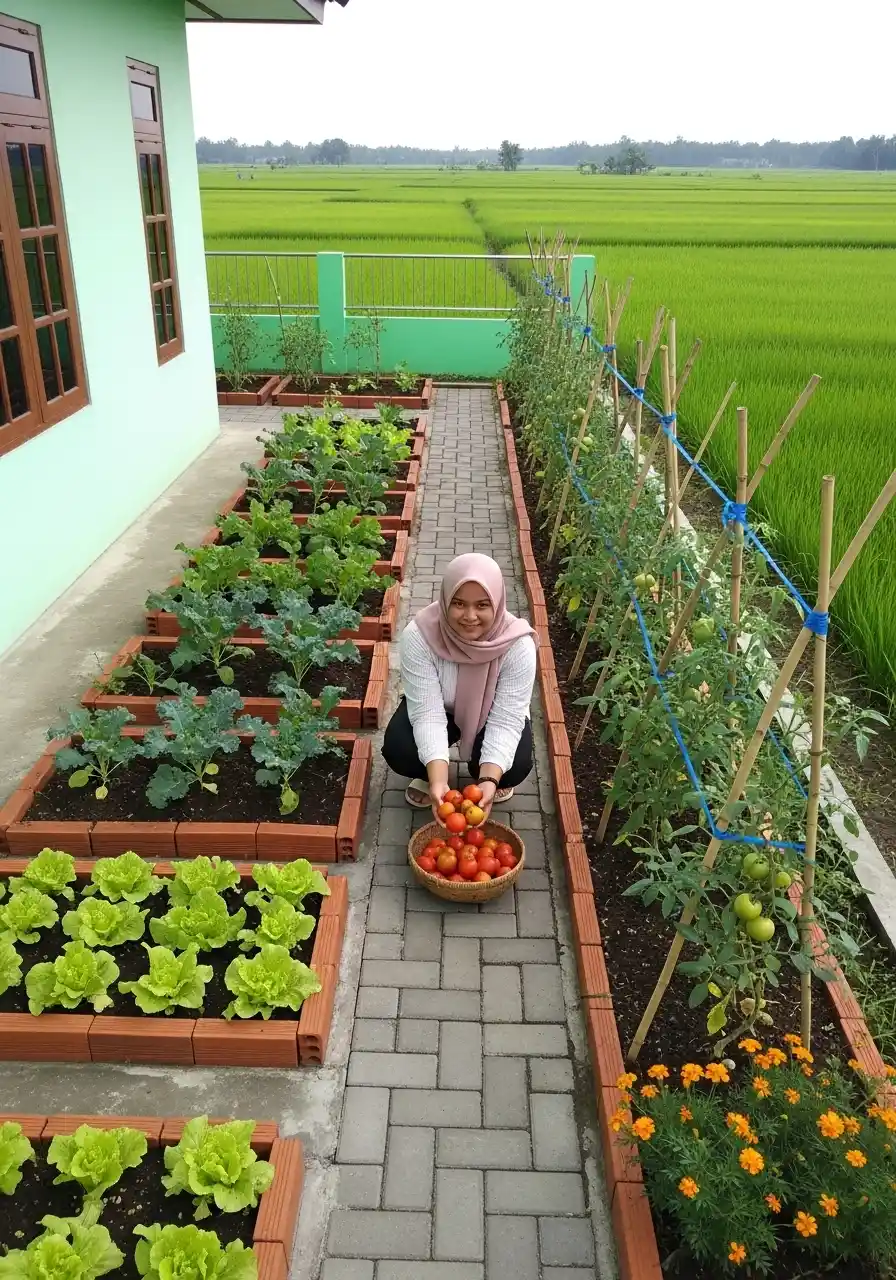
The photo with the long path and raised beds beside the house feels so real. It’s not a mansion garden. It’s “I used what I had,” and I respect that. The border is brick, and the tall trellis line on the right makes the narrow space feel taller. Honestly, I’ve had narrow gardens before, and they can feel cramped, so a clean border for vegetable beds is a sanity saver.
To do this, keep one straight walking path down the middle, then mirror beds on both sides if possible. Use trellises for tomatoes and climbers so you go up, not out. Add a few flowers at the ends for color. This kind of vegetable garden border layout is perfect when space is tight but you still want variety.
Long brick rows in an open field, bordered for speed and order
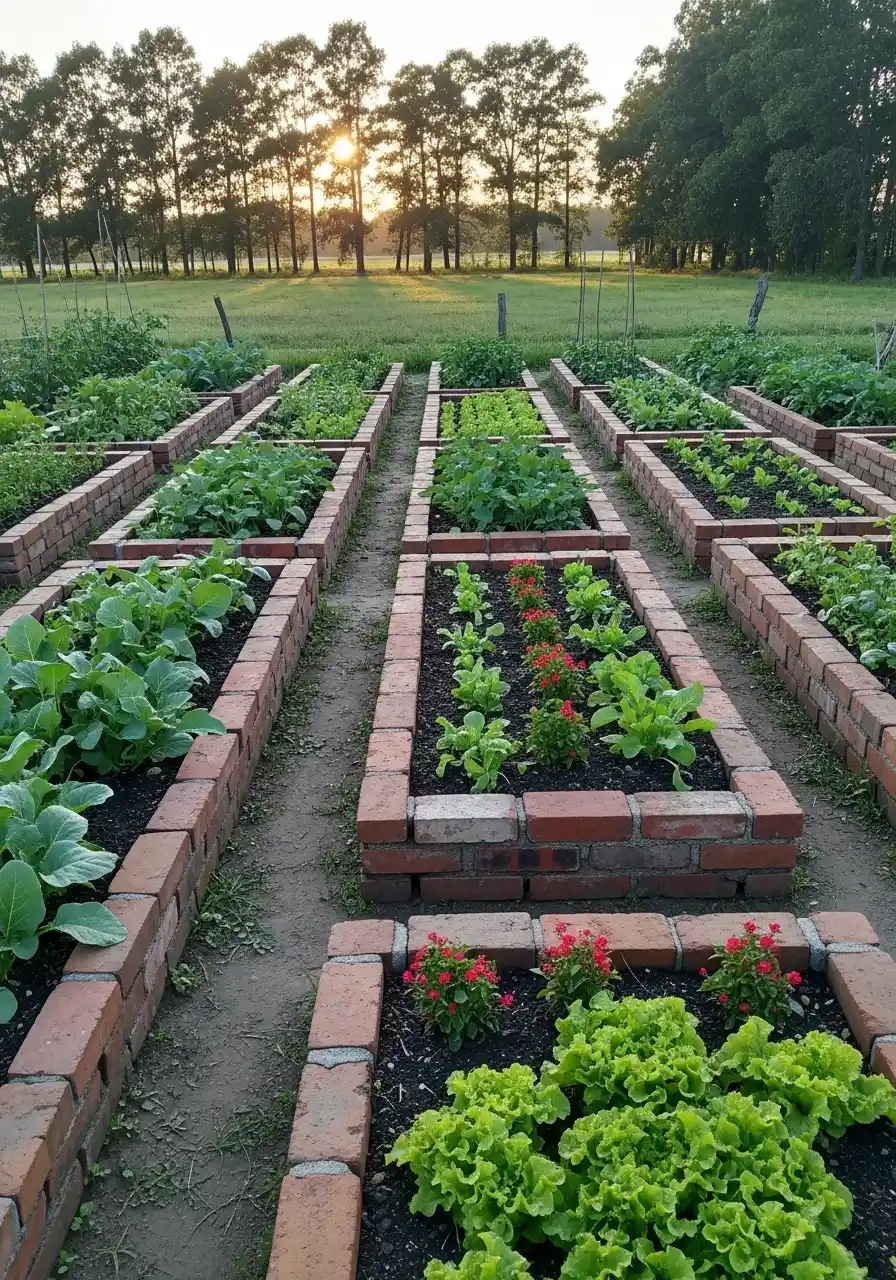
These long brick beds lined up in rows look like serious growing, but the border makes it readable. Without the border, it would just be a sea of green. With it, your eyes can rest. And the paths are dirt, which is fine because the beds are raised enough to stay defined. I like this vegetable garden border because it’s built for efficiency, not just photos.
If you’re doing many beds, keep them identical. Same width, same border height, same spacing. It makes crop rotation easier too. Leave enough path width for a wheelbarrow, not just your feet. Add one or two small flower strips as “breaks” between greens, like the red flowers in the picture. It’s a practical vegetable bed border that still has personality.
A formal fenced garden with arches, borders, and a wow-factor entrance
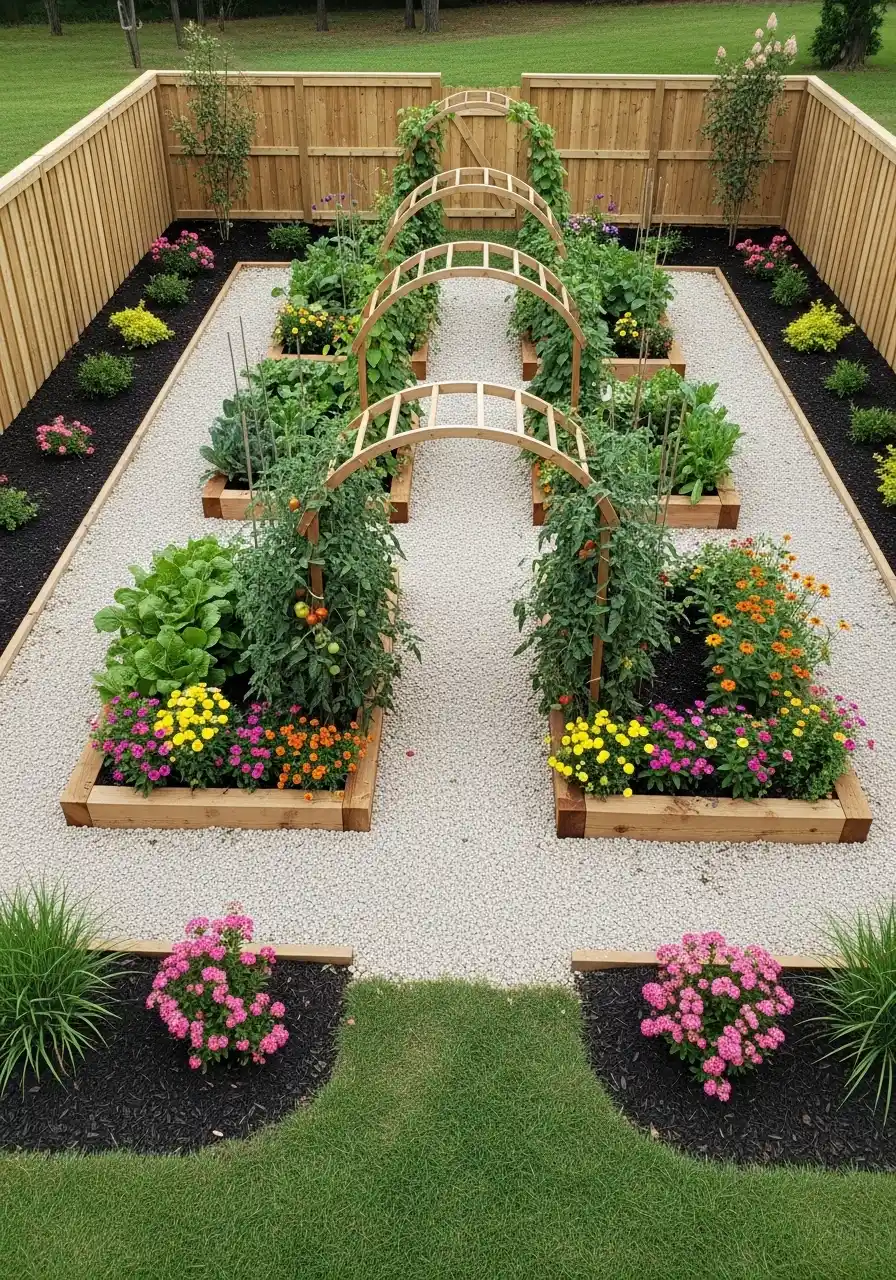
This next garden is like a little outdoor hallway, and the arches make it feel special. The border idea here is the whole setup: wood beds, bright flower corners, gravel paths, and a fence that frames it all. It feels protected, like the garden has its own safe place. I’m not gonna lie, I’d probably stand there and just stare before doing any work.
To build this, start with the paths first, then place beds evenly on both sides. Put arches in a straight line so your view goes through them like a tunnel. That repeating shape makes it feel fancy. Use flowers at bed corners as “markers” so the vegetable garden border looks finished from every angle. This is one of my top garden border designs for vegetables if you want beauty and function together.
Brick raised beds with clean corners
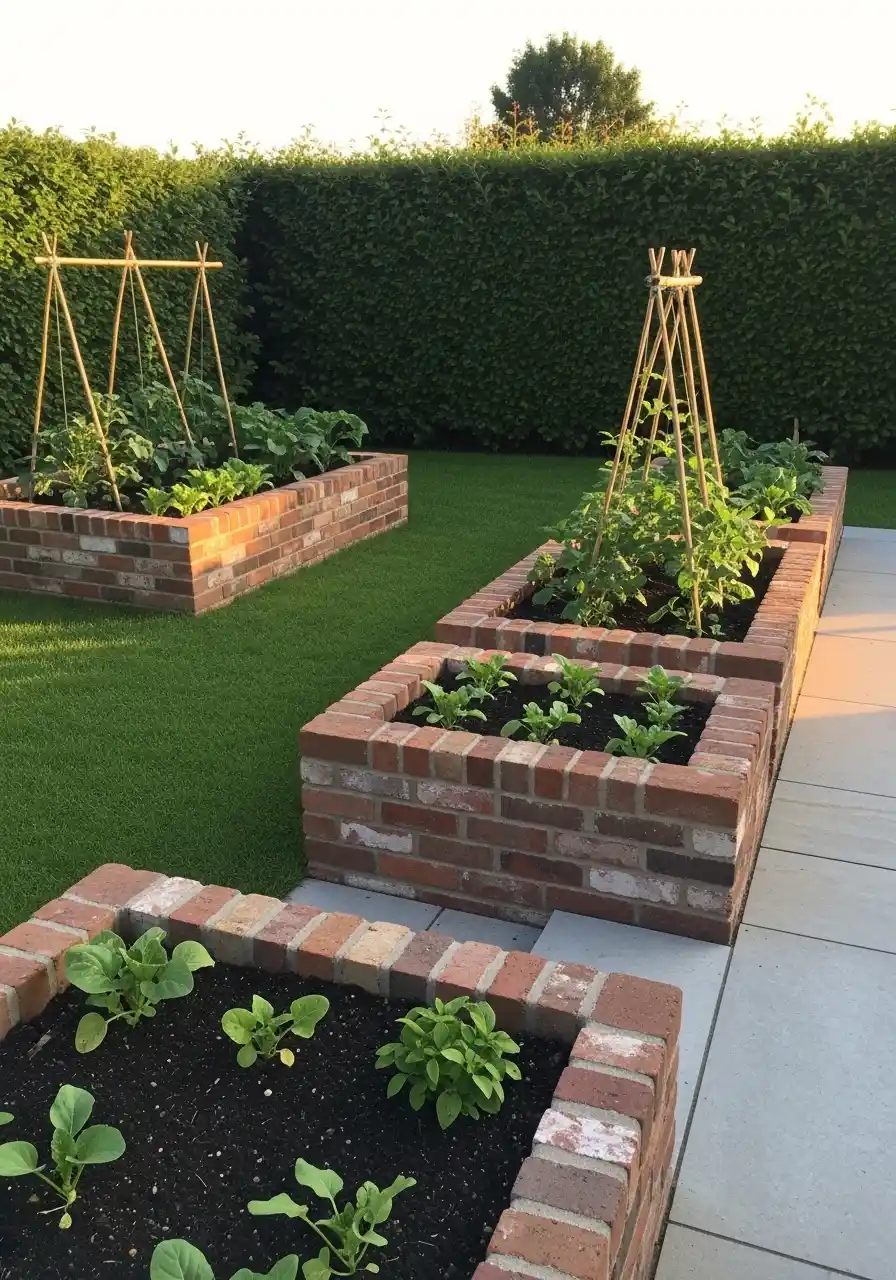
The brick beds with the simple layout feel solid and grown-up. A vegetable garden border like this basically says, “I’m serious about my tomatoes.” Brick holds heat too, so the soil warms up faster in spring. That means earlier planting, which always makes me feel smug for no reason.
I also like how the brick edge doubles as a seat. I know it’s not a bench, but I’d still sit there and stare at my plants like they’re a TV show. The trick is keeping the top layer level. If the bricks get wobbly, the whole bed starts looking sloppy, and then I start feeling irritated every time I walk by.
A quick hack: line the inside with landscape fabric before filling soil. It slows down weeds sneaking through gaps. And if you want the border for a vegetable garden to stay crisp, leave a narrow “no plant zone” right at the edge. Like 2 inches of space. It makes watering easier and keeps leaves from flopping onto the path.
Wooden beds with gravel paths and drip lines
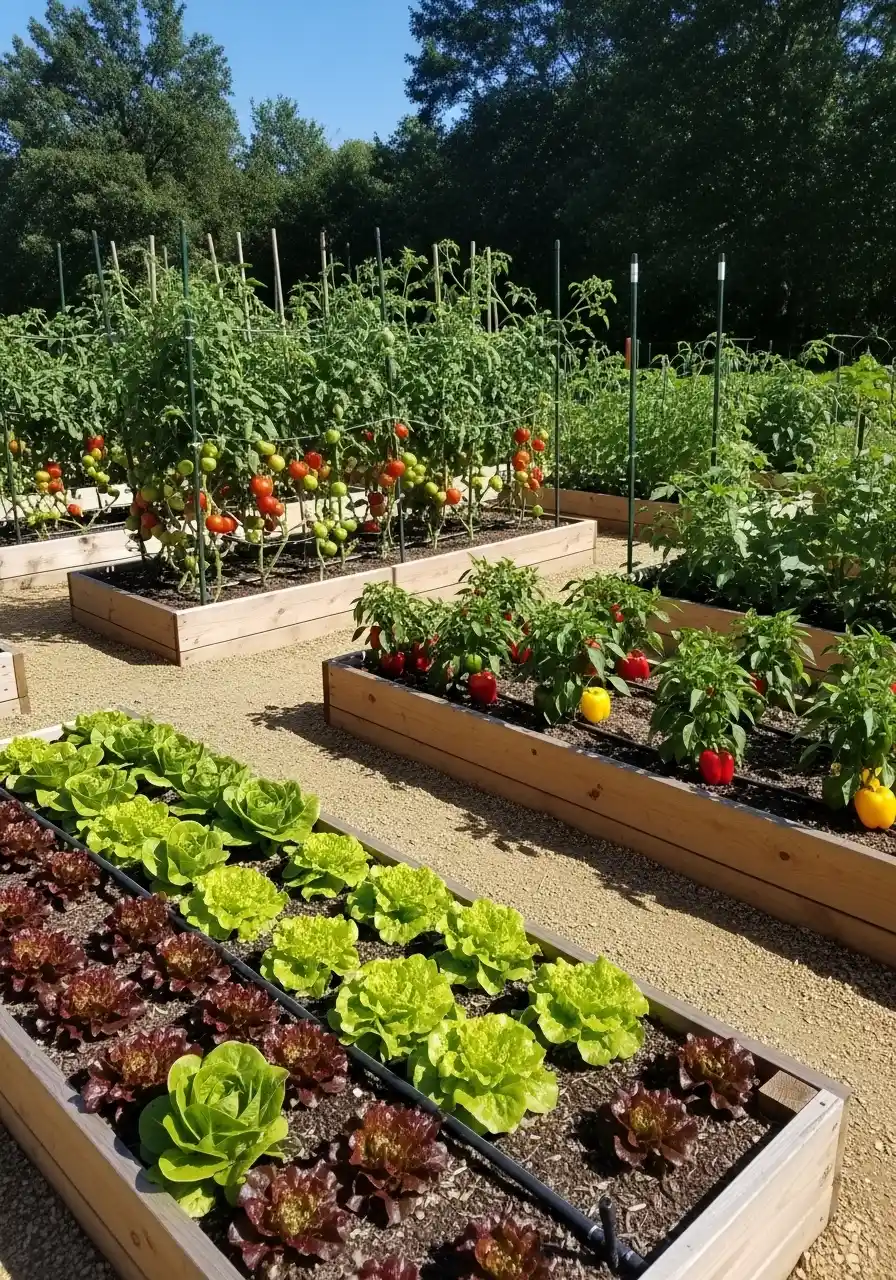
The raised wooden beds with neat gravel paths are the kind of garden that makes me jealous. It’s organized, but not stiff. The gravel also means no muddy shoes, which is honestly a blessing if you hate cleaning floors (me, I hate it).
What really pops out is the drip irrigation line running along the lettuce bed. That’s not just smart, it’s survival. Hand watering seems sweet until you miss two hot days and suddenly everything looks like sad salad. A veggie garden border like this works best when you commit to easy maintenance, not just looks.
My tip: put cardboard under the gravel before you pour it. Cardboard smothers weeds and breaks down over time. And choose thicker gravel, not the dusty fine stuff, because fine gravel shifts and sinks. Also, keep the wooden sides thick enough so they don’t bow out after a season. This vegetable garden edging idea is pretty, but it’s also about not re-building it every year.
Symmetry with a center path and a garden arch
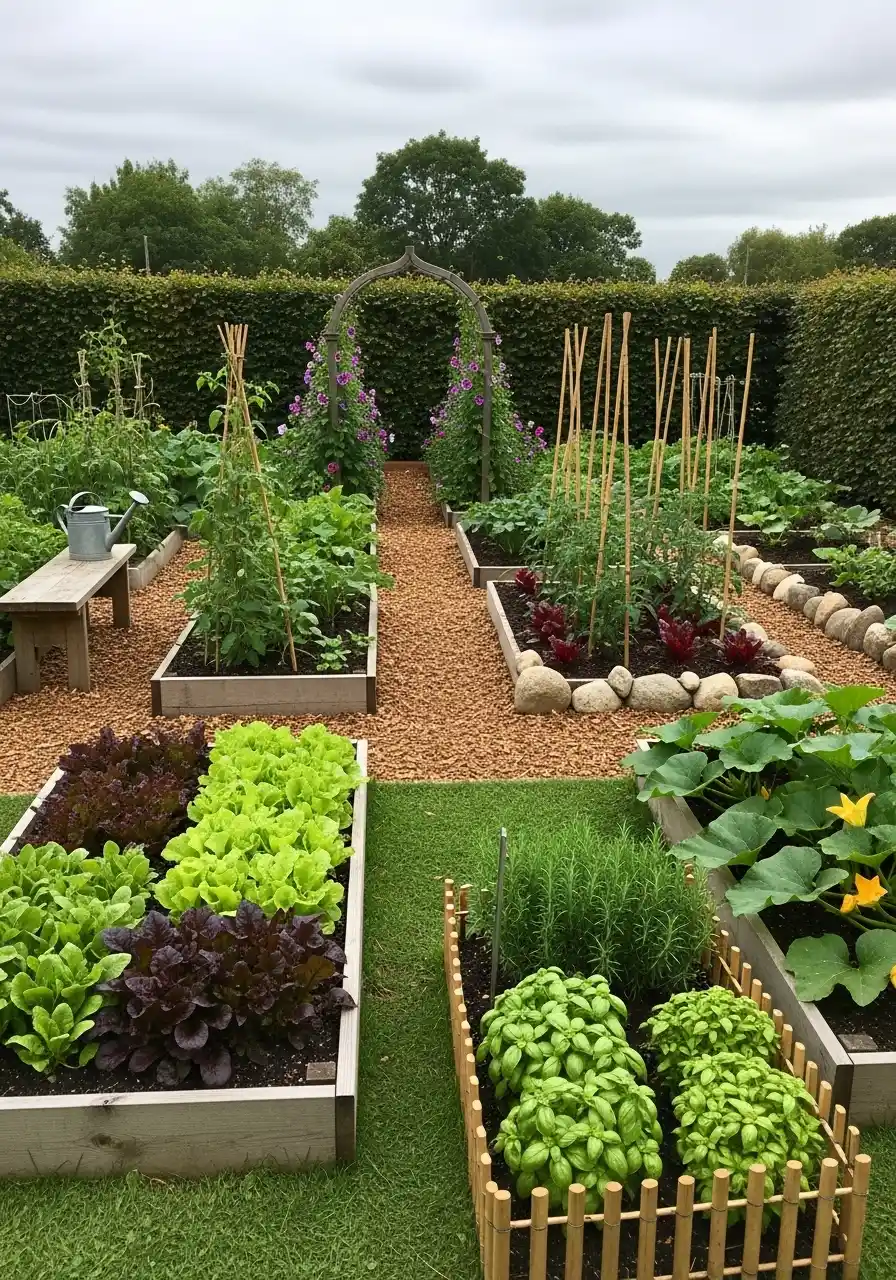
That garden with the centered walkway and arch feels like a tiny farm kingdom. It’s balanced, it’s inviting, and it gives you a reason to walk through slowly like you’re inspecting your crops. A vegetable garden border looks extra good when the layout has symmetry, because the borders act like frames.
I love the mix of materials too. Gravel paths, wood bed borders, and those rounded stones edging one bed. It’s not complicated, but it feels layered. The tall bamboo stakes also add height, so the garden doesn’t look flat. Flat gardens can look boring, sorry but it’s true.
A small hack I’d steal: put your herbs near the entrance. Herbs make you touch the garden more often. You brush basil, you smell it, you feel happy for 2 seconds, then you remember you still have bills, but still. Also, keep the center path wide enough for a wheelbarrow. If it’s too narrow, you’ll end up carrying heavy stuff and resenting your own design.
Colorful flower borders along raised beds
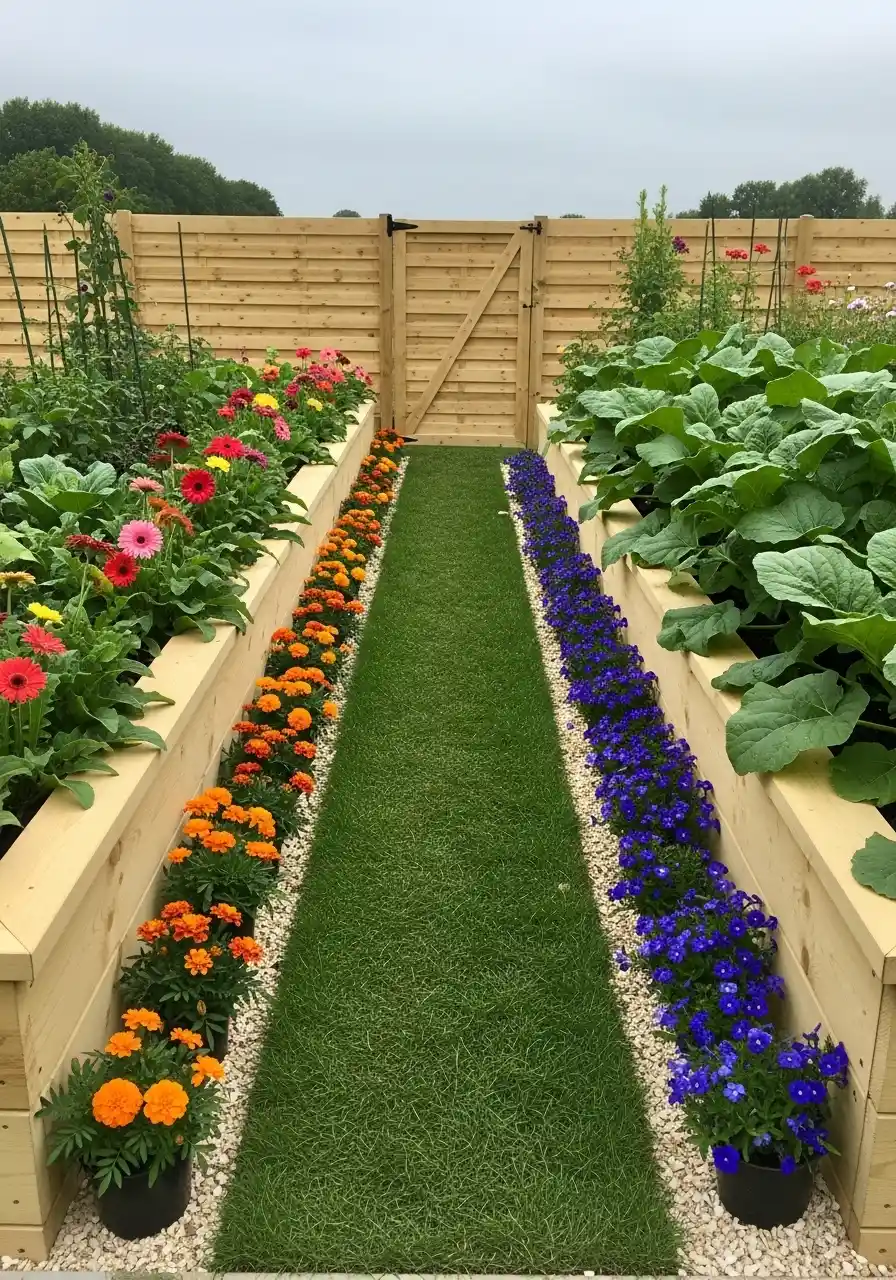
The long grass path with orange flowers on one side and blue flowers on the other is kind of genius. It turns a food garden into something decorative, not just practical. A vegetable garden border doesn’t have to be plain boards. It can be living color that also helps your crops.
Marigolds (those orange ones) are a classic because they help confuse pests, and they just look cheerful. The blue flowers give contrast that makes the path feel like it belongs in a magazine. I’m not even that fancy but I still want it.
Here’s the trick though: don’t plant border flowers too thick. If they crowd the beds, you lose airflow and invite mildew. Leave breathing room. Also, use gravel or white stones as a thin strip between the path and the plants, like in the image. It keeps the border for vegetable garden areas from turning into a muddy edge. It’s one of those small details that makes everything look “done.”
Small-space corridor garden with planters and stepping stones
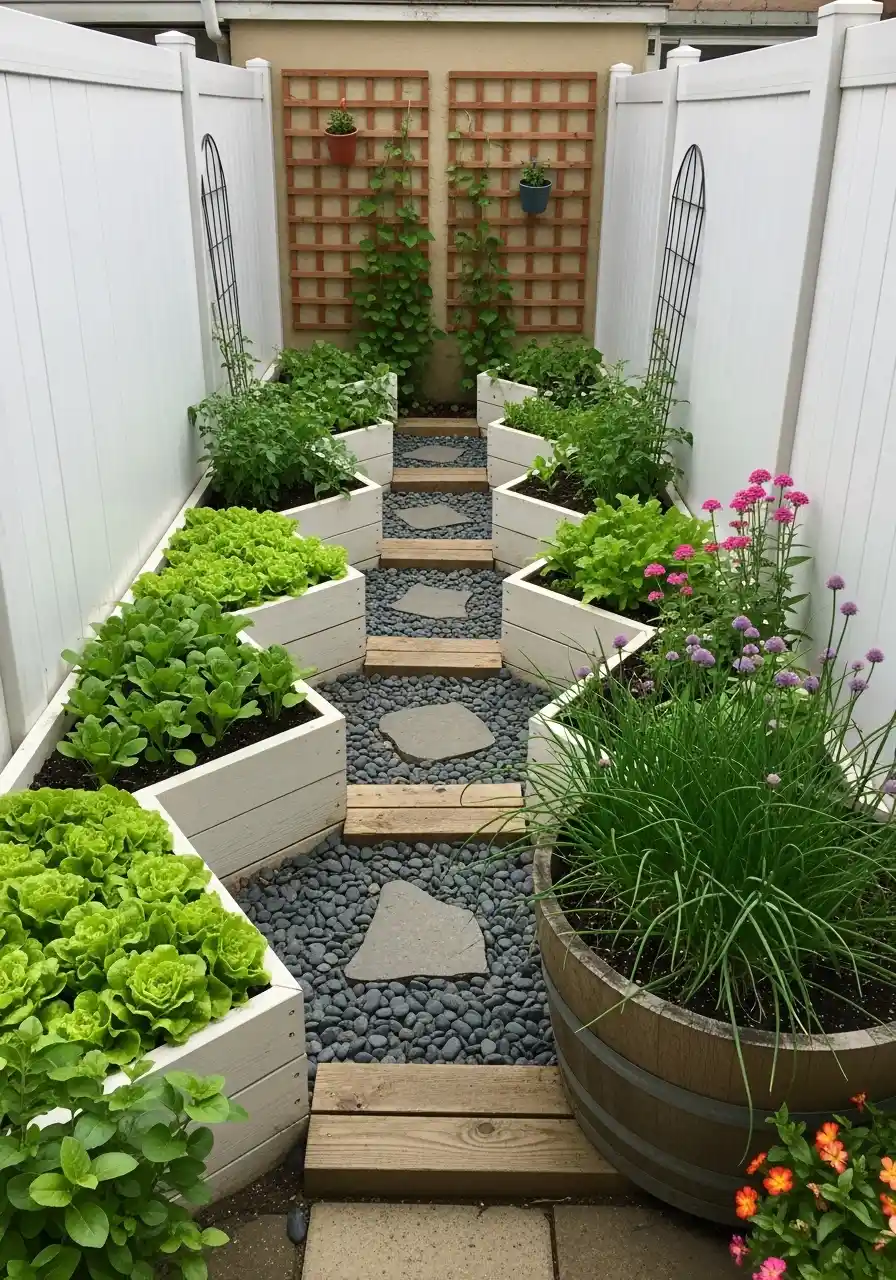
The narrow garden between white fences is basically proof you don’t need a big yard. The raised planters on both sides make it feel like a secret passage, like you’re sneaking out to pick lettuce. I love that vibe. This kind of vegetable garden border is more about vertical walls and clean shapes than wide space.
The stepping stones and dark pebbles are also practical. You can walk through after rain without sliding around like a cartoon character. And the planters keep the soil off the walkway. It’s tidy, but still cozy.
If I built this, I’d add hooks on the fence for tools because small gardens get cluttered fast. Another hack: plant shallow crops in the front planters (lettuce, herbs), and taller stuff toward the back so you don’t block sunlight. A veggie garden edging setup like this works when every inch has a job.
Cozy patio garden with string lights and a rose arch
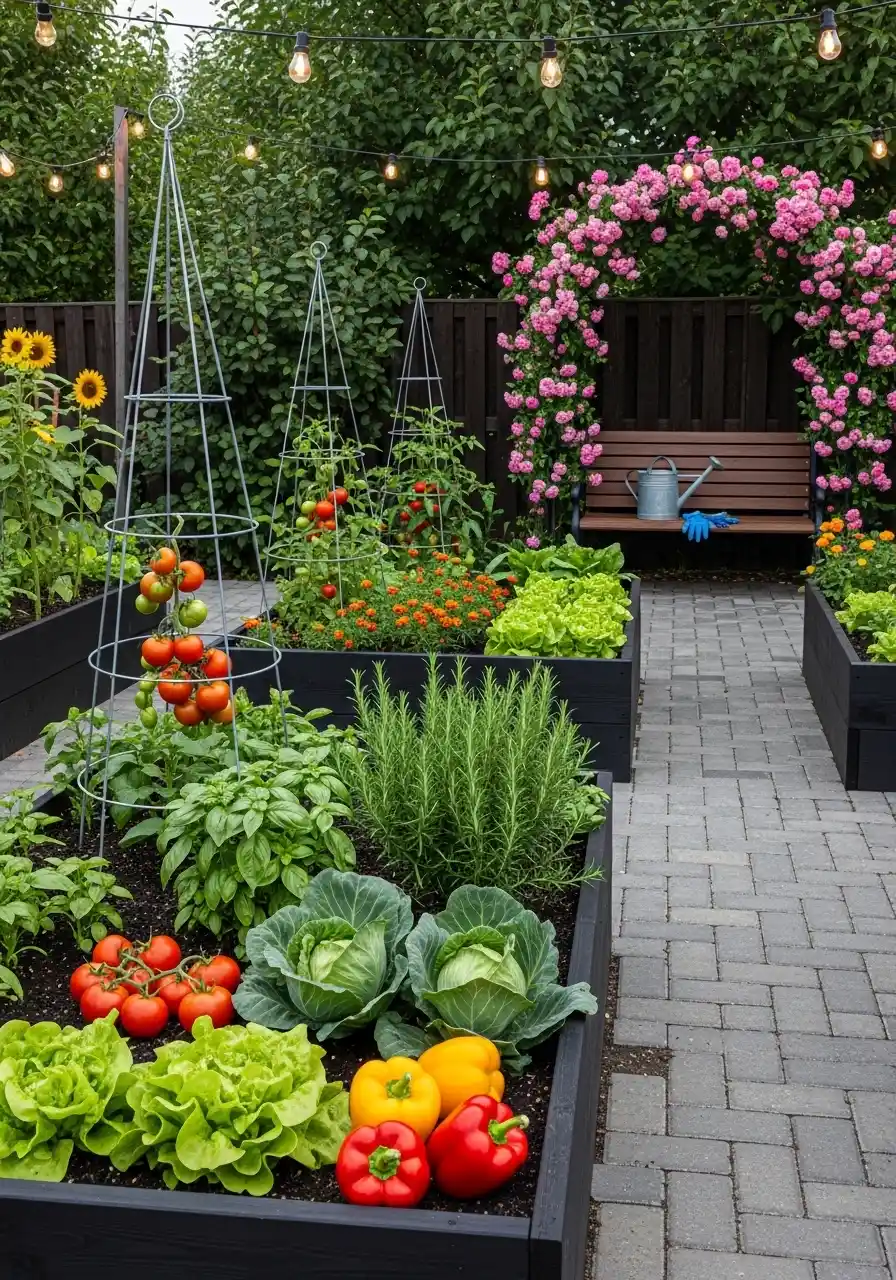
This one feels like a party garden. The black raised beds, the paver walkway, the string lights, and that rose-covered arch over the bench. It makes gardening feel romantic instead of like chores. A vegetable garden border can totally be part of your hangout space, and I think more people should do that.
The black beds also make plants look extra green, and the colors of peppers and tomatoes pop. It’s like the garden is showing off. I like it. I also like how the beds are tall enough to reduce bending. My back complains just watching low beds, honestly.
A tip: if you use dark beds in hot climates, watch the soil temperature. You might need mulch on top so roots don’t cook. And keep a small sitting area like this. Sitting makes you notice pests early, because you’re actually in the garden more. Plus, it feels good to sit and pretend you’re “resting” when you’re actually just staring at your peppers.
Formal potager style with a shed focal point
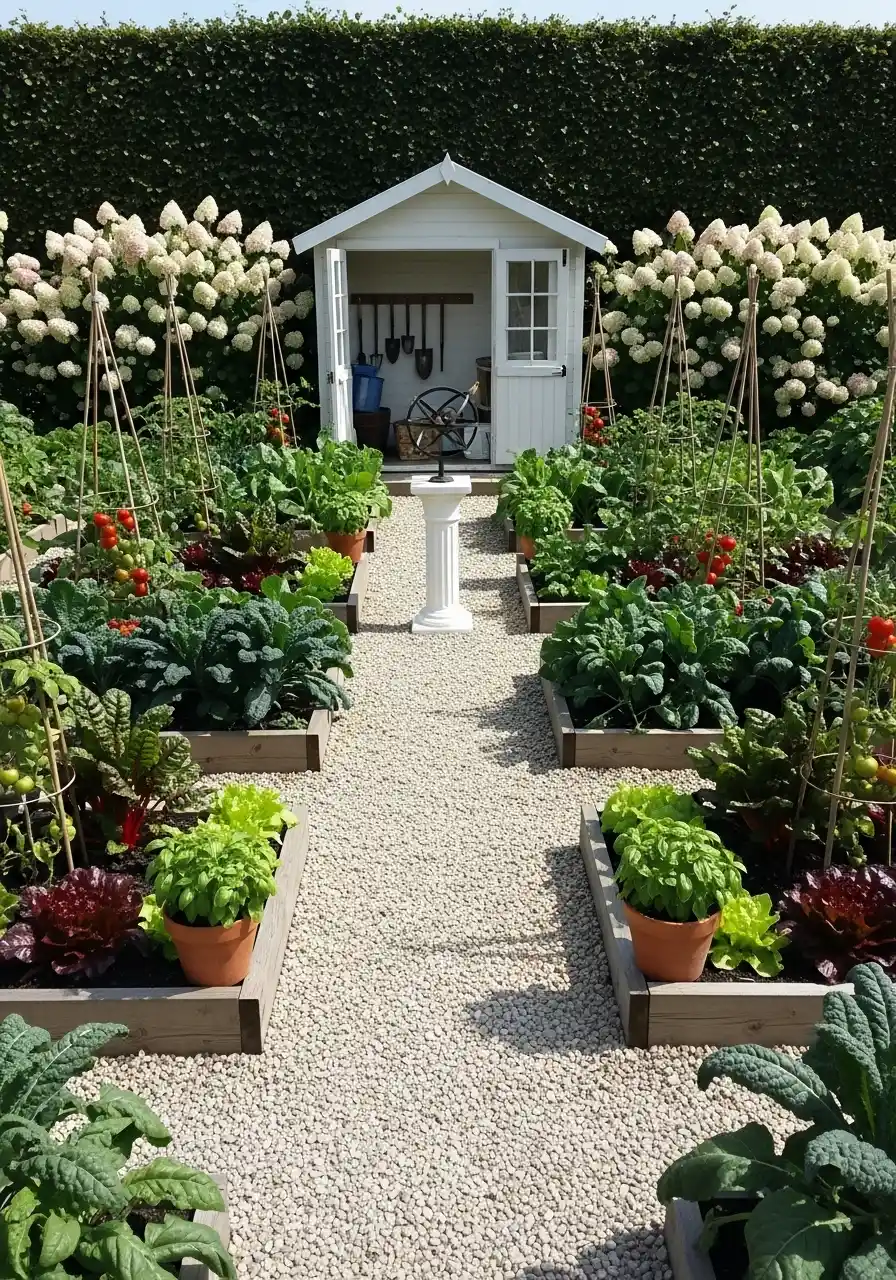
The garden with the little white shed at the end is super classic. It’s like a potager garden, where food and beauty mix together. The gravel path is clean and bright, and the beds feel evenly spaced. This vegetable garden border style looks expensive, but it’s mostly about repetition and neat lines.
I like the use of pots inside the beds too. Pots let you control soil for picky plants like basil. And if something fails, you can swap it out without digging the whole bed up. That’s a quiet little cheat, and I love cheats that look intentional.
A hack: place your tallest crops toward the back beds, so the front beds stay visible. This makes the border for a vegetable garden feel open, not crowded. And use a consistent bed height. If you mix random heights, it can look messy unless you’re really good at design (I’m not, so I keep it simple).
Mixed garden with roses and veggies side by side
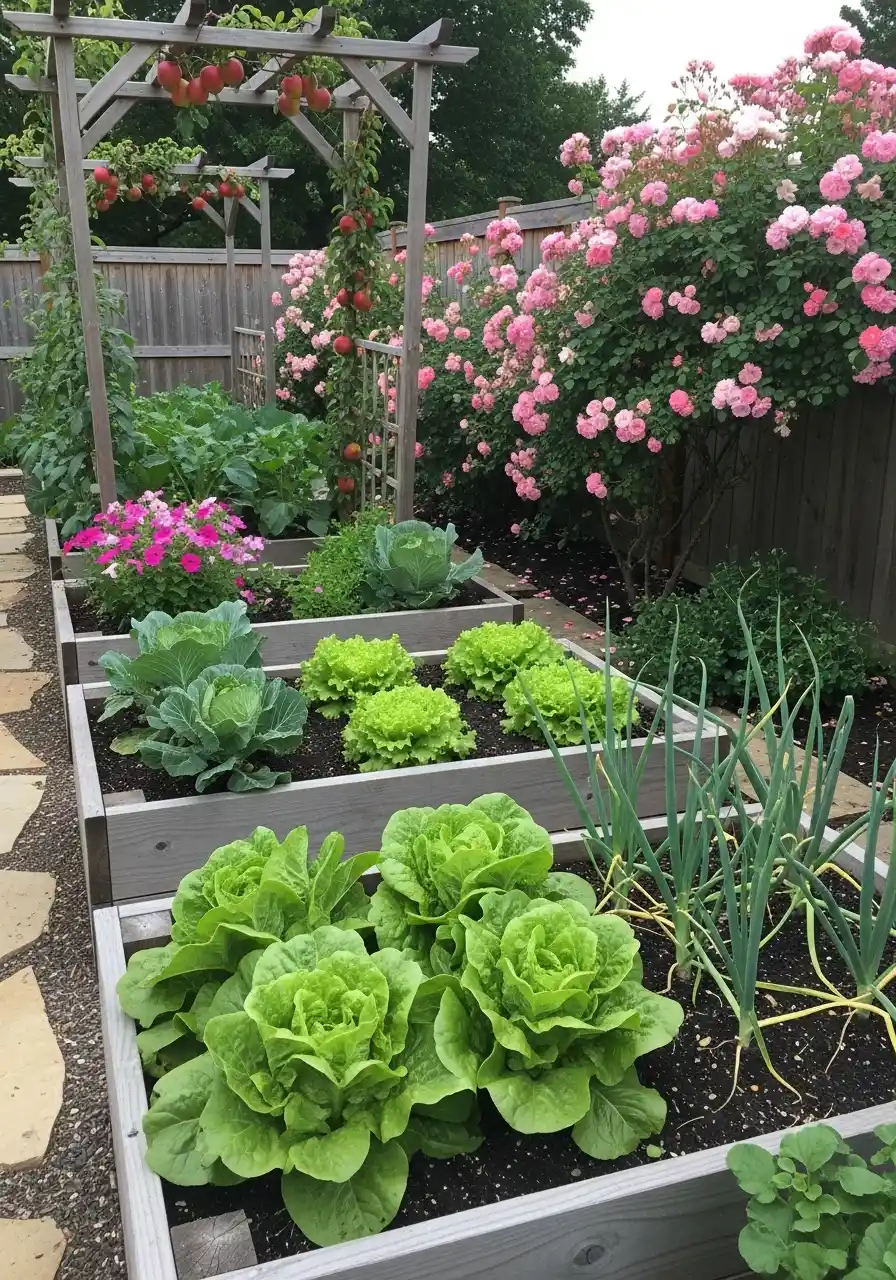
The raised beds with pink roses along the fence is a soft, sweet idea. It’s not just “food production,” it’s a garden you’d actually want to be in. This kind of vegetable garden border design helps the space feel less like a farm row and more like a backyard you love.
I also like the overhead structure with fruit (looks like apples) hanging. Vertical growing saves space and adds that wow moment. Plus, the shade can help tender greens in hot weather. But you have to watch it, too much shade and your vegetables get leggy.
My tip: keep roses on a separate drip line or watering schedule if you can. Roses like more water than many veggies, and mixing them without a plan can cause problems. Still, a vegetable garden edging plan with flowers is worth it if it makes you actually want to go outside every day.
Pond centerpiece with beds arranged like a little courtyard
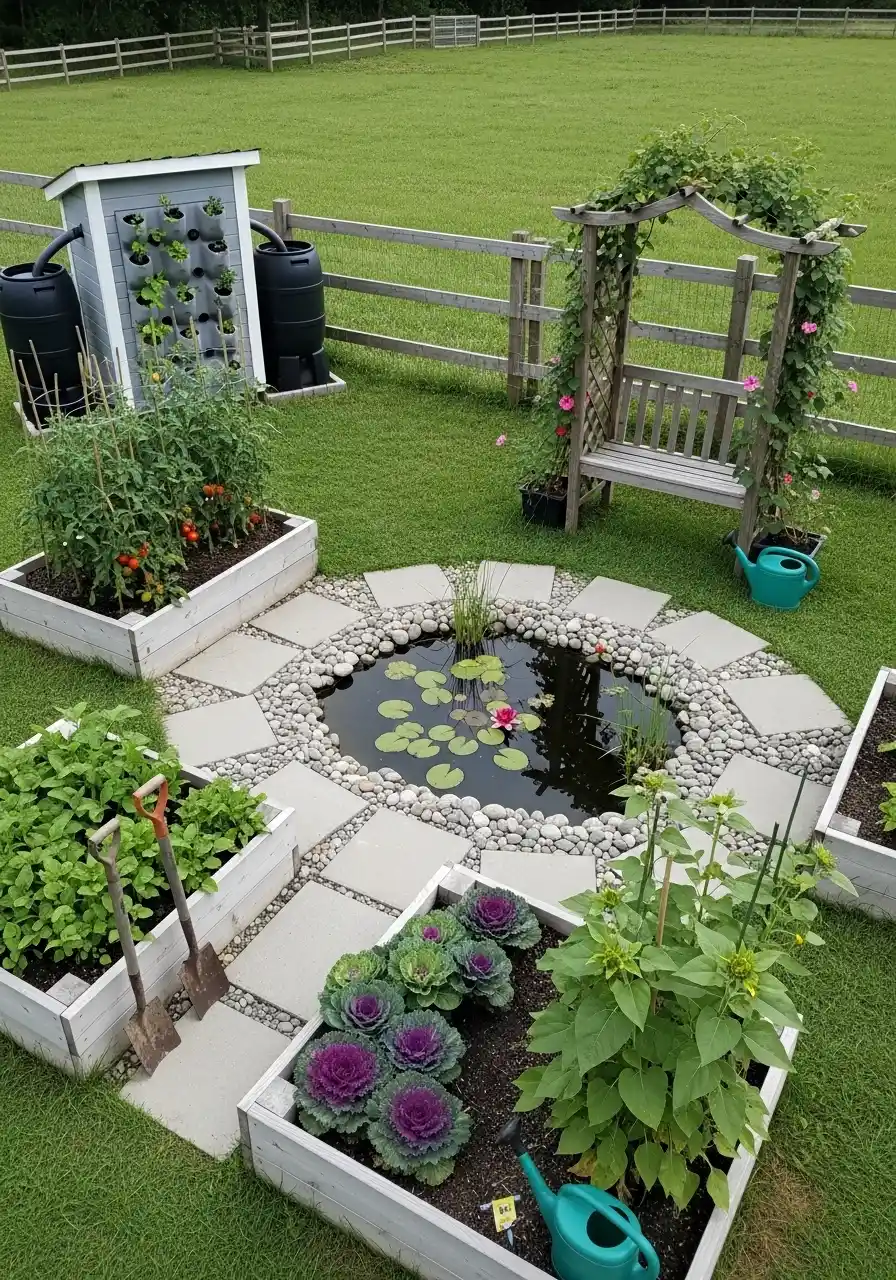
That small round pond in the middle is unexpected, and I’m kind of obsessed. It turns the garden into a space, not just beds on grass. A vegetable garden border around a central feature like water makes everything feel planned, like a tiny outdoor room.
Water also brings frogs and helpful insects, which can reduce pests. And it reflects light, which can brighten nearby plants. The stone ring around the pond is a clean edge, and the big stepping stones make it easy to walk around without wrecking grass.
Hack: if you add water, keep it moving. A small pump helps stop mosquitoes. Also, don’t put the pond too close to beds that need dry soil. It can raise humidity a bit. But honestly, the calm feeling is worth it. I’d probably stand there with a watering can and just… stare.
Backyard raised beds with cages and tool-ready paths
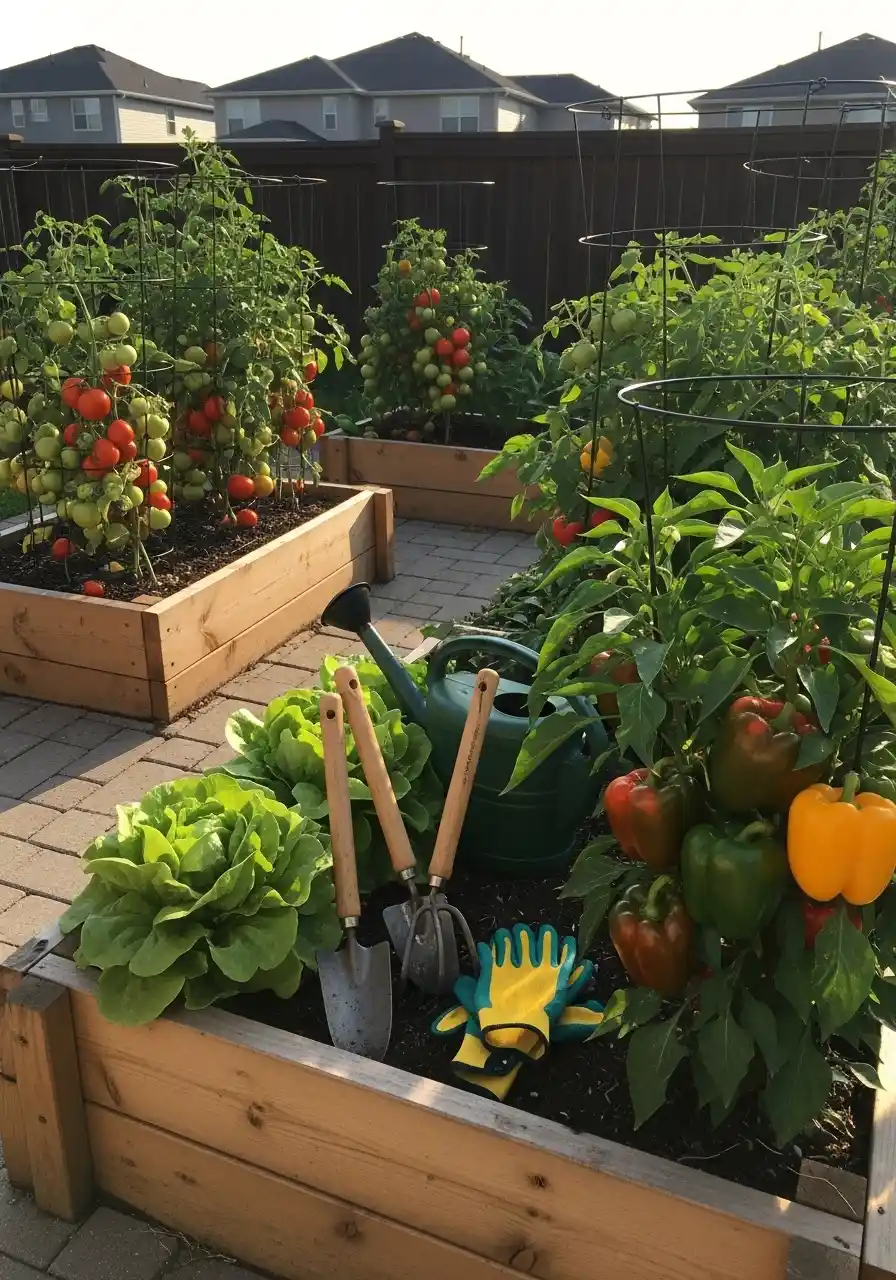
This next one feels like real life gardening. Tomato cages everywhere, peppers loaded up, tools sitting right there like you’re mid-task. It’s not staged, it’s working. A vegetable garden border in a backyard like this has to be sturdy, because you bump into it, lean on it, and sometimes trip on it.
I like the paver paths because it keeps weeds down and gives you a clean area for tools. Also, the beds are arranged so you can reach the center without stepping into soil. That matters. Stepping in soil compacts it, and compact soil grows sad plants.
Tip: keep one bed as a “messy bed” for experiments. New varieties, weird spacing, whatever. If you try to keep every bed perfect, you’ll burn out and quit. A veggie garden border setup is supposed to support you, not judge you. Mine would absolutely be a little chaotic, and that’s fine.
String lights + a bench “room” between raised beds
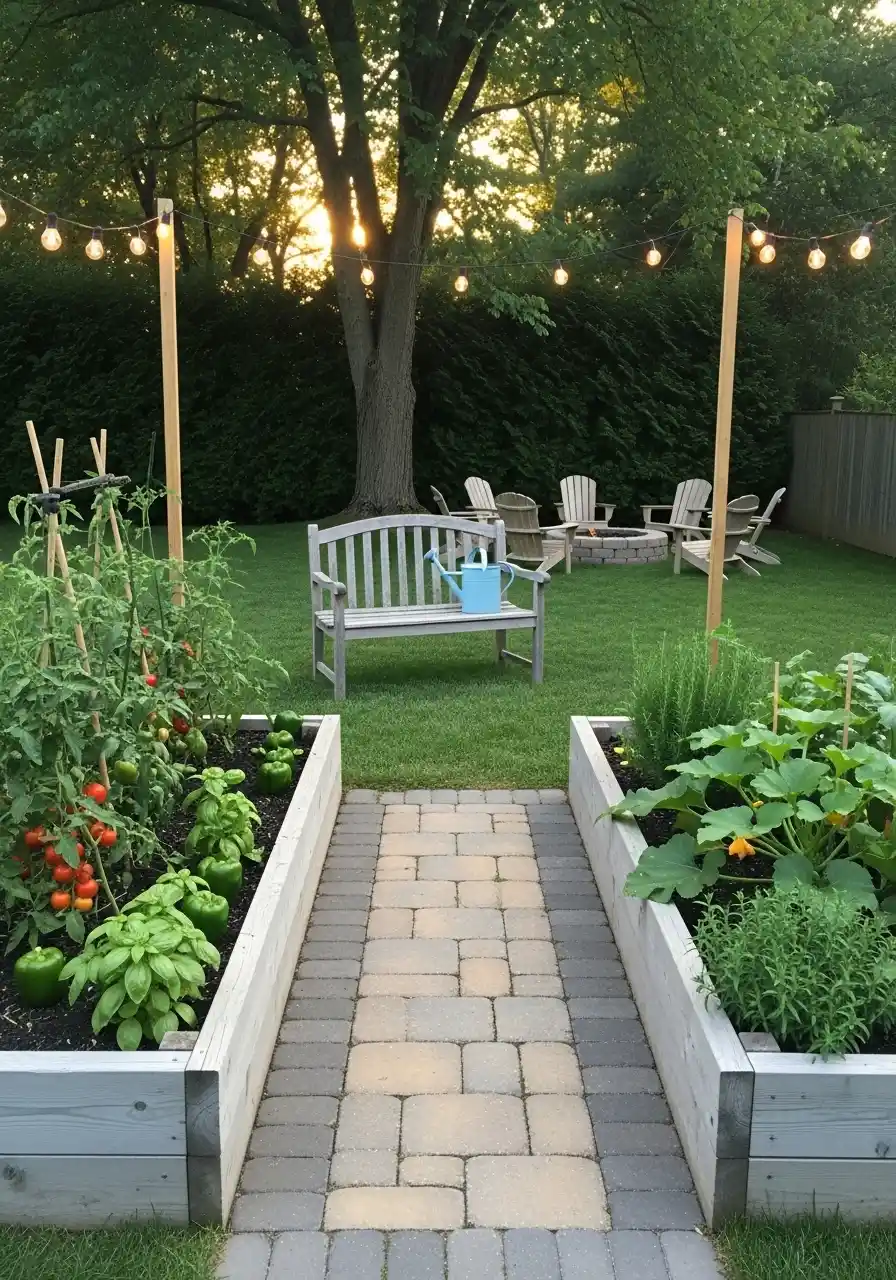
In this setup, the border isn’t only wood. It’s the whole scene. Two raised beds make a hallway, and that paver path is the center line that keeps everything tidy. Then the string lights pull your eyes forward like, yep, this is a place you’re supposed to walk through. I love how the bench at the end makes it feel like a destination, not just “where the dirt is.”
If I copied this, I’d keep the beds tall enough so my back doesn’t complain. I’d also put the bench where it catches sunset, because that glow through the trees is just unfairly pretty. A hack here: run your lights on a timer so you don’t forget and leave them on all night. This vegetable garden border works best when you treat the path like a mini runway. Keep the edges crisp, pull weeds early, and suddenly your whole yard looks more expensive than it is.
Gravel paths and a patio pergola that doubles as a grape ceiling
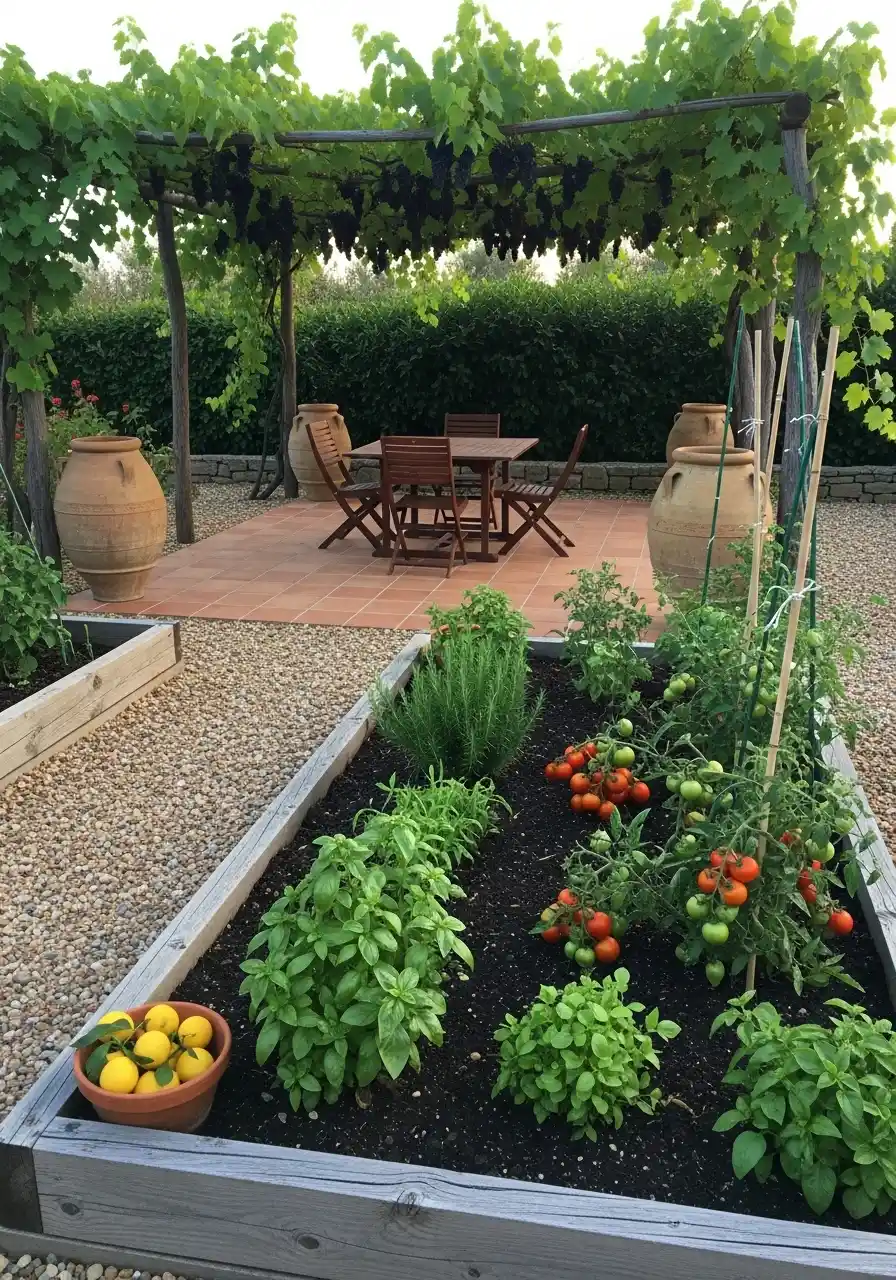
This one makes me feel like I’m in someone’s vacation house. The pergola is doing a lot of work: shade, structure, and grapes hanging down like decorations you can eat. The gravel path is also a sneaky trick. Gravel makes a space feel clean even if you’re not perfect at weeding, because it hides small messes better than bare soil.
If you want a garden border for veggies that feels “grown-up,” add something overhead like this. It could be grapes, beans, even a simple trellis. My tip: put landscape fabric under gravel, or you’ll be picking weeds forever, and you’ll be mad. Also, place big pots or urns near the entrance if you can. It frames the vegetable bed border like a doorway, and it makes the whole area feel planned, not random.
Symmetry with brick beds, a rose arch, and a bench that begs you to sit
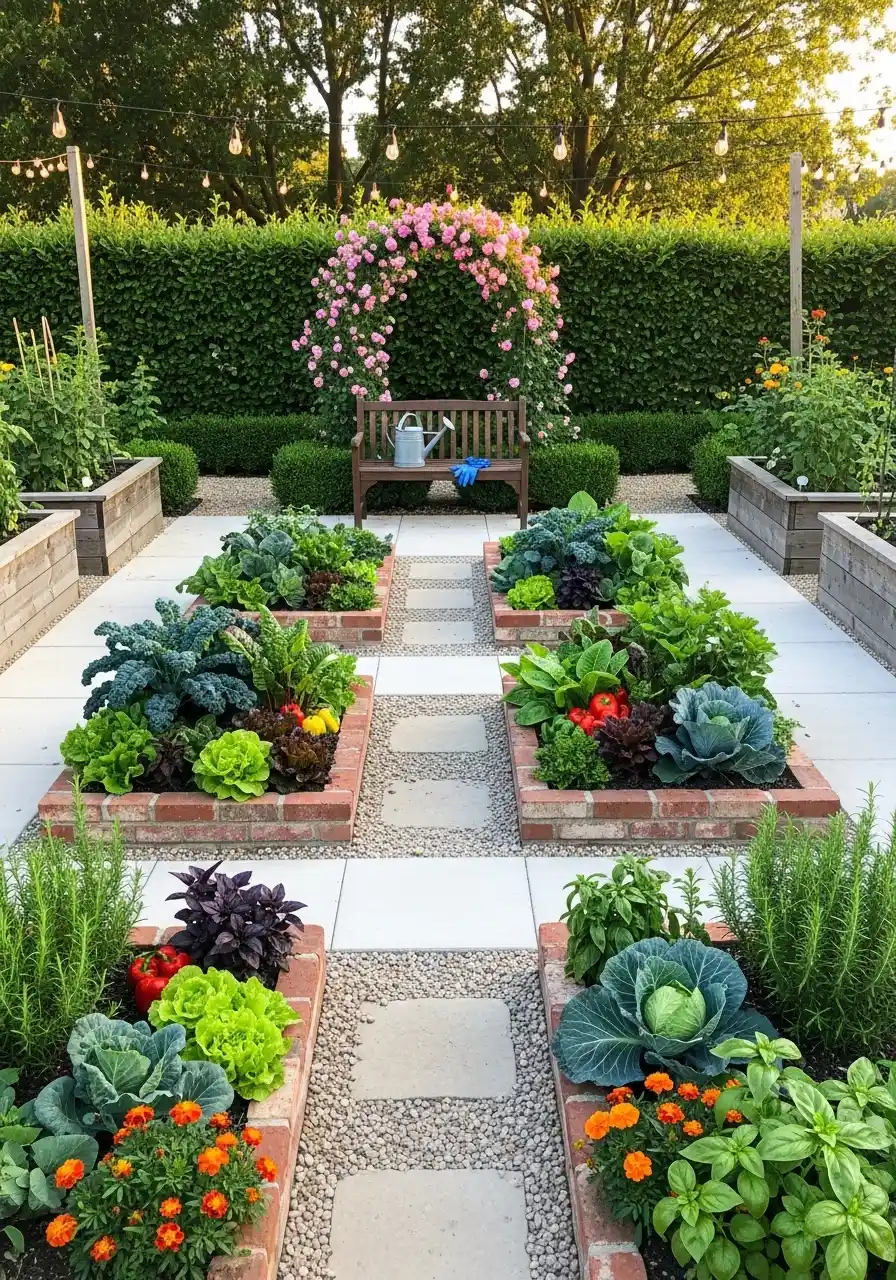
This layout is like a garden that’s been practicing good posture. Everything is balanced: beds on both sides, a straight path, and that bench under flowers as the “final stop.” The brick raised beds give a strong edge, and they look good even in winter when plants are gone. That’s the secret benefit of a sturdy vegetable garden border: it still looks nice when nothing is growing.
If I built this, I’d measure like three times. Symmetry shows mistakes fast. A little trick is using square stepping stones with small gravel between, because it drains well and stays neat. Add low boxwood or a tight little hedge if you want that formal feel, but keep it trimmed or it’ll start bossing you around. This kind of kitchen garden edging makes your veggies look like they belong in a magazine, even if you’re just growing lettuce and onions.
Soft, cottage-style borders with flowers hugging the veggies
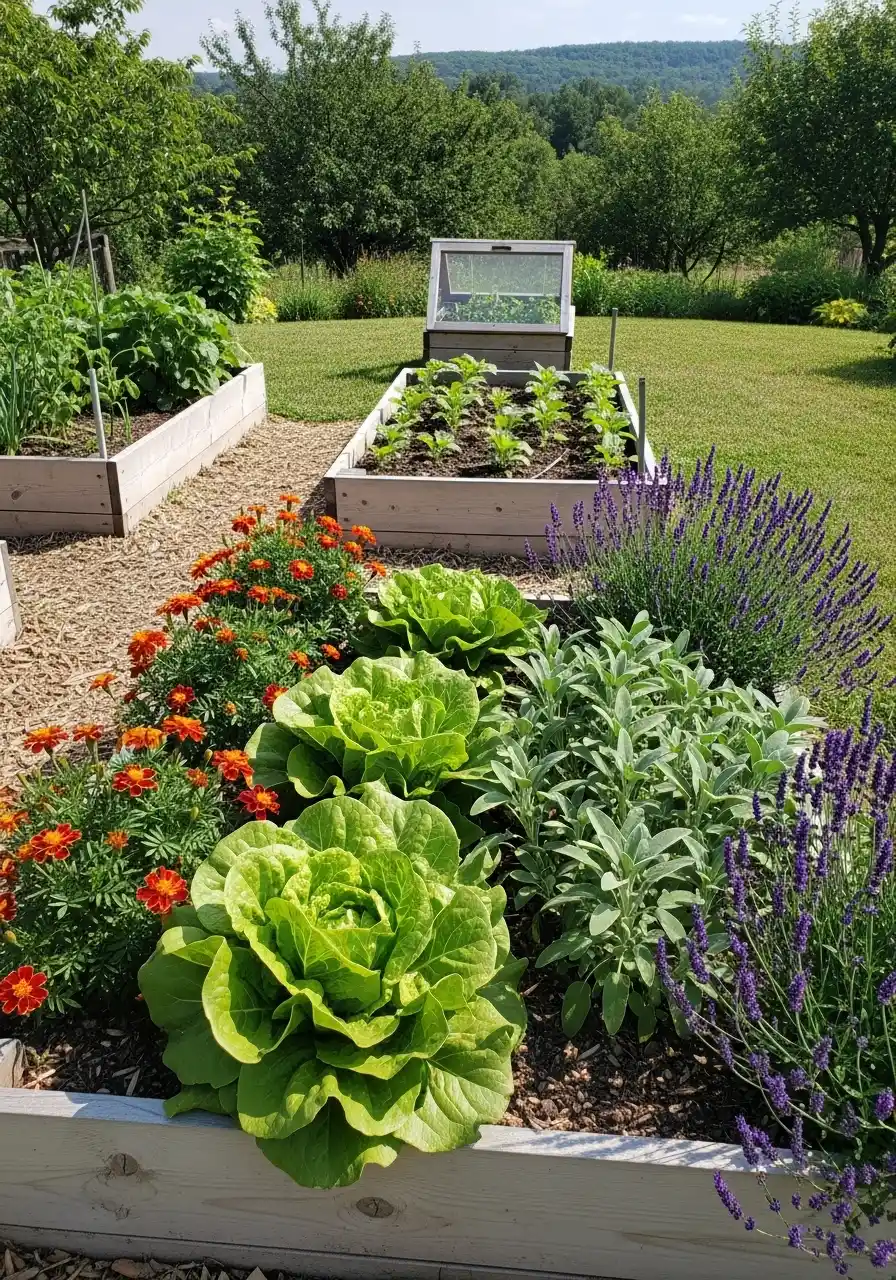
This one feels friendly. Like, you’d walk out barefoot and just stand there, staring at it for too long. The raised beds are simple wood, but the border effect comes from the plants around it, especially bright flowers like marigolds and the purple spiky stuff (lavender vibes). Flowers beside veggies are not just cute. They also help bring pollinators, and some can confuse pests.
If you’re doing a veggie garden border like this, pick flowers that don’t flop everywhere. Marigolds, nasturtiums, calendula, and lavender are great because they hold their shape. My honest confession: I always plant too much, then everything gets crowded. So leave more space than you think. A practical hack is to plant herbs at the corners of beds, because corners get stepped-on and ignored. Herbs make those corners useful again, kind of like edging for vegetable beds but alive.
The classic straight path with lots of beds and a strong “center line”
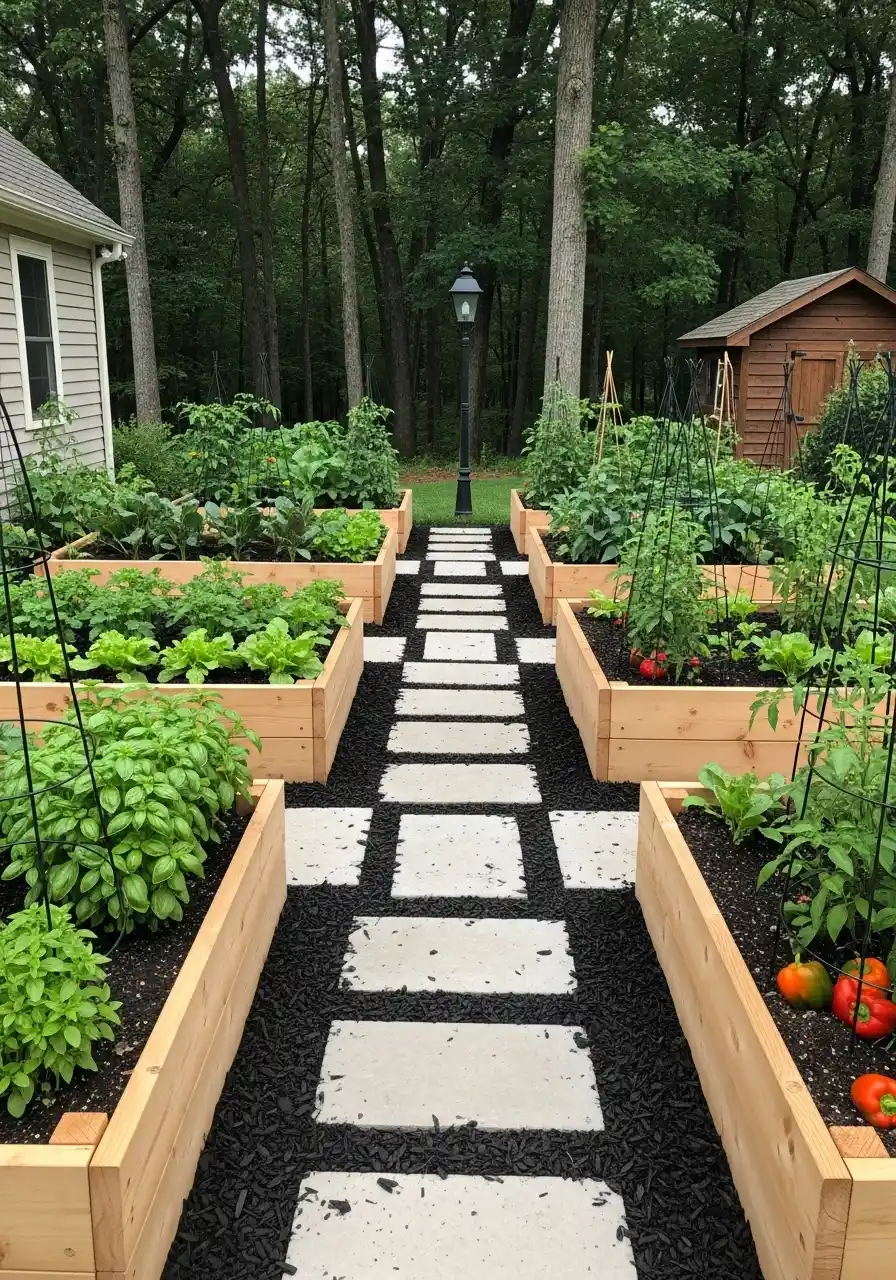
This setup has a bold walkway down the middle, and raised beds are lined up on both sides like they’re in formation. It’s super practical. You can carry a watering can straight down without zig-zagging like a confused chicken. The stepping stones also keep your shoes from turning into mud bricks.
For this vegetable plot border, the real win is consistency. Same bed height, same spacing, same path material. It makes your brain relax because it knows what’s coming. If you want an easy hack, lay cardboard under the gravel areas before you add stone. It smothers grass and saves you later. Also, keep one bed as your “messy bed” where you try weird stuff. That way the rest of your raised bed border stays looking clean, and you still get to experiment without feeling like you ruined the whole garden.
Tiered brick beds along a fence for small yards (and big plant energy)
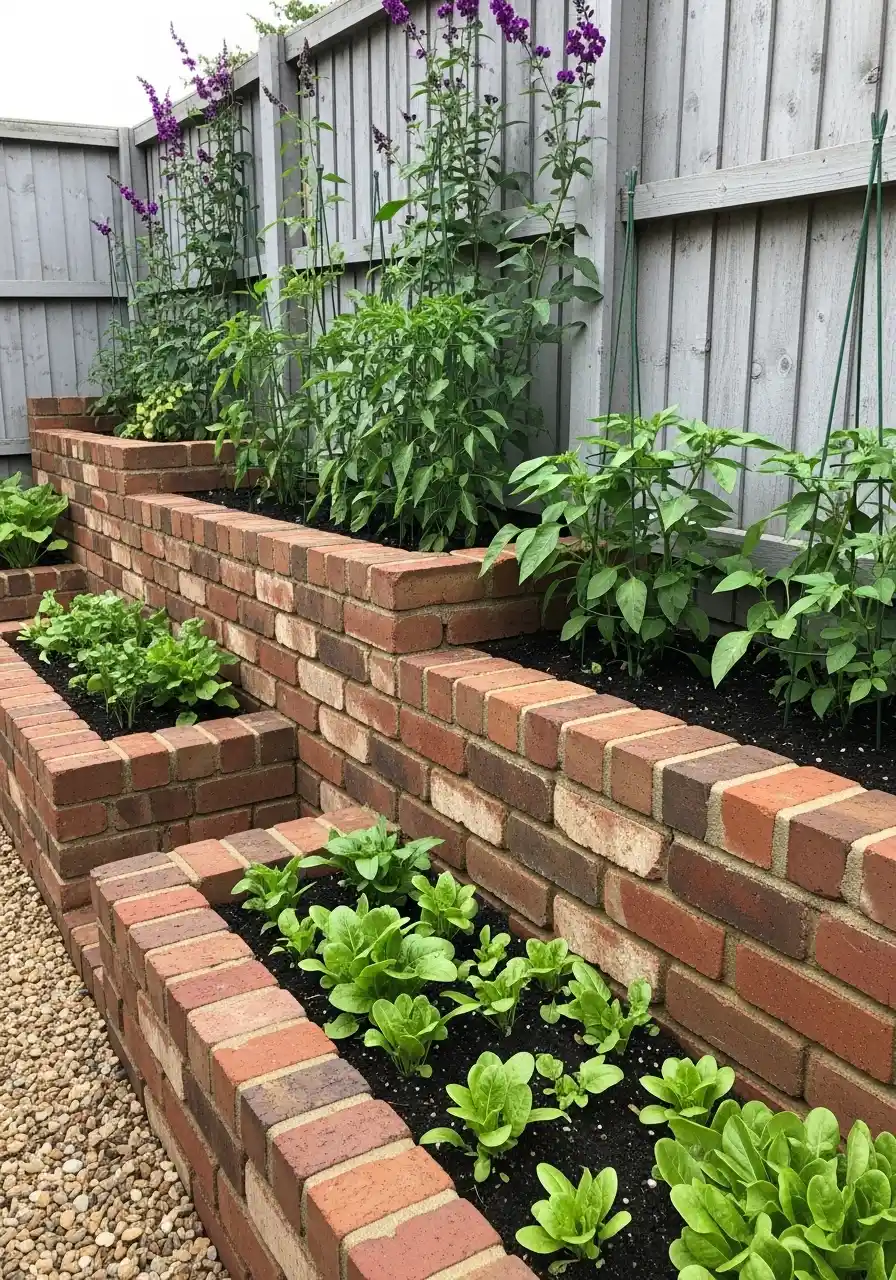
This border idea is a space-saver. The brick beds stack upward, so you get more planting area without stealing walking space. Plus, the fence makes it feel private, like a little backyard kitchen farm. I like how the brick edge looks solid and permanent. Wood borders are great, but brick feels like it’s saying, “I’m staying.”
If you copy this, plan water carefully because top tiers can dry out quicker. I’d mix compost deep into those beds so moisture holds longer. Also, plant taller stuff in the back and shorter in the front so you don’t shade everything out. A vegetable garden edging trick here is adding a narrow strip of gravel right beside the brick. It keeps mud from splashing onto the bricks, and it makes weeding easier too. And yeah, I’m biased, but brick borders just feel warm and cozy.
Modern side-yard beds: white wood, gravel, and clean stepping slabs
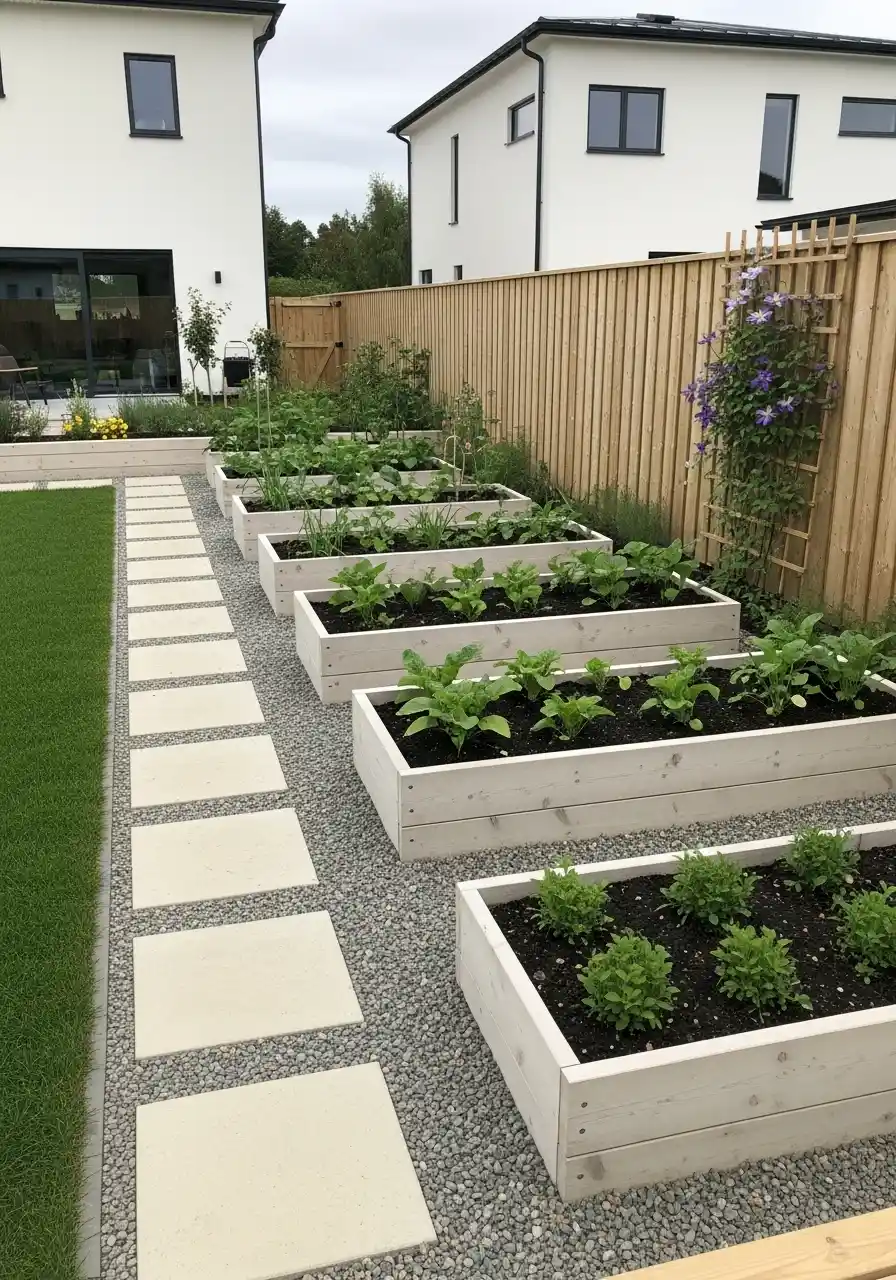
This design is perfect if your yard is long and skinny. The white raised beds look fresh and bright, and the gravel base keeps things from turning into a swamp after rain. The big square stepping stones feel modern, but they’re also practical because you can walk out there with a bucket and not slip.
For a vegetable garden border that stays sharp, this style is hard to beat. Use straight boards, level them carefully, and don’t rush the spacing. If your beds aren’t level, you’ll notice every time you look at them, and it will annoy you, trust me. Another hack: run drip irrigation under the mulch, because gravel paths make dragging hoses feel extra messy and loud. This kind of garden border for vegetables is basically “low drama gardening,” and I respect that a lot.
Pumpkin-lined paths and big leafy beds for a fall-ready border
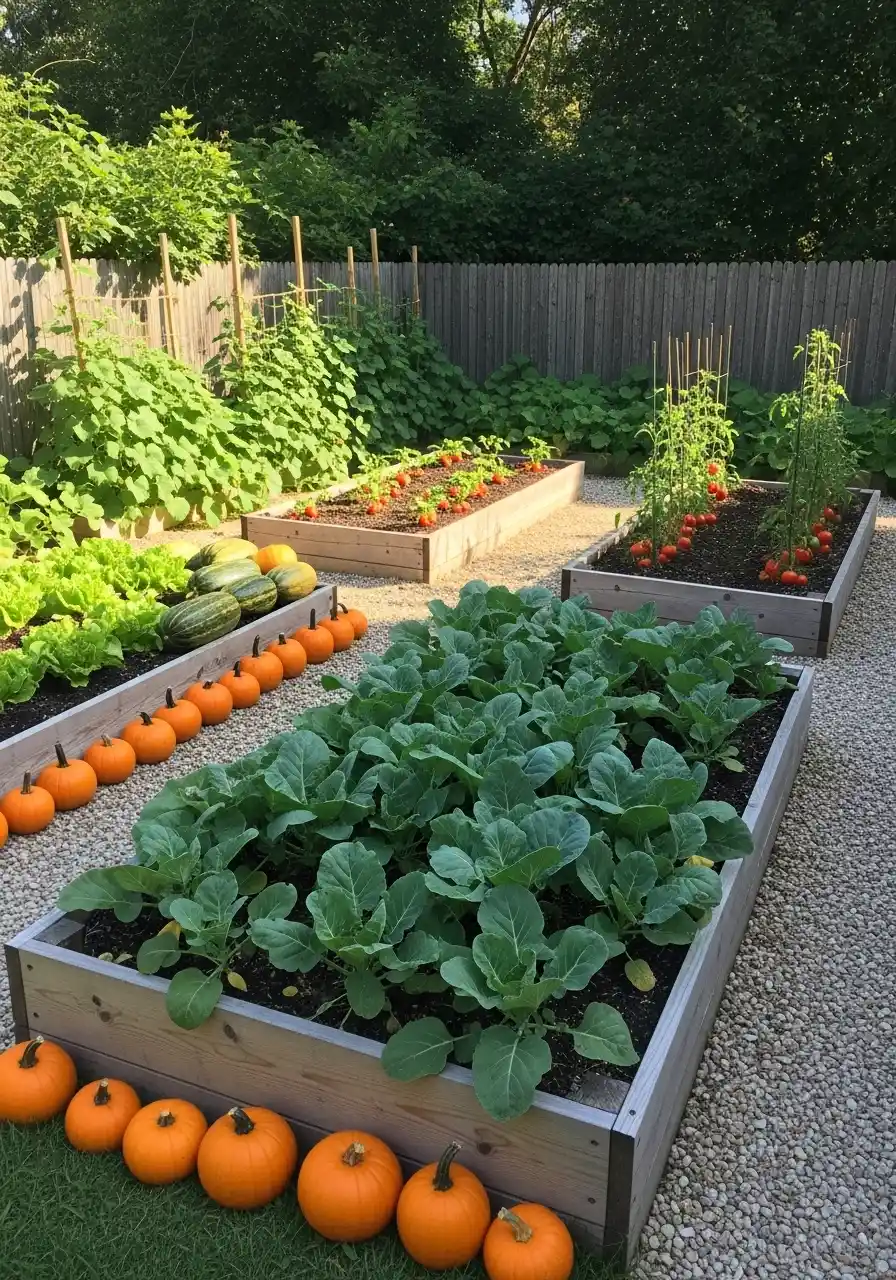
This one just screams harvest season. Pumpkins lined up along the path make an instant border, and it’s temporary, which is honestly fun. The raised beds are packed with big leafy greens, and the gravel paths keep things clean even when the garden is full and wild. It’s a reminder that a border doesn’t always have to be lumber or brick. Sometimes it’s a row of something bold.
If you want to try this border around my vegetables vibe, do it when your plants start fading and you need a mood boost. Pumpkins, gourds, even pots of mums can frame the beds. My trick: group pumpkins by color or size so it looks intentional, not like you dropped groceries. And if you want a more lasting veg garden edge, add a simple wood strip under the pumpkins so they don’t sit in wet gravel and rot too fast. It’s cozy, it’s playful, and it makes me want soup.
FAQ about vegetable garden borders
-
What is the easiest vegetable garden border for beginners?
-
Is brick edging better than wood for a vegetable bed?
-
How tall should a raised vegetable bed border be?
-
What’s the cheapest border for a vegetable garden?
-
Do gravel paths help keep weeds out near the border?
-
Can I use cinder blocks safely for vegetable garden edging?
-
What flowers work best along a veggie garden border?
-
How wide should paths be between bordered beds?
-
Should I line the inside of a wooden garden border?
-
How do I keep soil from spilling over the border in heavy rain?
-
Can borders help with pests like slugs?
-
What border style looks neat in a small side yard?