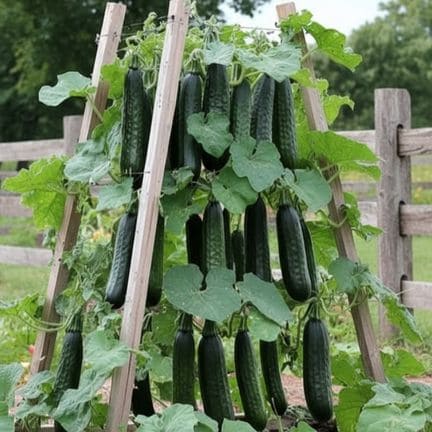
Cucumber trellising is when you help cucumber plants grow up instead of spreading all over the ground. You give them a support (like a fence, net, or frame) and train the vines to climb it. This saves space, keeps plants healthier, and makes picking cucumbers way easier. Even if you’re new to gardening, building a cucumber trellis isn’t that hard, and it can make your garden work better.
Table of Contents
Benefits of Using a Cucumber Trellis
Using a trellis has a lot of upsides:
-
Saves space: Cucumbers grow up, so they don’t take over your whole garden bed.
-
Better airflow: More air moving around the leaves means less fungus and mildew.
-
Cleaner cucumbers: The fruit stays off the dirt, so it won’t rot as easy.
-
Easier to harvest: You can see the cucumbers hanging, so you’re not digging around and missing them.
Common Pitfalls (and How to Fix Them)
1) Using a weak or wobbly trellis
Cucumber vines get heavy once they start making lots of cucumbers. If your trellis is flimsy, it can fall over.
Fix: Use strong stuff like metal stakes, wood frames, cattle panels, or PVC pipes. Basically, don’t build it like it’s made for paper plants.
2) Not making it tall enough
Cucumbers can grow 5–6 feet, sometimes even taller if they feel like it.
Fix: Make your trellis at least 5–7 feet tall. If it’s too short, the vines just tangle up and get messy.
3) Planting cucumbers too close together
If plants are packed tight, air can’t move well, and that’s when mildew shows up.
Fix: Space plants about 12–18 inches apart. It feels like “too much space” at first, but later you’ll be glad you did it.
4) Using the wrong material for the climbing part
Thin string or cheap plastic netting can snap, or it can cut into the vines.
Fix: Use sturdy mesh, cattle panels, or a wooden lattice. You want something that won’t break the second the plant gets big.
5) Waiting too long to train the vines
If you don’t guide the vines early, they’ll sprawl on the ground or wrap around each other like spaghetti.
Fix: Start training when the vines are young. Gently wrap the tendrils around the trellis, don’t yank them around too hard.
6) Putting it in a shady spot
Cucumbers need sun, like a lot of it.
Fix: Place the trellis where it gets 6–8 hours of direct sunlight. Less sun usually means fewer cucumbers.
7) Overcrowding the trellis
Too many vines in one spot makes shade, and then fruit production goes down.
Fix: Don’t plant too many at the base. If needed, trim some extra leaves so light can get through.
8) Letting cucumbers hang too low
Sometimes cucumbers drag on the ground, and then they rot or pests start chewing them.
Fix: Check plants often. If a fruit is low, lift the vine higher or tie it up a bit so the cucumber stays off the dirt.
9) Ignoring pests and disease
Trellising helps, but it doesn’t magically delete pests. Aphids, cucumber beetles, and powdery mildew can still show up.
Fix: Check plants a lot (like every few days). Use organic sprays if needed, and remove sick leaves before it spreads.
10) Watering the wrong way
Trellised plants can dry out quicker since air hits them more.
Fix: Water deeply and keep it consistent, especially at the base of the plant. Don’t just splash the leaves and call it good.
Materials You’ll Need
You don’t need fancy tools, but you do need sturdy materials:
-
Wooden stakes or metal poles
-
Wire mesh or garden netting
-
Zip ties or garden twine
-
Hammer or mallet
Most of this stuff is easy to find at a hardware store or garden center.
Choosing the Right Spot
Pick a place that gets:
-
Full sun (6–8 hours)
-
Good drainage (not a muddy puddle spot)
-
Some protection from strong wind, because wind can knock stuff over real fast.
Step-by-Step: How to Build a Simple Cucumber Trellis
Step 1: Prep the ground
Pull weeds and clear out junk. Loosen the soil a bit and mix in compost if you got it. Mark where the posts will go so they’re lined up.
Step 2: Set the posts
Hammer your stakes or poles into the ground. Make sure they’re deep enough to not wobble. The posts should be about 5–6 feet tall (or taller if you can).
Step 3: Build the frame
If you want extra strength, connect the tops of the posts with a horizontal board or bar. This helps the trellis not lean or twist.
Step 4: Attach the climbing surface
Tie on the mesh or netting using zip ties or twine. Pull it tight so it doesn’t sag. The holes should be big enough for vines to grab, but not so huge that the plant has nothing to hold.
Step 5: Make sure it’s stable
Give it a shake. If it moves a lot, fix it now before the vines get heavy. Add soil around the posts or rocks if you need to.
Step 6: Plant cucumbers and train them
Plant seeds or seedlings at the base, using the right spacing. As they grow, guide the vines onto the trellis. If a vine won’t stay put, tie it loosely with twine (don’t tie it super tight, cause it can cut the stem).
Maintenance Tips
-
Check the trellis often for loose ties or broken parts.
-
Remove yellow or sick leaves so disease doesn’t spread.
-
Water consistently, especially in hot weather.
-
Add mulch to hold moisture in the soil.
Final Thoughts
Building a cucumber trellis is a solid garden project that pays off a lot. You save space, plants stay healthier, and picking cucumbers is easier (and way less gross than digging through vines on the ground). If you build it strong and take care of it, your trellis can last for seasons, and your cucumbers will probably do better too.