I swear desert yards have a certain kind of magic. The first time I really noticed texas desert landscaping, I felt like I’d stepped into a calm movie scene where nothing is soggy, nothing is messy, and somehow everything still feels alive. It’s weirdly comforting. And honestly, I used to think desert landscaping was just “rocks and cactus,” but these 18 ideas made me change my mind real fast.
Table of Contents
Texas desert landscaping: A soft-entry courtyard with color pops and wide curves
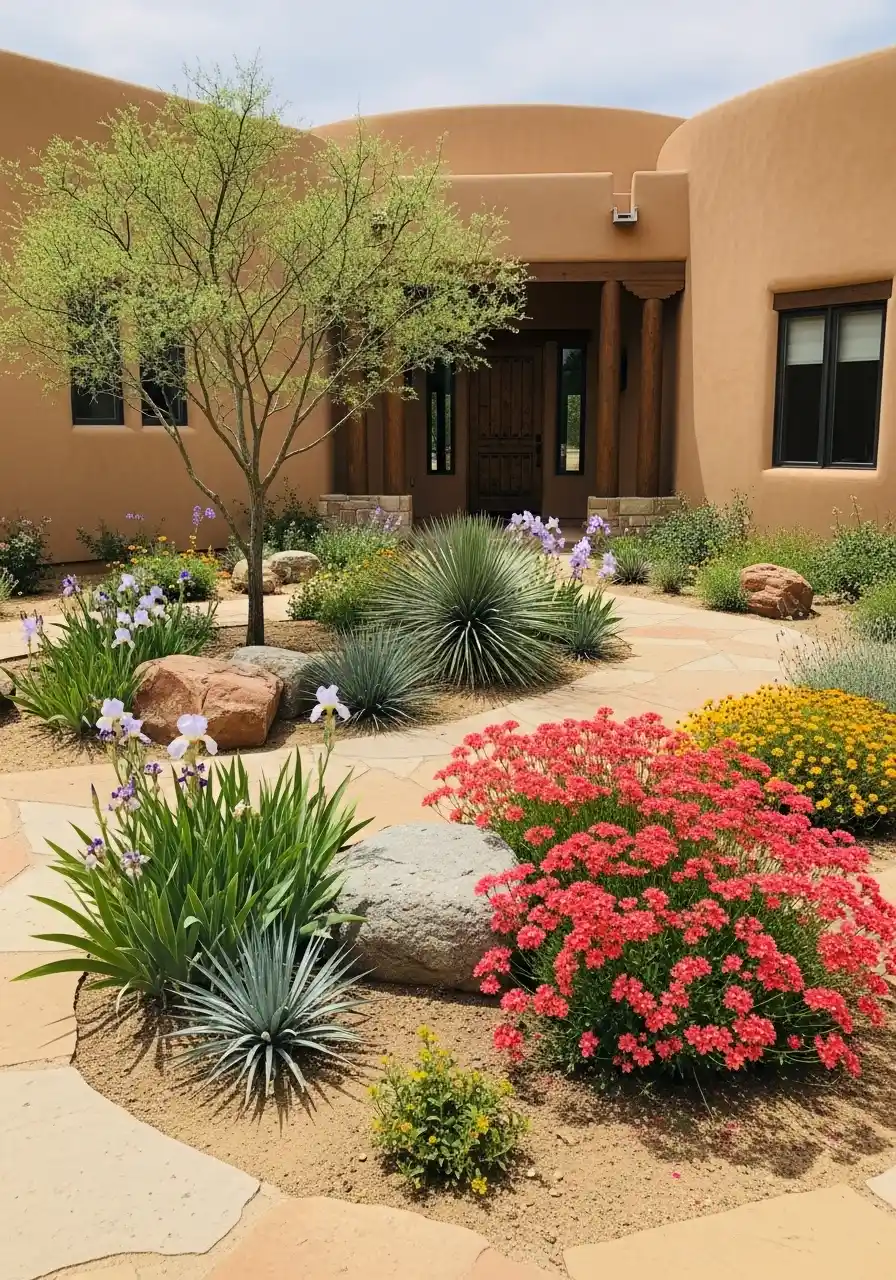
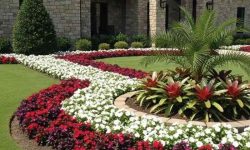
This yard feels gentle, not harsh. The curved walkway is doing most of the work, because curves make you slow down without even realizing it. I love the mix of smooth boulders, sandy soil, and those spiky plants that look like yucca or sotol. Then the bright red flowers come in and it’s like, boom, happiness. I’m a sucker for that. It’s not too loud, but it’s not boring either.
If you want this desert landscaping in Texas look, start with your path first. Make it wide enough for two people to walk side by side, at least 4 feet if you can. Then place 3–5 big rocks like “anchors” near the path bends. It makes the planting feel planned, not scattered.
One trick I learned: plant in triangles, not straight lines. Put one big spiky plant, then two medium ones nearby, then fill gaps with low flowering stuff. Also, don’t overwater desert plants just because you feel bad. I do that and it backfires.
A white-river-rock walkway that stays clean and bright
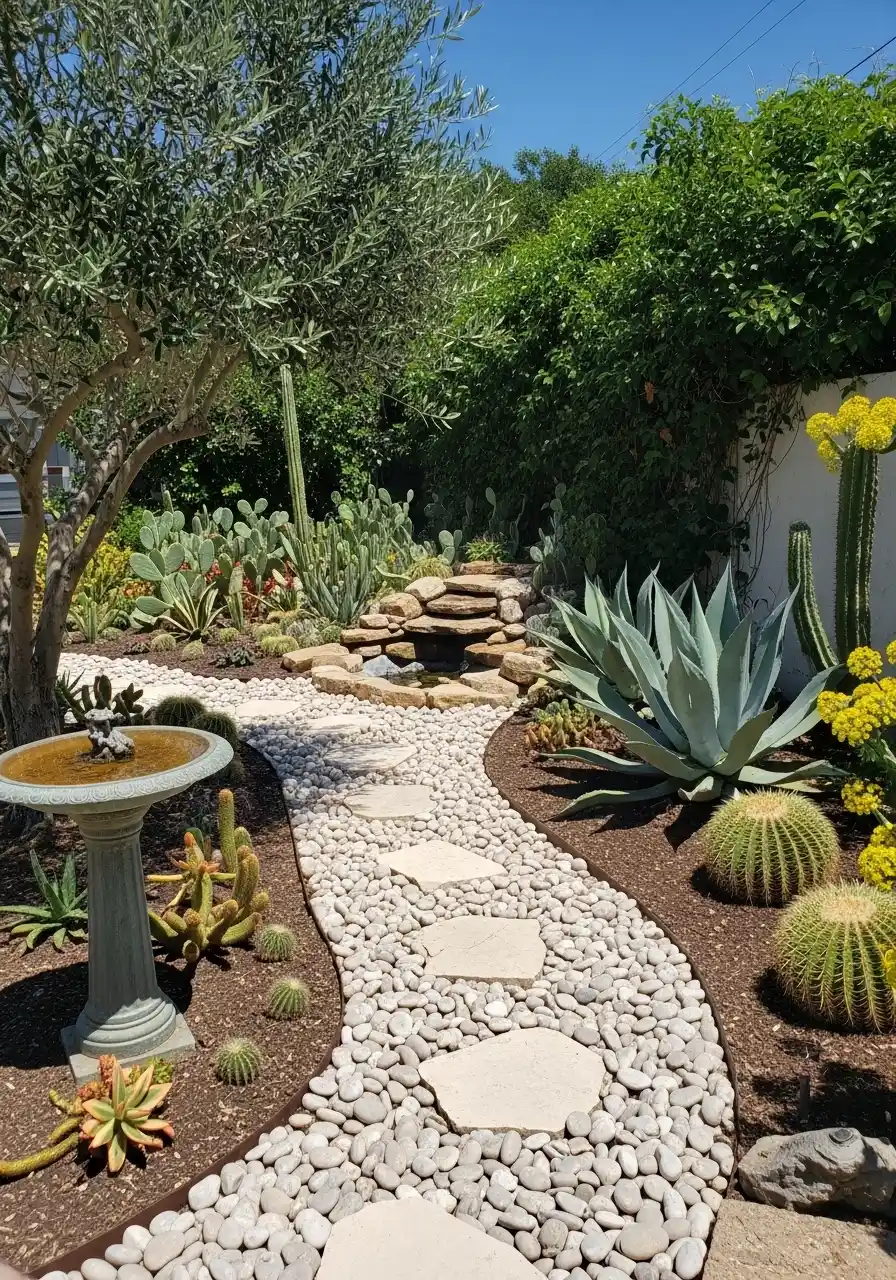
This setup looks clean even when it’s hot and dusty, which is kinda the dream. The white river rock makes the path glow, and the stepping stones look easy to walk on. I like the birdbath too because it’s a soft “old-school” touch in a yard full of tough plants. The big agave is like a sculpture, and the barrel cactuses are round and funny in a cute way.
For Texas desert landscaping ideas like this, the hack is separating materials. Keep the white rock only on the path area, and use darker mulch or gravel around plants. If you mix everything together, it gets messy fast and you’ll be out there picking rocks like it’s your new hobby.
Also, edging matters. Use metal edging or sturdy plastic edging to keep the river rock from migrating. River rock loves to travel. Another tip: put landscape fabric under the rock, but pin it down well. If the fabric floats up, it looks awful, and yes I’ve seen it happen.
Modern desert curb appeal with agaves, barrel cactus, and clean gravel zones
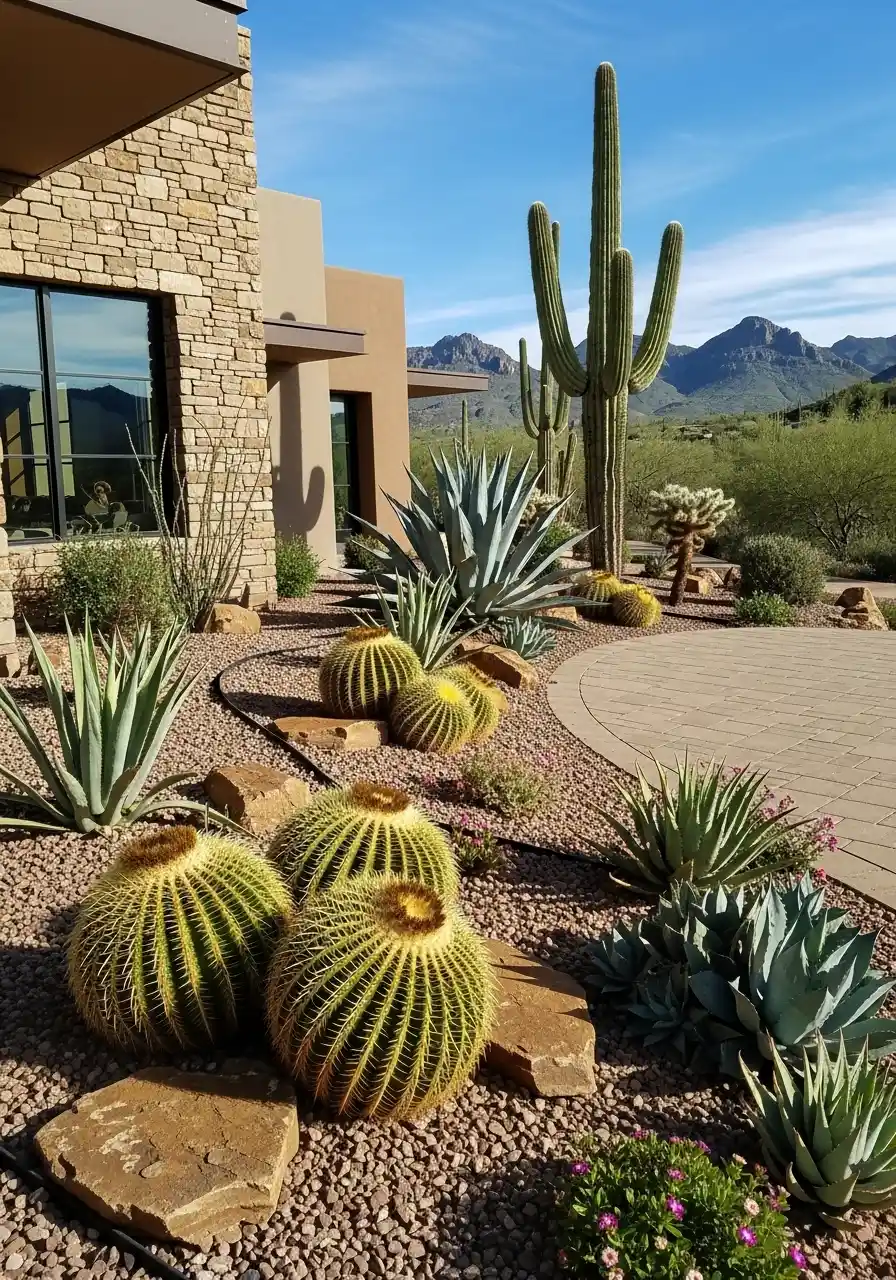
This one is bold and sharp. The gravel is tidy, the planting pockets are clean, and the agaves are spaced so you can actually see their shape. I like that the house has stone and smooth walls, and the landscaping matches that “structured” vibe. It doesn’t feel random at all, it feels confident. Like it knows what it’s doing.
If you’re copying this Texas xeriscape landscaping style, use repetition. Repeat agaves in the same size, repeat barrel cactus in clusters, and repeat boulders in similar colors. When you repeat things, your brain reads it as “designed.” When you don’t, it reads like “I bought whatever was left at the nursery.”
A practical tip: give agaves space. They grow wider than people think. Also keep them away from where kids run or where you carry groceries, because those spines are not friendly. If you want the look without the stabbing, use softer yucca types or ornamental grasses in the same spots.
Backyard lounge with cactus “walls,” big boulders, and a shade slat pergola
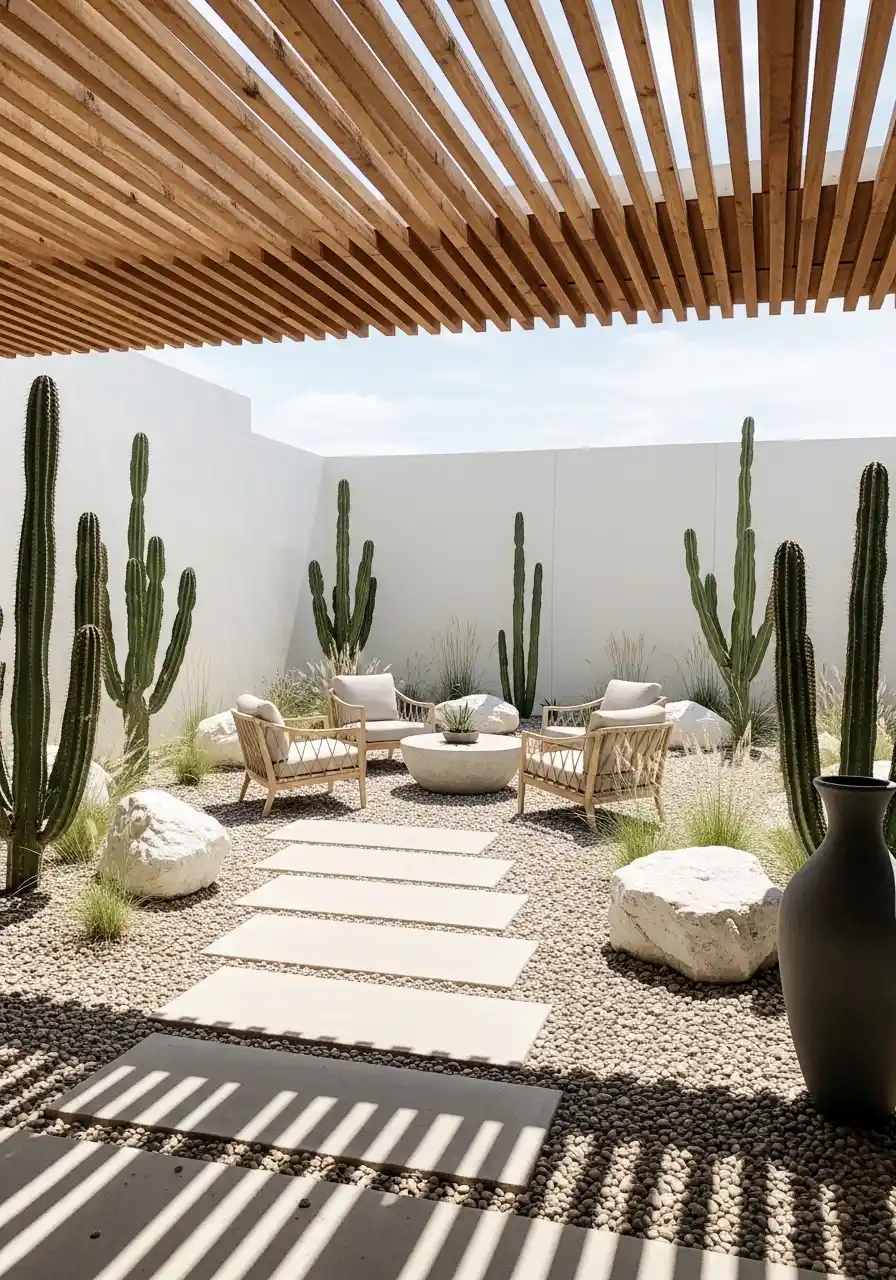
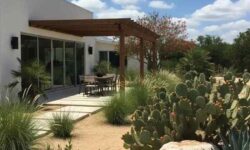
This is the kind of yard where you’d sit down and accidentally stay there for two hours. The pergola throws striped shadows on the ground, and I’m not kidding, that shadow pattern makes the whole space look fancy. The seating area is simple, but the tall cacti make it feel private and protected.
For texas desert landscaping in a backyard, focus on comfort. Put gravel underfoot but use large stepping pads so you don’t feel like you’re walking on marbles. Then place 3–6 tall plants around the edges to frame the seating spot like an outdoor room.
A hack: keep plants off the exact sitting area, and push them to the edges. It makes the space feel bigger. Also, choose a few boulders as decor, not tons. Too many rocks makes it look like a construction site, not a relaxing yard. And don’t forget a tiny table, you need a place for a drink.
Minimal cactus grouping with big drama and simple ground cover
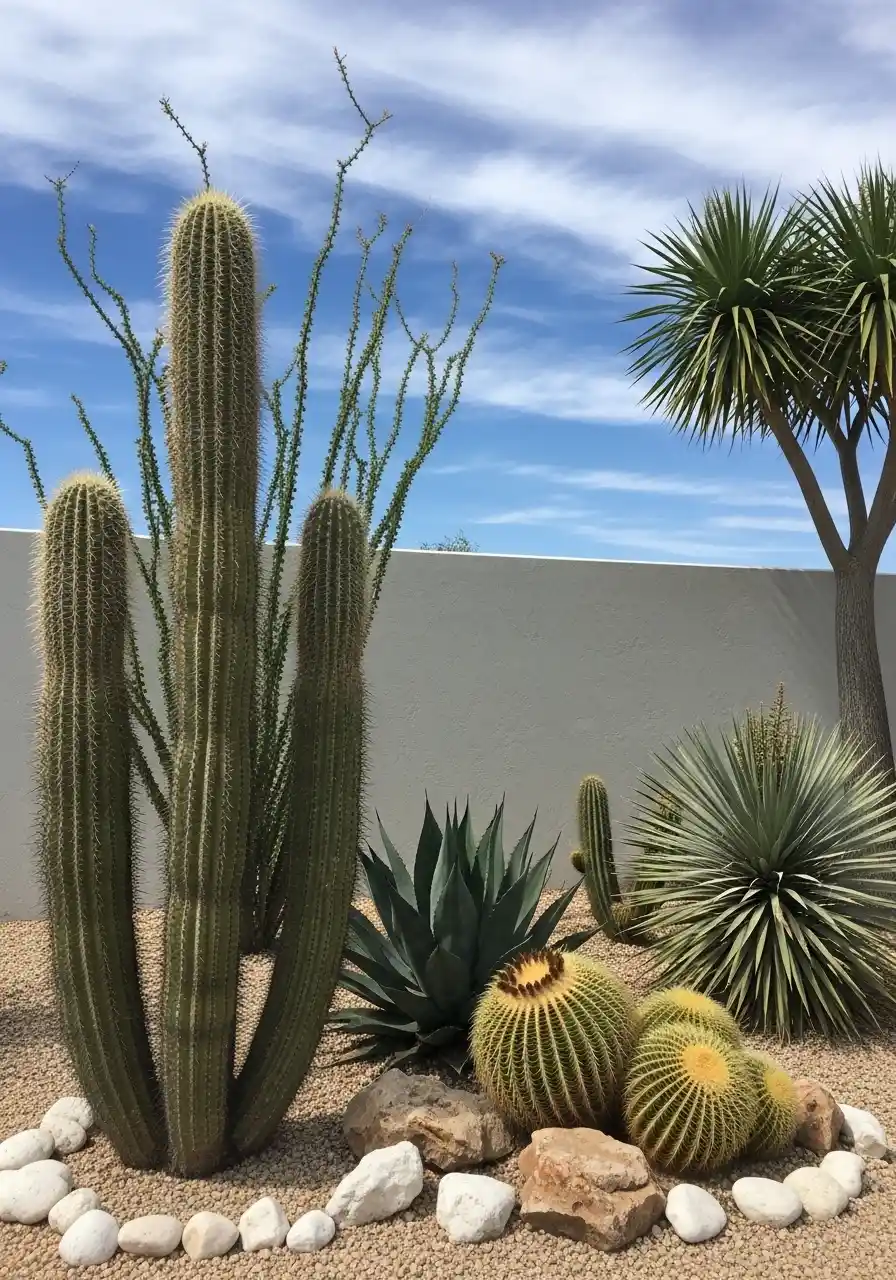
This one is a mood. It’s just a few plants, spaced wide, and it still looks powerful. The tall cactus cluster is the main event, then there’s agave and barrel cactus, plus a spiky round plant that looks like it belongs in a sci-fi movie. The white wall behind it makes every shape stand out.
For Texas desert yard ideas, this is perfect if you don’t want a “busy” garden. Pick one hero plant group, like tall column cacti or a big agave, then add 2–3 supporting plants. Keep the ground plain with tan gravel or decomposed granite.
The trick is placement. Put the hero plant off-center. If it’s dead center, it feels stiff like a display. Off-center feels more natural. Also, leave empty space on purpose. Empty space is not failure in desert design, it’s part of the beauty. It took me a while to accept that honestly.
Straight modern walkway with red gravel borders and sculptural plant pockets
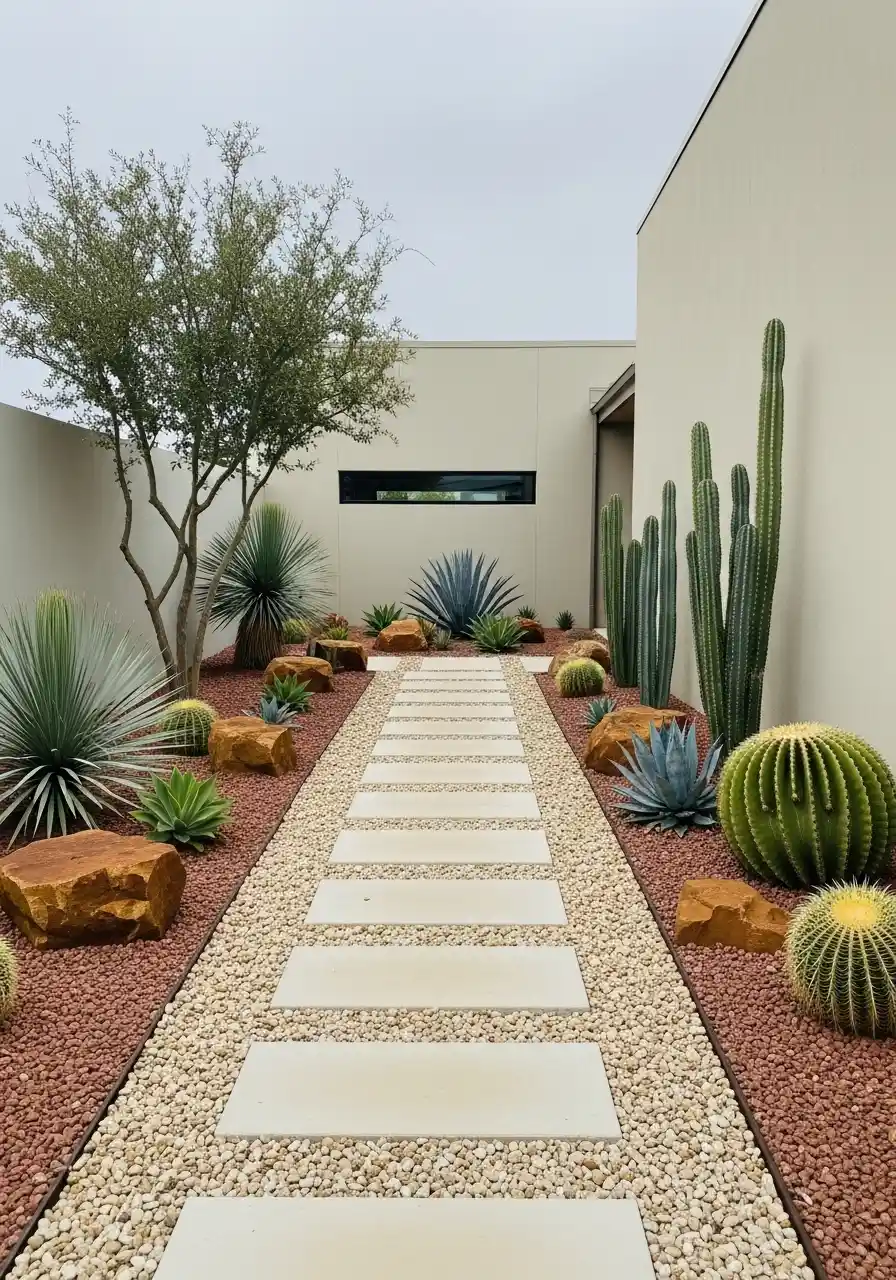
This one is so neat it almost makes me want to clean my whole life. The straight walkway lines up with the house and that long window, and the red gravel borders look crisp. The plants are spaced like little art pieces, and the boulders are like accents, not clutter.
For desert landscaping in Texas, this style works best when you commit to clean lines. Use the same size stepping slabs, keep spacing even, and stick to a small plant list. Like, pick 2–3 plant types and repeat them instead of mixing a million things.
A hack I like: use two gravel colors, one for “plant zones” and one for the walkway strip. It makes the design look expensive without actually being expensive. Also, install drip irrigation under the gravel. Nobody wants to drag a hose through a rock yard, it’s annoying and it scratches stuff.
Hill-side desert garden with a curving decomposed granite trail
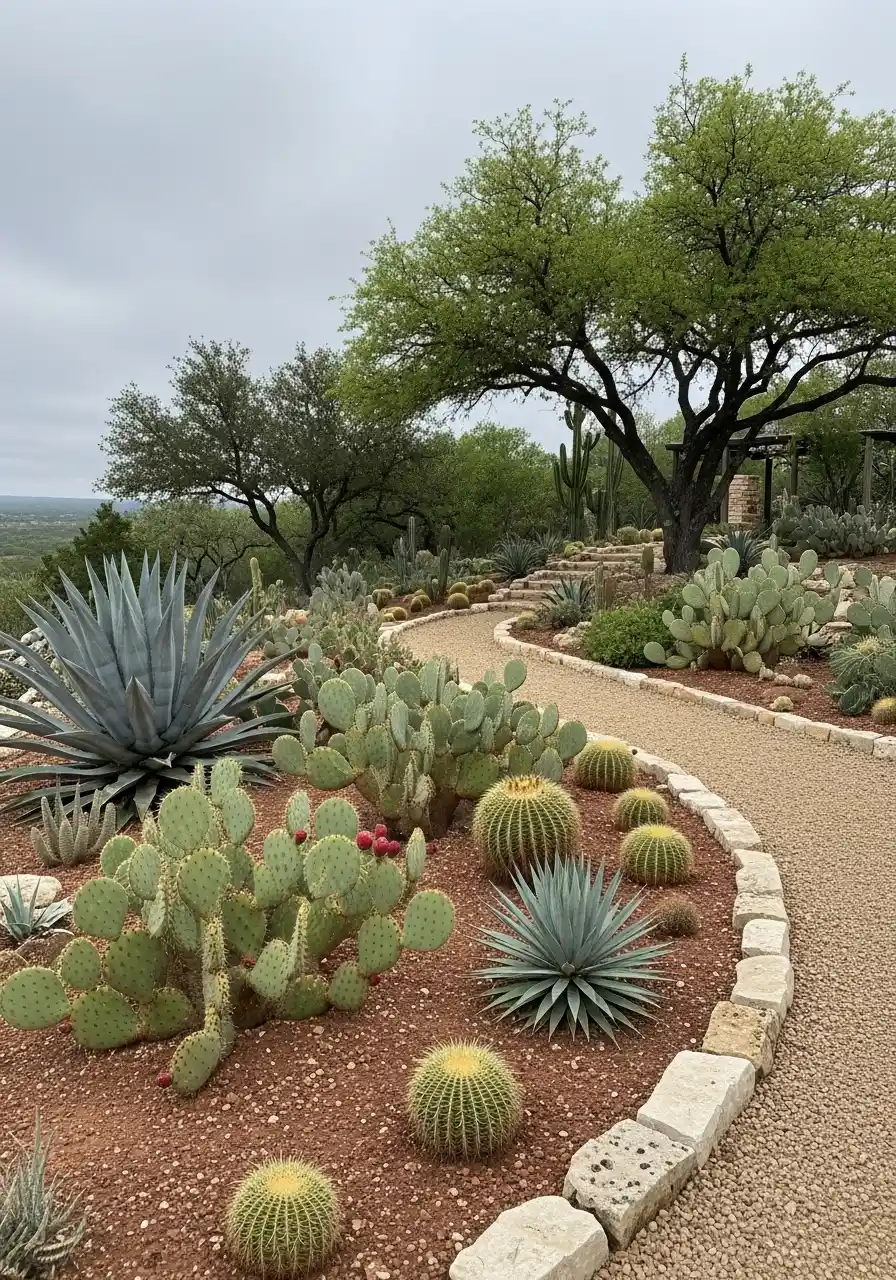
This looks like a nature walk that just happens to be in someone’s yard. The curved path is cozy, and the border stones keep everything contained. I love the mix of prickly pear, agave, and round barrel cactus, and the big trees add shade so it doesn’t feel like an oven.
For Texas desert landscaping ideas on a slope, erosion control is the whole game. Use decomposed granite for paths because it packs down better. Then edge the path with stone to hold it in place. Plant in clusters to help hold soil too, especially with prickly pear and other spreading plants.
A trick: build tiny terraces with stone if the slope is steep. Even small terraces help water soak in instead of washing away. And don’t put smooth gravel on a steep hill, it slides. You’ll be slipping around like it’s a cartoon.
Desert entry walkway with rounded river stones and soft curves
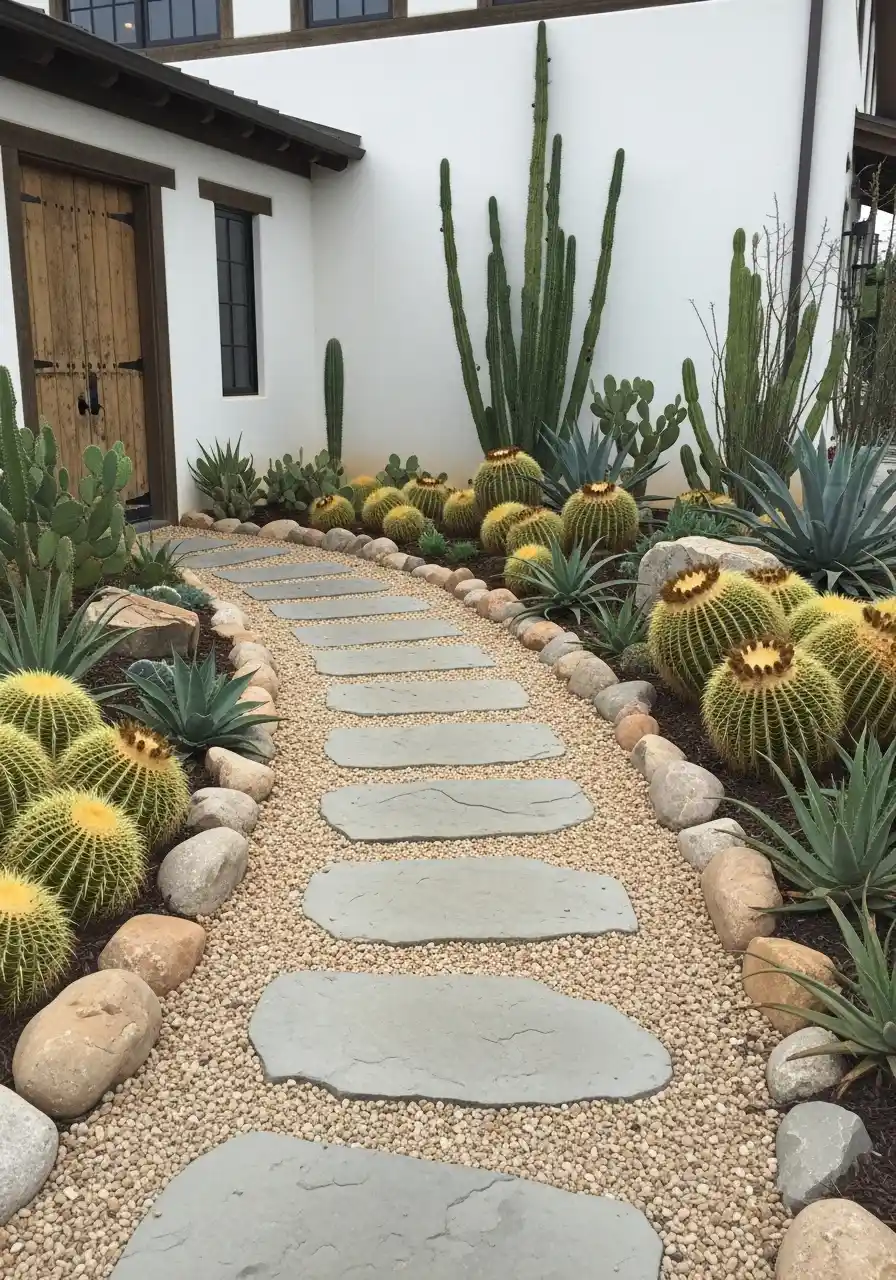
This entry is inviting but still tough. The stepping stones are big and comfortable, and the river stones around them make it feel like a dry creek. The plants on both sides are symmetrical-ish but not perfectly matching, which I like. It feels human.
For texas desert landscaping, dry-creek style paths are a smart move because they handle storm water better. You can shape the rock path slightly lower than the planting areas so water flows through it during heavy rain. That’s not just pretty, it’s practical.
Planting tip: use spiky plants as “bookends” near the start and end of the path. It frames the walkway. Then fill the middle with medium plants and a few low groundcovers. Also, leave enough walking room. Big stones are good, but the spacing needs to match your stride or you’ll feel awkward walking it.
Classic desert yard with saguaros, barrel cactus, and wide open space
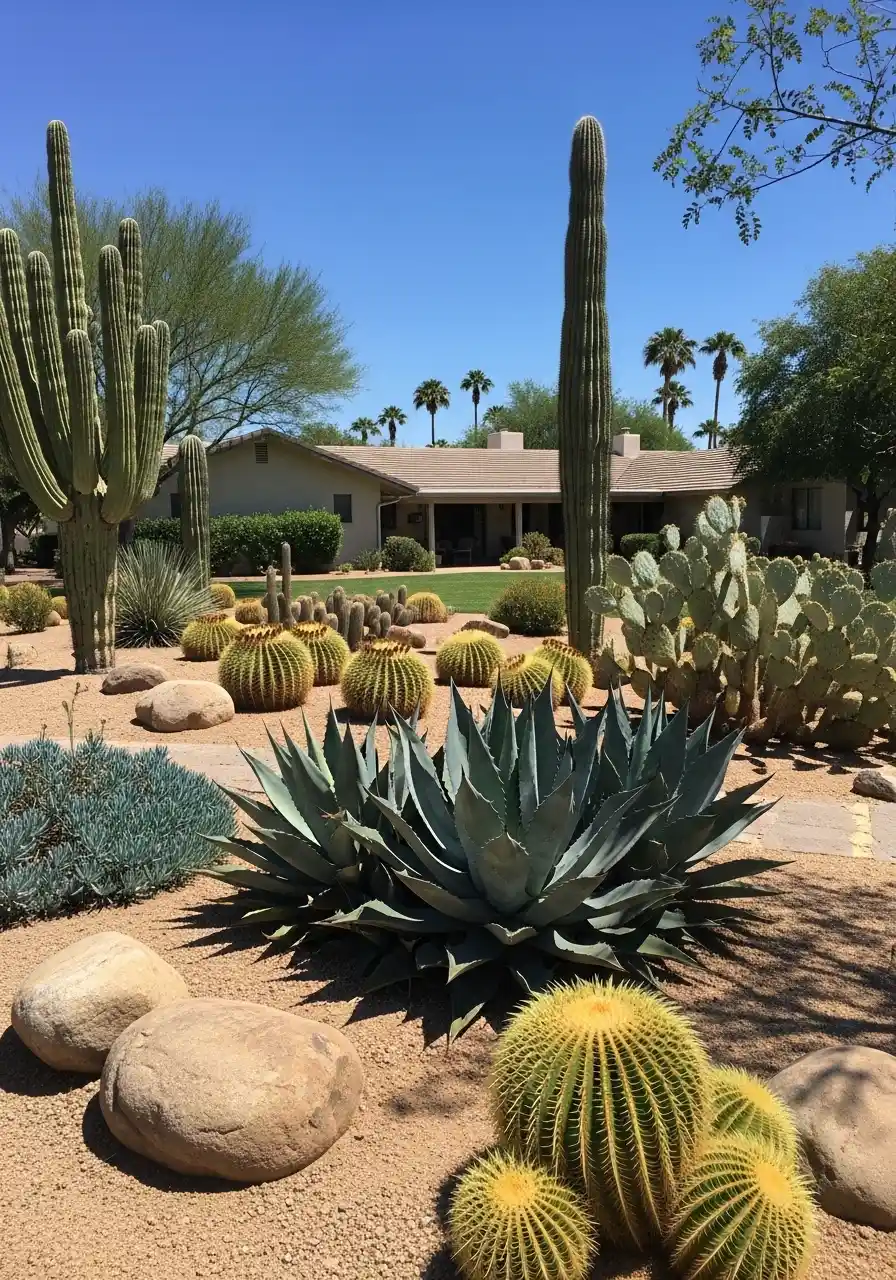
This one is like classic postcard desert. Big tall cacti, barrel cactus clusters, prickly pear, and lots of open sandy ground. It feels simple and proud. I actually like how open it is, because open space makes the plants feel more dramatic.
For Southwest Texas landscaping vibes, this is a strong template. Use fewer plant types but use bigger groupings. Like 5–7 barrel cactus in a cluster instead of one here and one there. Also use large boulders to break up the ground. The boulders make the yard feel grounded, not empty.
A confession: I used to think open space meant “unfinished.” But in desert design, open space is like silence in music. It makes the good parts louder. Just keep the ground cover consistent, like decomposed granite or sandy gravel, so it still looks intentional.
Patio courtyard with potted cactus, curved bed lines, and easy entertaining space
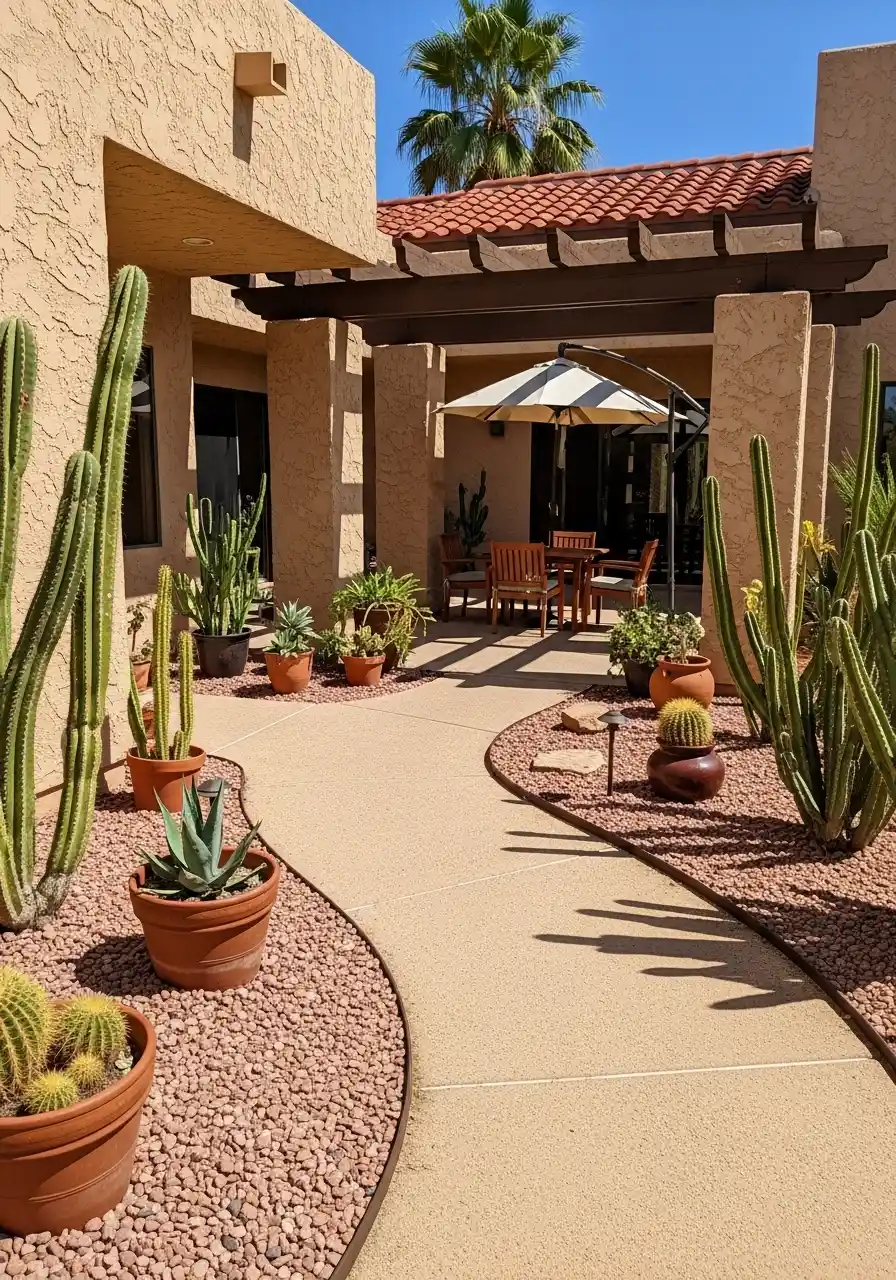
This is the livable one. The patio has seating, shade, and the landscaping is basically framing the hangout zone. I like the potted plants because you can move them around, and if one struggles, you can adjust it. The curved bed edges soften the hard concrete, so it doesn’t feel like a parking lot.
For texas desert landscaping around patios, keep spiky plants a little away from chairs. You don’t want your guests stressing about brushing against cactus. Use pots for the more dramatic plants like tall cactus and agaves. Pots make them feel like decor, and it’s easier to control soil drainage.
A hack: use matching pot colors so the space looks pulled together. And add a simple drip line to pots if you have a bunch. Hand watering ten pots in July is not fun. Also, lighting matters here. A few warm solar lights along the bed edge makes the whole patio feel cozy at night.
Curved pea-gravel walkway with brick edging and “soft + spiky” balance
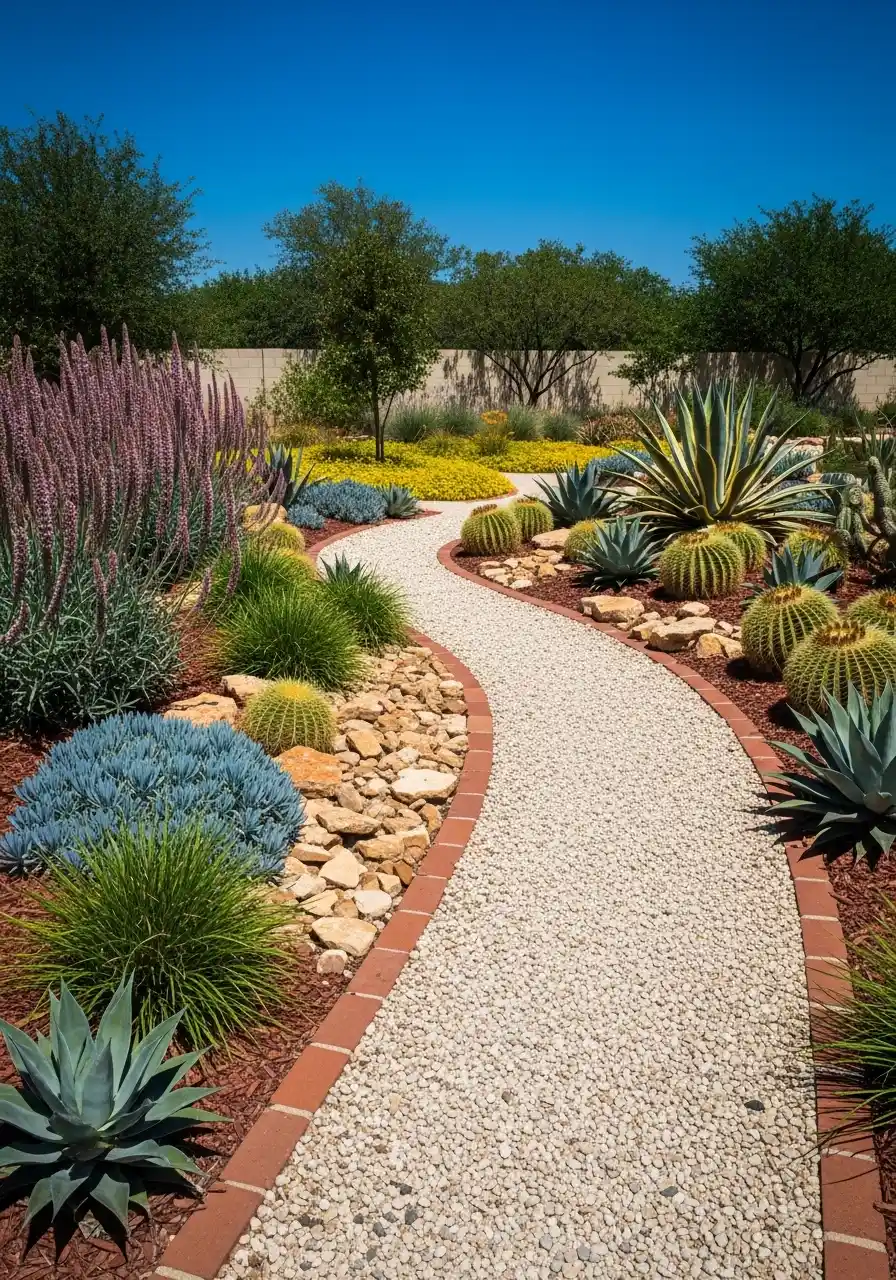
This path makes me want to walk it barefoot, even though I know that’s a dumb idea in the desert. The pea gravel looks smooth and bright, and the brick edging keeps it from spilling everywhere like a toddler with snacks. What I really like is how the plants are mixed. You’ve got round barrel cactus, spiky agaves, and those blue-gray mounds that look like a tough groundcover. Then you add tall purple flowers on the side and it suddenly feels fancy, not prickly.
If you’re doing texas desert landscaping like this, the main trick is edge control. Brick, steel, even thick plastic edging works. Without edging, gravel moves into beds and beds move into gravel, and you end up annoyed. I’d also keep the path at least 3 feet wide, but 4 feels better. You don’t want to shuffle sideways past a cactus, trust me.
For Texas desert landscaping ideas that feel lush, plant in “bands.” Put a band of blue-gray plants, then a band of grass, then a band of barrel cactus. It’s simple, but it reads like a real design plan.
Wide open sandy yard with “hero plants” and lots of breathing space
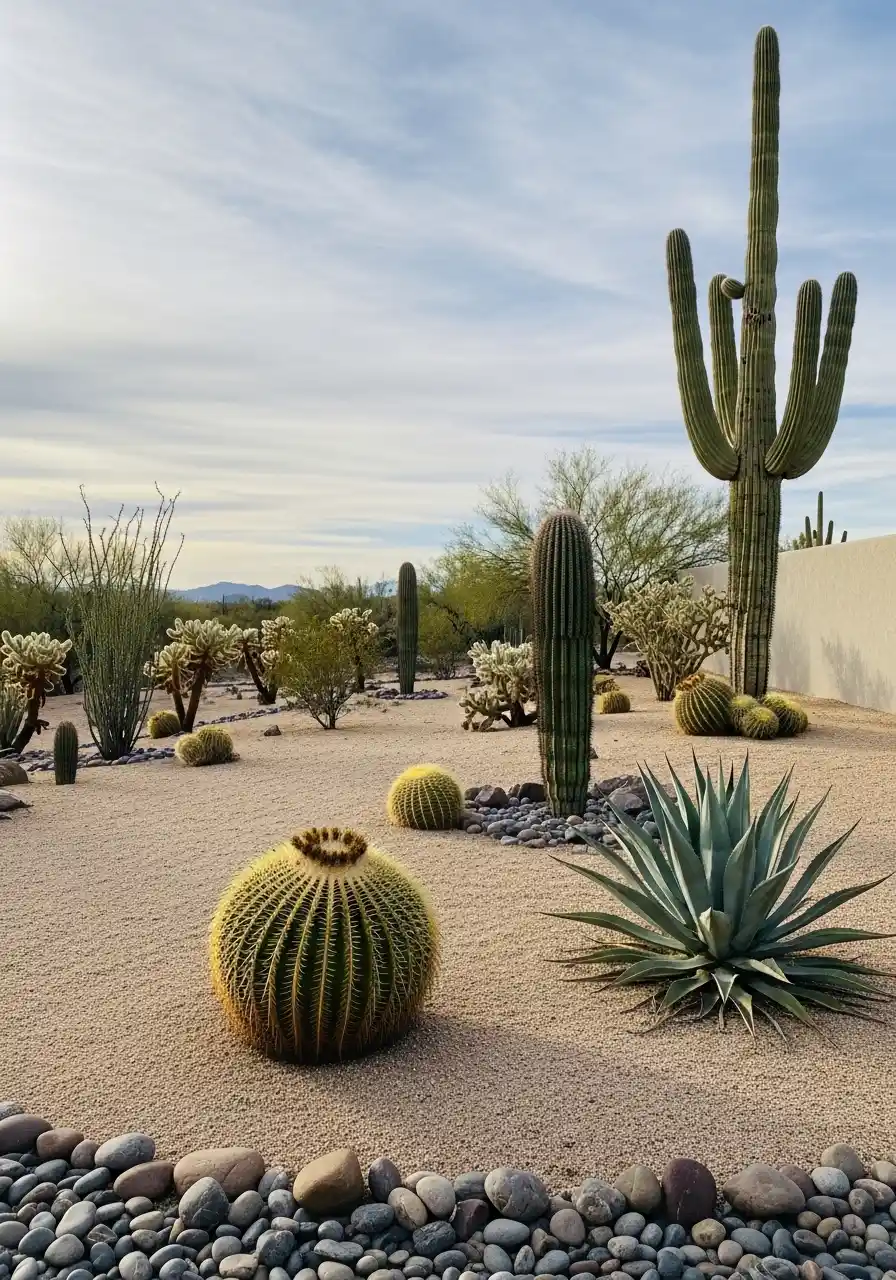
This one is so quiet and open it almost feels like a secret. The sand is smooth, the plants are spaced far apart, and every cactus looks like it’s posing for a photo. There’s a big barrel cactus up front, a strong agave, and tall column cactus in the distance. It’s not crowded at all, and that’s the whole point. I used to think empty space meant you weren’t done yet, but desert yards don’t work like that.
For desert landscaping in Texas, this is a smart style if you hate maintenance. Less plants means less pruning, less watering, and less “why is this dying?” stress. The hack is using boulders and rock rings to make plants look intentional. A simple circle of dark stones around a cactus looks clean and also helps keep mulch in place.
If you try this Texas xeriscape landscaping look, use 5–8 “feature plants” and repeat one thing, like repeating barrel cactus in small groups. Repetition keeps it from feeling random.
Bright flower borders with barrel cactus rows and bold color blocks
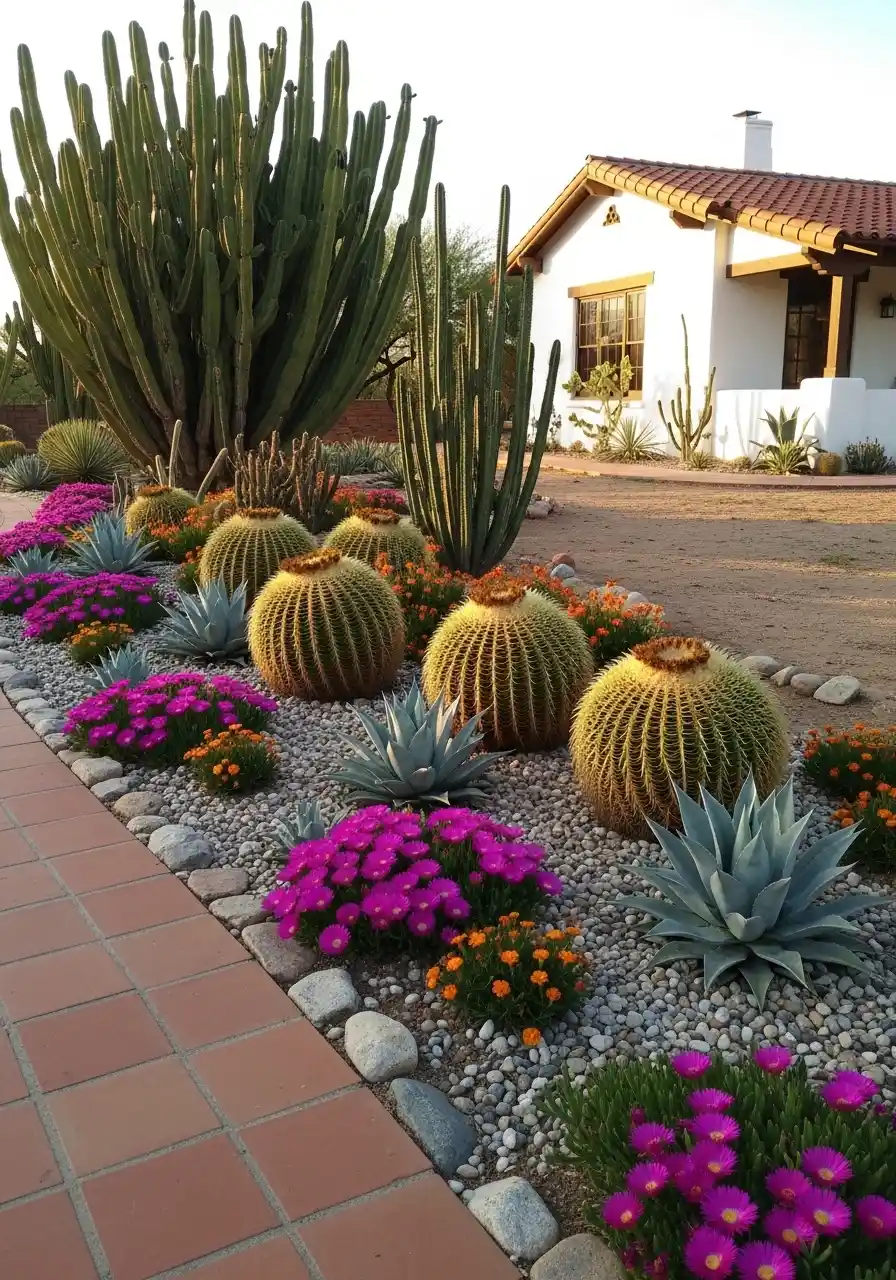
This is the party version of texas desert landscaping. The barrel cactus are lined up like little golden guards, and then the hot pink flowers steal the show. I love how the flowers are low, because the cactus still stands out. And the pebble ground cover makes everything look neat and clean. It’s colorful but still desert-appropriate, which is harder than it sounds.
If you want this look, you need two things: a strong plant layout and a simple color plan. Pick 2–3 flower colors, max. Here it’s pink and orange mostly, plus the blue-gray agaves. Too many colors makes it look like a carnival. Also, keep flowers in thick patches, not scattered singles. Singles look lonely out there.
For Texas desert yard ideas, use flowering plants that can take sun and heat, like lantana, verbena types, or ice plant style groundcovers. Then place cactus behind them so the flowers feel like a soft “front row.” I’m not gonna lie, this style makes me happy instantly.
Big boulders, sandy ground, and a modern house that still feels warm
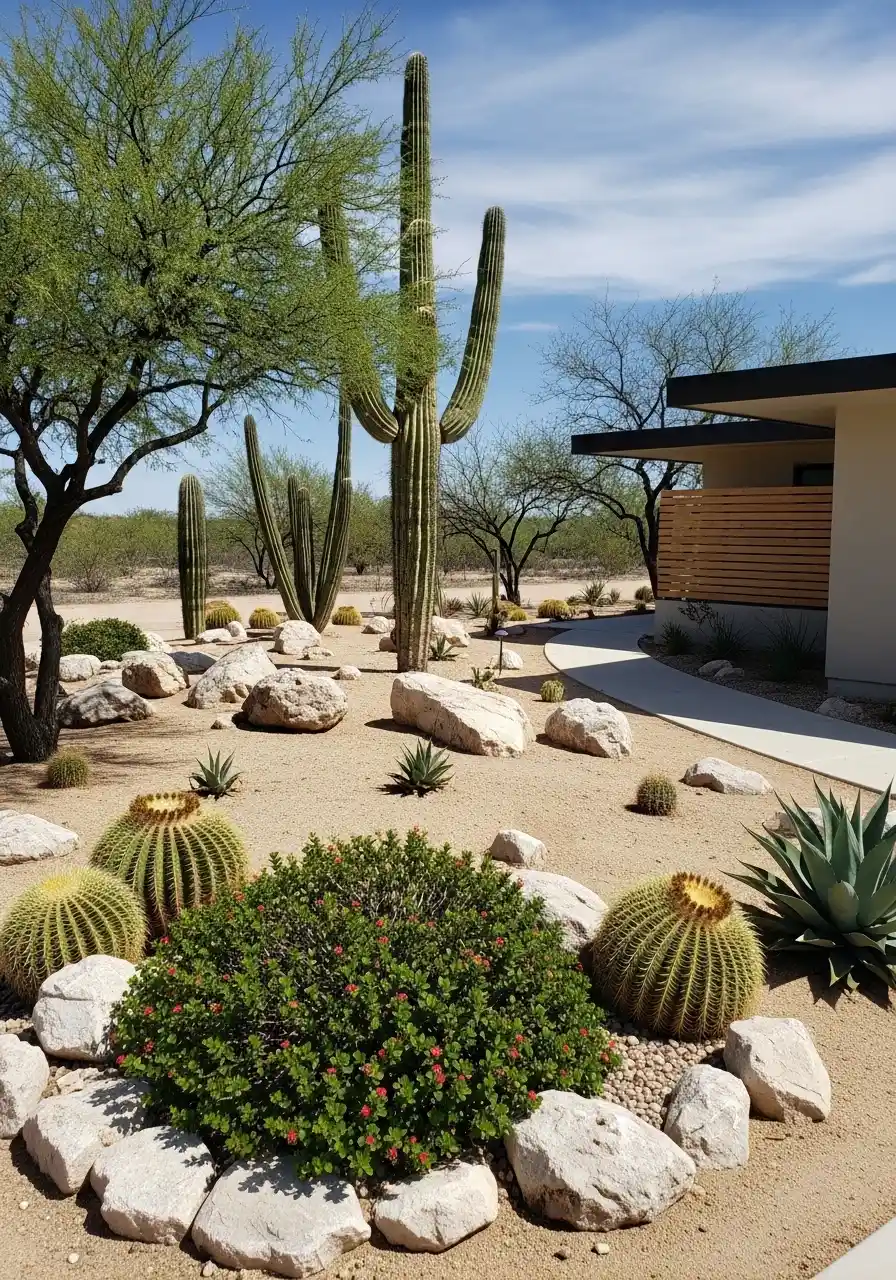
This one feels like a desert museum in the best way. The boulders are huge and pale, the sandy ground is clean, and the tall saguaros make everything feel tall and dramatic. The house is modern, but the yard keeps it from feeling cold. I like how the plants are spaced wide, but there’s still texture everywhere.
For texas desert landscaping like this, boulders are your best friend. Use fewer boulders, but make them big. Lots of small rocks can look messy. Big rocks look intentional, like they’ve always been there. Place them in groups of 3, and vary sizes. That “3 rule” works way too often, it’s kinda funny.
A practical hack: keep plant bases mulched with small gravel, not organic mulch. Organic mulch can blow around and break down fast. Gravel stays put and matches the desert vibe. This is one of those Texas desert landscaping ideas that looks expensive, but it’s mostly about placement, not rare plants.
A cactus garden path that feels like a mini nature trail
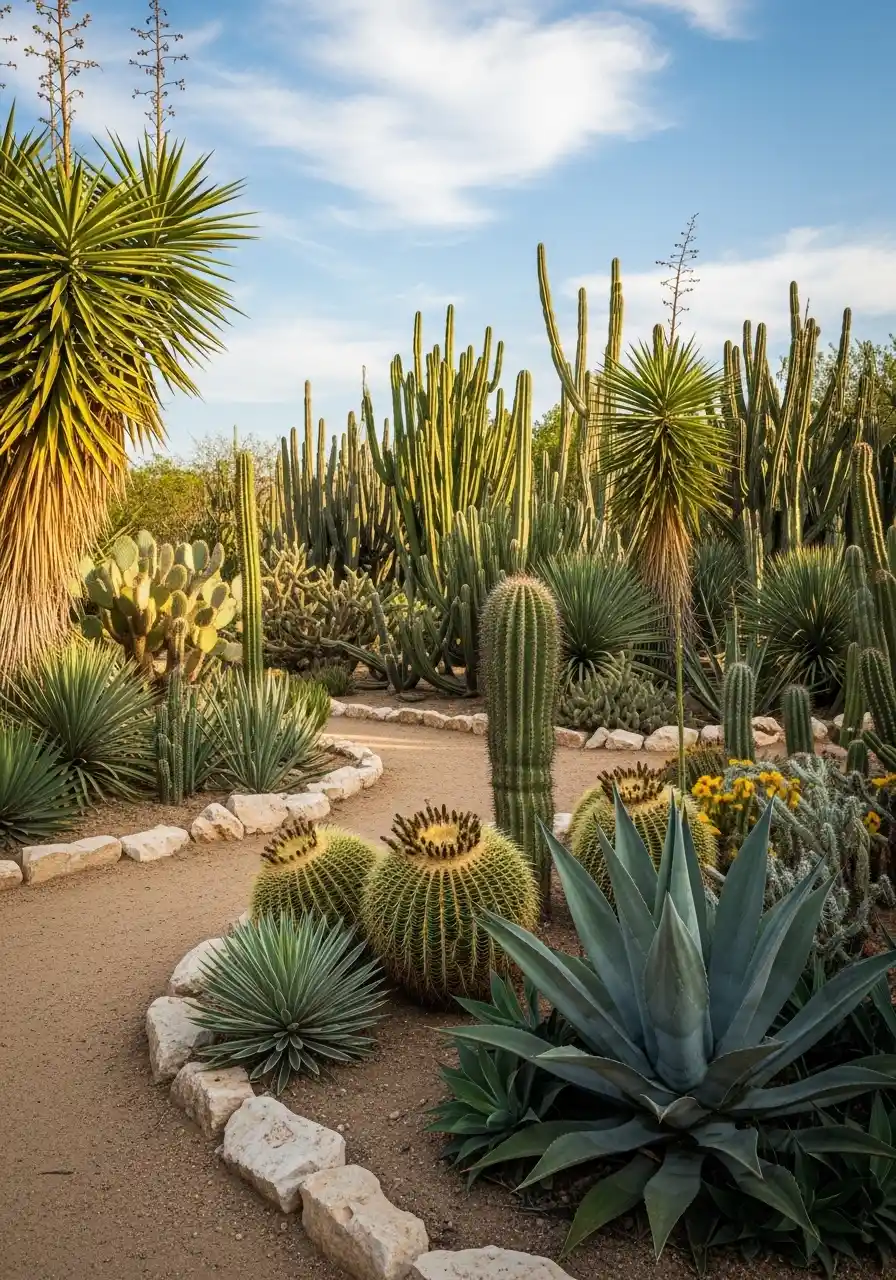
I love this one because it feels like you’re walking into a little desert world, not just a yard. The path is decomposed granite or packed dirt, edged with stone. The plants are packed more than the open-space yards, but it still doesn’t feel crowded. The tall cactus in the background makes it feel deep, like there’s more to see around the bend.
For desert landscaping in Texas, this “trail” style is great if you want a yard that feels like an experience. The trick is curving paths and layered height. Put taller cactus and yucca-looking plants toward the back, then medium shrubs and agaves, then low plants near the path edge. It makes the path feel protected.
Another tip: use stone edging that’s low enough to step over if you need to, but tall enough to hold in soil and gravel. If you’re doing Texas desert landscaping ideas for a smaller yard, this style still works. Just use tighter curves and fewer plant types.
Side-yard gravel bed with color-coordinated succulents and clean lines
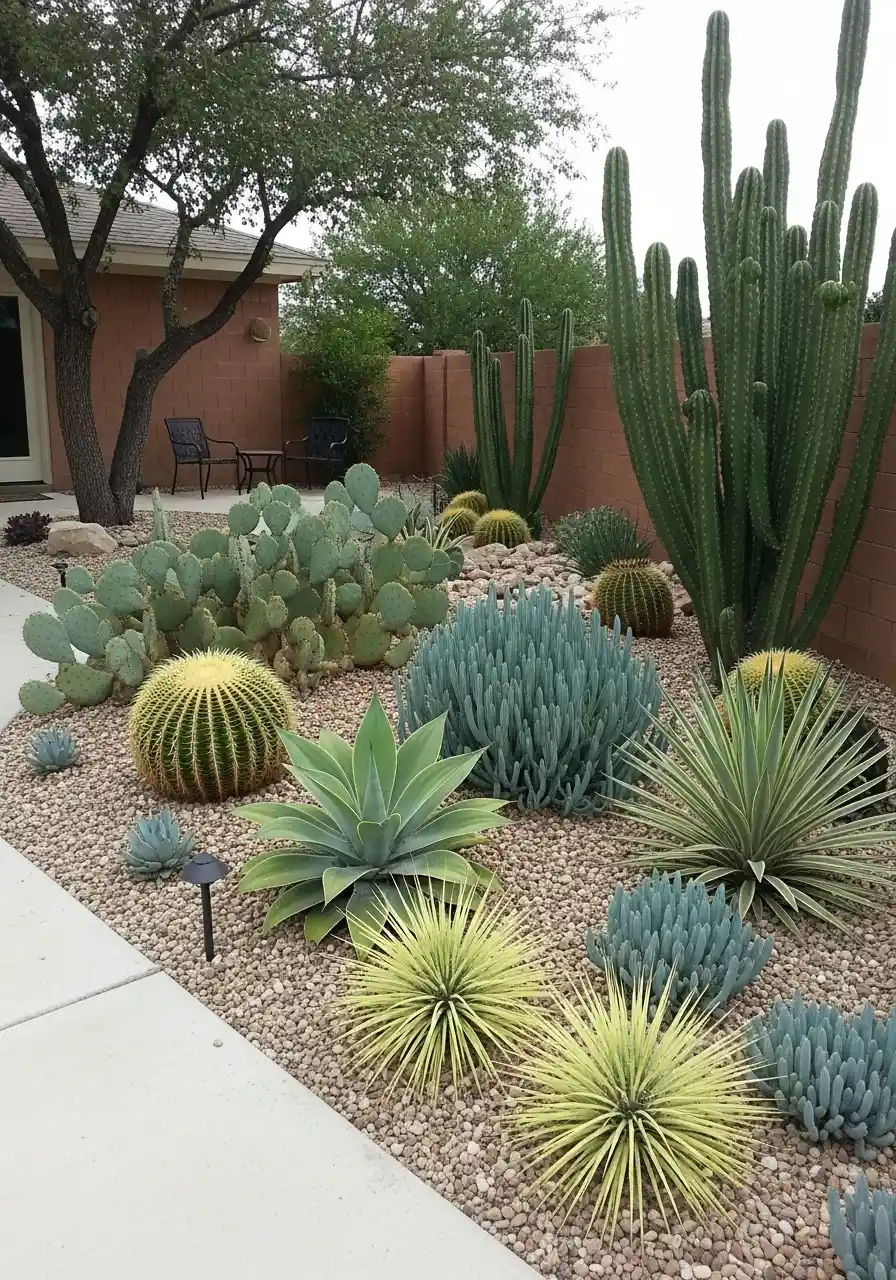
This one is so tidy it almost makes me nervous, like I’ll mess it up by standing near it. But I love it. The gravel is uniform, the plants are spaced perfectly, and everything is a cool blue-green color with little pops of lime. It’s a great example of texas desert landscaping that looks modern but still natural.
To copy this, pick a color palette first. Here it’s mostly blue-gray succulents, green agaves, and a few bright spiky accents. Limiting colors makes it feel calm. Then choose plants with different shapes: round barrel cactus, spiky yucca, rosette succulents, and low mounding plants. Shape contrast is everything.
A small hack: repeat the same plant every 4–6 feet. It gives rhythm. Also, put drip lines under the gravel from the start. Side yards can be forgotten zones, and forgotten zones need irrigation that basically runs itself. This is one of my favorite Texas xeriscape ideas because it’s clean and forgiving.
Circular stepping pads with gravel and “green islands” for softness
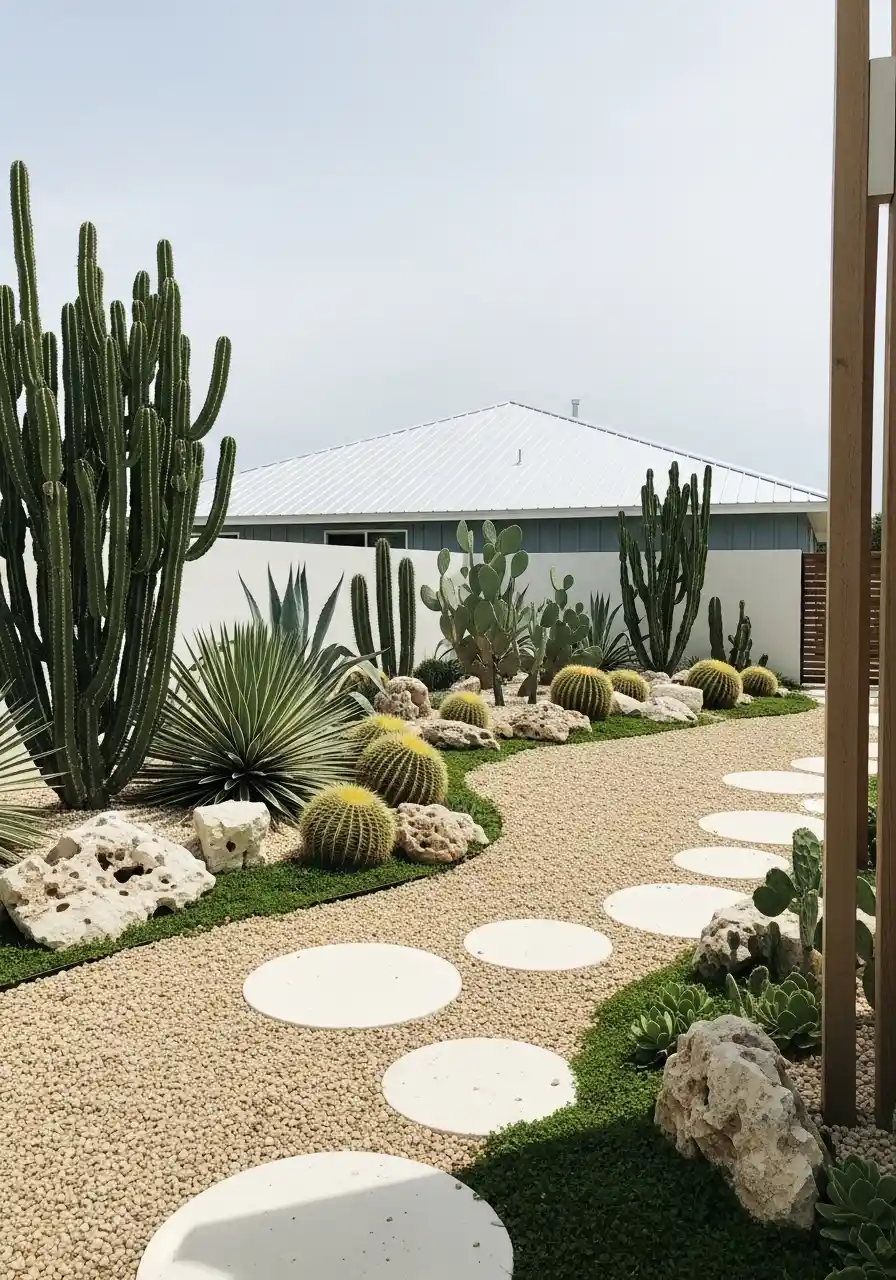
This design is kinda genius. The path uses big round stepping pads, which feels playful and modern at the same time. The gravel field is easy to maintain, but the little green “islands” break up the rock so it doesn’t feel like one big parking area. Then you add barrel cactus and agaves, and it’s suddenly very put-together.
For texas desert landscaping, this is a nice way to keep some softness without needing a full lawn. Those green patches could be a drought-tough groundcover or even artificial turf if you’re into that. I won’t judge. The point is contrast. Soft next to rough always looks good.
A practical tip: space the stepping pads for a normal walking stride, around 18–24 inches apart depending on the pad size. If it’s too far, it feels awkward. If it’s too close, it feels like tiny steps. And please edge the path area so gravel stays where it belongs. This is a really solid Texas desert landscaping idea for modern homes.
Winding stepping-stone walk with big statement cactus and layered boulders
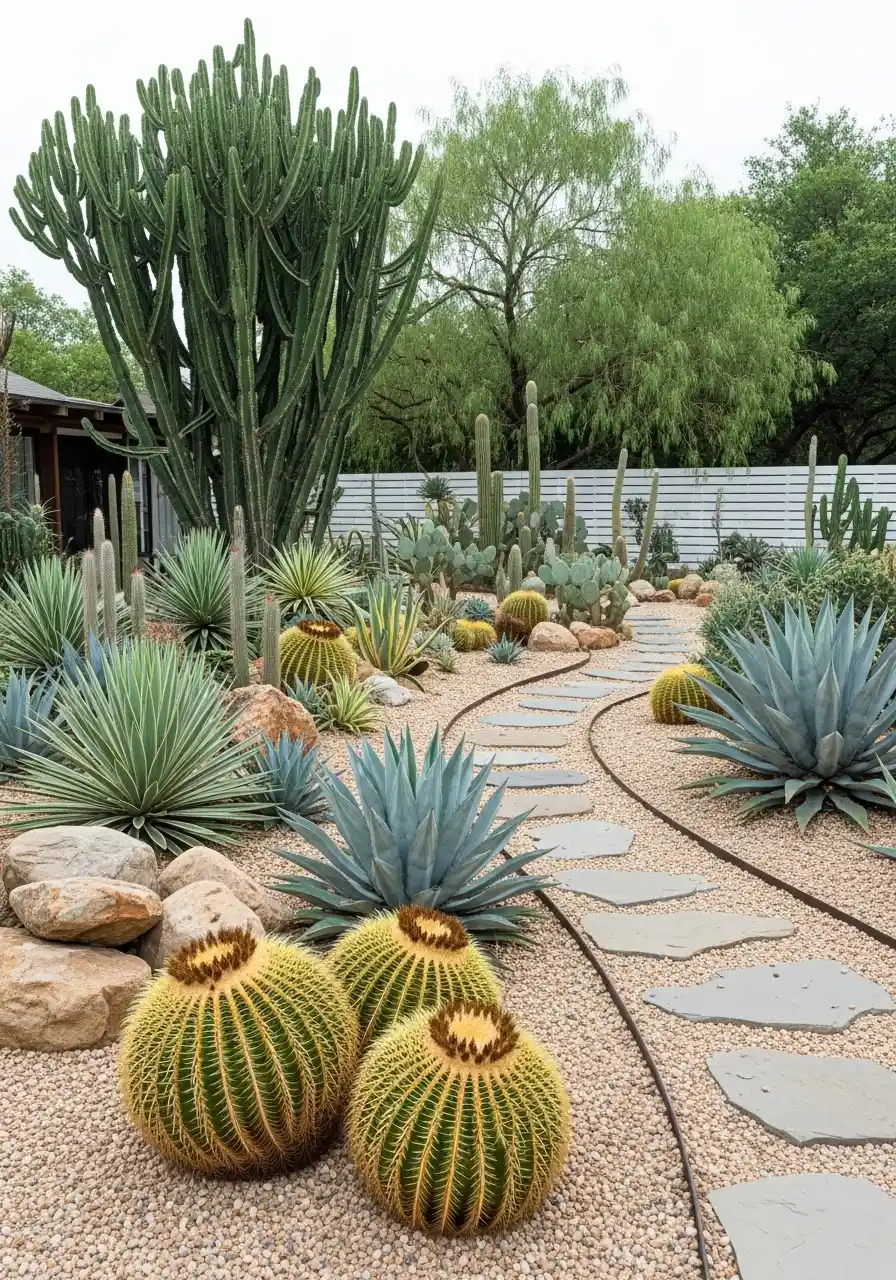
This one feels like a “walk me through it” yard. The stepping stones curve gently, and the path pulls you forward toward that giant cactus in the back. That big cactus is basically the centerpiece, and everything else supports it. The barrel cactus in front adds a warm round shape, and the agaves give that sharp, cool-blue edge. I like it because it feels balanced, like a good outfit.
For texas desert landscaping, a winding stepping-stone path is a cheat code. It makes even a flat yard feel interesting. Put the biggest plant or biggest boulder where the path seems to lead, so it feels like a destination. Then repeat a few plants along the path edge for consistency, like repeating agaves or repeating barrel cactus.
One more hack: keep boulders in the same “family” of colors. If you mix white rocks, red rocks, and dark rocks, it can get chaotic. Matching stone tones makes your desert landscaping in Texas look calm and planned, even if you’re kinda making it up as you go.