If your front yard feels a little too open—or your windows feel like they’re on display—tall shrubs can fix that fast. I like tall shrubs in front of a house for one big reason: they give structure. They make the home look “finished,” like the landscape belongs there, not like it was sprinkled on as an afterthought.
Below are 13 tall shrubs that bring height (10 feet and up), privacy, and strong seasonal style. I’m also including the stuff that actually matters when you’re planting: USDA Growing Zones, sun exposure, soil needs, and practical placement tips.
Table of Contents
Evergreen Tall Shrubs for Privacy (Year-Round Structure)
1) Baby Giant Arborvitae (Thuja)

Why it works: This one is a privacy hero—dense, upright, and fast enough to feel rewarding. Great for a “living wall” beside a porch or to frame the house corners.
-
Height/Width: 12–14 ft tall, 4–6 ft wide
-
USDA Zones: 5–9
-
Sun Exposure: Full sun to part sun (best density in sun)
-
Soil Needs: Moist, well-draining soil; tolerates clay if it doesn’t stay soggy
-
Care Notes: Water weekly the first year; mulch helps keep roots cool and moist.
-
Front-of-house tip: Keep it 3–4 feet off the foundation so airflow prevents mildew and you can still access gutters.
2) Viburnum Tinus (Viburnum tinus)
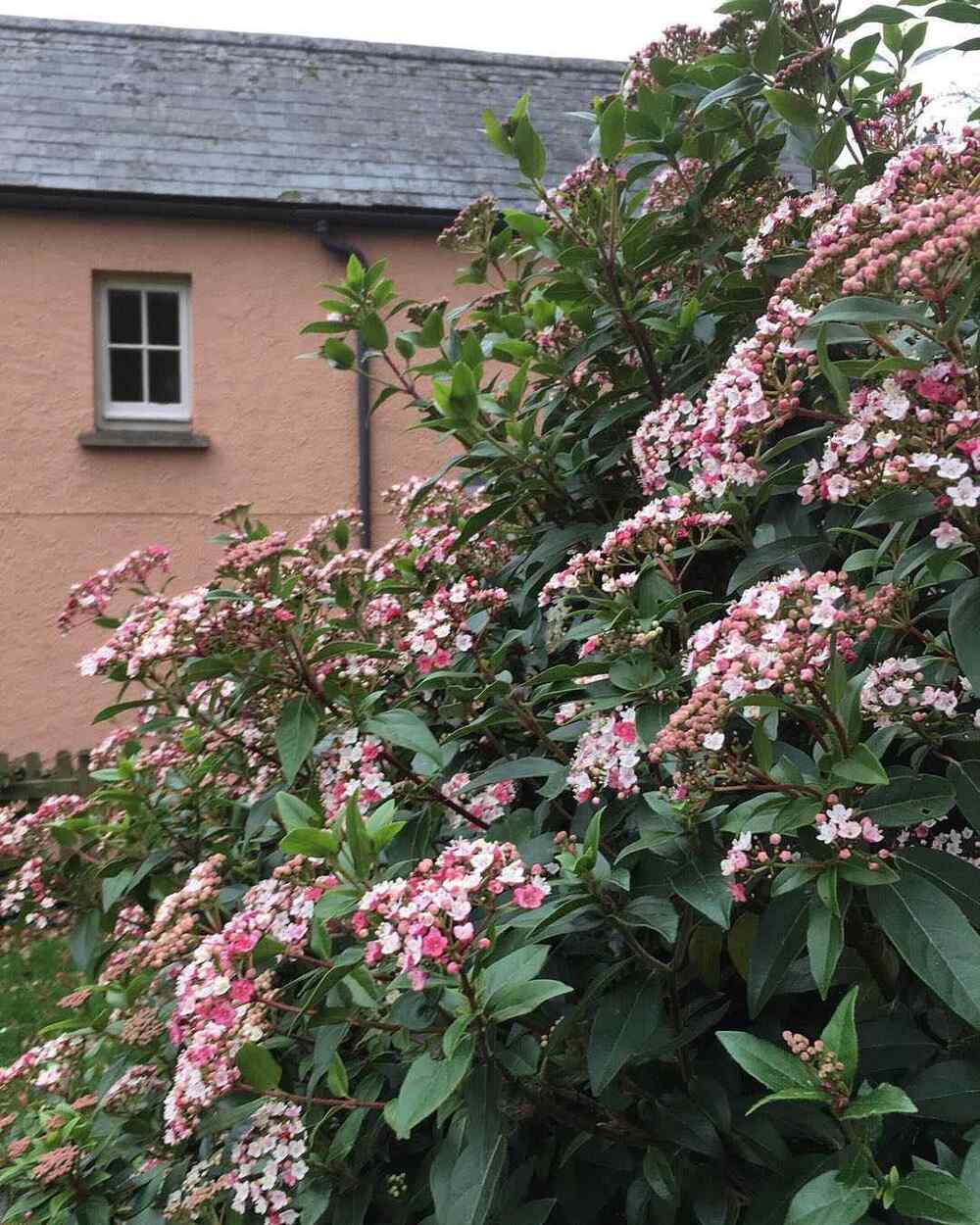
Why it works: Evergreen, lush, and surprisingly tall when happy. It reads “polished” without being stiff.
-
Height/Width: 10–16 ft tall, 6–10 ft wide
-
USDA Zones: 7–10
-
Sun Exposure: Full sun to part shade
-
Soil Needs: Average, well-draining soil; tolerates a range, dislikes waterlogged spots
-
Care Notes: Light pruning after flowering keeps it tidy.
-
Front-of-house tip: Use it where you want a soft screen that still feels welcoming.
3) Red Tip Photinia (Photinia × fraseri)
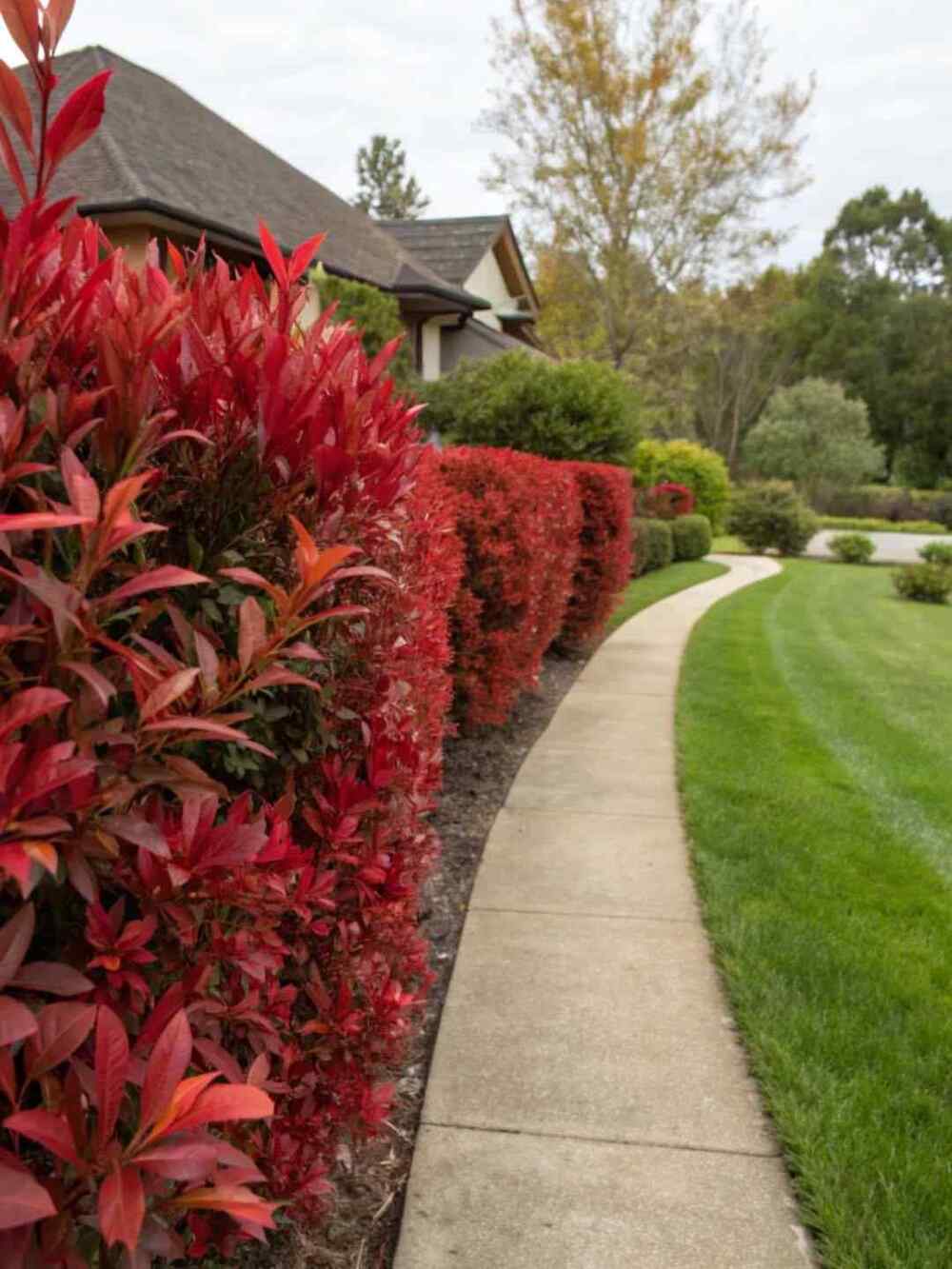
Why it works: New growth comes in bright red, then matures green—so it has built-in color. It can become a tall hedge quickly.
-
Height/Width: 10–15+ ft tall, 8–10 ft wide
-
USDA Zones: 7–9 (sometimes 6 in protected microclimates)
-
Sun Exposure: Full sun to part sun (better color in sun)
-
Soil Needs: Well-draining soil; avoid constantly wet beds
-
Care Notes: Give space for airflow—photinia can get leaf spot in humid conditions. Water at the base, not overhead.
-
Front-of-house tip: Great along property edges, but don’t cram it under low windows unless you’re committed to regular shaping.
4) Common Juniper ‘Hibernica’ (Juniperus communis ‘Hibernica’)
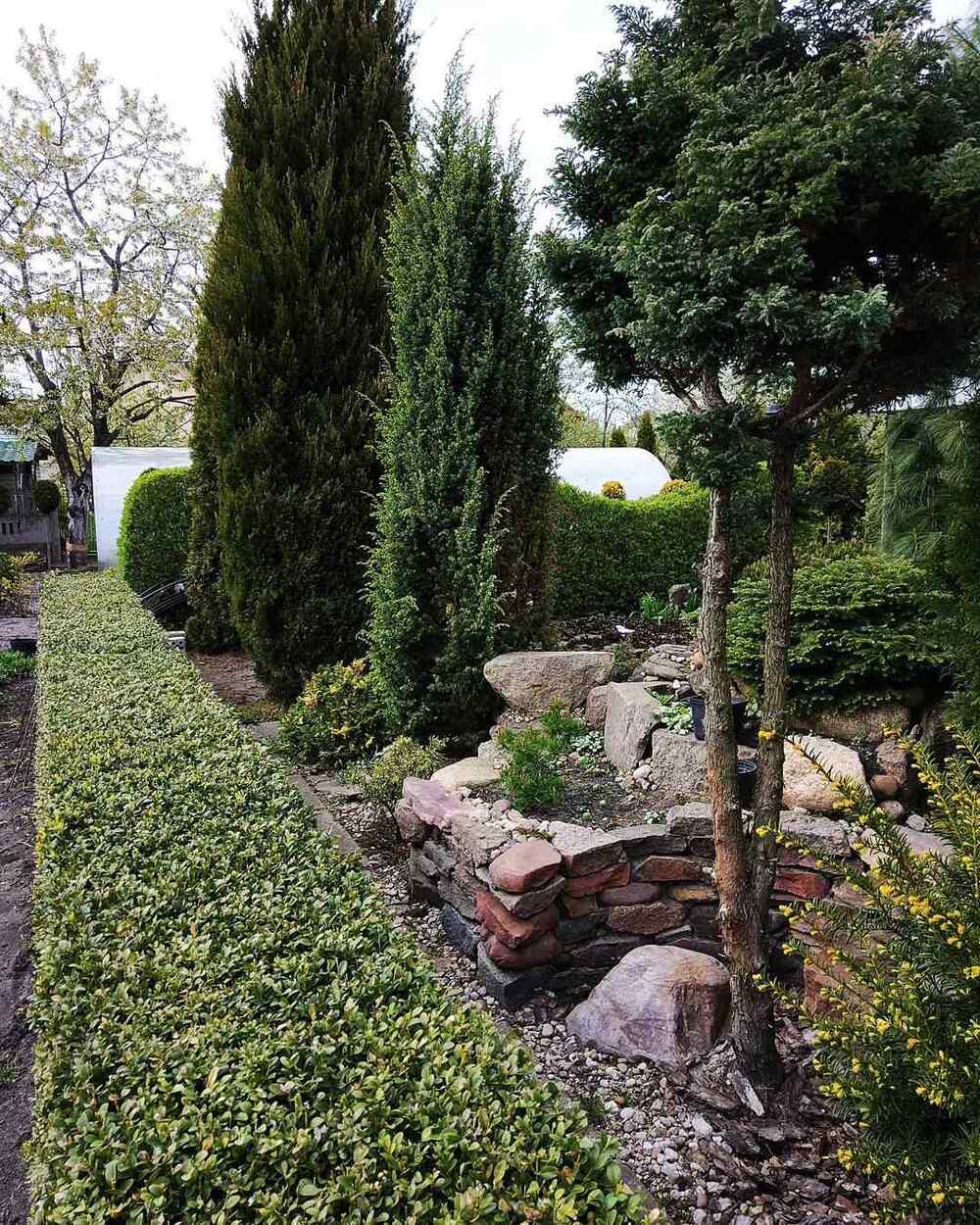
Why it works: Tall, narrow, and architectural—like little evergreen columns. It’s a low-fuss choice for a formal look.
-
Height/Width: 10–15 ft tall, 2–4 ft wide
-
USDA Zones: 3–8
-
Sun Exposure: Full sun
-
Soil Needs: Very well-draining; handles sandy or rocky soil; drought tolerant once established
-
Care Notes: Avoid heavy, wet clay unless amended.
-
Front-of-house tip: Plant in pairs to frame a front walk like living pillars.
5) Yew (Taxus spp.)
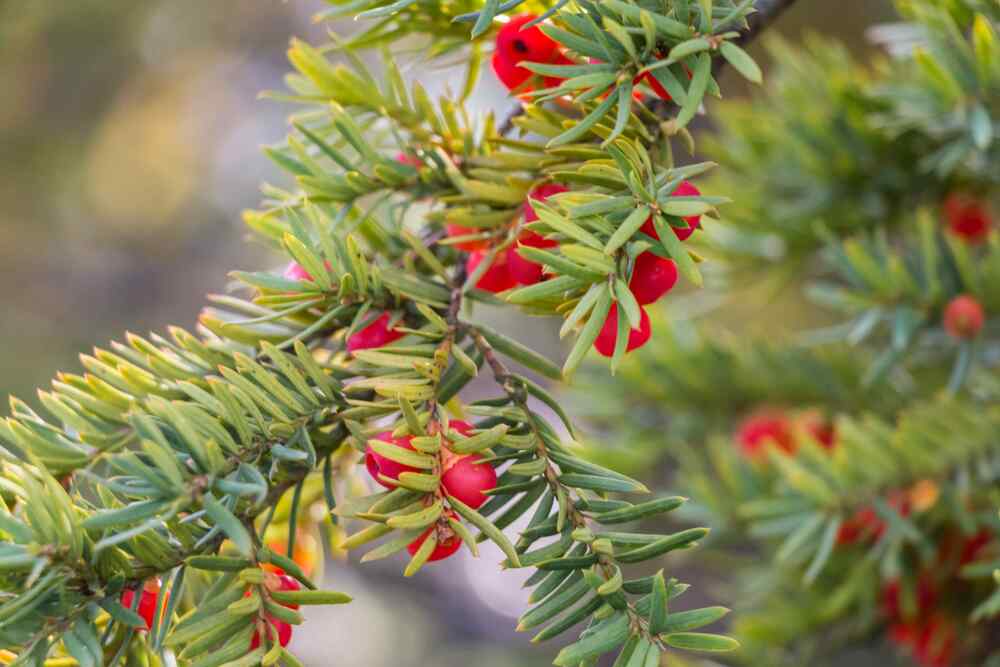
Why it works: Classic formal hedge material—dense, dark green, and extremely shapeable. If you love clean lines, yew is your friend.
-
Height/Width: 10–20+ ft depending on species/cultivar
-
USDA Zones: 4–7 (some types 5–8)
-
Sun Exposure: Part shade to full sun (best color in part shade in hotter areas)
-
Soil Needs: Well-draining soil; does not tolerate wet feet
-
Care Notes: Slow to moderate growth, but very forgiving with pruning.
-
Front-of-house tip: Perfect near the foundation where you want a tailored, mansion-style backdrop.
6) Holly (Ilex spp., e.g., ‘Nellie R. Stevens’)

Why it works: Evergreen, tall, and thorny—pretty and protective. Many hollies keep their shape naturally.
-
Height/Width: 15–25 ft tall, 8–15 ft wide (varies by type)
-
USDA Zones: 6–9
-
Sun Exposure: Full sun to part shade
-
Soil Needs: Moist, well-drained, slightly acidic soil is ideal
-
Care Notes: Some hollies need a pollinator partner for berries; check the plant tag.
-
Front-of-house tip: Use holly beneath windows where you want security screening without fencing.
7) False Cypress (Chamaecyparis spp.)
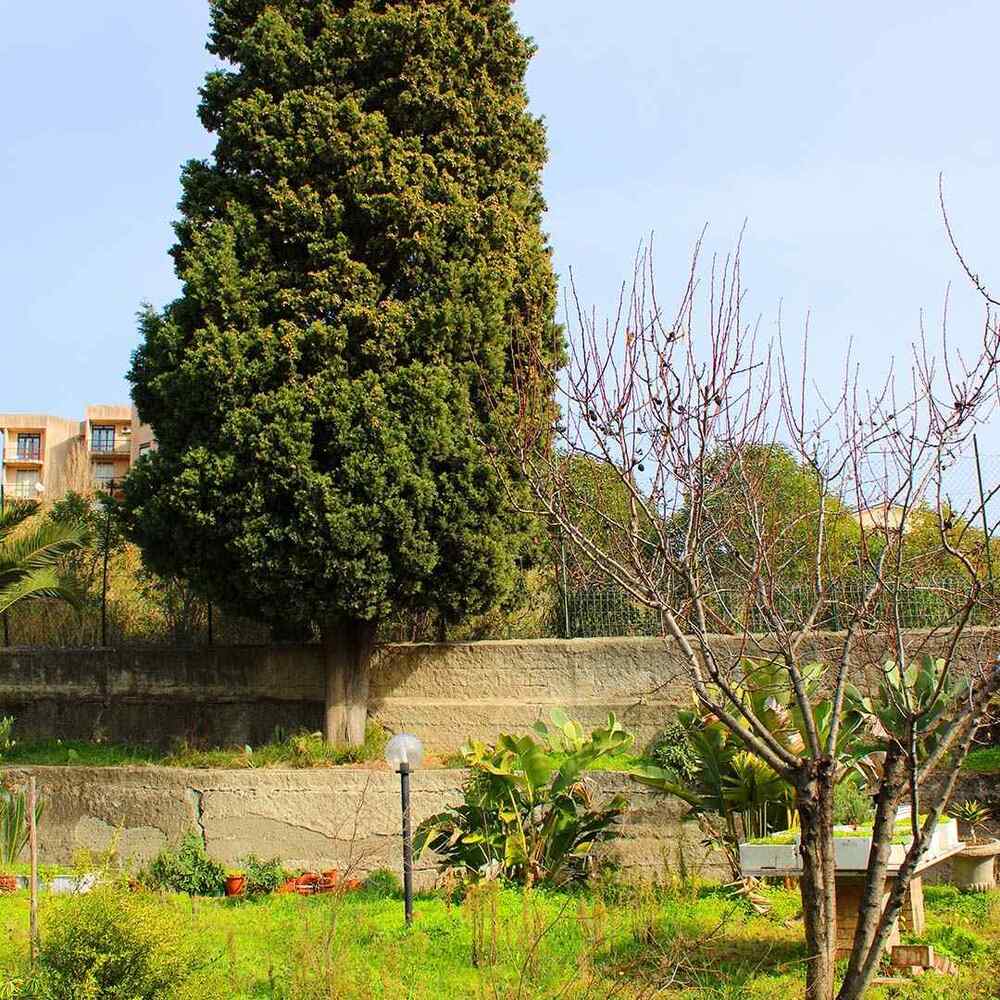
Why it works: Softer texture than many evergreens—almost feathery. It adds high-end “designer” texture in front plantings.
-
Height/Width: 10–20+ ft (depends heavily on cultivar)
-
USDA Zones: 4–8 (varies by type)
-
Sun Exposure: Full sun to part shade
-
Soil Needs: Moist, well-draining soil; doesn’t like droughty heat without irrigation
-
Care Notes: Pick the right cultivar—some stay narrow, others balloon wide.
-
Front-of-house tip: Use as a corner anchor—it makes the house feel grounded.
8) Mountain Fire Pieris (Pieris japonica ‘Mountain Fire’)
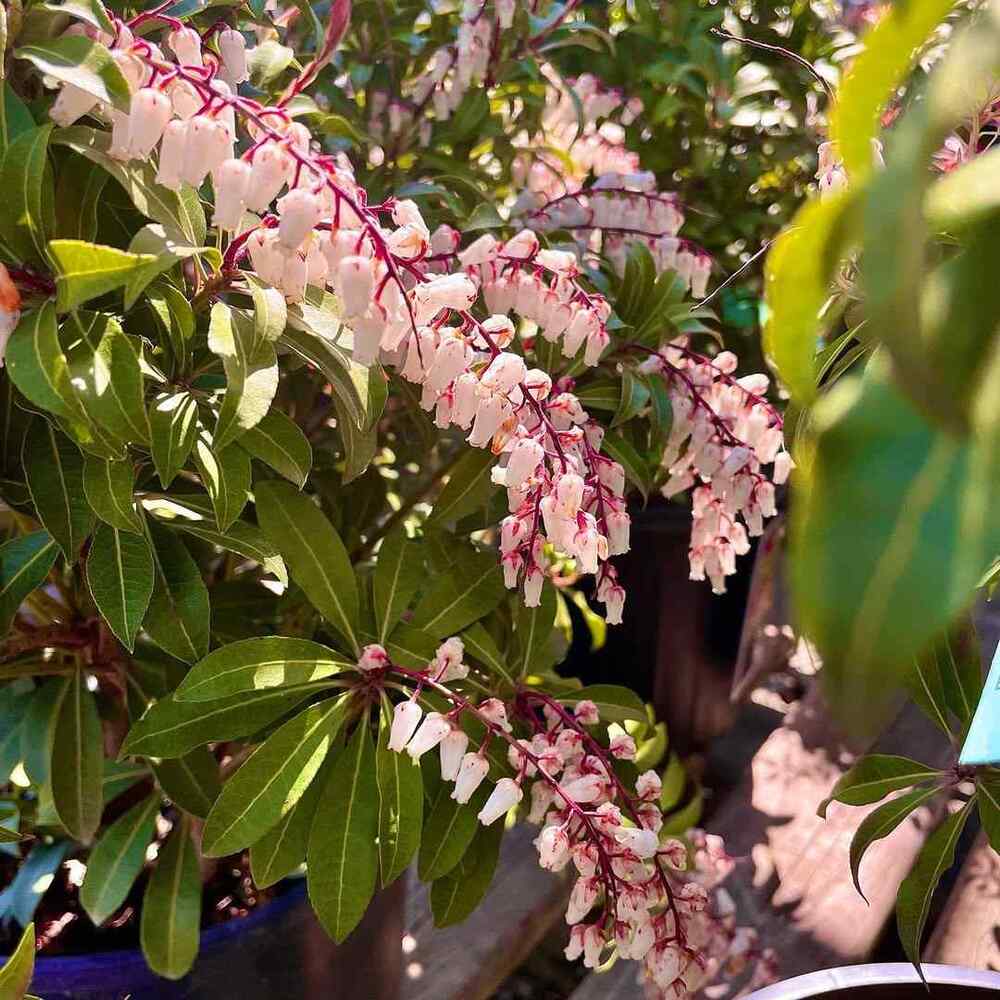
Why it works: That red new growth is the star, plus it flowers in white clusters. It’s not always towering, but in the right spot it becomes a strong, taller evergreen presence.
-
Height/Width: 6–10+ ft tall, 5–8 ft wide (can be taller with age)
-
USDA Zones: 5–8
-
Sun Exposure: Part shade (morning sun, afternoon shade is ideal)
-
Soil Needs: Acidic, organic, well-draining soil; hates soggy clay
-
Care Notes: Mulch with pine bark; avoid alkaline soil unless you’re willing to amend.
-
Front-of-house tip: Place near an entry where you’ll notice the red flush in spring.
Flowering and Deciduous Tall Shrubs (Seasonal Drama)
9) Panicle Hydrangea (Hydrangea paniculata)
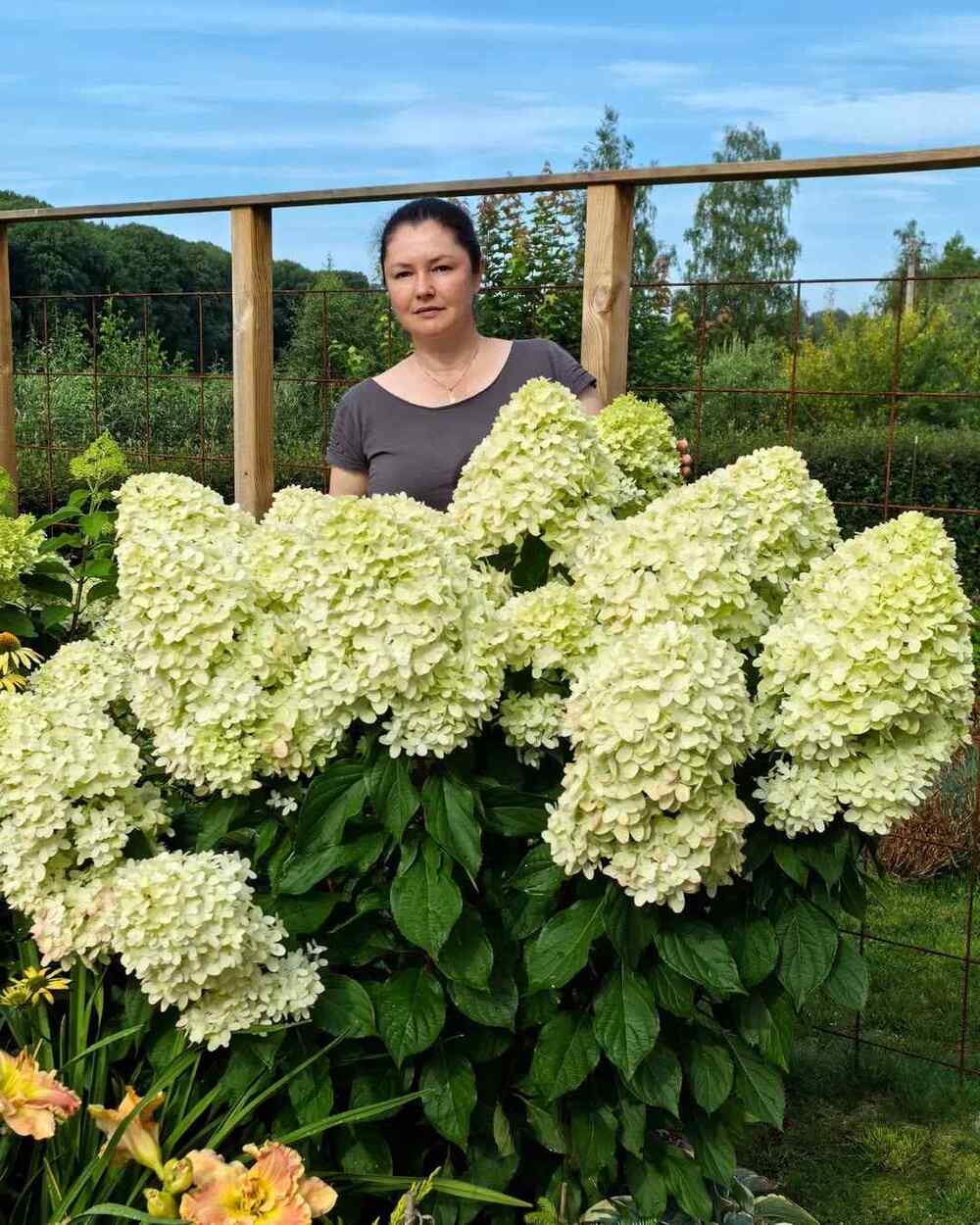
Why it works: Big blooms, easy care, and it can be trained tall or grown as a large shrub. It also tolerates more sun than many hydrangeas.
-
Height/Width: 8–15 ft tall, 6–10 ft wide (depending on cultivar and pruning)
-
USDA Zones: 3–8
-
Sun Exposure: Full sun to part shade (afternoon shade helps in hotter zones)
-
Soil Needs: Moist, well-draining soil; likes compost
-
Care Notes: Blooms on new wood—prune in late winter for size and stronger stems.
-
Front-of-house tip: Put it where it can “spill” a bit—its blooms soften hard architecture beautifully.
10) Lilac (Syringa spp.)

Why it works: The fragrance is unreal. Lilacs make a front yard feel nostalgic and welcoming, especially near paths.
-
Height/Width: 8–15+ ft tall, 6–12 ft wide
-
USDA Zones: 3–7 (some varieties to 8)
-
Sun Exposure: Full sun (minimum 6 hours for best flowering)
-
Soil Needs: Well-draining, moderately fertile; prefers neutral to slightly alkaline soil
-
Care Notes: Prune right after blooms; old wood can be rejuvenated gradually.
-
Front-of-house tip: Don’t hide lilac behind taller evergreens—give it sunlight and space so it doesn’t sulk.
11) Seven-Son Flower (Heptacodium miconioides)
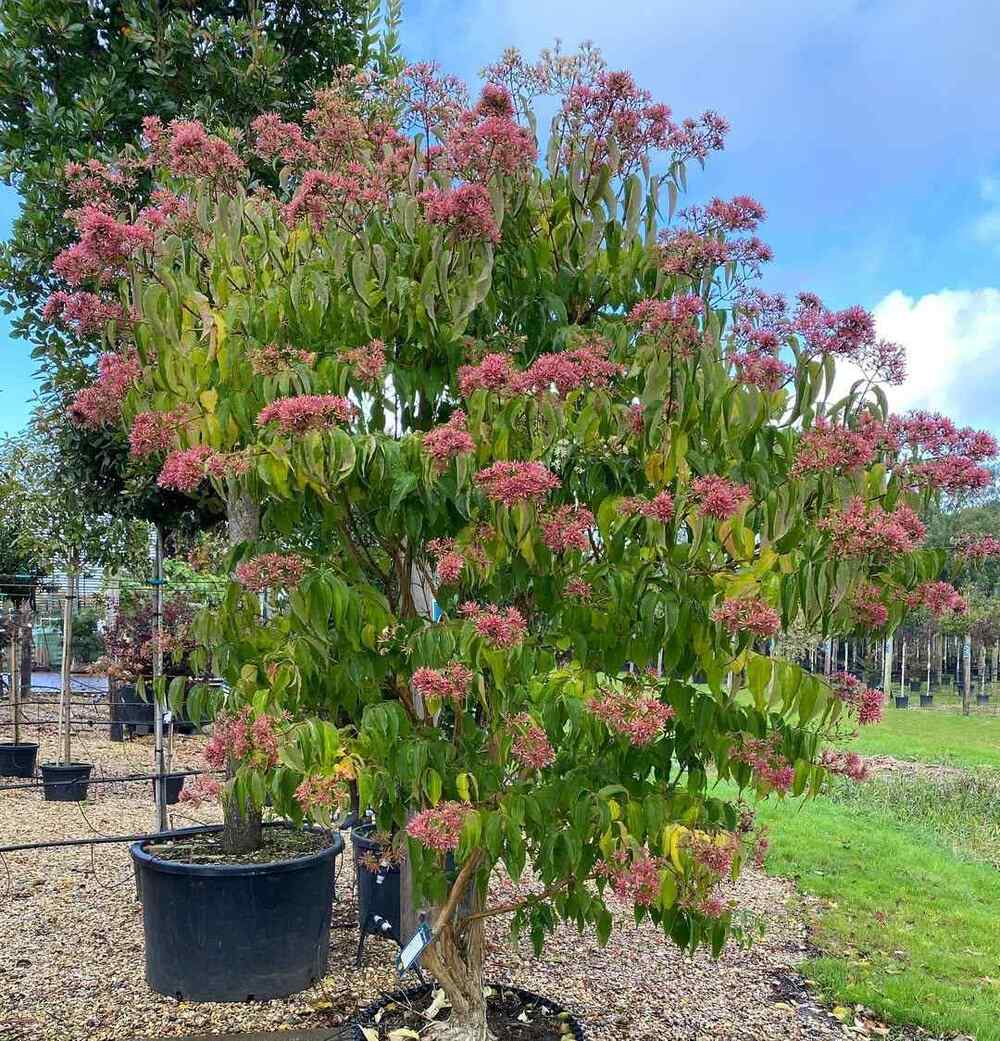
Why it works: One of my favorite “year-round interest” shrubs. Late-season white flowers, then rosy calyx color, plus peeling bark for winter texture.
-
Height/Width: 15–20 ft tall, 8–12 ft wide
-
USDA Zones: 5–9
-
Sun Exposure: Full sun to part shade
-
Soil Needs: Adaptable; best in well-draining soil
-
Care Notes: Handles pruning well if you want a more tree-like form.
-
Front-of-house tip: Plant where winter bark is visible from the street—this one earns its keep in every season.
12) Forsythia
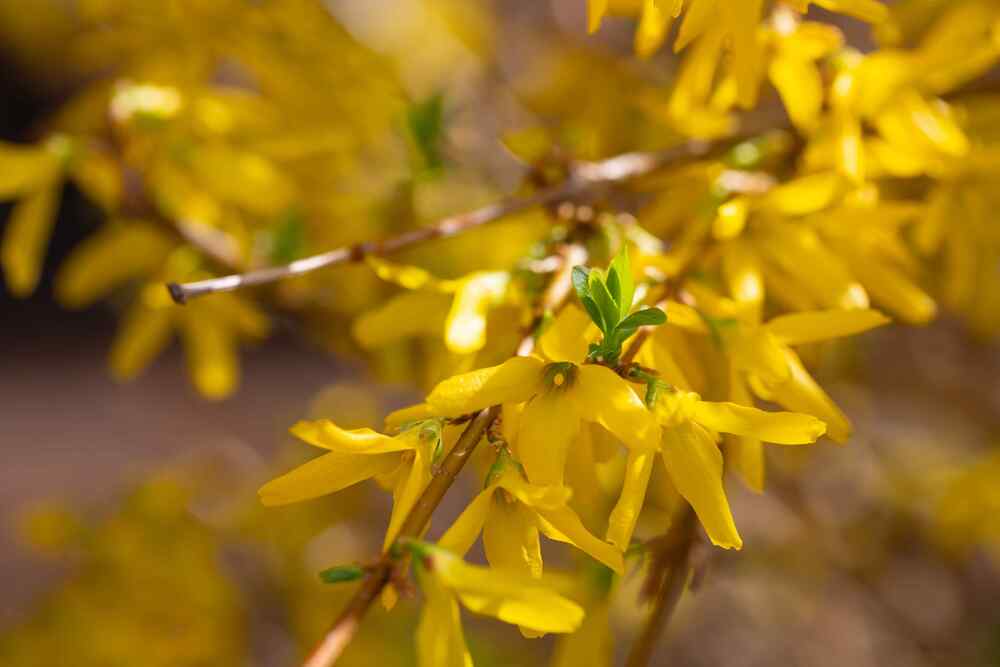
Why it works: It’s early spring fireworks—bright yellow branches before many plants even wake up.
-
Height/Width: 8–12 ft tall, 8–12 ft wide
-
USDA Zones: 5–8
-
Sun Exposure: Full sun to part shade (best bloom in sun)
-
Soil Needs: Average, well-draining; tolerant once established
-
Care Notes: Prune after flowering; it blooms on old wood.
-
Front-of-house tip: Use it where arching branches can be wild on purpose—like a sunny corner away from tight walkways.
13) Rose of Sharon (Hibiscus syriacus)
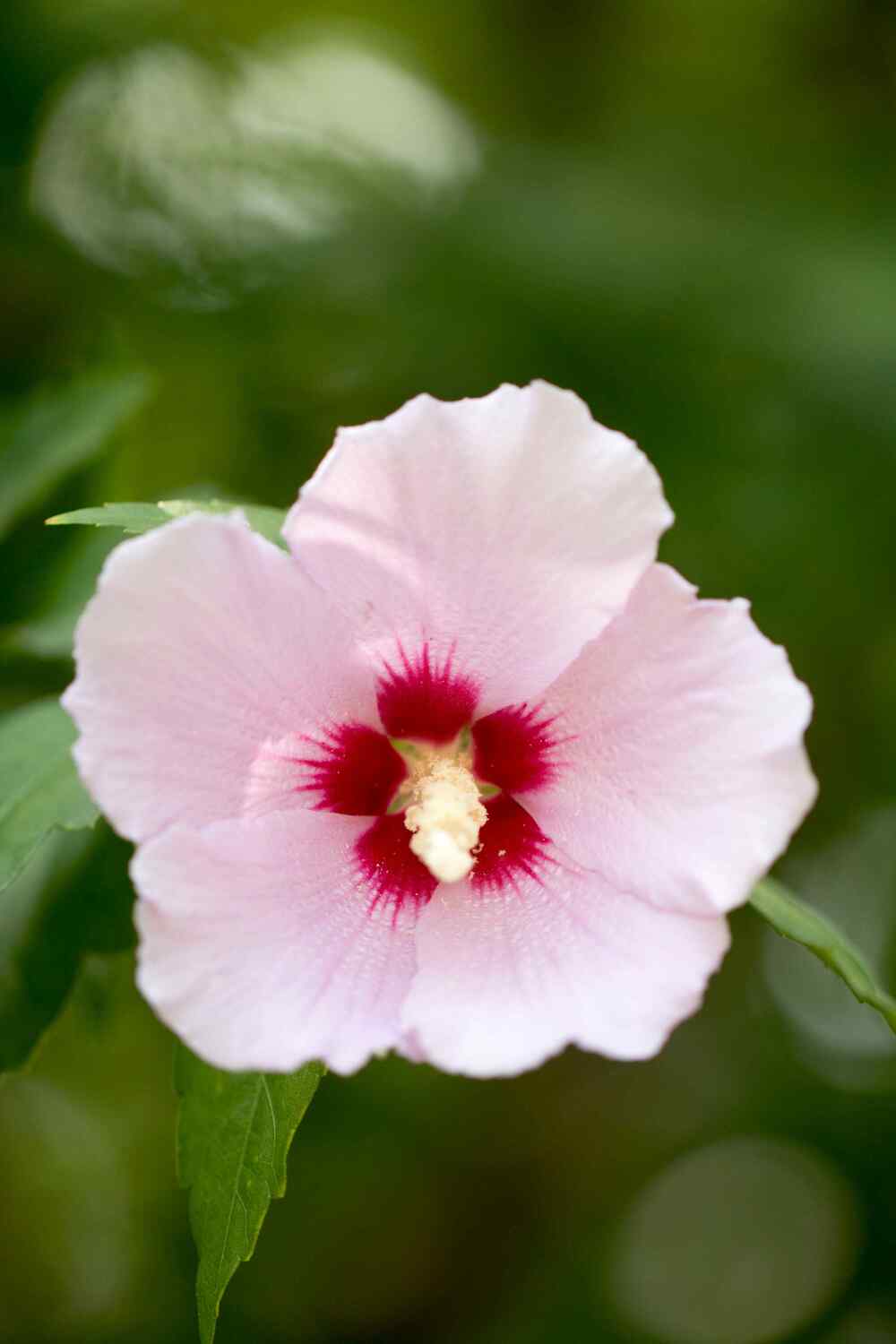
Why it works: When summer gets tired, this shrub steps in with hibiscus-like blooms. It’s great for sun-baked front yards.
-
Height/Width: 8–12+ ft tall, 4–8 ft wide
-
USDA Zones: 5–9
-
Sun Exposure: Full sun (best flowering)
-
Soil Needs: Average, well-draining; tolerates heat and some drought
-
Care Notes: Can reseed in some regions—deadhead or choose sterile varieties if that worries you.
-
Front-of-house tip: Perfect near a driveway strip or south-facing wall where other shrubs get crispy.
Tips That Make Tall Shrubs Actually Work in Front of a House
Layering (the “looks expensive” trick)
Put tall shrubs in the back, then mid-size shrubs (like boxwood, spirea, or dwarf hydrangeas), then perennials/groundcovers in front. That creates depth so the planting doesn’t look like a single tall green fence.
Spacing (don’t plant like a grocery-store bouquet)
A common mistake is planting based on the pot size. Instead, plant based on mature width:
-
For hedge-style evergreens, a simple rule is spacing about ½ to ⅔ of the mature width (tighter for a solid screen, wider for a looser look).
-
Keep most tall shrubs 3–6 feet from the house, depending on mature size, so they don’t swallow windows and siding.
Foundation choices
If you want structure through winter, keep at least one evergreen anchor at corners or beside the entry. Then add deciduous flowering shrubs where seasonal change feels cheerful, not messy.
Soil and watering reality
Front beds often get hit by roof runoff, reflected heat, and compacted soil. Before planting:
-
Loosen soil 10–12 inches deep
-
Mix in compost (especially for hydrangea and viburnum)
-
Add mulch 2–3 inches thick (not piled against stems)
-
Water deeply the first year—most “hardy shrubs” fail because they never truly establish roots
A simple front-yard combo that rarely disappoints
If you want a balanced look without overthinking it:
-
Corners: Baby Giant Arborvitae or False Cypress
-
Near the front walk: ‘Hibernica’ Juniper (pair them for symmetry)
-
Color + flowers: Panicle Hydrangea or Seven-Son Flower
-
Fragrance: Lilac near the path where you’ll actually smell it
Tall shrubs don’t just block views—they shape the entire mood of the house. Pick two or three that match your climate and sunlight, give them the spacing they deserve, and your front yard will start feeling intentional instead of empty.