Sometimes I think the best gardens happen in the spots people ignore. That shady side yard, the fence line that “never grows anything,” the corner that feels kind of cold. I kept staring at your photos and thinking, wow… if I used these shade garden border ideas but tweaked the plant picks, my boring shaded areas would finally feel alive. And honestly, I’m a little obsessed now.
Table of Contents
Curved pebble edge with bold color blocks
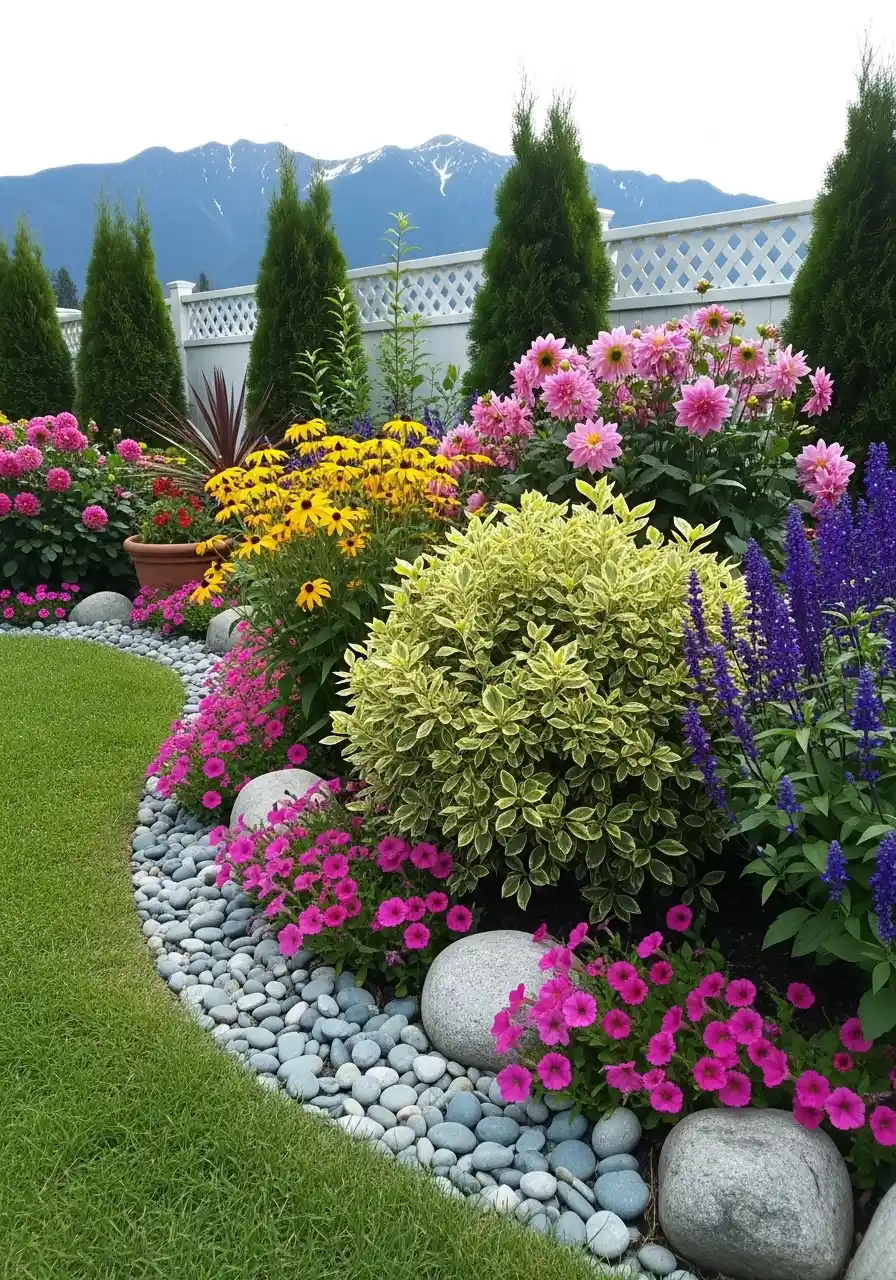
This first border has that smooth curve with pebbles and big round rocks, and it just feels fancy. The shape is doing half the work. For shade garden border ideas, I like copying the layout first: a clean curve, a strong edge, and plants that repeat in chunky groups. Even if your plants are smaller in shade, the curve makes it look intentional, like you planned it on purpose.
In shade, I’d swap sun-lovers for shade-friendly look-alikes. Instead of bright daisies, use impatiens for big color, begonias for glossy leaves, and coleus for wild patterns. Keep one “mound” plant in the middle, like a variegated hosta or a heuchera (coral bells). The rocks matter too. Bigger stones look calm and expensive, small stones look busy, so mix them but don’t overdo it.
A tiny hack: put the pebble strip slightly lower than the soil line, so mulch doesn’t spill. I learned that the messy way. My mulch kept sliding like it had places to be.
Hydrangea + evergreen “clean and calm” foundation
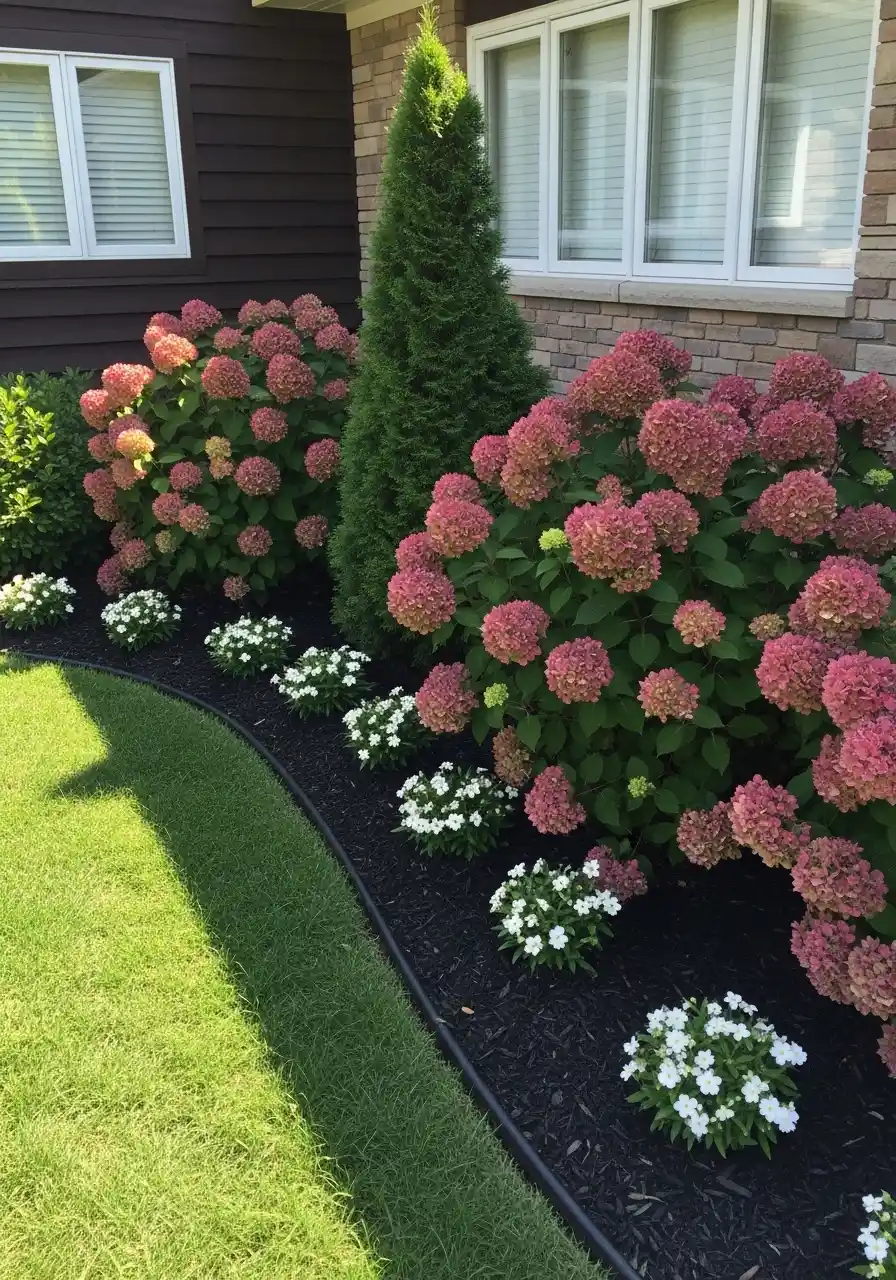
This border is super neat, like the kind of yard that makes you straighten your shirt when you walk by. The hydrangeas are full and soft, the evergreen is tall and skinny, and there’s space to breathe. For shade garden border ideas, this is perfect because hydrangeas can handle part shade really well, especially if they get morning sun and afternoon shade.
The trick here is contrast: round blooms next to a sharp evergreen shape. If your shade is deeper, try oakleaf hydrangea or panicle hydrangea (some types do better than others). Then copy that “row of small white flowers” with sweet alyssum in bright shade, or white begonias if it’s more shady. The white pops against dark mulch, and it makes the border look crisp.
My opinion: this is one of the least stressful garden border ideas for shade. You’re not juggling twenty plants. You’re repeating a few strong ones. And repetition is what makes people think you’re better at gardening than you are.
Rainbow carpet border along a stone house
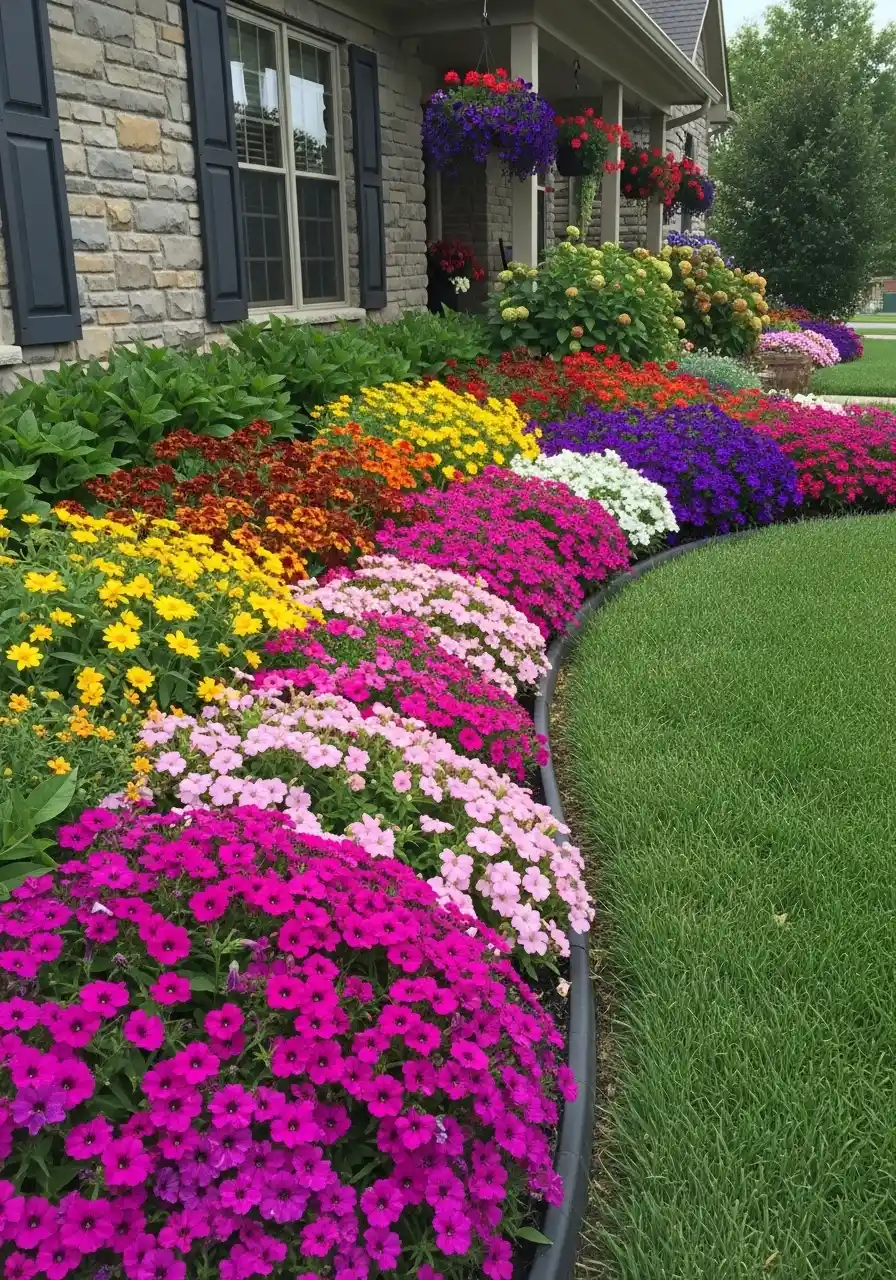
This one is a color parade. Big drifts of pink, purple, white, yellow, and orange rolling along the front of the house. It’s not random at all, it’s like a planned quilt. For shade garden border ideas, the secret is the “carpet” idea: low plants packed tightly so you don’t see bare soil. Shade borders can look thin if you leave gaps, so dense planting helps a lot.
If I was building this in shade, I’d use wax begonias, impatiens, torenia, and coleus for the bright blocks. Then add a deeper green band behind them with hostas or ferns to mimic that solid leaf backdrop. Keep the colors in wide ribbons instead of little sprinkles. Little sprinkles look messy fast, especially in shade where growth can be slower.
Also, that black edging matters. A border edge that clean makes the whole thing feel “finished.” I’m not always neat, but edging makes me look like I have my life together, even when I don’t.
Fence-line border with lights and hanging baskets
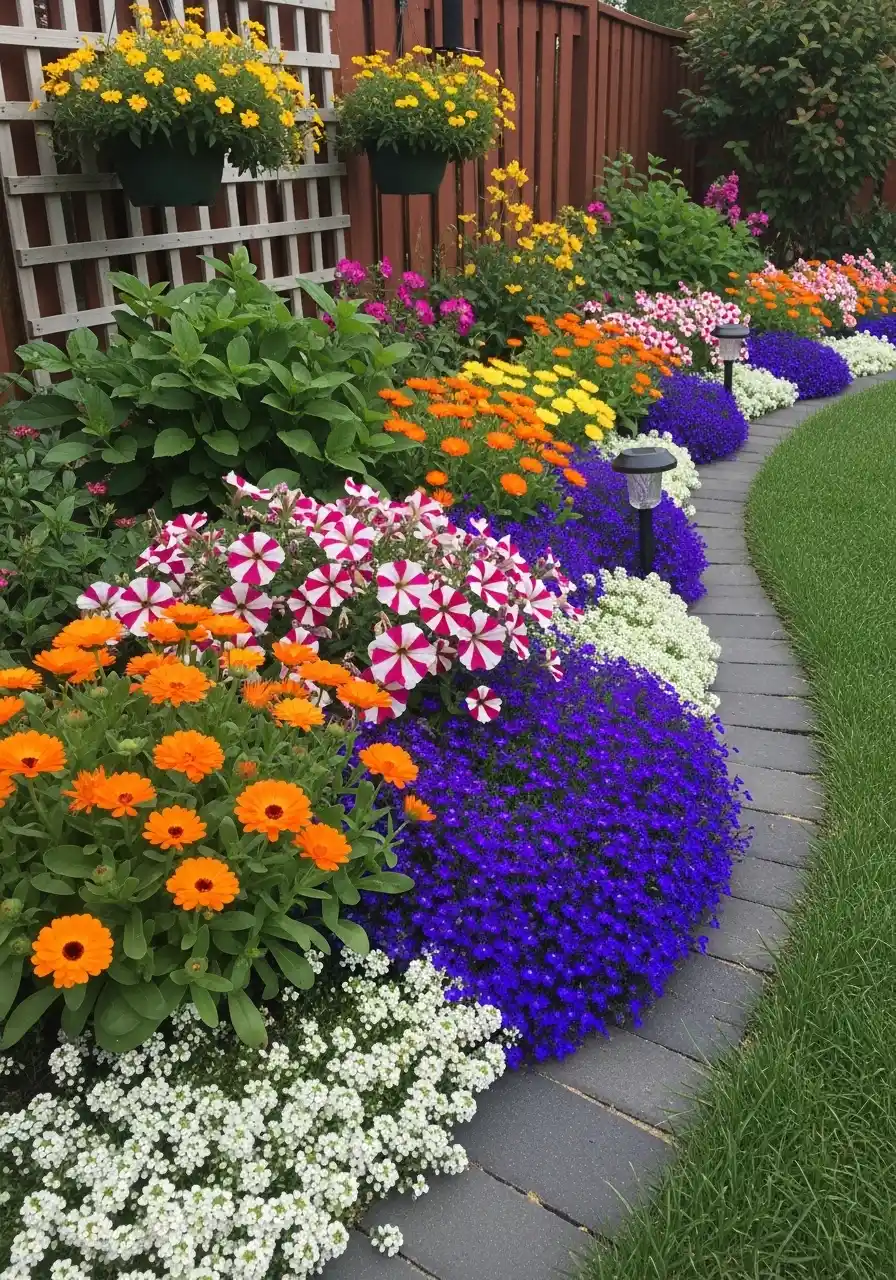
This image feels cozy and close-up, like a little backyard hangout. You’ve got a fence, hanging baskets, path lights, and bright flowers tucked along the curve. For shade garden border ideas, fences are great because they create microclimates. The fence blocks wind, holds warmth, and gives you structure even when plants are small.
In shade, I’d plant hydrangea or hosta mounds near the fence for fullness, then do bright edging with impatiens, begonias, and lobelia if it’s bright shade. For the hanging baskets, go with shade-tough spillers like trailing fuchsia, bacopa (if it gets some light), or even creeping jenny. The lights are a sneaky trick too. At night, a shady border can disappear, but path lights bring it back.
My little confession: I used to think solar lights were cheesy. Then I tried them and yeah… I was wrong. They make the border feel welcoming.
Raised bed border with spilling white flowers
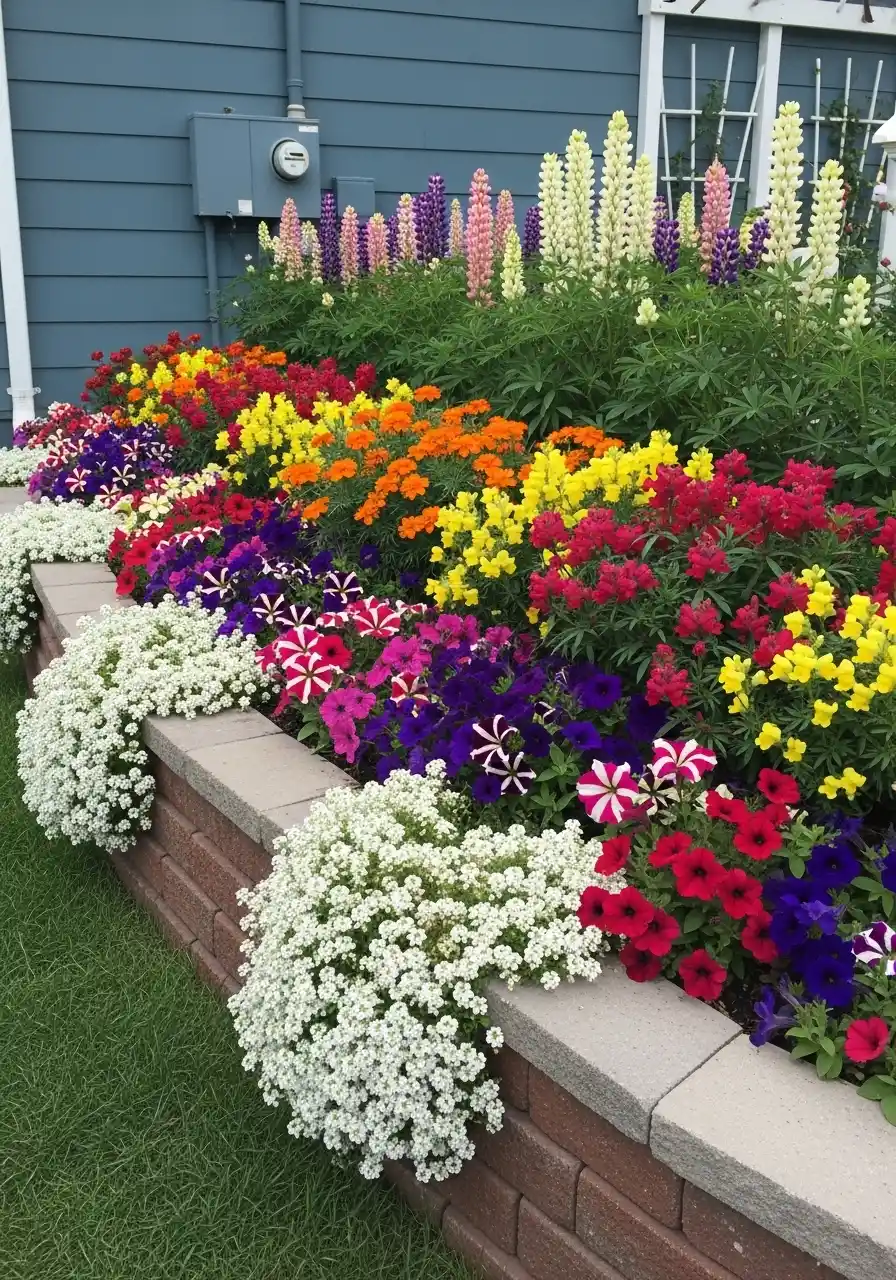
This raised bed is stacked stone with a thick spill of tiny white flowers over the edge. That spill is the magic. For shade garden border ideas, raised beds are amazing because shade soil can stay wet and heavy, and raising it helps drainage. Plus, it gives you height so the border shows up better.
To copy the spill in shade, use sweet alyssum if you get enough light, or go with white bacopa, lamium, or creeping jenny (lime green spill looks awesome too). In the middle, keep the loud color like the photo, but shade-friendly: coleus for reds, caladium for pink and white, and begonias for strong blooms. Taller background spikes can be astilbe or foxglove in part shade.
One practical tip: keep the spillers slightly back from the edge when planting. They grow forward fast and can smother everything if you place them right on the lip.
Long border with snapdragon-style vertical drama
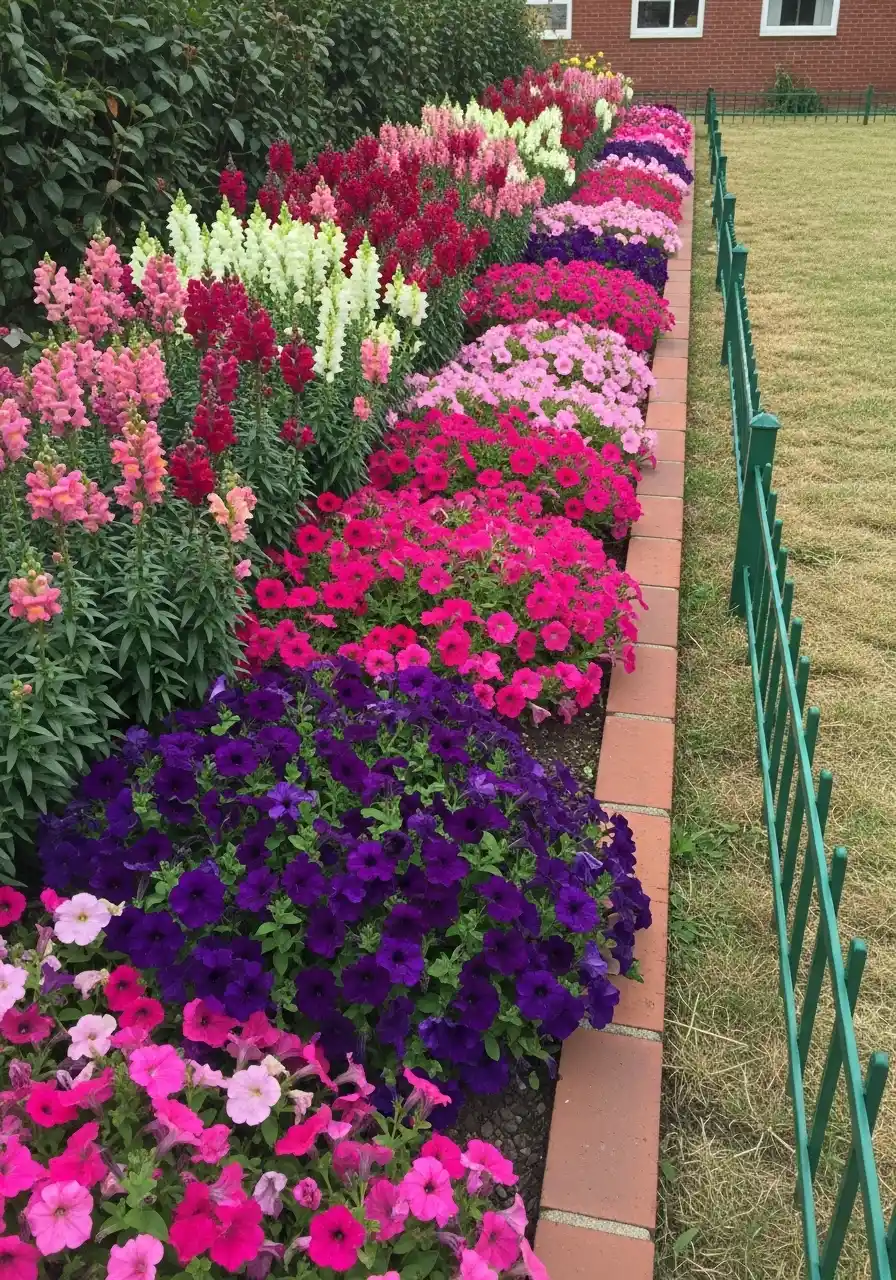
This border has tall upright blooms in rows, with bright petunia-like mounds in front. It’s very “parade route,” super organized. For shade garden border ideas, vertical flowers matter because shade borders can look flat if everything is low. Tall spikes give you a backdrop and make the whole scene feel deeper.
In shade or part shade, use astilbe, foxglove, or lupine if conditions fit. For front color, use impatiens or begonias instead of petunias. Keep the same idea: tall in back, medium in middle, low in front. That rule is boring but it works every time. And don’t forget the edging bricks. Straight edges make bright borders look less chaotic.
If you want it to feel extra “designed,” repeat the same colors every few feet. Like pink-purple-pink-purple. Repeating is the biggest cheat code in garden border ideas for shade.
Evergreen screen + golden flowers + soft white edge
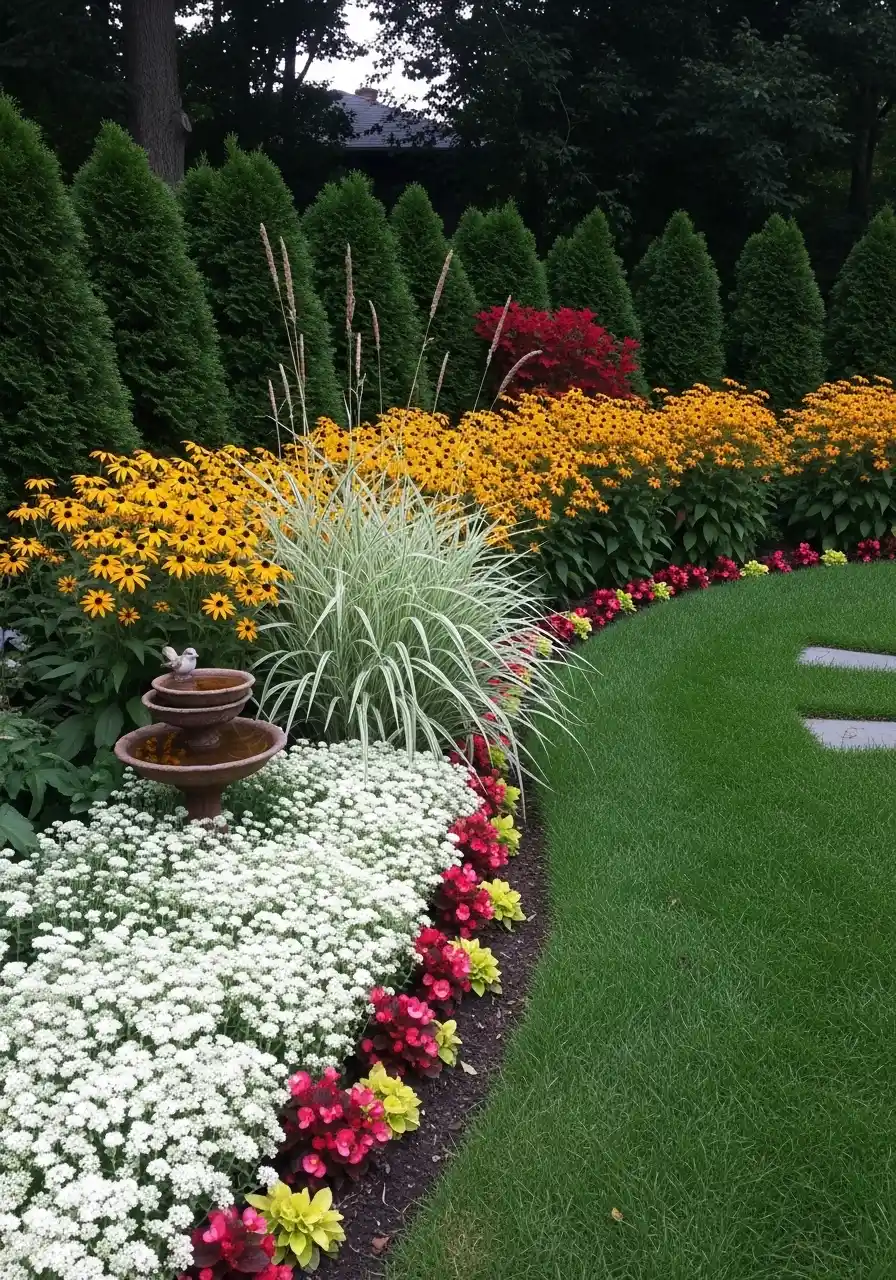
This one is a mood. Dark evergreen wall in the back, a big band of golden daisy-like flowers, then a softer white edge plant. It feels calm and strong at the same time. For shade garden border ideas, this is great because evergreens give winter structure, and shade gardens need structure when blooms come and go.
In real shade, those golden flowers might not bloom as hard, so I’d use ligularia (big leaves and yellow blooms), heuchera for warm foliage, or japanese forest grass for that bright chartreuse glow. The white edge could be white impatiens or white caladium for drama. Add one ornamental grass clump like in the photo, because texture makes shade borders look richer.
Also, water features like that little fountain are underrated. In shady spaces, the sound makes it feel peaceful, like a secret garden not a forgotten corner.
Hydrangea mix with white pebbles and a simple curve
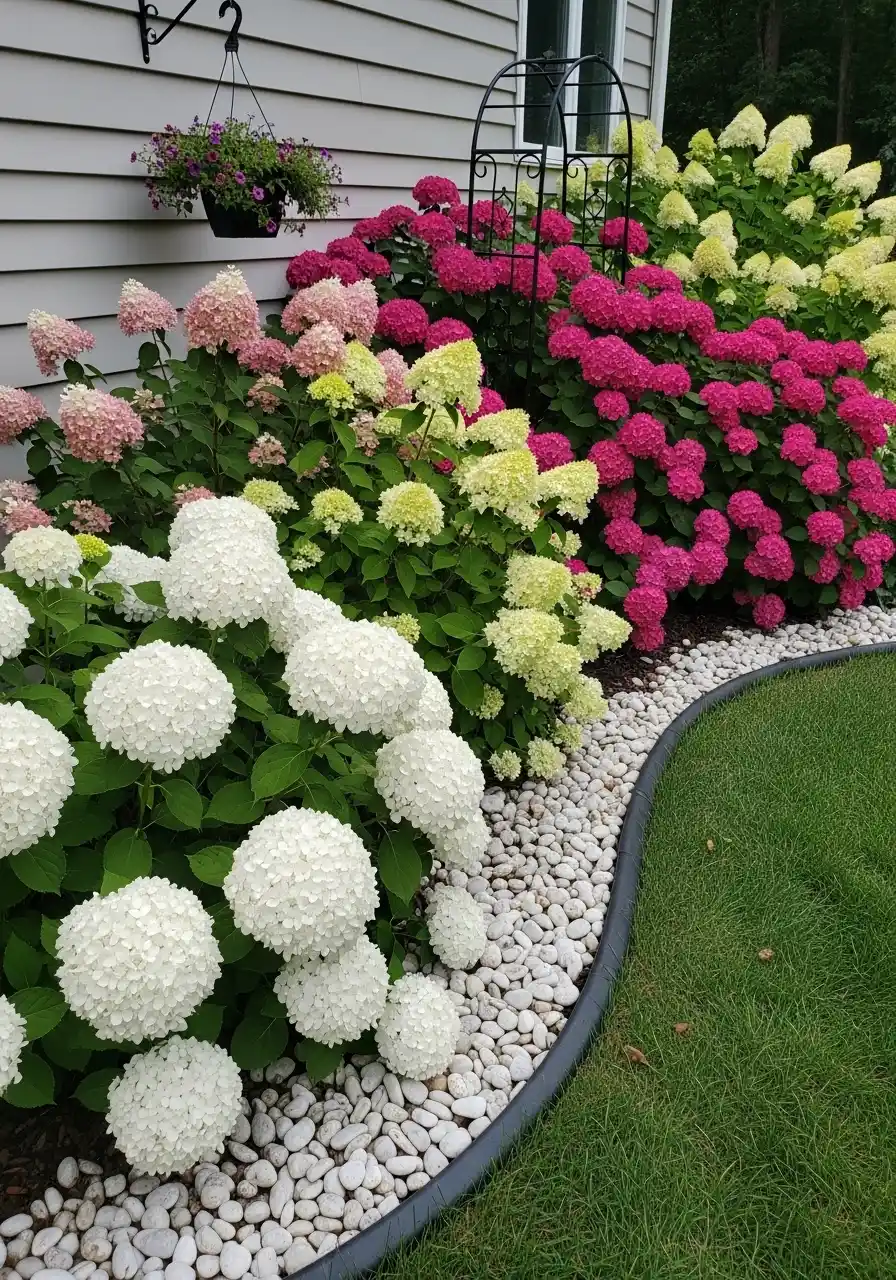
This hydrangea border is so pretty it almost annoys me. Like, how does it look that perfect? White pebbles, a smooth curve, and hydrangeas in white, green, pink. For shade garden border ideas, hydrangeas are honestly one of the best “wow” plants. They fill space, they bloom big, and they make shade look soft instead of gloomy.
To copy this, keep the curve wide and simple, not a bunch of zigzags. Use river rock or white stones for a clean line. Plant hydrangeas in groups, not singles, so the border looks full. If you want extra depth, put darker pink varieties behind lighter ones, so the front feels airy and the back feels rich.
One small warning: rocks can heat up in sun, but in shade they stay cooler. That’s why rock borders work nicer in shade sometimes. Less plant stress, less crispy leaves.
S-shaped ribbon of color around a tree
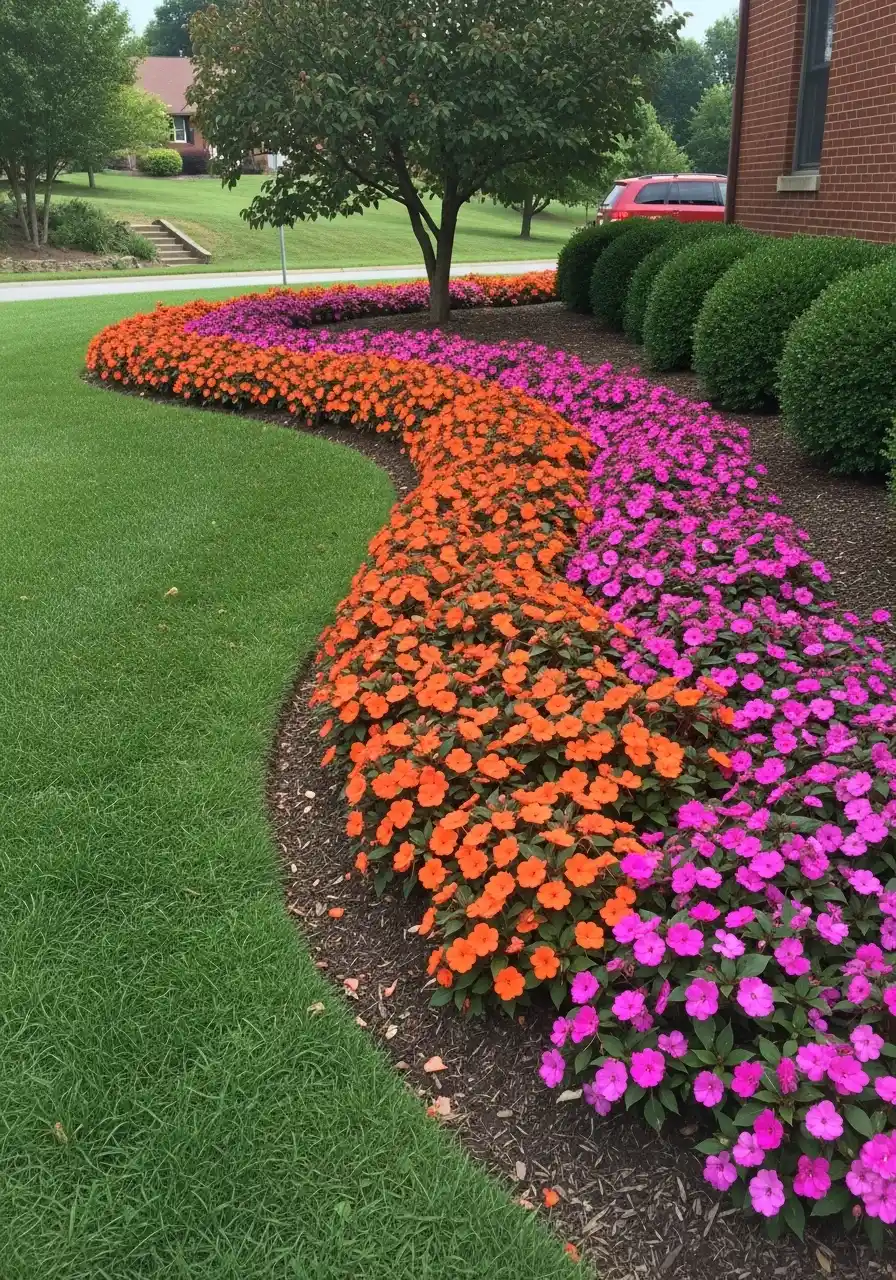
This is the fun one. A bold ribbon of orange and magenta sweeping like an S around the yard. It’s playful and a little dramatic. For shade garden border ideas, the shape is the star. If you’ve got a tree casting shade, don’t fight it. Use the shade line as your design line.
Under trees, roots steal water, so choose tough shade plants. I’d use impatiens (the newer mildew-resistant kinds are safer), begonias, or coleus for that bold color. Keep the colors in separate bands like the photo, because it reads clean even from far away. If it’s deeper shade, swap some bloom-heavy plants for foliage color like heuchera or caladium to keep it bright.
My honest opinion: borders like this make your yard look bigger. The curve tricks your eyes. It’s like the garden is moving.
Porch border with boxwood mounds and bright filler
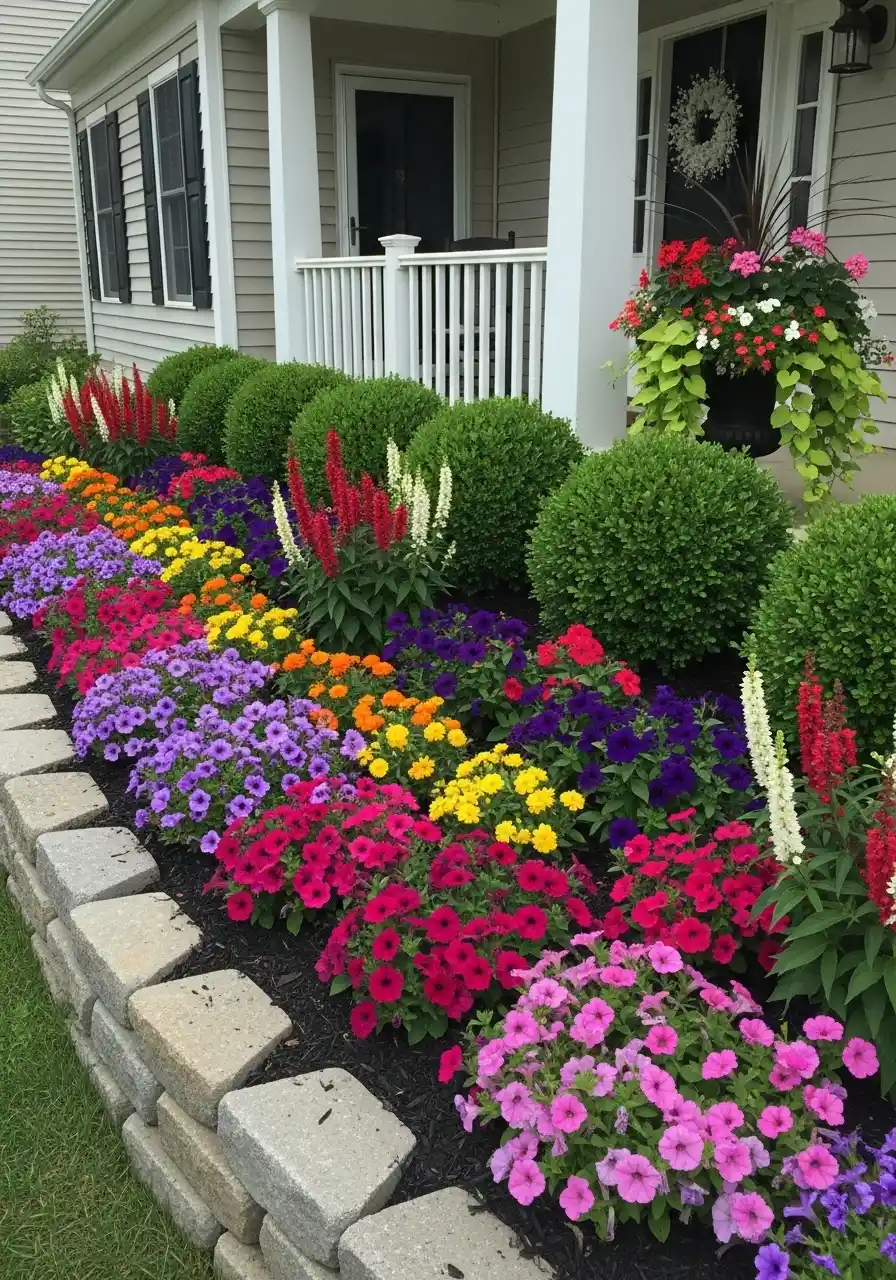
This porch border is tidy but still loud with color. Big round shrubs (boxwood-like), then bright flowers between them, and a tall container near the porch. For shade garden border ideas, shrubs are your anchor. Bright flowers in shade can fade or stretch, but shrubs keep the border looking strong even when the season changes.
In shade, use boxwood if it works in your area, or use inkberry holly or yew for similar shapes. Between them, plant shade-friendly color like begonias, impatiens, torenia, and maybe purple heart if it gets enough light. The container is a bonus trick. You can put your “sunny” plant in a pot and move it if needed, or just do a shade pot with coleus and trailing stuff.
And yes, mulch matters. Dark mulch makes colors look brighter, like turning up the contrast on a photo.
Shade garden border ideas that start with a curvy path and spilling color
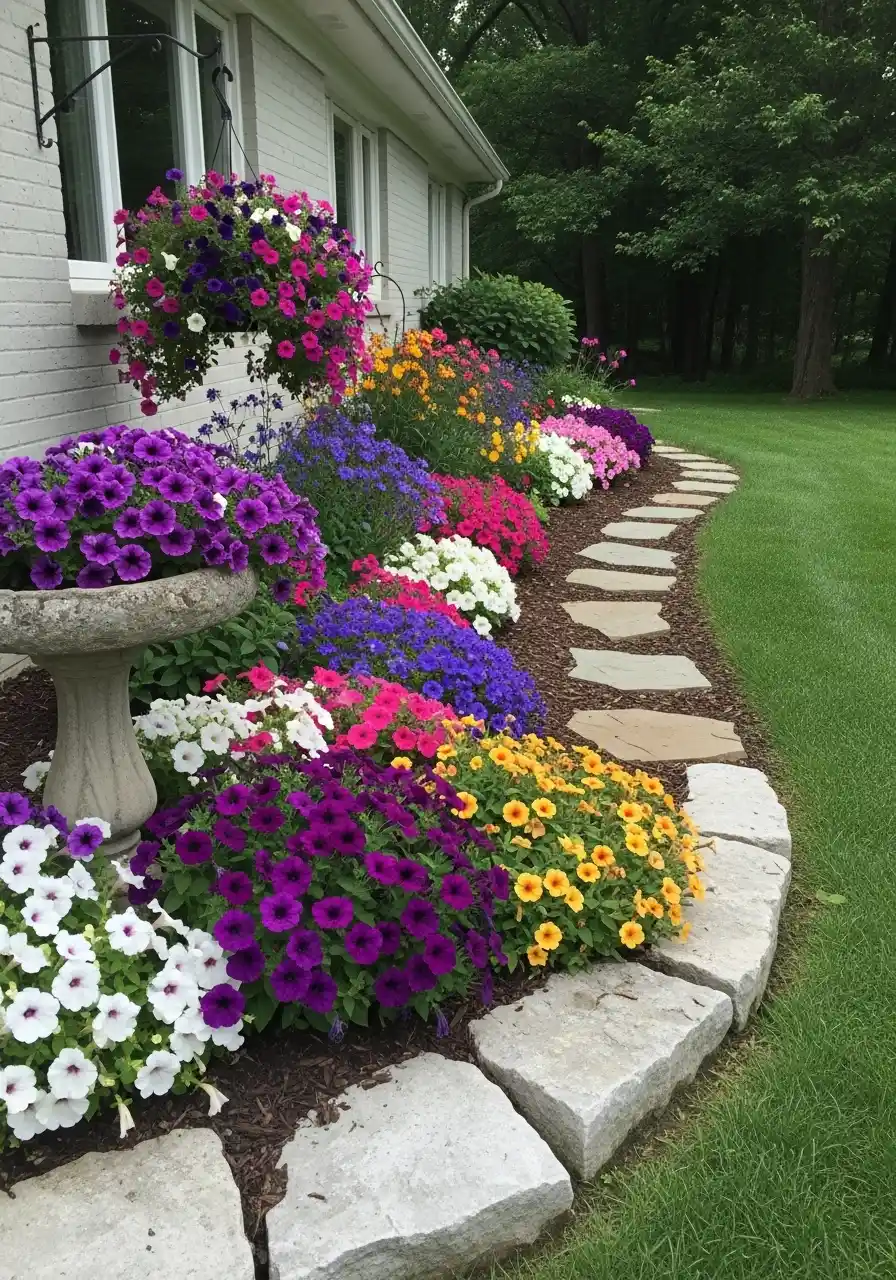
That first border with the stepping stones is honestly a cheat code. The curve makes it feel longer than it is, and the stones pull you forward like “keep going, there’s more.” I like how the flowers spill right up to the edge, almost like they don’t care about rules. That’s the vibe I want, because perfect lines stress me out.
For shade garden border ideas, you can still steal this layout even if your flowers won’t be as sun-happy. Keep the stepping stones, keep the curve, keep the layered look. Then swap in shade-friendly spillers like begonias, impatiens, lobelia, or creeping jenny. My little hack is to plant the edge plants closer than you think. Gaps look huge once mulch settles. And if you’re worried about stepping off the path, tuck low plants right beside the stones so your feet “feel” the line.
A lily-and-hosta foundation border that looks fancy without trying too hard
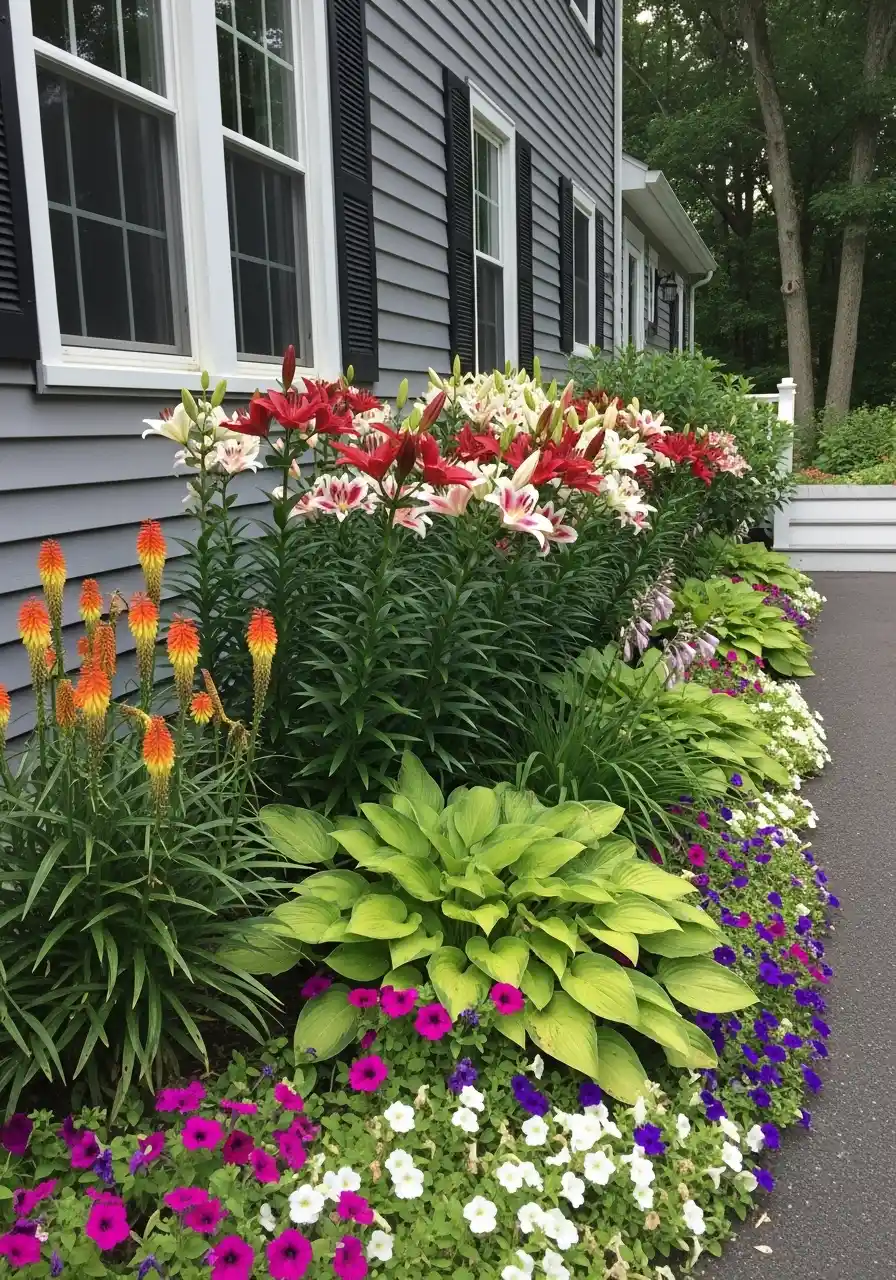
This border is one of my favorites because it’s got that clean house-foundation look, but it still feels alive. Tall lilies punch upward, and the hostas sit low like big green scoops. It’s basically the perfect “front of the house” combo, and yeah I get jealous when I see it done well.
If you’re hunting shady garden border ideas, this one is very forgiving. Lilies can handle some shade, and hostas love it. You can also mix in heuchera for color (those ruffled leaves are kinda dramatic in a good way). The trick is spacing: put taller plants in clumps of 3–5 so they look intentional, not like random sticks. And don’t skip edging. Even a simple mulch edge makes the plants look 2x more cared for, even if you’re not.
Hydrangea rivers along the lawn edge, the “soft wall” trick
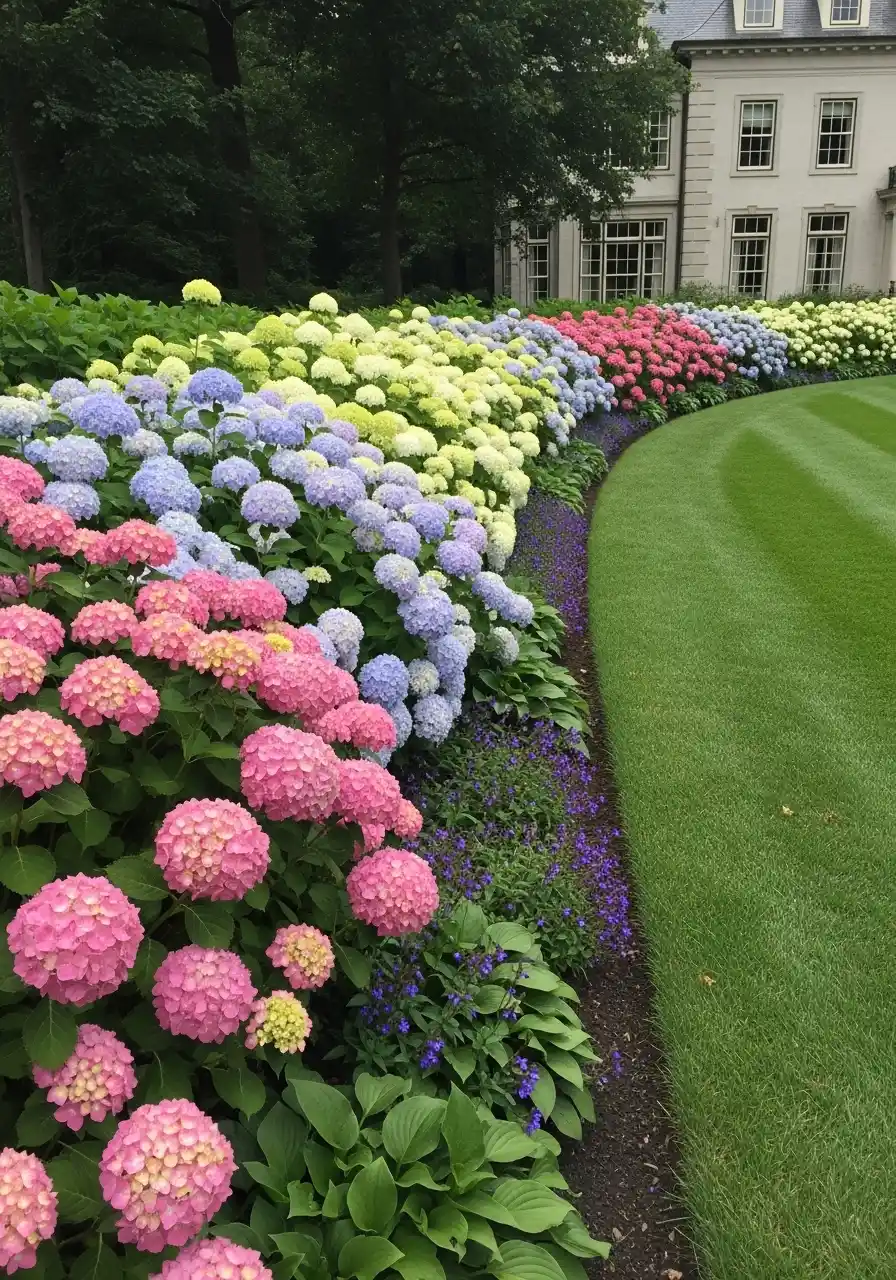
That long curve of hydrangeas is so satisfying it’s almost rude. The big blooms make a soft wall between lawn and garden, and the repeated mounds look organized without being boring. I also like how the lawn edge is smooth and wide, so the flowers get to be the star.
For shade garden border ideas, hydrangeas are basically a gift. Many types love morning sun and afternoon shade, or bright filtered shade. The hack is to commit to repetition. One hydrangea is cute, five is a statement. And don’t crowd them with a million different plants, you’ll ruin the calm look. If you want an extra layer, add a thin ribbon of low shade groundcover like ajuga or lamium near the front. It keeps weeds down and makes the hydrangeas look even fluffier.
A layered porch border with “big leaf, big bloom, bright edge” energy
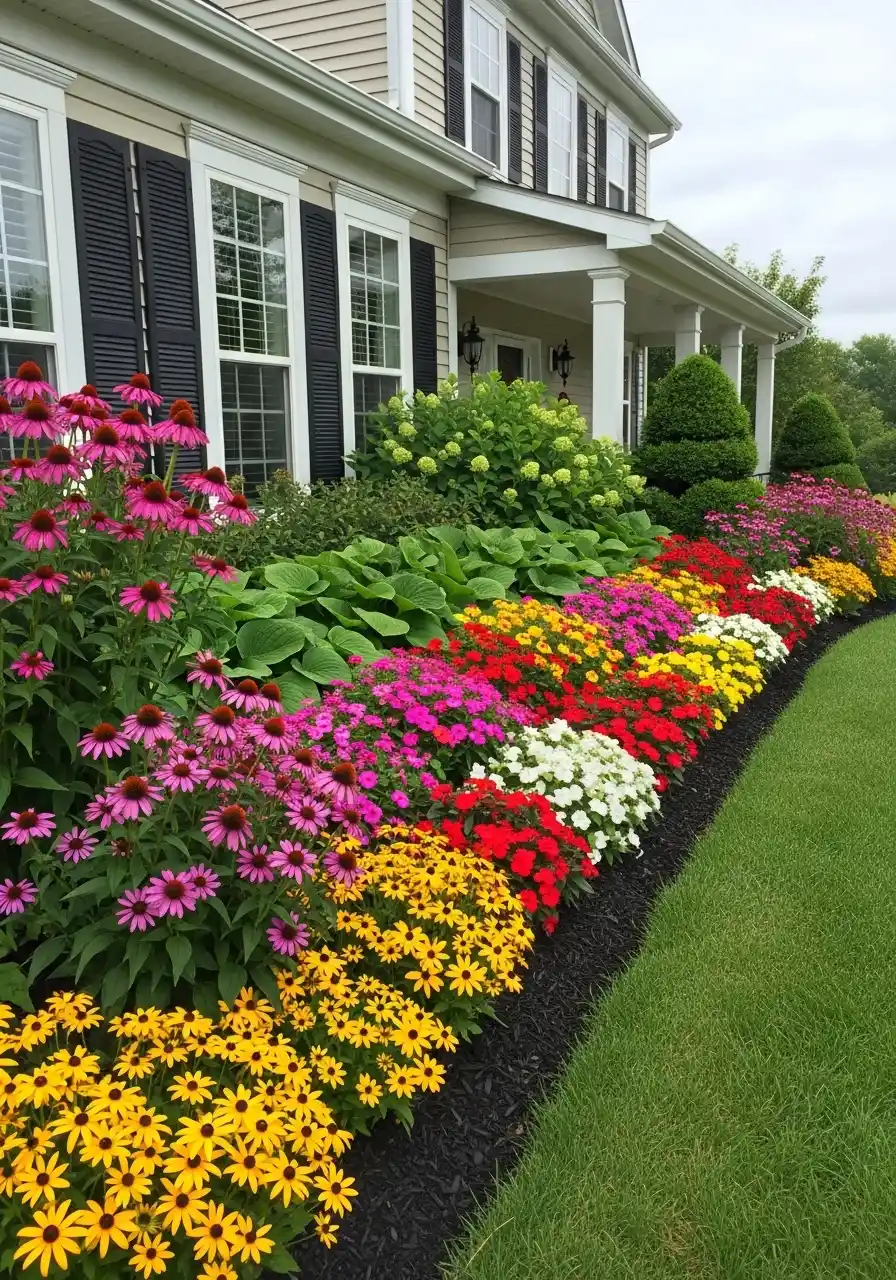
This porch border is what I call the “I want everything” border, and somehow it still works. Big leafy plants (like hostas) sit behind a bright mix of annuals and mid-height flowers. It feels welcoming, like the house is wearing jewelry. I’m not even kidding, it’s decorative.
If you’re building shade garden border ideas near a porch, think in layers like rows at a concert. Back row is tall and leafy (hostas, ferns, astilbe). Middle row is medium flowers (bleeding heart, columbine, hydrangea if you have space). Front row is color pops (impatiens, wax begonias, torenia). My little confession: I used to plant evenly spaced like a grid, and it looked weird. Now I plant in loose drifts, like little waves, and it looks more natural.
A long side-yard ribbon border with repeating mounds that never looks messy
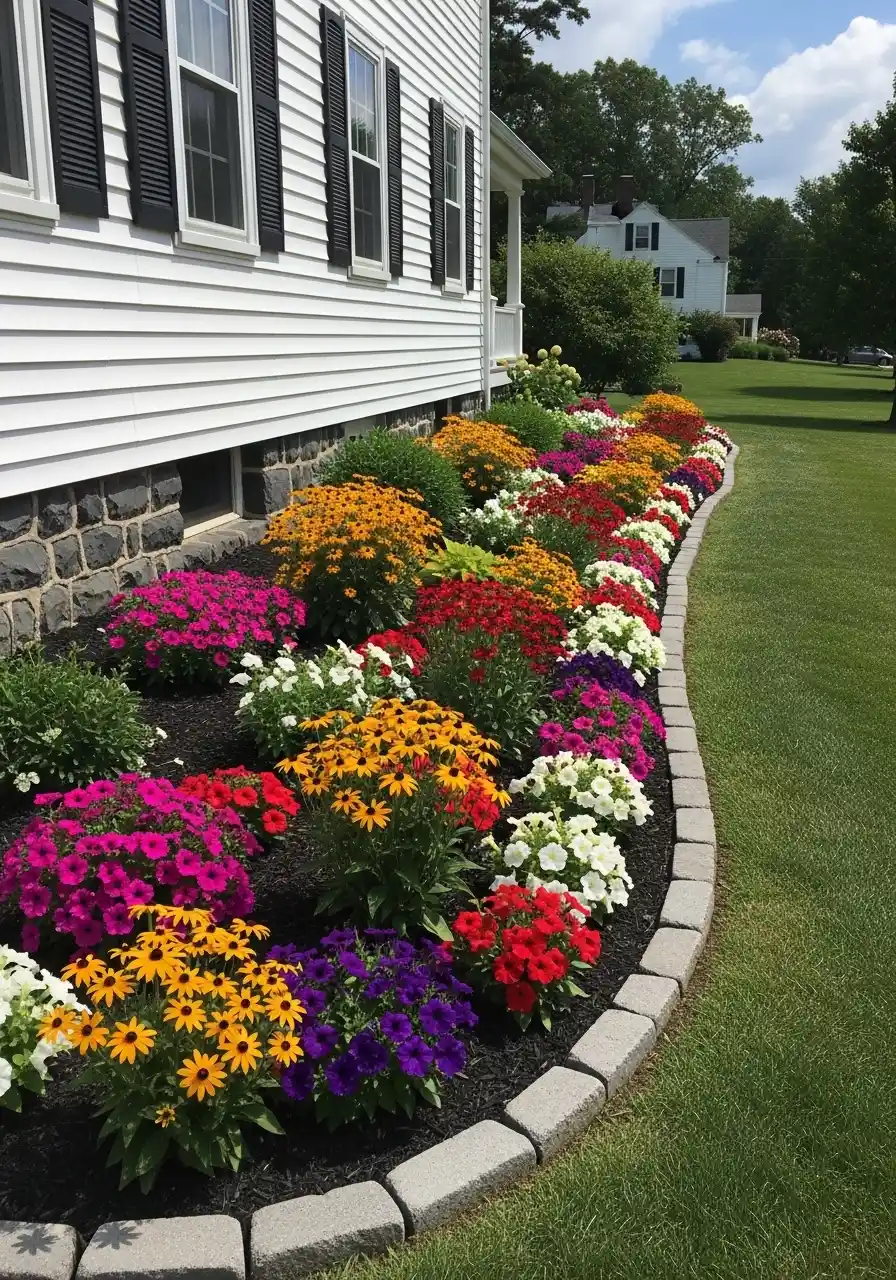
That long border running beside the house is all about rhythm. It repeats colors and shapes, and that’s why it looks expensive even if it’s not. The edging is neat, the plants are grouped, and the curve keeps your eye moving. It’s kind of calming, like it’s telling your brain “everything’s fine.”
For shade garden edging ideas, repetition is your best friend. Pick 3–5 main plants and repeat them down the line. In shade or part shade, that might be hostas (different sizes), heuchera (different colors), and a flowering plant like astilbe. Then tuck annuals in pockets if you want seasonal color. The hack here is maintenance: leave yourself a mowing strip or clean edge so trimming doesn’t become a nightmare. When the edge is easy, you keep it nice. When it’s hard, you avoid it, then it looks sad.
Fence-line borders that mix roses, purple haze, and cozy “walkway softness”
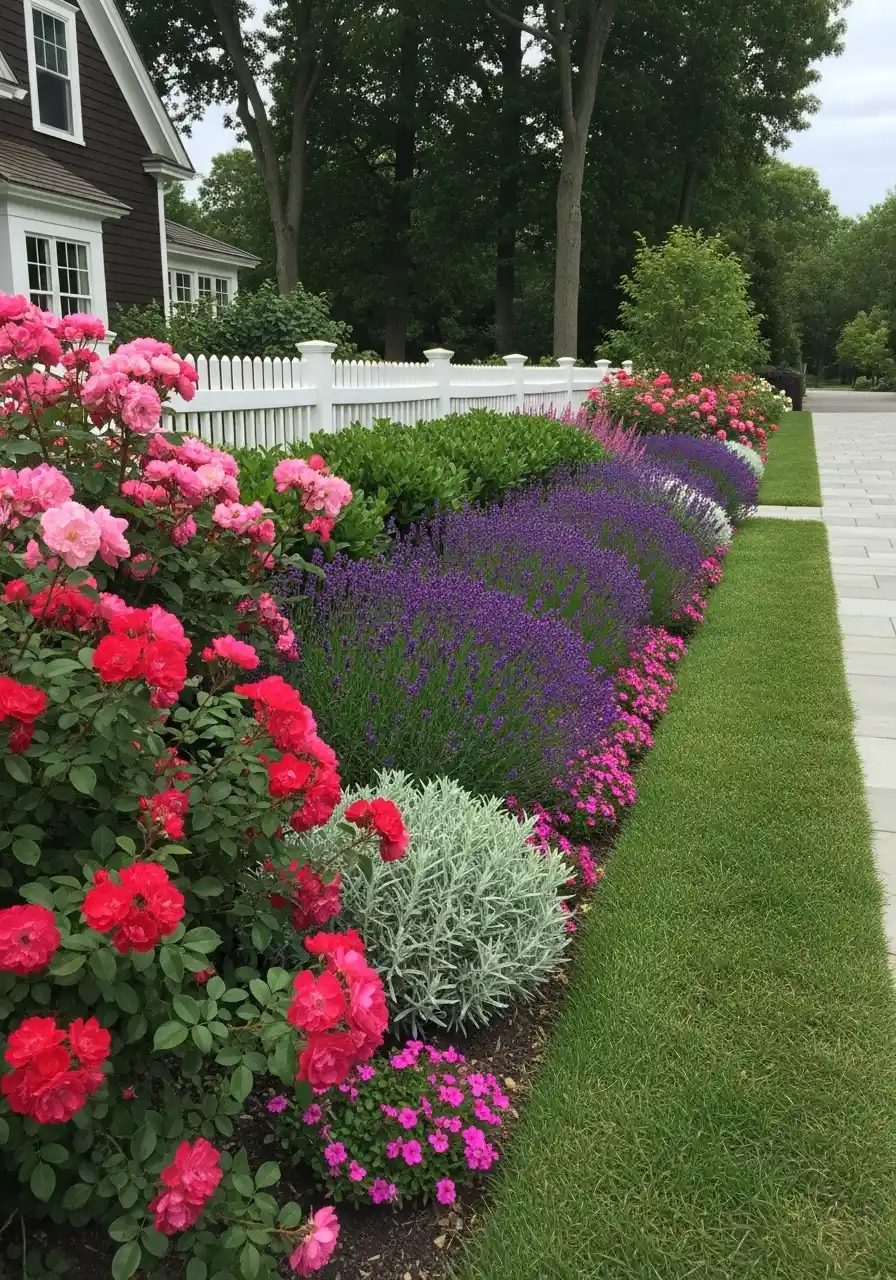
This one feels like strolling past a fancy fence, like the kind of place you’d want to take pictures in. The taller shrubs give structure, and the purple flowers (lavender-ish look) make a soft haze along the edge. I’m not ashamed to say it makes me feel peaceful.
If your fence line is shaded, you can still pull off this shady garden border idea by swapping plants. Instead of lavender (which wants sun), use catmint only if you get decent light, or go with hardy geraniums, nepeta in part shade, or even shade-tough salvia varieties where possible. Add a silver plant like lamb’s ear (part shade) or brunnera for that “cool” look. My trick: keep the back row evergreen if you can. Boxwood or inkberry holly keeps it from looking empty in spring.
A stone-and-wall border that uses texture to hide boring spots
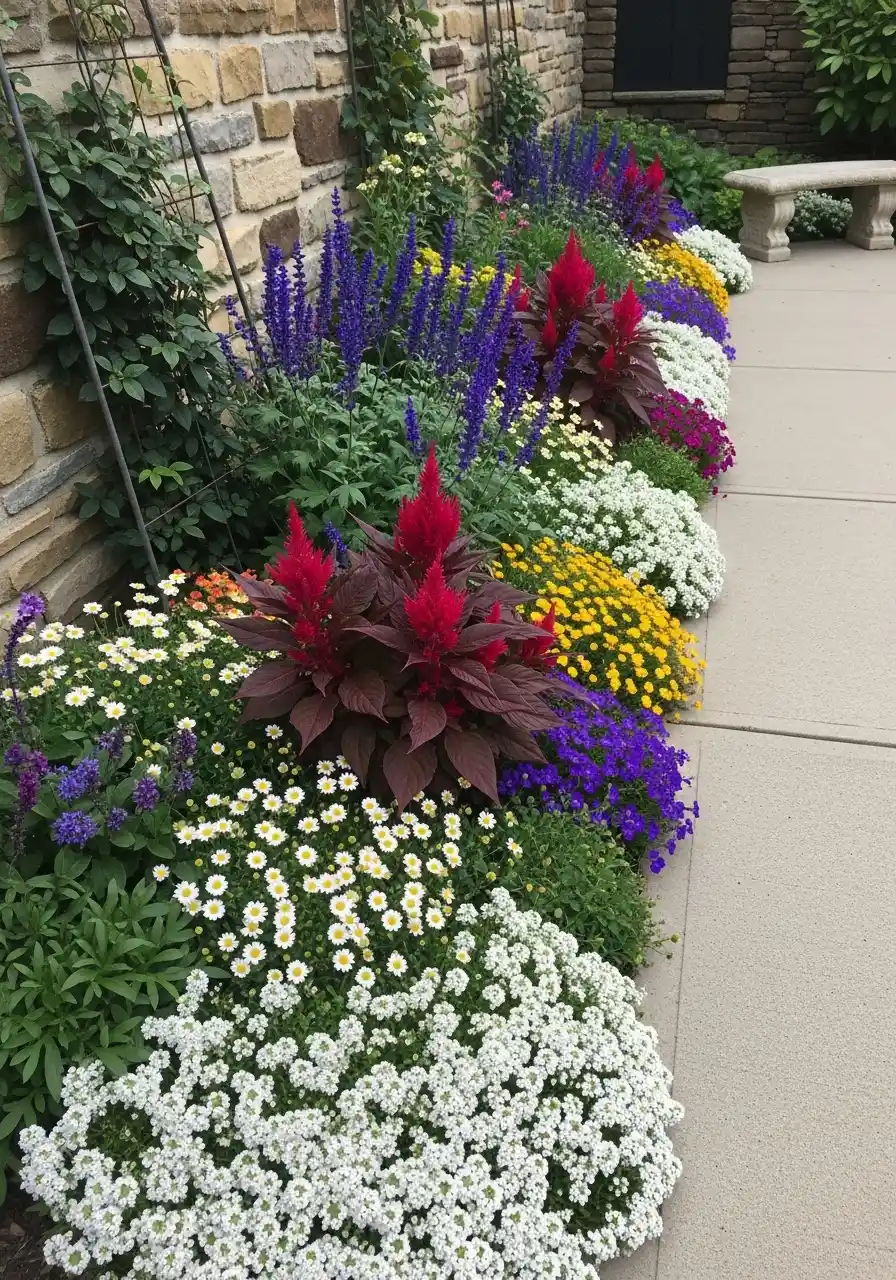
That stone wall garden is so smart because it turns a plain walkway into a whole moment. Spiky blue flowers, fluffy white clusters, and those deep red upright plants make it feel textured and rich. It’s not just “flowers,” it’s layers of shapes.
For shade garden border ideas next to a wall, texture matters more than bloom. Walls cast shadows and make things dry in weird spots. Use shade-tough texture plants like ferns, hostas, hellebores, and heuchera. Then add bright annuals where you get light pockets. A hack I swear by: tuck drip line or soaker hose under mulch, because borders like this dry out faster than you think. And group colors in blocks. When colors are scattered, it can look like a dropped bag of Skittles.
Bold foliage borders with coleus and sweet potato vine for instant “wow”
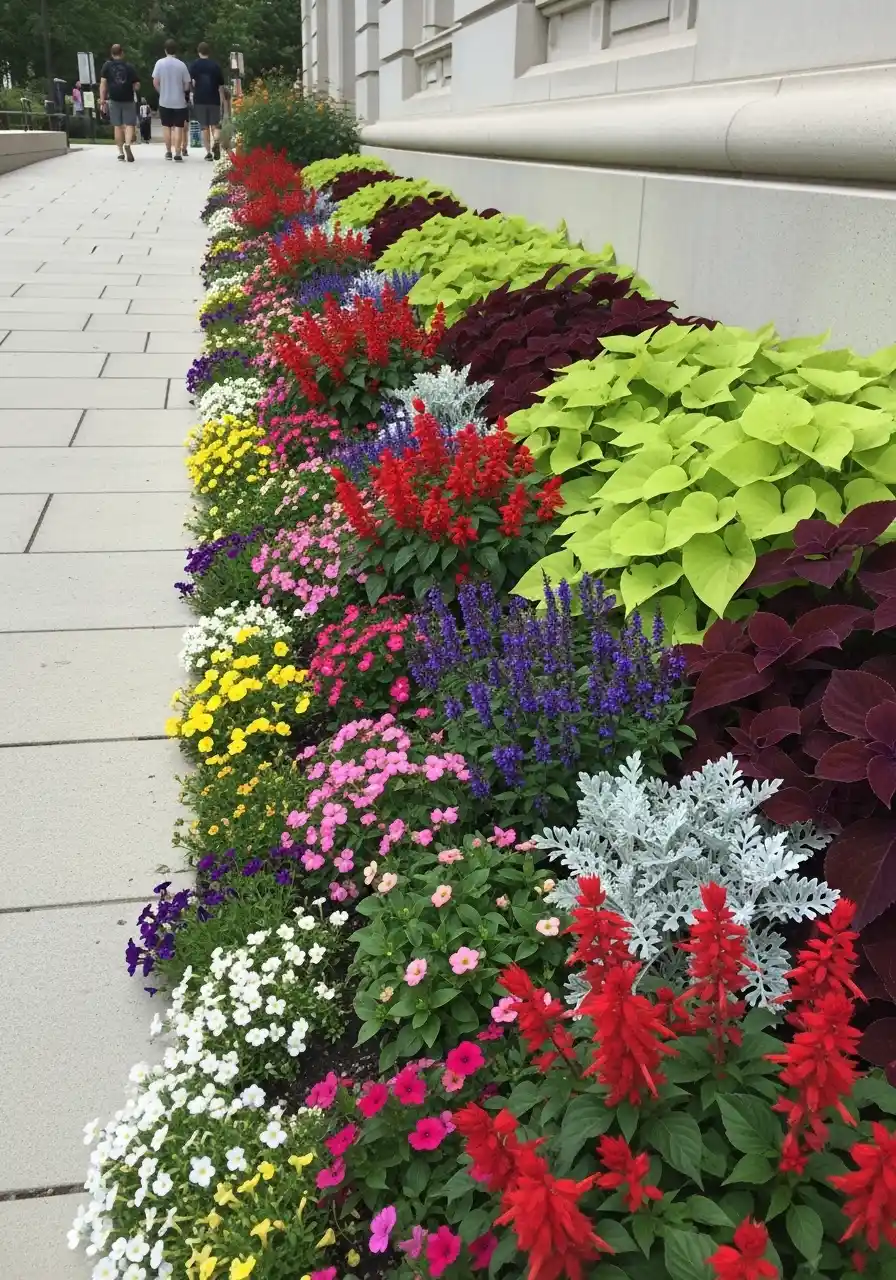
That sidewalk border with neon green and deep burgundy leaves is LOUD in a good way. It’s the kind of border that grabs you even from far away. And the best part is it doesn’t rely on flowers. Leaves last longer and don’t flop after a storm as easily.
For shade garden border ideas, coleus is a total hero. It loves shade and comes in wild colors. Pair it with sweet potato vine, caladium, and dusty miller for contrast. The trick is to use big blocks of the same plant, not one of each. I used to do “one of everything,” and it looked chaotic. Now I do chunky repeats: a strip of lime coleus, then a strip of burgundy, then silver. Also, pinch coleus early so it stays bushy, otherwise it gets leggy and you’ll be mad at it.
The ornamental grass sweep with a purple groundcover ribbon
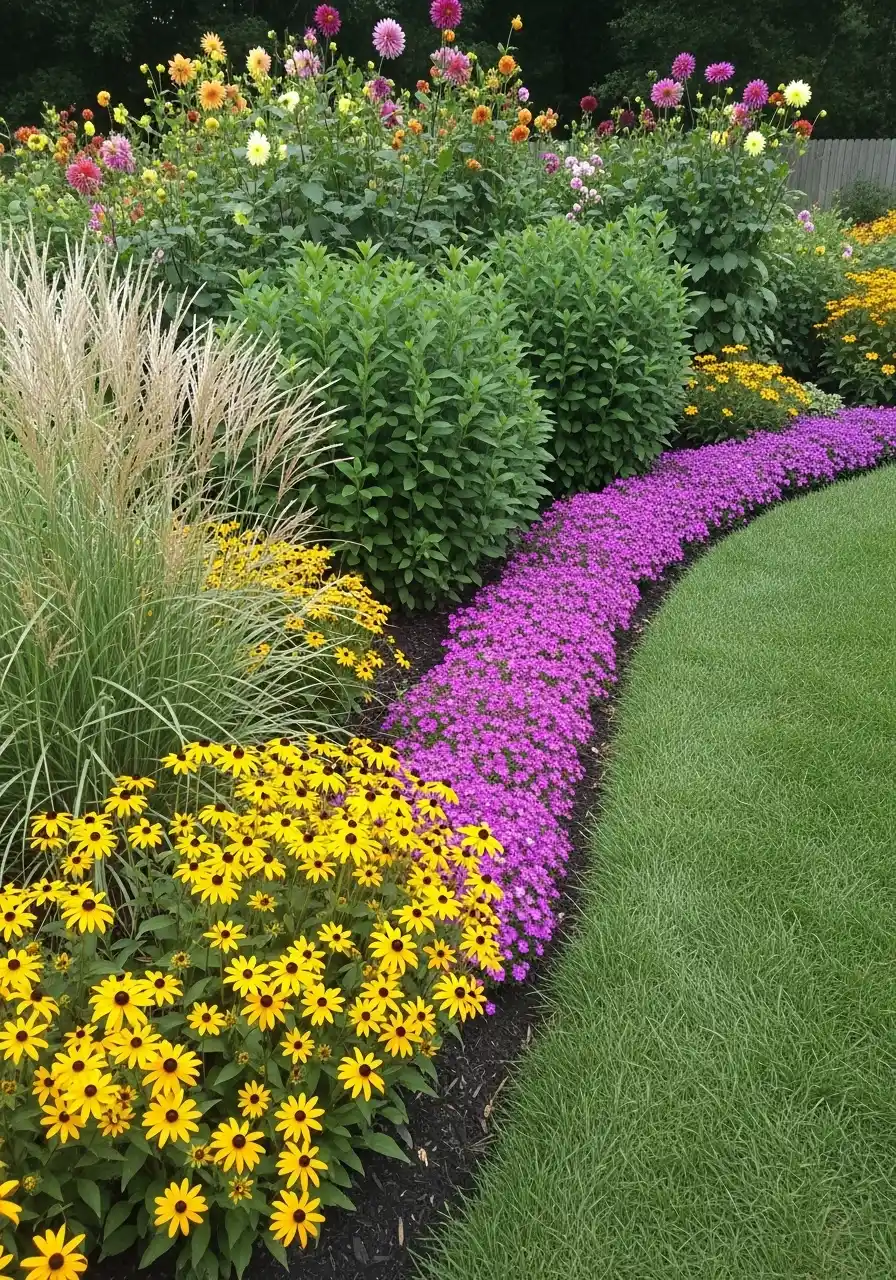
This border is such a mood. The tall grass is like hair blowing in the wind, and the purple groundcover makes a clean ribbon along the edge. It looks neat, but not stiff. And it’s not trying too hard, which I appreciate because I do not have endless energy for yard drama.
If you want shade garden border ideas with low effort, steal this shape. In shade, swap the grass for shade-tolerant grasses or grass-like plants like hakonechloa (Japanese forest grass). That plant is basically made for shade borders. Then use a purple groundcover like ajuga, or even purple heuchera as a repeating edge. My hack is to keep the edge plant low and consistent, like a “border outline.” It makes the whole bed look intentional even if the back plants are kinda wild.
A stone-edged corner bed that curves like a smile and stays simple
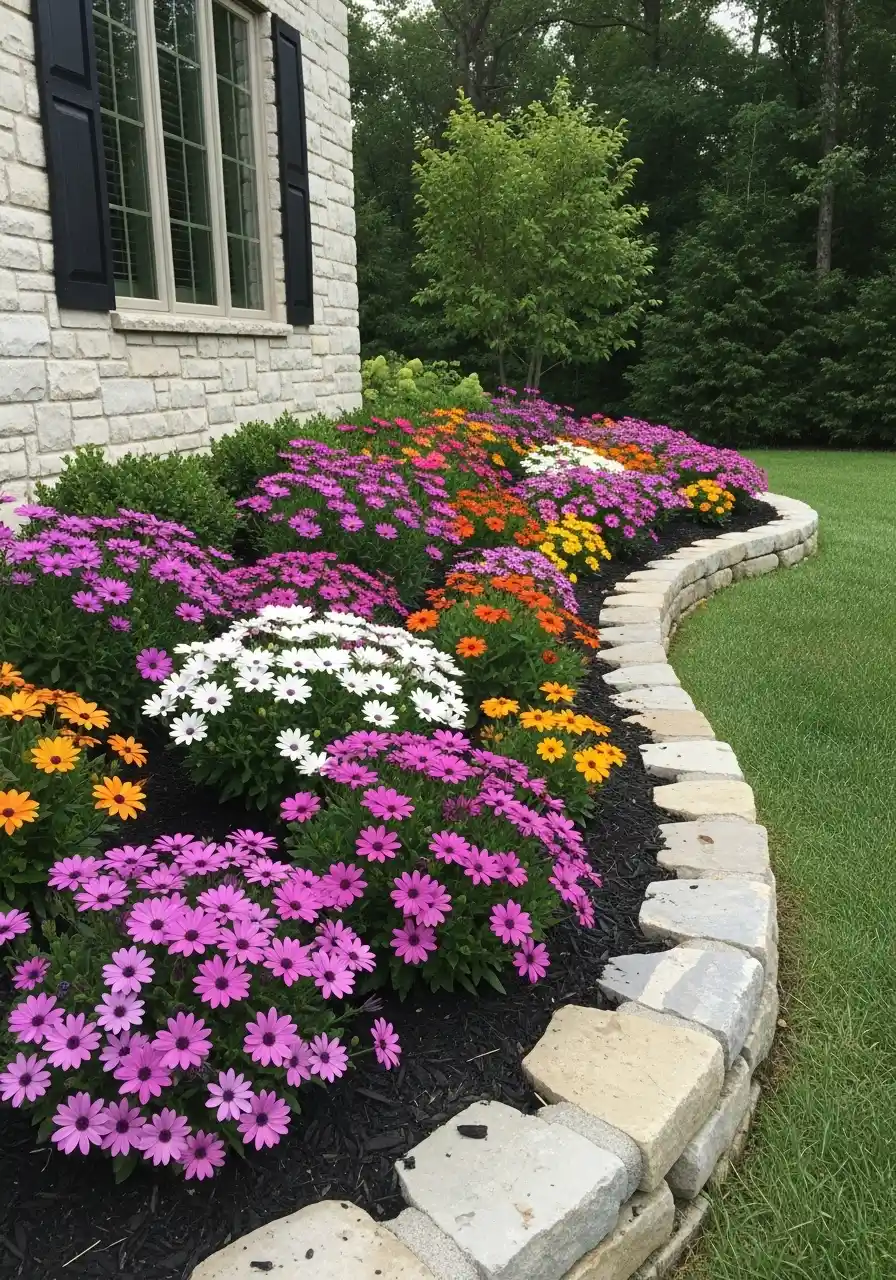
That next stone-edged corner bed is one of those designs that just works. The stone edge holds the shape, the curve softens the corner of the house, and the flowers mound nicely without blocking windows. It feels friendly, like the house is saying hi.
For shady garden border ideas in a corner, don’t overplant tall stuff. Corners can swallow plants and make the house look crowded. Use mounding shade plants like hostas, heuchera, and compact hydrangeas. Then add seasonal color at the front with begonias or impatiens. Here’s my little confession: I used to skip stone edging because it felt extra. But it actually saves time. Mulch stays put, the curve stays crisp, and you don’t have to re-cut the edge every two weeks.
Shade garden border ideas: a curved brick edge with bright layers
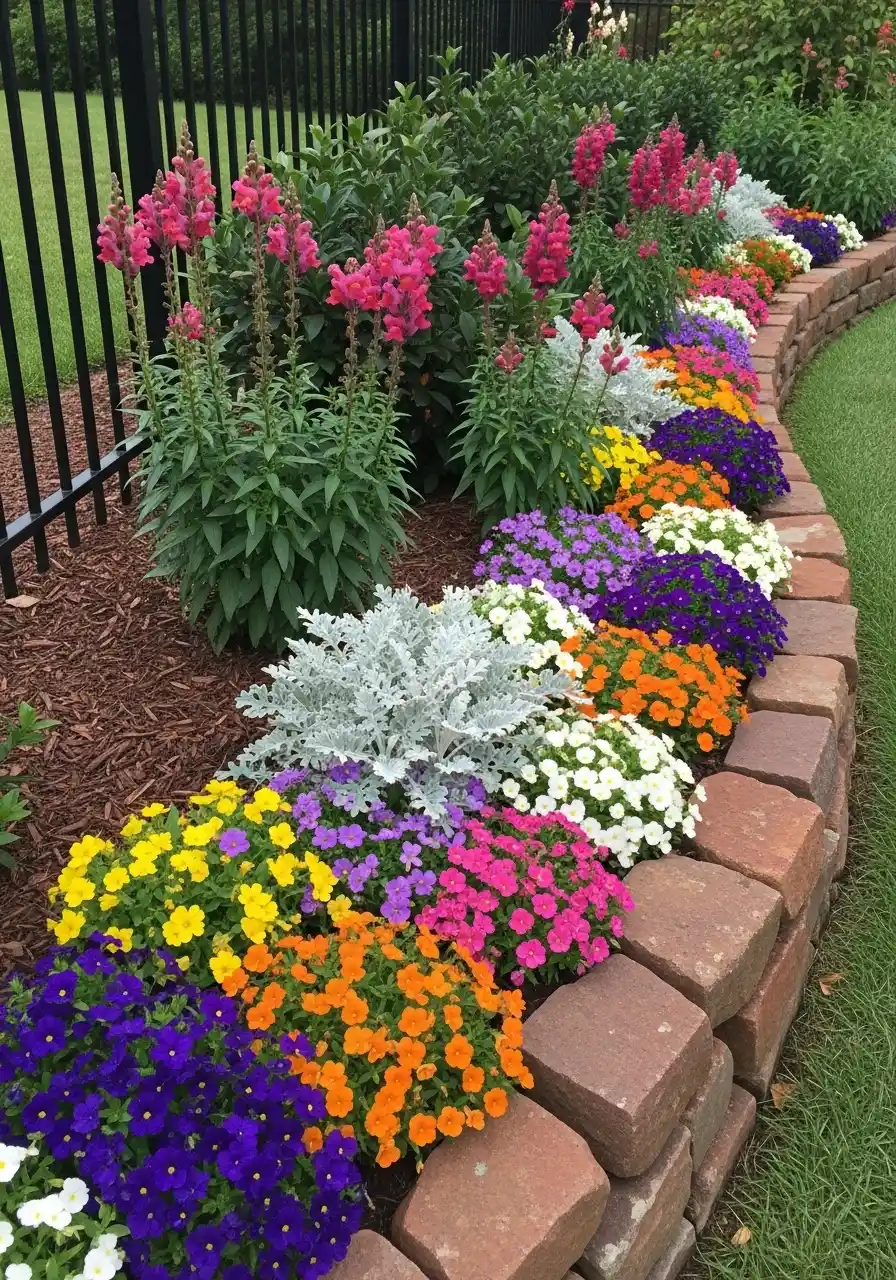
This first look is basically a “follow the curve” lesson. The brick edging makes the line feel clean, and the curve keeps it from looking stiff. In shade, I like copying this same shape, but I swap the sun-happy flowers for shade-tough color. Think impatiens, begonias, torenia, and coleus for that punchy rainbow effect. If you want silver like in the photo, dusty miller can work in part shade, but in deeper shade I lean on lamium or variegated hosta for that light, glowy look.
My little hack is to plant in “waves,” not single dots. Put 3–5 of the same plant together, then repeat that same group farther down the curve. It looks planned even when I’m kinda making it up. Also, keep the tallest stuff toward the fence line, and let the lowest stuff spill toward the bricks so the border looks full, not messy.
Shade garden border ideas with a long walkway ribbon of color
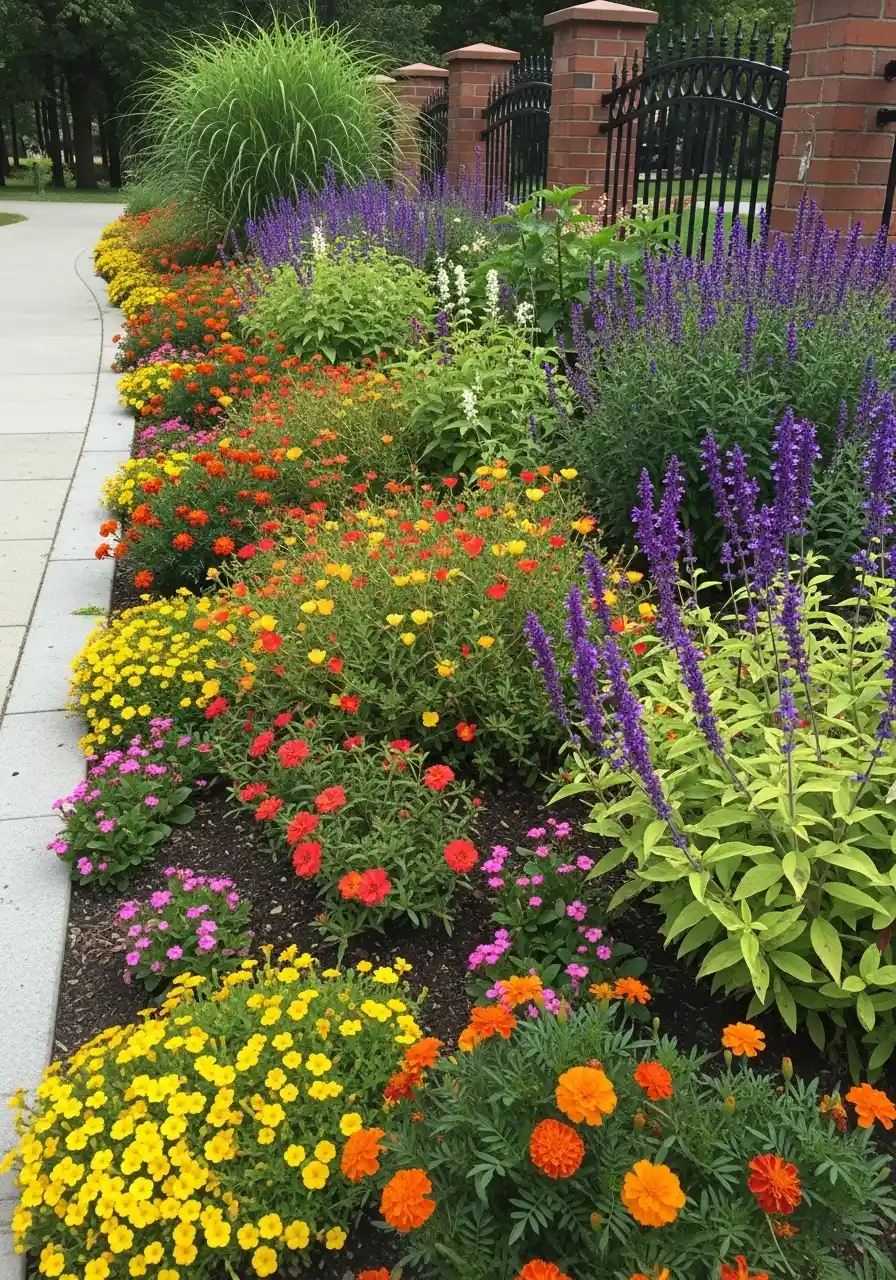
A long border beside a walkway can be a flex, but it can also be a headache if it’s all shade. The trick here is rhythm. In your second image, the border repeats bright blocks, and that repetition is what makes it feel rich instead of random. For a shade version, I’d keep the same “ribbon” layout, but go with wax begonias, coleus, caladium, and new guinea impatiens for nonstop color. Then add vertical spikes like astilbe or foxglove in part shade to mimic the tall purple flowers.
I’ll admit it, I used to cram plants too close because I wanted it to look full on day one. Bad idea. Leave breathing room, then top with mulch to make it look finished while plants grow. A simple border trick: edge the walkway with one consistent plant type (like a low begonia strip). It makes the whole line look “on purpose,” even if the back row is a mixed bag.
Shade border ideas using a focal container and bold color blocks
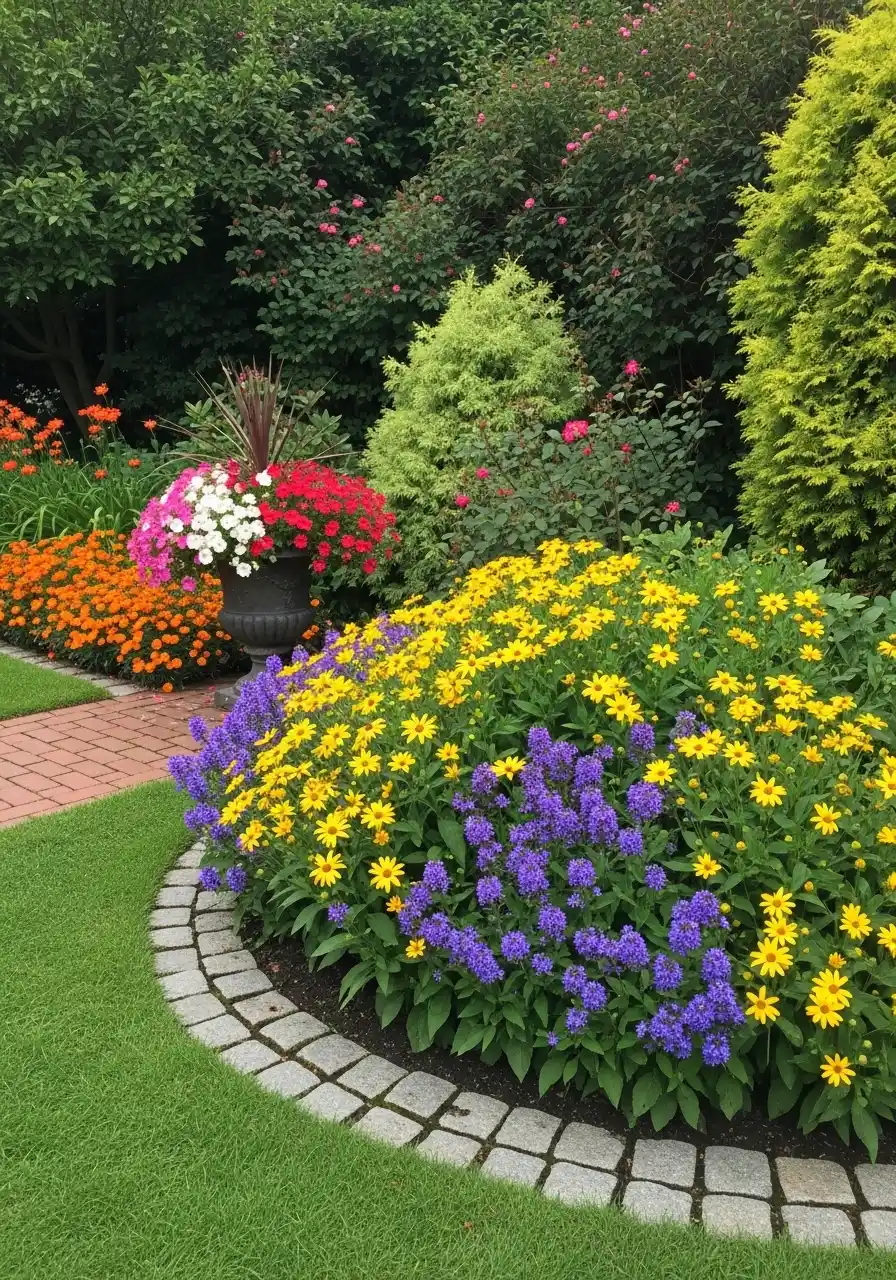
That big container moment in your third photo is such a good move. It’s like jewelry for the garden. In shade, I copy this by using a pot filled with coleus, begonias, and a little trailing sweet potato vine (it can handle part shade). The container gives height without needing a giant shrub, and it pulls attention away from bare spots. If your shade is deep, even a pot of leafy textures like ferns + coleus looks fancy.
Here’s my opinion: borders look better when there’s at least one “anchor.” This pot is the anchor. Put it near a curve or where the border changes direction, so it feels like a planned stop. Then around it, go heavy on repeated colors. Like, choose 2–3 colors and repeat them. When I try to use every color, it starts looking like a kid’s candy pile. Pretty, but chaotic.
Shade garden border ideas for foundation planting with a stone edge
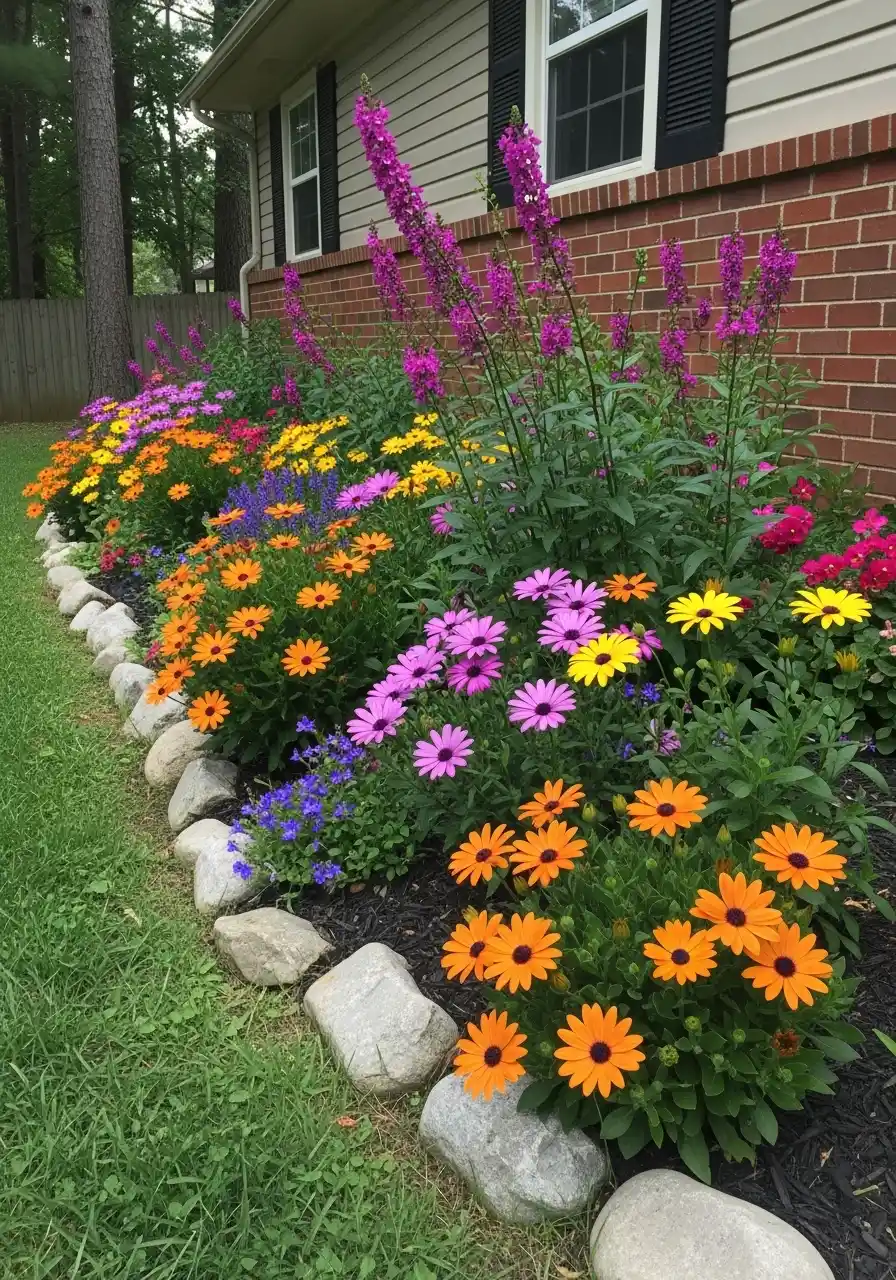
The nextimage has that classic “house border” feel, and it works because the edging is simple and the plants step up in height. In shade, foundation borders need calm structure, or they can look like a jungle real quick. I like a stone edge like this because it holds the line. Then I build layers: front row low growers (like ajuga or lamium), middle row leafy color (hostas, heuchera), and back row bigger bloomers (hydrangeas or camellias depending on climate).
A small hack that saves me: leave a tiny gap between the plants and the house wall. That airflow helps cut mildew and keeps things from feeling crowded. Also, don’t do all flowers. In shade, leaves are the real show. Mix shiny leaves, matte leaves, big leaves, and tiny leaves. It sounds silly, but it makes the border feel alive even when blooms take a break.
Shade garden border ideas with hydrangeas and a pebble “moat”
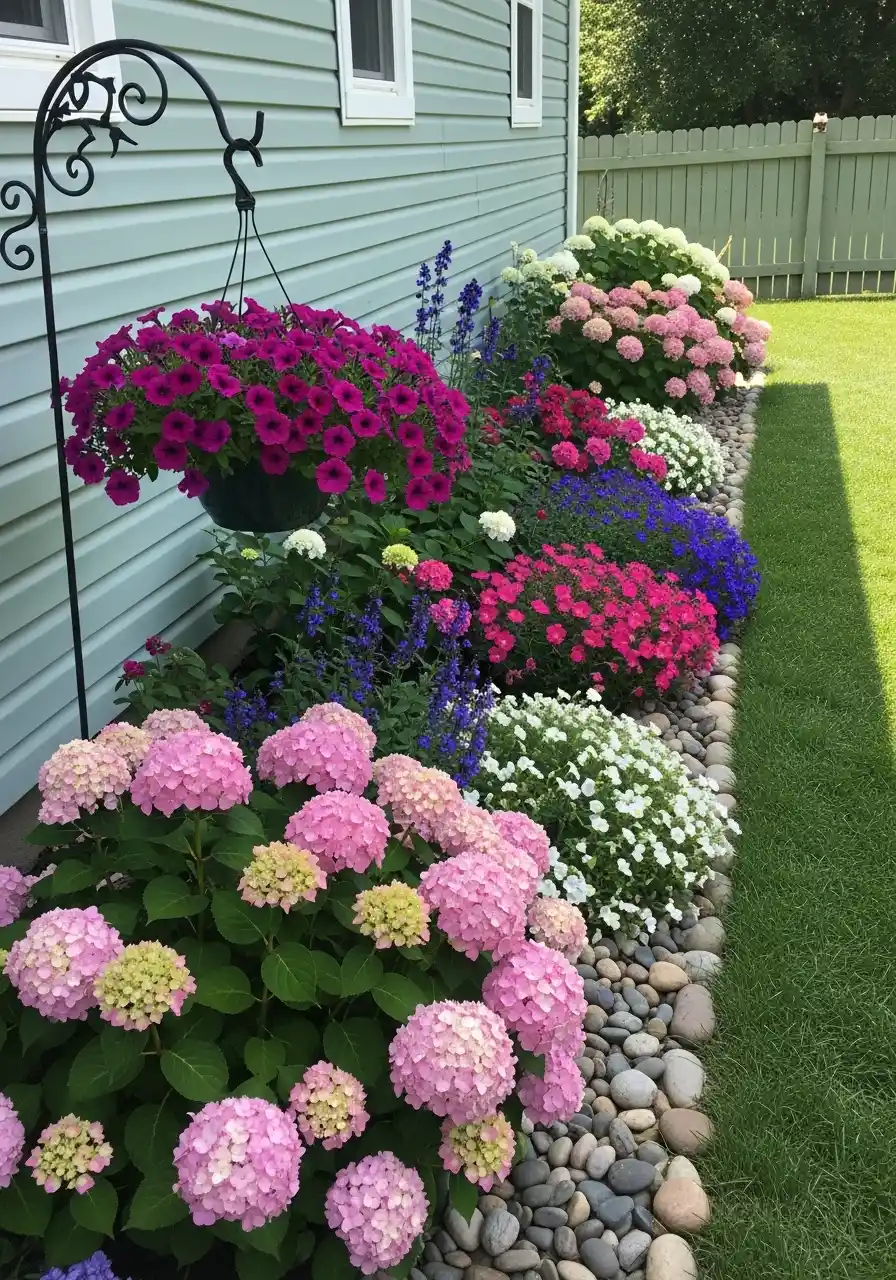
Your next image is basically a neatness cheat code. That river rock strip is a clean divider between lawn and plants, and it keeps mulch from spilling everywhere. In shade or part shade, hydrangeas are a total win if your soil stays a bit moist. I love that “soft cloud” look they give. If you want that same layered feel, put hydrangeas in the back, then add medium plants like astilbe or bleeding heart, and finish with a low edge like sweet alyssum (part shade) or lobelia (cooler shade).
I’m gonna confess something: I used to hate weeding borders. The pebble strip helped a lot because it gives you a clear line to maintain. If you do this, put landscape fabric under the pebbles, or you’ll be pulling grass out of rocks forever. Also, a hanging basket nearby is not just cute. It adds height at eye level, which makes the whole border feel fuller without taking ground space.
Shade border ideas built on foliage contrast (hostas + dark leaves)
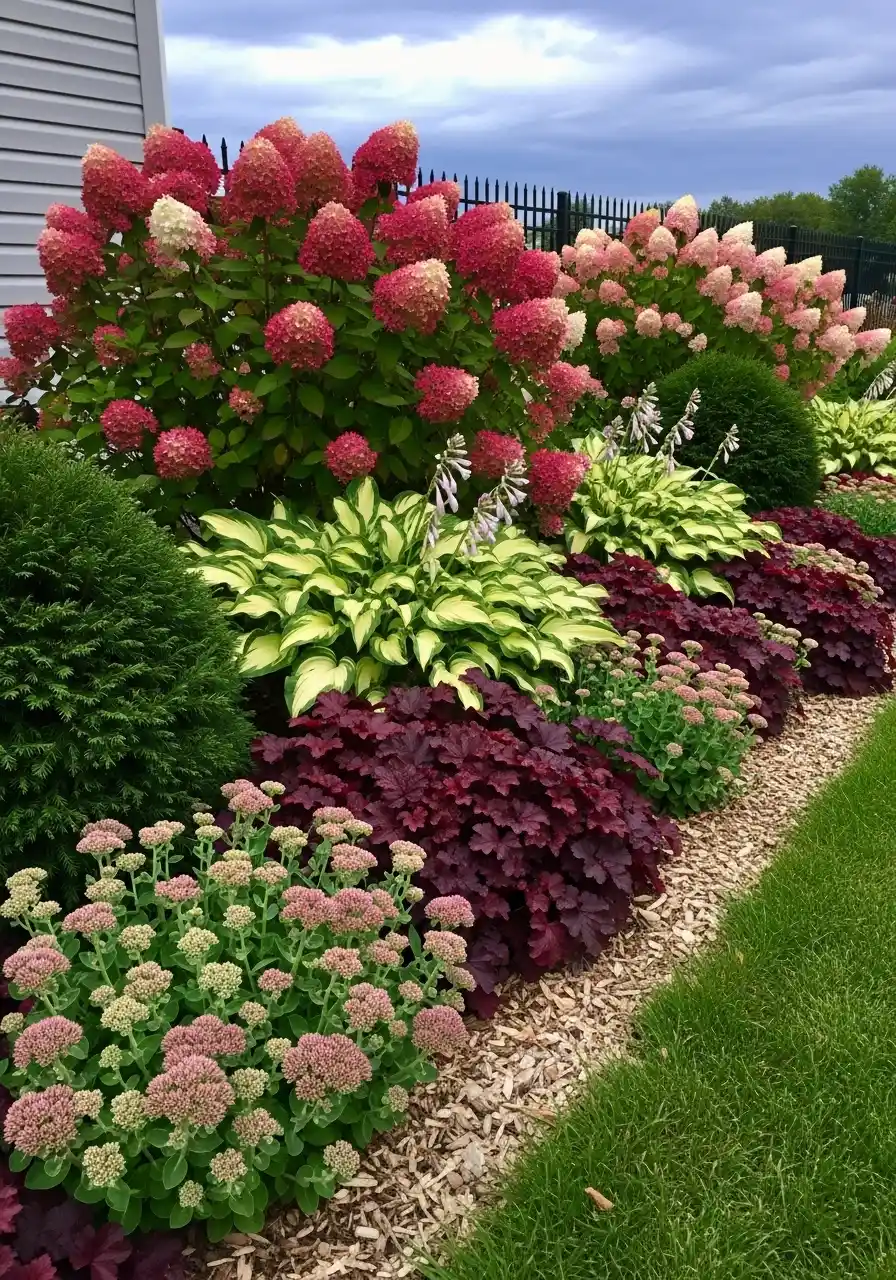
This next border is my kind of drama. The mix of big hosta leaves, deep burgundy foliage (hello heuchera), and soft pink blooms makes it feel rich, not loud. In shade, this is gold. You can build a whole border using mostly leaves and it still feels “done.” Put a dark plant near a light plant and suddenly both look better. That’s just how it works.
For a practical layout: front row low mounds like sedum (part shade) or lamium (shade), middle row heuchera and smaller hostas, back row taller shrubs like panicle hydrangea (more sun) or oakleaf hydrangea (part shade). If your shade is heavy, go with smooth hydrangea types and lots of hostas. Add mulch thick, like 2–3 inches, because shade beds hold moisture and weeds love that.
Shade garden border ideas for curves with groundcover “carpet”
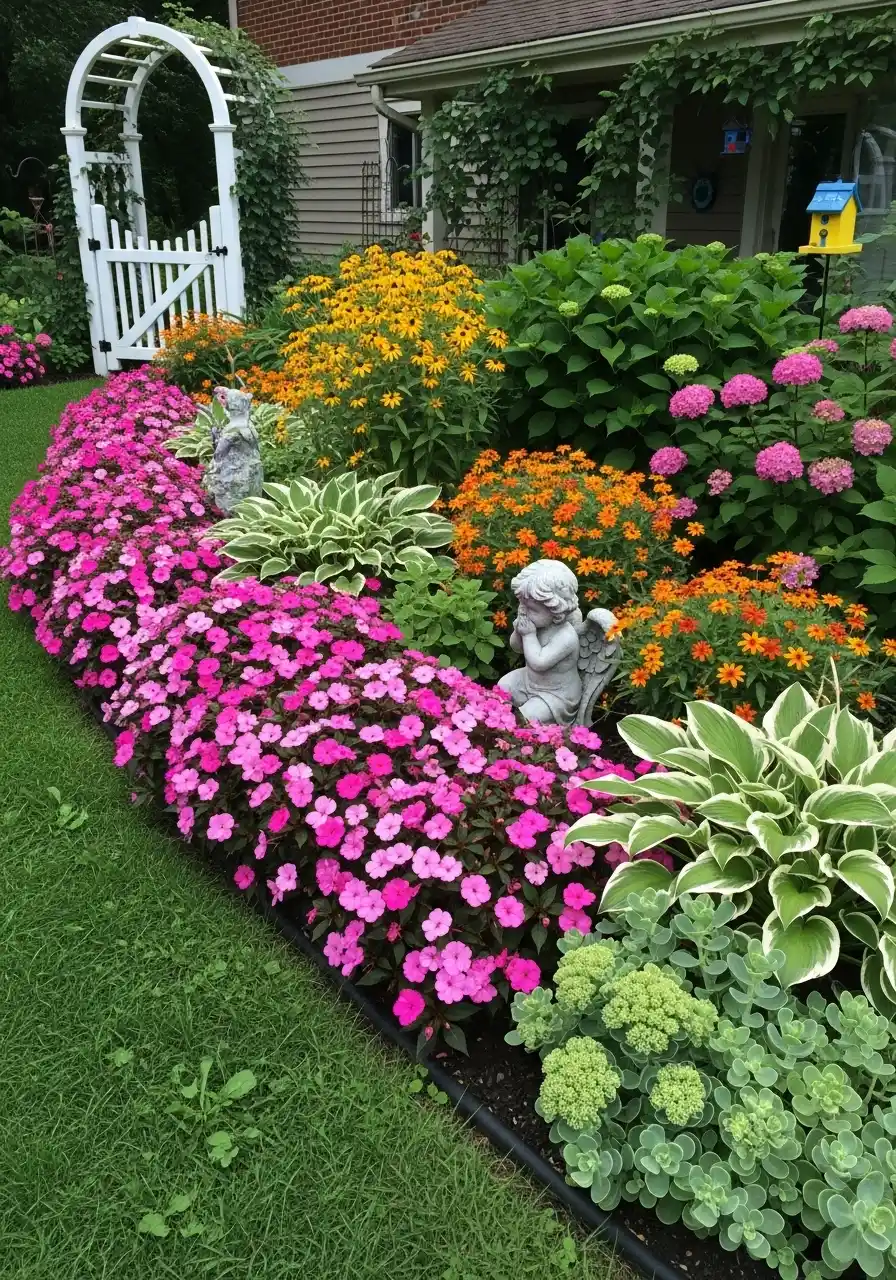
The next image has a fun curve and that pink carpet effect. In shade, I copy this with impatiens or begonias as a groundcover look. The magic is mass planting. One type of flower in a big sweep looks 10x more intentional than a bunch of singles. Then behind it, you can do chunky plants like hostas and hydrangeas for height. Statues or little garden art works great here too, because shady corners can feel like “nothing’s happening,” and a small focal piece fixes that.
One tip I learned the hard way: curves need wider planting than you think. If the border is too skinny, the curve looks weak and sad. Give it at least 2–3 feet of depth if you can. And keep the edge line crisp. Even a cheap plastic edge buried low can help. A clean line makes the shade border feel cared for, even when I’m behind on watering.
Shade border ideas along a fence with pots for extra height
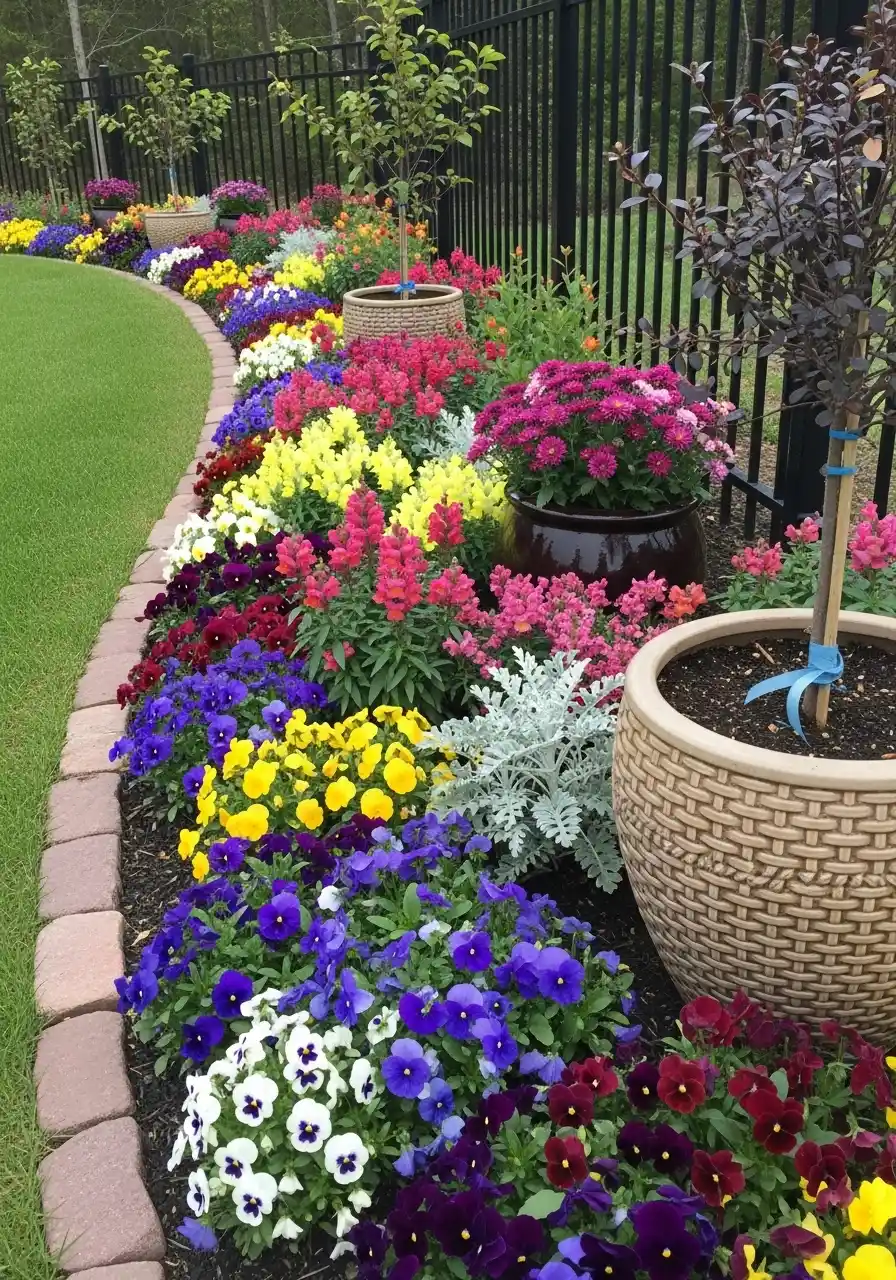
This last border is full-on cheerful, and the pots make it feel styled. Along fences, shade can be heavy, so I like using containers because you can control soil and drainage. In shade, pots can be packed with coleus, caladium, begonias, and trailing creeping jenny (bright chartreuse). The ground border can mirror the pot colors so it feels tied together. If you want blooms, torenia is such a sleeper hit for shade. It flowers like it’s trying to prove a point.
Here’s the practical part: keep pots on drip trays or gravel so they don’t stain patios, and water them more often than in-ground plants. Also repeat pot style or color. When every pot is different, it turns into clutter fast. If you repeat the same pot shape down the fence, it looks calm and expensive, even if it wasn’t.
FAQ: Shade garden border ideas
What counts as “shade” in a garden border?
Can I still have colorful blooms with shade garden border ideas?
What are the easiest plants for garden border ideas for shade?
How do I stop a shady border from looking thin?
Are hydrangeas good for shady garden border ideas?
What edging works best for shade border ideas?
Do rocks around plants help or hurt in shade?
How often should I water a shade garden border?
What’s the best way to layer plants in a shade border garden?
Can I do a raised bed for shade garden border ideas?
How do I plant under trees without everything dying?
What are good shade-tolerant alternatives to petunias?
Conclusion
If I’m being real, shade used to intimidate me. I thought shade meant “no flowers, just sadness.” But these shade garden border ideas show it’s more about design than luck. Curves, edges, repetition, and good anchors make shade feel warm and intentional. Start with one border, copy one layout you love, then swap the plants for shade-friendly ones. You’ll mess up a bit, I always do, but the border will still get better each season.