Table of Contents
indiana native plants landscaping ideas that honestly made me want to redo everything
I kept staring at these yards longer than I meant too. That usually tells me something. Good indiana native plants landscaping has this quiet pull to it. It does not need to scream. It just sort of stays with me, and then I start side-eyeing my own beds and thinking, yeah, mine could be better.
What I love most here is how alive these spaces feel. Not fake pretty. Not stiff. They feel rooted, soft, buzzing with movement, and a little personal too. That matters to me. I like front and side gardens that feel like somebody actually lives there, somebody who likes birds, butterflies, winding paths, messy bloom seasons, and plants that belong in Indiana instead of fighting the climate every year. These 15 ideas gave me that feeling over and over.
indiana native plants landscaping with a gravel path and prairie texture
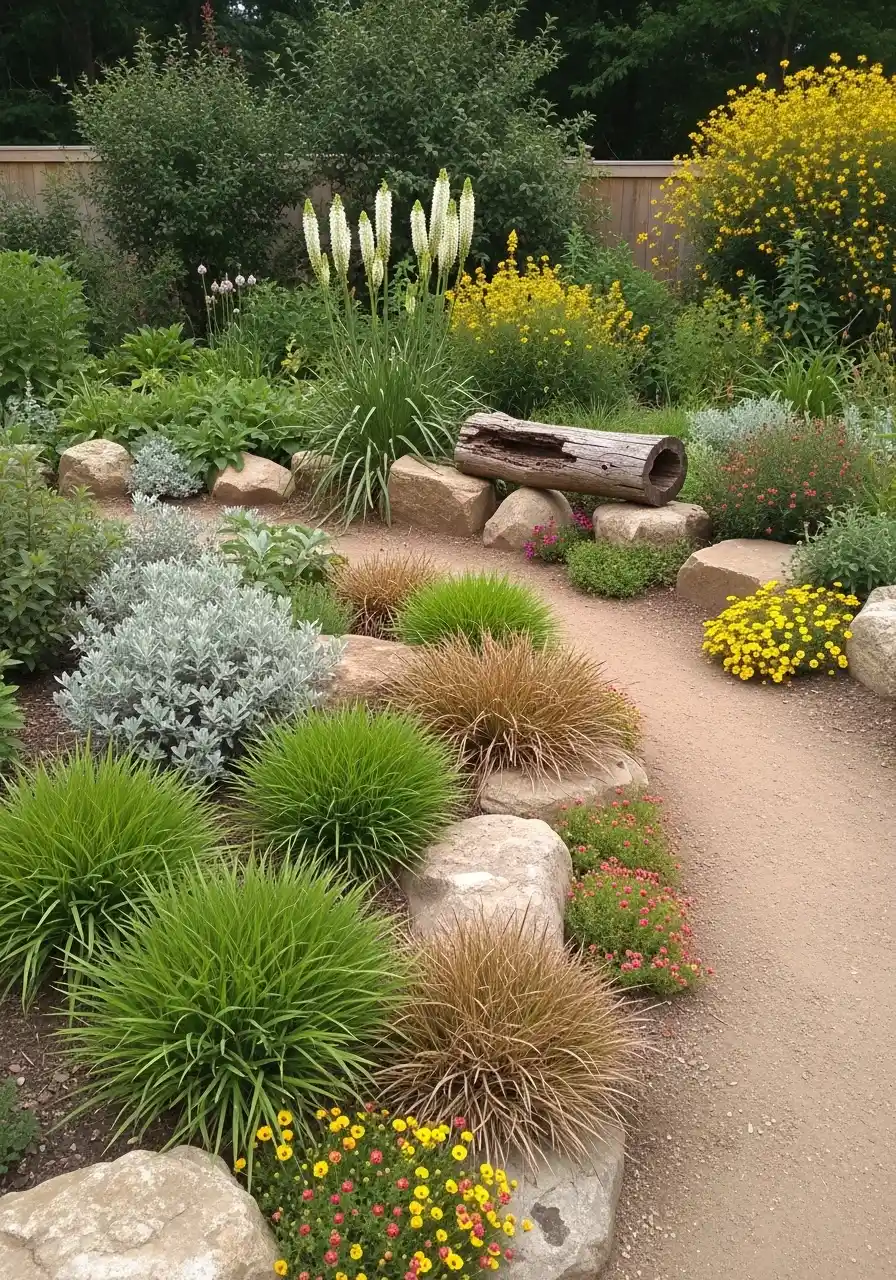
The first image feels loose in the best way. I see the gravel path, the natural stone edging, the tufts of grass, and those tall white flower spikes, and it all gives off this relaxed prairie-garden mood. I really like yards like this because they do not try too hard. They feel grounded. The weathered log bench is a tiny detail, but it adds charm fast. It makes the whole space feel like a place where I’d actually sit for a minute and breathe.
For indiana native plants landscaping, this kind of design works because it leans into texture more than perfect shape. That is smart. Native grasses, mounded perennials, and long-blooming yellow flowers can handle Indiana seasons way better than fussier plants. I’d copy the path idea first. A soft gravel walk curves naturally and makes even a simple yard feel more thoughtful. I’d also keep the boulders irregular, not too lined up, because the natural look is what saves this from feeling staged.
A stepping stone path can make a native garden feel neat, not wild
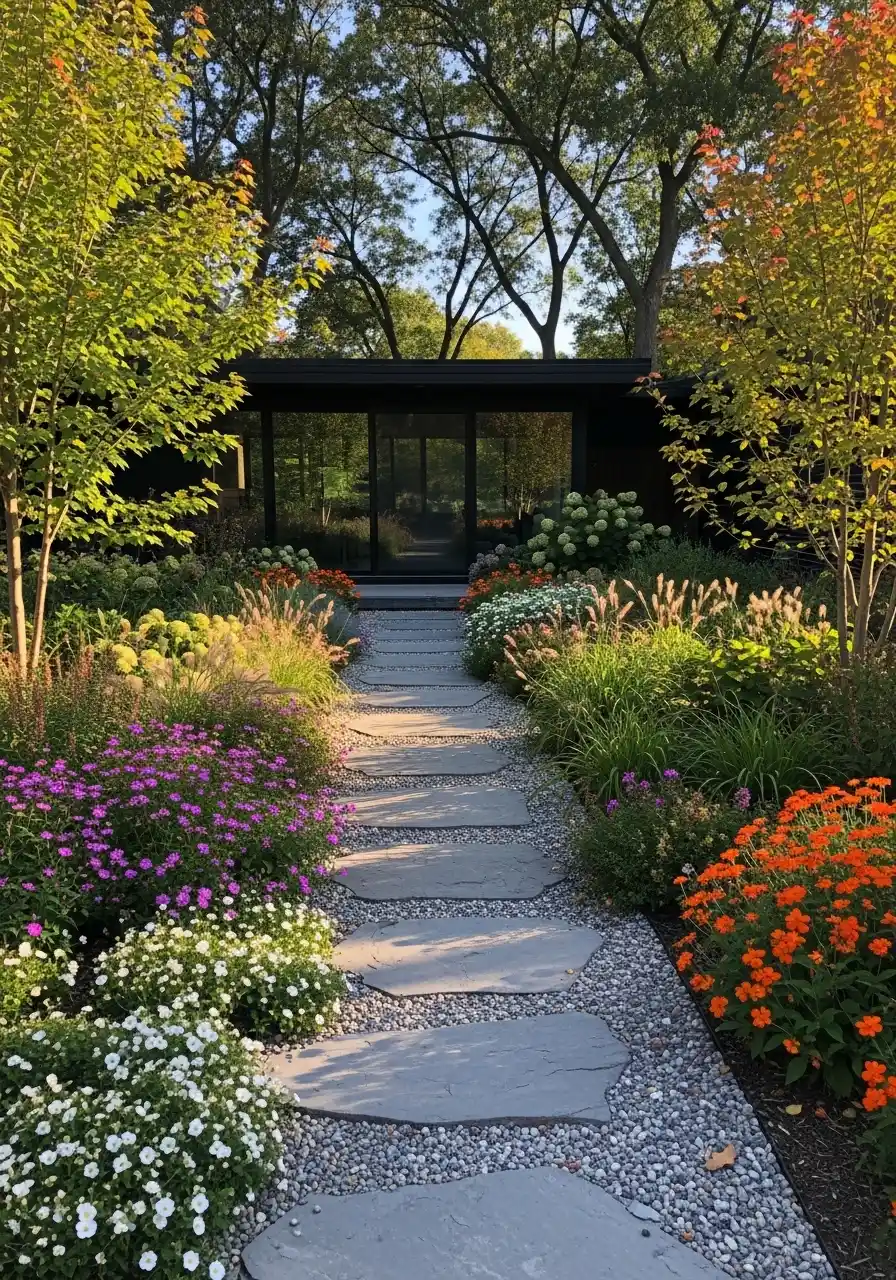
This second space is lush, colorful, and honestly kind of dreamy. The stepping stones floating through pale gravel make the garden feel organized right away. Without that path, all the flowers and grasses might feel too loose. With it, the whole thing gets a backbone. I love that contrast. It feels like nature was invited in, but somebody still had a plan.
This is one of my favorite Indiana native landscaping ideas because it proves native plantings do not have to look messy. The flowers spill softly, yes, but the path keeps your eye moving forward. I think that matters a lot for people who are nervous about using native plants in front yard spaces. The trick is not fewer plants. The trick is stronger layout. I would use drifts of purple, white, and orange like this, and let the path stay simple. It feels peaceful, rich, and somehow modern too, even though the planting is abundant.
A long border of native flowers can wake up a plain blue house
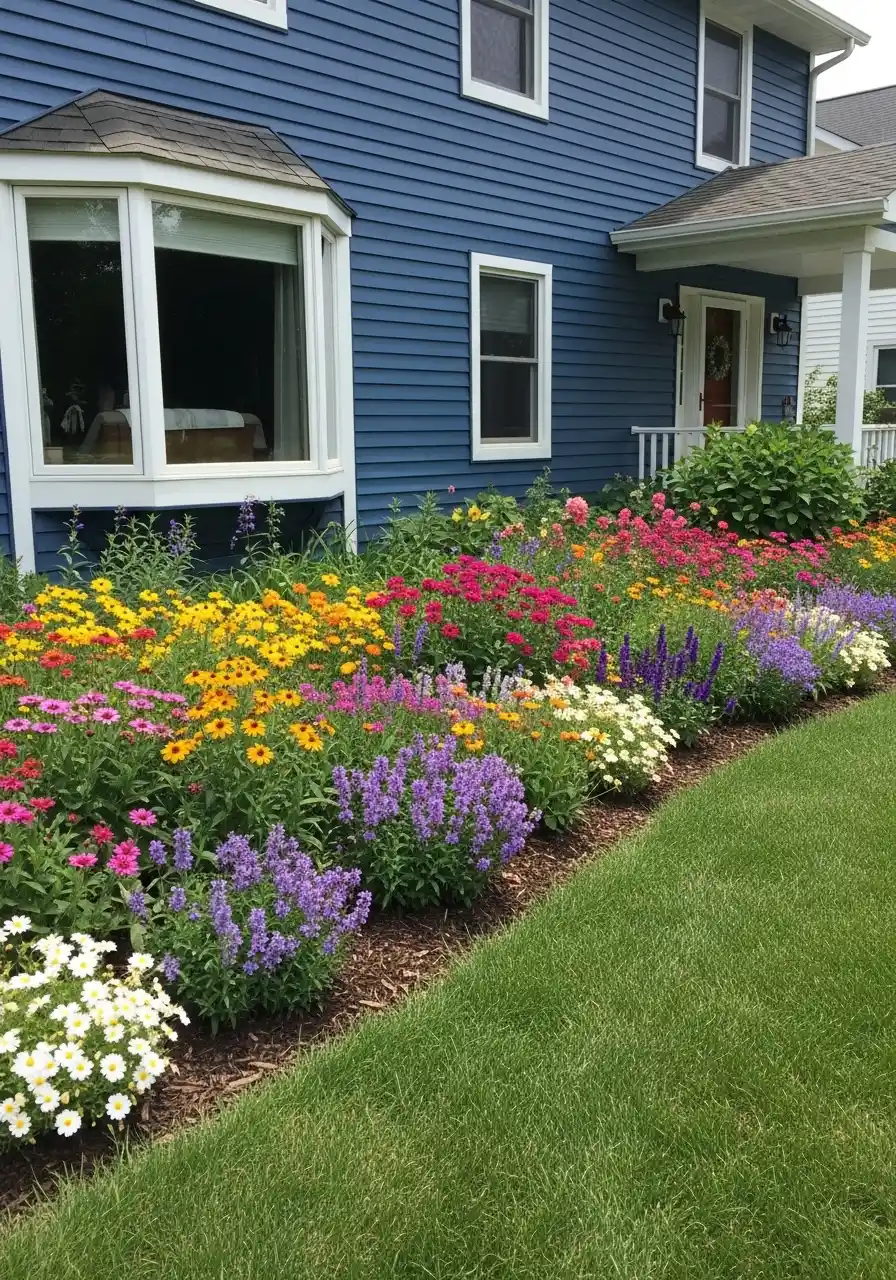
The third image is such a good reminder that color can do heavy lifting. The blue house is already pretty, but that long flower border makes it feel joyful. I mean really joyful. Yellow, pink, purple, white, and red are all packed in there, and somehow it still works. I think the reason is the bed itself is simple. It runs in one clean line, so the flowers get to be the stars.
When I think about indiana native plants landscaping, this is the kind of idea that feels very doable. A long foundation bed or side border gives you room to mix native perennials like coneflowers, black-eyed Susans, salvias, and asters. I also like that the lawn edge stays crisp. That keeps the whole thing from tipping into chaos. My honest opinion is that people are often too timid with flower color. If you’re going to plant a pollinator-style bed, let it be cheerful. Let it look alive. Just keep the border shape strong and it’ll still read clean.
A cottage style native garden can feel messy, sweet, and very human
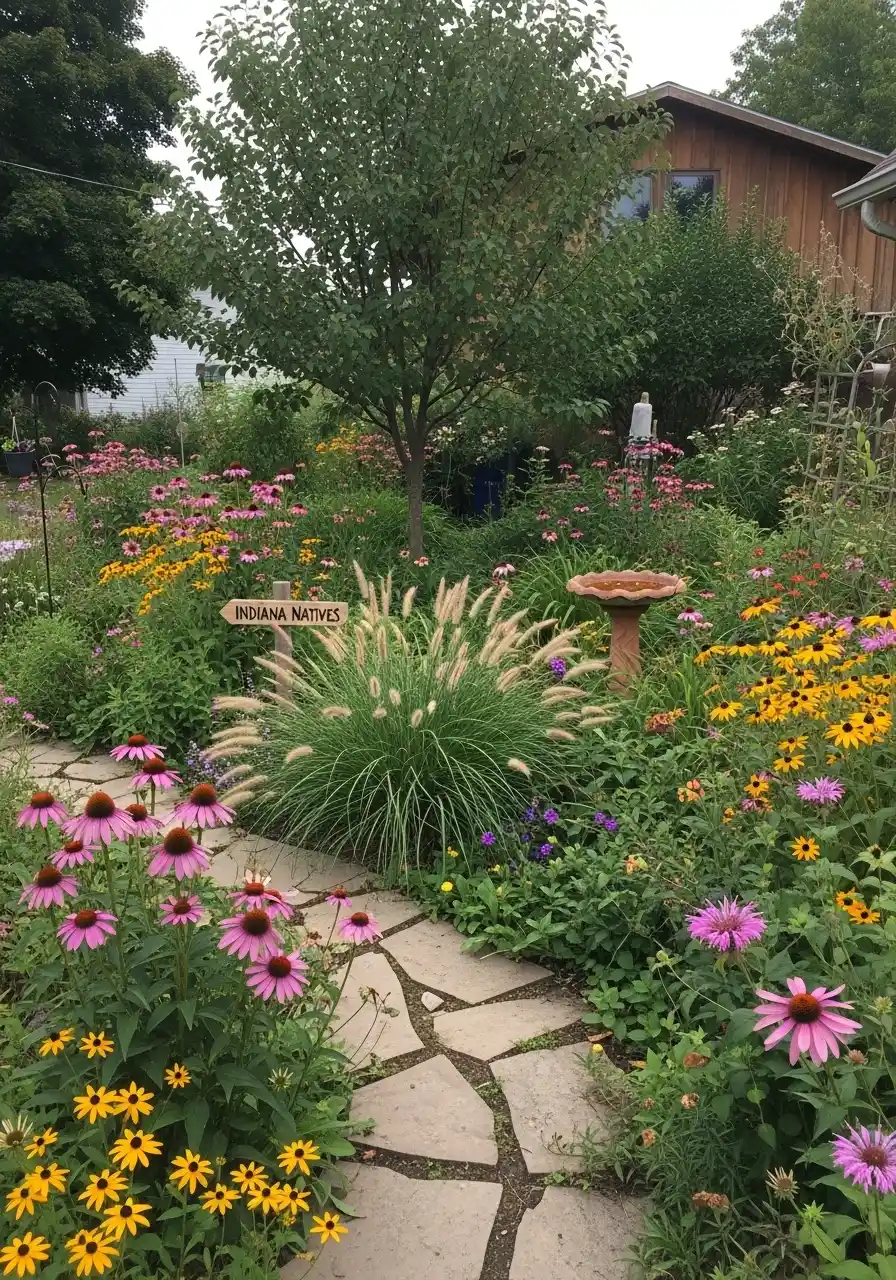
This yard feels personal in a way I really love. It is not overly polished. It has a path made of irregular stone, a birdbath, native flowers weaving together, and that little sign that says “Indiana Natives,” which honestly made me smile. There is something deeply comforting about a garden that admits what it is. It is not pretending to be a showroom. It is being itself.
For landscaping with Indiana native plants, this is such a useful model because it shows how to mix beauty and habitat. Coneflowers, black-eyed Susans, grasses, and other blooming natives bring color, but they also bring birds and butterflies. I’d say this kind of yard needs a person who can tolerate a little looseness. That’s the tradeoff. It won’t stay perfectly crisp every week. But what you get back is movement, life, and this really warm cottage-garden feeling that is hard to fake. To me, it feels kind and generous.
A shaded seating nook can make native planting feel intimate
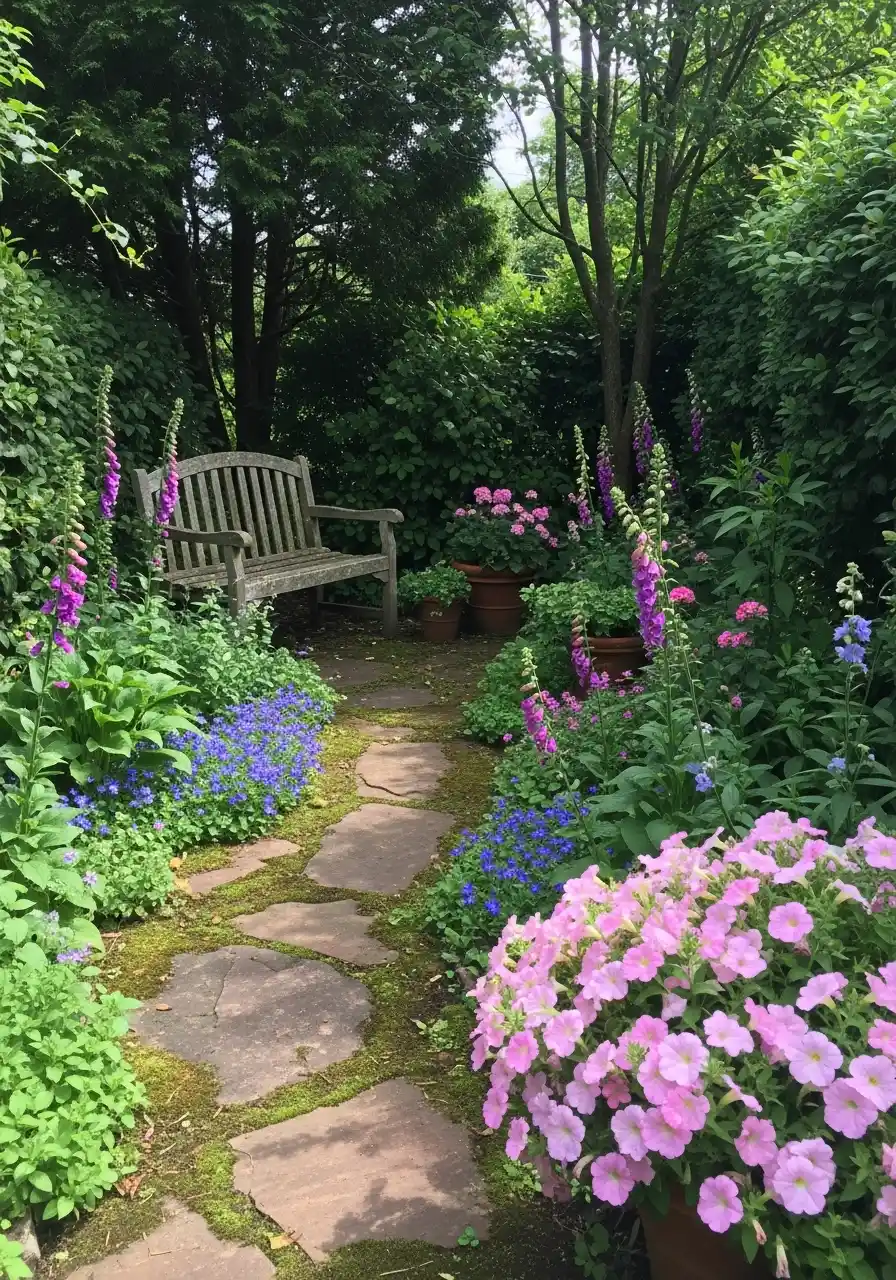
The fifth image is quieter, and I needed that. After all the brighter gardens, this little shaded path leading to a weathered bench feels almost secretive. The soft pink blooms, blue flowers, foxglove spires, and mossy stones give it a cool, tucked-away mood. I like gardens like this because they feel private. They slow me down. They make me think a yard doesn’t need to be loud to be memorable.
In indiana native plants landscaping ideas, shade gardens deserve way more attention than they usually get. Indiana has plenty of mature trees and partially shaded lots, so using woodland-style natives and shade-friendly flowers is just common sense. I’d borrow the bench idea for sure. A bench at the end of a path gives a garden purpose. It says this is not just for looking at from a window. It’s for sitting in. That changes the feeling of the whole space. It becomes softer, more personal, maybe a little romantic too.
A bird friendly path makes the whole yard feel alive and welcoming
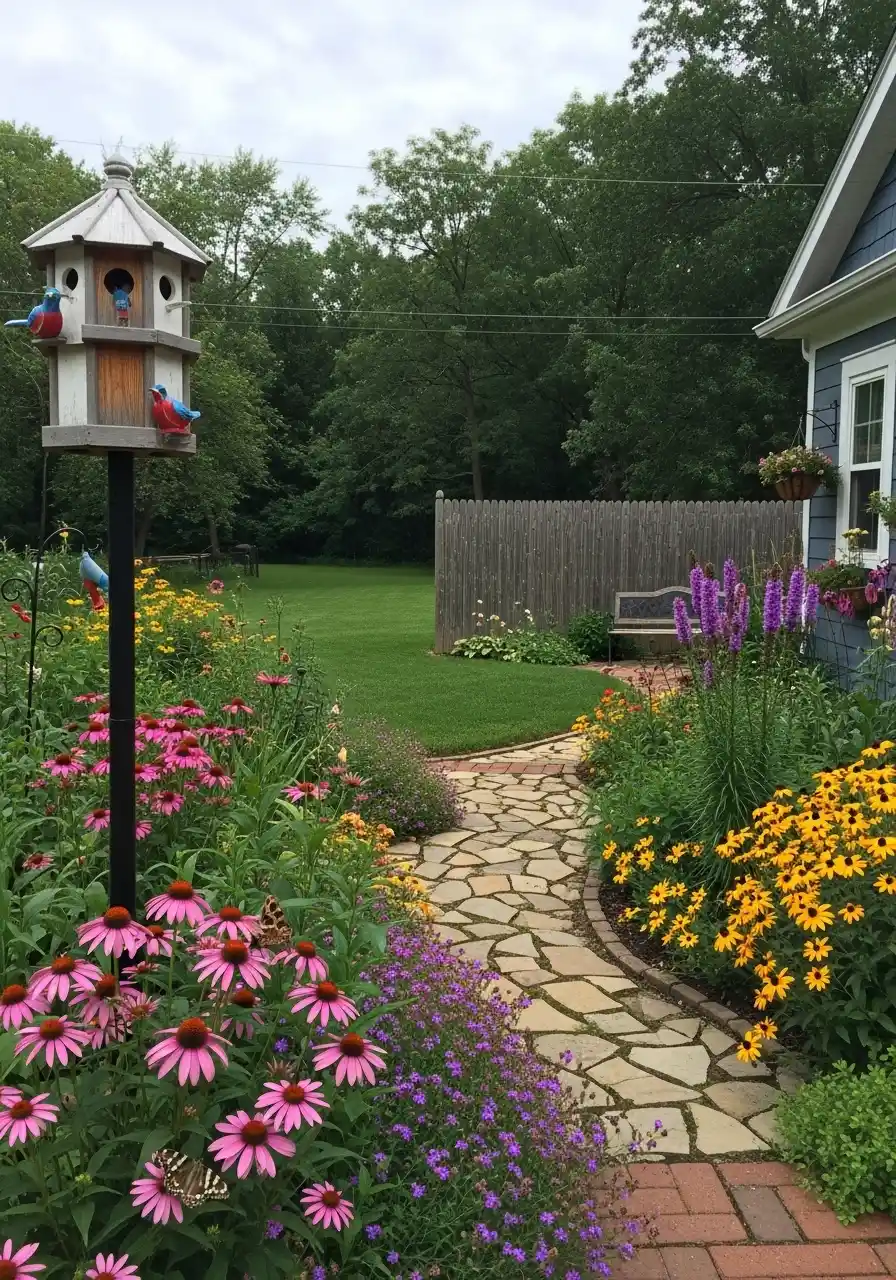
This image is just happy. That’s the word that keeps coming to me. The curved stone path, the birdhouse, the pink coneflowers, the yellow blooms, the purple flowers by the edge, all of it feels bright without feeling fake. I especially love that birdhouse pole. Some people would skip it because it is “extra,” but I think it gives the garden personality. A yard that welcomes birds usually feels warmer somehow.
This is one of those Indiana native plant garden ideas that works because it combines structure and wildlife value. The path is clearly defined, so even though the flowers are full and informal, the yard still feels neat enough for a neighborhood setting. I’d use native coneflowers, liatris, bee balm, and low edging flowers to recreate this kind of look. Also, I would absolutely keep a little seating spot in the distance like this yard has. It gives the eye somewhere to rest. Small thing, big effect.
A pollinator path under an arbor feels playful and almost magical
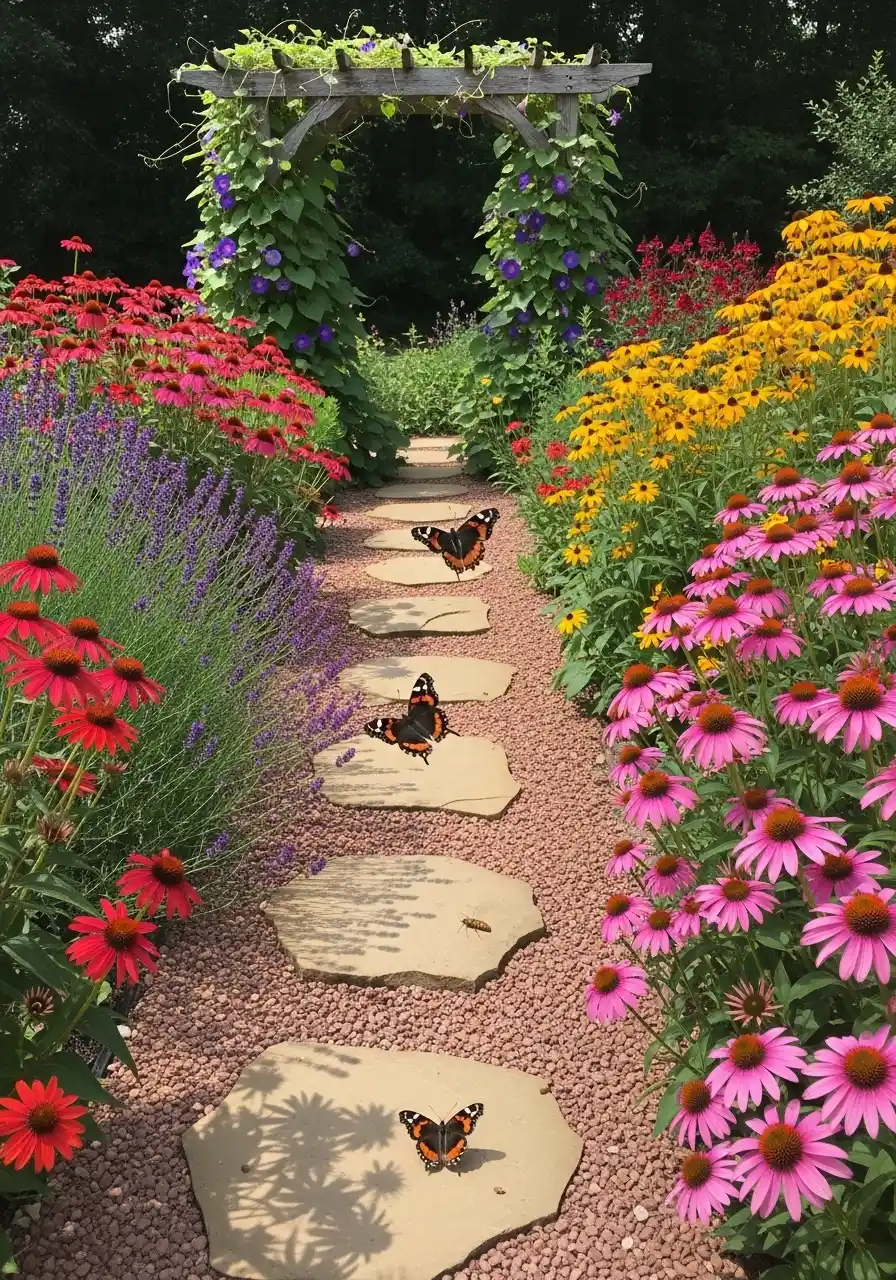
I know “magical” sounds dramatic, but this garden really does have that vibe. The path of stepping stones through small gravel, the vine-covered arbor, and the thick waves of pink, red, yellow, and purple flowers feel straight out of a summer daydream. And the butterflies are not just cute. They prove the design is doing what it should. The flowers are feeding life, not just sitting there being decorative.
For indiana native plants landscaping, this kind of pollinator-focused design is such a smart direction. Native coneflowers, rudbeckia, and other nectar-rich blooms can create this same effect in a real yard, especially if you plant in generous drifts. I think the best trick here is the tunnel feeling created by the tall flowers on both sides. It makes the path feel like a destination. I would be careful not to overmix too many flower heights though, because the drama comes from repetition. That’s what makes it feel lush instead of cluttered.
A layered stone bed can make native flowers feel polished and upscale
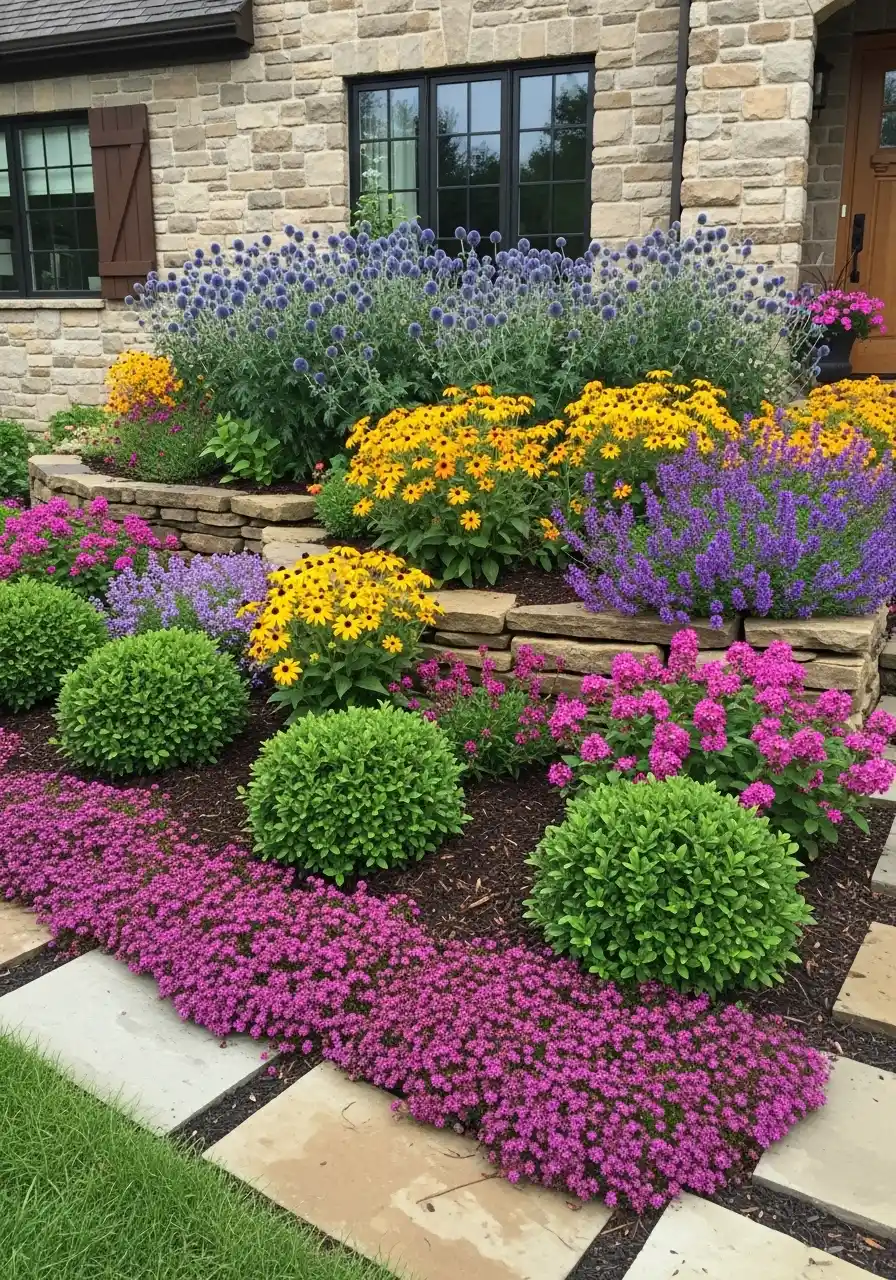
This stone-front house already looks strong, but the planting takes it way further. The tiered retaining walls help the flowers read in layers, and that makes the whole bed look full and expensive. Purple globe-like blooms at the back, yellow flowers in the middle, pink masses near the front, clipped green shrubs, all of it is arranged in a way that feels intentional. I really admire that, because native inspired gardens can sometimes lose visual order if the bones are weak.
This is one of my top native plant landscaping ideas for Indiana homes when someone wants a polished look. The stone walls do a lot of work here. They separate the plant heights and help every color show up better. I’d copy that idea even on a smaller scale. A slightly raised bed with a clean edge can make native flowers look more refined. Honestly, this image is proof that habitat gardening and curb appeal can live together. They are not opposites. They just need a smart layout.
A curving foundation bed with bold color feels fresh and very suburban smart
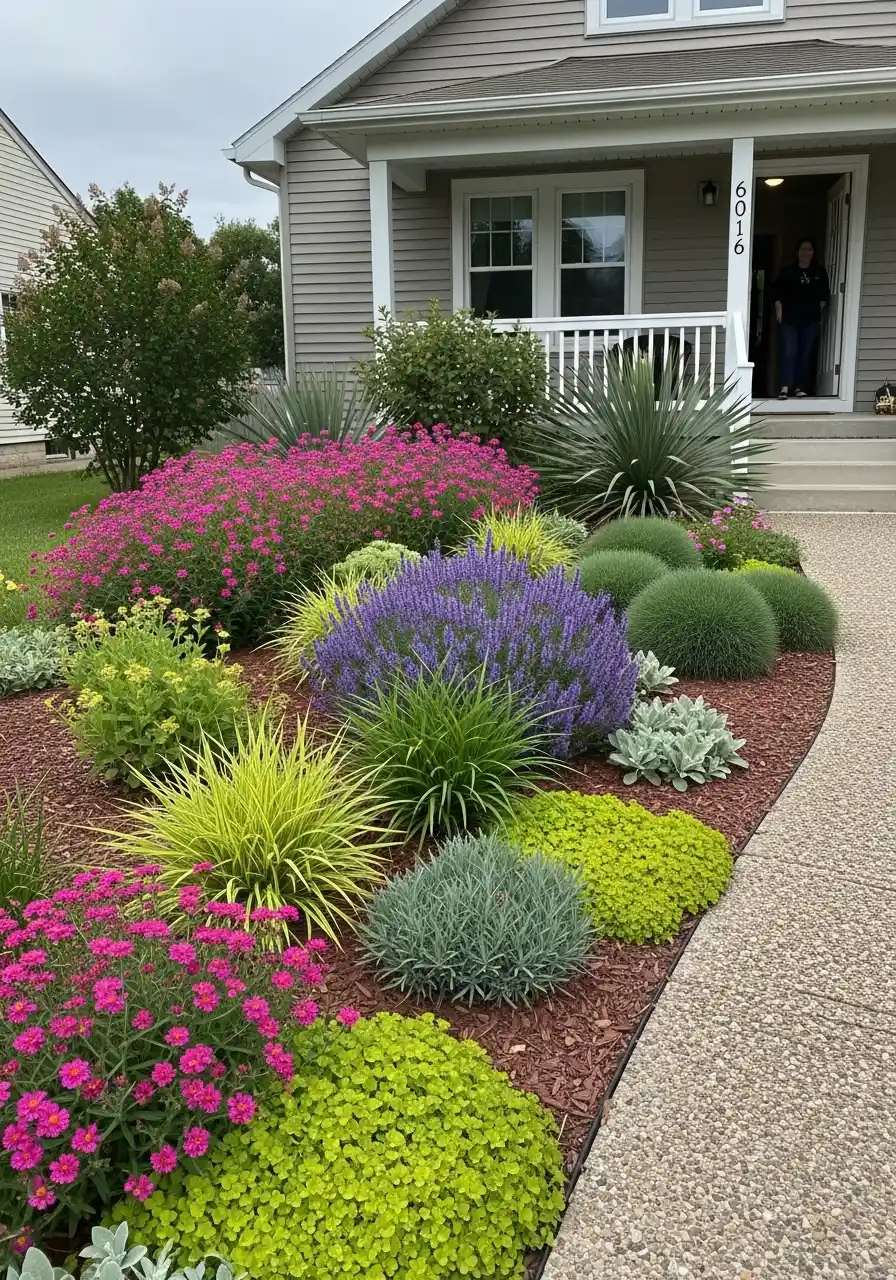
This yard is probably the most suburban-friendly of the bunch, and I mean that as praise. The mulch bed curves cleanly along the walk, the plant groups repeat, and the colors are bright but controlled. Pink blooms, purple spikes, lime green mounds, blue-gray texture plants, and rounded evergreen forms all play together really nicely. It feels cheerful, but still easy to read from the street.
For indiana native plants landscaping ideas, this layout is gold because so many people need native-friendly design that still fits a typical neighborhood front yard. This one does that. It has enough order to please people who like neat landscapes, but enough color and texture to feel alive. I’d say the lesson here is shape repetition. The rounded shrubs, upright spiky plants, and mounded perennials repeat in a rhythm. That rhythm is what makes the bed feel professional. It’s pretty, yes, but it’s also teachable. That matters.
A narrow gravel garden can still feel cozy, lush, and deeply personal
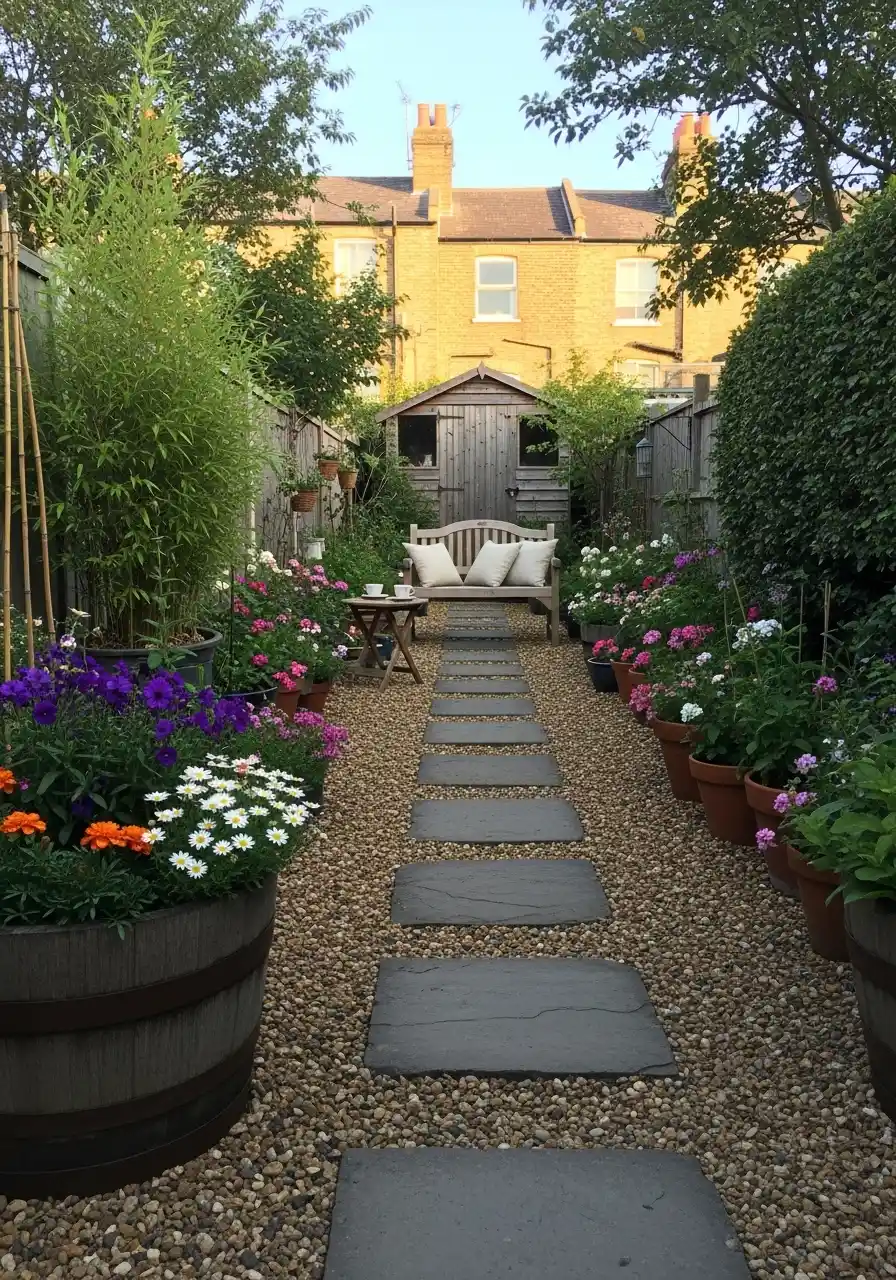
The next image shows a slim garden path leading to a bench and little shed, and I adore it. It proves a narrow space can still have soul. The gravel ground keeps it simple, the stepping stones add order, and the containers full of flowers make the space feel cared for. I also like the bench at the end. It gives the whole path a purpose, which makes the area feel bigger than it is.
Even though this is more of a side or back garden feel, it still connects to indiana native plants landscaping because the same ideas apply. Use layered planting, repeated materials, and a destination. I would mix native flowers with containers in a space like this, especially if I wanted a softer cottage feeling. The best part to me is the intimacy. Not every garden needs to show off from the street. Some can whisper a little. This one does, and that’s why I find it so charming.
A gravel path under an arbor makes the whole garden feel like a little journey
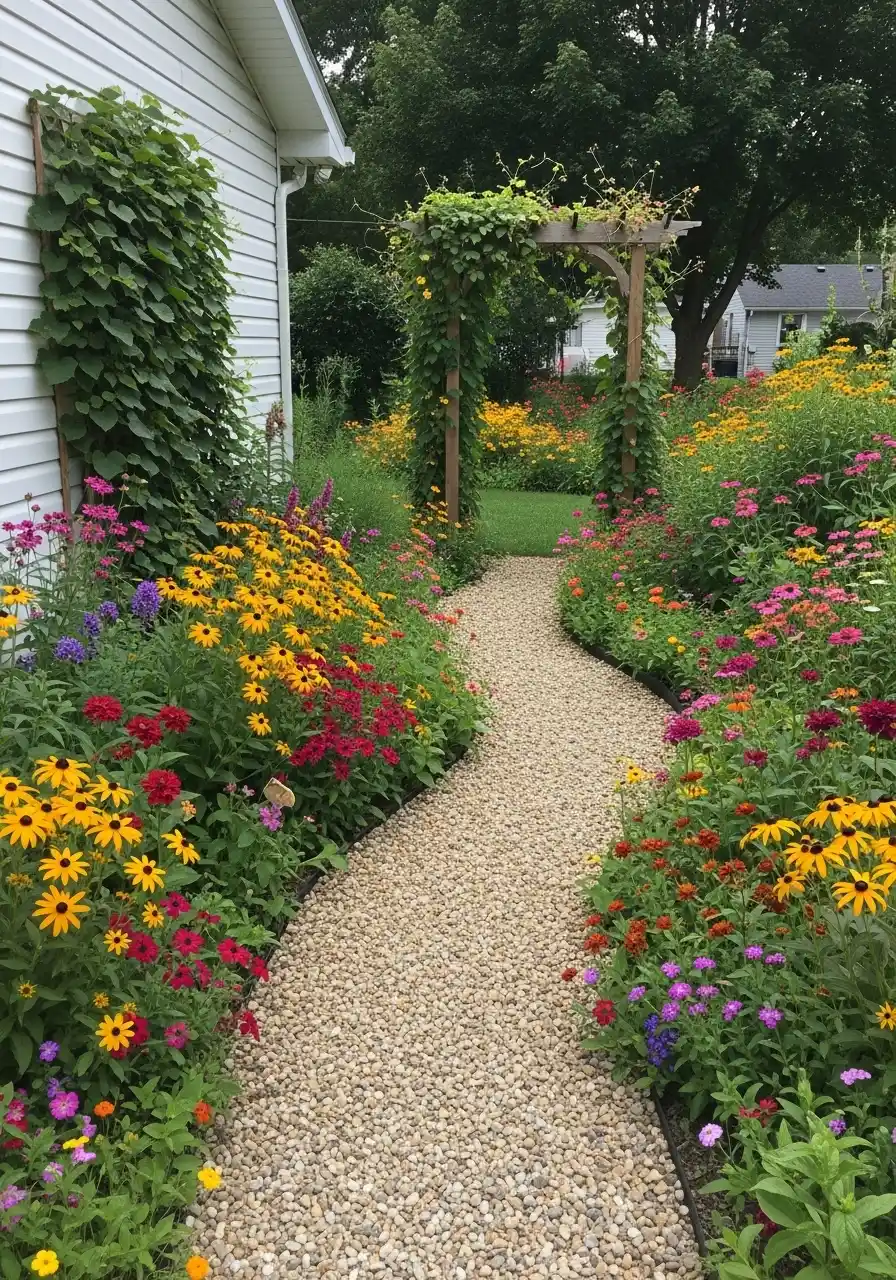
This next new garden caught me right away because the path is doing more than moving you from one spot to another. It is creating suspense. The pale gravel curves softly between thick flowers, then passes under that wooden arbor covered in vines, and it makes me want to keep walking just to see what is next. I really like that feeling. Good indiana native plants landscaping should feel alive, not flat, and this one definitely does. The yellow black-eyed Susans, pink blooms, and scattered purple flowers make the whole space feel cheerful without getting too loud.
What I would copy here is the layering and the sense of destination. The arbor matters so much. Without it, this would still be pretty, but with it, the garden feels memorable. For Indiana native landscaping ideas, this is a smart move because native flowers can get loose and abundant, and a strong feature like an arbor gives that abundance some order. I’d also keep the path narrow like this. A narrow path makes the flowers feel fuller and closer, almost like they are wrapping around you. That closeness feels warm and personal to me.
Stepping stones through mulch can make a side yard feel sweet instead of forgotten
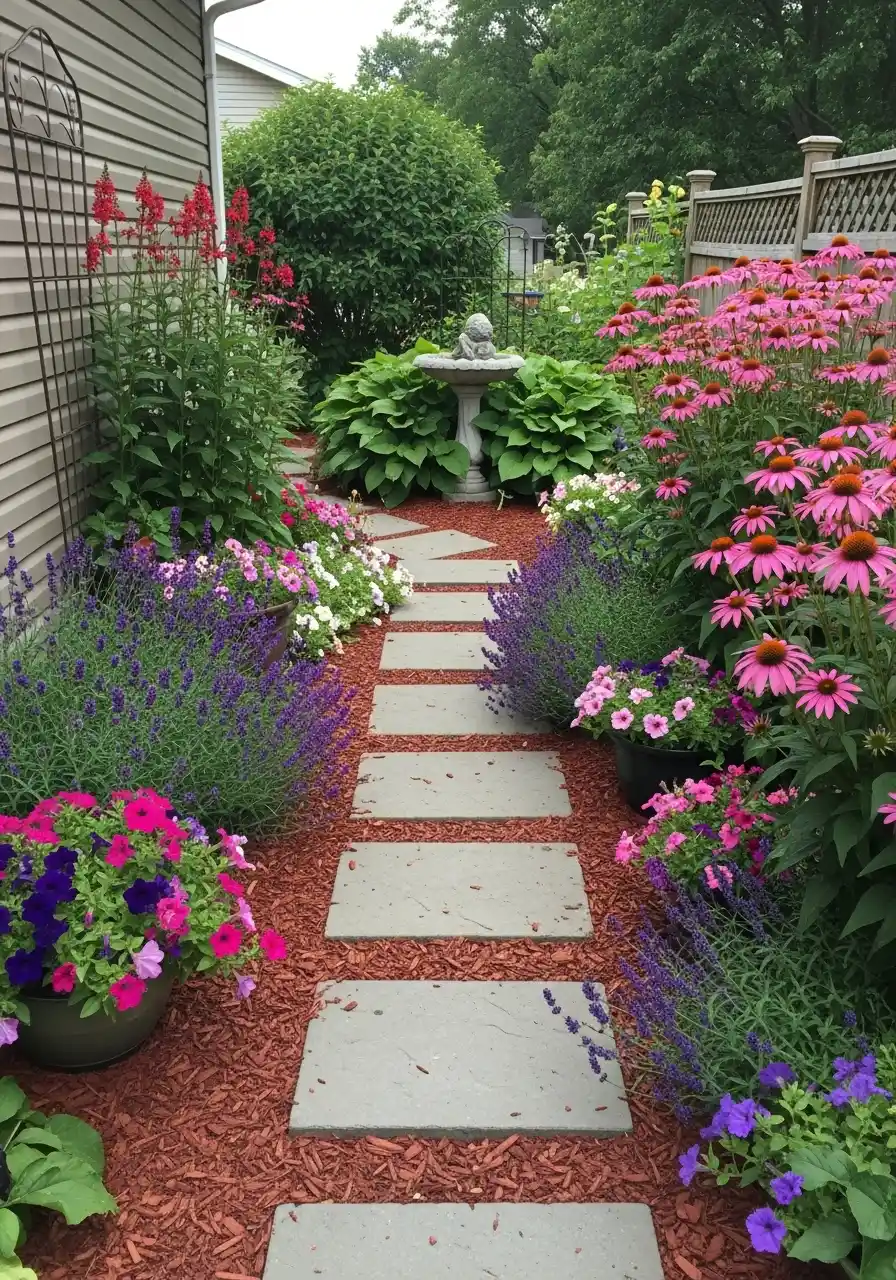
The next image feels a little more tucked away, almost like a secret side garden. I honestly love spaces like this because side yards so often get ignored or treated like storage. This one does the opposite. The square stepping stones are simple, but they bring rhythm. The red mulch gives warmth, and all those pink, purple, and white flowers soften the hard edges of the house. That little birdbath at the end is such a nice touch too. It makes the whole path feel like it leads to something gentle and worth pausing at.
For landscaping with Indiana native plants, I think this is a good lesson in making small spaces count. A side yard does not need a million features. It just needs clear steps, repeating blooms, and one focal point. I would probably use native and near-native style flowers in drifts, then let containers fill in extra color like this design does. It feels kind of old-fashioned in a nice way. Not outdated. Just cared for. That is a big difference, and I think people feel it when they walk through a garden like this.
A simple seating area surrounded by flowers can feel calm and generous
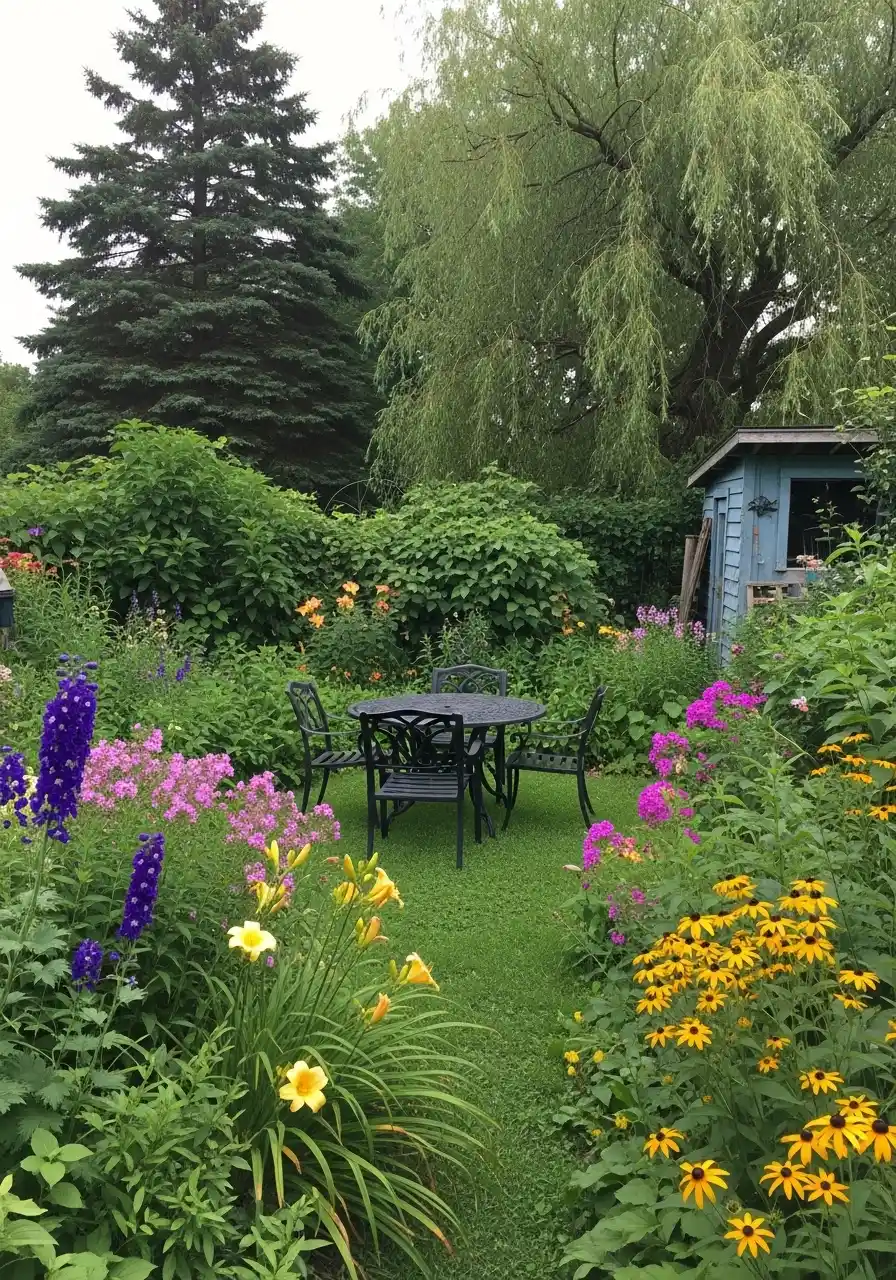
This garden has a softer, more open feeling than the others. Instead of a hard path taking over, the lawn itself becomes the path, and the flowers open around that little black table and chairs. I really like this idea because it feels usable. Some gardens are beautiful but you can tell nobody actually sits in them. This one feels like a place where you’d drink coffee in the morning or just sit outside when you are tired and need some air. The mix of yellow, purple, and pink flowers makes it feel bright, but the overall mood is still restful.
As part of indiana native plants landscaping ideas, this works because it balances wildness and space. Native flowers can spill and bloom and attract pollinators, but the lawn opening in the middle keeps the whole scene from feeling crowded. I think that is what makes it breathe. The taller shrubs and trees around the edge also help the seating area feel sheltered, which I always like. A garden should not just be pretty from a window. It should invite you in. This one does. It feels human, a little imperfect, and really welcoming.
A grass path with flowers on both sides feels relaxed and honestly kind of magical
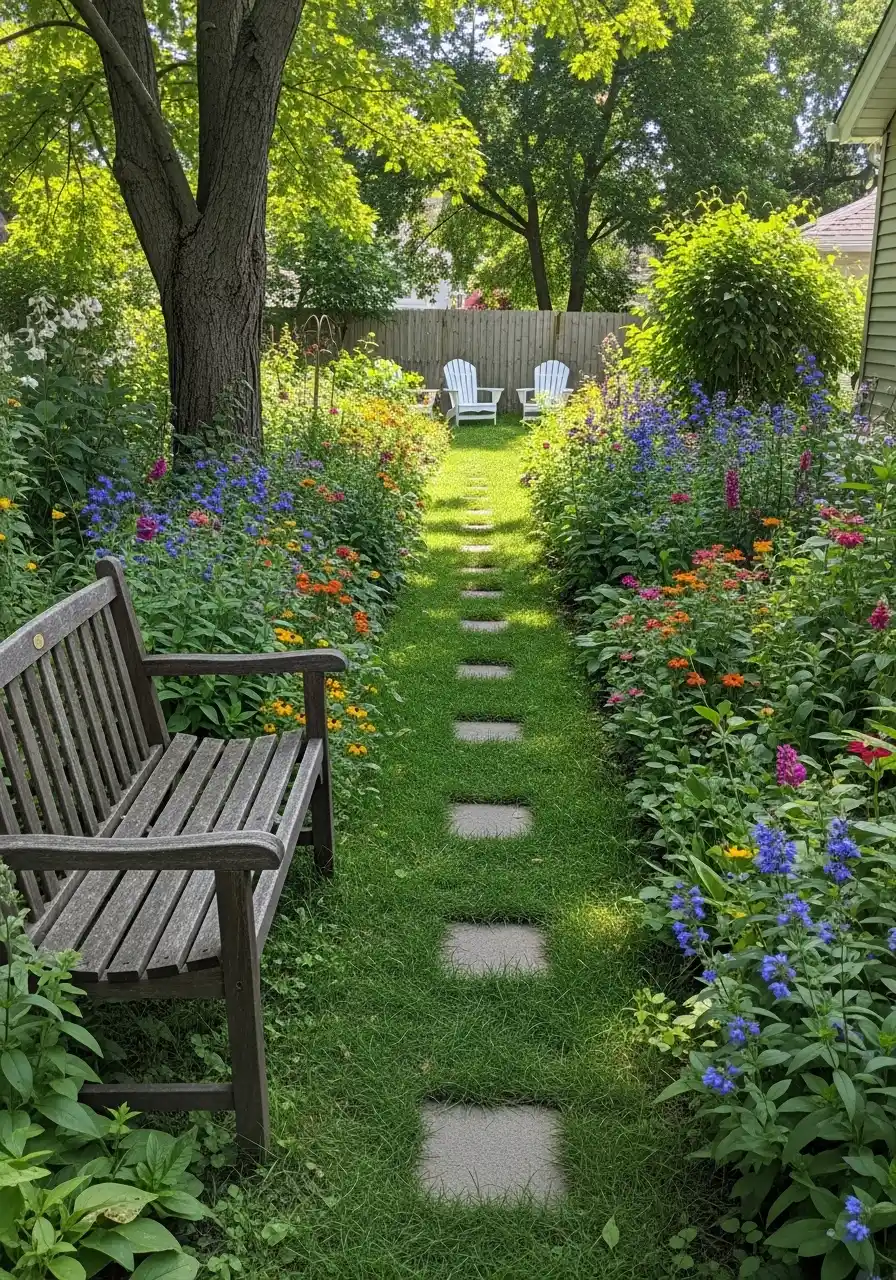
This image might be my favorite out of the new set. The grass path with evenly spaced stepping stones feels so simple, but then the flowers on both sides make it feel special. There is a wooden bench in the foreground and white chairs farther back, and that makes the garden feel layered in a very emotional way. It’s like one moment leads to the next. I know that sounds dramatic, but it’s true. Blue, orange, pink, and purple flowers all mix together, yet the straight green path keeps everything from getting unruly.
For Indiana native plant garden ideas, this is such a smart layout because it gives structure without being stiff. I think a lot of people assume structure means pavers and walls and tight hedges. It doesn’t have too. Here, the structure comes from the centered path and repeated stepping stones. That is enough. I’d use this approach in a backyard or deep side yard where I wanted a soft cottage feel but still needed a clear route through the planting. The bench is also a good reminder that gardens should have places to stop. Walking is nice, but pausing is nicer sometimes.
Bold flower drifts and a stepping stone path can make natives feel dramatic in the best way
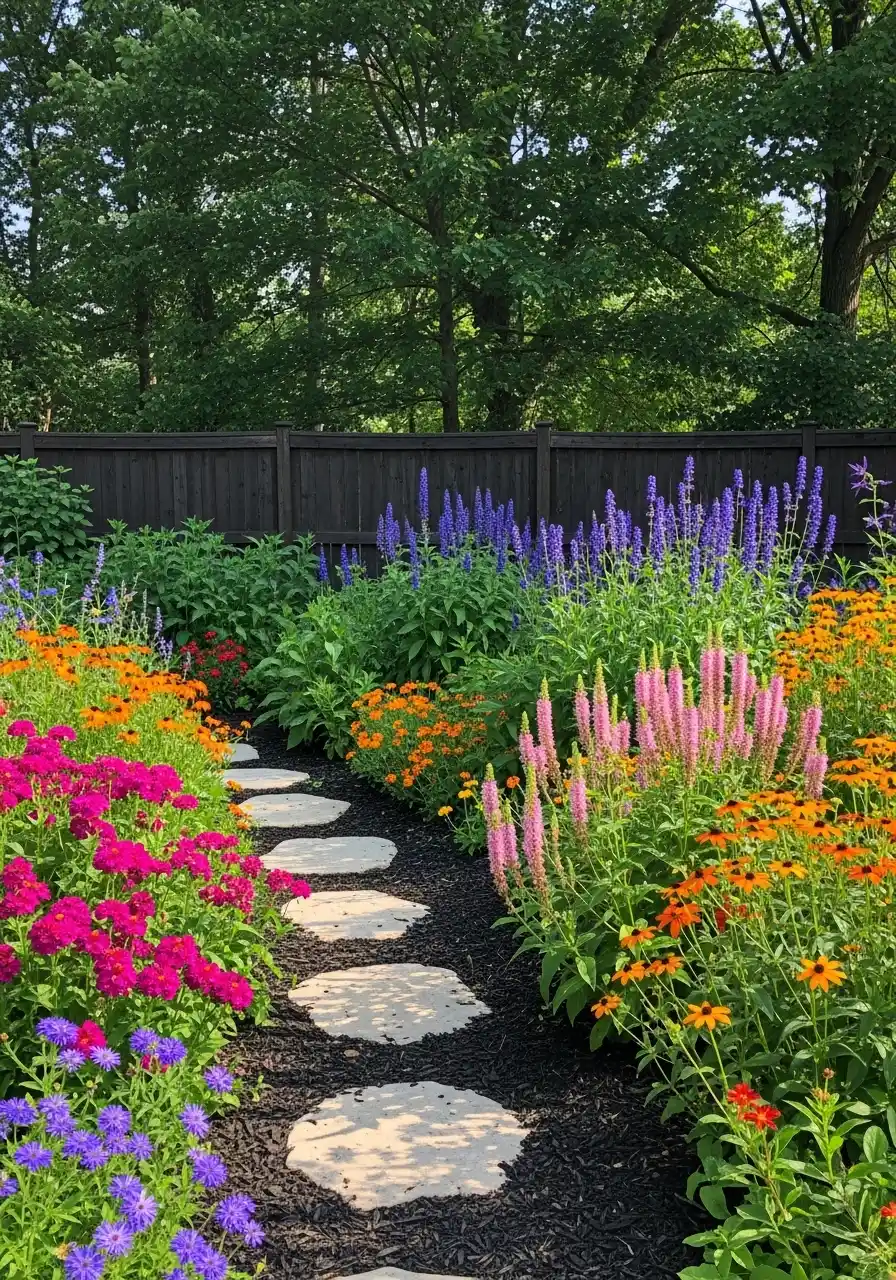
The last image feels the most colorful and theatrical, and I mean that as a compliment. Bright pinks, oranges, purples, and soft rosy spikes all gather around a curved stepping stone path, and the black mulch behind them makes every color look even stronger. This is not a shy garden at all. But what saves it, and keeps it from becoming a mess, is repetition. The path curves cleanly. The flowers are planted in noticeable drifts. The taller purple spires at the back anchor everything and stop the whole bed from feeling flat.
When I think of indiana native plants landscaping, this is one of the best examples for someone who wants curb appeal and pollinator value at the same time. It feels lush, joyful, and really intentional. I would be careful to repeat only a few big colors if I recreated this, because too many random shades would ruin the effect fast. But the basic idea is excellent. Big drifts of native style flowers, dark mulch, and a soft curved path. That combination just works. It feels vivid and alive, but still readable from the yard edge.
FAQ
What are the best plants for indiana native plants landscaping?
I think coneflowers, black-eyed Susans, asters, bee balm, little bluestem, switchgrass, and native sedges are all strong choices.
Why should I use native plants in Indiana?
They handle local weather better, support pollinators, and usually need less babying once they settle in.
Can native landscaping still look neat?
Yes, absolutely. Paths, edging, repeated plant groupings, and strong bed shapes help a lot.
Are native plant gardens lower maintenance?
Usually yes, but not zero work. They still need editing, weeding, and some seasonal cleanup.
How do I keep a native garden from looking overgrown?
Use clear borders, prune when needed, and repeat plant types instead of planting one of everything.
Do native plants attract butterflies and birds?
Yes, that’s one of the best reasons to use them. They provide nectar, seeds, and habitat.
Can I mix native plants with non-native flowers?
Yes. I think most real gardens are mixed. Just make sure the overall look still feels balanced.
What is the easiest style for beginners?
A simple border bed with 4 to 6 repeated native plants is easier than a big meadow-style design.
Do I need full sun for Indiana native plant landscaping?
No. There are great natives for shade, part shade, and sun. You just have to match the plant to the spot.
Are native grasses important in these designs?
Very. They add movement, texture, and structure, especially when flowers are not blooming.
How often should native gardens be watered?
New plants need regular watering at first. After that, many native plant landscaping Indiana gardens need less water than traditional beds.
Can native landscaping work in a front yard HOA neighborhood?
Yes, if the design has tidy edges and an intentional layout. That part matters more than people think.
Conclusion
After sitting with these images for a while, I keep coming back to the same thought. The best indiana native plants landscaping does not feel forced. It feels honest. It feels like the plants belong, like the path belongs, like the birds and butterflies were considered from the start. That kind of beauty hits different, at least for me.
If I were reworking my own space, I would steal bits from all ten. The gravel path from one, the pollinator flowers from another, the shady bench idea, the structured stone tiers, the simple suburban curve, all of it. That’s what makes Indiana native landscaping, landscaping with Indiana native plants, and other Indiana native garden design ideas feel so useful. You do not need one perfect model. You just need the right pieces, a little nerve, and a willingness to let the garden feel alive instead of overly controlled.