I’ll be honest, the first time I tried a garden rock border, I thought it would be “just put rocks down and done.” Nope. Rocks have moods. They roll, they sink, they lean, and sometimes they look perfect… then a heavy rain laughs at you. Still, that’s why I keep coming back to rock edging and stone borders. When it’s done right, it makes the whole yard look more “finished,” like you actually meant to do it.
And these 18 looks you shared? They’re not just pretty. They’re practical. Some are neat and clean, some are wild and cozy, and a couple are the kind of border that makes neighbors slow down and stare.
Table of Contents
Garden rock border : River stones that hug a curvy flower bed
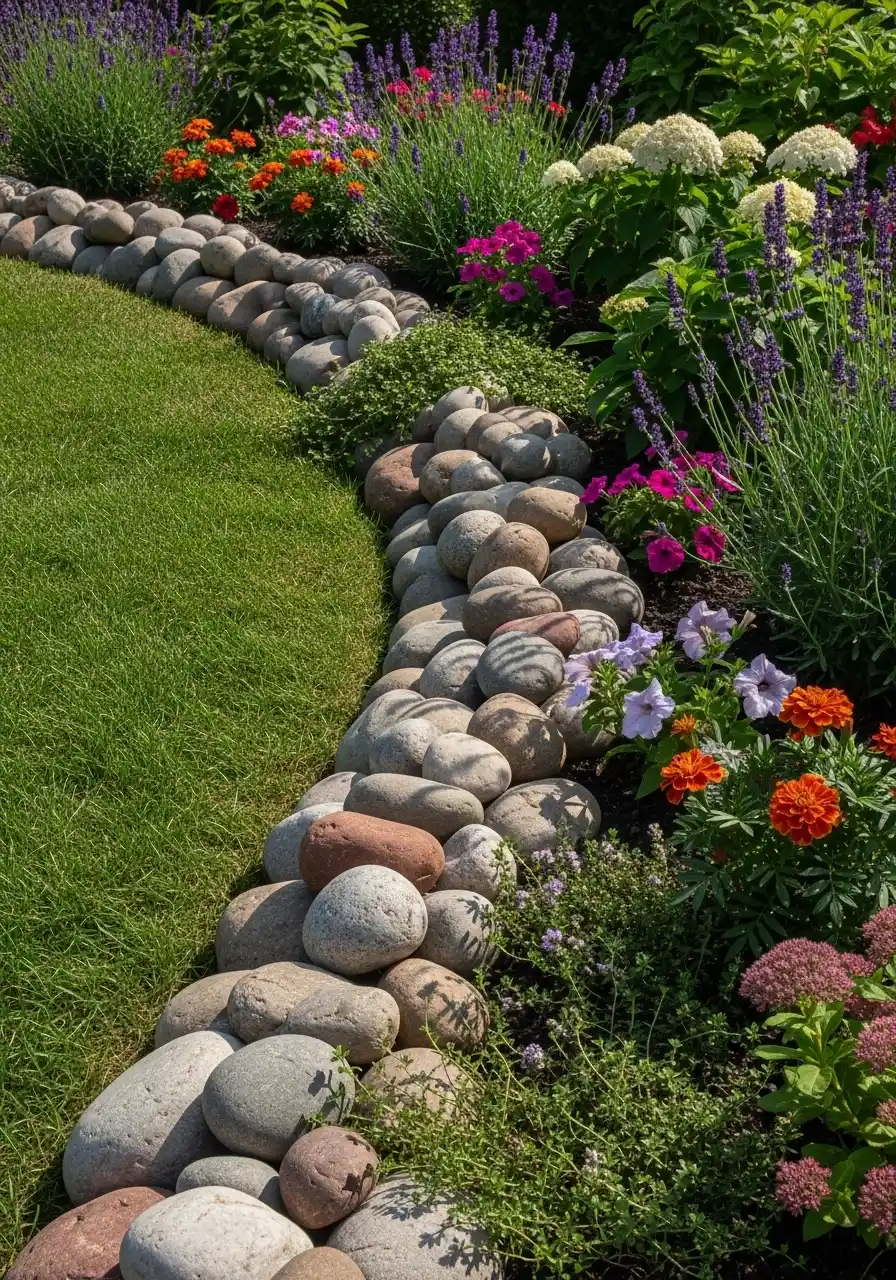
This style is the classic garden rock border with smooth river stones stacked like a soft little wall. In the photo, the rocks follow the curve like they’re tracing the bed’s shape, and that’s what makes it feel natural. The trick is using medium-to-large rounded stones at the bottom, then smaller ones on top to lock gaps.
I’d do a shallow trench first, like 2–4 inches deep, and tamp the soil so it’s firm. If you skip this part, the stones slowly sink and your rock edging looks tired after a season. I learned that the annoying way.
For planting, this border loves color. Bright annuals near the edge look extra poppin’ because the neutral rocks calm everything down. If you want it to stay clean, leave an inch of space between mulch and the stones. Mulch touching rock tends to creep and stain.
White pebble “moat” beside the house
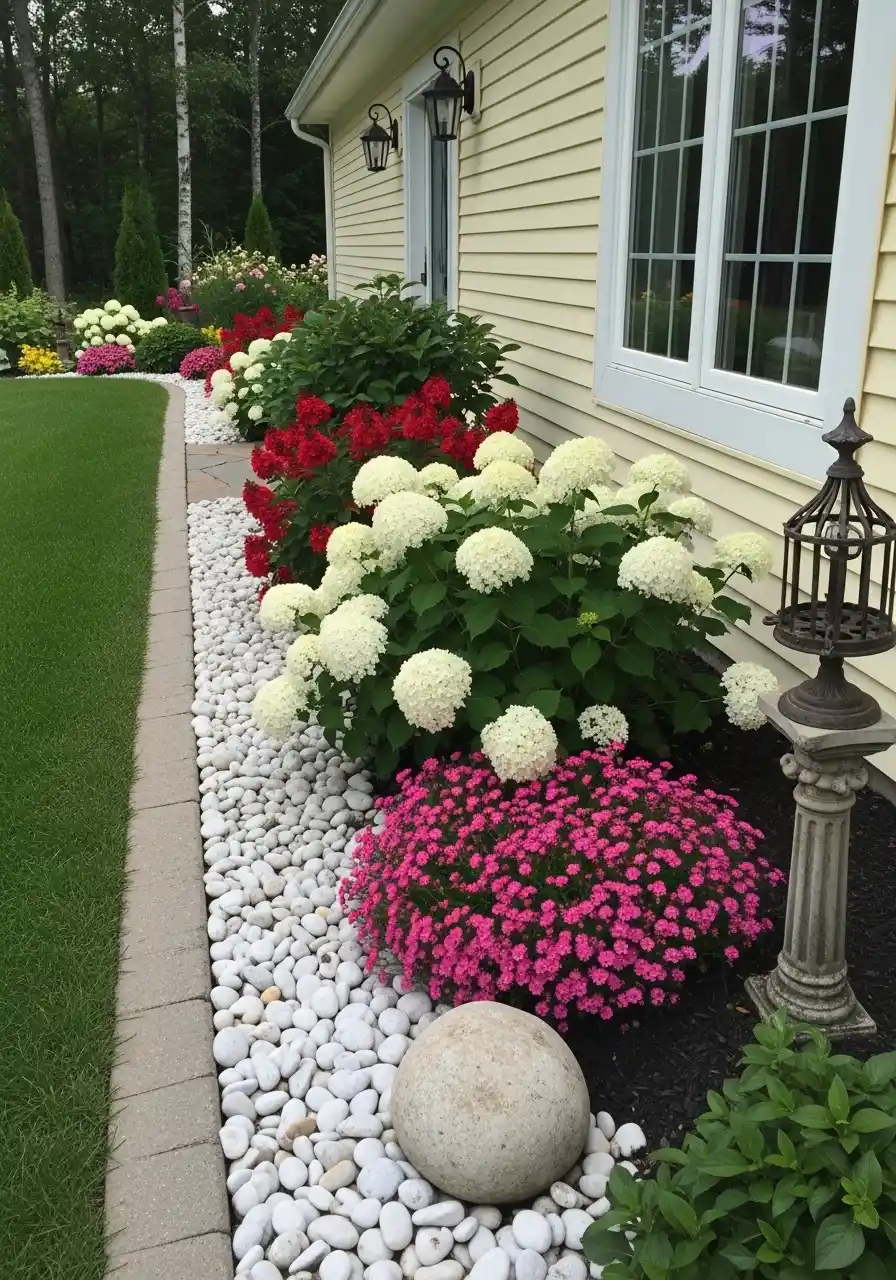
This one is a crisp, modern stone border look: a wide strip of white pebbles with shrubs and flowers popping out of dark soil. It’s basically a clean line between lawn and foundation, and it makes the yard feel fancy without trying too hard.
But here’s my little confession: white rocks are kind of high-maintenance. They look amazing… until leaves, dirt, and mulch bits show up like uninvited guests. If you want this to stay bright, put landscape fabric down (not the cheap flimsy kind), and add edging on both sides so pebbles don’t scatter into the grass.
A hack I love is mixing in a few larger accent boulders. One big stone in the foreground makes the whole bed look “designed,” not random. And keep a blower or stiff rake handy, because you’ll be cleaning it, yep.
Big boulder edge that looks like it grew there
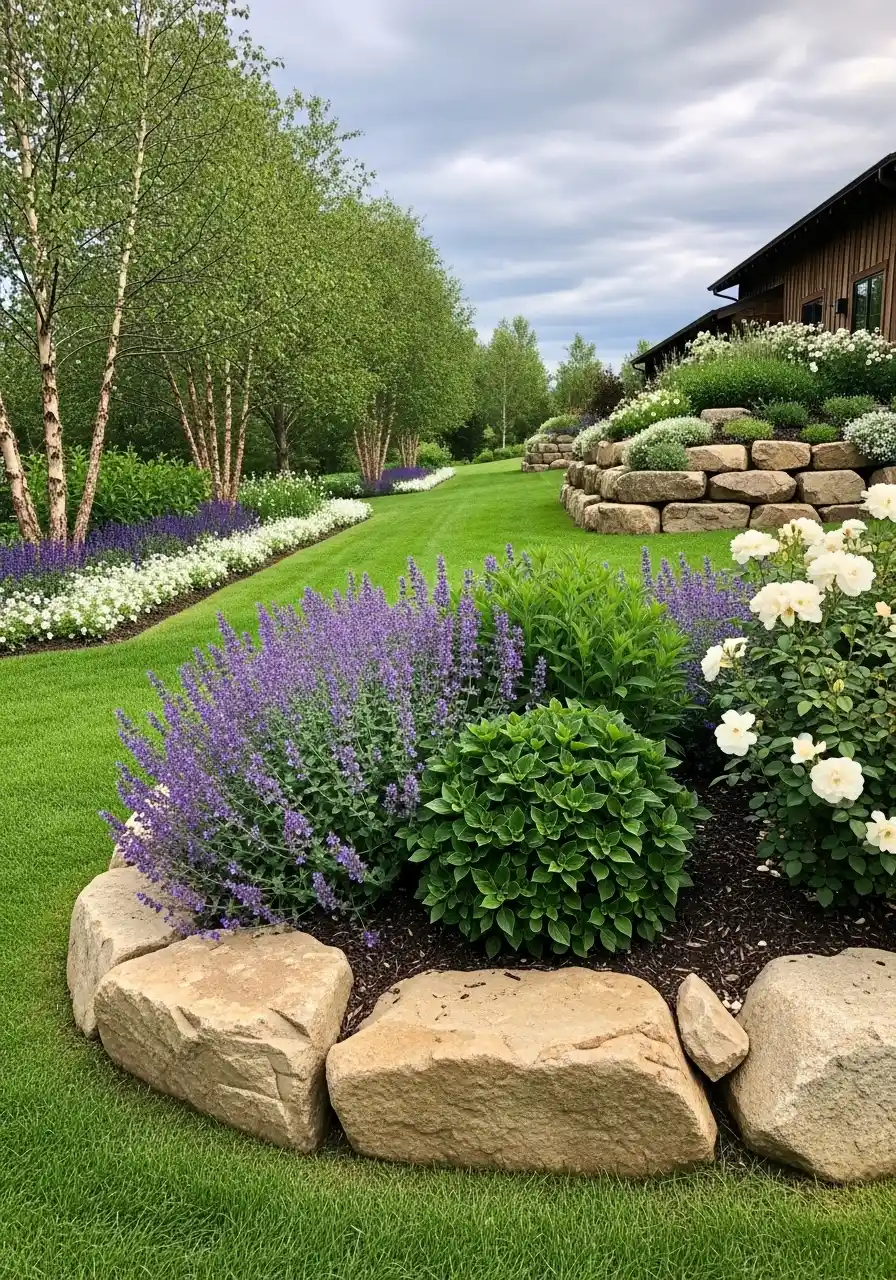
This is the bold cousin of a garden rock border. Instead of lots of small stones, you use a few chunky boulders. It’s strong, simple, and it makes plants look more dramatic, especially purple spikes and round shrubs like in the image.
The main rule is: don’t line boulders up like soldiers. Nature doesn’t do that. Rotate them, bury about one-third of each boulder, and vary sizes. When all boulders sit on top of soil, it screams “placed yesterday.”
Planting-wise, I like soft plants near hard rocks. Think low groundcovers or mounding flowers that spill over the stone edging. And if you’re worried about mowing, keep the boulders just far enough from the grass edge so your mower wheels don’t keep banging them. That sound drives me nuts.
Tiered raised beds with timber and stone vibes
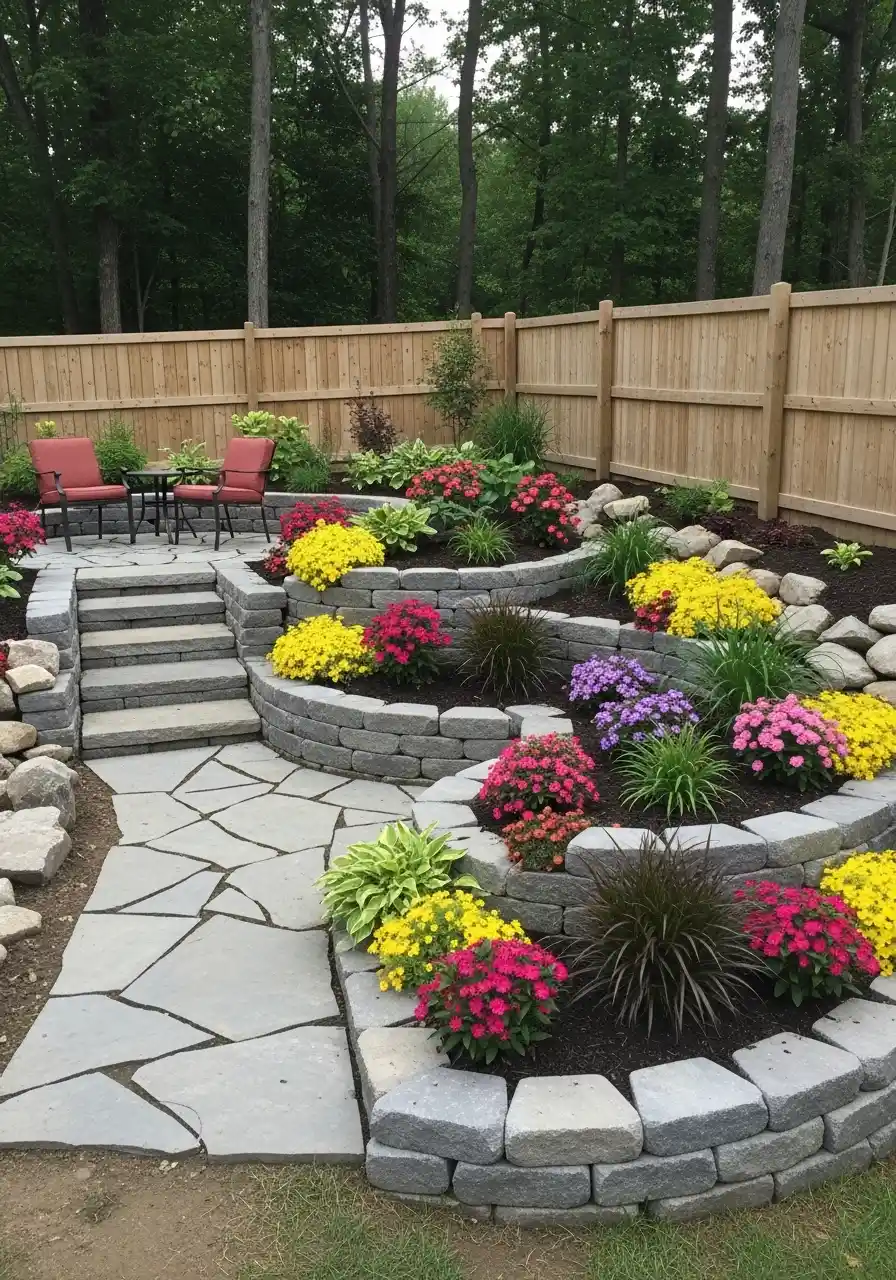
This photo shows a terraced slope with raised beds, and the border feel comes from clean, structured edges. It’s not a loose rock edging, it’s more like “organized layers,” which is perfect for hills that love erosion.
If your yard slopes even a little, this idea is honestly a lifesaver. Each tier slows water down so soil stays put. For stability, anchor timbers well, and backfill with gravel behind the boards if you can. That keeps water from pushing the wall outward over time.
To tie it back into a garden rock border look, you can add a small rock strip at the front of each tier. Even 4–6 inches of stones gives it texture. And plant in repeats: white blooms in one tier, purple spikes in the next. Repeating plants makes terraces look calmer and not messy.
Curved block retaining rings for a patio garden
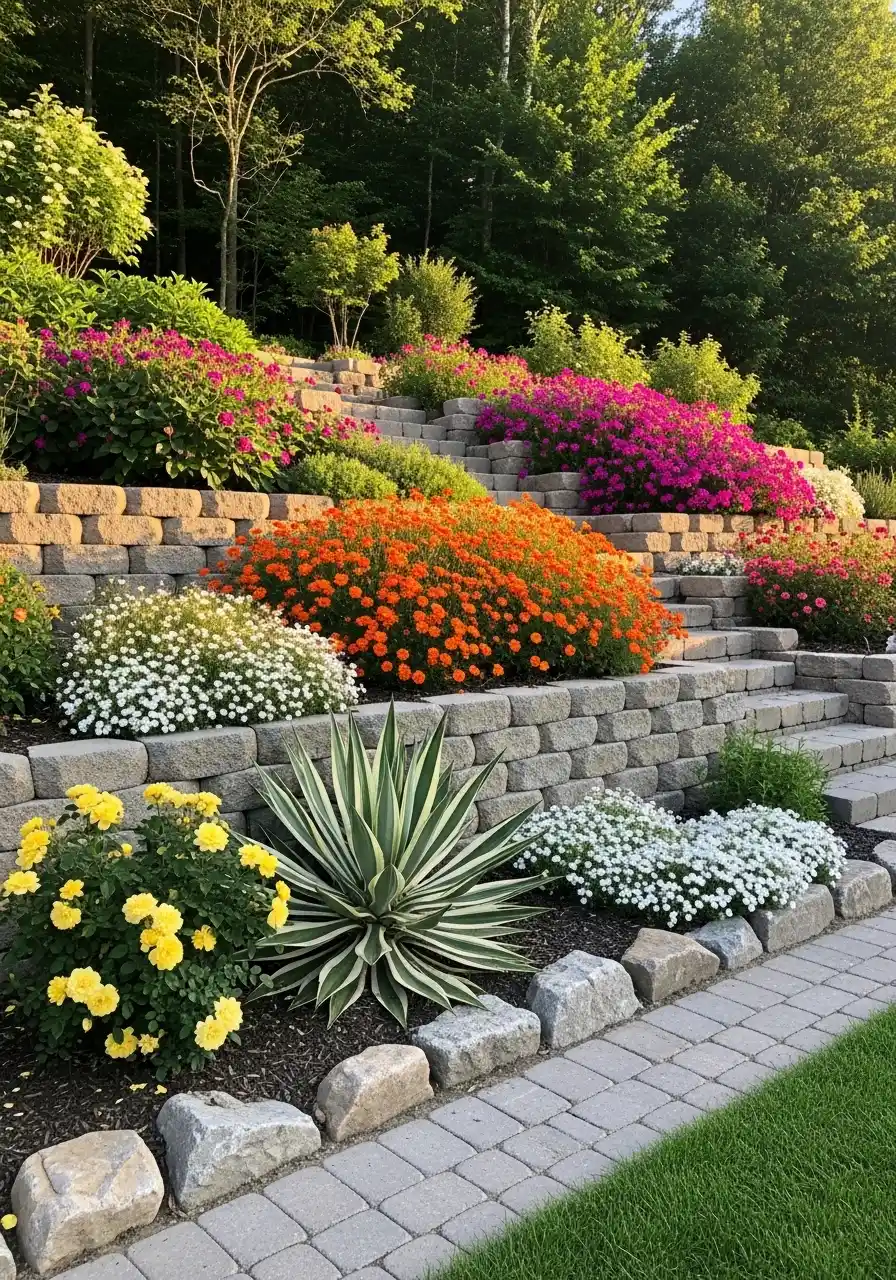
This one is like a backyard “hangout garden.” Curved retaining wall blocks create raised rings, and they act as both border and structure. It’s technically block edging, but it still counts as a rock/stone border vibe because it’s masonry and weighty.
I love this design because it’s friendly. The curves soften everything, and you get built-in places to tuck flowers. If you’re building it, start with a compacted gravel base. If your base is sloppy, the blocks will shift, and you’ll stare at it every day like “why is that leaning.”
Planting tip: use taller plants toward the back ring and low plants on the front ring. Add a few ornamental grasses for movement. And leave a little pocket space for seasonal color so you can swap things without redoing the whole bed. This kind of stone edging makes even cheap plants look expensive.
Stacked stone edging in a cottage-style front bed
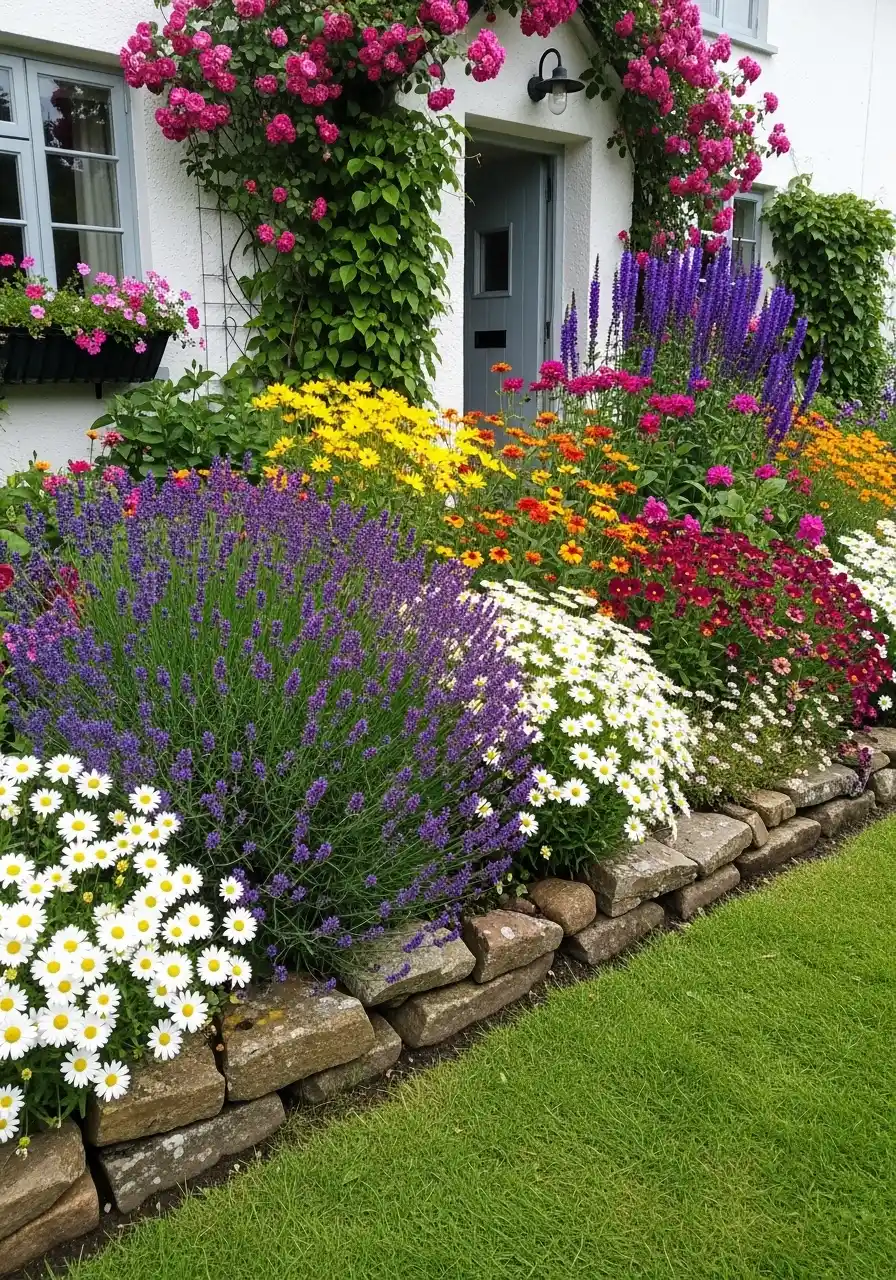
This is the cozy one. A stacked stone border, slightly uneven, with lush flowers packed behind it. It feels like a home that’s loved, not just decorated. The stones aren’t perfect rectangles, and that’s the charm.
To make this work, pick stones that are flat-ish so they stack safely. If you want it to last, set the first layer half-buried and level. It sounds boring, but level matters. Otherwise the border gets wavy in a bad way, not a cute way.
My favorite trick here is planting “spillers” right at the edge. Creeping plants soften gaps and make the stacked stone border look older than it is. And if you want less weeding, fill tiny cracks with gravel. Gravel in the cracks is way better than letting weeds move in like they own the place.
Clean-cut stone blocks as a straight lawn edge
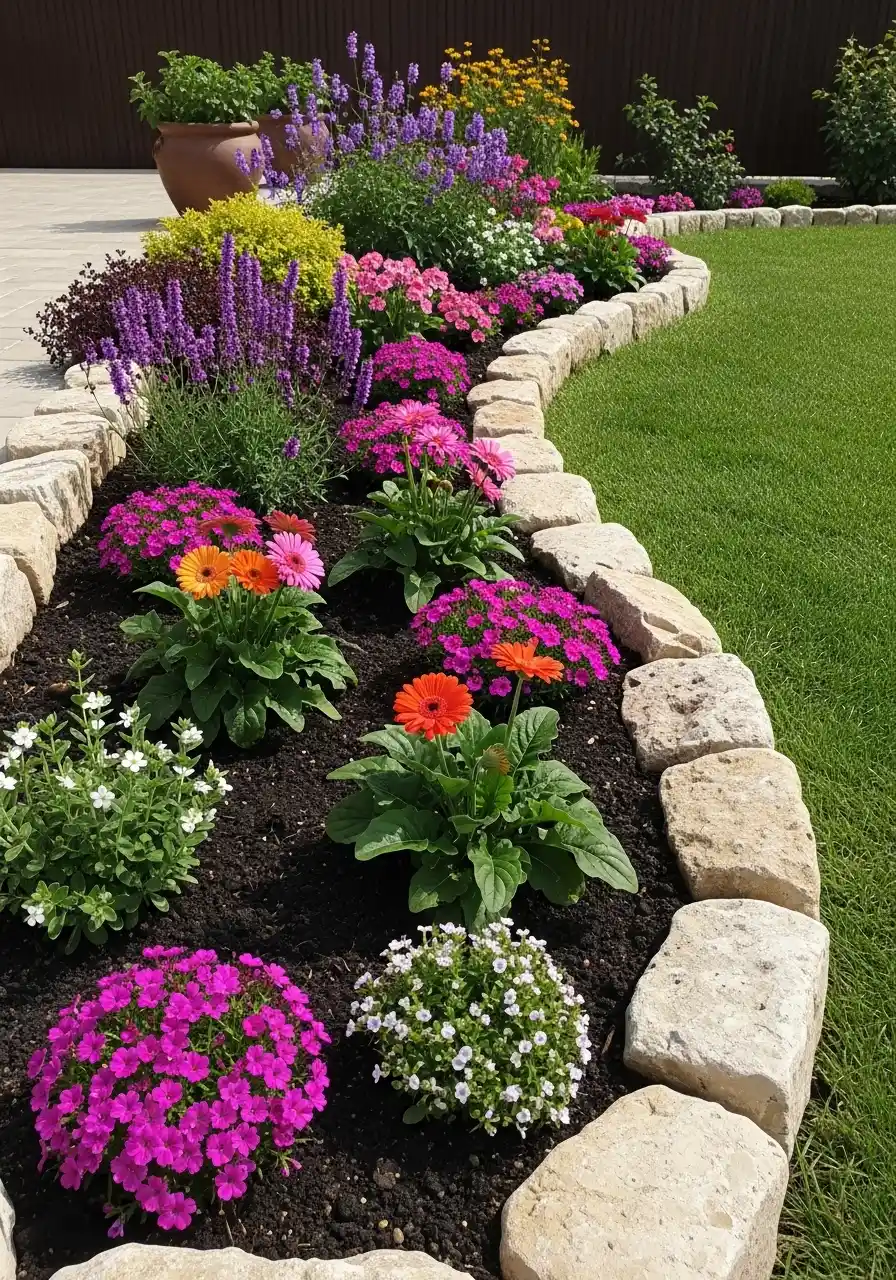
This is the neat freak’s dream. Big rectangular stones create a crisp line between grass and flowers. It’s a sharper stone border than river rock, and it fits modern houses really well.
The key is spacing and level. Keep the top edges even so it looks intentional. You can sink the stones so they sit just above grass height, which makes trimming easier. Honestly, a border that helps mowing is my kind of border.
For plants, this style looks best with big color drifts. Like one chunk of pinks, one chunk of yellows, one chunk of purples. When flowers are scattered randomly, the clean stone edging feels too strict. Also, put mulch slightly lower than the top of the stone. If mulch sits higher, it spills onto the lawn and ruins the tidy line.
Rounded rock edge along a walkway curve
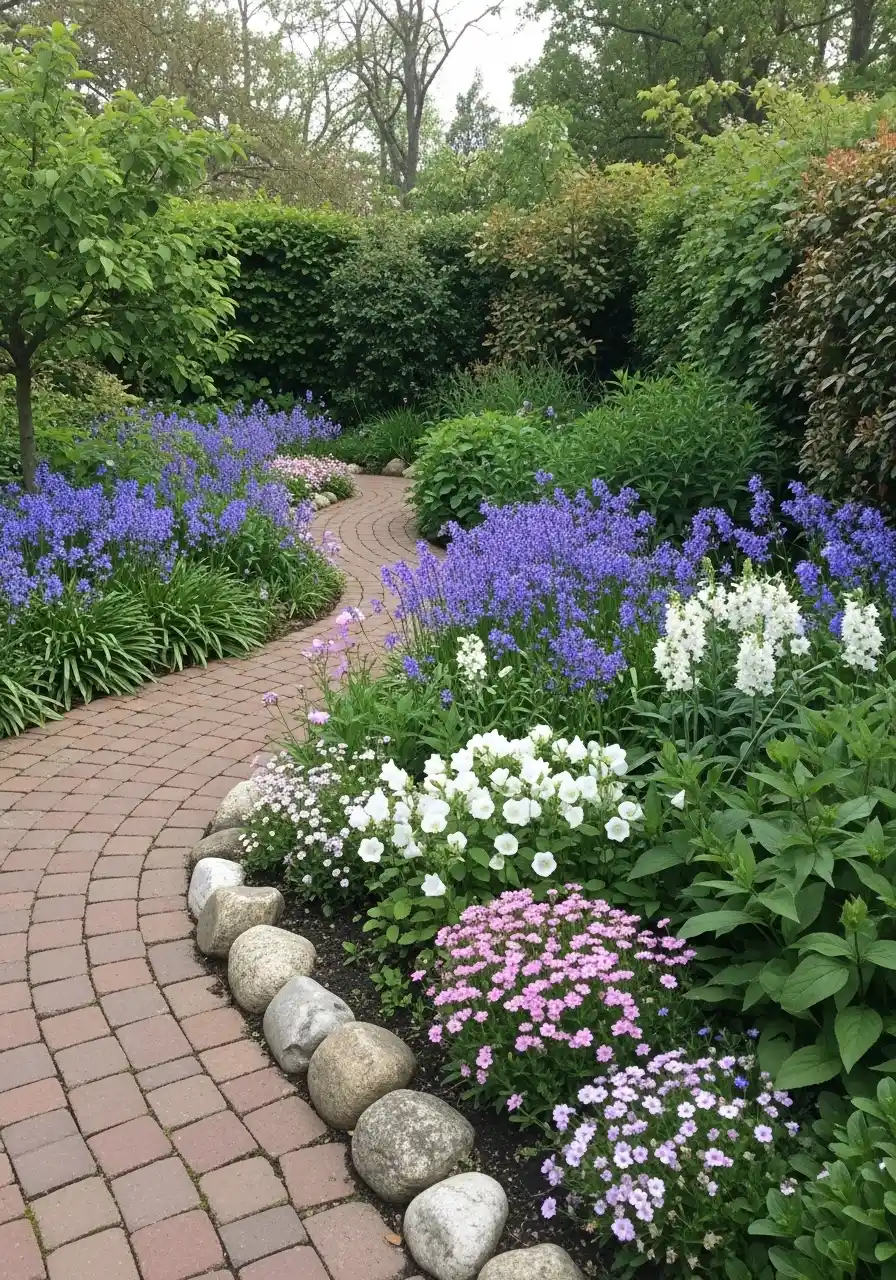
This image shows a curved path with rounded stones marking the bed edge. It’s a simple garden rock border that works because it matches the curve of the walkway, and curves feel relaxing. Straight lines feel formal. Curves feel like you can breathe.
To build it, I’d lay a hose on the ground first to sketch the curve. Then dig a trench right along it so stones sit in place. If you just place rocks on top of grass, they’ll shift and your nice curve gets weird over time.
Plant a mix of textures here. Tall purple flowers in the back, fluffy white blooms mid, and small pink clusters up front. This is also where river rock edging shines because it handles foot traffic vibes. People walk near it, dogs sniff it, kids step on it. Rounded rocks don’t chip like brittle stone.
Mixed-size boulders for a shady perennial bed
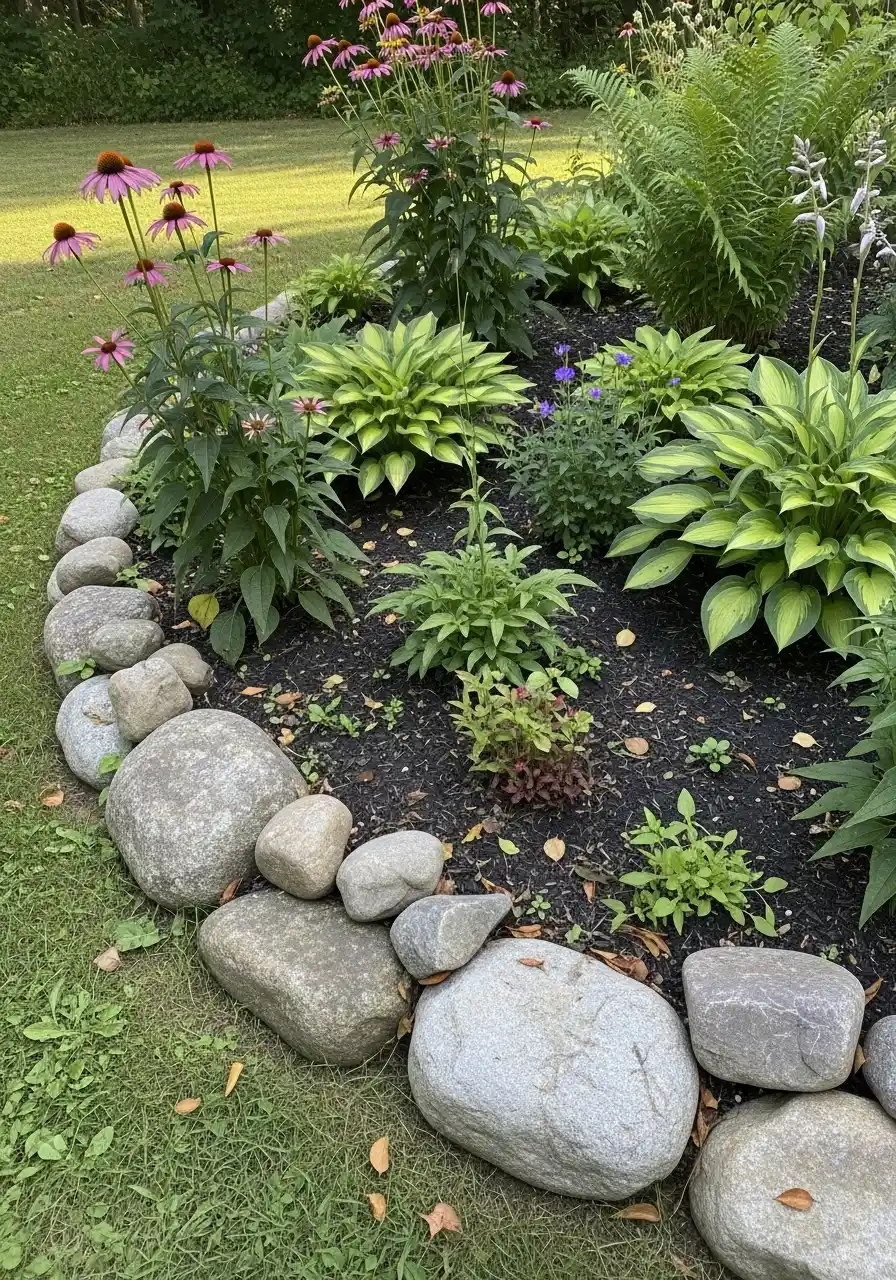
This one feels calm. Bigger stones anchor the border, smaller stones fill gaps, and the plants are mostly greens with a few tall flowers. It’s not screaming for attention, it’s more like “quiet confidence.” I’m kinda obsessed with that look.
For shade beds, rocks help define shape because shade plants can be… floppy. Hostas, ferns, and friends love wandering outward. A chunky rock border keeps things in bounds without feeling like a fence.
A good hack is to keep the largest boulders at corners and curves, because that’s where soil washes out first. Then tuck smaller stones between. Also, don’t be afraid of moss and leaf litter here. In shade, a too-clean border looks fake. Let it get a little natural. That’s the whole vibe of this kind of garden rock border anyway.
Stone edging paired with lights for nighttime charm
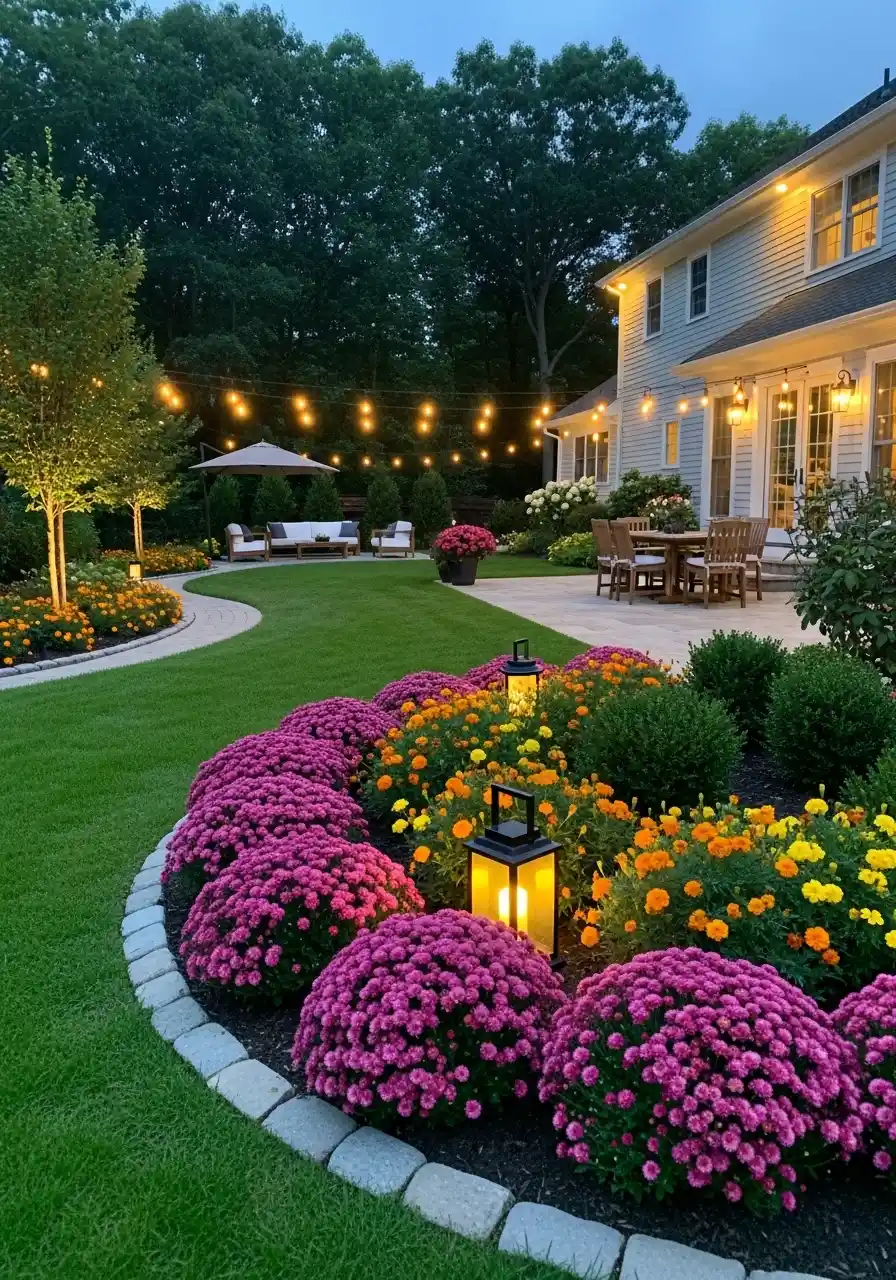
This next look is a whole mood at night. A tidy stone edge frames a curved bed, and the lighting makes it feel like a backyard you actually want to sit in. It’s not just border for looks, it’s border plus atmosphere.
If you want this, keep your stone edging consistent. Either all similar blocks or all similar rocks. Mixing too many styles gets chaotic fast. Then place low landscape lights so they wash across plants, not straight up into people’s eyes. I’ve seen that mistake and it’s like, why are we spotlighting ankles.
Planting tip: choose some flowers that hold shape at dusk, like mounding blooms and shrubs. Tall thin flowers disappear at night. And use dark mulch so the lights make the plants “float.” This is one of those garden rock border setups that feels expensive, even if it wasn’t.
Garden rock border with stacked blocks for a tidy front entry
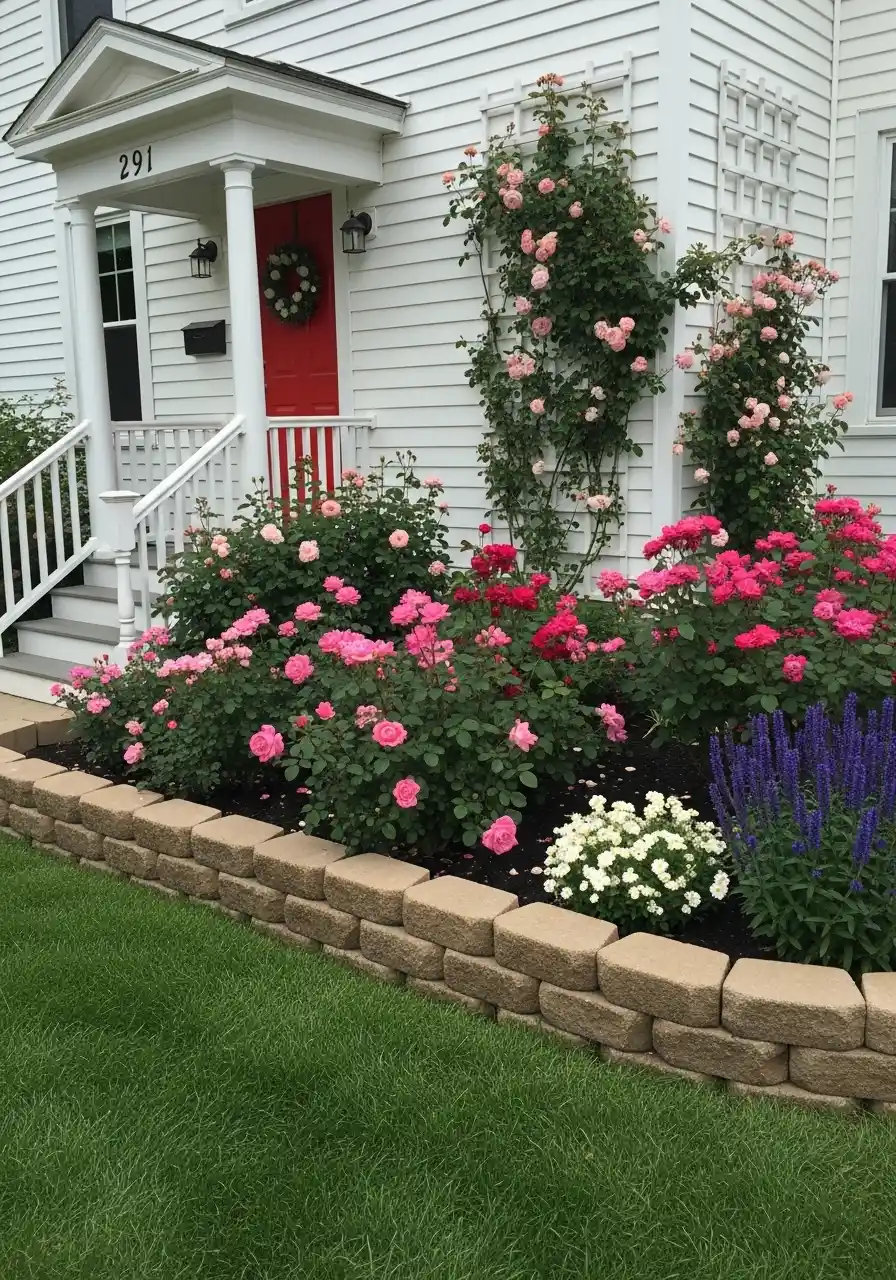
This first idea is the “welcome home” setup. In the photo, the front bed is held in place with stacked tan blocks, and it makes the roses look even more fancy. I like how the border is not trying too hard, but it still feels polished. It’s the kind of garden stone border that makes guests think you’re organized, even if your junk drawer says otherwise.
If you want this look, keep the curve gentle, not wiggly. Lay the first row of blocks on a packed base (even just compacted soil + a thin layer of gravel helps). Then stack the second row like bricks, so the seams don’t line up. My little hack: spray the bed line with marking paint first, because “eyeballing it” always lies to me.
Curved rock edging along a fence packed with bold color
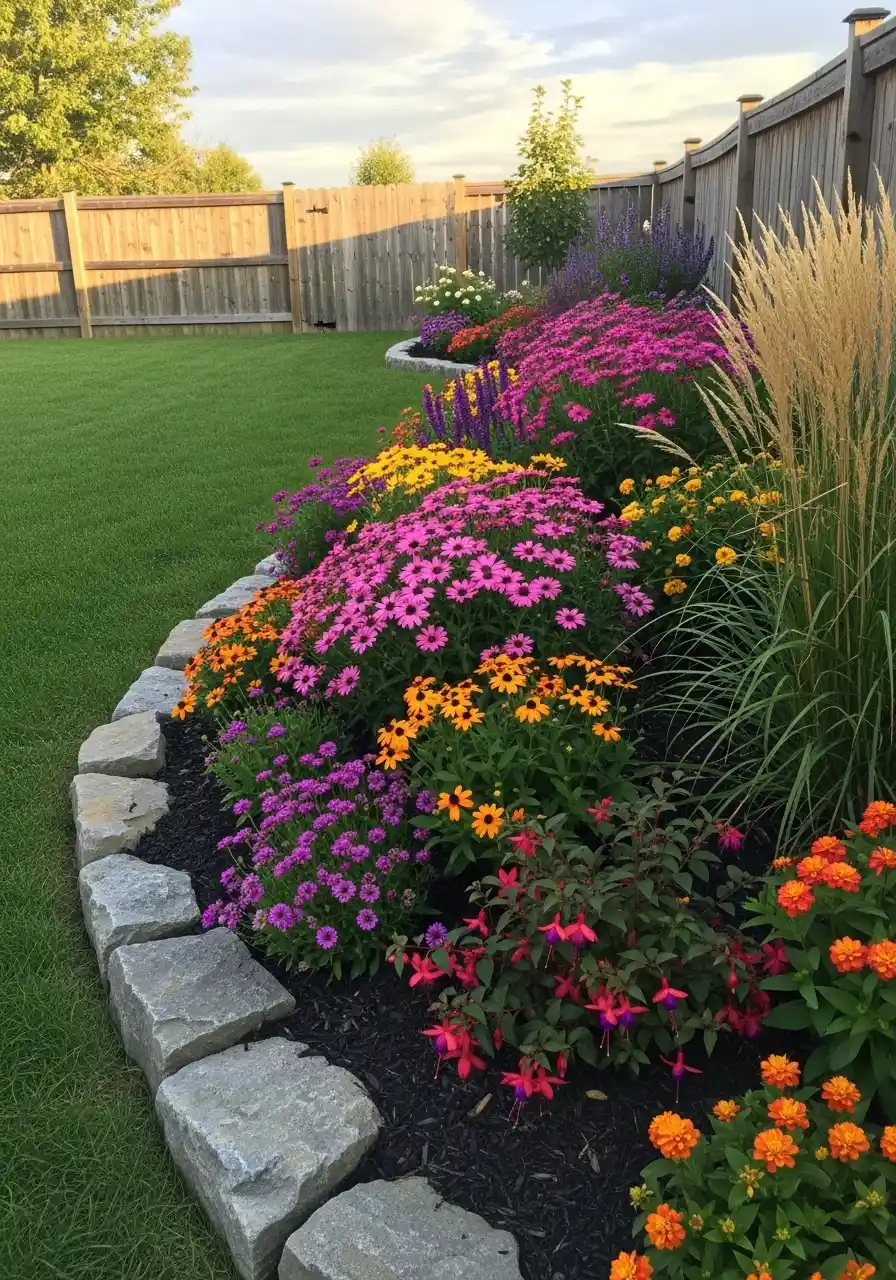
This one is loud in the best way. A sweeping curve of big stones hugs the lawn and guides your eyes down the fence line. It’s basically a rock garden border that also works like a garden path without being a path. And the flowers are layered like a rainbow, which sounds cheesy, but it works.
To copy it, start with the stones first. Put the largest rocks on the lawn edge and slightly bury them so they don’t wobble. Then plant in “waves” of color. Taller stuff goes in the back near the fence, shorter blooms toward the front so nothing gets hidden. Also, don’t mix 40 flower types. Pick like 6–10 and repeat them, or it can look messy fast. I learned that the hard way, sigh.
Painted stone walkway idea with flowers on both sides
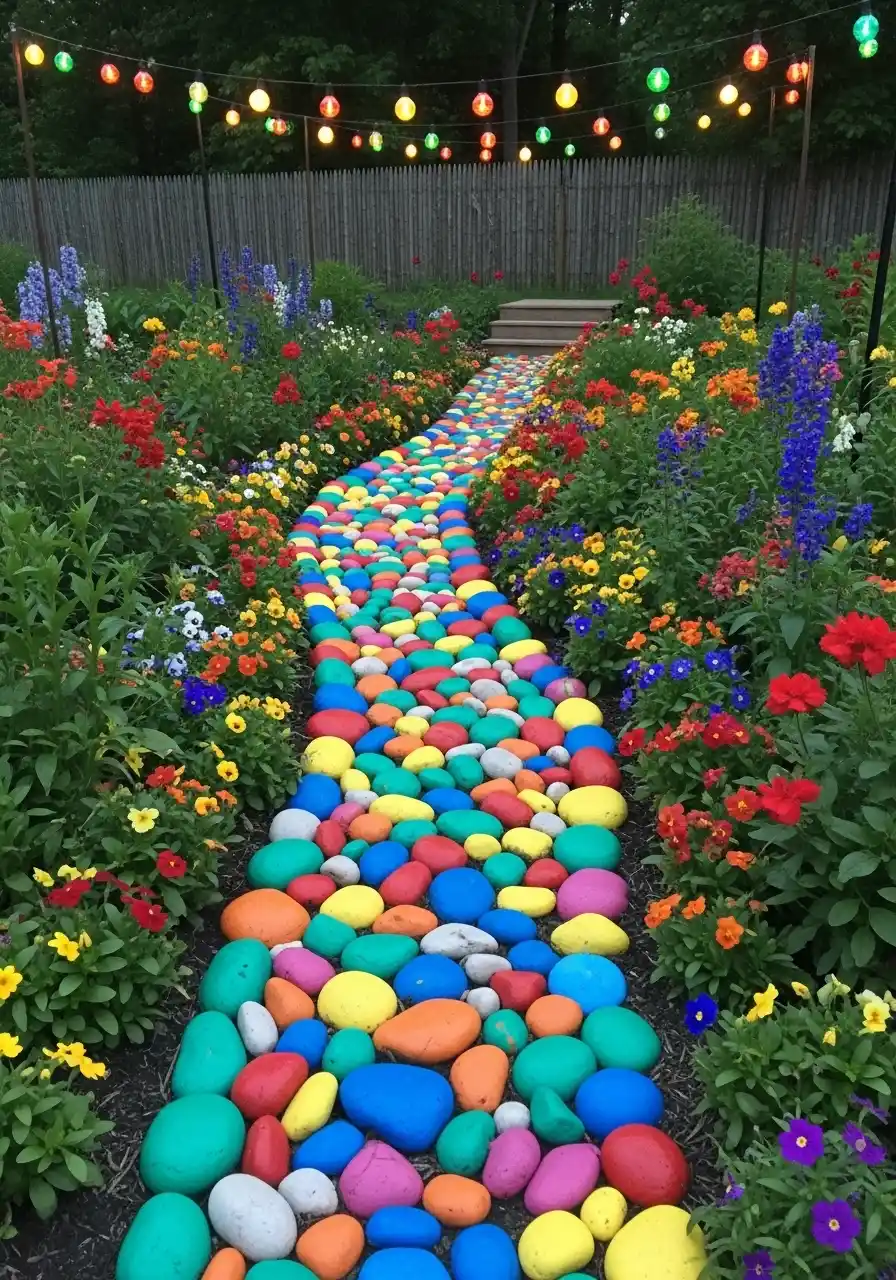
Okay, this one is playful, almost like a kid’s dream yard. The walkway is made of painted stones in bright colors, and the garden beds on both sides are packed with blooms. It’s not subtle, and honestly that’s the whole point. If you want a yard that makes people smile, this is it. A garden rock border can be serious, but it can also be fun and a little weird.
The trick is keeping the painted stones from sinking. Set them into a shallow base of compacted sand or fine gravel, then lock the sides with edging stones. Use outdoor masonry paint and seal it, or the colors will fade quick. And yes, you’ll be repainting some stones later. That’s part of the charm… like, it’s imperfect on purpose, kinda.
Straight garden stone border beside the house for a clean “lined up” feel
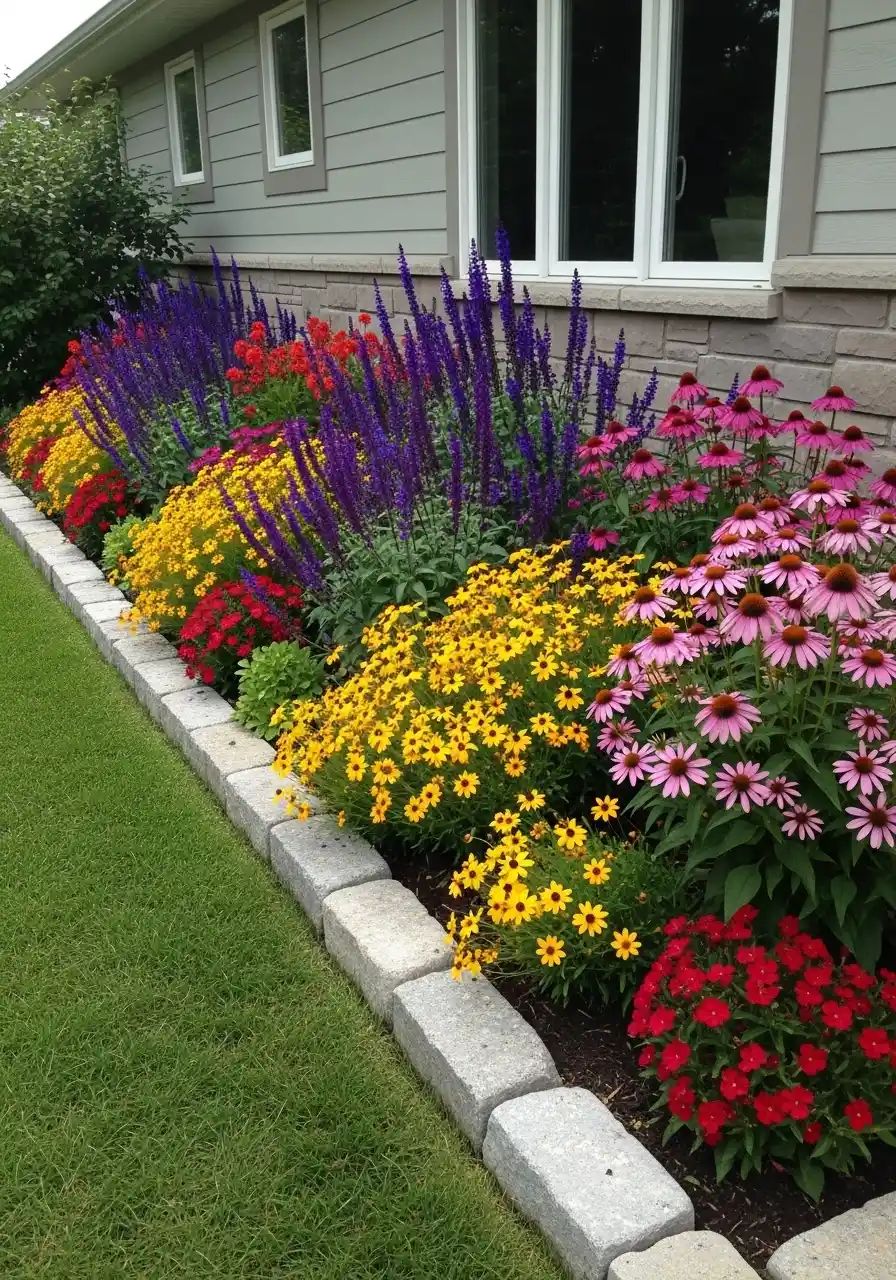
This photo is the neat-and-proud style. A straight garden stone border runs along the house, and the flowers are planted in blocks of color: purple spires, yellow mounds, pink coneflowers. It feels organized, like someone who labels their pantry jars. I don’t do that, but I admire it.
To build this, use uniform stones and keep them level. A tight string line helps, even if it feels extra. Then plant in layers: tall in the back, medium in the middle, low in the front. The best part is maintenance gets easier because the border gives you a clear mowing edge. If you’re choosing plants, pick a few that bloom at different times so it doesn’t go dull mid-summer.
Curvy stone garden edging with shade plants and stepping stones
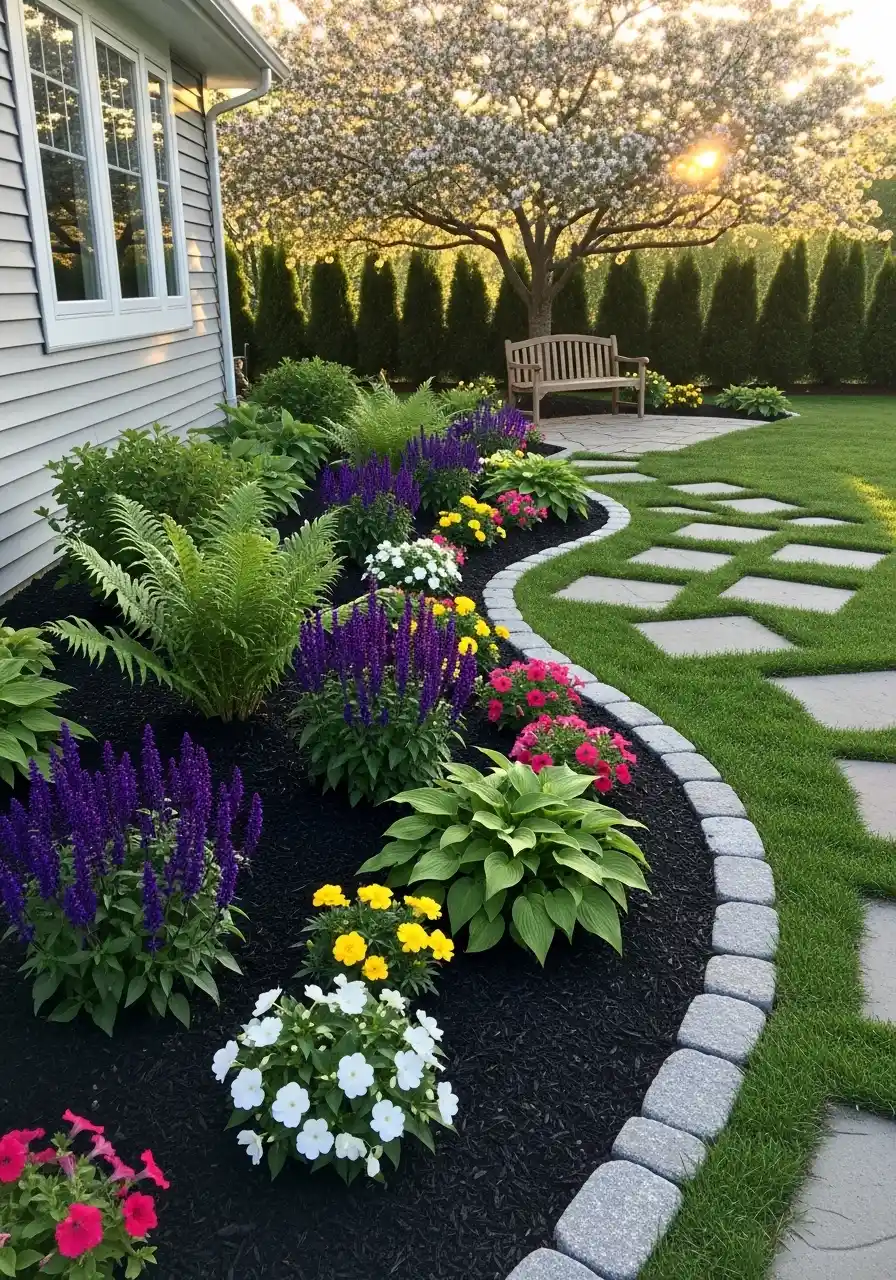
This one feels calm. Like, you walk out and your shoulders drop. The border is curved and soft, and inside the bed you see hostas, ferns, and purple flowers with a dark mulch base. The stepping stones in the lawn make it feel like a tiny park. This is a garden rock border idea that’s more peaceful than flashy.
Here’s the hack: shade beds look best when you mix leaf shapes, not just flower colors. Use big hosta leaves, feathery fern fronds, and spiky blooms for contrast. For the border, choose rounded stones that match the stepping stones nearby so it feels connected. And don’t make the curve too tight. Wide curves look more natural, and they’re easier to edge with a trimmer (your future self will thank you).
River rock border paired with hydrangeas for a soft, dreamy edge
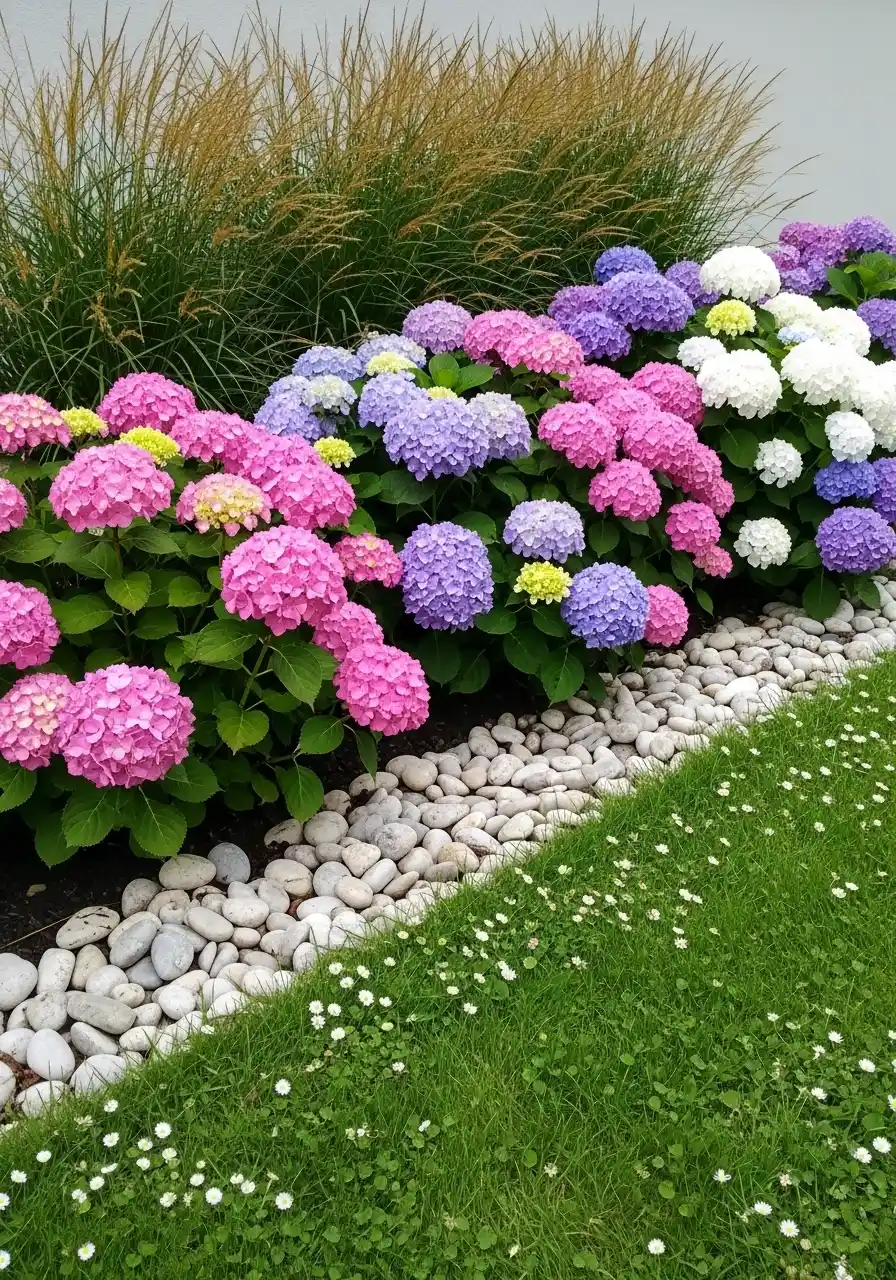
Hydrangeas already look like fluffy clouds, and the smooth river rocks make them look even softer. In the image, the river rock border sits between the bed and the grass, creating a clean strip that also helps with drainage. I love this because it feels gentle and fancy without being fussy.
To do it, lay landscape fabric first to reduce weeds, then pour river rock in a 6–12 inch band. Use edging metal or buried stone to keep the rocks from migrating into your lawn, because yes, they will try. For the plants, give hydrangeas enough room. Crowding them is tempting, but they get big and moody if cramped. This kind of garden rock border works great if your yard gets a lot of rain.
Rock border for garden beds with allium “purple lollipops” along a fence
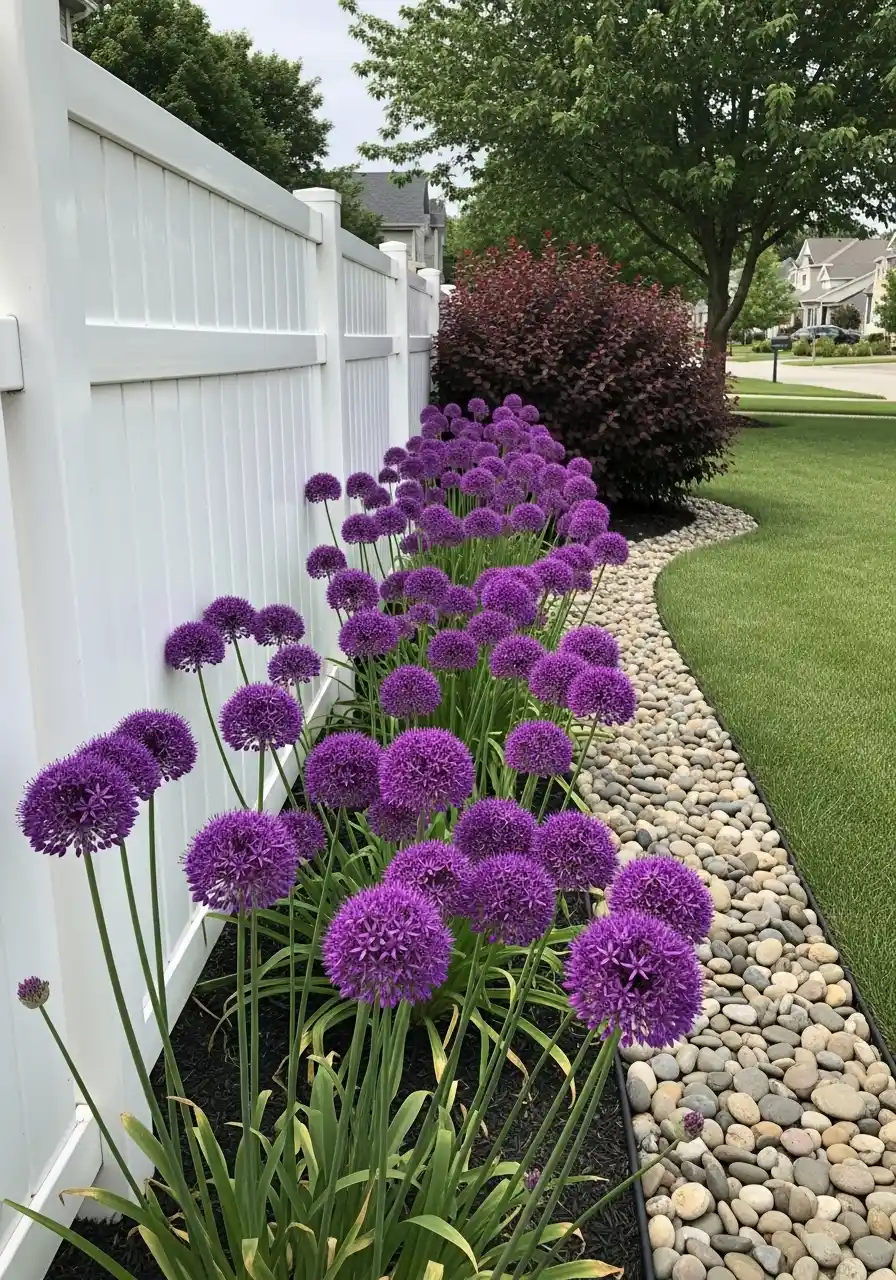
This one is simple, but it hits hard visually. A line of round purple allium blooms stands tall beside a fence, and there’s a pebble-style rock strip along the base. It’s like minimal design, but still dramatic. I like it because it looks planned, not chaotic.
Use a narrow band of small stones or pebbles as your stone edging zone, about 8–10 inches wide. It keeps mud from splashing onto the fence and makes trimming easier. Then plant bulbs like allium in repeating groups. Repetition is the secret sauce here. If you scatter them randomly, it won’t feel as clean. Also, pick one “wow” plant and let it be the star. I always want to add more stuff, but more is not always better, sadly.
Rainbow brick edging with a gravel path and bright blooms
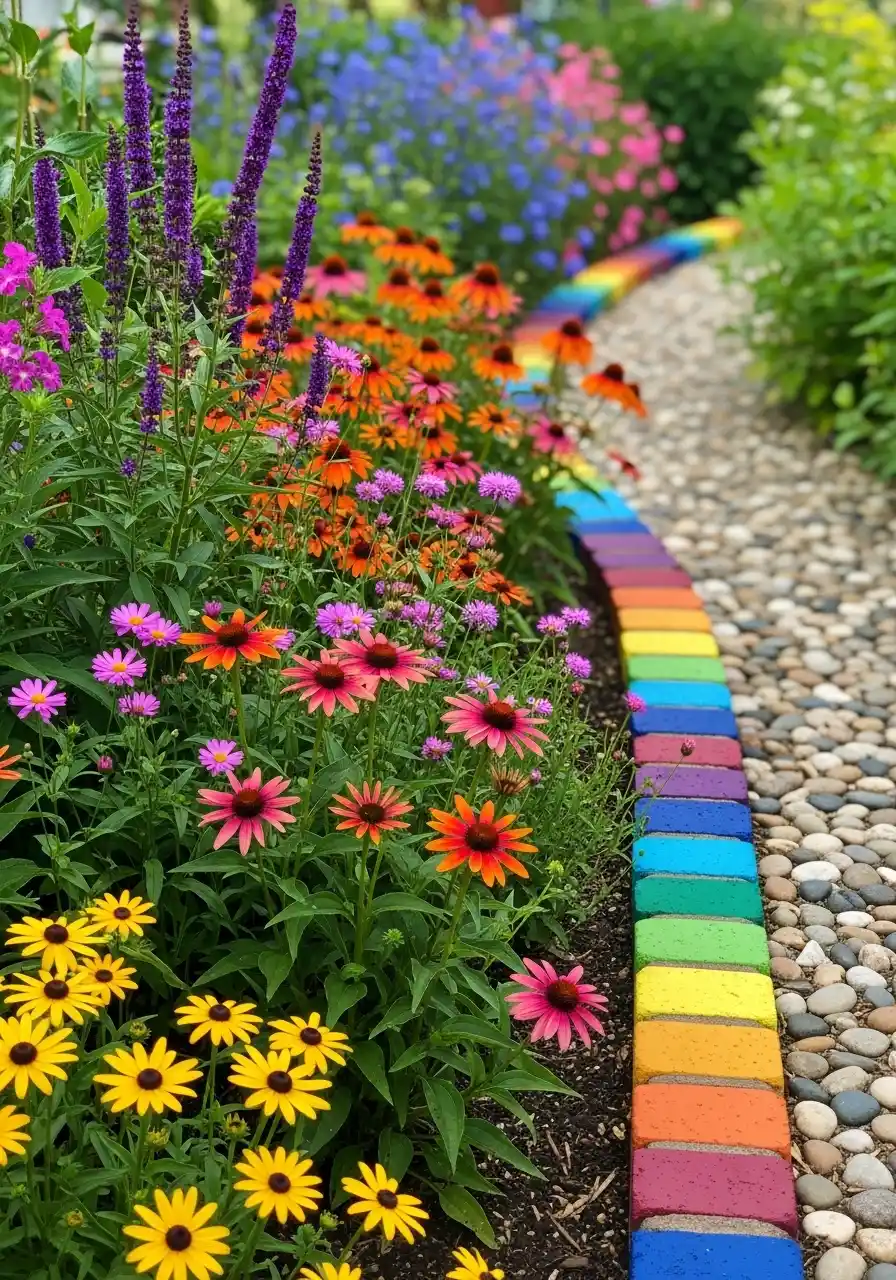
This last idea is such a mood. A rainbow-painted brick border curves along a gravel path, with bold flowers right beside it. It’s part garden stone border, part art project. And it works because the gravel is neutral, so the bright edge doesn’t feel like too much.
If you want this, keep the painted border low and consistent so it reads as one smooth line. Use exterior paint and sealant, and expect touch-ups. For the path, add landscape fabric under the gravel so weeds don’t ruin your happiness. Plant tough bloomers nearby like coneflowers and black-eyed Susans, because they can handle heat from the path edge. This type of rock edging idea is perfect if you want “happy yard” energy, like, every day.
FAQ: Garden rock border questions I get all the time
1) What is a garden rock border?
A border made from rocks to edge beds.
2) River rock border vs boulder border?
River rocks feel soft, boulders feel bold.
3) Do I need landscape fabric under rocks?
Usually yes, it helps stop weeds.
4) How deep should I bury border rocks?
About one-third is a solid rule.
5) What keeps rock edging from shifting?
A trench plus compacted soil or gravel.
6) Can I use white rocks near mulch?
Yes, but expect cleaning and leaf mess.
7) What’s the easiest stone edging style?
Large blocks or a simple single rock row.
8) Do rock borders help with mowing?
Yep, they create a clear cut line.
9) Should I mix stone sizes?
Yes, it looks more natural and stable.
10) How do I make it look “natural”?
Avoid perfect lines, vary stone shapes.
11) Are rock borders good for slopes?
Yes, especially with terraces or tiers.
12) Can I add lights to a stone border?
Absolutely, it looks amazing at dusk.
Conclusion
If I had to pick one thing that makes a yard look “done,” it’s a solid garden rock border. Not because rocks are magical, but because borders tell the eye where to rest. They frame your plants like a picture frame, and they keep grass, mulch, and soil from mixing into a messy blur.
Pick the style that matches your life, not just your taste. If you hate upkeep, skip bright white pebbles. If you love cozy, go stacked stone border. If you want drama, bring in boulders. Either way, a good garden rock border is one of those yard choices you rarely regret, even when you mess it up a little at first.