Flowering tropical shrubs are my favorite shortcut to a “vacation” feeling at home. Big colors, bold leaves, and sometimes a perfume that hits you before you even reach the porch. Most of them love sun, warmth, and consistent moisture, but the best part is you can still enjoy many of them in pots if your winters get chilly.
A quick note before you plant: “tropical shrub” can mean in-ground landscape plant in warm zones, or a patio container plant that comes indoors. If you’re in a cooler climate, choose a big pot with drainage, use a fast-draining mix, and keep the plant where it gets the most light you can offer.
Table of Contents
1) Hibiscus (Hibiscus rosa-sinensis)
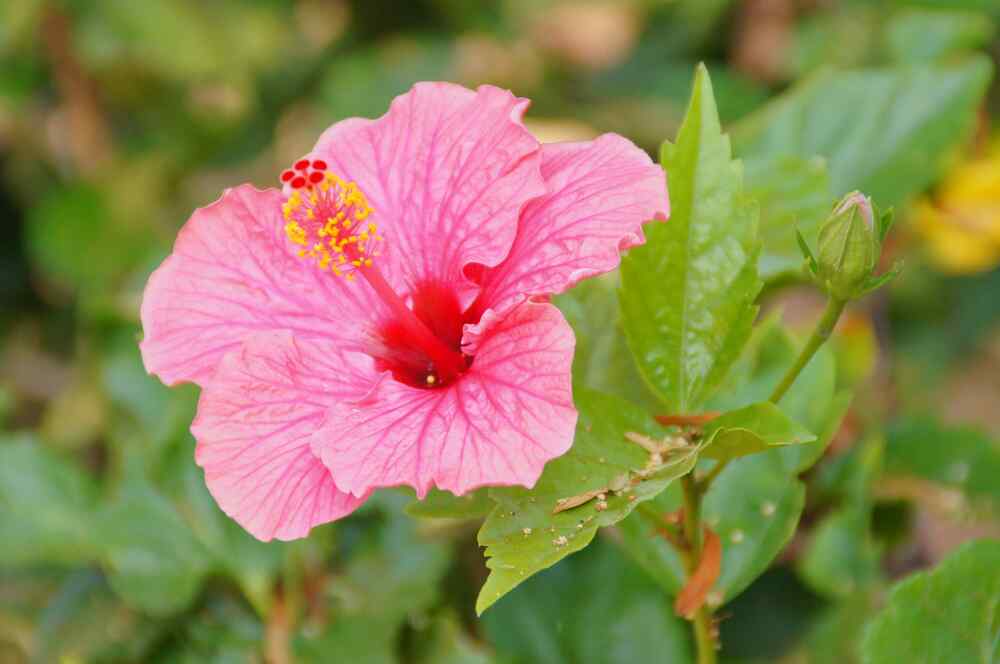
If you want instant tropical drama, hibiscus is the classic. The blooms are huge and showy—red, pink, orange, yellow, white—and they keep coming when the plant is happy. A bonus: hibiscus flowers are nectar-rich and bring butterflies and hummingbirds.
USDA zones: 9–11 (container-friendly elsewhere)
Light: Full sun (6+ hours)
Soil: Fertile, well-drained, slightly acidic to neutral
Mature size: 4–10 ft tall, 3–6 ft wide
Care tip: Feed during warm months and water deeply; steady moisture = better flowering.
2) Bougainvillea (Bougainvillea spp.)
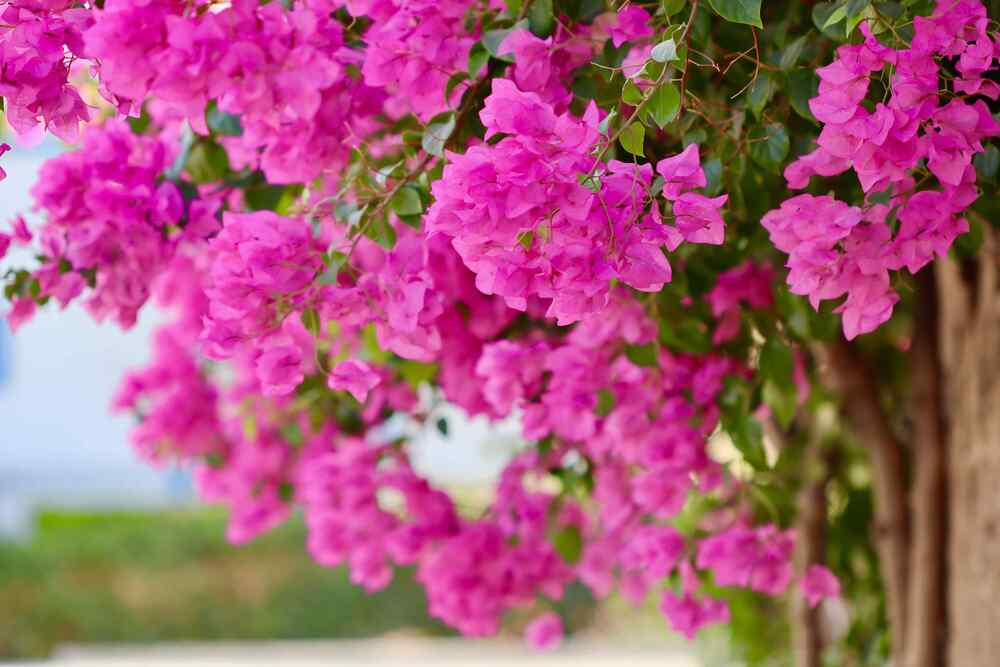
Bougainvillea is basically sunshine turned into color. What you see as “flowers” are actually bright bracts—pink, purple, red, orange—surrounding tiny white blooms. It’s unbeatable for fences, trellises, and big containers where it can spill and climb.
USDA zones: 9–11 (some varieties handle 8 with protection)
Light: Full sun, the more the better
Soil: Very well-drained; tolerates poorer soils
Mature size: 6–30 ft depending on training
Care tip: Don’t baby it with too much water—slightly drier cycles boost blooming.
3) Plumeria (Frangipani)
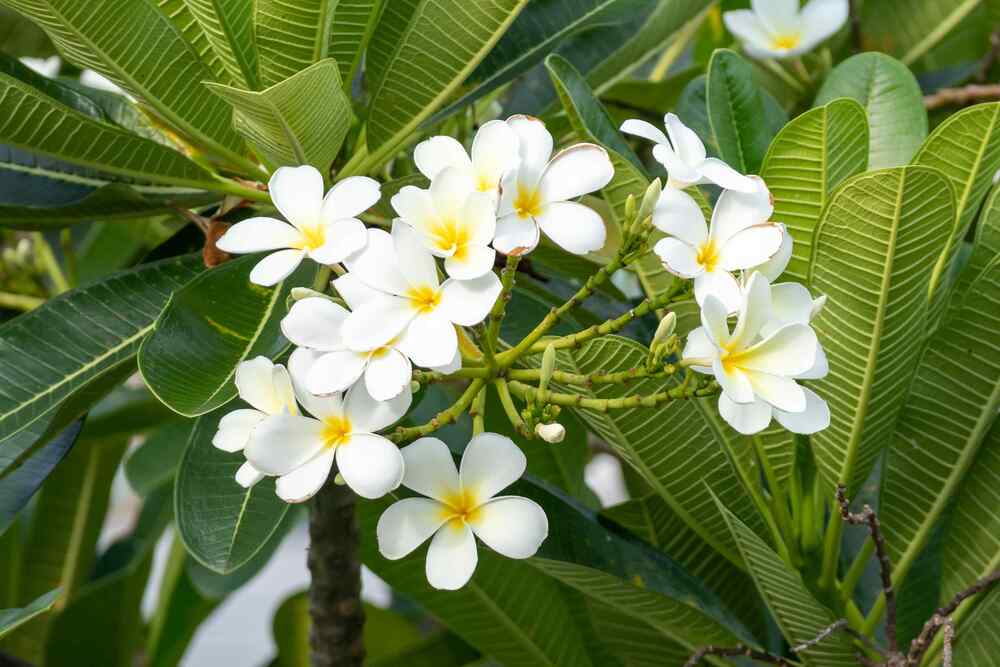
Plumeria feels like summer even on an ordinary day. The flowers are waxy and pinwheel-shaped with a fragrance that can be sweet, citrusy, or creamy depending on the variety. In warm zones it’s a small flowering tree, but many people keep it as a prized patio plant.
USDA zones: 10–12 (often grown in pots in 8–9+)
Light: Full sun
Soil: Sandy, fast-draining; hates soggy roots
Mature size: 6–20 ft (smaller in containers)
Care tip: Let soil dry slightly between watering; protect from cold and frost.
4) Bird of Paradise (Strelitzia reginae)
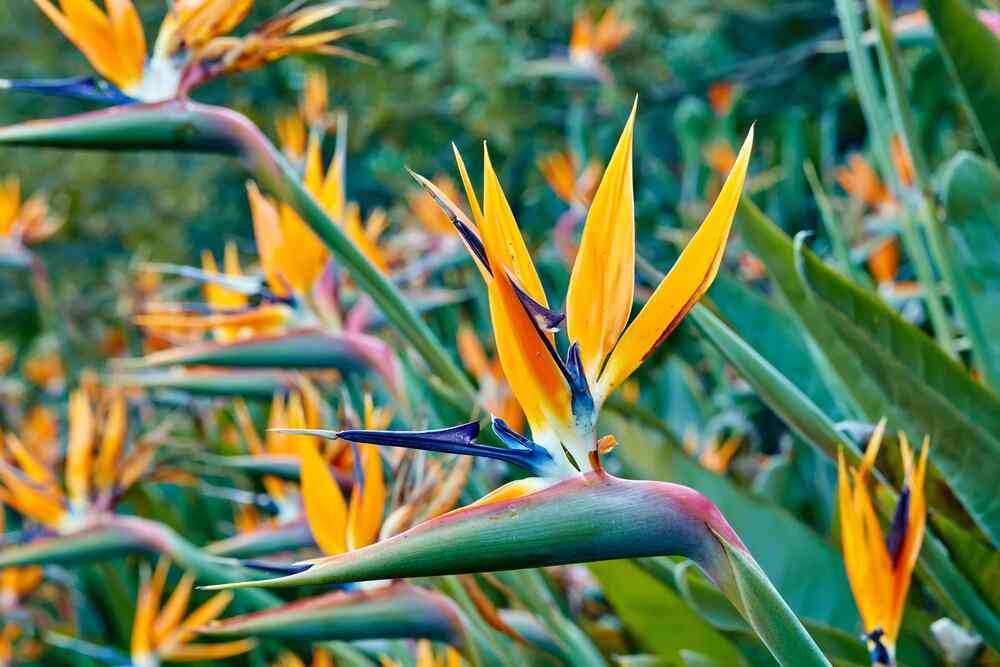
This one is all about structure. The blooms look like a tropical bird—orange and blue—perched above fan-like leaves. Even when it’s not flowering, the foliage makes a space feel designed and intentional.
USDA zones: 9–11
Light: Full sun to bright partial sun
Soil: Rich, well-drained, evenly moist
Mature size: 4–6 ft tall, 3–5 ft wide
Care tip: It blooms best when slightly root-bound, so don’t rush to upsize pots.
5) Mandevilla (Mandevilla spp.)
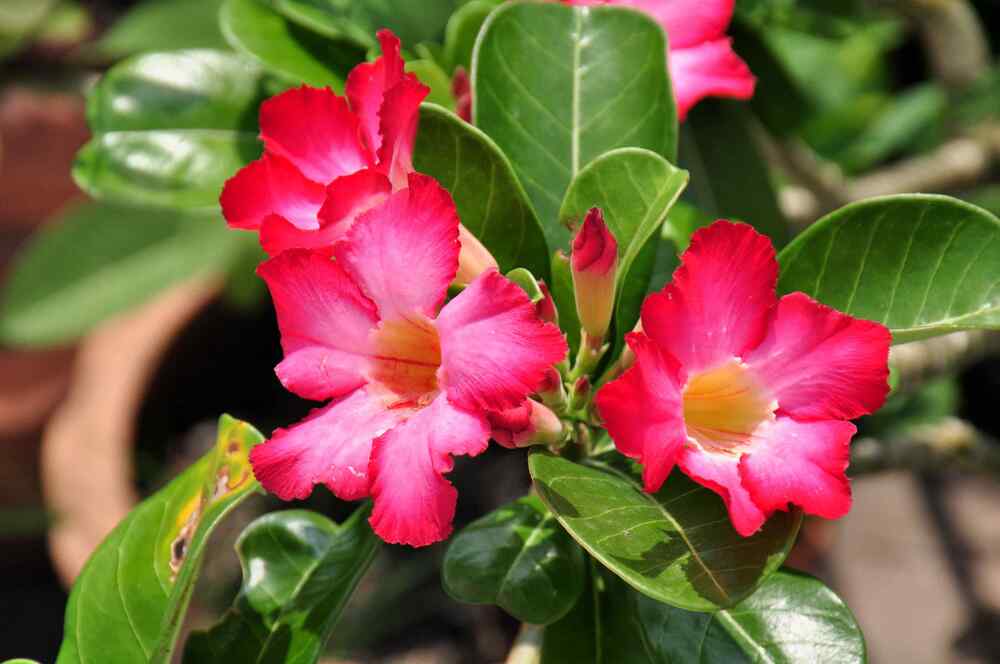
Mandevilla gives you glossy green leaves and nonstop trumpet flowers in pink, red, or white. It grows like a vine but can be trained into a shrubby form with support and pruning. I like it near patios because it flowers hard when the weather is hot.
USDA zones: 9–11 (commonly potted elsewhere)
Light: Full sun to partial sun (afternoon shade helps in extreme heat)
Soil: Loose, well-drained, consistently moist
Mature size: 3–10 ft depending on support
Care tip: Pinch tips early for fullness; give a trellis even in a container.
6) Angel’s Trumpet (Brugmansia)
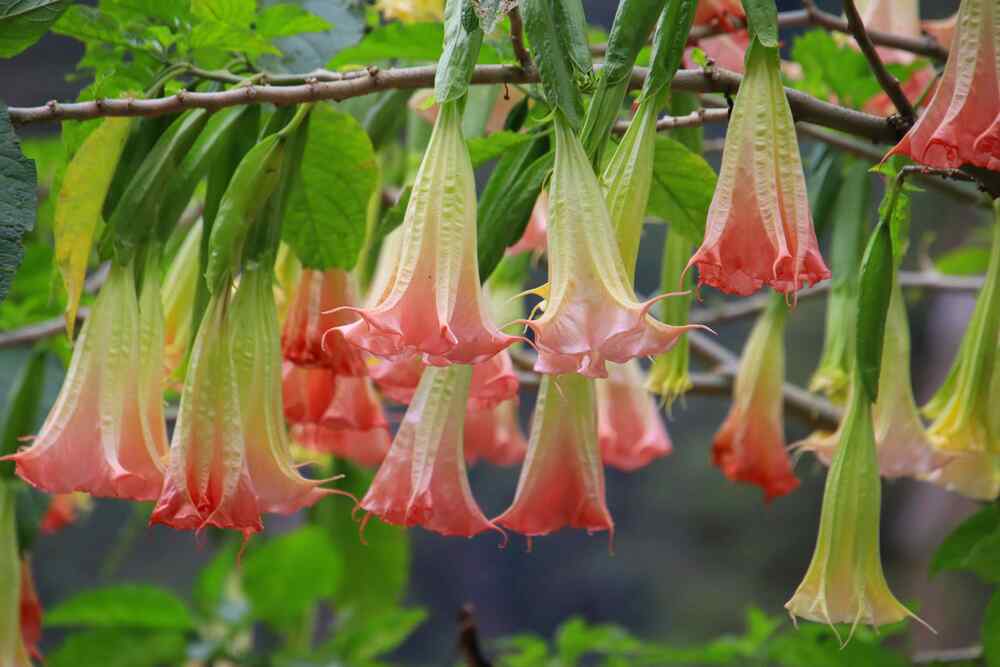
Angel’s trumpet is a showstopper: enormous hanging trumpets, often intensely fragrant in the evening. It can grow fast and tall, giving you a lush “tropical corner” quickly. The scent alone can make a backyard feel like a resort.
USDA zones: 9–11
Light: Full sun to partial shade
Soil: Rich, well-drained, evenly moist
Mature size: 6–15 ft tall, 6–10 ft wide
Care tip: Needs regular water and feeding to sustain those massive blooms.
Safety note: All parts are toxic if ingested—place thoughtfully around kids and pets.
7) Lantana (Lantana camara)
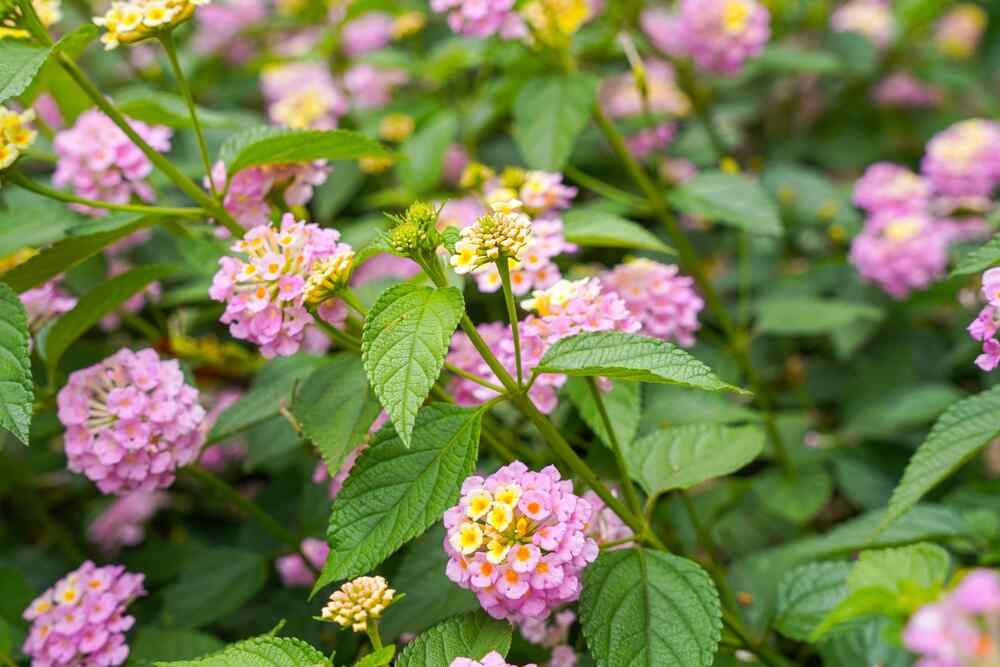
Lantana is the tough friend that still shows up beautifully. It’s heat-loving, drought-tolerant once established, and blooms in clustered color mixes—yellow, orange, pink, red—often all on the same plant. Pollinators adore it, especially butterflies.
USDA zones: 8–11 (perennial in warm zones; annual elsewhere)
Light: Full sun
Soil: Well-drained; tolerates poor soils
Mature size: 2–6 ft tall, 3–6 ft wide
Care tip: Deadheading helps, but even without it, lantana keeps pushing blooms.
8) Ixora (Ixora coccinea)
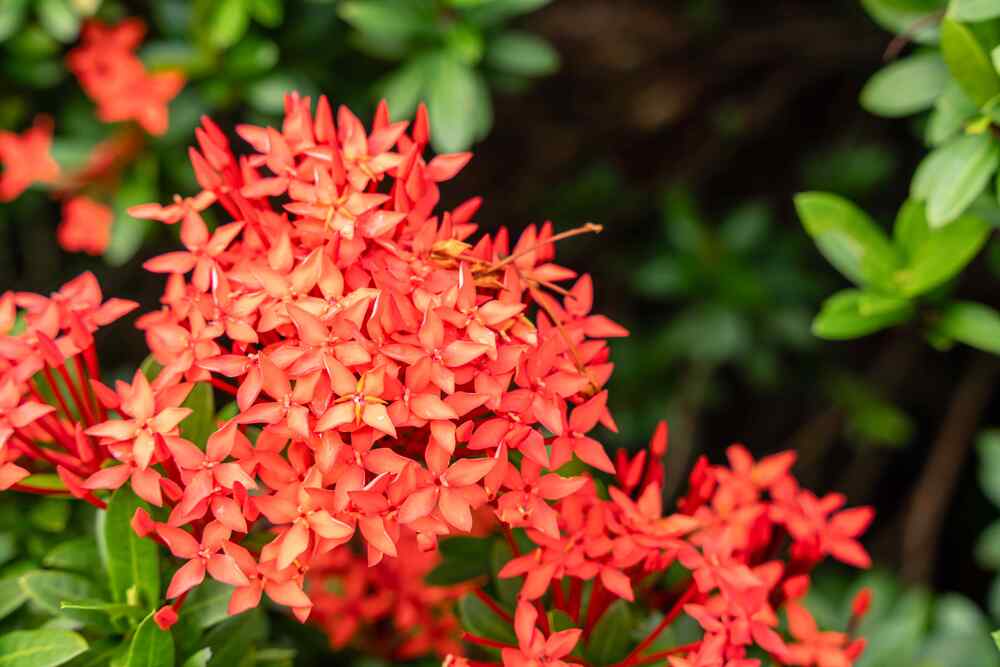
Ixora forms neat, dense shrubs with flower clusters that look like little fireworks—red, orange, yellow, and coral. It’s a great hedge plant in warm climates, especially if you want color without the fuss of constant pruning.
USDA zones: 9–11
Light: Full sun to partial shade
Soil: Acidic, well-drained, consistently moist
Mature size: 3–6 ft tall, 3–5 ft wide
Care tip: If leaves yellow, check soil pH—ixora dislikes alkaline conditions.
9) Gardenia (Gardenia jasminoides)
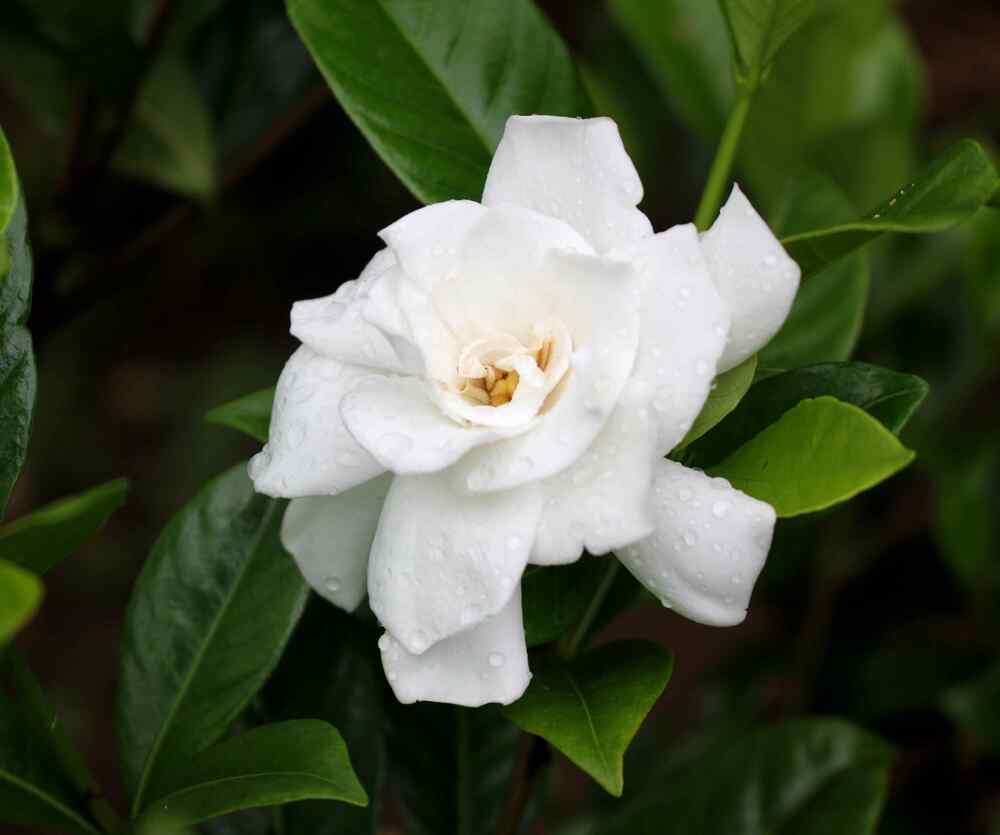
Gardenia is pure romance: glossy leaves and creamy white blooms with a rich fragrance that carries on warm air. It’s perfect near doors, windows, or seating areas where you can enjoy the scent. It does ask for the right conditions, but it’s worth it.
USDA zones: 8–11 (best in 9–11)
Light: Bright partial shade to morning sun
Soil: Acidic, rich, well-drained, evenly moist
Mature size: 3–6 ft tall, 3–6 ft wide
Care tip: Keep moisture steady and mulch the root zone; sudden drying can drop buds.
10) Tibouchina (Princess Flower)
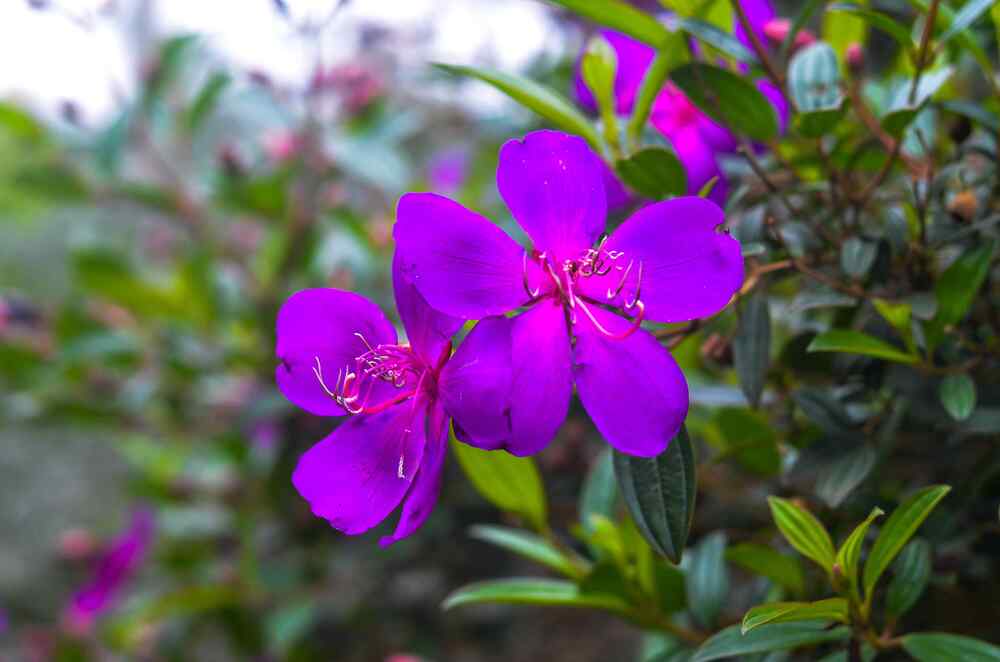
Princess flower brings bold royal purple blooms that pop against velvety leaves. It has a soft, fuzzy texture that makes the plant feel extra lush, and it blooms heavily in warm weather. In the right spot, it looks like it belongs in a botanical garden.
USDA zones: 9–11 (container in cooler zones)
Light: Full sun to partial shade
Soil: Well-drained, slightly acidic, organic-rich
Mature size: 6–10 ft tall, 4–6 ft wide
Care tip: Light pruning after flowering keeps it bushy and prevents legginess.
Simple setup that helps almost all of them
Give these shrubs sun, drainage, and consistent warm-season feeding, and you’re already ahead. For pots, I like a mix labeled for tropicals or citrus (usually fast-draining), plus extra perlite if your summers are rainy.
If you only do one thing: match the plant to your light. Full-sun shrubs sulk in shade, and fragrance lovers like gardenia complain in harsh afternoon heat. Get that part right, and the rest becomes easy.