Weeds thrive where bare soil is exposed to light, temperature swings, and moisture. The fastest, most sustainable way to reduce weeding isn’t just mulch—it’s planting a dense, living groundcover that acts like a “green blanket,” shading the soil so weed seeds struggle to germinate, while also buffering erosion and helping the soil hold moisture. The key is choosing groundcovers that spread quickly enough to close gaps, but not so aggressively that they become a problem themselves (some popular groundcovers are invasive in certain regions).
Below is a rewritten, expanded guide—based on the source article—covering 18 fast-growing groundcovers with practical selection tips for sun, shade, dry slopes, and damp zones.
Table of Contents
How groundcovers suppress weeds (and why they beat bare mulch long-term)
Groundcovers don’t “kill” weeds by magic. They win because they change the conditions weeds need to start.
They block light from reaching the soil
Most weed seeds need light cues to germinate. A tight, leafy mat reduces the light that reaches soil surface, lowering weed pressure over time.
They reduce soil disturbance
When soil is frequently disturbed (digging, hoeing, repeated pulling), buried seeds can get brought back to the surface. Groundcovers help stabilize soil so you disturb it less.
They protect against erosion and moisture loss
Groundcovers can act as buffers against rain and snow and protect soil quality and structure—especially on slopes.
They can be “living mulch”
Mulch is helpful, but it breaks down and needs replenishing. A mature groundcover is self-renewing—once established, it fills gaps and repairs itself season after season.
Before you plant: choose groundcovers that won’t become “weeds”
Fast growth is great—until it becomes a takeover. The original source specifically warns that some fast groundcovers can be invasive and may require pruning and containment.
Do this first
-
Check local invasive plant lists (state/province extension or conservation lists).
-
Prefer native or well-behaved spreaders when possible.
-
Use edging, mowing lines, raised beds, or root barriers for vigorous runners.
-
Plan for maintenance access (so you can trim or thin without wrecking beds).
How to plant groundcovers so they actually choke out weeds
You’ll get better weed suppression when you treat planting as a short project with a long payoff.
Step 1: Start clean
Remove existing weeds thoroughly—especially perennial roots. Groundcovers struggle when they must compete with established weeds.
Step 2: Plant densely
Weed control depends on canopy closure. Space plants closer than you would for “specimen planting,” especially for small starters.
Step 3: Mulch lightly while they knit
A thin mulch layer helps reduce weeds during establishment. Once the groundcover fills in, mulch becomes optional.
Step 4: Water consistently for the first season
Even drought-tolerant groundcovers need water while their roots establish.
Fast-growing groundcovers for sun, shade, and everything between
Here are the 18 options highlighted in the source post, expanded into practical planting notes: light, water tendencies, and best uses.
1) Deadnettle (Lamium spp.)
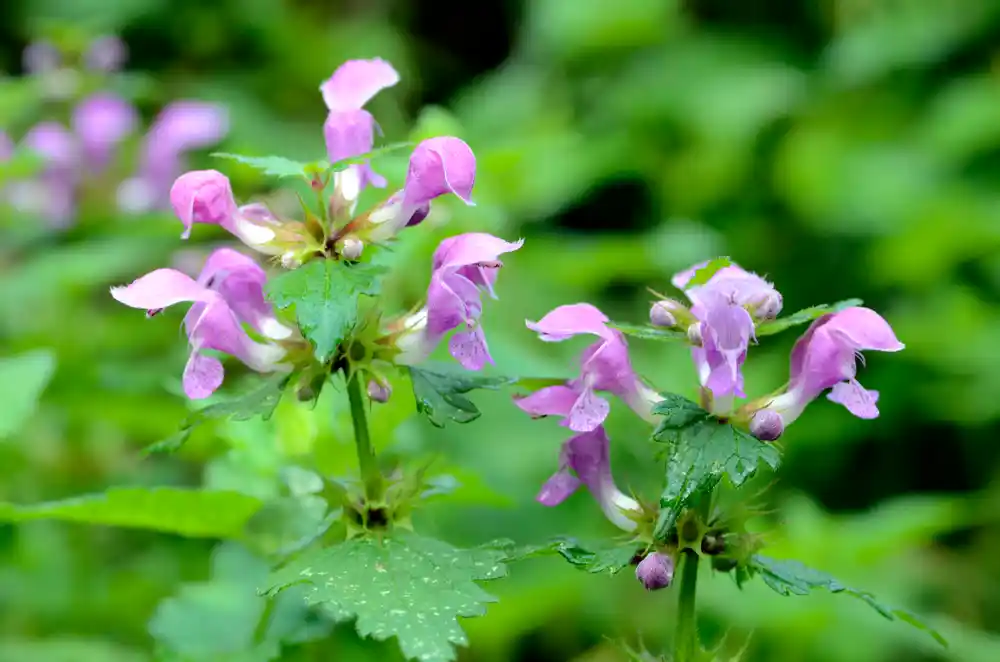
Deadnettle is a reliable, rapid spreader that expands via underground runners and creates a thick mat—exactly the habit you want for weed suppression. It can be invasive in some areas, so containment and pruning matter.
Best conditions
-
Light: Full sun to part shade
-
Water: Moderate to low
-
Zones: 3–8
Why gardeners use it
-
Some types are edible and it’s a pollinator favorite with white or purple flowers.
-
Works well where you need quick cover in mixed borders.
Keep it in bounds
Use edging, raised beds, and regular trimming—its “wildness” is what makes it such a strong weed suppressor.
2) Bugleweed (Ajuga reptans)
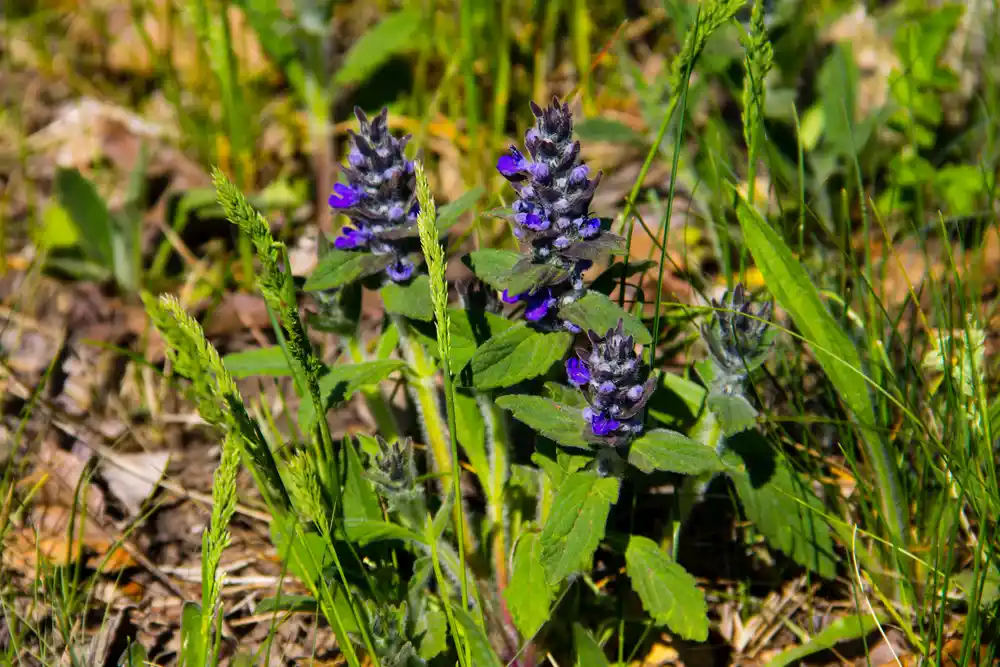
Bugleweed forms a dense carpet and handles shade well, with dramatic foliage tones and blue flower spikes in spring to summer. It can be invasive in some areas, but is generally manageable with attention.
Best conditions
-
Light: Full sun to shade
-
Water: Moderate
-
Zones: 3–9
Where it shines
-
Under trees and along the north side of buildings.
-
As a “filler” groundcover between shrubs where turf won’t grow.
Weed control tip
Ajuga suppresses weeds best when planted tightly so it forms a continuous mat quickly.
3) Sweet woodruff (Galium odoratum)
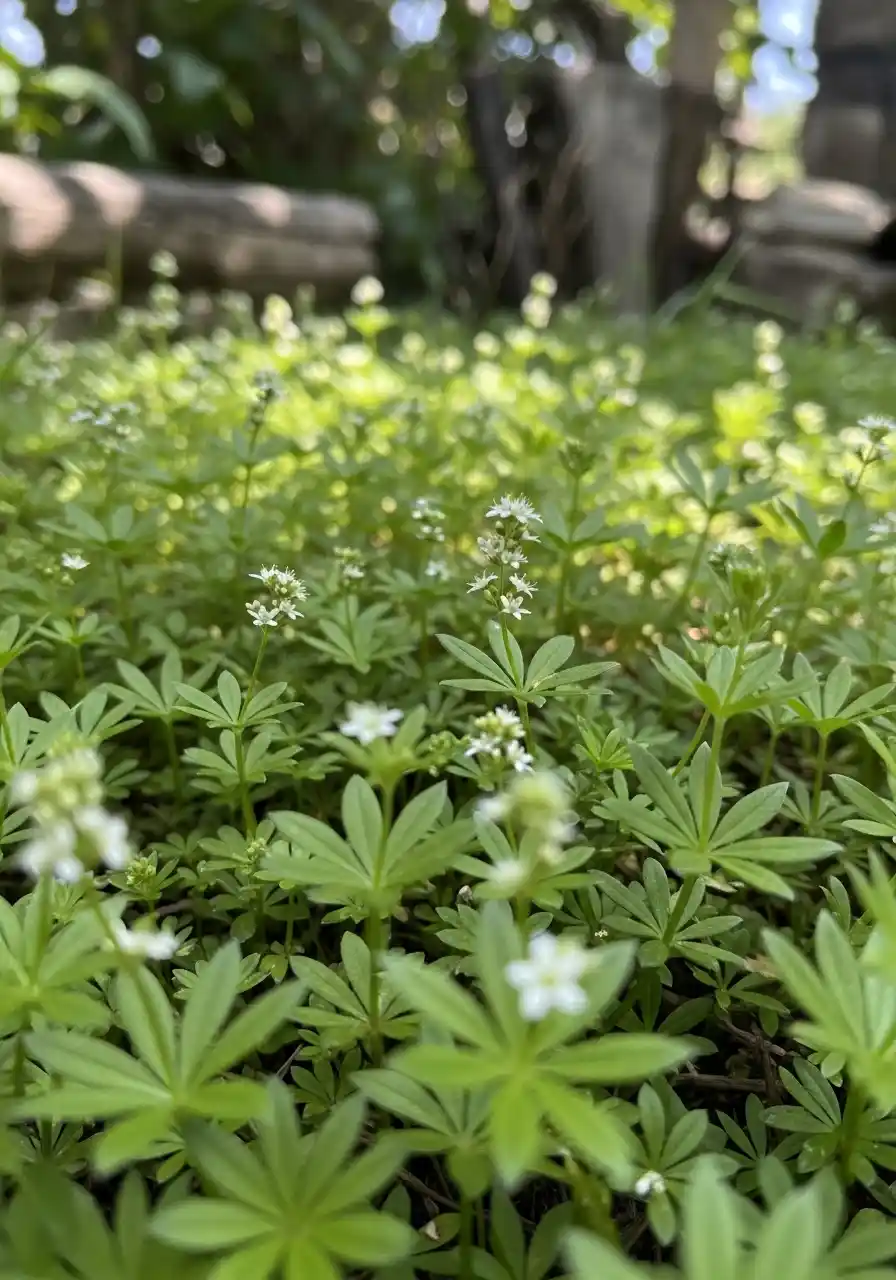
Sweet woodruff is a woodland classic with starry white flowers and a sweet fragrance. It can spread aggressively in ideal conditions, though drier soils reduce that tendency.
Best conditions
-
Light: Part shade to full shade
-
Water: Moderate to low
-
Zones: 4–8
Why it’s great for weed suppression
-
It fills shady, bare patches that weeds love to colonize.
-
The whorled foliage creates a light-blocking ground layer.
Design idea
Use it in drifts under shrubs or pair it with other shade ornamentals for a “woodland floor” look.
4) Strawberries (Fragaria × ananassa)

Strawberries aren’t just for the vegetable garden. They produce runners that spread and fill open ground, helping choke out weeds—while also giving you fruit.
Best conditions
-
Light: Full sun
-
Water: Moderate
-
Zones: 5–10
Weed control + harvest
-
June-bearing types return yearly and make lots of runners.
-
Consider bird protection if you actually want to eat the berries.
Placement tip
Use strawberries as edging groundcover in sunny beds, around raised beds, or in orchard understories where foot traffic is light.
5) Mint (Mentha spp.)
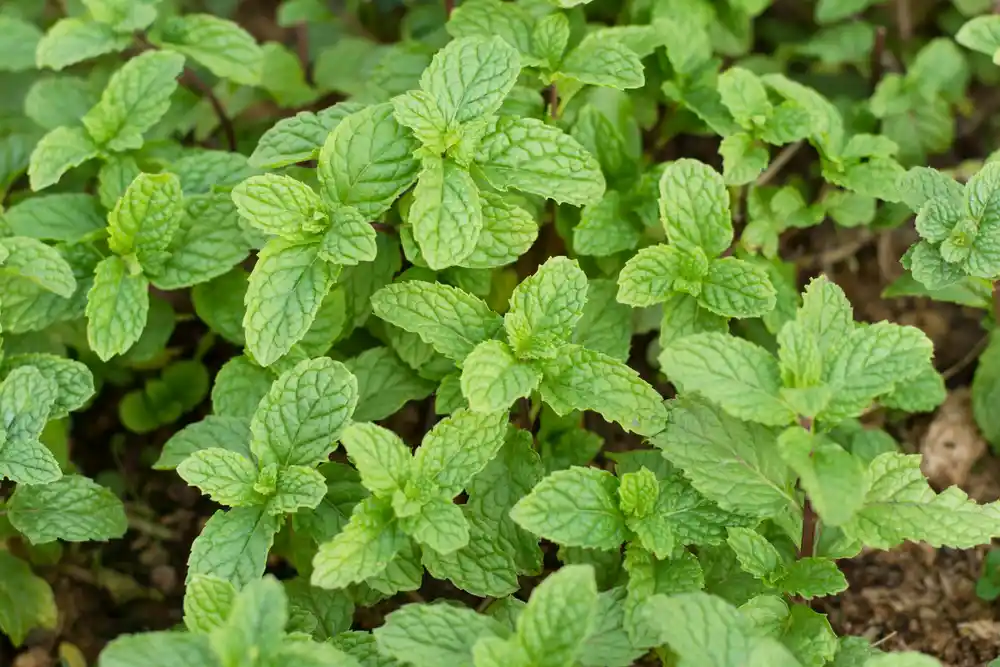
Mint is famously hard to tame—which is exactly why it can be a useful weed smotherer. It spreads via underground runners and can reseed if allowed to flower.
Best conditions
-
Light: Full sun to part shade
-
Water: Moderate
-
Zones: 3–10
Where mint works
-
In contained areas where you want aggressive cover (between stepping stones, contained beds, or large planters).
-
For fragrance and pollinator value—mint flowers attract many beneficial insects.
Containment is non-negotiable
If you ever need to remove it, you’ll need to tackle the root system and prevent seed set.
6) Rockcress (Aubretia spp.)
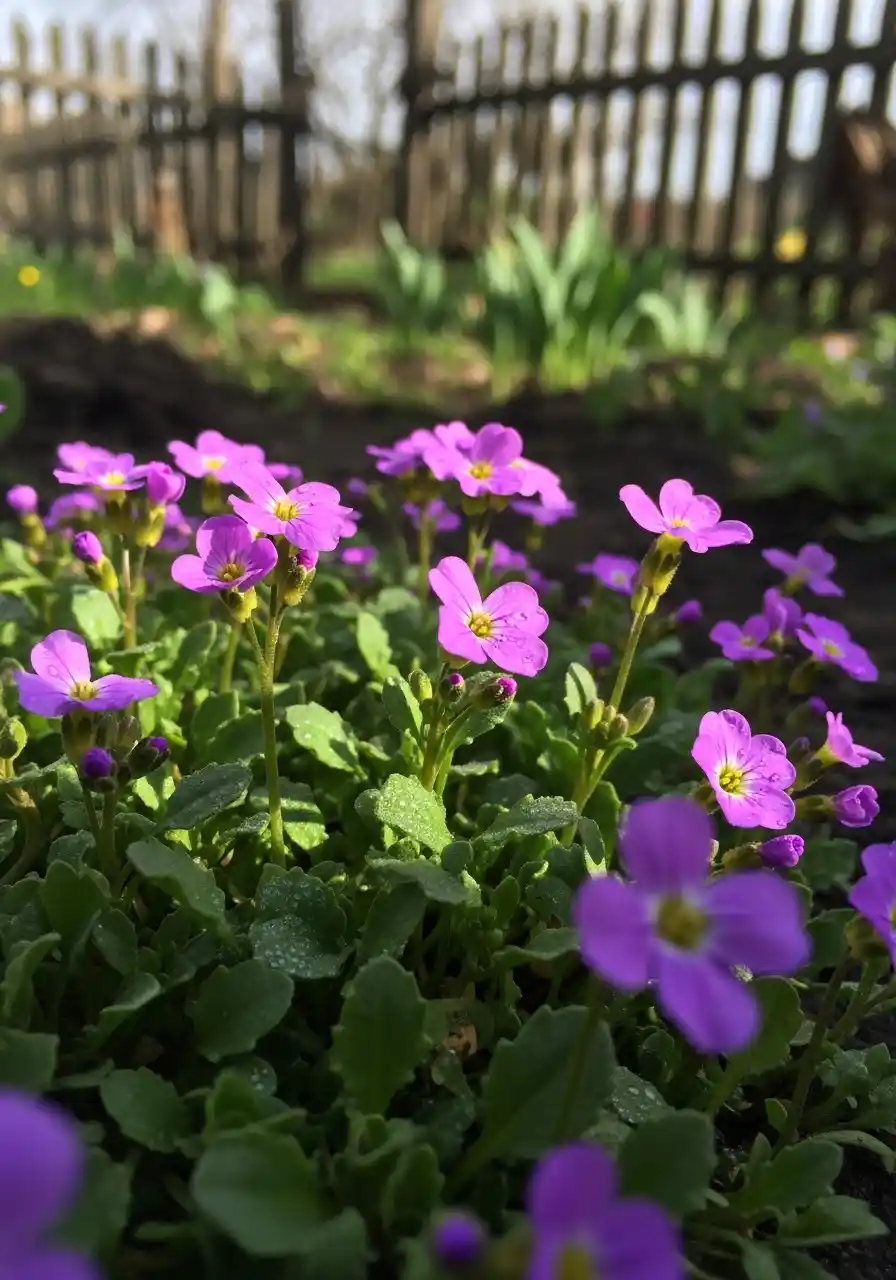
Rockcress is a sunny-site groundcover that spreads quickly and produces a showy carpet of purple to pink flowers. It can cascade over retaining walls, making it great for slopes and rock gardens.
Best conditions
-
Light: Full sun to part shade
-
Water: Moderate
-
Zones: 4–9
Maintenance tip
It’s not known for invasiveness, but it performs better with a light prune after flowering.
7) Geranium (Geranium sanguineum)
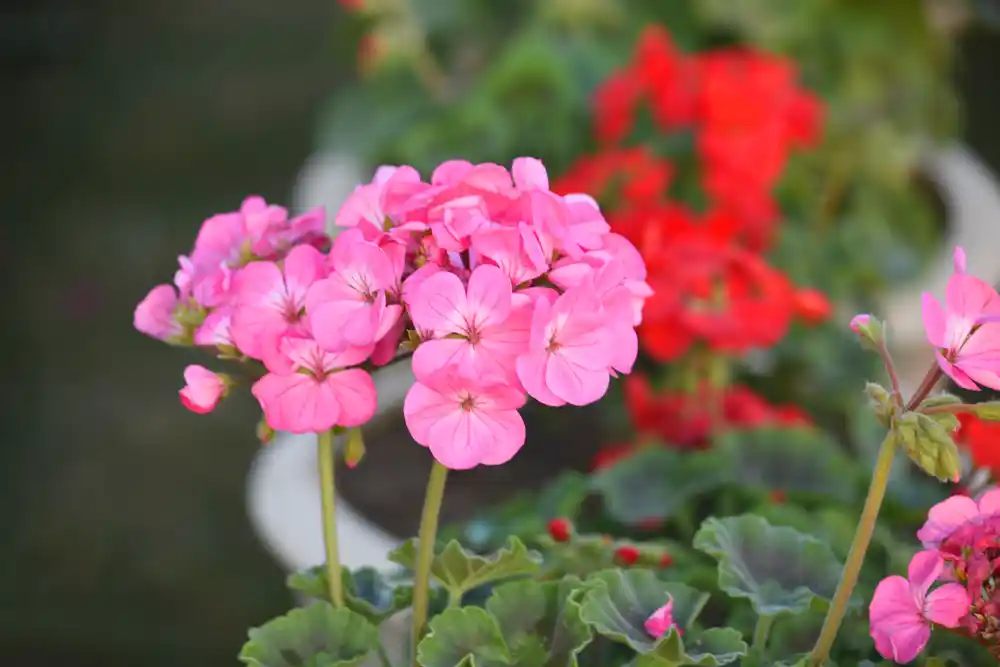
Bloody cranesbill geranium forms soft mounds that expand and knit together, helping smother weeds while offering summer flowers and pollinator value.
Best conditions
-
Light: Full sun to part shade
-
Water: Moderate
-
Zones: 4–8
Why it’s a strong groundcover
-
Drought tolerant once established.
-
Spreads to form weed-blocking colonies and draws pollinators.
8) Japanese pachysandra (Pachysandra terminalis)
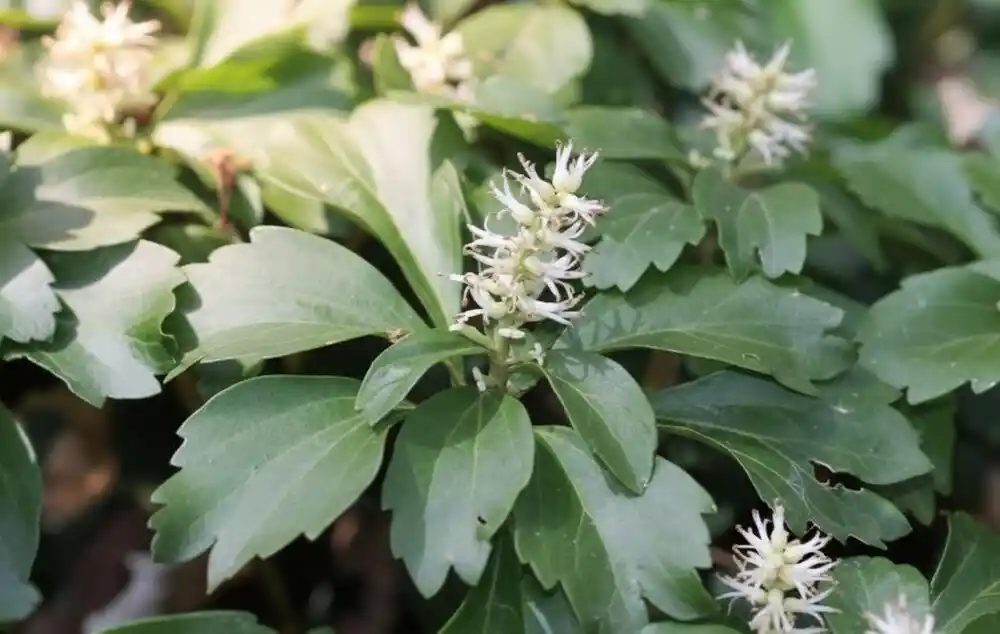
This is a classic evergreen shade groundcover—dense enough that “very little will grow up through” a mature planting.
Best conditions
-
Light: Part shade to full shade
-
Water: Moderate
-
Zones: 4–9
Why gardeners rely on it
-
Forms colonies via underground runners/rhizomes and closes soil quickly.
-
Deer resistant and evergreen—useful for year-round coverage.
Soil note
It prefers moist (not soggy) soil and needs minimal fertilizer.
9) Yellow archangel (Lamium galeobdolon)
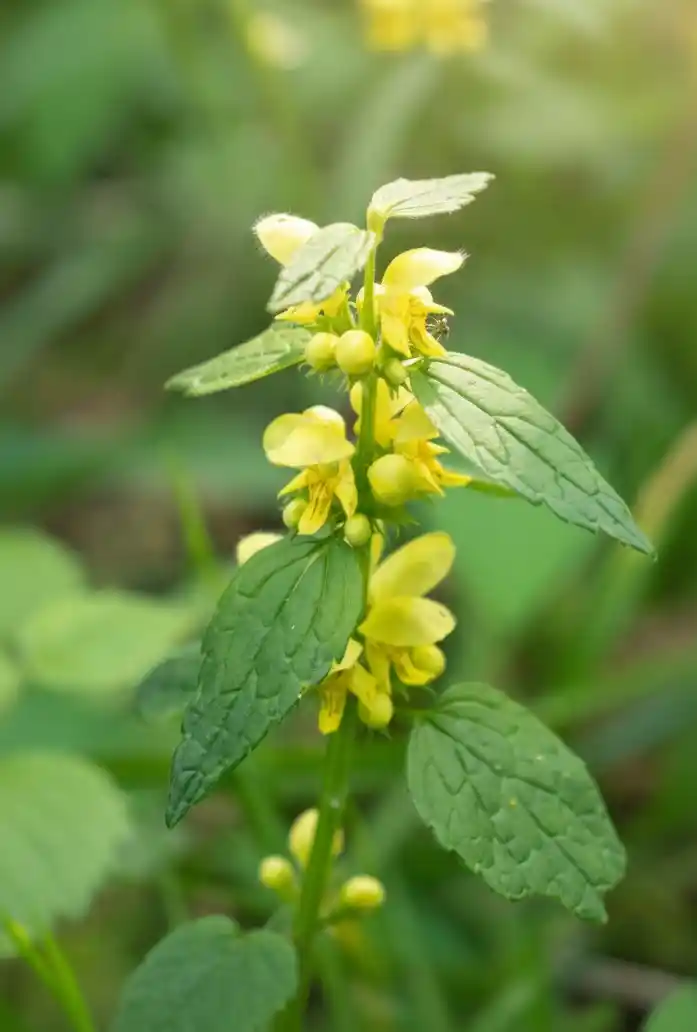
A type of deadnettle with bright yellow flowers that pollinators—especially bumblebees—love. Like other Lamium relatives, it can be invasive in some areas.
Best conditions
-
Light: Part shade to full shade
-
Water: Moderate
-
Zones: 4–9
Why it’s effective
-
Grows quickly and can reach about 2′ tall and 2′ wide, creating heavy shade at soil level.
-
Leaves can be fragrant when crushed, and the source notes edible leaves/flowers.
Use with caution
If your region flags it as invasive, choose a safer alternative—or plant only in areas where you can prune hard.
10) Golden star (Chrysogonum virginianum)
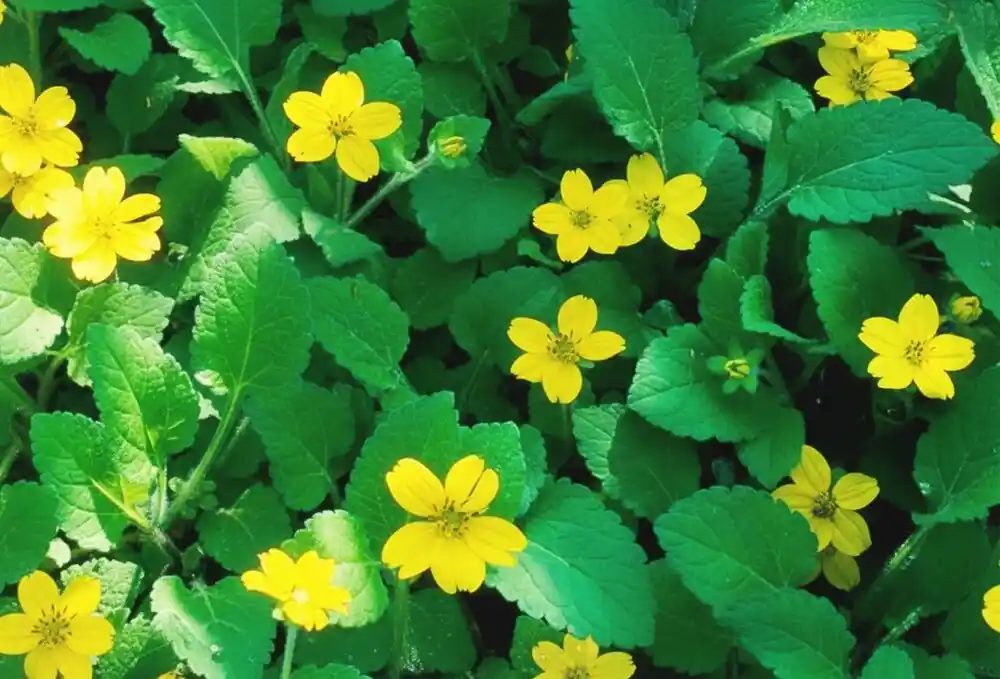
If you want fast coverage without the invasive risk, golden star is highlighted as a native North American option that supports pollinators and can bloom for a long season.
Best conditions
-
Light: Full sun to part shade
-
Water: Moderate
-
Zones: 5–9
Why gardeners love it
-
Dainty yellow flowers can bloom from spring through fall.
-
May remain evergreen in some regions and tolerates more shade than many bloomers.
11) Bunchberry (Cornus canadensis)
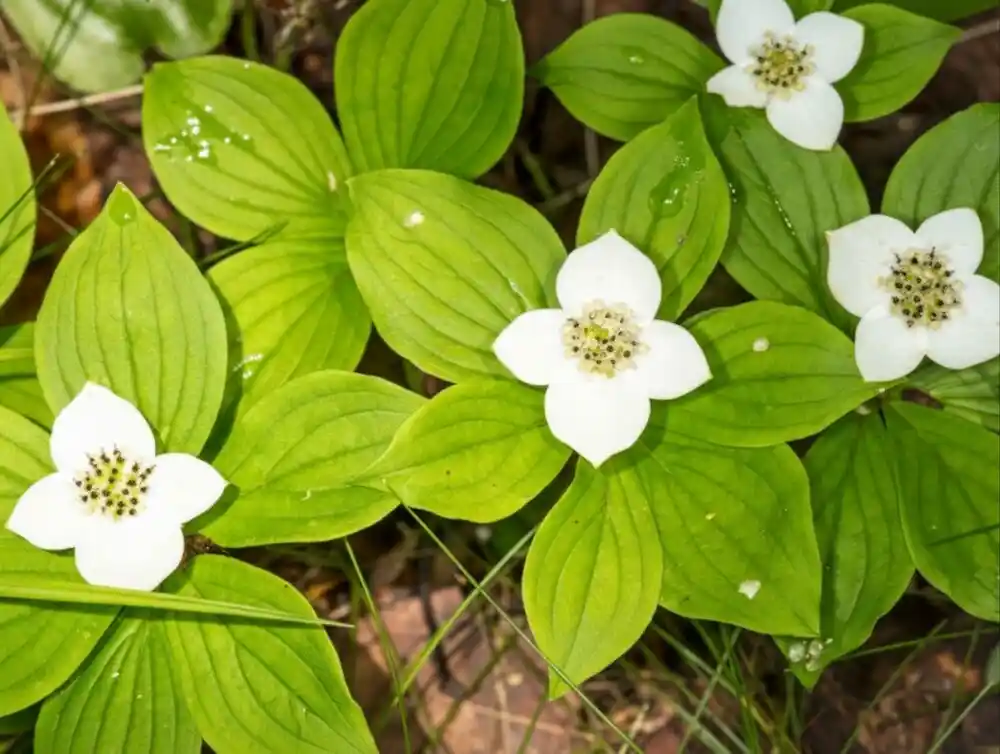
Bunchberry is a cold-hardy native groundcover associated with dogwoods and valued for seasonal interest—flowers, berries, and autumn color—without a strong invasive reputation.
Best conditions
-
Light: Full sun to part shade
-
Water: High to moderate
-
Zones: 2–7
Seasonal benefits
-
White spring flowers; red berries by early fall; leaves turn bright red in colder weather.
12) Creeping phlox (Phlox stolonifera)
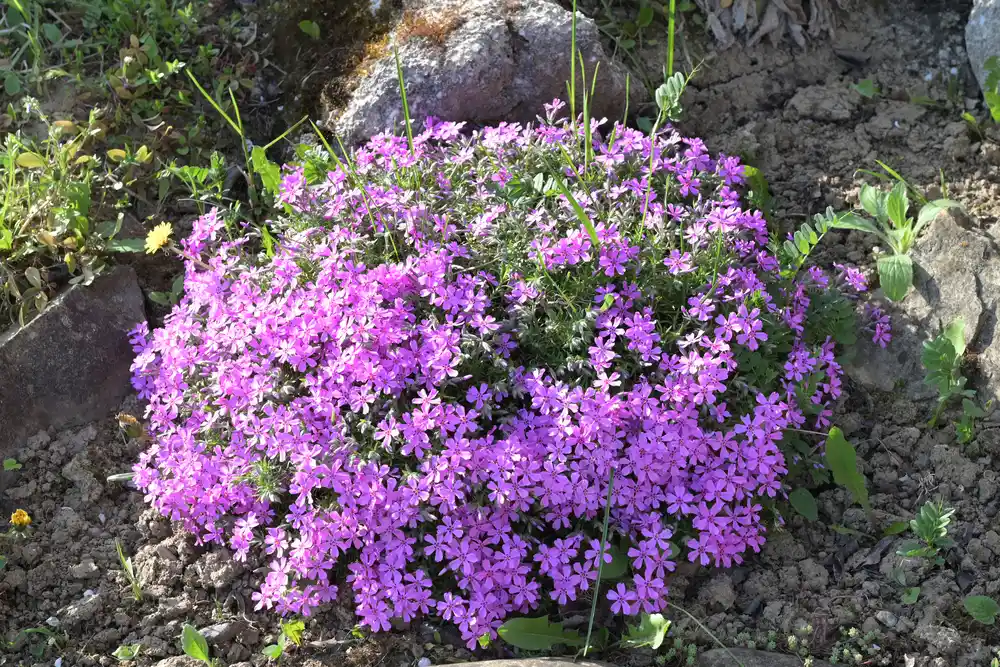
This is a spring showstopper that can produce such dense bloom coverage that the foliage nearly disappears under flowers. It remains a strong weed suppressor after bloom.
Best conditions
-
Light: Full sun to part shade
-
Water: Moderate
-
Zones: 3–9
Growth expectations
-
The source notes it can grow around 1 inch per month in ideal conditions and mature around 6″ high by 2′ wide.
13) Snow on the mountain (Euphorbia marginata)
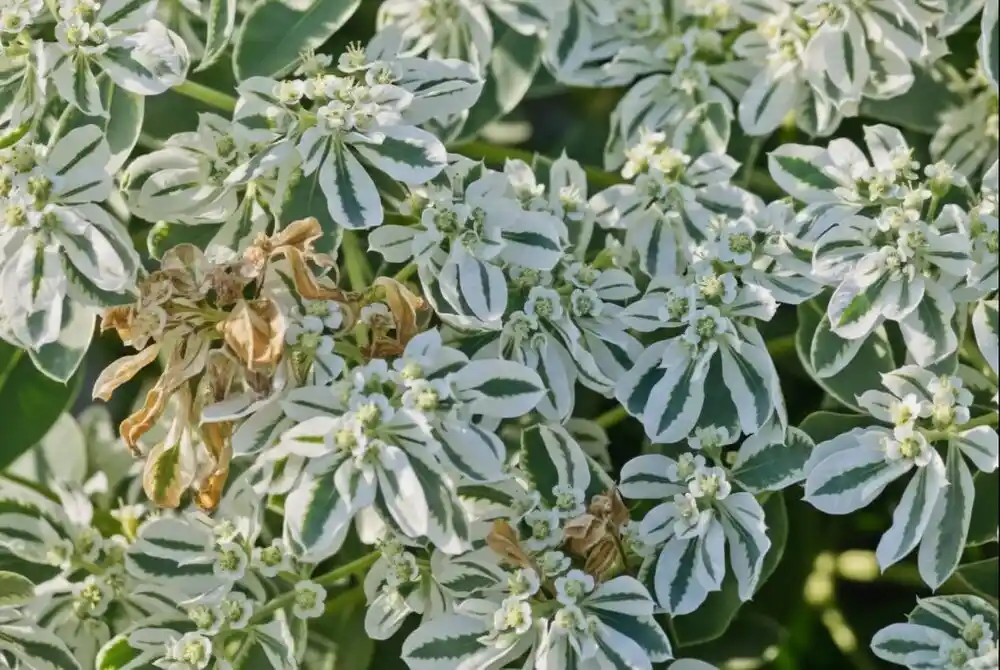
This plant is promoted as a shade-tolerant solution for weedy low-light areas—but the source also identifies it as goutweed/bishop’s weed, a plant widely considered invasive in many regions. Proceed carefully.
Best conditions (per source)
-
Light: Full sun (benefits from part shade in hot areas); also noted as shade-tolerant
-
Water: Moderate
-
Zones: 3–9
Why people plant it
-
Variegated foliage can brighten dark corners and it has a shallow root system.
Important caution
The source explicitly notes it’s considered invasive in some areas.
If you want similar shade coverage without the risk, consider region-appropriate natives and confirm with your local extension.
14) Creeping Jenny (Lysimachia nummularia)
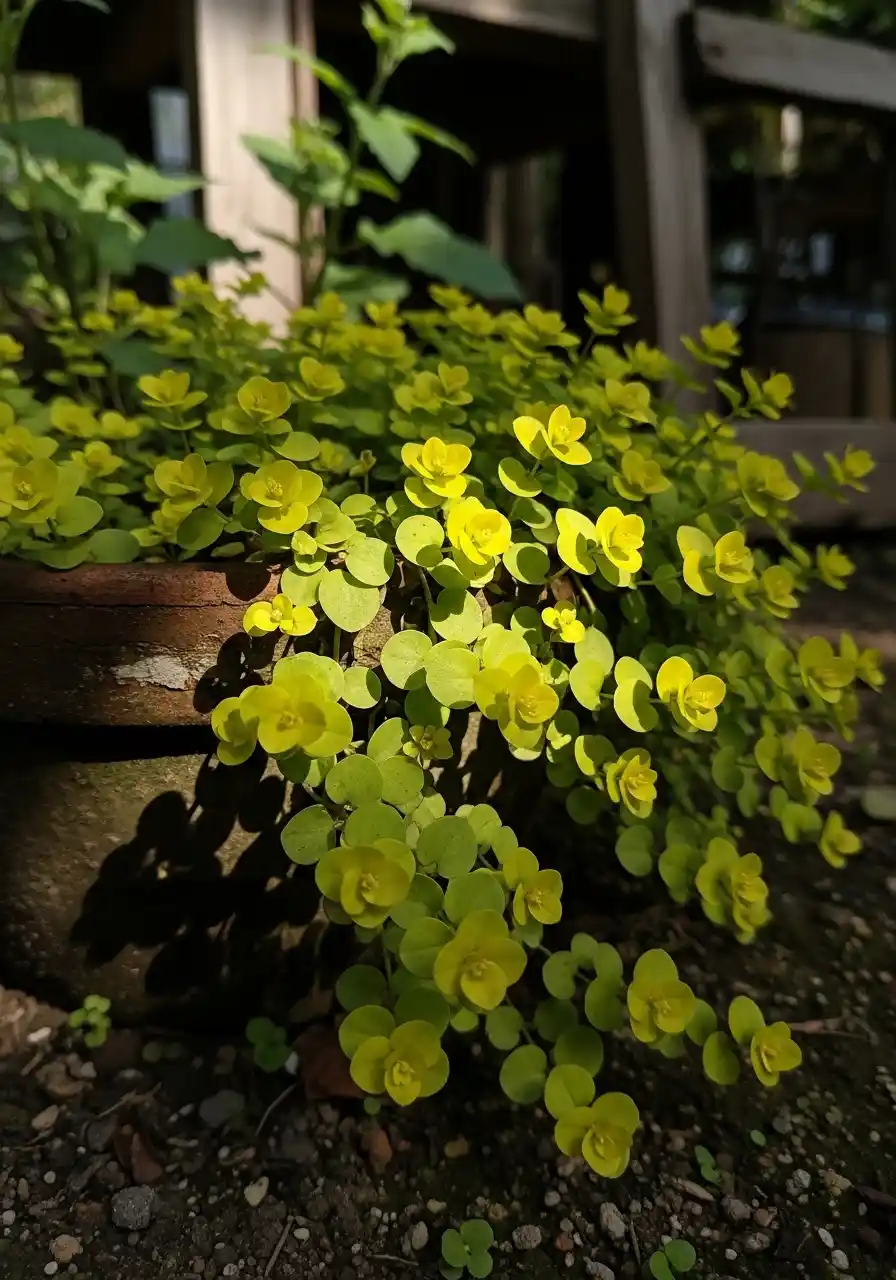
If your challenge is wet soil or a boggy patch, creeping Jenny is highlighted as a groundcover that can handle poor drainage and even shallow water.
Best conditions
-
Light: Full sun to part shade
-
Water: High
-
Zones: 3–9
Why it’s popular
-
Trailing stems with bright chartreuse leaves; yellow buttercup-like flowers from early summer to fall.
15) Creeping periwinkle (Vinca minor)
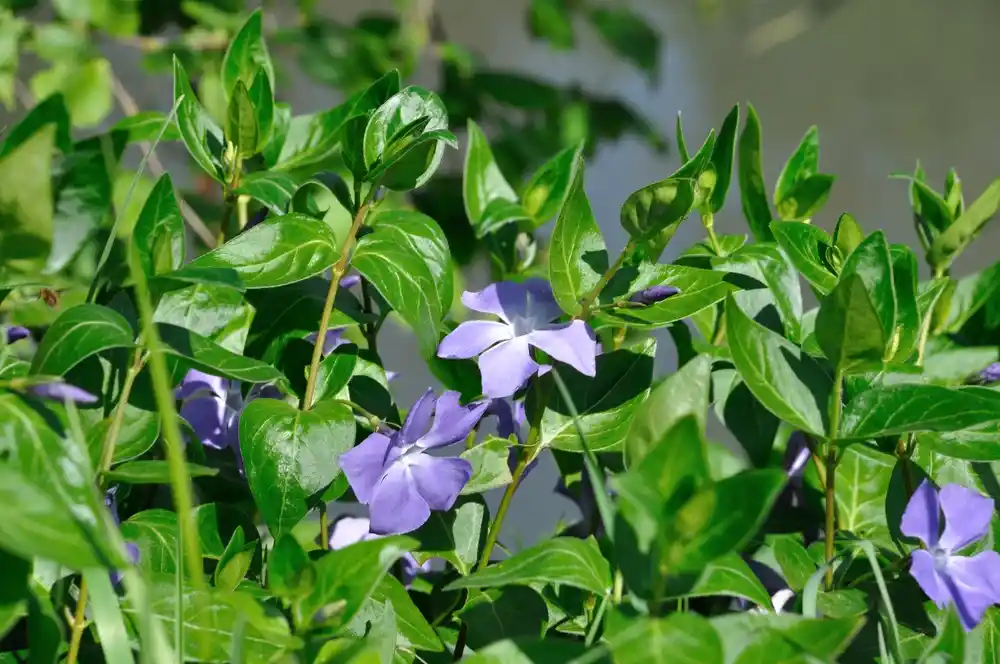
Periwinkle is commonly used because it’s adaptable—sun or shade—and tolerates many soils. It stays evergreen and blooms heavily in spring.
Best conditions
-
Light: Full sun to full shade
-
Water: Moderate to low
-
Zones: 4–8
Performance notes
-
Evergreen glossy leaves year-round; purplish-blue blooms in spring, sometimes lighter summer bloom.
16) Sedum (Sedum spp.)
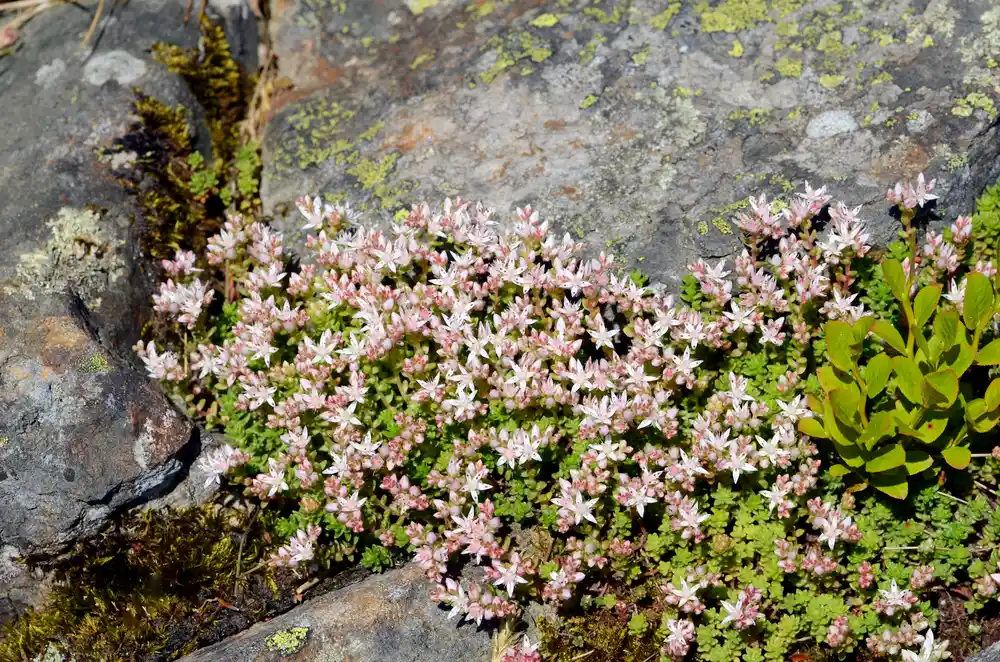
Sedum is the “dry soil” solution—succulent, resilient, and low-water. For groundcover use, the source recommends low-growing cultivars that stay around 6″ tall.
Best conditions
-
Light: Full sun
-
Water: Low
-
Zones: 3–11
Cultivars suggested
‘Blue Spruce,’ ‘Angelina,’ and ‘Murale’ are called out as low-growing options for weed suppression.
Extra benefit
Late-season flowers can support pollinators when other sources fade.
17) Ice plant (Delosperma spp., Lampranthus spp.)
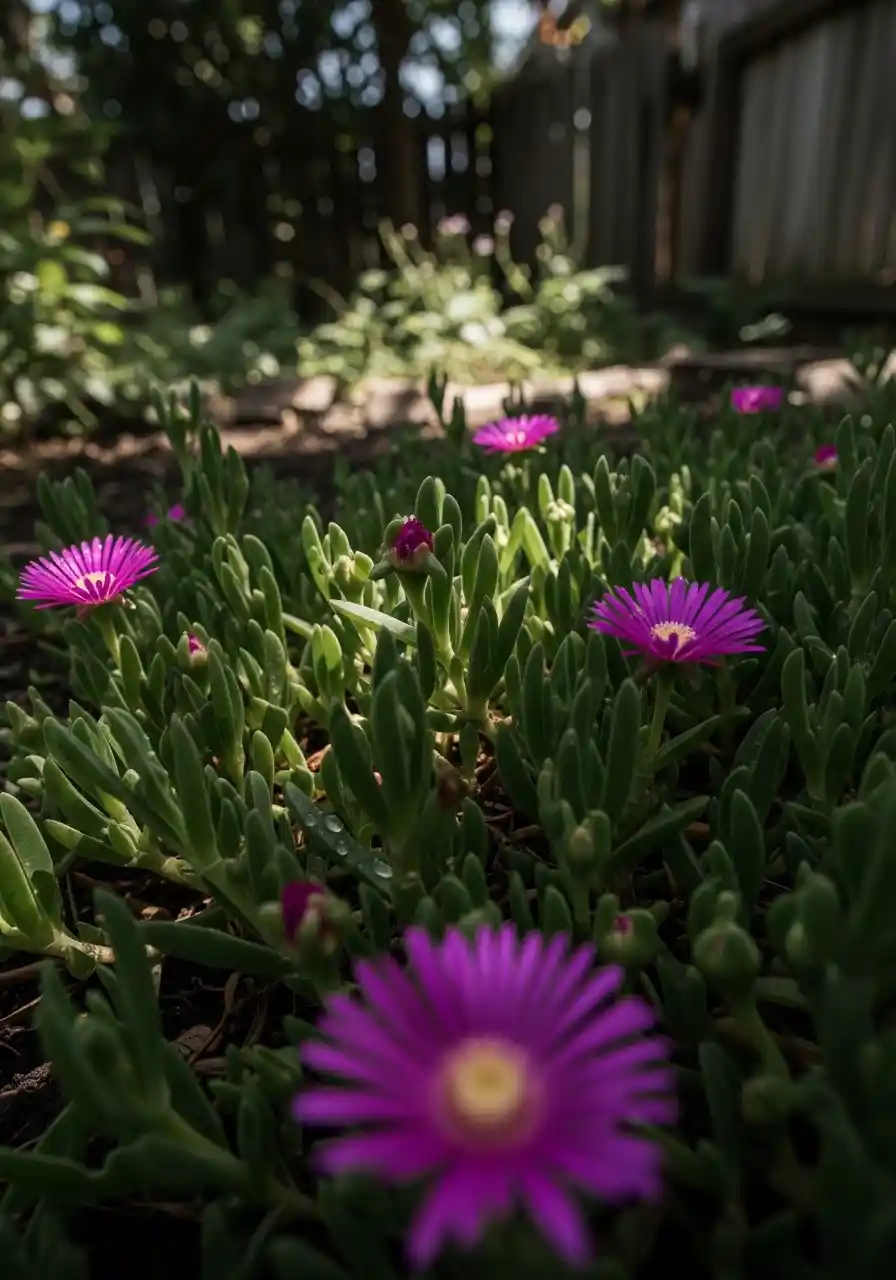
Ice plants provide succulent foliage plus a long bloom season—spring through summer and into early fall—while staying relatively low. The source emphasizes checking scientific names because many plants share the “ice plant” nickname.
Best conditions
-
Light: Full sun
-
Water: Moderate to low
-
Zones: 5–9
Growth + caution
-
Can double in size in the first year; mature size noted around 6″ tall by 24″ wide.
-
The source warns it can be invasive in some areas.
18) Wintercreeper (Euonymus fortunei)
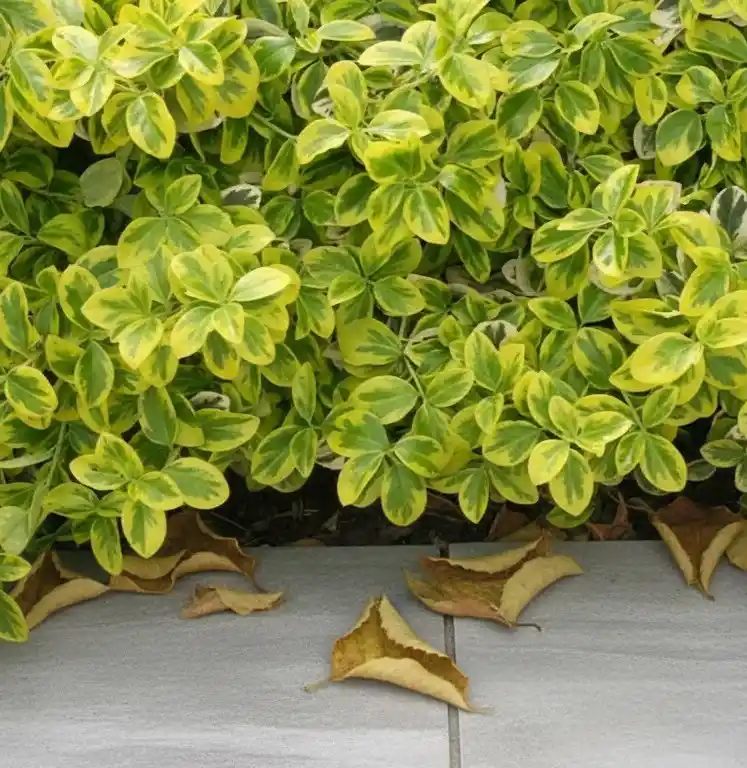
Wintercreeper is a fast-growing, foliage-first groundcover that can also climb if allowed—making it powerful for covering bare soil, but potentially problematic where it escapes.
Best conditions
-
Light: Full sun to part shade
-
Water: Moderate to low
-
Zones: 5–9
Why it suppresses weeds well
-
Rapid spread and dense coverage; can be used as groundcover or trained on structures.
Containment warning
The source notes it can be invasive, can climb trees, and can spread extremely long (vines up to ~70’), though pruning can keep it smaller.
How to match the right groundcover to your problem area
If you choose based on site conditions, you’ll get faster fill and better weed suppression.
For shade and under trees
-
Japanese pachysandra for evergreen density
-
Sweet woodruff for fragrant spring flowers
-
Bugleweed if you want dramatic foliage
For wet, boggy, or poorly draining soils
-
Creeping Jenny is specifically highlighted for soggy sites and even shallow water.
-
Bunchberry also prefers higher moisture (moderate to high).
For dry slopes, rock gardens, and low-water landscapes
-
Sedum for drought resilience
-
Ice plant for sun + long blooming, where non-invasive
-
Rockcress for sunny sites and wall edges
Maintenance: keeping groundcovers effective without letting them take over
A weed-suppressing groundcover is only “low maintenance” after establishment.
Year 1: focus on establishment
-
Weed by hand regularly (so seedlings don’t get ahead).
-
Water deeply and consistently.
-
Patch gaps quickly—gaps are where weeds return.
Year 2+: focus on containment and renewal
-
Edge once or twice per season.
-
Divide vigorous clumps (golden star is often divided by some gardeners).
-
Prune or thin aggressive runners before they root beyond borders.
Summary: the fastest path to a weed-resistant garden
Weeding is still the best way to remove established weeds—but once the soil is clean, leaving it bare is an invitation for weeds to return. The source recommends covering soil again with mulch or, better yet, thick layers of natural groundcovers that protect soil from erosion and suppress weeds by sheer density.