Right when I started noticing how a cinder block garden border changes the whole vibe of a yard, I got a little obsessed. Not in a “Pinterest perfect” way either. More like, I kept staring at my boring edges and thinking… why does the border always look messy no matter how much I weed?
Table of Contents
Cinder block garden border: the stair-step wall bed along the house
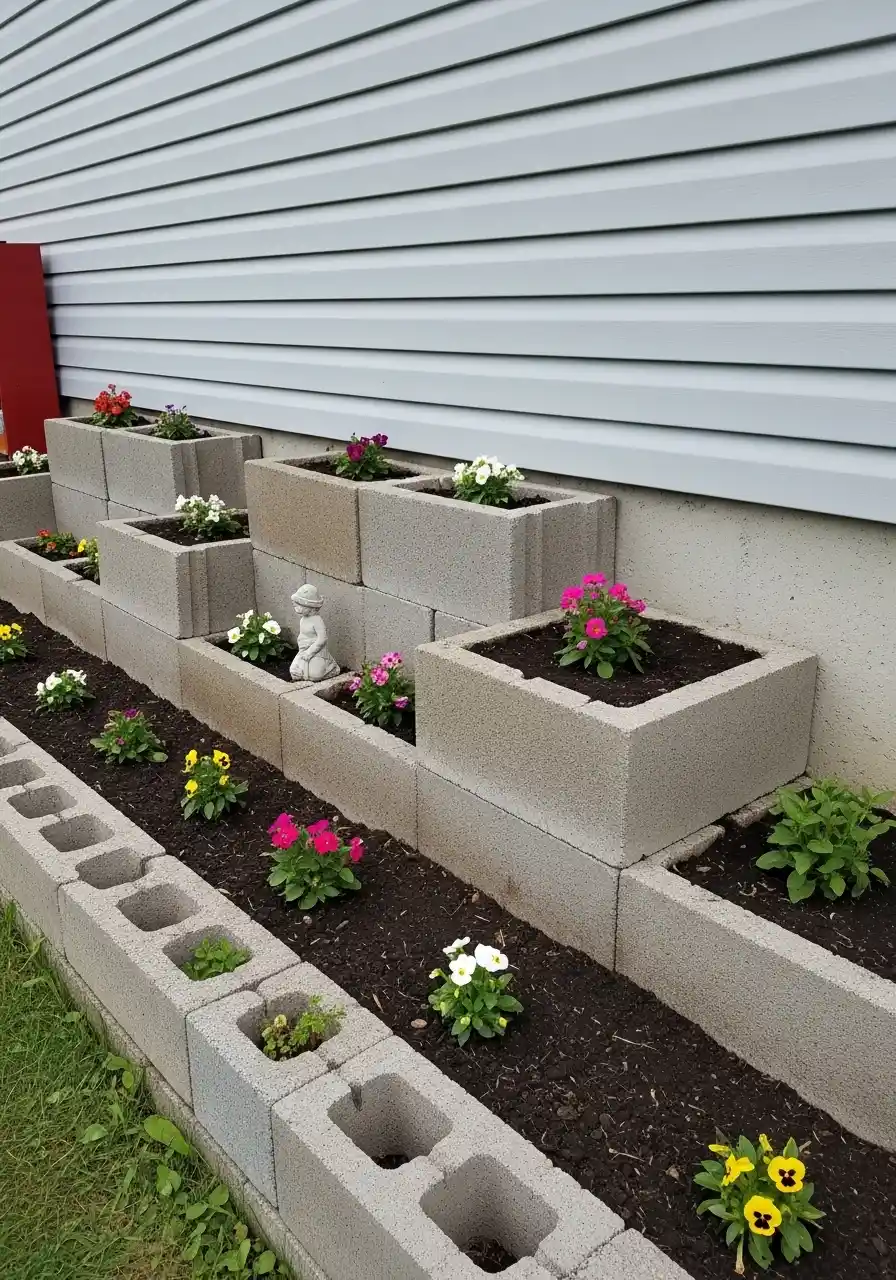
The first setup is that stepped, blocky bed right up against the siding. It looks like a little staircase made out of blocks, and it’s honestly smarter than it looks. You get different heights without building a huge frame, and you can plant tall stuff in the back without shading everything in front.
What I like is how it naturally organizes the chaos. I’d put my “I forget to water you” plants up top, because it stays drier, and then put thirstier flowers down low. If you’re doing a cinder block garden border like this, put cardboard or landscape fabric under it first. I didn’t once and weeds came up like they owned the place, it was rude.
Also, those little block holes are a sneaky bonus. Stuff basil, alyssum, or small marigolds in there and it looks intentional even if your main bed is not. That’s my favorite kind of gardening win.
Raised veggie squares with chunky mulch paths
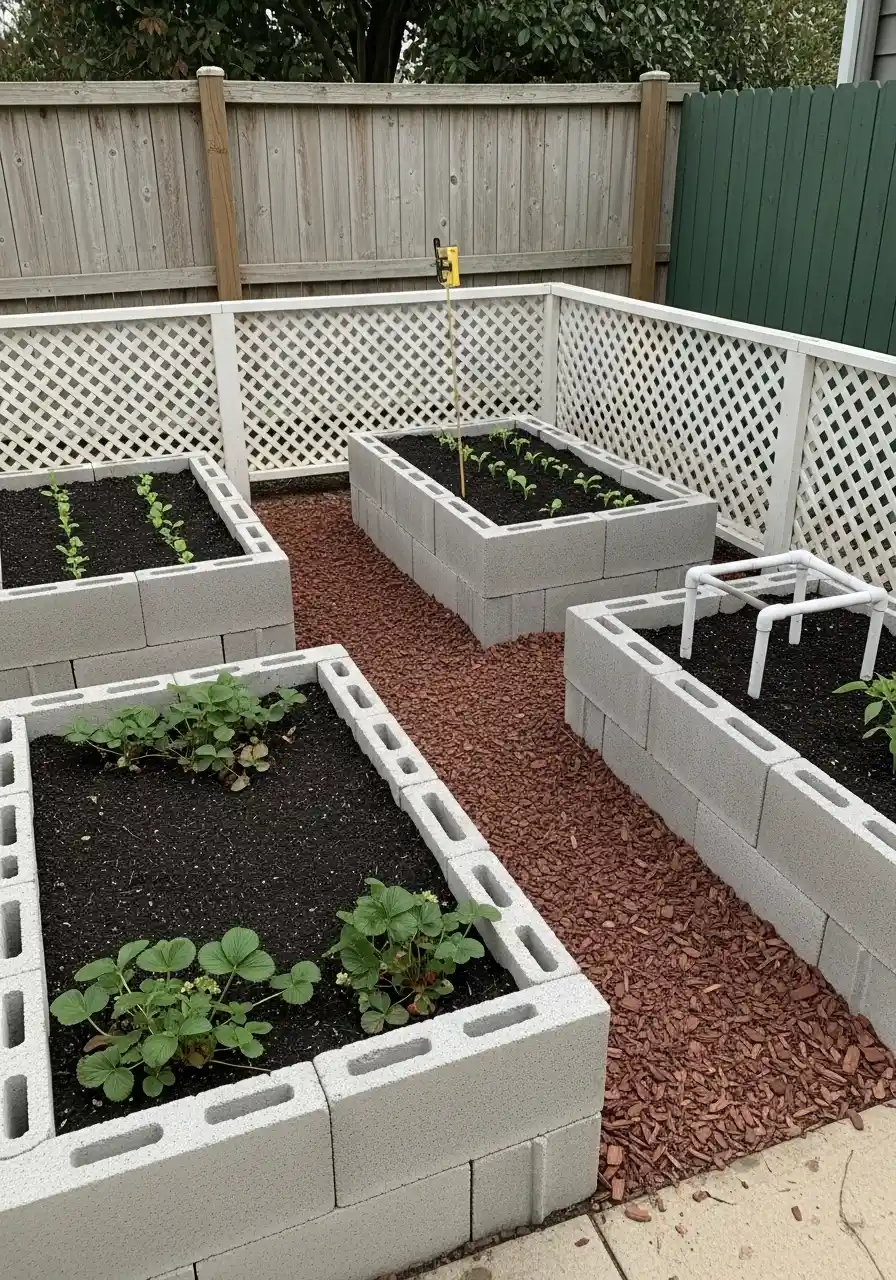
This one is basically a mini garden “room” made from blocks. Multiple square beds, and the walkways are filled with mulch. I love that the beds feel clean and separate, like each box has a job. It’s a cinder block border setup that helps you keep soil where it belongs, not washing everywhere.
The hack here is the path. Mulch is soft, cheap, and it hides mistakes. If you’re clumsy like me and you spill soil or drop leaves, mulch forgives you. I’d lay down thick landscape fabric under the mulch so it doesn’t turn into a weed carpet by July.
If you want it even neater, keep the block holes facing up and plant tiny herbs in them. That turns the whole concrete block garden border into extra growing space. It feels like cheating, in a good way.
Tomato corner bed with “pretty but useful” flowers
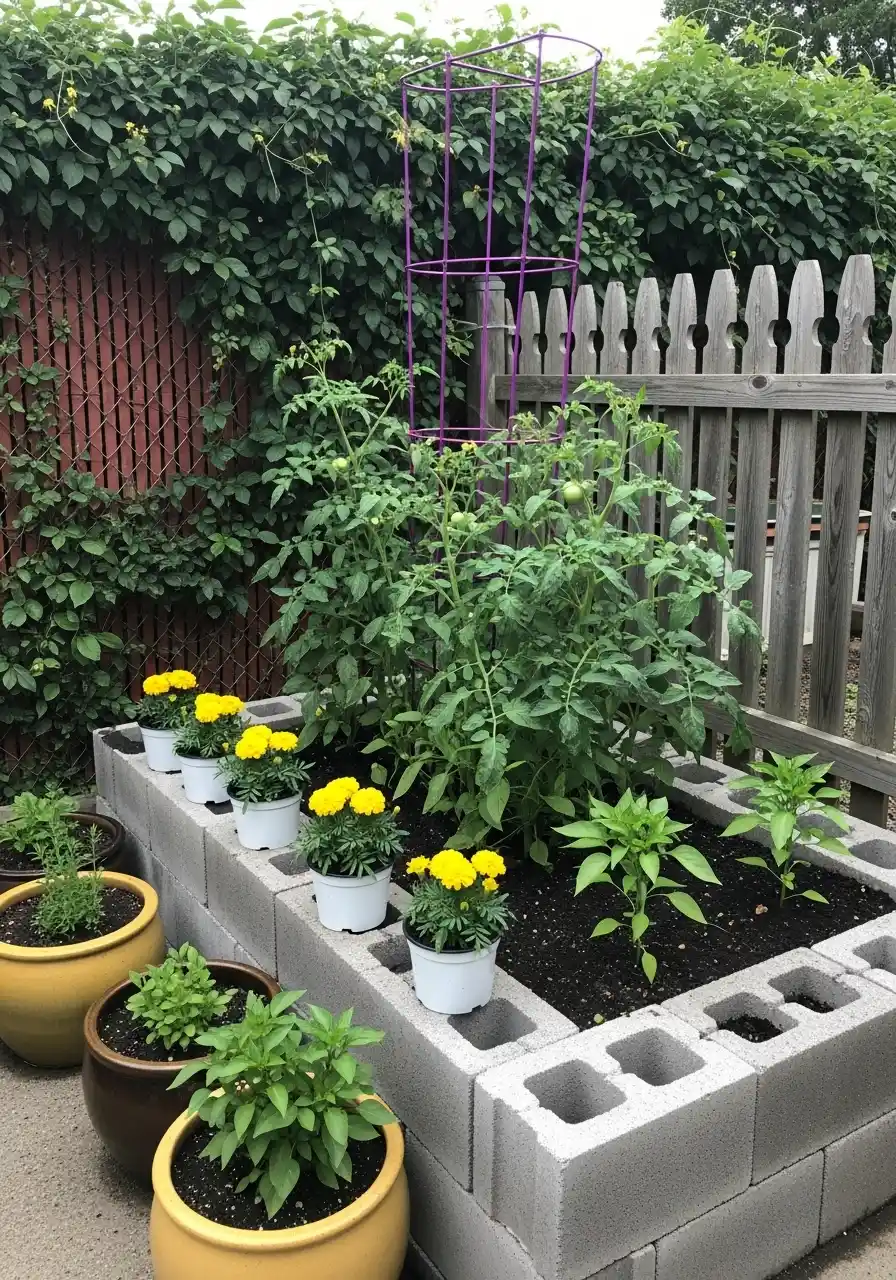
This design is a straight-up practical cinder block garden border bed, but it doesn’t look harsh because the flowers soften it. I saw marigolds lined up like little soldiers, and honestly, it made me happy. Marigolds are not fancy, but they act like tiny bodyguards.
Put your tomato cage in first before planting, trust me. If you wait, you’ll crush something and then you’ll pretend you “meant” to prune it. I like keeping peppers or basil near the corners, and then use the block holes for more marigolds. It’s like a border within the border.
One more trick: fill the bed slightly higher in the middle so water drains toward the edges. That keeps the stems from sitting in soggy soil, which is how you get sad plants and even sadder excuses.
The pyramid stack for salad greens and herbs
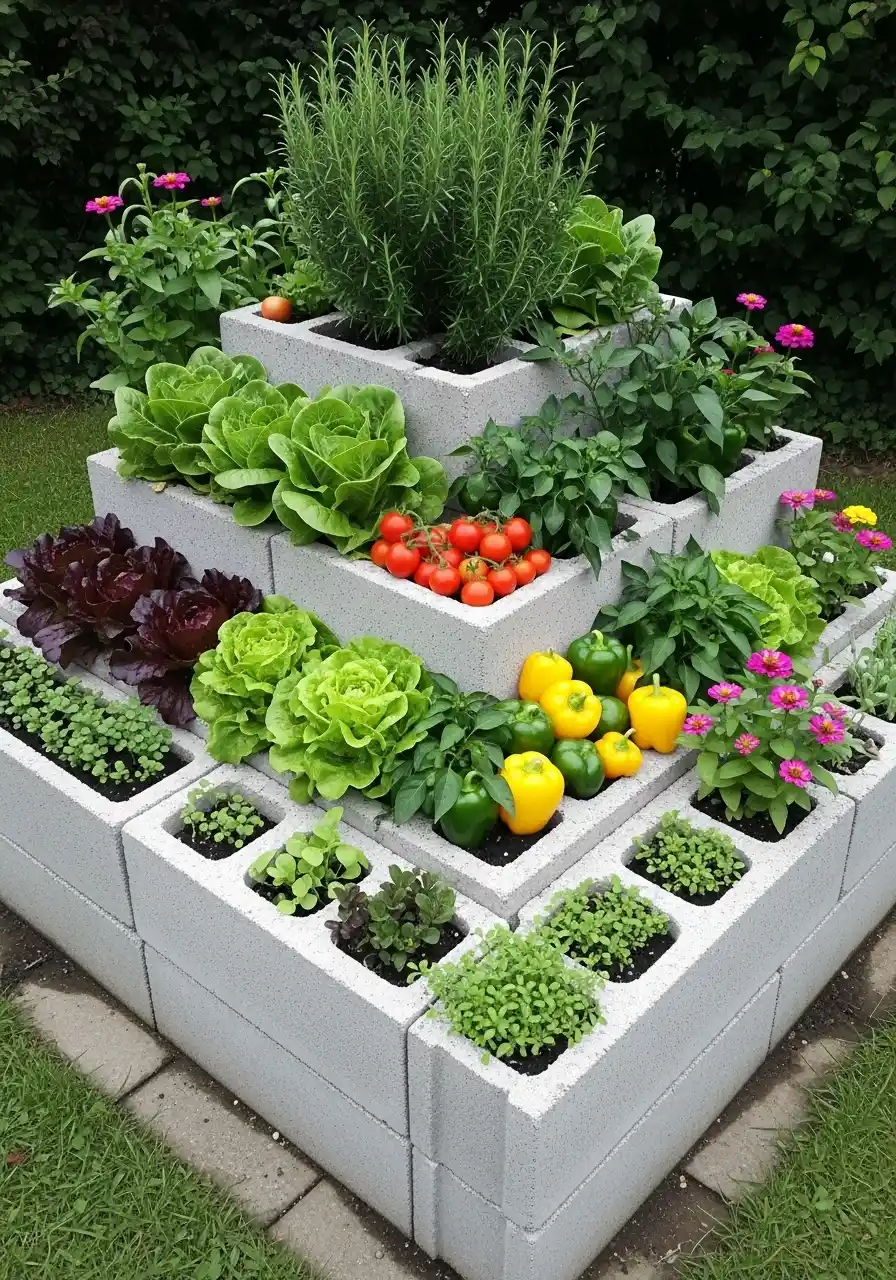
The stacked pyramid looks like a little food sculpture. This is one of those cinder-block garden edging ideas that makes a tiny space feel like a real garden. Because it goes up, you can grow a lot without spreading out.
I’d copy the plant choices here too: lettuce, herbs, peppers, maybe even strawberries spilling from the sides. The top level is perfect for rosemary or thyme because it stays warmer and drier. The lower levels can hold leafy stuff since they’re easier to water.
Here’s my honest opinion though: if you don’t plan your watering, you’ll regret it. I’d run a soaker hose up the levels or water from the top and let it trickle down. If you just splash random spots, some pockets will dry out fast, and you’ll be like “why is only THAT corner dying?” Yeah, been there.
Curved block border bed with a simple centerpiece
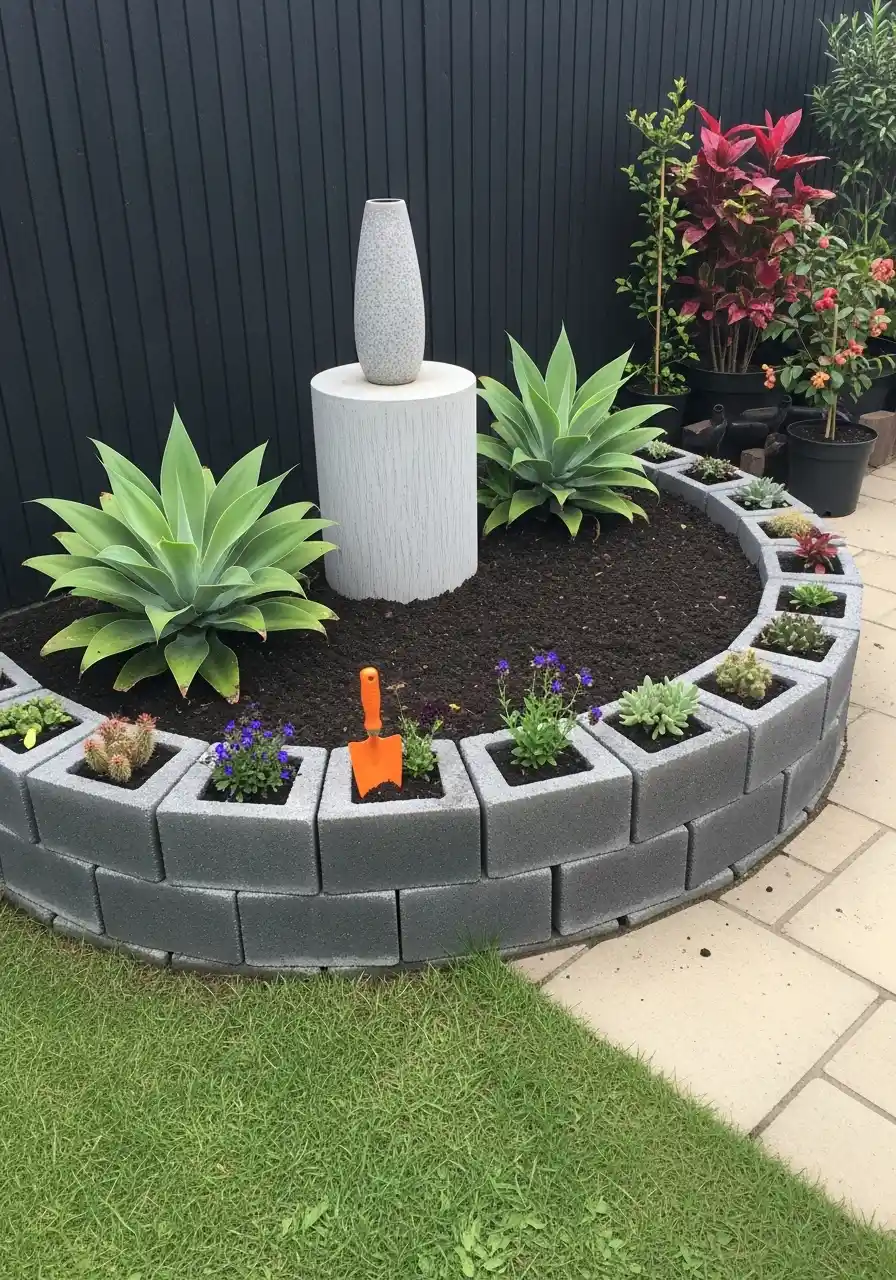
This curved border is basically a landscaping flex. The blocks are stacked into a smooth arc, then filled with dark mulch, then planted with sculptural plants like agave. It feels modern but still doable. A cinder block garden border like this makes the yard look planned, even if the rest of your yard is… not.
The centerpiece trick is key. One tall vase, sculpture, or big pot in the middle gives your eyes a place to rest. Without it, the bed can look like a random half-moon of dirt. I personally love the contrast of gray blocks with deep mulch. It looks clean and calm, like you could breathe there.
And if you hate re-doing mulch every year, try mixing mulch with small rock in the center area. It holds better in wind and heavy rain, and it still looks neat.
Long skinny border bed with drip line
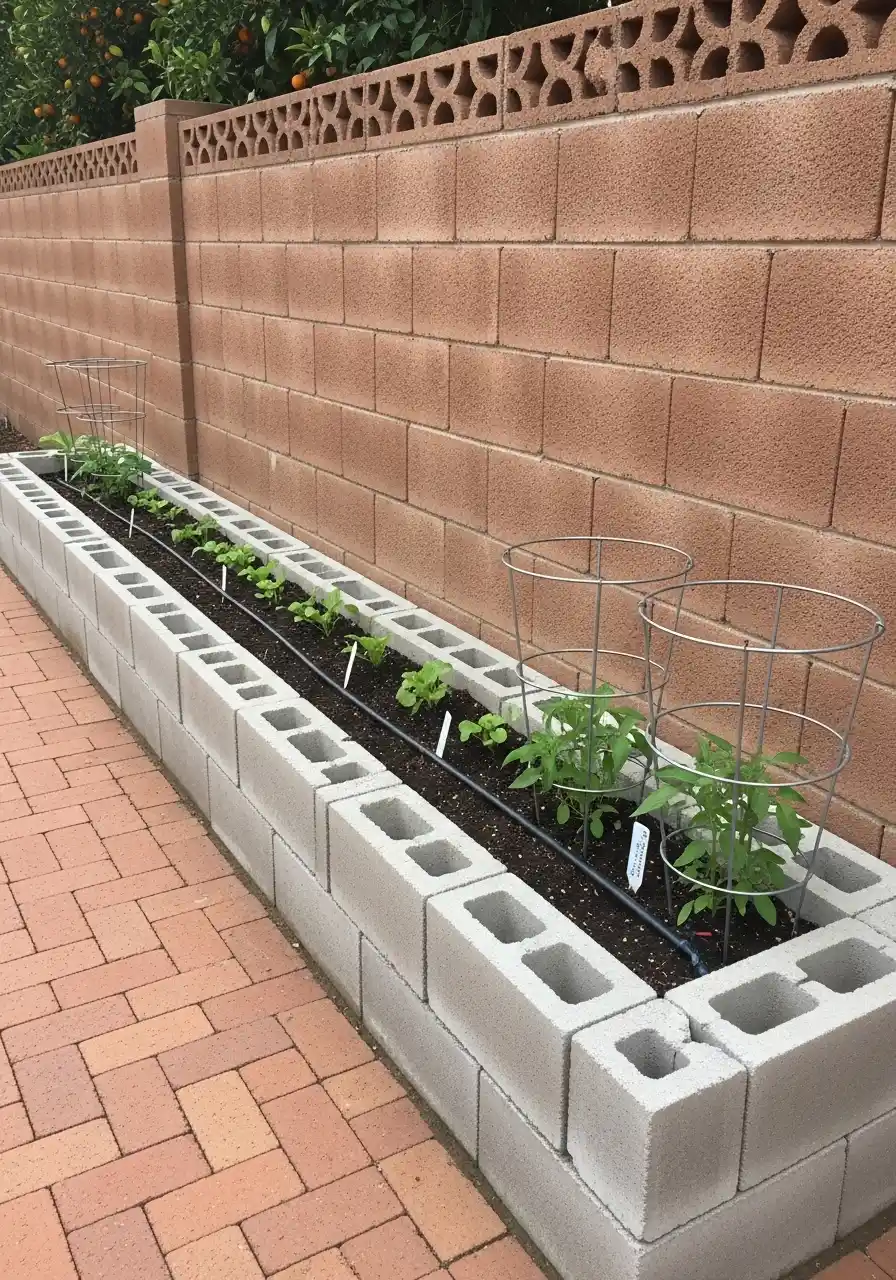
This one is made for awkward spaces, like that strip next to a wall where nothing ever looks right. The cinder block garden border turns it into an actual planting zone instead of “dead space.” I noticed a drip line running through it, and that’s the whole secret sauce.
If you do this, place your irrigation before you fill the bed all the way. Otherwise you’ll be digging like a raccoon later. I like planting in rows here: one row for herbs, one for greens, one for peppers. It’s simple, and simple is easier to maintain when life gets busy.
Also, keep the top layer of blocks with holes facing up in a few spots. That gives you spots for little flowers or garlic chives. It breaks up the long line and makes the block garden edging look less stiff.
Block-hole planting for lettuce and onions near the house
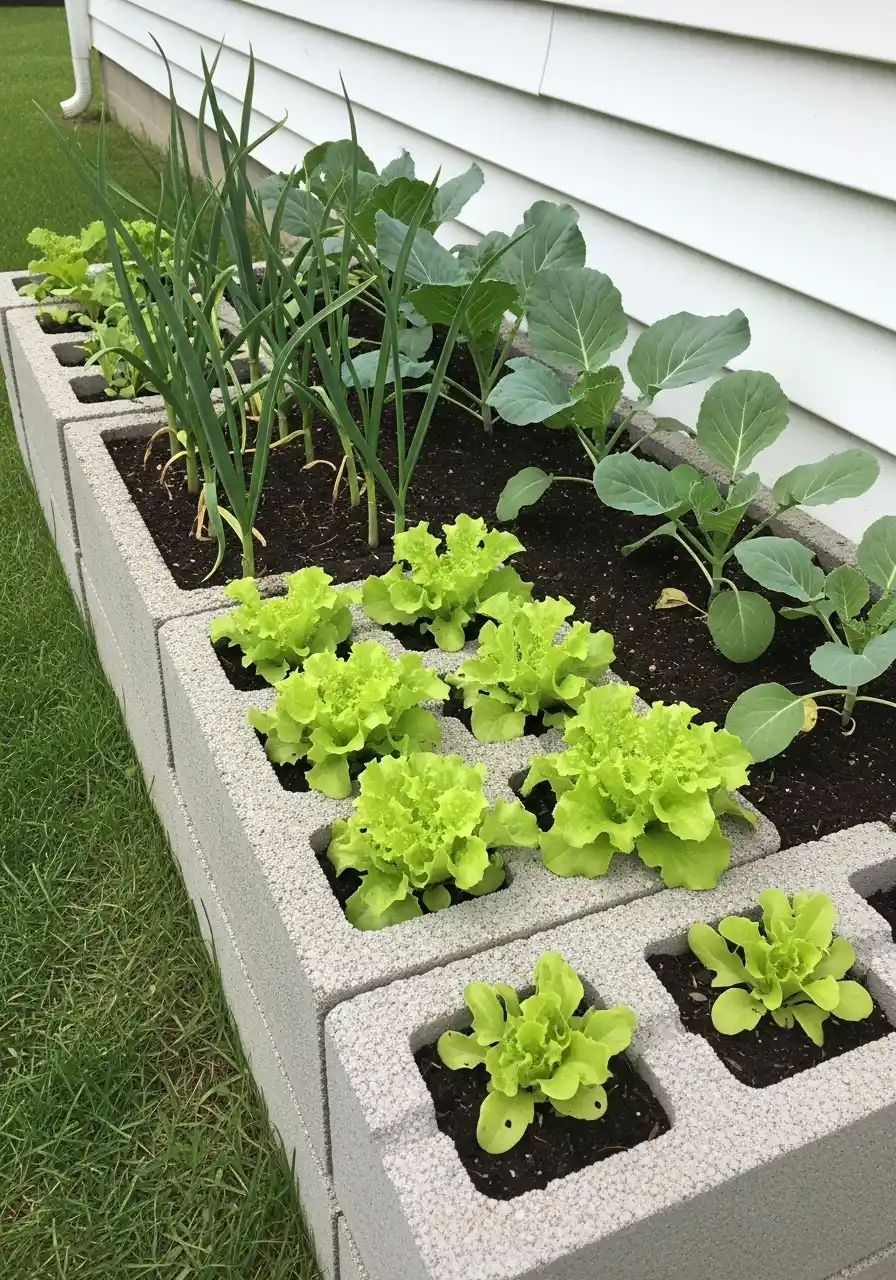
This one is kind of adorable because the blocks themselves become the planters. Big leafy greens in the main bed, then lettuce tucked into the holes like little green cupcakes. It’s a cinder block border garden style that feels super efficient.
The trick is soil depth. Those holes aren’t deep, so pick plants that don’t need a ton of root space. Lettuce, spinach, small herbs, green onions. If you put something big in there, it’ll struggle and you’ll blame the weather, but it’s really the hole.
I’d also keep the soil a bit lighter in the holes, mix in compost and maybe perlite. Heavy soil turns into a brick in those pockets, and then watering gets weird. This is one of those “small detail” things that makes a big difference.
Square bed with fabric top, pots, and neat edges
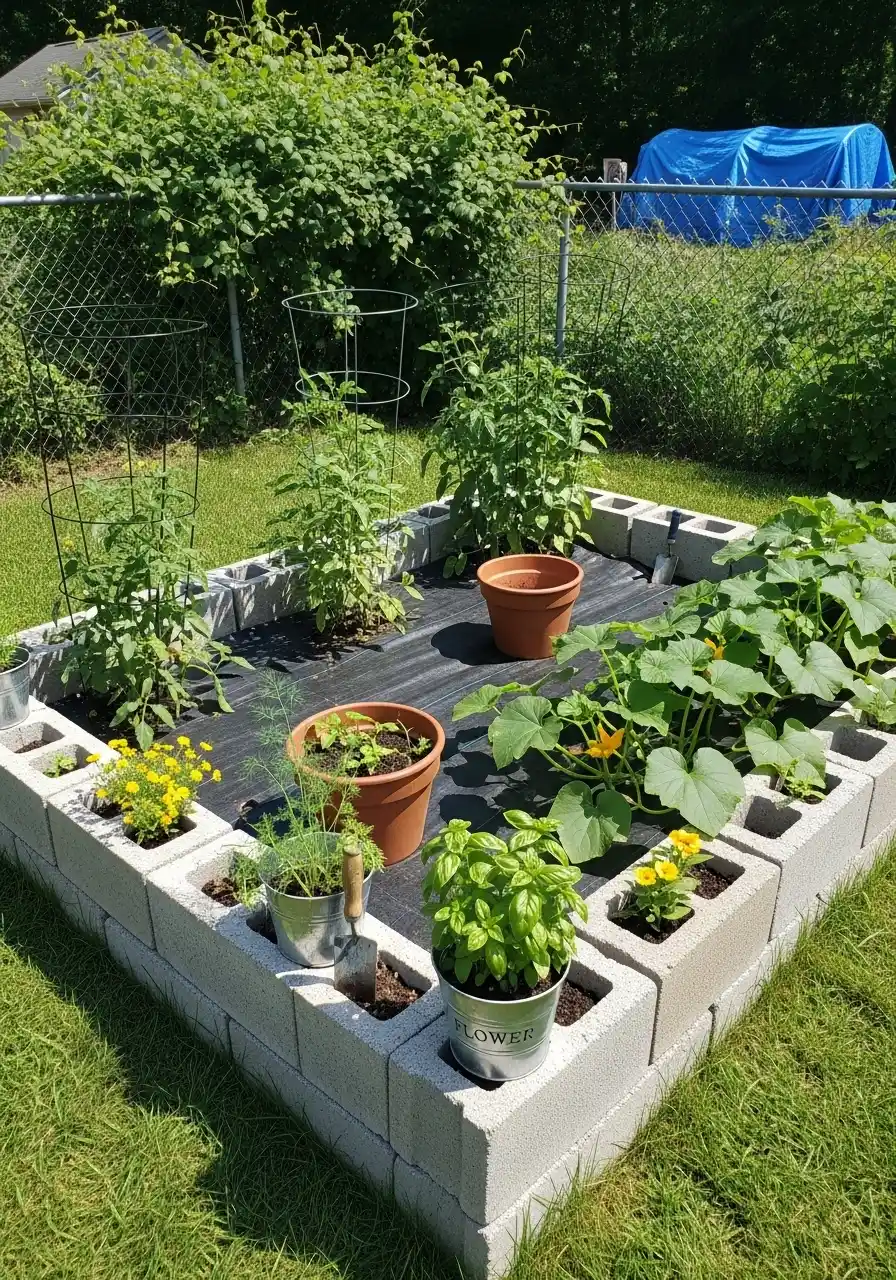
This one is for people who want low weeds and high control. The bed is built from blocks, then the top is covered with landscape fabric, and plants pop up through holes. It’s a cinder block garden border move that feels a little strict, but in a good way.
If you hate bending over to weed, this setup helps a lot. The fabric blocks light, so most weeds give up. I’d still pin the fabric down tight, because wind will lift it and then it looks messy fast. I know because mine did that and I was annoyed every time I saw it.
I also like the pots tucked into the corners. It adds height and lets you move things around. If your basil is struggling, shift it. If something looks ugly, hide it. That’s real life gardening, not some perfect yard fantasy.
Long raised bed with flower pockets along the rim
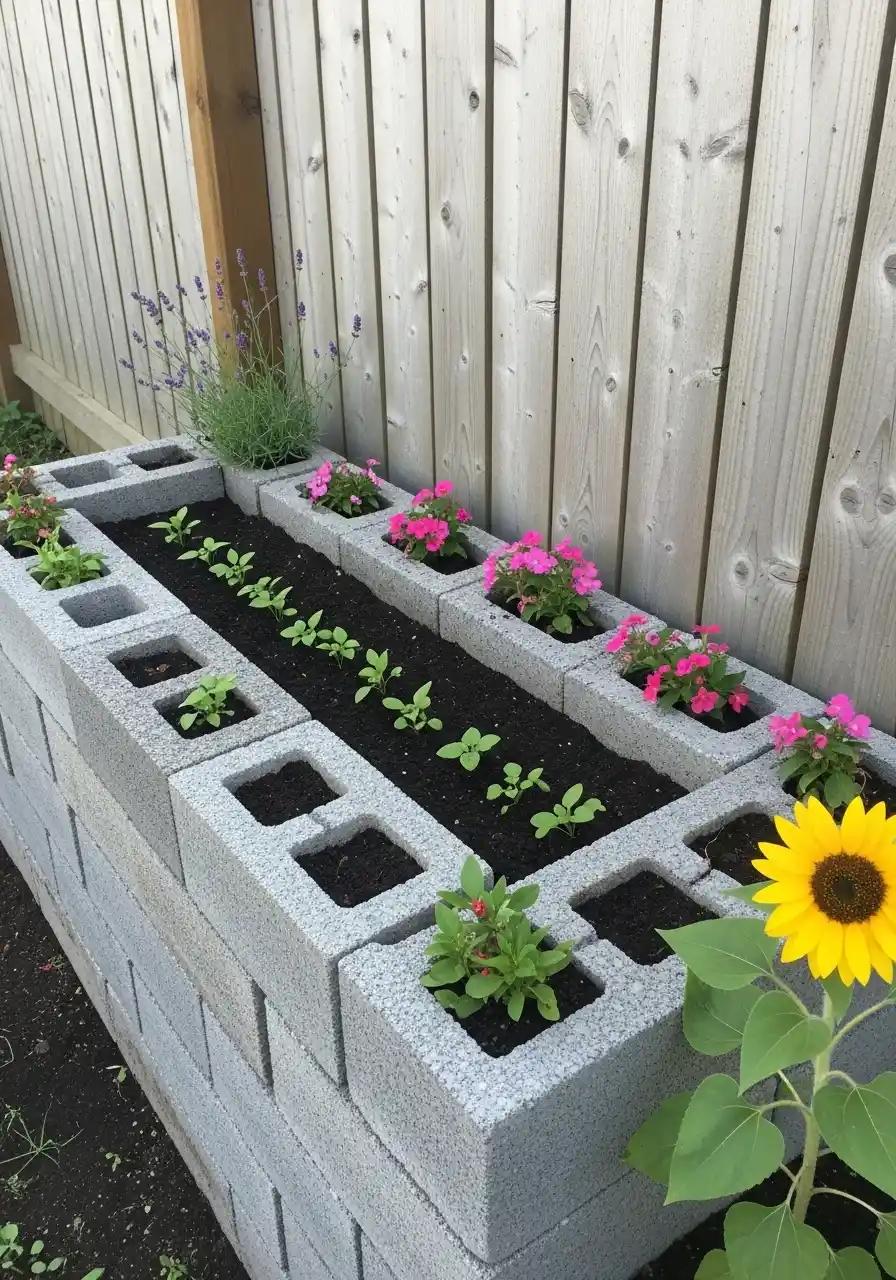
This design has a fun “two-layer” look: the main bed is for planting, and the top block holes are used like a built-in flower border. It makes the cinder block garden border feel cheerful, not industrial.
I love the idea of planting bright flowers in the holes and keeping the center for veggies or taller plants. The flowers also bring pollinators right to your food plants, which is pretty cool. If you pick trailing flowers, they spill over the edge and soften the block lines.
My only warning: don’t overstuff every pocket. It’s tempting, but it can look crowded. Leave a few holes empty for herbs or just breathing space. A little empty space makes the whole cinder-block edging look more on purpose.
Greenhouse block beds with stepping stones and playful decor
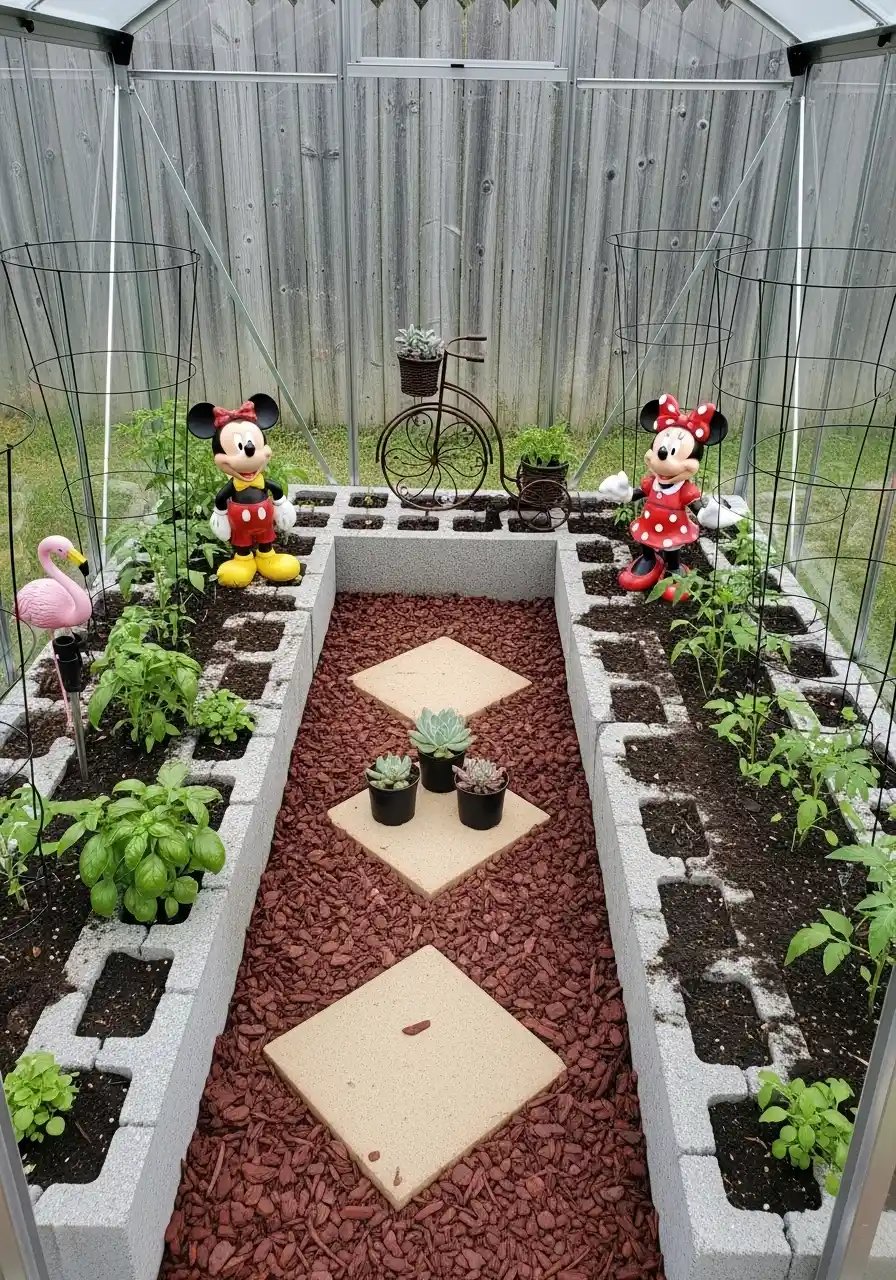
Okay this one made me smile. A greenhouse space with block borders on both sides, and a clean path down the middle using stepping stones on mulch. It’s practical, but it also feels personal with the silly decor. A cinder block garden border doesn’t have to be serious.
The stepping stones are a smart hack because they keep your feet out of mud, and they stop you from compacting the soil near the plants. If you’ve ever stepped into a soggy greenhouse bed by accident, you know that feeling of instant regret.
And yes, the decorations matter. When you add something goofy, it makes you want to go out there more. If the space makes you happy, you’ll water more, prune more, and notice problems earlier. That’s not cheesy, it’s just true.
The little square bed that keeps me honest
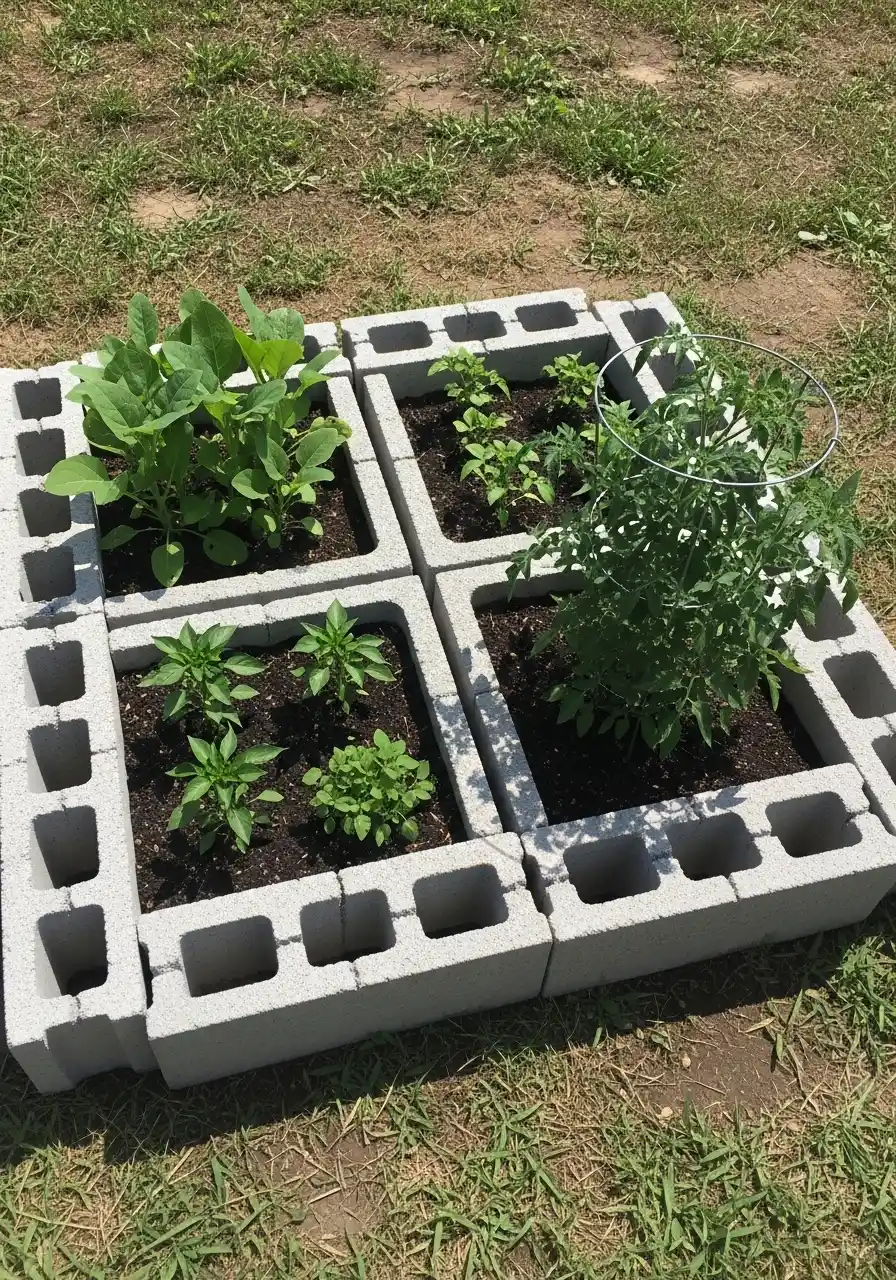
This first idea is the tiny “square-within-a-square” bed made from cinder blocks, like a mini grid. I like it because it forces me to stop planting like a raccoon. Each section can be one plant group, so I don’t cram tomatoes next to basil and then act surprised when it turns into a jungle.
The trick is leveling. If the ground is lumpy, your cinder block garden border will wobble and it’ll bug you every time you see it. I scrape the soil flat, tamp it down, and lay the blocks like a puzzle. Then I fill the center with good soil, not the sad dirt from the side yard. I also like using the block holes as bonus planters for small herbs, like basil or thyme, because it looks tidy and smells nice when I brush past it.
Cinder block garden border: a long raised bed with built-in flower “pockets”
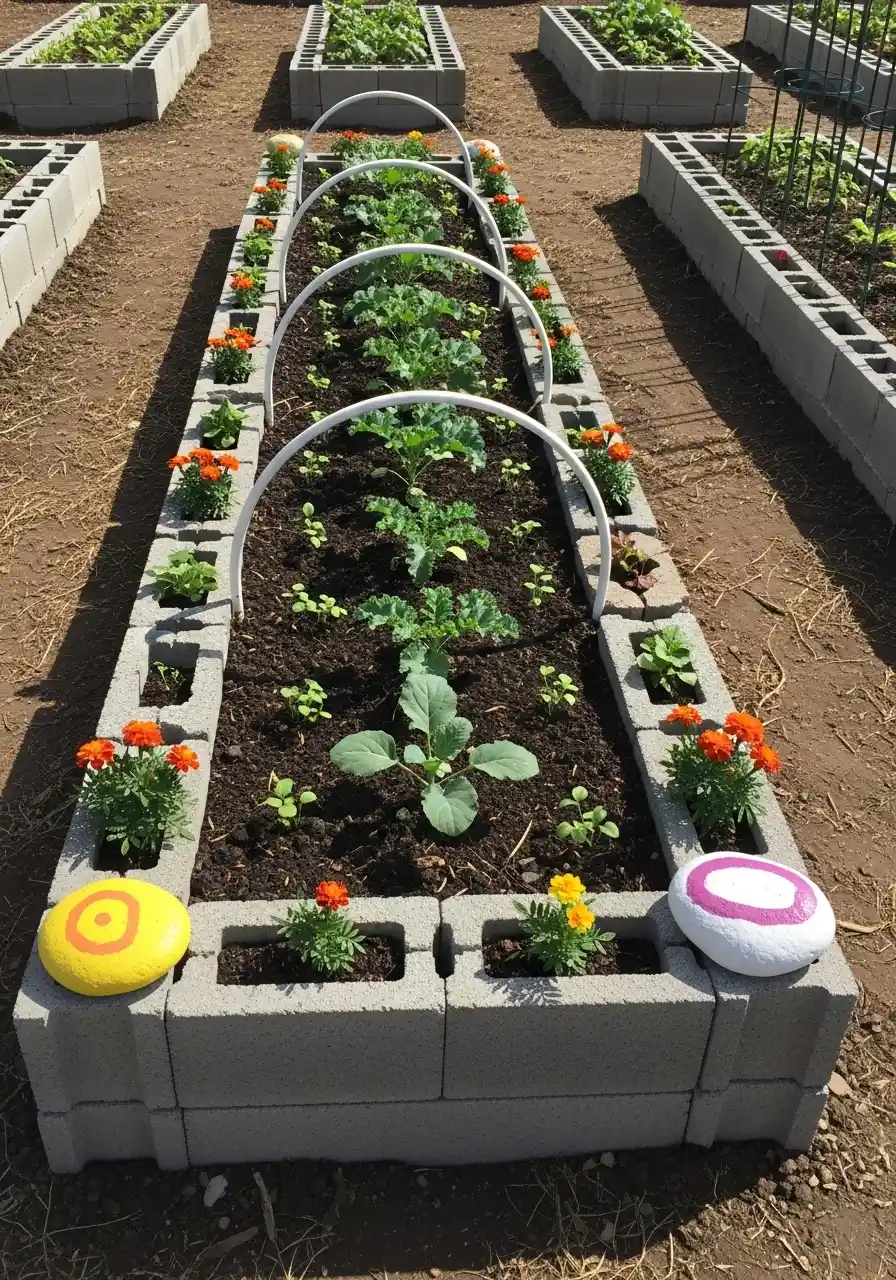
The long raised bed idea is my favorite when I want food + pretty at the same time. The blocks line the edge, and the holes become little flower pockets. In the photo, it’s like marigolds tucked into the border and veggies down the middle. That’s not just cute, it’s kinda smart. Marigolds help distract pests, and also I just like seeing orange dots along the sides.
For this cinder block garden border, I’d do two small hacks. First, line the inside edge with cardboard before adding soil, so weeds chill out for a while. Second, add hoops (PVC or metal) early, before your plants get big. It makes a quick tunnel for shade cloth or bug netting. I’m not gonna lie, I feel proud when I see a bed that looks “farm-ish” even though I’m basically winging it.
Paint it loud and make it a happy veggie runway
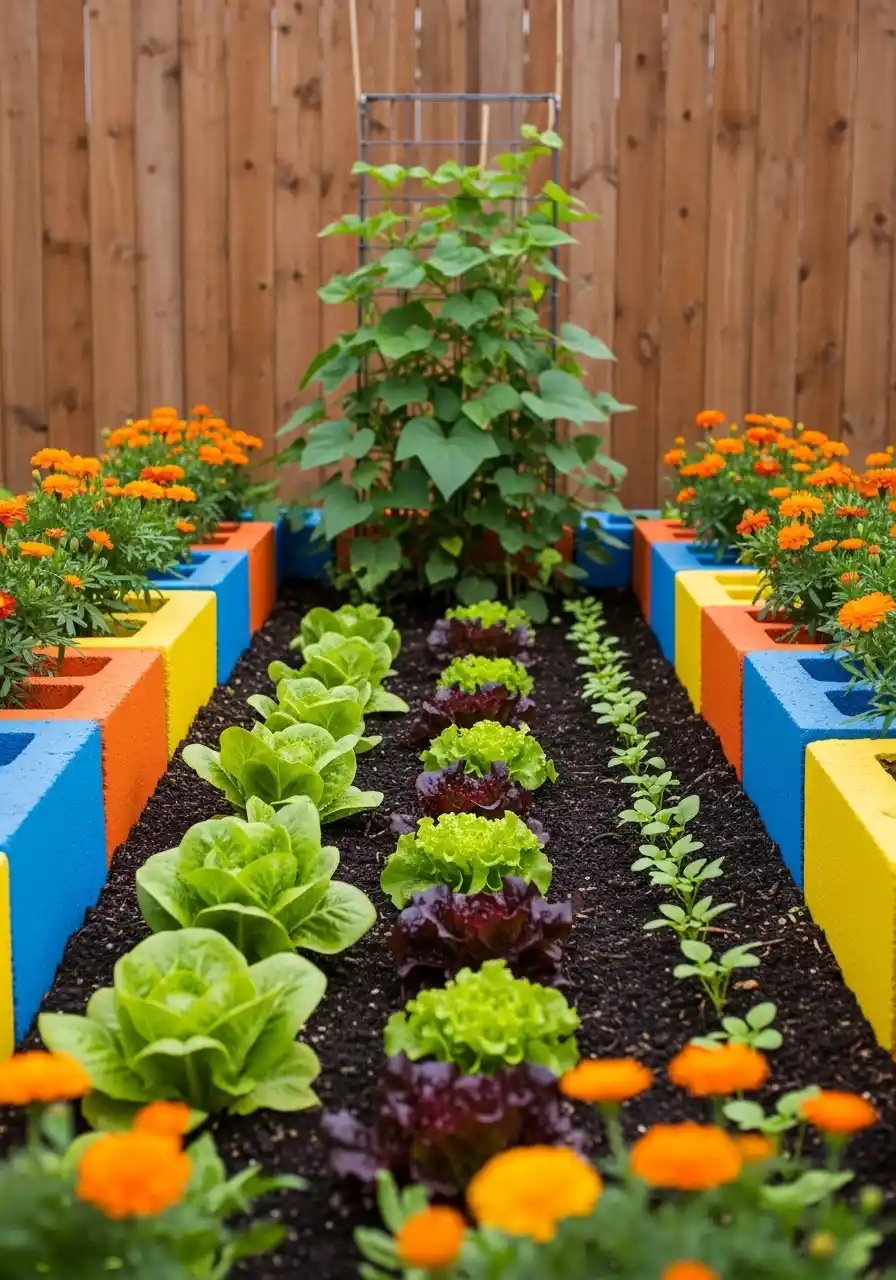
Ok, the painted block border is loud, like bright blue, yellow, orange. And I kind of love it. If your yard feels boring, a colorful cinder block garden border is like instant personality. It makes the garden feel friendly, like kids should run through it and point at stuff.
If you paint, use outdoor masonry paint, and let it dry for real. I messed this up once and my hands were blue for two days. Also, paint the outside faces only, not the parts touching soil. I don’t like guessing what’s leaching where, you know? This design works great with neat rows of lettuce or greens because the straight lines plus bright blocks make the plants look extra fresh. And if your fence is plain wood, the color pops hard in a good way.
Cinder block garden border: a stepped herb wall that saves space
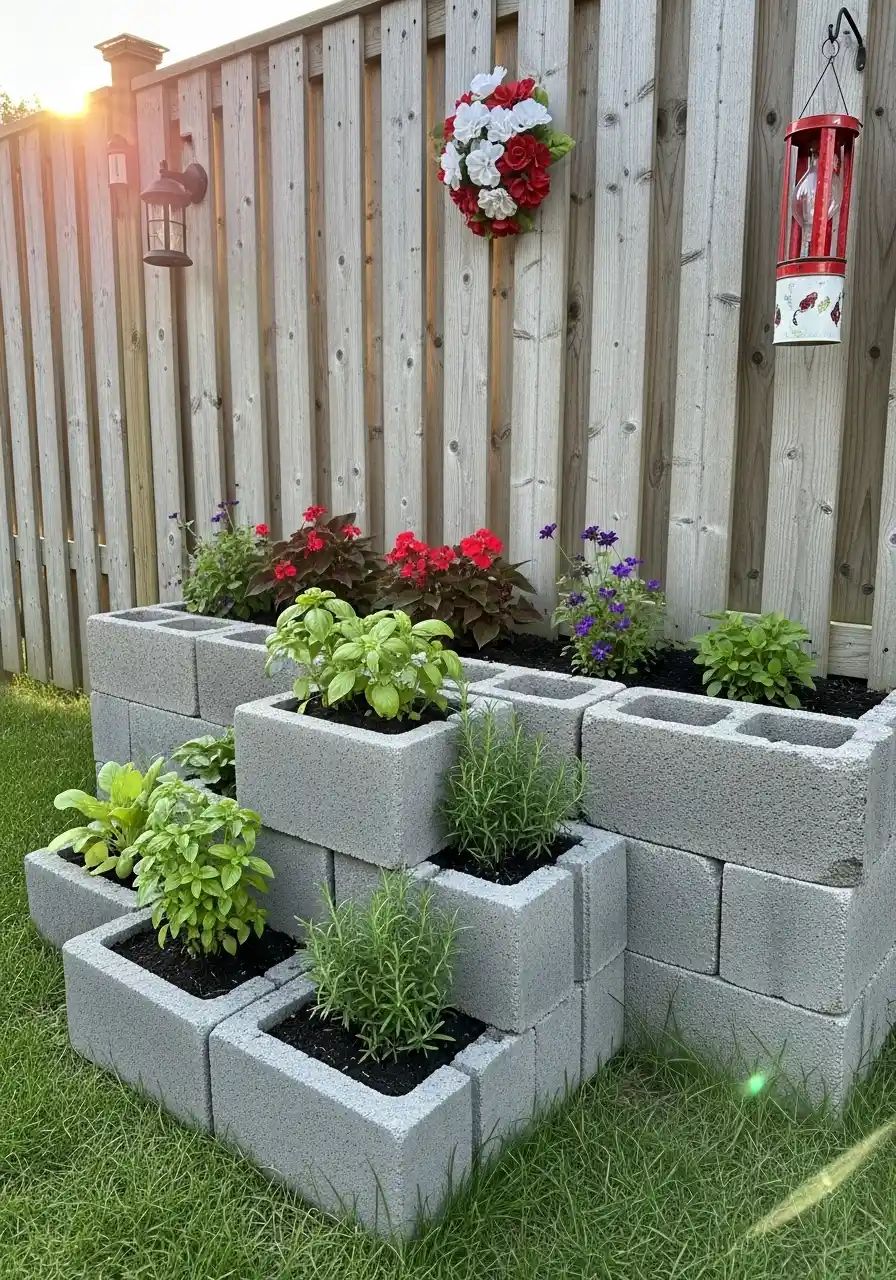
This one is basically a little block “staircase” planter, and it’s so satisfying. You stack cinder blocks like steps, then plant herbs in the openings. It’s a cinder block border and a planter at the same time, which feels like cheating the system.
I’d put this near a grill or back door, because you’ll actually use the herbs if they’re close. Basil, rosemary, thyme, chives, even little flowers for bees. The main tip is drainage: poke holes through the soil in each pocket and don’t pack it like concrete. Herbs hate wet feet. Also, if your yard gets blasted by sun, this setup warms up fast, so water a bit more often. I like it because it looks clean, but also a little handmade, which is my vibe honestly.
The big rectangle layout for a “real” garden area
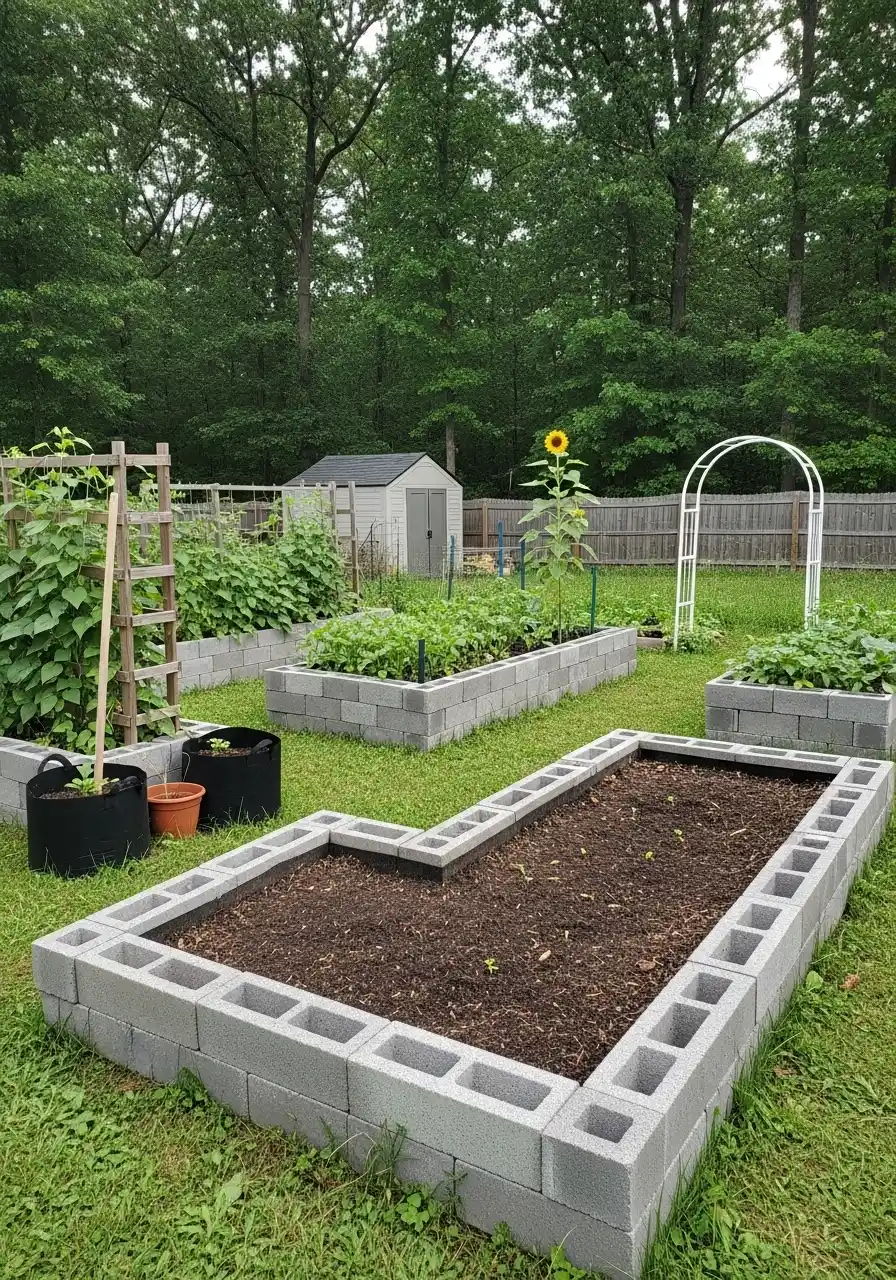
The last idea is the big rectangular bed frame layout, like a whole garden zone made from blocks. It gives “organized gardener” energy, even if you’re not. A cinder block garden border like this is great for mapping paths, adding trellises, and keeping your planting space from creeping into the lawn.
My best advice: don’t build it too wide. If you can’t reach the middle without stepping in, you’ll end up compacting soil and getting annoyed. Keep beds about arm-reach from both sides, or plan a stepping stone spot. I also like using the block holes along the edge for strawberries or little flowers, so the border isn’t just gray. It turns into a cinderblock garden edging that looks finished, not like a construction project you forgot about.
FAQ: cinder block garden borders and similar ideas
1) How long does a cinder block garden border last?
Usually years and years, unless ground shifts a lot.
2) Do I need mortar for cinder block edging?
No, dry-stacking works for most small borders.
3) What’s the best filler for block holes?
Light soil with compost, not heavy clay.
4) Can I paint a concrete block garden border?
Yes, but use masonry paint or it flakes.
5) How do I stop weeds under block garden edging?
Cardboard first, then fabric, then mulch.
6) Are cinder blocks safe for vegetables?
Most people use them, but seal if you worry.
7) How wide should a cinder block border be?
One block wide is fine for most beds.
8) What plants work best in block holes?
Herbs, lettuce, flowers, and green onions.
9) Can I make curved cinder-block borders?
Yes, with short segments and gentle angles.
10) How do I keep blocks level?
Tamp the base and check level often.
11) What’s a cheap path option between beds?
Mulch, wood chips, or pea gravel.
12) How do I water stacked block beds evenly?
Soaker hose, or water top and let it drip down.
Conclusion
A cinder block garden border is one of those things that looks simple, but it changes everything. It makes the garden feel edged-in, calmer, less chaotic. And honestly, I like how forgiving it is. If I mess up a plant combo, I can redo it. If I want more herbs, I use the holes. A good cinder block garden border (or any concrete block border idea) isn’t about being perfect. It’s about making the garden easier to live with, even on weeks when you’re tired and you kinda forget it exists.