I used to think front yards had to be either a thirsty lawn or a sad patch of gravel. Then I started paying attention to california native landscape front yards, and honestly… it felt like somebody finally handed me the cheat codes. The kind of yard that looks calm but still has personality. The kind that makes neighbors slow down a little when they walk by. And yeah, I’m gonna admit it, I get jealous when I see a front yard that looks “effortless” because I know it’s not effortless at all.
What grabbed me in these 16 scenes is how they mix rocks, plants, and paths in a way that feels natural, not like a showroom. Some of the choices are bold, some are soft, and a few are kinda sneaky in a good way.
Table of Contents
California native landscape front yards: the purple carpet + cactus combo
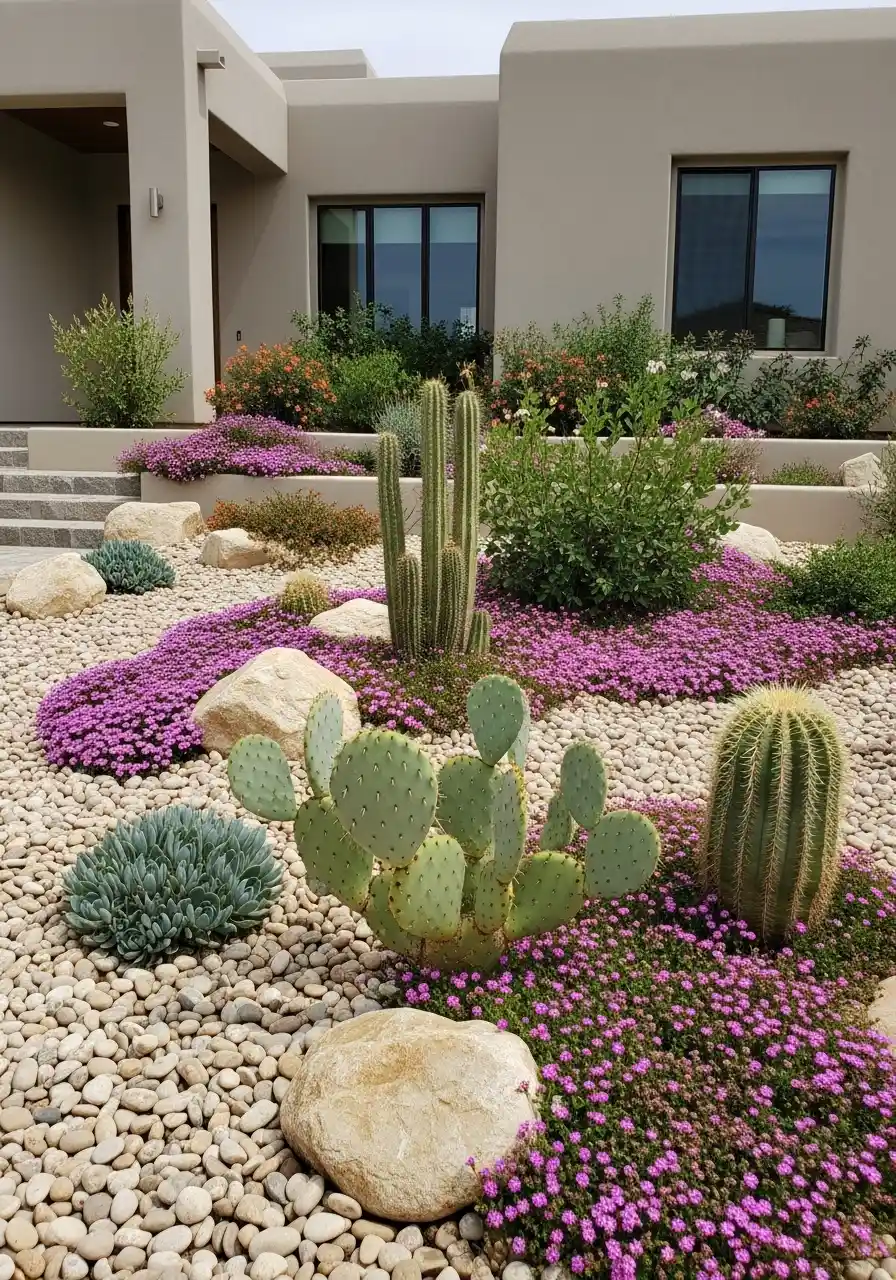
This one hits me right in the chest because it’s so clean, but not boring. The light pebble ground (those smooth, pale river rocks) makes every plant look sharper. Then you get that big sweep of purple groundcover flowing like spilled paint around boulders and cactus. It’s basically a “front yard rug,” and it looks expensive even if it’s not.
If I copied this idea, I’d start with three layers: a rock base, a few anchor boulders, and then one strong groundcover mass. The trick is keeping the purple in big shapes, not little dots. Little dots look messy fast. Big shapes look planned.
My opinion: the cactus placement is perfect because it’s not lined up. It’s kinda random, but it still feels balanced. Put taller column cactus closer to the middle or back, and keep rounder forms (barrel cactus, paddle cactus) closer to the front so you don’t block the view.
Curvy pebble path that makes you walk slower
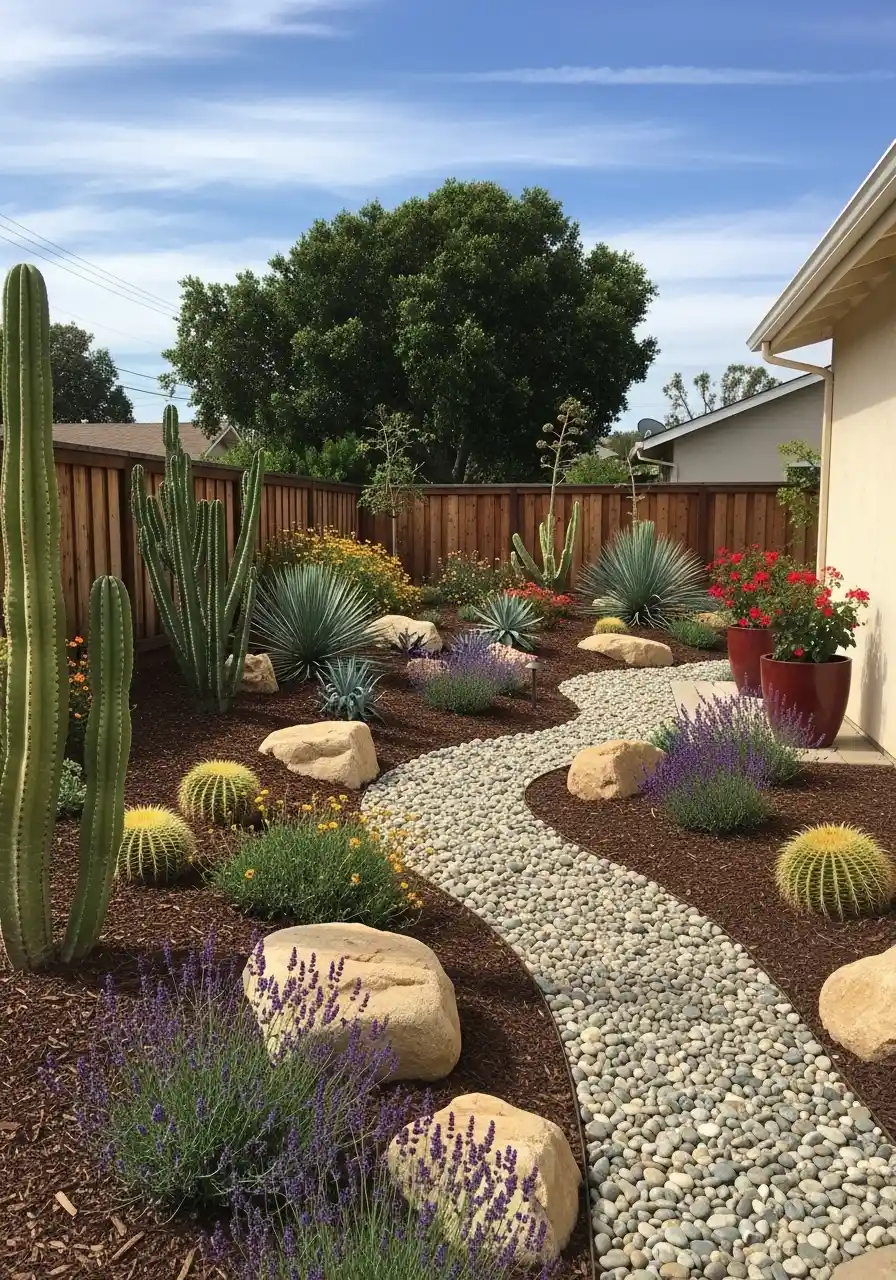
I’m weirdly obsessed with the path here. It curves like a soft “S” through the yard, and the pebbles feel gentle compared to hard concrete. The planting beds on each side are mulched dark, which makes the silvery-blue plants pop. This is a classic drought-tolerant front yard landscape move: strong path line + spaced focal plants.
If you want this look, make the path wide enough that two people can walk side-by-side without doing that awkward shoulder turn. I’d say at least 3 feet, but 4 feet feels rich. Border the path with a crisp edge, metal or stone, because loose rock will wander.
And I’m gonna confess: I used to cram plants too close because I wanted “full” right away. Bad move. These california native landscape front yards look better when plants have breathing room. Space them like you mean it, then let them grow in.
White rock ribbons and agaves for a modern front yard
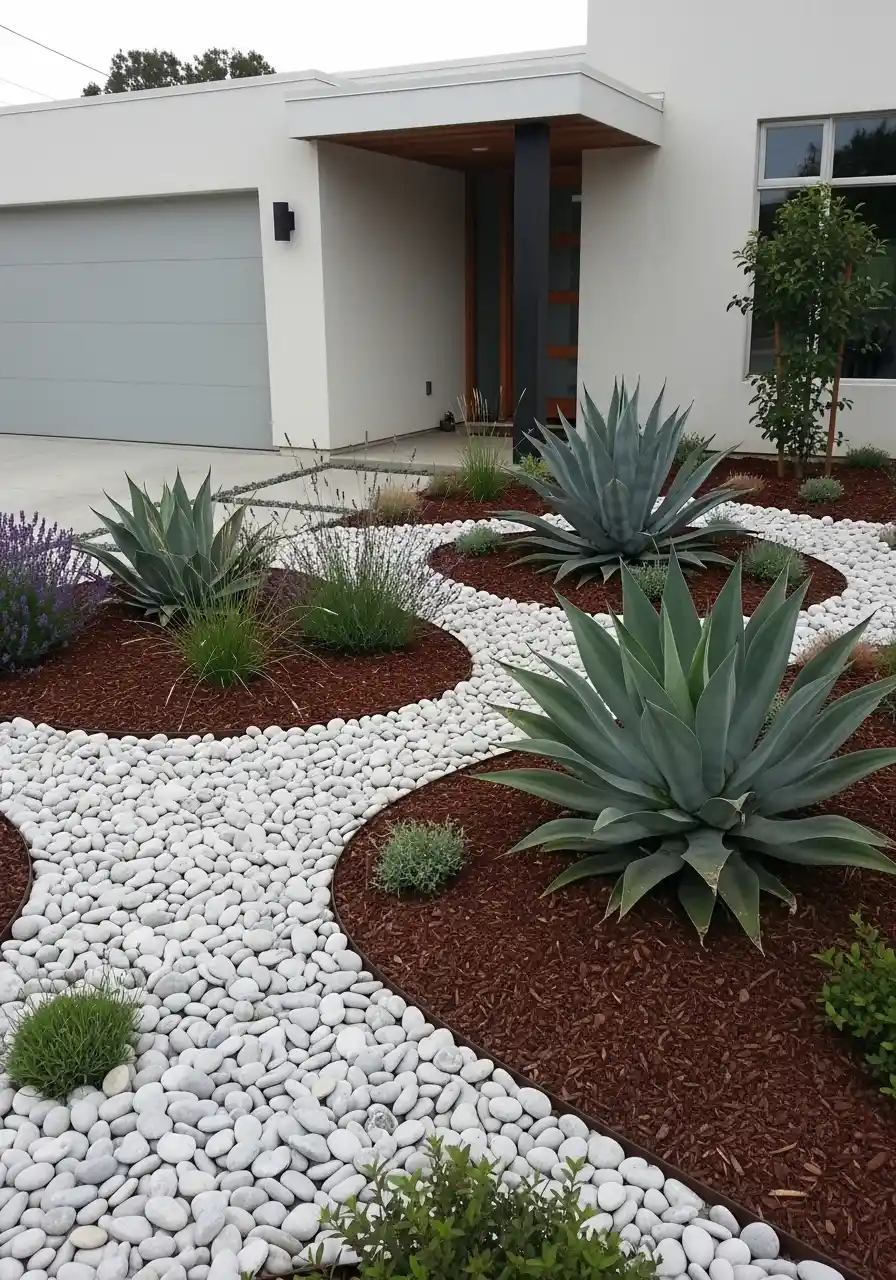
This yard is basically geometry, and it works. The white stones sweep in curvy ribbons around mulch “islands” where the agaves and grasses sit. It’s modern, yes, but it still feels like a landscape, not a parking lot. The agaves are the main stars because they’re big and sculptural, like living fireworks frozen in place.
Here’s the hack: repeat the same plant shape in a few spots. Two or three large agaves, then smaller grasses to soften the edges. If you mix too many plant types, the clean pattern gets lost. Keep your plant list short for this one.
Also, don’t skip the edging. Without a barrier, mulch and rock will blend together and you’ll hate it. A thin steel edge is boring but it saves your sanity. For native California front yard landscape style, this is the “minimalist but tough” version.
Stepping stones with hot pink groundcover that looks kinda wild
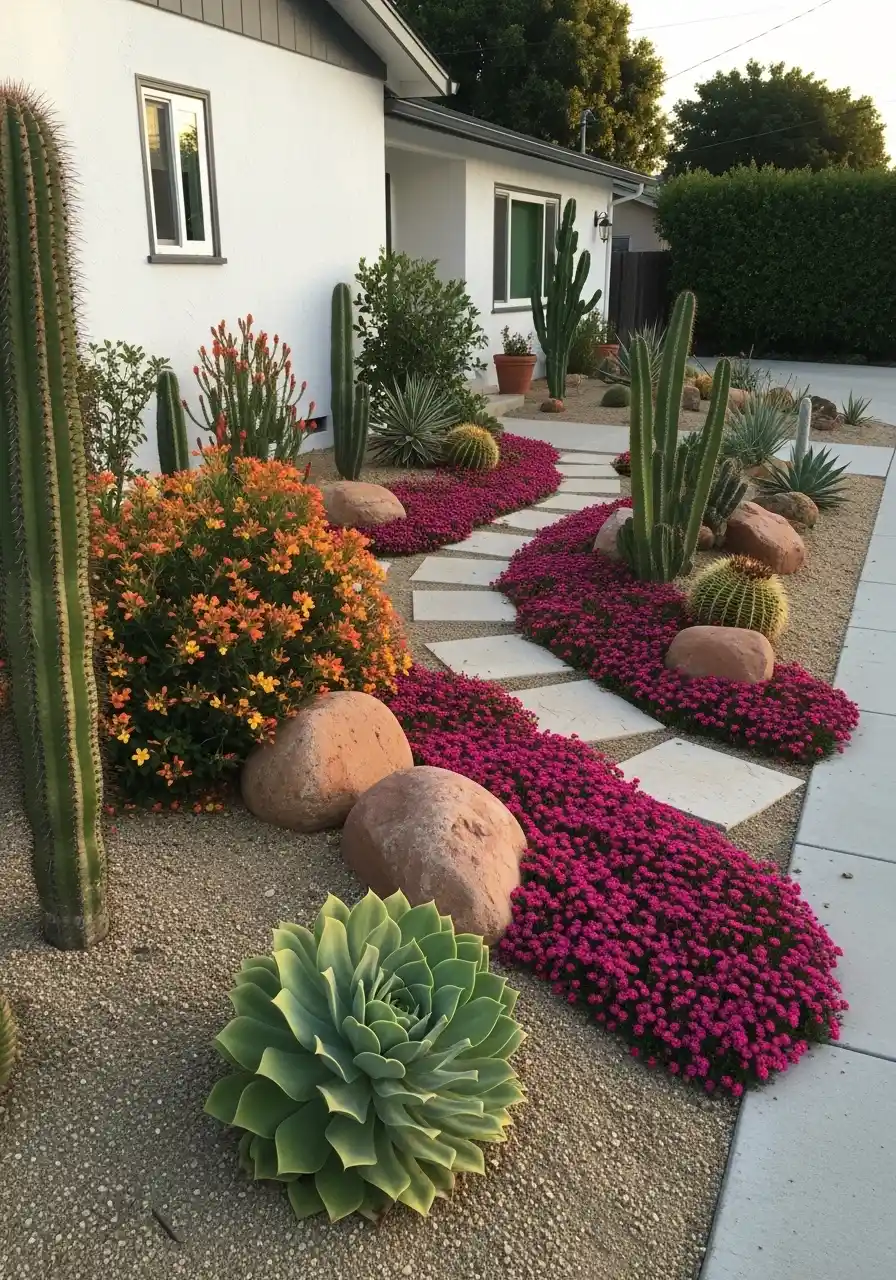
This one feels playful. The stepping stones cut through a bright magenta groundcover, with boulders and tall cactus acting like guardians. It’s got movement and color, and I can imagine walking this path at sunset and thinking, “okay yeah, I did something cool.”
To make this work, pick stepping stones that are big enough for a normal foot stride. If they’re too tiny, people hop like a video game character and it’s annoying. Keep the spacing consistent, around 18–24 inches depending on your stride.
My honest take: the bold groundcover color is risky but worth it if you commit. Don’t try to “soften it” with ten other colors. Let the pink be the point. This is one of those california native landscape front yards ideas that looks best when you’re not scared of it.
Wildflower path that feels like a tiny California meadow
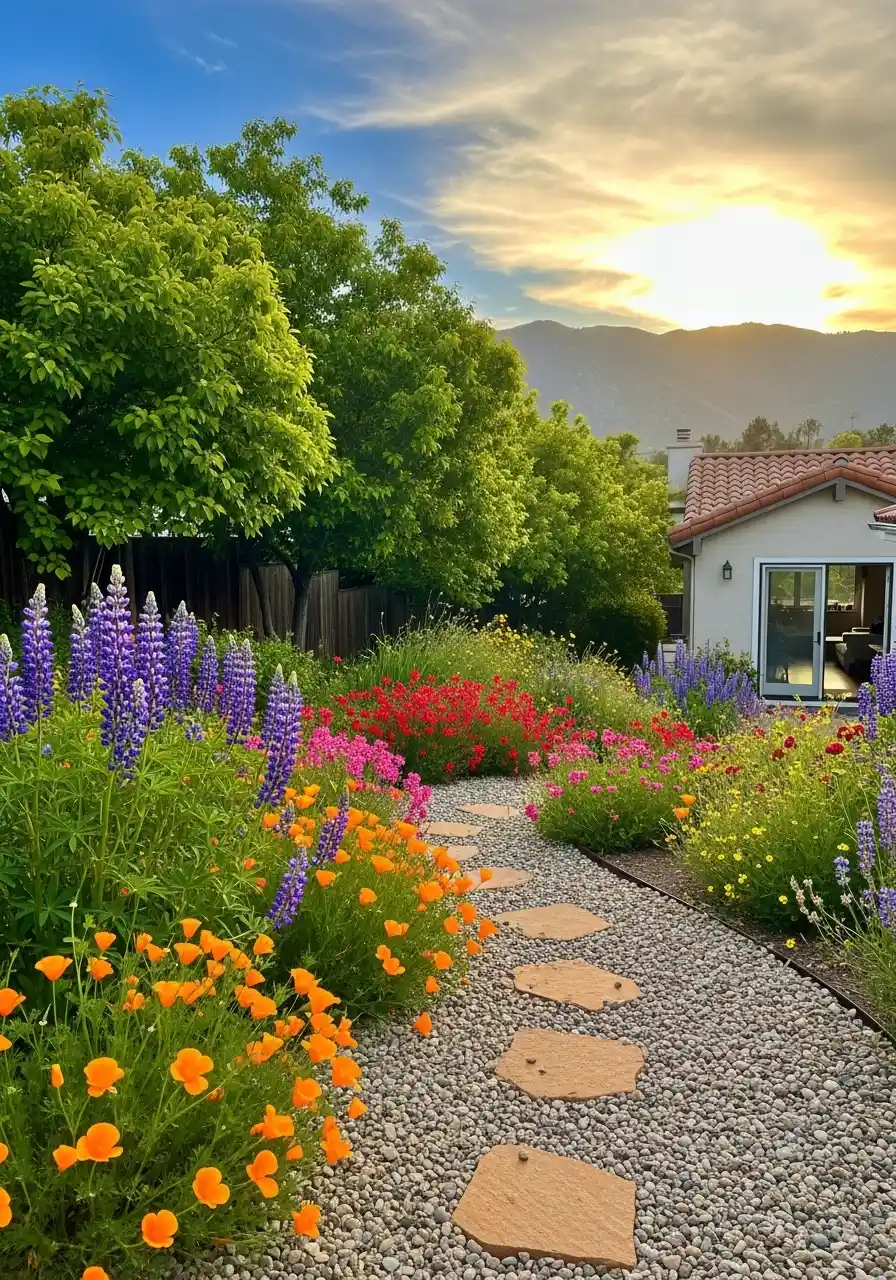
This is the softer side of the whole set. A gravel path with big stepping stones wanders through waves of flowers. I see orange poppies, purple spikes, bright reds, and it all feels alive. This is the front yard that makes people smile without knowing why.
The big trick here is timing. Wildflowers can look messy when they’re done blooming, so you need a plan for the “after.” I’d mix in longer-lasting native California front yard plants like sages or buckwheats so there’s structure when the flowers fade.
Also, don’t overwater. It sounds backwards, but too much water makes some wildflower mixes flop. Keep the irrigation light, or even hand-water early on, then back off once roots grab. For california native landscape front yards, this style says “welcome,” not “don’t step on my lawn.”
Silver shrubs + lavender waves for that calm, classy look
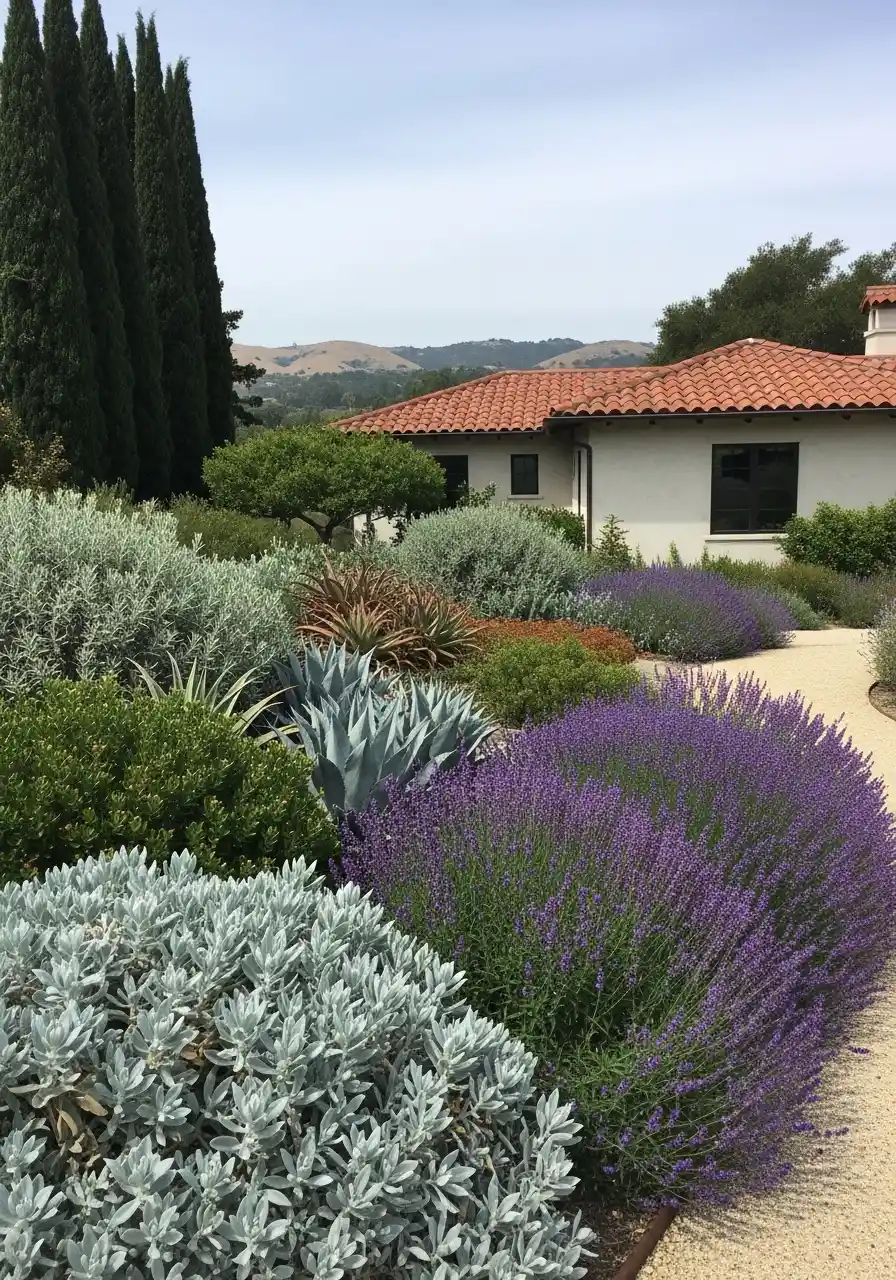
This yard feels quiet in the best way. Silver foliage, rounded shrubs, and big purple lavender mounds make it look like it’s humming softly. The house has that warm roof tone, and the plants match it without trying too hard. It’s like the landscape is wearing neutral clothes with one purple accessory.
If you want this, focus on texture. Silver leaves next to fine lavender stems looks fancy. Use repeating mounds, not random blobs. Mounds are your friend. And keep a simple path edge so everything looks tidy.
I’ll admit, I used to think lavender was “too common.” Then I smelled it on a warm afternoon and I changed my mind instantly. This is one of those drought-tolerant front yard landscape setups that also feels cozy, like you could sit outside and actually relax.
Courtyard gravel garden with big rocks and a palm
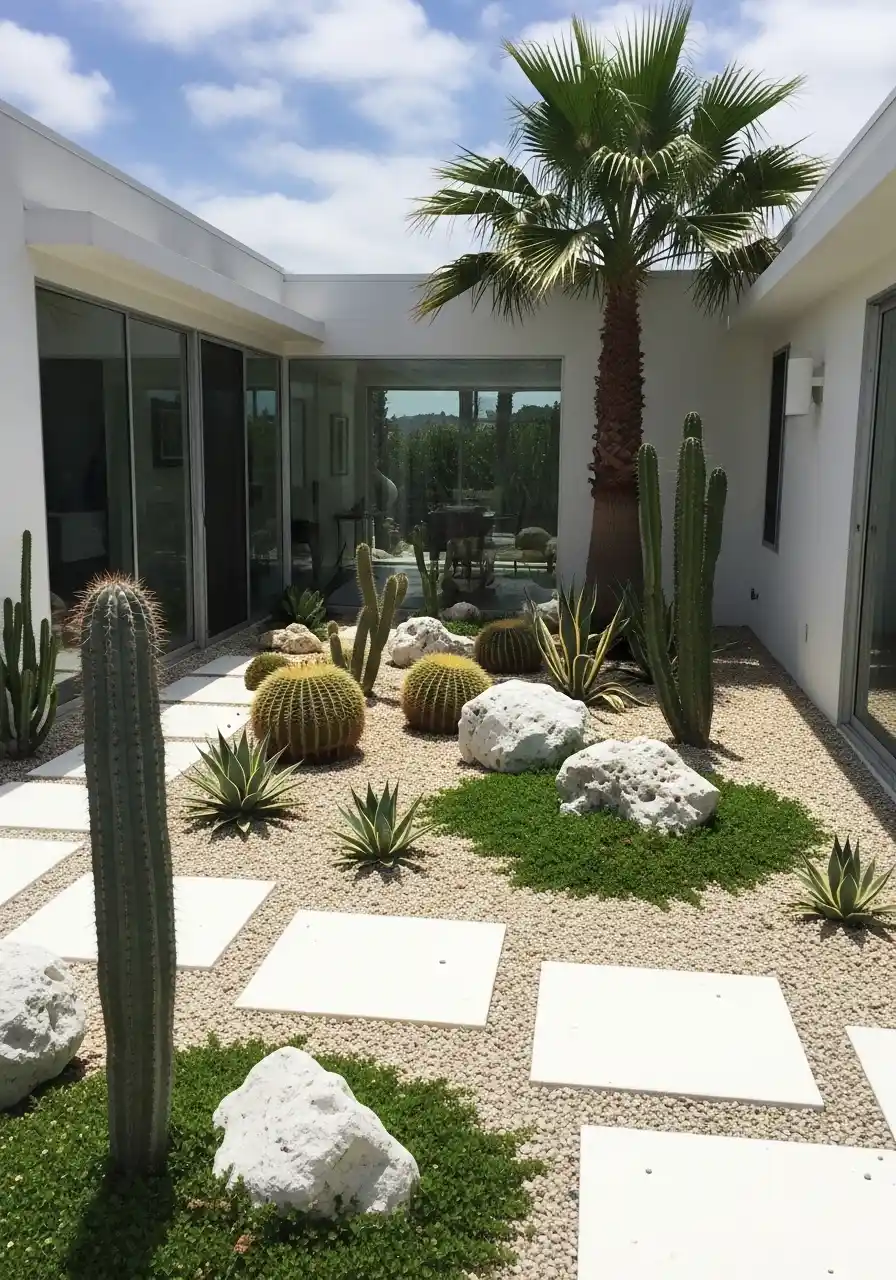
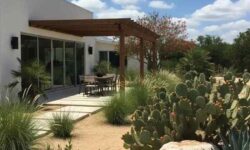
This courtyard is like a little desert room. Gravel base, chunky white boulders, a few round barrel cactus, and a tall palm giving shade and drama. The white pavers are spaced cleanly, so it feels modern and walkable, not like you’re trudging through sand.
If I copied this idea, I’d use pavers as “islands” you step on, and keep gravel consistent in size so it doesn’t look patchy. Add 2–3 boulders that look natural, not perfectly round like they came from a store display.
This is also a smart water move. Gravel + drought plants is a classic california native landscaping for front yards approach, even if some plants are more desert than strictly native. The vibe still fits California life, hot days and all.
Pavers, lavender, and a stacked-stone accent wall
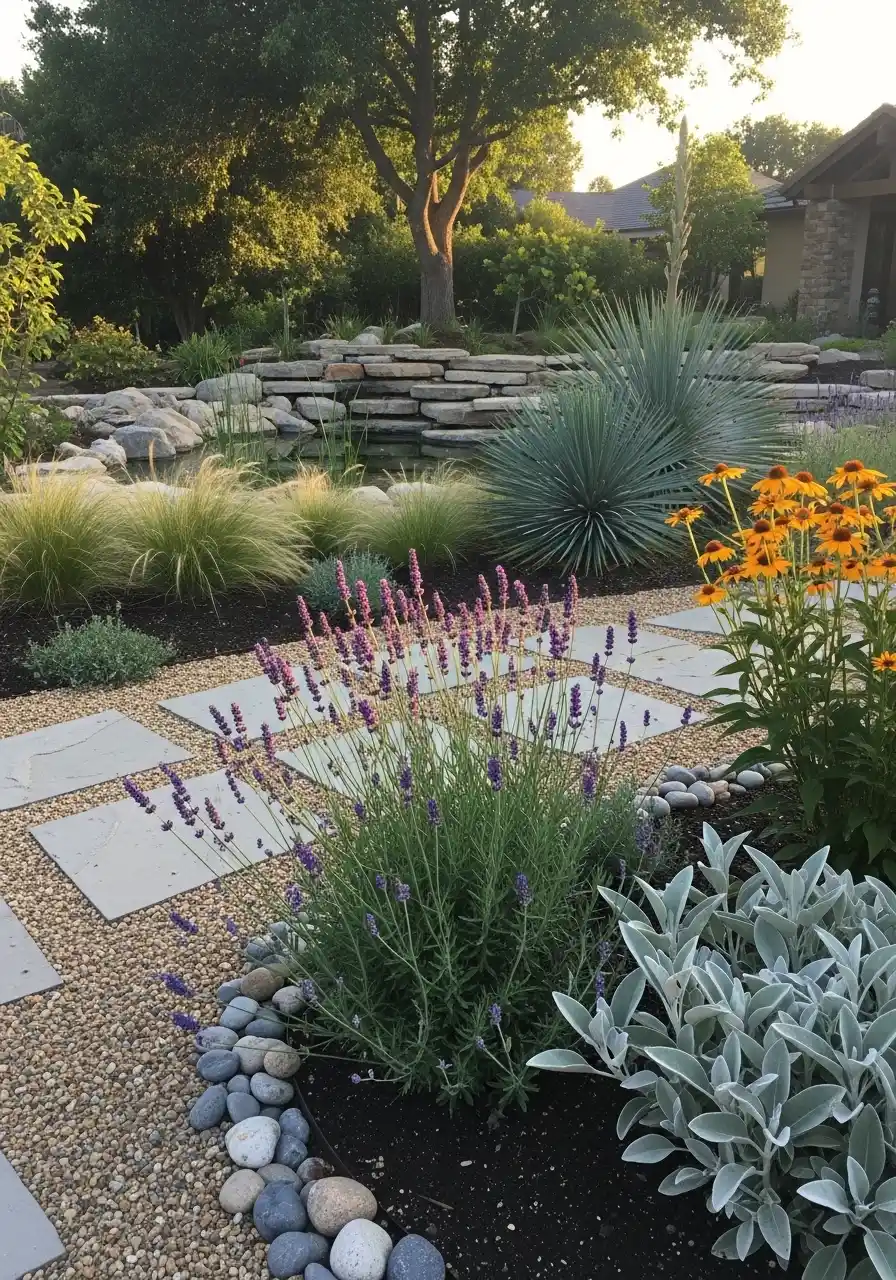
This scene is all about layers. You’ve got square pavers set into gravel, then a bed edge lined with smooth stones, then lavender and bright yellow flowers, and in the back there’s that stacked-stone wall. It feels like a designed front yard, not just “plants placed around.”
My favorite trick here is the border stones. They separate materials cleanly and they also look decorative, like jewelry. If you do this, make sure the stones are similar size so it doesn’t look like a messy rock pile.
This is another good fit for california native landscape front yards because it balances neat hardscape with soft planting. I like it because it’s pretty but still practical. You can maintain it without spending your whole weekend outside, sweaty and mad.
Purple salvia bursts with grasses for movement
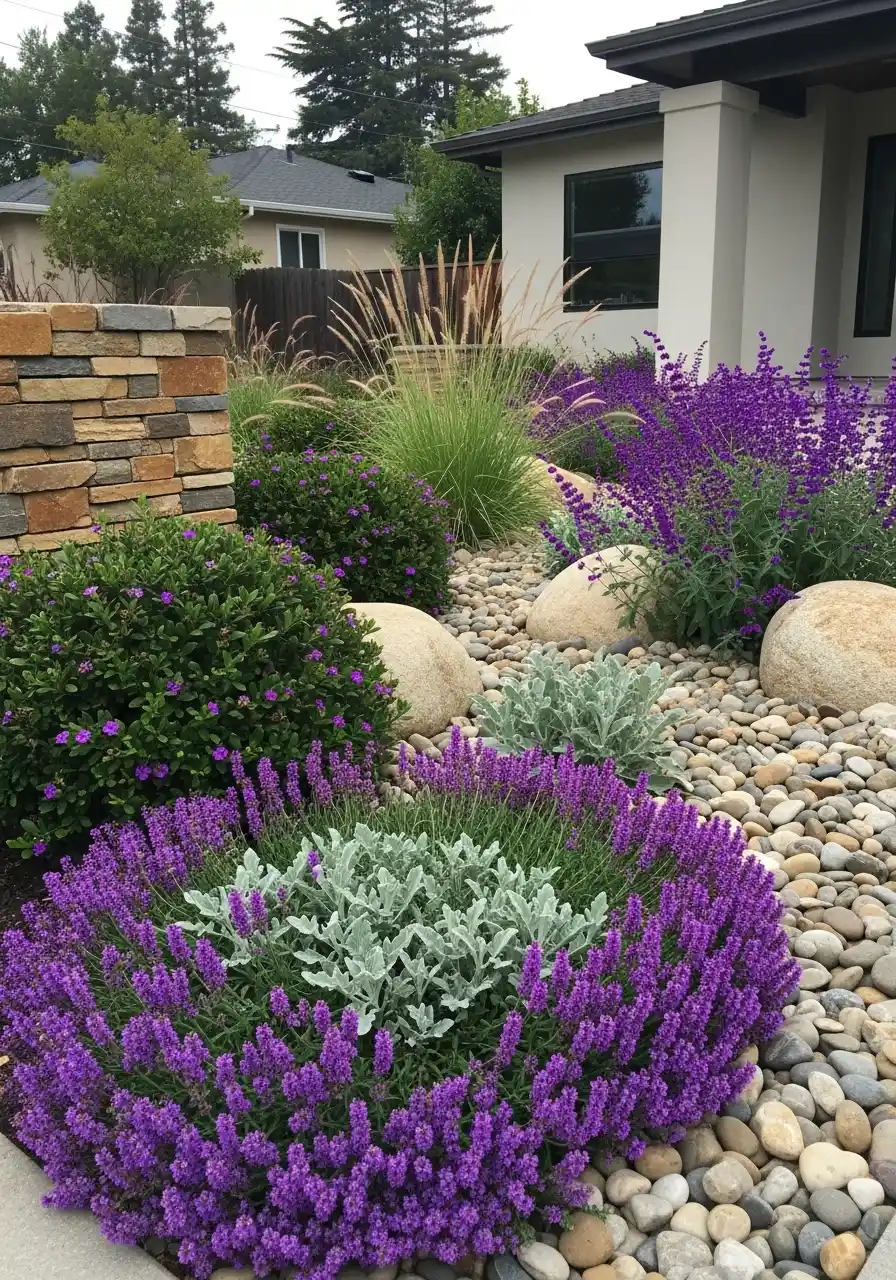
Okay, this one is loud in a good way. Purple salvia spikes everywhere, plus fluffy ornamental grass in the back catching wind like hair. The rocks are tucked in like they landed there naturally. It’s a great reminder that front yards don’t need to be flat and stiff.
If you want this vibe, plant in drifts. Think “patches,” not single plants. Put salvia in groups of 3–7 so it looks full. Add one tall grass clump behind it to make a background curtain.
My personal opinion: purple is the easiest “wow color” for native California front yard landscaping because it doesn’t clash with stone or stucco. It just works. Also, pollinators love it, and I’m not even being dramatic. You’ll notice more buzzing.
Night lighting + olive trees for the magical evening yard
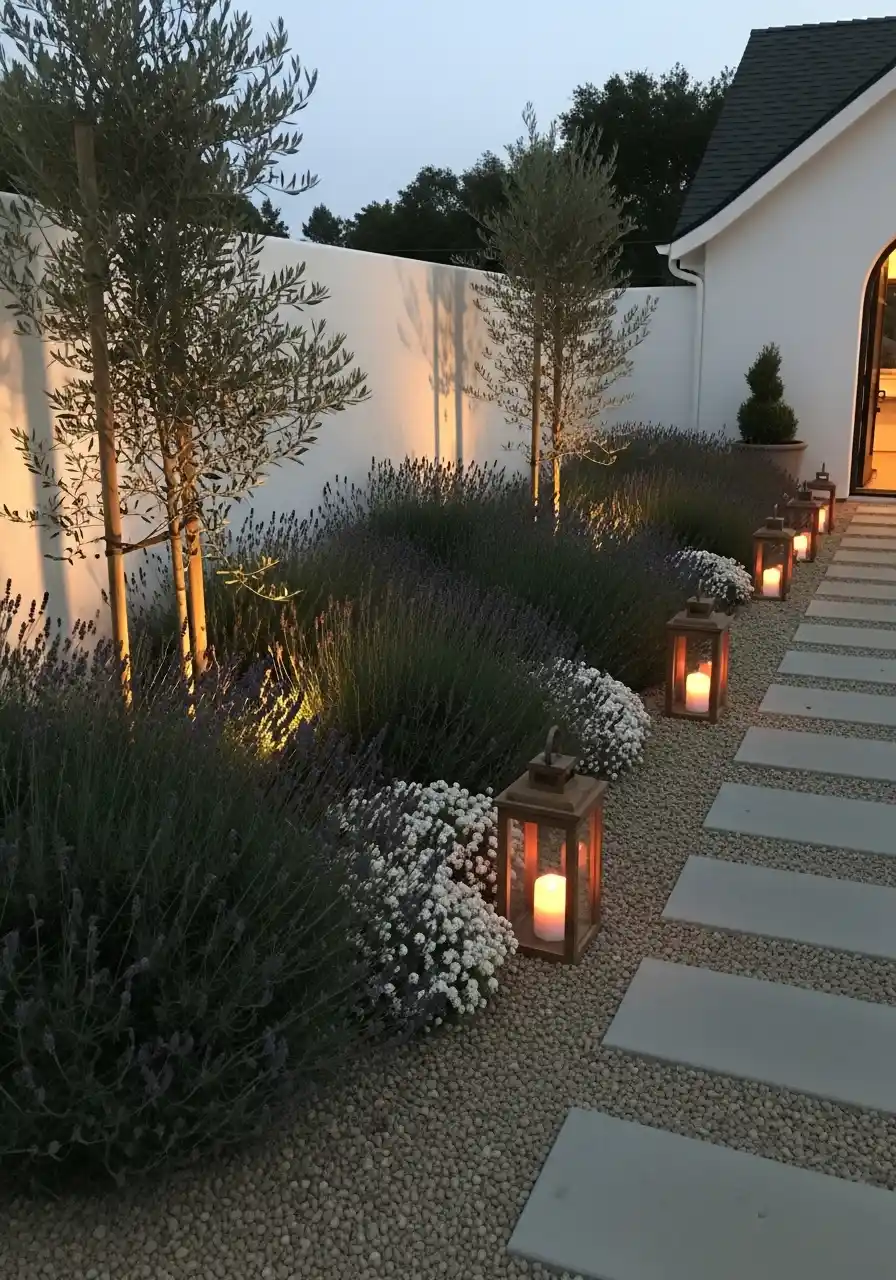
This one feels like a secret walkway. Gravel path, square stepping stones, soft lavender-like plants, and those lanterns glowing low. Olive trees are uplighted so the trunks throw shadows on the wall. It’s honestly romantic, and I don’t usually say that about landscaping.
If you want this hack: use warm, low lights, not bright stadium lights. Place lights so they graze plants and walls, not blast your eyes. Lanterns (even good-quality solar ones) can make a huge difference if you line them evenly and keep them clean.
This is a perfect closer for california native landscape front yards because the yard doesn’t stop being pretty when the sun goes down. It becomes a whole mood. And yes, I want that mood.
The winding flagstone path with bold color
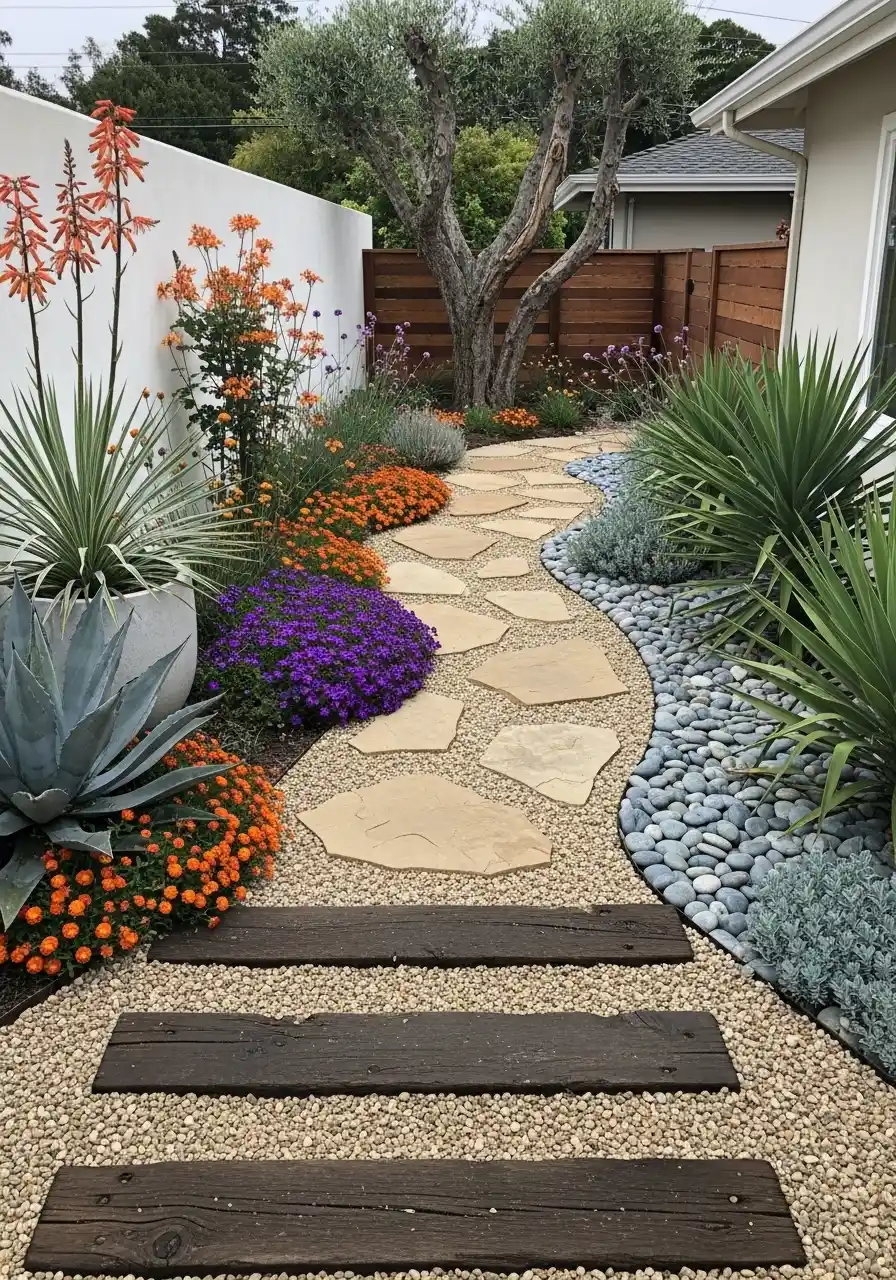
This setup is basically a lesson in how to guide someone’s feet without yelling at them. The path curves gently, and the stepping stones feel natural, not like perfect squares. Then the plants punch in with color: hot orange flowers, a deep purple mound, plus that big agave sitting low like it owns the place. I love how the gravel is small and even, because chunky gravel can feel messy fast.
If I was copying this for my own native California front yard landscape, I’d do it in layers. First, lay out the curve with a garden hose so you can see it. Then set the stepping stones with the same spacing all the way through, because random spacing makes people trip (ask me how I know). After that, keep the bold colors in big clumps, not sprinkled. Clumps look planned, sprinkles look like panic.
One more thing: the river rock strip on the side is smart. It creates a clean edge and keeps gravel from wandering. In California native front yard landscaping, that edge detail is the difference between “wow” and “why is this all over my driveway.”
Stone steps with purple groundcover and big boulders
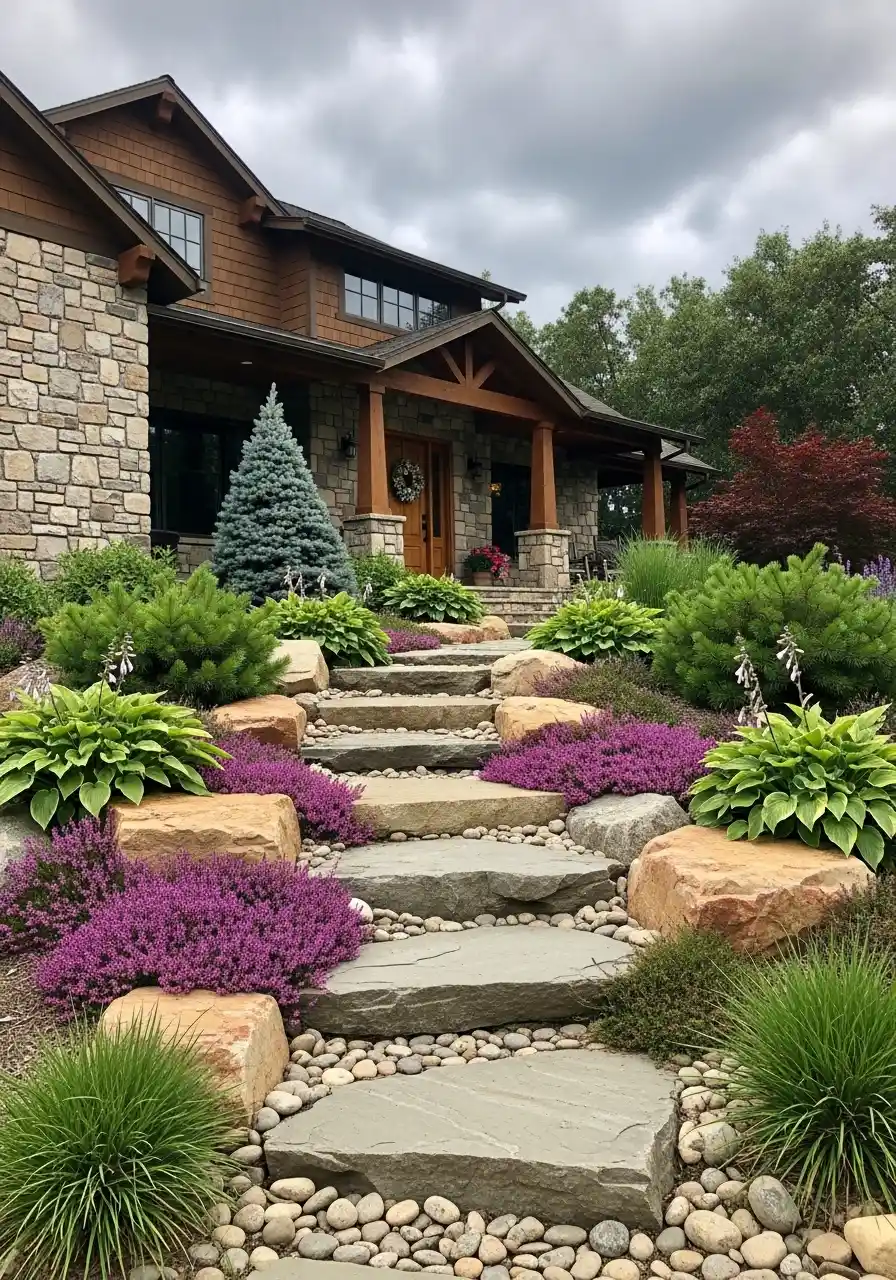
This one feels like walking up to a cabin that smells like cedar and coffee. The stone steps are wide and heavy, and the boulders make the whole entrance feel grounded. Then the purple groundcover softens everything, like a blanket tucked around the rocks. I also notice the plants are repeated, not all mixed up. Repeating the same few plant types is such a cheat code for california native landscape front yards.
If your yard has a slope, this idea is gold. Use large step stones, then fill the gaps with smooth river rock so water can drain and it still looks tidy. Put bigger boulders on the outside corners of turns, because it visually “holds” the path in place. I’m not even kidding, the path looks more stable when the rocks look like they’re guarding it.
My opinion, the purple groundcover is doing emotional work here. It makes the stone feel less harsh. For a native California front yard landscape style, this is how you keep hardscape from feeling cold.
A soft tan path through a mini wildflower ocean
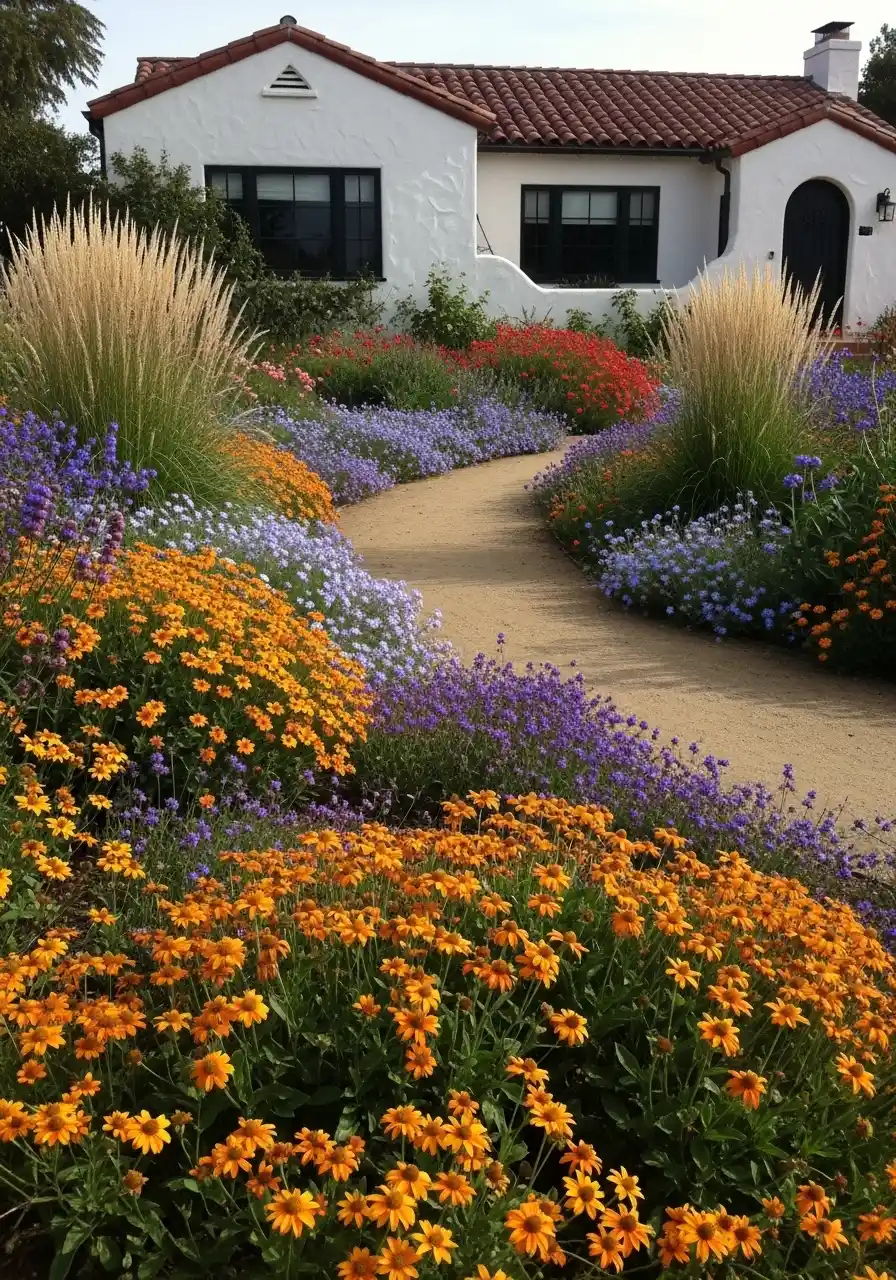
This is the yard that makes people slow down. The path is a warm tan, and the planting beds are overflowing with orange, purple, and blues. There are tall grasses too, like golden fountains, and they give height without blocking the house. It feels friendly, like it’s waving at you. For california native landscape front yards, this is the “life and movement” version.
If you want this look, you gotta plan for seasons. Some flowers will peak and then look tired later, that’s normal. The trick is mixing in structural plants so it never looks empty. Think of the grasses as your background music, and the flowers as the lead singer. Don’t make every plant the lead singer, it turns into noise.
A little confession: I used to overwater anything that looked dry. With native California front yard plants, that can backfire. Many of them want deep watering, then a break. Not constant baby-sips.
Lush mound planting with strong color blocks
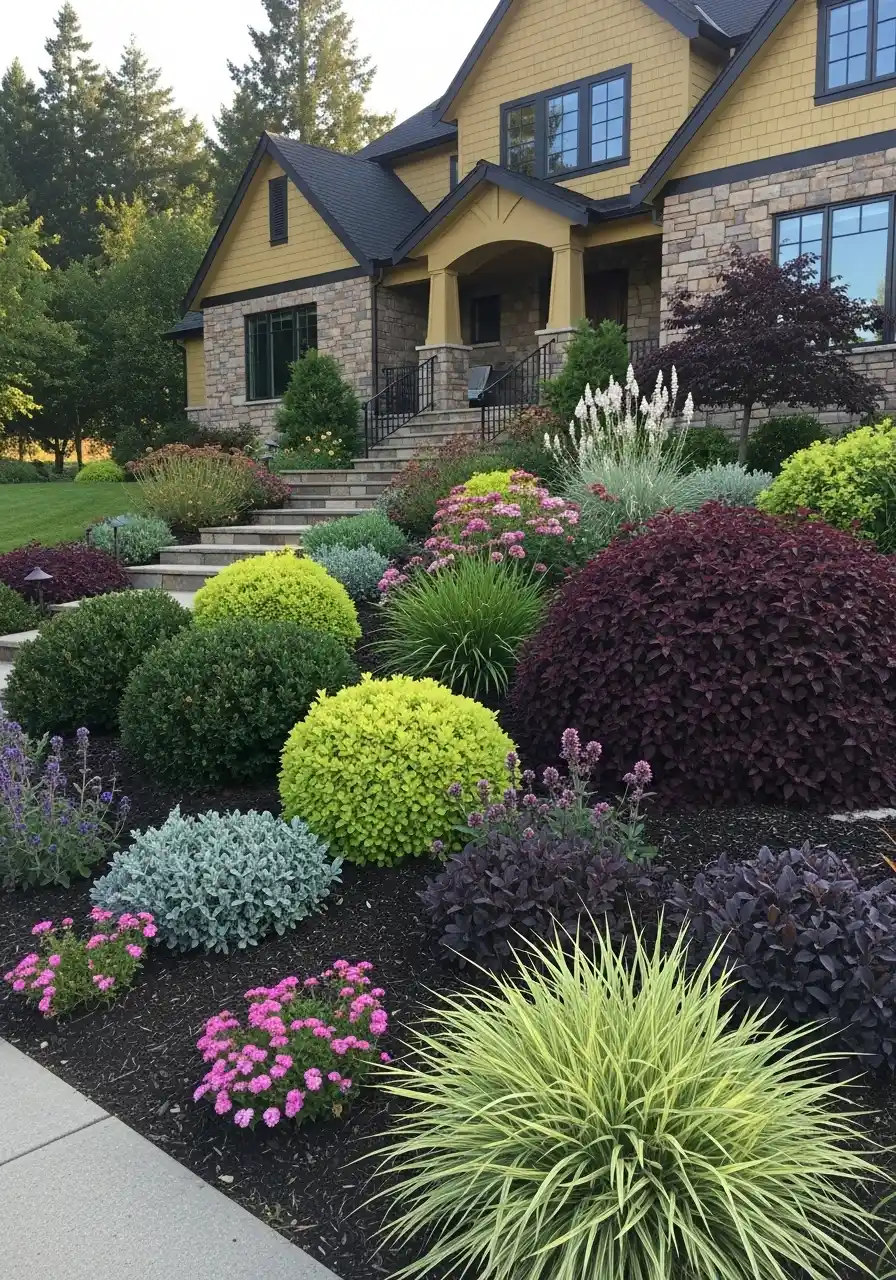
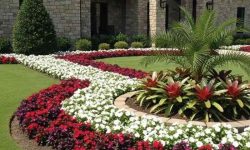
This yard is the opposite of wildflower chaos. It’s controlled, rich, and kinda dramatic. The shrubs are clipped into round shapes, and the color contrast is strong: lime green mounds, deep burgundy mounds, plus pops of pink flowers. It’s not “wild” like some California native front yard landscaping styles, but the layout idea still applies: repetition, shape, and balance.
If you want a similar structure for california native landscape front yards, focus on forms first. Choose 2–3 main shrub shapes, then repeat them down the bed so your eye can rest. Add one tall accent plant (like a grass or upright flowering plant) so it doesn’t look flat. Keep mulch dark if you want plants to pop more.
I personally like this for people who want “neat” but not boring. It feels like a well-made outfit. Like somebody cared, but didn’t overdo it.
Symmetry with lavender, boulders, and a crisp paver walk
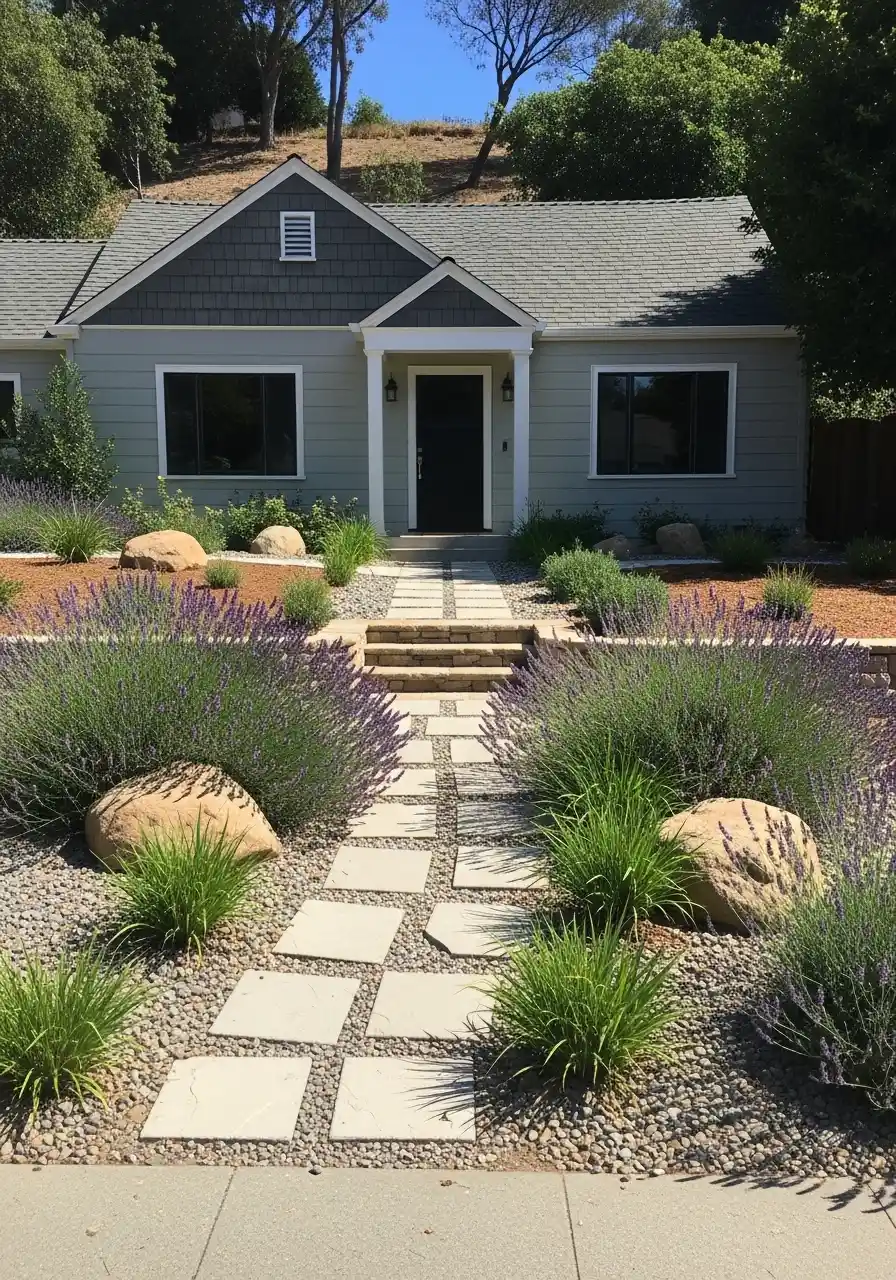
This one is super satisfying because it’s symmetrical without feeling stiff. The paver path is straight, the spacing is consistent, and the lavender mounds on both sides make it feel welcoming. Boulders are placed like anchors. This is such a clean native California front yard landscape approach, especially if you like order.
To steal this idea, keep your pavers aligned and level, because nothing ruins the calm like a wobbly step. Fill gaps with small gravel so weeds have a harder time. Plant lavender (or similar tough flowering natives) in repeated groups, not singles. Singles look lonely. Groups look intentional.
And lighting would look amazing here, not flashy lights, just low warm ones. I know it’s extra, but it makes california native landscape front yards feel like they “work” at night too.
Curved driveway border with black mulch and river rock edging
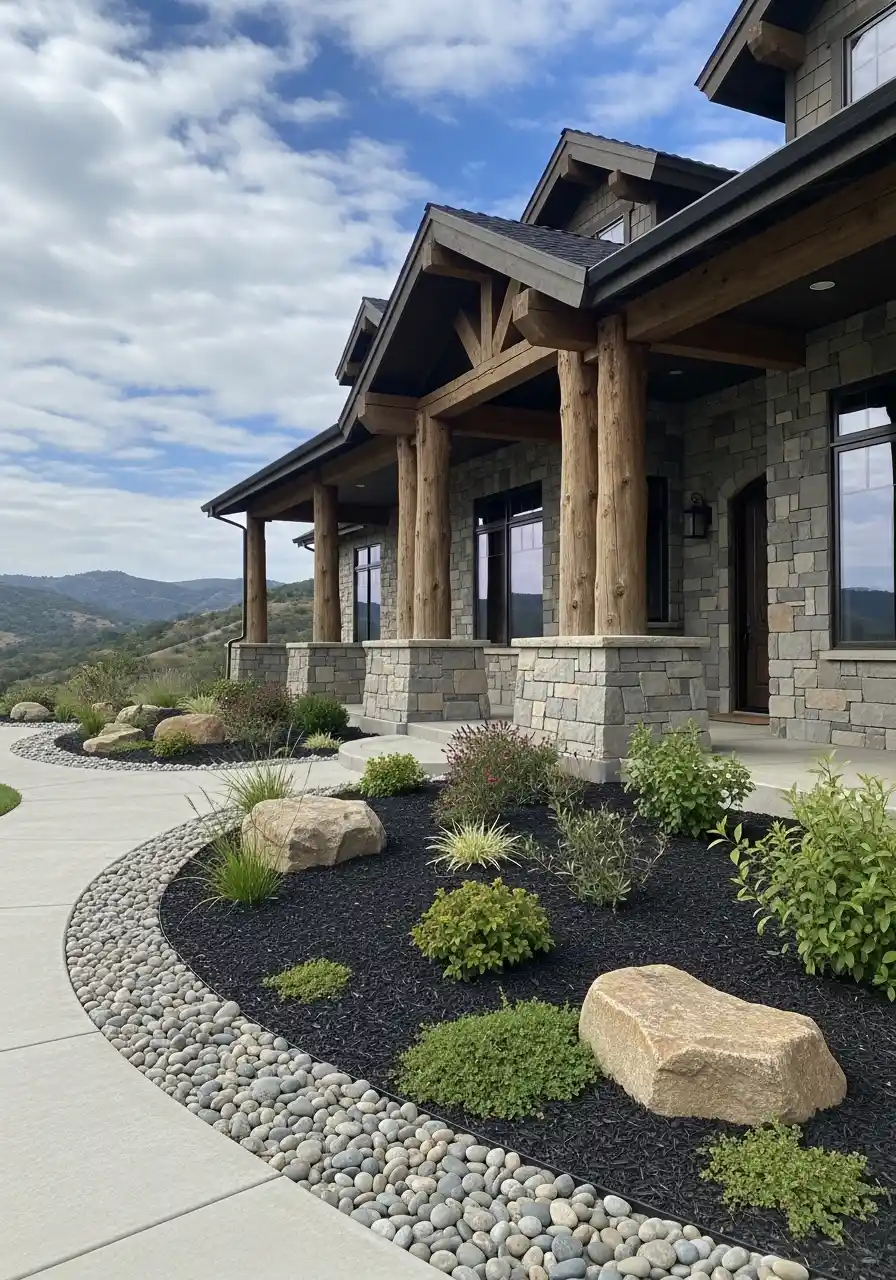
This is a smart “low drama” design, and I mean that as a compliment. The curved bed line follows the driveway, and the river rock edge keeps everything neat. Black mulch makes the boulders and plants stand out, and the spacing between plants gives each one room. This is the kind of California native front yard landscaping that looks clean even if you’re not out there every weekend.
If you’re doing this, the biggest hack is edging. Put a solid edge (metal or sturdy plastic) under the river rocks so the rocks don’t sink into mulch over time. Place boulders first, then plant around them. People do it backwards and it’s a headache, trust me.
I also like the “less is more” plant palette here. A few shrubs, a few grasses, and it still looks full because the shapes repeat. That’s a core rule for california native landscape front yards: repeat shapes, repeat textures, and let empty space be part of the design.
FAQ
1) What does “california native landscape front yards” really mean?
It usually means designing a front yard with plants and materials that fit California’s climate, often using native or climate-matched plants.
2) Do I have to use only native plants for native California front yard landscaping?
No, but sticking close to natives helps with water use and wildlife support.
3) What’s the easiest groundcover for drought-tolerant front yard landscape style?
Low water groundcovers like creeping thyme alternatives, native yarrow, or other tough spreaders can work depending on your zone.
4) Is gravel cheaper than a lawn?
Often yes long-term, because you save on water and mowing, but installation can cost upfront.
5) How do I stop rocks from mixing with mulch?
Use edging. Metal edging is boring but it works like a charm.
6) What plants give that spiky modern look?
Agaves and some native California front yard plants like certain yucca-style forms can give that sharp shape.
7) Are stepping stones slippery?
They can be if they’re smooth. Choose textured stone and keep spacing comfortable.
8) How do I keep a wildflower yard from looking messy?
Mix wildflowers with structural shrubs (like sages) so the yard still has shape after blooms fade.
9) Can I do california native landscaping for front yards in partial shade?
Yes. Use shade-tolerant natives and keep irrigation consistent while plants establish.
10) How often should I water a new drought-tolerant front yard landscape?
More often at the start, then taper down as roots grow. Deep watering beats frequent shallow watering.
11) What’s the best way to add “wow” without extra water?
Use boulders, bold plant shapes, and lighting. Hardscape is your silent hero.
12) Why do so many california native landscape front yards use purple plants?
Purple pops against stone, looks calm, and many pollinators love it. It’s a win-win.
Conclusion
If I had to say it simply, california native landscape front yards aren’t just about saving water. They’re about making a front yard that feels like it belongs here, with sun, dry air, and that special California light. Pick one idea that matches your vibe, copy the structure, then tweak the plants for your exact spot. And don’t stress if it’s not perfect right away. Most of the best native California front yard landscape style yards look better after a season or two, once everything settles in and starts acting like it lives there.