The first time I tried a california native landscape, I thought it would be “easy” because natives are supposed to handle the weather. But then I realized the real secret isn’t just the plants. It’s how you place them so the yard feels alive, like it’s been there forever, not like you planted it last Saturday and hoped for the best.
These 19 images are basically a blueprint for that feeling. You’ve got soft grasses, purple haze, orange pops, stone paths, and that relaxed California look that feels warm and a little wild, but still tidy. I’m going to break down what each design idea is doing, what I’d copy, what I’d tweak, and the small hacks that keep it looking good without turning you into a full-time gardener.
Table of Contents
California native landscape : Gravel Garden With Blonde Grasses and Purple Haze
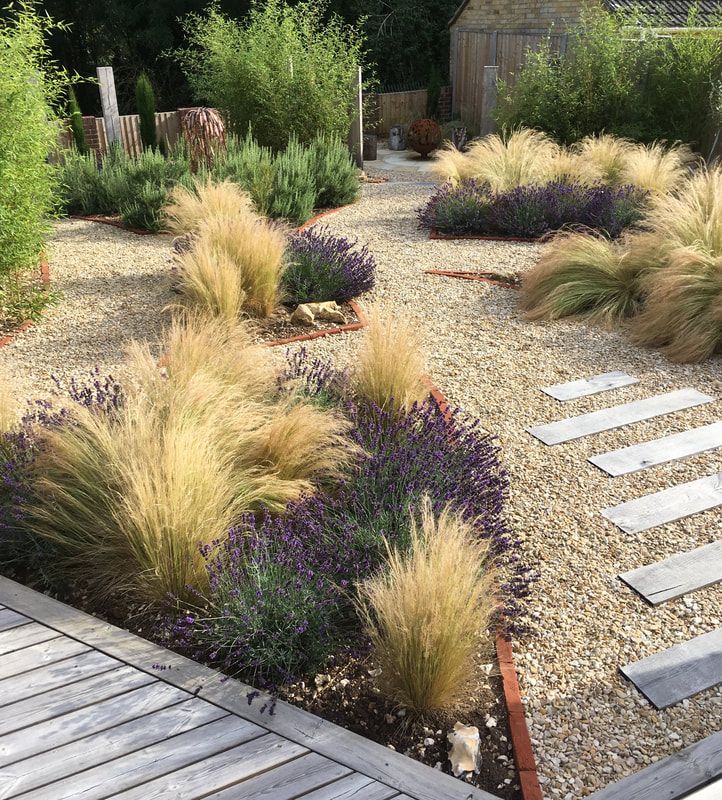
This first scene is all about movement. The blonde, feathery grasses sway and shimmer, and the purple plants (lavender-ish) sit low and dense like a soft pillow. The gravel ground is doing more than you think. It keeps things dry, it brightens the space, and it makes the plants feel clean and intentional.
In a california native landscape design, this combo is gold because it looks good even when nothing is blooming hard. Grasses and purple shrubs carry the whole yard with texture. The layout is also smart. Plants are grouped in clusters, not sprinkled like confetti. That grouping makes it feel designed, not random.
My tip: don’t plant the grasses in a straight row. Stagger them and repeat them in threes or fives. Odd numbers look more natural. Also, add metal edging under the gravel. If you skip edging, gravel creeps into beds and then you’re out there kicking stones back like you’re mad at the ground.
Stone Steps With Purple Borders and Orange Flower Punch
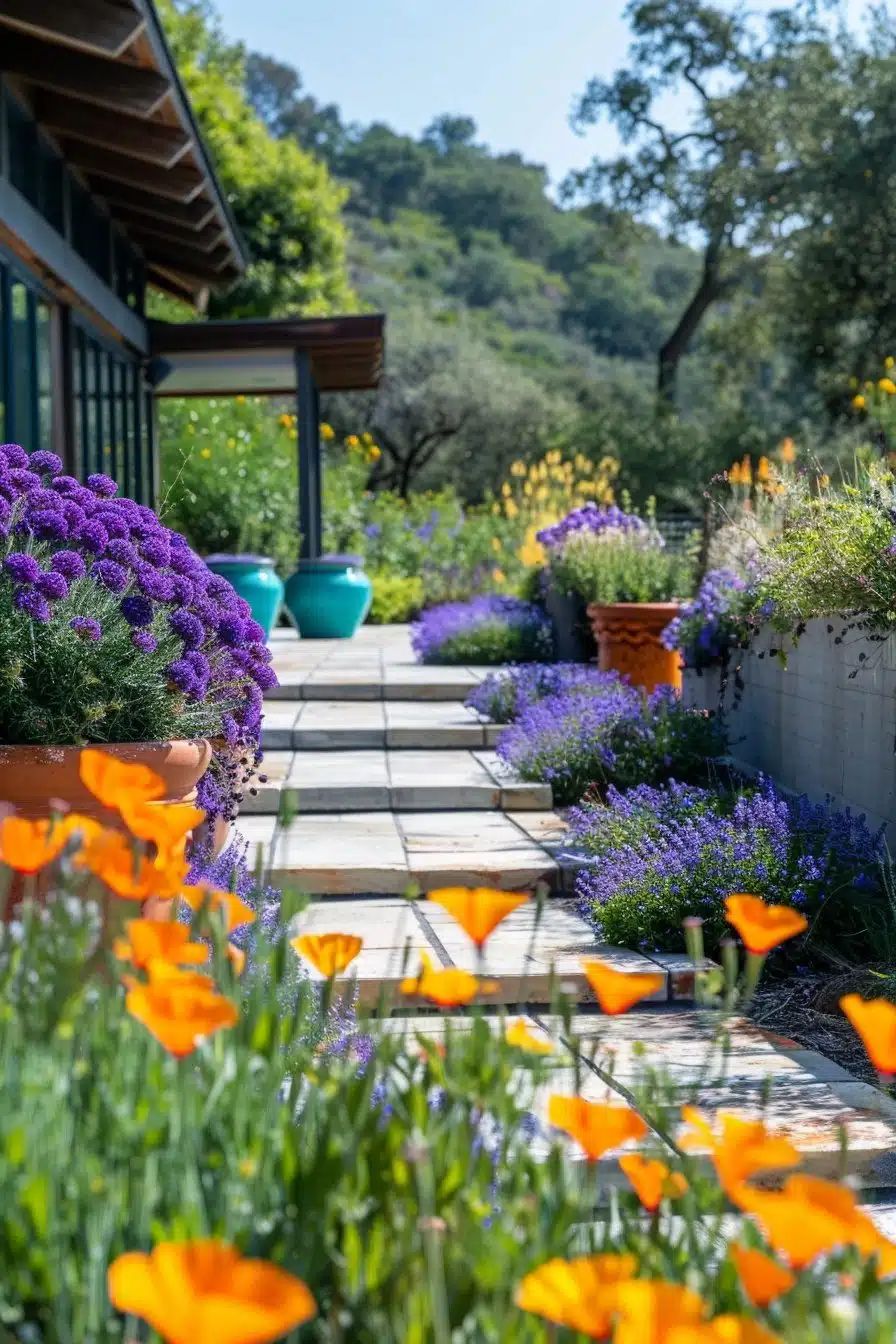
This walkway is honestly a mood. Big square steps, then purple flowering borders hugging the edges, and those orange flowers popping in front like little flames. It feels inviting, like it’s pulling you forward. The turquoise pots in the background add one extra color note, and it weirdly works.
For a California native landscaping vibe, the real idea here is layering by height. Low purple plants near the path, slightly taller mounds behind, then bigger shrubs farther back. It keeps the walkway clear and still gives you fullness. And the orange is used as an accent, not everywhere. That’s why it looks classy and not like a circus.
My opinion: path edges matter more than people admit. If the border plants flop into the walkway, it starts feeling messy. Choose plants that hold shape, or trim them like twice a year so it stays crisp. I know trimming is boring, but it’s worth it.
Adobe-Style Yard With Mixed Color Patches and Dry-Climate Structure
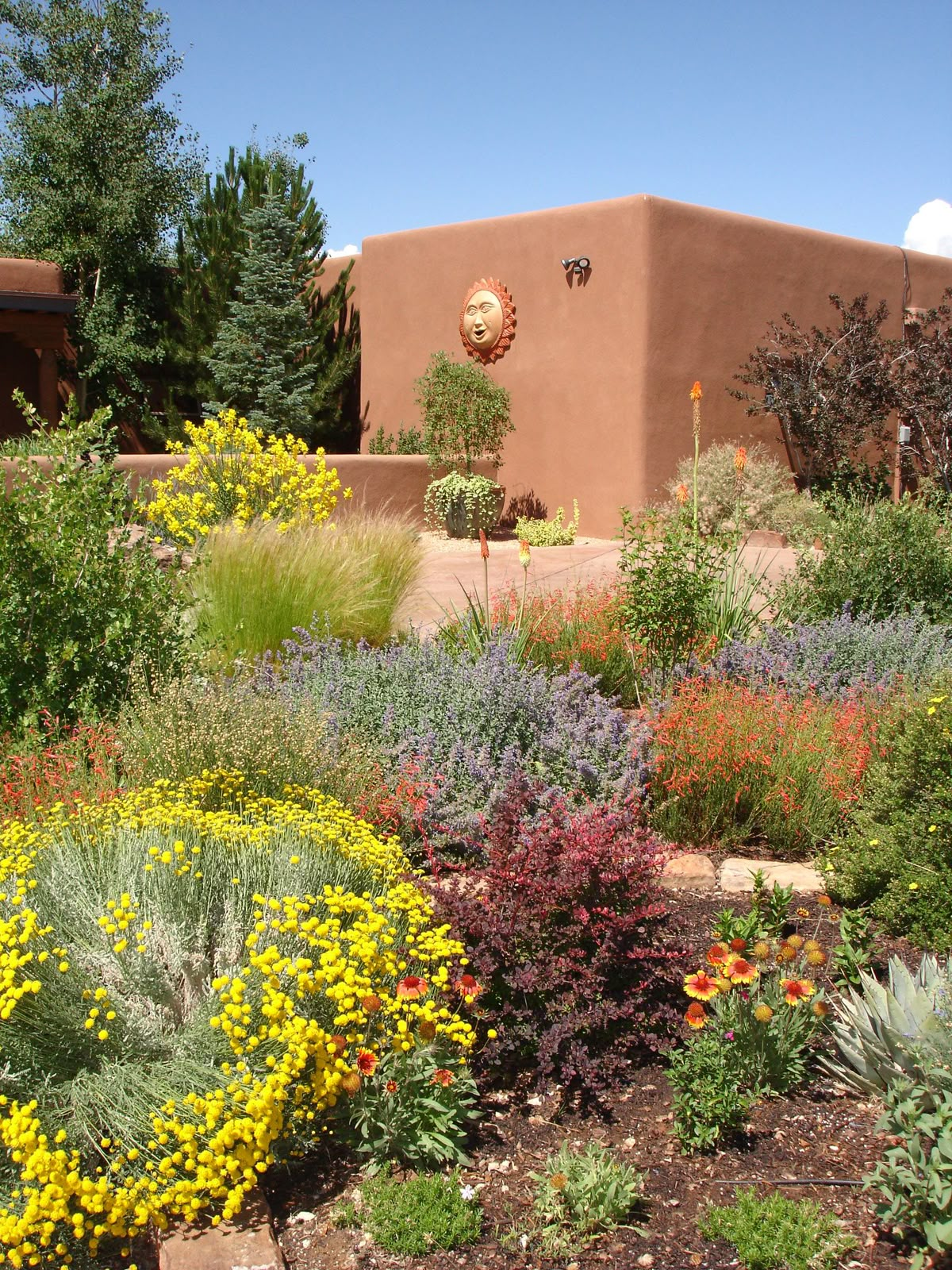
This yard is loud in the best way. Yellow flowers, red flowers, purple-gray shrubs, and then dry-climate plants sprinkled in to keep it grounded. The adobe walls and warm tones make everything feel sunny, like the yard is glowing even when it’s midday.
In a california native landscape, mixed color can totally work, but only if you repeat colors across the bed. This design repeats yellow, repeats red, repeats purple, so it feels organized. It’s like wearing an outfit. If you wear every color once, it looks chaotic. Repeat a few colors and it looks intentional.
One hack: keep a “resting zone” where there’s more green and less bloom. That gives your eyes a break and makes the bright colors look brighter. Also, place boulders or rocks so they look half-buried, not sitting on top like decorations. Rocks should look like they belong there.
Meadow-Style Front Yard With Poppies and Purple Spikes
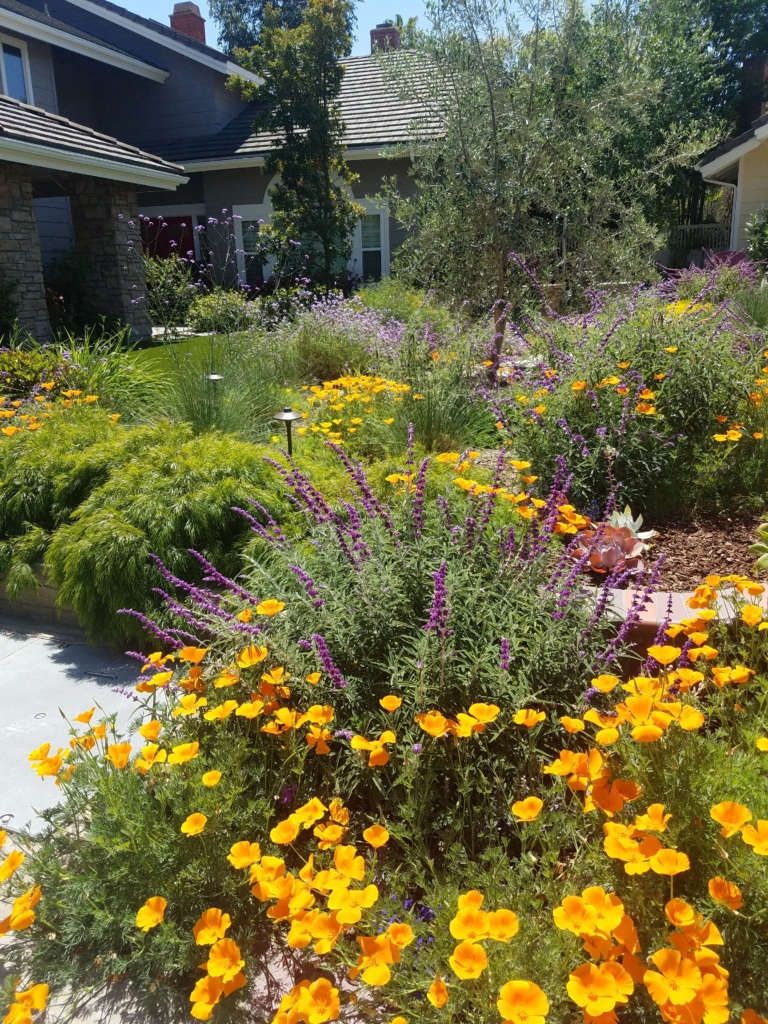
This image feels like spring just exploded. Orange poppies in front, purple spiky flowers behind, and airy grasses scattered through. It’s soft and wild, but still controlled because the plants are in masses, not random.
For california native landscaping ideas, this is a great approach if you want pollinators and color without a fussy layout. The trick is to keep the plant palette limited. Pick a few main plants and repeat them. That’s how you get the “meadow” look without it turning into “weeds took over.”
My confession: I love this style, but it does need a little discipline. You have to cut back at the right time, and pull the aggressive stuff early. If you ignore it for a whole season, it gets messy fast. The payoff is huge though. It feels joyful, like the yard is smiling.
Mediterranean House With Stone Borders and Thick Flower Drift
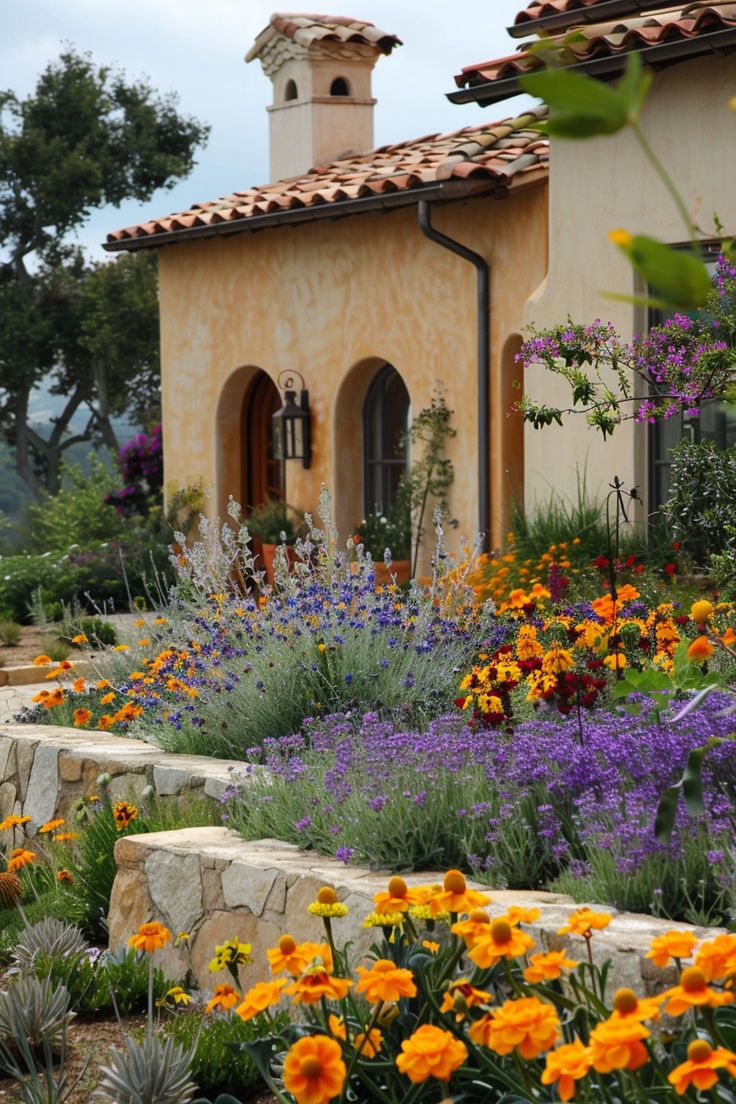
This design is more formal, but still natural. The stone border holds the planting bed in place, and then the flowers spill up and over in waves. Orange, purple, and soft gray-green plants mix together like a painting. The house architecture helps too, it’s warm and old-world, which makes the plants feel extra romantic.
In a california native landscape design plan, stone borders are useful because they keep soil from washing and they create clean lines without needing constant edging. The flower drift works because it’s thick. Thin planting looks scraggly. Thick planting looks confident.
My tip: keep taller plants toward the back, and avoid blocking windows and walkways. Also, if you’re using a stone border, don’t make it too perfect. Slight irregularity looks more natural. Perfect straight stone lines can feel stiff next to wild plants.
Sunset Gravel Path With Stone Steppers and Bright Mixed Blooms
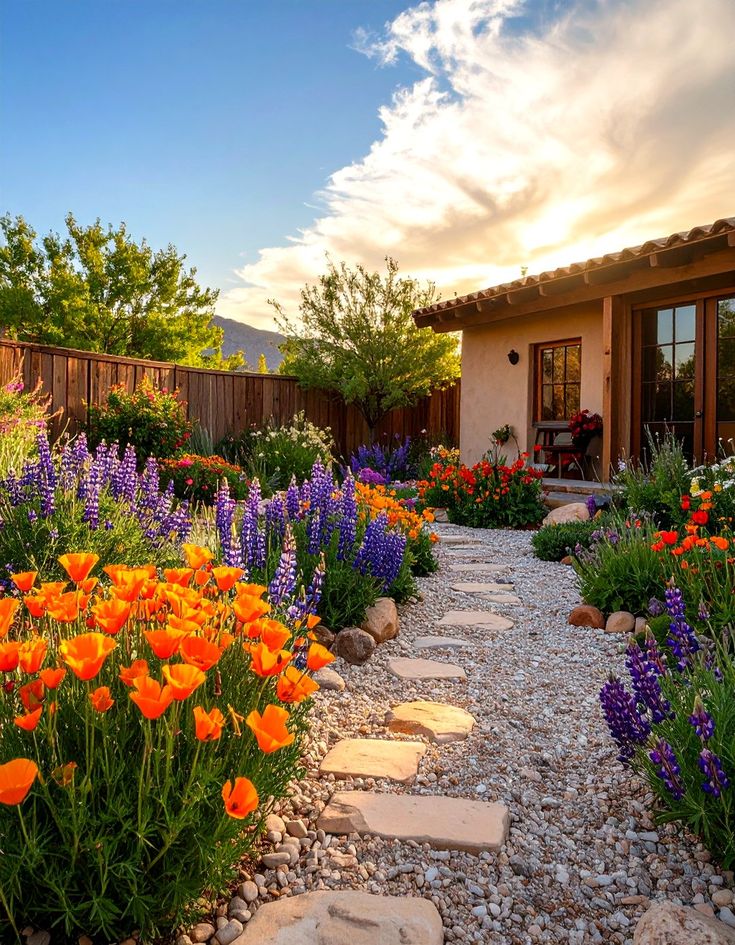
This one is pure “evening walk” energy. A gravel path with stepping stones curves through beds of orange and purple blooms. It feels warm, friendly, and lived-in. The stones are placed in a way that feels natural, not like a strict pattern.
For a California native landscaping style yard, paths like this are huge because they invite you into the garden. Without a path, beds are just something you look at from far away. With a path, you’re inside it. That’s the difference between “nice yard” and “I want to be out here.”
Hack: set stepping stones on a compacted base so they don’t wobble. Wobbly stones make people stop using the path. Also, keep gravel deep enough that weeds don’t pop through in two seconds. Thin gravel is basically an invitation for weeds to party.
Mixed Native Bed With Cactus Pads, Purple Spikes, and Boulder Anchors
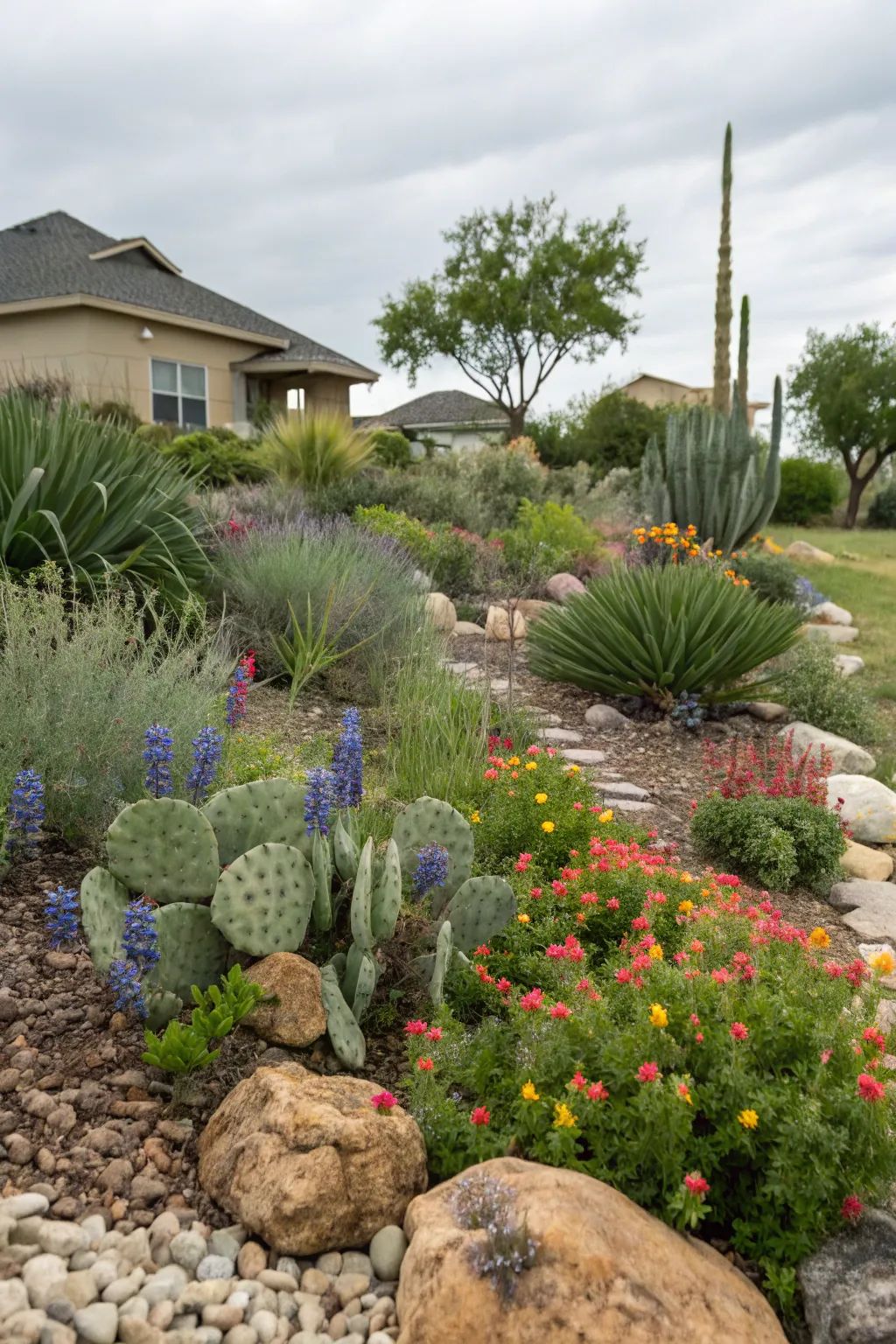
This design feels tougher and more rugged. You’ve got cactus pads up front, purple spiky flowers, boulders, and different leaf textures in the background. It feels like a hillside garden that can handle heat and still look good.
In a california native landscape, boulders are not just decor. They anchor the bed visually. They also help with microclimates, like shading soil and blocking wind. Place them first, then plant around them. If you plant first and add rocks later, it looks fake.
My tip: don’t overmix plant shapes. Pick a few. Spiky, mounding, and one or two upright shapes. Too many different shapes can feel messy. And if you use cactus pads, keep them away from narrow walkways. People always get too close without realizing.
Modern Minimal Path With Purple Spikes and Soft Grass Clouds
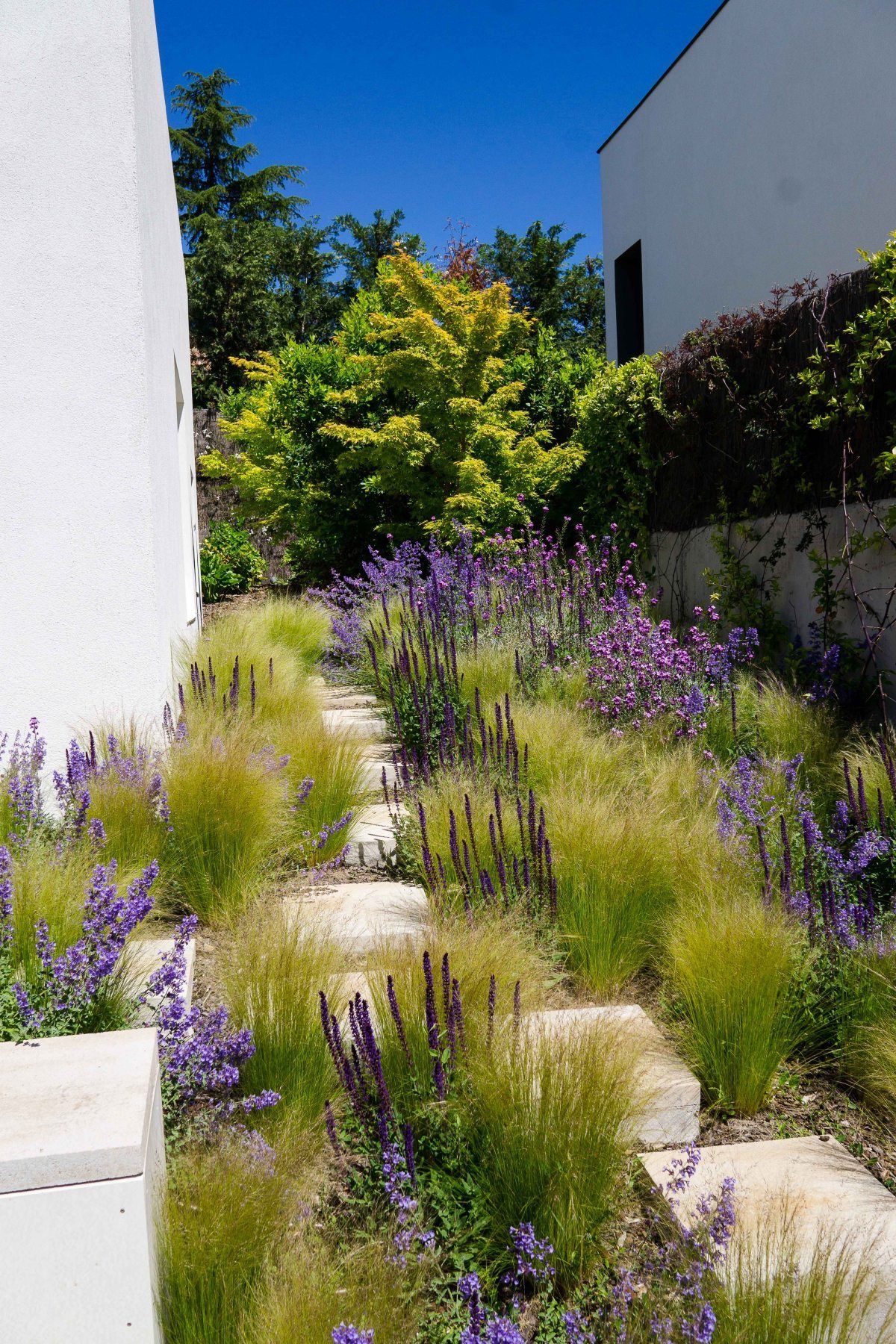
This narrow passage garden is simple and elegant. Concrete stepping slabs run through soft grasses and tall purple flower spikes. The plants are airy and light, and the white walls make everything feel brighter. It’s modern, but not cold.
For california native landscape design ideas, this is a great layout for side yards that usually get ignored. Side yards can feel like dead zones. This turns it into a real garden moment. The trick is repetition. Same purple spikes repeated, same grasses repeated. That repetition is what makes it feel calm.
My confession: I love how this looks, but you have to keep the path clear. If grasses lean into the stepping stones too much, it starts feeling annoying. Trim once in a while. Not every week, just enough so it stays walkable.
Naturalistic Desert-Native Scene With Yucca and Soft Shrub Layers
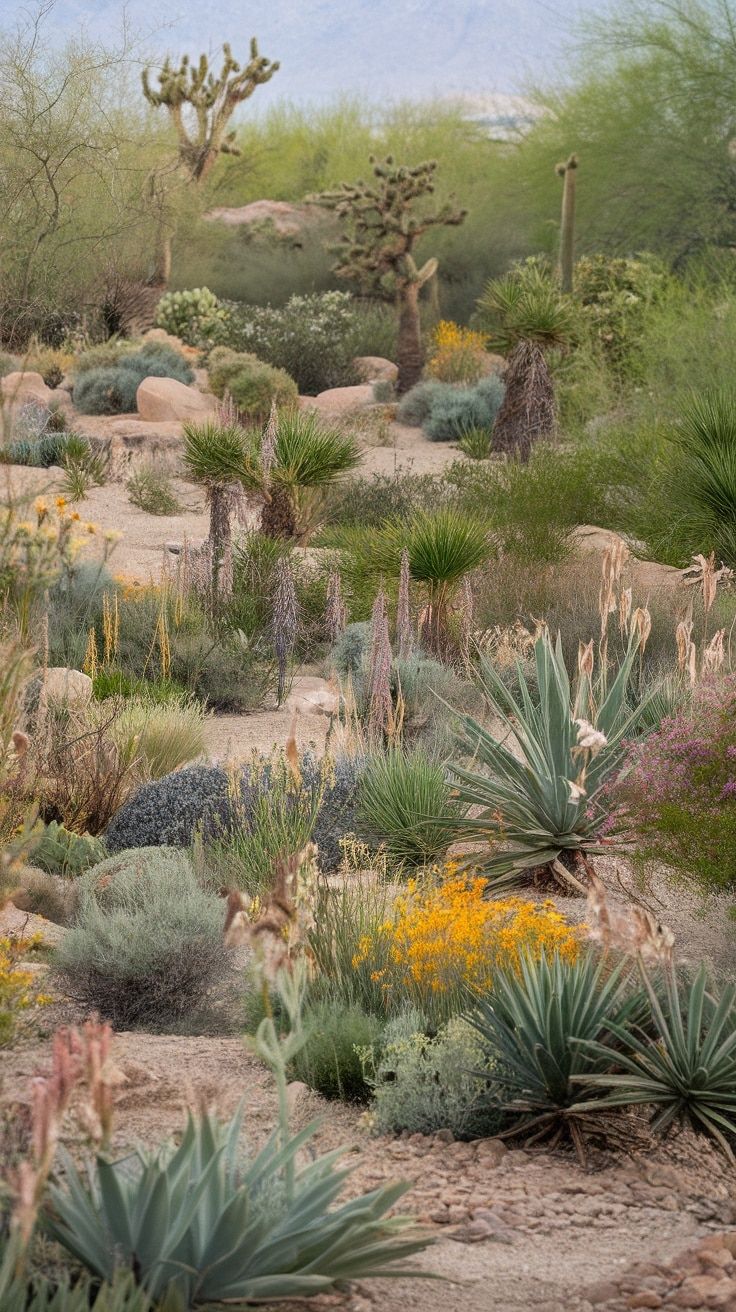
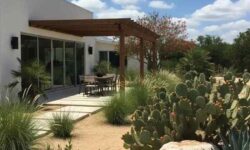
This one feels like you’re walking through a natural preserve. Yucca shapes, silver shrubs, sandy soil, and scattered boulders. It’s quiet and subtle, like the landscape is breathing slowly.
In a California native landscaping approach, this style is perfect if you want low maintenance and a natural look. The key is spacing. Plants have room to grow into their shape. If you crowd them, they fight and get weird looking. Also, use mulch or gravel to reduce weeds and keep soil cooler.
My tip: choose plants with year-round structure, not just seasonal blooms. Structure plants are what make the yard look good in August when everything is tired. Shrubs, yucca, and grasses do that job better than fragile flowers.
Cottage-Style Native Garden With Orange Drifts and Blue-Purple Haze
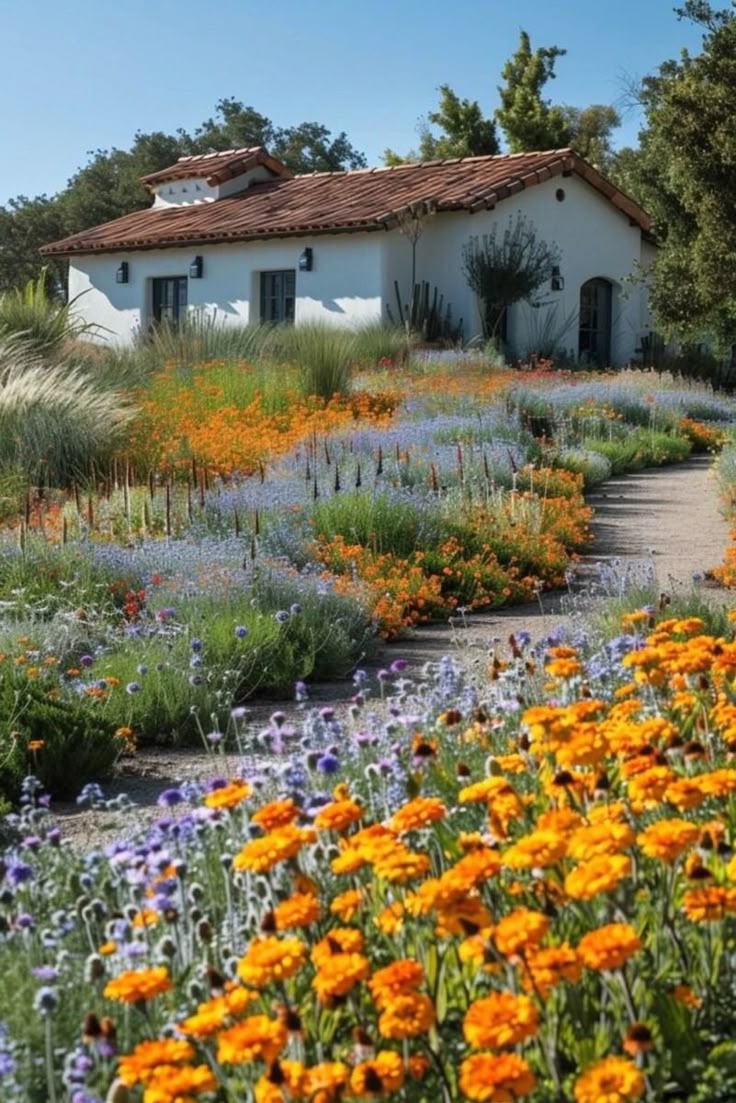
This one is a soft dream. Orange flowers in the foreground, purple-blue haze through the midground, and a simple house behind. It feels like a place you’d sit with coffee and pretend you don’t have emails.
For a california native landscape, this is a classic color combo because orange and purple are opposites, so they pop. The “drifts” of flowers are thick, which is what makes it feel lush instead of patchy. And the path curves gently, so it feels friendly.
My tip: don’t try to make every part bloom at once. Let some areas be calm green. The blooming areas will stand out more. And plant in big groups, not one-by-one. One plant looks lonely. Five plants looks like a design choice.
Clay pots + winding path for warm, earthy charm
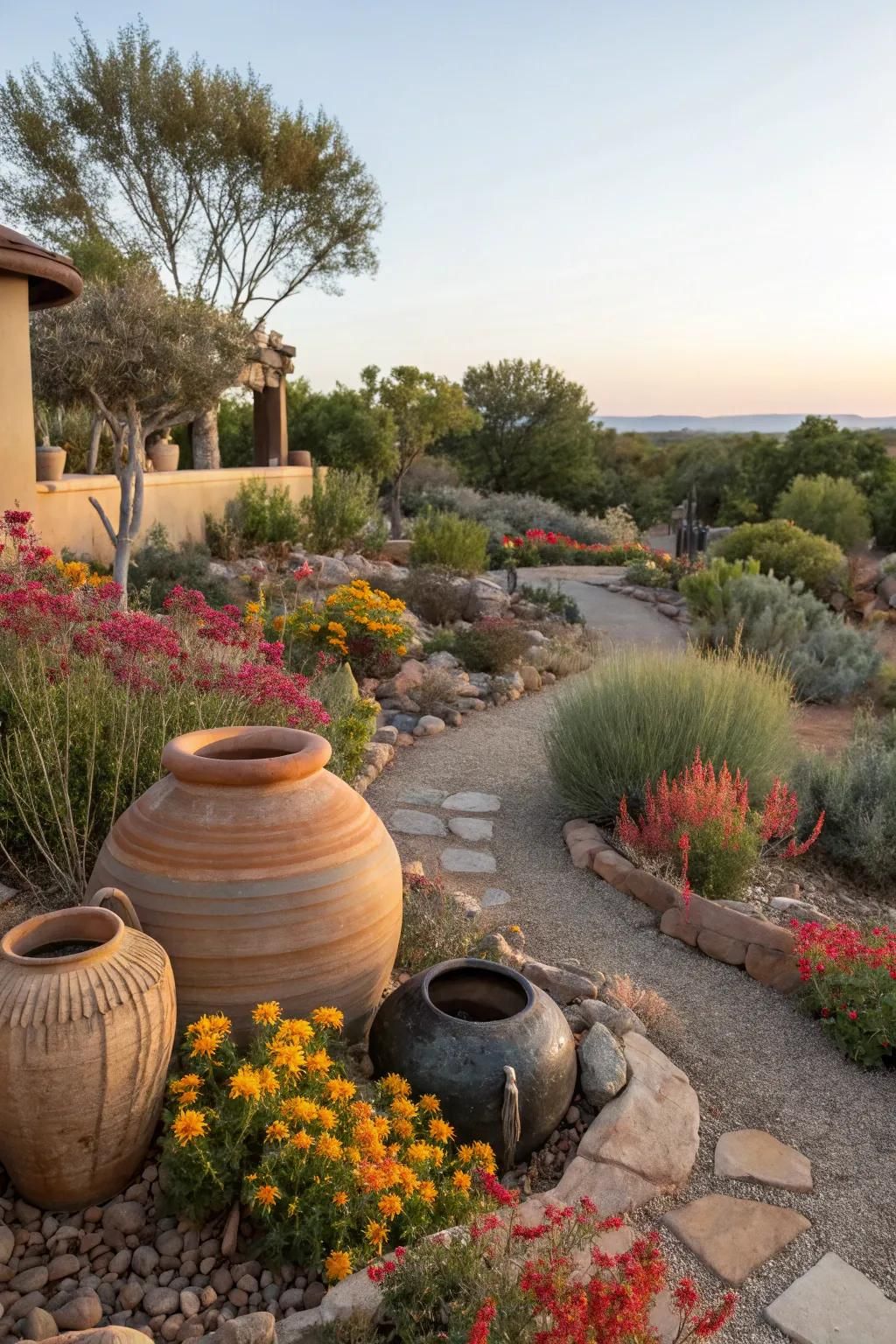
This scene feels like golden-hour comfort. Big clay urns, warm stone edging, and a curving path that makes you slow down without even realizing it. In a california native landscape, that “slow down” feeling matters. Curves soften everything. They hide what’s ahead, so the garden feels bigger, like there’s always another little corner waiting.
I love how the pots act like anchors. They give weight and personality, even when the plants are young or between bloom cycles. If you want this look, group pots in odd numbers, like 3, not 2. And vary heights. A tall urn, a medium pot, a low bowl. That combo looks natural, not staged.
Plant-wise, this style shines with drought-tough color, like yarrow, sage, and native buckwheat. Put the brighter blooms closer to the path where you’ll actually notice them. And don’t over-edge everything. A slightly rough edge feels more “California hillside” and less “suburban border war.”
Olive trees + wildflower drifts
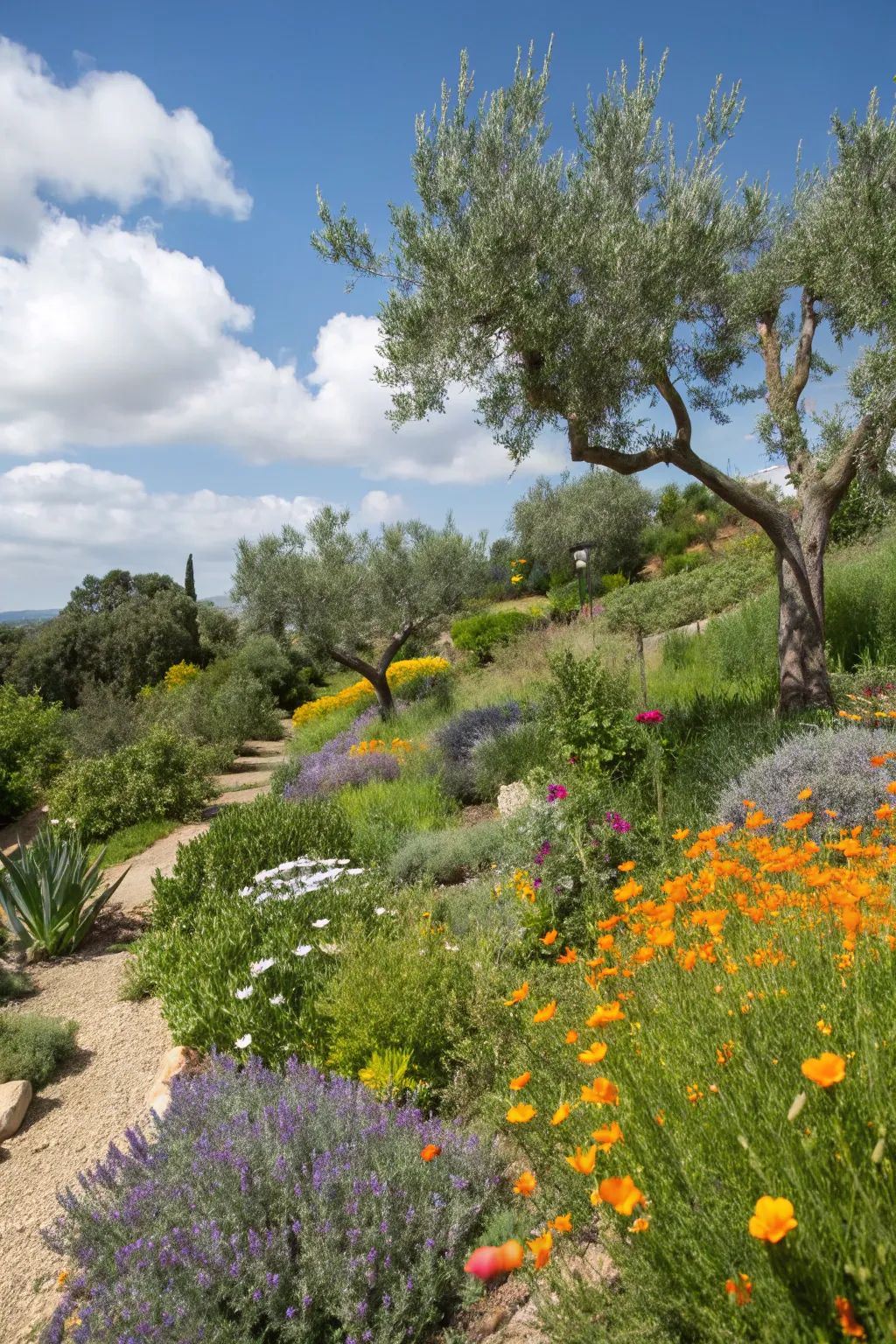
This hillside is honestly dreamy. The silvery olive trees, the soft purple groundcover, and those pops of orange and yellow flowers feel like a painting. I know olives aren’t native, but the look fits the California vibe perfectly, and the plant layering is exactly what people try to copy in a california native landscape.
The biggest lesson here is drift planting. You’re not planting one of everything. You’re planting big patches of the same plant so it reads like nature. Purple in one broad sweep, orange in another, then soft green shrubs holding it all together. If you do tiny scattered plants, it looks messy and confused.
A hack for slopes: stabilize first, decorate second. Use deep-rooted shrubs or grasses at the top and middle, then add wildflowers as the “sparkle layer.” And use a mulch that won’t slide, like shredded bark or small gravel. I’ve watched mulch run downhill like it’s late for work, so yeah, slope gardens need respect.
Grasses + bold color for street drama
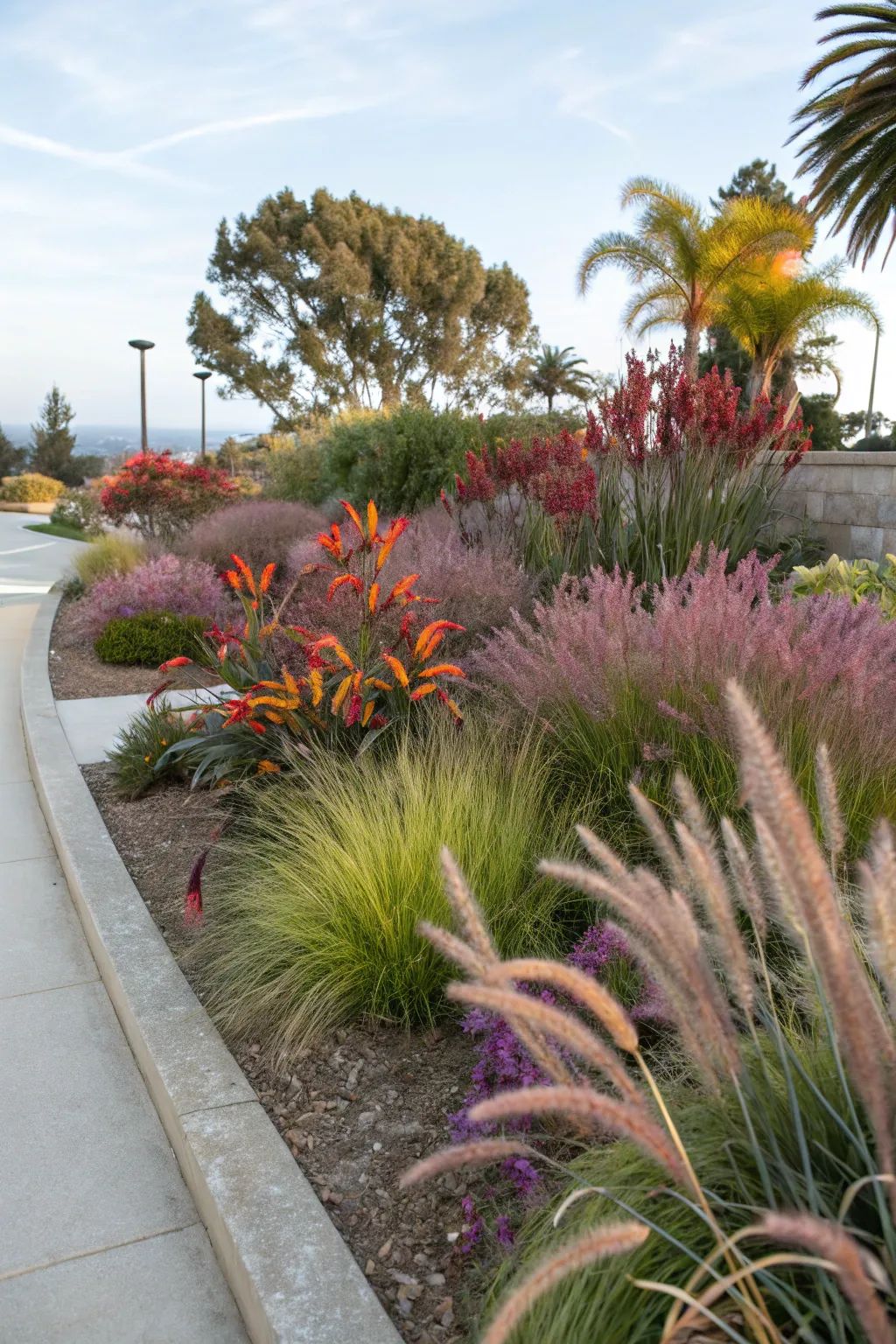
This one is curb appeal with attitude. The grasses are fluffy, the colors are warm and red, and the planting feels intentional without looking stiff. For a california native landscape, curb strips and roadside beds are tricky because they’re hot, windy, and people barely water them. That’s why grasses and tough perennials are such a win.
The trick is mixing shapes. Use big rounded grass clumps as the base, then add upright spiky flowers or seed heads that punch upward. That contrast keeps the bed from looking flat. And you don’t need a million colors. Two to three main colors is enough. Here it’s warm reds and oranges with green-gold grasses, and it feels rich.
If you want to copy it, choose plants that don’t flop into the sidewalk. Also, leave a small buffer strip of mulch between plants and pavement. It keeps the hard edge clean. This is one of those california native landscaping ideas that looks “designer,” but it’s really just good plant choices and repeated forms.
Dry creek bed for drainage and style
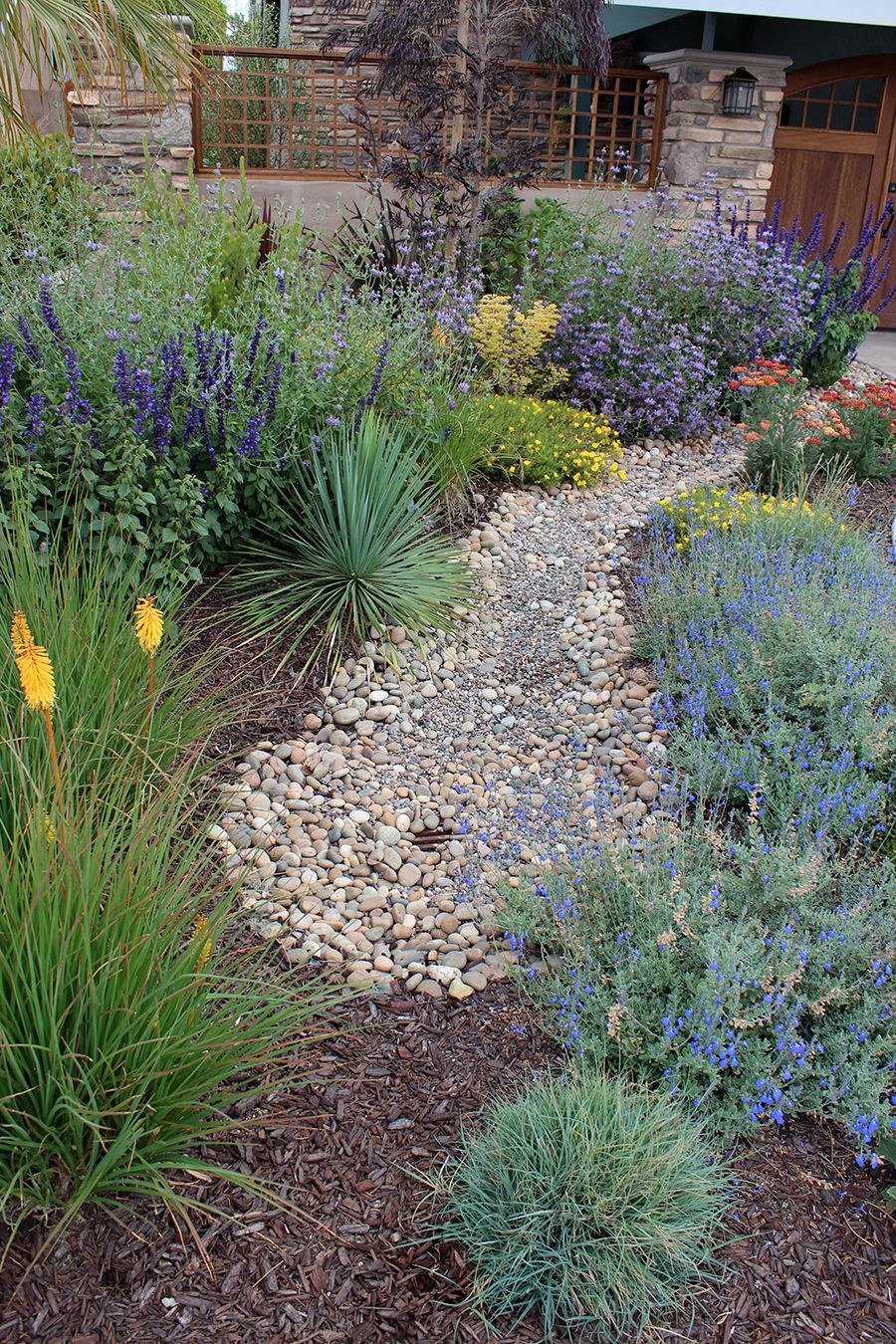
Okay, dry creek beds are not just pretty. They’re problem-solvers. This one winds through the planting like a natural little river, using rounded stones and subtle curves. In a california native landscape, that’s smart because rain comes hard when it comes, then disappears for months. A dry creek helps guide water where you want it.
The stones matter. Use mixed sizes, not just one uniform rock. Bigger stones at the edges, smaller in the center makes it look real. And don’t make it dead straight. Curves make it believable and also more interesting.
Plant the creek “banks” with plants that can handle occasional wet feet, then dry spells. Native sages, grasses, and low flowering groundcovers work great. My opinion: a dry creek is one of the best “I’m tired of puddles” upgrades, and it looks like you hired someone fancy even if you did it yourself.
Rock-lined swale with purple and yellow pops
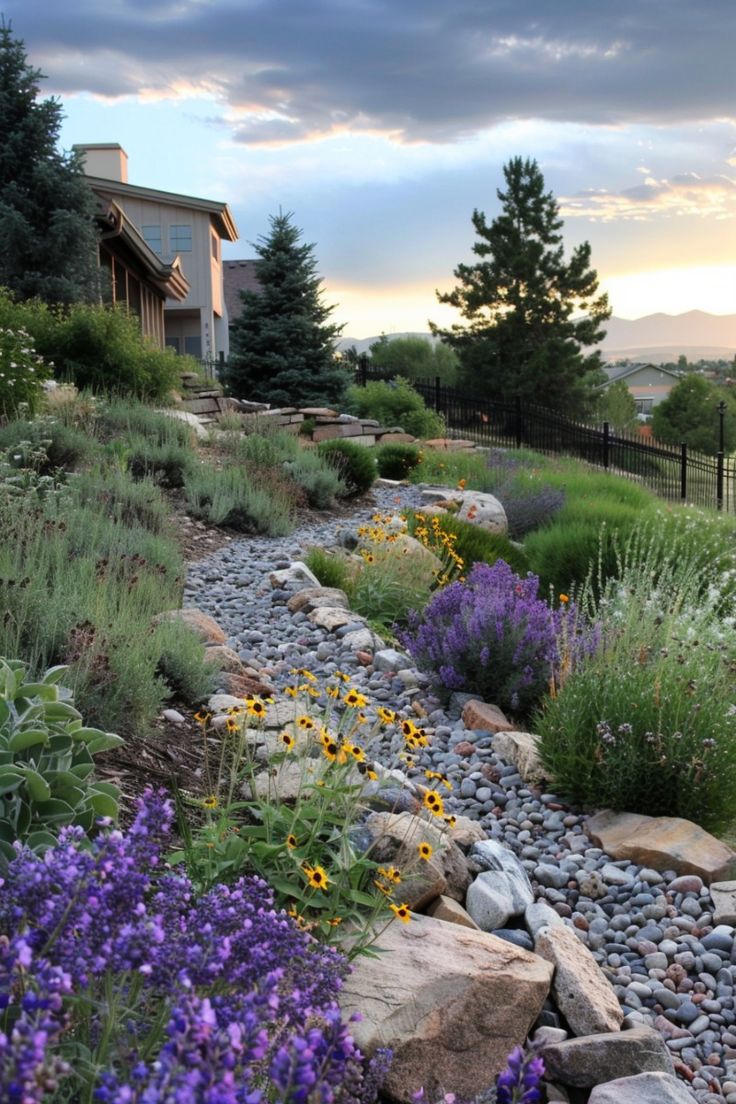
This hillside design feels calm and structured at the same time. The rock line acts like a border, but not a harsh one. Then you’ve got purple blooms, yellow flowers, and soft shrubs tucked into the slope. For a california native landscape, that’s the sweet spot. Natural-looking, but still guided.
The swale idea is the big win here. A shallow rock channel catches runoff, slows it down, and lets water soak in. That means less erosion, less mulch sliding, and fewer “why is my yard washing away” moments. If you have any slope at all, this is worth thinking about.
Planting hack: keep the toughest plants at the top of the slope, because it dries fastest. Put slightly thirstier plants lower, where water naturally settles. You don’t need to fight gravity. Use it. This is a california native landscaping approach that makes the yard work with the climate, not against it.
Decomposed granite path with flower bursts
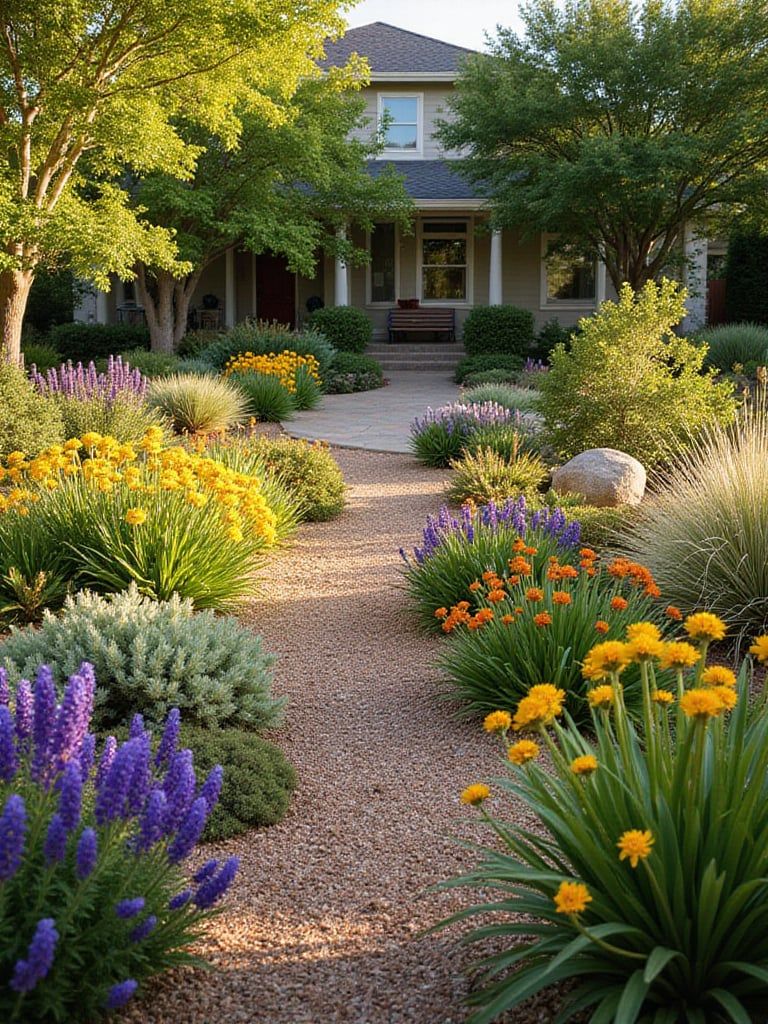
This one feels like a friendly garden you actually want to walk through. The decomposed granite path (DG) looks soft underfoot, and the planting beds are full of color without being chaotic. In a california native landscape, DG is a classic because it drains well, looks natural, and doesn’t scream “concrete everywhere.”
The biggest lesson here is spacing and clusters. The yellow flowers repeat in a few spots. The purple repeats too. Repetition makes your brain feel calm. If you plant one yellow over here, one yellow over there, it looks accidental.
Also, keep DG contained with edging, even if it’s a hidden edge. Otherwise it migrates like sand. I’ve tracked DG into a house before and it’s… not fun. This california native landscaping style is cheerful and welcoming, and it’s a good option if you want color without giant watering bills.
Stepping-stone path through gravel and lavender
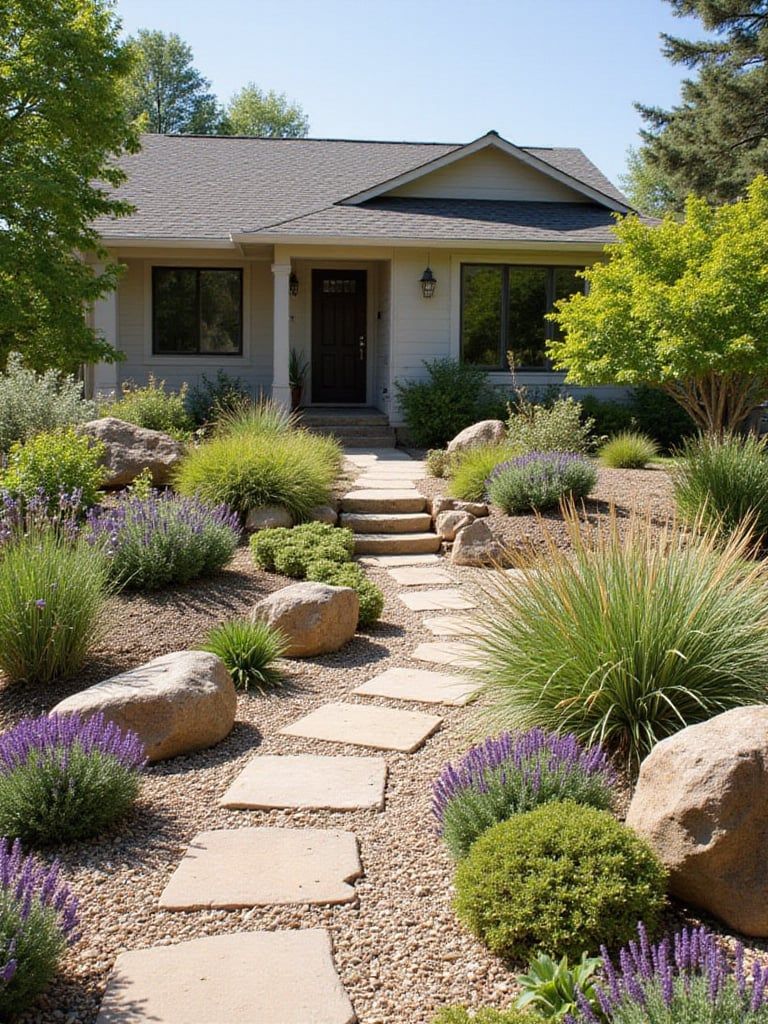
This design is all about rhythm. Stepping stones lead you forward, gravel stays clean, and low shrubs and lavender-like plants fill the edges. It feels neat, but still natural. In a california native landscape, paths matter because they organize the chaos. Without paths, even pretty plants can feel messy.
If you copy this, make sure stones are level and spaced for a normal stride. Not too close, not too far. And keep the planting low near the stone edges. Nobody wants to brush wet plants when they walk. Even in dry climates, dew happens.
Planting tip: use plants that look good even when not blooming. That’s why silvery foliage and evergreen shrubs are so useful. This is one of those california native landscaping ideas that stays attractive year-round, not just during flower season.
Big agave focal point with cool-toned groundcover
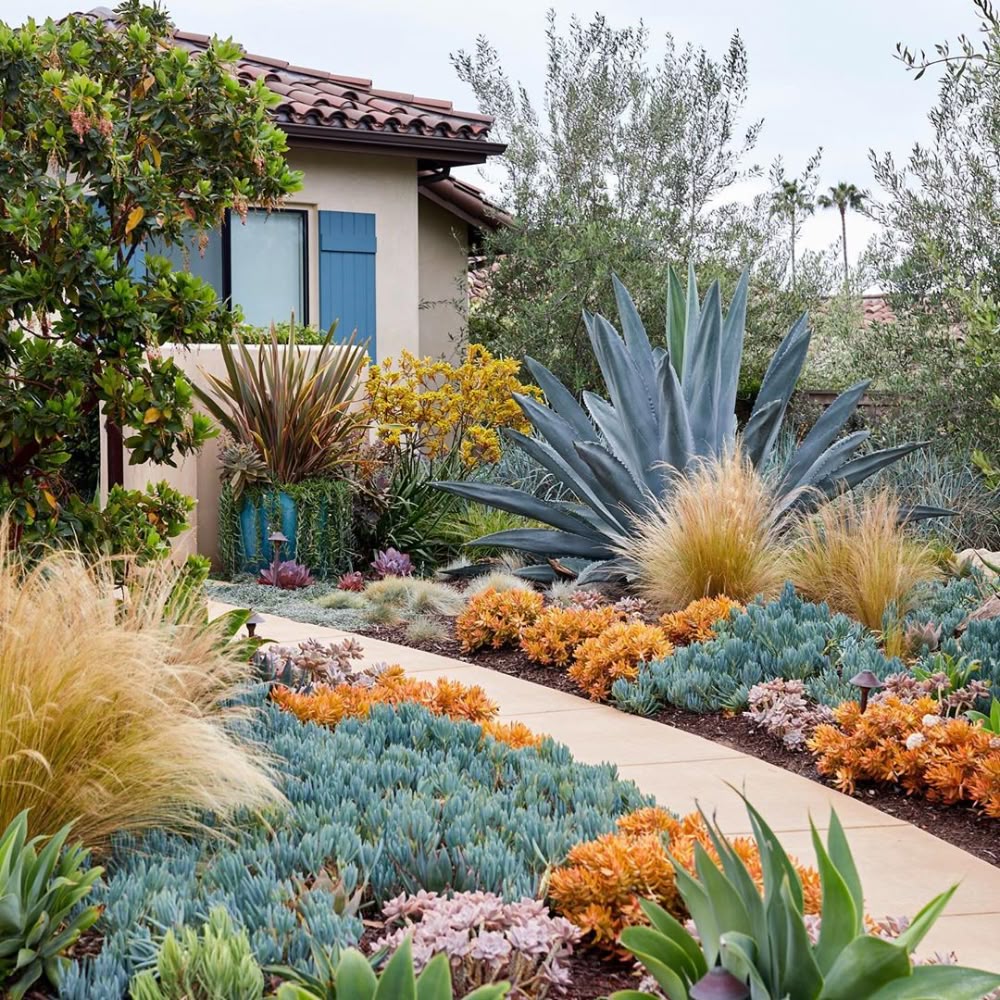
This one is bold. The giant agave looks like a sculpture, and the surrounding plants are low, cool-toned, and tidy. In a california native landscape, a focal point like this keeps everything from feeling like “random stuff planted everywhere.”
The trick is contrast. Big spiky plant, then softer plants around it. Warm orange low shrubs, then blue-green groundcover, then tufts of grass. It’s like layering outfits, honestly. If everything is spiky, it feels aggressive. If everything is soft, it feels flat.
A real-life warning: agaves get huge, and some have sharp tips. Don’t put them right by a walkway edge where somebody will brush past. Put them back a little, let them shine from a safe distance. This california native landscaping approach is modern and dramatic, but still very climate-smart.
Mediterranean vibe with stones and soft blooms
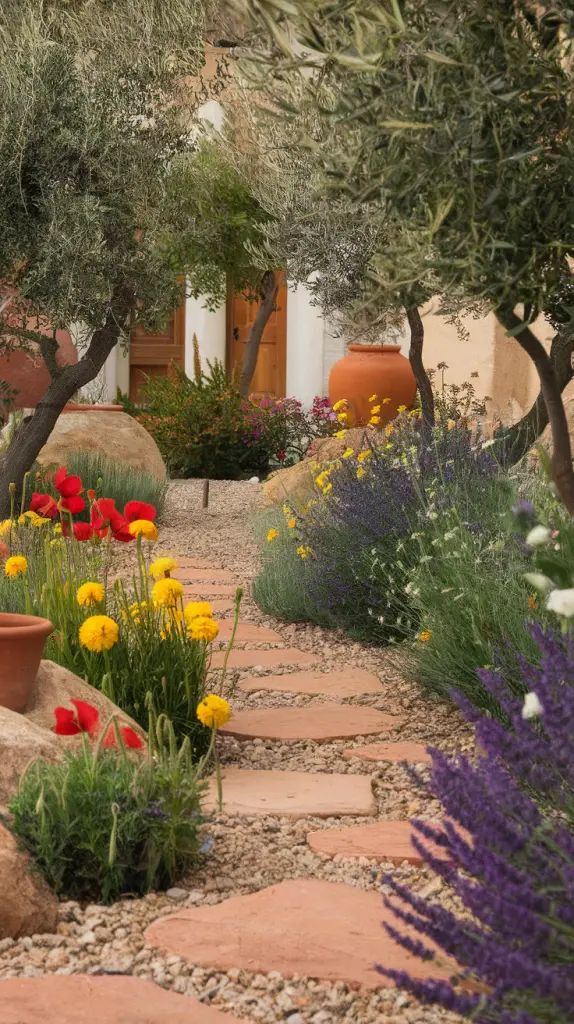
This last one feels intimate, like a secret courtyard. Warm stone, stepping path, silvery trees, and bright red and yellow blooms tucked in. It’s giving Mediterranean California, and it feels cozy in a way that’s hard to explain. A california native landscape can totally borrow Mediterranean cues, because the climate overlaps so much.
The path is key. It’s narrow and gentle, so it feels personal. And the plants are arranged to “hug” the walkway, but not choke it. That balance matters. You want it to feel lush without feeling crowded.
If you want this look, focus on drought-tough bloomers plus silver foliage. Silver plants make everything feel cooler and softer, especially in bright sun. And add one statement pot or urn for warmth. This is one of my favorite california native landscaping moods because it feels lived-in, not showy.
FAQ: california native landscape
1) What is a california native landscape?
A yard designed with plants native to California’s regions and climate.
2) Does California native landscaping mean zero watering?
Not zero, but much less once established.
3) What’s the easiest path style for a california native landscape design?
Gravel paths with stepping stones.
4) Why do designers use grasses so much?
They add movement and look good year-round.
5) How do I keep a meadow look from turning messy?
Limit plant types and cut back at the right time.
6) Are poppies good for California native landscaping ideas?
Yes, they’re iconic and bring bright color.
7) Can I mix succulents with natives?
Yes, if their water needs match.
8) What’s the biggest mistake people make?
Planting too many different plants and losing the theme.
9) Do I need edging for gravel?
Yes, unless you like gravel spreading everywhere.
10) How do I get that “wild but tidy” look?
Mass plantings, repeated colors, and clean paths.
11) What’s a good color combo to start with?
Orange + purple + silver-green.
12) How often do native gardens need trimming?
Usually a couple times a year, not weekly.
Conclusion
A california native landscape can feel wild, soft, colorful, and still calm. These 19 images show the real recipe: repeat plants, use paths to guide movement, mix textures like grasses and shrubs, and add bold color in drifts instead of scattered dots. If you want the fastest improvement, start with structure. Path, gravel, edging, and plant groupings. Then add the fun stuff like poppies and purple haze. And yeah, once it clicks, you’ll start judging every yard you see, because you can’t unsee good design.