The first time I tried copying a california drought tolerant landscape, I thought it would look empty and kinda harsh. Like, rocks everywhere and one sad cactus. But these 13 images prove the opposite. This style can feel warm, modern, even cozy, and it doesn’t beg for water like a thirsty lawn does. Honestly, it’s the first landscape style that made me feel relieved instead of stressed.
What I’m seeing here is a mix of bold shapes (agaves, cactus), soft fillers (grasses, low shrubs), and clean hardscape that makes everything feel intentional. I’m going to break down each design idea and tell you what works, what I’d tweak, and the little “do this first” hacks that keep it from turning messy.
Table of Contents
Curved Path With White River-Rock Border and Desert Sculptures
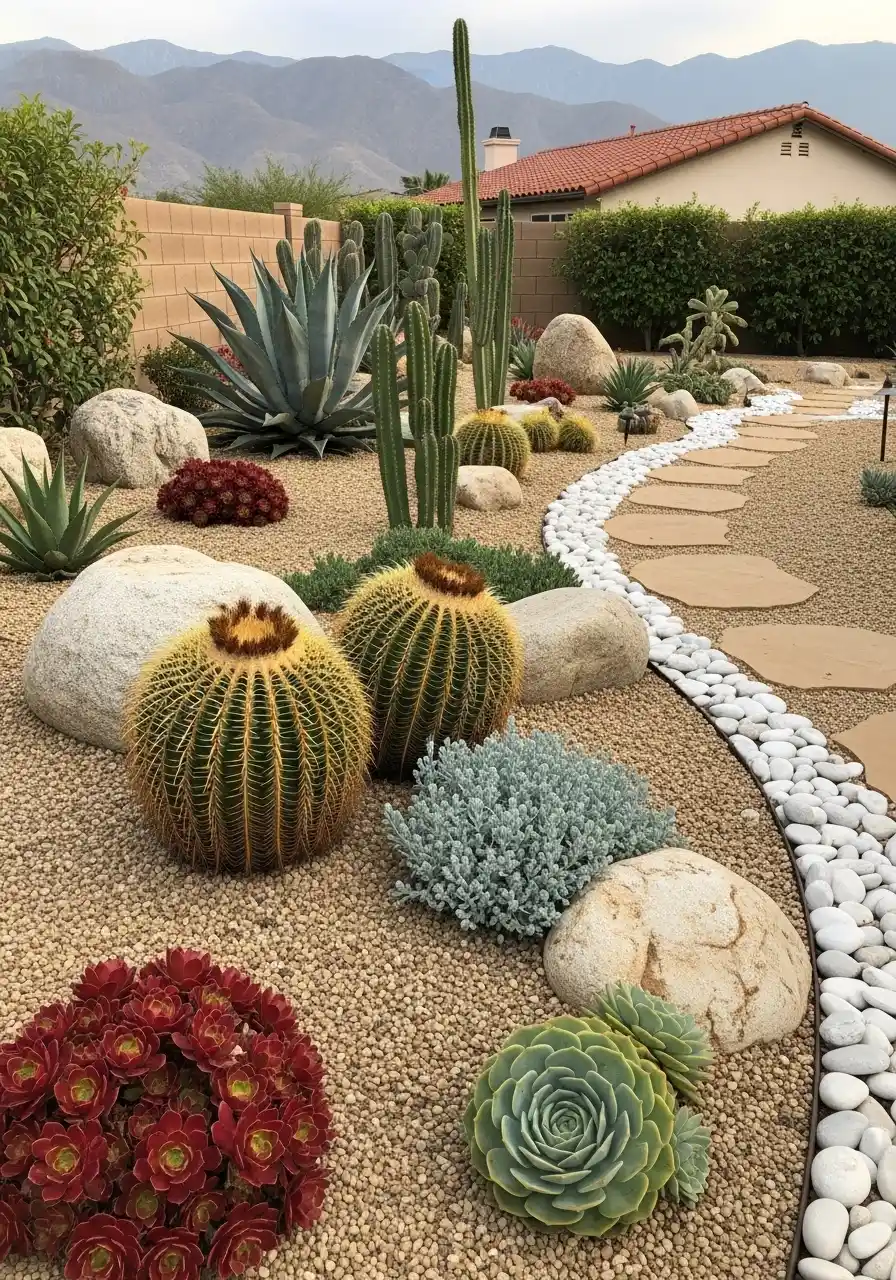
This first scene is a perfect example of how to make a yard feel guided, not random. The stepping-stone path curves gently, and the white river-rock border acts like a bright outline. It’s basically a highlighter for the walkway. Then you’ve got big barrel cactus, tall column cactus, and agaves placed like art pieces.
For a california drought tolerant landscape, the shape placement is doing the heavy lifting. Tall plants in the back, medium mounds in the middle, and low rosettes in front. That’s why it reads clean from far away. The gravel base is also smart because it drains fast and keeps weeds down if it’s deep enough.
My tip: don’t skimp on the base prep. If you just dump gravel over dirt, it sinks and gets patchy. I’d put down a proper weed barrier and add edging so the white rock border stays crisp. White rocks love to wander, I swear they move at night.
Coastal Hillside Boulder Garden With Agaves and Low Mounds
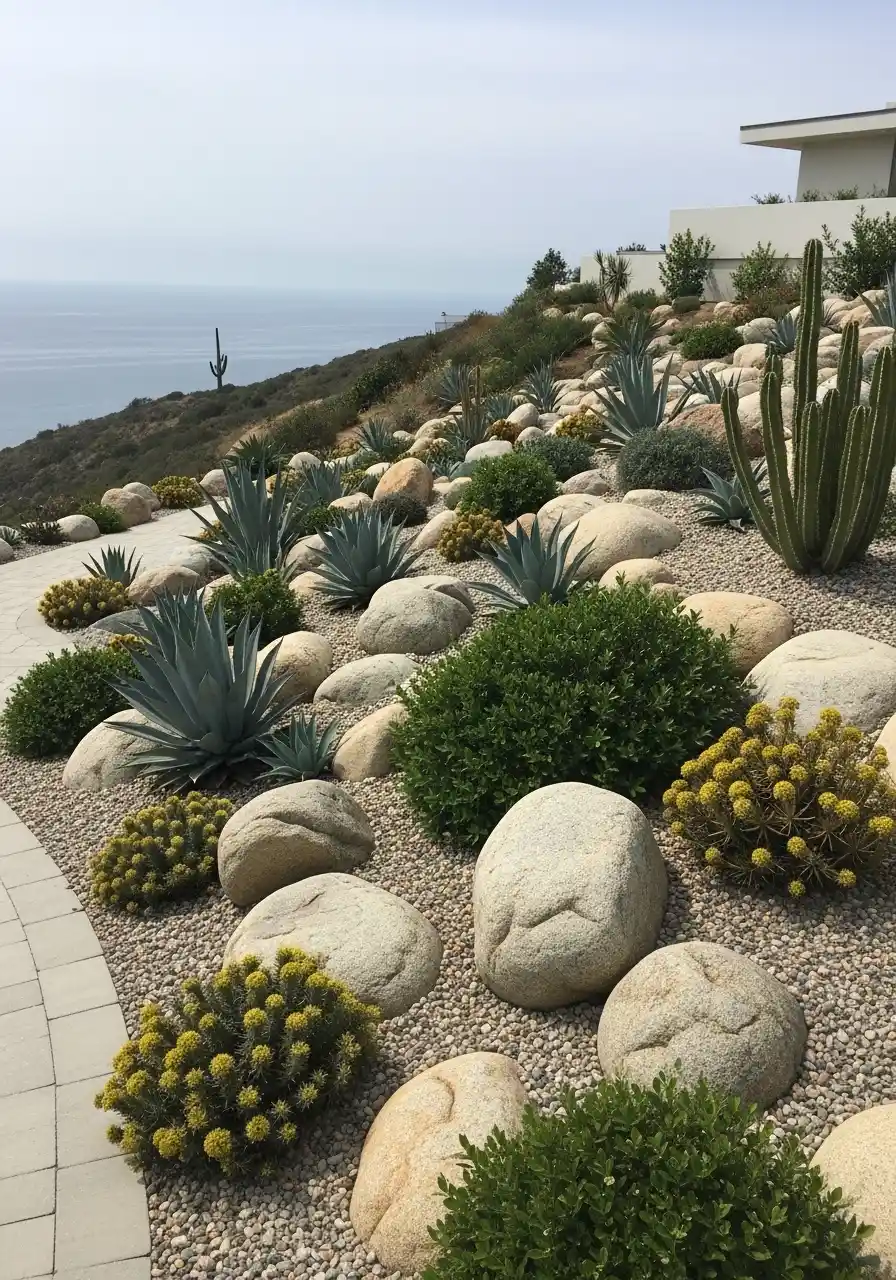
This slope garden is gorgeous and practical at the same time. Big rounded boulders scattered down the hillside, clusters of agaves like spiky stars, and low shrubs filling gaps. The ocean view is amazing, but the layout would still look good even without it. It feels natural, like the hillside always looked this way.
For California drought tolerant landscaping, slopes are tricky because water runs off fast. That’s why boulders matter. They slow runoff, create little pockets where moisture stays longer, and they make micro-shade spots. The planting is spaced so each plant gets room to grow into its shape instead of fighting.
My opinion: this design is “quiet luxury.” No loud colors, just texture and form. If you want more color, add it in tiny hits, like one flowering native shrub per section. Too many blooms on a slope can look messy fast.
Mid-Century Modern Entry With Curved Walkway and Barrel Cactus Rhythm
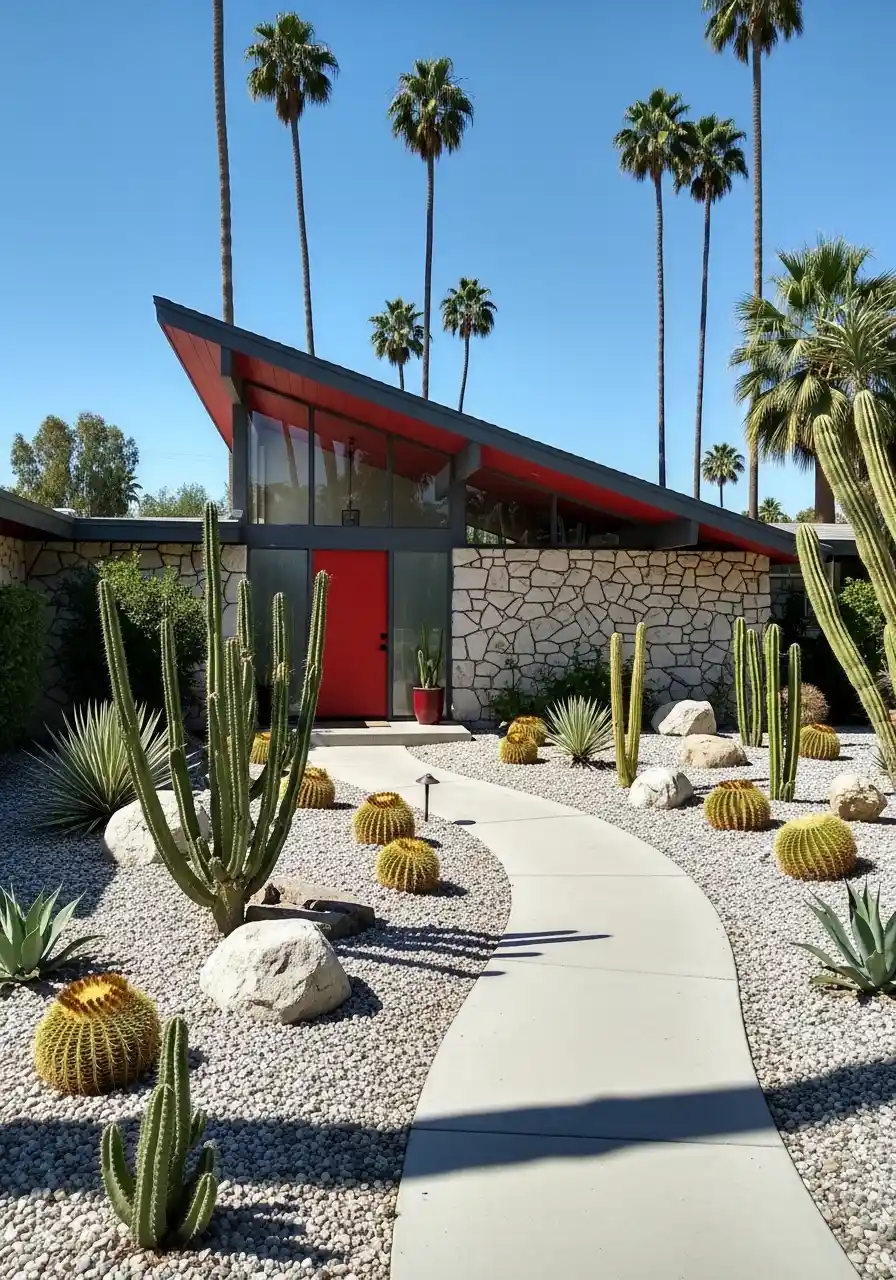
This front yard is basically a classic. Curved concrete walkway, gravel field, boulders, and barrel cactus repeating like a pattern. The house has that sharp mid-century roof line and a bold door, and the landscape matches it by staying clean and geometric.
In a california drought tolerant landscape design, repetition is the secret sauce. Those barrel cactus aren’t scattered. They’re repeated at a steady rhythm, so your eye understands the design. Same with the columns. They’re placed like vertical punctuation marks. And the open gravel space makes the house look bigger.
One hack: if you copy this, keep the planting palette tight. Don’t add 20 different plant types. Pick 5–7 max and repeat them. Also, add low landscape lighting along the curve. At night, a curving path can feel confusing unless you lightly mark it.
White Rock Courtyard Look With Massive Barrel Cactus and Stone Walls
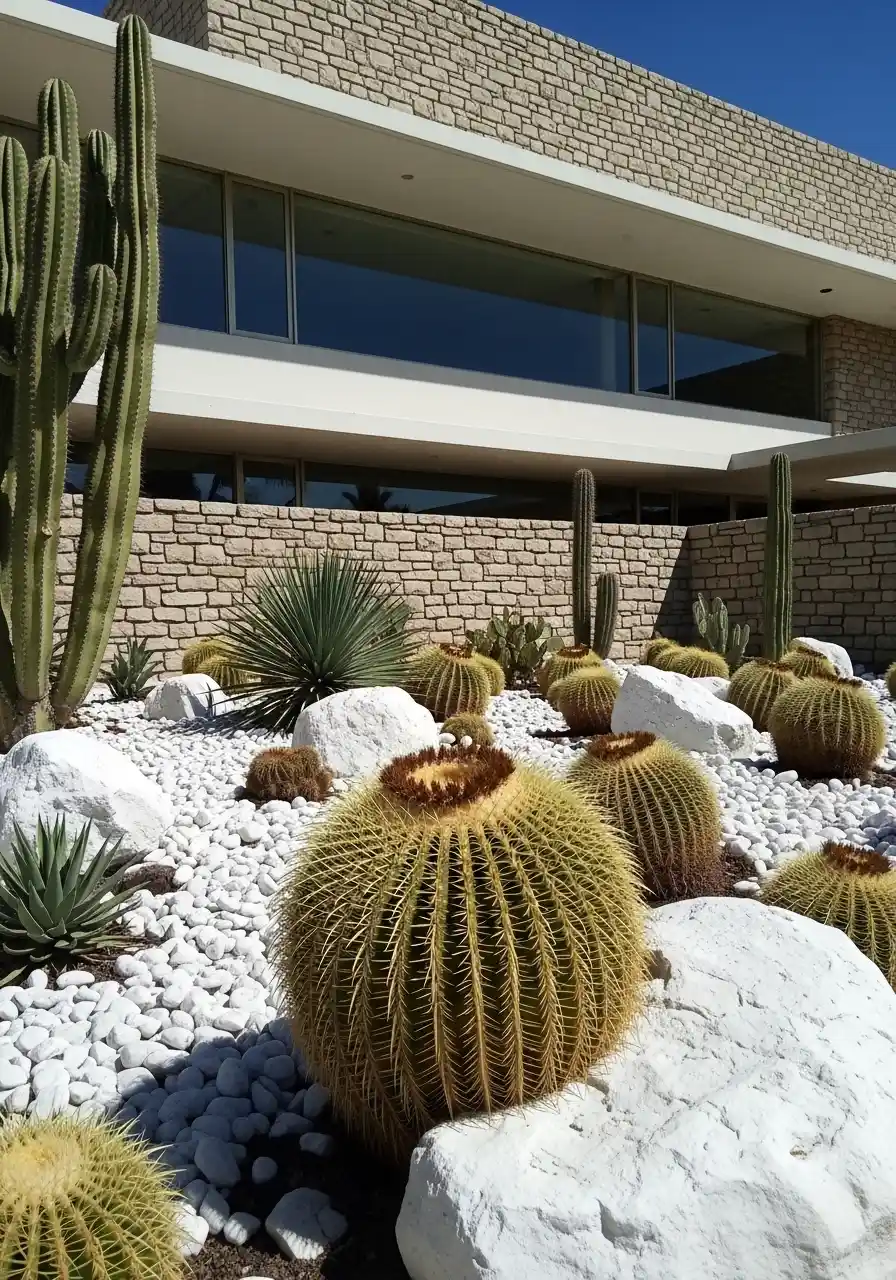
This one is bold and dramatic. White rock ground, big barrel cactus, tall columns, and bright boulders against stone walls and modern architecture. It feels like a desert gallery. The white rock makes the plants stand out like sculptures.
For california drought tolerant landscape yards, white rock is a commitment. It looks amazing, but it shows dirt and leaf litter fast. If you have messy trees nearby, you’ll be cleaning it a lot. I’d still use the look, but I might choose an off-white gravel so it hides dust better.
My tip: separate white rock areas from other gravel with edging. If you mix stones, it starts looking sloppy. And place your biggest focal cactus first, then build around it. Big focal plants should feel centered, not like an afterthought.
Poolside Desert Border With Olive Tree and Prickly Pear
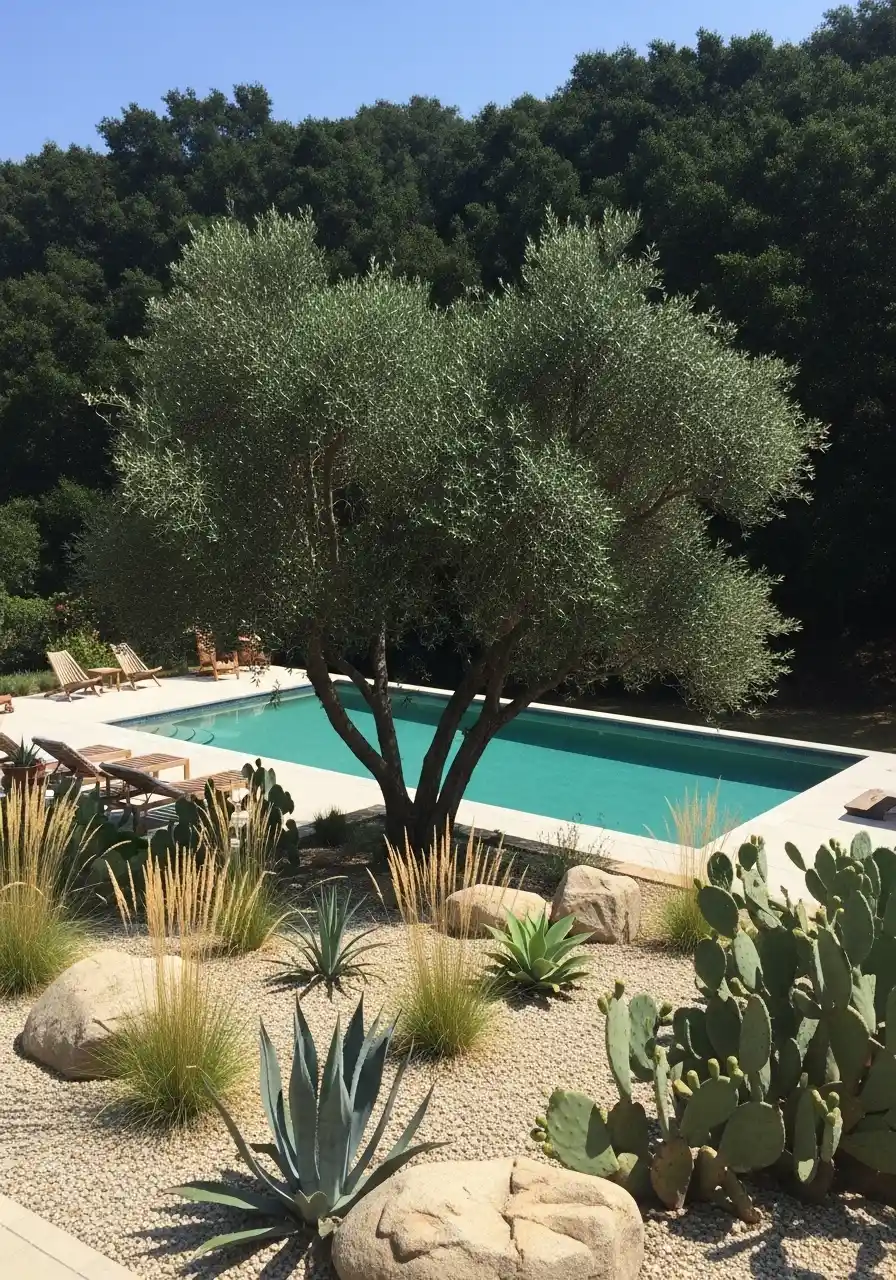
This scene feels calm and rich at the same time. A pool, an olive tree providing soft shade, and then cactus and agaves tucked into gravel with big boulders. The olive tree is the emotional anchor here. It makes the desert plants feel softer and more “lived in.”
For California drought tolerant landscaping ideas, mixing one soft canopy tree with spiky plants is a great balance. It stops the yard from feeling aggressive. Also, pool areas need low-mess planting. Nobody wants leaves clogging filters nonstop. The plants here are mostly tidy.
My opinion: prickly pear is awesome but it can spread. If you use it, give it space and don’t put it near walkways. And add a drip line for the first year. Even drought plants need help while they settle in.
Modern Border With White Gravel, Giant Agaves, and Sunset Warmth
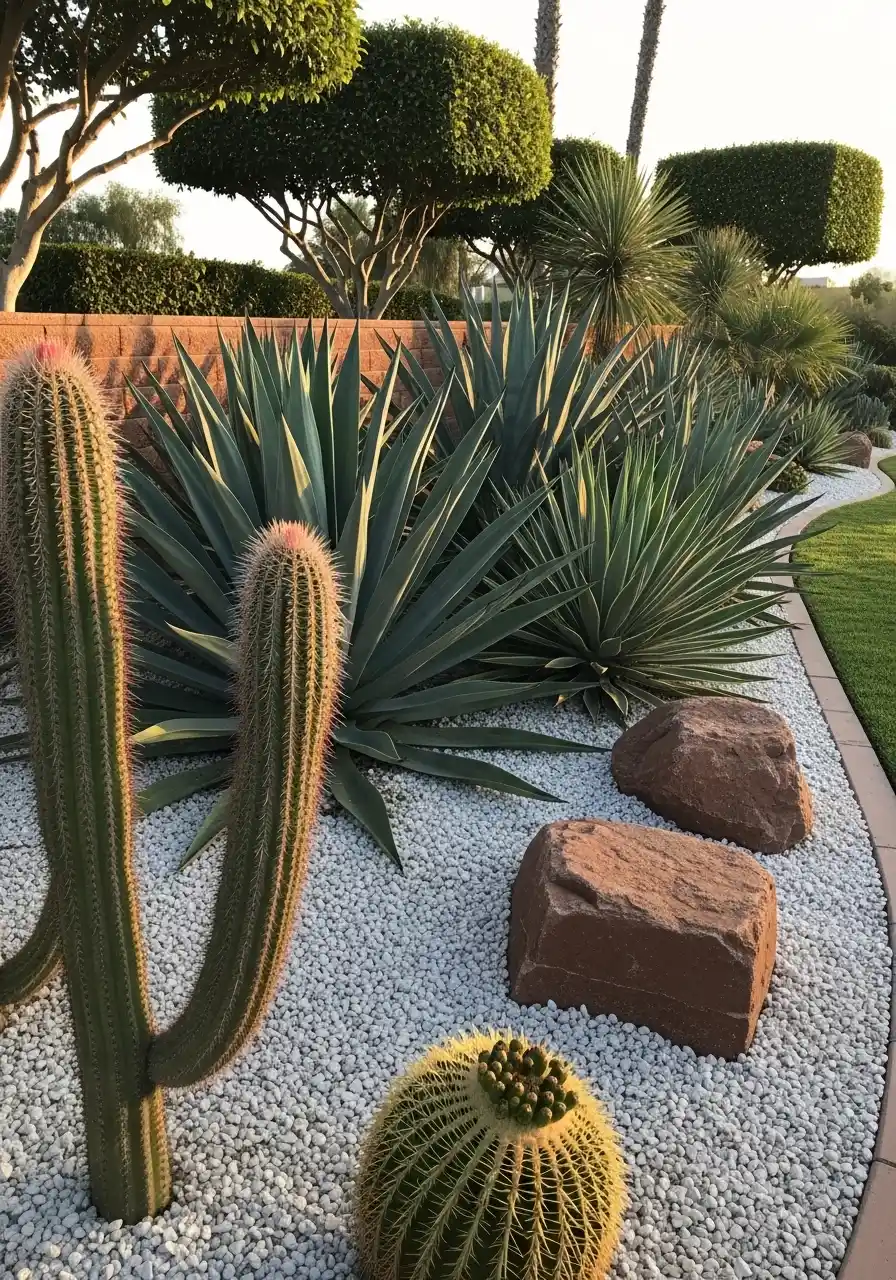
This image has those giant agaves that look like fireworks frozen in time. White gravel, a few reddish rocks, and a clean border line. The light makes the plant edges glow, and the whole bed looks organized, not wild.
For a california drought tolerant landscape design, big agaves are instant structure. They make the bed look full even with few plants. But you have to plan spacing because they get huge. If you plant them too close, you’ll regret it in two years.
Hack: add a “maintenance strip” of gravel along the edge so you can step in without crushing plants. Also, keep the border line smooth. Wiggly edges look cute on Pinterest but they’re annoying to maintain in real life.
Desert Courtyard With Yucca Tree, Dark Gravel, and Stepping Slabs
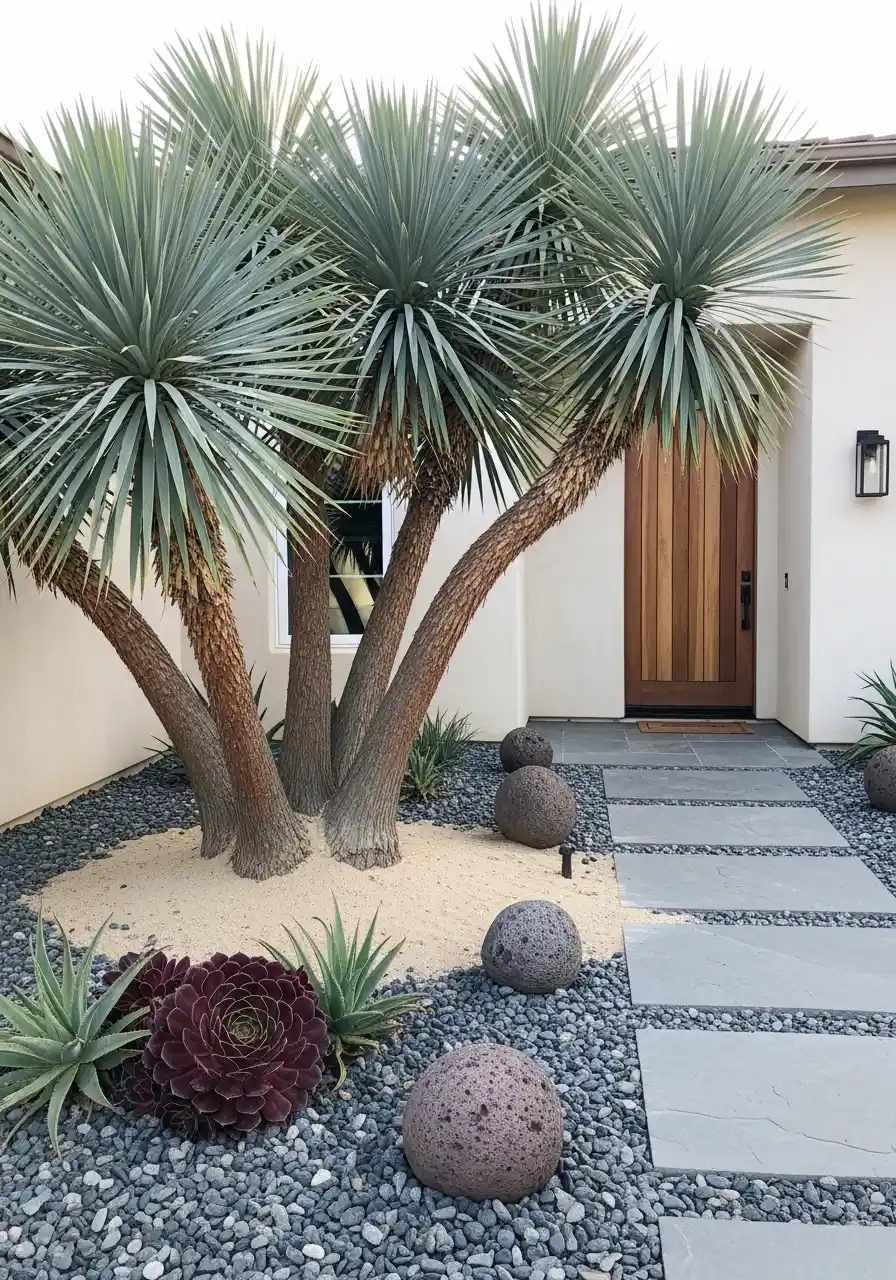
This courtyard is super clean. A multi-trunk yucca tree as the main feature, dark gravel, a sandy center island, and big stepping slabs leading to the door. The round stone spheres add a little playful art vibe without being cheesy.
In a california drought tolerant landscape, courtyards are perfect because you control everything. No lawn to water, no messy corners. The contrast between dark gravel and light slabs makes it feel modern, and the yucca adds height without needing much water.
My tip: use a solid base under stepping slabs. If they shift, you’ll feel it every time you walk. Also, choose gravel that’s comfortable to walk near. Some gravel is sharp and annoying. Your feet will tell you the truth fast.
Adobe-Modern Entry With Pottery, Barrel Cactus, and Minimal Steps
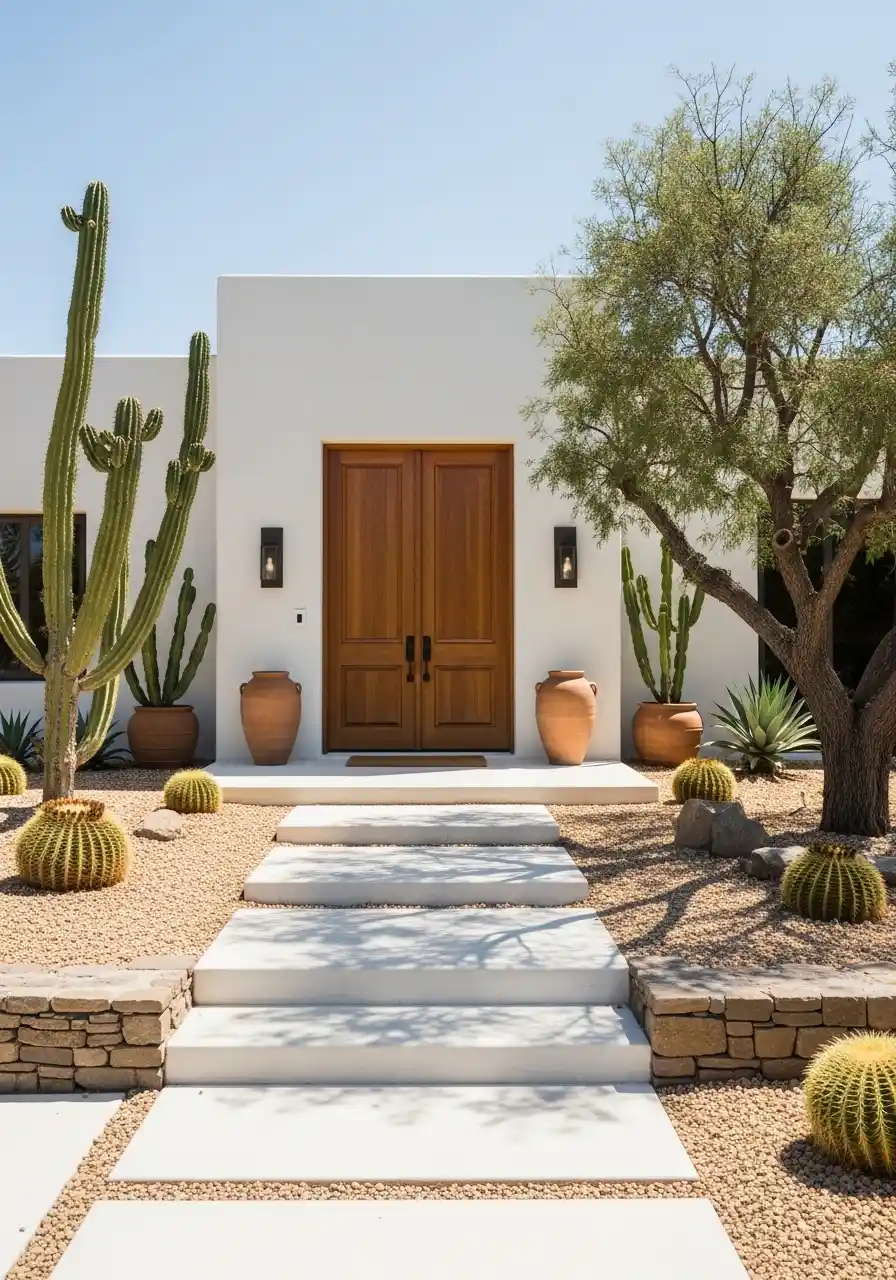
This entry is simple but strong. Clean white walls, big wooden doors, pottery jars, and a few well-placed cacti and barrels. It’s one of those setups where nothing is crowded, so everything looks more expensive.
For California drought tolerant landscaping, pottery is a great trick because it adds warmth without needing plants everywhere. The jars also match the desert vibe, so it feels natural. The steps are wide and easy, and the planting stays low so the architecture stays the star.
My opinion: this is the best approach if you want low maintenance. Fewer plants, bigger statement pieces. Just make sure the pots are large enough. Small pots disappear outside and look silly.
Curved Gravel Path With Bright Yellow Daisies and Pink Spikes
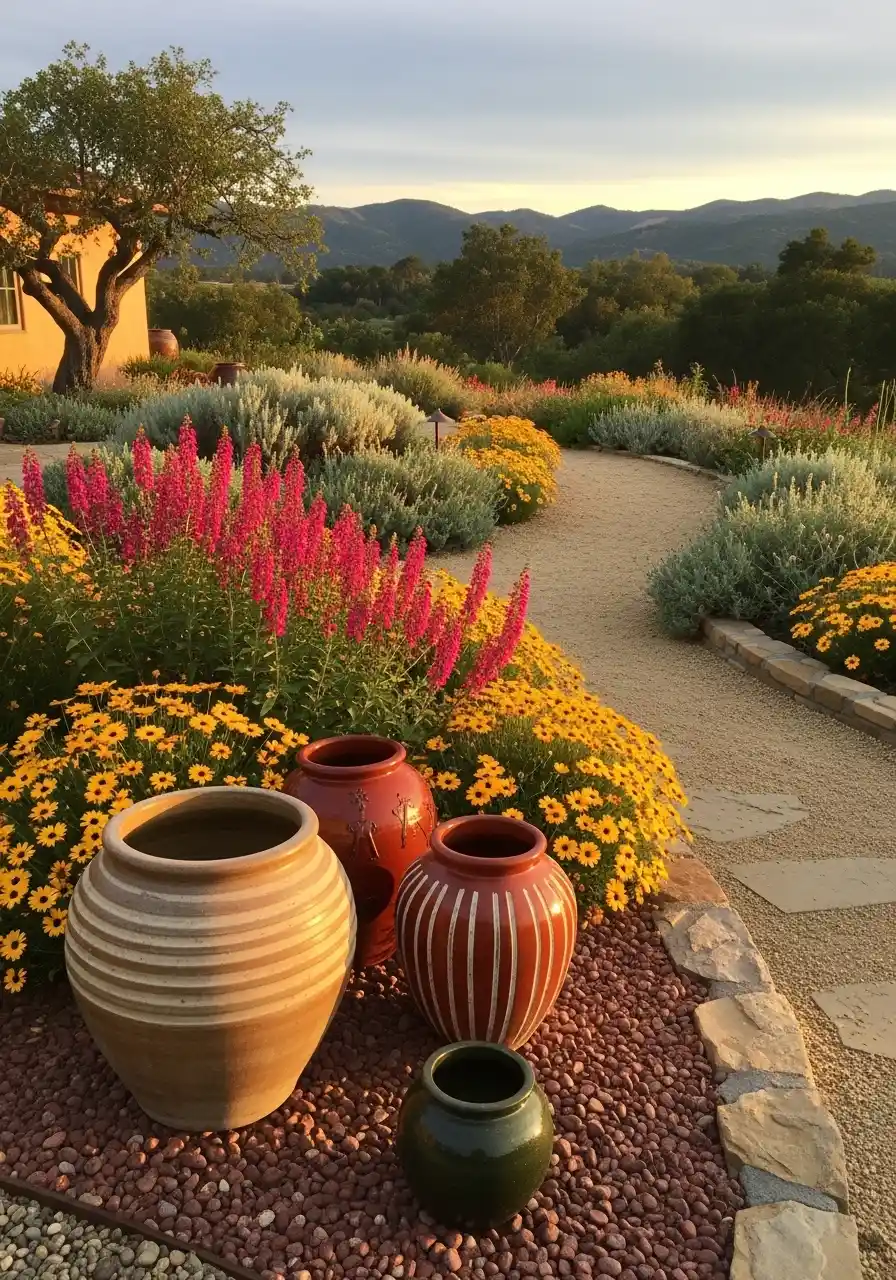
This one is more colorful and soft. A curving gravel path, lots of silver-green mounds, and then bright yellow flowers and tall pink spikes. It feels like a desert garden that still has joy in it. Not everything has to be gray-green to be drought-tolerant.
For a california drought tolerant landscape, color works best when it’s grouped. Here, the yellow flowers are in mass, not scattered one-by-one. That’s why it looks like a design choice. The path curve pulls you through, and the plants make the curve feel lush.
Hack: pick a few colors and repeat them. Yellow + pink + silver-green is enough. If you add five more colors, the yard starts feeling busy. Also, use drip irrigation under mulch for colorful flower zones. Color often needs a bit more water than pure cactus beds.
Stone House Desert Scene With Giant Saguaro and Layered Succulents
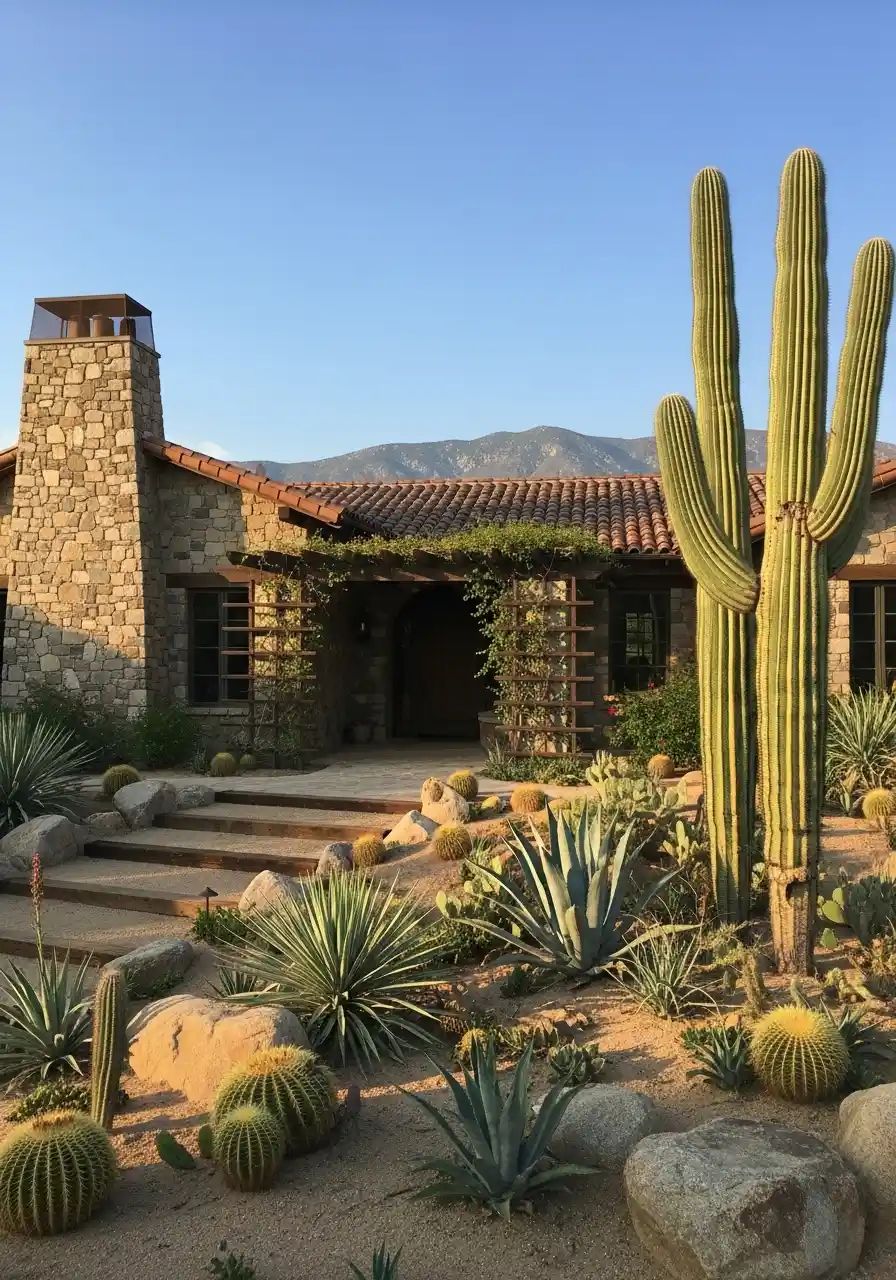
This last scene feels like a movie set in the best way. Stone walls, a huge saguaro, agaves, barrel cactus, and boulders layered naturally. The steps and rocks make the entry feel grounded, like it belongs to the landscape around it.
For California drought tolerant landscaping ideas, the lesson here is layering and scale. Big plant, medium plants, small plants. Big rocks, medium rocks, small gravel. Scale is what makes it feel natural. If everything is the same size, it looks flat.
My tip: place the biggest rocks first and half-bury them. Then plant around them. And keep a few open gravel spaces. Open space is part of the design, not wasted space. It makes the bed feel calm.
White gravel entry with cactus and soft color
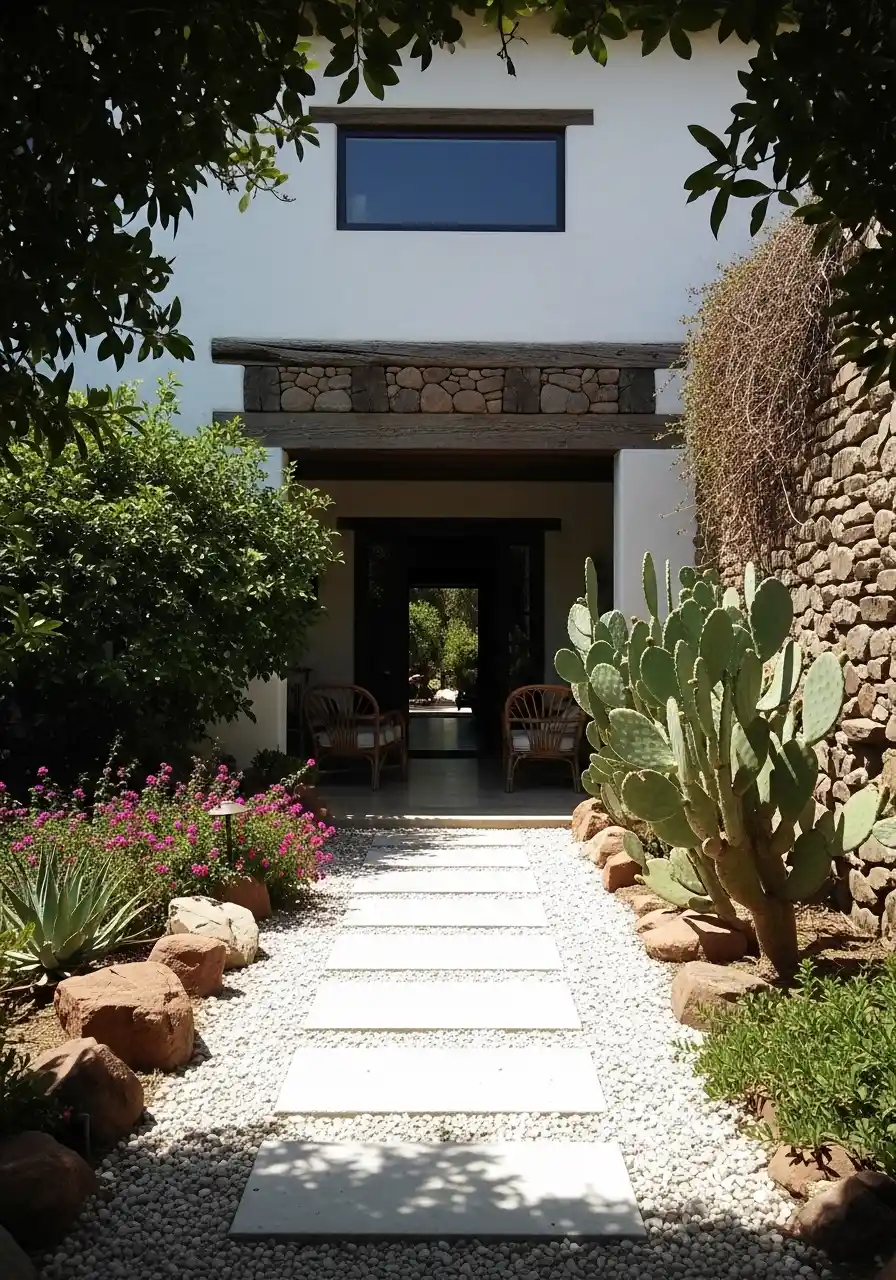
This entry is simple but it feels special. The white gravel makes everything look bright, and the big cactus on the right is like a guard, just standing there. I like how the stepping stones feel clean and easy to follow. This california drought tolerant landscape idea works because it keeps the path clear and the plants on the sides, so it don’t feel messy.
The rock border is smart too. Big warm stones keep the gravel in place, and they make the space look natural. If you want this, don’t place cactus too close to where you walk. I did that once and yep, I got poked. Not fun. Use a softer plant near the path edge, like low flowers or a small shrub, so you can brush by without pain.
A little hack: use thicker gravel, not super tiny sand stuff. Tiny gravel moves everywhere. Also add drip lines under the gravel, so your California drought tolerant landscaping stays easy. You water slow and deep, not every day.
California drought tolerant landscape backyard with pavers and desert islands
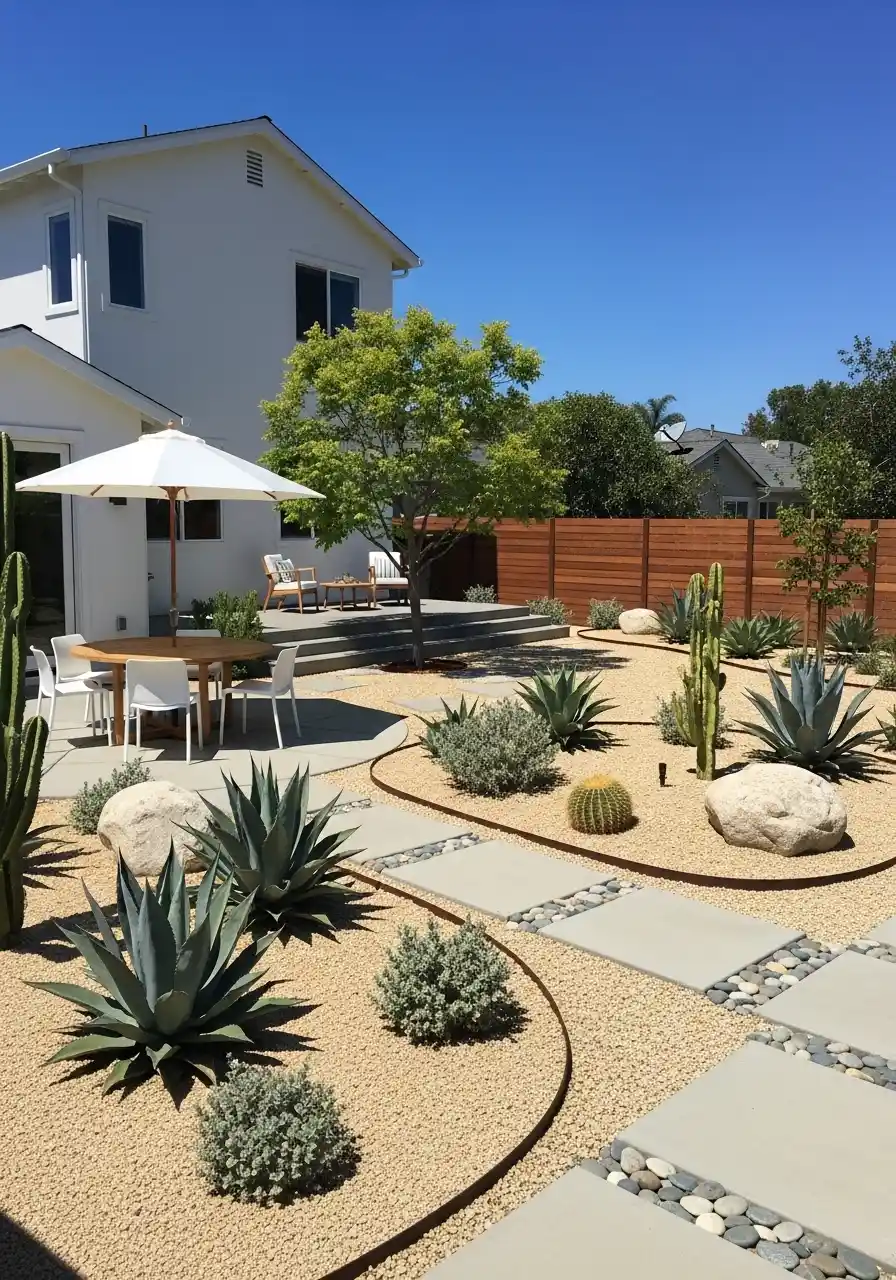
This backyard is like a clean desert garden but still cozy. The big pavers make a path that feels modern, and the little rock “rivers” between pavers look cool and help drainage. The agaves are spaced out like they got room to breathe. For a california drought tolerant landscape, breathing room is important. Crowded plants look stressed, and then you feel stressed too.
I love the curved metal edging. It’s like drawing circles on the ground, making little plant islands. That keeps the tan gravel neat, and it tells your eyes where to look. If you want this look, repeat the same plant types. Like, use agaves in more than one spot, then use silver shrubs in more than one spot. Repeating is a big trick in California drought tolerant landscape design, because it makes it feel planned.
Also, keep one shade tree if you can. That little tree makes the space feel softer and more livable. It’s still drought-friendly, just pick the right tree for your area.
california drought tolerant landscape sunset path with boulders and barrel cactus
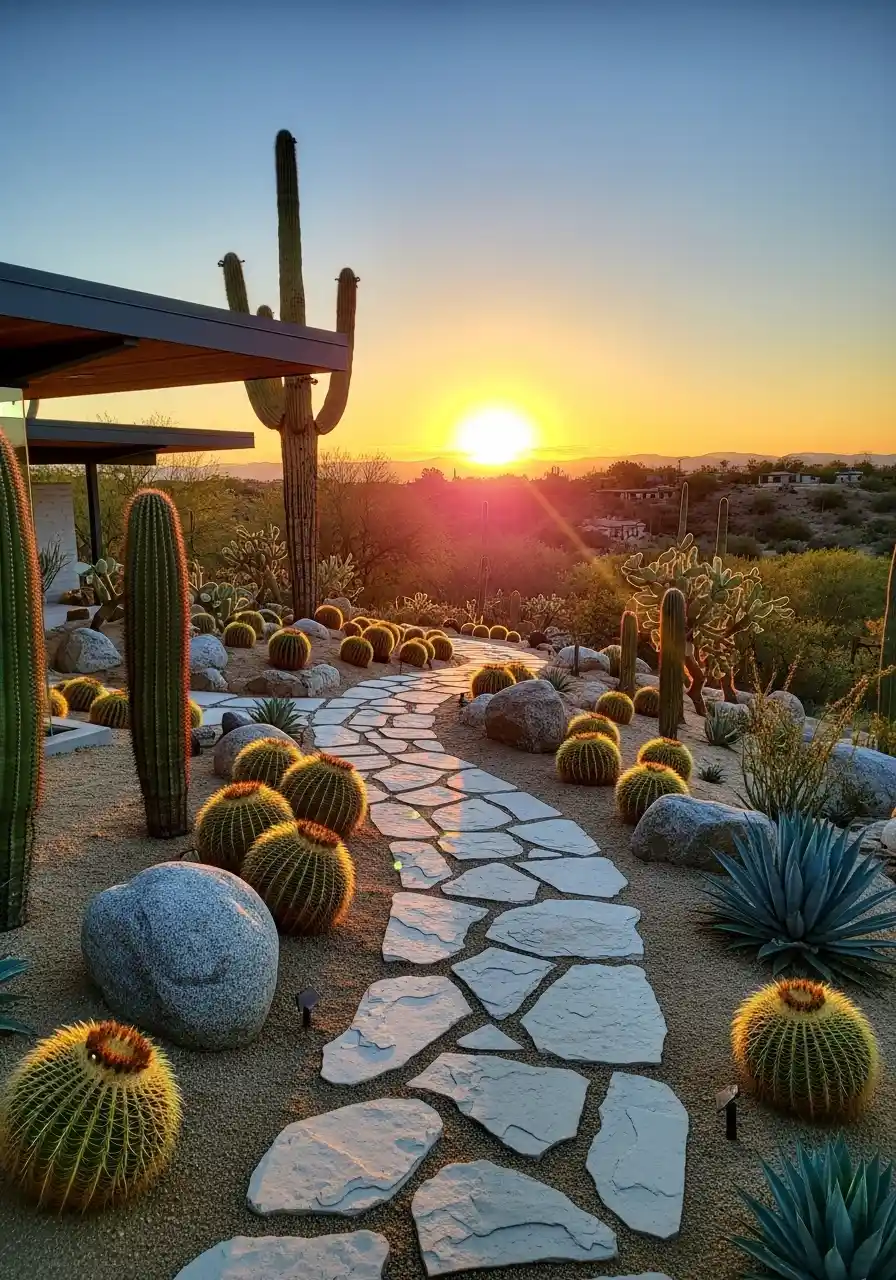
This one is straight-up dramatic. The stone path curves through barrel cactus and boulders, and the sunset makes it feel like a movie set. I love how the big boulders act like pause points. They slow you down. A california drought tolerant landscape can feel peaceful like that, not harsh, if you mix rocks with the right plant shapes.
Barrel cactus are awesome, but they are spiky. So keep them back from the path edge, or people will get too close. Use agave and low shrubs farther out, and let the boulders create “do not step here” zones. It’s kind of sneaky, but it works. I also like how the path stones are uneven shapes. It feels natural, like it belongs on the hillside.
Small hack: add low lighting. Tiny path lights make a California drought tolerant landscaping yard feel warm at night, and it keeps people from tripping. I swear, one little light can change the whole vibe.
FAQ: california drought tolerant landscape
1) What is a california drought tolerant landscape?
A low-water yard using drought-tough plants and water-smart hardscape.
2) Does California drought tolerant landscaping mean zero watering?
No, but much less after plants establish.
3) What plants are common in California drought tolerant landscape design?
Agave, cactus, yucca, olives, and drought shrubs.
4) Is white gravel hard to keep clean?
Yes, it shows dirt and leaf litter.
5) What’s the easiest path style for drought yards?
Concrete or stepping stones with gravel.
6) How do I stop gravel from spreading?
Use edging, always edging.
7) Are barrel cactus safe near walkways?
Not really, they’re pokey, give them space.
8) Can I add flowers in a drought tolerant yard?
Yes, as grouped accents with drip.
9) What’s the biggest design mistake?
Too many plant types and no repetition.
10) Do boulders help with drought landscaping?
Yes, they add structure and slow runoff.
11) How long until drought plants look “full”?
Often 1–3 years, depends on plant size.
12) What’s the lowest-maintenance layout?
Fewer plants, bigger statement pieces, clean borders.
13) Can I mix natives and succulents?
Yes, if water needs match.
Conclusion
A california drought tolerant landscape doesn’t have to feel empty or harsh. These 13 designs show it can be modern, cozy, and seriously beautiful without constant watering. The big takeaways are simple: repeat plant shapes, use boulders for structure, build clean paths, and leave open space on purpose. If you do those four things, your yard will look designed even on the hottest, driest week. And honestly, that’s the goal.