If you’ve got a border that bakes in the afternoon sun, you actually have an advantage: plenty of shrubs love those bright, hot conditions. Full-sun border shrubs can give you reliable flowers, tidy structure, and that “finished” edge along fences, paths, or driveways—without constant fussing.
Most of the shrubs below want 6–8+ hours of direct sun, plus well-drained soil. If your soil stays soggy after rain, fix drainage first or plant on a slight berm. A simple 2–3 inch mulch layer helps hold moisture and keeps weeds from bullying new roots.
Table of Contents
1) Vanhoutte Spirea (Bridalwreath) — Spiraea × vanhouttei
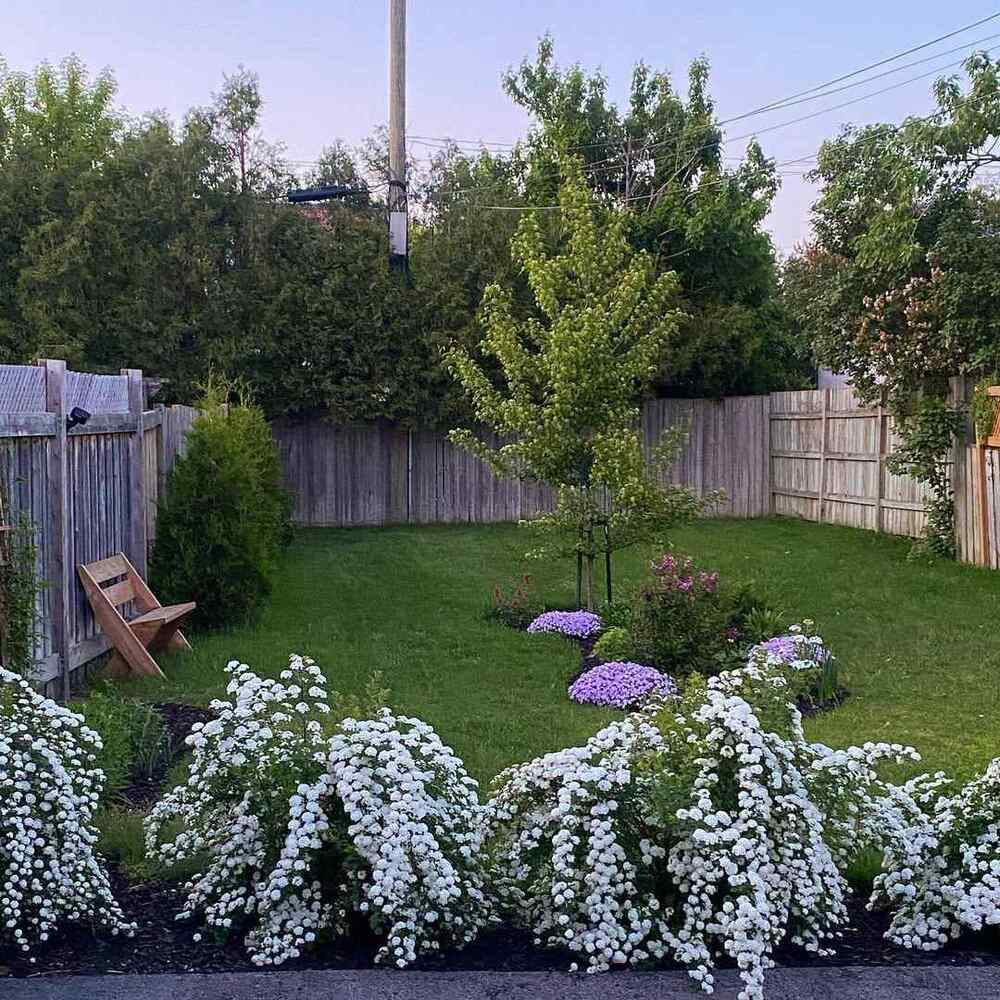
This is the classic “white waterfall” shrub. In spring, its arching branches get covered in tiny white blooms that glow at golden hour. It also makes a graceful border anchor, especially when planted in a loose, informal line.
Size: about 6–8 ft tall and wide
USDA Zones: 4–8
Soil: average garden soil, well-drained, tolerant of clay if it’s not waterlogged
Why you’ll like it: spring flower show, forgiving, good for wide borders
Care tip: prune right after flowering (it blooms on old wood). A hard cut in winter can reduce spring blooms.
2) Oakleaf Hydrangea (‘Ruby Slippers’, ‘Pee Wee’) — Hydrangea quercifolia
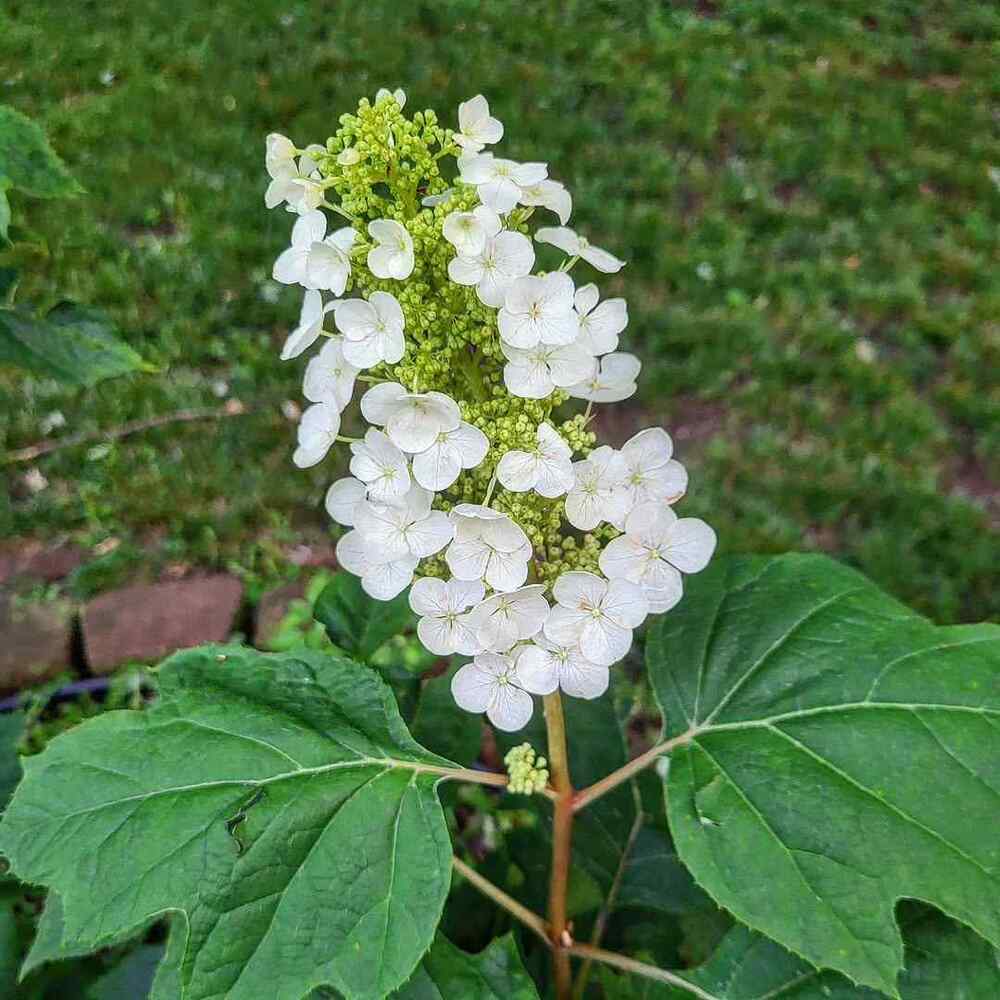
Oakleaf hydrangea is a border shrub with “three seasons of beauty.” Summer flower clusters, handsome oak-shaped leaves, and truly good fall color. In full sun it flowers well, but it appreciates a bit more water during heat waves.
Size: 3–5 ft (‘Ruby Slippers’, ‘Pee Wee’) up to 6–10 ft for larger types
USDA Zones: 5–9
Soil: moist, well-drained, slightly acidic to neutral; add compost for best performance
Why you’ll like it: flowers + fall foliage + bark texture in winter
Care tip: prune lightly after bloom only if needed. Too much pruning = fewer blooms next year.
3) Ceanothus / California Lilac (‘Skylark’) — Ceanothus
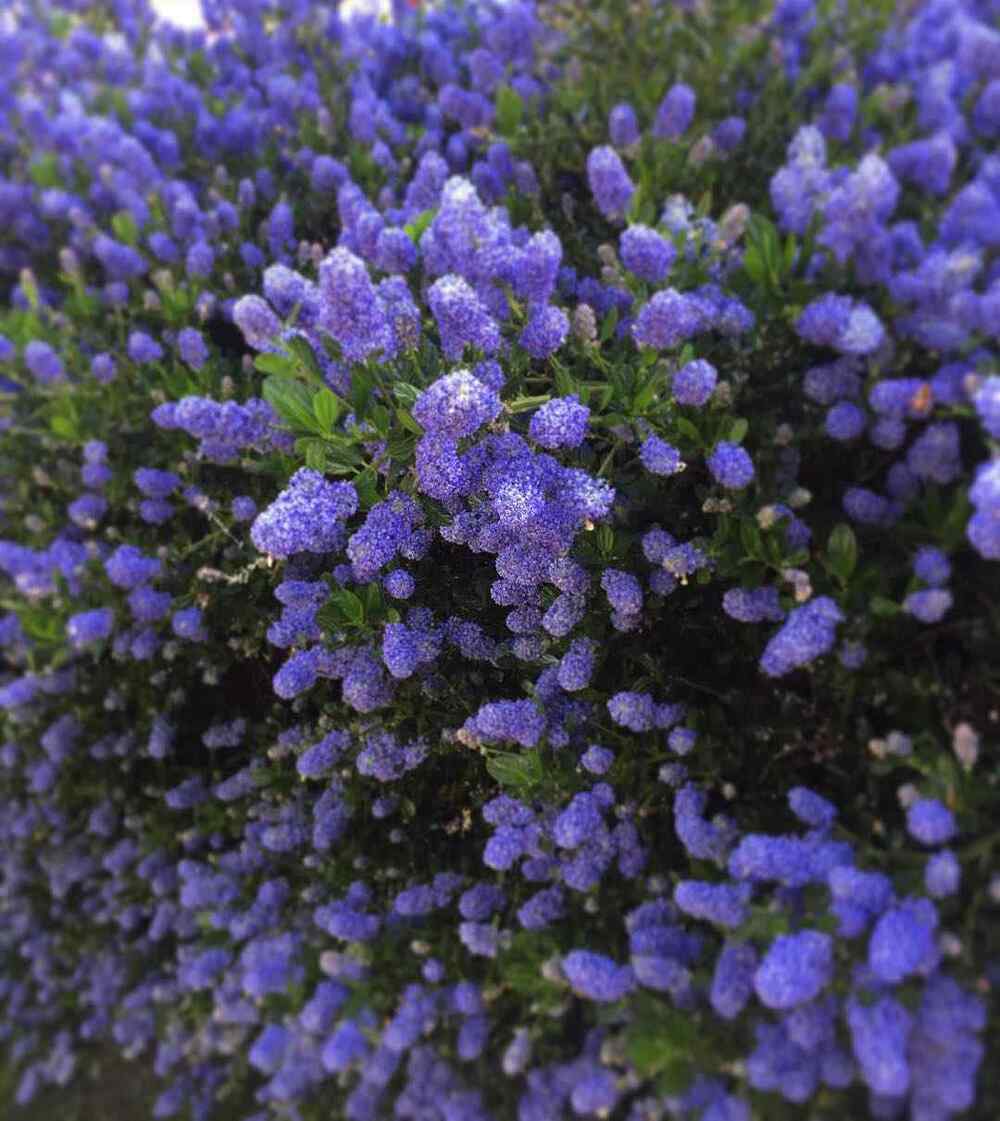
If you want blue flowers that stop people in their tracks, ceanothus is the one. Many types are evergreen and look neat year-round, giving your border structure even when other plants nap.
Size: often 3–6 ft (varies by variety)
USDA Zones: typically 7–10 (some kinds tolerate 6 with protection)
Soil: very well-drained, even sandy or rocky; avoid heavy, wet clay
Why you’ll like it: rich blue blooms, drought tolerance once established, evergreen form
Care tip: don’t overwater. Ceanothus can sulk or decline in constantly wet soil, especially in summer.
4) Double Knock Out Rose — Rosa (Knock Out series)
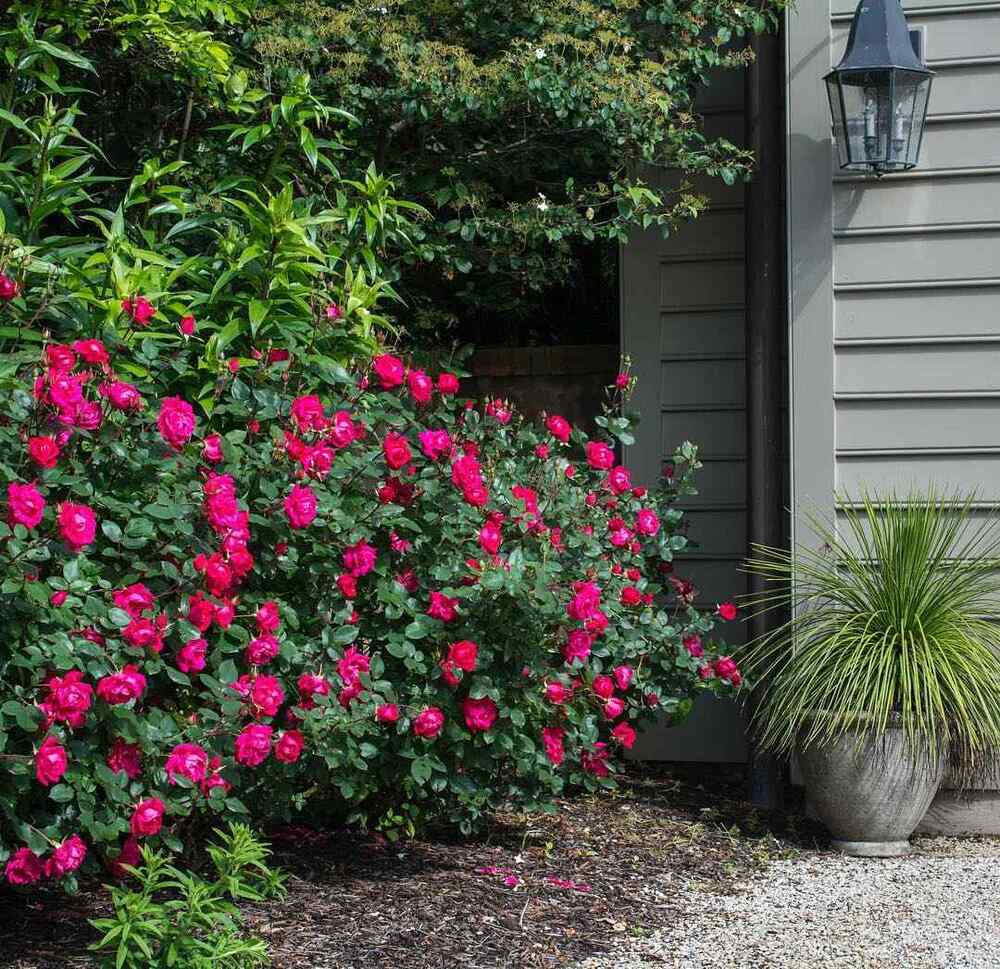
This is the rose for people who say they “kill roses.” It blooms and blooms and keeps going, with strong disease resistance compared to many older roses. In borders, it reads like a long-lasting flower hedge.
Size: about 4–5 ft tall, 4–5 ft wide
USDA Zones: 5–11
Soil: well-drained, moderately fertile; roses love compost
Why you’ll like it: nonstop blooms, easy care, multiple colors available
Care tip: a spring haircut (cut back by 1/3) encourages fresh growth and more flowers. Feed lightly during the growing season.
5) Forsythia (Border Forsythia) — Forsythia × intermedia
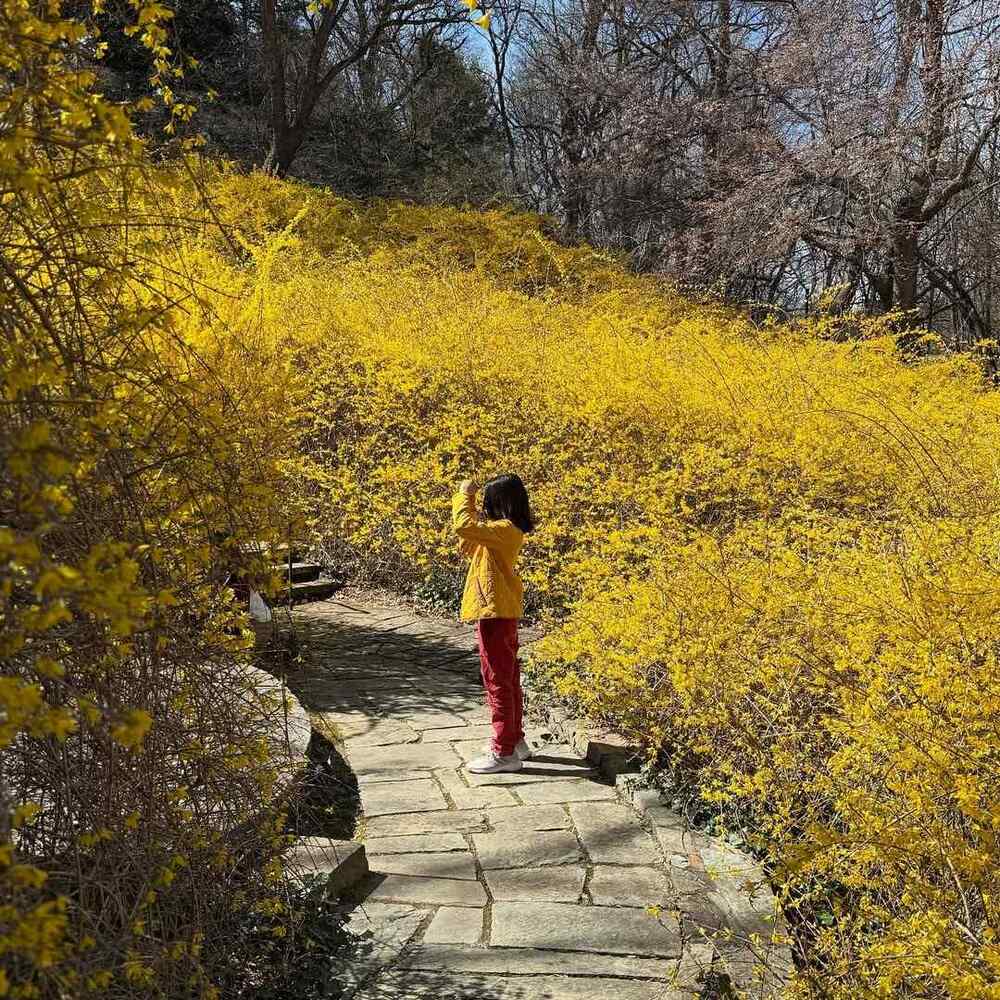
Forsythia is basically a neon sign that says “winter is over.” It blooms early, fast, and loud. Even when it’s not flowering, it makes a useful green screen and fills space quickly.
Size: commonly 6–10 ft tall, 6–10 ft wide
USDA Zones: 5–8 (some varieties to 9)
Soil: adaptable, prefers well-drained
Why you’ll like it: early color, fast growth, tough as nails
Care tip: prune right after flowering. If it gets wild, remove a few of the oldest stems at the base each year.
6) Crepe Myrtle — Lagerstroemia indica (and hybrids)
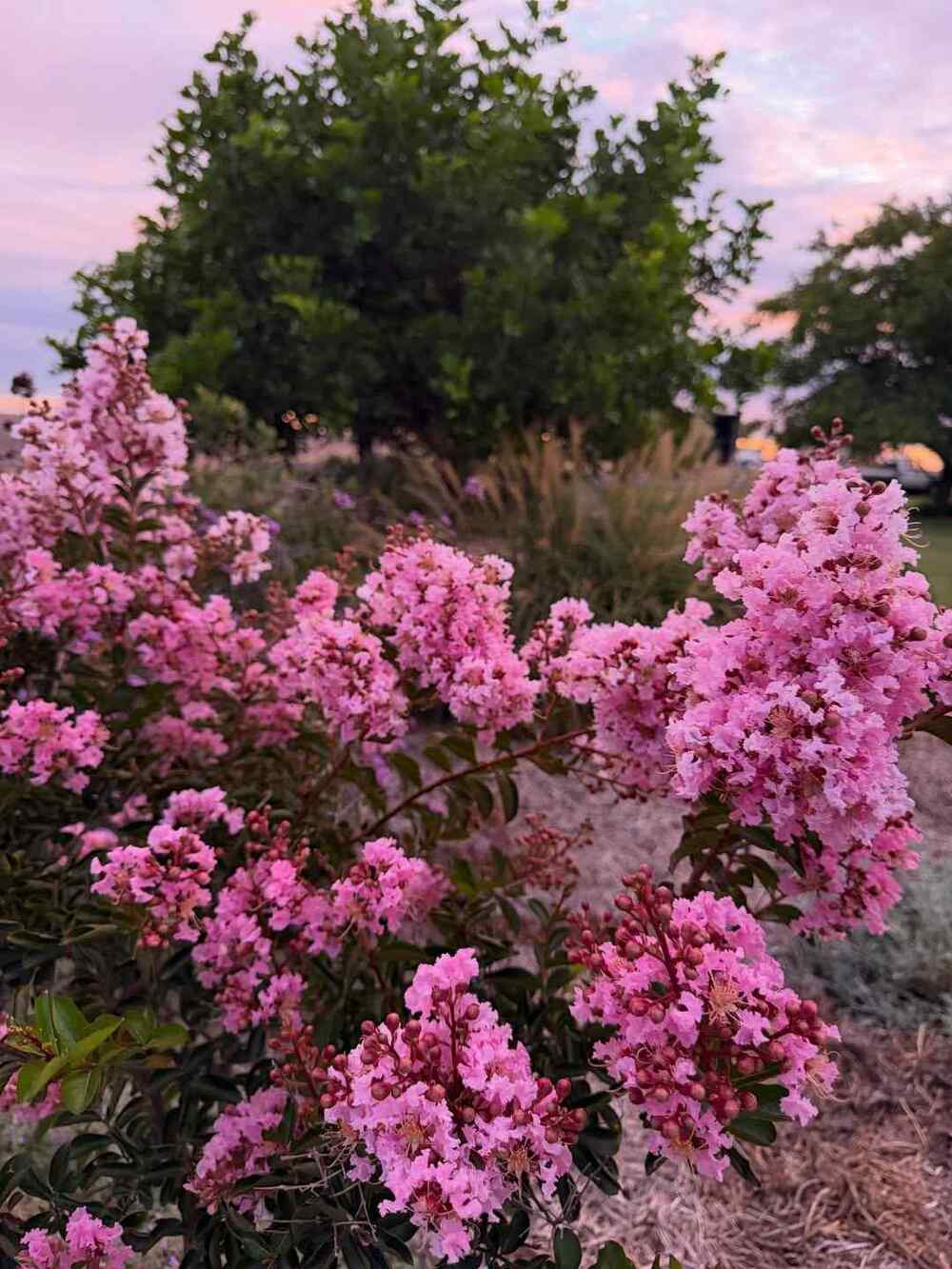
Crepe myrtle is summer fireworks: big clusters of blooms, plus pretty bark and good fall color on many varieties. It can be a shrub or small tree depending on the cultivar, so you can match it to your border height perfectly.
Size: dwarfs 2–4 ft, medium 6–10 ft, tree forms taller
USDA Zones: typically 6–10 (hardiness depends on variety)
Soil: well-drained, average to moderately fertile
Why you’ll like it: long summer bloom, attractive bark, heat tolerance
Care tip: avoid harsh “topping.” Instead, choose the right size variety and do light shaping in late winter.
7) Caryopteris / Bluebeard (‘Sapphire Surf’) — Caryopteris
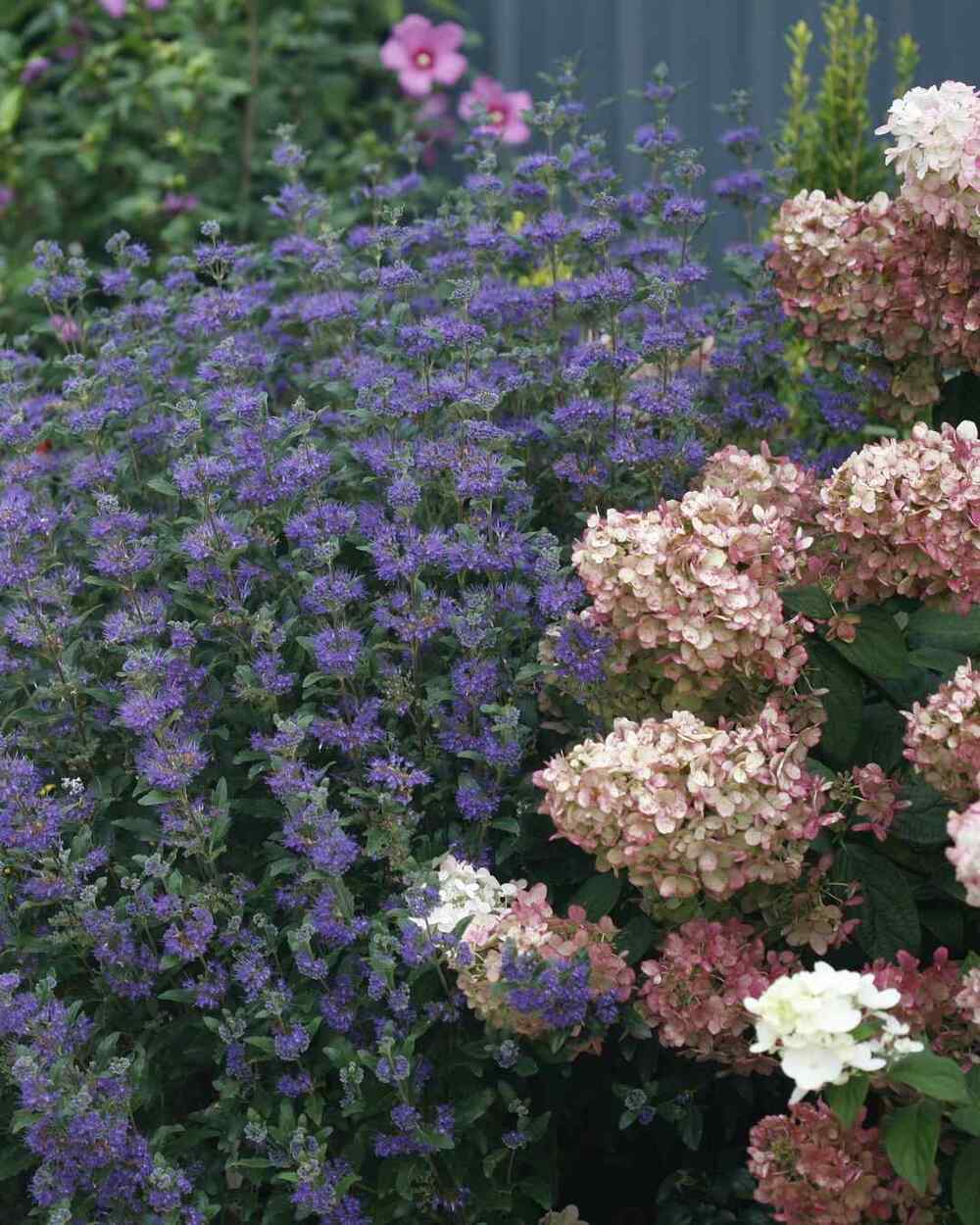
Late summer borders can look tired, and bluebeard fixes that problem. Its blue flowers pull in pollinators when many shrubs are finished. The foliage is often aromatic too, which is a nice surprise when you brush past it.
Size: about 2–3 ft tall, 2–3 ft wide
USDA Zones: 5–9
Soil: well-drained, prefers leaner soils over rich, soggy ones
Why you’ll like it: late-season blue flowers, drought tolerant, pollinator magnet
Care tip: it blooms on new wood, so cut it back in early spring to keep it compact and flower-heavy.
8) Potentilla / Cinquefoil — Dasiphora fruticosa (syn. Potentilla fruticosa)
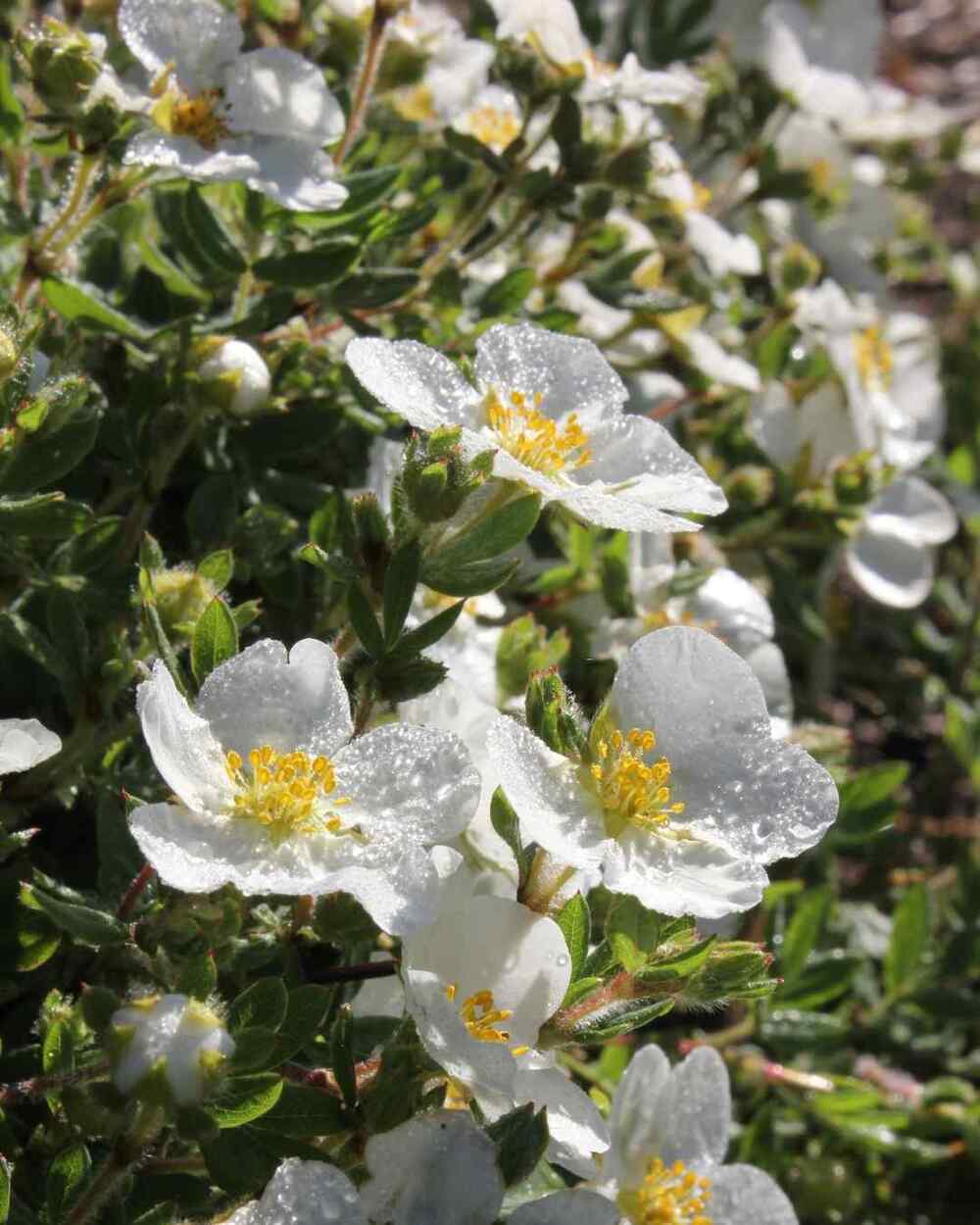
Potentilla is one of the most dependable small shrubs for sun. It flowers for a long stretch, shrugs at cold, and doesn’t demand fancy soil. If you want a tidy border that keeps color coming, it’s a workhorse.
Size: usually 2–4 ft tall, 2–4 ft wide
USDA Zones: 3–7 (some to 8)
Soil: average, well-drained; handles poor soil better than many shrubs
Why you’ll like it: long bloom season, extreme hardiness, low maintenance
Care tip: shear lightly after a big flush of bloom, or thin older stems to refresh shape.
9) Loropetalum (Chinese Fringe Flower) — Loropetalum chinense
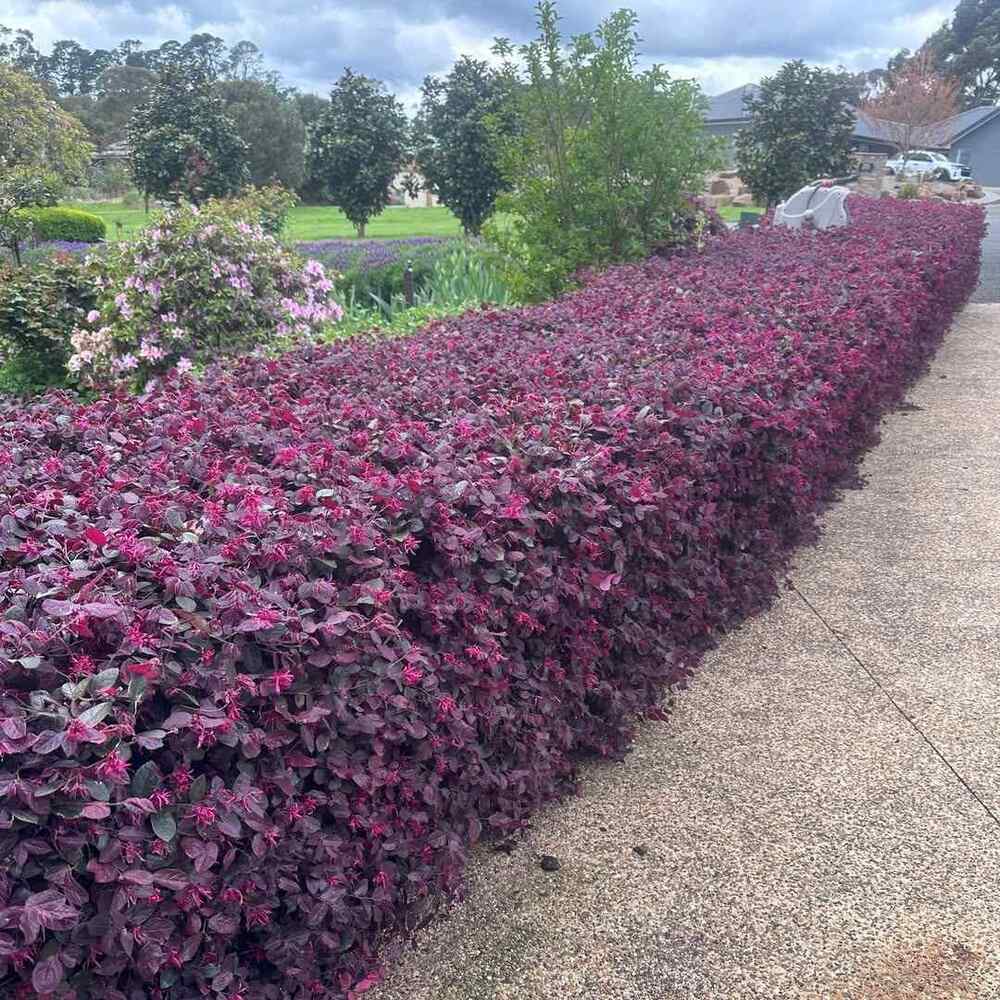
Loropetalum brings bold foliage color—often deep burgundy or purple—plus bright pink “fringe” flowers. In a sunny border, it gives you that designer contrast without needing constant attention.
Size: 2–6 ft for many shrub forms (some larger)
USDA Zones: generally 7–10 (some varieties tolerate 6)
Soil: well-drained, slightly acidic is ideal
Why you’ll like it: evergreen structure, colorful foliage, spring blooms (often repeat)
Care tip: protect from harsh winter wind in colder zones, and avoid soggy winter soil.
10) Hibiscus mutabilis (Confederate Rose)
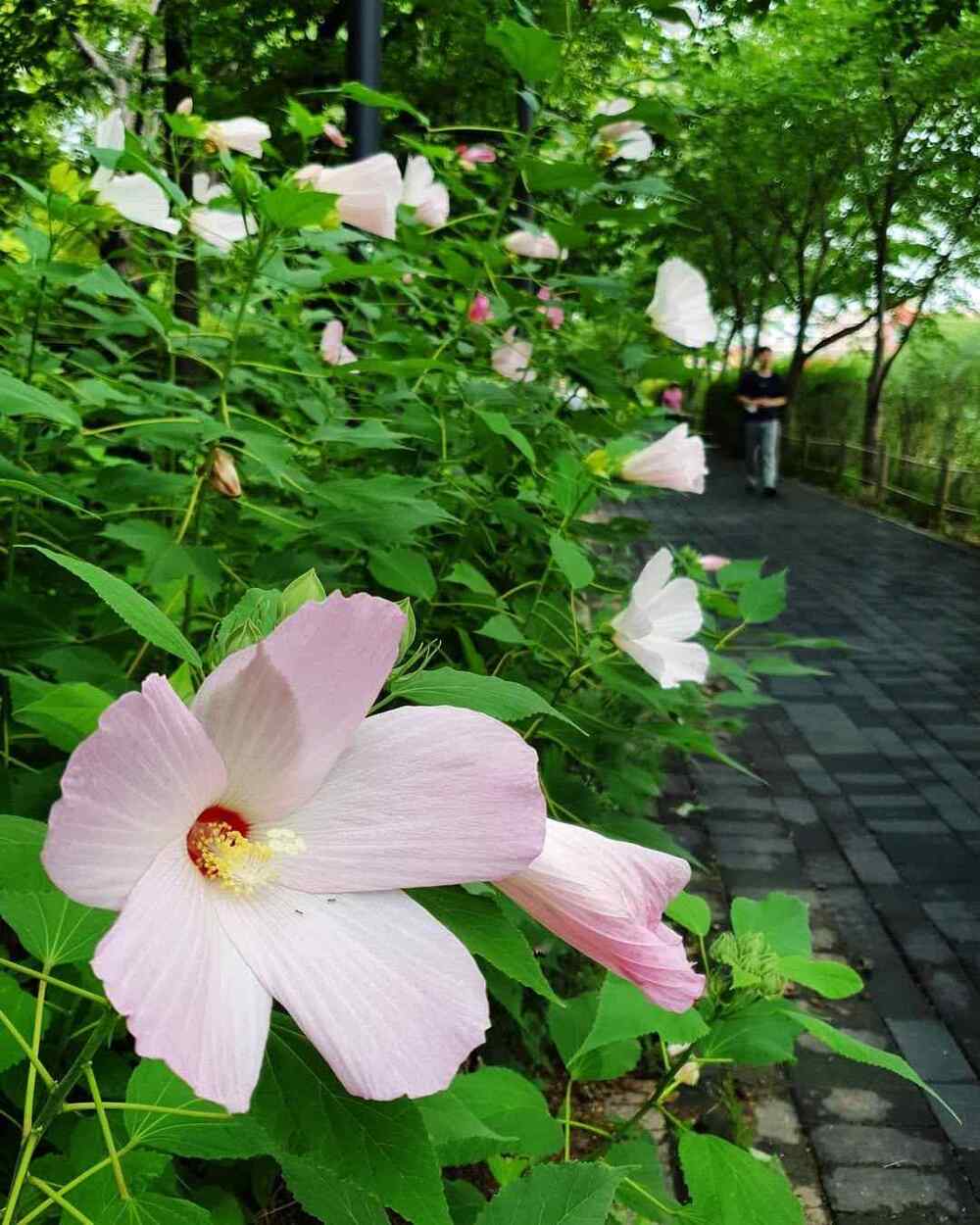
This one is drama—in the best way. The flowers open one color and shift as they age, so the plant can show multiple shades at once. It’s great for tall, flowering borders or a soft privacy line.
Size: often 6–12+ ft tall, 6–10 ft wide
USDA Zones: typically 7–9 (sometimes 6 with dieback and protection)
Soil: moist but well-drained, moderately fertile
Why you’ll like it: big blooms, fast growth, striking late-season presence
Care tip: give it space and consistent water in summer. In cooler zones, expect top growth to die back in winter.
Quick border design tips that actually help
Plant in groups of 3 or 5 of the same shrub for a calmer, more intentional border. Mix heights: keep low shrubs in front (potentilla, caryopteris), medium in the middle (knock out roses, compact oakleaf hydrangea), and taller ones behind (forsythia, spirea, crepe myrtle, confederate rose).
Space plants based on their mature width, not the tiny pot size. Crowding feels fine for one year… then it becomes a pruning job you didn’t sign up for.
Simple care routine for full-sun shrub borders
Water: deep weekly watering for the first growing season, then less often once established (especially for drought-tolerant picks like ceanothus and caryopteris).
Mulch: 2–3 inches, but keep it a few inches away from the stems.
Feeding: compost in spring is usually enough. Roses and crepe myrtles can take light fertilizer if growth is weak.
Pruning: learn the bloom timing—spring bloomers are usually pruned after flowering, while late-summer bloomers often get cut back in early spring.