I didn’t even plan to care about drought tolerant landscape florida stuff. I just wanted a yard that didn’t guilt-trip me every time the sprinklers broke or the heat turned brutal. But then I started noticing how the best yards look calm even when it hasn’t rained, like they’re quietly confident. These 25 images feel exactly like that. They’re tough, pretty, and not thirsty.
And I’m gonna be honest, I love the “desert-meets-Florida” look. It’s sharp lines, soft stones, chunky plants, and color in small punches instead of a million needy flowers. Below are the ideas I pulled from your photos, plus what I’d actually do so it stays good-looking with less water and less drama.
Table of Contents
Curved Gravel Path With Agaves and White Blooms
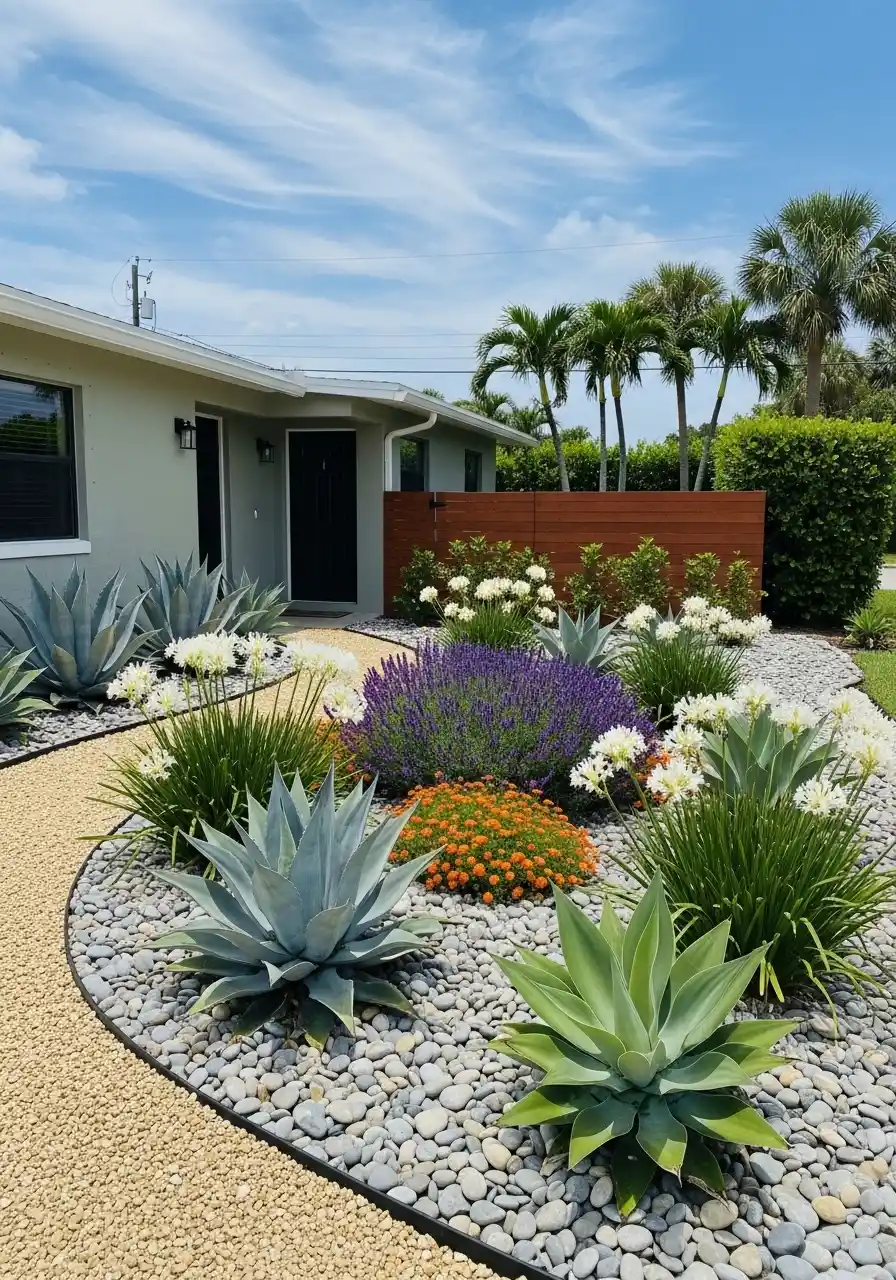
This first scene is basically a masterclass in “clean but not boring.” There’s a curved path made of warm tan gravel, and the planting bed is full of agaves, ornamental grass clumps, and white flowers that feel airy and bright. The smooth river rocks make the whole thing feel polished, like you could walk out there barefoot and not regret it.
For drought tolerant landscape florida design, the real win is the plant choices. Agaves store water, the grasses handle heat, and those white flowers look like something tough, not delicate. The curve is also doing work. Curves slow people down. They make the yard feel bigger because you can’t see everything at once.
My tip: use edging. The black edging line in this design is what keeps the gravel from mixing with the rock bed. If you skip edging, it turns into a crunchy mess and you’ll be annoyed every time you look at it. Also, keep the plants grouped, not scattered. Scattered plants look accidental, and I hate that look.
Potted Succulent Cluster With Stepping Stones and Open Space
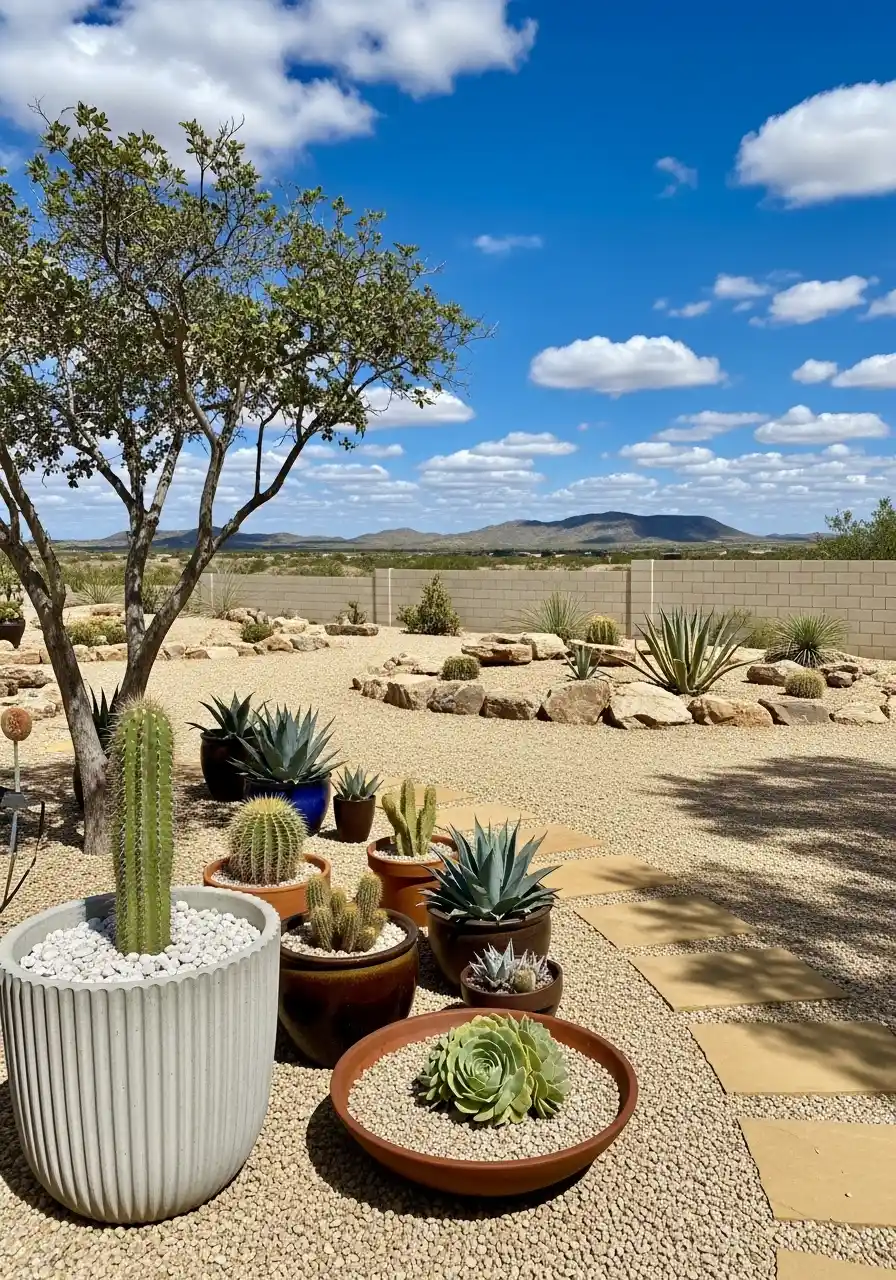
This setup is a vibe, like a little outdoor plant collection on purpose. Big pots, small pots, a bowl planter, and a stepping-stone path curving through. The space around it is open and sandy, which makes the pots look like art pieces instead of “stuff you didn’t know where to put.”
For Florida drought tolerant landscaping, pots are a sneaky cheat because you can control soil and drainage way better. You can use gritty cactus mix, you can raise the plants off the soggy ground, and you can move them if a spot is too hot. I love that kind of flexibility, because I change my mind a lot.
A hack I swear by: top-dress pots with small gravel. It keeps moisture steady, stops splashing mud, and it just looks clean. Also, pick pots that match. Not identical, but similar colors. If every pot is random, it starts looking like a yard sale.
Rocky Desert Bed With Grasses, Sagey Shrubs, and Tall Cactus
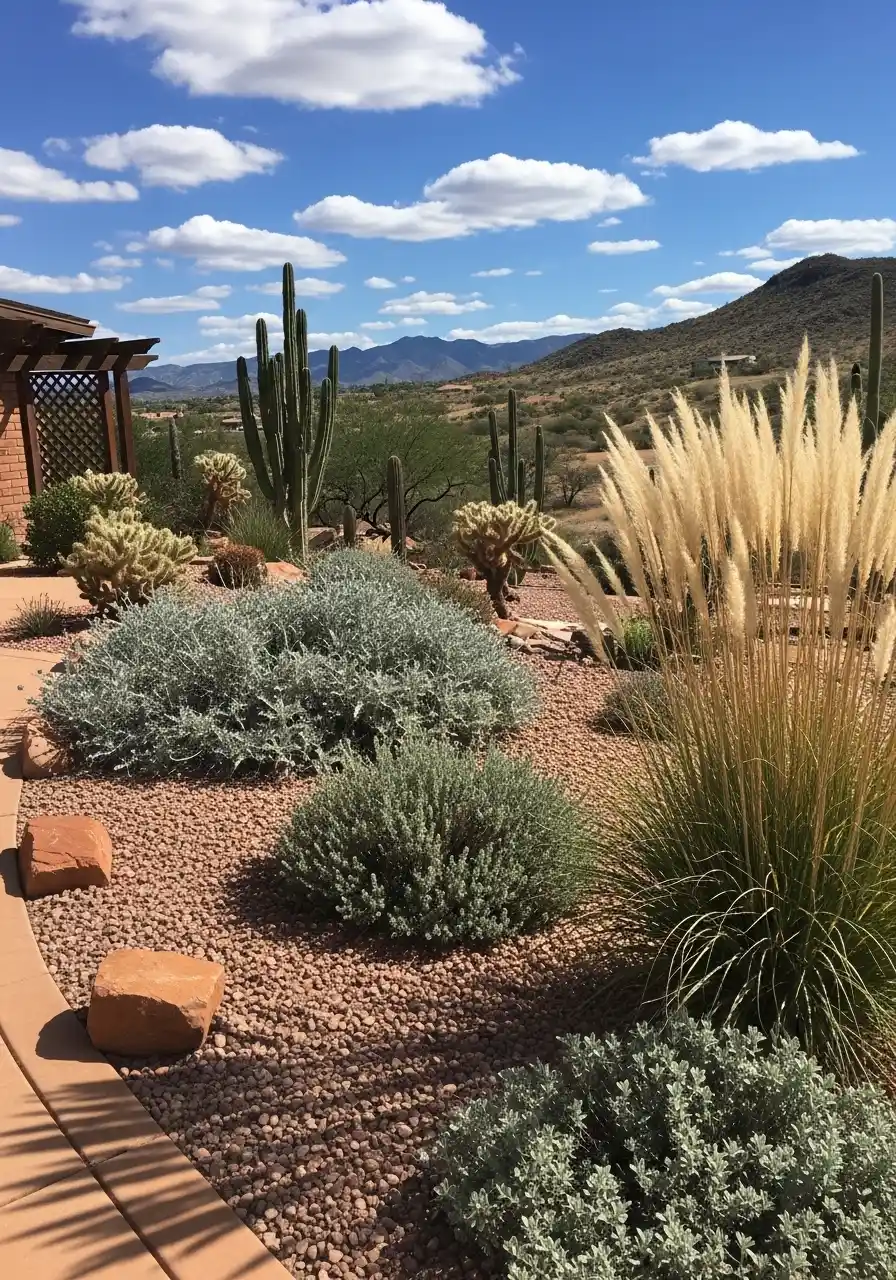
This one is wide-open and calm. You’ve got gravel, low silvery shrubs, tufted grasses, and tall cactus standing like guard towers. The plant colors are muted, so the sky feels bigger. It’s honestly peaceful, like the landscape is whispering instead of shouting.
For a drought tolerant landscape florida approach, you can copy the structure even if Florida isn’t a desert. The idea is: pick a few plant shapes and repeat them. One type of grass, one type of mound shrub, and a few “spikes.” Repetition makes it feel designed, not random.
I’ll say this though: in Florida humidity, some silver desert shrubs can struggle. So you’d swap in humidity-tough plants with a similar look, like certain compact grasses or tough gray-green shrubs. The vibe stays the same even if the exact plant changes.
Dry Riverbed Walkway With Boulder Borders
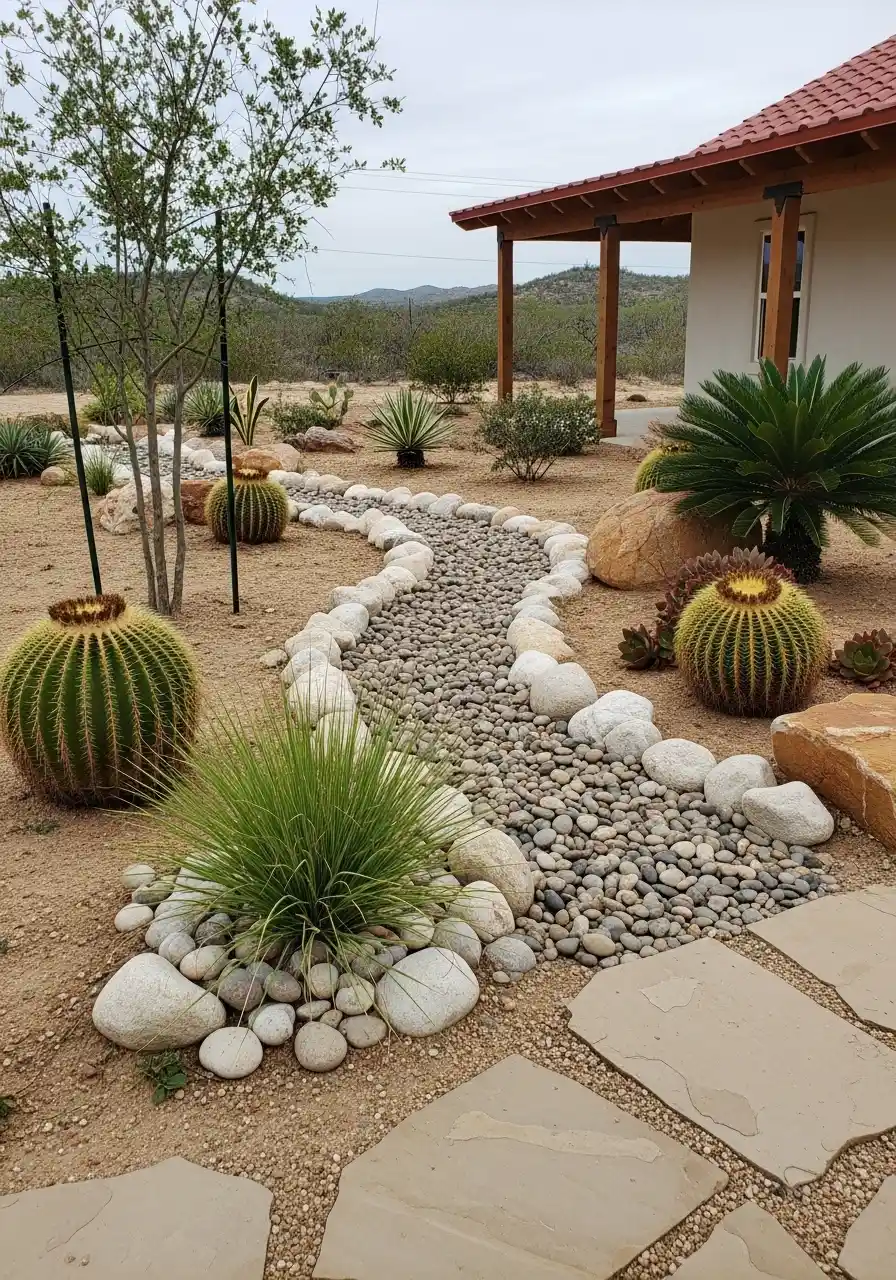
This design has a dry riverbed made of smooth stones, bordered by bigger white rocks, with desert plants placed like little islands. It’s basically drainage pretending to be art. And I’m obsessed with that idea, because it solves problems and looks good doing it.
In drought tolerant landscaping in Florida, dry creek beds are gold. When rain does hit, it channels water away. When it’s dry, it’s still pretty. The trick is to shape it like a real creek: wider in some spots, narrower in others, and curving naturally.
My practical tip: put landscape fabric under the rock layers, but don’t rely on it alone. Use thick rock depth, because weeds love to sneak in. And place the biggest stones first, then fill around them. If you do it backwards, the big stones look like they’re floating.
Curved Concrete Path With Pebble Edges and Desert Plant Clumps
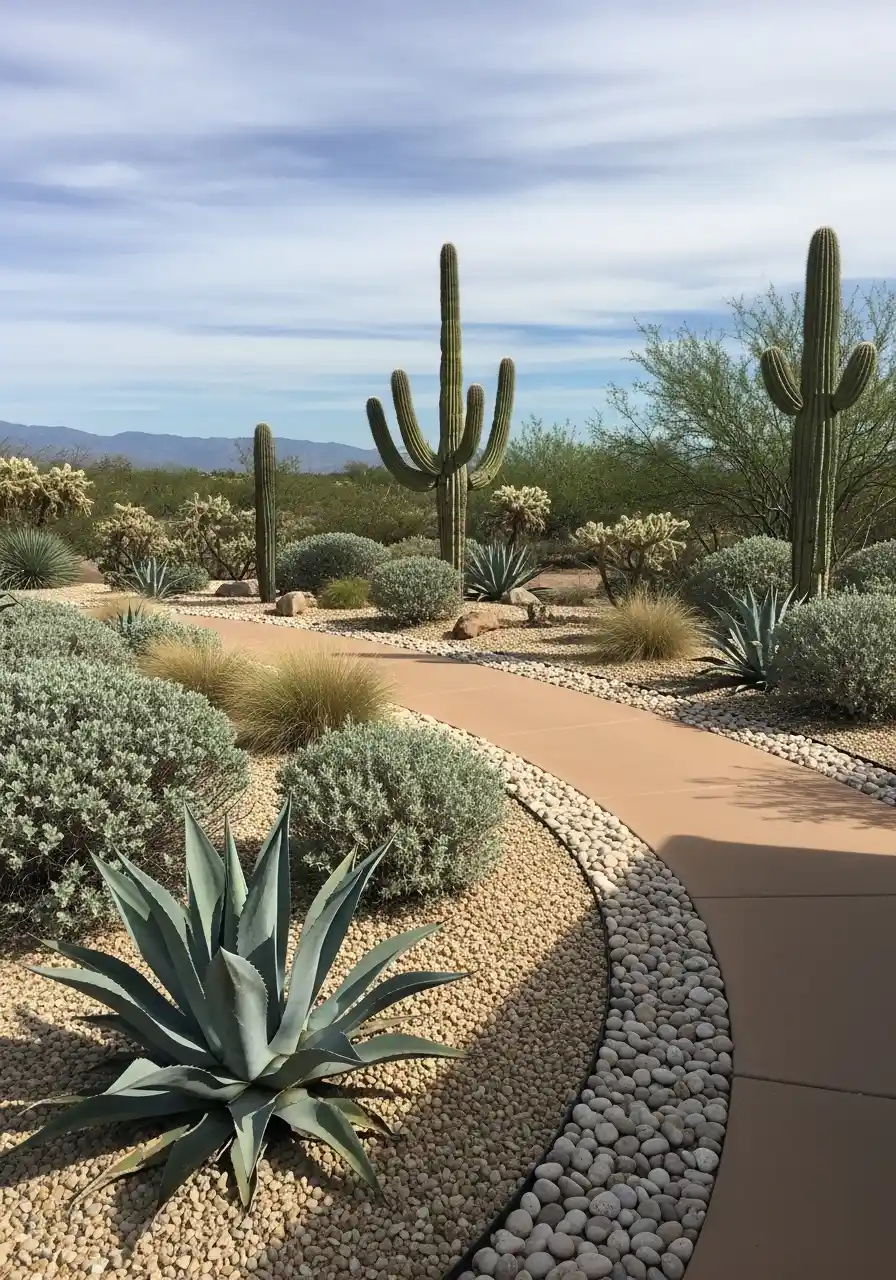
This scene has a smooth curved path, then a pebble border that frames it, and then desert-style planting in the gravel. It’s clean, modern, and very “intentional.” The saguaro cactus shapes in the back make it feel dramatic, but the curve keeps it soft.
For drought tolerant landscape florida layouts, a curved hard path is a good move because it reduces the amount of thirsty lawn you need. Paths are “zero irrigation zones” if you do them right. The pebble border is also a smart buffer. It keeps plants from flopping onto the walkway.
My tip: don’t make the path too skinny. Skinny paths feel cheap and annoying. Go wider than you think. And if you’re doing gravel beside a path, add edging or a concrete mow strip so the gravel stays where it belongs.
Mediterranean Yard With Lavender-Like Purple and Succulents
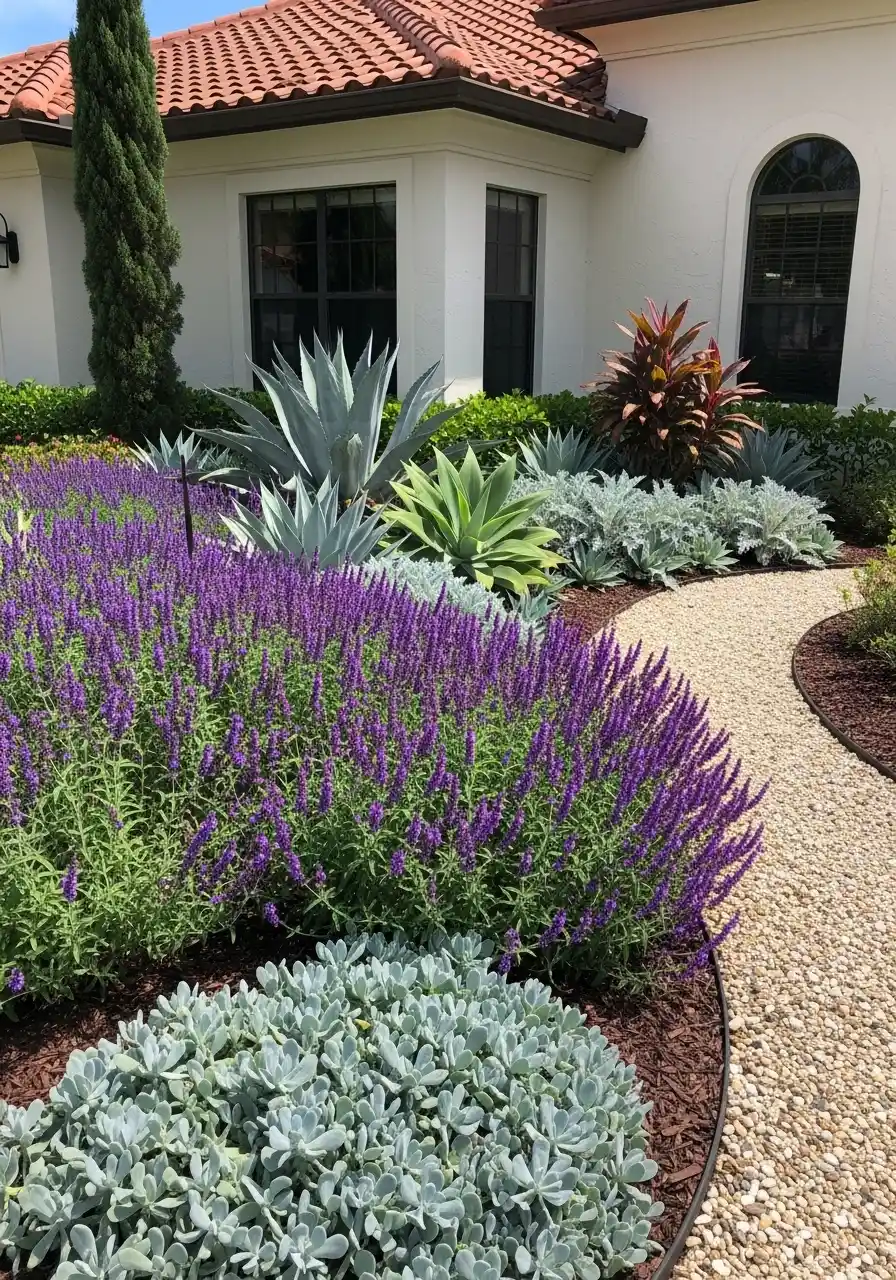
This one has purple flower spikes (lavender vibe), silvery succulents, and a warm gravel path. It feels classy, like a calm little villa moment. The plants are low, so the house becomes part of the view, not hidden behind bushes.
For Florida drought tolerant landscaping ideas, purple is a smart accent because it looks rich without being loud. And purple plants often attract pollinators, which makes the yard feel alive. But Florida humidity can be rude to true lavender, so you’d pick a heat-loving purple plant that gives a similar look.
My confession: I love when a yard has one main color theme, like purple plus silver plus green. It makes my brain relax. If you start adding every color, it feels like chaos.
Sunset-Friendly Color Bed With Agaves and Blue-Grass Mounds
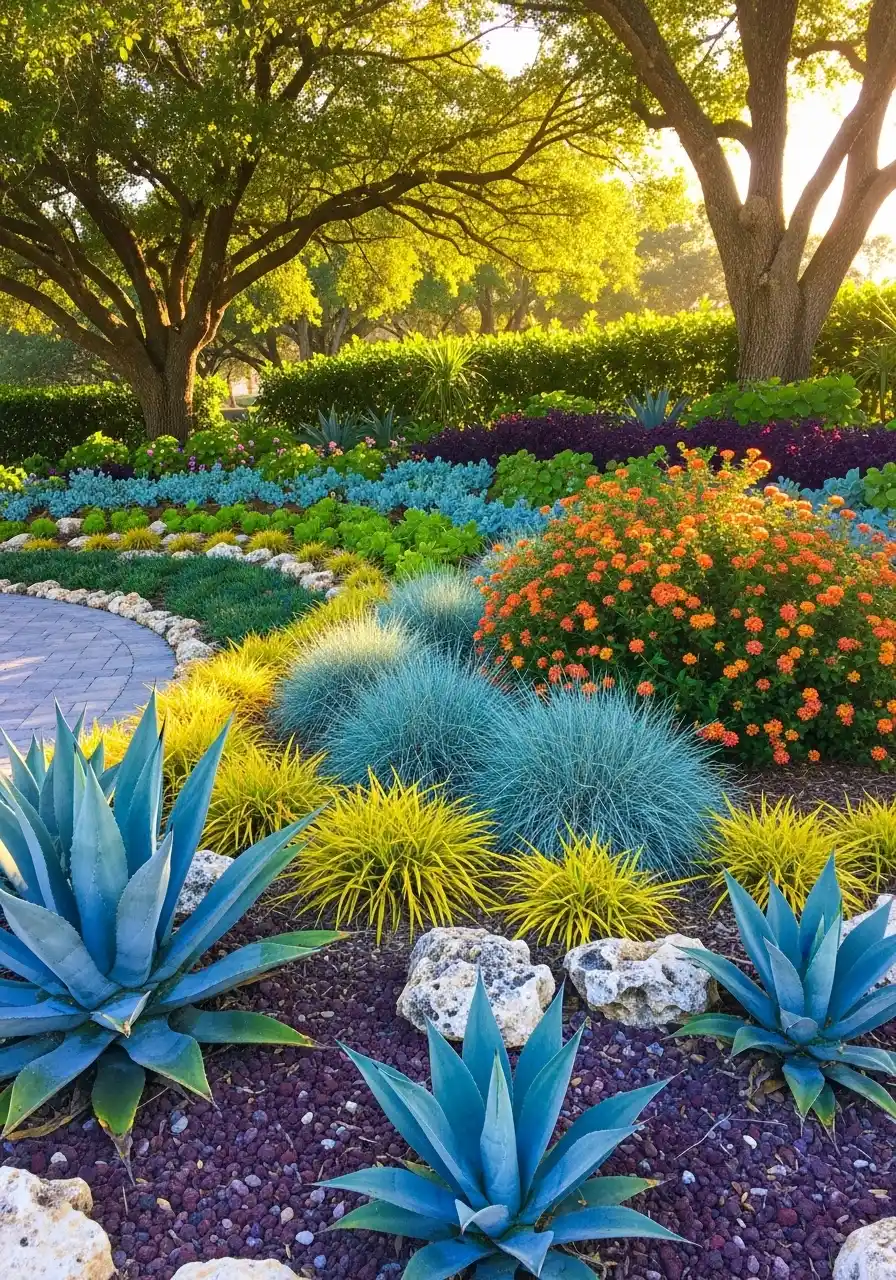
This garden has layers of color: blue-ish grass clumps, lime-green tufts, and a bright orange flowering mound. Plus agaves in front like spiky sculptures. The lighting in the photo is warm and golden, and the plants look extra glowing because of the color contrast.
For a drought tolerant landscape florida plan, this is what I call “controlled color.” The plants are grouped in blocks. Blue block, yellow block, orange block. That’s why it looks pro. If you mix them randomly, it turns into a messy salad.
A hack here: choose plants with interesting leaves, not just flowers. Flowers fade. Leaves stay. Agaves and grasses keep their shape all year, so even when blooms die off, the bed still looks good.
Front Yard Rock Bed With Large Pots as Statement Pieces
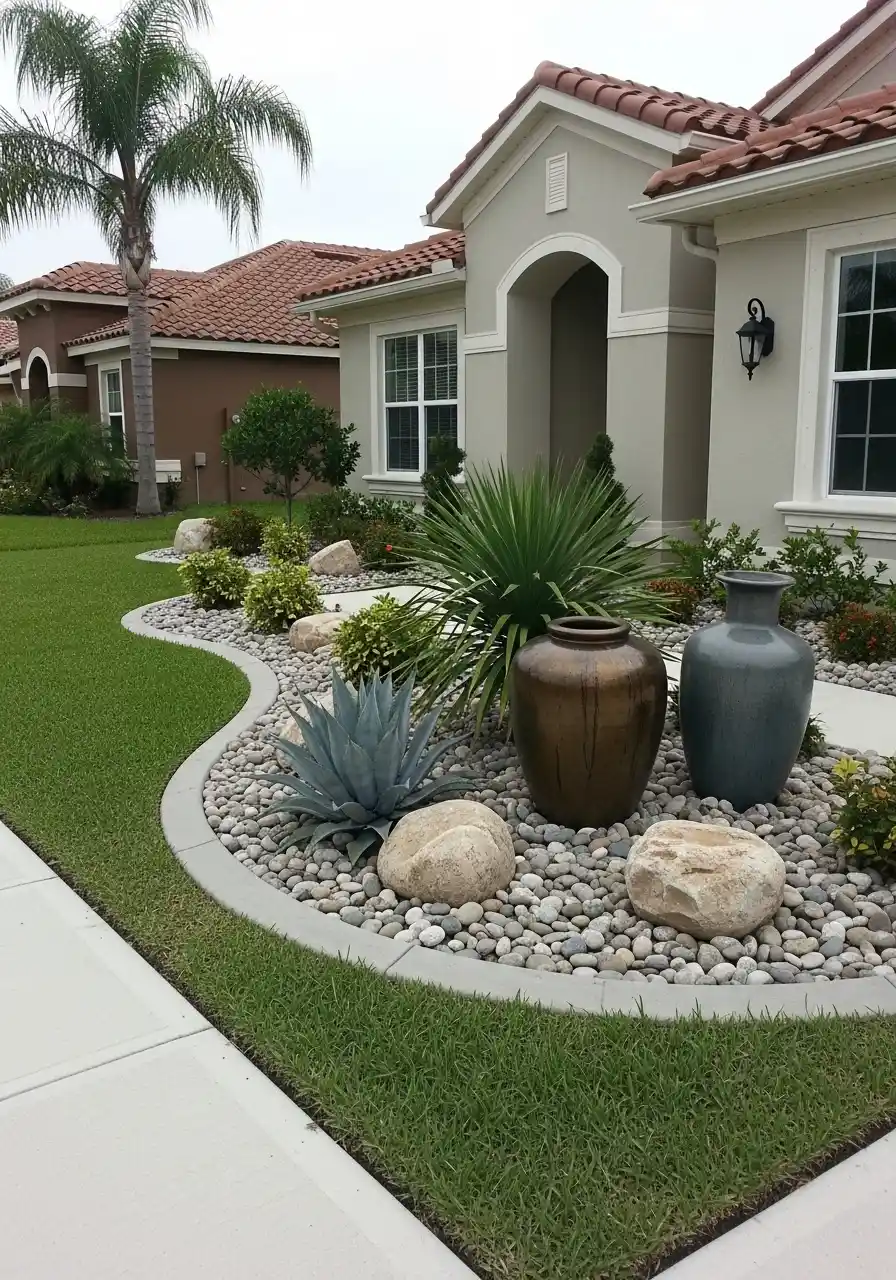
This one is a front yard rock bed with two large pottery jars, an agave, boulders, and low shrubs. It’s simple, but those jars make it feel upscale. Like, it’s not trying too hard, but it still has personality.
For drought tolerant landscaping Florida style, statement decor is helpful because you don’t need a ton of plants. Big pots, big rocks, one bold plant, and suddenly the bed looks full. It’s basically the same trick as using one big painting in a room instead of decorating every wall.
My advice: don’t buy tiny decor. Tiny decor disappears outside. Go big, or skip it. And make sure the bed has a clean border. The curved edging is what keeps this looking neat.
Drought-Tough Path Garden With Aloe Flowers and Succulent Borders
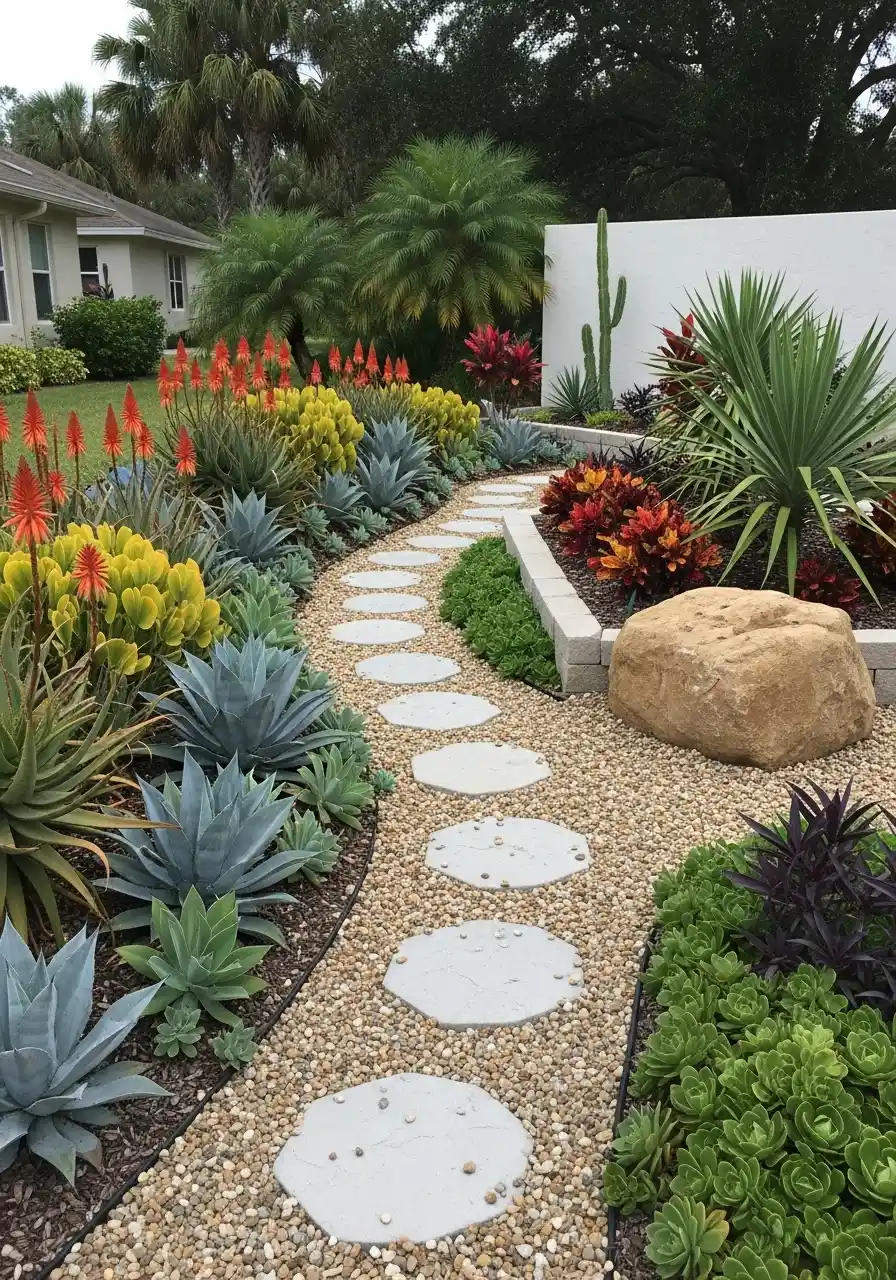
This path is super fun. Stepping stones run down the middle, and the plant beds are packed with succulents and color. There are aloe flower spikes in orange, bright yellow-green plants, and a raised bed on the right with deeper reds and greens.
For drought tolerant landscape florida setups, this is a great example of mixing textures. Succulents give you thick leaf shapes, and aloes give you tall flower spikes. The stepping stones make it feel interactive, like you’re supposed to walk through and notice details.
My tip: keep the stepping stones level. If they wobble, people stop using the path and then the whole idea loses the point. Also, space the stones for real steps, not decoration steps. If you have to hop, it’s annoying.
Hillside Color Layering With Groundcovers and One Giant Agave
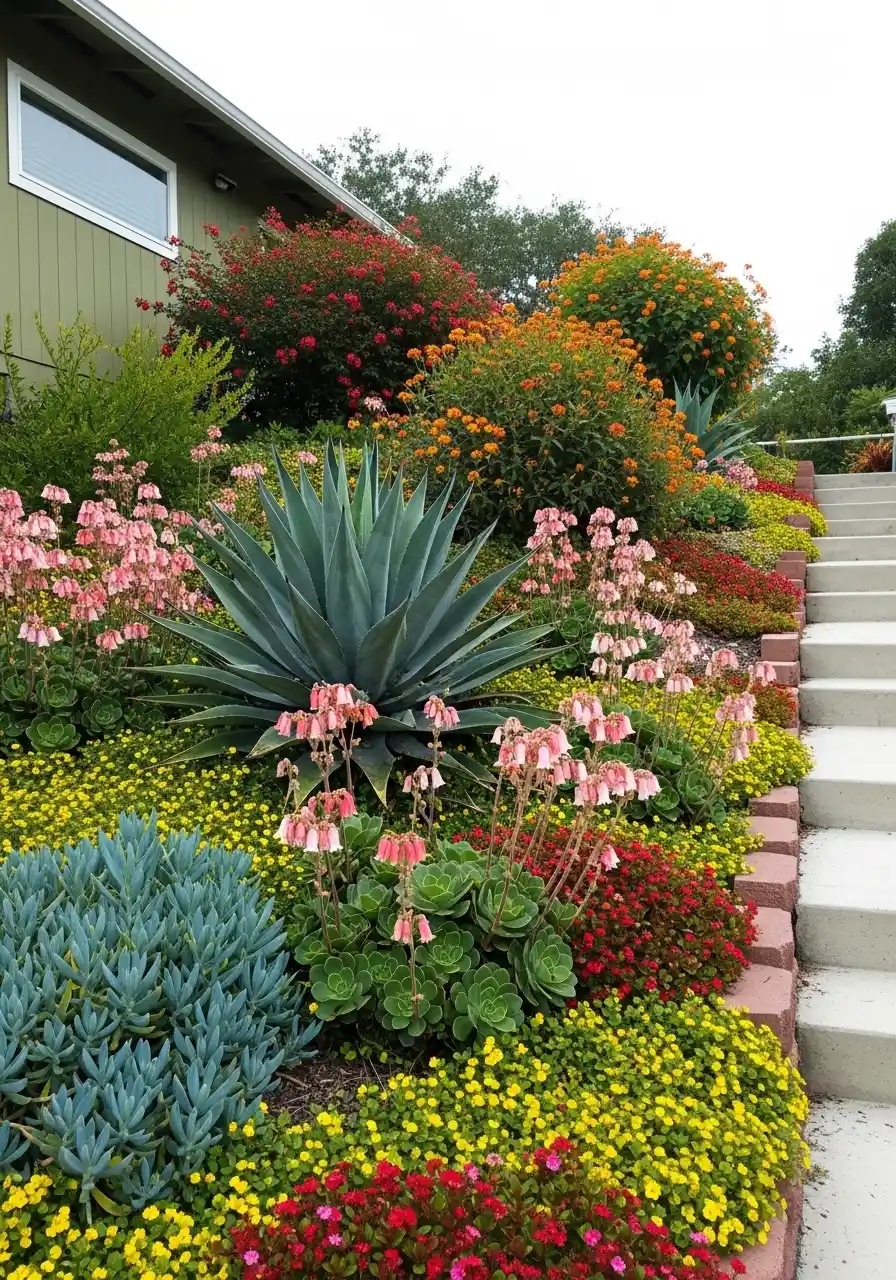
This one is packed with layers: groundcovers in yellow and red, taller flowering plants, and one huge agave as the “boss plant.” It’s planted on a slope and it looks like a tapestry. It’s honestly beautiful, like a painting you can walk next to.
For Florida drought tolerant landscape design, slopes are tricky because water runs off fast. The good news is groundcovers help hold soil and reduce evaporation. The planting density here is a big deal. Bare soil on slopes washes away, but planted soil stays put.
My advice: choose groundcovers that spread, but not ones that become invasive monsters. And install drip irrigation under the mulch for the first season. Even drought-tough plants need help at the beginning, or they’ll just sit there and sulk.
Agave + silver shrubs for clean curb appeal
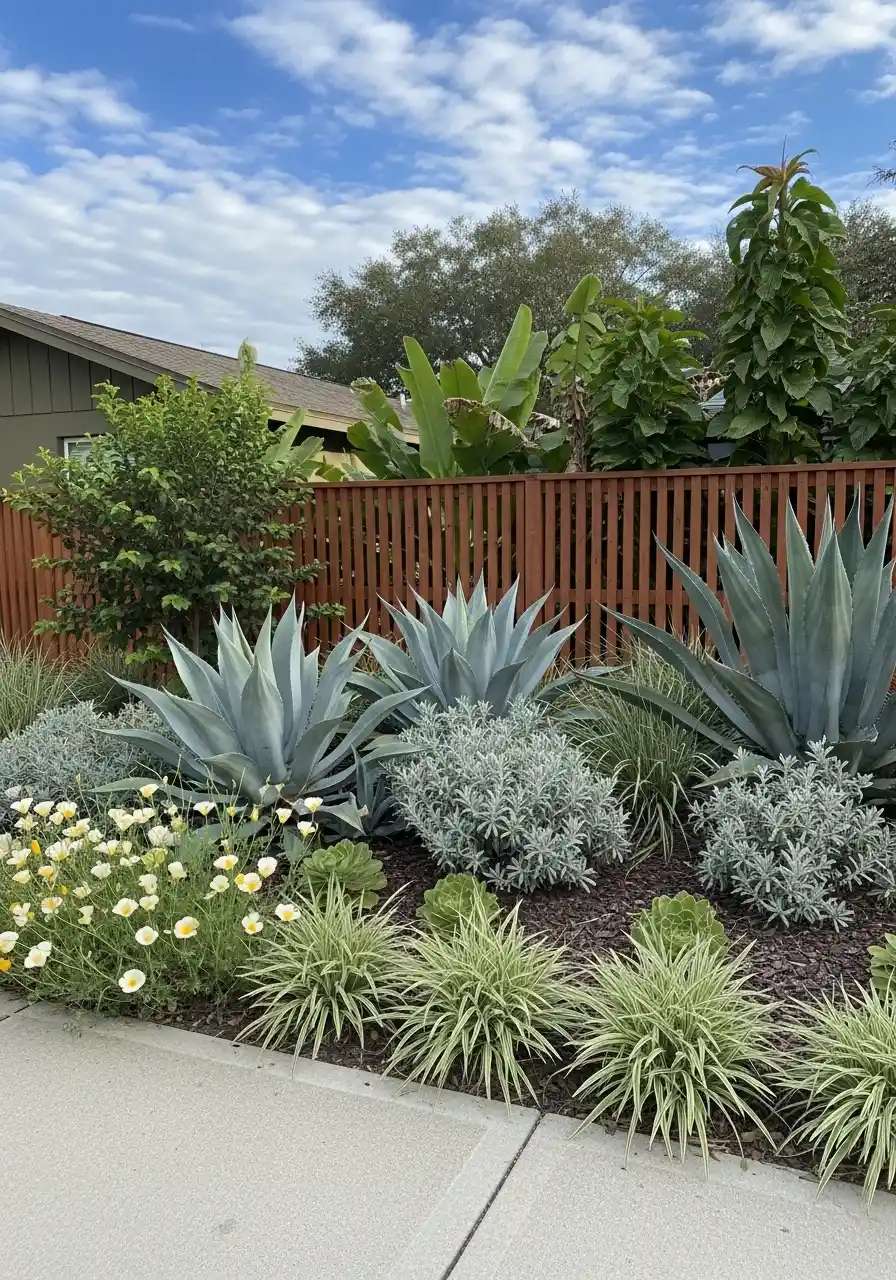
This bed is a great example of “bold plants, calm layout.” The agaves are big and sculptural, like living art, and the silver shrubs add that dusty, cool color that screams drought-friendly. I love this drought tolerant landscape florida look because it uses contrast. Spiky blue-green agave against soft silver mounds, plus a neat row of grassy border plants at the sidewalk. It feels tidy, not desert-chaos.
If you copy this, spacing matters. Give agaves room so they don’t stab each other later. And do not plant them right on the edge where people step off the sidewalk. Agave tips hurt, I’m not joking. Put the softer plants at the front, like variegated liriope or drought-tough grass clumps, then keep the spiky stuff back.
Hack I learned: mulch depth. Use 2–3 inches of mulch to keep soil cooler, but don’t pile mulch up against agave crowns. It traps moisture and can rot them. This Florida drought tolerant landscaping idea works because it’s low-drama and still looks sharp.
Drought tolerant landscape Florida walkway with boulders and bright blooms
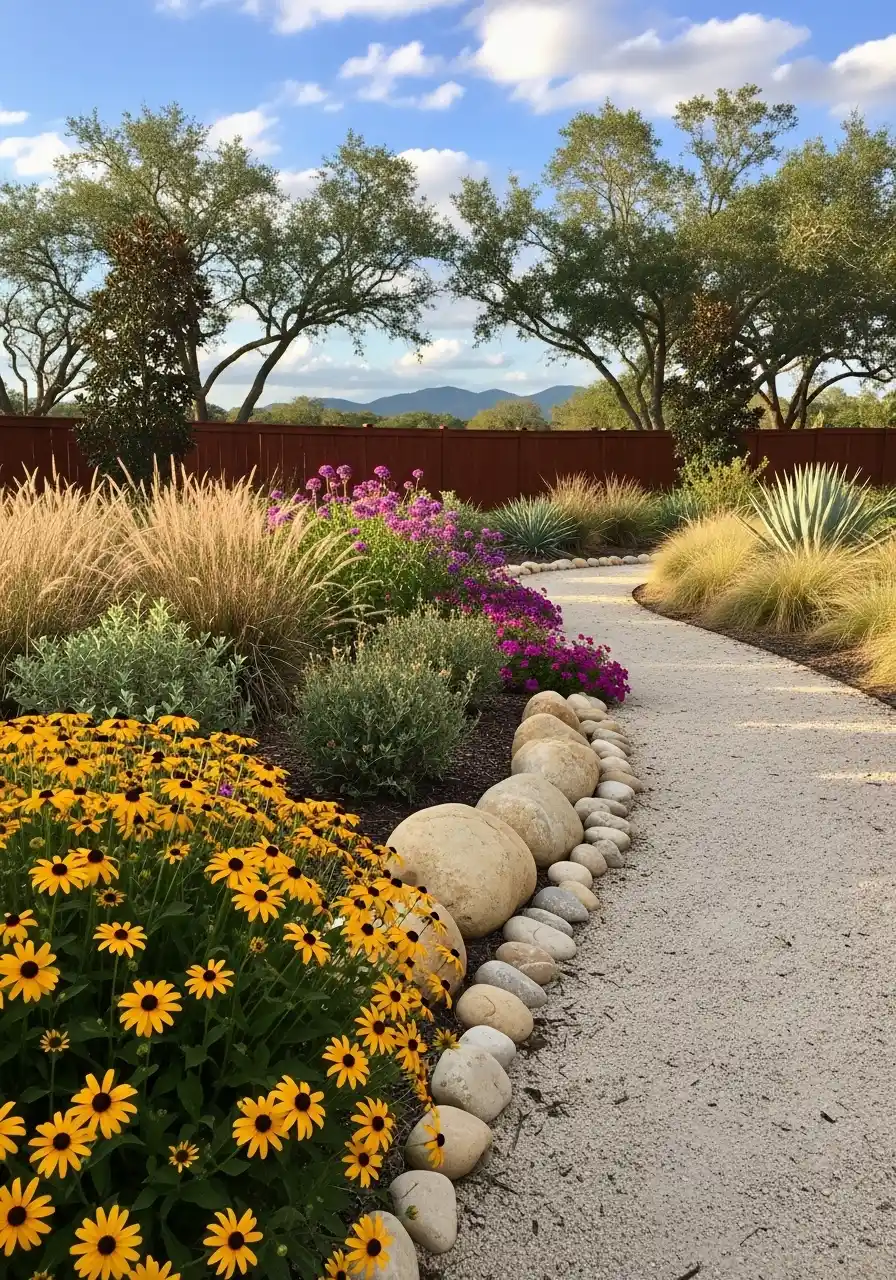
This one feels like a stroll you actually want to take. Curved path, big round boulders, smaller river stones, and then flowers and grasses spilling around the edge. This drought tolerant landscape florida idea proves you don’t have to give up color. Black-eyed Susans and those purple blooms bring energy, and the ornamental grasses add movement when the wind hits.
The boulders are doing more than looking pretty. They hold edges in place and stop mulch from washing into the path after heavy rain. Florida storms are rude like that. If you want the same effect, use boulders in clusters, not spaced evenly like a math problem. Uneven looks more natural and expensive.
A simple trick: plant in layers. Tall grasses in the back, medium flowering shrubs in the middle, and low flowers near the path. That’s how you keep the view clean. This drought tolerant landscaping in Florida style is friendly, not prickly, and it hides bare soil really well.
Desert-style rock garden with barrel cactus drama
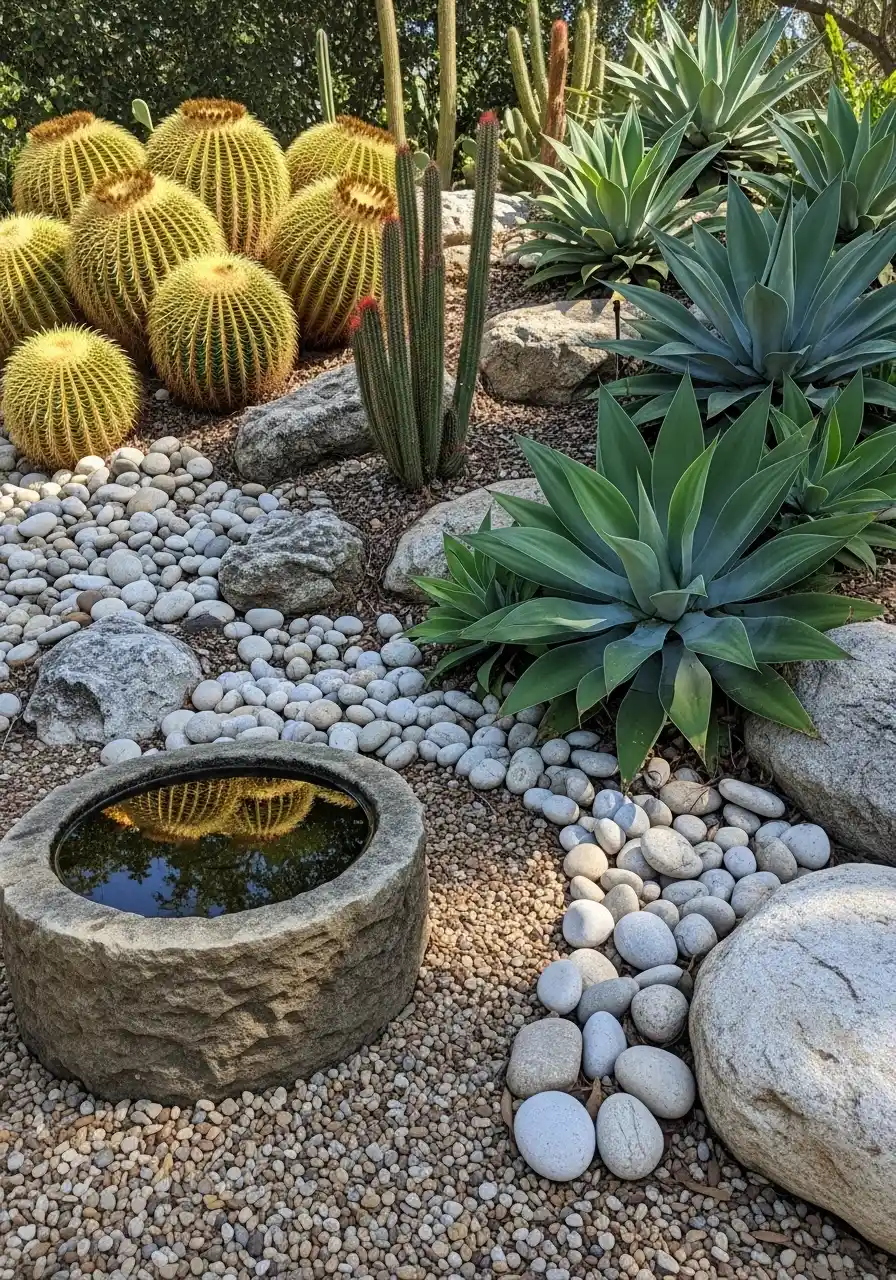
This one is pure texture. Barrel cactus, tall column cactus, agaves, and a river-rock “stream” running through gravel. It looks like a little desert scene that got dropped into a yard, and honestly, it’s kind of addicting to look at. For drought tolerant landscape florida, this is great because everything here is built for low water, and the rock keeps things tidy.
But I’ll be real, this style is not forgiving if you place plants wrong. Barrel cactus is a hazard if it’s near where people walk. And those agaves get huge, like they expand and then suddenly you have a problem. So plan the mature size. Not the “baby plant at the nursery” size.
A hack that makes this work: use a mix of rock sizes. Large boulders, medium river stones, small gravel. It adds depth, and it prevents the space from looking flat. This Florida drought tolerant landscape idea also benefits from drip irrigation on a timer, even if it’s “low water.” Low water doesn’t mean no water.
Modern entry bed with pavers, gravel joints, and tough plants
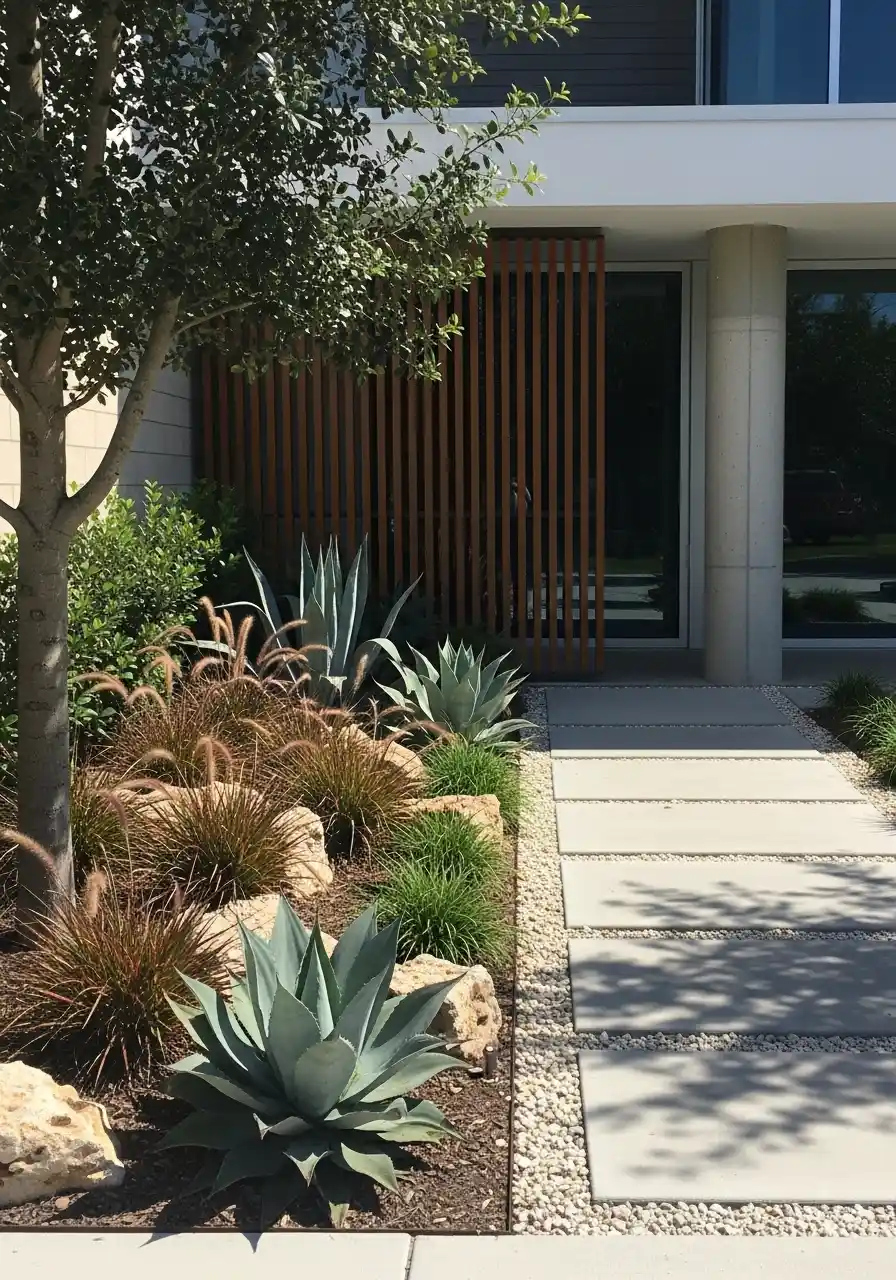
This is the “modern house, modern yard” pairing done right. Big pavers, gravel gaps, and drought-friendly plants tucked in like they belong there. I like this drought tolerant landscape florida idea because it’s clean without feeling sterile. The grasses soften the straight lines, and the agaves add structure.
If you want this look, don’t skip the base work. Pavers need a compacted base so they don’t sink or tilt. And gravel joints need edging so the rock doesn’t spill out. The best part is maintenance is mostly blowing leaves off and trimming grasses once in a while.
My personal opinion: choose plants that won’t flop. In a modern layout, floppy plants look messy fast. Go for upright grasses, agave, yucca, and low shrubs that keep their shape. This is a drought tolerant landscape Florida style that looks fancy but is actually pretty practical.
Drought tolerant landscape Florida “dry creek” yard with gravel and stones
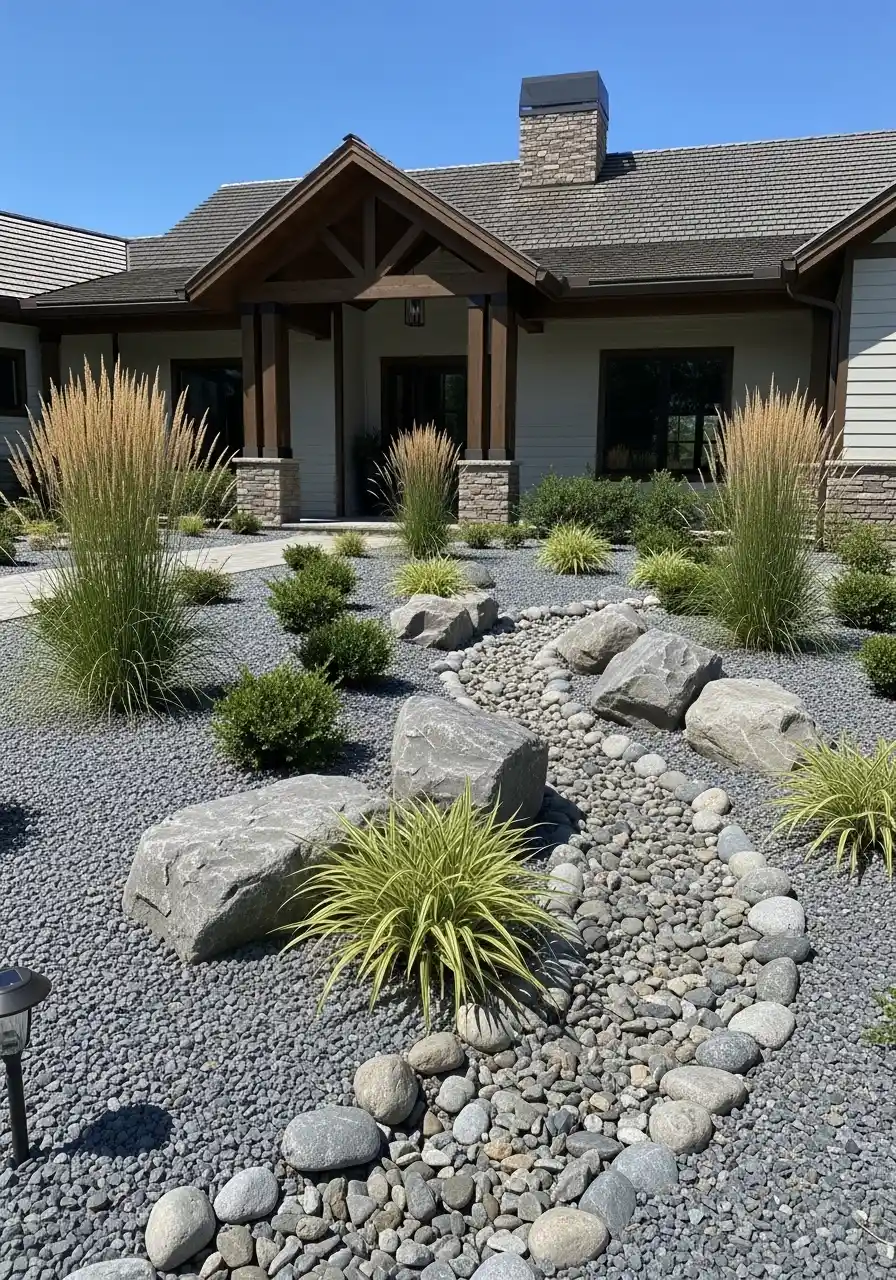
This one is a smart trick for Florida. It looks like a dry creek, but it also acts like one. Gravel “river,” stone edges, and drought-tough plants spaced around it. I love this drought tolerant landscape florida setup because it solves a real problem: water runoff. When it rains hard, the creek channel can guide water instead of letting it pool near the house.
The key is shaping. Make the creek wider in some spots, narrower in others. Add larger rocks at curves, like natural erosion points. It looks real and it holds the line. Then plant drought-tolerant grasses and shrubs on the banks so it doesn’t look bare.
Hack: use different gravel colors for contrast, but keep it subtle. Too many colors looks like a fish tank. This Florida drought tolerant landscaping idea works best when it looks natural and calm.
Gravel courtyard with lavender color waves and boulder accents
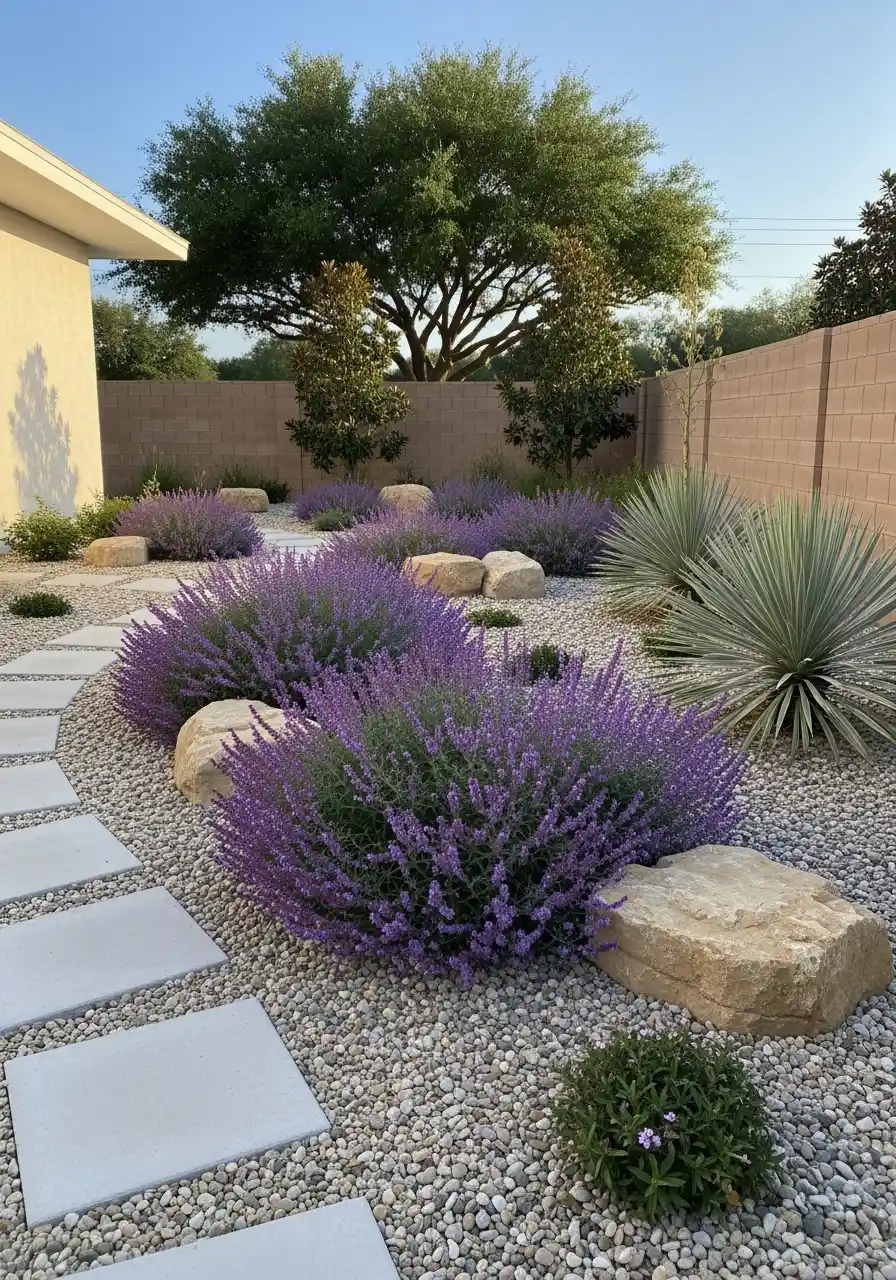
This yard looks peaceful, like the kind of place where you’d sit down and suddenly forget your phone exists. Gravel base, big boulders, soft purple flowering plants, and a few bold spiky accents. For drought tolerant landscape florida, the magic here is mass planting. Those purple plants are in big groups, not scattered. That’s why it feels like a “wave.”
If you want this, choose one main flower plant and plant a lot of it. Then add accent plants, like yucca or agave, but only a few. Too many accents and it becomes chaotic. And keep open space. Open gravel areas give your eyes a break.
One thing I’d do: make sure the gravel is deep enough, and use quality landscape fabric. Otherwise weeds will show up and ruin your calm vibe. This drought tolerant landscaping Florida style is soft, not harsh, and it’s honestly my favorite mood out of the bunch.
Stepping-stone garden path with succulents and bold color borders
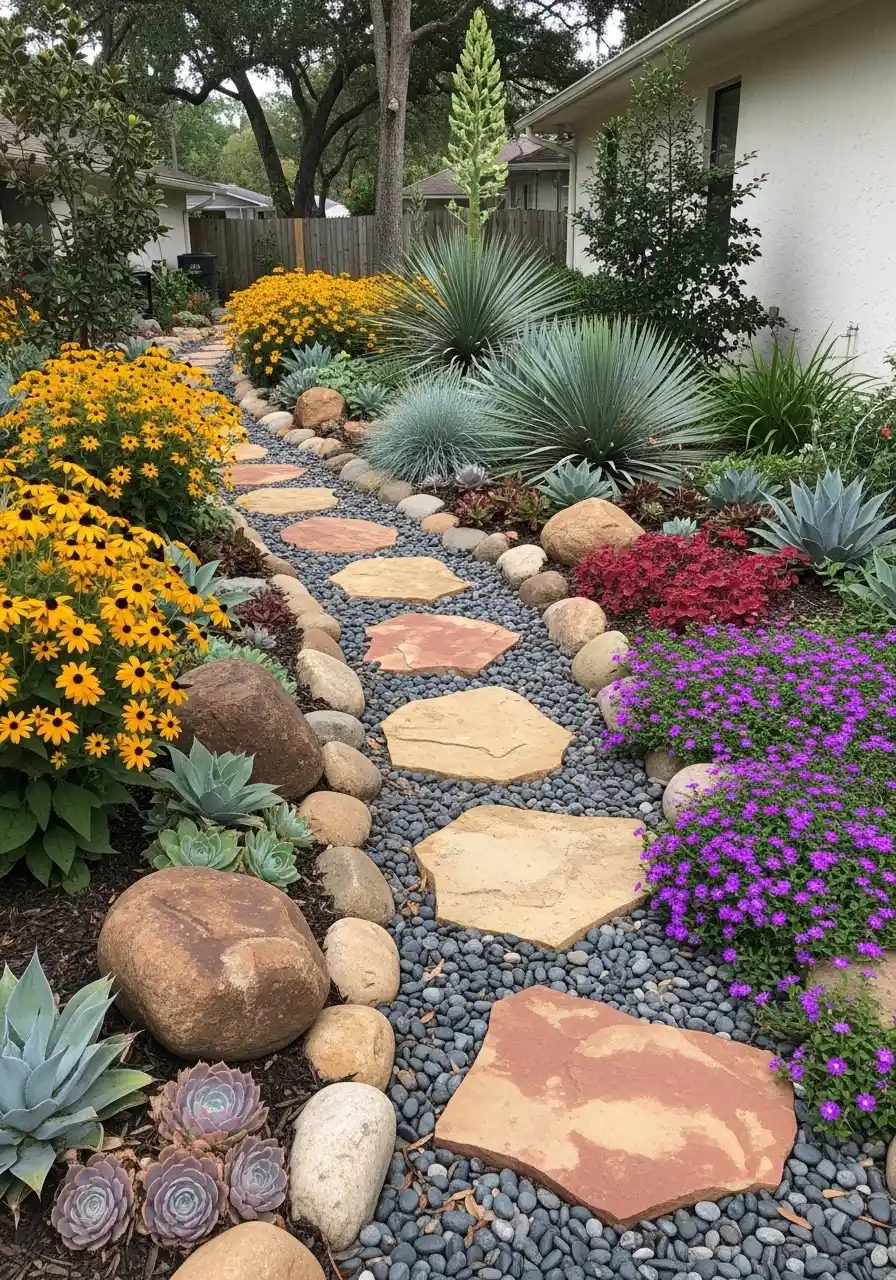
This path is fun. Big stepping stones, dark gravel, rounded stone borders, and then plants packed with color on both sides. I love this drought tolerant landscape florida idea because it mixes desert shapes with garden color. You’ve got succulents and spiky plants near the path, but also bright yellow and purple blooms so it doesn’t feel dry and dusty.
The stone border is the secret weapon here. It keeps gravel in place and gives a clean edge so the bed doesn’t creep into the walkway. If you copy it, bury the border stones halfway so they don’t wobble or roll. Then set stepping stones level, because a wobbly stone makes people hate the path.
Hack: repeat colors. Yellow in more than one spot, purple in more than one spot. That repetition makes it look planned. This Florida drought tolerant landscape idea is cheerful and still low water, which is kinda the dream.
Drought tolerant landscape Florida “desert park” layout with open space
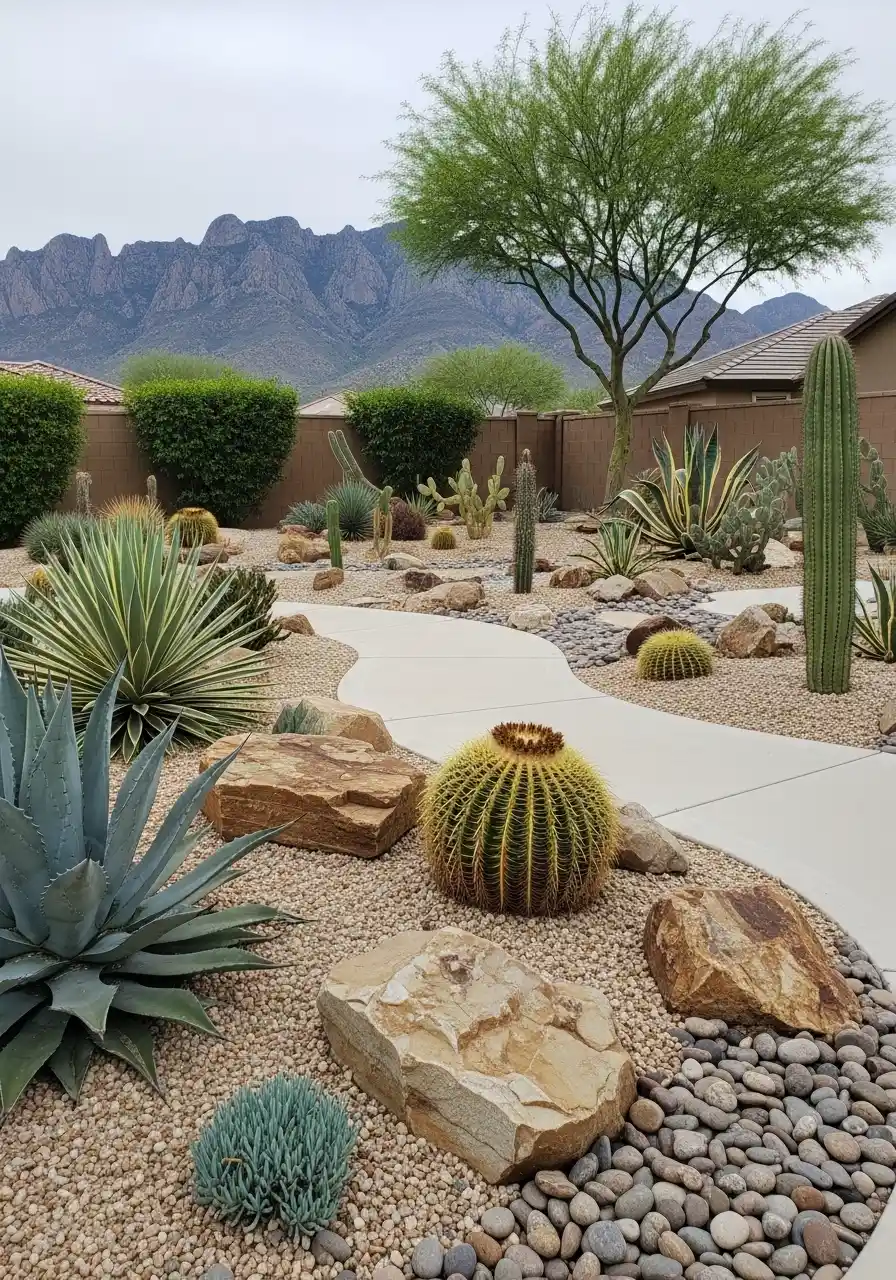
This one feels like a desert park, wide open and calm. Gravel ground, scattered boulders, big cactus forms, and a smooth curving path through it. For drought tolerant landscape florida, open space is powerful. People forget that leaving some areas empty can make everything else look more intentional.
If you want this style, plan the focal points first. Pick 3–5 big plants or boulders that anchor the space, then fill around them with smaller plants. Don’t overfill. Overfilling ruins the “open desert” feel. Also, keep plants in clusters. Random single plants look accidental.
A hack: use a curving path to guide the eye. A curve makes the yard feel bigger. And use rock mulch instead of wood mulch if you want that desert vibe. This drought tolerant landscape Florida style is quiet and bold at the same time, which is a hard balance.
Fence-line drought tolerant bed with bright flowers and sculptural succulents
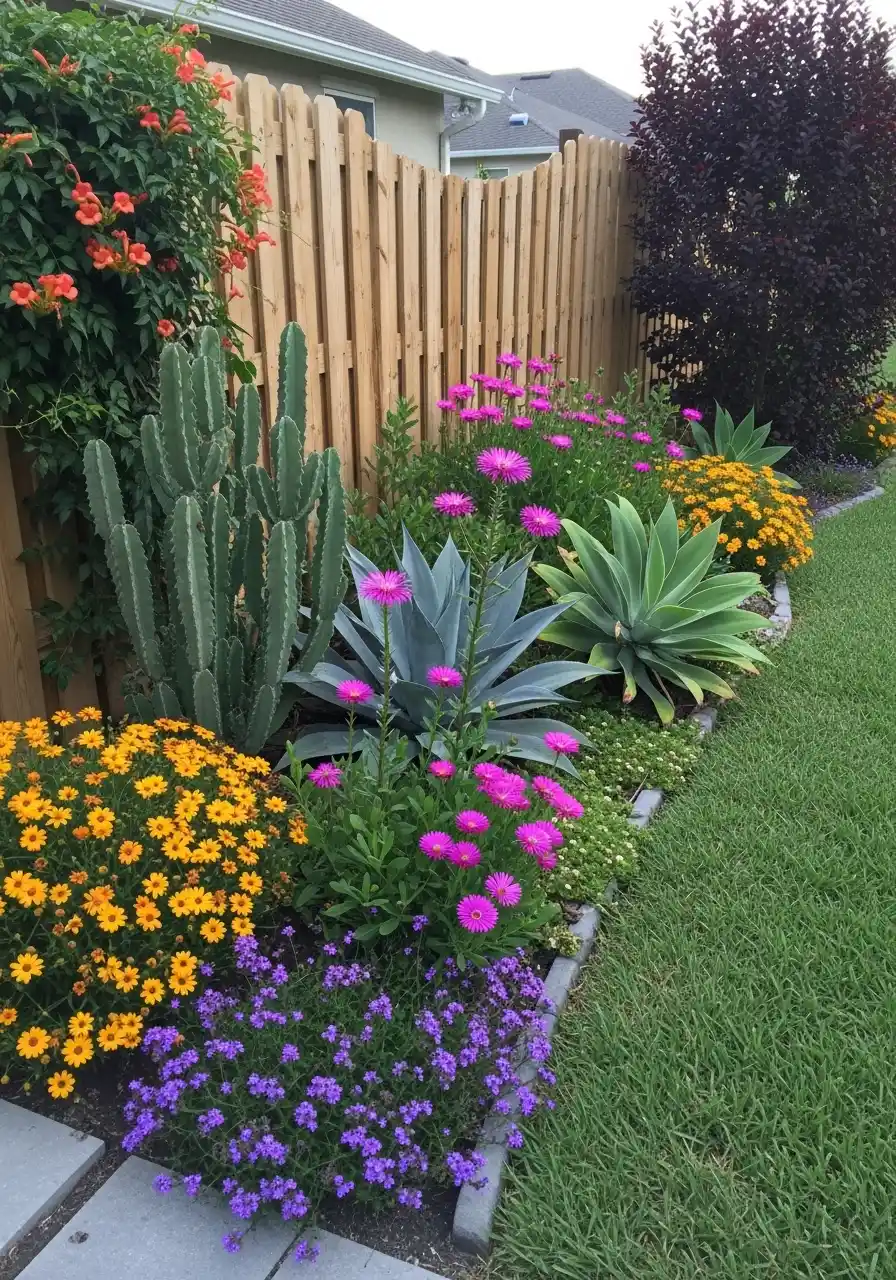
This one is a perfect example of “small space, big impact.” A fence bed with tall cactus, agaves, and bright flowers tucked in like jewelry. I love this drought tolerant landscape florida idea because it turns a boring fence line into a feature. And it’s a smart use of vertical space. Tall cactus draws the eye up, then flowers pull it back down.
If you want this, use the fence as a backdrop. Choose plants with strong silhouettes, like agave, prickly pear, and upright cactus. Then add low flowers at the front to soften it. But be careful with spacing, because everything near the fence can get crowded fast.
Hack: add drip irrigation along the fence line. Fence beds dry out quicker because wind hits them more. This Florida drought tolerant landscaping idea is colorful and fun, but it still needs a little planning so it doesn’t turn into a tangled mess.
Drought tolerant landscape Florida front yard with stone path and bold focal agave
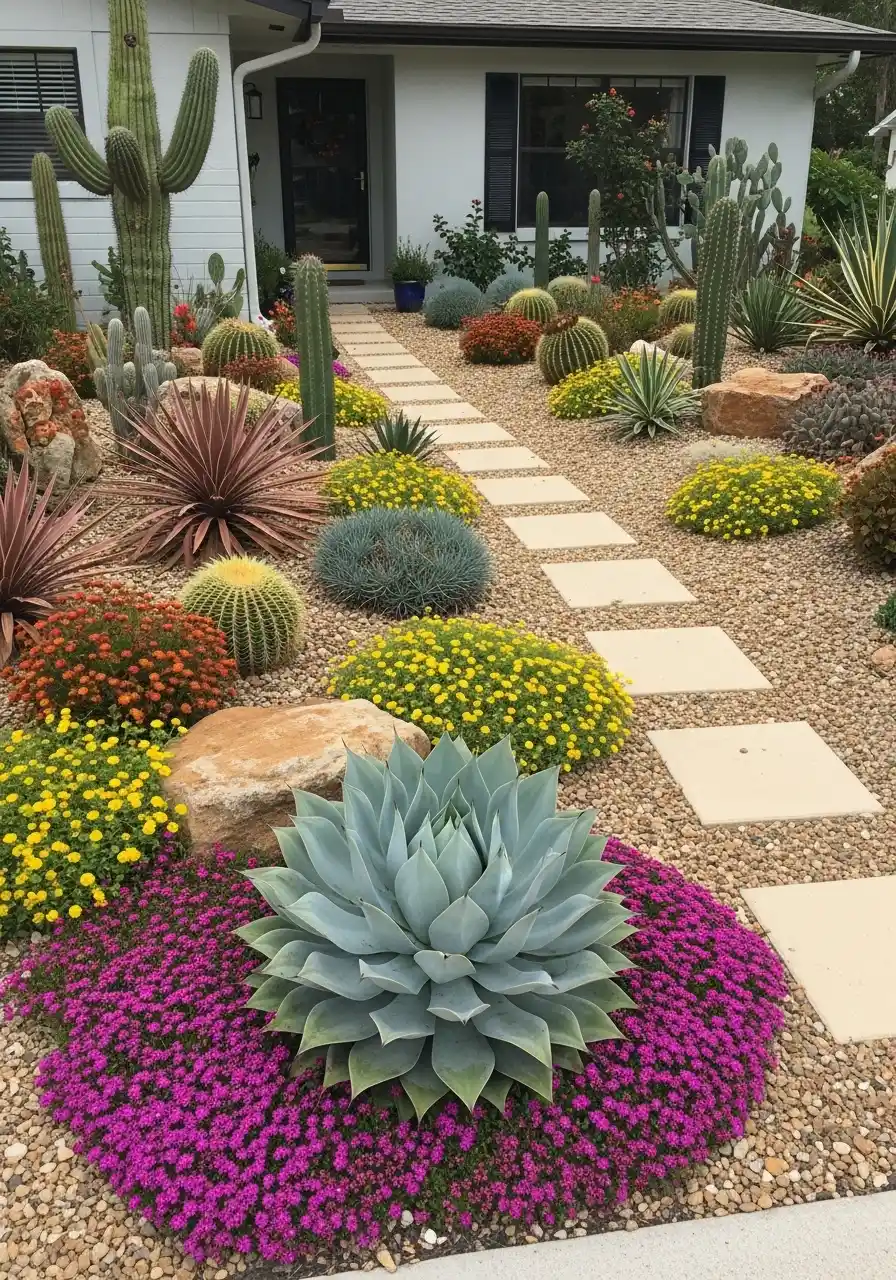
This front yard is a full-on statement. A straight stepping-stone path, gravel base, boulders, cactus clusters, and that giant agave sitting like a crown on a purple groundcover rug. It’s dramatic, and I love it. For drought tolerant landscape florida, this is how you make it feel designed and not like a “low water compromise.”
The trick is the focal point. One big plant that grabs attention. Then the rest supports it. The purple groundcover makes the agave pop like crazy. And the stepping stones give structure so people know where to walk.
My honest opinion: this is one of those yards that makes neighbors stare. In a good way. But it only stays pretty if you keep it weed-free. Gravel shows weeds fast. So pre-emergent, good fabric, and monthly quick checks. This drought tolerant landscaping Florida style is bold, modern, and still totally doable.
Modern Entry With Stepping Slabs, Grasses, and Soft Succulents
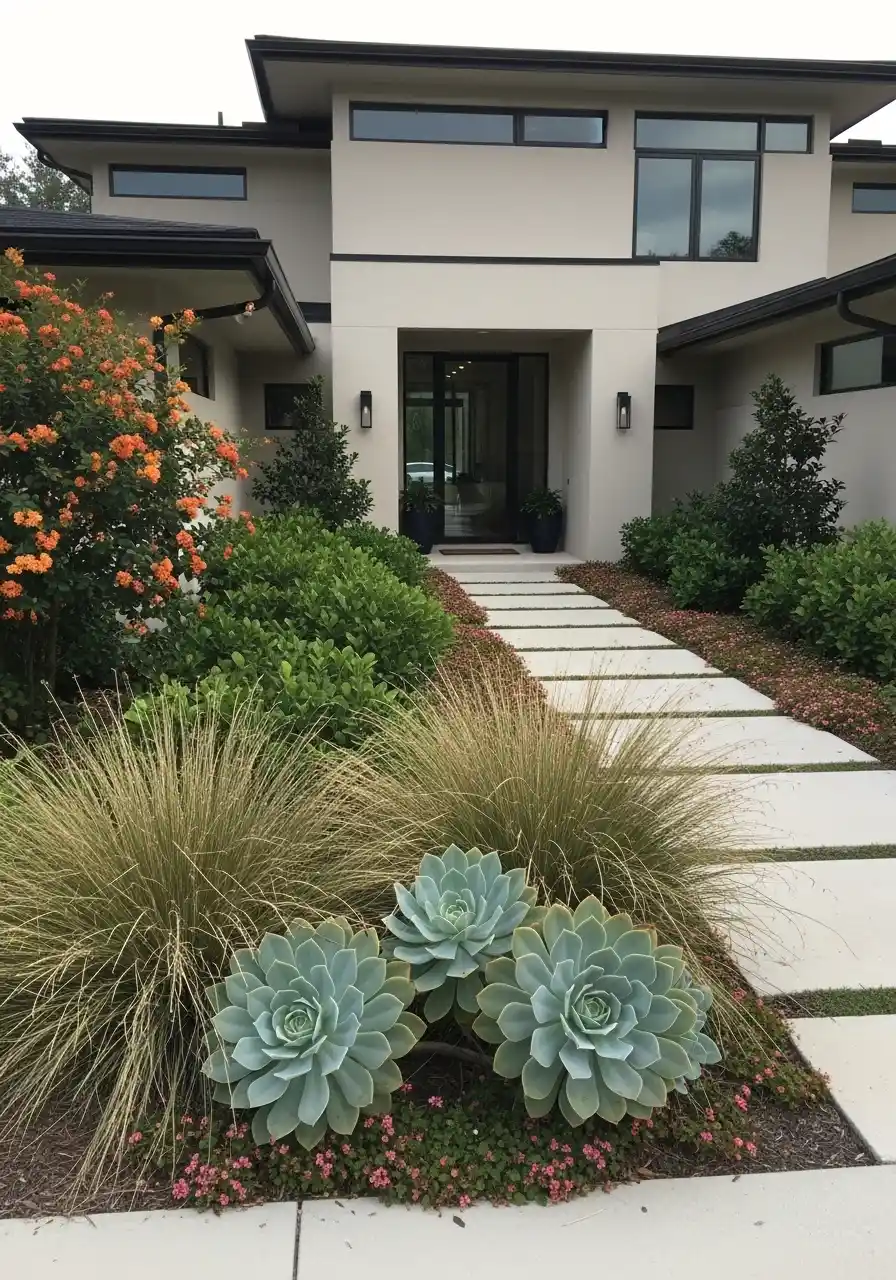
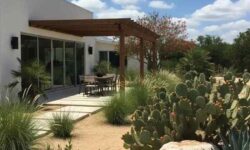
This entry is clean and calm. The long concrete stepping slabs feel modern, but the plants keep it from feeling cold. Those big rosette succulents up front (they look like giant flowers made of leaves) are doing the “wow” part. Then the tan ornamental grasses add movement, so even a still yard feels alive.
For a drought tolerant landscape florida setup, this is smart because it uses tough textures instead of thirsty blooms. The shrubs are simple, the ground is mostly mulch, and the path replaces what could’ve been a big strip of lawn. Less lawn equals less watering, and less guilt. I like that.
My little tip: keep the stepping slabs slightly above grade or perfectly level, not sunken. If they sink, water pools, weeds pop up between, and suddenly it looks messy. Also, don’t crowd the succulents. Give them breathing room so their shape stays crisp.
Curved Gravel Path With Color Blocks and Agaves
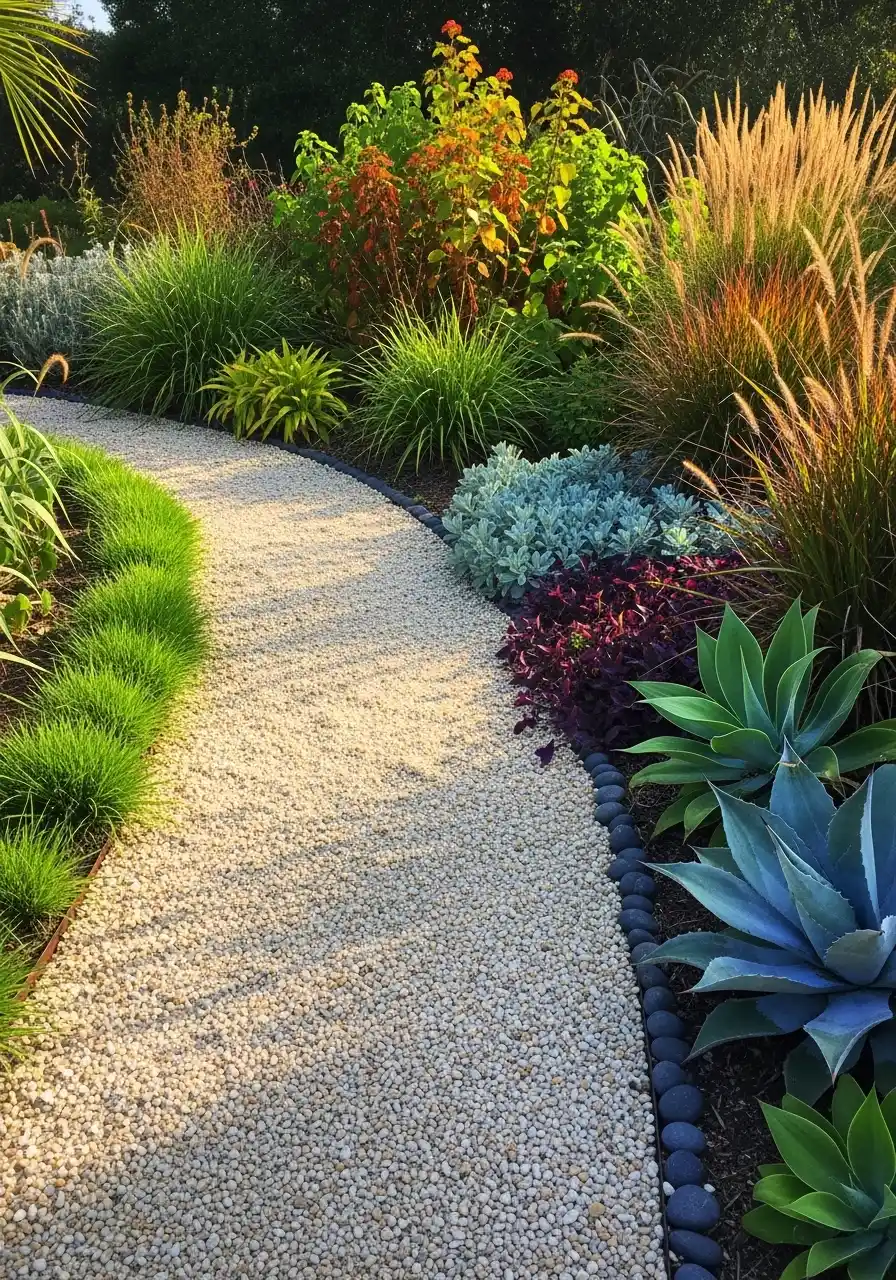
This one makes me want to walk slow on purpose. The path is warm gravel, curving like it’s leading you somewhere special. The edges are lined with dark round stones, which is a simple detail but it makes it feel finished. Then you’ve got agaves and low groundcovers in different colors, like green, silvery blue, and deep burgundy.
For Florida drought tolerant landscaping, curves are a cheat code because they make small spaces feel bigger. The planting is also grouped in chunks, not scattered. That’s why it feels designed. I’m obsessed with the color contrast too. The agaves look sharper because they’re next to softer plants.
Hack I’d actually use: put edging under the gravel, even if you hate spending money on “invisible stuff.” Without edging, gravel creeps. It creeps like it has legs. And keep the gravel depth thick enough, or weeds will show up and act like they own the place.
Open Rock Yard With a Big Shade Tree and Desert Plant Islands
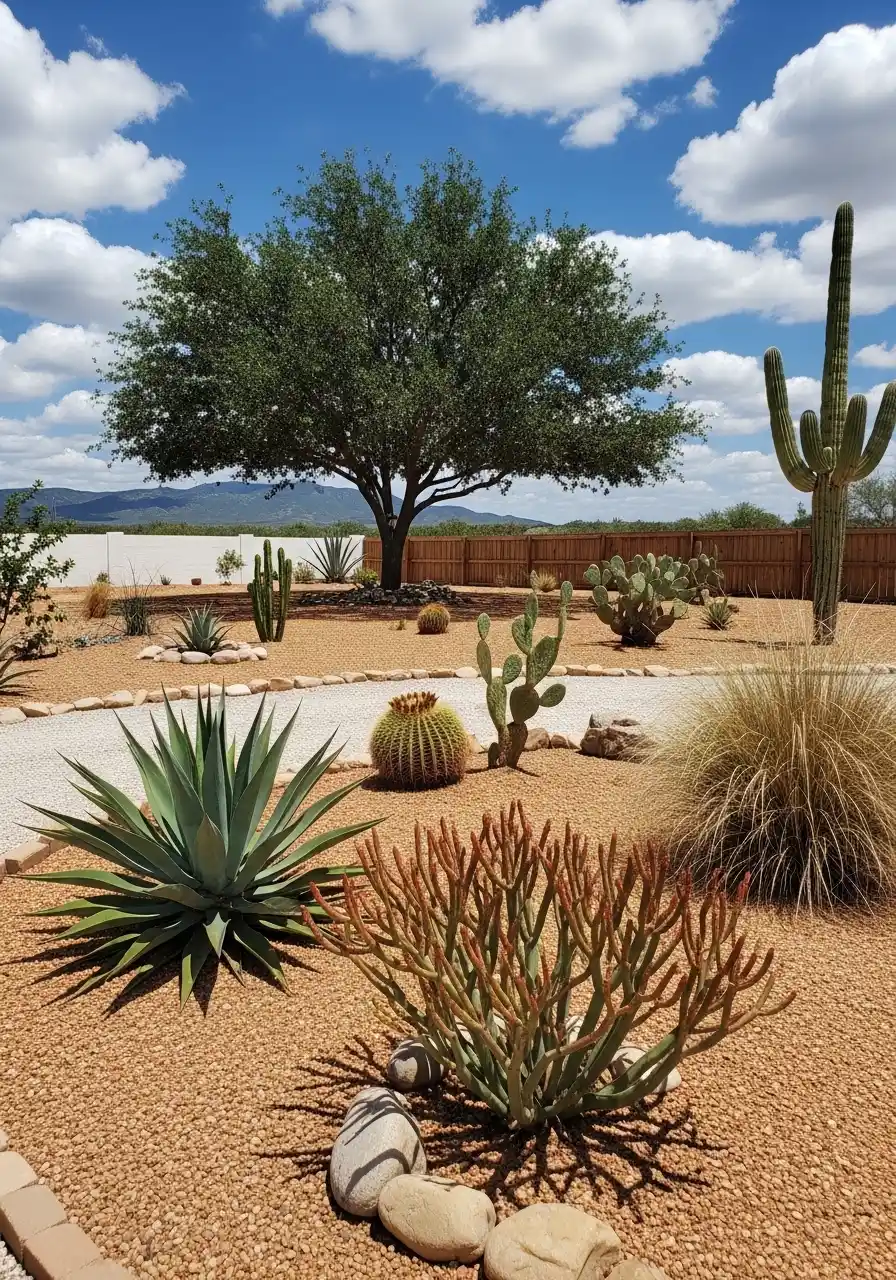
This yard is wide open, with a big tree as the main character. The plants are spaced out like little islands in a sea of gravel. I see agaves, barrel cactus shapes, and some low shrubs. The whole thing feels quiet, like it’s not trying too hard, which I love.
In a drought tolerant landscape florida plan, the biggest win here is the negative space. People forget space is part of the design. If you fill every inch with plants, it becomes chaos and it’s harder to maintain. This layout is low-stress because you can see where everything is, and you’re not constantly trimming.
My opinion: the tree is doing the emotional work. It adds shade, softness, and a sense of comfort. If you try this without a tree, it can feel too bare. So even if you don’t have a giant tree, add one strong element, like a big boulder group or a tall statement plant.
Dry Creek Feature With Rocks and a Small Waterfall Look
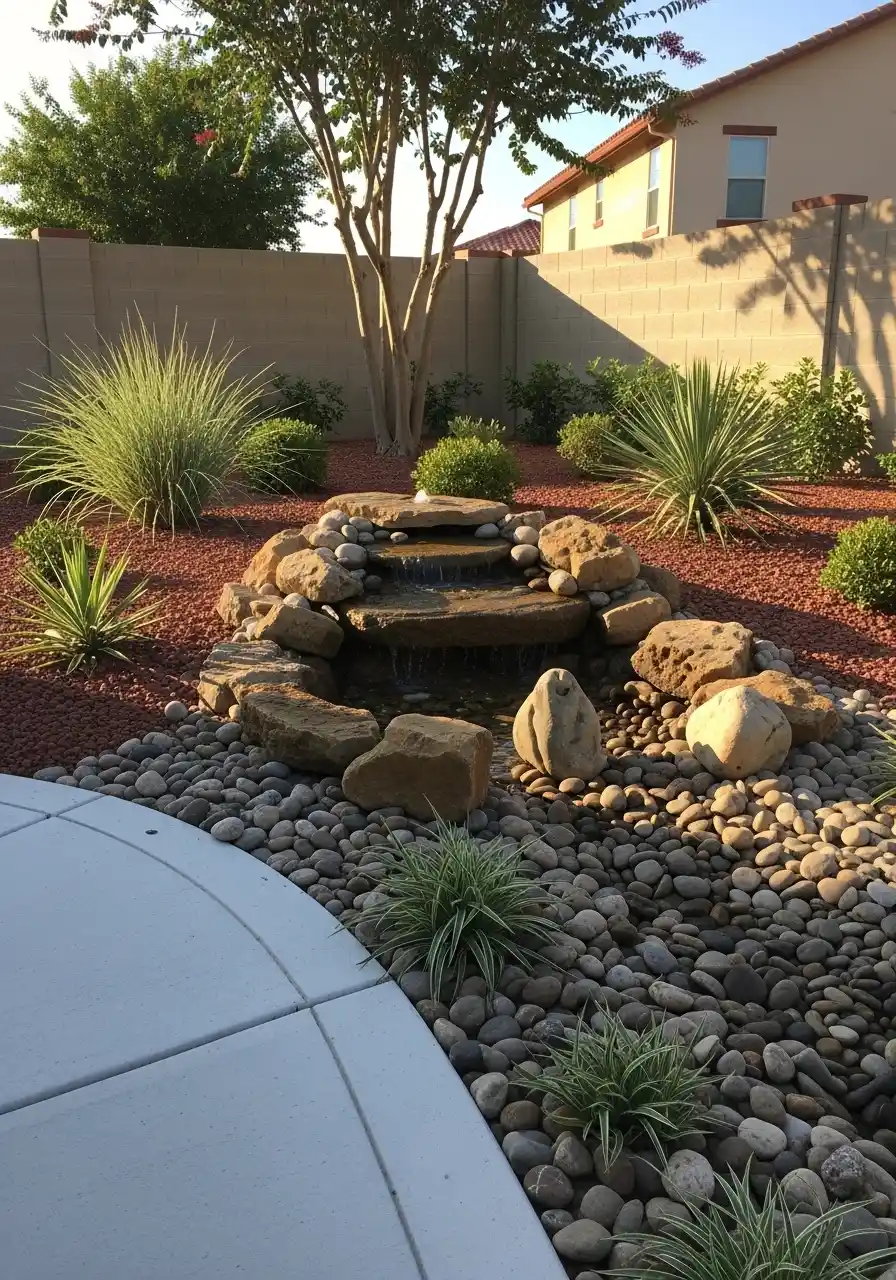
This one is dramatic but still practical. It’s like a dry creek bed turned into a feature, with smooth river rocks and stacked stone that looks like a tiny waterfall. Even if the water isn’t running all the time, the structure alone feels like a centerpiece.
For drought tolerant landscaping in Florida, this is a sneaky trick because it handles storm runoff too. When Florida rain hits, a rock channel can guide water where you want it. And when it’s dry, it still looks intentional. That’s a win-win, seriously.
My tip: don’t make it too small. Tiny rock features can look like a weird pile of stones. Go bigger with the main rocks, and vary sizes like nature does. Also, use a hidden liner if water will run, and keep leaves out of it or it turns gross fast.
Raised Metal Planters With Succulent “Bowls” and Purple Pop
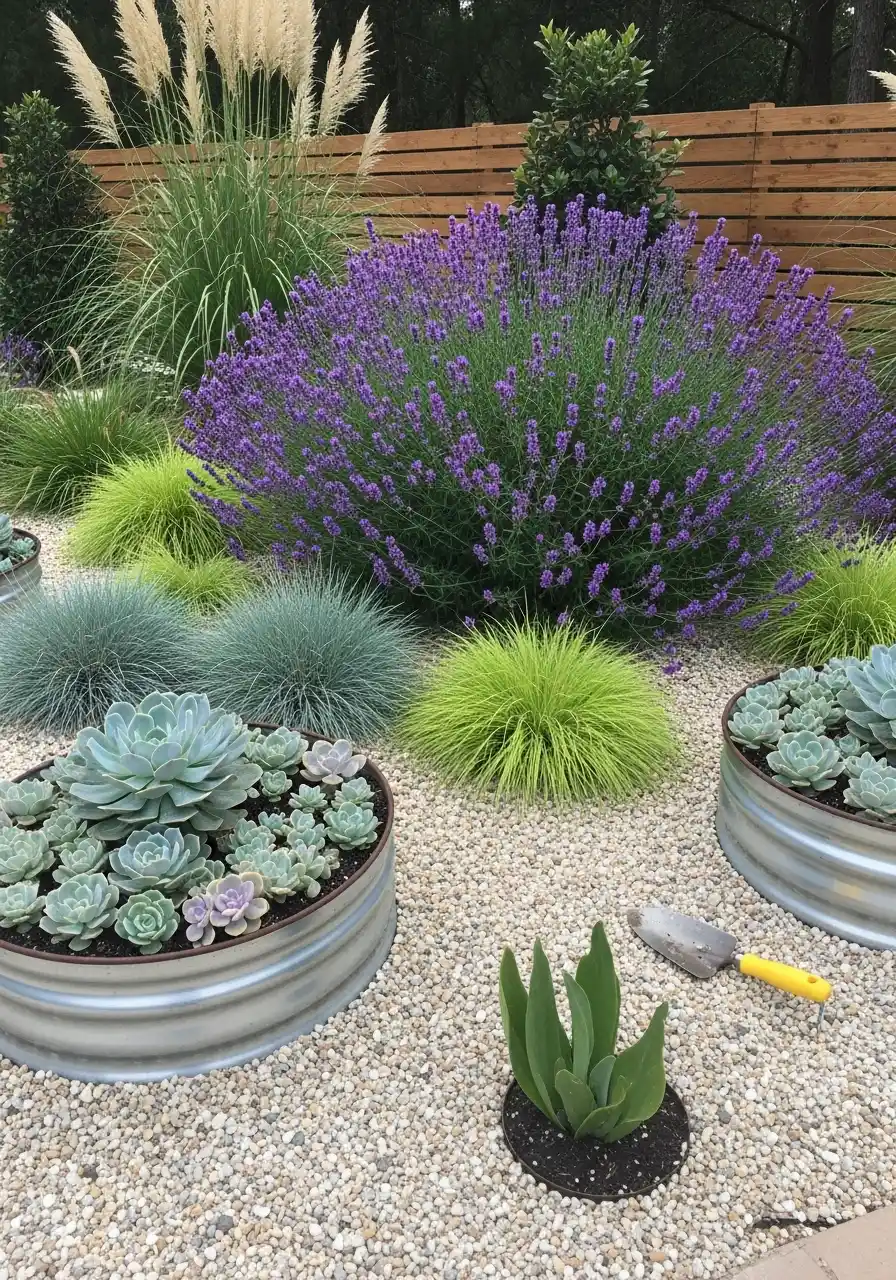
This setup feels like a backyard garden party scene. Raised metal planters are filled with succulent clusters, like little living bouquets. The gravel ground keeps it tidy, and that big purple flowering plant in the background adds a bold punch without needing tons of water.
For a drought tolerant landscape florida yard, raised planters are great because you control the soil. Succulents hate soggy roots, so having them raised helps drainage a lot. Plus, it looks organized. I like organized yards because my brain is messy, so it balances me out.
Hack: top-dress the planters with small gravel, and use drip watering on a timer for the first few months. After they root in, you can back off watering. Also, keep planters grouped, not scattered. Scattered planters look like you gave up halfway.
FAQ: drought tolerant landscape florida Questions People Keep Asking
1) What is a drought tolerant landscape florida design, really?
It’s a yard built with low-water plants and smart materials like rock and gravel.
2) Do drought-tolerant yards still need watering?
Yes at first, then much less once established.
3) What’s better for Florida, gravel or mulch?
Both work. Gravel is cleaner, mulch helps soil, depends on the area.
4) Are agaves safe around kids and pets?
They can be sharp, so keep them away from play zones.
5) How do I stop weeds in rock beds?
Edging + thick rock + fabric helps a lot.
6) What’s the easiest “designer” trick for drought tolerant landscaping Florida?
Repeat the same plants in groups.
7) Can I use a dry creek bed in Florida?
Yes, it’s actually great for heavy rain runoff.
8) What plants give color without lots of water?
Crotons, some aloes, and tough flowering perennials.
9) Do white rocks get dirty fast?
Yep. Off-white or tan hides dirt better.
10) What’s the best path style for low water yards?
Stepping stones or concrete paths with gravel borders.
11) Should I use drip irrigation?
If you want less waste and better control, yes.
12) How do I keep it from looking like a desert yard?
Mix in Florida-friendly grasses and leafy plants, keep the rock colors warm.
13) What’s the biggest mistake people make?
Planting drought plants in soggy low spots.
Conclusion
A good drought tolerant landscape florida yard doesn’t feel empty or harsh. It feels calm, clean, and kind of effortless, even though it’s planned. These 25 images show the real formula: strong plant shapes, repeated patterns, rock or gravel that stays contained, and a few “wow” moments like big pots or a giant agave. If you copy anything, copy the structure first. Curves, borders, paths, and grouped plants. Then the yard basically takes care of the rest, and you get your weekends back.