Right when I started planning my food forest garden backyards, I thought it would be all cute baskets and dreamy apple trees. Then I realized it’s also muddy shoes, messy pruning, and me staring at a leaf like it personally betrayed me. Still, once the paths start to feel like little secret hallways, it gets kind of addictive. You don’t just “grow food”… you build a place you wanna walk through on purpose.
Table of Contents
Food forest garden backyards: the “walk-in and forget your phone” path
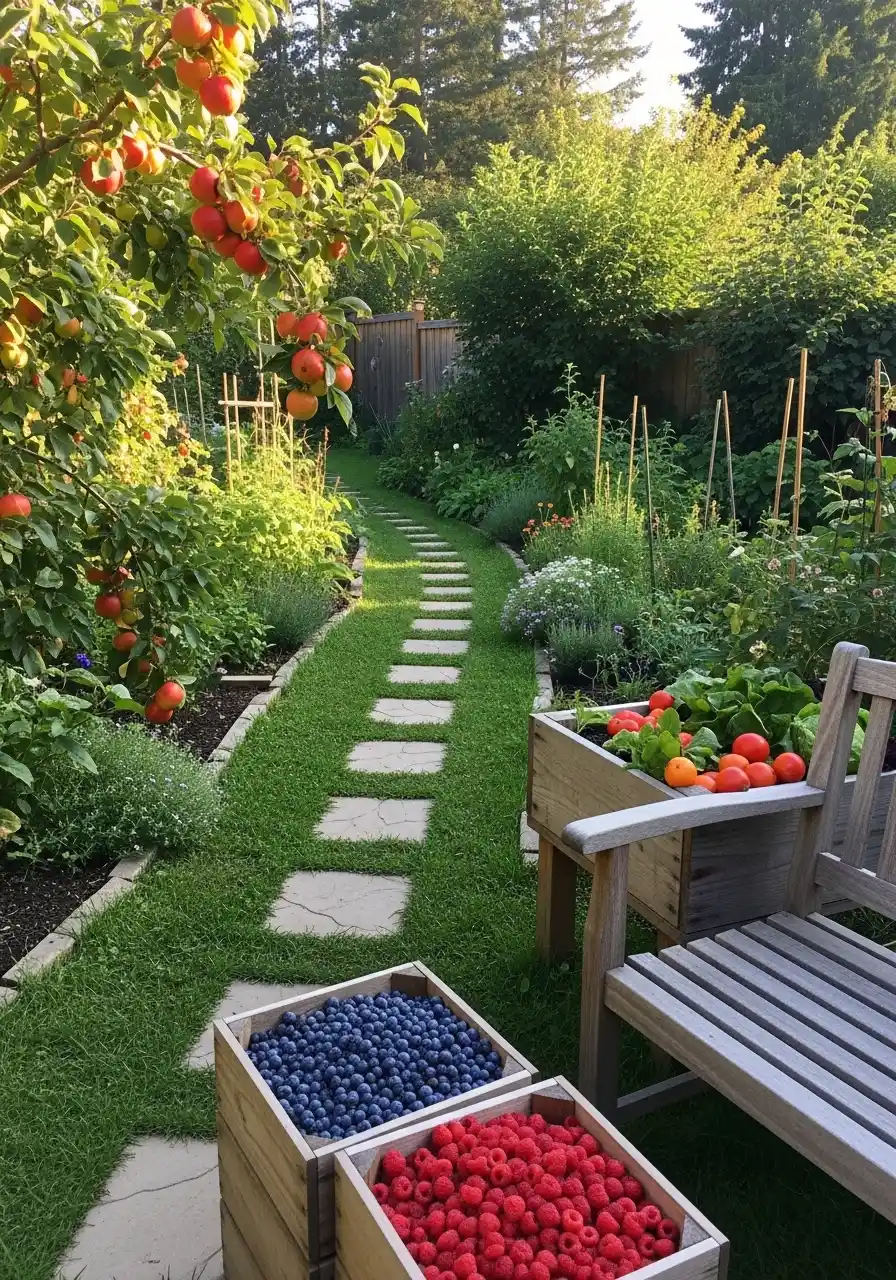
In the first setup, the whole vibe is a green tunnel that pulls you forward. Fruit trees make the sides feel taller without using fences, and the ground layer is thick and soft. I like how it feels private but not boxed in. If you want that same feeling, start with a simple path width you can walk comfortably (about 3 feet), then plant your bushes and herbs so they lean in a little over time.
What makes this work is the layers. Under the trees, I’d do strawberries or creeping thyme, then add clumps of herbs like oregano, chives, and mint (keep mint in a pot unless you enjoy chaos). This is one of those food forest garden backyards ideas that makes you want to wander, even if you’re just going out to grab one lemon.
Terraced hillside orchard that doesn’t fight gravity
That hillside orchard image is basically nature showing off. The trick is that the rows run along the slope, not straight down it. That slows water down, keeps soil from sliding, and it looks calm instead of messy. If you’ve got even a small slope, you can copy this by making gentle “steps” with mulch strips, low berms, or even little swales.
I honestly love this style because it feels old and timeless. Plant fruit trees on the higher side of each terrace, then let shrubs like currants, gooseberries, or blueberries fill the middle. Groundcovers help a lot too. It’s a strong example of food forest garden backyards that feel like a mini farm, without needing a tractor or big equipment.
Raised bed plus espalier fruit tree for small spaces
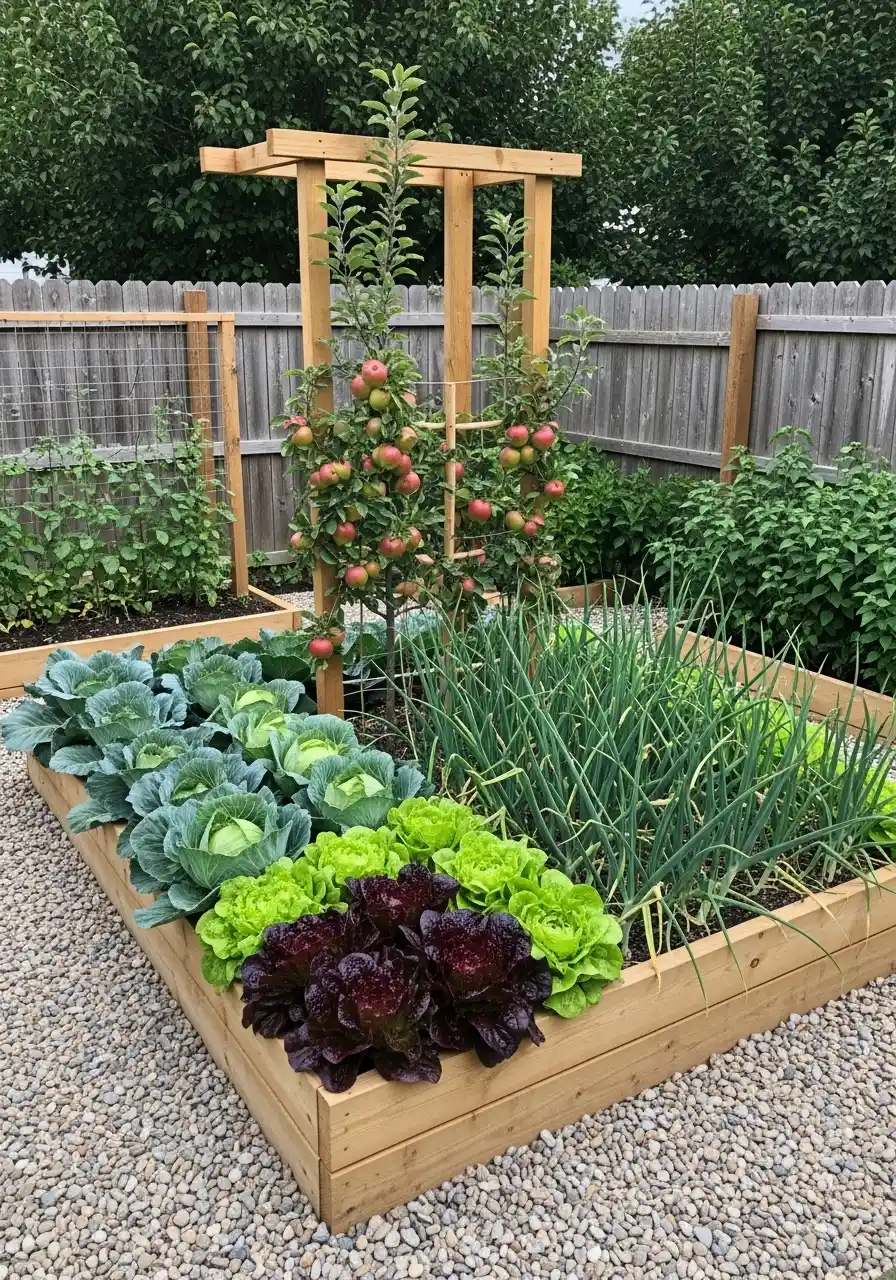
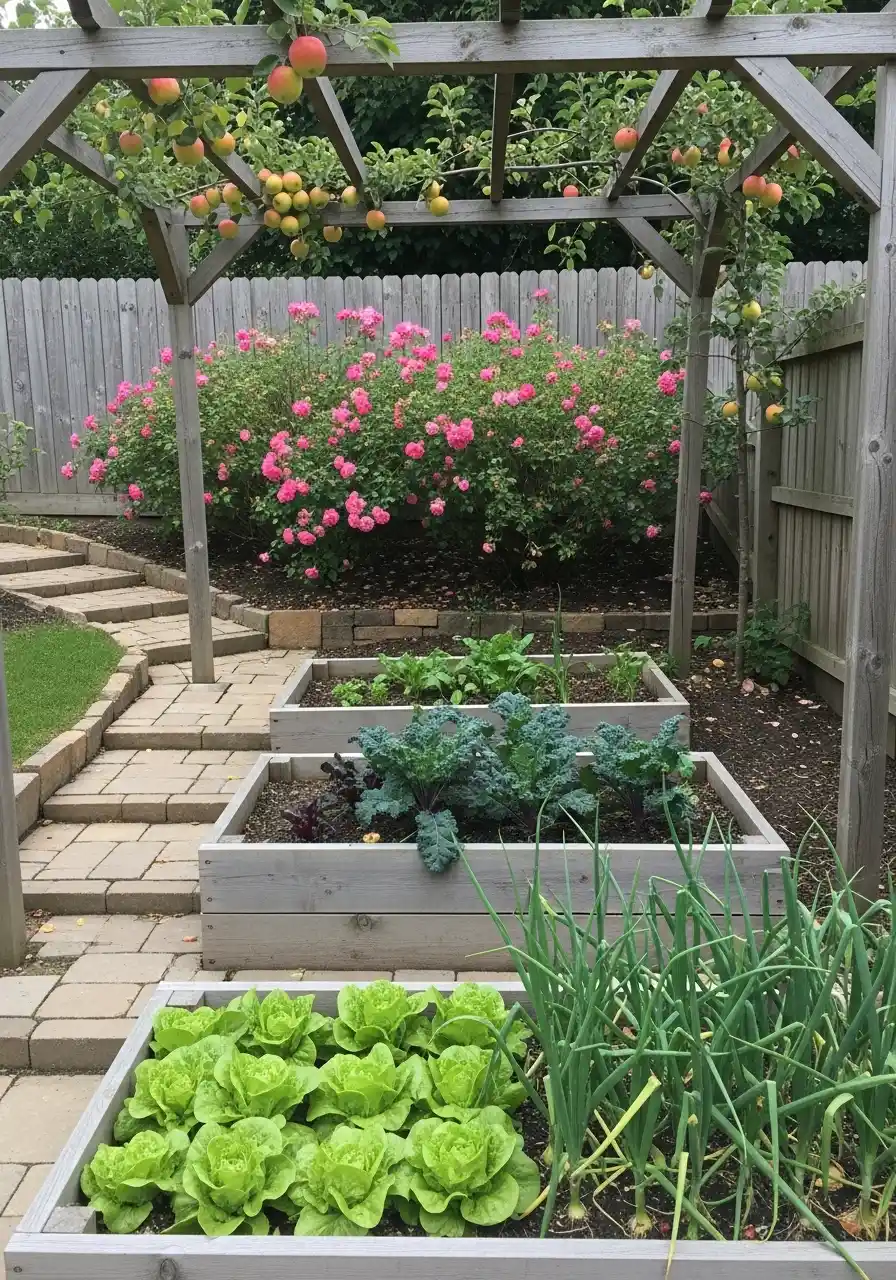
The raised bed with a fruit tree trained up a simple frame is so smart it almost annoys me. Like why didn’t I do this sooner. Espalier keeps a tree flat and controlled, and it makes picking easier too. You can do apples, pears, even some stone fruit if you’re patient. Put the tree at the end of the bed so roots can spread without stealing all the veggie space.
Then fill the bed with “fast food” plants: lettuce, cabbage, onions, and herbs. I like how this layout makes a backyard food forest garden feel tidy. It’s a clean way to start food forest garden backyards if you don’t want the jungle look right away.
The harvest corner with crates, a bench, and a real “pause” spot
That image with crates of blueberries and raspberries next to a bench hit me right in the feelings. It’s not just productive, it’s human. A food forest backyard can be beautiful, but it should also be comfortable. Put a bench where you naturally stop, like near the path curve or where you’ll sort harvest.
If you want a hack, keep one “harvest station” box outside. Gloves, snips, twine, maybe a basket. It saves time and you’ll actually go pick stuff instead of procrastinating inside. This kind of cozy corner is what makes food forest garden backyards feel like a lifestyle, not a chore list.
Big statement fruit tree with edible beds underneath
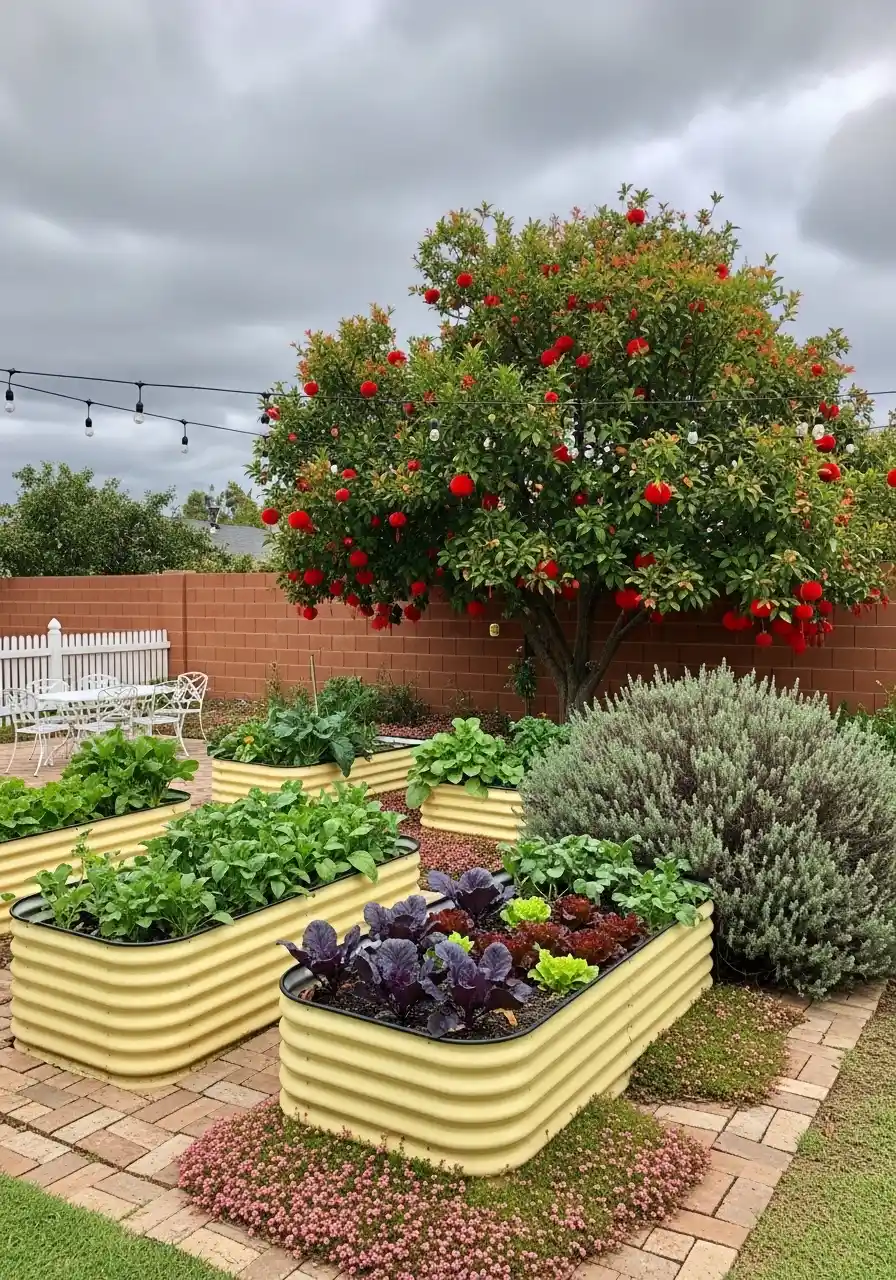
That big red-fruit tree (pomegranate vibe, but could be another heavy-bearing tree) is the centerpiece. I like it because it makes the garden feel designed, not accidental. Underneath, the raised beds are set like islands, and the open space between them is clear for walking. If you have one “main” tree, give it breathing room, then build your beds around it.
To keep it from becoming a dry zone, plant shade-tolerant edibles near the trunk line: spinach, sorrel, chard, and some herbs. Add flowers too, because pollinators are basically free workers. This is one of those food forest garden backyards layouts that looks fancy but still feeds you.
Tiny backyard “everything garden” with flowers mixed in
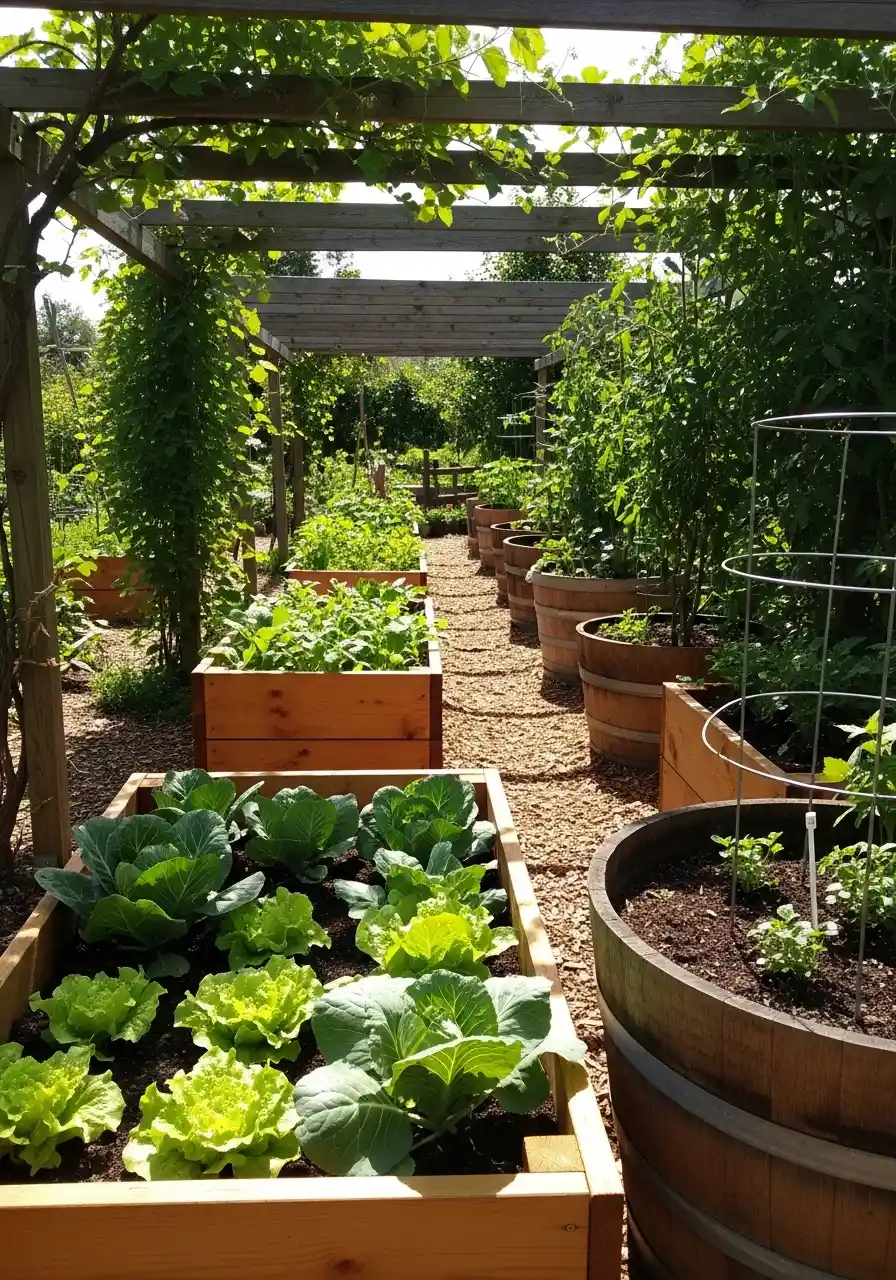
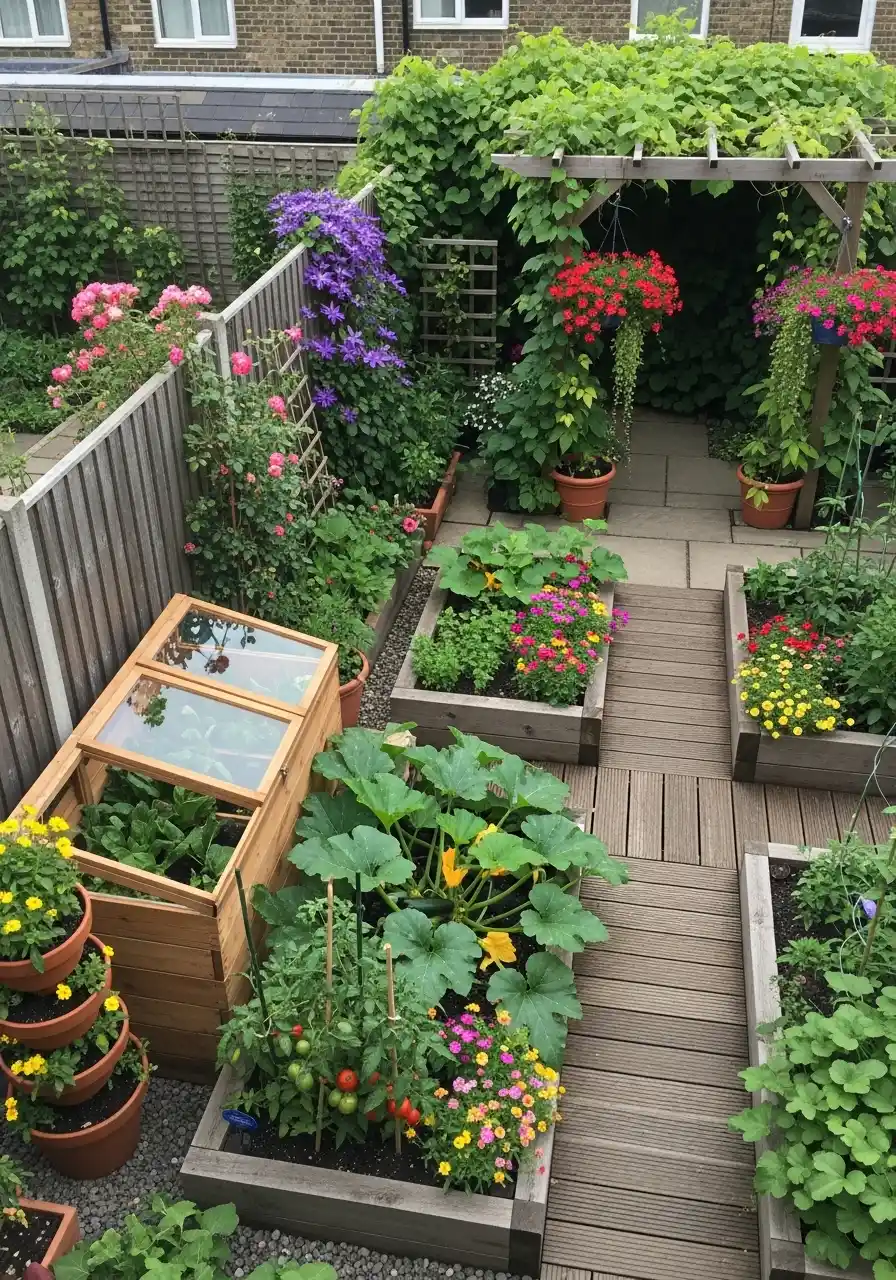
The compact garden with raised beds, flowers, and climbing plants on trellis panels is perfect for people who don’t have acres. It’s busy, but in a good way. I’m a little jealous of how efficient it is. The trick is vertical growing plus tight pathways. Use narrow beds you can reach across, and keep paths covered (wood, gravel, or boards) so you’re not stepping in mud.
Mixing edible and pretty plants is not just cute. Marigolds, nasturtiums, and calendula help bring in beneficial bugs and also make it feel cheerful. A backyard edible forest garden doesn’t have to look “farmy.” This is how food forest garden backyards stay friendly and not intimidating.
Pergola tunnel path that doubles as food production
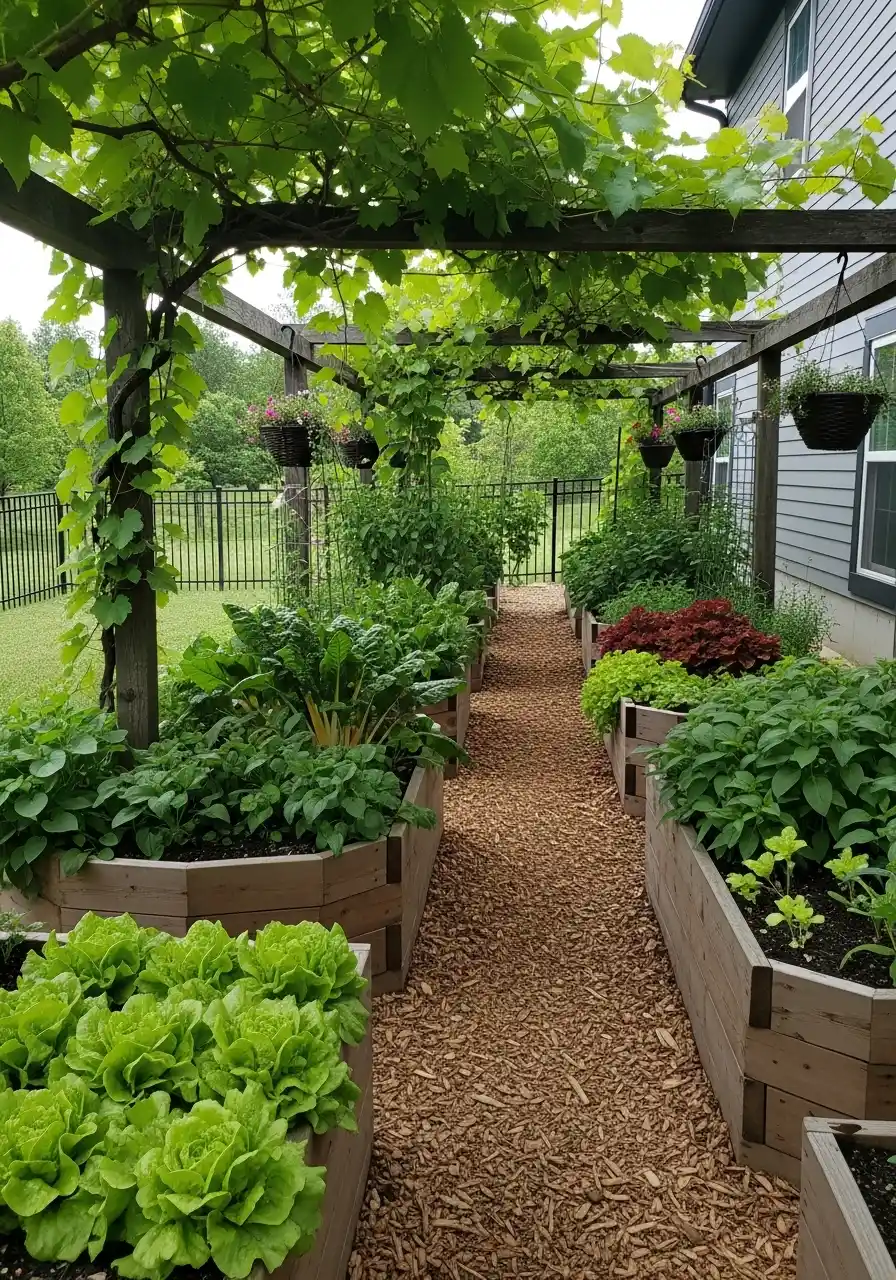
That pergola walkway packed with beds is one of my favorite ideas. It’s basically a hallway made of plants. Grow grapes, hardy kiwi, or even pole beans up and over, so you get shade plus food. The beds below can be leafy greens and herbs that like partial shade in summer.
Here’s the little trick: put the thirstiest plants closer together so irrigation is simpler. Mulch the whole path edge so weeds don’t creep in and ruin your mood. If you want your food forest garden backyards to feel like a secret garden, this pergola tunnel style does it fast.
Circular tiered bed for a “food forest” focal point
That round, stacked raised bed is a show-off in the best way. It’s like a garden cake. It works because it gives you different microclimates: the top is a bit drier, the middle stays steady, and the bottom holds moisture longer. I’d plant herbs up top (thyme, oregano), salads in the middle, and bigger leafy plants down low.
Add a small tree or berry shrub nearby, and suddenly you’ve got a little edible ecosystem. This is also great if your yard is awkward or you want a centerpiece that makes people go “wait, you grew that here?” It’s another strong move for food forest garden backyards that feel intentional.
“Painterly” cottage vibe, but still edible
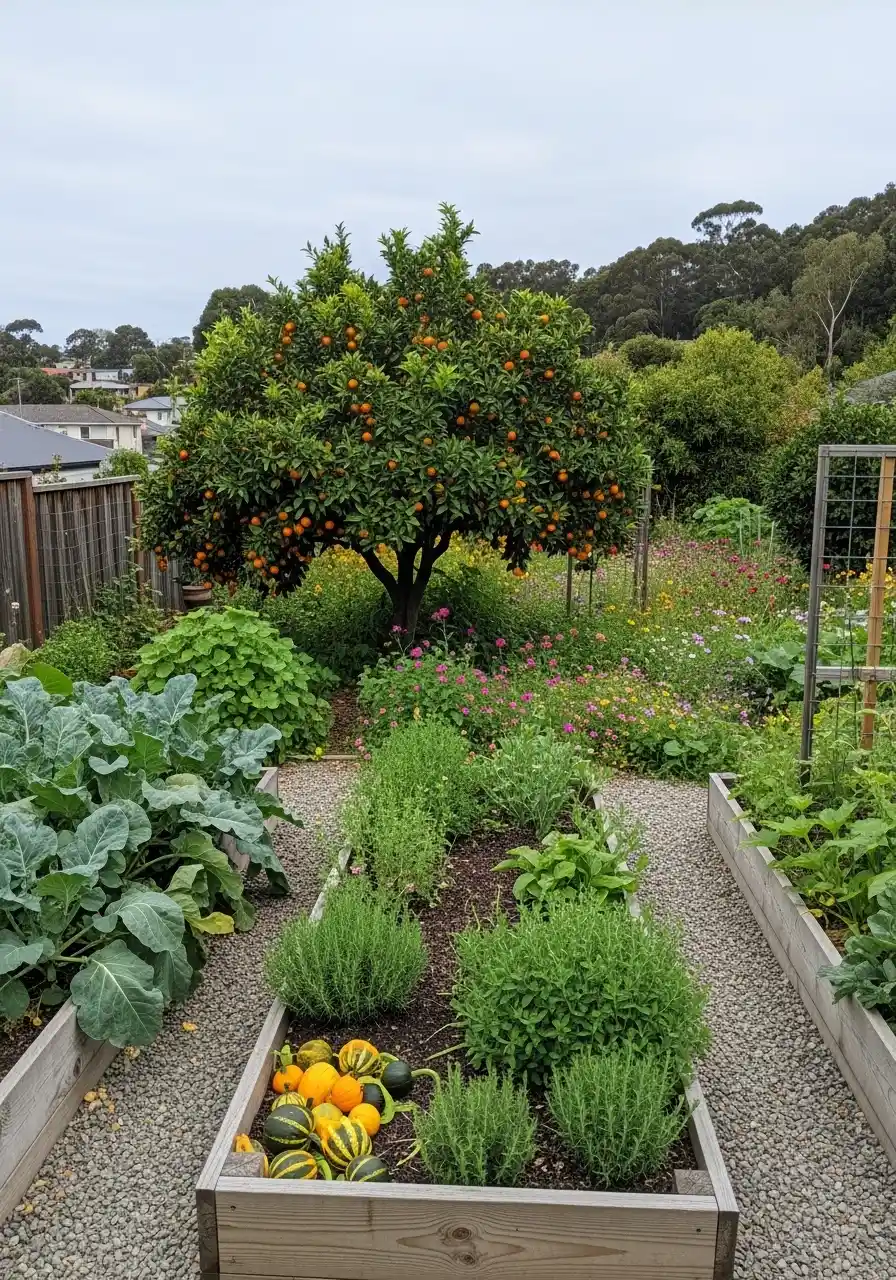
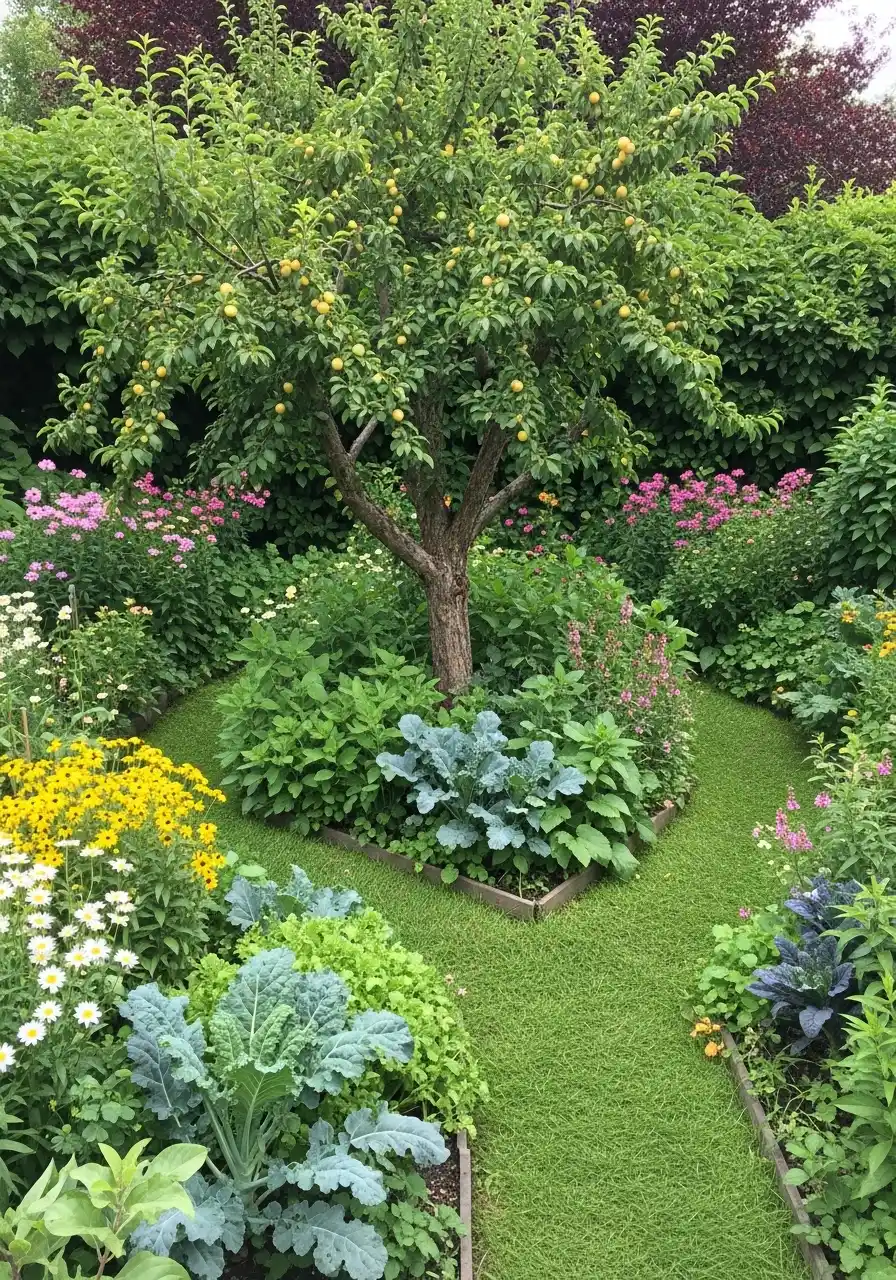
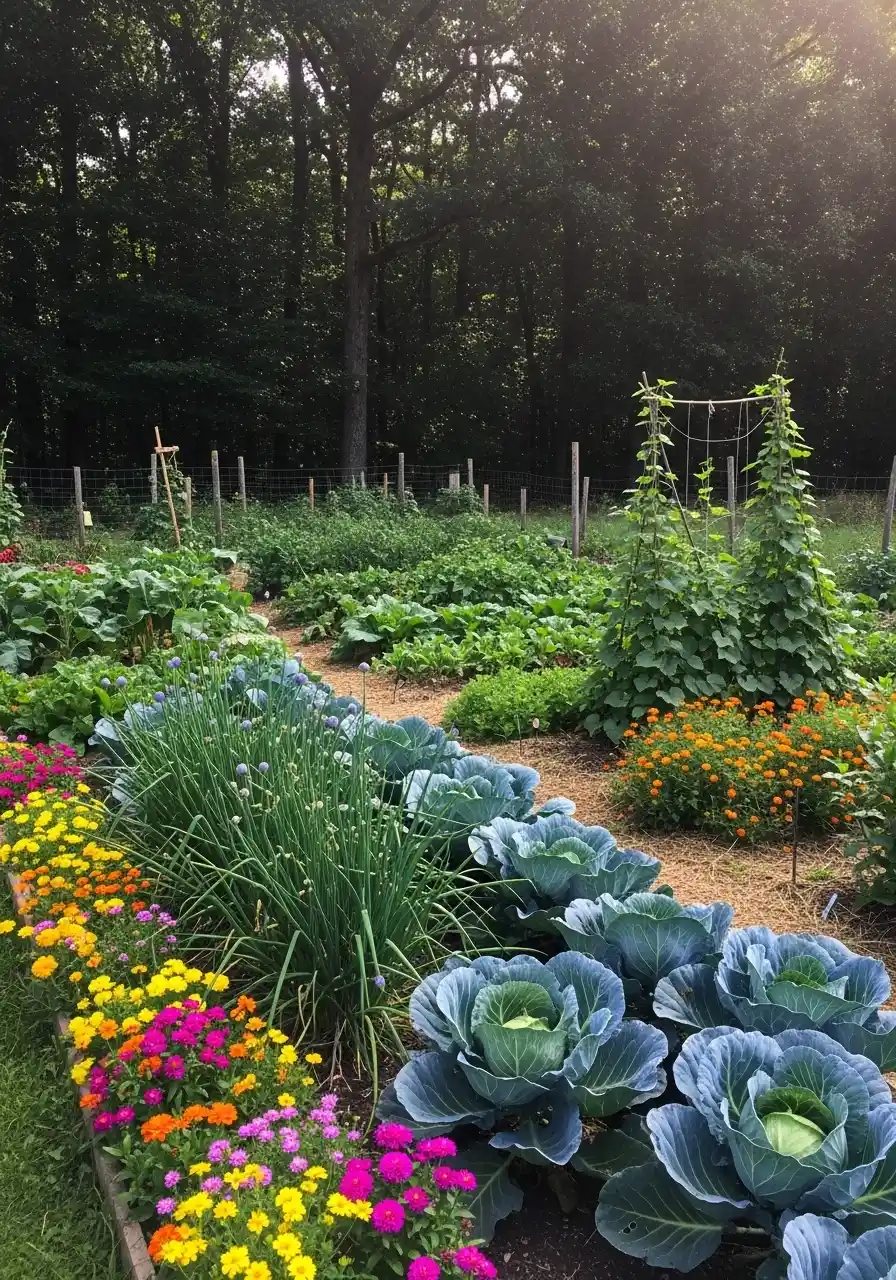
One of the images has that soft, dreamy look like a painting. And honestly, that’s a real design goal. If your garden looks calm, you’ll spend more time in it. The layout shows big leafy plants (like cabbage family) mixed with flowers, and taller trees framing everything. That’s basically the edible version of a cottage garden.
To copy it, don’t plant in straight lines. Plant in drifts and clumps. Put your greens together in groups of 3–5, then tuck flowers around the edges. It’s still a backyard food forest garden, just prettier and less “rows and rules.” Food forest garden backyards can totally be soft and artsy.
Orchard paths with wood chips and “messy on purpose” edges
The set of orchard-style paths with wood chips and dense underplanting is what food forest folks secretly love. It looks wild, but it’s actually planned. The chips feed the soil, the plants crowd out weeds, and the fruit trees get a living carpet instead of bare dirt. I used to think neat soil was “better,” but bare soil is basically an invitation for problems.
Plant supports matter here too. I see trellises for climbing crops, and shrubs tucked under trees. If you want the food forest garden backyard to stay walkable, keep the path edges trimmed, even if the bed edges stay lush. This is how food forest garden backyards look abundant without turning into a tangled mess.
A chicken-friendly orchard tunnel that actually works
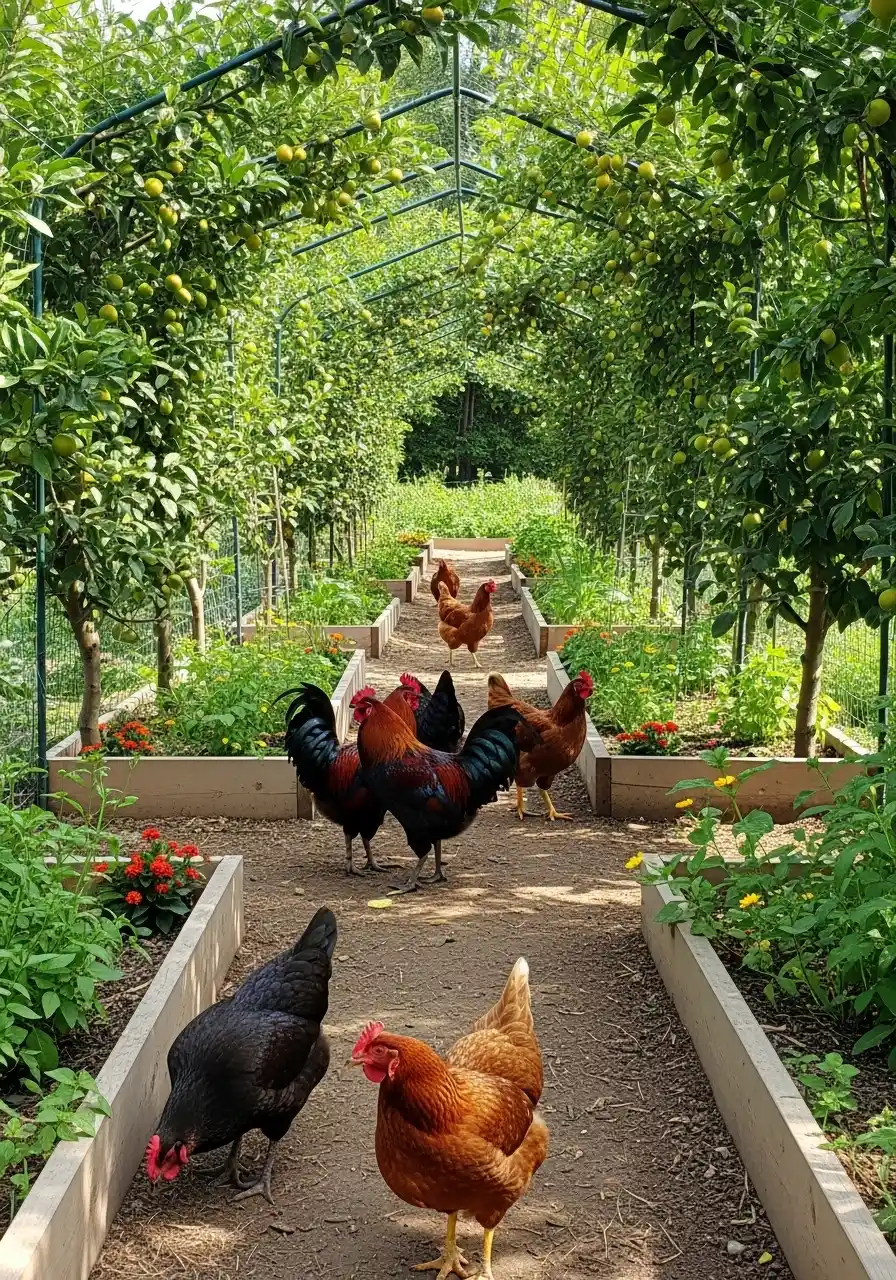
This setup is loud in the best way. Citrus trees trained overhead make a leafy tunnel, and raised beds line both sides like a clean, edible hallway. Then the chickens stroll right down the center like tiny managers. I love how the beds keep plants protected, while the path stays open for feet, wheelbarrows, and yep, chicken traffic.
If I built this food forest backyard garden, I’d keep the aisle wide and dry with mulch or packed soil so it doesn’t turn into mud soup. For food forest garden backyards with chickens, borders matter. Raise the beds high enough so hens don’t jump in and shred everything. Add flowers like marigolds along the edges for bugs and color. This backyard food forest idea feels playful, but it’s also smart.
Food forest garden backyards: orchard rows with a grassy lane and “pretty on purpose” edges
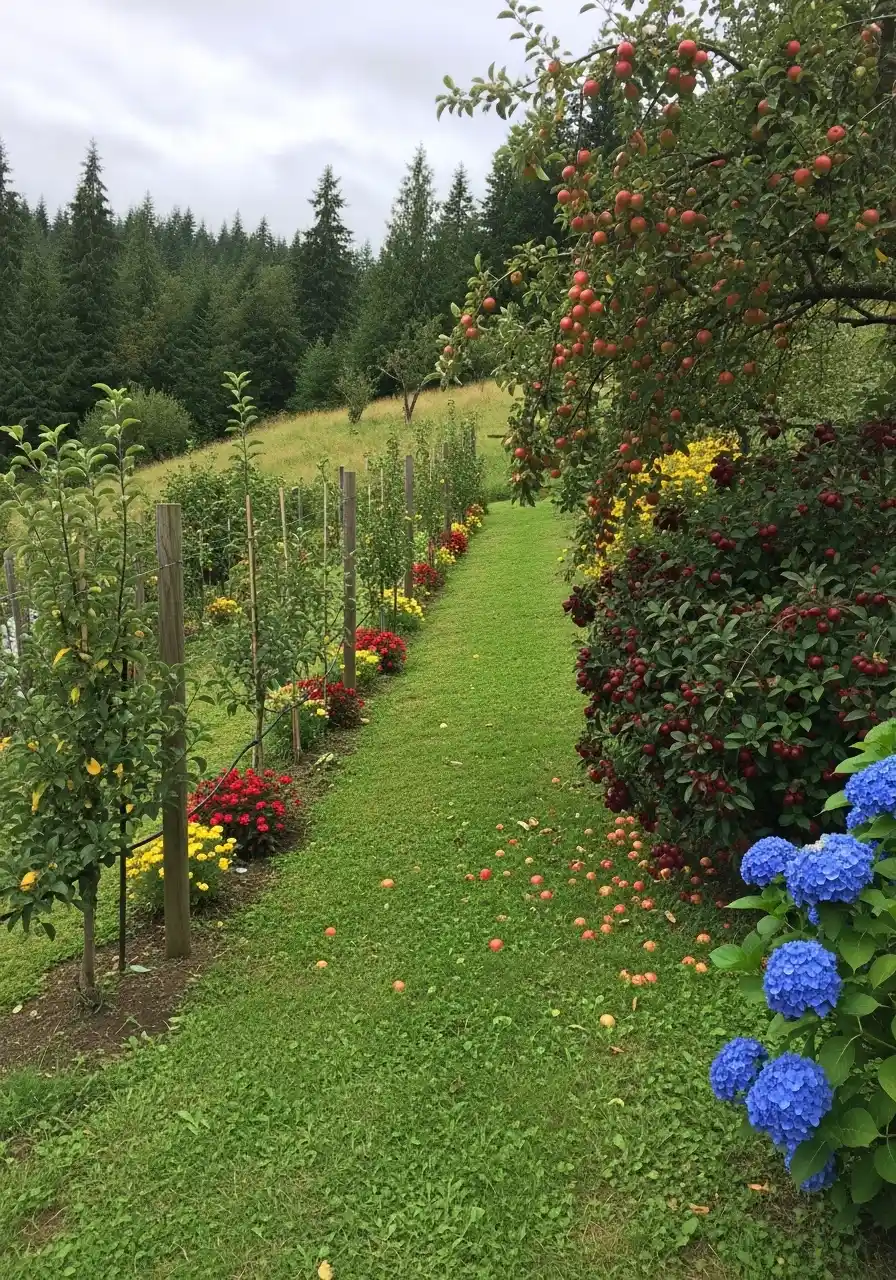
This one looks calm and rich, even though it’s just grass, trees, and good spacing. A clean green lane runs between young trees, and bright flowers pop along the row like little flags. There’s fruit on the ground too, which is real life honestly. And the big hydrangeas on the side make the whole orchard feel softer, not harsh.
For food forest garden backyards, a central lane is a cheat code. It keeps you moving through your backyard food forest garden, and it makes mowing easy. I’d add low pollinator plants at the base of trees, plus mulch rings so weeds don’t win. This kind of food forest backyard layout feels organized without being boring, and I’m into that.
Food forest garden backyards: a raised-bed “hub” with a shed, gravel paths, and total control
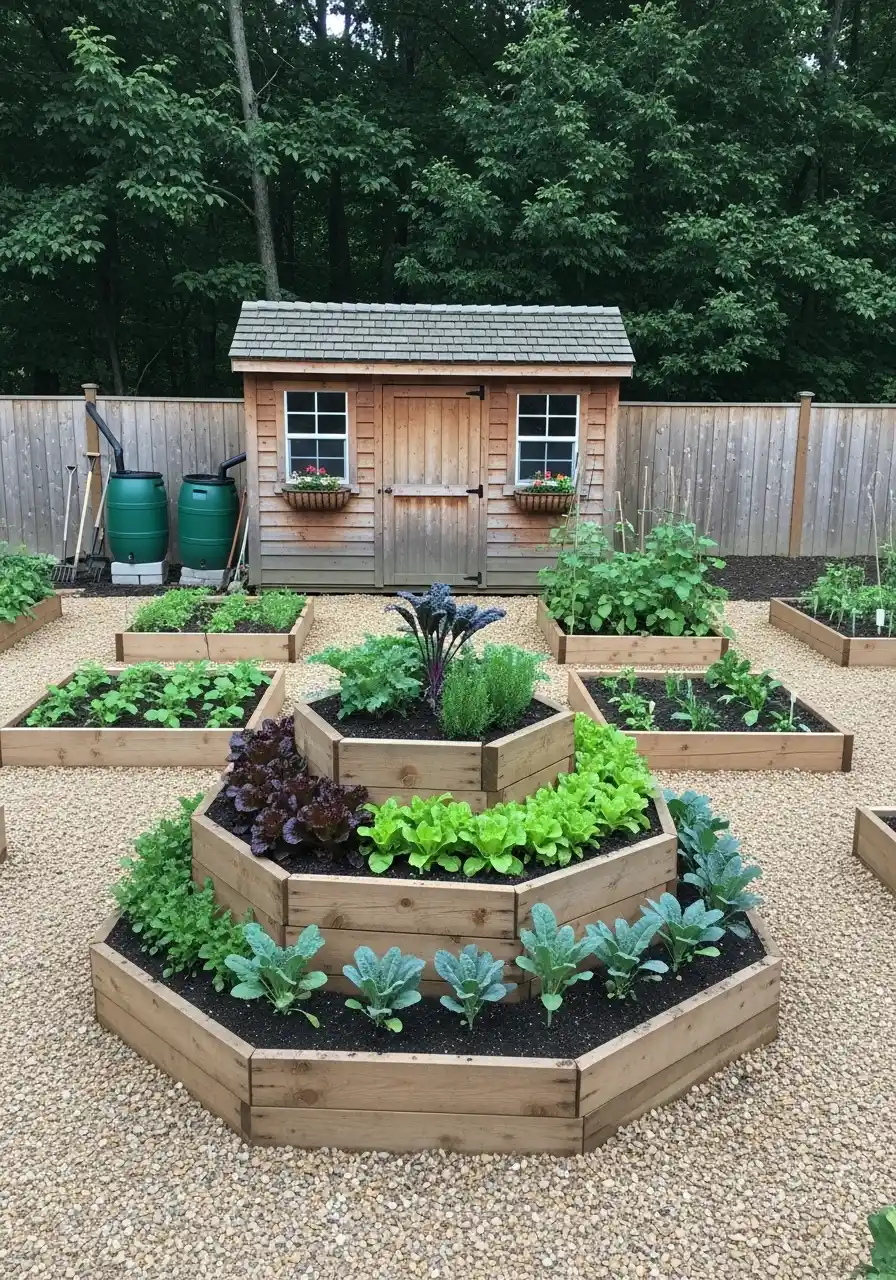
This garden is tidy in a way that makes my brain relax. The gravel paths stay clean, and the raised beds are laid out like a little map. The tiered center bed is the star, packed with greens and herbs, and everything is easy to reach. The shed in back makes it feel like a real working space, not a random weekend hobby.
If you want food forest garden backyards that stay manageable, copy this structure. Put your most-used stuff in the center: lettuce, kale, basil, chives. Keep fruit trees or shrubs around the outside so the “food forest backyard garden” still has layers. And please, label beds. I forget what I plant, like constantly. This backyard food forest design is simple, but it gets results.