I used to think a “garden” meant rows and rules, and honestly… stress. Then I started seeing food forest garden design setups and it kind of messed with my head in a good way. Fruit trees, herbs, veggies, flowers, even chickens just strolling around like they pay rent. It looks wild but also planned, like nature got organized. And now I can’t stop imagining what my yard would feel like if it fed me back.
The 16 images you gave are basically different versions of the same dream: edible plants layered together, paths that keep it walkable, and small design tricks that make it look beautiful instead of messy. I’m gonna break down each idea like I’m telling a friend who’s curious but also kinda scared to start.
Table of Contents
Food forest garden design with raised beds and columnar fruit trees (clean, modern, and productive)
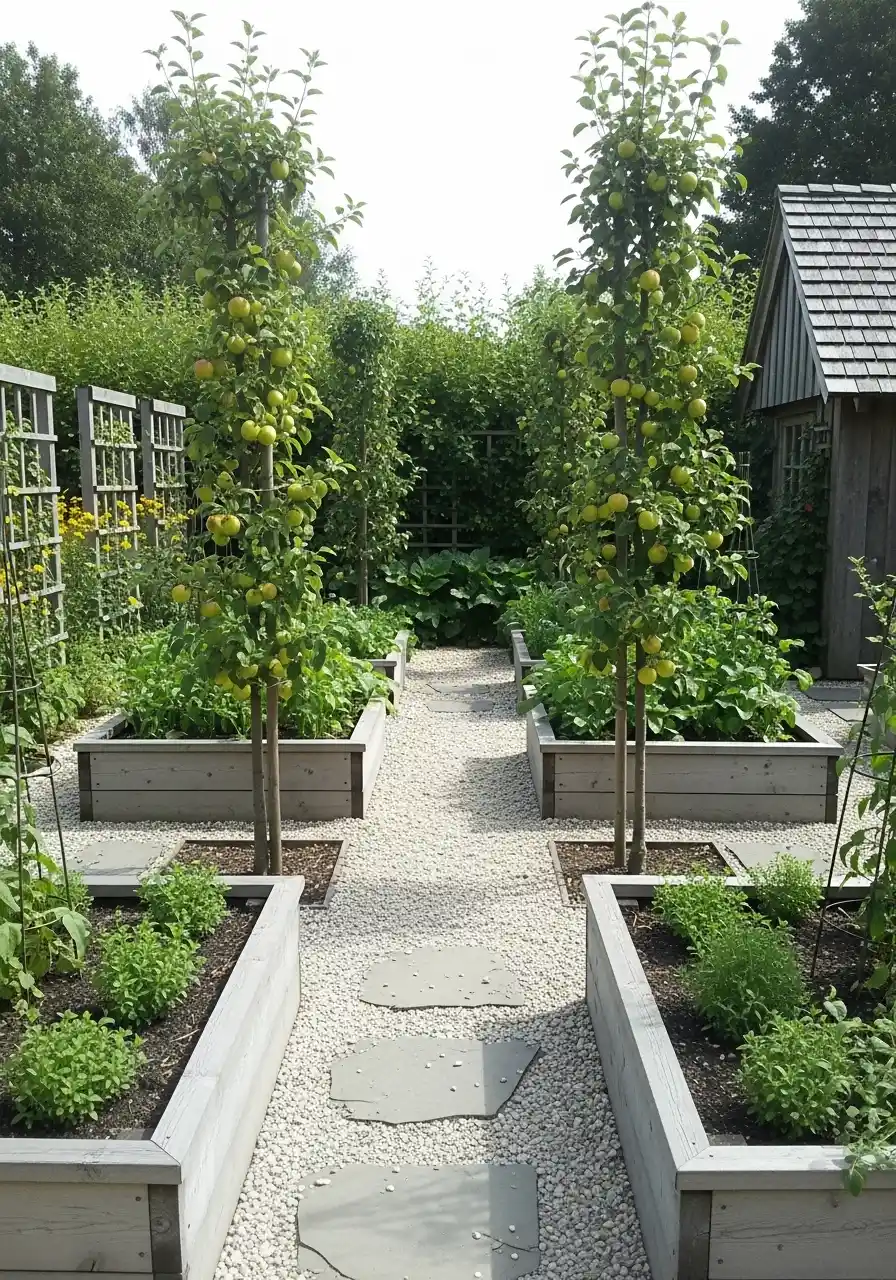
This setup is so tidy it makes me want to put on gardening gloves and pretend I’m a responsible adult. The raised beds are laid out like little rooms, and the path down the center keeps everything easy to reach. What really stands out is the tall fruit trees planted right in the bed corners, trained upright like green towers full of fruit. That is such a smart food forest garden design trick because it uses vertical space without taking over the whole bed.
If you want this, start with the layout first, not the plants. Put your beds in a grid, leave a wide enough path (at least wheelbarrow-wide), and then choose one or two fruit trees to act as “anchors.” Columnar apple or pear types work great, or you can train a normal tree to be narrow with pruning. It’s work, but it’s kind of satisfying work.
My opinion: this design is perfect for people who like structure. You still get the layered food forest feel, but it won’t look like a jungle. Add herbs like thyme and chives around the edges, and you’ve got the “understory” layer without chaos.
Food forest garden design with wood chip paths and heavy tomato beds (real life, not fancy)
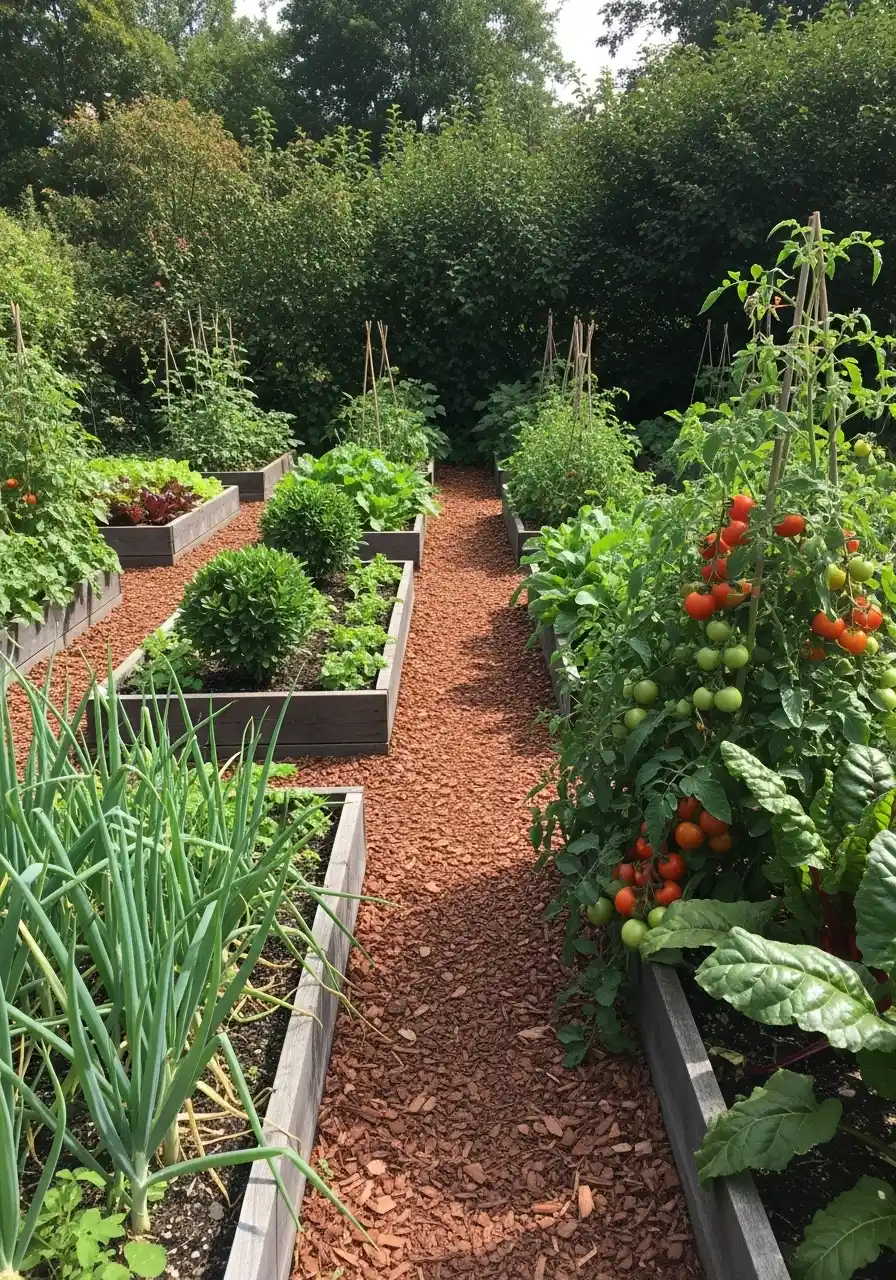
This one feels like an actual working garden. You can tell it’s doing serious food production. The wood chip path is wide and soft, and the raised beds are packed with onions, tomatoes, leafy greens, all the stuff that makes you feel proud when you harvest it. I like how the tomatoes are supported with stakes so they don’t flop everywhere like drama queens.
Wood chips are honestly a cheat code for food forest garden design because they suppress weeds and keep your feet clean. But you have to refresh them, or they break down and vanish. Still worth it. I’d lay down cardboard first, then add chips thick, like 3–4 inches. It’s not pretty for one day, then it suddenly looks amazing.
Also, notice the bed spacing. There’s room to walk, reach, and harvest. A food forest garden layout can be lush, but if it’s hard to move in, you’ll avoid it. That’s the sad truth. Make it easy and you’ll use it.
Food forest garden design on a hillside orchard (the “big picture” planting style)
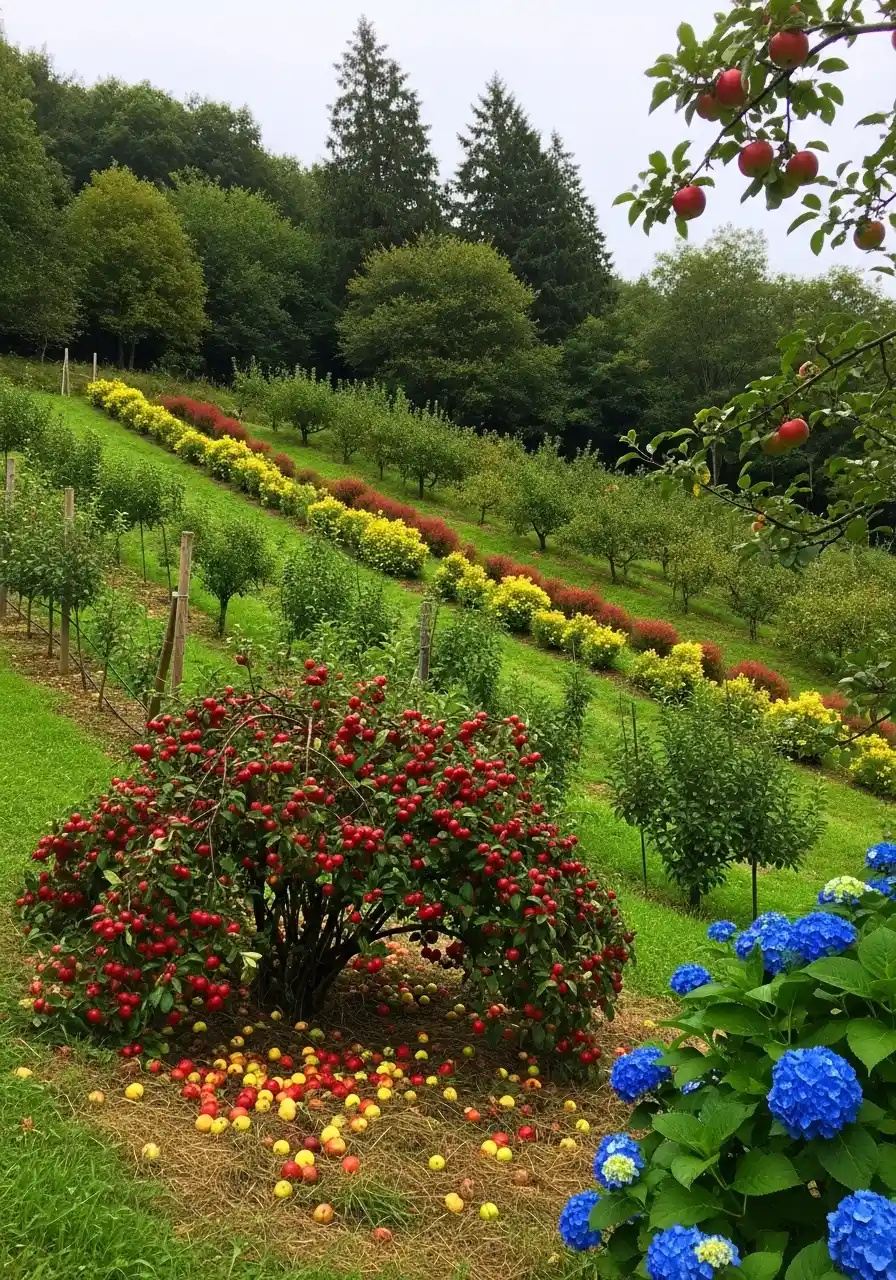
This hillside orchard view feels like a postcard. Rows of trees on a slope, with bright shrubs or flowers making stripes across the hill. It’s not just pretty, it’s practical. Planting on a slope can cause erosion, so the planted bands help hold soil, slow water, and keep the hill from turning into a muddy slide.
For a food forest garden design on a slope, think in contours. Don’t plant straight up and down like a ladder. Plant across the hill, kind of like lines on a map. Even adding shrubs or perennial plants in bands helps. You can mix edible shrubs too, like currants or berries, and it becomes a productive slope instead of wasted space.
I’ll be honest, this is not a “weekend project.” This is a slow build. But if you have land, this design is calm and powerful. And the way the fruit drops under that tree in the front, it’s like nature saying, “here you go.” That feeling is what makes me want to do this.
Food forest garden design with a curving brick path through raised beds (beautiful and usable)
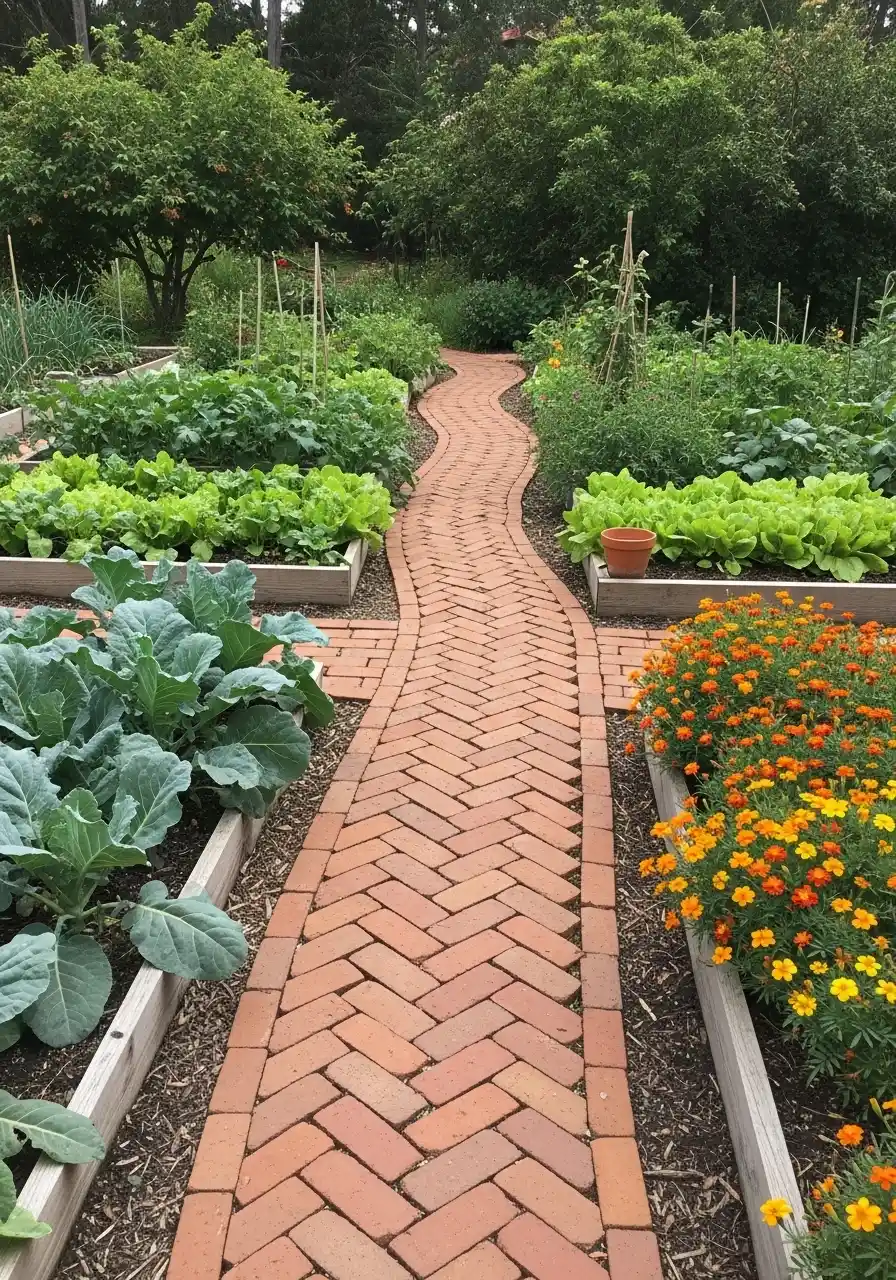
This garden is so charming it hurts. The brick path curves through the beds like a gentle river, and the beds are full of leafy greens and climbing plants. It looks planned and graceful, not like a random veggie patch. The herringbone brick pattern is also a nice touch because it looks fancy without screaming for attention.
A big food forest garden design lesson here is: paths are not an afterthought. Paths are the thing that makes you actually go into the garden daily. A brick path stays clean, drains well, and gives you a strong visual line. If brick is too expensive, you can do gravel paths with brick edging. Same vibe, less money.
Also, I love the way flowers are mixed in near the path. That’s food forest style too. Flowers bring pollinators, plus they make the garden feel happy. Put marigolds, nasturtiums, or calendula near veggies and it helps with pests and mood. Yeah mood matters.
Food forest garden design with citrus rows and chickens as “garden helpers”
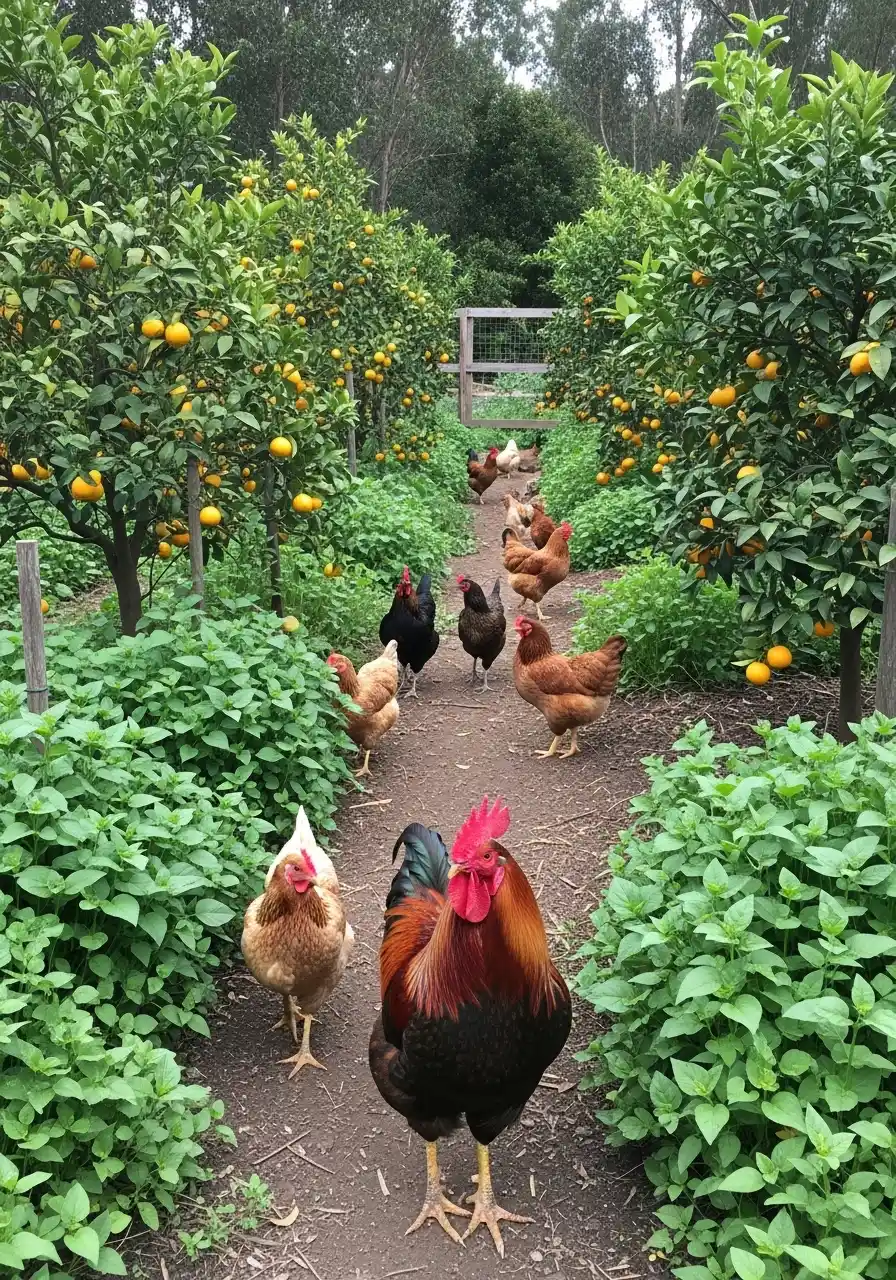
This one makes me smile. Chickens walking down a dirt path between citrus trees feels like a small farm fairytale. In a food forest garden design, animals can be part of the system. Chickens scratch, eat bugs, and add fertilizer. But also… they can destroy things if you let them roam in the wrong spot, so it’s a love-hate situation.
If you want this idea, you need boundaries. Let chickens in orchards after plants are established, not in baby seedlings. Use fencing or timed access. You can also plant tough groundcover under trees, like clover, and it handles the chicken traffic better than bare soil.
The citrus rows are spaced nicely too, which keeps air moving. That helps reduce disease. And that little gate at the end makes it feel like a “garden room.” Food forest garden design is partly about function, but also about making it feel like a place you want to be.
Food forest garden design with an apple pergola and raised veggie beds (structure + abundance)
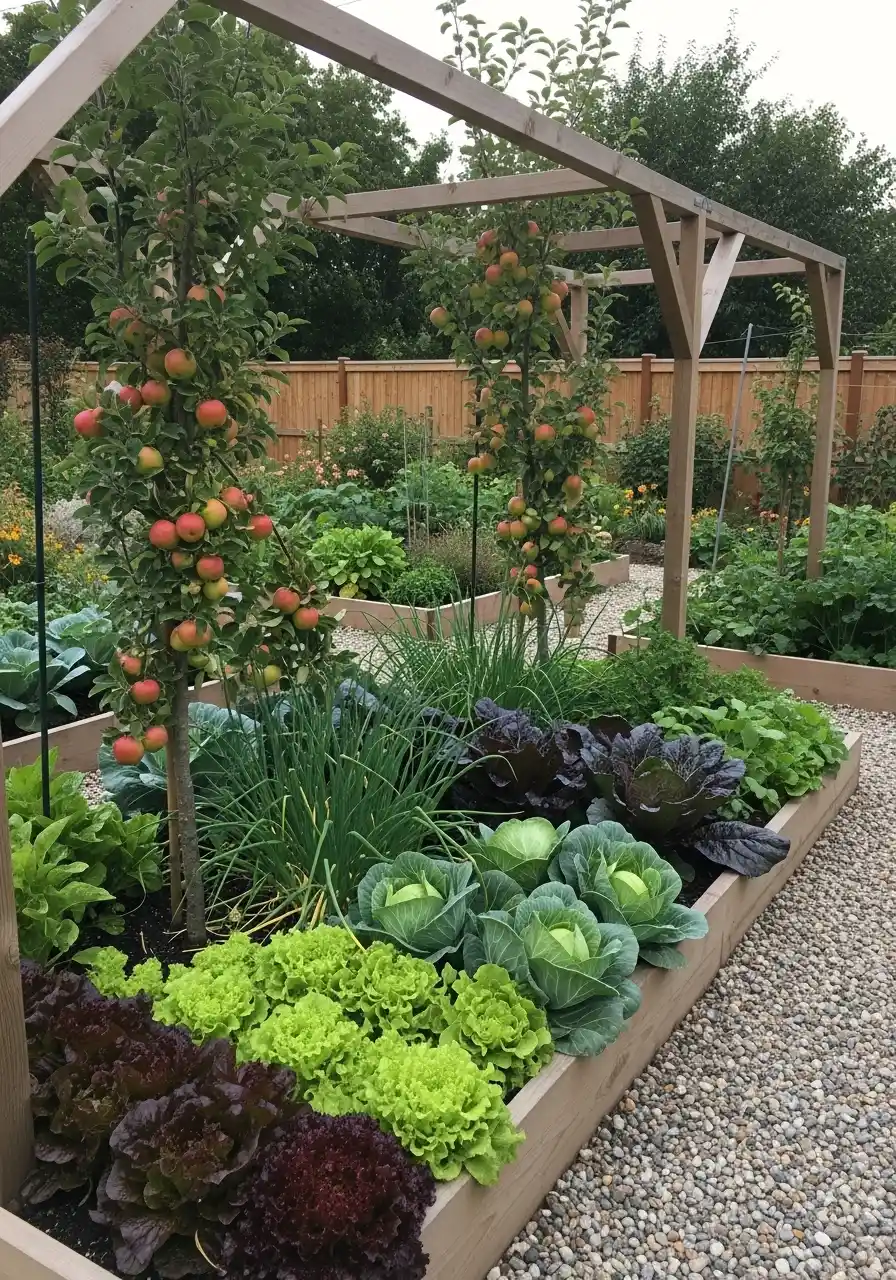
This one is the dream combo: apples growing on trained upright trees and a pergola frame giving the garden a sense of architecture. It’s like the garden has a ceiling line, even though it’s open air. The veggie bed is full, with cabbage, lettuce, onions, and those darker greens that look almost purple. It’s lush but controlled.
A smart food forest garden design move is to combine permanent structures (like fruit trees and pergolas) with seasonal crops (like lettuce and cabbage). The permanent stuff builds the bones. Seasonal crops are the fun fast reward. That balance keeps you motivated.
If you do a pergola, keep it tall enough to walk under easily. And don’t plant too many vigorous vines unless you like constant pruning. I’d rather grow grapes or kiwis if I’m committed, but start small. Overgrown vines turn into a monster fast and then you stop enjoying it.
Food forest garden design with tall posts for espalier trees and long beds (the “farm row but prettier” look)
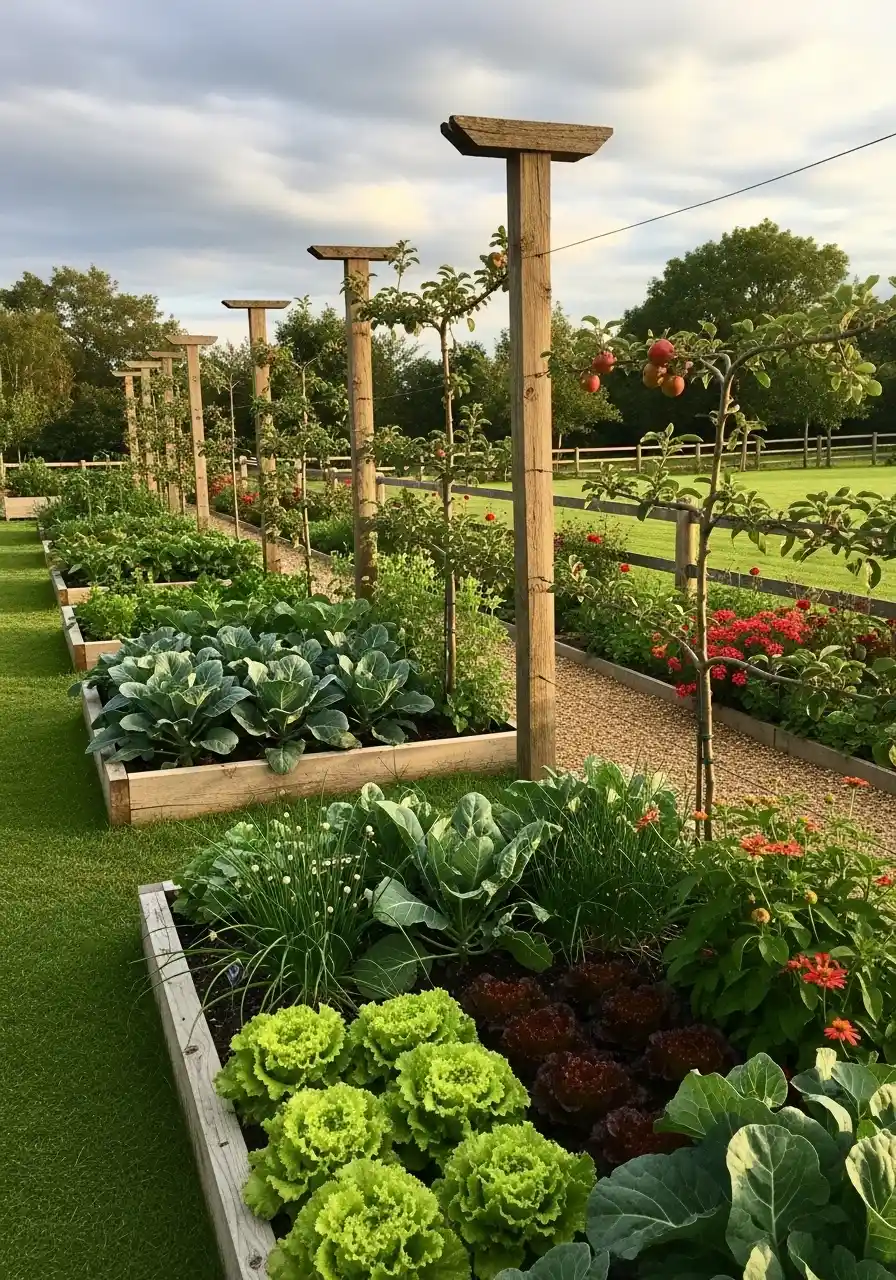
This row system is so satisfying. Tall posts, small trees trained along them, and raised beds full of greens and brassicas. It feels like a farm, but neat. This is a great food forest garden design option if you want a lot of production in a narrow strip of land.
The key is training trees early. If you start training when the tree is young, it’s easier. Espalier styles keep trees flat and productive, and they don’t shade everything underneath. That’s the whole point: still get sun to your understory crops. Sun is the currency of gardens.
Also, the mix of flowers along the path is a smart trick. It pulls pollinators into the fruit row and makes the whole thing look less “utility only.” A food forest garden layout should feel like a place, not a chore zone.
Food forest garden design with harvest crates and a stepping-stone path (make it feel like a ritual)
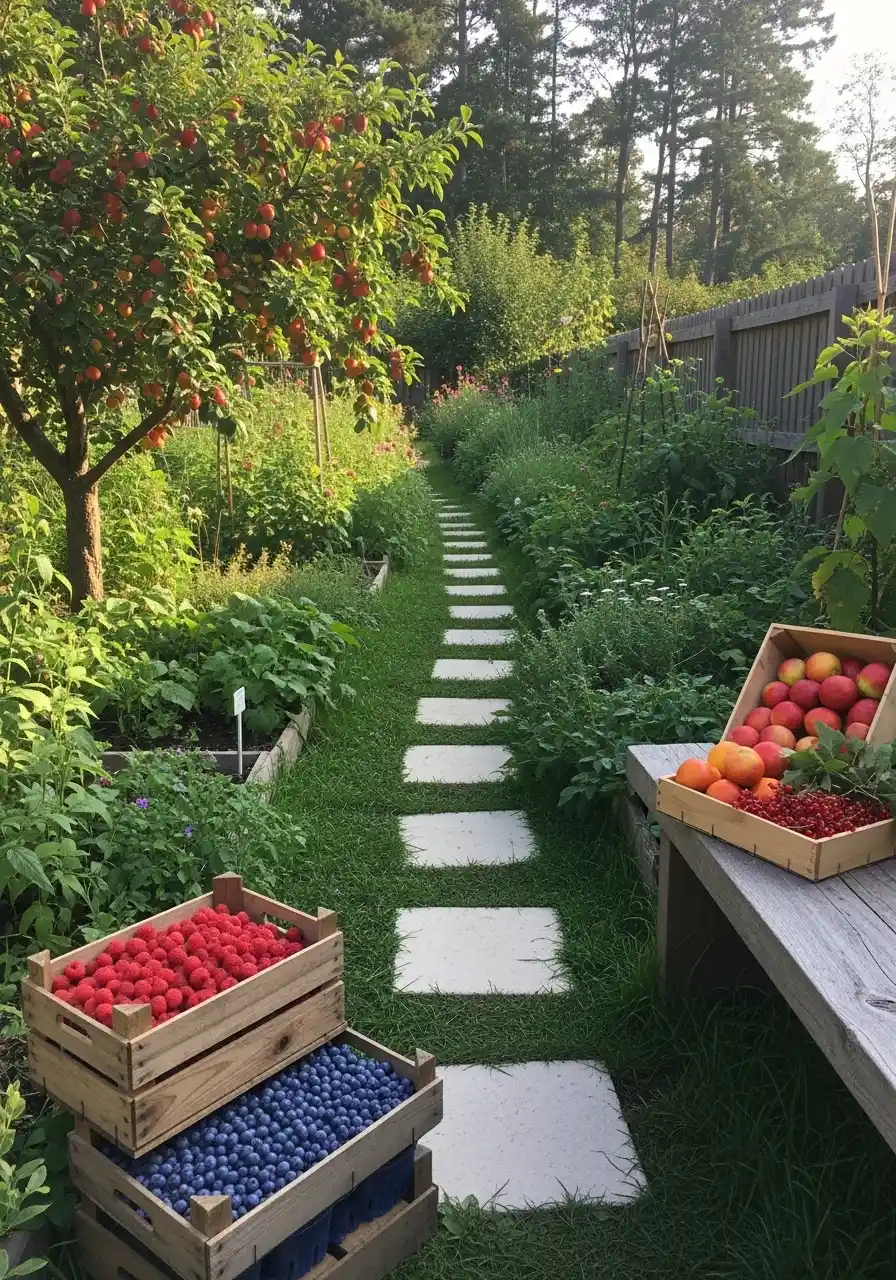
This image feels like the reward moment. Crates of berries, apples, a long path through the garden, and everything looks like it’s humming with life. I love the stepping stones in grass because it keeps the area feeling soft and natural, not overly paved.
For food forest garden design, having a harvest station is underrated. A simple table, crates, baskets, somewhere to sort and rinse. It turns harvesting into a little ritual, not a messy scramble. I’d put this station near the exit so you can carry harvest inside easily.
Also, this shows a big truth: food forests can look a bit wild, but paths keep them readable. You can have lush edges, tall plants, sprawling vines, as long as the path is clear and consistent. Path = sanity.
Food forest garden design with mixed flowers and fruit trees (the pollinator magnet style)
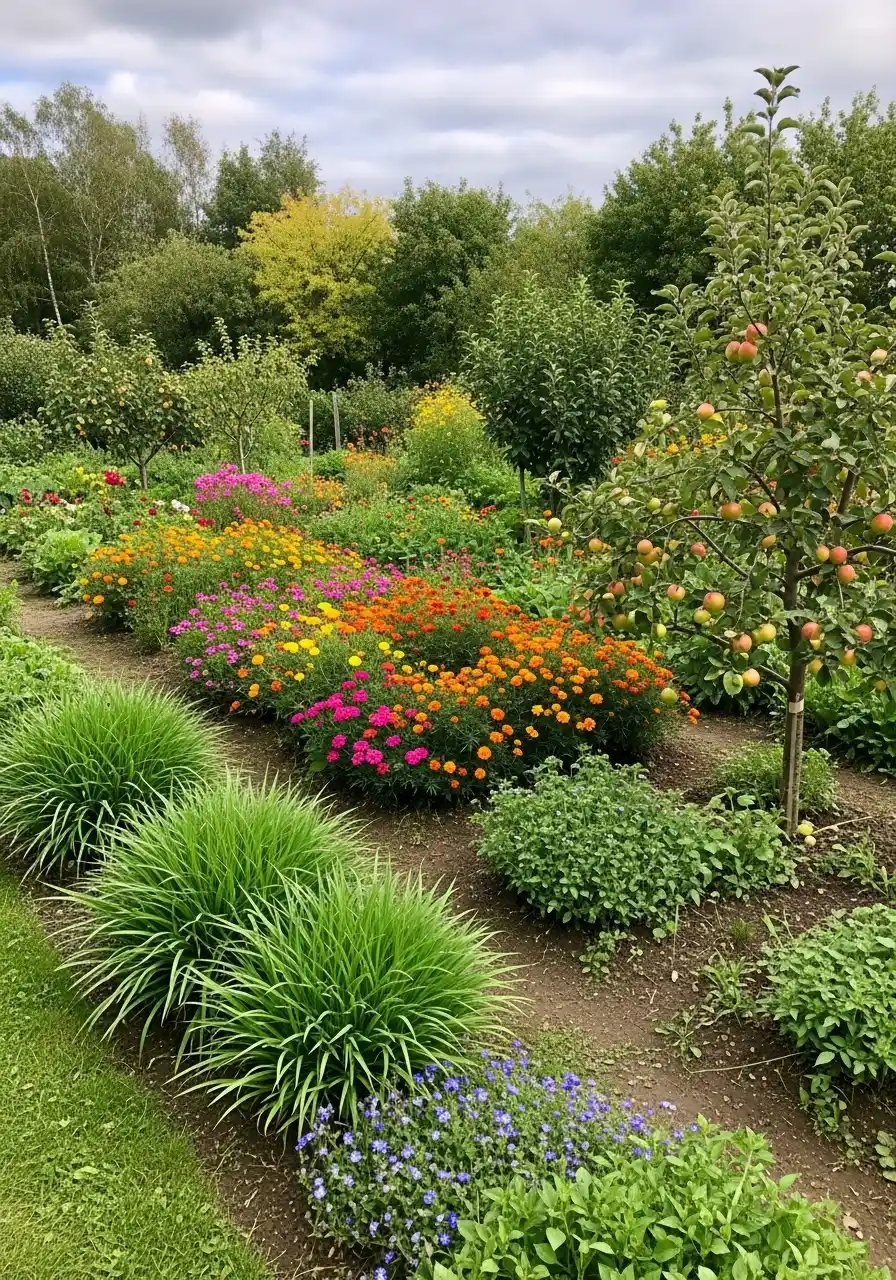
This one is colorful and alive. Fruit trees mixed with big flower drifts creates a “productive meadow” vibe. It’s not just for looks. Flowers pull in bees, hoverflies, and beneficial insects that help your fruit set and keep pests down. Food forest garden design is basically teamwork, plants helping plants.
If you want this style, plant flowers in big groups, not tiny sprinkles. Big groups are easier for pollinators to find and they look better too. Zinnias, calendula, cosmos, and native wildflowers are great. Then add herbs like basil and oregano nearby. Herbs flower too, and they smell amazing.
My opinion: this is the most joyful type of food forest garden layout. It looks like a celebration. Just be ready to deadhead flowers or they’ll look tired. Or don’t, and let it go a bit wild. Some people love that.
Food forest garden design with a tunnel pergola walkway (the “secret garden entrance” vibe)
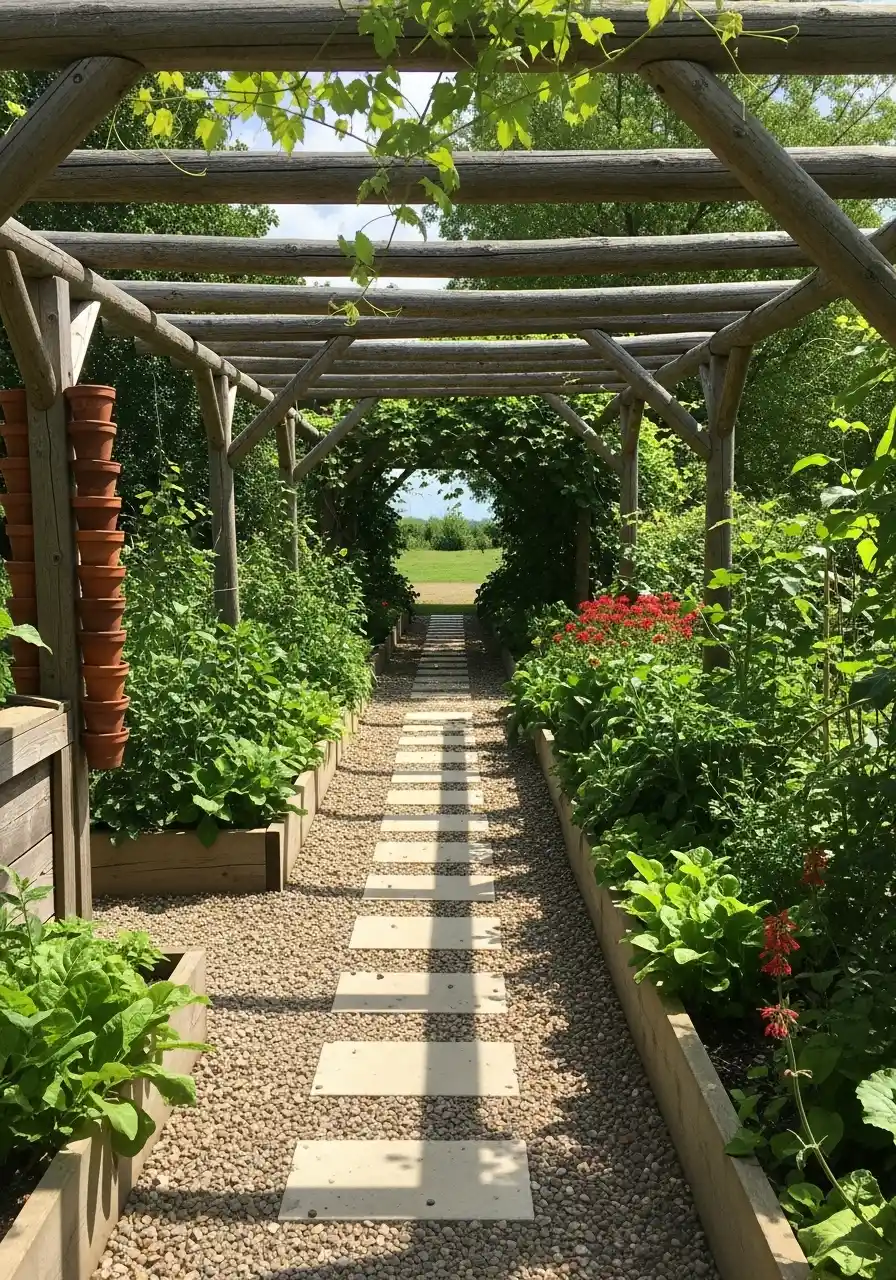
This pergola tunnel is honestly dramatic, and I mean that as a compliment. It creates a straight walkway through raised beds, with vines overhead. The stepping stones in gravel keep it clean and easy to walk, and the overhead structure makes it feel like you’re entering a different world.
For a food forest garden design like this, the pergola is more than decoration. It’s vertical growing space. You can grow grapes, beans, cucumbers, or hardy kiwi depending on climate. But be careful with heavy fruit vines. You need a strong structure, not a flimsy one.
Also, gravel paths under pergolas are practical because leaves and dropped fruit are easier to clean up. If it was grass, you’d be picking rotten fruit out of turf, and that’s gross. This design feels like a real garden destination. I would walk this path every day just because it’s pretty.
A pergola walkway that turns your garden into a shady tunnel
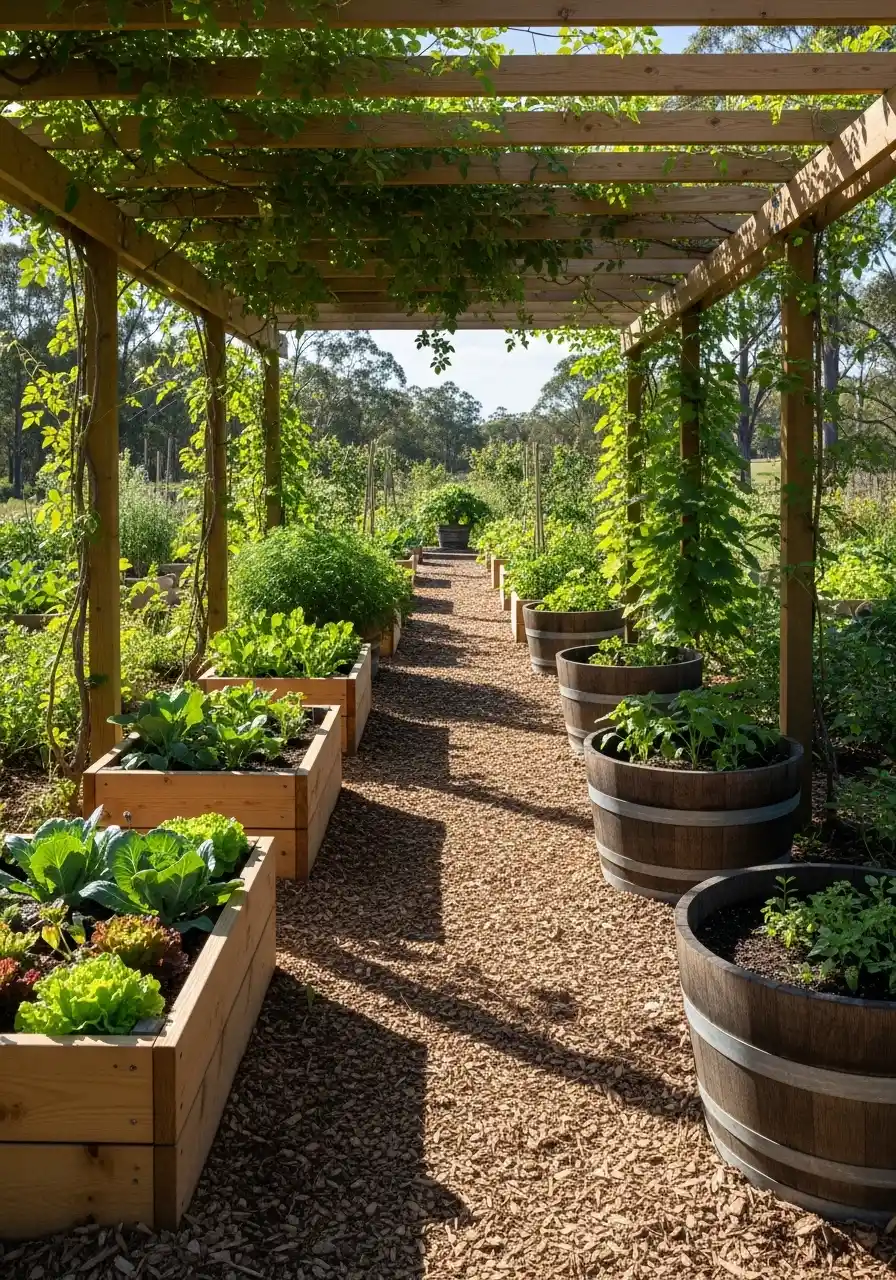
This pergola path is honestly a flex. The wooden structure with vines overhead makes a basic walkway feel like a destination. I love how the raised beds sit on one side, and big barrel planters line the other side like little stations. It’s tidy, but not stiff. The mulch path makes it soft underfoot, and it keeps mud down, which matters more than people admit.
If I copied this food forest garden design idea, I’d treat the pergola like the “backbone.” Grow grapes, hardy kiwi, or climbing beans depending on your climate. The trick is training the vines early so it doesn’t turn into a tangled monster later. And I’d plant salad greens and herbs in the beds closest to the path, because those are the plants you harvest a lot. This kind of food forest garden layout works because it makes you walk through it. You’re more likely to pick stuff when it’s right there in your face.
Orchard rows with a grassy aisle and flower borders: practical, pretty, and kinda dreamy
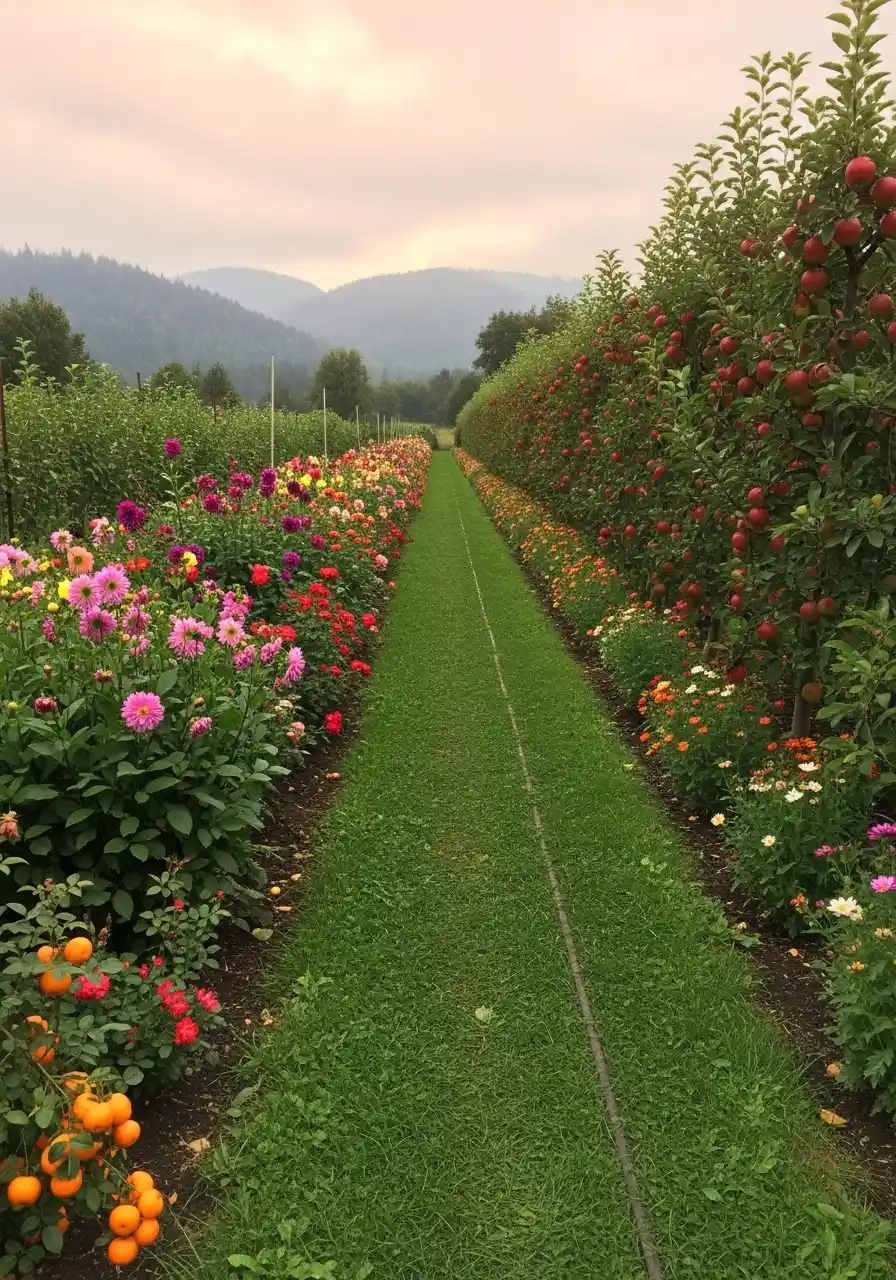
This one feels like a farm, but also like a garden you’d take photos in. A straight grass aisle down the middle, fruit trees lined up on the right, and a thick flower border on the left. The flowers aren’t just for looks either. They pull in pollinators, and they make the whole place feel alive instead of “production only.”
My opinion: the straight lines are calming. You always know where to walk, where to weed, where to harvest. If you want food forest garden design that stays organized, use a central path like this. Then plant your fruit trees as the “upper layer” and add low flowers and herbs as the “ground layer.” It’s basically edible landscaping. Also, keep the aisle wide enough for a wheelbarrow. I’ve made that mistake before and it’s so annoying, like truly.
Raised beds under a citrus tree: edible, fragrant, and surprisingly balanced
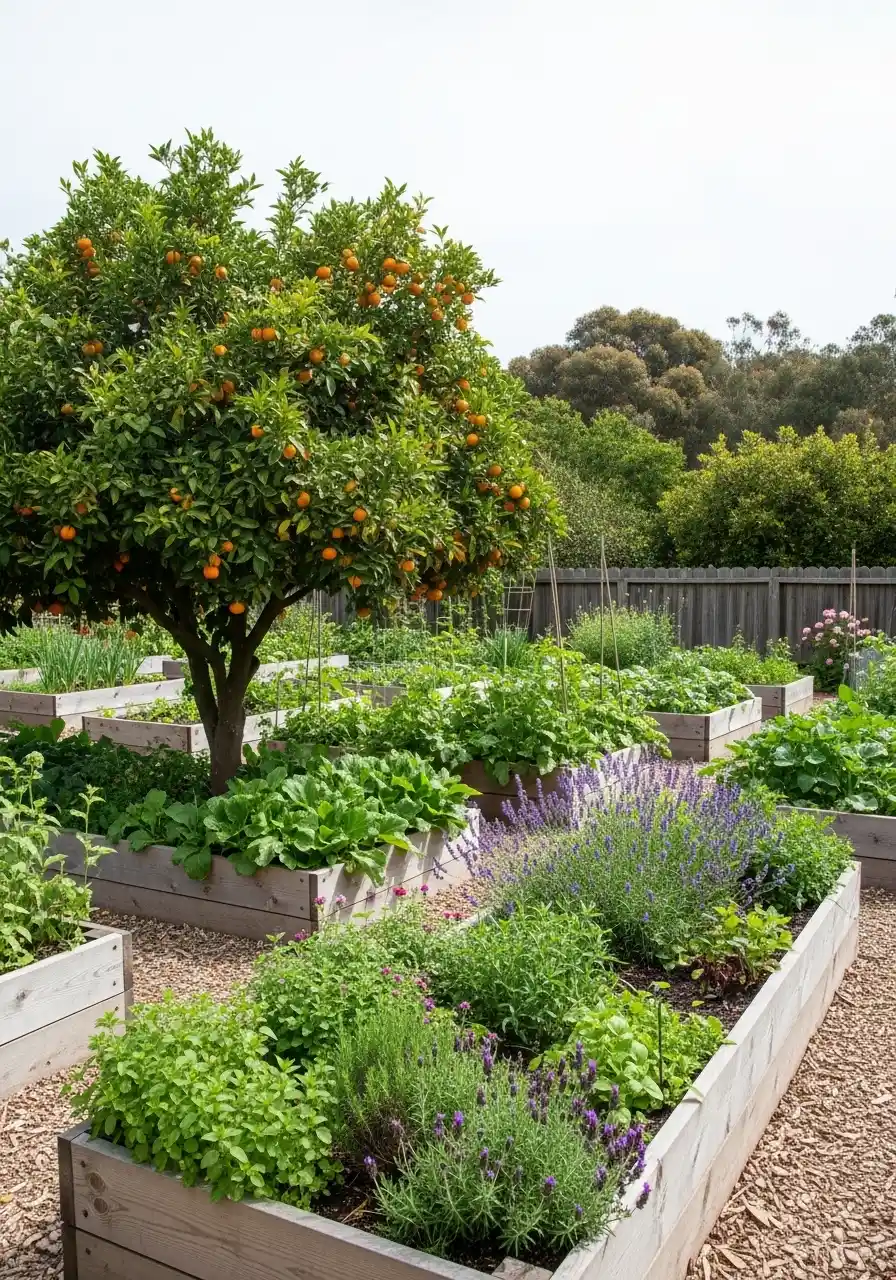
This garden has a citrus tree as the star, and it works because it’s giving shade and structure. The raised beds around it are packed with greens and herbs, and there’s lavender or something purple blooming nearby, which adds that soft buzzing pollinator energy. It’s a nice mix of food and beauty, which is the whole point of food forest garden design anyway.
Here’s a small confession: I love trees in gardens because they make everything feel established, even if the rest is new. If you want this food forest garden layout, don’t plant heavy feeders right up against the tree trunk. Give the tree its own space, then do herbs, flowers, or shallow-rooted greens nearby. Also mulch like you mean it. Mulch helps the tree, helps the beds, helps your sanity. This is food forest garden design for someone who wants an orchard vibe without needing acres.
Stacked raised bed “pyramid” planter: small-space food forest energy
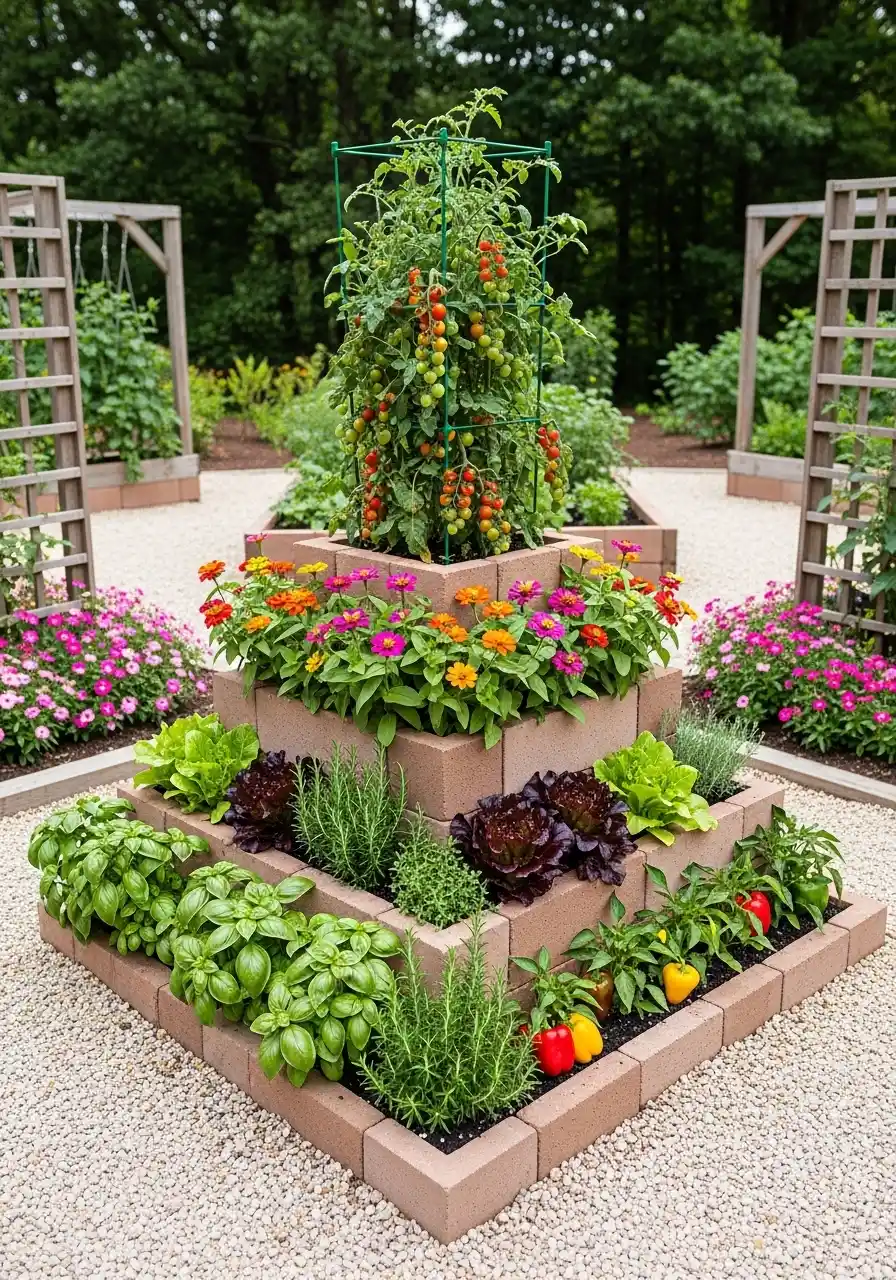
This tiered planter is such a clever idea. It stacks growing space upward, so you can grow a lot without spreading out wide. You’ve got tomatoes climbing up the center, flowers around the middle tier, and herbs and peppers down low. It’s like a little edible tower. And it looks cool, which matters, I don’t care what anyone says.
If you’re trying food forest garden design in a small yard, this is a strong move. Put your sun-loving stuff on top, and use the lower tiers for herbs and leafy greens. Basil, thyme, rosemary, lettuce, all those do great here. The hack is watering. Stacked beds dry out faster, so drip lines or a simple soaker hose will save you. Also, tuck flowers in like zinnias or calendula because they bring pollinators and they make it feel less “vegetable row boring.”
Framed orchard view with one “center tree”: simple symmetry that feels fancy
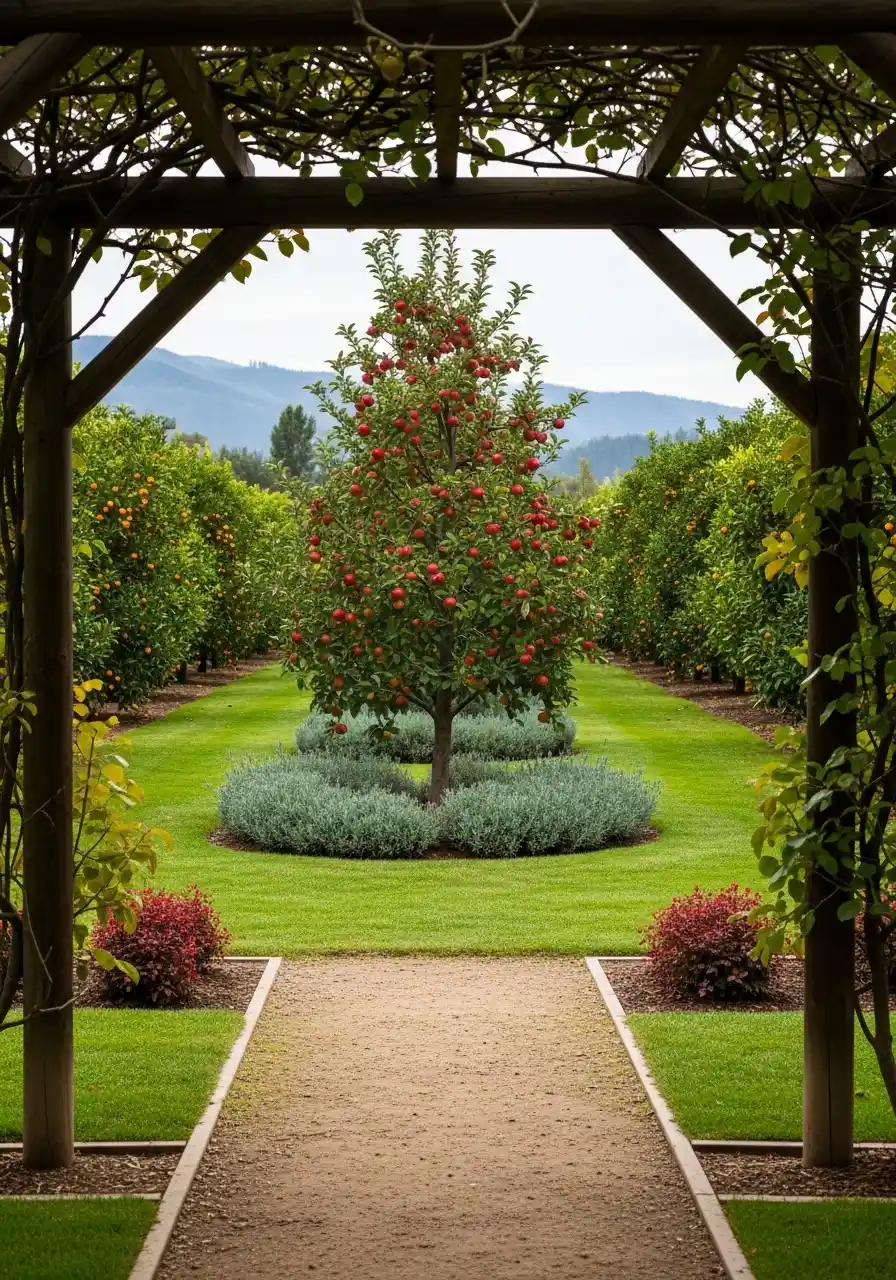
This one is so satisfying to look at. You’ve got a pergola or arch framing the view, a straight path, and one fruit tree centered like it’s posing for a portrait. Then low plantings around the base, and orchard rows stretching out behind. It’s formal but still natural. It makes the garden feel like a place, not just plants dumped in dirt.
For food forest garden design, this is a great reminder that visuals matter. When a layout feels good, you take care of it more. I’d use a central focal tree like apple, pear, or plum, then plant herbs around it like lavender, chives, or thyme as companions. Keep the path edges clean so it doesn’t look messy. This food forest garden layout is basically “easy elegance,” and yeah I would totally copy it.
Productive beds with harvest-ready color: the “I can actually feed myself” layout
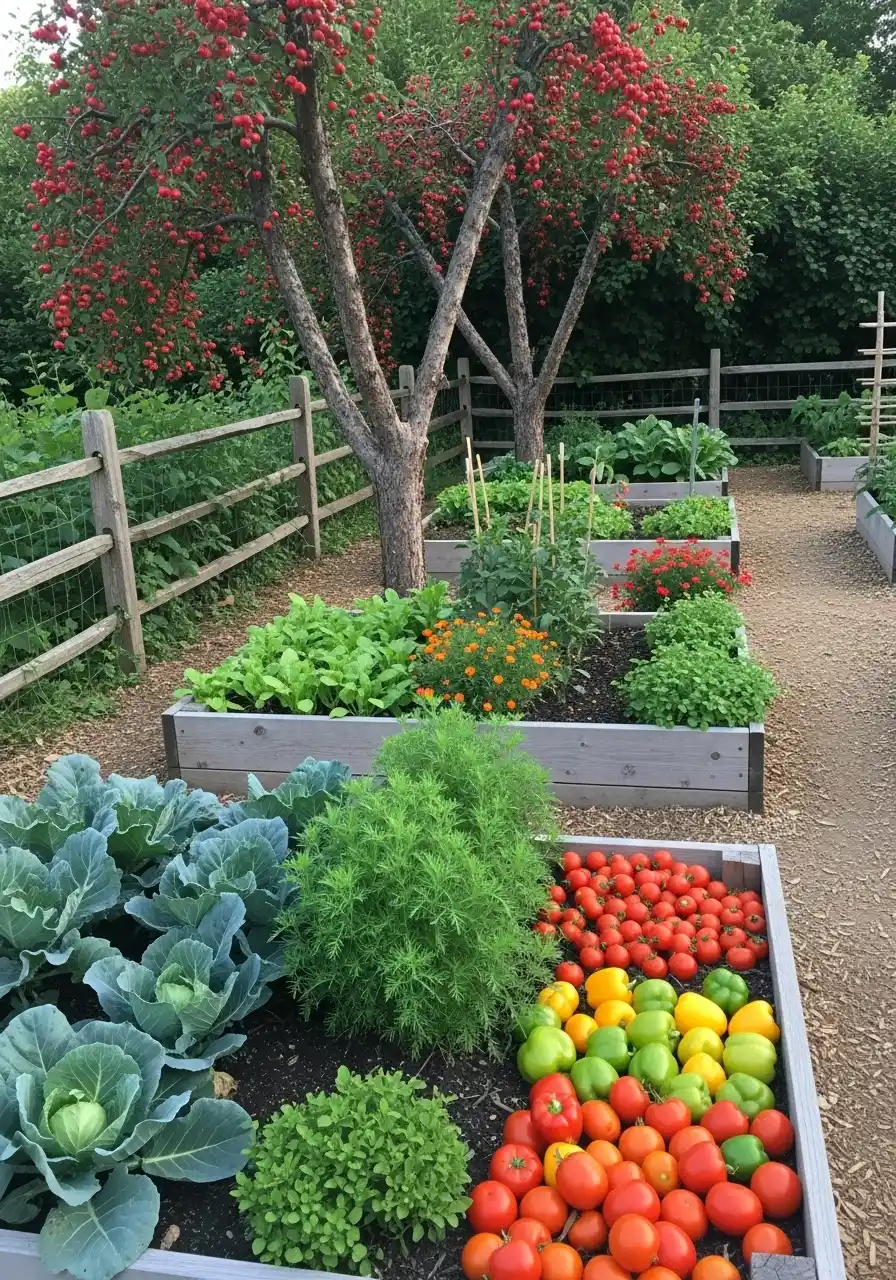
This last one is the most real-life to me. Raised beds, simple paths, and an actual harvest sitting there like a reward. Cabbage, herbs, tomatoes, peppers, and those fruit trees overhead. It’s a working food forest garden design, not just a pretty idea. And I love that flowers are mixed in, because it keeps pests down and makes you happier when you walk through.
If you want food forest garden design that produces a lot, focus on access and rhythm. Beds you can reach from both sides. Paths wide enough to carry baskets. Plant what you actually eat, not what looks cute on Pinterest. I’d also add one “dump bed” for extra compost or experiments, because every gardener needs a messy corner. This layout proves you can have beauty and food at the same time, without going full chaos.
Conclusion
A food forest garden design isn’t just a garden, it’s a system that feeds you back. And I love that idea because it feels like hope, honestly. The big lessons from these images are simple: build clear paths, plant in layers, repeat structures like raised beds and trellises, and don’t forget beauty. Beauty is not extra. Beauty is what makes you keep going out there even when you’re tired. And once you start harvesting, even a little, you’ll feel this weird pride that’s hard to explain. Like, “wow… I grew actual food.”