If you’ve ever tried to keep a “normal” garden alive through a long hot summer, you already know why desert shrubs are such a relief. They don’t beg for daily watering, they don’t sulk in blazing sun, and many of them still put on a flower show that makes the yard feel intentional—not just “surviving.”
My favorite thing about desert shrubs is how they do double-duty. You get structure and texture all year, plus seasonal blooms that pull in hummingbirds, butterflies, and native bees. Pick the right mix and your landscape keeps its shape even when everything else is crispy.
Before you plant, think like the desert. Most of these shrubs want full sun, fast-draining soil, and a “deep but not often” watering style while they establish. A simple rule: water thoroughly, then let the soil dry down. Soggy roots are the quickest way to lose tough plants.
Another trick that keeps maintenance low: group plants by water needs. Put the truly drought-hardcore shrubs together, and keep the slightly thirstier bloomers (like lantana) in a separate zone. Your hose habits get easier, and the plants look healthier.
Table of Contents
Texas Sage (Leucophyllum frutescens)
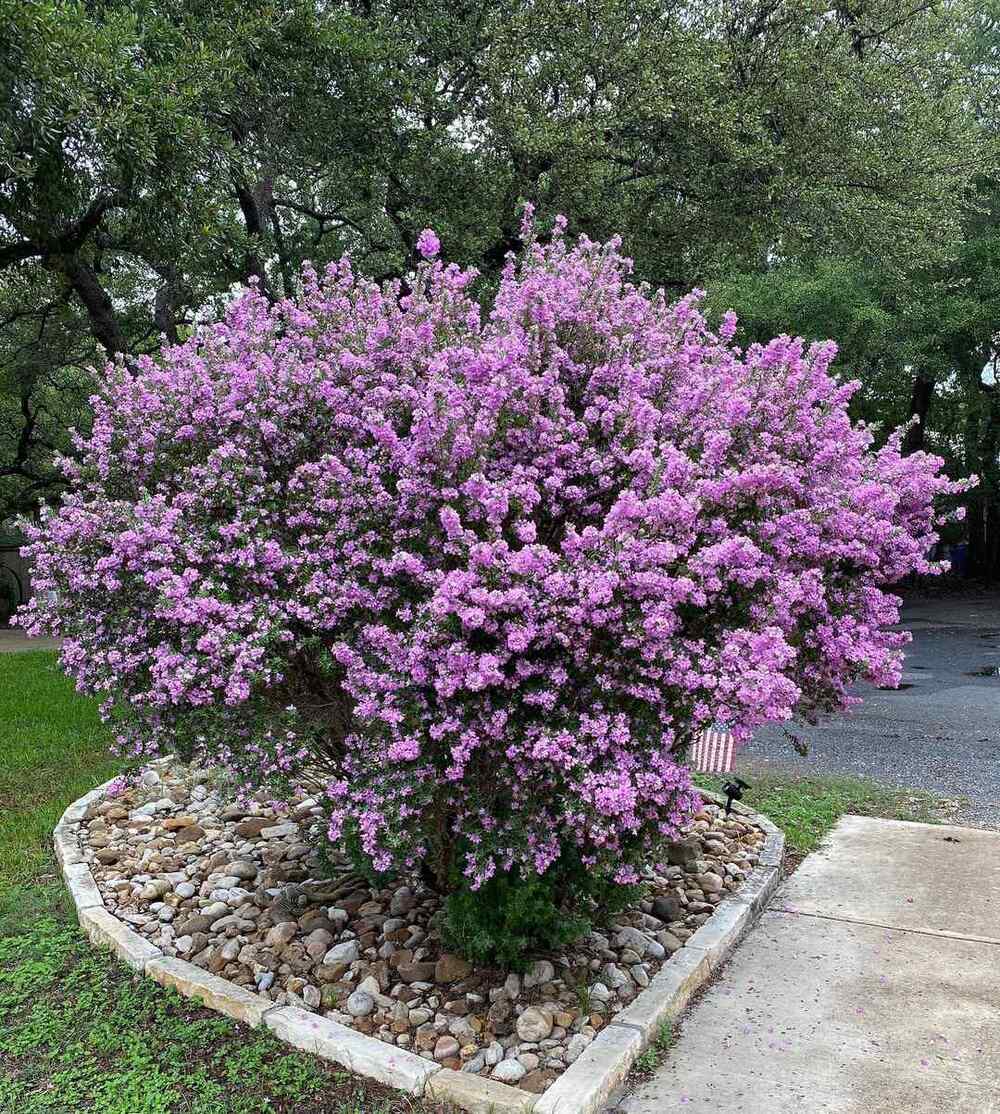
Texas Sage is that silvery, soft-looking shrub you see in desert neighborhoods that somehow stays neat with almost no fuss. It’s famous for sudden purple blooms after rain or humid weather—like the plant is celebrating. USDA Zones: 7–11.
Soil needs: sandy or gravelly soil with excellent drainage. Sun: full sun for best flowering. Flower advantage: the purple blooms are a magnet for bees, and the silver foliage brightens a yard, especially next to darker rock or mulch.
Design tip: plant it as a low hedge or use two to three as repeating “anchors” in a front yard bed. Prune lightly after a bloom cycle if you want a rounded look; don’t shear it into a tight ball unless you love that style.
Red Yucca (Hesperaloe parviflora)
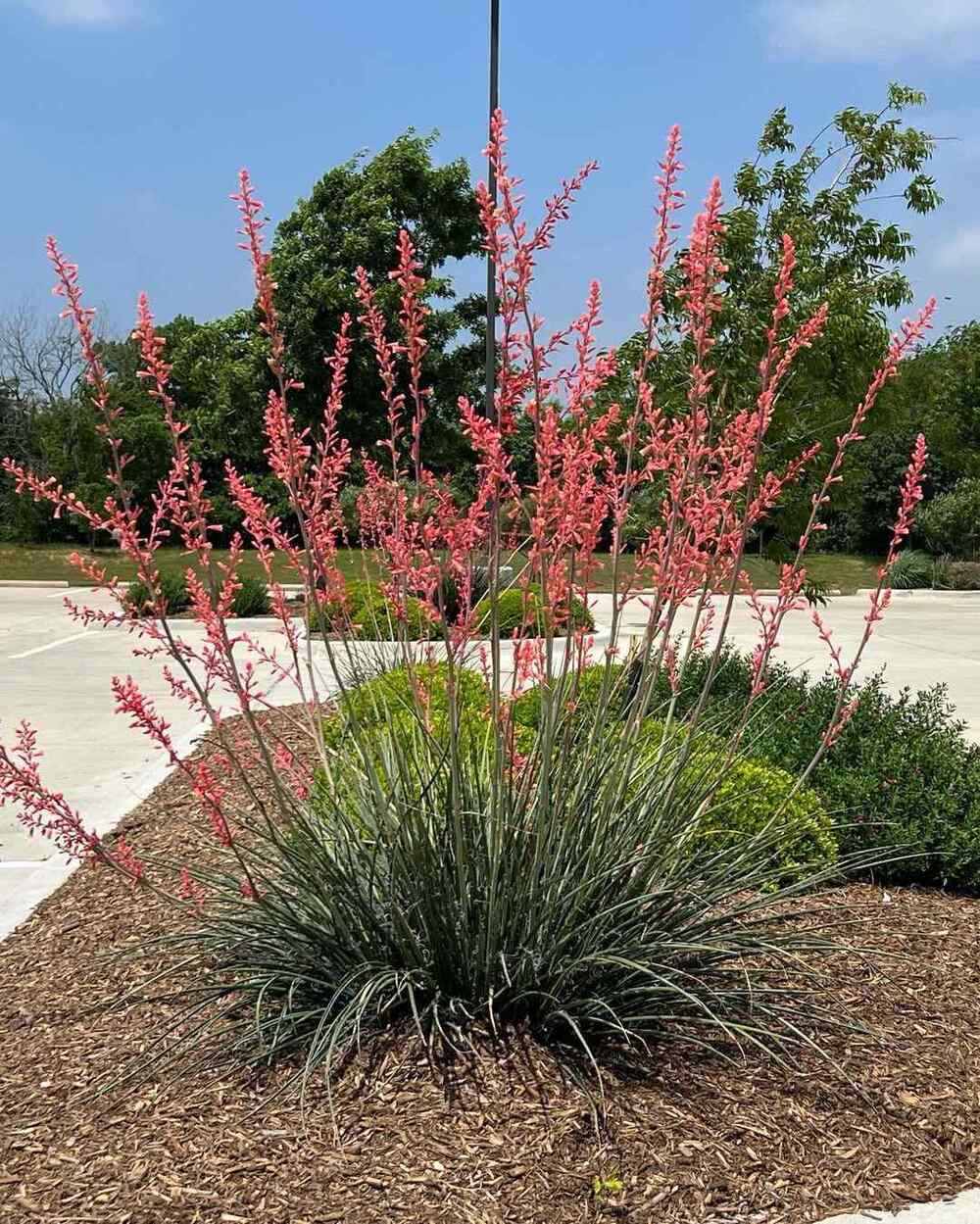
Red Yucca isn’t a yucca, but it plays the same role: architectural leaves and serious toughness. It forms a fountain of narrow, arching leaves and sends up tall flower spikes with coral-red blooms. USDA Zones: 5–11.
Soil needs: fast-draining, even rocky soil. Sun: full sun, tolerates reflected heat. Flower advantage: hummingbirds treat it like a diner that never closes—blooms can last for months, especially with occasional deep watering.
Use it along walkways or near boulders where the spiky form feels intentional. Give it room so the leaf fountain doesn’t poke people; it’s friendlier than agave, but still has attitude.
Ocotillo (Fouquieria splendens)
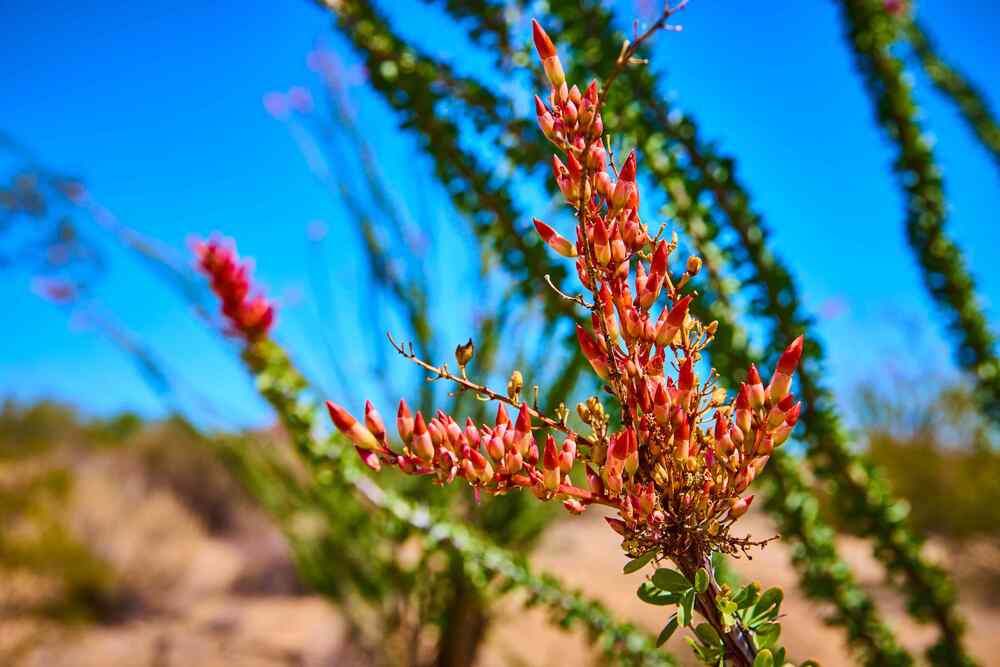
Ocotillo is pure desert drama: tall, spiny canes that reach upward like living sculpture. After rain it leafs out, and in warm seasons it produces clusters of red-orange flowers near the tips. USDA Zones: 8–11.
Soil needs: very well-drained, sandy or rocky. Sun: full sun. Flower advantage: the blooms are rich in nectar and pull in hummingbirds from far away. Even when leafless, the silhouette adds strong structure.
Plant ocotillo where you want height without heavy shade—near a wall, behind lower shrubs, or as a focal point in a gravel courtyard. Once established, it prefers to be left alone, including its roots.
Brittlebush (Encelia farinosa)
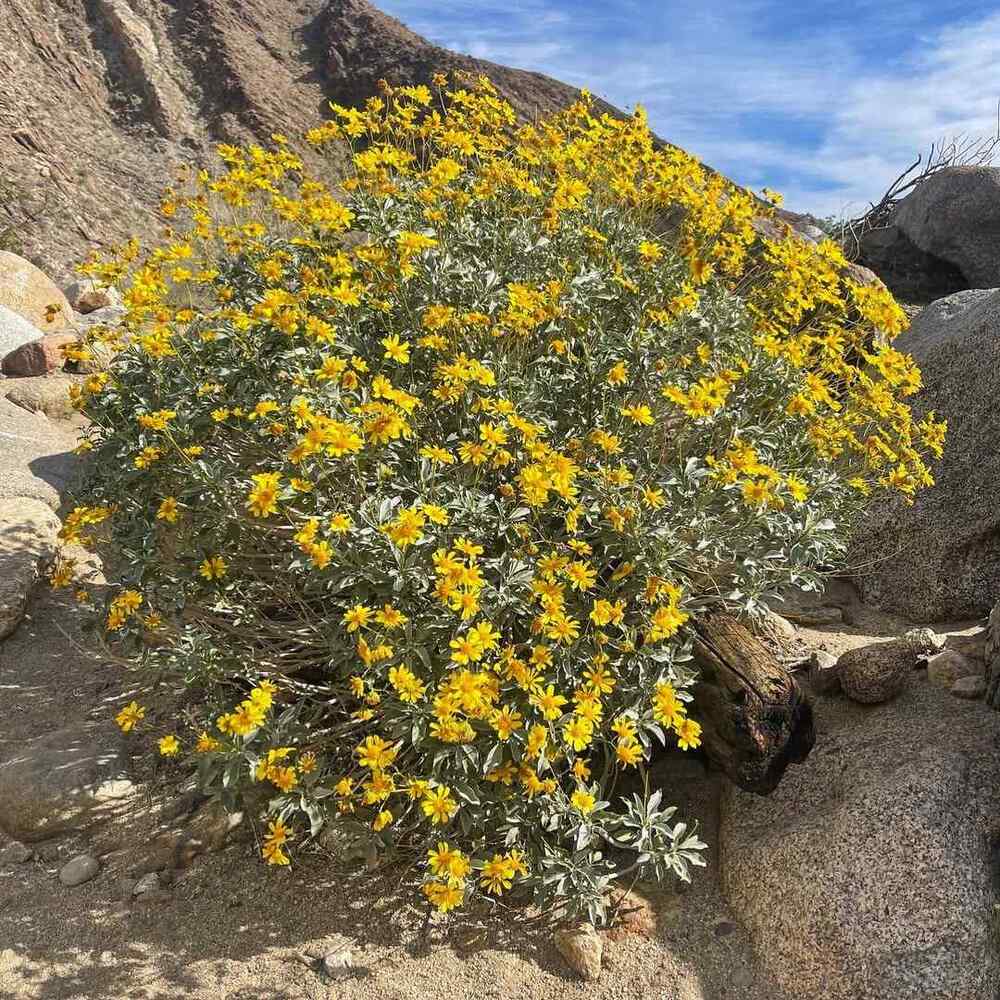
Brittlebush is the kind of plant that makes a desert garden feel sunny even in winter. It’s a mounding shrub with silver-gray leaves and bright yellow daisy-like flowers that pop against stone and gravel. USDA Zones: 8–11.
Soil needs: dry, well-drained soil. Sun: full sun. Flower advantage: long flowering season in cooler months, with blooms that support desert pollinators when not much else is flowering.
It’s fast-growing, so it’s perfect if your yard feels bare and you want quick fullness. Trim after flowering to keep it compact; otherwise it can get leggy with age.
Creosote Bush (Larrea tridentata)
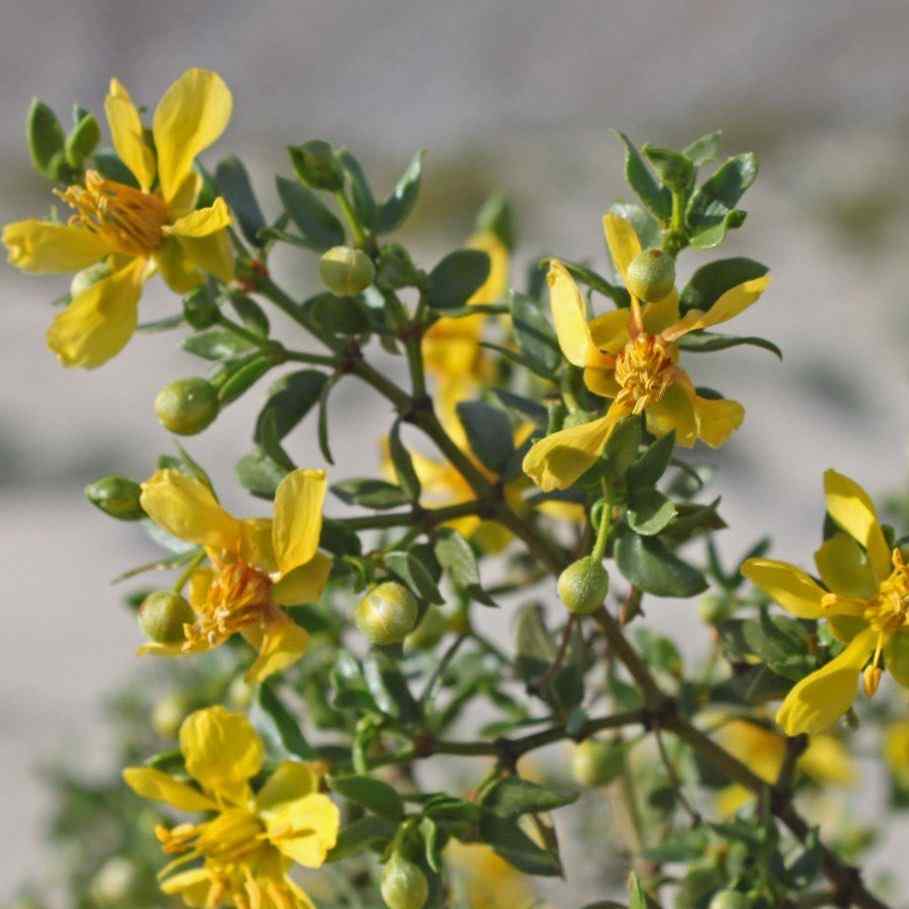
Creosote is the icon of the American desert—hardy, evergreen, and almost impossible to scare. Its small olive-green leaves smell like desert rain when the air is moist. USDA Zones: 7–11.
Soil needs: extremely well-drained, low organic matter is fine. Sun: full sun. Flower advantage: small yellow flowers aren’t flashy, but they’re valuable for native insects and come reliably with minimal water.
Creosote shines in naturalistic landscapes. Pair it with rocks, native grasses, and a few flowering accents so the yard doesn’t feel too “brushy.” Give it space; it likes to be itself.
Desert Ruellia (Ruellia peninsularis)
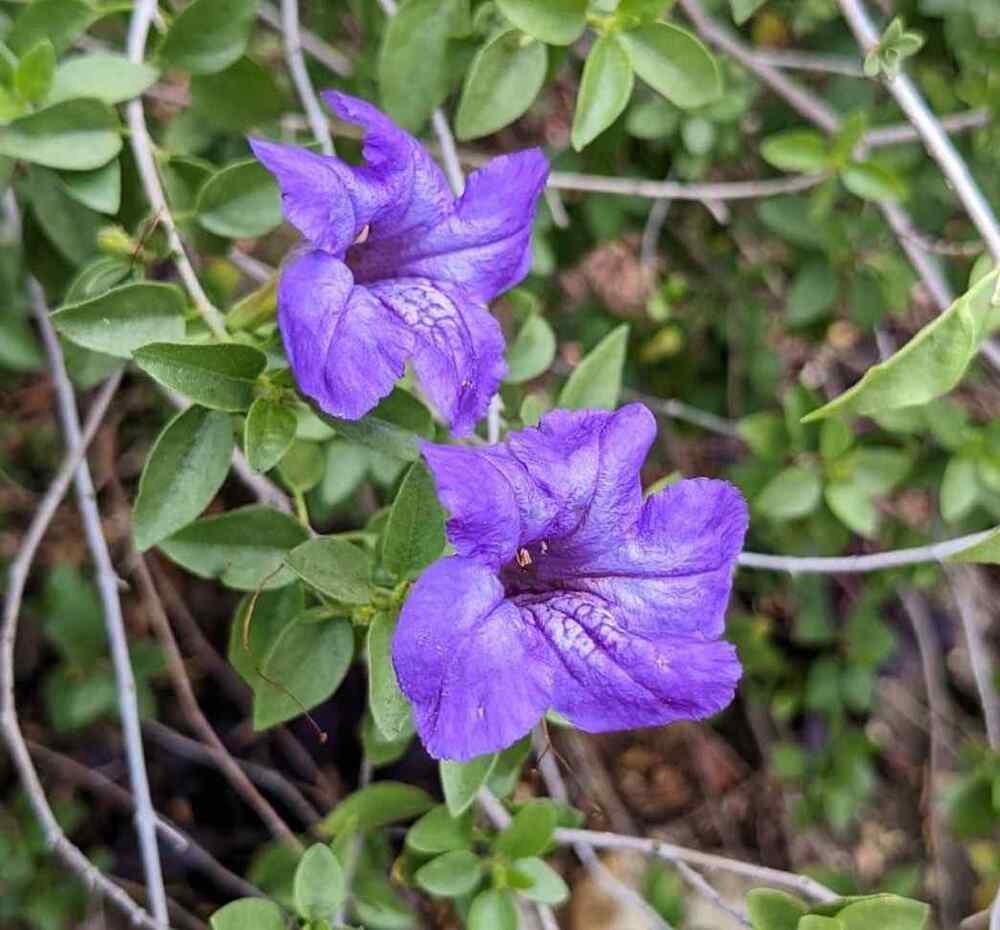
Desert Ruellia makes purple flowers feel effortless. It’s a rounded shrub that handles heat like a champ and produces trumpet-like blooms that add a soft, garden-y vibe to xeriscape beds. USDA Zones: 9–11.
Soil needs: well-drained soil; tolerates poor desert soils. Sun: full sun to light shade. Flower advantage: those purple blooms bring color without demanding rich soil, and pollinators appreciate the steady nectar.
Place it where you want a “pretty” moment—near a patio edge, by a path, or next to warm-toned rock. Occasional deep watering encourages more flowers, but keep it on the dry side once established.
Baja Fairy Duster (Calliandra californica)
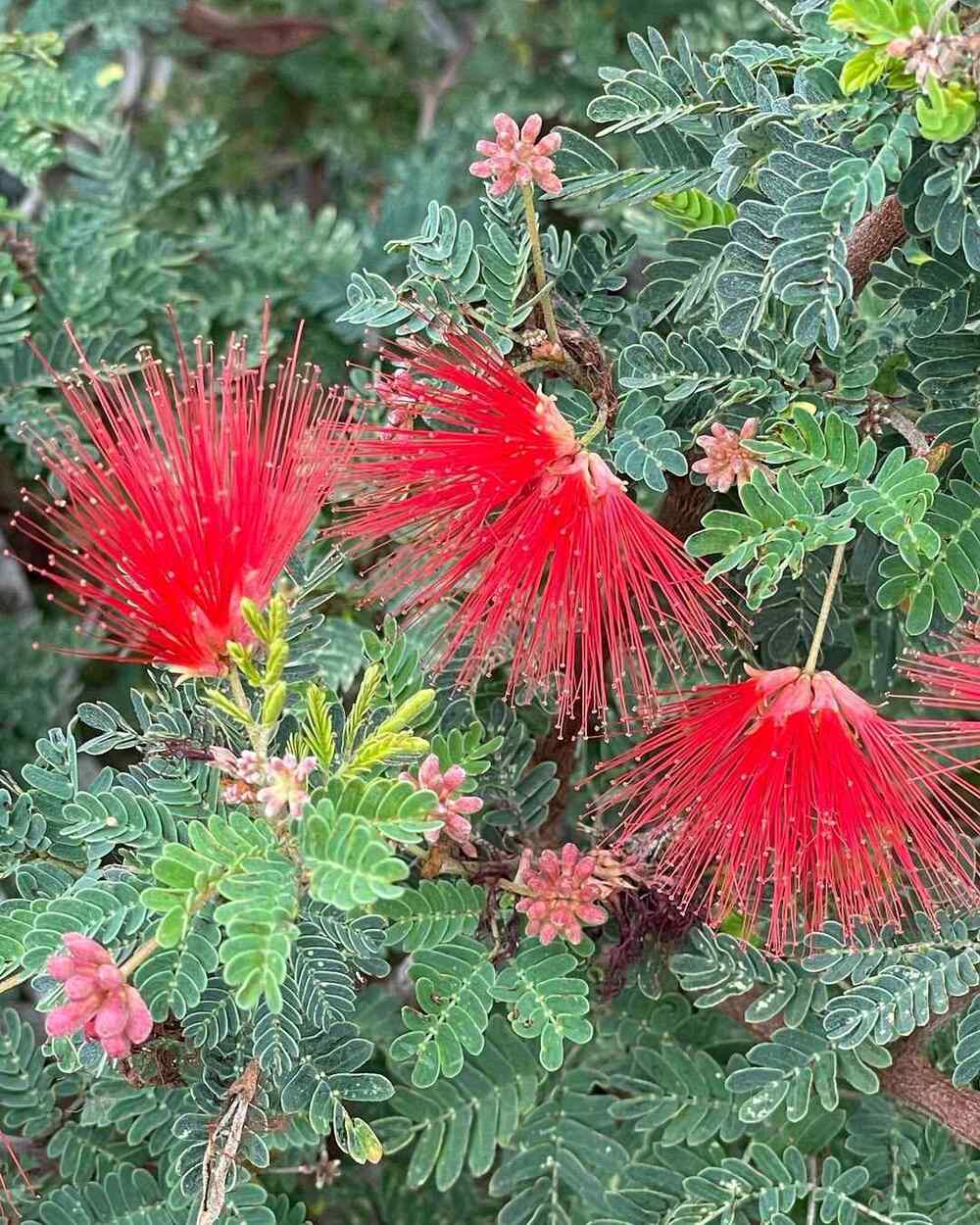
If you want hummingbirds to show up like clockwork, Baja Fairy Duster is a great bet. It has fine-textured foliage and fluffy red powder-puff flowers that look playful but perform like a desert native. USDA Zones: 9–11.
Soil needs: well-drained, sandy/gravelly soil. Sun: full sun to partial shade. Flower advantage: extended bloom periods and nectar-rich flowers that feed hummingbirds and beneficial insects.
It’s excellent as a mid-height shrub in layered planting: taller ocotillo behind, fairy duster in the middle, and groundcovers in front. Light pruning after flowering keeps it dense and airy, not woody.
Lantana (Lantana camara / Lantana montevidensis)
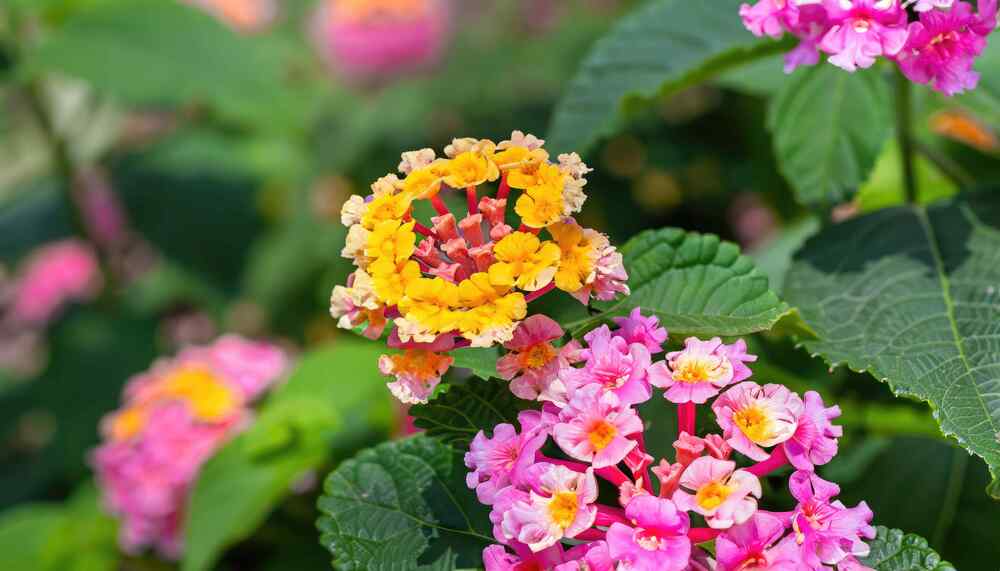
Lantana is color on repeat. It grows fast, spreads happily, and flowers in clusters of yellow, orange, pink, white, or mixed shades. It’s used everywhere for a reason—when it’s happy, it’s nonstop. USDA Zones: 7–11 (varies by type).
Soil needs: well-drained soil; tolerates average garden soil. Sun: full sun for best blooms. Flower advantage: butterflies love it, and the constant flowers help fill the “between seasons” gap.
In very hot deserts, lantana can appreciate occasional deep watering during peak heat to keep it flowering. Give it space, and don’t be shy about trimming—it responds well and comes back fuller.
Valentine Emu Bush (Eremophila ‘Valentine’)
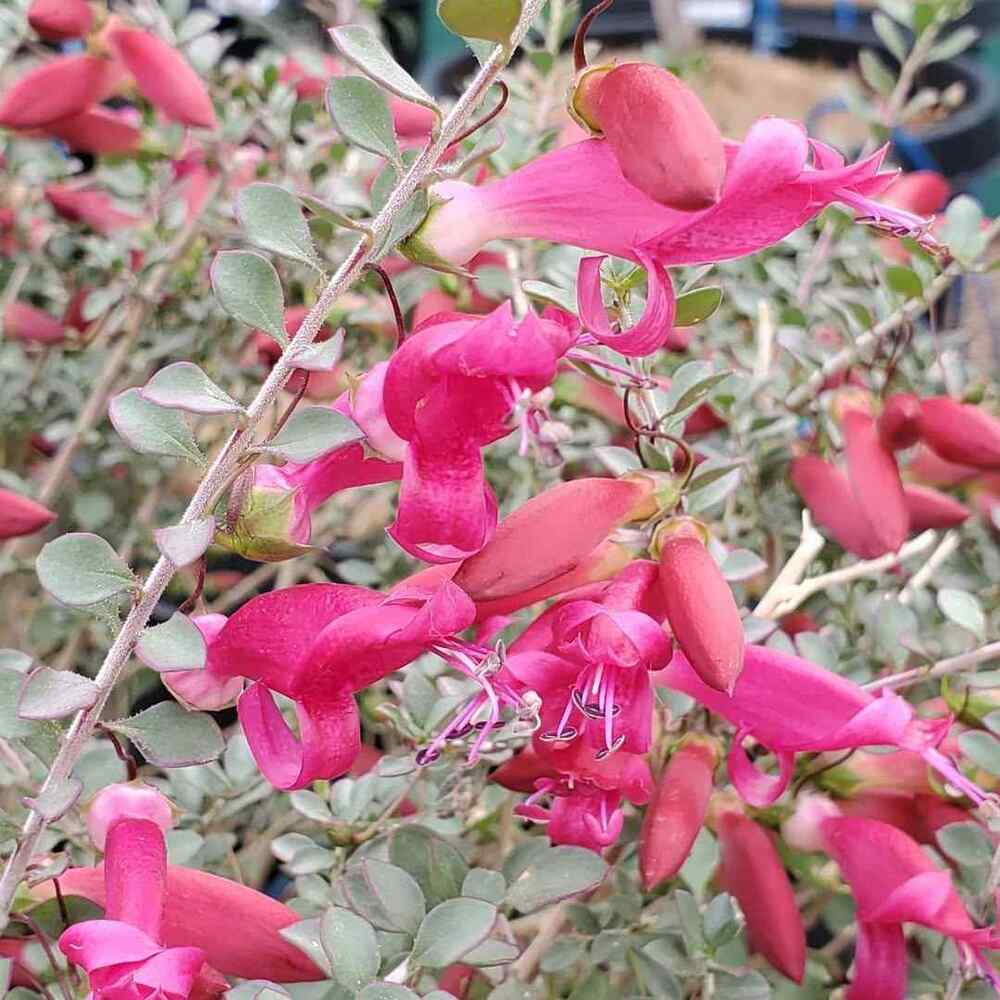
Valentine Emu Bush is the shrub I’d pick if you want winter color without babying a plant. It’s compact, tidy, and pushes deep red blooms when many landscapes are quiet. USDA Zones: 9–11 (some eremophilas handle slightly cooler areas with protection).
Soil needs: sharply drained soil—this one hates wet feet. Sun: full sun. Flower advantage: winter blooms support birds and early-season pollinators, and the red color plays beautifully with gravel and warm stucco walls.
Use it near entryways or along a main view line so the winter flowers actually get seen. Prune lightly after the main bloom flush to keep a rounded, dense form.
Desert Milkweed (Asclepias subulata)
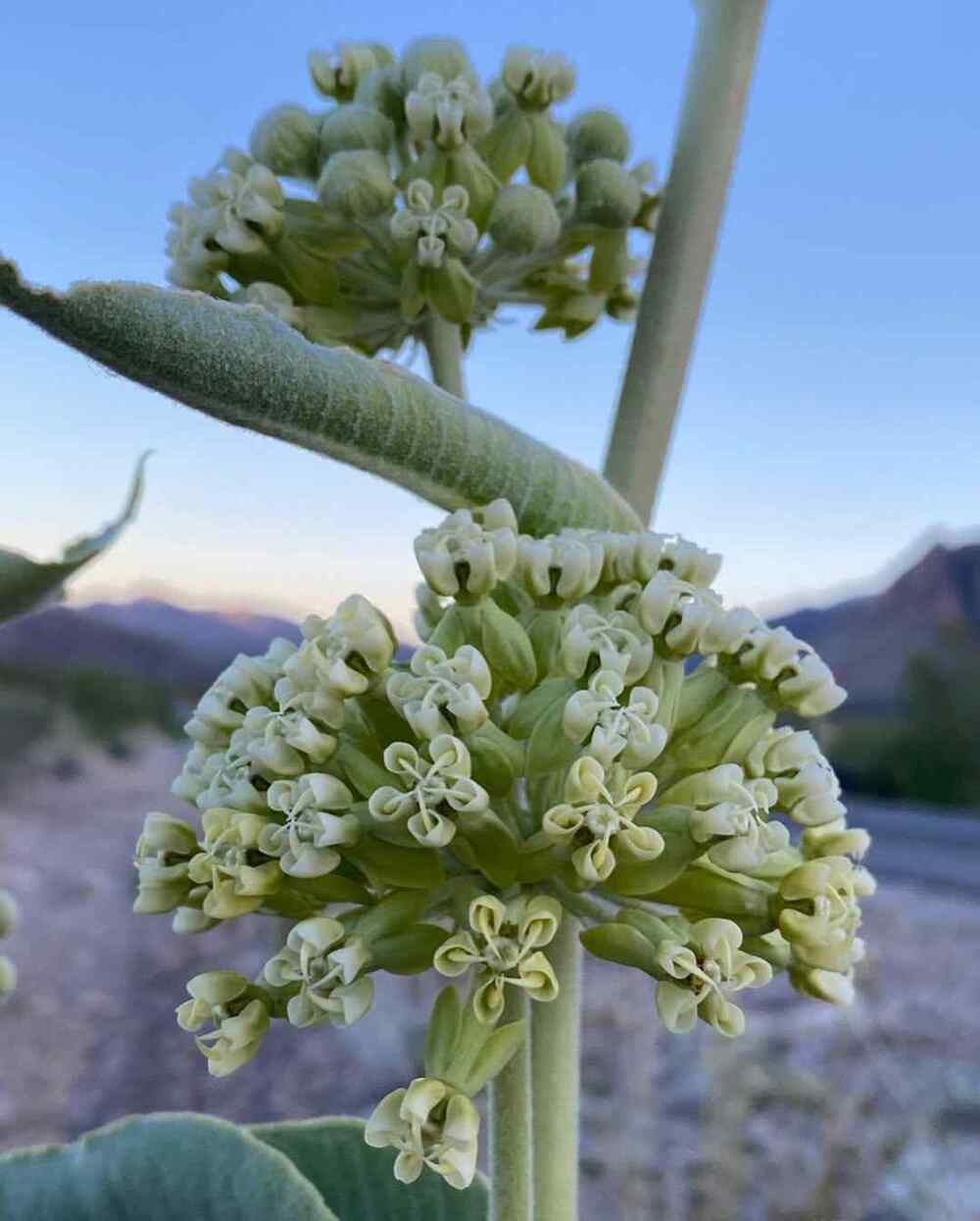
Desert Milkweed is unusual in the best way—green, rush-like stems and small white flowers, with a clean, modern look. More importantly, it’s a powerhouse plant for pollinators, especially monarchs (as a host plant). USDA Zones: 9–11.
Soil needs: very well-drained, dry soil. Sun: full sun. Flower advantage: supports pollinator life cycles, not just casual nectar visits, and it holds its form in heat when leafy plants collapse.
Plant it where you can appreciate the shape—near rocks, in minimalist beds, or grouped in threes for a sculptural cluster. Don’t overwater; it performs better with a restrained hand.
Quick layout ideas that actually work
For a balanced desert bed, mix one tall focal plant (Ocotillo), two to three medium shrubs (Texas Sage, Fairy Duster, Emu Bush), and a few softer mounds (Brittlebush, Desert Ruellia, Lantana). Repeat shapes to make it feel designed, not random.
Mulch matters. Gravel mulch keeps things clean and dry around crowns, while wood mulch can hold moisture longer and sometimes encourages rot in true desert natives. If your soil is heavy clay, build a slight mound or amend with grit so water doesn’t sit.
Finally, be patient for the first season. Even drought-tolerant shrubs need a steady establishment period. After that, the reward is real: a landscape that still blooms, still looks styled, and doesn’t panic when the forecast forgets to mention rain.