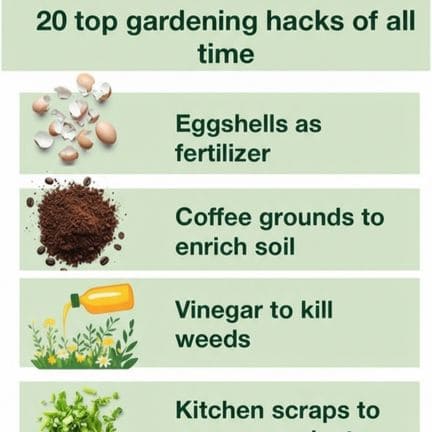
Gardening is a pretty awesome hobby. It makes your yard look nicer, you can grow your own food, and it feels good when stuff actually grows. But yeah, it can be hard too, especially when you’re just starting out. So to make it easier (and more fun), here’s a list of the top 20 gardening hacks. These tricks can help you save time, spend less money, and get better results without doing a bunch of complicated stuff.
Table of Contents
1) Use Eggshells as a Natural Fertilizer
Eggshells have calcium, which plants need to grow strong. They can also help stop blossom end rot on tomatoes and peppers. Just rinse the shells, let them dry, crush them up, and sprinkle them around the base of your plants. Don’t expect it to work overnight though, it takes time.
2) Add Coffee Grounds to Your Soil
Used coffee grounds have nitrogen, which helps plants grow leafy and green. It also helps the soil texture and earthworms usually like it. Sprinkle a little on the soil or mix it into compost. Just don’t dump a whole bucket in one spot, cause too much can make the soil too acidic.
3) Use Vinegar to Kill Weeds
Vinegar can work like a natural weed killer. Put white vinegar in a spray bottle and spray it on weeds on a sunny day. It works best on small weeds. But be careful, because vinegar doesn’t “aim,” it’ll hurt your good plants too if you hit them.
4) Epsom Salt for Healthier Plants
Epsom salt has magnesium and sulfur, which helps plants with photosynthesis and taking in nutrients. Mix 1 tablespoon in 1 gallon of water, and water plants with it about once a month. If you use it too much, it can mess things up, so don’t go crazy with it.
5) Regrow Plants from Kitchen Scraps
Some food scraps can regrow into new plants, which is kinda cool and also saves money.
-
Green onions: put the white root ends in water
-
Lettuce/celery/bok choy: put the base in water until it sprouts, then move to soil
It’s not magic, but it works surprisingly often.
6) Companion Planting for Pest Control
Companion planting means you grow certain plants together so they help each other out. Like:
-
Marigolds near tomatoes can help repel pests in the soil
-
Basil near tomatoes can help with flavor and may keep some bugs away
You gotta look up good plant pairs, because not every combo is a good idea.
7) Mulch to Keep Moisture In
Mulch helps soil stay moist, blocks weeds, and keeps the soil cooler. Use straw, wood chips, or shredded leaves. Put about 2–3 inches around plants, but don’t bury the stems, because that can cause rot and stuff.
8) Make a DIY Compost Bin
Compost turns kitchen scraps and yard waste into rich soil. You can make a compost bin from a plastic container or wood pallets. Add:
-
“Green” stuff: fruit scraps, veggie scraps, grass clippings
-
“Brown” stuff: dry leaves, cardboard, paper
Turn it sometimes so it breaks down faster. It can smell if you do it wrong though, not gonna lie.
9) Baking Soda for Sweeter Tomatoes
If your soil is too acidic, tomatoes can taste more sour. Sprinkle a little baking soda around the base of tomato plants and mix it lightly into the soil. Don’t pour a ton, because too much baking soda can mess with nutrients.
10) Water with Rainwater
Rainwater is great for plants because it doesn’t have the same chemicals as tap water sometimes does. Put a rain barrel under a downspout to collect it. Then use it during dry weeks. It’s basically free water, which is nice.
11) Build a Simple Drip Irrigation System
Drip watering sends water right to the roots and wastes less water. You can make a simple one by poking small holes in a garden hose and laying it along your rows. Turn the water on low so it drips slowly. If it sprays like crazy, you poked the holes too big.
12) Attract Pollinators with Native Flowers
Bees and butterflies help pollinate flowers, and that helps you get more fruits and veggies. Plant native flowers that bloom at different times of the year. More blooms = more pollinators hanging around, and your garden will look better too.
13) Use Banana Peels for Extra Nutrients
Banana peels have potassium and other nutrients that plants like. Chop them up and bury them near plants, or soak them in water to make “banana peel tea.” This is good for flowers and fruit plants. It sounds gross, but it works.
14) Neem Oil as a Natural Pesticide
Neem oil helps control pests like aphids and spider mites. Mix neem oil with water and a couple drops of dish soap, then spray plants. Follow the directions though, because too strong can burn leaves, and that’s super annoying.
15) Newspaper to Stop Weeds
Lay several layers of newspaper on the soil, then cover it with mulch. It blocks sunlight so weeds can’t grow, but water can still soak through. It breaks down over time too, so you don’t have to remove it later.
16) Grow Herbs Indoors All Year
Herbs like basil, mint, and parsley can grow inside on a sunny windowsill. Use pots with drainage and decent potting mix. Trim them often so they grow bushier. Also, mint grows like it owns the place, so keep it in its own pot.
17) Raised Beds for Better Drainage
Raised beds help with drainage, stop soil from getting packed down, and it’s easier on your back. You can build one with wood, bricks, or blocks. Fill it with soil and compost. In spring, raised beds warm up faster too, so plants can start earlier.
18) Fish Emulsion for Fast Growth
Fish emulsion is a strong organic fertilizer that gives plants a quick boost. It has nitrogen, phosphorus, and potassium. Mix it with water like the label says and use it every few weeks. Fair warning: it can smell pretty bad.
19) Make a DIY Cloche to Protect Plants
A cloche is like a little cover that protects plants from cold and bugs. Cut the bottom off a plastic bottle and put it over a young plant. It works like a mini greenhouse. Just don’t leave it on when it gets super hot, or the plant can cook.
20) Store Seeds the Right Way
If you save seeds, store them in a cool, dry place in airtight containers. Label them with the plant name and date. Some seeds last longer in the fridge, but don’t put them where they’ll get damp. Damp seeds = wasted seeds.
Conclusion: Make Gardening Easier (and Way Less Stressful)
Gardening is kind of like science mixed with art, and also a little bit of luck. These hacks can help you grow better plants without spending a ton or working nonstop. Try a few at a time instead of all 20 at once, because honestly that would be a lot. If you keep it simple and stay consistent, your garden will start looking way better before you know it.