Tomatoes are one of the most popular plants people grow in gardens all over the world, and it’s easy to see why. They taste good, you can use them in tons of meals, and they’re kinda fun to pick. But honestly, growing tomatoes isn’t always easy. Sometimes they look great one week, then the next week they’re all droopy or getting spots.
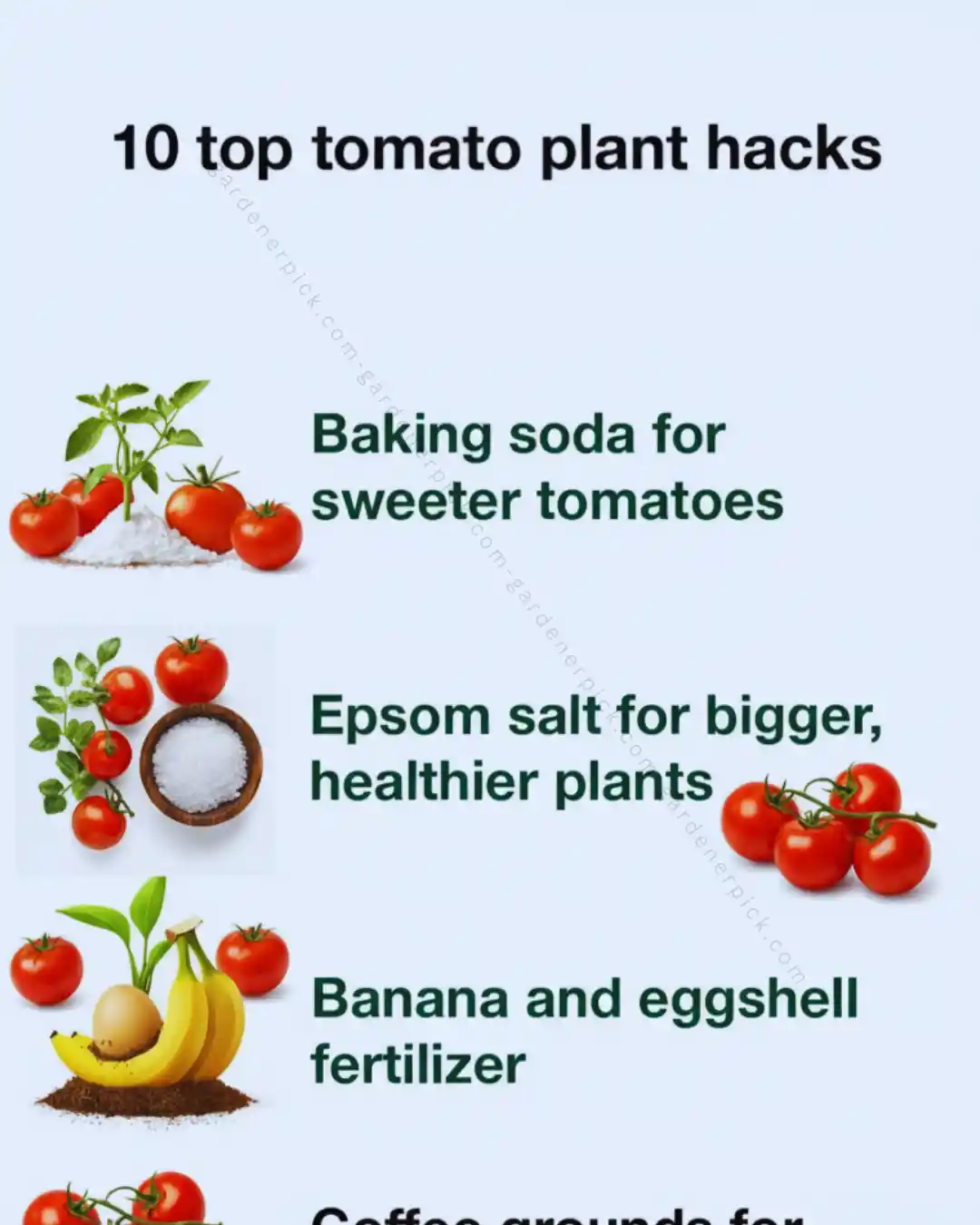
The good news is, a few simple hacks can make a big difference. Here are 10 tomato-growing hacks that can help your plants grow stronger and give you more tomatoes.
Table of Contents
1. Baking Soda for Sweeter Tomatoes
How to use it:
Sprinkle about 1 teaspoon of baking soda around the soil near the plant. Don’t dump it right on the stem though.
Why it works:
Baking soda can make the soil less acidic, and that can make the tomatoes taste less sour and more sweet. Just don’t use too much, because if the soil gets too basic, the plant might not absorb nutrients right.
2. Epsom Salt for Bigger, Healthier Plants
How to use it:
Mix 1 tablespoon of Epsom salt in 1 gallon of water. Then either spray it on the leaves or pour it near the base every 2 weeks.
Why it works:
Epsom salt has magnesium and sulfur, which helps the plant make chlorophyll (the stuff that makes leaves green). More chlorophyll = better photosynthesis = stronger plant and usually more tomatoes too.
3. Banana Peel + Eggshell Fertilizer
How to use it:
Chop banana peels and bury them 2–3 inches deep near the roots. Crush eggshells and mix them into the soil before planting, or sprinkle them around the base.
Why it works:
Banana peels give potassium and phosphorus, which helps with fruit growth and strong roots.
Eggshells have calcium, which helps stop blossom-end rot (when the bottom of the tomato turns black and gross).
4. Coffee Grounds for a Nitrogen Boost
How to use it:
Let used coffee grounds dry out, then sprinkle a thin layer around the plant or toss them into compost.
Why it works:
Coffee grounds add nitrogen, which helps the plant grow big green leaves. They also improve the soil by adding organic stuff. Just don’t use fresh grounds straight from the coffee maker, because they can be kinda acidic.
5. Aspirin Spray to Fight Disease
How to use it:
Dissolve 1 uncoated aspirin (325 mg) in 1 gallon of water, then spray the leaves every 2–3 weeks.
Why it works:
Aspirin has salicylic acid, which is like a signal that tells the plant, “hey, get ready to defend yourself.” It can help the plant resist things like blight, mildew, and other diseases. Some people even say it helps make more fruit, which is pretty cool.
6. Mulch with Grass Clippings or Straw
How to use it:
Put a 2–3 inch layer of straw, shredded leaves, or dry grass clippings around the base.
Why it works:
Mulch keeps moisture in the soil, blocks weeds, and helps the soil stay at a better temperature. It also stops dirt from splashing up onto leaves when it rains, which helps prevent fungal diseases.
7. Companion Planting to Keep Pests Away
How to use it:
Plant basil, marigolds, garlic, or chives near your tomatoes.
Why it works:
-
Basil can make tomatoes taste better and helps repel some bugs.
-
Marigolds can help keep bad soil pests away (like nematodes).
-
Garlic and chives have sulfur stuff that can help fight fungus and also scare off insects.
8. Prune and Remove Lower Leaves
How to use it:
When the plant is about 2 feet tall, remove the bottom 6–8 inches of leaves. Also pinch off “suckers” (little shoots that grow between the main stem and branches).
Why it works:
Taking off the lower leaves improves airflow, and that helps stop fungus from growing. Removing suckers helps the plant focus energy on making tomatoes instead of just making a jungle of leaves.
9. Use a Stake or Cage
How to use it:
Put in a cage, stake, or trellis when you plant the tomato. Tie the plant gently as it grows.
Why it works:
Tomato plants get heavy once they start making fruit, and they can fall over or snap. Support keeps them upright, improves airflow, and helps stop tomatoes from sitting on the ground (where they rot or get eaten).
10. Water Deeply and in the Morning
How to use it:
Water at the base of the plant early in the morning. Aim for 1–2 inches of water per week. Don’t spray water all over the leaves if you can help it.
Why it works:
Deep watering makes roots grow deeper, which makes the plant tougher during hot days. Morning watering gives the plant time to soak it up before the heat hits. And watering the leaves too much can lead to fungus, so yeah… try not to do that.