If you’ve ever wanted easy-care plants for garden borders that stay tidy, bloom reliably, and don’t punish you for missing a watering, you’re in the right place. I used to think a “finished” border meant constant trimming, feeding, and fussing… but honestly, that kind of gardening can feel like a second job. The good news? There are border plants that are genuinely forgiving—plants that behave, hold their shape, and still give you that soft, intentional edge that makes a garden feel loved.
Table of Contents
Easy-care plants for garden borders: quick rules for a no-fuss edge
A border’s job is simple: define space and guide the eye. The trouble starts when plants sprawl everywhere, flop onto paths, or demand weekly grooming. When I plan easy-care plants for garden borders, I judge them with three practical questions: Will it stay in place? Will it handle weather swings? Will it still look good when I’m busy?
Here’s the short list of “neglect-friendly” traits to prioritize for easy-care plants for garden borders:
-
Drought tolerance or deep roots so the border doesn’t collapse during hot spells.
-
Pest and disease resistance so you’re not constantly spraying or panicking.
-
Minimal pruning or deadheading—tidy by nature, not tidy by force.
-
Perennial or politely self-sowing (non-invasive), so the border returns without taking over.
One more confession: I used to overcomplicate borders with too many species. Now I repeat reliable plants in drifts. Repetition makes easy-care plants for garden borders feel designed, even if you’re the kind of gardener who sometimes forgets where you left the pruners.
Best easy-care plants for garden borders that thrive with minimal attention
Below are 11 non-invasive favorites that are famously low drama. I’m focusing on clear identification, how each plant behaves at the edge, and the growing details that actually matter when you’re building easy-care plants for garden borders that don’t unravel mid-season.
1) Catmint (Nepeta × faassenii)
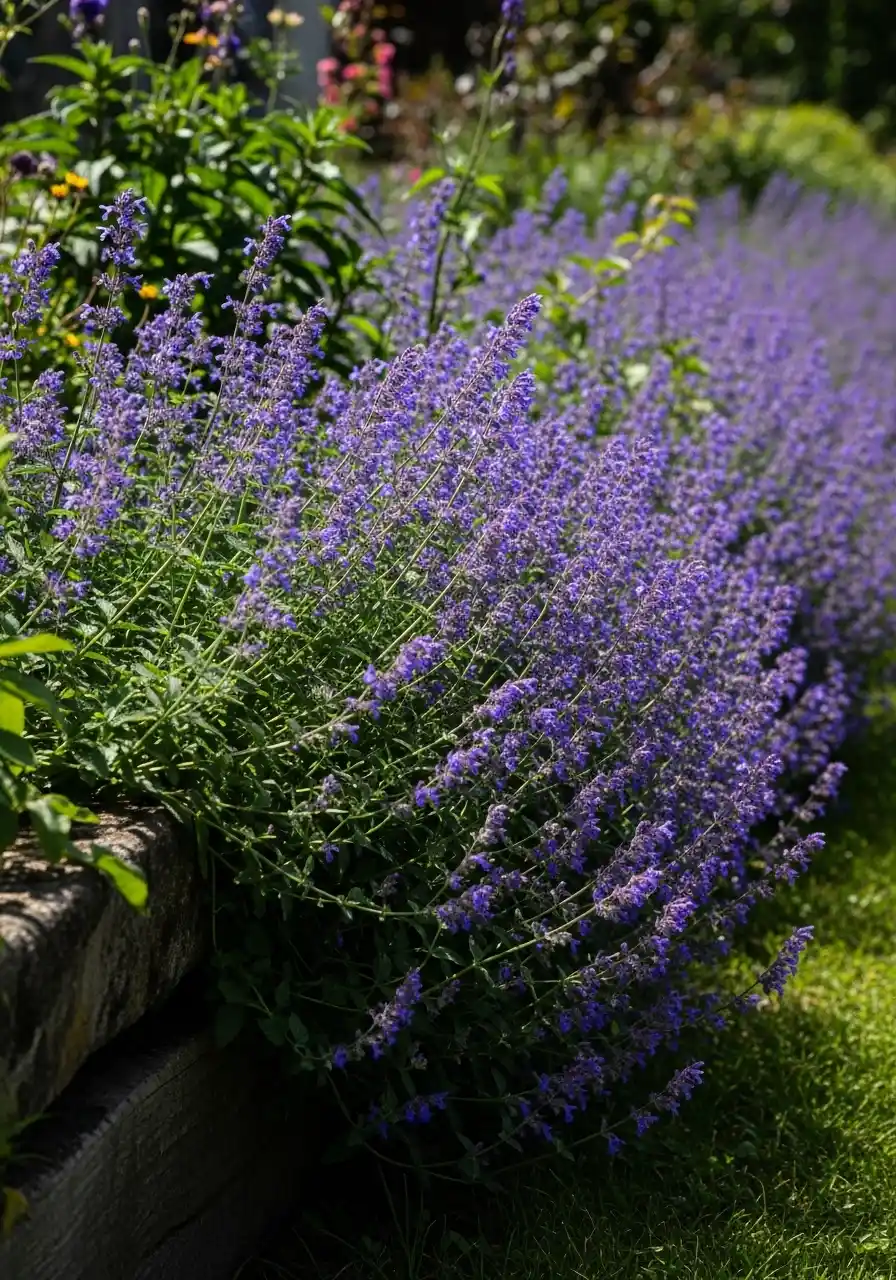
Catmint is one of those plants I trust almost too much—like a friend who always shows up on time. Nepeta × faassenii is a clump-forming perennial with aromatic gray-green foliage and a long, hazy bloom period that can make a border feel soft and romantic instead of stiff. Identification is easy: square stems, minty scent when brushed, and clouds of small, tubular flowers that hover above the leaves.
For easy-care plants for garden borders, catmint earns its place because it’s naturally mounded and rarely needs coddling. USDA Zones: typically 3–8 (sometimes into 9 with good drainage). Color varieties: most commonly lavender-blue, but cultivars can run from pale lilac to deeper violet; some lean more white. Type: herbaceous perennial. Sun exposure: full sun is best, though it tolerates part sun. Soil needs: well-drained soil, even on the lean side—overly rich soil can make it floppy.
Blooming season is usually late spring through summer, with repeat flowering if you shear it once after the first flush. I’ll admit it: I don’t always shear mine on time, and it still looks good. That’s exactly why catmint keeps landing on my shortlist of easy-care plants for garden borders.
2) Threadleaf Coreopsis (Coreopsis verticillata, e.g., ‘Moonbeam’)
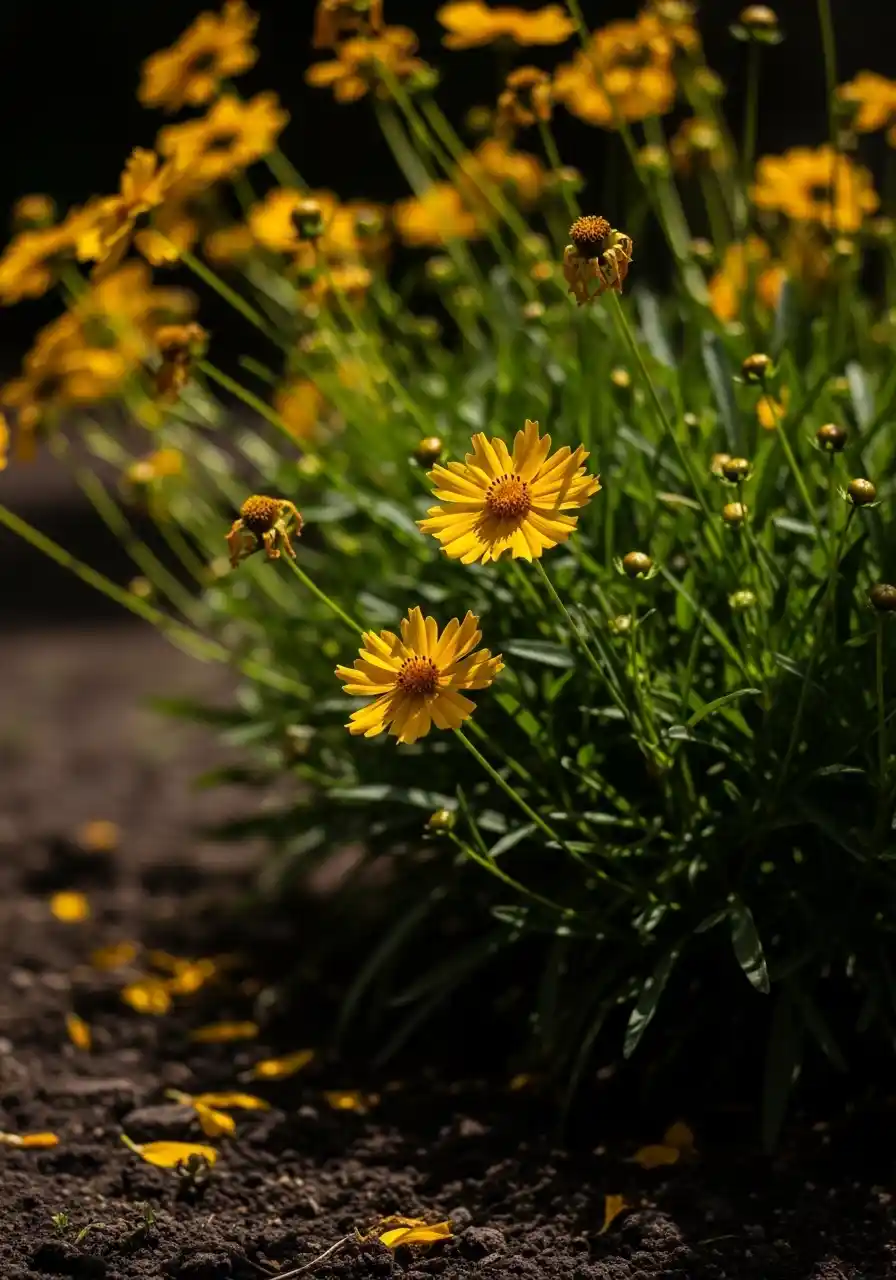
Threadleaf coreopsis has a delicate, airy texture that makes borders feel lighter—like the planting is breathing. Coreopsis verticillata (often seen as the cultivar ‘Moonbeam’) forms a neat clump with fine, threadlike leaves and cheerful daisy-like flowers. The plant is easy to identify by that soft, feathery foliage paired with small blooms held above the mound.
As easy-care plants for garden borders go, coreopsis is a classic “plant it and relax” perennial once established. USDA Zones: generally 3–9. Color varieties: ‘Moonbeam’ is a buttery pale yellow, while other cultivars range into brighter golds and even bicolors. Type: herbaceous perennial. Sun exposure: full sun is ideal for the best flowering. Soil needs: well-drained soil; it tolerates average to somewhat poor soil and doesn’t insist on constant feeding.
Blooming season commonly runs from early summer into fall. If you deadhead, it flowers longer—but even without perfect grooming, it keeps a friendly presence. I like it along paths because the foliage stays refined and doesn’t turn into a messy tangle, which is a big win for easy-care plants for garden borders.
3) Russian Sage (Perovskia atriplicifolia / Salvia yangii)
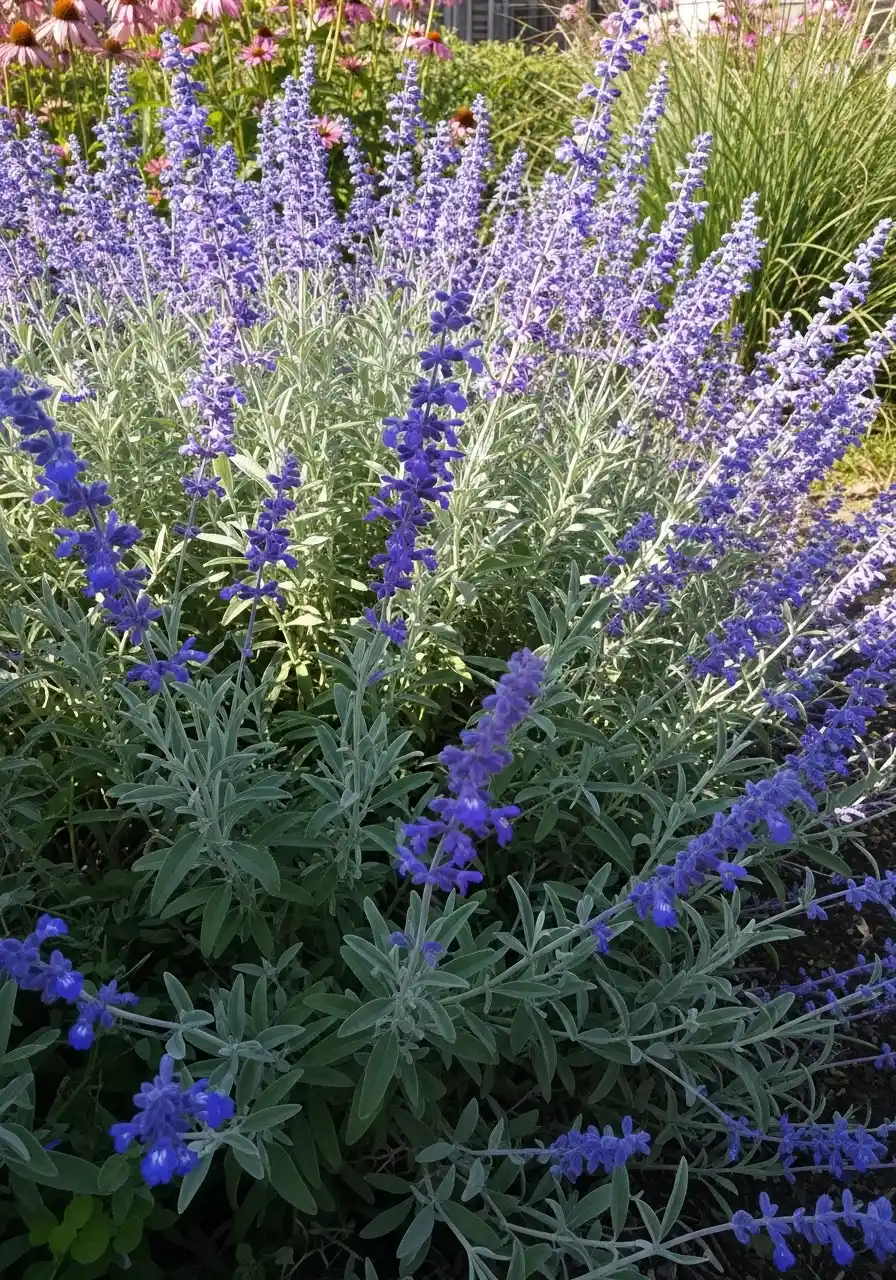
Russian sage is the plant I reach for when a border needs height without heaviness. Botanically it’s often listed now as Salvia yangii (formerly Perovskia atriplicifolia), and it’s known for silvery stems, aromatic leaves, and airy purple-blue flower spikes that shimmer in sun. Identification cues: gray-silver foliage, a slightly woody base, and tall wand-like blooms that feel almost weightless.
For easy-care plants for garden borders, Russian sage is valuable because it tolerates poor soil and heat like a champion. USDA Zones: typically 4–9. Color varieties: mostly blue-violet; some cultivars skew more lavender or deeper purple. Type: subshrub/perennial with woody structure. Sun exposure: full sun is non-negotiable for sturdy growth. Soil needs: very well-drained soil; it dislikes wet feet and can sulk in heavy clay unless amended.
Blooming season is usually mid-summer into fall. I’m going to be blunt: it looks its best when you resist overwatering and overfeeding. That “less is more” personality makes it one of my favorite easy-care plants for garden borders in sunny, dry spots.
4) Sedum ‘Autumn Joy’ (Hylotelephium telephium)
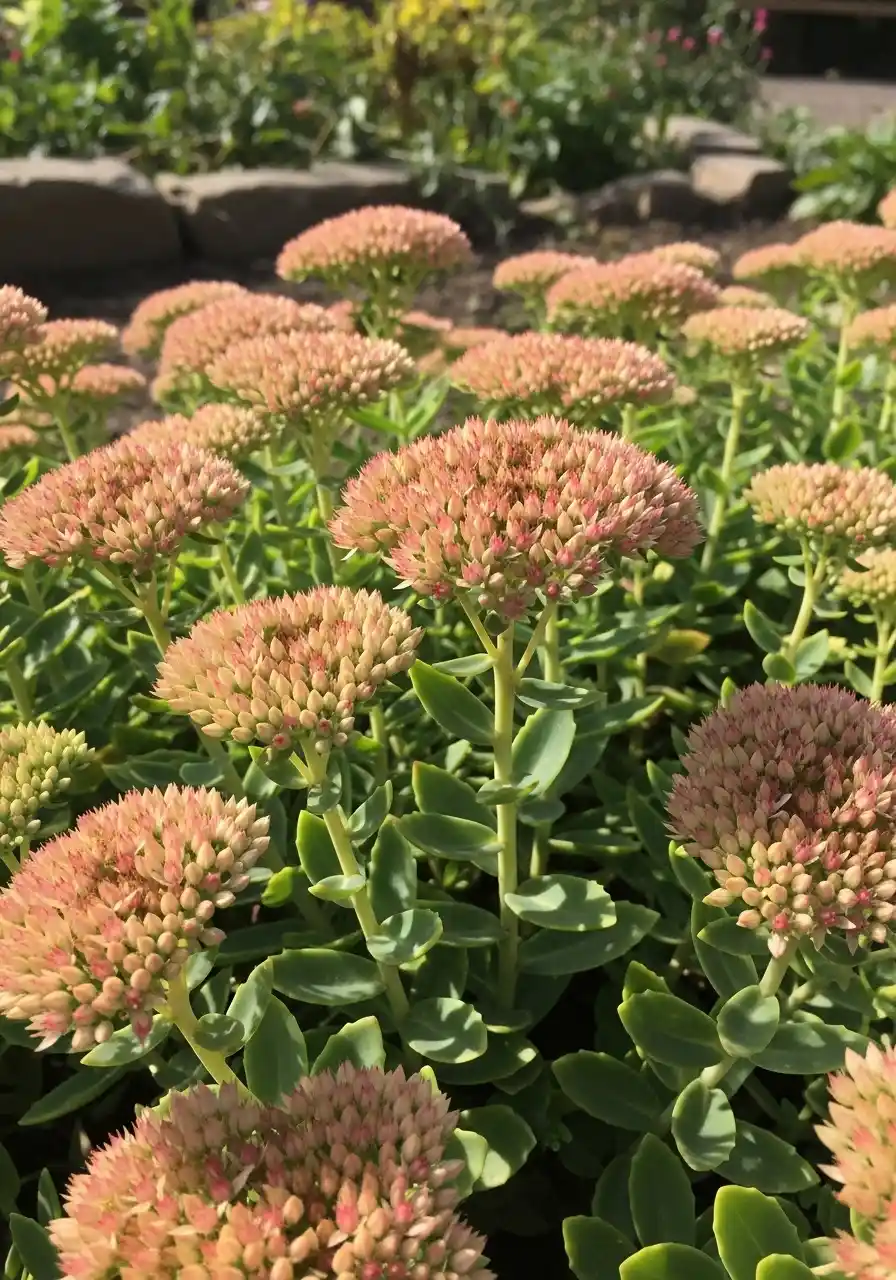
If you want a border plant that stays handsome even when flowers fade, Sedum ‘Autumn Joy’ (now commonly Hylotelephium telephium) is the steady option. It’s a succulent-like perennial with fleshy blue-green leaves and large, flat flower heads that mature beautifully. Identification is straightforward: thick stems, plump leaves, and broccoli-like buds that open into starry clusters.
In easy-care plants for garden borders, this sedum shines because it forms a clump and doesn’t wander aggressively. USDA Zones: usually 3–9. Color varieties: ‘Autumn Joy’ shifts from pink to rosy red to coppery tones as the season progresses; related cultivars can be deeper burgundy or paler blush. Type: herbaceous perennial. Sun exposure: full sun to part sun; full sun gives sturdier stems. Soil needs: well-drained soil; it’s drought tolerant once established.
Blooming season is late summer into fall, and the dried seed heads can be left for winter interest (and honestly, I love the look of them dusted with frost). This is one of those easy-care plants for garden borders that keeps paying you back even when you’re not “doing gardening.”
5) Lamb’s Ear (Stachys byzantina, ‘Silver Carpet’ types)
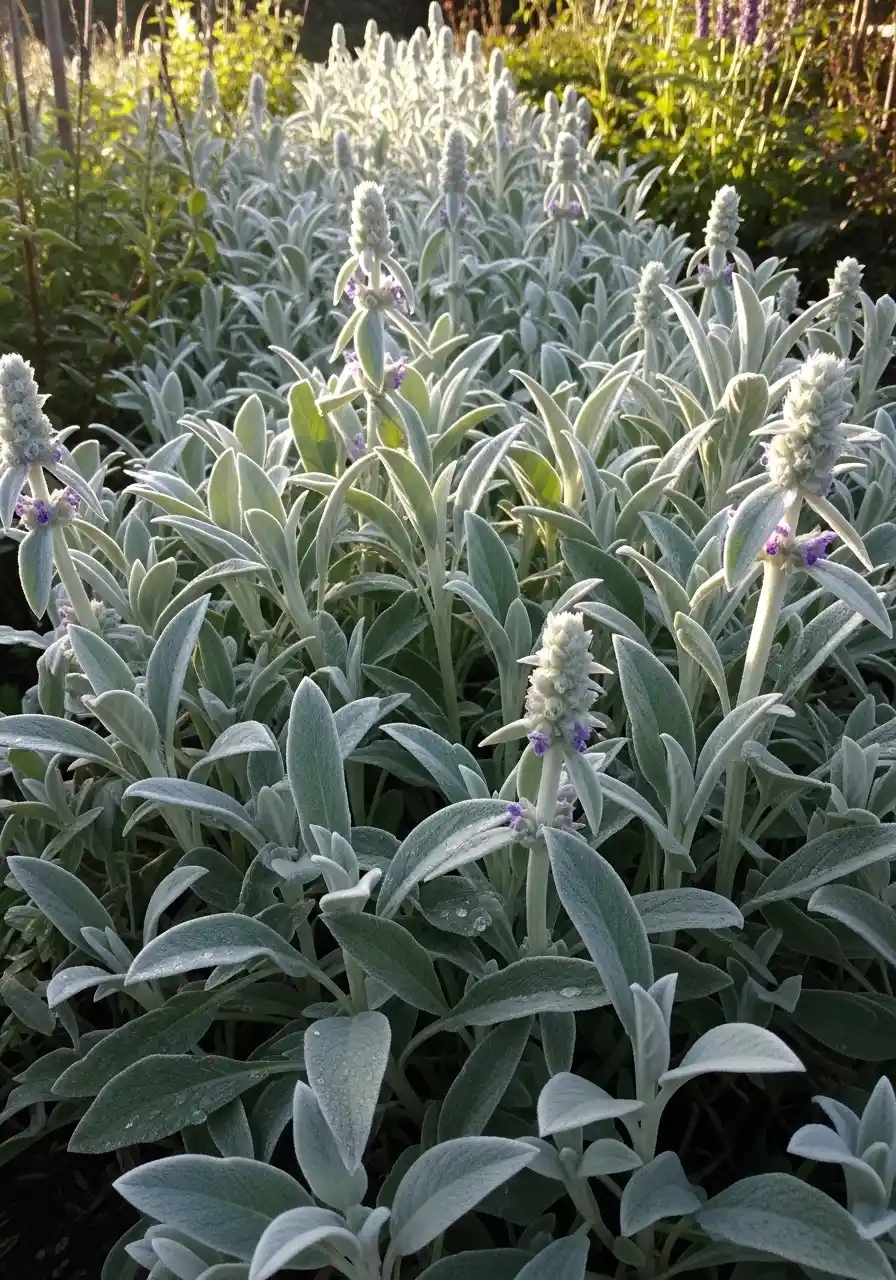
Lamb’s ear is the softest border plant you’ll ever touch—almost absurdly velvety. Stachys byzantina is a low-growing perennial often used as edging because it forms a slow, polite mat. The non-flowering types such as ‘Silver Carpet’ are especially tidy and are easy to identify by their thick, fuzzy, silver leaves that look like felt.
For easy-care plants for garden borders, lamb’s ear is perfect when you want texture more than flowers. USDA Zones: commonly 4–8. Color varieties: foliage ranges from silvery gray to brighter silver; flowers (when present in other types) are typically pink-purple. Type: herbaceous perennial/ground cover. Sun exposure: full sun to part sun. Soil needs: well-drained soil is crucial; in damp, humid conditions it can rot if airflow is poor.
Blooming season isn’t the main feature here, but if you choose a flowering variety, it’s usually late spring into summer. I’ll be honest: I prefer the non-flowering types because they keep the border calmer and cleaner—exactly the vibe most people want from easy-care plants for garden borders.
6) Daylily (Hemerocallis hybrids, clump-forming types)
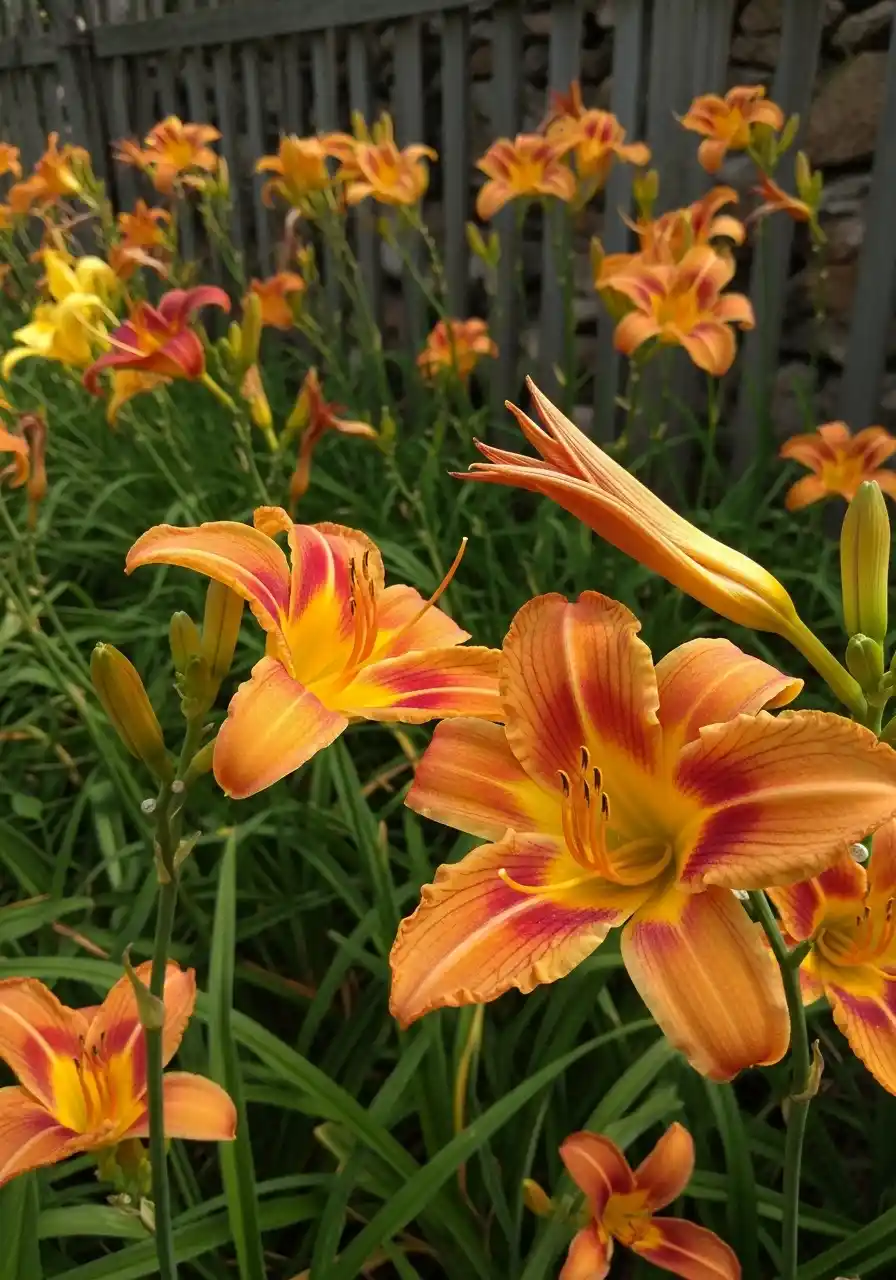
Daylilies are border workhorses, and I say that with affection. Hemerocallis hybrids form grassy clumps that stay where you put them (especially named, clump-forming varieties). Their trumpet-shaped flowers last a day, but the plants produce a steady sequence of buds so you still get weeks of color. Identification: arching strap-like leaves and flower scapes rising above the foliage.
As easy-care plants for garden borders, daylilies are popular because they tolerate a lot—heat, humidity, and occasional forgetfulness. USDA Zones: typically 3–9. Color varieties: nearly every shade except true blue—yellow, orange, red, pink, purple, near-white, and dramatic bicolors. Type: herbaceous perennial. Sun exposure: full sun to part sun; more sun usually means more flowers. Soil needs: adaptable, but best in well-drained, moderately fertile soil.
Blooming season depends on cultivar (early, mid, late), and some are rebloomers. My personal rule for easy-care plants for garden borders: pick named varieties known for staying clumped and flowering reliably, because the right choice feels effortless in the best way.
7) English Lavender (Lavandula angustifolia)
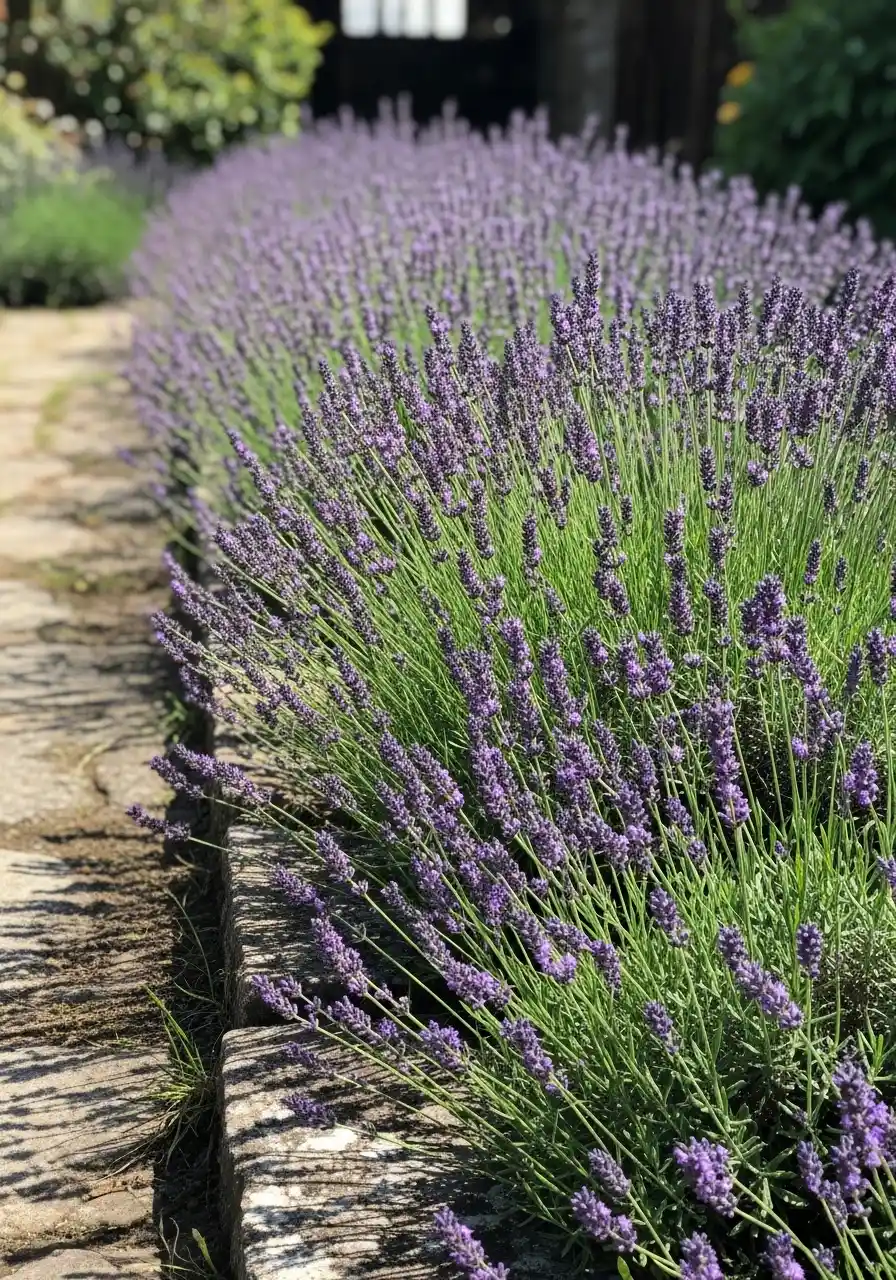
Lavender is one of those plants that makes you slow down. Even brushing past it feels calming. Lavandula angustifolia forms tidy mounds with narrow gray-green leaves and fragrant flower spikes. Identification is easy: unmistakable scent, slender leaves, and upright blooms.
For easy-care plants for garden borders, lavender is ideal in sunny borders where soil drains well. USDA Zones: generally 5–9 (some cultivars handle cooler with protection). Color varieties: classic purple, plus lavender-blue, pale lilac, and even near-white. Type: woody perennial/subshrub. Sun exposure: full sun is essential. Soil needs: sharply drained soil; it dislikes wet, heavy ground and can fail fast if roots stay soggy.
Blooming season is typically late spring through summer, sometimes with a second flush depending on climate and pruning. I’ll admit I used to overwater lavender because I felt guilty leaving it “dry.” Turns out, the guilt was the problem. Lavender rewards restraint, making it a top-tier pick for easy-care plants for garden borders.
8) Globe Thistle (Echinops ritro)
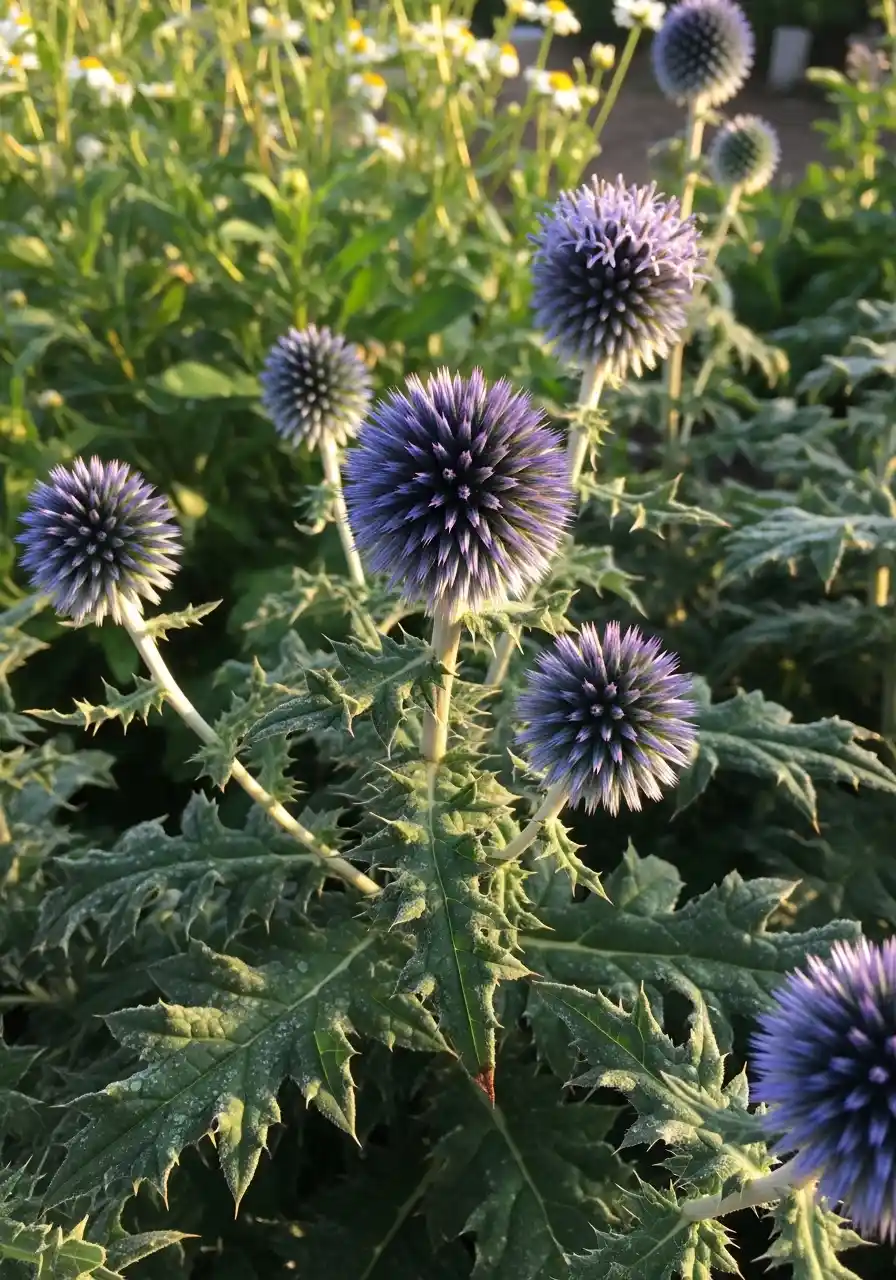
Globe thistle is bold in a way that still feels tidy—spiky texture with a clean outline. Echinops ritro forms a clump of sturdy stems topped with round, steel-blue flower globes that bees adore. Identification: spiny, thistle-like leaves and perfectly spherical blooms that look like botanical fireworks frozen in place.
In easy-care plants for garden borders, globe thistle is great for adding structure and pollinator energy without fuss. USDA Zones: often 3–8. Color varieties: typically metallic blue; some selections lean more silvery or pale lavender-blue. Type: herbaceous perennial. Sun exposure: full sun. Soil needs: well-drained soil; it tolerates poorer soils and drought once established.
Blooming season is usually mid-summer. It can self-seed if seed heads are left, so if you want strict control in your easy-care plants for garden borders, cut spent blooms before they mature. I like leaving a few for character—but I also accept a little spontaneity in the garden.
9) Yarrow (Achillea millefolium, cultivars like ‘Terracotta’ and ‘Moonshine’)
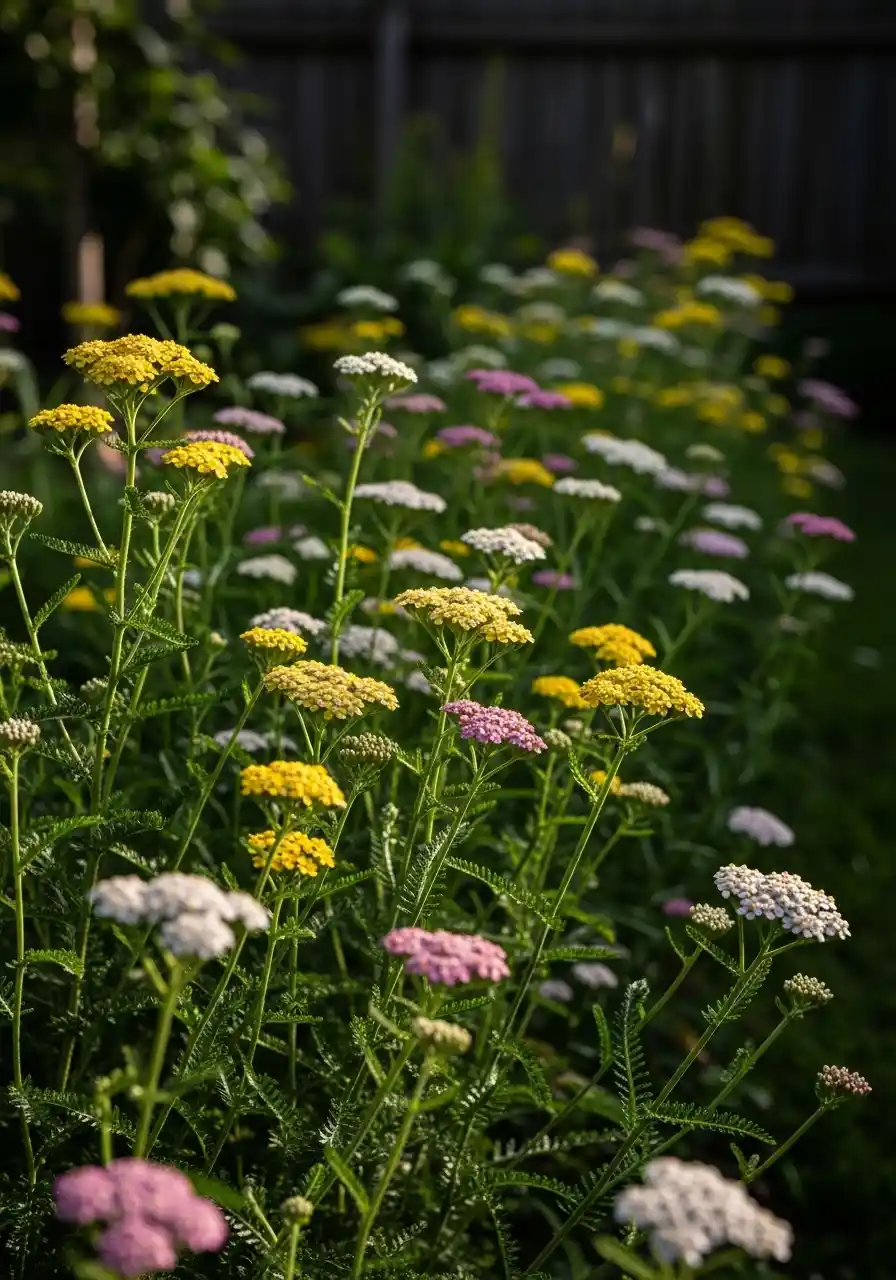
Yarrow is the kind of plant that makes borders feel sunny even on dull days. Achillea millefolium cultivars such as ‘Terracotta’ and ‘Moonshine’ are often chosen because they’re clump-forming and behave better than some wild types. Identification: feathery, fern-like leaves and flat-topped clusters of tiny flowers that read as one big bloom.
For easy-care plants for garden borders, yarrow is prized for drought tolerance and long flowering. USDA Zones: commonly 3–9. Color varieties: ‘Moonshine’ is a clear soft yellow; ‘Terracotta’ opens in warm orange tones and ages into peachy shades; other cultivars include pinks, reds, and creamy whites. Type: herbaceous perennial. Sun exposure: full sun. Soil needs: well-drained soil; too-rich soil can cause floppy stems.
Blooming season often runs from early summer into late summer, sometimes longer with deadheading. If you want your easy-care plants for garden borders to stay neat, choose clumping cultivars and remove spent flowers before they drop seed everywhere. It’s a small task that prevents big chaos later.
10) Blue Fescue (Festuca glauca)
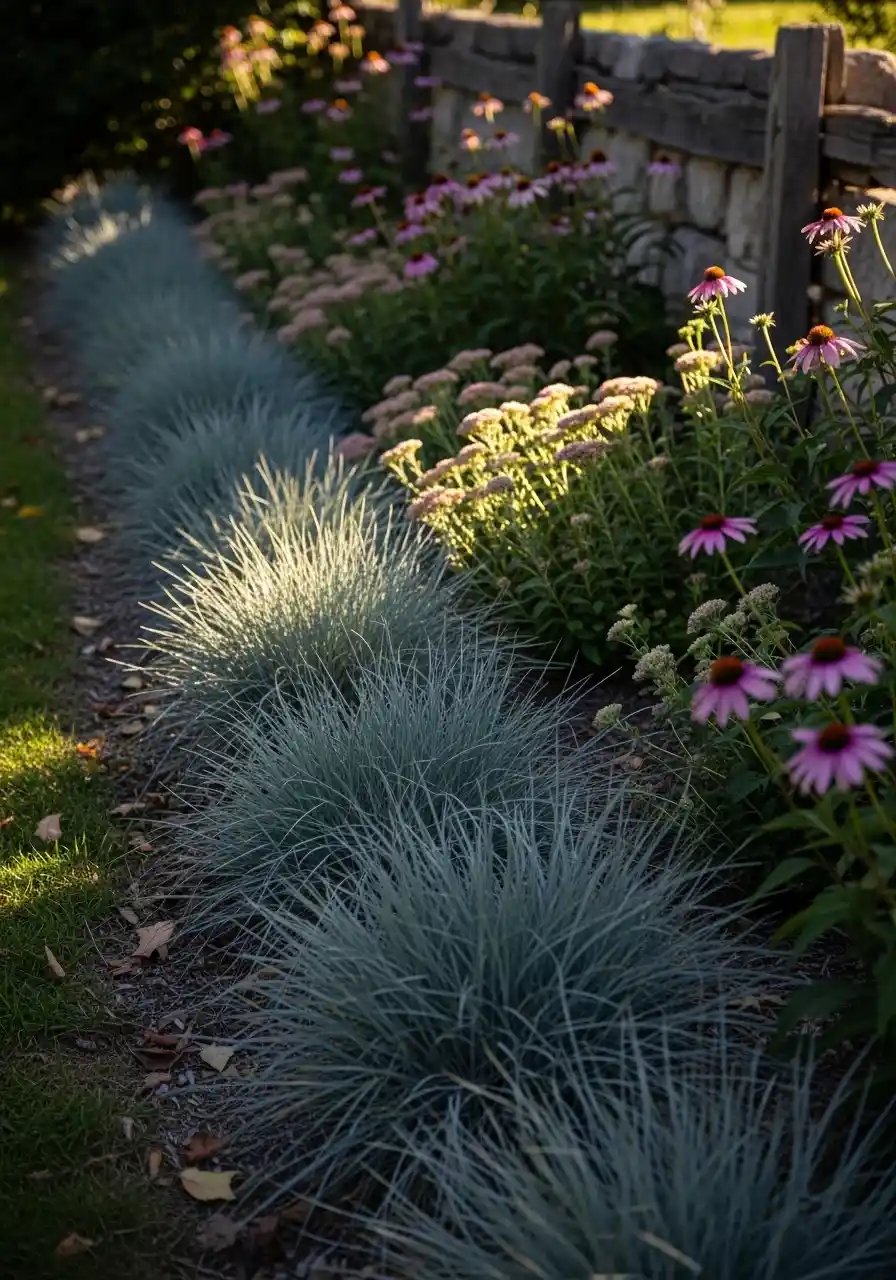
Blue fescue is a border plant for people who like clean lines and contrast. Festuca glauca forms compact, spiky clumps of blue-gray blades that stay attractive through many seasons. Identification: small, rounded tufts of needle-like leaves in a cool blue tone—very different from broad-leafed perennials.
In easy-care plants for garden borders, blue fescue is excellent as edging or as a repeating “rhythm” plant between flowers. USDA Zones: typically 4–8. Color varieties: the main show is foliage color—silvery blue to steely gray; some cultivars are more intense blue. Type: ornamental grass (cool-season). Sun exposure: full sun to part sun; full sun keeps color strongest. Soil needs: well-drained soil; it tolerates dryness and dislikes soggy sites.
Blooming season isn’t the focus, but it can produce subtle flower spikes in summer. I like it because it makes other easy-care plants for garden borders look even better—like the crisp outline in a painting that makes the colors pop.
11) Bergenia (Bergenia cordifolia)
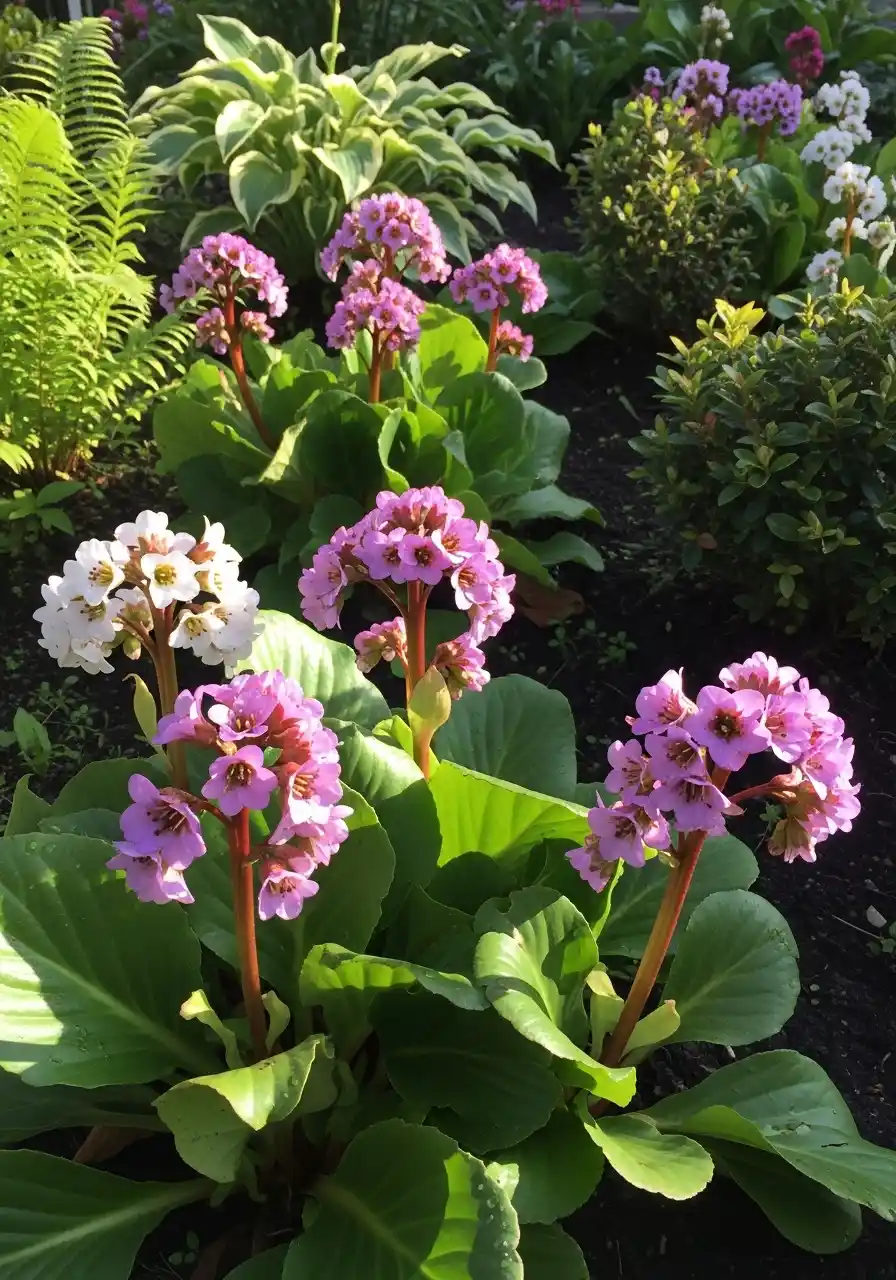
Bergenia is the plant I recommend when someone wants a border that still has “presence” in cooler seasons. Bergenia cordifolia is an evergreen (or semi-evergreen) perennial with thick, glossy leaves and spring flowers on sturdy stems. Identification: broad, leathery leaves (often heart-shaped) and clustered blooms that rise above the foliage.
For easy-care plants for garden borders, bergenia is a strong choice because it stays put, holds structure, and doesn’t act invasive. USDA Zones: typically 3–8. Color varieties: flowers are often pink, magenta, or reddish-purple; foliage can shift to bronzy-red tones in cold weather, which feels like a bonus. Type: evergreen/semi-evergreen perennial. Sun exposure: part sun to shade, though it can take sun in cooler climates with adequate moisture. Soil needs: prefers well-drained soil with consistent moisture, but it’s tougher than it looks once established.
Blooming season is usually spring. If you want easy-care plants for garden borders that still look intentional when flowers aren’t happening, bergenia’s bold leaves do that job beautifully.
Simple layout tips for easy-care plants for garden borders
If you want the border to feel “finished,” repeat plants in groups of 3 or 5 rather than scattering singles. I also like pairing easy-care plants for garden borders by role:
-
Soft edge: lamb’s ear or blue fescue
-
Bloom cloud: catmint or coreopsis
-
Tall shimmer: Russian sage or globe thistle
-
Season anchor: sedum for fall + bergenia for evergreen structure
-
Reliable color blocks: daylilies and yarrow
Mulch helps, but don’t bury crowns. And please don’t interpret “neglect” as abandonment—these low-maintenance border plants still appreciate a drink during extreme heat and a little cleanup once or twice a year.
FAQ: easy-care plants for garden borders
1) What are the best easy-care plants for garden borders in full sun?
Catmint, Russian sage, sedum ‘Autumn Joy’, yarrow cultivars, globe thistle, lavender, and blue fescue all perform well with strong sun.
2) Which easy-care plants for garden borders handle part shade best?
Bergenia is a standout for part shade, and catmint can also manage some lighter shade.
3) What’s the most drought-tolerant choice for easy-care plants for garden borders?
Russian sage, lavender, sedum, yarrow, and globe thistle are excellent once established—especially in well-drained soil.
4) Which easy-care plants for garden borders bloom the longest?
Catmint and threadleaf coreopsis can flower for a long stretch, especially with a midseason trim or deadheading.
5) Are daylilies really low maintenance for borders?
Yes—clump-forming daylily varieties are dependable, resilient, and come back yearly with minimal care.
6) What easy-care plants for garden borders stay evergreen?
Bergenia often stays evergreen (or semi-evergreen), and blue fescue can remain attractive year-round in many climates.
7) How do I keep easy-care plants for garden borders from spreading too much?
Choose clump-forming cultivars, avoid aggressive wild forms (especially with yarrow), and remove spent seed heads if needed.
8) What soil is best for easy-care plants for garden borders?
Most of these favorites prefer well-drained soil. Lavender, Russian sage, blue fescue, and sedum especially need drainage to thrive.
9) Can I mix ornamental grasses with flowering easy-care plants for garden borders?
Absolutely—blue fescue adds crisp texture that makes bloomers like catmint, coreopsis, and sedum look more intentional.
10) When should I cut back easy-care plants for garden borders?
Many perennials can be cut back in late winter or early spring. Sedum seed heads and globe thistle can be left for winter interest if you enjoy that look.
11) Which easy-care plants for garden borders attract pollinators?
Catmint, lavender, globe thistle, yarrow, coreopsis, and sedum are all pollinator-friendly choices.
12) What’s the easiest border combo for a beginner?
A simple, forgiving mix is catmint + sedum ‘Autumn Joy’ + blue fescue, with a few daylilies for extra color blocks—these easy-care plants for garden borders rarely disappoint.