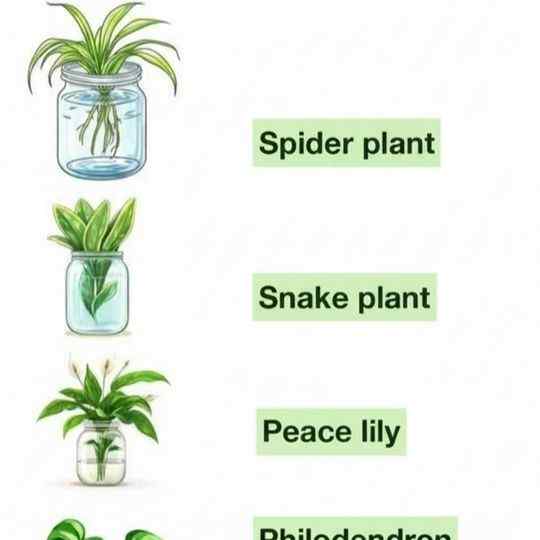
Growing plants in water—often called water propagation or water culture—is one of the easiest ways to enjoy greenery without dealing with soil, heavy pots, or outdoor gardening headaches. While “hydroponics” technically refers to growing plants in a nutrient solution (often with specialized equipment), many houseplants and herbs will happily live in plain water for long periods, especially when you refresh the water regularly and provide enough light. For apartment dwellers, busy homeowners, students, or anyone who simply wants a cleaner, more minimal way to grow plants, this method can be a game-changer.
A jar on a windowsill with a leafy cutting is not just decorative—it’s a living system. Roots form, leaves expand, and the plant can grow surprisingly well with very little fuss. And once you learn the basic principles (clean water, proper light, and occasional nutrients), you can create a thriving indoor “garden” that fits on a shelf.
This guide will walk you through the benefits of growing plants in water, introduce 15 great plants that can grow without soil, and explain how to transition plants successfully, maintain them, and solve common problems like algae and root rot.
Table of Contents
Why Grow Plants in Water?
Water-grown plants are popular for several practical reasons:
1) Less mess, fewer pests
Soil is messy. It spills, it compacts, it attracts fungus gnats, and it can hide pests and diseases. Growing plants in water removes many of those issues instantly. You can keep a plant on your desk or kitchen counter without worrying about dirt, leaking drainage trays, or bugs breeding in damp potting mix.
2) Easy monitoring
With a clear vase or jar, you can literally see what’s happening. Roots turning brown? You can respond quickly. Water level low? Top it off. New roots forming? You’ll notice immediately. This visibility makes water growing especially beginner-friendly.
3) Less maintenance
Water-grown plants don’t need repotting as often, and you don’t need to weed. Instead, the “routine” is simple: refresh water, rinse the container, and occasionally add nutrients.
4) Better control over nutrients
In soil, nutrients can vary and become depleted unpredictably. With water culture, you can add a diluted liquid fertilizer when needed and control exactly what your plant receives.
5) More sustainable (when done well)
When managed carefully, water growing can use less water than traditional container gardening because you’re not losing moisture through soil evaporation at the same rate. You also don’t need to buy potting mix as frequently.
The Basics of Success With Water-Grown Plants
Before jumping into the plant list, here are a few principles that make water-growing easier:
-
Use clean containers. Glass jars look great but must be washed regularly.
-
Change the water. In most homes, every 7–14 days is ideal.
-
Use non-chlorinated water when possible. If your tap water is heavily chlorinated, let it sit out for 24 hours before using it, or use filtered water.
-
Keep leaves out of the water. Submerge roots or nodes, not foliage—wet leaves rot fast.
-
Give the right light. Bright, indirect light is safest for most water-grown plants.
-
Add nutrients occasionally. Water alone has no minerals. Some plants survive a long time without fertilizer, but most grow better with very diluted liquid fertilizer (often ¼ strength) every few weeks.
15 Plants That Can Grow in Water
1) Spider Plant (Chlorophytum comosum): Tough and forgiving
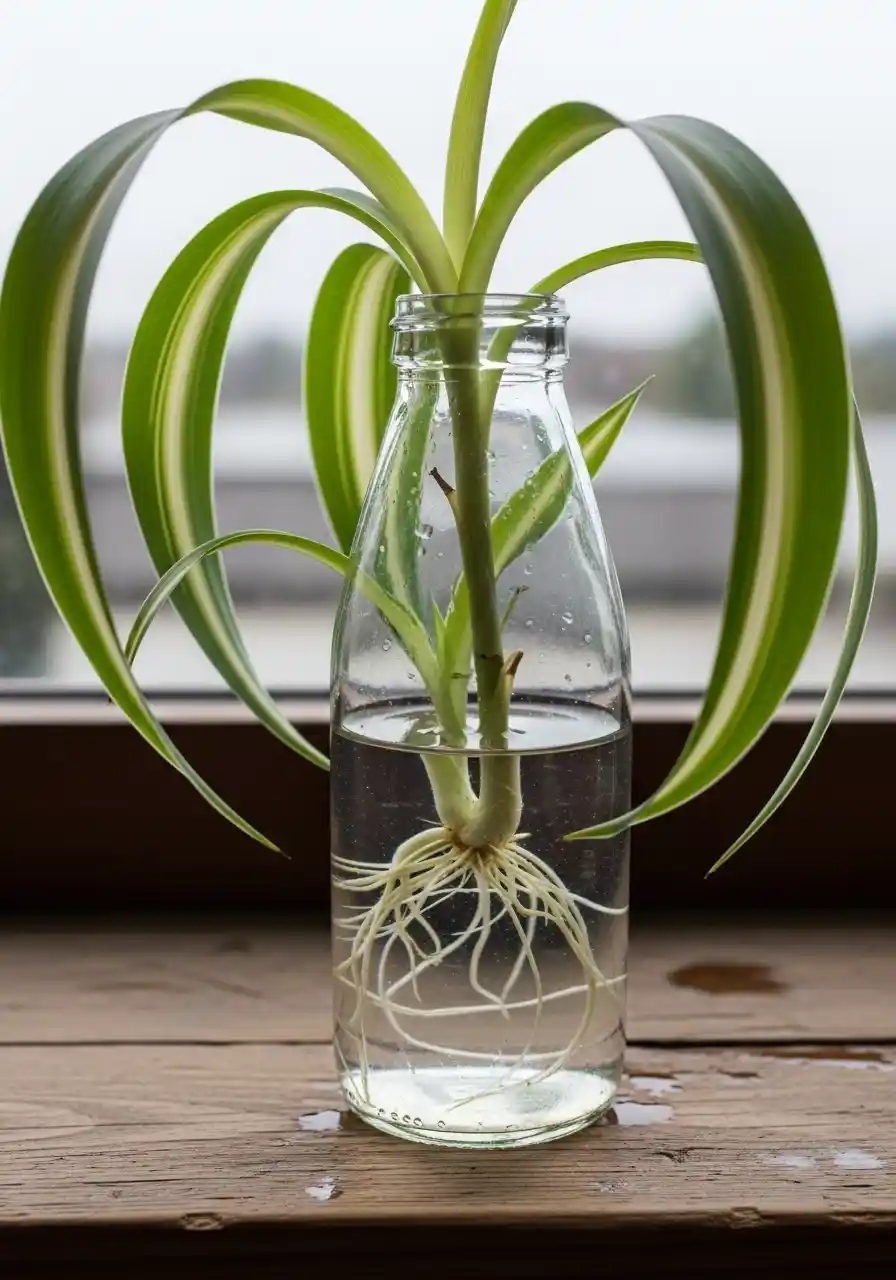
Spider plants are famous for being nearly indestructible. They produce “pups” (baby plantlets) that are perfect for water growing. Place a pup or cutting in a container so the small root nubs are submerged, and it will root quickly. Spider plants also help improve indoor air quality and tolerate a range of light conditions.
Care tip: Bright, indirect light keeps the leaves vibrant. Change water weekly to avoid odor.
2) Snake Plant (Sansevieria/Dracaena trifasciata): Low effort, high reward
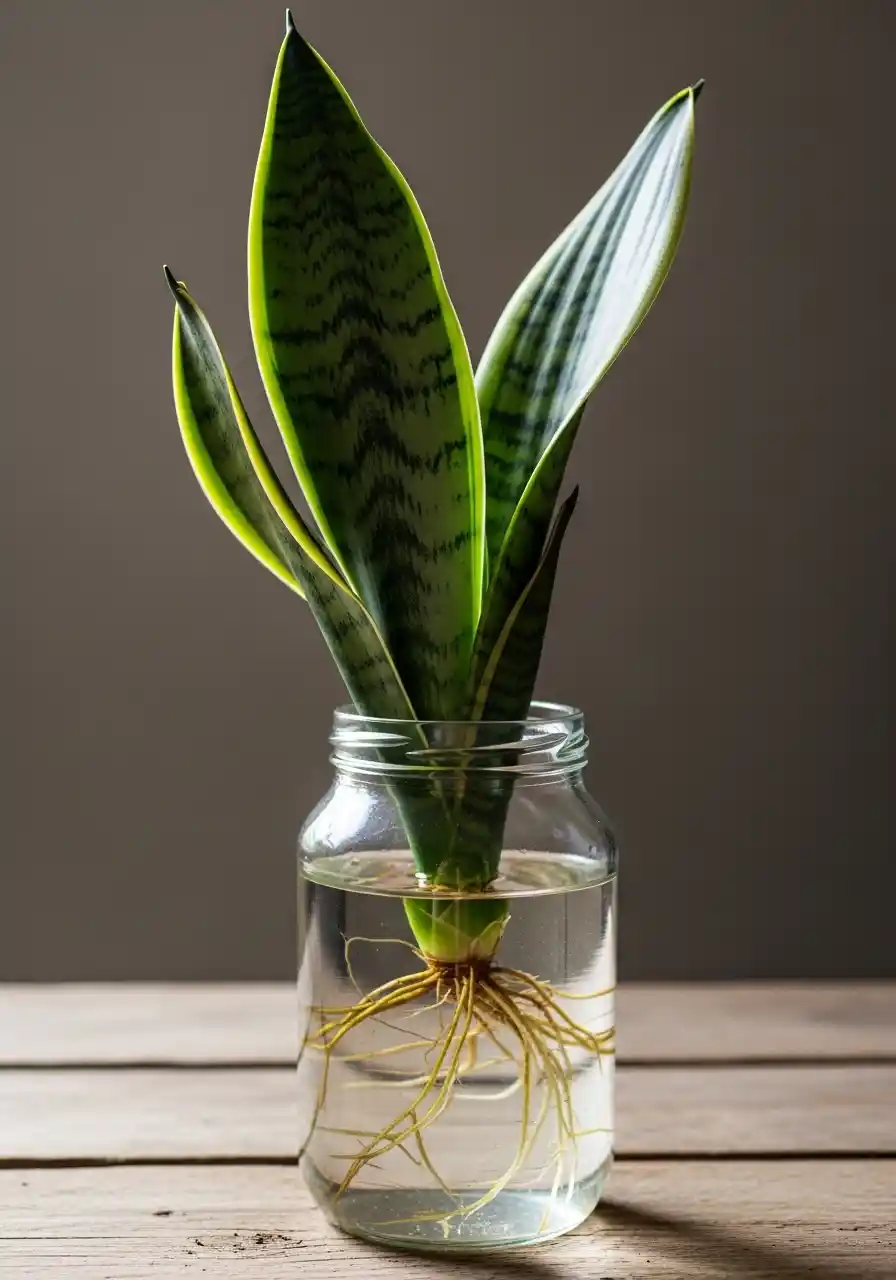
Snake plants are champions of neglect, and they can grow in water surprisingly well. You can place a leaf cutting in water with the cut end submerged, and roots will form. However, note that some leaf cuttings may not preserve the exact pattern of the parent plant depending on the variety.
Care tip: Let the cut end dry (callus) for a day before placing it in water to reduce rot risk.
3) Pothos (Epipremnum aureum): The easiest vine to root
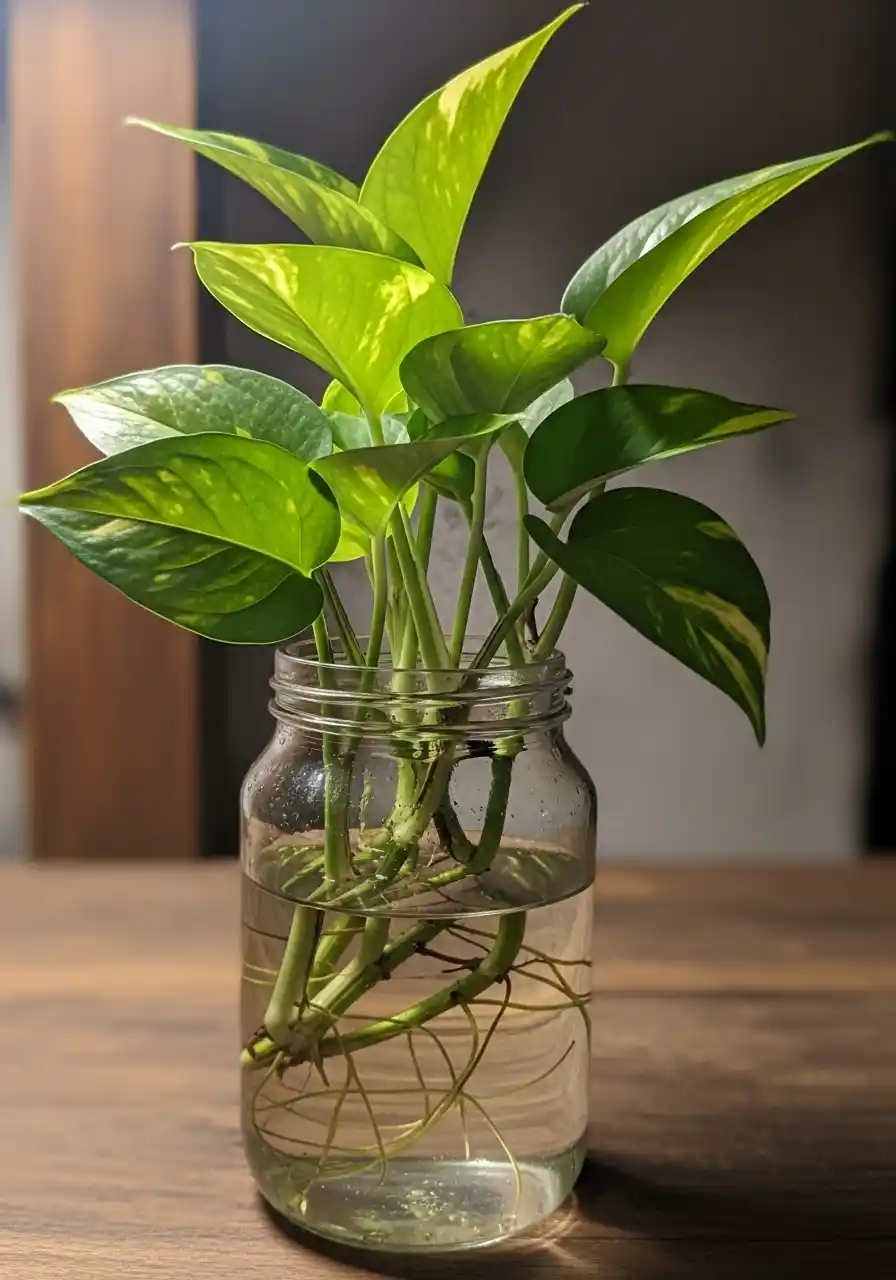
Pothos is often the first plant people successfully grow in water because it roots quickly and grows fast. Take a cutting with at least one node (the small bump where roots form), place the node underwater, and watch roots appear in days to weeks.
Care tip: Trim long vines to encourage fuller growth and use the cuttings to start new jars.
4) Lucky Bamboo (Dracaena sanderiana): Classic water plant
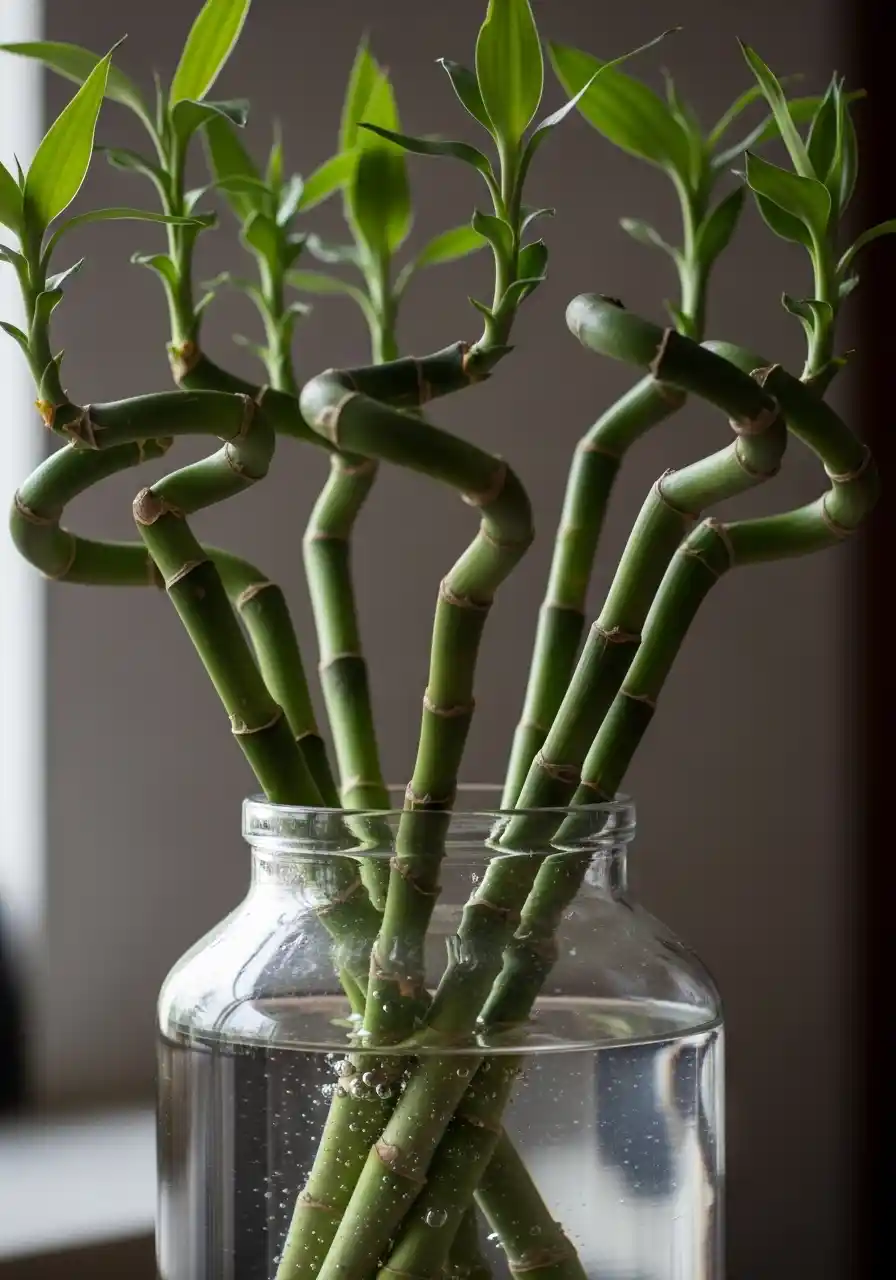
Lucky bamboo is not true bamboo, but it’s one of the most iconic water-grown houseplants. It’s typically grown upright in a vase with pebbles for support. Keep water covering the roots (not the entire stalk) and refresh it regularly.
Care tip: Change water every 1–2 weeks and avoid direct hot sun, which can scorch leaves.
5) Philodendron: Stylish, adaptable, and fast rooting
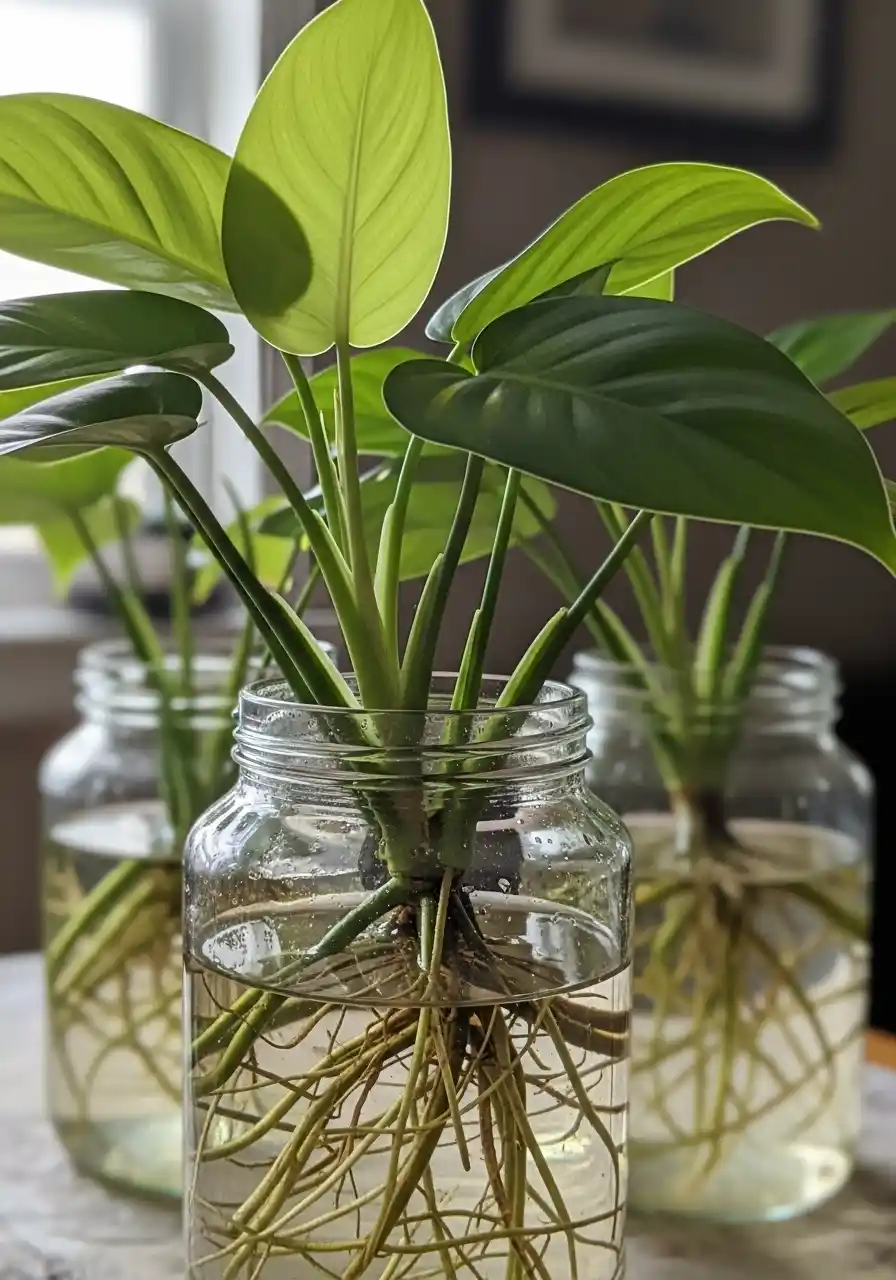
Many philodendron types propagate easily in water. Cut a stem with a node and a couple of leaves, then place it in water. This plant enjoys bright, indirect light and often grows rapidly once roots establish.
Care tip: If leaves yellow, reduce direct light and refresh water more frequently.
6) English Ivy (Hedera helix): Elegant trailing greenery
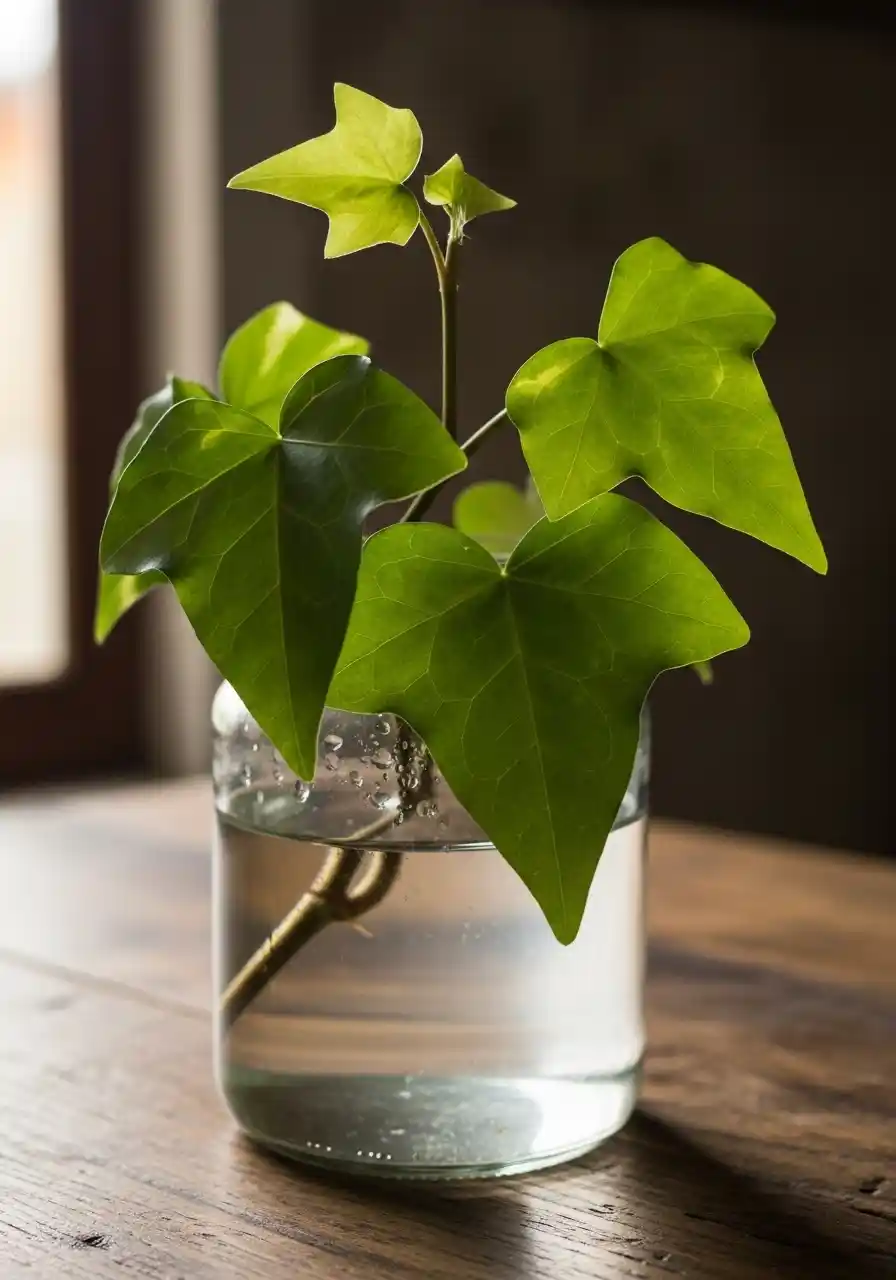
English ivy can root in water and looks beautiful in hanging jars or tall vases. It prefers cooler indoor temperatures and indirect light. Because ivy can be sensitive to stale water, regular changes matter.
Care tip: Rinse roots gently during water changes to prevent slime buildup.
7) Peace Lily (Spathiphyllum): Elegant and air-purifying
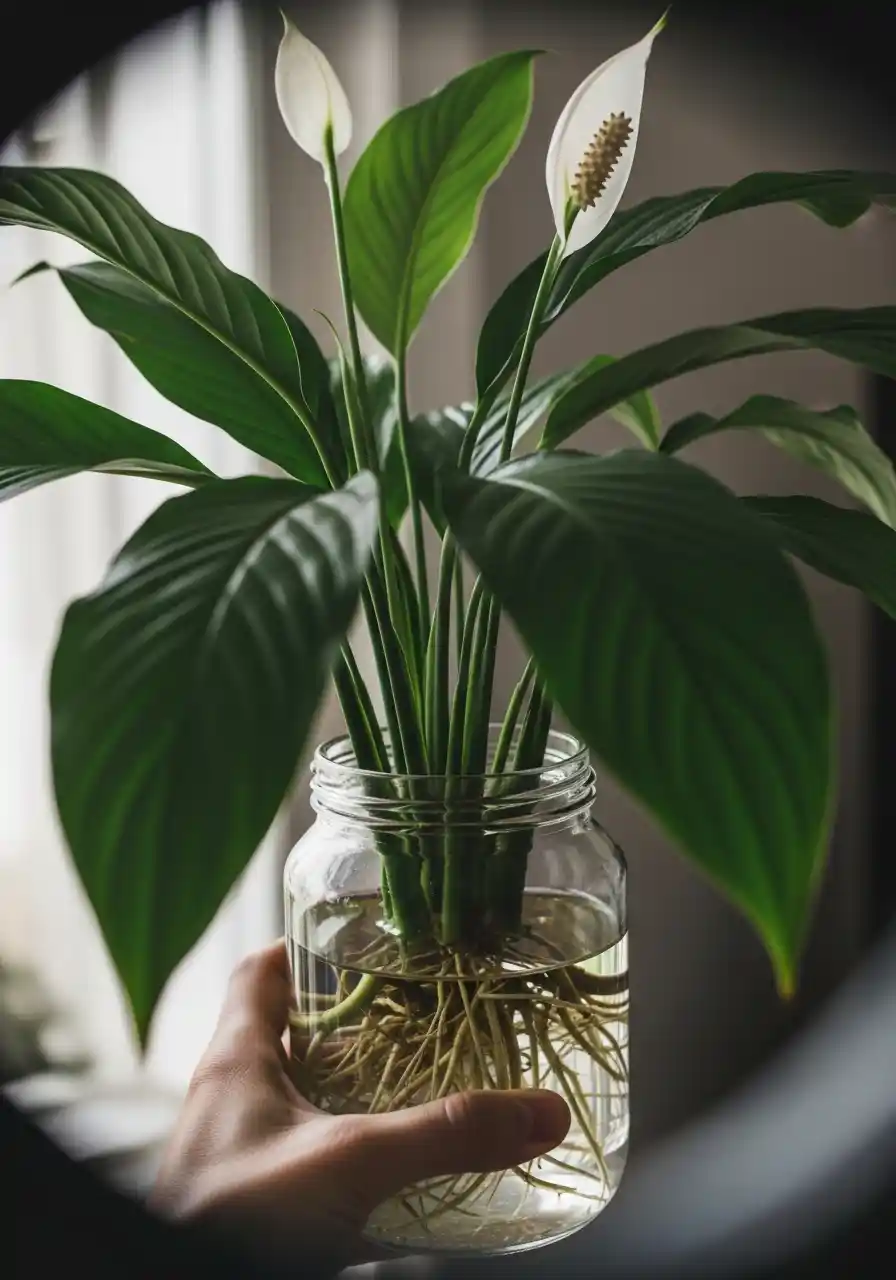
Peace lilies can live in water if you transition them carefully and keep their roots healthy. Unlike cuttings, many people place the entire plant in water after washing soil from the roots. The white blooms and glossy leaves make it a favorite for minimalist indoor decor.
Care tip: Keep roots submerged but avoid submerging the crown (where stems meet roots).
8) Chinese Evergreen (Aglaonema): Low light champion
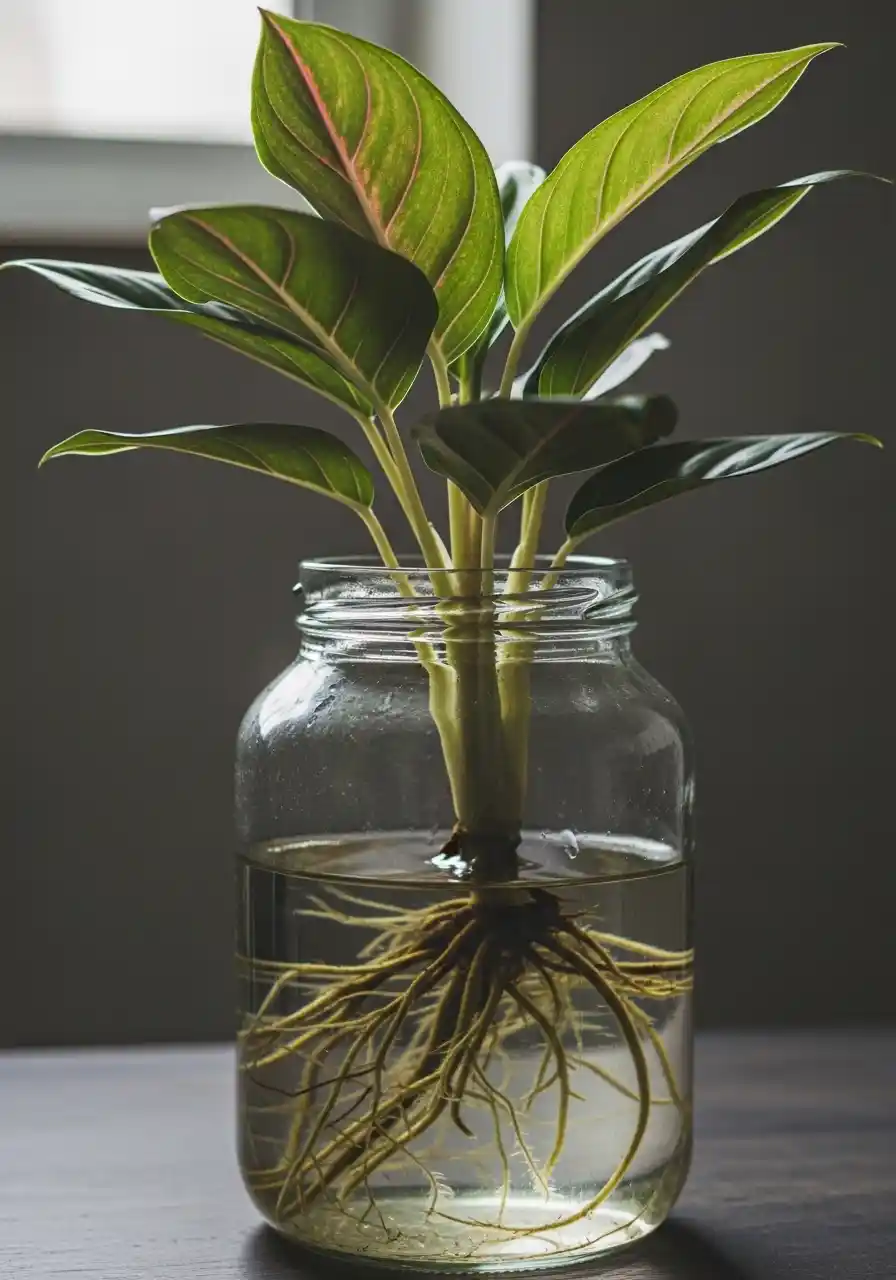
Chinese evergreen is valued for patterned leaves and its tolerance of low light. It can adapt to water growing when started from cuttings or transitioned from soil. It’s an excellent option for rooms that don’t get intense sunlight.
Care tip: Low light means slower growth—don’t over-fertilize. Keep nutrients minimal.
9) Coleus: Bold color without flowers
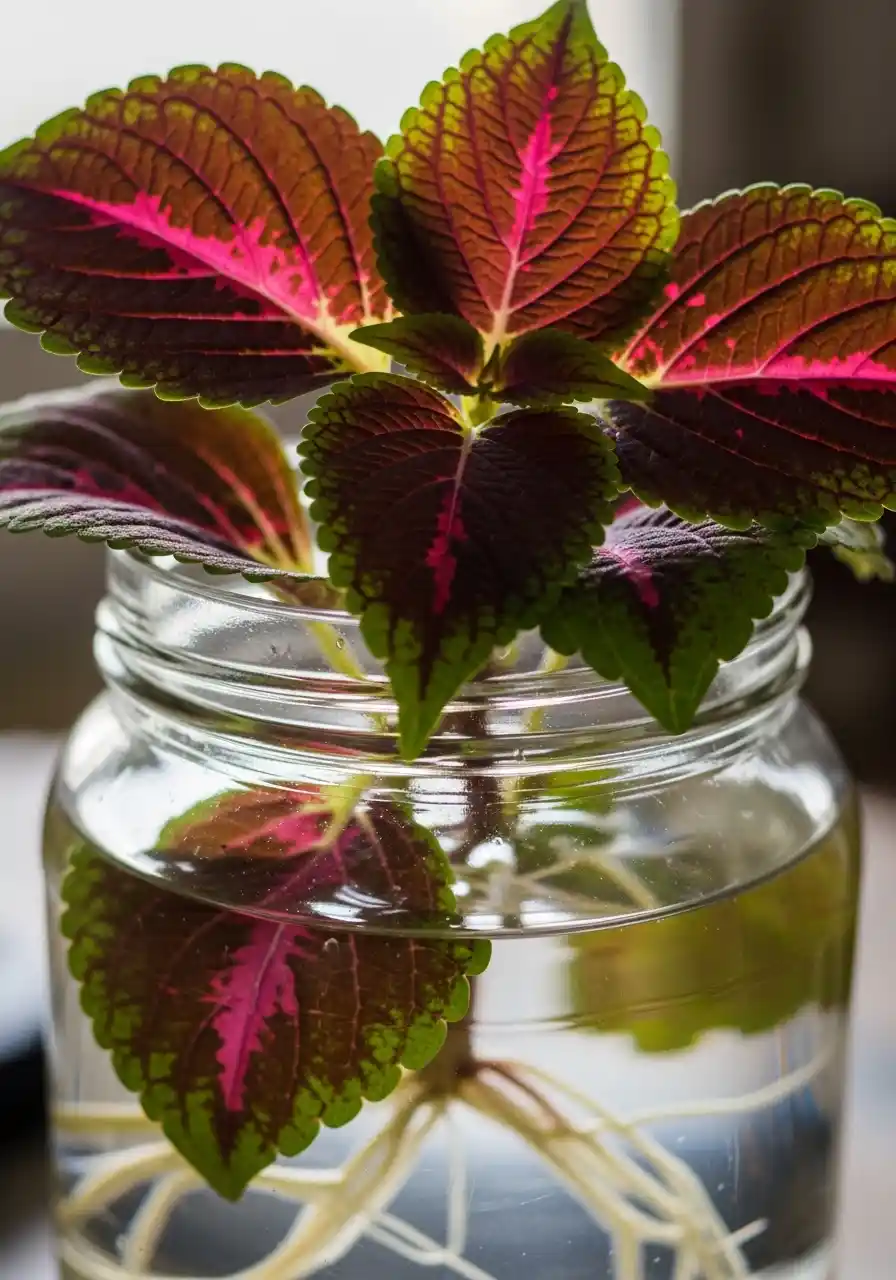
Coleus is grown for its vivid foliage—reds, greens, pinks, and purples. It roots quickly in water and can brighten indoor spaces when placed in bright, indirect light. This is one of the best plants if you want colorful leaves rather than “just green.”
Care tip: Pinch the tips to keep the plant bushy instead of leggy.
10) Wandering Dude (Tradescantia zebrina): Purple and fast-growing
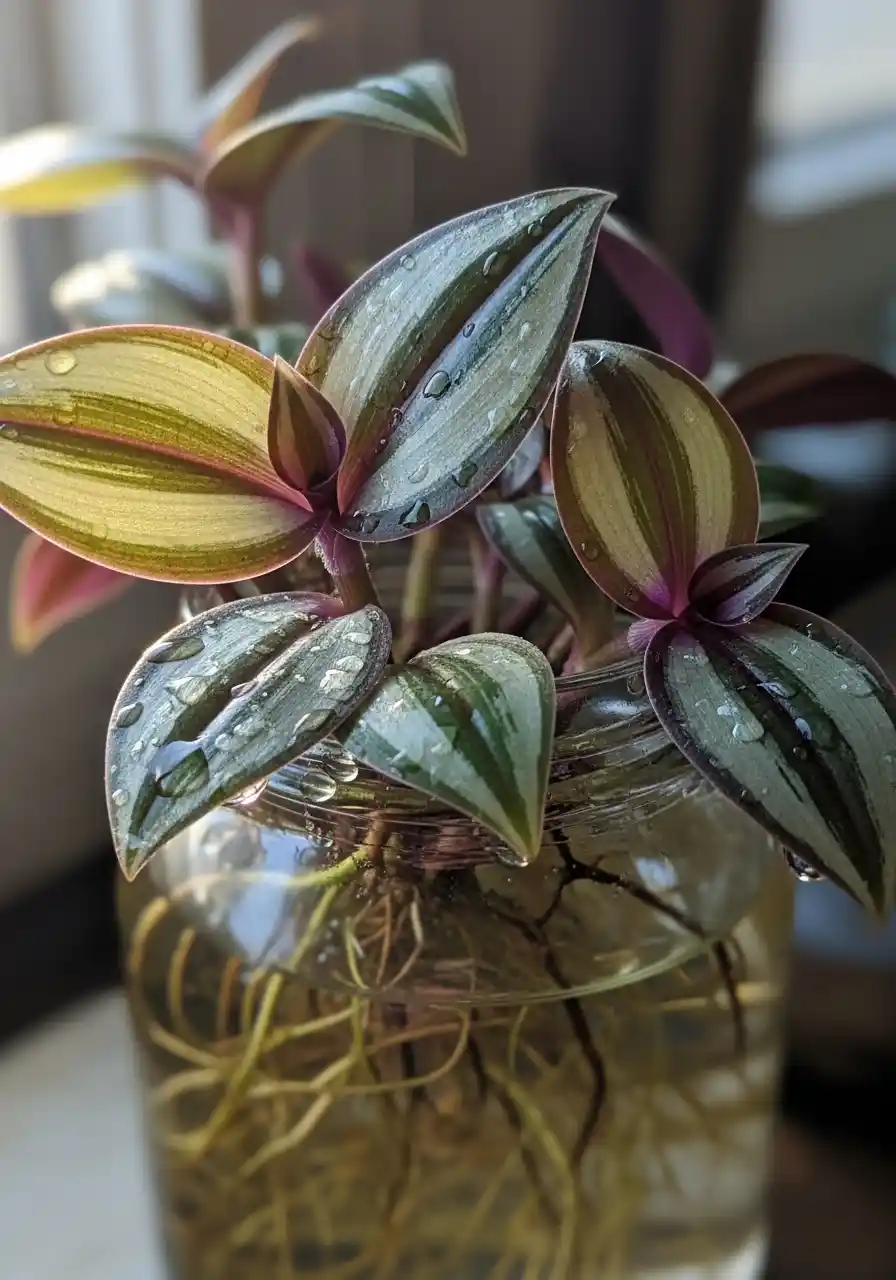
Often called wandering jew in older sources, Tradescantia is known for trailing purple and silver leaves. It roots extremely easily and grows rapidly in water, making it great for quick, dramatic results.
Care tip: Change water often—Tradescantia can rot if water becomes stagnant.
11) Mint: A practical herb for the kitchen
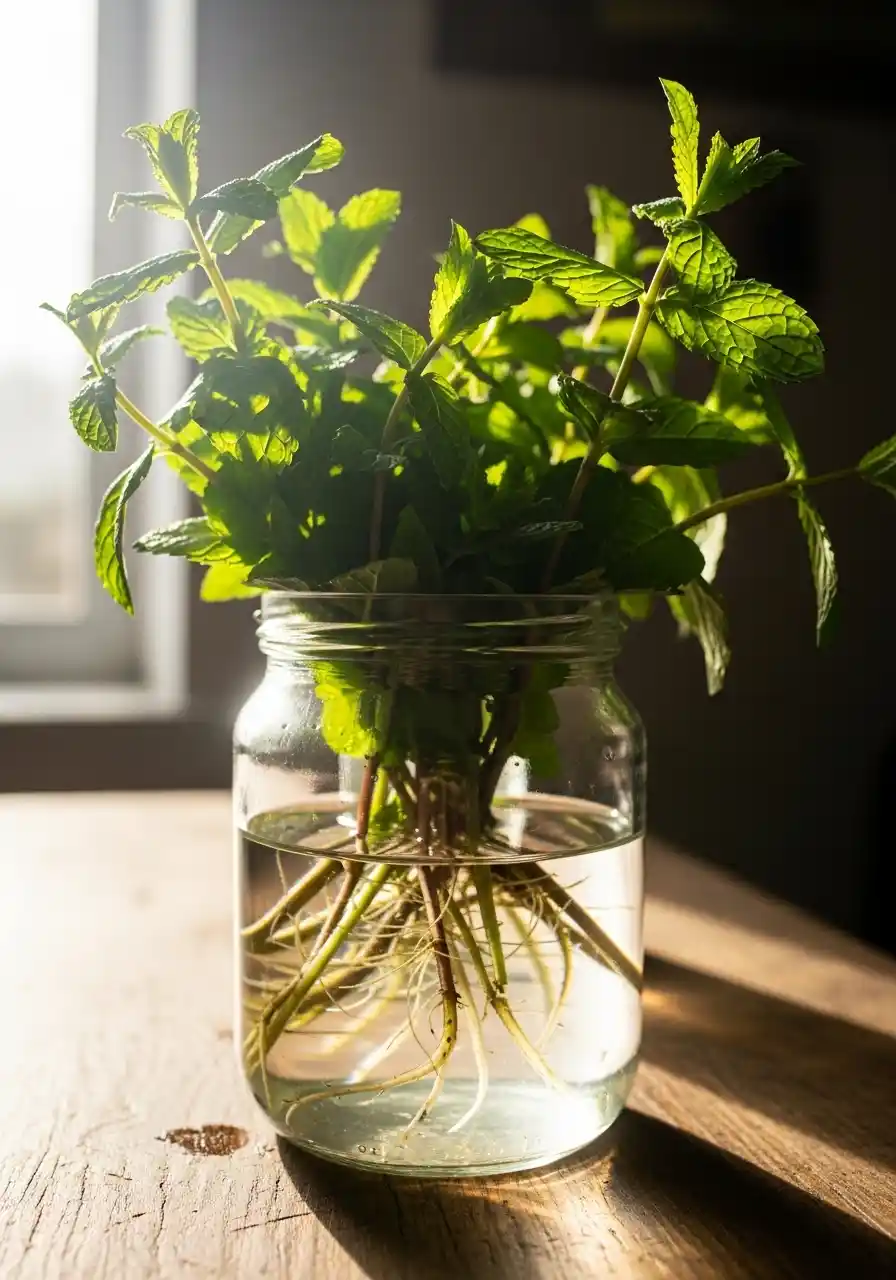
Mint is excellent in water because it roots quickly and keeps producing new growth. Place cut stems in water and keep them near bright light. You can snip leaves regularly for tea, drinks, or cooking.
Care tip: Mint likes frequent water changes. If stems turn black, trim above the damage and restart.
12) Basil: Fresh flavor with simple care
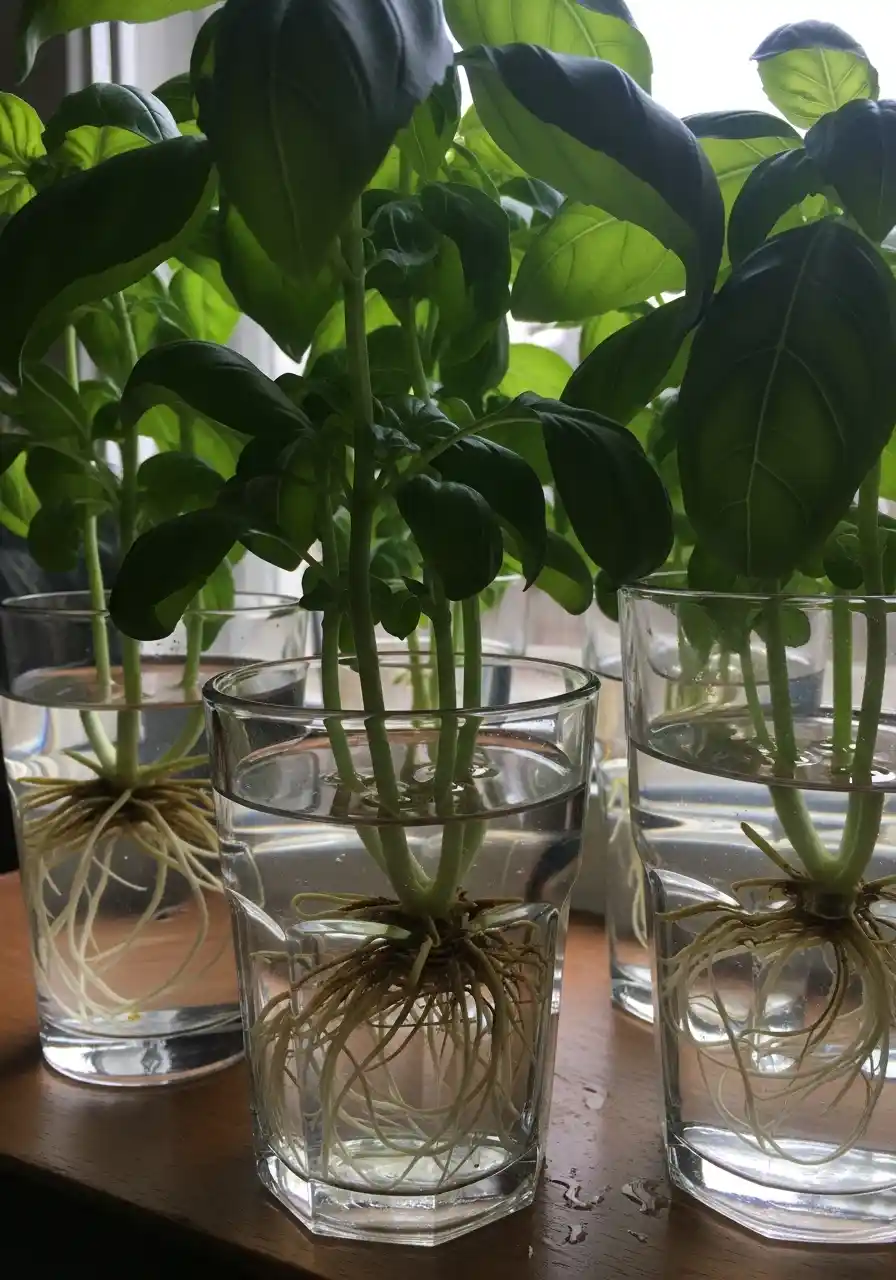
Basil cuttings can thrive in water and provide a steady supply of leaves. Use healthy stems, remove lower leaves, and keep nodes submerged. Basil prefers brighter light than most houseplants, so a sunny window is ideal.
Care tip: Harvest from the top to encourage branching and prevent the plant from getting tall and weak.
13) Begonia: Decorative leaves and variety
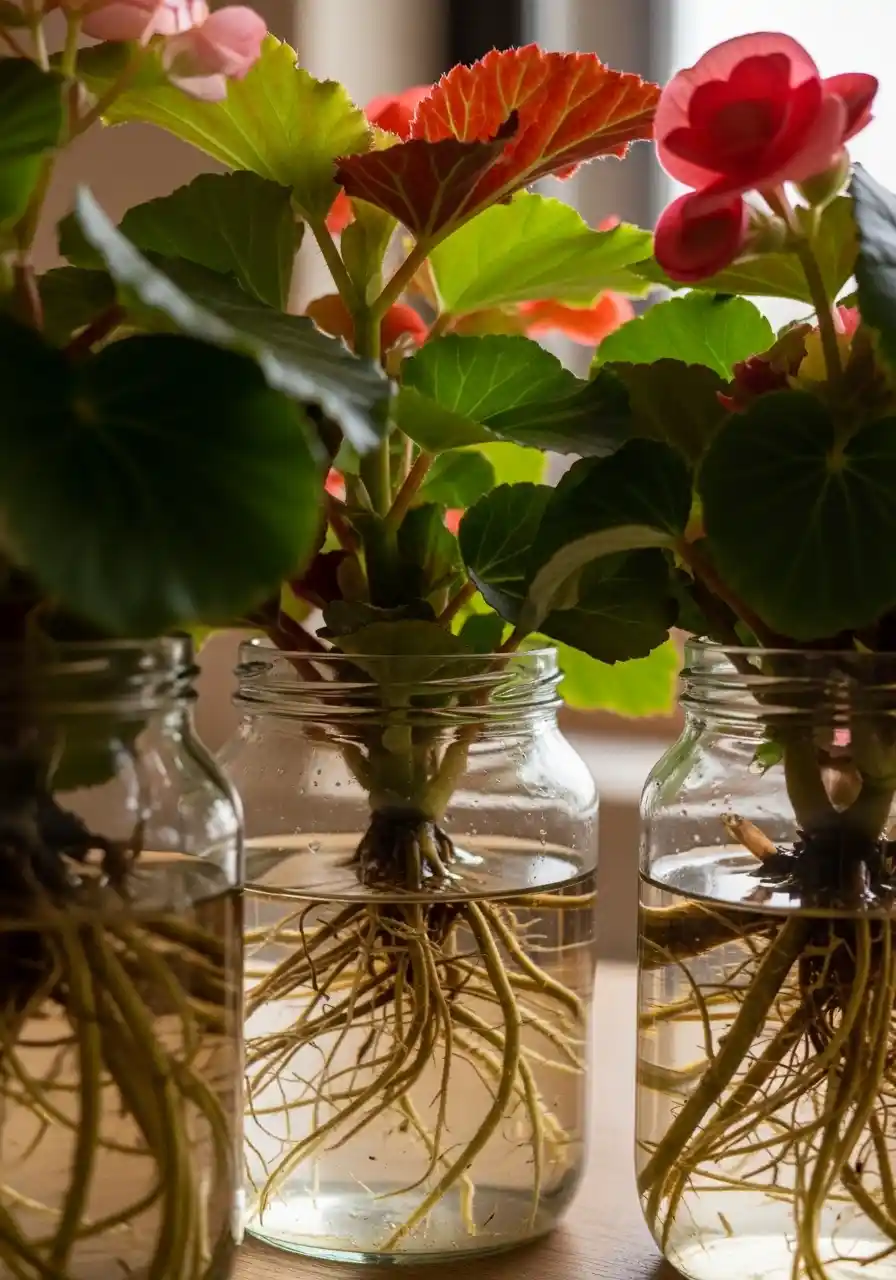
Many begonias can root from stem cuttings or even leaf cuttings placed in water. They do well in bright, indirect light and add texture to indoor displays. Because begonia stems can be delicate, handle them gently.
Care tip: Keep water clean and shallow—begonias can rot if submerged too deeply.
14) Sweet Potato Vine (Ipomoea batatas): Fun, fast, and dramatic
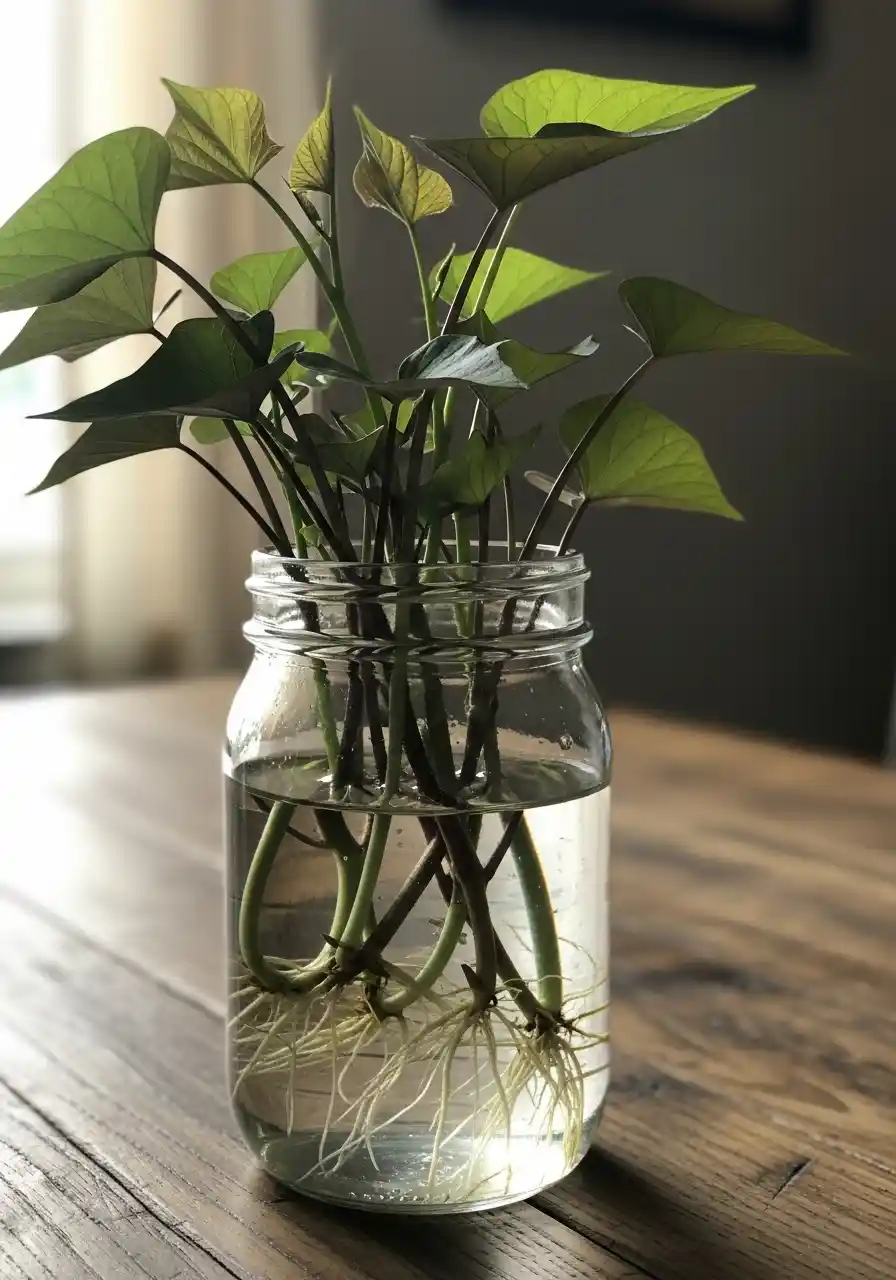
Sweet potato vines are a favorite “science experiment” plant that becomes real decor. Place a sweet potato so the bottom is in water (with toothpicks to suspend it), and it will sprout vines and roots. It grows quickly, creating lush trailing foliage.
Care tip: Bright light is key. Rotate the container for even growth and refresh water to reduce odor.
15) African Violet (Saintpaulia): Delicate blooms, rewarding results
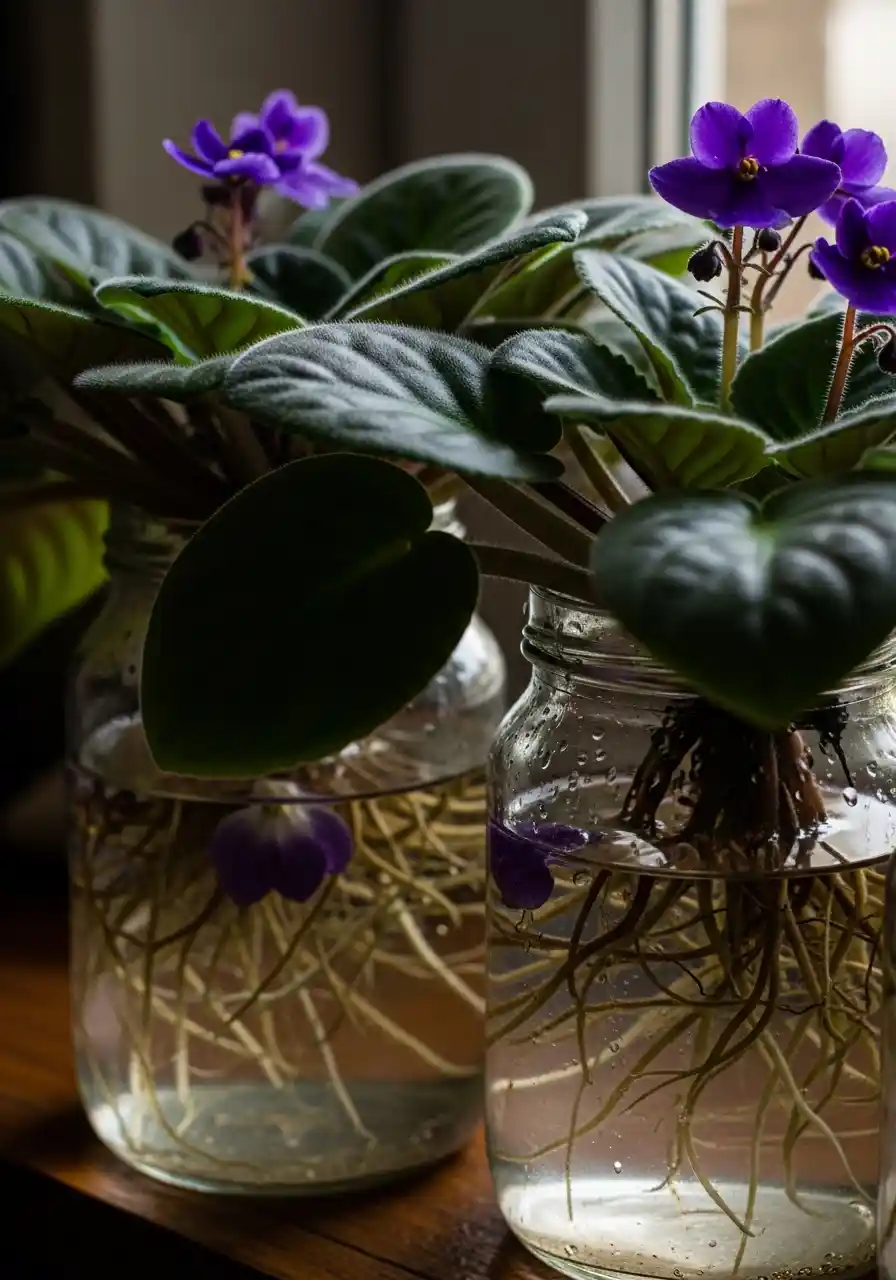
African violets are more delicate but can be propagated in water using leaf cuttings. Place the cut leaf stem in water without letting the leaf itself touch the water. Eventually, small plantlets form at the base of the stem.
Care tip: Be patient—African violets can take longer than vines. Use clean water and avoid direct sun.
How to Transition a Plant From Soil to Water
Some plants do best from cuttings, but others can be moved from soil to water if you do it gently:
-
Remove the plant from its pot and loosen the soil carefully.
-
Rinse the roots under lukewarm water until all soil is gone. Soil left behind can cloud water and encourage bacteria.
-
Trim damaged roots (brown, mushy, or overly long roots).
-
Place in a clean container with water covering the roots only.
-
Stabilize the plant if needed using pebbles, LECA, or a narrow-neck vase.
This transition can shock plants initially, so don’t panic if the plant pauses growth for a while.
Tips to Keep Water-Grown Plants Healthy Long-Term
-
Refresh water on schedule: Weekly for herbs and fast growers, every 10–14 days for many houseplants.
-
Clean the container: Rinse slime or algae off the glass and roots.
-
Watch for yellowing leaves: Often caused by low light, old water, or lack of nutrients.
-
Use diluted fertilizer: A small dose (¼ strength) every 3–6 weeks is usually enough.
-
Prevent algae: Use opaque containers, reduce direct sun on the water, or wrap jars with paper.
Common Problems and Quick Fixes
Root rot (mushy roots, bad smell)
Cause: Stagnant water, low oxygen, submerged leaves, dirty containers.
Fix: Trim rotted roots, disinfect container, change water more frequently, keep only roots submerged.
Algae growth (green film)
Cause: Light hitting the water.
Fix: Use an opaque container or keep the jar out of direct sunlight; clean weekly.
Slow growth or pale leaves
Cause: Not enough light or nutrients.
Fix: Move to brighter indirect light and add a small amount of diluted liquid fertilizer.
Final Thoughts: Why Water-Growing Is Worth Trying
Growing plants in water is one of the simplest ways to build a greener home. It’s clean, beginner-friendly, and surprisingly flexible—equally suitable for decorative vines, air-purifying houseplants, and edible kitchen herbs. Whether you’re starting with a pothos cutting in a jar or experimenting with a sweet potato vine, the method offers quick satisfaction and a calming routine.